Category: General Fiction/Literature Page 2 of 54

Nice Places by Vincent Chu: Traveling Far So Easily

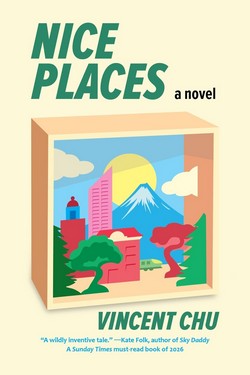
Cover of Nice Places by Vincent ChuNice Places

by Vincent Chu

DETAILS:
Publisher: Forest Avenue Press
Publication Date: June 2, 2026
Format: eARC
Length: 296 pg.
Read Date: May 11-14, 2026
Buy from Bookshop.org Support Indie Bookstores

What’s Nice Places About?

When we meet Georgie, he’s about to quit his job—but his boss fires him first. It was a mutual thing, really.

Georgie has a plan—he’s going to take a year and travel the world. He got a job right out of high school and has spent more than a decade at the company—he wants to grab some of that life experience so many people grab in their late teens/early twenties. He’s knocked off course from that attempt before he makes his first flight—and stumbles into something stranger.

He meets a mixed media artist named Ant. She’s working on her M.A. and is in search of a thesis project. Some silly thing that Georgie tries inspires her—and the two concoct a crazy plan that will suit Georgie’s quest for an experience and her thesis.

Odd times ensue. And a friendship develops between the two of them that will alter the courses of their lives.

Why did I pick this up? Why did I keep reading?

Picked it up because Chu asked me nicely, and because I had fond (and vague) memories of a short story collection.

I stuck with it for two reasons—once you get into Chu’s writing, you don’t want to leave until it’s done. Chu doesn’t have a flashy style, or snappy dialogue, or a tight pace (this book would be ruined by any of those, these are not critiques)—but his writing is solid, appealing, and will carry you along without drawing attention to itself.

The other is the character and his little project; I just needed to see where it went. The relationship between Georgie and Ant—and the difficult way to characterize it—is probably more of a driving force for me.

What does this book tell us about humanity?

It’s tricky to tackle this question because that’s one of the points of the book, and to really answer it would involve ruining the book.

But I can talk about some of the things it focuses on thematically. Chu explores the idea of experiences and how we need them. Particularly shared vs. solitary experiences. The “shared” aspect comes out a lot—sometimes it’s just two or three people, sometimes it’s a family, or a group of acquaintances. Sometimes it’s something as large and vague as “the Internet reacted to X.”

You may not find yourself resonating or agreeing with everything that Georgie and Ant conclude—or any of the other points of view they encounter along the way—but you’ll enjoy the experience of thinking about them.

So, what did I think about Nice Places?

I’m not wholly pleased by the way this book ends up—but outside of a Wayne’s World-esque “mega Happy Ending,” I’m not sure I would be. But I get what Chu did, and it’s both more fitting and narratively satisfying than what I think I wanted. Note, you should not read into my comment that this has a nasty or unhappy ending—just not a “mega Happy” one.

In the beginning of the novel, I didn’t get Georgie at all, and progressed only because I trusted Chu—I was mildly amused by some of what happened to him, and then around the time his whole plan was derailed, I got hooked. By the time his ridiculous plan was hatched, I was fully invested. And that stuck with me for most of the book. What Georgie and Ant went through together was just great, and I’d have happily read another 50-70 pages of it. I admit that there was a period toward the end where Georgie seemed to wallow in ennui and depression, and I had a hard time caring at that point—his ennui was contagious. But once he re-engaged, so did I.

I’m going to avoid saying much about Ant. But almost everything the book has to say comes from her (or in reaction to her), and as a character, she’s drawn in such a way that you’re primed and eager to hear her. So well done.

The other characters are drawn just as deeply as they’re required to be—and not one bit more. But they come in and out of the story so well that you see them as deeply constructed. I wouldn’t have minded more time with some of them, but I was satisfied.

I think I got so hung up on the bigger themes and ideas (at least in my head) that I haven’t done a great job of describing just how fun the book was (with the exception of the whole ennui bit I mentioned above). It was a very enjoyable read, it just got me thinking so much that I haven’t been able to focus on the Georgie’s goofy plot (and I was rooting for it the whole time).

This whole novel was so unexpected, so creative—it’s one of those books that you just can’t guess what provoked Chu to write it, what might have inspired him. I really don’t care, I’m just glad he did.

Disclaimer: I received this eARC from the author in exchange for this post, which contains my honest opinion.

This post contains an affiliate link. If you purchase from it, I will get a small commission at no additional cost to you. As always, the opinions expressed are my own.
Irresponsible Reader Pilcrow Icon

Go Gentle by Maria Semple: Was Never What I Expected to Be (and that’s a good thing)

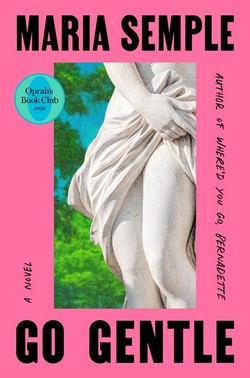
Cover of Go Gentle by Maria SempleGo Gentle

by Maria Semple

DETAILS:
Publisher: G.P. Putnam's Sons
Publication Date: April 14, 2026
Format: Hardcover
Length: 384 pg.
Read Date: May 16-19, 2026
Buy from Bookshop.org Support Indie Bookstores

It’s a thing Stoics do: meditate on worst-case scenarios. Which is not about working yourself into a neurotic doom loop. It’s about preparing for things not to go your way. So when they inevitably don’t, you can say, “I expected that.”

Think of it as inoculation against emotional extremes. Because who needs those?

What’s Go Gentle About?

Adora Hazzard has a pretty interesting life–she’s a philosopher whose entire job seems to be acting as a moral tutor to a couple of incredibly privileged boys who don’t seem to be applying much, if anything, of what she’s teaching. She’s also been a tutor, friend, sounding-board for their father, who absolutely pays attention.

She’s got primary custody of her teenage daughter, Viv–who is a pip. The two of them (and their dog) live in an Upper West Side apartment–and Adora and her friends are slowly taking over the floor of their building. Sharing expenses and resources among themselves. It’s really a clever set-up.

Then Adora runs into a man at the opera (or is it a concert? I think it was an opera–not important). This sets her life careening–almost out of control. She gets involved in international crime, possible terrorism, and more FBI/Interpol agents than you expect from the first half of the novel.

If it sounds like a thriller there–it’s absolutely not. It comes close a couple of times, but it avoids it overall. Trust me on that.

Do You Have to Know Anything About Philosophy to Read This?

No. What you need to know about Adora’s Stoicism is explained to you–in easy-to-understand bites (that’s kind of her schtick).

Might it be helpful to be familiar with Epictetus and Marcus Aurelius and others–maybe some of the contemporary pop-Stoics? Sure. It could also prove distracting if you’d reflexively get pedantic about Adora’s take (and I’m not sure there’s a lot of room to do that, but I assume there’s some…there’s always room for a pedant)

Why did I pick this up? Why did I keep reading?

I picked it up because of Where’d You Go, Bernadette. It’s one of those books that has earned Semple an auto-read from me, no matter what I think about subsequent books. I don’t care what it’s about, I see her name, and it’s getting checked out from the library at least once.

I stuck with it because I was curious—I was curious about the protagonist and a couple of the minor subplots. But primarily, I couldn’t see where Semple was going with anything. Each segment of the book came as a surprise to me, propelling me on.

What does this book tell us about humanity?

It’s hard to put my finger exactly on it. But essentially, Adora shows us how it’s dangerous to tie ourselves to one thing. In some flashback chapters we see what her life was like before she became interested in philosophy. Her career, arguably her life’s focus, was centered on one thing.

Since then, she’s been focused on happiness through virtue. Yes, she’s found a lot of success through that—personally, financially, career-wise. With a certainty about the arc for the rest of her life.

But her life in flashbacks is rocked—the foundation isn’t as strong as she thought. I don’t think her replacement foundation’s flaw isn’t in the strength—just in its scope. It doesn’t take into account the unexpected—in life or affections. A lot of her inner turmoil comes from realizing that virtue isn’t enough, and that she’s okay with it—even as she’s unsure where to go.

I think that’s something most/many/all of us have to go through a time or three in life. Semple’s depiction of that might be overly-compressed (“might” does a lot of work in that thought), but it’s very human. Very relatable.

So, what did I think about Go Gentle?

I was very satisfied with it. I can’t say I was blown away, and it certainly wouldn’t have earned Semple that auto-read ranking if it were my first novel by her. But it’s good.

Novels about philosophers have to rank pretty low on most reader’s interest list. It just doesn’t seem like something that involves excitement—something potentially important and interesting, but…it sounds like kind of book about a Hobbit who stays home. No one’s picking that up. Semple shows that’s a bad assumption–and she infuses a lot of Adora’s philosophy and approach to it throughout the book. Double-win.

I think we could’ve gotten more featuring the women in Adora’s life—she has gone to effort to create a home-environment featuring them. We get a lot of description of that, but we don’t see enough of it in action. I’d like to see a bit more of what her next chapter was—some more closure with the various plotlines.

But all of that is looking back and reflecting on the book. As I was reading, I wasn’t thinking about anything other than “where is Semple going with this?”, “Did Adora just do that?” “Viv seems like a great kid, a good character.” Things like that. My critical reflexes didn’t engage once, just curiosity and appreciation.

Solid character work; a fairly unpredictable plot; a kind of lifestyle (well, multiple kinds) that few, if any, readers have seen themselves; and some very clever writing. Go Gentle is a book I’m glad I read and am pleased to recommend.

This post contains an affiliate link. If you purchase from it, I will get a small commission at no additional cost to you. As always, the opinions expressed are my own.
Irresponsible Reader Pilcrow Icon

Cherry Baby by Rainbow Rowell: Her Course of Love Sure Didn’t Run Smoothly

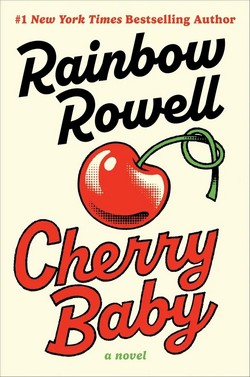
Cover of Cherry Baby by Rainbow RowellCherry Baby

by Rainbow Rowell

DETAILS:
Publisher: William Morrow
Publication Date: April 14, 2026
Format: Hardcover
Length: 406 pg.
Read Date: April 30-May 1, 2026
Buy from Bookshop.org Support Indie Bookstores

The tears on Cherry’s cheeks were fat.

In the months after Tom left—and the months after it became clear that he wasn’t coming home—Cherry’s tears had changed.

There were days when her eyes felt so full, the tears ran in rivulets. She’d swear that crying had never felt that way before—that before, she’d cried drops, and now, she cried streams. There must be some science to it, one sort of crying for transient pains and another sort for crippling grief.

What’s Cherry Baby About?

Cherry is a pretty successful marketer in Omaha; her husband was in advertising and did a little webcomic in his spare time. It was semi-autobiographical and had almost no followers. At some point, around the time that they started to see each other, a new character, “Baby” enters the cast (unbeknownst to her). Sometime after that, Tom’s comic caught fire. It was published in book form—and optioned as a film.

Now Tom is in L.A. working on the movie, and Cherry—along with his dog—are still in Omaha. Cherry and Tom are getting a divorce. And Cherry isn’t taking it well.

She’s in full-grieving mode. A few months in, she treats herself. Tom hated concerts, she’s always loved them, and one of her all-time favorite bands will be doing a show in town. So she goes, anticipating a pick-me-up. While there, Cherry runs into Russ—a friend from college. Russ isn’t “the one who got away.” But he is the big “what if” question in her life.

Apparently, the feeling was mutual. Even better, Russ hasn’t read Tom’s comic and knows nothing about it. He’s probably the only person in Omaha who doesn’t connect Cherry and Baby (even her family equates them, which Cherry hates). What could be better?

A solid meet-again-cute. A woman in need of a fresh start. A guy who is almost perfect. What could be better?

Fat Girl Life

A fat girl can’t wait for boys to pluck her like a flower or find her on the beach like a seashell.

Cherry had never been Cinderella. She’d always been the prince chasing down what she wanted. (She’d been a witch, enchanting apples.) She’d had to reach for things. For love. For attention.

Cherry has had nothing but Fat Girl Summers her whole life. And the other three seasons, too. She’s fat—she tells us this from the outset. Her mother and her sisters are, too. It’s not due to laziness, overeating (not that any of them are shy about eating, however), lack of exercise, sedentary lifestyles, or whatever. It’s a genetic thing; their family is just fat. And they’re all okay with it.

Well, they’re more than okay with it. Not quite proud of it, but unashamed is the better word.

And the fastest way to get on Cherry’s bad side is to imply there’s something wrong with it. She’s pretty (possibly more than pretty, it’s hard to judge from the way it’s presented), charming, fun, caring, and fat. In her eyes, she’s the whole package.

And it’s really hard to argue with her (if you wanted to).

This, obviously, has shaped her life—it’s not easy for Fat Girls/Women/Boys/Men in the U.S. She accepts it, realizes how it molded her personality and expectations—but thanks to her mothers and sisters, she’s been able to gain the level of confidence that she can get through it. Not unscathed, but whole.

The Proverbial Door is Ajar

Granted, it’s been a while since I read Rowell—but this is a bit, ahem, spicier than I appreciate. Definitely more than I’m used to with her. The door does close—eventually—on the sex scenes, but it stays open a lot longer than I think it needed to (or opens earlier than it needs to).

But that’s a matter of taste, I realize. And I’m not trying to put down Rowell here, I think I get why she made the decisions she did in this regard. But I’m not suggesting this book to my mother, sister, or daughter (but I wouldn’t discourage their reading it, either).

Why did I pick this up? Why did I keep reading?

I picked this up because I really enjoy Rowell’s writing (well, I couldn’t make myself pay attention to the fan fiction bits of Fangirl, so I didn’t read the spin-offs, but otherwise…), and I was glad to get a chance to read her again.

I stuck with it because I really liked Cherry and got invested in her life. Also, Rowell’s voice and tone is just so comfortable, there’s no reason to think about stopping.

I’m sure there’s a better way to put it—but comfortable is better than cozy, which I keep using. There’s a warmth, a humanity, and a little bit of humor—and so much heart. You just want to keep reading, no matter what’s happening (or isn’t happening.)

What does this book tell us about humanity?

I think this book has a lot to say about the need to love and the need to be loved—as you are and as the object of your love is. Not as you want them to be, not as they were, but as they are (although as they were does play a role)—and the same for you. Loved as you are, for who you are.

Not just romantic love, either. There’s friend love and family love, too. The book focuses on romantic love, but family love comes in second.

The depictions aren’t always pretty—in fact, in this book, many of them are messy and nasty, with a great sense of “it shouldn’t be like that.”

So, what did I think about Cherry Baby?

Cherry had trusted Tom. She’d taken him for granted—she’d thought that she was supposed to. She’d believed they were a settled question.

Cherry’s family is a nice, vaguely Lutheran, group who want four things for Cherry: 1. to be happy; 2. to get back together with Tom; 3. failing that, to start dating this nice man from their church; and 4. to come back to church (there’s a not-at-all-subtle link between 3 and 4). They’re a loving, close family, but really don’t get what makes Cherry tick. Still, their interactions—in person or in group chats is one of the many, many highlights of the book.

Stevie, Tom’s dog, is another one. She’s a Newfoundland-Great Pyrenees mix, and the cause of a huge increase in lint/hair rollers in Cherry’s budget. She was more dog than Cherry was ready for when Tom got her. And then when he left, the two only had each other. And a great bond was made. Stevie’s chaotic energy is wonderful. And one scene (spoiler: the dog lives) with the two of them toward the end of the book, just about broke me.

The rest of the book is just great. Once we meet Tom (in the book’s present), you understand why Cherry loves him—and why it’s so hard for her to be going through this period. When we see him at the beginning of their relationship, you have a hard time believing they’d go wrong. The romance with Russ could be just the thing to keep her afloat in this dark period in her life—and you can see it working.

But like that one guy said, the course of love never did run smooth. And some roads are bumpier than others. With sharp drop-offs to either side. And maybe some snow.

Still, Cherry’s the kind of person you want to watch navigate that course—so you can root for her, cheer for her, and maybe weep with her.

This post contains an affiliate link. If you purchase from it, I will get a small commission at no additional cost to you. As always, the opinions expressed are my own.
Irresponsible Reader Pilcrow Icon

REPOSTING JUST CUZ: Pug Actually by Matt Dunn: A Rescue Dog Tries to Return the Favor

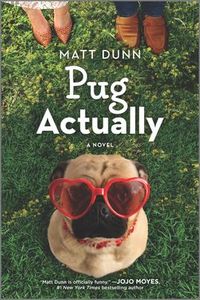
Cover of Pug Actually

Pug Actually

by Matt Dunn

Paperback, 313 pg.
Mira Books, 2021

Read: October 5-6, 2021
Grab a copy from your local indie bookstore!

What’s Pug Actually About?

Julie is in a bad relationship, for the last few years she’s been seeing a married man. You know the type—after a few months, he reveals that fact and keeps promising to leave his wife, but… Oh, he’s also her boss. Even if he wasn’t married, he doesn’t treat her well (and is definitely not a dog person). There’s just nothing good to say about Luke.

But Julie really doesn’t see that. Her dad. Jim, and her best friend, Pryia, do—but they can only say so much. But her other best friend, Doug, decides he’s going to do something about it. He starts looking for suitable matches—he doesn’t understand human attractiveness, so he knows he’s at a disadvantage. Early on, he tries to arrange a “meet cute” by knocking over someone’s coffee in the park, but has to abandon that method.

Then Julie is introduced to a recent divorce, Tom. Doug likes him right away (as does Julie’s dad)—even if he is a (gasp) veterinarian. Doug fakes a limp to get taken to Tom’s office, puts up with dog exercise classes in the part, and generally does everything he can to keep the two meeting up. He also steps up his antagonism toward Luke, to try to make it clear to Julie who he prefers.

Doug is a pug who was rescued by Julie and her dad after the death of Julie’s mom. He decides that rescuing can work both ways—and determines that he’s going to find Julie a better guy than Luke.

Without realizing that’s what they’re doing, Jim and Priya help out—discouraging time with Luke and playing up Tom (or anyone else), Jim even is partially responsible for introducing Tom to her.

Slowly something maybe starts between Julie and Tom, and things definitely (and largely independently from the Tom story) get worse between Julie and Luke. And Doug’s along all the while doing his best to help.

The Very Sweet Subplot

When Jim and Doug take their walks, Jim has a habit of stopping by a coffee shop run by a woman named Dot. Dot’s interest in Jim is about as obvious as Doug being a dog. But Jim’s not ready to see anyone after his wife, so is either oblivious or chooses to be. Tom is actually Dot’s son.

About the time that Tom meets Julie, Jim finally opens himself up to the idea of seeing someone. Watching Dot and Jim’s relationship start is possibly the best part of the book (it certainly comes with less drama and more fun).

Doug as Narrator

Going back to Debora and James Howe’s Harold and up through Spencer Quinn’s Chet, I’ve been a sucker for dog narrators. It’s a weakness, and not one I’m in any rush to lose. Doug is one more in a line of dog narrators that has charmed his way into my heart.

Doug’s rather erudite and educated for a canine writer. Sure, there are human things he doesn’t understand, and a few things that a small pug can’t see. But he’s not as easily distracted as Chet, for example. He’s capable of rattling off a Chinese proverb in Chinese—perhaps because he is a pug, because he doesn’t show an affinity for other languages.

He’s also like every dog I’ve ever met, but especially like the pug sitting next to me, and is always hungry—and a little pudgy (hence the need for the exercise class). And while everyone will talk about his need to lose weight, he’s really good at getting them to give him a treat (or finding some on his own).

I really enjoy everyone spelling V-E-T every time they mention Tom’s profession, although as Doug notes, he can spell. The reliable “Big Stretch!” said by everyone who isn’t Luke when Doug stretches brought a grin to my face (and has made me a bit self-conscious when I do the same to my canine companions).

So, what did I think about Pug Actually?

This is a sweet, cute book. Pug Actually is a pretty standard rom-com, you can see most of the story beats coming, but Dunn writes them in an effective way, so who cares? Adding Doug to the mix adds a layer of charm and humor that help make this more than standard.

There’s a moment near the end that really doesn’t seem necessary to add one last hurdle to the Tom and Julie romance. It soured my wife a bit on the book, but me less so. I see where it was necessary—or at least helpful—to give Doug a couple of more shining moments. But the ending was nice enough to make up for whatever stumble that plot point made.

When he was on the Author Stories podcast, Dunn suggested that there might be a sequel in the works. If one appears, I’ll jump on it.

If you’re in the mood for a pleasant, light read, I recommend this. Even better if you’re in the mood for a rom-com. If you’re a dog lover, it’ll help, but even cat people should find plenty to love here.


3.5 Stars

This post contains an affiliate link. If you purchase from it, I will get a small commission at no additional cost to you. As always, opinions are my own.

Quick-Take Catchups: The Leftovers from February

In an effort to keep my “To Write About” pile from getting out of control, I’ve set a requirement to myself to write a catch-up post at the end of the following month (e.g., At the end of February, write about January books; at the end of June, write about the May books I haven’t gotten to yet; etc.). As always, the point of these quick-takes is to emphasize pithiness, not thoroughness.


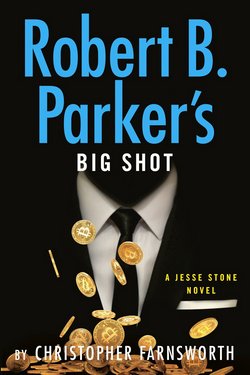
Cover of Big Shot by Christopher FarnsworthRobert B. Parker’s Big Shot

by Christopher Farnsworth

DETAILS:
Series: Jesse Stone, #23
Publisher: G.P. Putnam's Sons 
Publication Date: February 10, 2026 
Format: Hardcover
Length: 320 pg. 
Read Date: February 19-20, 2026 
Buy from Bookshop.org Support Indie Bookstores

This was a perfectly decent Jesse Stone adventure. Jesse’s fate never felt like it was really in danger—but that’s okay, it’s about the struggle, the journey, right?

I’m a little disheartened by the way that Farnsworth is dealing with Lundquist. I know he’s not Healey—and I’m glad for it, I don’t want Farnsworth or anyone else turning him into a version of him. But the version of him being all by the book and cold here, really doesn’t match with the willing-to-be-maverick we met in Pale Kings and Princes, and I don’t think we’ve been given reason for that change (and I want to say this isn’t the first time I’ve been troubled by his characterization).

I really didn’t like Molly’s depiction for good chunks of the book—Farnsworth had a plan for her, and I liked most of what she did—I just think there was a better way to set up her investigative arc. (it’s hard to talk about vaguely). I think Farnsworth is really finding difficulty with her as she grows as a police officer—I think Lupica, did, too. Hopefully he figures it out soon (I should note, I like the way he’s dealing with Suit in the same situation).

Anyway, it’s not a stellar installment in the long-running series—but it did its job well.
Pilcrow page divider

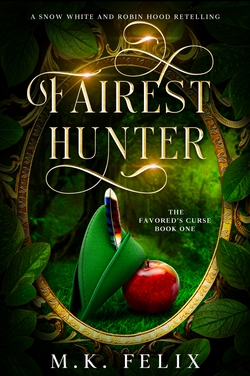
Cover of Fairest Hunter by M. K. FelixFairest Hunter

by M. K. Felix

DETAILS:
Series: The Favored's Curse, #1
Publication Date: January 9, 2026 
Format: e-Book 
Length: 351 pg. 
Read Date: February 25-26, 2026

A little heavy on the romance for my taste—but that’s what it’s marketed as, so I lived with it. I’ll note it’s pure and chaste romance, with no need for doors to be closed (well, at least the primary romance…the door might be firmly shut on another).

So it’s a gender-swapped Robin Hood—who also happens to be the King’s Huntsman. So, instead of taking the (male) Snow White figure and leaving him with some dwarves, he’s left with six merry men. These men rob from the rich, give to the poor, while looking for an opportunity to take out the Evil King (who turns out to be using a bespelled mirror to work his magic).

It’s a fun story, just deep enough to justify—fast acting enough that you don’t care. I quite enjoyed it and am looking forward to reading further in the series.
Pilcrow page divider

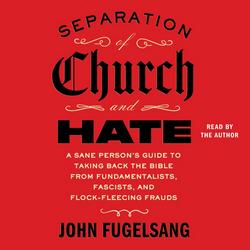
Cover of Separation of Church and Hate by John FugelsangSeparation of Church and Hate: A Sane Person’s Guide to Taking Back the Bible from Fundamentalists, Fascists, and Flock-Fleecing Frauds

by John Fugelsang

DETAILS:
Publisher: Simon & Schuster Audio  
Publication Date: September 09, 2025  
Format: Unabridged Audiobook
Length: 9 hrs., 24 min. 
Read Date: January 30-February 2, 2026
Buy from Bookshop.org Support Indie Bookstores

Okay, I’d played with doing a full post on this one, interacting with all the issues I had—but I didn’t take notes or anything as I was listening. So, I’ll try this.

First—I have a lot of sympathy toward the Fugelsang’s goals and aims. Not to the same extent as he does—but still, I lean in very similar directions and/or share concerns.

Second—this book is a mess. There’s a good deal of re-hashing of Liberal* Theology that has been answered no later than the 1920s and 30s. There’s as much special pleading and Scripture twisting in these pages as he accuses those he takes issue with of doing. His notion of the purpose of Christianity, its content, and its focus—are completely wrong and foreign to the Bible itself. (as is the case for many of his targets).

I’m glad I read it because it scratched an itch in curiosity, but…that’s the only good thing I can say about the experience.

* There’s a distinction between Liberal Theology and Liberal Politics. While the Venn diagram has some overlap (a lot of overlap for Fugelsang), they shouldn’t be confused.
Pilcrow page divider

Cover of All Accounts Settled by Drew HayesAll Accounts Settled

by Drew Hayes, read by Kirby Heyborne

DETAILS:
Series: Fred, The Vampire Accountant, $9
Publisher: Tantor Media, Inc 
Publication Date: January 13, 2026 
Format: Unabridged Audiobook
Length: 11 hrs., 44 min. 
Read Date: February 25-27, 2026  
Buy from Bookshop.org Support Indie Bookstores

Fred’s adventures bow out the same way they entered the scene—mildly amusing, full of kindness and hope, generosity of spirit, and community. There’s almost no suspense—which is fine, this series didn’t depend on that.

It’s just Fred facing overwhelming odds, coming up with a clever solution or two, relying on his friends (and them relying on him, too). He found a new level to his magic—which was pretty cool, I’ve gotta say. And scored some major victories. The last chapter (or was it an epilogue?) ties up a lot of loose ends and provides a glimpse into Fred’s future.

Heyborne’s narration was as good as ever.

This was a fitting and entertaining ending to this series. Glad I was along for the ride.

Pilcrow page divider

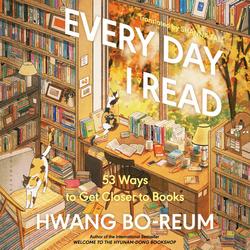
Cover of Every Day I Read by Hwang Bo-reumEvery Day I Read: 53 Ways to Get Closer to Books

by Hwang Bo-reum, translated by Shanna Tan, read by Rosa Escoda

DETAILS:
Publisher: Bloomsbury Publishing 
Publication Date: December 2, 2025  
Format: Unabridged Audiobook 
Length: 3 hrs., 49 min.
Read Date: February 23-24, 2026
Buy from Bookshop.org Support Indie Bookstores

This was a perfectly pleasant book. And that’s about all I have to say—there was nothing that made me think—wow! She gets it. Nothing where I thought—I’ve been trying to find the words to express that as a reader. Just a vague pleasantness—that maybe went on too long. Maybe 25-40 ways, max, would’ve worked better.

There seemed to be an expectation that the reader would be familiar with her other work(s) anytime she referenced them—and if you weren’t (or even aware of their existence), it was hard to connect with what she was saying. I can both understand that given the nature of this book she didn’t have time (or possibly the need) to add context, explain the gist of whatever she was referencing. But…it left me cold.

Pilcrow page divider

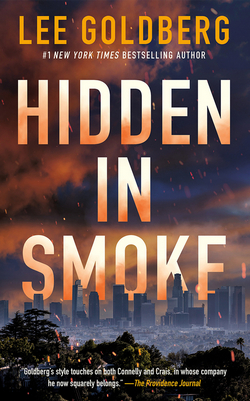
Cover of Hidden in Smoke by Lee GoldbergHidden in Smoke

by Lee Goldberg

DETAILS:
Series: Sharpe & Walker, 3
Publisher: Thomas & Mercer
Publication Date: April 22, 2025 
Format: e-Book 
Length: 300 pg. 
Read Date: February 5-6, 2026 
Buy from Bookshop.org Support Indie Bookstores

I feel like I should have a lot to say about this book—but I don’t. Goldberg delivers what we expect from him—a fast and fun story, some good twists, some great lines—and the return of a few characters I didn’t expect to see again.

There’s part of me that wonders about the scope of all the fires in this series—but, we’ve all seen what happens to California all too often lately. It’s sadly realistic.

I really enjoy these characters, and can’t imagine that ending. I just hope that I can find something to say about the next book (which I can’t wait for).

Pilcrow page divider

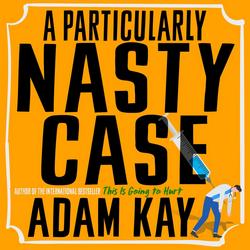
Cover of A Particularly Nasty Case by Adam KayA Particularly Nasty Case

by Adam Kay, read by Andrew Serkis

DETAILS:
Publisher: Hachette Audio 
Publication Date: September 16, 2025 
Format: Unabridged Audiobook
Length: 10 hrs., 9 min.   
Read Date: February 2-5, 2026 
Buy from Bookshop.org Support Indie Bookstores

This was…a mess. There’s just no character that I could enjoy spending much time with. The characters’ motivations seem inconsistent and capricious. The comedy (or what I think was comedy) didn’t work, the mystery was pretty weak, and the book seemed more interested in the chaos surrounding the murder than anything else.

Take the murder out, tell some other kind of story, and it probably would’ve worked better. And still wouldn’t have been for me—but I wouldn’t have complained about it.

Pilcrow page divider

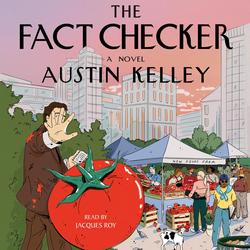
Cover of The Fact Checker by Austin KelleyThe Fact Checker

by Austin Kelley, Jacques Roy

DETAILS:
Publisher: Simon & Schuster Audio 
Publication Date: April 15, 2025 
Format: Unabridged Audiobook
Length: 7 hrs., 1 min.   
Read Date:  
Buy from Bookshop.org Support Indie Bookstores

If the destination was satisfying, I think I could’ve put up with the journey. If the journey was a bit more interesting/engaging, I could’ve put up with the destination.

But a miss on both, just made this a waste of potential. I liked the premise, there were some good moments, I liked the writing—it just seemed wasted.

Pilcrow page divider

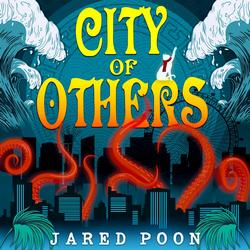
Cover of City of Others by Jared PoonCity of Others

by Jared Poon, read by David Lee Huynh

DETAILS:
Series:  The DEUS Files, #1
Publisher: Hachette Audio 
Publication Date: January 13, 2026 
Format: Unabridged Audiobook 
Length: 9 hrs., 16 min.  
Read Date:  
Buy from Bookshop.org Support Indie Bookstores

This is the first installment in what could become a favorite UF series. Think about the Folly (from The Rivers of London)* filled with humanoid characters from McGuire’s InCryptid series. But set in Singapore. our under-funded and overworked team deal with the supernatural side of Singapore—without letting the non-supernatural set know what they’re up to.

As things are wont to do—something goes wrong, in a very significant way—and the entire city (at least) is soon at risk.

Poon writes with a lighter touch, but he’s not afraid to let things get serious. There are some great emotional moments, and some great mystical/magical scene, too.

* It might be more accurate to describe it as Strout’s Department of Extraordinary Affairs than the Folly—but the Folly is better known.

This post contains affiliate links. If you purchase from any of them, I will get a small commission at no additional cost to you. As always, opinions are my own.

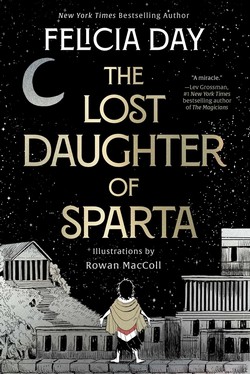
The Lost Daughter of Sparta by Felicia Day, Rowan MacColl: The Unknown Sister

Cover of The Lost Daughter of Sparta by Felicia DayThe Lost Daughter of Sparta

by Felicia Day, illustrated by Rowan MacColl

DETAILS:
Publisher: Gallery Books
Publication Date: March 17, 2026
Format: Hardcover
Length: 193 pg.
Read Date: March 21, 2026
Buy from Bookshop.org Support Indie Bookstores

The Origin of the Book

Day explains this better in the book, but I bring this up because it’s kind of a key to thinking about this book. Day came across a reference to a curse that was imposed on Helen of Troy and her sisters—which led to her rethinking Helen. As she looks into that some more, she reads about Helen’s sister Philonoe being made immortal by Artemis. And that’s it. No details provided.

Which gets her imagination percolating and us getting this graphic novel.

What’s The Lost Daughter of Sparta About?

Whereas big sister Helen was a legendary beauty (literally), Philonoe was born with a birthmark denoting her as ugly—think Gorbachev’s scalp birthmark but covering about half her face. She’s sent to live with goatherds for most of her life, but is brought back by her parents following the Trojan War to get married.

Her future husband is a prince of Gla. If he has a redeeming quality to him, Day didn’t do a great job of making sure we saw it. Her mother reveals to her the nature of the curse that Aphrodite had put upon her and her sisters.

Philonoe goes to Aphrodite’s to ask for help with this curse and is sent on a quest to retrieve three items. Due to a previous sacrifice to Artemis, that goddess is paying attention to her, too. Artemis plays Ghosts of Sister Present with her, letting her see how things are going for them in a way to help her learn about the world.

What did I think about the art?

I’m of two minds when it comes to the art. It’s not the cleanest, most attractive, or most consistent art you’ve come across. But there’s a charm to it—the more I read, the more I enjoyed it.

I know MacColl is capable of cleaner work—I’ve checked out their website and have seen it. So what I’m trying to talk about has to be intentional. There’s part of me that sees some similarities between the art and figures on Grecian Urns I’ve seen in books.

So, what did I think about The Lost Daughter of Sparta?

There’s just nothing subtle about the storytelling, or the dispensing of the moral(s) of the story. It might have been a bit more effective if it were.

Still, it’s hard to fault the moral(s) she’s dispensing—particularly if her daughter is the primary target audience.

This isn’t a feminist re-imagining of a classic character, like so many we’ve seen. Philonoe is a blank slate as far as history and literature are concerned, so Day has the freedom to draw whatever she wants on it—and she’s taken advantage of it. There’ve been so many interpretations of Aphrodite and Artemis over the centuries that one more isn’t notable (and Day likely echoes as many as she diverges from)—the two of them are rather amusing together.

It’s a classic hero’s journey that is full of commentary on Greek heroes and how they are used by the Olympians. I’d have liked to see a bit more of that, really. But what Day gave us was pretty effective.

It’s a fast read with some fun turns—it’s not perfect, but what is? Is Day capable of better? Yes. Can you feel her investment in the project on every page? Yeah, pretty much.

I’m glad that I read The Lost Daughter of Sparta, and I assume anyone the premise appeals to will be, too. I’d suggest checking it out.

This post contains an affiliate link. If you purchase from it, I will get a small commission at no additional cost to you. As always, the opinions expressed are my own.
Irresponsible Reader Pilcrow Icon

Head Fake (Audiobook) by Scott Gordon, read by Nick Mondelli: Hoop Dreams and Sometimes Crushing Reality

Cover of Head Fake by Scott GordonHead Fake

by Scott Gordon, read by Nick Mondelli

DETAILS:
Publisher: Tantor Media, Inc.
Publication Date: April 29, 2025
Format: Unabridged Audiobook
Length: 9 hrs., 43 min.
Read Date: February 27-March 2, 2026
Buy from Bookshop.org Support Indie Bookstores

What’s Head Fake About?

Mikey has been unhoused a lot recently, but is currently staying with his father to recover from a sickness. If he can keep a job for a while, he can stay with him. His dad has a connection that can get Mikey a job at a school for high-risk offenders with mental illnesses as a bus driver.

It’s not much, but it’s something.

Then, due to a fun set of circumstances, he’s put in the job of coaching the team’s small basketball team.

Oh, I should probably mention that Mikey’s dad is a couple of months away from becoming the winningest High School basketball coach in the U.S., and despite the tortured relationship between the two, Mikey learned a lot from him.

Mikey needs to get the trust of his team (and the school’s administration), fight through his own mental illness struggles, and keep his father from tossing him out. That should be no problem at all, right?

What did I think about the Narration?

I have no notes. Mondelli got everything from Mikey’s attitude, the students, his father, and everyone else just right.

Why did I pick this up? Why did I keep reading?

I honestly don’t remember how I came across this book. But I put it on a list at some point, and eventually got around to picking it up.

I stuck with it because I liked Mikey—his voice and him as a person. He got his hooks in me right away and wouldn’t let go. I really just had to find out what happened to him—the more I got to know the students, the more I got invested. (just the way a reader is supposed to)

What does this book tell us about humanity?

This is a book about broken people helping other broken people (and, in some cases, hurting broken people). While there are some similarities in the problems each character has faced and is facing, it’s not the commonalities that connect them—it’s that they’ve faced a problem and are still trying, however weakly.

Also, a love for basketball.

So, what did I think about Head Fake?

While set in a high school, this is not a YA book. But it is YA-friendly.

This book is really a mash-up of two sure-fire feel-good stories. First, you’ve got an underdog sports team battling just to be taken seriously—and it ends up winning a lot. Gordon nails this part. Granted, it’s hard to mess that kind of story up—but there’s something so satisfying when it’s done right.

The other part of the mash-up is the outsider connecting with students in an inspirational way. Think Lean on Me or Sister Act 2 (more of the latter than the former). Granted, a bus driver isn’t much of an authority figure—but that’s where the coach part comes in.

You combine the two with some strong character growth from one of the underest underdog characters I can think of, some dumb humor, and a metric ton of earnest goodwill, and you’ve got yourself a wholly pleasant book that I can’t imagine a reader/listener wouldn’t be charmed by.

This post contains an affiliate link. If you purchase from it, I will get a small commission at no additional cost to you. As always, the opinions expressed are my own.
Irresponsible Reader Pilcrow Icon

The Land of Sweet Forever by Harper Lee: Short Works by an American Master

Cover of The Land of Sweet Forever by Harper LeeThe Land of Sweet Forever: Stories and Essays

by Harper Lee

DETAILS:
Publisher: Harper
Publication Date: October 21, 2025
Format: Hardcover
Length: 224 pg.
Read Date: January 28-30, 2026
Buy from Bookshop.org Support Indie Bookstores

What’s The Land of Sweet Forever?

The short version is that this is a collection of eight short stories and eight short non-fiction pieces by Harper Lee.

That seems a bit lacking, so here’s what the Publisher says:

Harper Lee remains a landmark figure in the American canon – thanks to Scout, Jem, Atticus, and the other indelible characters in her Pulitzer-winning debut, To Kill a Mockingbird; as well as for the darker, late-’50s version of small-town Alabama that emerged in Go Set a Watchman, her only other novel, published in 2015 after its rediscovery. Less remembered, until now, however, is Harper Lee the dogged young writer, who crafted stories in hopes of magazine publication; Lee the lively New Yorker, Alabamian, and friend to Truman Capote; and the Lee who peppered the pages of McCall’s and Vogue with thoughtful essays in the latter part of the twentieth century.

The Land of Sweet Forever combines Lee’s early short fiction and later nonfiction in a volume offering an unprecedented look at the development of her inimitable voice. Covering territory from the Alabama schoolyards of Lee’s youth to the luncheonettes and movie houses of midcentury Manhattan, The Land of Sweet Forever invites still-vital conversations about politics, equality, travel, love, fiction, art, the American South, and what it means to lead an engaged and creative life.

There are three pieces that I want to focus on: two short stories and one essay.

“The Cat’s Meow”

This story takes place in Maycomb—our favorite fictional community. Our narrator (a thinly disguised Harper Lee) returns home for a visit from New York City, and stays with her sister (a thinly disguised version of her sister, Alice). In this story, Alice has a “Yankee Negro” gardener with a criminal past. His actions, life, and interactions with people in the community are the focus of the story.

The narrator is clearly not comfortable with the way that the gardener is treated—but lacks the courage to follow through beyond a comment or two lest she do something to cause an irreparable rift.

It’s easy to judge the narrator (as the editor seems to in her introduction), but it’s also really easy to empathize and root for her quiet push-back and hope for something bigger around the corner. Anyone who’s been in a dicey conversation in the last few years with a relative on the other side of a political/social divide will be able to relate to this.

The characters are fully human and flawed. Everything is incredibly relatable, and you can’t help but feel for the gardener (even when he makes some huge errors in judgement)

“The Land of Sweet Forever”

This story right here is worth the purchase price of the book. It showed up in Go Set a Watchman, but don’t hold that against it.

There’s something about the characters and conversations in this story that just worked for me—the storyline itself is almost non-existent, but the scenes that make it up are so good that it doesn’t matter.

I can’t put my finger on what about this that clicked with me, and I really don’t know how to discuss it. It’s a simple little story that made my heart swell.

“Love—in Other Words”

I wasn’t sure what to expect from the non-fiction portion of the book, but when I finished it, I put in my notes, “If this is what these essays are going to be like, I’m very happy.” Sadly, this was the best of the batch—by a lot.

It’s really a basic essay about love—Lee invokes historical figures, general sentiment, literature, and the Bible, and comes up with something that just strikes you as true. Practically timeless. Yeah, it’s basic, but it doesn’t need to be more.

So, what did I think about The Land of Sweet Forever?

A lot of the stories/pieces were just fine or underwhelming—the collection as a whole isn’t that great. The high points were high (and I didn’t discuss them all), and the low points were forgettable.

But this is definitely a case of the whole being greater than the sum of its parts. We get to see a lot of different aspects of Lee here—ways she developed as a writer. The way she can lift bits of her older writing and incorporate them into her novels. Her personality. This is a great way to understand her.

I’ve heard and read the story so many times about her friends giving her a place to live for a year so she can focus on To Kill a Mockingbird. We all know how close she was to Capote, or how much she admired Gregory Peck. Reading those things in her own words just makes those things we all know resonate so much more clearly.

I don’t know how often I’ll read this entire collection again (certainly before I re-read Go Set a Watchman), but I can dip back into it here and there. But I’m so glad we have it. I think if you have more than a passing interest in Lee, you will, too.

This post contains an affiliate link. If you purchase from it, I will get a small commission at no additional cost to you. As always, the opinions expressed are my own.
Irresponsible Reader Pilcrow Icon

PUB DAY REPOST: Black Bag by Luke Kennard: Funny and Surreal

I tried to come up with a punny post title about the novel carrying a lot, like a bag. Just didn’t work.


Cover of Black Bag by Luke KennardBlack Bag

by Luke Kennard

DETAILS: 
Publisher: Zando
Publication Date: March 17, 2026
Format: eARC
Length: 352 pg.
Read Date: March 7-11, 2026
Buy from Bookshop.org Support Indie Bookstores

What’s Black Bag About?

A struggling character actor (who seems to primarily pay the bills with dinner theater gigs) receives an unusual offer—a local university professor wants to hire him as part of an experiment. He is to attend three class sessions a week wearing a large black satchel—only his lower legs and feet are to be visible. He is to not interact with anyone—no speaking, no gesturing, no reacting to anything while on campus.

In exchange, Black Bag gets a roll of cash each week.

Easy enough, right? But it’s harder to not interact with other people than our actor realizes. And while this inspires him to look for other atypical roles, they’re not that easy to get (and he’s not that sure he wants them). His childhood friend—a game streamer—starts to see ways to monetize Black Bag (I’m not saying his friend’s hallucinogen use inspires these ideas, but I’m not saying they don’t). Also, another professor starts to take an interest in Black Bag for their own purposes.

So, what did I think about Black Bag?

Let me start by saying that the opening paragraphs to this are among my favorite in the last year or so—the rest of the book is worth the time, too.

Beyond that…I’m finding it difficult to really talk about what the novel seems to want to talk about without talking about events and things said in the last 10-20% of the book. I’m not sure how important it is to avoid plot points when discussing this particular novel, because the plot seems tertiary (at best) for Black Bag, but I have an aversion to doing that.

I’m not entirely convinced that Kennard has an agenda that he’s trying to push—and if he does, he’s certainly not leading anyone by horns to it—but he wants the reader to think about certain ideas/themes. Some prominent ones (I won’t try to be exhaustive here, I’d fail) are: the place of art in society and how it should try to shape discourse; the intensity of online communities—and how fragile they are; sex without emotional attachment; monetization of personal details online; post-humanism; academic politics; contemporary expressions of masculinity—and the various movements cropping up to address the “crisis” of it; the need for attachment to others.

If the plot is tertiary, the themes and issues in focus are definitely primary. I think the characters are, too. At times—and even now—I’m tempted to see the characters as flat, merely placeholders for Kennard to attach arguments/points of view on. Arguably, this is a valid reading. But each of the characters is more than that—they’re all fairly well-drawn, and the depth of each one is seen in the way they react to and interact with Black Bag. Just as Dr. Blend intended.

Do they project their desire for a get-rich-quick scheme onto it? Or perhaps they see it as a tool for sexual pleasure. One student sees the bag as a solid point to discuss the class with (at?) in place of the erratic professor. And then there’s the narrator himself, at times in danger of becoming more than Black Bag—detached from humanity, his career, his reality—losing himself to fantasy during the lectures, observing those around him, doing little more than noting their reactions to him. The more we consider how the characters respond to Black Bag, the more we see about them. And, breaking the fourth wall (the narrator does this himself, inviting the reader to do the same), the way the reader reacts to Black Bag at various points of the novel reveals something about ourselves, too.

The narration itself is deceptively breezy and light. It is possible to lose yourself in the pacing and ease of the narrator’s conversational address to the reader and gloss over details—inherently, this is a strength. It would be very easy for this book to fall over under the weight of its own pretensions, but Kennard protects it from that. It keeps the reader engaged and entertained—Black Bag is frequently funny, both in how he bumbles through life and how he describes that to the reader.

I also find myself asking at this point, how would I react to the novel on a re-read? Knowing where all of this is happening, what meaning that Black Bag finds (for example) in the experiment, how would I react to him at the beginning, and in his early sessions. As a thought experiment, I’m getting nowhere—but I can’t stop wondering.

Surreal and absurd in the best way, full of challenging ideas, and brought to life through a very oddball collection of characters, Black Bag is a novel you won’t soon forget (nor will you want to).

Disclaimer: I received this eARC from Zando Projects via NetGalley in exchange for this post which contains my honest opinion—thanks to both for this.

This post contains an affiliate link. If you purchase from it, I will get a small commission at no additional cost to you. As always, the opinions expressed are my own.
Irresponsible Reader Pilcrow Icon

Black Bag by Luke Kennard: Funny and Surreal

I tried to come up with a punny post title about the novel carrying a lot, like a bag. Just didn’t work.


Cover of Black Bag by Luke KennardBlack Bag

by Luke Kennard

DETAILS: 
Publisher: Zando
Publication Date: March 17, 2026
Format: eARC
Length: 352 pg.
Read Date: March 7-11, 2026
Buy from Bookshop.org Support Indie Bookstores

What’s Black Bag About?

A struggling character actor (who seems to primarily pay the bills with dinner theater gigs) receives an unusual offer—a local university professor wants to hire him as part of an experiment. He is to attend three class sessions a week wearing a large black satchel—only his lower legs and feet are to be visible. He is to not interact with anyone—no speaking, no gesturing, no reacting to anything while on campus.

In exchange, Black Bag gets a roll of cash each week.

Easy enough, right? But it’s harder to not interact with other people than our actor realizes. And while this inspires him to look for other atypical roles, they’re not that easy to get (and he’s not that sure he wants them). His childhood friend—a game streamer—starts to see ways to monetize Black Bag (I’m not saying his friend’s hallucinogen use inspires these ideas, but I’m not saying they don’t). Also, another professor starts to take an interest in Black Bag for their own purposes.

So, what did I think about Black Bag?

Let me start by saying that the opening paragraphs to this are among my favorite in the last year or so—the rest of the book is worth the time, too.

Beyond that…I’m finding it difficult to really talk about what the novel seems to want to talk about without talking about events and things said in the last 10-20% of the book. I’m not sure how important it is to avoid plot points when discussing this particular novel, because the plot seems tertiary (at best) for Black Bag, but I have an aversion to doing that.

I’m not entirely convinced that Kennard has an agenda that he’s trying to push—and if he does, he’s certainly not leading anyone by horns to it—but he wants the reader to think about certain ideas/themes. Some prominent ones (I won’t try to be exhaustive here, I’d fail) are: the place of art in society and how it should try to shape discourse; the intensity of online communities—and how fragile they are; sex without emotional attachment; monetization of personal details online; post-humanism; academic politics; contemporary expressions of masculinity—and the various movements cropping up to address the “crisis” of it; the need for attachment to others.

If the plot is tertiary, the themes and issues in focus are definitely primary. I think the characters are, too. At times—and even now—I’m tempted to see the characters as flat, merely placeholders for Kennard to attach arguments/points of view on. Arguably, this is a valid reading. But each of the characters is more than that—they’re all fairly well-drawn, and the depth of each one is seen in the way they react to and interact with Black Bag. Just as Dr. Blend intended.

Do they project their desire for a get-rich-quick scheme onto it? Or perhaps they see it as a tool for sexual pleasure. One student sees the bag as a solid point to discuss the class with (at?) in place of the erratic professor. And then there’s the narrator himself, at times in danger of becoming more than Black Bag—detached from humanity, his career, his reality—losing himself to fantasy during the lectures, observing those around him, doing little more than noting their reactions to him. The more we consider how the characters respond to Black Bag, the more we see about them. And, breaking the fourth wall (the narrator does this himself, inviting the reader to do the same), the way the reader reacts to Black Bag at various points of the novel reveals something about ourselves, too.

The narration itself is deceptively breezy and light. It is possible to lose yourself in the pacing and ease of the narrator’s conversational address to the reader and gloss over details—inherently, this is a strength. It would be very easy for this book to fall over under the weight of its own pretensions, but Kennard protects it from that. It keeps the reader engaged and entertained—Black Bag is frequently funny, both in how he bumbles through life and how he describes that to the reader.

I also find myself asking at this point, how would I react to the novel on a re-read? Knowing where all of this is happening, what meaning that Black Bag finds (for example) in the experiment, how would I react to him at the beginning, and in his early sessions. As a thought experiment, I’m getting nowhere—but I can’t stop wondering.

Surreal and absurd in the best way, full of challenging ideas, and brought to life through a very oddball collection of characters, Black Bag is a novel you won’t soon forget (nor will you want to).

Disclaimer: I received this eARC from Zando Projects via NetGalley in exchange for this post which contains my honest opinion—thanks to both for this.

This post contains an affiliate link. If you purchase from it, I will get a small commission at no additional cost to you. As always, the opinions expressed are my own.
Irresponsible Reader Pilcrow Icon

Page 2 of 54

Powered by WordPress & Theme by Anders Norén