Category: General Fiction/Literature Page 15 of 52

Yet A Few More Quick Questions with…Matthew Hanover

Another novel from Matthew Hanover means another chance to ask him a few questions–I’ve been looking forward to sharing this with you–it’s a little look behind the curtain, a little insight to his process. I enjoyed this, I hope you do, too.

And remember–it’s publication day for Not Awkward–go get yourself a copy. And if you haven’t yet, grab Not Famous and Not Dressed, too!


I remember seeing you tweet about working on Not Awkward and Book 4 at the same time. How was that process? Was it the kind of thing you’d do again, or was that a special set of circumstances?

It was a very confusing time, to be honest. I’d had the idea for Not Awkward since before Not Dressed was complete, and I wanted to start… but it took me a long time to really get into it because shortly after Not Dressed was published, the pandemic hit. For some reason, that just made it very difficult to get into a creative writing state of mind. So, when I found myself in that place, I’d come up with the idea for my fourth novel, and it came in a torrent, and I felt the best thing to do was to just let myself write whichever novel I was inspired to work on at any given time. Eventually, Novel #4 eclipsed Not Awkward in word count, though eventually, I had to focus on Not Awkward alone.

I used to think it would be impossible to write two books at the same time, but the more I write, the easier it is to switch lanes and just get absorbed in one story or another. In fact, I’ve already written a small amount for Novel #5, and anticipated getting a jump on it as I complete #4.

So in the Not-verse, or Alli-verse, or whatever you’re calling it, you’re scattering characters from the previous novels in the next. Is that something you plan before you start to write—or do you just get to the point where you see an opportunity to bring back someone and go for it? In particular, I’m thinking of [redacted], who readers may look at differently than they did before after her pivotal role here. How long were you sitting on that?

I honestly hadn’t considered writing novels in a shared universe until late in the writing of Not Famous when I was nearly finished and hated the idea of leaving those characters. The problem was that I didn’t want to write a sequel because I felt Nick and Alli’s story had reached a point where I’d taken it as far as I could. But, writing separate novels in a shared universe allowed me to offer little glimpses into characters’ lives outside of their primary story, while also allowing for each novel to stand on its own.

Not Awkward is about the road not taken (or the road you’re shoved off of). Sure, Leila and Scott were in pretty good places when we met them, but that doesn’t mean they don’t want to check out the greenness of the grass on the other side of the fence. Is this Matthew Hanover working through some stuff? Waxing philosophical? Or is it just the byproduct of telling Leila and Scott’s story?

In Not Awkward, the main character, Scott, learns that his ex-girlfriend’s father has passed away, decides to go to the funeral, and ends up staying for a few days and a whole bunch of things happen. Rest assured, I’ve never been in such a situation. However, the idea for this novel came to me after I found out that a college girlfriend’s father had passed away. It did take me a long time to get over that relationship, and I never would have considered going to his funeral (in fact, I found out well after the fact) but it did get me thinking about a lot of “What ifs” and I could tell there was a story in that. There are other biographical elements in the story, but very much fictionalized. But, truthfully, I got over her many, many years ago.

One thing I picked up from reading your novel is just how bad a job Tropper’s Foxman family was at sitting Shiva. How do you approach something so important, so sacred to many, and yet use it for entertainment purposes? I imagine it’s tricky—did you go into it saying “I’ll play with this part of it, but not that part?”

Honestly, it never really occurred to me that a shiva might be problematic. I needed a reason to keep Scott around for multiple days, and a shiva just worked out beautifully. Of course, Leila’s family, the Rosenfelds, are very different from the Foxmans. Leila is an only child, while the Foxmans are four adult children of a dysfunctional family. Judd Foxman also got to tell their story as an insider, as Scott was more an outside observer trying his best to not be a distraction and failing miserably. I felt the best thing to honor the Jewish traditions was to have them explained for those who may not be familiar with them.

Speedcubing, eh? Where did that come from for Charlotte? How are you with a Rubik’s Cube?

This was pure serendipity. I’d always seen the character of Charlotte, Scott’s fiancée, as being uber smart and socially awkward, and I’d been trying to think of some kind of quirk that spoke to that. And I kept coming up stuck. Then, I happened to watch “The Speed Cubers” on Netflix, and was totally blown away at how there are people who can solve the Rubik’s cube in a matter of seconds. And I thought, “That’s it!” and then I researched the hell out of speedcubing, and the more I found out, the more it was clear this was just perfect for the character of Charlotte.

As for myself, I remember having a Rubik’s cube when I was a kid, but solving it was something I never accomplished. Sadly, I lack the patience and discipline to learn the algorithms necessary to solve it!

Not to take the focus off of Not Awkward, but what’s the timeline for #4? Are you still wrapping it up, or have you moved on to what’s next? Care to tease anything?

It’s actually been a few months since I worked on it, but it currently sits at around 23,000 words. So, it has a long way to go. While I’m not ready to discuss plot points, I can say that my next two novels will be focusing on characters in their late 30s and early 40s, not their 20s like my first three novels. I’m ready to focus on stories of people in a slightly later stage of life.

Thanks for taking the time to answer these—and for Not Awkward—I had a blast reading it and hope it finds its audience.


PUB DAY REPOST: Not Awkward by Matthew Hanover: Moving On by Looking Back

I’m very excited to bring this back to the attention of my readers today. Mark me down as a big Matthew Hanover fan, and this book will show you why. I wrote this about the draft that I read as a beta reader, so the one that’s on sale today is surely a little different. I’m looking forward to seeing what the final product is like—I know it’ll be a good one. Be sure to come back a little later, I’ve got a Q&A with Hanover coming up.


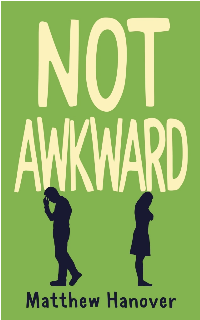
Not Awkward

Not Awkward

by Matthew Hanover
Series: Wallflowers, #3

Beta Version
2021

Read: May 9-18, 2021

What’s Not Awkward About?

I’m assuming I’m not the only one who finds themselves in a situation like this—I halfway expected to find a Jeff Murdock monologue about this, but alas… You go to an event of some kind because of family obligation, an acquaintance, your Significant Other’s employer—not because you really want to, but you feel you should. Once there, you stay an adequate amount of time and try to make your excuses and leave. But the host or someone talks you into staying for a little longer, and a little longer after that. While you may not be actively hating the experience, you’re certainly not enjoying yourself much and are looking for an opportunity to make a tactful exit.

This is pretty much the situation that Scott finds himself in. But rather than a birthday party for your second cousin you haven’t seen in a decade, Scott finds himself as a guest at his ex-girlfriend’s house while they sit shiva for her father. Recently fired and about to get married, Scott felt like he should go to the funeral for the man who always treated him so well. One thing led to another and Leila’s mother compelled him to stay for a night, which turns into another, and another…

Scott’s fiance, Charlotte, is off for a bachelorette’s week with his sister and Charlotte’s closest friend, Quinn. So there’s nothing for him to go home to, and he can search for jobs from Leila’s as well as anywhere. So he sticks around as emotional support (and/or emotional punching bag, depending on Leila’s understandably shifting moods require), and finds himself with an opportunity to get the closure he didn’t realize he needed and maybe even an explanation for why she dumped him out of the blue six years ago. Or maybe, something else will end up happening between the two.

Speedcubing

A few months ago, one of the local newscasts had a feature about an area resident who used to take part in Rubik’s Cube competitions on a pretty high level, it looked back on his competitions and “does he still have it?” No, he doesn’t. But he’s still faster than at least 96% of anyone who’s ever solved one.

So when we learn that Charlotte is a speedcuber, going to competitions, posting videos to social media, my mind immediately went back to that and I was in. Most readers aren’t going to have that particular background, but Charlotte’s hobby (for lack of a better word, but it’s not quite right) is going to make her stand out in readers’ minds—how often have you come across a character who does that? What I appreciated most about the Rubik’s cube thing is that was it starts out as a character quirk, but by the end, Hanover finds some thoughtful things to do with it—revealing something about the character (and a little more).

The Sister Factor

A mistake that readers like me can make is to think they’ve figured out all a writer’s moves, I really thought I had a handle on the role of “protagonist’s sister” in Hanover’s books. So when Quinn shows up pretty early, I sat up and paid attention to her. Which is when I noticed that Quinn is going to serve another role in this novel. She’s not an antagonist, but she’s certainly an obstacle for both Charlotte and Scott to overcome.

She’s been best friends with Charlotte since childhood—and try as she might, she’s still having trouble shifting from being Charlotte’s best friend to her best friend and brother’s significant other/future sister-in-law. I wasn’t entirely sold on this particular arc, but it helped us get a different look at Scott and his love life, and in the final third or so of the novel, it really paid off.

Along the same lines, Hanover hasn’t given us a protagonist’s brother before. I really didn’t care for this one—but I wasn’t supposed to*, he was written in such a way that it’d be hard to like him at all. But Scott and Quinn having an older brother is a new dynamic for Hanover and it works pretty well.

* And I won’t even get started about his wife.

The Interconnectedness of It All

In Not Dressed, Hanover alludes to a couple of characters and events from Not Famous, but here in Not Awkward he goes a lot further—the characters and events actually show up in the text. Sure, it’s done in such a way that people who haven’t read the other books won’t be short-changed when it comes to understanding this novel. But if you have read them, you’ll appreciate the way that Hanover has woven them into these pages.

It’s a great way to make a reader smile when they recognize something. But better, it’s a fantastic way to touch base with characters from one of those books. “Oh, look X got engaged.” Or “hey, Y and Z will be working together.” We also get to see characters like that in a different setting and from a different perspective. Rather than having to go through the bother with writing a whole new novel about one of Not Dressed‘s characters, with a few scenes in this (that move the plot along and help us understand Scott better), we see that character in a whole new light and it may change what you think of some parts of that other book.

Again, I stress—if you haven’t read his other novels, or if you don’t remember the details, it won’t matter at all.

Eep! A Conservative!

There is a character in this book who is a political conservative who works in politics (in more of the pre-2015 mold, I should stress), but this is a non-political book. The fact that they are conservative is mentioned a few times, and two (I think—no more than three) positions are mentioned. There are no debates, explanations, or arguments for the positions.

I mention this only because in our current climate, a lot of readers (from all over the political spectrum) run for the hills when politics come up. There is no need for that here—it’s brought up occasionally, but not in any kind of detail. No political position is ever endorsed or supported, or discussed in any kind of depth.

So, what did I think about Not Awkward?

While this is a lighter read, as is the norm for a “lad lit” novel—it’s not as funny as Hanover’s earlier works. That said, there are a couple of moments that are comedic gold. Slap-stick humor is difficult to pull off in print, but Hanover makes it look fairly effortless.

At at least three points in this novel, I assumed I knew how the rest would play out, “Oh, it’s going to be ____ kind of a story.” And I was wrong each time—thankfully. Instead, Hanover has given us a different kind of story than he has in the past, a subtler one, a more mature one.* One still infused with his trademark warmth, heart, and appeal. But there’s more going on, there’s a little ambiguity about some things. Experience is making a better author out of Hanover.

* Although I would have been satisfactorily charmed and entertained by the kind of story he’s given us before.

There were aspects of the story or characters that I wasn’t crazy about—but I’m not going to get into that at this point, because I don’t know what will happen to those things between the beta stage and the final version (although I was told about some directions he was going and that made me feel better). Maybe I’ll update this when the final version is out—maybe I won’t, we’ll see how much I care once it hits. But whatever quibbles I might have had, that’s all they were, quibbles. And they paled in comparison to the novel as a whole.

Because I wanted to think carefully about this novel, I wouldn’t let myself read more than 10-15 percent of it a night. That was hard. I wanted to read the whole thing in one sitting—and easily could have. I literally had to force myself to stop reading each time I picked it up so I could send my feedback and do other things. But I wanted to keep going, I had such a great time with these characters, this story, and Hanover’s writing.

Somewhere in there is Hanover’s secret—no matter what dumb, reckless, obnoxious, or (have to say it) awkward thing his characters do, you like them. You can’t help but do so. Scott said a couple of things in the first chapter that really made me wonder if I wanted to go through an entire book with him. By the third, I was pulling for the guy. This goes for Leila, too—not only did she break Scott’s heart six years ago, but she didn’t even tell him why. But in no time flat, you’re hoping she’s doing okay after her father’s death and you feel bad for the situation she finds herself in. If it’s bad enough that she talks Scott into sticking around…

And I’ve gone on far too long here. I need to wrap things up.

Not Awkward is a warm and heart-filled story about revisiting the past, finding healing (whether or not you thought you needed it), and embracing a future that doesn’t look like you expected it would (and is probably better). It’s the kind of book that’ll make you feel a little better about life for a while—and who doesn’t want to read something like that?



4 1/2 Stars

PUB DAY REPOST: In Ten Years by Ian Shane: They’re Perfect For Each Other…But Can They Make It Work? Do They Even Want to Try?

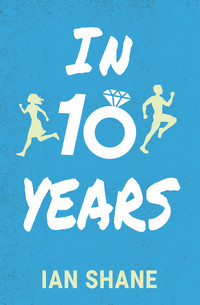
In Ten Years

In Ten Years

by Ian Shane

eARC, 261 pg.
2021

Read: July 23-26, 2021

What’s In Ten Years About?

In 2000, two Denver University students meet in such a way that practically guarantees Jack will have one of dullest (and probably worse than just dull) twenty-first birthdays. Liz unintentionally contributed to that but also did everything she could to make up for that. After this, she decides that the two of them are going to be great friends.

After spending a couple of chapters in 2000, we see them again in 2009—and it turns out that Liz’s plan to be great friends worked. They’ve become incredibly close, the Two Musketeers. They’re so close that everyone (including every romantic interest they ever have) assumes they have/are/want to be involved. The idea never really lodges with either of them—and they don’t understand why no one believes them.

We catch up to them in 2018. At some point, they’ve made that pact that you’ve seen in countless sitcoms and movies, if they’re not married by _____ time, they’ll marry each other.* In this case, it’s when Jack turns 40 (he’s a little younger than her, so at that point, they’ll both be 40), and in 2018 that’s a year away.

* The scene where the pact is made is just about perfect, I should add.

Both of them try to treat the pact as a joke—while hoping the other forgot about it. But neither did and despite the preposterous notion—they both kind of take it seriously. They can’t imagine not growing old together, why not?

And then one of them starts to realize that their interest in the pact isn’t because of a drunken promise, pragmatism, or the lack of a better option—but there just might be something right about the whole idea, a reality that’s been before them all along.

Supporting Characters

I’d intended on spending a few paragraphs talking about both Jack and Liz, and after a couple of failed attempts, I realized I couldn’t do either justice without just recapping the whole novel. So, instead, let’s talk about the other characters.

I wasn’t that far into the 2018 part when I made a note about, “Of course they end up together, everyone else they know is horrible.” Which was a little harsh, but essentially true—that’s up to and including their closest friends. Thankfully, that didn’t stay that way—sure, their friends didn’t make a great first impression, but as I got to spend some more time with them, I ended up liking them. They also proved to be good friends to Jack and Liz.

But when it comes to other romantic interests or dalliances? The reader can understand the appeal of (most) of the people they’re interested in—at least initially. But you don’t spend time thinking, “yeah, Person X would really be a good long-term partner for them.” I might have appreciated it more had I actually considered anyone to be a rival for Liz or Jack. But maybe after a few chapters, I’d already ruled out anyone who wasn’t Jack or Liz for the other.

I’m not sure it matters, ultimately. But what Shane did give each character plenty of frogs of various sides and coloring to kiss so that they’d inevitably discover their Prince/Princess.

The supporting characters, from college roommates to overbearing and overly-inquisitive mothers, to Russian hockey players to waitresses in a bar or inappropriate former students are well-written, they all stand out as pretty well-rounded (at least as much as someone who’s only around for a few paragraphs can be).

The Dialogue

I talked about this a little in the Q&A with Shane, and you should read what he said about writing it. My favorite part of this novel was the dialogue. Jack has some great lines when he’s upset or angry with someone, for example.

But what really won me over was the interaction with Jack and Liz—either when they’re being silly about something or when they’re talking about something serious. This is fitting for a contemporary When Harry Met Sally-esque story, Harry and Sally talking to each other is what made viewers fall for the pair, and Shane hits some Ephron-level interchanges with Jack and Liz.

So, what did I think about In Ten Years?

There are a few other highlights that I really don’t have the time or space to get into, I’d recommend checking out the aforementioned Q&A with Shane that I posted yesterday to catch a few other selling points for this book.

The novel is just funny—humor that arises from the situations and the characters’ inherent and reflexive wit and charm. It’s in the way they react to situations, and not because silly and madcap things happen around or to them (well, sure, there’s a little bit of that). Shane’s voice is part of it, too—but mostly it’s because these are smart, funny people who express that.

I can’t get into it without ruining anything, but there’s a chapter in the 2009 portion of the book that is my favorite chapter of 2021—it was so painful, and yet so funny. Shane was careful not to go too far in either direction, which would’ve blunted the impact. Instead, he’s able to portray the emotionally damaging circumstance and let the character’s wit and the ridiculousness of the situation keep it from being maudlin. The rest of the book is just as good, and just as balanced.

In Ten Years ticked just about every box that I can think of as a reader. I both couldn’t wait to find out what happened and didn’t want to get to the end because I was having such a blast. There’s a fresh-feeling take on a tried-and-true story (two, I’d argue), characters I genuinely liked, dialogue that I’d frequently reread a time or to before moving on, and a great mix of emotion and laughs. I wasn’t even 20% through the book when I noticed I was highlighting and making notes too often—had I stopped there, I had more things than I could squeeze into a post. I can only imagine how massive my notes collection would’ve been had I not made a conscious effort to stop. There was just so much that I wanted to remember about this book.

I know that I’m going to be talking about this book in January when I look back on the best of 2021, and I probably won’t be alone.


5 Stars

In Ten Years by Ian Shane: They’re Perfect For Each Other…But Can They Make It Work? Do They Even Want to Try?

In Ten Years

In Ten Years

by Ian Shane

eARC, 261 pg.
2021

Read: July 23-26, 2021

What’s In Ten Years About?

In 2000, two Denver University students meet in such a way that practically guarantees Jack will have one of dullest (and probably worse than just dull) twenty-first birthdays. Liz unintentionally contributed to that but also did everything she could to make up for that. After this, she decides that the two of them are going to be great friends.

After spending a couple of chapters in 2000, we see them again in 2009—and it turns out that Liz’s plan to be great friends worked. They’ve become incredibly close, the Two Musketeers. They’re so close that everyone (including every romantic interest they ever have) assumes they have/are/want to be involved. The idea never really lodges with either of them—and they don’t understand why no one believes them.

We catch up to them in 2018. At some point, they’ve made that pact that you’ve seen in countless sitcoms and movies, if they’re not married by _____ time, they’ll marry each other.* In this case, it’s when Jack turns 40 (he’s a little younger than her, so at that point, they’ll both be 40), and in 2018 that’s a year away.

* The scene where the pact is made is just about perfect, I should add.

Both of them try to treat the pact as a joke—while hoping the other forgot about it. But neither did and despite the preposterous notion—they both kind of take it seriously. They can’t imagine not growing old together, why not?

And then one of them starts to realize that their interest in the pact isn’t because of a drunken promise, pragmatism, or the lack of a better option—but there just might be something right about the whole idea, a reality that’s been before them all along.

Supporting Characters

I’d intended on spending a few paragraphs talking about both Jack and Liz, and after a couple of failed attempts, I realized I couldn’t do either justice without just recapping the whole novel. So, instead, let’s talk about the other characters.

I wasn’t that far into the 2018 part when I made a note about, “Of course they end up together, everyone else they know is horrible.” Which was a little harsh, but essentially true—that’s up to and including their closest friends. Thankfully, that didn’t stay that way—sure, their friends didn’t make a great first impression, but as I got to spend some more time with them, I ended up liking them. They also proved to be good friends to Jack and Liz.

But when it comes to other romantic interests or dalliances? The reader can understand the appeal of (most) of the people they’re interested in—at least initially. But you don’t spend time thinking, “yeah, Person X would really be a good long-term partner for them.” I might have appreciated it more had I actually considered anyone to be a rival for Liz or Jack. But maybe after a few chapters, I’d already ruled out anyone who wasn’t Jack or Liz for the other.

I’m not sure it matters, ultimately. But what Shane did give each character plenty of frogs of various sides and coloring to kiss so that they’d inevitably discover their Prince/Princess.

The supporting characters, from college roommates to overbearing and overly-inquisitive mothers, to Russian hockey players to waitresses in a bar or inappropriate former students are well-written, they all stand out as pretty well-rounded (at least as much as someone who’s only around for a few paragraphs can be).

The Dialogue

I talked about this a little in the Q&A with Shane, and you should read what he said about writing it. My favorite part of this novel was the dialogue. Jack has some great lines when he’s upset or angry with someone, for example.

But what really won me over was the interaction with Jack and Liz—either when they’re being silly about something or when they’re talking about something serious. This is fitting for a contemporary When Harry Met Sally-esque story, Harry and Sally talking to each other is what made viewers fall for the pair, and Shane hits some Ephron-level interchanges with Jack and Liz.

So, what did I think about In Ten Years?

There are a few other highlights that I really don’t have the time or space to get into, I’d recommend checking out the aforementioned Q&A with Shane that I posted yesterday to catch a few other selling points for this book.

The novel is just funny—humor that arises from the situations and the characters’ inherent and reflexive wit and charm. It’s in the way they react to situations, and not because silly and madcap things happen around or to them (well, sure, there’s a little bit of that). Shane’s voice is part of it, too—but mostly it’s because these are smart, funny people who express that.

I can’t get into it without ruining anything, but there’s a chapter in the 2009 portion of the book that is my favorite chapter of 2021—it was so painful, and yet so funny. Shane was careful not to go too far in either direction, which would’ve blunted the impact. Instead, he’s able to portray the emotionally damaging circumstance and let the character’s wit and the ridiculousness of the situation keep it from being maudlin. The rest of the book is just as good, and just as balanced.

In Ten Years ticked just about every box that I can think of as a reader. I both couldn’t wait to find out what happened and didn’t want to get to the end because I was having such a blast. There’s a fresh-feeling take on a tried-and-true story (two, I’d argue), characters I genuinely liked, dialogue that I’d frequently reread a time or to before moving on, and a great mix of emotion and laughs. I wasn’t even 20% through the book when I noticed I was highlighting and making notes too often—had I stopped there, I had more things than I could squeeze into a post. I can only imagine how massive my notes collection would’ve been had I not made a conscious effort to stop. There was just so much that I wanted to remember about this book.

I know that I’m going to be talking about this book in January when I look back on the best of 2021, and I probably won’t be alone.


5 Stars

A Few (More) Quick Questions with…Ian Shane

In Ten YearsI’d fully intended for my post about In Ten Years by Ian Shane to go up this morning along with this Q&A. But as is so often the case with a book that I absolutely loved, I just don’t like what I’ve managed to write about it—and even then, I’m only half-done with my outline.

But I want to start talking about this book and hopefully convince some of my readers to read itor at the very least, to buy it. It comes out on August 17, but don’t wait until then to order it. So, let’s start with the synopsis from Shane’s website, so you’ll have a general idea what we’re talking about in a couple of the questions. Then I’ll dive in with this great Q&Awell, the Qs are passable, the great stuff comes in the As.

Jock Jack and socially awkward Liz weren’t likely to become best friends, but they’ve had each other’s back since college. On a night both of their romantic lives implode, they make a pact; if they aren’t married in ten years, they will marry each other. With a year left before their deadline, Jack and Liz make a mad dash to find “The One” while navigating a minefield of modern dating complications.

Despite their friends’ efforts to convince them that it’s a terrible idea, Jack and Liz devise an unconventional life partnership plan. However, a face from the past and hidden jealousies and feelings neither one will ever admit threatens their friendship.


Your male protagonist, Jack, is a former college hockey player, and now plays with a bunch of other men in their thirties. I don’t think I’d ever read a hockey scene before—as far as I can tell, you capture both the feel of a game and feel of being on the stakes realistically. Is this first-hand knowledge, or the product of research? How do you decide to let this be Jack’s “thing”?

First off, I’m a huge hockey fan. Skill level be damned; if I find a hockey game on TV, there’s a better than average chance that the next three hours of my life have just been planned. Growing up in southern Indiana, there wasn’t a huge youth hockey movement there, so I never played the game. However, a good friend of mine in college, Turner, did. I had pieced together things he talked about over the years and wrote a draft of the pick-up game scene. I sent it to Turner, and he told me my description was about ninety percent accurate. He gave me some notes on what I needed to change.

I live in Denver now, and it’s a huge hockey town. The University of Denver has a rich tradition of winning championships. It just seemed too perfect to have him be a hockey player.

You’ve called this “a contemporary When Harry Met Sally,” was that the goal, or did that just come out once you started writing? How did you land on doing your take on the “if we’re not married by X…” story?

The idea for the story hit me when I found an article online about marriage pacts and platonic marriages, and I thought it was good fodder for a story. I originally planned for In Ten Years to be a novella, just focusing on the present-day storyline. The more I thought about the story, the more of a background of who these people were and how they became friends. As I was writing their backstories, I knew that there would have to be three eras of their lives, just like When Harry Met Sally, so I decided to run with it. I even name-checked the movie in the first part just for the fun of it.

I also wanted to put in some of the more modern means for dating, which didn’t exist when When Harry Met Sally came out. There’s a chapter devoted to Tinder and one that makes fun of speed dating.

Speaking of When Harry Met Sally, what’s your favorite Nora Ephron work (novel, screenplay, essay, etc)?

Not to sound like an uneducated rube, but I’m not that well versed in her work . . . so I’ll stick with When Harry Met Sally.

It’s hard to beath WHMS anyway, no matter how versed you are.

You used dual perspectives here, for the first time, I believe. What were the specific challenges of telling your story that way? How was it writing from the female Point of View? Are you going to be returning to one/both of those in the future?

Yes, this is my first time. Not too long before I wrote In Ten Years, I read Nick Spalding’s hilarious book, Dry Hard, and I loved the multiple narrations. I really wanted to give it a try. It was challenging to arrange the story so Jack and Liz could alternate chapters. Some chapters could have easily been told from either’s point of view, but others had to be from a specific character. I pantsed this book more than plotting it, so it was challenging to make sure I had the proper balance.

Writing from the female point of view was a bit challenging. My first draft was designed to be as light on Liz as possible, and then I would present it to a female beta and get some feedback. The response was . . . polite. She gave me some pointers on things women would never say.

I also ignored the paradigm that two different characters would not think and talk alike. I figured since Liz and Jack had been a massive part of each other’s lives for almost twenty years, their phraseology would blend.

I absolutely loved this dialogue. How do you approach a scene (especially a Liz/Jack scene)? How many rewrites does it take to get something right? Do you sit around talking to yourself so you can hear it? Or do you just know?

Thank you very much. Dialogue is where I start with a book. I treat the early writings almost like a screenplay. I love witty banter. As I’ve mentioned before, I’m a huge fan of Aaron Sorkin, and I want to bring that kind of level dialogue to my writing. As I’m writing dialogue, I write responses as I wish I would say in real life, but it wouldn’t be the right thing to say for most people I talk to. The case with Jack and Liz is that they have been around each other for so long, they bypass social convention and just say it like it is.

I’ve also been known to talk out dialogue as it’s forming in my mind. Before the pandemic, I took public transportation to work, and I would be inspired to work out dialogue with many people around. I would put on my headphones, record on my phone, and act like I was on a call.

As far as rewriting, it takes time to figure out the right words. Again, going back to my Sorkin devotion, I want the words to play like music. I’ll read it aloud, and I’ll listen to it with Word’s “Read Aloud” tool to get the rhythm right. It’s amazing how you can punch up a line of dialogue just by making a minor adjustment.

You’ve got a memoir coming out shortly, can you tell us a little about that? Do you have anything else in progress?

Being the guy who wrote two novels centered around music, it should come as no surprise that my memoir will be based on songs that have been important to my life with stories from my life. As the pandemic started, I was having a hard time writing fiction. Hearing nothing but COVID was stifling my mojo. In Ten Years had already been written and I was going to release it last June, but the last part of the story was supposed to take place in the spring of 2020. I shelved In Ten Years until I could figure out what I wanted to do with it. I took a lot of time researching elements that happened in the years in the backstory, so it wasn’t as simple as just shifting the dates.

A very close friend suggested that if I can’t write fiction, I should write non-fiction to keep the muscle memory. It started a blog series titled, Sundry Notes of Music. It started off like Songbook by Nick Hornby, which was approached by a music critic, then it evolved into my version of Al Young’s musical memoir, Drowning in the Sea of Love. Sundry Notes of Music will have stories about lost loves, my first trip to Europe, and how I started writing my first book.

I’m also plotting a sequel to my first novel, Radio Radio, but that’s way into the future.

Thanks for your time and for In Ten Years—I loved it, and hope you have a lot of success with it.

Thank you so much for reading it and the kind words.


20 Books of Summer 2021: July Check-in

20 Books of Summer
One summer.

Three months.

93 Days.

20 books.


It’s time for my July Check-In for 20 Books for Summer. After a June that was less-than-productive (well, okay, I read nothing), it didn’t look so good.

I’m still not sure it does—July was better, I read eight books off the list. I thought I’d read more until I started prepping this post, though—math’s never been my strong suit. Twelve books in August still seems doable, but I’m thinking this goal is out of range. Still, I’m going to try, I’m having fun working through the list, anyway.

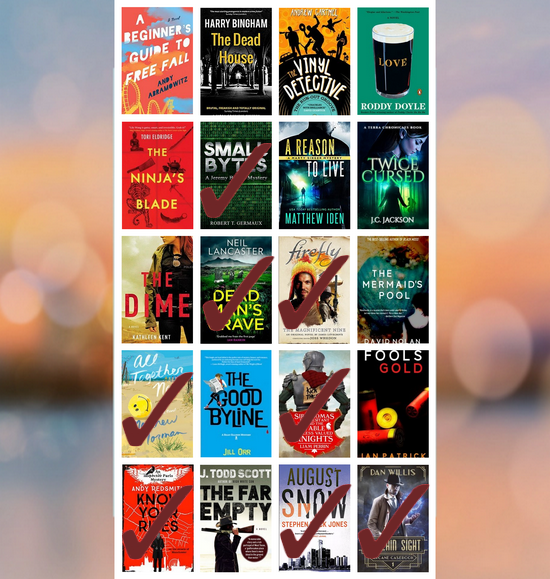
Speaking of which, here it is:

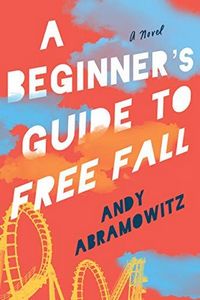
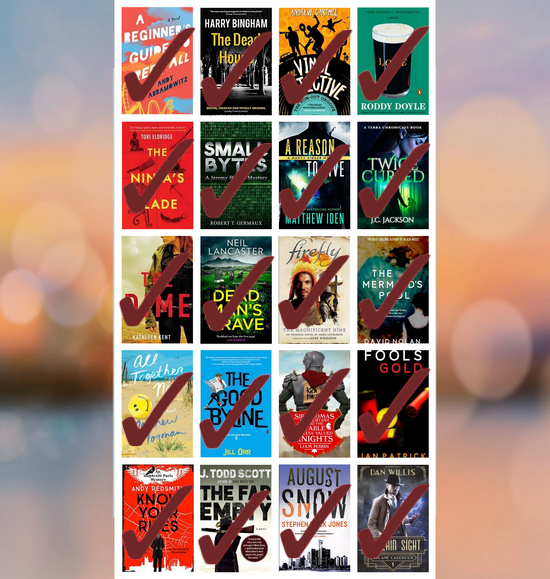
1. A Beginner’s Guide to Free Fall by Andy Abramowitz
2. The Dead House by Harry Bingham
3. The Run-Out Groove by Andrew Cartmel
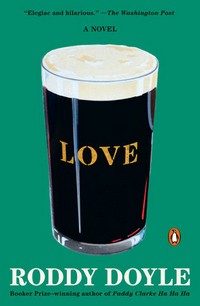
4. Love by Roddy Doyle
5. The Ninja’s Blade by Tori Eldridge
✔ 6. Small Bytes by Robert Germaux
7. A Reason to Live by Matthew Iden
8. Twiced Cursed by J. C. Jackson
9. The Dime by Kathleen Kent
✔ 10. Dead Man’s Grave by Neil Lancaster
✔ 11. The Magnificent Nine by James Lovegrove
12. The Mermaid’s Pool by David Nolan
✔ 13. All Together Now by Matthew Norman
14. The Good Byline by Jill Orr
✔ 15. Sir Thomas the Hesitant and the Table of Less Valued Knights by Liam Perrin
16. Fools Gold by Ian Patrick
✔ 17. Know Your Rites by Andy Redsmith
18. The Far Empty by J. Todd Scott
✔ 19. August Snow by Stephen Mack Jones
✔ 20. In Plain Sight by Dan Willis

20 Books of Summer '21 Chart July

The Irresponsible Reader On…Self-Published “General” Fiction

Self-Published Authors Appreciation Week

A few hours before Witty and Sarcastic Bookclub talked to me about taking part in the Self-Published Authors Appreciation Week I’d posted about the last self-published book I had on my schedule this summer.* Which made coming up with something for this week a little tricky. Masters of timing, that’s us.

* With the exception of one that I have scheduled for the end of the month, I have to add just in case the author sees this—I’m not forgetting you, Mr. Shane.

From the first moment that people did the strange thing of asking me to talk about their books on my blog, I’ve been impressed by the quality of a lot of what’s been published by authors going out on their own, taking all the risks, shouldering all the responsibility and doing all the work to get their words, their dreams, their blood, sweat, and tears. This should be celebrated—it’s definitely appreciated, as we’re trying to show this week.

I haven’t had time to read anything new, and therefore don’t have anything new to blog about, so I’m going to highlight some of the self-published works that I’ve blogged about over the last few years—just a sentence or two. Hopefully enough to make you click on the link to the full post. Beyond that, it’d be great if I inspired you to add a few of these to your TBR. Also, be sure you check out the other posts over at the SPAAW Hub.

Today we’re going to be looking at General Fiction (for lack of a better term)—there’s some Lad Lit, a dash of historical fiction, some humor, a couple of things I don’t know how to categorize beyond “Fiction”, and a bit more. Hopefully, you can find something that tickles your fancy.

bullet Dispatches from a Tourist Trap by James Bailey—Jason (see below) and his mother move from Seattle to a small town in the middle of Washington to stay with her parents as she establishes a life away from her husband. Hilarity and conflict ensue. (my post about it)
bullet The First World Problems of Jason Van Otterloo by James Bailey—an epistolary novel (through emails) from a 13-year-old whose life is turned upside down in 2003 Seattle. A lot of heart and a few laughs. (my post about it)
bullet The Glamshack by Paul W. Cohen—A lifestyle reporter’s obsessive love for a woman and the havoc it wreaks on his life. (my post about it)
bullet Not Awkward by Matthew Hanover—a young man attends the funeral of his ex’s father and gets roped into staying during shiva in the days leading to his wedding. Nah, not awkward at all. (my post about it)
bullet Not Dressed by Matthew Hanover—Hanover’s (seemingly) effortless charm makes this “romantic comedy of how love goes wrong—and right—when you’re a twenty-something still figuring out how to adult” a real winner. (my post about it)
bullet Not Famous by Matthew Hanover—Hanover’s first novel is about a guy who falls for a socially awkward musician. It will steal your heart. (my post about it)
bullet The Flight of the Pickerings by John Grayson Heide—a heart-warming story about an older couple dealing with dementia and the end of their life together get their world turned upside down when their rebellious teenaged grandson comes to live with them. (my post about it)
bullet Didn’t Get Frazzled by David Z. Hirsch, MD—a bildungsroman following a 20-something through his 4 years of medical school: from Gross Anatomy to the verge of residency. (my post about it)
bullet XYZ by William Knight—A mature, old-school programmer has to start his career over at a 21st Century Startup as his family life falls apart in every way imaginable. Clearly a comedy. (my post about it)
bullet Coffee and Condolences by Wesley Parker—A widower tries to begin recovering from the deaths of his wife and children by reconnecting with his step-sister and maybe finds love. Parker just released Headphones and Heartaches, I haven’t had a chance to get to it yet, but you should jump on it.(my post about it)
bullet The Summer Holidays Survival Guide by Jon Rance—an out-of-shape teacher tries to prepare for a half-marathon while surviving the summer with his three kids, a marriage on the rocks, and his father (with dementia) moving in. (my post about it)
bullet The Crescent and the Cross by Kurt Scheffler— the story of The Battle of Tours (in 732) and events leading up to it, told through the lives of people close to Charles Martel and Charles on the one hand and a couple of the leaders of the Muslim forces involved in the Arab invasion of France. (my post about it)
bullet Postgraduate by Ian Shane—When your life falls apart, why not take your college radio show and turn it into an Internet radio show? And then, why not attend a reunion with the old college radio gang, including “The One That Got Away” (because you foolishly dumped her)? (my post about it)
bullet KA-E-RO-U Time to Go Home by B. Jeanne Shibahara—I’m so glad the blurb contains a one-sentence description because I couldn’t write one: “Desert-dweller Meryl travels to Japan, returns a WWII flag, and brings home an understanding of life that opens her heart for the unexpected.” (my post about it)
bullet Lingering by Melissa Simonson—It’s sort-of SF, sort-of a Thriller, but not really either, so I put this here. This is a novel about grief, about dealing with death—while telling the story about an effort to design an AI to mimic a dead loved one in order to help a survivor cope. (my post about it)

If you’re a self-published author that I’ve featured on this blog and I didn’t mention you in this post and should have. I’m sorry (unless you’re this guy). Please drop me a line, and I’ll fix this. I want to keep this regularly updated so I keep talking about Self-Published Authors.

20 Books of Summer 2021: June Check-in

20 Books of Summer
One summer.

Three months.

93 Days.

20 books.

Are you in?


Once again I’m taking part in the 20 Books of Summer Challenge fro 746 Books. Annnnnd my June was pretty, um, dead. Between book tours, review copies and catching up on NetGalley ARCs, I’ve read absolutely nothing from my Summer Roster. Zip. Zilch. Nada.

I’m posting this update mostly to push myself to get on it—a little public shaming. Because my lack of progress in June means it’s going to be a little more of a challenge to finish this than I’d anticipated. Absolutely do-able, but it’ll take a bit of effort.

I did actually read about 30% (so far) of the first book today…so, you know, it’s practically in the the bag.

And here’s the fairly untouched list (subject to change, but I’m going to resist the impulse to tweak as much as I can).

1. A Beginner’s Guide to Free Fall by Andy Abramowitz
2. The Dead House by Harry Bingham
3. The Run-Out Groove by Andrew Cartmel
4. Love by Roddy Doyle
5. The Ninja’s Blade by Tori Eldridge
6. Small Bytes by Robert Germaux
7. A Reason to Live by Matthew Iden
8. Twiced Cursed by J. C. Jackson
9. The Dime by Kathleen Kent
10. Dead Man’s Grave by Neil Lancaster
11. The Magnificent Nine by James Lovegrove
12. The Mermaid’s Pool by David Nolan
13. All Together Now by Matthew Norman
14. The Good Byline by Jill Orr
15. Sir Thomas the Hesitant and the Table of Less Valued Knights by Liam Perrin
16. Fools Gold by Ian Patrick
17. Know Your Rites by Andy Redsmith
18. The Far Empty by J. Todd Scott
19. August Snow by Stephen Mack Jones
20. In Plain Sight by Dan Willis

20 Books of Summer '21 Chart

99 Poems to Cure Whatever’s Wrong with You or Create The Problems You Need by Sam Pink: The Cartoon Continues

99 Poems to Cure Whatever's Wrong with You or Create The Problems You Need

99 Poems to Cure
Whatever’s Wrong with You
or Create The Problems
You Need

by Sam Pink

Paperback, 103 pg.
CLASH Books, 2019

Grab a copy from your local indie bookstore!


A little housekeeping to start: That title is just too long to keep using, you know? I thought about using 99PtCWWwYoCTPYN, but that’s almost as bad—actually, it’s probably worse aesthetically speaking. So, I’m going to go with 99 Poems.

Why Did I Want to Read 99 Poems…?

I’ve mentioned around here before that I’m not much of a poetry reader. In fact, I think I’ve only posted about one other poetry collection. I think this the fourth poetry collection I’ve read since I graduated from college in the mid-90s.

So what possessed me to pick this up? Well, despite what it may look like around here (and certainly how it feels sometimes), I do want to keep trying new/less familiar things. What got this to my attention was that someone on my Twitter feed posted a picture of one of the poems from this book a couple of months ago—I believe it was “The Woodchuck”—it made me smile, and it seemed like a good idea to try some more.

Which is how I got here. Trying to figure out how to talk about poems.

Comic Poems

Like the poem that got my attention, many of these poems fall under the heading of “comic.” They all won’t make you laugh—but you’ll probably grin a bit. The construction is similar to a joke, but I think it’s a disservice, even for the comic poems to treat them as simply that.

The Non-Comic Poems

Then there are the poems on the other end of the spectrum, moving, poignant—even uplifting.

I think most readers will find themselves in some/many of these. Which is both comforting and unnerving.

Approachable

None of these are difficult to read (some may be challenging to chew on)—a few are two or three lines, a few are about 2 pages long. Most are 6-ish lines long.

Really, I’ve read tweets that contain as many characters as some of these poems. I guess I’m saying, there’s no reason for non-poetry readers like me to feel intimidated by these.

Samples

I’m no photographer, but typing out these poems to give you a taste seems strange, they should look the way they were printed. Here’s a couple of the poems that stayed with me.
Masters
It's Always Both

So, what did I think about 99 Poems…?

How do you not like something with that title? That’s practically an instant 3-Stars right there.

But more than that, I liked this collection. Reading a couple of these is a good break from everything else going on in the world around you. A simple way to look at things in a different way. I’m likely to keep an eye out for more by Pink, and I think you should, too.


3.5 Stars

This post contains an affiliate link. If you purchase from it, I will get a small commission at no additional cost to you. As always, opinions are my own.

Runaway Train by Lee Matthew Goldberg: It’s Just Easier than Dealing with the Pain

Runaway Train

Runaway Train

by Lee Matthew Goldberg
Series: Runaway Train, #1

eARC, 296 pg.
Wise Wolf Books, 2021

Read: May 31-June 1, 2021
Grab a copy from your local indie bookstore!

What’s Runaway Train About?

Following the shocking death of her sister at 17 (from a brain aneurysm), sixteen-year-old Nico is spiraling out of control. Never the best student, and far more interested in being everything her high-achieving, popular sister wasn’t, Nico’s focus is on getting high, listening to as much grunge as she can, and fantasizing about meeting Kurt Cobain (who would fall for her, leave Courtney, and the rest would be history).

When things at home—which haven’t been good for a long time—take a turn for the worse, Nico is at the end of her rope and doesn’t know what to do. Her best friends talk her into leaving home and hitting the road, to go cross things off her bucket list before her own aneurysm cuts her life tragically short. Although they’d decided to run away together, Winter and Jeremy leave her in the lurch—Winter tells her that she needs this trip to hit rock bottom so she can pick up the pieces left by Kristen’s death (although I think this is largely a lie, and Winter just doesn’t have the courage to go through with it, but this sure sounds good).

So she packs up her teal blue Hyundai Excel with some essentials, a lot of batteries, her Walkman, and her father’s gas card and takes a trip up the California coast on the way up to Seattle, to see what the grunge scene is “really like,” cross some things off that bucket list, and hopefully get the chance to tell Cobain what his songs have meant to her.

Here’s where I get some egg on my face—I know Goldberg’s primarily a thriller writer, and assumed* that this would be one, too. That shortly after Nico left L.A. something would happen and this would become a thriller, with Nico doing all she could to stay alive and/or evade the police while on the run from something/someone/multiple someones. But no, that’s it. It’s the story of a girl living in her Hyundai trying to put the pieces of herself together.

* and you know what happens when you assume…

90s Referencepalooza

The first sentence of the book includes the date October 31, 1993. But then, as if Goldberg isn’t sure that his readers will understand that he means it, he hits you over and over and over with references to the early 1990s. There are over a dozen references in the first 3% of the book. And there are multiple stretches of the book that are like it. They eventually taper off, but it takes a while before Goldberg seems to think that he’s established the setting.

Now I enjoyed almost every one of the references and thought they really grounded things. But it also felt like overkill. Like he didn’t trust his audience to remember that these events took place in 1993 and 1994. Although it’s just as likely, maybe more likely, that Goldberg was having so much fun with them that he didn’t want to cut any of the references. And I get that, I really do. But I think it might have carried more punch if he’d been a little less effusive with them.

Embracing the Ambiguity, Pt. 2

A couple of months back, I wrote about a book that included elements that could be supernatural or they could be an expression of the protagonist’s PTSD. I mentioned at the time how that writer leaving it up to the reader to decide was a great idea, how it’s more effective that we don’t really know which it is.

And here I’m repeating myself—there’s something that happens to Nico several times in the book that could be a product of her subconscious or could be a supernatural event. I initially ascribed it to a psychological phenomenon—trauma, or grief, or something. I think it’s written so that you think it’s a physiological thing. But at some point, I joked to myself, “Unless, of course, it is a ghost.” And then I couldn’t talk myself out of the joke—it really, really could be a ghost. Or it could be a manifestation of Nico’s subconscious. I could defend either position from the text, I think. And I really liked that.

So, what did I think about Runaway Train?

I really got swept up in this story and with Nico’s journey. How does your heart not go out to a girl in that much pain? A dead sister, parents who aren’t dealing well with her, friends (more important to you than family at this stage of life) basically shoving her out the door on her own. and a strong sense of your own impending death? She doesn’t just hit rock bottom, she ultimately throws herself at it. But also, there’s an element of envy for the reader—you wanted to have the guts/folly to do something like Nico does at that age, and even now (however much older you are than her), you’d like to have the ability to do that.

Put those two elements together? How do you not have a warm spot in your heart for this book?

Yes, it’s clearly fiction. Yes, it’s heightened and only semi-plausible—both the high points and the low. But…it feels real. I can absolutely believe that I could sit down with Nico or Evan (since he’s from this area) today over a cup of coffee and hear them tell me about this time in their life.

I was more than a little surprised to see that there’s going to be a sequel to this. Typically, coming-of-age novels are one-and-done. But I’m on board—I want to see what the next chapter is for Nico. I can’t imagine all her problems were worked through in this book, and as much progress as she made (and looks to continue making), there’s no way that the work is done and I’m looking forward to seeing her continue it.

I absolutely recommend this to you—like its central character and her musical idol, Runaway Train is occasionally a mess, but there’s a heart to it. There’s an ineffable quality that’s going to make you want to pay attention to it and see how it can shine.

Disclaimer: I received this novel from the author in exchange for my honest opinion.


4 Stars

This post contains an affiliate link. If you purchase from it, I will get a small commission at no additional cost to you. As always, opinions are my own.

Page 15 of 52

Powered by WordPress & Theme by Anders Norén