Category: General Fiction/Literature Page 49 of 54

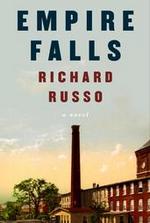
Dusted Off: Empire Falls by Richard Russo

Empire FallsEmpire Falls by Richard Russo
Hardcover, 483 pg.
Knopf, 2011
Read: May 22-27, 2012

Wow. Just wow. Not sure what else to say.

I’d suspected/wondered that something like the big climactic event was going to happen–yet when it happened, I was on the edge of my seat, saying “No fraking way!” (and just about decapitated my son who interrupted me during the middle of it) But even before that, the book had grabbed me with its humor, tragedy and humanity.

This one’s going to haunt me (in good and bad ways) for a long time.

—–

5 Stars

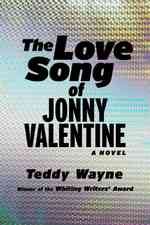
The Love Song of Jonny Valentine by Teddy Wayne

The Love Song of Jonny ValentineThe Love Song of Jonny Valentine

by Teddy Wayne

Hardcover, 304 pg.
Free Press, 2013
Read: Dec. 25, 2013

Jonny Valentine, the 11-year-old pop sensation, desperately wants to reach adolescence (probably not all that different from others his age) — but he’s very, very aware what that will do to his voice, his appearance — overall, his appeal to the tween and teen demographics. And he’s counting on it, if he doesn’t sell more to teen girls, he’s sunk. His career is dead.

That’s not the only part of his life that he sees in marketing terms. His haircut, the amount of fat and calories he consumes, his video gaming, exercises, amount of sleep — everything is micromanaged to the nth degree by his mother/manager, studio, vocal coach, and, to a lesser extent, his bodyguard (the closest thing her has to a friend). Everything he thinks, everything he wears he runs through a mental calculus wondering what it’ll do for sales, social media exposure, ticket sales, etc. How anyone can deal with this all, much less a near-adolescent, is unfathomable.

Honestly, ticket sales and record sales have dropped off a little for this phenom, so the record company begins to take a more hands-on approach to things — inventing news stories, coming up with a new media relations plan, etc. etc. And Jonny’s life becomes a little harder.

At the core of this story though, is a little kid, who just wants to be a little kid. He wants his mom to be more of a mom than a manager, he wants to spend time with his best friend from before he made it big, he wants to screw around and play. At the end of the day, I feel more pity for Jonny than I did for Auggie Pullman from Wonder.

Most of the observations/comments on/critiques of celebrity culture that are given here, are things we’ve all seen or made ourselves. But by putting them into the mouth and head of a kid, rather than an outsider adult, makes it all so much more effective.

Darkly comic (not terribly funny, though), insightful, sympathetic. A worthwhile read.

N. B. just because this is about an eleven-year-old, don’t for a second think this is appropriate reading material for that age. This isn’t MG, this is written for an adult audience.

—–

3 Stars

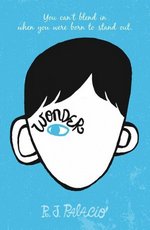
Wonder by R. J. Palacio

WonderWonder

by R. J. Palacio

Hardcover, 313 pg.
Knopf, 2012
Read Jan. 14-15, 2014

August “Auggie” Pullman is a great 10-year old kid, loves Star Wars, academically gifted, has a devoted dog, a nice older sister, very supportive parents, he’s friendly — big-hearted, really. After years of being homeschooled, he’s off to a private school for Middle School (when, btw, did Middle School start in 5th grade?). Oh, sure, one other thing: he has a genetic disorder resulting in severe facial abnormalities.

Kids being kids — this is clearly fraught with peril. It’d be tough for a kid to enter this atmosphere from his background no matter what — but in Auggie’s case, things are magnified. We follow Auggie through that rocky first year through various perspectives — his, his sister’s, his friends’, his sister’s boyfriend’s, and so on. I frequently get tired of this whole multiple perspective schtick, but Wonder is one of those cases where it works. By seeing the same event (occasionally, not every event) trough various eyes, we get a much better — and richer — picture of Auggie’s trials and triumphs.

Yeah, this is written for 4-8 grade reading level, and as such, not the most sophisticated writing or plot. Yeah, this has all the makings of an After-School Special (that’s a term that’s about to lose all meaning, isn’t it?). Yeah, the plot is pretty predictable. Fair enough. But R. J. Palacio pulled it off — it all works — all the kids seem real, the struggles his sister has are believable, the varied emotions (noble and not) are realistic. It’s a song sung well, no matter how old or simple it is.

Wonder‘s fun, occasionally funny, and heartwarming. Read it, and get your kids to read it, too.

—–

5 Stars

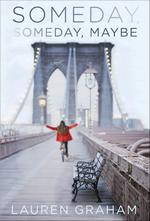
Dusted Off: Someday, Someday, Maybe by Lauren Graham

Someday, Someday, MaybeSomeday, Someday, Maybe

by Lauren Graham
Hardcover, 344 pg.
Ballantine Books, 2013

Lauren Graham’s as entertaining a writer as she is an actress. Which makes her too talented for any one person to be. Her protagonist, Franny, is a struggling actress trying to get her break in New York in the mid-90s. And it’s nearly impossible to not see Graham as Franny — it’s beyond impossible to not hear Graham in the narration (frequently) and in the dialogue (always).

That’s not a complaint, it’s an observation.

This is fun, heart-warming, and laugh-inducing. A breezy read that’s well worth the time.

Heck, the last paragraph said by Franny’s agent about being faster, funnier and louder is alone worth reading the book.

—–

3.5 Stars

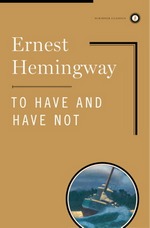
Dusted Off: To Have and Have Not by Ernest Hemingway

To Have and Have NotTo Have and Have Not by Ernest Hemingway

What a miserable book! Harry Morgan is an almost thoroughly despicable character in a pointless book full of sad, pathetic and incomplete plots. I think I can see where Hemingway was trying to stretch as an author, the multiple perspectives he writes from here is a different approach for him (one that doesn’t succeed too well), for example. But I thought this failed utterly.

Towards the end of the book, there’s a few pages where Hemingway gives us snapshots of various characters aboard different boats in the marina — all of whom we only see here in a few paragraphs — I thought this was effective, light years beyond the rest of the novel. It felt quite out of place, a diamond in the rough. (which may suggest it wasn’t as good as I thought, it just seemed so much better — I don’t think that’s the case, but it’s possible)

Oh, this also featured possibly the least erotic sex scene I’ve read this side of Tom Wolfe (actually, may be worse than Wolfe). Nothing to make hay about there, just thought I’d note it as it really bugged me.

—–

2 Stars

The Theory of Opposites by Allison Winn Scotch

The Theory of Opposites

by Allison Winn Scotch
Paperback, 306 pg.
Camellia, 2013

The Theory of Opposites starts off with a bang — a Rube-Goldberg of verbal and physical slapstick. Raised by a self-help guru, raised in an atmosphere saturated with and run by her (best-selling and almost universally acclaimed) father’s theories, Willa Chandler-Golden’s life is about to fall apart the way that her day falls apart before she even leaves the apartment this fateful day.

She loses her job, learns that she’s not pregnant after all, learns that her parents are both in the midst of a late-life crisis, learns that the twelve-year-old son of her husband’s dead friend will be spending the summer with them, her husband may be stepping out on her. Oh, yeah — and then a couple weeks later her husband decides they need a break from each other. He’ll be moving across the country, sharing custody of his “nephew.”

So, Willa does what anyone finding themselves in this situation — she agrees to help her best friend write a self-help book that ties into her favorite Reality TV Show. As an added bonus, their book will flatly contradict her father’s near-Nobel Prize winning work.

During this break, catastrophe strikes Willa’s father and brother, her mother’s life turns upside down, and The One Who Got Away comes back into her life.

Somewhere in all this, Willa tries to figure out just what she wants in life, what she believes about life, and what kind of person she’s going to be. The question The Theory of Opposites tries to answer.

There’s fun to be had in the reading, but it’s not as if there’s a denial of the seriousness of it all. Scotch deals with some pretty serious issues with the same light, deft touch she brought to her past novels — breezy enough that you can let the uncomfortable details slip by, but honest enough that they’re in front of you all the time. I don’t think this was quite as satisfying as her The Song Remains the Same, but it was good enough to keep me looking for whatever comes next.

—–

3 Stars

Fangirl by Rainbow Rowell

Fangirl
Fangirl

by Rainbow Rowell
Hardcover, 438 pg.
St. Martin’s Griffin, 2013

No one can write messed-up characters like Rainbow Rowell can — socially awkward, clever, emotionally scarred, and incredibly likeable. A lot like many people.

Speaking of likeable, it takes no more than a few pages, maybe even a couple of paragraphs before Cath wins the reader over completely. Okay, so she’s a little too into this semi-Harry Potter world, and spends what many would consider an unhealthy amount of time on her fanfic — but she gets great grades, and something resembling a social life, who’s to judge? She’s having a hard time adjusting to college life — her identical twin (Wren — get it?) is taking the opportunity to go out on her own, and Cath’s just not ready for that. For the first time in her life, she’s really not half of a set, and that takes a toll on her esteem, confidence, and — actually — everything. Her high school boyfriend being in another state and mostly incommunicado makes it all worse.

Slowly, Cath starts to find a place in college — makes a friends (most of which are worth having). There’s a lot of ups and downs along the way — there’s plenty of family drama — friction between the sisters, emotional troubles for their dad at home, and a lot of unresolved issues surrounding their mother’s/wife’s abandoning the family years ago. Which doesn’t help out her schoolwork at all — and drives her further into her fanfic.

This is done in such a way that it doesn’t feel like silly teen/young adult dramatics — it feels like a rough patch that a dear friend is going through. The former would be easy for many authors to evoke, and I’d probably end up walking away from the book. But because Rowell can make us feel the latter, we pull for Cath, and keep reading on, getting further invested in her character.

There are bright spots — Cath and others make some progress in dealing with troubles from their past, Cath meets some fans of her fanfic, and — not at all surprisingly — there’s some fun (and awkward) and heartwarming romance kindled.

I know precious little about fanfic, honestly — I’ve read a few authors pouring out the hate for it, and some defending and/or celebrating it. I hardly have enough time to read the original works set in the worlds I like, I certainly have no time for the “unofficial” takes on it. So I really didn’t care about Cath’s passion for her hobby — or for those who had a different take on it. I thought Rowell dealt with it pretty well, on the whole, and was fair enough to both poles while staying fairly realistic.

Not as gut- and heart-wrenching as Eleanor & Park, but told with the same amount of heart (and more laughs). This is one of those books that when you see the end coming, you start to read slower, because you’re just not done with these people yet. If she had the story, I’d have read another few hundred pages just to stick with Cath, Wren, Levi, Reagan and the rest for a little longer — honestly, I’d have done it without the story.

—–

4 1/2 Stars

Dusted-Off: Lunatics by Dave Barry, Alan Zweibel

LunaticsLunatics

by Dave Barry
Hardcover, 320 pg.
Putnam Adult,2012

How does one write a book like this? First, you take a couple of characters, that while not exactly people you can meet each day, are close enough that you can buy them as characters in a novel. Then you put them in a relatable, if exaggerated, bad situation. Then you let that situation spin wildly, and hilariously, out of control and right into a worse situation–and let that one spin wildly, and hilariously, out of control and right into another–and repeat. Several times.

If you do that juuuust right, you might come close to capturing the brilliantly wacky madness that is Lunatics.

More than once, I laughed, guffawed, choked, chuckled, cracked-up, cackled, and did a spit-take. I’m sure my wife was as glad I was done with the book as I was disappointed it was over–a day and a half of my very loud reactions to this book were little more than she could tolerate.

Find yourself a nice, secluded little spot and read this. Soon. Sooner, even.

—–

4 Stars

Rock On by Denise Vega

Rock On
Rock On

by Denise Vega
Hardcover, 296 pg.
Little, Brown Books for Young Readers, 2012

I can’t remember what it was that made goodreads suggest this book to me, but I put it on my To Read list over a year and a half ago, and really only picked it up because it was front-faced on a library shelf I walked by last week, and my stack was pretty light. Glad I did pick it up though.

I’ve got a soft-spot for rock band novels — ever since The Buffalo Nickel Blues Band, which I read about 400 times in junior high. The Commitments (one of my all-time favorites), Eddie and the Cruisers, Juliet, Naked and a handful of others I can’t recall at the moment. There’s something about the raw emotion that the music taps into that just grabs you, makes a solid connection between the characters and the reader.

This is more than that (as the subtitle informs). Primarily, we’ve got the story of a high school band on their way to the High School Battle of the Bands. But that’s not the emotional core of the novel, it’s just the framework to hang the rest of the stories on.

Sure, Ori’s a great guitarist — practically too good to believe (but hey, it’s fiction, relax). But when it comes to girls? Fuhgeddaboudit‎. Nervous, anxious, trembling, not-at-all-confident — pick your synonym, and that’s him. As he and his band start gaining a little notoriety in the area, he’s finding himself receiving a bit more female attention (which is both great and mortifying for him). There’s one girl in particular . . . well, read it yourself. It’s a sweet story, well told. Nothing that’ll rock your world, but it’s nice.

But even that’s not the core of the novel — the fractured relationship between Ori and his older brother/former idol Del is where this book lives (or at least wants to). It takes time to get the full story, but Del goes from being the Top Dog in high school to a former jock/college drop-out during his first semester, he moves home and things between the brothers deteriorate quickly. Without this the rest of the book would barely be worth reading (as much as I liked it), watching Ori struggle to find the brother he worshiped in this current version, Del struggle with his current reality, and the brothers struggle to be civil — that’s the ultimate story being told here. And as well-done as it is — the emotions are right (on both sides), it’s utterly believable and relatable — but there’s something missing. I wish I knew what it was, but it’s just not as good as it wants to be.

I don’t want to overlook some of the other supporting characters — Ori’s little sister, his next-door neighbor/friend/band webmistress, and the eventual bass player are well-drawn, and I’ve been glad to spend more time with one/all of them — the bassist in particular.

A nice touch to this is in between some chapters, Vega provides logs from the band’s blog on a local music site — the blog posts themselves, mostly reiterate what we already know, but the comment threads? A lot of fun to read — and nice way to get a different perspective on events than Vega’s characters or the readers have.

A fun, quick read, emotionally satisfying, and almost as good as it tries to be — a pleasant way to while away a couple of hours.

—–

3 Stars

Opening Lines – Straight Man

We all know we’re not supposed to judge a book by its cover (yet, publishing companies spend big bucks on cover design/art–and I love this cover). But, the opening sentence(s)/paragraph(s) are fair game. So, when I stumble on a good opening (or remember one and pull it off the shelves), I throw it up here. In this selection, we learn everything — practically everything, anyway — we that need to know about our narrator, the next 300+ pages is just filling in the details.
I love this kind of opening.

—–

Truth be told, I’m not an easy man. I can be an entertaining one, though it’s been my experience that most people don’t want to be entertained. They want to be comforted. And, of course, my idea of entertaining might not be yours. I’m in complete agreement with all those people who say, regarding movies, “I just want to be entertained.” This populist position is much derided by my academic colleagues as simpleminded and unsophisticated, evidence of questionable analytical and critical acuity. But I agree with the premise, and I too just want to be entertained. That I am almost never entertained by what entertains other people who just want to be entertained doesn’t make us philosophically incompatible. It just means we shouldn’t go to movies together.
The kind of man I am, according to those who know me best, is exasperating. According to my parents, I was an exasperating child as well. They divorced when I was in junior high school, and they agree on little except that I was an impossible child.

from Straight Man by Richard Russo

Page 49 of 54

Powered by WordPress & Theme by Anders Norén