Category: General Fiction/Literature Page 48 of 54

In Medias Res: Landline by Rainbow Rowell

as the title implies, I’m in the middle of this book, so this is not a review, just some thoughts mid-way through

—–

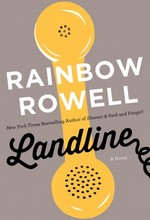
Landline
Landline

by Rainbow Rowell

I’m on page 153 of 308 — as close as you can get to half-way (at least if you stop at the end of a chapter), and I’m all in on this book. It’s told with Rowell’s trademark warmth and charm. It’s funny, but not hilariously so; tragic, but not heartbreaking (yet); romantic, without being sappy; and real, without being . . . non-fiction?

Yeah, okay, that sentence got away from me.

This is a story about a marriage on the rocks, about the beginning of this romance, maybe about its end, friendship, priorities, and a magic telephone. Most of these are themes not new to Rowell, but that are in constant demand as fodder for stories. Rowell’s doing a bang-up job so far, I’m really pulling for this couple (in both the beginning and at the later part of the relationship). As always, Rowell gives us real people — people we could know, people we would befriend, people we could be.

At this point, I can see a few ways this could end — all of which are entirely justified by what’s come so far, and the vast majority of them end with me risking alcohol poisoning. I’m really liking Georgie McCool that much (and yes, that is her real name).

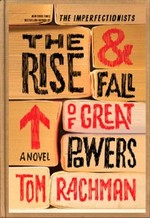
The Rise & Fall of Great Powers by Tom Rachman

The Rise & Fall of Great PowersThe Rise & Fall of Great Powers

by Tom Rachman

Hardcover, 384 pg.
The Dial Press, 2014
Read: July 15 – 19, 2014

He raised his menu.
She consulted hers. “You don’t like sweet-and-sour, do you.”
“No,” he confirmed. “I want food that can make up its mind.”

I had a real difficult time connecting to the people, the story, this book — but early on, I came upon this exchange between a man and a young girl — Tooly, the protagonist. That was enough to keep me going — that, and Rachman’s previous work, The Imperfectionists.

There are three storylines running through most of this book — Tooly in 1988, Tooly in 1999, and Tooly in 2011. We see her as a child, still growing up; we see her all grown, but still figuring out her place in the world; and then as an established adult who’s made a place in the world — but she’s still expecting/looking for the same one she tried to find in ’99.

I spent most of the novel not really sure where any of these stories were going — maybe 2/3 of it. It didn’t take me too terribly long to come to the conclusion I wouldn’t be sure for awhile, so I decided to just enjoy the ride. Which was so easy to do — Tooly spent her life surrounded by a great menagerie of people — Paul, a traveling computer technician working for various U.S. embassies in the 80s; Venn, a very charming con man; Humphrey, a Russian ex-pat and armchair intellectual; Fogg, a small-town bookseller; Sarah, a — I don’t know how to describe her, a histrionic woman with a short attention span (I guess, you eventually learn a lot more); a lout of a lawyer (whose name escapes me at the moment), who really isn’t that much of a lout; and others. It doesn’t matter what they’re talking about, you want to hear them talk, you want to see the interactions between these people and each other, or these people and Tooly. The actual plot seems secondary as long as you get bits of conversation like this (like the above quotation, this is from 1988’s story):

“I know exactly what you’re like,” Sarah affirmed.
After a long pause, Tooly responded, “What are you like?”
“Me? Well, I like bread with strawberry jam and believe raspberry jam ruins everything. I think those who joke around with such matters are barbarians. And I’m right about everything. Except in the morning, when I’m wrong.”

Each chapter moves the various stories along, bit by bit — and you get one or two strange encounters between Tooly and the other characters, you hear some strange theory about the way the world works, or how someone decides to do something, or some scheme to make sense of it all — and I can’t describe it for you better than that — just give it a read.

Eventually, Rachman decides to let you see the pattern he’s stitching — and then it all comes together, each piece falling into place and while there was no way to see all of it coming, it all feels like it fits. Not a “ohh, sure, I should’ve guessed that;” but “well, naturally — there was really no other way for that to work, was there?”

For Fogg, Humphrey, and Tooly (and most of the other characters to some extent) books are a vital part of their existence — or at least their way of thinking. They’re how they connect to the world, to people, to their experience. The various ways the characters interact with, describe, and use books are just fascinating and are right up my alley. Just for exposure to the various things this novel says about books, it’s worth slogging through all the “what’s going on?” of this read.

For example — shortly after young Tooly first meets Humphrey, she asks to see his books (he always has stacks by him, but they keep changing, so she knows he has a stash somewhere). He takes her to a closet bursting with books.

“Books,” he said, “are like mushrooms. They grow when you are not looking. Books increase by rule of compound interest: one interest leads to another interest, and this compounds into third. Next, you have so much interest there is no space in closet.”
“At my house, we put clothes in the closets.”
He sneered at this misapplication of furniture. “But where you keep literature?”

That compound interest line is a great one, isn’t it?

The Rise & Fall of Great Power is a lovely little book I can’t really talk about without over explaining. Filled with great characters; plausible, yet implausible events: an embarrassment of riches when it comes to quotable lines; interesting philosophies; stacks of books; and a dash of hope mixed a hint of existential despair. More than worth your time.

—–

4 1/2 Stars

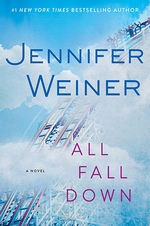
All Fall Down by Jennifer Weiner

All Fall DownAll Fall Down

by Jennifer Weiner

Hardcover, 400 pg.
Atria Books, 2014
Read: July 10 – 12, 2014

Out for the day with her daughter, our protagonist encounters a homeless woman about her own age. A few minutes later, on their way to suburbia, she thinks:

I was a world away from the woman we’d seen. That woman — she was what addiction looked like. Not me. Not me.

And that, my friends, is what heavy-handed irony looks like. When Chapter 1 ends this way, you know it’s going to be a rough ride.

I wasn’t sure what to expect out of this one — from the description alone, it was clear that Weiner was going for something out of the norm for her — this wasn’t going to be comedic, not that romantic. Instead it’d be dark, dealing with a very serious subject matter. The prose wouldn’t be as breezy, the character probably wouldn’t be that likeable. Sounded good to me — I wanted to see how she could pull it off. It’d be different, but I figured she could (and I welcomed that). Would this be the thing that got her that literary cred she seems to be looking for?

It was a valiant effort. But it just didn’t work for me.

She was close though. Really close. Which just served to underline how she didn’t reach her goal.

Allison Weiss (who I couldn’t help but seeing as an out-of-shape version of Orphan Black‘s Alison Hendrix) is a mom (of an impossible child), a successful blogger (possibly too successful to believe), wife, daughter of a man in early stages of Alzheimer’s, and a pill-popper in deep denial.

Part 1 sets the scene for us — introduces us to the major characters, Allison’s friends, family, and boss — and her pills. Part 2 shows how the wheels start to come off for her — in terms of work, her marriage, her family and her addiction. Part 3 gets her into rehab and coming to terms with her problem. Part 4 picks up following that in a rushed wrap-up.

Part 1 was okay enough — it got the job done. Part 2 was rough — it’s hard enough watching a character you like, that you’re invested in run into trouble — but an unsympathetic character surrounded by characters she hasn’t let us get to know well enough to like? It’s just so rough. I had to force myself through this part, knowing that rehab was on the horizon. That part was worse — the rehab facility, clients, workers, counselors — all of that jibed with what I know about rehab facilities and 12-step programs; and even Allison’s reaction seemed textbook. But something about that part bothered me. Maybe because it was all so textbook. Weiner’d done her homework and she let it be shown. But it’s more than that — here was her chance to make us like Allison, see her doing the work she needed to do. For the reader to start to like her. But it didn’t happen.

Part 4 was the worst. In her rush for a conclusion, Weiner left a lot of things hanging. Which isn’t the same as unresolved — I’m not talking about a need to tie everything up in a pretty little bow. Weiner simply abandoned so many things in that it took away from the closure she gave (or at least strongly suggested).

I actually had a laundry list of complaints and problems with this, but I’m going to forgo it. It’d be hard to avoid spoilers and I just don’t think it’d be that interesting to read. Let me just leave it as — I was disappointed in this one and would advise passing on it.

—–

2 Stars

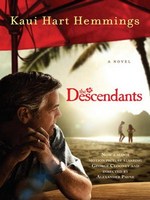
Dusted Off: The Descendants by Kaui Hart Hemmings

The DescendantsThe Descendants

by Kaui Hart Hemmings

ebook, 247 pg.
Random House, 2007
July 14-15, 2012

I really should’ve read this before the movie…for the first 100 pages or so, I heard Clooney’s voice in my head narrating this. I did eventually get over it, and even before that, it stopped distracting me.

This is a tragic tale of a man losing his comatose wife while realizing he’d lost her months (at least) before the accident that left her in that state. About him finally becoming the father he should be to two very messed up daughters (tho’ one’s far worse off than the other, and it’s not the one he thought was worse).

It’s a story told with warmth, sadness (not moroseness–thankfully), touches of humor, and humanity. I laughed, I got misty, I got warm fuzzies. Really, really great book.

—–

4 Stars

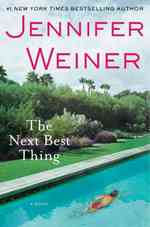
Dusted Off: The Next Best Thing by Jennifer Weiner

The Next Best ThingThe Next Best Thing

by Jennifer Weiner

Hardcover, 389 pg.
Atria Books, 2012
Read: Jul. 9-10, 2012

A sort of uninspired rom-com from Weiner about a TV writer finding a measure of success, love and stepping out on her own from the cocoon she was raised in. The saving grace is that with a writer as entertaining and skilled as Weiner, even the uninspired can be fun to read.

On the whole, it reads like a dramatization of Ben Blacker’s podcast about TV writing (Nerdist Writer’s Panel) with a couple of personal plotlines thrown in to the mix. So the non-family, non-romance stuff reads like a pretty authentic behind the scenes–nice for those of us who are into that kind of thing.

The sexual content was a bit more explicit than I’m used to from Weiner (as limited as my experience might be–my wife’s is more extensive and she agrees)–it’s not terrible, but just not what I expected from this writer, using this character to tell this story–seems out of place.

Not Weiner at her best, but a good way to kill a few hours.

—–

3 Stars

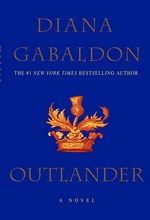
Outlander by Diana Gabaldon

Oy vey. After this, I’m forty-five books away from being caught up. 45.

—–

Outlander (Outlander, #1)Outlander

by Diana Gabaldon

Mass-Market Paperback, 870 pg.
Dell Publishing Company, 2005
Read: March 7 – 19, 2014

So when the announcement was made that this was going to be a TV series, the descriptions offered sounded intriguing — a mix of historical fiction and time travel. I figured the series was at least worth a look. I mean with that many sequels, it had to have something going for it. 50,000,000 Elvis fans can’t be wrong, you know?

Well, they’re probably not wrong, but they sure aren’t talking for me. What an exercise in futility. I literally knew nothing more about the key plot point on page 870 than I did on page 100. While I don’t demand to understand everything fully (even if there weren’t a half-dozen sequels to explain things), but I want to learn something, not just watch hundreds of pages of plot go by to get us nowhere.

So, in the days after the end WWII, an English nurse and her husband — both back from the War and reunited — go off on a second honeymoon in the Scottish Highlands. While her husband, the historian, is off talking about local history, Claire goes off for stroll and (skipping details here) finds herself face-to-face with her husband’s great-great-something-grandfather. Who turns out to be not-a-nice-man. So Claire ends up running away from this British officer with a group of Scots. Eventually, she finds herself married to one of them, falling in love with her second husband and having loads of sex. And there’s some running from the Brits, dealing with local politics, merging 18th century medicine with 20th century medicine, and getting some sort of religious instruction.

Outlander is big, sweeping, well-written, maddeningly dependent on coincidence, with one-dimensional villains and wayyyyy too much sexy-time — and, worst of all, it’s ultimately pointless. There is literally no point to this all. getting to the expected point is really what kept me going for the last 600+ pages. There are people who will love this (obviously, just do a quick Google search), but I won’t be joining that number.

—–

2 Stars

Dusted Off: Breakfast at Tiffany’s by Truman Capote

Breakfast at Tiffany'sBreakfast at Tiffany’s

by Truman Capote
Paperback, 178 pg.
Vintage International, 1993
Read: Jun. 24, 2012

Am not sure why this one resonates with so many, why it’s so acclaimed, but it is. For the most part, the narrative left me cold, as did the characters.

Capote’s descriptions on the other hand…great stuff, delicious writing there. Made it worth my while, but I can’t imagine I’ll be back for more.

—–

2 Stars

Dusted Off: Doc by Mary Doria Russell

DocDoc

by Mary Doria Russell
Hardcover, 394 pg.
Random House, 2013
Read: June 9-13, 2012

I was almost 100 pages into this novel when the thought occurred to me how extraordinarily careful Russell was in the way she put this together. Not that I think most authors are sloppy or anything, but the effort to make sure every piece, every word, every event was placed juuuust so was very evident.

The result of all this care is a heckuva novel about the years and events leading up to Wyatt & Morgan Earp heading to Tombstone with their good buddy Doc Holliday. Warm, exciting, brutal–this novel reads like a fast-paced biography. Really, really well written–there are a couple of times that Russell overplays her hand and gets downright manipulative, and at least once she almost lost me while doing so.

I’m glad I stuck it out tho’, the climax was as heart-breaking as it was heart-warming, and the coda put a nice little bow on the whole thing. Well worth the time and effort.

—–

4 Stars

Dusted Off: The Sleepy Hollow Family Almanac by Kris D’Agostino

The Sleepy Hollow Family AlmanacThe Sleepy Hollow Family Almanac

by Kris D’Agostino
Paperback, 352 g.
Algonquin Books, 2012
Read from May 13-14, 2012

blech. I feel like I’ve read this book 3 times this year (see also: Flatscreen: A Novel and The Fallback Plan). Each time I’ve been disappointed. What a waste of talent (the dude can write, sure).

Oh, and I think that people who write blurbs for un-funny books that promise “hilarity” or something along those lines should be excessively fined–maybe imprisoned.

—–

2 Stars

Fobbit by David Abrams

FobbitFobbit

by David Abrams
Paperback, 384 pg,
Grove Press, Black Cat, 2012
Read: Jan. 23-25, 2014

I enjoy a good satire — no matter if the target is one I identify with or oppose, a good satire is a treat. Fobbit didn’t totally work for me as a satire, but it came close.

As the cover says, a Fobbit is someone stationed at the Forward Operating Base during the Iraq war. The novel follows a handful of Fobbits as they try to survive their deployment while accomplishing as much as The Powers That Be allow them to (which includes a surprising number of PowerPoint presentations).

Staff Sergeant Gooding of Public Affairs attempts to keep various media outlets appraised of events, but before he can, he has to run everything up the flagpole — beginning with the impossibly political Lt. Col. Harkleroad. By the time Harkleroad and his superiors get done massaging/mangling the presentation of the facts to suit their needs, CNN, etc. have already discovered the reality, ran their stories, and moved on to something else.

On the other end of things, Sgt. Lumely is on the front-lines, but has to endure the inept command of Capt. Abe Shrinkle, who’s probably just as dangerous to his men as Iraqi insurgents (if not more). Lt. Vic Duret is Shrinkle’s commander, and he’s as frustrated trying to minimize Shrinkle’s damage.

Fobbit starts slow, and builds slower — but, eventually (and organically), the plot picks up and the lives of these poor Fobbits spiral out of control. Then it stopped feeling like a “eat your veggies” kind of read, and one that I could enjoy.

Fobbit‘s not as pointed as Catch-22, or as laugh-out-loud funny as Mash: A Novel About Three Army Doctors — as much as it wants to be in that company. But it’s honest, upfront, and feels authentic.

This is a satire of the circumstances these soldiers found themselves in, about the way the war was being fought, not about whether it should be or not. As nearly as possible, it’s an a-political book — pro-Operation Iraqi Freedom or anti- — it can be appreciated for what it is. Well-written, with characters that are a little more human than satire necessitates, and a world more grounded than expected.

—–

3 Stars

Page 48 of 54

Powered by WordPress & Theme by Anders Norén