Category: General Fiction/Literature Page 9 of 53

20 Books of Summer 2023: Wrap Up and Other Summer Reading

20 Books of Summer
Summer’s Over, so how did I do at this year’s challenge run by Cathy at 746 Books.

By the skin of my teeth—and using my own (not Cathy’s) dates—Memorial Day through Labor Day, the unofficial US Summer—I made it. I knew back in July when I said I should have a week to spare that I was going to be getting myself into trouble. What I didn’t know was that my library was going to deliver a book to me that was going to take 4 days longer to read than I’d expected (and I’d assumed it’d take me 5 in the first place). Throw in a Book Tour last week, and well, I had to scramble. Thankfully, the last book I had to read was a blast and I tore through it without regard to the deadline (honestly, I’d given up on finishing the challenge and only did it inadvertently), finishing it mid-morning today.

As of this morning, I’ve only posted about 13 of the books—that’s going to take me a bit to finish, especially at the rate I’ve been going lately.

On the whole, I’m glad I picked the books that I did. I might not have fallen head-over-heels for them all, but I’m glad for the experience, glad I scratched a curious itch, and/or glad I cut down the size of my TBR (we’ll ignore how I worked against that this summer for the moment). This might have been my most satisfying 20 Books yet. I had a lot of fun—which is the point, right?

Oh, I almost forgot. I did substitute one read, a totally acceptable thing for the Challenge, but something I typically resist. I’d been saying that I was going to read, Spirelli Paranormal Investigations: Episodes 1-3 by Kate Baray for months (even before I posted my 20 Books). But it turns out that I’d bought and read Spirelli Paranormal Investigations: Season One: Episodes 1-6, which is roughly 300 pages longer. So, yeah, it was a substitution, but a substitution that took 300 more pages to read. So, it really didn’t do me any favors when it came to completing this challenge (although having all six episodes was far more satisfying).

Also, earlier this summer I posted Top Ten Tuesday: Books on My Summer 2023 to-Read List (That Aren’t on My 20 Books Challenge). How’d I do with those? I’ve read seven of those and should be tackling the other three soon. Possibly this month. Hopefully this month.

But for the immediate future, I have two Book Tours in the next week or so, two other review copies that I want to post about really soon—and a couple of NetGalley reads I need to take care of, too. That almost sounds like work, but thankfully, it’s work I want to do (even if I don’t get paid for it. All in all…it’s been a good summer.

✔ 1. The Curse of the Silver Pharaoh by Pip Ballantine and Tee Morris (my post about it)
✔ 2. Spirelli Paranormal Investigations: Season One: Episodes 1-6 by Kate Baray (substitution)
✔ 3. The Lemon Man by Ken Bruton (my post about it)
✔ 4. The Flood Circle by Harry Connolly
✔ 5. Barking for Business by E.N. Crane (my post about it)
✔ 6. Random Sh*t Flying Through the Air by Jackson Ford (my post about it)
✔ 7. Eye of the Sh*t Storm by Jackson Ford (my post about it)
✔ 8. A Sh*tload of Crazy Powers by Jackson Ford
✔ 9. The Ink Black Heart by Robert Galbraith
✔ 10. Stone of Asylum by Hilarey Johnson (my post about it)
✔ 11. Proxies by James T. Lambert (my post about it)
✔ 12. Teaching Moments by Troy Lambert
✔ 13. Stray Ally by Troy Lambert (my post about it)
✔ 14. Cutthroat Cupcakes by Cate Lawley (my post about it)
✔ 15. Shadow Ranch by Rebecca Carey Lyles
✔ 16. Pure of Heart by Danielle Parker (my post about it)
✔ 17. The Worst Man by Jon Rance (my post about it)
✔ 18. However Long the Day by Justin Reed (my post about it)
✔ 19. Klone’s Stronghold by Joyce Reynolds-Ward (my post about it)
✔ 20. Fuzzwiggs: The Switcheroo by Amy Maren Rice

20 Books of Summer '23 August Check In Chart

Norah’s Ark by Victoria Williamson: I Think This is the Beginning of a Beautiful Friendship

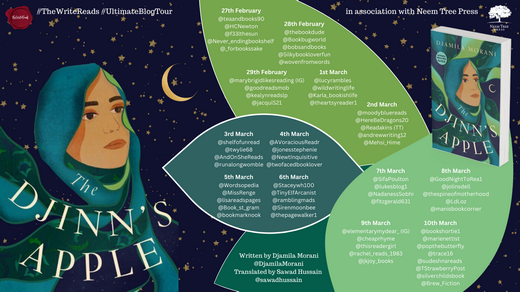
Norah's Ark Tour Banner

Norah's ArkNorah’s Ark

by Victoria Williamson

DETAILS:
Publisher: Neem Tree Press
Publication Date: August 29, 2023 
Format: eARC
Length: 304 pg.
Read Date: August 26-28, 2023

What’s Norah’s Ark About?

This is a book about a couple of eleven-year-olds in the English city of Hull who bond over their mutual attempts to help animals. Starting with a nest of baby birds who’ve been orphaned by a hungry cat, these two overcome various barriers (largely in the form of their parents) to various stray and abandoned animals they encounter. Along the way, they end up helping each other through some of the bigger challenges they’ve faced.

Norah (and her father)

Norah’s father lost his job a few years ago, which led to them losing their home. Since then they’ve bounced from one temporary housing situation to another, barely scraping by on his benefits and whatever short-term and low-paying jobs he can get. They attend a church regularly—and gorge themselves on the post-service snacks. They also use a food bank from time to time—but it’s hard for her father to swallow his pride and deal with the judgemental looks they receive when they do (how many of these looks are only in his mind, it’s hard to tell—but some of them are real).

Norah has some learning disabilities, too—and she’s never in one school long enough to really get the help she needs. Which leaves her open to being bullied while she falls further and further behind.

Norah loves animals and would do anything for a pet. Because she can’t get one due to their housing situation—well, other than the spiders she keeps on her window sill—she does what she can for whatever strays she finds like the aforementioned birds. She takes care of them for a while until one day they’re missing. They and their whole nest—what could’ve possibly happened?

Then she sees some rich boy on the other side of the fence carrying that nest. It’s not fair—he has so much already, a great house, a big yard, a treehouse, fancy clothes (that fit!), and whatever he wants to eat (he is a little overweight).

Adam (and his parents)

Adam and his parents moved from London to Hull a few years ago to help him get the specialized treatment he needed for leukemia. It’s in remission now, but his mom has become overprotective following his diagnosis. Since she had to leave her job to care for him (and hasn’t thought about going back to work), his father has to work harder than before and really has no time for anything else—even Adam.

He can’t go anywhere without her. He can’t go back to school—even if the doctors say he’s not as immunocompromised as he once was, his mother still insists on a private tutor. He can’t go swimming—he’d dreamed of going to the Olympics before he got sick—again, because of all the exposure to germs, people, and other things that could hurt him. His treatments and lack of exercise have left him out of shape. He’s lonely. All he wants is a friend and to do something outside his home.

When he discovers that the neighbor’s mean (at least to him) cat has eaten the mother bird, he takes the nest up to his treehouse (without his mother noticing and panicking about the filthy animals). He notices a girl on the other side of the fence quickly riding off on her bike—what a great life she must have—able to go wherever she wants!

The Grass Ain’t Always Greener…

Soon, the two actually meet and decide to work together to help the birds get to safety.

They learn more about each other—both discovering the struggles the other has gone through. They have unfortunate encounters with bullies and thieves—and discover their parents want them to have nothing to do with each other.

But neither of them has really had a friend in a long time and they’re unwilling to lose their new one. So they do what they can to keep that friendship—even if that means being disobedient. Both kids soon have to deal with new problems with their parents and need someone to rely on.

So, what did I think about Norah’s Ark?

That’s a really good question, one that I’ve been chewing on for a few days now.

I do have a few concerns. For example, both Norah and Adam (Adam is a bit more prone to this) can be too mature and understanding for their ages when it comes to their parents and what motivates them. Most of the time, Williamson gets them right—unreliable narrators (not because they’re dishonest, but because they’re 11 and don’t get everything the adults are doing) who are doing their best to make it in the world and cope with the information they have, with the impulsivity and insufficient emotional control you’d expect. But occasionally, they’re too perceptive, too wise…basically, they sound like they’ve sat through a decent amount of therapy and have internalized it. Which would be fine if they’d been in therapy, or were in their twenties. But they’re a decade and change away from being fully believable on some of these fronts.

The other thing (and I’ll get into vague spoilers for the rest of this paragraph, so feel free to skip it) that has bugged me since before I finished it—the ending is a bit hard to swallow. It’s too easy. It’s too unearned for my tastes. It’s like Williamson took a page from Wayne’s World and went with the “Mega Happy Ending” and just imposed it at a certain point. Please, don’t misunderstand me—I want Adam and Norah to get happy endings. I like where the book puts them in the last chapter—I’d have been displeased if they didn’t end up where they did. But…it would’ve felt more real if it didn’t go that way. Or if it took slow, incremental work for them to get there—with a few big jumps along the way, sure. To use a bad illustration—you know how in some movies the uncoordinated guy goes through a training montage and suddenly can do all sorts of things they couldn’t before the song started? Well, it was like that—but Norah and Adam skipped the montage and went from clumsy to ready to win the dance/singing/martial arts contest.

Now this is likely just me—I’m willing to bet that most readers in the target audience aren’t going to have those issues. But I’d quite like to ask a few about their experience reading the books, particularly the ending.

Ignore all that for a moment (as I’ve said over and over again—it takes many more words to explain a problem I have with a book than to say all the good things I want to say). This novel nails the struggles for both these children and their parents—who are clearly trying their best (even if the kids don’t always see that)—no one in this book has an easy time of it. They’re all in extreme circumstances, with the cards stacked against them—and everyone is just trying to get through it as intact as they can for themselves and their family.

I loved, loved, loved that someone wrote about these situations in a Middle Grade book—you just don’t see enough things like this (or at least, I don’t, I shouldn’t suggest it doesn’t exist). I remember when I was in that audience, and Wooly Mammoths roamed the earth, that I got seriously excited when I came across a book that dealt with things like this, even if it made for hard reading. Since then, I don’t see it too often.

It’s impossible to read this without feeling empathy for Norah or Adam—or their parents—and to extrapolate that empathy and sympathy toward non-fictional people in similar circumstances. I’m not saying that this book is going to fix all sorts of prejudices that a child might have and fill playgrounds everywhere with mini-Brené Brown clones. But it should make it a little easier for them to put themselves in someone else’s shoes, to understand that peers—or strangers—could be going through something.

If you’ve read and enjoyed When We Were Vikings by Andrew David MacDonald, you’re going to want to check this one out. If you haven’t—read both books. I think readers young and old will find a lot to admire and commend in these pages. I feel strange saying you’ll enjoy a book about so much suffering—but you will, particularly when the characters find a moment of joy or peace. It’s very effective—and affective—to watch these two become heroes and get different endings than either expected for most of the book.

Disclaimer: I received this eARC from Neem Tree Press via NetGalley in exchange for this post—thanks to both for this.


3.5 Stars

My thanks to The Write Reads for the invitation to participate in this tour and the materials they provided.

BOOK SPOTLIGHT: Norah’s Ark by Victoria Williamson

This morning, I’m very pleased to welcome The Write Reads Ultimate Blog Tour for Victoria Williamson’s Norah’s Ark. In addition to this Spotlight, my post about the book will be coming along soon. In the meantime, go check out https://twitter.com/WriteReadsTours—starting last week and going through tomorrow, a lot of bloggers have been writing interesting things about this book and you can find them all there. But for now, let’s learn a little bit about the book, shall we?

Norah's Ark Tour Banner

Book Details:

Title: Norah’s Ark by Victoria Williamson
Genre: General Fiction
Age Category: Middle Grade
Publisher: Neem Tree Press
Release date: August 29, 2023
Format: Paperback/Audiobook
Length: 304 pages
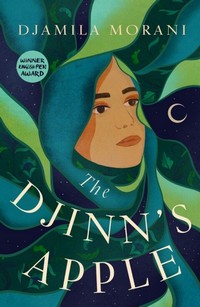
Norah's Ark Cover

About the Book:

Two very different lives. One shared hope for a brighter future. No time to waste. The flood is coming…

Eleven-year-old Norah Day lives in temporary accommodation, relies on foodbanks for dinner, and doesn’t have a mum. But she’s happy enough, as she has a dad, a pet mouse, a pet spider, and a whole zoo of rescued local wildlife to care for. Eleven-year-old Adam Sinclair lives with his parents in a nice house with a big garden, a private tutor, and everything he could ever want. But his life isn’t perfect – far from it. He’s recovering from leukaemia and is questioning his dream of becoming a champion swimmer. When a nest of baby birds brings them together, Norah and Adam discover they’re not so different after all. Can Norah help Adam find his confidence again? Can Adam help Norah solve the mystery of her missing mother? And can their teamwork save their zoo of rescued animals from the rising flood? Offering powerful lessons in empathy, Norah’s Ark is a hopeful and uplifting middle-grade tale for our times about friendship and finding a sense of home in the face of adversity.

Book Links:

Amazon UK ~ Goodreads

About the Author:

Sally Doherty
Victoria Williamson is an award-winning author who grew up in Scotland surrounded by hills, books, and an historical farm estate which inspired many of her early adventure stories and spooky tales. After studying Physics at the University of Glasgow, she set out on her own real-life adventures, which included teaching maths and science in Cameroon, training teachers in Malawi, teaching English in China and working with children with additional support needs in the UK. Victoria currently works part time writing KS2 books for the education company Twinkl and spends the rest of her time writing novels, and visiting schools, libraries and literary festivals to give author talks and run creative writing workshops.

Victoria’s previous novels include The Fox Girl and the White Gazelle, The Boy with the Butterfly Mind, Hag Storm, and War of the Wind. She has won the Bolton Children’s Fiction Award 2020/2021, The YA-aldi Glasgow Secondary School Libraries Book Award 2023, and has been shortlisted for the Week Junior Book Awards 2023, The Leeds Book Awards 2023, the Red Book Award 2023, the James Reckitt Hull Book Awards 2021, The Trinity School Book Awards 2021, and longlisted for the ABA South Coast Book Awards 2023, the Waterstones Children’s Book Prize 2020, and the Branford Boase Award 2019.

Her latest novel, The Pawnshop of Stolen Dreams, is a middle grade fantasy inspired by classic folklore. Twenty percent of the author royalties for this book are donated to CharChar Literacy, an organisation working to improve children’s literacy levels in Malawi.

You can find out more about Victoria’s books, school visits and free resources for schools on her website: www.strangelymagical.com.

Author Links:

Website ~ Twitter

My thanks to The Write Reads for the invitation to participate in this tour and the materials they provided.

However Long the Day by Justin Reed: One Eventful (some might say Disastrous) Night

However Long the DayHowever Long the Day

by Justin Reed

DETAILS:
Publisher: Bulrush Press
Publication Date: February 15, 2022
Format: Hardcover
Length: 402 pgs.
Read Date:  August 8-11, 2023
Buy from Bookshop.org Support Indie Bookstores

What’s However Long the Day About?

This is a The Prince and the Pauper-esque story set in New York in 1918 with the son of a wealthy politician and an activist mother hiring his doppelganger, a recent Irish immigrant, to stand in for him for one night. Fredrick (the rich guy) got caught (again) doing something reckless and is about to be subject to a lecture/tirade from his father before being sent to his room for the evening (a room, it should be noted, that’s bigger than the apartment Niall is sharing with his uncle). Sure, it’s ridiculous that someone in his early-to-mid-20s (I’m guessing) is being treated that way. But if he wants to siphon off of his parents, I’m guessing he has to put up with ridiculous things like this.

I’d better move on before I open another parenthesis.

Niall was offered more money than he could make in a year, so he has to sign on. This kicks off 12 hours (or so) of mistaken identities, women kissing the wrong me, kidnappings, abductions, fights, beatings, criminals, police, criminal police, plots being hatched, secrets being exposed, plans going awry, plans coming to fruition, and so much more.

Frederick Philips

Frederick is a spoiled and apparently useless man desperate to get out from underneath his father’s thumb. He’ll do anything to accomplish that, except get a decent job and put in an honest day’s work. He needs to live in the manner to which he’s become accustomed, and there’s no way he can do that easily. I’m pretty sure Archie Goodwin would call him a “fop,” and although that word’s not really used anymore, it feels rather fitting (and not just because of the setting for the book).

He appears to have tried gambling and some other hare-brained (and likely illegal) schemes that have put him on the wrong side of at least one crime syndicate. One of the things he’s trying while Niall pretends to be him is the culmination of a lot of his scheming—he’s trying for the big score that’ll equip him to set up a new life in Philadelphia.

Niall Donovan

Niall has been in NYC for a month and we meet him as he’s struggling to substitute for his Uncle Paddy on his ice delivery route. Paddy’s fighting off the Spanish Flu* and needs someone to cover so he can keep his job. Niall’s not that good at the fairly thankless job, but it’s a way he can contribute.

* The grief given to the police officer wearing a mask—and his defending the practice—feels pretty timely.

Other than in appearance, Niall’s everything that Frederick isn’t—he’s a hard worker, he’s honest and honorable—and can acquit himself well in a fight. You’ll have a really hard time not being immediately charmed by him and wanting to see him succeed everywhere. He might be so loyal, so devoted, so determined to do the right thing that he puts himself in some stupid and dangerous situations, quite honestly. And more than once you’ll shake your head at him making a choice that’s sure to lead to problems—but you’ll still root for him.

Other Characters

Frederick’s ally/accomplice in all this is named Ivy. She lives near him, with parents in a similar social standing—she’s equally miserable but doesn’t have the means to get away from home. She’s a little more level-headed than Frederick and works with him—urging him to take some chances for both of their sakes.

Flora works in domestic service for one of the homes on Paddy’s route and Niall is pretty sweet on her (the feeling’s mutual). She’s hands down my favorite character in the book—she’s everything that Niall is (but backwards and in high heels), but generally thinks more clearly (except for the one time she encourages Niall’s foolhardiness. Both of them end up regretting that). I wish I could tell you all the reasons I love Flora, but that’d involve spoilers.

Niall’s Uncle Paddy is a great guy, too. He’s doing all he can (in his very limited way) to help Niall acclimate to New York and to get established.

And I’m going on too long—I can’t talk about all the great characters—but Reed’s got a knack for creating characters that come to life. There’s not one of them that you’re not going to have a very solid impression of—and probably a pretty good mental image for (despite minimal description in the text). I could’ve easily enjoyed more scenes with each and every character—except maybe Frederick—because I just enjoyed watching them in action so much.

The Object Itself

Most of the time I don’t talk about things like covers, printing, and whatnot—it’s just not something I want to dwell on (and frequently it’s stuff outside an author’s control). But when it’s done this well—particularly by a self-published author, I want to take a moment to talk.

The printing, binding, and so on for this book is top-notch. Indistinguishable from most of the hardcovers on my shelf. The cover design as well as the interiors were done with skill and care. Does this help the reading experience much? Probably only a negligible amount. But it’s clear that Reed put some money into the production end of this—money and care. As much effort into that as he put into the words on the page (or close).

I wonder if he regrets that—or if by trimming a few costs, he’d be closer to making a profit. But for me? I appreciate an author putting their money where their mouth is. Again, I don’t know if it added much to the experience, but I sure enjoyed that part.

So, what did I think about However Long the Day?

As far as I can tell—Reed nailed the historical setting. His NYC of 1918 looks and feels like histories of the era that I’m familiar with—and with books from around that era that I’ve read. I’m no expert by any means, but it felt accurate—and if I raised an eyebrow at any of his historical details, they didn’t bother me enough to remember or write in my notes. I’m open to correction on this point, but I’d say he dealt with this part well.

I’ve talked briefly about the characters already, so let’s move on to the plot. It took a while for a clear picture to develop about what was going on, but the ride to that point was so fun, I really didn’t care—I just kept wondering what the next scene would bring. Sure, there were some moments early on that I wondered if he was trying to juggle too many storylines and characters, and I will admit to shaking my head a few times when he’d throw in something new or insert a new difficulty or obstacle for Niall or Frederick to overcome. Eventually, I started to see the tapestry he was weaving and was glad to see that patience rewarded—Reed knew where he was going and led us on a straight path that only seemed to be meandering.

Every now and then, I wondered if Reed was hitting either Niall and Paddy’s Irishisms* a bit too hard—or if he was laying on the 1910s jargon/slang a bit too thick. But it was less often than I assumed I’d think something like that going in—and it really was rare that I wondered that. There was a time or two that I wondered if the dialogue in general was a bit preachy (whether or not I agreed), or wordy in general.

* Flora using the term “Irishism” also seemed a bit strange, but it worked in the moment so well, that I’m not going to complain. And not just because it was Flora who said it. Although that helps. I’m telling you, I loved her.

But overall, I was really impressed with Reed’s writing. Near the 300-page mark I got a little uneasy. There was maybe 30 pages of story left, how was he going to fill up another hundred or so? It turns out that it was super easy, barely an inconvenience. Not only that, it was some of the best story-telling he’d done up to that point. Most of it didn’t even depend on the mistaken/interchangeable identity aspect of the book. It’s not often that I misjudge an author’s pacing anymore, especially not a first-time author (and when I do, it’s generally not a good thing)—but Reed taught me a welcome lesson in humility there.

I was pleasantly surprised throughout this book—I didn’t expect anything much to strike me as funny when I picked it up, for example. I was optimistic about the premise and anticipated enjoying it. But I expected a fairly earnest, straightforward drama. But Reed gave us some good action, some interesting hijinks, and some solid comedy. (Yes, there’s a chance that I found things funny that I shouldn’t have…I’ll grant you that, and apologize to Reed if that offends him).

One example of the comedy that really stood out to me–there’s a recurring discussion about the choice of cake vs. fruit pie. It feels straight out of Tarantino, or maybe Jim Gaffigan. It essentially becomes a personality test–and Frederick fails, incidentally. It becomes this nice bit of humor, it helps solidify Flora as a character, it humanizes some of the gangsters (see Tarantino), and is something that really helps the reader to connect with the characters. The fact that it has almost nothing to do with the plot is a great bonus, it becomes something where the characters can interact as human beings regardless of what’s going on. Also, anything that allows Flora to shine and makes Frederick look bad is worth pointing out.

Clearly, I enjoyed this book a lot. If this is what Reed can do for a debut, I can’t wait to see what he accomplishes for a follow-up. I strongly recommend you all to go pick this one up.


4 Stars

This post contains an affiliate link. If you purchase from it, I will get a small commission at no additional cost to you. As always, the opinions expressed are my own.

20 Books of Summer
Literary Locals logo

20 Books of Summer 2023: July Check-In

20 Books of Summer
Here’s a quick check-in for this challenge run by Cathy at 746 Books.

So far, I’ve read 11 of the 20—which puts me 2 behind last year (but 3 ahead of 2021, though). I should read at 2-3 over the rest of this week, so I’m feeling pretty good about where I am. I think I’ll have a week to spare.

Now I’ve only written about four of these books, so I’ve got my work cut out for me if I want to get caught up on these by the end of the Summer. It’s doable, but, I need to get to work on that.

✔ 1. The Curse of the Silver Pharaoh by Pip Ballantine and Tee Morris
2. Spirelli Paranormal Investigations: Episodes 1-3 by Kate Baray
3. The Lemon Man by Ken Bruton
4. The Flood Circle by Harry Connolly
✔ 5. Barking for Business by E.N. Crane
✔ 6. Random Sh*t Flying Through the Air by Jackson Ford (my post about it)
✔ 7. Eye of the Sh*t Storm by Jackson Ford
8. A Sh*tload of Crazy Powers by Jackson Ford
✔ 9. The Ink Black Heart by Robert Galbraith
10. Stone of Asylum by Hilarey Johnson
✔ 11. Proxies by James T. Lambert
12. Teaching Moments by Troy Lambert
✔ 13. Stray Ally by Troy Lambert
✔ 14. Cutthroat Cupcakes by Cate Lawley (my post about it)
15. Shadow Ranch by Rebecca Carey Lyles
✔ 16. Pure of Heart by Danielle Parker (my post about it)
✔ 17. The Worst Man by Jon Rance (my post about it)
18. However Long the Day by Justin Reed
✔ 19. Klone’s Stronghold by Joyce Reynolds-Ward (my post about it)
20. Fuzzwiggs: The Switcheroo by Amy Maren Rice

(subject to change, as is allowed, but I’m going to resist the impulse to tweak as much as I can).

20 Books of Summer '23 July Check In Chart

PUB DAY REPOST: Not Prepared by Matthew Hanover: This’ll Melt Your Heart and Bring a Smile to Your Face

So this isn’t technically part of my Self-Published Authors Appreciation Week posts, but it could be. I just would’ve posted this today no matter what else was going on around here because it’s Publication Day! Here’s your chance to show your appreciation for this particular self-published author and give this a big push right out of the gates—you’ll come out ahead if you do this, it’s such a great read. Later today, I will have a Q&A with Hanover about Self-Pulblishing—ycome back for it.


Not PreparedNot Prepared

by Matthew Hanover

DETAILS:
Series: Wallflowers, #4
Publication Date: July 25, 2023
Format: eARC
Read Date: July 7-10, 2023

The Series

Let me start with this—I’ve labeled this as the fourth book in the Wallflowers series (I prefer to think of it as the Alli-verse, but whatever, I’ll go with Hanover’s title). This does not mean you need to read the other three first. There’s only the thinnest little thread tying these together and there’s no reason not to read them all as stand-alones.

What’s Not Prepared About?

Our protagonist, Neil, is a single photographer approaching 40. He’s fairly successful and comfortable with his life—which is primarily about his work and staying healthy. He enjoys a few romantic dalliances but stopped pursuing anything serious some time back. He’s fairly free and likes his life—outside of some family he rarely sees (largely due to circumstance, not preference), he really has no ties. Well, there’s the daughter of his childhood friend—Neil was named her godfather when she was born a little over a decade ago, shortly before his friend died. He’s seen her a few times over the years and babysat her occasionally, but that’s about it.

One night, the now 12-year-old Chloe shows up on his doorstep. Chloe says her mom dropped her off on her way out of town for a few days and that she needs to stay with Neil. It’s not really the most convenient or thoughtful way to do this, but Neil doesn’t begrudge Chloe for it—her mother, Sara, has never been thoughtful or responsible so it fits.

The next day, Neil takes Chloe to get some clothes—Sara left her without any. He’s not crazy about this, but it needs to happen. Neil’s really not crazy about helping her find underwear or a training bra. Thankfully, there’s a woman near them in the store who sees Neil’s predicament and comes to his aid.

Naturally, because it’s this kind of book, there’s a spark between this woman, Jenna, and Neil. A couple of days after their meet-cute, the two meet for coffee. The sparks are still there—and Jenna’s able to give Neil a hint or two about dealing with Chloe.

Neil’s going to need more than a hint or two because Chloe eventually comes clean with him—she has no idea where her mom went and when/if she’ll be coming home. Chloe’s looking for a new home and family, and she’s picked Neil (and would like Jenna to be part of it, too).

This is the last thing that Neil bargained for, but he’s drawn to the idea (about both Chloe and Jenna). Now the question is, can they make it work?

Chloe

When I posted about Hanover’s first book, Not Famous, I spent a lot of time talking about the protagonist’s younger sister. She wasn’t that integral to the plot, but brought out aspects of the central characters you wouldn’t have seen otherwise—but more than that, she’s a perfectly charming character that you wanted to see more of. In Not Prepared, Hanover takes a very similar character and makes her the focus of the novel.

If that’s all he did, I’d be a fan of the book—thankfully he does more (some of which I’ll talk about in a minute). But let’s focus on Chloe for a moment.

So, obviously, she’s a mess. Her mother abandoned her and it’s pretty clear that before she literally abandoned her, Sara put the minimal amount of effort (at best) in before that. She’s not used to being cared for, for having limits placed on her, for having a reliable presence of any kind—once she’s given those she responds well to them and flourishes (probably responds a bit too well, but we’re not looking for gritty realism here).

Chloe’s also obviously an intelligent and resourceful girl who sees her opportunity and seizes it. Not simply for her physical needs—but she’s long had an emotional tie to Neil and she makes the most of her time with him to feed and nurture that bond. It takes Neil a bit to understand just what he’s meant to her for so long, but once he does he reciprocates.

It’s both the portrayal of Chloe and the depiction of their relationship—in all of its ups and downs, flaws and strengths—that makes this book so strong

A Meeting of Anxieties

Neil suffers from health anxiety—a term he (understandably) prefers to hypochondria—which leads him to spend a lot of time in hospitals and doctor’s offices. He’s both very aware that he’s very likely completely healthy and yet he’s frequently convinced that he has any number of undiagnosed conditions or ailments, frequently exasperated by news reports or pharmaceutical commercials. This is something that’s impacted his life as long as he can remember—and having a dear friend die at a young age likely didn’t help. As a result of this, he’s rather health conscious, particularly when it comes to the food he buys and prepares. Which is exactly what a 12-year-old doesn’t want to hear or experience.

Jenna struggles with brumotactillophobia (a form of OCD relating to foods touching each other), which sounds like something to chuckle over, but for Jenna, it’s a serious and frequently embarrassing issue.

Neil’s lost relationships—short-term and incredibly serious—because of his anxiety. Jenna has, too—the number of first dates she’s had that have ended in disaster is the kind of thing to make anyone into a social hermit. Because they can relate to each other’s hardships—and because they’re basically decent people capable of empathy—both of them can understand and accept the other. In fact, it’s an early way for them to bond. There are points throughout the novel where they’re able to help each other with their anxiety, which just made me love them as a couple and like the book even more.

Chloe’s better for spending time with both of them and seeing how they cope and deal with their anxieties—she’s better than any of the characters in the book at supporting them through bumps in the road. As I type this, I realize it’s due in part to her having spent her entire life taking care of her mother, so maybe it’s not as heartwarming a point as I initially thought. Still, it endeared me to her.

Alli Conwell

For years, one aspect of Marvel (and related) movies that was a sure-fire pleaser was the inventive way that Stan Lee would show up in some sort of cameo. Hanover’s not quite at that point with the singer-songwriter that was at the center of his first novel, Not Famous, but it’s in sight.

I do enjoy seeing how Alli will pop up in the various books. And somehow—don’t ask me how, I’m worried it’s a sign of cognitive decline—when she does pop up I’m surprised.
Me: Oh, wow! That was great that he tied Alli into this.
Voice in My Head: You mean like he always does? Why weren’t you looking for it?
Me (grumbling): Shut up.

In a way that won’t bother anyone who’s never read a Hanover book before, her presence is felt throughout the novel, beginning with one of my favorite lines of the book.

Post-Credits Scene?

If Marvel (and other) movies* have taught us anything in the last 15 years, it’s that you don’t leave the movie theater until the credits have stopped rolling and all the lights have come up. Period. Sure, you’ll get a complete story if you do, but you’ll be missing something.

Hanover has provided his readers with a “post-credits” chapter—a bonus chapter that you can access for free. Now, if you don’t, you will get the entire story and you should be completely satisfied (I sure was). But the bonus chapter? That will make you happier and give you a better idea of what will happen to our characters. My ARC didn’t have the entire bonus chapter—but it had enough to give me that boost that a good-post credits scene does (and it gives me a reason to actually open the version I pre-ordered, so I can access the rest of it).

* That’s entirely too many Marvel movie references for a post here—particularly for a book bereft of super powers. Oops.

So, what did I think about Not Prepared?

This is the best thing that Hanover has published—it’s also my favorite so far. Any of the three central characters would be enough to qualify the book for the latter—but you throw them together, and it’s a lock.

Jenna is an independent, self-assured woman who knows her limitations, has a strong sense of self and her morality, and because of that, is able to let herself be vulnerable and open to those she wants to be vulnerable and open to. She makes room for Neil and Chloe because it’s her choice, not because she’s driven to, or needs something.

I’ve said enough about Chloe at this point that any more would be overkill—so I’ll leave it with saying that she’s an adorable kid that I want to read a sequel or three about (but not really, because I’d rather imagine what happens after this than know).

Then there’s Neil—a mature narrator/protagonist, rather than the twentysomething still trying to figure out what kind of life he wants. Neil has his life, he’s responsible, his career’s in a good place. Somewhat by force and a sense of duty (with a twinge of guilt), but primarily because he wants to—he changes his life to accommodate Chloe. This will ultimately prove to change his whole life for the better.

There are no easy answers in Not Prepared, nothing works out just the way that any of the characters are looking for or expect (no readers, I’d wager). But there’s hope, there’s possibility, there’s a solid base for good things for them all. I think this is as good a sign for Hanover’s storytelling as it is for the book itself—there’s some mature writing at work here.

Possibly my favorite thing here is that while this book is at heart a Rom-Com, the romantic story takes a backseat to the love story between the girl who needs a family and a bachelor who didn’t expect one. There’s still plenty of “rom”, and a good amount of “com” of a handful of stripes (particularly when it comes to a single man being thrust into dealing with a young girl at the cusp of puberty)—but there’s a lot more, too.

It’s all told with Hanover’s trademark wit, charm, and grace—prose that moves so smoothly you don’t realize how long you’ve spent sucked into his book. He won me over starting at the prologue, and I don’t know if I stopped grinning throughout (well, except to chuckle or smile). The emotions are real and grounded—both positively and negatively. His depictions of anxiety really impressed me, and there are scenes between Chloe and Neil that got me choked up.

I strongly recommend this warm comedy about an unorthodox way to start a family.

Disclaimer: I was given a copy of this ARC by the author in exchange for this post. Which gave me something to opine about, but otherwise didn’t influence my opinion.


4 1/2 Stars

The Irresponsible Reader On…Self-Published “General” Fiction

(updated 7/24/23)
Self-Published Authors Appreciation Week

From the first moment that people did the strange thing of asking me to talk about their books on my blog, I’ve been impressed by the quality of a lot of what’s been published by authors going out on their own, taking all the risks, shouldering all the responsibility and doing all the work to get their words, their dreams, their blood, sweat, and tears. This should be celebrated—it’s definitely appreciated, as we’re trying to show this week.

In addition to the Q&As and Guest Posts I have this week, I’m also continuing my habit of highlighting the self-published works that I’ve blogged about over the last few years—just a sentence or two. Hopefully, this’ll be enough to make you click on the link to the full post. Beyond that, it’d be great if I inspired you to add a few of these to your TBR. Also, be sure you check out the other posts over at the SPAAW Hub.

Today we’re going to be looking at General Fiction (for lack of a better term)—there’s some Lad Lit, a dash of historical fiction, some humor, a couple of things I don’t know how to categorize beyond “Fiction”, and a bit more. Hopefully, you can find something that tickles your fancy.

bullet Dispatches from a Tourist Trap by James Bailey—Jason (see below) and his mother move from Seattle to a small town in the middle of Washington to stay with her parents as she establishes a life away from her husband. Hilarity and conflict ensue. (my post about it)
bullet The First World Problems of Jason Van Otterloo by James Bailey—an epistolary novel (through emails) from a 13-year-old whose life is turned upside down in 2003 Seattle. A lot of heart and a few laughs. (my post about it)
bullet The Glamshack by Paul W. Cohen—A lifestyle reporter’s obsessive love for a woman and the havoc it wreaks on his life. (my post about it)
bullet The Chronicles of Iona: Exile by Paula de Fougerolles—The first novel in a series about the founding of Iona. Some historical fiction with a hint of Fantasy. (my post about it)
bullet Not Awkward by Matthew Hanover—a young man attends the funeral of his ex’s father and gets roped into staying during shiva in the days leading to his wedding. Nah, not awkward at all. (my post about it)
bullet Not Dressed by Matthew Hanover—Hanover’s (seemingly) effortless charm makes this “romantic comedy of how love goes wrong—and right—when you’re a twenty-something still figuring out how to adult” a real winner. (my post about it)
bullet Not Famous by Matthew Hanover—Hanover’s first novel is about a guy who falls for a socially awkward musician. It will steal your heart. (my post about it)
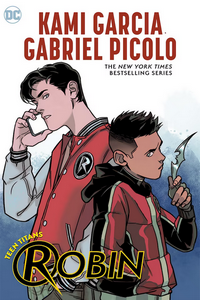
bullet Not Prepared by Matthew Hanover—a bachelor takes in his eleven-year-old-goddaughter when her mother skips town, and maybe finds love, too. Great stuff. (my post about it)
bullet The Flight of the Pickerings by John Grayson Heide—a heart-warming story about an older couple dealing with dementia and the end of their life together get their world turned upside down when their rebellious teenage grandson comes to live with them. (my post about it)
bullet Didn’t Get Frazzled by David Z. Hirsch, MD—a bildungsroman following a 20-something through his 4 years of medical school: from Gross Anatomy to the verge of residency. (my post about it)
bullet Love and Other Monsters in the Dark by K. B. Jensen—I could probably put this on most of my Self-Published Fiction lists, so I’ll limit it to this one. It’s sort of the same genre as The Twilight Zone—SF, Fantasy, Horror, Crime. Sudden Fiction and Short stories that’ll knock your socks off. (my post about it)
bullet XYZ by William Knight—A mature, old-school programmer has to start his career over at a 21st Century Startup as his family life falls apart in every way imaginable. Clearly a comedy. (my post about it)
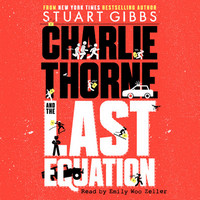
bullet Dirt Road Home by Alexander Nader—A lot of charm fills this YA(ish) Coming of Age story about a teen forced to move from Detroit to a small town in Tennessee before graduation. (my post about it)

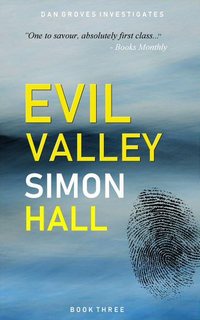
bullet Coffee and Condolences by Wesley Parker—A widower tries to begin recovering from the deaths of his wife and children by reconnecting with his step-sister and maybe finds love. (my post about it)
bullet Headphones and Heartaches by Wesley Parker—A teen finds home, safety, and love in a Foster Home, but is torn about leaving his mother behind. One sentence doesn’t do it justice, I simply loved this one. (my post about it)
bullet The Worst Man by Jon Rance—Ollie’s desperately in love with the girlfriend/fiancée of the man who’s been his best friend since childhood. And now he has to be the best man at the wedding he wants to derail. (my post about it)
bullet The Summer Holidays Survival Guide by Jon Rance—an out-of-shape teacher tries to prepare for a half-marathon while surviving the summer with his three kids, a marriage on the rocks, and his father (with dementia) moving in. (my post about it)
bullet The Crescent and the Cross by Kurt Scheffler— the story of The Battle of Tours (in 732) and events leading up to it, told through the lives of people close to Charles Martel and Charles on the one hand and a couple of the leaders of the Muslim forces involved in the Arab invasion of France. (my post about it)
bullet In Ten Years by Ian Shane—The reductionist description is “A 21st Century When Harry Met Sally“. We watch a couple of college friends over 18 years start to figure out that they’re in love. Hilarious and sweet. (my post about it)
bullet Postgraduate by Ian Shane—When your life falls apart, why not take your college radio show and turn it into an Internet radio show? And then, why not attend a reunion with the old college radio gang, including “The One That Got Away” (because you foolishly dumped her)? (my post about it)

bullet Radio Radio by Ian Shane—A maverick DJ is forced to get creative when a corporate radio management team takes over his station. A love letter to what radio used to be as much as anything else. (my post about it)
bullet The Jackals by Adam Shaw—A local band on the verge of making it big/big-ish falls apart after high school due to a love triangle that shouldn’t have happened. When one member of the band dies, the group has to get together for a funeral and to clean up his stuff. (that’s a bad summary, but best I can do in a sentence) (my post about it)
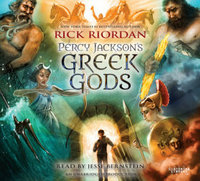
bullet KA-E-RO-U Time to Go Home by B. Jeanne Shibahara—I’m so glad the blurb contains a one-sentence description because I couldn’t write one: “Desert-dweller Meryl travels to Japan, returns a WWII flag, and brings home an understanding of life that opens her heart for the unexpected.” (my post about it)
bullet Lingering by Melissa Simonson—It’s sort-of SF, sort-of a Thriller, but not really either, so I put this here. This is a novel about grief, about dealing with death—while telling the story about an effort to design an AI to mimic a dead loved one in order to help a survivor cope. (my post about it)

If you're a self-published author that I've featured on this blog and I didn't mention you in this post and should have. I'm sorry (unless you're this guy). Please drop me a line, and I'll fix this. I want to keep this regularly updated so I keep talking about Self-Published Authors.

Self-Published Authors Appreciation Week Footer

The 2023 Self-Published Authors Appreciation Week Logo was made by Witty and Sarcastic Book Club

Not Prepared by Matthew Hanover: This’ll Melt Your Heart and Bring a Smile to Your Face

Not PreparedNot Prepared

by Matthew Hanover

DETAILS:
Series: Wallflowers, #4
Publication Date: July 25, 2023
Format: eARC
Read Date: July 7-10, 2023

The Series

Let me start with this—I’ve labeled this as the fourth book in the Wallflowers series (I prefer to think of it as the Alli-verse, but whatever, I’ll go with Hanover’s title). This does not mean you need to read the other three first. There’s only the thinnest little thread tying these together and there’s no reason not to read them all as stand-alones.

What’s Not Prepared About?

Our protagonist, Neil, is a single photographer approaching 40. He’s fairly successful and comfortable with his life—which is primarily about his work and staying healthy. He enjoys a few romantic dalliances but stopped pursuing anything serious some time back. He’s fairly free and likes his life—outside of some family he rarely sees (largely due to circumstance, not preference), he really has no ties. Well, there’s the daughter of his childhood friend—Neil was named her godfather when she was born a little over a decade ago, shortly before his friend died. He’s seen her a few times over the years and babysat her occasionally, but that’s about it.

One night, the now 12-year-old Chloe shows up on his doorstep. Chloe says her mom dropped her off on her way out of town for a few days and that she needs to stay with Neil. It’s not really the most convenient or thoughtful way to do this, but Neil doesn’t begrudge Chloe for it—her mother, Sara, has never been thoughtful or responsible so it fits.

The next day, Neil takes Chloe to get some clothes—Sara left her without any. He’s not crazy about this, but it needs to happen. Neil’s really not crazy about helping her find underwear or a training bra. Thankfully, there’s a woman near them in the store who sees Neil’s predicament and comes to his aid.

Naturally, because it’s this kind of book, there’s a spark between this woman, Jenna, and Neil. A couple of days after their meet-cute, the two meet for coffee. The sparks are still there—and Jenna’s able to give Neil a hint or two about dealing with Chloe.

Neil’s going to need more than a hint or two because Chloe eventually comes clean with him—she has no idea where her mom went and when/if she’ll be coming home. Chloe’s looking for a new home and family, and she’s picked Neil (and would like Jenna to be part of it, too).

This is the last thing that Neil bargained for, but he’s drawn to the idea (about both Chloe and Jenna). Now the question is, can they make it work?

Chloe

When I posted about Hanover’s first book, Not Famous, I spent a lot of time talking about the protagonist’s younger sister. She wasn’t that integral to the plot, but brought out aspects of the central characters you wouldn’t have seen otherwise—but more than that, she’s a perfectly charming character that you wanted to see more of. In Not Prepared, Hanover takes a very similar character and makes her the focus of the novel.

If that’s all he did, I’d be a fan of the book—thankfully he does more (some of which I’ll talk about in a minute). But let’s focus on Chloe for a moment.

So, obviously, she’s a mess. Her mother abandoned her and it’s pretty clear that before she literally abandoned her, Sara put the minimal amount of effort (at best) in before that. She’s not used to being cared for, for having limits placed on her, for having a reliable presence of any kind—once she’s given those she responds well to them and flourishes (probably responds a bit too well, but we’re not looking for gritty realism here).

Chloe’s also obviously an intelligent and resourceful girl who sees her opportunity and seizes it. Not simply for her physical needs—but she’s long had an emotional tie to Neil and she makes the most of her time with him to feed and nurture that bond. It takes Neil a bit to understand just what he’s meant to her for so long, but once he does he reciprocates.

It’s both the portrayal of Chloe and the depiction of their relationship—in all of its ups and downs, flaws and strengths—that makes this book so strong

A Meeting of Anxieties

Neil suffers from health anxiety—a term he (understandably) prefers to hypochondria—which leads him to spend a lot of time in hospitals and doctor’s offices. He’s both very aware that he’s very likely completely healthy and yet he’s frequently convinced that he has any number of undiagnosed conditions or ailments, frequently exasperated by news reports or pharmaceutical commercials. This is something that’s impacted his life as long as he can remember—and having a dear friend die at a young age likely didn’t help. As a result of this, he’s rather health conscious, particularly when it comes to the food he buys and prepares. Which is exactly what a 12-year-old doesn’t want to hear or experience.

Jenna struggles with brumotactillophobia (a form of OCD relating to foods touching each other), which sounds like something to chuckle over, but for Jenna, it’s a serious and frequently embarrassing issue.

Neil’s lost relationships—short-term and incredibly serious—because of his anxiety. Jenna has, too—the number of first dates she’s had that have ended in disaster is the kind of thing to make anyone into a social hermit. Because they can relate to each other’s hardships—and because they’re basically decent people capable of empathy—both of them can understand and accept the other. In fact, it’s an early way for them to bond. There are points throughout the novel where they’re able to help each other with their anxiety, which just made me love them as a couple and like the book even more.

Chloe’s better for spending time with both of them and seeing how they cope and deal with their anxieties—she’s better than any of the characters in the book at supporting them through bumps in the road. As I type this, I realize it’s due in part to her having spent her entire life taking care of her mother, so maybe it’s not as heartwarming a point as I initially thought. Still, it endeared me to her.

Alli Conwell

For years, one aspect of Marvel (and related) movies that was a sure-fire pleaser was the inventive way that Stan Lee would show up in some sort of cameo. Hanover’s not quite at that point with the singer-songwriter that was at the center of his first novel, Not Famous, but it’s in sight.

I do enjoy seeing how Alli will pop up in the various books. And somehow—don’t ask me how, I’m worried it’s a sign of cognitive decline—when she does pop up I’m surprised.
Me: Oh, wow! That was great that he tied Alli into this.
Voice in My Head: You mean like he always does? Why weren’t you looking for it?
Me (grumbling): Shut up.

In a way that won’t bother anyone who’s never read a Hanover book before, her presence is felt throughout the novel, beginning with one of my favorite lines of the book.

Post-Credits Scene?

If Marvel (and other) movies* have taught us anything in the last 15 years, it’s that you don’t leave the movie theater until the credits have stopped rolling and all the lights have come up. Period. Sure, you’ll get a complete story if you do, but you’ll be missing something.

Hanover has provided his readers with a “post-credits” chapter—a bonus chapter that you can access for free. Now, if you don’t, you will get the entire story and you should be completely satisfied (I sure was). But the bonus chapter? That will make you happier and give you a better idea of what will happen to our characters. My ARC didn’t have the entire bonus chapter—but it had enough to give me that boost that a good-post credits scene does (and it gives me a reason to actually open the version I pre-ordered, so I can access the rest of it).

* That’s entirely too many Marvel movie references for a post here—particularly for a book bereft of super powers. Oops.

So, what did I think about Not Prepared?

This is the best thing that Hanover has published—it’s also my favorite so far. Any of the three central characters would be enough to qualify the book for the latter—but you throw them together, and it’s a lock.

Jenna is an independent, self-assured woman who knows her limitations, has a strong sense of self and her morality, and because of that, is able to let herself be vulnerable and open to those she wants to be vulnerable and open to. She makes room for Neil and Chloe because it’s her choice, not because she’s driven to, or needs something.

I’ve said enough about Chloe at this point that any more would be overkill—so I’ll leave it with saying that she’s an adorable kid that I want to read a sequel or three about (but not really, because I’d rather imagine what happens after this than know).

Then there’s Neil—a mature narrator/protagonist, rather than the twentysomething still trying to figure out what kind of life he wants. Neil has his life, he’s responsible, his career’s in a good place. Somewhat by force and a sense of duty (with a twinge of guilt), but primarily because he wants to—he changes his life to accommodate Chloe. This will ultimately prove to change his whole life for the better.

There are no easy answers in Not Prepared, nothing works out just the way that any of the characters are looking for or expect (no readers, I’d wager). But there’s hope, there’s possibility, there’s a solid base for good things for them all. I think this is as good a sign for Hanover’s storytelling as it is for the book itself—there’s some mature writing at work here.

Possibly my favorite thing here is that while this book is at heart a Rom-Com, the romantic story takes a backseat to the love story between the girl who needs a family and a bachelor who didn’t expect one. There’s still plenty of “rom”, and a good amount of “com” of a handful of stripes (particularly when it comes to a single man being thrust into dealing with a young girl at the cusp of puberty)—but there’s a lot more, too.

It’s all told with Hanover’s trademark wit, charm, and grace—prose that moves so smoothly you don’t realize how long you’ve spent sucked into his book. He won me over starting at the prologue, and I don’t know if I stopped grinning throughout (well, except to chuckle or smile). The emotions are real and grounded—both positively and negatively. His depictions of anxiety really impressed me, and there are scenes between Chloe and Neil that got me choked up.

I strongly recommend this warm comedy about an unorthodox way to start a family.

Disclaimer: I was given a copy of this ARC by the author in exchange for this post. Which gave me something to opine about, but otherwise didn’t influence my opinion.


4 1/2 Stars

20 Books of Summer 2023: June Check-In

20 Books of Summer
Here’s a quick check-in for this challenge run by Cathy at 746 Books.

So far, I’ve read 4 2/3—which puts me a little behind last year (still far ahead of 2021, though). I should read at least 1 1/3 this coming week, so I’m feeling pretty good about where I am. Since one of those four that I have finished was The Ink Black Heart and that took a week or so, I’m not that worried. None of the rest of these are nearly that much of a commitment.

1. The Curse of the Silver Pharaoh by Pip Ballantine and Tee Morris
2. Spirelli Paranormal Investigations: Episodes 1-3 by Kate Baray
3. The Lemon Man by Ken Bruton
4. The Flood Circle by Harry Connolly
5. Barking for Business by E.N. Crane
✔ 6. Random Sh*t Flying Through the Air by Jackson Ford
7. Eye of the Sh*t Storm by Jackson Ford
8. A Sh*tload of Crazy Powers by Jackson Ford
✔ 9. The Ink Black Heart by Robert Galbraith
10. Stone of Asylum by Hilarey Johnson
11. Proxies by James T. Lambert
12. Teaching Moments by Troy Lambert
13. Stray Ally by Troy Lambert
✔ 14. Cutthroat Cupcakes by Cate Lawley
15. Shadow Ranch by Rebecca Carey Lyles
16. Pure of Heart by Danielle Parker
✔ 17. The Worst Man by Jon Rance
18. However Long the Day by Justin Reed
19. Klone’s Stronghold by Joyce Reynolds-Ward
20. Fuzzwiggs: The Switcheroo by Amy Maren Rice

(subject to change, as is allowed, but I’m going to resist the impulse to tweak as much as I can).

20 Books of Summer '23 June Check In Chart

The Worst Man by Jon Rance: The Dark Side of the Springfield Song

The Worst ManThe Worst Man

by Jon Rance

DETAILS:
Publication Date: February 14, 2023
Format:  eBook
Length: 378 pg.
Read Date: June 14-16, 2023

…at the back of my mind, I have always held out hope – blind, foolish, irrational hope – that they will break up. When you find yourself desperately in love with your best mate’s girlfriend, blind, foolish, irrational hope is all you have. In fact, and not to put too fine a point on it, I have been banking on it.

What’s The Worst Man About?

The novel starts off with Dan and Lucy’s wedding going awry–the details are a little fuzzy, but we know it has something to do with our narrator, Ollie. Then we go back to twelve weeks earlier when Dan and Lucy tell Dan’s lifelong friend, Ollie, that they’re engaged and we see how in love/deeply infatuated/possibly obsessed Ollie is with Lucy.

For most of the book, it’s difficult to say exactly how Ollie feels–he tells you one thing, but his actions/thoughts may make readers reach other conclusions. So, I’m going to put the phrase in quotation marks (imagine me making wildly exaggerated air quotes as I type).

He’s been this way for three years–since he met her–and it’s only gotten worse from what we can tell. One friend knows about his hangup (and Lucy likely does, too, because she’s no fool).

The main plotline of this book is seeing Ollie try to shake it off, to try to force himself out “of love” with her–or it’s seeing him fantasizing about ways he can profess his “love” to her and scheming ways to get Lucy to break off the engagement.

Unsympathetic Protagonist

I really want Dan and Lucy to be happy, just not together.

Ohhhh boy. It was really hard to find a way to like Ollie. This was something I struggled with from the opening paragraphs right up to the last sentence–and, frankly, never succeeded at. This is a guy we’re supposed to find at least somewhat likable and appealing–we’re supposed to root for him.

But he’s an immature little twit pining after his best friend’s girlfriend and only stopped when she became his best friend’s fiancée–not because he grew up, but because he started pining after his best friend’s fiancée. We’re not talking best friends since college or something–we’re talking about a couple of guys who grew up together, and might as well have been brothers since childhood. And he’s so wrapped up in what he wants that he can’t be happy for Dan. He tries to be (or so he claims in the narration if you can trust him), but it fails.

He even gets this harebrained idea to make Lucy jealous–and that this jealousy will cause her to realize her mistake, break off the engagement, etc. The girl he uses in this scenario is a far better fit for him–if only because she’s single and looking (although there are many other reasons)–and Ollie won’t see it (or does, and still blows it off for Lucy).

As Sherman T. Potter would put it, this boy’s full of mule fritters.

The irony of it all is that Ollie teaches young teens/preteens–and ends up acting like one.

The Saving Graces

Here’s what kept me going. In the middle of all of this are three stories worth reading.

Ollie’s flatmate–another friend of Dan and Lucy’s–has a quirky little love story (and dog story) all his own. I don’t know if there’s a real Rom-Com in it, or if it’s just a good storyline from a Romance, because we only get glimpses of it as Wilf tries to talk some sense into Ollie. Regardless, watching that storyline was one of the pleasures of this book.

Ollie’s Dad has been alone for a very long time and he just may have found someone, too. This storyline brings a lot of the comedy of the book–and a decent amount of the heart. I’d have read an entire book on this story.

Ollie’s dad has been single for years because Ollie’s mother left them when he was pretty young. It’s one of those things that shaped the two of them–and you could probably make some sort of link between this and Ollie’s actions in the present. But whatever–the thing to focus on is that Ollie’s introspection about her absence in his life and the rest of this story are some of the most honest and moving emotional writing in the book.

So, what did I think about The Worst Man?

‘Then stop acting like a f($^@#g child and grow up,’ says Wilf before his phone rings.

That’s all the book needed, Ollie to listen to Wilf.

I was prepared to be very tepidly positive in this post because of its strengths, but Rance lost me in the last 9%. I’d have been tempted to discard the book over those events if I wasn’t in the closing chapters. I want to stress that’s with the exception of those arcs I mentioned in the previous section. But those three couldn’t save it.

The writing was clever enough–with some really nice lines and moments scattered throughout. For example, Ollie’s description of “possibly one of the worst dates in the world,” is both a. entertaining for the reader and b. a really bad date. You can’t help but have strong reactions to these characters (mostly positive)–there’s a student of Ollie’s that you will feel for in particular.

In the end, Rance did the best he could with this character and the premise–really he portrayed Ollie and the situation pretty well. Which was the problem for me, in the end. I’m definitely not writing off Rance for this, and will be happy to try something else from him (I’ll just do a better job reading the descriptions first).

Save yourself the time and check out something else by Rance, like The Summer Holidays Survival Guide.


2 1/2 Stars

20 Books of Summer

Page 9 of 53

Powered by WordPress & Theme by Anders Norén