Category: M-R Page 3 of 10

Series M-R

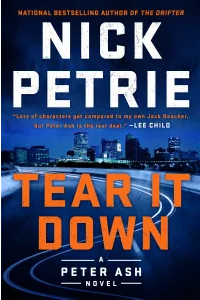
Tear It Down by Nick Petrie: Things Get Rough for Peter in the Home of the Blues

Tear It Down

Tear It Down

by Nick Petrie
Series: Peter Ash, #4

Hardcover, 368 pg.
G.P. Putnam’s Sons, 2019

Read: October 9-11, 2021
Grab a copy from your local indie bookstore!

Outside, the air was thick and threatening rain. Spring in Tennessee. Peter strode across the wide concrete apron toward the road.

Go to Memphis, June had said. Eat some barbecue, listen to music, have some fun.

So far there had been no barbecue and no music.

Was it wrong that he might be having fun?

What’s Tear It Down About?

Peter’s been recuperating and rehabbing from his injuries from Light It Up at June’s—he’s about as recovered as he can be and is spending his time doing some upkeep and repairs on some of the buildings. But being in one place for so long is getting to him. He doesn’t see it, but June does.

June has a friend, Nadine, in Memphis. She’s a photographer who’s done a few tours in Iraq and Afghanistan, embedded with various groups. She’s back home in Memphis and has recently purchased a house at auction. Since then, she’s been harassed and could use some help. So June sends Peter off to lend a hand.

The morning before he arrives at Nadine’s, someone had driven a dump truck through the front of her house and then ran off. The truck is still there, which is what’s keeping some of the walls from falling. Clearly, he’s got his work cut out for him.

The work gets complicated the next day when Peter’s carjacked. No, really. A teenager with a pistol sticks Peter up, stealing his truck (with all his tools, food, and weapons) in the back. Peter likely could’ve stopped him, but chooses to let the kid get away with it for some pretty good reasons.

So now, he has to try to stop further attacks on Nadine, help her rebuild the house that she’s determined not to leave, and get his truck back. Oh, and immediately following the carjacking, Peter offended the drug lord who runs most of the crime in that part of Memphis—but you’ll want to read all that for yourself.

A Man Called Lewis

Lewis decides that Peter needs help (with a little input from June) and shows up just when things are getting hairy.

If I’ve noticed it before, I don’t remember—but Lewis here is essentially Robert B. Parker’s Hawk. There’s one conversation between Lewis and Peter that could’ve been lifted straight from a Hawk and Spenser conversation by Parker/Atkins, too.

It works, too, don’t get me wrong. I am kicking myself a little for not having seen it before, but I don’t think it was as strong—maybe that’s because of the themes/circumstances in this book that it stands out so much.

So, what did I think about Tear It Down?

There’s a significant racial component to the events and circumstances of this book. This added a little depth to the novel, it’s about more than people trying to get money and power, as is usual for these books. Sure, there’s money and power at the root of a lot of what’s going on here—but there’s a degree of hate that wasn’t around either.

There are also two characters who are just trying to survive in a world that seems hostile—and increasingly so—to them. They just need a break, a chance to do something, but it’s taken from them at every turn. The question for them is what they do in these circumstances—and what the results of their choices will be for those around them.

There is a significant toll on those who just happen to be near Peter and Lewis when things get ugly between them and those who are harassing Nadine. Peter notices this and it bothers him—it’s one thing in war for there to be collateral damage, but there was no reason for anyone injured (or worse) here to be in danger. It will be interesting to see if this experience has an impact on how he deals with things in the future.

This one had it all—great action, a compelling story, some good social commentary, and some time with characters I’m really growing attached to. Nick Petrie and Peter Ash continue to be a winning combination.


4 1/2 Stars

2021 Library Love Challenge

This post contains an affiliate link. If you purchase from it, I will get a small commission at no additional cost to you. As always, opinions are my own.

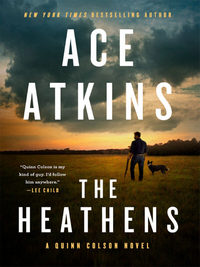
The Heathens by Ace Atkins: Colson and Virgil Try to Stop a Modern Bonnie and Clyde

The Heathens

The Heathens

by Ace Atkins
Series: Quinn Colson, #11

Hardcover, 400 pg.
G.P. Putnam’s Sons, 2021

Read: July 20-23, 2021
Grab a copy from your local indie bookstore!

Tanya Jane Byrd, known to her friends as TJ, never gave a damn about being famous. But here she was, four days on the run from Tibbehah County, Mississippi, with that girl Chastity passing along the burner phone to show they now had more than a hundred thousand followers on Instagram. They only had six posts, the newest one from just two hours ago after TJ cut her hair boy short, dyed it black as a raven’s wing, and made her ultimatum to that cowardly son of 2 bitch Chester Pratt. She called him out for not only her mother’s murder but the money she and her little brother John Wesley were owed.

On the forty-five-second clip shot outside the Tri-State Motel in Texarkana, she held up her fist on the diving board to an empty pool and said, “Fair is fair,” remembering the line from one of her mothers old VHS tapes in the trailer.

“What do you think?” Chastity asked.

“I think I better drop that phone into the nearest creek.”

What’s The Heathens About?

Seventeen-year-old TJ Byrd has spent her life convinced that her father was killed by Tibbehah County’s Sherriff, the uncle of the current Sherriff. This has left her with a pretty jaded view of law enforcement. So when she’s suspected in the disappearance—and then the murder of her mother, it’s understandable that she doesn’t assume she’s going to get a fair shake from those that suspect her. So, she grabs her little brother and with her best friend and her boyfriend, they hit the road and run. They’re not sure where they’re driving to, but it’s far away from Tibbehah.

That’s maybe not the brightest move, but she’s desperate.

Former Deputy/now US Marshall, Lilly Virgil assumes that TJ killed her mother. Lilly has seen what happens when the two of them fight and assumes that TJ has gone one step too far. Lilly pulls some strings and gets herself assigned to the fugitive hunt for TJ and the rest.

Sheriff Quinn Colson isn’t that convinced of TJ’s guilt but would like to talk to her about what happened. With her on the run, he does some legwork on the case on his own—looking into her mother’s boyfriend, finances, and history. The more he finds, the less he’s convinced that TJ had anything to do with her death, he just needs to find enough evidence to convince Lilly.

Meanwhile, Johnny Stagg is at work greasing palms and making plans for the future—and what he has in mind will look entirely different than anything we’ve already seen from him. He’s also trying to get a father and son to join his team—they have a penchant for violence, and Stagg is pretty sure he’ll have some work for them.

TJ Byrd

…I’m real sorry, TJ. You’re too young to got through a mess like this.”

“My life’s been a mess since I was born,” TJ said. “Don’t shed a tear for me, Sheriff.”

TJ Byrd is one of those characters that you can sense that an author really enjoys writing, and it carries over to the reader—she’s just a blast to read about. I felt like I got a better sense of her than I have a couple of protagonists this year. I want to write a lot about her, but I won’t because I just don’t want to take away the joy of discovery from a reader. So let me just say that if you can see the joy in reading about a rebellious, stubborn, delinquent teenager on the run from the law because she’s suspected of the gruesome murder of her mother, you’re really going to have fun with her. If that kind of character doesn’t really seem like something you’d enjoy—give Atkins a chance to prove you wrong.

The only thing I do feel safe in saying is that Atkins made a great Spotify playlist based on the character, and it tells you a lot about her (and makes pretty good reading/writing music if you’re dragging a bit).

A New Side of Colson?

The little girl wide awake now, as Maggie wiped her face with a napkin and handed her over to Quinn. He held his daughter tight, the child’s eyes wide and unfocused. Halley so small, light in his lap, while she checked out all the smells and sounds of the Fillin’ Station diner.

“She sure is curious,” Maggie said.

“Skeptical,” Quinn said.

“I guess she comes by it naturally.”

Quinn’s been a great step-dad to Brandon—and was a good uncle to Jason. But it feels different now with Halley in the picture. It seems like Quinn’s going to be a good, involved dad (as much as his job allows). I got a real Joe Pickett-vibe off of a couple of passages with Quinn at home in this one. Which is good—Joe at home is the most appealing part of the character, so seeing Quinn in this light makes me look forward to seeing how he develops along these lines.

Mythology vs. “Monster of the Week”

It’s a little off-genre here, but when I was thinking about this novel and its relation to the rest of the series, I thought about The X-Files and Fringe. There were essentially two types of episodes for those series—”Mythology” episodes that advanced or at least explored the overarching story about the series, and “monster of the week” episodes that were pretty much about some freakish thing that was taken care of within one episode—and while nods might have been made towards the mythology, overall it was independent of that story.

The Heathens follows a major mythology novel, The Revelators that tied up storylines that went back to the beginning as well as some new ones. The Heathens takes a break from it, telling a largely stand-alone story. This is good, it gives readers a chance to catch their breath, it gives Atkins a chance to tell a different kind of story while beginning to set the stage for the next big mythology chapter.

That said, it’s not “mythology”-free. The “new, improved” Johnny Stagg (who will remind you a lot of the “old, corrupt” Johnny Stagg) starts making plans, giving readers a hint about the kind of misery that’s heading to Tibbehah County and Quinn’s life. And there are references to and advances on some of the ongoing subplots, but they’re not the focus of the novel.

Edging Toward a Spoiler In This Paragraph

I don’t like to think this—even about fictional characters—but there’s a character death that brought me just so much pleasure. I’m not going to ruin it, as much as I want to. Murdered Character is someone I find nothing redeemable about—Stagg, at least, is entertaining to read about/detest. But this one? Didn’t enjoy reading about them, was hoping never to see them again—but if Atkins is going to bring them back just so he can kill them off? That’s more than okay by me.

So, what did I think about The Heathens?

This is a great way to start phase 2 of the Quinn Colson series, taking a little breather from major arcs to focus on this story—one that Quinn and Lilly really play supporting roles in—is a nice break from the intensity of the last couple of novels.

It’s also a great place to come on board the series if you haven’t read any of it before.

Lilly and Quinn being on opposite sides of the case—not really working against each other but sure not helping each other too obviously—is another nice touch. There’s an honest difference of opinion, and on the whole, they treat each other like adults set out to get to the bottom of something, no matter their divergent positions when it comes to how to deal with TJ.

Especially in the Quinn Colson series, Atkins has a history of giving us solid plots, great characters, and something extra. That’s the same here, but it feels a little fresher, a little rejuvenated after The Heathens. Choosing to focus on a few kids from Tibbehah County, while Lilly and Quinn are closing in on the truth (and the teens) is a nice change of pace, too.

As much as I enjoy his Spenser novels, it’s these Quinn Colson books where Atkins can show the world what he’s capable of. This is no exception to the rule—do yourself a favor and pick this up.


4 Stars

2021 Library Love Challenge

This post contains an affiliate link. If you purchase from it, I will get a small commission at no additional cost to you. As always, opinions are my own.

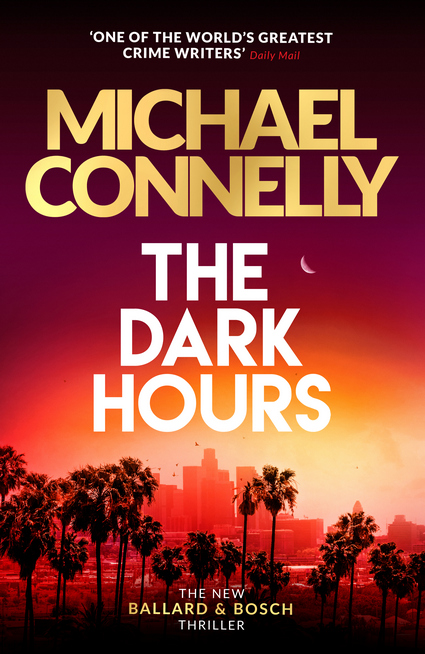
Cover Reveal: The Dark Hours by Michael Connelly

I’m excited to take part in the UK Cover Reveal for the new Harry Bosch/Rene Ballard thriller, The Dark Hours by Michael Connelly this morning. Before we get to the cover, let’s talk a bit about the book, okay?

Book Blurb

Has a killer lain dormant for years only to strike again on New Year’s Eve? LAPD Detective Renée Ballard and Harry Bosch team up to find justice for an innocent victim in the new thriller from #1 New York Times bestselling author Michael Connelly.

There’s chaos in Hollywood on New Year’s Eve. Working her graveyard shift, LAPD Detective Renée Ballard seeks shelter at the end of the countdown to wait out the traditional rain of lead as hundreds of revelers shoot their guns into the air. As reports start to roll in of shattered windshields and other damage, Ballard is called to a scene where a hardworking auto shop owner has been fatally hit by a bullet in the middle of a crowded street party.

It doesn’t take long for Ballard to determine that the deadly bullet could not have fallen from the sky. Ballard’s investigation leads her to look into another unsolved murder-a case at one time worked by Detective Harry Bosch.

Ballard and Bosch team up once again to find out where the old and new cases intersect. All the while they must look over their shoulders. The killer who has stayed undetected for so long knows they are coming after him.

Book Details:

Book Title: The Dark Hours by Michael Connelly
Publisher: Orion (UK)/Little, Brown and Company (US)
Release date: November 9, 2021
Format: Hardcover/Ebook/Audiobook
Length: 416 pages


And now…

The Cover

The Dark Hours UK
If that doesn’t grab your eyes, call your optometrist/ophthalmologist, there’s something wrong with them.


My thanks to The Orion Publishing Group for the invitation to participate in this reveal.

Nero Wolfe on Taxes

I can’t tell you when this became a (largely) annual thing for me to post, but it was on a blog that pre-existed this one. As always, seems like a good day to post it.

Nero Wolfe Back CoversA man condemning the income tax because of the annoyance it gives him or the expense it puts him to is merely a dog baring its teeth, and he forfeits the privileges of civilized discourse. But it is permissible to criticize it on other and impersonal grounds. A government, like an individual, spends money for any or all of three reasons: because it needs to, because it wants to, or simply because it has it to spend. The last is much the shabbiest. It is arguable, if not manifest, that a substantial proportion of this great spring flood of billions pouring into the Treasury will in effect get spent for that last shabby reason.

–Nero Wolfe
from And Be a Villain

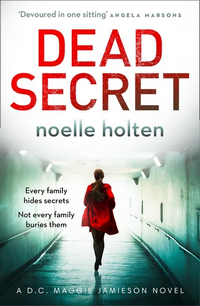
Dead Secret by Noelle Holten: Maggie Has to Juggle Several Balls at Once—Can She Keep it Up AND Catch a Killer?

Dead Secret

Dead Secret

by Noelle Holten
Series: DC Maggie Jamieson, #4

Kindle Edition, 448 pg.
HarperCollins Publishers, 2021

Read: April 23-26, 2021


Before I dive in, I’d fully intended on having this posted five days ago, but I had to keep trashing paragraphs because I’d wander into a spoiler or three, and by the time I’d sanitized them enough to post, they were worthless. This has resulted in a shorter post than I expected, and one that may not feel up to my typical thoroughness for this series. There’s a lot to chew on in this novel—more than anything since Dead Inside—but this isn’t the place to talk about it.

The team were deflated – long nights, no solid leads – morale down – they needed to catch a break.

While they waited for more information, Maggie spent the majority of her day chasing up the curfew company, cross-referencing the prison tattoos – which was proving to be a very tedious job – and chasing up Social Care.

While waiting on hold, she recalled a conversation she’d had with her brother about how funny she found it that a large majority of the public believed that everything in a murder investigation was so exciting and moved quickly because of the way that it was portrayed in movies and TV – however a big part of her job focused on calls, computer work, research, and reports. She wished it was the opposite!

What’s Dead Secret About?

The book opens in the final fleeting moments of a young man’s life, he’s scared, beaten, bloody, and desperate for help. And then he’s no longer scared or desperate again. Found in a woody area near an industrial estate, his face has some dots drawn on it, but aside from that, there are no other clues—assuming they are one.

Maggie and the rest of her team have barely begun to get into this investigation when their DI drops a bomb on them—their DCI has gone missing. It’d been a couple of days since anyone had heard from him, so some officers went to check him—they found no one at the home but did find evidence that a violent crime had been committed there. Given their staffing levels, they couldn’t have some detectives work the missing persons cases and others focus on the homicide, so each detective on the team would be involved in each. Watching the detectives try to balance these cases—which primarily means not dropping everything to focus on DCI Hastings and his family—is good to see, and a needed reminder that actual detectives frequently have to juggle multiple cases at once—unlike their fictional counterparts.

Meanwhile, the domestic abuse shelter that Lucy Sherwood has been trying to start is on the verge of opening. But days before, a “battered and semi-conscious woman in her doorway” led her to get an early start. The young woman doesn’t speak at the beginning and appears to be reading lips when dealing with the paramedics. She won’t interact with the police, however. It is impossible not to feel all kinds of sympathy toward this woman—and Lucy definitely feels that way. This storyline is a fantastic way to follow up on Dead Inside, the first book in the series, and show how far Lucy’s comes since then and why her center is needed.

Realism

One thing that seems to jump out at the reader of this series is how authentic the procedural elements feel. Sure, events and characters are heightened, clearly played for greater narrative tension, and the like. But you can’t avoid how real this world, characters, and situations seem. Like the general public in that quotation above, novel readers are frequently given just “the exciting” portions of the procedural, but here, we see the drudgery, the combing through reports, and endless research before substantial advances in the investigation are made. While showing the reader that research and paperwork characterizes modern policing, Holten still allows her characters to have small maverick streaks that propel the action forward a little faster than the actual procedure can.

Along the same lines, all I know about the British probation system comes from this series and Helen Fitzgerald’s Worst Case Scenario. I think if I did, I’d have a better appreciation for scenes in each of these novels. Lacking that (and the drive to do research), I just have to assume that Holten was paying attention during the almost two decades she worked as a probation officer and is giving us something fairly reality-based.

One Random Thought

There are six times in the novel that “youths” is used, like: “youths in the area”, “gang of youths”, and so on. Maybe it’s a cultural thing, but I couldn’t help but laugh. It was like Maggie had been replaced by Schimdt. It’s not worth mentioning, really. But in a book as grim as this, you take the smiles where you can get them.*

* See also two surprising, but effective, TV references. I don’t remember this series doing that.

Give Her a Break

Several times throughout the novel, Maggie thinks about how tired she is—and how little downtime she’s had between major cases. She didn’t get a lot of time between these cases and the previous books (although she had even less between Books 2 and 3). Maggie needs to catch her breath if she’s going to be any good to anybody. Her personal life is a mess, and I’m worried that her professional life is close it one, too. Her physical and mental reserves have to be beyond spent—and you can’t help but wonder as you read this book (and the previous one) if she wouldn’t have picked up on something sooner if she’d been coming at things with a fresh mind.

It’s not much of a spoiler to say that Maggie isn’t going to get a whole lot of downtime before Book 5’s case takes over her life. But what comes after that? As far as I can tell*, this is intended to be a five-book series—so hopefully Maggie gets to take that holiday she’s been thinking about. Even more hopefully, we get to have at least a few more books with her.

* I’m prepared to be shown that I’m wrong—and hope I am.

So, what did I think about Dead Secret?

I’m a fan of this series—so obviously, I went into this book expecting to like it. But any reader knows that sometimes those expectations aren’t met. Thankfully, it wasn’t long at all before I knew Holten had, once again, provided her readers with a great read.

You’ve got a pretty grizzly beating death to start off with and then you the police’s natural inclination to focus all resources on the missing DCI—and them not necessarily wanting to follow all the evidence that points to the DCI not being the kind of man they all thought. Just those two storylines would be enough. But then Holten throws in that third storyline—here’s a person in desperate need of help, a survivor of (as far as anyone can tell) of domestic violence—a reminder that policing isn’t about arrests, it isn’t about only maintaining social order—it’s about people like this woman who showed at Lucy’s front door, it’s protecting and serving the public. This is the kind of thing that both (fictional and real) civilians and the (fictional and real) police need to be reminded of, and here it elevates the rest of the novel by its presence.

I’d largely figured out who the killer was and how it was happening pretty early on. I wasn’t prepared for the motive behind the killing until it was clear. Holten also did a good job of revealing enough for readers who wanted to identify the killer early while at the same time writing things clearly enough that even people who didn’t want that revelation would be able to enjoy the novel.

This is Holten at her best—I also see this having better commercial appeal than the previous novels in the series and I hope I’m right. Can you read this without having read the previous three novels? Yes. I think you’d be better off starting with the first book, but the important thing is that you start somewhere with this series.


4 1/2 Stars

The Friday 56 for 4/21/21: Dead Secret by Noelle Holten

The Friday 56This is a weekly bloghop hosted by Freda’s Voice

RULES:
The Friday 56 Grab a book, any book.
The Friday 56 Turn to Page 56 or 56% on your ereader. If you have to improvise, that is okay.
The Friday 56 Find a snippet, short and sweet.
The Friday 56 Post it

from Page 56 of:
Dead Secret

Dead Secret by Noelle Holten

(a little long, but couldn’t see a way to shorten it)

When the steam came out of the spout, Ronnie picked up the kettle and then poured the boiling water on her arm.

What the hell?

Ronnie didn’t even flinch. It was like she didn’t feel any pain. She placed the kettle back, used a tea towel to dry her arm, and covered it up with the sleeve of the cardigan. Vicki turned and looked at Lucy. They waited until they saw Ronnie leave the kitchen, and Lucy stood and headed to the kitchen.

Maybe I was wrong.

At the counter she touched the kettle.

Ouch!

She sucked her index finger and turned on the cold tap, holding the sore digit beneath the running water. Lucy looked up at the camera and raised a brow. She knew Vicki would be watching.

Dead Perfect by Noelle Holten: A Desperate DC Races to Save Her Friend’s Life

This is one of those that I struggled for over a week to finish. I can only hope it’s coherent. The short version: Get this book. Read this book.

Dead Perfect

Dead Perfect

by Noelle Holten
Series: DC Maggie Jamieson, #3

Kindle Edition, 449 pg.
One More Chapter, 2020

Read: December 30, 2020-January 2, 2021

What’s Dead Perfect About?

So, Dead Wrong left us with:

‘Just had a call come in. Police are on the scene. Body of a female has been found. Initial description sounds just like your friend Dr Moloney. I’m so sorry, Maggie …’

Obviously the important thing there is “sounds just like,” because it isn’t Moloney* but the body looks so much like her, that no one can be blamed for assuming it was Moloney. It’s quickly determined that it’s not her, but Maggie and Kate Moloney’s colleagues are having difficulty finding her. Making sure that the tension is as high as it can get in a first chapter.

* That’s not a spoiler, it’s in the blurb, which I should’ve read before diving in.

But even before we get to that, there’s the Prologue. It seemed ominous but fairly typical. Then I looked up one word that I didn’t know, orbitoclast, “A surgical instrument for performing transorbital lobotomies, resembling an icepick.” Then I reread the Prologue and got seriously creeped out.

Kate’s located (and given a talking-to about keeping her phone with her), the body is identified, but that just clarifies the issues at the heart of the investigation. We knew Kate had a stalker, and it seemed like the stalker was getting more intense, more threatening. There’s almost certainly a connection between the murdered woman, the stalker, and Kate. But Maggie has to prove that before they can act on it.

So Maggie and her team dive into the murder investigation, but Maggie’s attention is divided between finding out what happened to this woman and preventing the same thing from happening to Kate. This is probably not the best way to tackle the problems, but it’s not like Maggie is going to let either objective out of her hands.

And then another body is found.

Maggie’s State of Mind

It’s been a while since things were stable for our series protagonist, she’s been caroming off emotionally and mentally challenging cases for so long that she’s got to be close to unraveling. She’s barely had her chance to catch her breath from the events of Dead Wrong before she’s plunged into this race to save her friend’s life.

Add in the pressure of the press, getting used to the shift in the dynamic between her and friend/new boss, and her personal life—she’s not in the best headspace for this (or any) investigation. I think it’s starting to show, she makes some errors in judgment, she’s not dealing well with people, and unless this series is about the downfall of DC Maggie Jamieson, something’s going to have to change.

Although I can totally see Holten pulling off Maggie hitting rock bottom and trying to recover from that, come to think of it. So maybe that’s what we’re starting to see.

Supporting characters

I’ll touch on this more later, but one of the best things about the series is this great world that Holten’s creating. And it’s filled with some great characters, I have a few thoughts about some of the more prominent from this book.

We’ll start with DS Nathan Wright, he’s trying to acclimate to his new position and the way that changes the way he relates to and interacts with his team and friends—and seems to be doing it as well as you can hope. But he’s not perfect, and the transition isn’t smooth. It’s a minor thing, and I don’t imagine many authors would spend the time to do it, but I think it says a lot about the world that Holten’s creating that we see this.

That said, his team needs some more blood. and there’s a newly minted DC he’s got his eye on to help. Everyone’s very excited when Kat Everett is seconded to the investigation, and then she largely disappears. She’s eager, she’s bright, and then it’s like she doesn’t exist until the end when she plays a decent-sized role. It felt a little strange, is all I’m saying. Also, I’m not sure anyone needs a series where a “Kat” and a “Kate” play a major role, I’m just thinking someone needs a new nickname.

A reporter that made few friends, and probably a couple of enemies in Dead Wrong resurfaces. Julie Noble is well on her way to being a regular feature of this series, but for the moment, I don’t know what to think of her. I expect books four and five will solidify my impressions. She promises to be interesting—but I’m not sure in what way yet.

Lastly, there’s poor PC Bethany Lambert. She’s the unit’s go-to worker. Miscellaneous errands, thankless tasks, things requiring technological expertise, and more fall to her. I lost track of how many things Maggie threw her way to do—on top of her own assignments. I have multiple notes about how they’re working this woman to death, and even tweeted Holten about it. I’ve been assured that Bethany likes to be overworked, and that it’ll be addressed soon. But I’m telling you now if she snaps and takes out a lot of pent-up aggression on Maggie, I’ll be cheering her on.

The Killer

I’ve spent more than a week trying to write this post and failing because of this section right here. I still don’t know how I’m going to write something that I like and that doesn’t give anything away.

Sure, I could not talk about The Living Doll Killer, but Holten does something here that I feel compelled to write about. So I’m stuck. You’ll have to read the book to get the unsettling reason for the name, but that won’t keep me from using it.

We get a lot of information at some point in the novel from LDK’s own mouth. Now, I’m not sure the reader or police are supposed to believe everything told to them by LDK, but for the moment, I’m going to pretend I do.

Holten comes as close as possible to giving us a serial killer that the reader can empathize with. Sure, that’s not that close at all, but that doesn’t disprove my point.

I can say that I picked out the LDK straight off, but that’s all I got right. The “how” of the killings is bad, the “what” (abducting and killing) is disturbing, but the “why” will cast everything in a different light and somehow make it all worse (and, at the same time, almost understandable).

I can’t think of a serial killer with this kind of backstory and motivation. And for a fictional serial killer, there’s a strong “Yeah, I can imagine reading about this in the paper” kind of vibe. When I talked about her debut, I said that “Holten writes humans, not caricatures or types.” That applies to LDK, too.

The World Around Maggie Jamieson

This is the Maggie Jamieson series, and she is the core of it. But Holten has put her in the middle of a complex world. We touch base in this book with characters from the first two books—particularly from the first book, and we see a lot of growth and development. These people have put in the time and effort to change their lives and move on from the nightmares we met them in.

The way Holten has set up the series guarantees it won’t just be DC Jamieson and her boss (and the rest of her team) bouncing from investigation to investigation, they’ll brush up against these people, focusing on them for significant periods.

I really appreciate this design and am eager to see how it’s developed.

So, what did I think about Dead Perfect?

I got sucked into this story fast, and if anything above sounds critical, it’s only because I’ve spent a lot of time thinking about them (and talking about three or four niggling points out of one hundred is more interesting to write about than fanboying over the other 96 or 97). I was quickly invested in what was going on—and was soon thankful that it wasn’t Kate’s body in the opening chapter.

And yes, I was convinced that Holten had killed her off at the end of Dead Wrong.

I had many, many opinions about how Maggie and Kate were behaving over the course of this investigation (positive and negative), and sincerely wished that DS Wright would have sat them down in his office and talked some sense into both of them. I’m not sure that I usually spend quite as much time talking back to books about what protagonists are doing/thinking as I did in these pages.

And then the reveals about LDK? Didn’t see any of them coming (other than the one I mentioned). I love it when an author does that.

And then, just like she did last time, Holten doesn’t let you fully absorb and reflect on the conclusion of the novel without hitting you with an image that makes you want the next book now, not in a few months.

So what did I think about it? It was great. I need Book Four next week, and probably Five a couple of weeks after that.



4 Stars

The Friday 56 for 1/1/21: Dead Perfect by Noelle Holten

The Friday 56This is a weekly bloghop hosted by Freda’s Voice

RULES:
The Friday 56 Grab a book, any book.
The Friday 56 Turn to Page 56 or 56% on your ereader. If you have to improvise, that is okay.
The Friday 56 Find a snippet, short and sweet.
The Friday 56 Post it

from 56% of:
Dead Perfect

Dead Perfect by Noelle Holten

…I apologize if this is slightly repetitive. Remember when we were talking about strange people you may have come across or who’ve made you uncomfortable? Can you just remind me of them again and maybe what made you feel weird around them?’

‘Erm … All right. Is this one of those times I have to just give you what you ask and trust that you have your reasons?’

‘I’m afraid it is.’

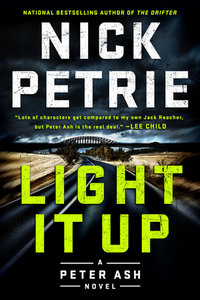
Light It Up by Nick Petrie: Peter Ash Throws a Monkey Wrench into a Denver Conspiracy

Light It Up

Light It Up

by Nick Petrie
Series: Peter Ash, #3

Paperback, 381 pg.
G.P. Putnam’s Sons, 2018

Read: December 28-29, 2020
Grab a copy from your local indie bookstore!

“I could really use your help,” Henry told Peter. “Maybe a week, two at the most. Just until I get things squared away,”

Peter didn’t have to think before he answered.

“No problem.” He’d send June a postcard. Maybe leave out a few details. He didn’t want to worry her. “Sign me up.”

Later, he’d wish he’d answered differently.

He’d have plenty of reasons.

But he knew he’d have answered exactly the same way.

What’s Light It Up About?

Peter meets and befriends a Vietnam vet on a project in Oregon. His friend, Henry, needs to return home to Denver—his daughter and son-in-law run a security company, escorting money for the cannabis industry. On a recent run, the son-in-law and his team went missing (along with the money). Henry needs to go help run things and hopefully come across a clue about the disappearance. He asks Peter to come along, and he does.

Four days later, Henry, Peter, and two others are taking care of another shipment of money. It’s a very routine run—until it’s not. They’re attacked by a group of professionals and it’s a very ugly event.

It’s no longer about Peter trying to help out a friend, it’s now about Peter striking back at the people who attacked his team and making sure they don’t do anything like that again.

A Three-Headed Monster

There are essentially three villains to this book. I’d like to talk about all three of them, but I don’t think I really can without taking something away from the experience—one calls the shots, one is the man on the ground making the plans and seeing that they’re implemented, the third is the guy who carries out the plan.

This latter we’ve seen before—he’s all about killing and raping*—maybe a little pillaging while he’s at it. He really just wants to watch the world burn. The man at the top is another guy we’ve seen before (a good version of him, don’t get me wrong).

* No, he doesn’t rape anyone in this book. There are some passing references to times he has, and he definitely looks forward to doing it in the future.

It’s the middle man that’s the guy who captured my attention. The man at the top is probably convinced he’s doing the right thing (for at least some people), the guy at the bottom of the chain of command doesn’t care about right and wrong. But the other one—he knows that what he’s doing is wrong, he is deliberately choosing evil. He has compelling reasons for that, but he’s going in with his eyes wide open.

Also, he has an interesting tie to Peter, one that adds a new layer to Peter.

No Army of One

Peter likes to think of himself as a lone wolf—he can do it all himself. Maybe even thinks he needs to (the book delves deep into this toward the end, but I’m not interacting with that part). But he’s not one—unlike Jack Reacher (the easiest guy to compare him to) who will pick up an ally or two for a book, and then will leave them in the dust while “The Lonely Man” (from The Incredible Hulk) plays in the background.

Peter didn’t want to leave June behind, but needed to (and wants to get back to her). And while he considers Lewis a friend, doesn’t try to get him involved in his messes. But they don’t let him—he needs help, so they come to him, over his objections.

Peter’s an action hero for our time—he’s dealing with PTSD (not stoically enduring, he’s trying to deal with it, he’s got a counselor), he has a sense of humor, and he’s a social creature. He needs people—for community and for assistance from time to time—and he’s the kind of guy that people are drawn to.

There’s a moment where Lewis describes why Peter’s men followed him where they did in Iraq. It’s something about his personality, is leadership, his character—he still has that, he just has different people following him in the trouble spots in the U.S.

The Lone Wolf Hero is a mainstay, it’s a fixture in Fiction—but a hero like Peter? He’s so much easier to believe. Easier to root for. He has more to lose, so you care more for his success.

A Missed Opportunity

When it looks likely that Peter’s going to be facing some legal troubles, Lewis arranges for a lawyer for him. She comes on the scene like some sort of oversexed Rita Fiore (from the Spenser/Jesse Stone series), intimidating police and protecting Peter. She’s not cartoonish, but she’s trending that way. She has a couple of good scenes, but then she practically vanishes.

This isn’t a legal thriller, and a lawyer shouldn’t play a huge role—but if you’re going to put a flashy character show up, use them. There’s no reason to believe that she’ll be around in future books—unless Peter moves to Denver.

I did like her, I thought she had some good scenes, but it felt like hiring Meryl Streep to play a role listed as “Lady in Restaurant” in the credits.

So, what did I think about Light It Up?

This series gets better and better. I thought the whole idea of the security for the cash shipments for the new (at least then) cannabis industry in Colorado was great. It’s the kind of thing that was just waiting for a thriller writer to jump on, and Petrie took full advantage before anyone else saw it.

There’s a mano a mano fight at the end—fantastic. Just fantastic. There’s plenty of action before that—a chase scene, the ambush of the security team, and some others—just those would’ve been enough to make me commend and recommend this thriller. But that climactic combat? Just wonderful.

Like with Burning Bright, I lost sleep over this—and did not care. Solid (at least) action, an ingenious premise, good character development, some well-written and well-conceived antagonists (scratch that, they’re flat-out bad guys). There’s nothing to complain about here. Get your hands on this one.


4 1/2 Stars

This post contains an affiliate link. If you purchase from it, I will get a small commission at no additional cost to you. As always, opinions are my own.

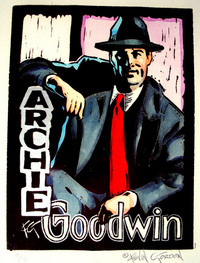
Happy Birthday, Archie!

My annual tribute to one of my favorite fictional characters (if not my all-time favorite). I’ve got to do an overhaul to this soon, but it is slightly updated and tweaked from last year.

On Oct. 23* in Chillicothe, Ohio, Archie Goodwin entered this world—no doubt with a smile for the pretty nurses—and American detective literature was never the same. He’s the narrator (and, I’d argue protagonist) of the questionably named Nero Wolfe mysteries. While the eccentric and overweight genius might be what brings people to the series, it’s Archie’s wit, attitude, and snappy narrative voice that brings people’s back.

* About 34 years ago, no matter what year it is that you read this.

Since I was in Middle School, if I was suffering a slump of any kind (reading, emotional, physical), time with Archie Goodwin could get me out of it. There were a few years that when I got sick, I’d grab a Nero Wolfe novel to help me get through it (along with the Vitamin C and Chicken Noodle soup), and you can’t tell me it didn’t work. Noted critic Jacques Barzun says it well:

If he had done nothing more than to create Archie Goodwin, Rex Stout would deserve the gratitude of whatever assessors watch over the prosperity of American literature. For surely Archie is one of the folk heroes in which the modern American temper can see itself transfigured. Archie is the lineal descendant of Huck Finn.

While Archie’s about as far from a teetotaler as you can get, to commemorate his birthday, I’m toasting him in one of the ways I think he’d appreciate most—by raising a glass of milk in his honor.

Who was Archie? Archie summed up his life like this:

Born in Ohio. Public high school, pretty good at geometry and football, graduated with honor but no honors. Went to college two weeks, decided it was childish, came to New York and got a job guarding a pier, shot and killed two men and was fired, was recommended to Nero Wolfe for a chore he wanted done, did it, was offered a full-time job by Mr. Wolfe, took it, still have it.” (Fourth of July Picnic)

Long may he keep it. Just what was he employed by Wolfe to do? In The Black Mountain he answers the statement, “I thought you was a private eye” with:

I don’t like the way you say it, but I am. Also, I am an accountant, an amanuensis, and a cocklebur. Eight to five you never heard the word amanuensis and you never saw a cocklebur.

In The Red Box, he says

I know pretty well what my field is. Aside from my primary function as the thorn in the seat of Wolfe’s chair to keep him from going to sleep and waking up only for meals, I’m chiefly cut out for two things: to jump and grab something before the other guy can get his paws on it, and to collect pieces of the puzzle for Wolfe to work on.

In Too Many Women, he’s a bit more concise and describes himself as the:

heart, liver, lungs and gizzard of the private detective business of Nero Wolfe, Wolfe being merely the brains

In Black Orchids, he reacts to an insult:

…her cheap crack about me being a ten-cent Clark Gable, which was ridiculous. He simpers, to begin with, and to end with no one can say I resemble a movie actor, and if they did it would be more apt to be Gary Cooper than Clark Gable.

Over at The Thrilling Detective, he’s described this way:

If Goodwin hadn’t gone to work for Wolfe, he’d certainly have his own agency by now (and temporarily does, in one novel). Far more of the traditional eye, Goodwin is a tough, handsome guy with a photographic memory, a .32 under his well-tailored suit (and sometimes an extra .38 in his overcoat pocket), and a well-developed appreciation for the ladies. And, in the opinion of more than a few cops, officials and stuffed-shirt executives, a mouth that ought to be nailed shut permanently. (Wolfe isn’t immune either – part of Goodwin’s job, as he sees it, is needling the fat man into taking cases, if only to make sure the bills get covered.) He’s not the deductive genius that Wolfe is, but a smart and tenacious op with a good right hook, and a decent and personable man. Most of all, in his narration of the books, he’s a helluva storyteller; it’s his view of the world, and his interaction with Wolfe, that keeps us coming back for each new mystery.

The Archie Goodwin FAQ is less succicnt but does a good job of laying out the facts.

I’m not the only Archie fan out there:

  • Someone pointed me at this post, The Wit and Wisdom of Archie Goodwin. There’s some really good stuff here that I was tempted to steal, instead, I’ll just point you at it.
  • Robert Crais himself when writing an introduction to a Before Midnight reprint, devoted it to paying tribute to Archie—one of the few pieces of anything written that I can say I agree with jot and tittle.

In case you’re wondering if this post was simply an excuse to go through some collections of Archie Goodwin quotations, you wouldn’t be totally wrong…he’s one of the fictional characters I like spending time with most in this world—he’s the literary equivalent of comfort food. So just a couple more great lines I’ve quoted here before:

I would appreciate it if they would call a halt on all their devoted efforts to find a way to abolish war or eliminate disease or run trains with atoms or extend the span of human life to a couple of centuries, and everybody concentrate for a while on how to wake me up in the morning without my resenting it. It may be that a bevy of beautiful maidens in pure silk yellow very sheer gowns, barefooted, singing “Oh, What a Beautiful Morning” and scattering rose petals over me would do the trick, but I’d have to try it.

I looked at the wall clock. It said two minutes to four. I looked at my wrist watch. It said one minute to four. In spite of the discrepancy, it seemed safe to conclude that it would soon be four o’clock.

Description:I shook my head. “You’re flattering me, Inspector. I don’t arouse passions like that. It’s my intellect women like. I inspire them to read good books, but I doubt if I could inspire even Lizzie Borden to murder.”

She turned back to me, graceful as a big cat, and stood there straight and proud, not quite smiling, her warm dark eyes as curious as if she had never seen a man before. I knew damn well I ought to say something, but what? The only thing to say was ‘Will you marry me?’ but that wouldn’t do because the idea of her washing dishes or darning socks was preposterous.

“Indeed,” I said. That was Nero Wolfe’s word, and I never used it except in moments of stress, and it severely annoyed me when I caught myself using it, because when I look in a mirror I prefer to see me as is, with no skin grafted from anybody else’s hide, even Nero Wolfe’s.

If you like Anglo-Saxon, I belched. If you fancy Latin, I eructed. No matter which, I had known that Wolfe and Inspector Cramer would have to put up with it that evening, because that is always a part of my reaction to sauerkraut. I don’t glory in it or go for a record, but neither do I fight it back. I want to be liked just for myself.

When a hippopotamus is peevish it’s a lot of peeve.

It was nothing new for Wolfe to take steps, either on his own, or with one or more of the operatives we used, without burdening my mind with it. His stated reason was that I worked better if I thought it all depended on me. His actual reason was that he loved to have a curtain go up revealing him balancing a live seal on his nose.

It helps a lot, with two people as much together as he and I were, if they understand each other. He understood that I was too strong-minded to add another word unless he told me to, and I understood that he was too pigheaded to tell me to.

I always belong wherever I am.

Page 3 of 10

Powered by WordPress & Theme by Anders Norén