Category: Mystery/Detective Fiction/Crime Fiction/Thriller Page 29 of 153

Catch-Up Quick Takes: A Few Remaining August Titles

The point of these quick takes posts is to catch up on my “To Write About” stack—emphasizing pithiness, not thoroughness. Except for the two books that I want to do full posts on, this wraps up August. I’m in danger of catching up. (insert the obligatory “Narrator: He will not” joke here)


The Alchemist and an AmarettoThe Alchemist and an Amaretto

by Annette Marie, Cris Dukehart (Narrator)

DETAILS:
Series: The Guild Codex: Spellbound Series, #5
Publisher: Tantor Audio
Publication Date: January 27, 2020
Format: Unabridged Audiobook
Length:  6 hrs., 55 min.
Read Date: August 24-25, 2022
Support Independent Bookstores - Visit IndieBound.org

(the official blurb)
This series is the trunk that the others branch out from, it’s the anchor for the whole thing—and I’m just about at an end with it. It feels like Marie’s discovered a template and is just following it.

That said…I’m not leaving this because I want to see how the others unfold, I really like Tori, I want to see how things turn out with her brother, and the books are entertaining enough, while still being exasperating (to illustrate, Cobra Kai Season 5 is just on the other side of that line). But man…I’m tired of the non-romance romantic story and I’m fed up with the Ezra storyline (that I think is what the whole series is going to be ultimately about, so I’d better get used to it).

Putting my gripes aside—the alchemy stuff here is great, and I really liked the way all of it developed. This approach to werewolves is great and I’d really like to see more (but am pretty sure we won’t because of the whole template thing…but maybe in the Warped series?)

Also, I’m really hoping that at one point the protagonists from these series will figure out they should be allies and friends for one final, climactic battle before living a life of relative peace and routine.
3 Stars

Her Last BreathHer Last Breath

by Linda Castillo, Kathleen McInerney (Narrator)

DETAILS:
Series: Kate Burkholder, #5
Publisher: Macmillan Audio
Publication Date: June 17, 2013
Format: Unabridged Audiobook
Length: 9 hr., 46 min.
Read Date: August 25-26, 2022
Support Independent Bookstores - Visit IndieBound.org

(the official blurb)
I truly had a hard time with this one because so much of the book is about this police chief that we’re supposed to be rooting for going around and manipulating a case, lying to other law enforcement officers, and pressuring her siblings into lying to cover up what will be a clear case of self-defense so that she can keep her job.

The other storyline about the hit and run that turns out to be vehicular homicide? That was pretty good—a touch predictable, sure. But only because Castillo did everything but name the killer McMurderer, because this one needed to be about Kate figuring it out and the reader seeing what that put her through.

If we can put the self-defense cover-up story behind us now, I can keep going. Otherwise, this series becomes Dexter with a really low body count, and I’m just not going with that.

3 Stars

The HeronThe Heron

by Don Winslow, Ed Harris (Narrator)

DETAILS:
Publisher: Audible OriginalsT
Publication Date: July 28, 2022
Format: Unabridged Audiobook
Length: 1 hr., 6 min.
Read Date: August 12, 2022

(the official blurb)
This is only an hour long, so it’s really difficult to talk about. But that’s a shame because I want to go paragraph by paragraph and talk about it—a live-blog running commentary seems to be the best way to talk about it, but who has the time for that?

I’m going to start with Ed Harris rocking this one—the dude is perfect and I want nothing else out of life than a new Winslow story every month or so read by Harris. That’s hyperbole to make a point, but it feels like one of the most honest sentences I’ve uttered recently.

This is short fiction at its best—a great premise, some good twists, a great conclusion, and a perfect ending. It just made me happy. I was about to say that there’s a great villain, but I’m not sure which character I’d attribute that to. There are a good number of great criminal characters running around committing crimes against each other—it’s just a matter of who comes out on top and how they do so. Grab some popcorn and enjoy.

Also, as I look back at what I noted when I listened—only 4 stars? I remember it better than that. Maybe it was the length? I’m going to trust my initial reaction, but as I write this, 4 seems like I’m underselling it.
4 Stars

This post contains affiliate links. If you purchase from any of them, I will get a small commission at no additional cost to you. As always, the opinions expressed are my own.

The Friday 56 for 9/23/22: Hell and Back by Craig Johnson

The Friday 56This is a weekly bloghop hosted by Freda’s Voice.

RULES:
The Friday 56 Grab a book, any book.
The Friday 56 Turn to Page 56 or 56% on your ereader. If you have to improvise, that is okay.
The Friday 56 Find a snippet, short and sweet.
The Friday 56 Post it.

from Page 56 of:
Hell and Back

Hell and Back by Craig Johnson

We slowly drove through town. I could see the lights were still on in the library, and I felt a twinge of guilt about not having been able to lock it up. “I made a pass at your librarian.”

“He kept his eyes on the road. “You what?”

“Well, not the librarian exactly, but the one from the café that re-shelves books, Martha?”

He nodded. “Who else have you had contact with since “you’ve been in town?”

“What, you think I’m contagious?”

“I’m just curious as to what a fellow does after finding himself lying out there in the road during a blizzard.”

Pub Day Post: Wealth Management by Edward Zuckerman: Not Your Garden-Variety Thriller

Wealth ManagementWealth Management

by Edward Zuckerman

DETAILS:
Publisher: Arcade Crimewise
Publication Date: September 20, 2022
Format: eARC
Length: 288 pg.
Read Date: September 14-16, 2022
Support Independent Bookstores - Visit IndieBound.org

What’s Wealth Management About?

Not that long ago, Catherine, Rafe, and Majid had attended Harvard Business School together—they were competitors, friends, and (at least briefly) more than friends. After graduation, they’d each gone their separate ways, but life has brought them all back together in Geneva, Switzerland.

Catherine is working for a large and important bank, Majid and his partner run a fairly new hedge fund management firm, and Rafe…well, there’s what he tells people and what’s really going on with him. The personal entanglements have started/resumed before we see the reunion of the trio, and they become more entangled after the book begins. As do the professional dealings—and here’s where it gets messy.

It turns out that one of Catherine’s more significant clients seems to be involved in some money laundering (and is dragging her along with him)—and possibly some worse crimes. Majid’s firm is in serious cash problems, that might have been saved by one client—but he and his partner are concerned about this client and how he knows just the right stocks to sell short. And Rafe just might be able to save both of them from these, shall we say, complications.

There’s at least one murder, a terrorist act or two, some CIA agents, a persistent (and possibly honest) Nigerian police detective, and other assorted criminal and conspiracies afoot as well—and once Majid and Catherine become aware of them (and/or stop lying to themselves about how complicit they may be), it looks like Rafe’s help isn’t only attractive—but their sole lifeline.

Can Rafe help his friends/lover/frenemies? Can they uncover—and maybe stop—a terrorist plot?

The Financial Side

Like I said last week when talking about Nineteenth Century Monetary Crime—I’m not particularly interested in, or seemingly that capable—of rolling up my sleeves to get into the nitty-gritty of the World of Finance. I get the broad concepts—and can even appreciate the broad outlines of a discussion of short-selling (and things along those lines).

I was a little apprehensive about that idea before I started the book. Would this get into the weeds with that kind of thing? I remember learning too much about nuclear submarines or the inner-workings of an aircraft carrier deck’s operations back in the 80s and 90s when all I wanted was some action. Would the infodumps/background information slow things down too much?

Yeah, I was also a little worried about not being able to follow the focus of the action—no one likes their novels making them feel dumb. Or even if I could understand it, would it really be interesting enough to hold my attention?

Thankfully, it didn’t get too far into the weeds. I could understand the financial actions—and it wasn’t dull at all. Actually, I think this is the kind of thing that’d be good to see more of. Just how do terrorist groups—or even criminal organizations (outside of theft or selling drugs/guns/whatever)—fund themselves? It’s not like you can reuse explosive materials or bullets, and they don’t grow on trees—the money has to come from somewhere, and it sure isn’t from bake sales. The idea that certain targets/plots are motivated as a way to generate income for a terrorist group is a great way to cost a guy some sleep (and hope that “the good guys” are able to stop them).

And if cryptocurrencies reared their head at all, it was so briefly* that it didn’t leave a lasting impression—right now, you have to be grateful for that.

* Also, a quick word search didn’t turn up the term.

I’m Not Entirely Sold On This…

There’s a Love Triangle here among our protagonists—it’s not a significant part of the story, but it’s not insignificant either. Well, “Love” might only apply for 1-1.5 of the sides, but “Friends-With-Benefits Triangle” doesn’t have a great ring to it, and “Sex Triangle” seems to suggest all sorts of things that Zuckerman didn’t have in mind.

If this is a product of a “you have to have sex in a thriller to sell” kind of a thing, I guess it fulfilled its cynical function—and didn’t put off prudes like me.

If it’s to round out these characters and make them more than young professional types out to make all the money they can—or to ground them in reality and/or make them more interesting? I guess it succeeded (maybe not in the interesting part, but its possible).

If it’s to add layers of additional and conflicting motivations to the characters—giving them reasons to trust, distrust, and be unwilling to work with each other? It’s not bad—but I think it could’ve been played up a bit more—or at least more thoroughly. We get some of this, but I think it could’ve been explored a bit better.

It’s likely all three of these things—and probably more—and as such, it largely succeeds. But my gut tells me that it could’ve been done a bit better without turning the book into something all about the Triangle.

So, what did I think about Wealth Management?

Okay, I called this a Financial Thriller (as does the publisher)—but never fear, there’s the requisite gunplay, hand-to-hand violence (and threat thereof)—and actual terrorist activity. The thrills aren’t all in deft trades and market chicanery. The money material is the focus and does provide most of the thrills—and it’s what distinguishes this book from the rest of the market. In the end, we get a tight and intricate novel full of intrigue.

At one point, I counted a dozen competing/conflicting motives/goals/actions at work among the named characters—plus a handful of people we don’t meet. Zuckerman keeps the action jumping from character to character quickly, advancing each plot line a little at a time so they can come together in a nicely dramatic fashion.

Some of the characters aren’t that developed—but there’s enough to hang on to. With most of them, it’s easy to see that in another 50-100 pages or so, you could see them being described as such. But with a cast as big as this one in under 300 pages? You’re going to get some that are undercooked, there’s just no way to do that. Like with most thrillers—if it comes down to a choice between plot vs. character, plot wins—especially when it’s paced the way this is. It’s not a bug, it’s a feature (not my favorite feature, but it is one).

My initial reaction when I was emailed about this book was, “‘MBAs,” ‘Banking’, and ‘Thriller’ are not terms I’d expect to be together”—and they’re still not. But when done right—done the way that Zuckerman did it in these pages—I’m glad to say that I was wrong.

This is a very effective thriller, a little something different in the diet—and generally a good time. Yes, I think that another hundred pages could’ve been added to better develop characters, the whatever-triangle, and to flesh out a few other aspects of the book—but I think that might have sacrificed pace and tension, and you don’t want a ponderous thriller. So, I think Zuckerman made the right choices there. A quick glance at IMDB shows you, that he knows his way around a tight plot—also any author who is able to induce a moment of acrophobia deserves kudos.* I’m glad to recommend Wealth Management and encourage you to check it out.

* Sure, in real life or on film (or via a Go Pro video), I’m on a hair trigger for that kind of thing, but to do it without visual stimuli is a trick.

Disclaimer: I received this eARC from the author via Wiley Saichek and Saichek Publicity in exchange for this post—while I appreciate that, the opinions expressed are wholly mine.


3.5 Stars

This post contains an affiliate link. If you purchase from it, I will get a small commission at no additional cost to you. As always, the opinions expressed are my own.
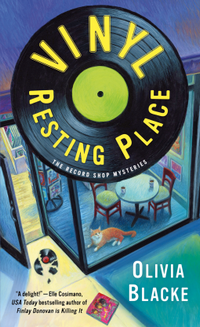
The Friday 56 for 9/16/22: Snowstorm in August by Marshall Karp

The Friday 56This is a weekly bloghop hosted by Freda’s Voice.

RULES:
The Friday 56 Grab a book, any book.
The Friday 56 Turn to Page 56 or 56% on your ereader. If you have to improvise, that is okay.
The Friday 56 Find a snippet, short and sweet.
The Friday 56 Post it.

from Page 56 of:
Snowstorm in August

Snowstorm in August by Marshall Karp

“How did you know what I…”

“I have eyes everywhere—human and electronic,” Quintana said. “I saw you kill him. What I don’t understand is why you gave him a fighting chance. You could have slit his throat in his sleep.”

“No, sir. He had to know it was me. So I waited until I was strong enough to go against him mano a mano. Also, today is my birthday. Five years ago, my father was murdered on this day. Now we are both at peace.”

Quintana took another puff on his cigar. “Are you done wreaking vengeance, or should I be concerned that more of my men will end up with their head on a stake?”

“No, sir. Justice has been done. Whatever you do to me, please tell my mother that my father’s death has been avenged.”

“Tell her yourself. And come back tonight.”

Joaquin looked puzzled. “Señor?”

“Suffering is bitter, but its fruits can be sweet. The stupidity of one of my men has caused you great pain, But that pain has helped you find a new life.”

Robert B. Parker’s Fallout by Mike Lupica: Two Murders Rock Paradise

When I started to write this, I thought it’d be a 5 +/- paragraph post, but apparently I can’t shut up about books in a Parker series (and I did try).


FalloutFallout

by Mike Lupica

DETAILS:
Series: Jesse Stone, #21
Publisher: G.P. Putnam's Sons
Publication Date: September 5, 2022
Format: Hardcover
Length: 353 pg.
Read Date: September 7-8, 2022
Support Independent Bookstores - Visit IndieBound.org

“I guess drinking was his way of dealing with it tonight.”

“That was always my first option,” Jesse said. “And second. And third. But no matter how many times I tried, it never seemed to work.”

There was a pause at her end.

“He didn’t get into any fights, did he?”

“Just with himself,” Jesse said. “Spoiler alert? He lost.”

What’s Fallout About?

There are two murders for the Paradise Police Department to focus on in this book—and both have a lot of personal resonance.

The first is the suspicious death of Suit’s nephew. He was a senior in High School and a hot college baseball prospect—naturally, a great athlete—and had been getting better because of Jesse’s mentoring. Suit thought of Jack as a son more than a nephew and he’s devastated by this. It’s unclear if he died after a drunken fight at a party, or if he’d been driven by inner demons to end his own life. No one wants to believe the latter—but they can’t rule it out. A very not-subtle cone of silence around the team is being enforced—as that was pretty much all of Jack’s life, that means the investigation isn’t getting very far.

Some time ago, a former Paradise Police Chief moved back to town and befriended Jesse. The two regularly had dinner together, and one of the first things we see is a meal between Jessee and Charlie Farrell. The woman that Charlie’s been seeing was recently swindled out of a few thousand dollars and now it looks like scammers have targeted Charlie. He’s been retired for decades, but still has the instincts and reflexes to try to track them down himself rather than turn things over to Jesse’s crew. He must’ve been on the right track because he was killed. This shakes (an already shaken) Jesse, who sets his sights on this case so much that he turns Jack’s death primarily over to Molly. He was Chief before any of the officers we know joined the force (as far as I can tell), but it’s still about “one of their own.”

Jesse’s Battle with Alcohol

I’m not crazy about Lupica’s way of dealing with Jesse’s alcoholism compared to Coleman’s—but it’s better than Parker or Brandman did. But I really liked Jesse’s ruminations about people being able to stop drinking while the bottle still had something left, or when the option to order another glass was available. Actually, all of the material about his drinking in this book was good—better than he’s given us so far. Hopefully, the trend continues.

Miscellaneous Bullet Points

I don’t have time/inclination to expand these beyond brief paragraphs—but I felt compelled to mention a few things.

bullet Okay, the over-use/over-reliance on Crow, basically making him Jesse’s Hawk, bugs me. It also doesn’t do that any favors for the character of Crow or Jesse—and really doesn’t help Molly’s character in any conceivable way (although Lupica may have a long game there). Parker (inadvertently?) tamed Hawk by using him too much—and was well on the way to doing that with Bobby Horse and Chollo, too. And now Lupica’s doing that with Crow. Use him less (far less) and he retains his mystery, his edge, and his ability to do the things that Jesse won’t do.

bullet This isn’t evaluative, per se, I guess I’d file it as a general musing—it felt to me like this book was (for lack of a better term) swear-ier than I’m used to. Parker and the other authors in the Spenser-verse have never been reluctant to use a four-letter word when the situation called for it, by any means. It seemed like a noticeable uptick in those words. I’m not saying that Lupica’s turned into Kevin Smith or anything, it just gave everything a slightly different feel. I wonder if that’ll continue, if it was just a blip, or if I’m imagining things.

bullet It really feels like Lupica is trying to write off Jesse’s son, Cole. Had Coleman continued with the series, I’m curious about how he’d have handled the character. I’ve had so many questions about his introduction in the first place, and now it feels like Lupica’s trying to pull a Chuck Cunningham with him—sending him to law school in London and taking him out of Jesse’s life. He actually thinks, “The kid sounded happy. Leave him alone.”

bullet So Molly came clean with her husband about her fling with Crow several years ago. Now her marriage is all but over. No one has given us enough time with Molly’s husband over the previous 20 books for us to get that invested in the marriage—so putting it on the rocks doesn’t do much for the character either. I really don’t care either way, except that it feels like Molly’s character is drifting and becoming a different person. But that happens to all of us, so I can’t complain on principle, just…

bullet Yeah, Parker created his three series in a way to allow the characters to intersect—but other than the Jesse/Sunny love story, and the Sunny/Susan therapy relationship, the primary characters didn’t intermingle too much. I’m not sure if the current approach of bringing them all together so much is the right way to deal with them. I’m not sure it’s not, either.

bullet Building from that—if you’re going to bring these worlds together so much, and if you’re going to introduce and kill off a police chief that coincidentally(??) shares the last name of a frequently used supporting character who is also a cop? Someone had better say something. If only so that readers stop thinking about it. In a Spenser-verse book, if someone talks about “Farrell,” I reflexively think, “Lee.” I can’t imagine I’m alone there—I just don’t get that character name choice. I bumped on it every time it was mentioned (and, as the central death in one of the two major storylines, it came up a lot).

So, what did I think about Fallout?

This was entertaining and occasionally clever. I don’t know that I felt the emotional impact of either murder—I felt for Suit, but I’m not sure I cared too much about it. Maybe if we’d been able to focus on what Suit was going through while he was doing the investigation—keep it a Jesse and Suit thing with some backup from Molly. In the end, it became primarily a Molly and Jesse thing with Suit in the background.

I don’t know if Lupica’s capable of delivering a great Jesse Stone novel, instead, I think we’re going to get a streak of pretty good—and consistently so—novels (well, he’s probably capable, but I don’t get the impression that it’s his goal). That’s good enough for me, I might want something more, but consistently good and entertaining will sustain my interest.

I’m not sure if this is the place to jump onto the series—but it’s not necessarily a bad place. It’s the 21st in the series, but you don’t need the knowledge that comes from the previous twenty. It might help, but not that much, you’ll not miss much at all.

A good time will be had by those who take a dip into these waters.


3.5 Stars

This post contains an affiliate link. If you purchase from it, I will get a small commission at no additional cost to you. As always, the opinions expressed are my own.

Opening Lines: Confess, Fletch by Gregory Mcdonald

Head & Shoulders used to tell us that, “You never get a second chance to make a first impression.” That’s true for wearing dark shirts, and it’s especially true for books. Sometimes the characters will hook the reader, sometimes the premise, sometimes it’s just knowing the author—but nothing beats a great opening for getting a reader to commit. This is one of my all-time favorite openings (and boy howdy, I had a hard time deciding when to stop). The movie adaptation releases this week, so it’s been on my mind.

Fletch snapped on the light and looked into the den.

Except for the long windows and the area over the desk, the walls were lined with books. There were two red leather wing chairs in the room, a small divan, and a coffee table.

On the little desk was a black telephone.

Fletch dialed “O.”

“Get me the police, please.”

“Is this an emergency?”

“Not at the moment.”

The painting over the desk was a Ford Madox Brown—a country couple wrapped against the wind.

“Then please dial ‘555-7523/”.

“Thank you.”

He did so.

“Sergeant McAuliffe speaking.”

“Sergeant, this is Mister Fletcher, 152 Beacon Street, apartment 6B.”

“Yes, sir.”

“There’s a murdered girl in my living room.”

“A what girl?”

“Murdered.”

Naked, her breasts and hips full, her stomach lean, she lay on her back between the coffee table and the divan. Her head was on the hardwood floor in the space between the carpet and the fireplace, Her face, whiter than the areas kept from the sun by her bikini, eyes staring, looked as if she were about to complain of some minor discomfort, such as, “Move your arm, wil] you?” or “Your watchband is scratching me.”

“Murdered,” Fletch repeated.

There was a raw spot behind the girl’s left ear. It had had time to neither swell nor bleed. There was just a gully with slim blood streaks running along it. Her hair streamed away from it as if to escape.

“This is the Police Business phone.”

“Isn’t murder police business?”

“You’re supposed to call Emergency with a murder.”

“J think the emergency is over.”

“I mean, I don’t even have a tape recorder on this phone.”

“So talk to your boss. Make a recommendation.”

“Is this some kinda joke?”

“No. It isn’t.”

“No one’s ever called Police Business phone to report a murder. Who is this?”

“Look, would you take a message? 152 Beacon Street, apartment 6B, murder, the name is Fletcher. Would you write that down?”

“156 Beacon Street?”

“152 Beacon Street, 6B.” Through the den doof, Fletch’s eyes passed over his empty suitcases standing in the hall. “Apartment is in the name of Connors.”

“Your name is Fletcher?”

“With an ‘F.’ Let Homicide know, will you? They’ll be interested.”

from Confess, Fletch by Gregory Mcdonald
Confess, Fletch

Opening Lines Logo

Fatal Forgery by Susan Grossey: A New Type of Crime Calls for a New Type of Investigator

I’ve got a Q&A with the author coming up in a little bit, be sure to check back later for that.


Fatal ForgeryFatal Forgery

by Susan Grossey

DETAILS:
Series: Sam Plank Mysteries, #1
Publication Date: December 17, 2018
Format: Kindle Edition
Length: 282 pg.
Read Date: September 3-5, 2022
Support Independent Bookstores - Visit IndieBound.org

But the theft of that which represents money—of pieces of paper that can be exchanged for money—well, there we have something new. Mr Fauntleroy is not accused of going into his bank’s vaults and taking money belonging to others, but of changing pieces of paper to make it look as though their money belonged to him. We police officers will have to learn new skills to catch such people.

What’s Fatal Forgery About?

It’s 1824, and Henry Fauntleroy is one of the leading bankers of London—it’s a smaller bank, but it has a stellar reputation. Fauntleroy is the son of one of the founders, and while he’s an utter and complete cad in his personal life, he earned both his position and reputation—it wasn’t handed to him.

But then evidence comes to light that he’s been forging documents and moving large sums of money around in some sort of complicated scheme. He’s determined to plead guilty and avoid a trial. While the winds of reform are blowing, this type of offense is a capital crime. Fauntleroy knows this and is still ready to plead guilty and accept the sentence.

At least one magistrate involved wants to make sure that the investigation is handled properly and there isn’t a rush to judgment/punishment. Sam Plank is a constable that works for him and has the same concerns–he is the one who arrested Fauntleroy and becomes somewhat invested in the investigation and his welfare (beyond what’s called for in his duties). Plank is convinced that everyone is missing something vital in this case, but he’s struggling to see what it is.

Will he be able to put the pieces together in time to save Fauntleroy’s life?

Financial Crimes

I get the impression that the monetary system was in a time of transition at the time the book was set, and the kind of crime at the center of this book was a new thing that the legal system wasn’t quite prepared for. Much like we might be today with cryptocurrencies and we’re still trying to figure out how to effectively police identify theft-type crimes. I’ve lost track of the number of books that I’ve read this year that include a discourse on cryptocurrencies (and I have a book to start this week that will likely feature a few of them), so it was nice to walk into a book about financial crimes that was sure not to include one—but behind all this is the equivalent, which is thankfully much easier to understand.

Now, I’m not a complete dunderhead when it comes to finance and economics, but (in both real life and fiction) things don’t have to get too detailed before my mind checks out. I was a little daunted about trying to understand 1820s banking in the first place—much less any kind of scheme involving defrauding it. But Grossey’s depiction of it was easy to follow—she wrote it in such a way that you don’t have to come in knowing the nuts and bolts* of the machinery to follow Fauntleroy’s crimes

* Nor will you walk out knowing them—it easily could’ve become a Tom Clancy-deep dive into Nineteenth Century monetary systems.

Martha Plank

I think that Sam’s wife, Martha, is going to turn out to be one of those supporting characters that turns out to be one of the MVPs of the series. At first glance, she seems to be simply a nice, supporting wife, who understands her husband’s moods better than he does—and understands that she’ll take a backseat to his job (at least from time to time). But at one point, she takes the reins for a bit and gets more information out of a witness than Sam would’ve been able to—and with far less fuss and bother.

I’m not saying she’ll become the asset that Marybeth Pickett is to Joe’s investigations, but I wouldn’t be surprised if it turns into something in the same vein.

So, what did I think about Fatal Forgery?

While Plank was clearly drawn to the case, trying to understand what made Fauntleroy ticked, and was disturbed by some of his non-financial crime activity, there isn’t the same kind of emotional investment that characterizes so much of Police Procedural/Detective Fiction today. Part of that has to do with the era, I’m sure—Plank caring the way that Renée Ballard or Malcolm Fox does about a case would be unseemly. Still, he spends personal time on the case—even using a date with his wife as a pretense to go track down someone associated with Fauntleroy–and will later go to great lengths to wrap things up.

I liked that feel to the character, and think it serves to help establish the setting. But that might say more about my preconceptions about the time—and how it’s been depicted in the fiction I’ve read.

I wondered if the setting—and the type of crime—would end up being a hurdle to reading and/or enjoying the book. But neither proved to be the case, I was pleased to see how easy it was to get into the book. And the pages just melted away when I got past the first chapter or so, which felt more like a speed bump than a learning curve. In the end, the setting and subject made this a very pleasant change of pace.

Fatal Forgery isn’t the kind of thing that would catch my eye when I browse, and ultimately, not it’s exactly my cup of tea–but I’m shooting to read at least one more in the series because I enjoyed this and am curious about what else can be done with the character (and I can see that easily turning into me reading all of them). I do know one reader who will likely burn through the whole series as soon as I give her the first one—if you’re like her and a Regency-era police procedural with a minimal amount of violence piques your interest at all (even if it makes you mildly curious)—give this a try.

Disclaimer: I received this book from the author in exchange for this post and my honest opinion.


3.5 Stars

This post contains an affiliate link. If you purchase from it, I will get a small commission at no additional cost to you. As always, the opinions expressed are my own.
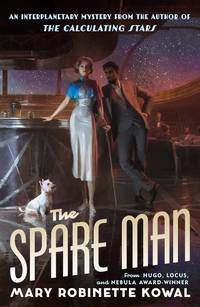
When Archie Met Lily

84 years ago today, Archie Goodwin—one of my top 5 All-Time Favorite Characters — met the only woman who could keep his attention for more than a few months, Lily Rowan. Lily shows up several times in the series and threatens to steal every scene she appears in (and frequently succeeds). Check out this post from Today in Mystery Fiction for the details—one of my favorite scenes, from one of my favorite books in possibly my favorite series—(I think I have 3 or 4 copies of it), so I had to say something.


Besides, it’s not like I have a long list of dates associated with fictional events (but really should work on one).

How they met 84 years ago, when Archie’s only in his mid-30’s, is beyond me. But Math was never my strong suit, I’m sure it makes sense, surely Charlie Epps (or Larry or Amita) could explain it to me.

Blood Sugar (Audiobook) by Sascha Rothchild, Allyson Ryan: She Didn’t Kill Her Husband, But…

Blood SugarBlood Sugar

by Sascha Rothchild, Allyson Ryan (Narrator)

DETAILS:
Publisher: Penguin Audio
Publication Date: April 18, 2022
Format: Unabridged Audiobook
Length: 8 hrs., 38 min.
Read Date: August 31-September 1, 2022
Support Independent Bookstores - Visit IndieBound.org


This is one of those books that grabbed my interest and then I immediately forgot about it for months. Thankfully, the library system here had it in their audiobook catalog where I stumbled on it. Knowing what I know about it now, I’m pretty annoyed that I took this long to get to it.

The Hook

The book opens with the protagonist/narrator in a police interrogation room. Ruby Simon is being questioned about her husband’s death. She’s innocent–100% guiltless–it’s clear from the get-go, that she did not murder her husband.

But…there are three other people that Ruby has killed over the last couple of decades. She’s never even been looked at as a suspect in these deaths–they’d previously been judged to be accidental, in fact.

But after death #4, it’s hard to believe that with all this smoke, there might not be a fire.

What Comes After the Hook

The first part of the book focuses on the events in the interrogation room–the detective presses for details on these four deaths, and as Ruby dances around her answers, we get to see her life story in flashbacks. Her childhood (punctuated by a murder), her party days as a teen (punctuated by a murder), her college years and training as a psychologist (punctuated by a murder), and then her falling in love with her husband and beginning their life together (punctuated by his death by natural causes).

The rest of the book focuses on the legal battle that ensues–the investigation that follows, her eventual arrest, the decimation of her career and reputation that results, and the eventual resolution of it all.

Conflicting Impulses

Ruby is a completely horrible person, she’s a murderer–and in two of the three cases, it’s entirely unjustified. The motives behind those two are so…pointless is the best I can come up with. The third murder probably wasn’t necessary, Ruby could’ve found a non-lethal solution to the situation–but you can understand and appreciate why she did it. She deserves to be behind bars (at least), she needs to be tried, convicted, and punished. It’s the right thing.

And yet she’s innocent here. She loved her husband, would never have killed him, and shouldn’t be dragged through the mud over this. The reader/listener constantly finds themselves rooting for this character that in normal circumstances you want to be pursued by a dogged investigator.

It’s similar to Dexter or Hannibal–with them, we embrace their homicidal acts and desires while rooting for them. There’s part of you that wants Dexter to get away with it so he can take down another serial killer. A similar part of you wants Hannibal to slip away from custody because he’s disturbingly charming. But it’s different in Blood Sugar–we have an actual injustice, and we instinctually recoil from that and want her exonerated.

But…you can’t get away from the injustice of her getting away with the other murders.

At the same time, you resent Detective Jackson for doing his job. He’s absolutely wrong about Jason’s death and shouldn’t be in Ruby’s life. But in any other book/series, we’d be rooting for him. He might as well be Harry Bosch or a similar character–he’s got all these pieces before him and is assembling a case that’s 75% correct. He’s doing everything right, and has an actual killer in his sights–and you want him to fail. Not only that, you probably are angry with him and have some active distaste for him.

But if this book was told from his perspective? You’d love him and admire his ingenuity and intuitive leaps.

For a long-time reader of detective fiction, this is a great twist on the conventions.

Ruby’s Antagonist

Someone has to be behind all her problems right? Det. Jackson isn’t going to look into Jason’s death without someone or something prompting him. Once you figure that out–which will probably happen before the actual reveal–it’s delicious. This might be my favorite thing that Rothchild does in this book.

For a book that’s full of confusing impulses for the reader, it’s nice to have an adverse reaction to someone that’s straightforward and uncomplicated.

A Brief Thought about the Narration

Ryan did a great job of this–she made Ruby Simon a human being. Her portrayal helps you identify and embrace Ruby as the innocent–with a shady past. You want to believe her when she says that she’s not a sociopath.

There were a couple of scenes (with one of Ruby’s patients in particular, and some involving Ruby’s dog) where I was moved because of the narration. I don’t know if they’d have been as effective (or affective) if I’d read the book, but with Ryan’s work, I was absolutely gripped.

So, what did I think about Blood Sugar?

I thought this was a great listen–a great experience.

I relished this approach to the story and characters, and the way you were forced time and time again to re-evaluate the characters, their actions, and your reactions to them.

Do I want a steady diet of this? No. Do I hope that a future Rothchild novel is either more conventional–or tweaks conventions in a different way? Absolutely. I can see Rothchild being a Lisa Lutz-type of writer. With stand-alones where you never know what you’re going to get–other than some wry humor, deep characters, and an approach to Crime Fiction that you hadn’t considered before.

I strongly recommend you pick this up in audio or print.


4 Stars

This post contains an affiliate link. If you purchase from it, I will get a small commission at no additional cost to you. As always, the opinions expressed are my own.

20 Books of Summer 2022: Wrap-Up

20 Books of Summer
So today, I completed the 20 Books of Summer Challenge, as hosted by Cathy at 746 Books.

Or maybe it was Friday. If you count finishing the reading*, then it was Friday. Either way, I’m done.

And I typically do.

This is my third attempt at this challenge—one year, I finished only because I re-defined the deadline (in the U.S. we colloquially consider Labor Day as the end of Summer). Last year, I didn’t finish writing about the books until September (well, okay, I still haven’t written about one of them. Don’t ask me why, I can’t explain it). But this year—I put forth a list of 20 books, read that list, and posted about that list between June 1 and August 29.

I call that a win. Even better—I enjoyed all of them. Well, at least I appreciated the writing or storytelling of a few. I didn’t dislike any of them, anyway. Still, it’s a win.

Works for me.

✔ 1. The Deepest Grave by Harry Bingham (my post about it)
✔ 2. Condemned by R.C. Bridgstock (my post about it)
✔ 3. Payback by R.C. Bridgstock (my post about it)
✔ 4. Persecution by R.C. Bridgstock (my post about it)
✔ 5. AMORALMAN: A True Story and Other Lies by Derek DelGaudio (my post about it)
✔ 6. Against All Odds by Jeffery H. Haskell (my post about it)
✔ 7. One Decisive Victory by Jeffery H. Haskell (my post about it)
✔ 8. With Grimm Resolve by Jeffery H. Haskell (my post about it)
✔ 9. A World Without Whom: The Essential Guide to Language in the Buzzfeed Age by Emmy J. Favilla (my post about it)
✔ 10. Composite Creatures by Caroline Hardaker (my post about it)
11. Divine and Conquer by J.C. Jackson (my post about it)
✔ 12. Mortgaged Mortality by J.C. Jackson (my post about it)
✔ 13. The Ghost Machine by James Lovegrove (my post about it)
✔ 14. Roses for the Dead by Chris McDonald (my post about it)
✔ 15. A Wash of Black by Chris McDonald (my post about it)
✔ 16. Whispers in the Dark by Chris McDonald (my post about it)
✔ 17. Down the River unto the Sea by Walter Mosely (my post about it)
✔ 18. Crazy in Poughkeepsie by Daniel Pinkwater (my post about it)
✔ 19. Ghost of a Chance by Dan Willis (my post about it)
✔ 20. The Border by Don Winslow (my post about it)

(also, this is the first year that I didn’t end up making any substitutions along the way).
20 Books of Summer '22 Chart

Page 29 of 153

Powered by WordPress & Theme by Anders Norén