Category: Mystery/Detective Fiction/Crime Fiction/Thriller Page 31 of 156

REPOSTING: From the Mailbag: Reading the Wolfe Books for the First Time

With the earlier post about Fer-de-Lance, it seemed like a good day to repost this, too. I apparently sampled a paragraph or two from the Fer-de-Lance write-up I shared earlier, too. Sorry for the repetition.


I received this email in response to my Happy Birthday, Archie! post last week.

Soooooo, each year you post this, each year I say I’m going to start…just put a request in for Fer-de-Lance, the first of the Nero Wolfe books, right?

Thanks for the question! This is a tricky one for me, and one that I’ve thought too long about already. I’m going to write for the person already interested in the series, and not to convince you to read them—this is practical advice only, no incitement.

Short answer: Maybe.

Longer answer (which I’ll still try to keep under control, because I tend to be hard to stop on this subject, and some of this is adapted from other things I’ve written. Also, because if I start fact-checking some of this, I’ll find myself spending hours, even days, on this, so I might make some minor errors)*:

Rex Stout’s Fer-de-Lance is the first of 40+ books (novels or short story collections) featuring the exploits of private investigator Archie Goodwin (2 parts Huck Finn, 1 part Philip Marlowe) and his eccentric employer, Nero Wolfe (1 part Sherlock Holmes, 1 part Mycroft Holmes)—yes, I am one of those who think that Archie’s the main character in the mis-nomered Nero Wolfe Mysteries. It makes perfect sense to start with Fer-de-Lance and read chronologically. I did it myself a couple of years back for the first time (I’ve been reading these books for about 30 years now, and its odd that it took me so long), and I picked up subtle nuances, little callbacks and references that I’d missed before. There are almost no story or character arcs that go beyond a book (exceptions are noted below), and (most of) those that do, are easy enough to pick up and don’t spoil too much. Yes, there are introductions of new characters, a character death or two, but by and large you can dip in anywhere and not notice.

    Two quick semi-parenthetical notes on the reading this chronologically before I continue.

  • Yes, read the short story collections when you come across them in the chronology. Even if you’re not a short fiction reader, do it. There are some utter gems tucked away in those (and I spent too much time ignoring them).
  • The short story collection Death Times Three was published posthumously, but I’m pretty sure they were published in magazines, etc. before the last novel, A Family Affair. Read the collection after Please Pass the Guilt and before A Family Affair. A Family Affair works so, so well as a series finale that it should be treated as one whether or not Stout wrote it as one. It’s oft-debated, but I’m convinced that if Stout lived another year, we’d have had another novel. But he didn’t. So, again, A Family Affair should be the last you read—even if you don’t read chronologically.

In reading about Rex Stout/Nero Wolfe (either by fans or professionals), there’s an oft-quoted line from Walter D. Edmonds that you simply cannot avoid seeing, “I shall never forget my excitement on reading Fer-de-Lance, sprung like Athena perfect form the Jovian brow, fresh and new and at the same time with enough plain familiar things in scene and setting to put any reader at his ease.” Aside from Oliver Wendell Holmes’ margin note (“This fellow is the best of them all.”), there’s nothing that sums up Fer-de-Lance better, sprung like Athena indeed.

It really doesn’t matter how many times you’ve read it, but upon re-reading (and probably even initial reading if this isn’t your first encounter with Wolfe and Archie) you can’t help be struck by how much Fer-de-Lance fits the model of a mature Wolfe novel—almost all the elements are there. These characters are introduced in practically their final format—a little tweak here and there over the course of the first few novels will get them in their final form. The addition of a few other characters will be necessary, but the cast of characters is already over 90% complete. In the first chapter alone we already have Wolfe, Archie, Fritz, Theodore, Fred and Saul presented in a manner fully recognizable to the familiar reader. The story follows a fairly typical route (although the identity of the murderer is revealed far earlier than is the norm), and the essential environmental elements are there—the beer, Wolfe’s eccentric schedule, the orchids, a relapse, the food, a cocky scheme to land a client, an outrageous stratagem for getting that last essential piece of evidence (not that Wolfe needs it to solve the crime, merely to prove he was correct)—the only thing missing is the gathering of the witnesses/suspects/clients for Wolfe to reveal everything in his characteristically dramatic fashion. One recurring thought I had while reading it the last time was that Fer-de-Lance could just as easily have been the fifteenth installment in the series as the first.

If you didn’t understand half of what I wrote above because you’re new to the corpus, well, you’ll get it soon enough. There’s a formula of sorts to Wolfe/Archie novels—violated all the time, despite what we purists like to think, these variations on the theme are some of our favorite moments. You’ll pick the formula up quickly, and find it as comfortable as Wolfe’s nigh-inviolable daily schedule.

So while there is glacial development, the order is almost negligible. I do endorse and suggest a chronological read—but it’s not essential. In fact, I typically recommend The Golden Spiders (#22) or Before Midnight (#25) to newbies before plunging into Fer-de-Lance, they’re among my favorites, and are pretty representative of the fully-developed Wolfe/Archie. A&E used The Golden Spiders as the pilot to their recent series, so I’m not alone in thinking it serves as a good introduction. If you like them in their final form, you’ll have an easier time appreciating Wolfe/Archie in their almost-final form in the early books. Think of the development of Bugs Bunny over the first few shorts as a rough analogue.

Therefore, if your library/used bookstore isn’t sufficiently stocked to do the chronological read, you shouldn’t avoid the series and can dip in wherever you can. It’s like old episodes of Law & Order that you come across on cable. But there are a few things you should read in a certain order for full understanding/emotional impact, and a few others you should read after you’ve acclimated to the world/series a bit, you’ll enjoy/appreciate them more than if they’re in the first five:

  • The Doorbell Rang (#41)
  • Too Many Women (#12)—a lot of people think Archie comes off like a cad here, it’s never bothered me, however. Still, if you already like him, you’ll forgive him this.
  • And Be a Villain (#13), The Second Confession (#15), and In the Best Families (#17)—just seeing the numbers now, surprises me—I’d have thought these were in the 30’s. If Stout had been planning out a 40+ book series, he’d have put them later. Not only should you read them with experience in the series, these three need to be read in this order. There is an omnibus edition in many libraries with these three called Triple Zeck.
  • The Black Mountain (#24) would be best read after Over My Dead Body (#7), and after you’re acclimated to the world.

A couple of other suggestions:

  • Some Buried Caesar (#6)—should be read early (but not first) and often.
  • A Right to Die (#40) should be read only after Too Many Cooks (#5), it’s one of the only times that a non-regular character shows up again. There’s some racially-tinged language in Too Many Cooks that Archie’d grow out of almost immediately. Remember it was originally published in 1938 and cut him a little slack—mostly, be happy that he grows out of it.
  • And again, A Family Affair should be read pretty much when there’s nothing left.

Granted, these are all only suggestions. But ones made by a passionate fan. Still, at the end of the day, just read these books, you’ll enjoy them.

Maybe sometime I’ll get into the official continuations by Robert Goldsborough in a post like this.


* Okay, I lied—I pulled up the goodreads page for the series so I could get the numbers on them just to help. But that’s it.
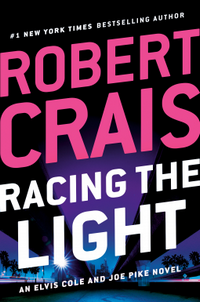

Racing the Light by Robert Crais: Spooks Spooking. Detectives Detecting. Killers Killing.

Racing the LightRacing the Light

by Robert Crais

DETAILS:
Series: Elvis Cole, #18
Publisher: G.P. Putnam's Sons
Publication Date: November 1, 2022
Format: eARC
Length: 368 pg.
Read Date: October 12-14, 2022
Support Independent Bookstores - Visit IndieBound.org

What’s Racing the Light About?

The essence of the case is that Elvis is hired by the mother of a young man who has gone missing to find him. This is pretty par for the course for Elvis Cole—a missing persons case.

Here’s what makes this distinct: the mother has money—she pays a generous retainer in cash (so generous, Elvis gives some back) and you get the impression that it wouldn’t be difficult for her to add a few more thousand. Before she walks into the office, two people come in and do a security sweep. Adele Schumacher believes her son, Joshua, has been taken by government agents for his investigation into Area 51 for his podcast. So, yeah, not a typical day in the office.

The podcast is called In Your Face with Josh Shoe, and it’s frequently about government corruption, conspiracies, and whatnot—but they’ve branched out to things like interviewing a porn actress. His childhood friend/podcasting partner, Ryan, tells Elvis that Josh is trying to move to more mainstream topics (Ryan doesn’t seem on board with this, for what it’s worth). Ryan shares Adele’s theory for Josh’s absence, Josh has been taken because he returned to Area 51 and found something.

But Elvis starts to find evidence that Josh is investigating something he didn’t tell Ryan about—Elvis can’t figure out what it is, sadly, but he starts to figure out who Josh might be interviewing for this story. And one of them has gone missing, too. Is this tied to his disappearance or did the twenty-something self-employed and single guy just flake off for a few days?

It’s not long before Elvis starts to think he’s not the only one looking for Josh and he enlists help from Joe Pike (who brings in Jon Stone). If those two get on board, you know things are about to get dangerous.

Pike and Stone

The problem with getting to know the PI’s more lethal/less-hung-up-about hurting people friend/sidekick/partner better is that it’s harder to keep them feeling dangerous and mysterious—it maybe even gets to the point where they stop being quite as prone to violence as they once were, and their charcoal-gray hats get a little closer to white. With Joe Pike getting some novels of his own, a lot of his sharp edges have been dulled for fans, so it was nice that Crais brought along Jon Stone so when Pike couldn’t be ruthless and cold-blooded, there’d be someone who could.

He gets to be that guy here—he’s helpful (very), resourceful, and mercenary. He pitches in because Pike pushes him to—not because he cares about Elvis or the fate of Josh. But what he does, he does well. (and is amusing for the reader throughout)

Pike is also not quite the active presence in this book that he has been lately—so when he does show up and act, it makes it feel a bit more super-human. Crais really upped his game with Pike in this novel and it allows him to steal almost every scene he’s in. Naturally, the phone calls between Pike and Cole are still fun to read—if you can write an entertaining conversation with one party being nearly-monosyllabic, you’ve got a gift.

Lucy and Ben

Lucy and Ben come by for an almost-unannounced visit to ensure that Elvis can’t give his full attention to the case. Which sounds snarky and may not be wholly fair of me. But it’s not wrong.

I enjoy the character of Ben and the way he interacts with Elvis—and continue to do so. I appreciated and believed what he was going through—both on his own and with his mother—at this stage of life, and Crais’s portrayal of this was one of the (many) highlights of this novel. It was also a good way to remind the reader just But Lucy has bothered me for a while now (although I was initially a fan), and I’m not certain that this book alleviates that (nor do I think Crais is altogether worried about it). I’m going to reserve judgment on this appearance for now. I did like Cole’s response to her visit and presence (when it didn’t take him off of his game, although I thought that was a nice touch).

So, what did I think about Racing the Light?

I need to spend some time thinking about this idea, but while reading this book I started to think of some notable first meetings between a PI and their client—like The Big Sleep, The Doorbell Rang, God Save the Child, and The Judas Goat*—and how those meetings can be a bellwether for the rest of the book. If the meeting seems pretty good/typical, the rest of the book will be, too; if the meeting catches your attention, the rest of the book will be of a higher quality.** The first meeting between Elvis and Adele Schumacher definitely fits—it’s not your standard meeting (the presence of her personal security helps). Right away, I could tell this was going to be a better-than-usual Elvis Cole novel. There’s not much that can beat that, in my book.

* This is a list generated in a rush, and I know I’ve left off some big ones, but as indicated, this is a theory-in-progress, I might work it out fully later.
** It’s likely that a better book is going to be better from the first chapter, and I just like the idea of creating a litmus test.

My opinion never wavered from that point on—this is some of the best writing Crais has given us in a long time—there are some passages/sentences/phrases I’ve had to read a few times just because I enjoyed them so much. I’m going to have a hard time limiting myself when quoting from the book once I get the hardcover. I’m already looking forward to a re-read of this somewhere down the road.

Along those lines, there’s one passage following a conversation between Elvis and Josh’s father that I’d believe Crais stole from one of the earliest Robert B. Parker novels. It’s not often that I get a reminder of the shared DNA between Elvis and Spenser. I appreciate what distinguishes the two more than their similarities, but it’s good to see the family resemblance is still there—it’s what attracted me to both characters (and their authors!).

We see the return of some characters that Crais hasn’t used in a while, too—which adds to the overall feeling of this novel hearkening back to earlier Elvis novels more than the last few. Another of the ways this book shines is in the supporting characters, not just that many from the old gang are back, but characters for this book. We get to know a couple of people connected to the missing persons really well, they’re well-fleshed out, and you can’t help feeling empathy for them and connected to them. For example, there’s a man who lives in Griffith Park who’s a witness to part of a cover-up—we get four chapters from his perspective. And I like him enough already that I’d read a short story/novella just about him.

I’ve probably gone on more than long enough at this point, let me wrap it up.

New readers will find plenty to enjoy here as well as well-established fans should. Obviously, newcomers won’t get all the character moments that come from the buildup of 17 previous novels, but that doesn’t mean they won’t walk away with a sense of them. Don’t let the existence of those novels dissuade you, see them as an added bonus of backstory you can explore if you get into these characters.

I don’t see how long-term fans aren’t going to relish this novel. Racing the Light doesn’t carry the emotional heft of L.A. Requiem or The Last Detective (primarily because those books explored the characters of Elvis and Pike in depths that Crais can’t repeat), but in terms of plot, pacing, and character this is their equal. I haven’t been this excited about a Robert Crais novel since The Promise.

I’m telling you, readers, don’t miss out on this one.

Disclaimer: I received this eARC from PENGUIN GROUP Putnam via NetGalley in exchange for this post—thanks to both for this.


5 Stars

This post contains an affiliate link. If you purchase from it, I will get a small commission at no additional cost to you. As always, the opinions expressed are my own.

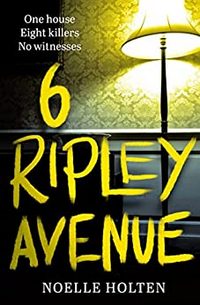
6 Ripley Avenue by Noelle Holten: One House. Eight Killers. No Witnesses.

6 Ripley Avenue6 Ripley Avenue

by Noelle Holten

DETAILS:
Publisher: One More Chapter
Publication Date: September 27, 2022
Format: eBook
Length: 378 pg.
Read Date: October 6-11, 2022

When you’re given the opportunity to confront your mother’s killer, do you take it?

I did.

No words were spoken though.

I just killed him.

Was it worth it?

Absolutely.

Do I have any regrets?

Only that I didn’t make him suffer longer.

What’s 6 Ripley Avenue About?

6 Ripley Avenue is a Probation Hostel—similar to what we call a halfway house in the U.S.—focusing on probationers convicted of violent crimes (including murder). It’s been plagued by controversy since before its opening two years ago. The concerns go beyond the typical NIMBY protests because of the violent nature of the residents.

Sloane Armstrong, a freelance investigative journalist, and Helen Burgess, an elderly woman who lives next door to the house, have been at the forefront of the effort to move and/or close Ripley House Approves Premises from the start. Their friendship was forged by this effort but has grown since then.

Now, a resident there—a convicted murderer—has been killed. The investigation into the murder highlights many of the concerns Helen has voiced and Sloane has published—poor staffing levels, inadequate security, malfunctioning CCTV, and more. Helen and Sloane see this as their opportunity to close the facility once and for all and work to uncover as much as they can about the crime and the systemic problems it exposes as possible for their purposes.

On the other hand, Jeanette Macy is the Senior Probation Officer on staff—she learns of the same problems (and more) during the investigation and sees this as the opportunity to improve things both at Ripley House and throughout the system.

The narrative bounces between the perspectives of these women as they investigate the happenings of that fateful night and interact with each other and the police during the inquiry. Will any of them be fast enough in their investigation to ensure the murderer is caught in time to save more lives?

It’s almost a locked-room mystery—but if you can’t trust the locks on the room…

The Prologue

I see a lot of hate/antagonism toward Prologues online lately. I’m not sure I get it, but if people want to skip them, I guess that’s their prerogative. However, anyone who is anti-prologue probably hasn’t read a Noelle Hotlen prologue—they’re consistently very good. This is one of her best—it’s not Dead Perfect—good, but it’s close.

If you read this book, don’t gloss over/skim/skip it.*

* I think that should apply to Prologues/Epilogues in general, but whatever. You do you.

On the Other Hand…

I think the last two chapters could be cut and the book would be stronger. I get (I’m pretty sure) the impulse for them, and they do make sure that some of what was suggested/implied in the text was nailed down. I also wonder if she answers a question or two that would be better left lingering. But I think most readers would either assume almost everything contained there—or wouldn’t care. It’s like watching deleted scenes from a movie and thinking “yeah, that was good to see, but I see why it didn’t make the final cut.”

Okay, the last six paragraphs of the penultimate chapter—they’re a distinct section—would’ve made a good, punchy last chapter on their own. But the rest felt like overkill.

Your results may vary, and it’s not like these chapters hurt the book significantly. But for me, they took a little of the luster off.

So, what did I think about 6 Ripley Avenue?

“Sometimes the places where you are meant to be safe are the ones you should fear the most.”

The violence in this book centers on those places you’re meant to be safe—home and family—and what happens when that safety is disrupted. The whodunit of the novel is the focus—but there’s a lot said about the ripple effects of (many, but not all, of) the crimes talked about. How the repercussions of a moment of violence or other dangerous choices are long-lasting and alter the lives of those only indirectly affected by them. Crime Fiction in general is getting better at showing this, and few do it as well as Holten does.

Holten’s signature style of terse chapters and paragraphs is well-evident here,* jumping from perspective to perspective to make sure the plot is always steadily advancing. This makes the pacing almost relentless and it’s hard to put the book down, no matter what the reason for doing so may be. I’m not saying that I burned any meal or let a pot boil over while reading this, but I’d absolutely understand why someone would. Thankfully, the style also makes it incredibly easy to pick back up and get fully immersed in the story immediately. You could easily read 6 Ripley Avenue in one sitting without intending to.**

* Really, does she draft on cocktail napkins? What would happen if she invested in a couple of reams of 8.5 x 11/A4?
**The fact that it took me as long as it did to read this is a commentary on my schedule this month, not the book.

The only problem with the pace is that we don’t get quite enough time to see enough of Helen and Sloane’s friendship—it’d be easy to see their relationship as Sloane exploiting the lonely woman for ammunition and Helen as desperate for an emotional connection. That’s what I saw it as initially. But as the novel progresses, we see actual affection between the two and it’d have been nice if circumstances had allowed us to see more of it. On the other hand, things do allow the reader to change their initial impression of Jeanette over the course of the novel (at least this one did).

This is one of those novels that is strengthened by the use of multiple POVs—the overlapping motives, agendas, and methods of the women looking into the crime and its repercussions, sometimes in alignment, sometimes at odds, but leading to getting at the truth was really well done. I’m not sure that, outside of the first bit of narrative from the Killer’s point-of-view that having their perspective present is that helpful—but I’d say that about at least 98% of those that I’ve read, so take that comment with a boulder-sized grain of salt.

This standalone solidifies Holten as an auto-buy for me, it’s a pleasant departure from Holten’s series work, displaying her already visible strengths and giving her a chance to show new ones. 6 Ripley Avenue is a fast, compelling, read that will stay with you for a while—you can’t ask for more than that.


4 Stars


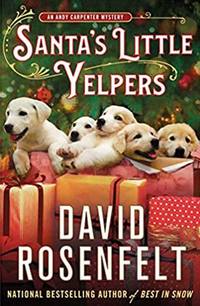
PUB DAY REPOST: Santa’s Little Yelpers by David Rosenfelt: A Little Yuletide Cheer and Two Dangerous Cases Andy Didn’t Ask Santa For

Santa’s Little YelpersSanta’s Little Yelpers

by David Rosenfelt

DETAILS:
Series: Andy Carpenter, #26
Publisher: Minotaur Books
Publication Date: October 11, 2022
Format: eARC
Length: 304 pg.
Read Date: September 30, 2022
Support Independent Bookstores - Visit IndieBound.org

What’s Santa’s Little Yelpers About?

There’s a new employee at the Tara Foundation—he’s an ex-con, and an ex-lawyer (the former led to the latter). Chris is clear that he was wrongly convicted, but is trying to rebuild some sort of life and move on from there. Andy, Willie, and Sondra are happy to have him on board—especially because one of the shelter’s dogs just had a litter, and Chris has taken mom and her pups into his house until they’re ready to be adopted.

But since this is an Andy Carpenter novel, you know what’s coming next—the dog lover introduced at the beginning of the book is headed for trouble. Chris is told by the major witness in the case against him that he was lying and will recant in court. But before Andy can get anything filed on Chris’s behalf, the witness changes his mind. Chris goes to confront him, the witness is murdered, and, as we all expected, Chris is arrested for that crime.

It’s up to Andy, The K Team, and the rest of Andy’s team to try to prove him innocent of the murder—and maybe the initial crime.

It’s Beginning to Look (a Little) Like Christmas…

I’m not sure why Minotaur keeps doing these Christmas-themed Carpenter novels—there’s very little Christmas-y (or other holidays) in them. The Christmas content in this one is less than usual—don’t worry, there’s enough to justify this being considered a holiday novel or to satisfy those who want that content. But just enough for that—not one sentence more.

I should stress—I’m not complaining about this. I’ll take any excuse for an Andy Carpenter novel, and this gives us two in a year—and some of these “Christmas” novels have been better than the others released that year. I’m just wondering.

So, what did I think about Santa’s Little Yelpers?

Between the 25 previous books in the series and the 3 K-Team books, I like to think I’m pretty familiar with Rosenfelt and his bag of tricks—the series and I are old friends by now, and while I have a ball with these books, I pretty much see most things coming. Or so I thought. Sure, most of the book went as I expected, and I was enjoying it as much as I expected to. And then Rosenfelt pulled off a twist that I didn’t see coming—my interest and appreciation for the book increased.

And then he did it again. I wouldn’t have guessed that by book 29, Rosenfelt would be surprising me twice in one book. I’m not saying that I don’t appreciate the twists and the turns of the stories in most of his books, because I really do—but I usually know something like them is coming—I didn’t see either of these coming at all. (I do think I should’ve been in the ballpark for one of them, though, if I’d been on my game). And because of these reveals, a lot of the book played out in ways I didn’t fully expect. I love it when an author does this.

Are all semi-savvy readers going to experience this? Not necessarily—but you just might.

Even without that—this is a classic Andy Carpenter book, there’s some good Ricky material, Laurie and Marcus get to do their thing—Corey and Simon Garfunkel get some nice moments, too. Sam Willis (very minor spoiler) gets some out-of-the-office work, which is fun. And Andy meets a new judge and prosecutor and doesn’t totally alienate them (I’m not sure he endears himself to either, either).

It’s a good time, a clever case, with some typical quotable lines. Everything an Andy Carpenter fan wants—and, as always, this would be a good jumping on point for a newbie looking for an enjoyable mystery/legal thriller to read.

Disclaimer: I received this eARC from St. Martin’s Press, Minotaur Books via NetGalley in exchange for this post and my honest opinion–thanks to both for this.


4 Stars

This post contains an affiliate link. If you purchase from it, I will get a small commission at no additional cost to you. As always, the opinions expressed are my own.


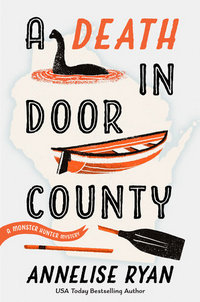
A Death in Door County by Annelise Ryan: A Nice Kick-Off to a Promising Series

A Death in Door CountyA Death in Door County

by Annelise Ryan

DETAILS:
Series: A Monster Hunter Mystery, #1
Publisher: Berkley
Publication Date: September 12, 2022
Format: Hardcover
Length: 322
Read Date: October 1, 2022
Support Independent Bookstores - Visit IndieBound.org

What’s A Death in Door County About?

Morgan Carter owns and runs a bookstore in a tourist-y town in Minnesota. In her spare time, she’s a cryptozoologist—hunting for proof of creatures like Bigfoot, Nessie, chupacabra, Jersey Devils, and so on. She hasn’t found any yet—but that hasn’t stopped her from the search (something she inherited from her parents—along with enough money to pursue this).

One day, the new-ish police chief of a local town comes by the bookstore to hire her as a consultant. There’ve been a few drowning victims—animal and human—in the last few months that have unidentifiable bite marks on them. The bites haven’t been made public knowledge, but the number of bodies with them and the short amount of time has him and state wildlife authorities curious.

She jumps at the chance—but knows that if it’s not a large creature living in Lake Michigan, there’s a chance that there’s a human behind it. Finding a human cause would be a fast way to rule out a cryptid. So, while looking for indications of a creature, she does a little Jessica Fletcher-ing. One way or another, Morgan and her loyal dog, Newt, are going to find out who’s behind the deaths.

Odds and Ends Bookstore

So, I want to go visit Morgan’s bookstore tomorrow. It feels like it has a pretty extensive inventory—with a great selection of local information and history, esoteric cryptozoological material (due in large part to Morgan and her parents’ other gig), and some very strange non-book items for sale, too (like the non-magical section of Alex Verus’ Arcana Emporium)—I’m guessing they also have a decent selection of current books, on top of that

The store has two employees (which does suggest it’s smaller than the inventory could suggest, unlike, say, Nina Hill’s bookstore). They’re the perfect level of quirk, competence (possibly hyper-competence), and humanity. They’re the kind of supporting characters that will be fun to follow.

So, what did I think about A Death in Door County?

I don’t have a lot to say about this one—it was a fun little diversion, with nice characters that I want to spend more time with. The conceit should fuel a good number of books. I can’t think of a lot to say about it at the moment, I feel like I need to see one or two more books before I can really start talking about things because so much of this book was establishing the characters and the world. The setting of Lake Michigan isn’t one that I think I’ve spent a lot of (any?) time in, so I’m looking forward to more of that.

This was an entertaining, cozy-ish read—the addition of cryptozoology to the amateur detective who owns a bookstore was a fantastic touch. It’s really a great idea. Pick this one up, I think you’ll enjoy it.


3 Stars

This post contains an affiliate link. If you purchase from it, I will get a small commission at no additional cost to you. As always, the opinions expressed are my own.

Station Eternity by Mur Lafferty: One Giant Leap for Homicide

Station EternityStation Eternity

by Mur Lafferty

DETAILS:
Series: The Midsolar Murders, #1
Publisher: Ace 
Publication Date: October 4, 2022
Format: eARC
Length: 464 pg. 
Read Date: September 23-29, 2022
Support Independent Bookstores - Visit IndieBound.org

What’s Station Eternity About?

In the not-too-distant future, Aliens (of various species) have made Contact with Humanity. It’s not unheard of for them to be seen on earth, looking around. Many humans are worried about war with the aliens—that they’re around to invade or something. What they can’t accept is that the aliens just don’t think enough about humanity to bother.

Nearby—but not that near—is a Space Station where the aliens that Earth knows about are living. It’s important to know that the Space Station is sentient. She’s allowed three humans to live on board. One is an ambassador from the U.S. (you’re going to spend a lot of time wondering how he got that appointment, until—of course—Lafferty explains it, and then it’ll actually make sense); another is our protagonist, Mallory Viridian (more on her in a bit); and Xan, an Army quartermaster, Mallory met in college a few years back.

People tend to die around Mallory. Well, that’s not exactly true—people in Mallory’s vicinity have a tendency to be murdered. When that happens, Mallory is really good at solving the murders, too. Sure, she has to repeatedly convince law enforcement that she wasn’t involved in the murder—but after that, she’s great at figuring out who did the killing. Her presence on the Space Station is her attempt at staying away from people. Her thinking is that if she’s not around people, they can’t be killed. Yes, there are two other humans on board, but she avoids them as much as possible for their own sake.

But now…Eternity has decided to allow a shuttle-full of humans to visit, and Mallory is worried. Beyond worried, really. She tries to convince Eternity to call it off, but before she can…there’s a murder. And before long, there are others—is Mallory up for the challenge?

The Aliens

There’s a lot that I liked about this novel—more than I’m going to be able to really dig down into. But one of my favorite aspects of the novel is the alien races, their cultures, how they relate to humans, and so on. Aliens should be…alien. They shouldn’t all be humanoid with a few cosmetic differences. Novels are a better place for this than movies/TV because they’re not limited by an F/X budget, but still, we tend to get variations on a theme. Lafferty’s good at keeping the aliens strange and humans should be equally strange to them (beyond a McCoy-can’t-get-the-whole-Vulcan-logic thing)

A couple of examples to start with: there’s the food on the station—a lot of it is lethal to humans, some is just unpalatable (think of the way 80s sitcom characters would react to the idea of sushi, and then multiply that). There’s also the way way that the universal translation device (fairly reminiscent of Adam’s Babel Fish) being implanted is a bloody and painful process—which is still not easy and pain-free by the end of the book. Unless I’m forgetting something (likely) or haven’t been exposed to the right things (very likely), I’m used to this being a seamless, easy and pain-free process in SF.

We are talking about races here that can remember thinking of species like humans (and some others on the station) as “masticatables,*” before they got to the point where they saw them as sentient beings who should be treated with respect and on the same level. Physiology, communication, ethics, and worldviews that we can’t comprehend easily. Not only are they only barely interested in dealing with humans (it’s never stated, but I think most of Eternity’s residents wish they’d waited a few centuries before making First Contact)—they’re sure not going to go out of their way to make things accessible to humans. It’s up to the three on board to figure out how to survive.

* Of the thousands and thousands of words that I read last week, that’s probably my favorite one..

That said, they are pretty curious about humanity’s squishy bodies full of wetness, our lack of symbiotic relationships (oh, yeah, I forgot to mention—every other race in this book is in some sort of symbiosis). Isolated creatures are hard for them to wrap their minds around. Throughout the novel, various characters repeatedly express how they can’t understand how humans get by without a symbiotic relationship of some kind—in fact, they pity humans for how they must be isolated and hampered by it.

I could keep going here, but without writing a few hundred words on each race, I’m not going to be able to say enough (besides, that’s Lafferty’s job, not mine). Let me just sum up by saying that these aliens are alien, and we’re pretty strange to them. I love seeing both of these in action.

A Question of Genre

In my Spotlight post, wrote that Station Eternity is:

“a witty, self-aware whodunit with a unique sci-fi twist” (at least that’s what the promotional material says—I’d call it a witty, self-aware Sci-Fi novel with a unique whodunit twist, if I was in the mood to split hairs).

Now, largely, genre is used as a marketing tool—how do we get this in front of the readers who are most likely to respond with their attention (and wallets, can’t forget to get Lafferty and the publisher paid). As such, maybe it doesn’t matter what genre it’s classified as—and there’s something to it. But genre also helps you talk about a book—the conventions of the genre, the way a book diverts from and/or uses them, etc. It also helps you find a book, “I’m in the mood for a good book,” really doesn’t get you very far, whereas “I’m in the mood for an Urban Fantasy,” points you in the right direction.

So, Ace’s marketing—and the title of the series itself—leans on the mystery. And I think that’s fair. But I think the emphasis in this novel is on SF elements. That might not really be the case* in future novels in the series, but it felt that way this time. Lafferty’s own bibliography and résumé are pretty heavy on Speculative Fiction, too—so it makes sense that the book would be Science Fiction-heavy.

* Pun unintended. But I really wish I had planned it.

Considered separately, I think the mystery part of the novel isn’t as successful as the SF part is. That’s largely because the SF aspects change the rules for the mystery. Thankfully, you don’t have to consider the two strains separately—the book doesn’t, there’s little reason for a reader to do that (unless you’re trying to talk about it in a blog post or something).

As I mentioned, most of the various races in the novel are in a symbiotic relationship of some kind to survive (and things do not go well for them when the symbiosis is disrupted). I think the relationship between the two genres here could be thought of that way—it’s a mutually dependent relationship. The SF needs the mystery to generate and advance the plot, and the whodunit needs the SF to have a setting and for the characters to work.

Ultimately, I think a Mystery-reader who isn’t that into SF is not as likely to enjoy this as a SF-reader who isn’t that into Mysteries will. But I think readers of either genre who are open to the idea are going to find themselves really getting into this.

So, what did I think about Station Eternity?

I’ve said almost nothing about Mallory, Xan or any of the other humans running around this book—but this has gone on too long already. Also, most of what I’d say is best discovered in the novel. So let me just say that Mallory is a fantastic character, and I’ll sign up for at least three more books about her now. She’s this great mix of neurosis (tied to all the murders around her, so they’re understandable), talent, determination and snark. We don’t get to know Xan quite as well—but I’ll eagerly take at least one more book about him, too. He’s going to be able to be a very different person after the events of this book, and I’m curious to see what that looks like.

Eternity herself is a character I want to understand more—and everyone on board, too. There’s a Princess, for example, who seems like good comic relief when we meet her—and stays that way for most of the book. Then she does something and becomes a whole different kind of character—she’s still a hoot, but she’s a whole lot more.

That goes for the series, too—after Lafferty has created this world and shaken it up pretty well in this book, I want to see what happens afterward.

But I’ve gotten side-tracked, I want to focus on Station Eternity—there’s a lot of backstory woven into plot, and Lafferty handles it well. We learn enough to advance the plot and understand the characters—but not so much that she can’t throw us a curve-ball every now and then to be surprised by someone. And she does—and I relished each of them. These events and the characters will keep you on your toes.

This is a funny book—in the narration, some of the situations, and the way the characters relate to each other. The circumstances around a lot of the murders that Mallory encounters, for example, are frequently ridiculous. But it is not a comedy—we’re talking about a lot of murders for one thing. Then there’s intergalactic intrigue, the dangers of space travel, and life-or-death situations all around. The interactions and histories between the various characters are full of drama and the serious stuff that comes from being a person, too. There’s a great balance of light and darkness throughout the book and Lafferty writes both with skill and a touch of panache.

I had a great time with this book and will be thinking about it for a while to come—and as I’ve suggested, I’m eager to see what’s around the corner. I strongly recommend this book for mystery fans open to aliens walking around, SF fans interested in a different kind of story, and readers who like good things.

Disclaimer: I received this eARC from Berkley Publishing Group, Ace via NetGalley in exchange for this post and my honest opinion—thanks to both for this.


4 Stars

This post contains an affiliate link. If you purchase from it, I will get a small commission at no additional cost to you. As always, the opinions expressed are my own.


My thanks to Penguin Random House for the invitation to participate in this Publication Day Blitz and the materials (including the book via NetGalley) they provided.

EXCERPT from Station Eternity by Mur Lafferty: Nobody Believed Murders “Just Happened” Around Mallory

from Station Eternity by Mur Lafferty

Nobody Believed Murders “Just Happened” Around Mallory

The kettle screamed its achievement of boiling water and Adrian jerked it off the element, wincing. He must have a hell of a headache, she thought. He retrieved a mug from his shelves above the sink and then a tea bag from a small basket on his counter. He went on with his tea-making ritual with his back to her.

Mallory grew tired of the silence. “Do you think Earth knows that someone else did the diplomatic negotiating? Think they’re sending someone to take your place?”

“Don’t bait me, Mallory,” he said quietly, picking up the mug in both hands and facing her. He inhaled the steam, eyes closed.

Mallory nearly said she hoped a new ambassador would offer their guests tea, but Adrian was pretty tightly wound right now. There was something alarming about the way he was keeping himself perfectly still, like a waiting snake. She mentally prepared herself to dodge a mug of boiling water if he let loose.

She cleared her throat. “May I also have some tea, please?” She asked it just the way her mother insisted she do when she was young.

He looked at her for a long moment as if he didn’t understand her words and then turned around, face still stony. Behind him, hanging below the shelves against the wall, was a wooden dowel. Slung over the dowel and secured with a thumbtack were about twenty used tea bags. He removed one and prepared her tea.

“An old tea bag? Really, Adrian?” she protested.

“I have to ration when I don’t know when I’ll get back home again,” he said woodenly. “If I’d known they were coming, I could have asked someone to bring me some more tea. I was denied that option.” He cleared his throat, and then his voice took on his smoother diplomatic tone. “About the incoming humans-it’s a good thing, Mallory. Trade will increase. Doctors will visit. Diplomats will come to make the situation better on Earth. We might get closer to negotiating for FTL technology. People will bring us news. Media. More books and games. I know you don’t like people, but it’s undeniable-”

She stopped him before he got into full diplomat monologue mode, holding up her hand. “Wait, wait, wait, you still think I don’t like people?” she echoed in disbelief. “Jesus, when are you going to believe me? I like people just fine. They just tend to not like me.”

He had the full diplomatic face on, and he smiled benignly and spread his hands in the classic way to defuse arguments without actually conceding. “What can I do to make things better? Can we find a compromise?”

“You can listen to me when I tell you that letting that shuttle dock will very likely result in someone getting killed,” she said, glaring at him from behind bangs that hadn’t been cut in three months. “You can go to your meeting and tell them to send the humans back home.”

“You knew this was what we were working toward, and it’s much bigger than you and your personal problems. This is a big step for humanity and long overdue,” he said patiently. “What if one of us humans gets appendicitis and there’s no one who understands human anatomy? Having humans on board who can handle our medical needs is good for both of us!”

She got to her feet. “If you won’t listen to me, I’ll ask for a meeting with the station folks. I can still get this changed.”

He shook his head slowly. “That’s not going to work. They’re not going to deny a new race access to the station based on one person’s paranoia. And if you succeed you will be responsible for single-handedly holding back humanity from scientific evolution. Do you want that on your tombstone?”

“If humans come aboard, we will be writing the epigraph for someone’s tombstone, but it won’t be mine,” she said, defeat weighing on her shoulders.

Nobody—really, nobody—believed murders “just happened” around Mallory.

After two years of college and four murders in six months, she had tried therapy.

Dr. Miller first said she’d seen too many murder mystery shows and didn’t believe her when she said she wasn’t a fan of them. Then he suggested possible paranoid schizophrenia. Or maybe just paranoia. She left the appointment with a prescription for brexpiprazole that she didn’t fill.

During her second appointment, Miller’s receptionist became number eight when she was murdered while Mallory and the doctor were arguing in the next room. When they discovered the body, Dr. Miller accused her instead of validating her, and then, when she obviously had a perfect alibi, refused to treat her further.

He didn’t appreciate her solving the crime either. Probably because the killer had been his own wife, who had been convinced he was sleeping with the victim.

She’d turned to religion next. She didn’t care which; she just made a list of places one could worship in Raleigh and rolled a die. Each holy leader she spoke with told her to trust in a variety of higher powers, give herself over to Christ, follow the Tao, meditate, pray, volunteer, whatever. They each thought she was presenting a troubled mind that their faith could focus, not a real problem. But she couldn’t just magically believe in something; she had trouble believing in what was actually happening in front of her.

“Miracles happen daily if we just open ourselves to it,” one priest had said while she was in confession. He hadn’t wanted to call it a miracle when, while hearing Mallory’s confession, a parishioner had been murdered in the church’s parking lot. The church had not admitted she was right; they instead accused her of orchestrating the crime. This was her ninth murder and she should have known better.


Excerpted from Station Eternity by Mur Lafferty Copyright © 2022 by Mur Lafferty. Excerpted by permission of Ace. All rights reserved.


My thanks to Penguin Random House for the invitation to participate in this Publication Day Blitz and the materials (including the book via NetGalley) they provided.

BOOK SPOTLIGHT: Station Eternity by Mur Lafferty

Today I’m very pleased to welcome the Publication Day Book Blitz for the first of The Midsolar Murders series, Station Eternity by Mur Lafferty, “a witty, self-aware whodunit with a unique sci-fi twist” (at least that’s what the promotional material says—I’d call it a witty, self-aware Sci-Fi novel with a unique whodunit twist, if I was in the mood to split hairs). It’s a great read and I’m happy to spend some time today highlighting it. Along with this spotlight post, I have an excerpt from the novel to share and my take on the novel later this morning (I’ve got about 4 paragraphs to go on that). Those links’ll work when the posts go live.

First, let’s take a look at Station Eternity.

Book Details:

Book Title: Station Eternity by Mur Lafferty
Publisher: Ace Books
Release date: October 4, 2022
Format: Ebook/Paperback/Audiobook
Length: 464 pages
ISBN: 9780593098110
Station Eternity Cover

About the Book:

Amateur detective Mallory Viridian’s talent for solving murders ruined her life on Earth and drove her to live on an alien space station, but her problems still follow her in this witty, self-aware novel that puts a speculative spin on murder mysteries, from the Hugo-nominated author of Six Wakes.

From idyllic small towns to claustrophobic urban landscapes, Mallory Viridian is constantly embroiled in murder cases that only she has the insight to solve. But outside of a classic mystery novel, being surrounded by death doesn’t make you a charming amateur detective, it makes you a suspect and a social pariah. So when Mallory gets the opportunity to take refuge on a sentient space station, she thinks she has the solution. Surely the murders will stop if her only company is alien beings. At first her new existence is peacefully quiet…and markedly devoid of homicide.

But when the station agrees to allow additional human guests, Mallory knows the break from her peculiar reality is over. After the first Earth shuttle arrives, and aliens and humans alike begin to die, the station is thrown into peril. Stuck smack-dab in the middle of an extraterrestrial whodunit, and wondering how in the world this keeps happening to her anyway, Mallory has to solve the crime—and fast—or the list of victims could grow to include everyone on board….

Purchase Links

Amazon ~ Barnes & Noble ~ Books A Million ~ Bookshop.org ~ Hudson Booksellers ~ IndieBound ~ Powell’s ~ Target ~ Walmart

Early Praise for Station Eternity:

“Lafferty (Hugo-nominated for Six Wakes) creates a clever and suspenseful sci-fi mystery, with intriguing characters and attentive worldbuilding.”
—Library Journal, STARRED review

“What a glorious romp. Murder, sentient space stations, and banter. It had everything I wanted.”
—Mary Robinette Kowal, Hugo and Nebula Award-winning author of The Calculating Stars

“A science fiction mystery has to nail both the science fiction and the mystery, and this book passes both tests with flying colors. As bingeable and satisfying as your favorite murder show. I couldn’t put it down.”
—Sarah Pinsker, Nebula Award-winning author of A Song For A New Day and We Are Satellites

“Lafferty’s characters stomp off the page, kicking ass and taking names as they do. If Jessica Fletcher ended up on Babylon Five, you still wouldn’t get anywhere close to this deft, complicated, fast-moving book. Station Eternity kept me up way too late turning pages.”
—T. Kingfisher, Hugo and Nebula Award-Winning author of Paladin’s Grace and Nettle & Bone

About the Author:

Mur Lafferty is an author, podcaster, and editor. She has been nominated for many awards, and even won a few. She lives in Durham, NC with her family.


My thanks to Penguin Random House for the invitation to participate in this Publication Day Blitz and the materials (including the book via NetGalley) they provided.

Santa’s Little Yelpers by David Rosenfelt: A Little Yuletide Cheer and Two Dangerous Cases Andy Didn’t Ask Santa For

Santa’s Little YelpersSanta’s Little Yelpers

by David Rosenfelt

DETAILS:
Series: Andy Carpenter, #26
Publisher: Minotaur Books
Publication Date: October 11, 2022
Format: eARC
Length: 304 pg.
Read Date: September 30, 2022
Support Independent Bookstores - Visit IndieBound.org

What’s Santa’s Little Yelpers About?

There’s a new employee at the Tara Foundation—he’s an ex-con, and an ex-lawyer (the former led to the latter). Chris is clear that he was wrongly convicted, but is trying to rebuild some sort of life and move on from there. Andy, Willie, and Sondra are happy to have him on board—especially because one of the shelter’s dogs just had a litter, and Chris has taken mom and her pups into his house until they’re ready to be adopted.

But since this is an Andy Carpenter novel, you know what’s coming next—the dog lover introduced at the beginning of the book is headed for trouble. Chris is told by the major witness in the case against him that he was lying and will recant in court. But before Andy can get anything filed on Chris’s behalf, the witness changes his mind. Chris goes to confront him, the witness is murdered, and, as we all expected, Chris is arrested for that crime.

It’s up to Andy, The K Team, and the rest of Andy’s team to try to prove him innocent of the murder—and maybe the initial crime.

It’s Beginning to Look (a Little) Like Christmas…

I’m not sure why Minotaur keeps doing these Christmas-themed Carpenter novels—there’s very little Christmas-y (or other holidays) in them. The Christmas content in this one is less than usual—don’t worry, there’s enough to justify this being considered a holiday novel or to satisfy those who want that content. But just enough for that—not one sentence more.

I should stress—I’m not complaining about this. I’ll take any excuse for an Andy Carpenter novel, and this gives us two in a year—and some of these “Christmas” novels have been better than the others released that year. I’m just wondering.

So, what did I think about Santa’s Little Yelpers?

Between the 25 previous books in the series and the 3 K-Team books, I like to think I’m pretty familiar with Rosenfelt and his bag of tricks—the series and I are old friends by now, and while I have a ball with these books, I pretty much see most things coming. Or so I thought. Sure, most of the book went as I expected, and I was enjoying it as much as I expected to. And then Rosenfelt pulled off a twist that I didn’t see coming—my interest and appreciation for the book increased.

And then he did it again. I wouldn’t have guessed that by book 29, Rosenfelt would be surprising me twice in one book. I’m not saying that I don’t appreciate the twists and the turns of the stories in most of his books, because I really do—but I usually know something like them is coming—I didn’t see either of these coming at all. (I do think I should’ve been in the ballpark for one of them, though, if I’d been on my game). And because of these reveals, a lot of the book played out in ways I didn’t fully expect. I love it when an author does this.

Are all semi-savvy readers going to experience this? Not necessarily—but you just might.

Even without that—this is a classic Andy Carpenter book, there’s some good Ricky material, Laurie and Marcus get to do their thing—Corey and Simon Garfunkel get some nice moments, too. Sam Willis (very minor spoiler) gets some out-of-the-office work, which is fun. And Andy meets a new judge and prosecutor and doesn’t totally alienate them (I’m not sure he endears himself to either, either).

It’s a good time, a clever case, with some typical quotable lines. Everything an Andy Carpenter fan wants—and, as always, this would be a good jumping on point for a newbie looking for an enjoyable mystery/legal thriller to read.

Disclaimer: I received this eARC from St. Martin’s Press, Minotaur Books via NetGalley in exchange for this post and my honest opinion–thanks to both for this.


4 Stars

This post contains an affiliate link. If you purchase from it, I will get a small commission at no additional cost to you. As always, the opinions expressed are my own.


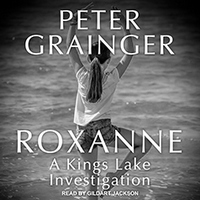
Roxanne (Audiobook) by Peter Grainger, Gildart Jackson: The Murder Squad Wades Through a Pool of Lies

RoxanneRoxanne

by Peter Grainger, Gildart Jackson (Narrator)

DETAILS:
Series: A Kings Lake Investigation, #3
Publisher: Tantor Audio
Publication Date: March 2, 2021
Format: Unabridged Audiobook
Length: 10 hrs., 13 min.
Read Date: August 19-23, 2022
Support Independent Bookstores - Visit IndieBound.org

What’s Roxanne About?

Gregory “It’s not lupus” House, MD’s guiding dictum was “Everybody lies.” Every police officer/detective knows and expects this, too. But there are cases where the lies fly thicker than others—this is one of those.

DS Chris Waters and DCI Cara Freeman are called to sign off on an apparent suicide/accidental overdose. But because this isn’t a short story, they both notice some things that make those scenarios highly improbable/impossible, and the Murder Squad takes the case (incidentally, they haven’t had a lot of work to justify their existence, so it’s coincidentally good for them). They soon discover that the victim was a sex worker. This alone pretty much guarantees that everyone is going to be lying to them—her roommates, clients, the people at her former booking service.

Some good breaks, some lucky leaps of intuition—and a little advice from a certain retired detective—help the team get to the truth. A very nice touch was seeing how Waters being a decent guy with a good memory from a previous case or two pay off now. His training served him well.

Just Enough

We get a little more backstory for DCI Freeman here—rounding the character out a bit. It’s nice, but I don’t know that her character needs to be humanized or anything. She’s a driven and highly compartmentalized person, and if we really only see her at work, I think that’s enough. I clearly don’t think that’s the case for all characters in this series (I’m a huge fan of the current romantic subplot for Waters, can’t get enough of John Murray as father, etc.), but for her, I’m content as is.

But hey, if Grainger wants to shed some light on her? I’ll take it—and I thought it was a good way to show what made her into the person she is today.

I’m Not So Sure About This…

This could be spoiler-ish, but I’ll try to keep this detail-free. So when Grainger introduced a whole lot of new characters in On Eden Street, I wondered how he was going to serve them all—and so far, the answer is sparingly. But he’s not ignoring them, and they seem like better people to work with than the characters on the other side of the office back in the DC Smith series. We got to know some of them in On Eden Street, but there was one character Grainger didn’t do much with, but he addressed that this time.

I think it was better to ignore her. Her activities land Waters in some hot water—and it could’ve been interesting to see this play out. It also could’ve been annoying because there’s no way that any reader would believe Chris did something that questionable, and Grainger really couldn’t afford to damage the character at this point. At the same time, it seemed almost too easy for Waters to get out of that hot water. I knew he’d be okay, but he should’ve had to work a little harder for it.

Unless this storyline circles back in a future book, I just don’t understand why it happened. It’s the first time in 11 books that I’m really questioning something that Grainger did.

Gildart Jackson’s Work*

I don’t have anything new to say about Jackson at this point. I thoroughly enjoy his work, I can’t imagine listening to one of this series with anyone else, nor do I think I’d enjoy reading one on my own half as much.

* Yes, I’m just plagiarizing myself at this point—and will likely do so in the future, I’m not creative enough to find a new way to talk about how good he is.

So, what did I think about Roxanne?

This is another winner from Grainger and Jackson. Grainger has this gift for taking what looks like a “small” case, an everyday kind of thing—no grand conspiracy, serial killer, or especially violent death like we so often get in procedurals—the kind of case you expect the police to deal with on a pretty regular basis, and turning it into something as interesting for the reader as a “flashier” case would be in other series.

There’s not a lot of character development going on here—these are all adults who are good at their jobs—they’re gaining experience, getting better at them, and are progressing through their careers/personal lives as we all do. So at this point, it’s about us getting to know them better (this is not, in my mind, contradicting what I said about not needing to know more about Freeman outside of work), understanding them better, and seeing how the past builds on itself. Grainger is able to do this while telling stand-alone stories in a way that few others can. It’s one of the surest pleasures in my life watching him do this.

Not surprisingly to anyone who’s read me before—I strongly recommend this, and all of Grainger’s DC Smith/King’s Lake Investigations series. Solid, entertaining mysteries; characters that will endear themselves to you; and a reliably clever narration (the text itself and the audiobook narrator).


4 Stars

This post contains an affiliate link. If you purchase from it, I will get a small commission at no additional cost to you. As always, the opinions expressed are my own.

Page 31 of 156

Powered by WordPress & Theme by Anders Norén