Category: Mystery/Detective Fiction/Crime Fiction/Thriller Page 61 of 153

20 Books of Summer 2020: June Check-In

20 Books of Summer
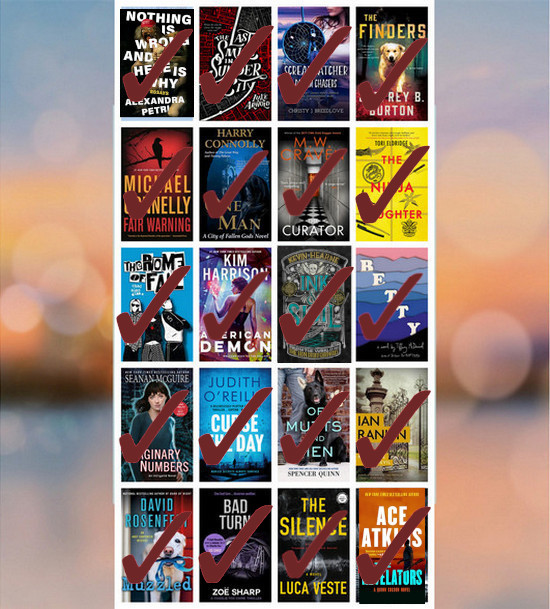
Here we are at the end of June, one-third of the way through the summer, and I’m roughly one-third of the way through the challenge. That worked out nicely. I’ve made one substitute because I had some trouble getting my hands on the one non-fiction book that was on the list. And, hey, I just read a non-fiction book, so might as well put that one in. Otherwise, I’m on track for finishing the list as originally conceived.


✔ 1. Nothing Is Wrong and Here Is Why by Alexandra Petri
2. The Last Smile in Sunder City by Luke Arnold
3. Screamcatcher: Dream Chasers by Christy J. Breedlove
✔ 4. The Finders by Jeffrey B. Burton
✔ 5. Fair Warning by Michael Connelly
6. One Man by Harry Connolly
7. The Curator by M. W. Craven
8. The Ninja Daughter by Tori Eldridge
9. The Rome of Fall by Chad Alan Gibbs
✔ 10. American Demon by Kim Harrison
11. A Blight of Blackwings by Kevin Hearne
12. Betty by Tiffany McDaniel
✔ 13. Imaginary Numbers by Seanan McGuire
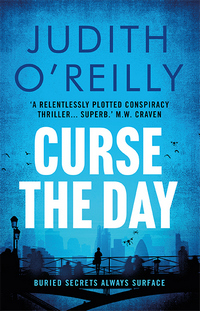
14. Curse the Day by Judith O’Reilly
✔ 15. Of Mutts and Men by Spencer Quinn
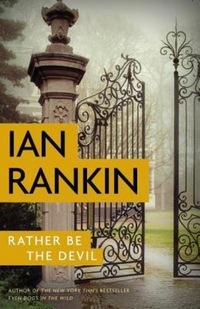
16. Rather Be the Devil by Ian Rankin
✔ 17. Muzzled by David Rosenfelt
18. Bad Turn by Zoë Sharp
19. The Silence by Luca Veste
20. The Border by Don Winslow

20 Books of Summer Chart June

Pub Day Repost: The Finders by Jeffrey B. Burton: A Serial Killer Hunt Goes to the Dogs

The Finders

The Finders

by Jeffrey B. Burton
Series: Mace Reid K-9 Mystery Volume 1

eARC, 288 pg.
St. Martin’s Press, 2020

Read: June 12-15, 220
Grab a copy from your local indie bookstore!


One of the worst things about the way this Spring got away from me is that I’ve been unable to get to this book until now—from the synopsis, this was so far up my alley that it might as well have been titled The Finders: Meet HC’s New Favorite Series. But the important this is that I got to it now, and that subtitle would’ve been pretty much correct. I can’t imagine there’ll be a new series this year that’ll top this for me.

I’ve kind of tipped my hand there, haven’t I? It’s a good thing I don’t pretend to write suspense, eh? Still, having established what I think about it—what about you—is this something you should read? Probably, yeah.

It’s called the “Mace Reid K-9 Investigations” series, and the novel pretty much starts with the K-9 part, so I will, too. We meet a golden retriever puppy on one of the worst days imaginable for a young dog (or person). She’s soon adopted by Mason Reid (call him Mace) a dog trainer who has a few Human Remains Detection dogs, in need of one more. This pup takes to HRD in a way that surprises Mace, she’s more than a natural. I absolutely adore this dog. Mace does, too. He’s in a pretty bad place when he meets this girl, and she’s just what he needs to get out of it.

The other members of this pack would probably be as endearing if we’d got enough time with them—I’m going to leave their names out because Mace’s names are so fun that you’d best read them (and the reasoning behind them) for yourself, I don’t want to take that from you. There’s a German Shepherd (Mace’s descriptions of him are wonderful) and two trouble-making Collies.

There is a section where Mace describes the process that the dog goes through when scenting—probably not as technically correct as what Cat Warren gave in her book (adult or young reader’s version*)—but as gripping (if not more so) and entertaining—and it really gives you an idea what’s going on (as best as we can understand) during that process. Burton could’ve given us two or three more passages along those lines in this book and I wouldn’t have complained at all.

* Either or both of which I recommend to anyone interested in this novel.

So, yeah, Mace is our narrator, he’s got a great voice. You pretty much feel like he’s a close friend telling you a story right away, and sitting around watching his dogs play while drinking cheap beer and eating pizza (preferably non-Hawaiian) sounds like a great way to spend an evening. He’s funny, self-deprecating, smart, and driven (especially when the health and well-being of one of his “kids” is on the line). If I wasn’t talking about an eARC waiting final revisions, this post would be littered with quotations–he is oh so quotable. His affection for his dogs and dogs in general, is right up there with Bernie Little, Andy Carpenter and anyone gutsy enough to try to feed and care for Clifford the Big Red Dog. Even if the plot was blah and the writing uninteresting, I’d have enjoyed meeting Mace (thankfully, that’s not the case)

There are four cops in this book that Mace interacts heavily with—an unusual number, to be sure. Two are uniformed officers and two are detectives. Mace’s relationship with each varies a little bit, but they’re the kind of cops you want to believe fill our police forces. I don’t know if all four of them will return in future volumes—but I’d be happy to see any or all of them again. I’ll hold off on further discussion of them for the future when we get to know them a little bit more (assuming that’s the case)

After Mace and his retriever find the remains of a serial killer’s latest victim, something goes very wrong. This compels him to take a more active role in the hunt for the killer. Between his dogs, desperation, and a healthy portion of beginner’s luck, he has remarkable success at that. Which ends up putting a target on his back—creating a need for more luck, his dogs, some more desperation, and the help of his police acquaintances/friends.

The plot moves pretty quickly—there’s a time or two that your credulity might get stretched a bit further than you’d like. But if you roll with it, Burton’ll reward you. The book moves quickly—even more than I realized a few times. Which isn’t to say that anything feels rushed, it doesn’t, you’re on a roller coaster that starts quickly and doesn’t let up. There were a couple of reveals that I didn’t see coming, some plot twists I wouldn’t have expected—in retrospect, I felt I probably should have seen it all, if I wanted to do something silly like stop reading the book to analyze and predict what’s coming rather than just buckle in and read it.

So here’s the thing about serial killers in fiction—I’m pretty much over them. I think I’ve been over-exposed to them, and by and large, I don’t react positively to them. That’s not to say I can’t enjoy a Serial Killer novel if the plot is well done, the other characters are well executed, and so on—but I’m almost always apathetic about the killer himself/herself anymore. But this one? Initially, it seemed like this was going to be one of those books that I liked despite the killer. However, by a little after the mid-way point, the killer had won me over and had got me interested. I can’t explain why without ruining the whole thing for you, so I won’t. But color this jaded reader interested.

It’s possible that I’m rating this a little higher than it deserves. If I was being entirely objective, I’d probably take off a half or maybe a full star from my rating. But this isn’t an objective piece, or an objective rating—this is about how much I enjoyed this, how it appealed to me, entertained me and made me want to read on. For that, it scored really high for me.

A strong and fun central character, a collection of interesting police officers, a compelling serial killer, a well-paced plot, and four wonderful dogs. I can’t think of anything else this book could deliver for me. I when I wasn’t on the edge of my seat, flipping the pages as quickly as I could, I was reading as slowly as possible so I could relish the scenes with Mace and his dogs doing their thing. Now that Burton has established Mace’s world and characters, I can’t wait to see him explore it some and build on this really strong foundation.

Highly recommended. I won’t pretend to assure you that you’ll enjoy it as much as me, but I can’t imagine anyone not liking this book.

Disclaimer: I received this eARC from St. Martin’s Press via NetGalley in exchange for this post—thanks to both for this. As always, my opinions remain my own.


4 1/2 Stars

20 Books of Summer

This post contains an affiliate link. If you purchase from it, I will get a small commission at no additional cost to you.

How the Wired Weep by Ian Patrick: Patrick’s Latest Crime Thriller Does Not Disappoint

That’s a lame headline, but I couldn’t come up with anything short of 40 words that I was satisfied with. Also, I really should’ve devoted a couple of sentences to that cover, one of my favorites of the year.


How the Wired Weep

How the Wired Weep

by Ian Patrick

Kindle Edition, 293 pg.
2020

Read: June 22-25, 2020

In my world you’re always looking over your shoulder. Evade and escape is the game. To remain still makes you a target. A sitting or standing one doesn’t matter. Always be on the move until you’re sure it’s safe to stop. The training I’ve had was for a reason: survival.

London is a war zone. My battleground is the street. My unit is on a hearts and minds campaign to keep control and maintain law and order through gathering intelligence.

There are two point-of-view protagonists in this book, the first is DS Ed Hunter. He recruits and handles informants—excuse me, Covert Human Intelligence Sources. He’s been at it quite some time now—it’s in his blood, he’d have a hard time leaving for another assignment at this point. He has a number of sources, but we only see and track his involvement with one in this novel. Ed’s a solid detective, dedicated (would be the polite way to say it, Mrs. Hunter might have other words), but isn’t opposed to coloring just a bit outside the lines.

I started dealin’ young. I was nine years old when I got into this game. I’d move anythin’ they asked me. They knew that because of my age I wouldn’t get charged. Apparently at nine you don’t know nothin’ so can’t know what you’re doin’ is against the law. Screw that! I knew everythin’ I was doin’ were wrong. That’s why I did it!

The source the book focuses on is the other POV protagonist, Ben. Ben’s recently out of a short stint in prison and is looking to get back to the things that landed him in prison in the first place. Primarily robbery and miscellaneous tasks for a local gang leader, Troy*.

* As far as notorious, or would-be notorious, criminals go, Troy seems like an unlikely name. It really doesn’t command respect or fear. It’s mundane enough that it comes across as verisimilitude

With Ben freshly out of prison and re-establishing his criminal contacts and career, this is the prime time for Ed to use him. So he leans hard on Ben, looking for intelligence that he can use immediately as well as information on larger, future activities. Troy has a special combination of ambition and ruthlessness that makes this an advantageous time for both Ed and Ben.

These two men are really two sides of the same coin. Ed works Ben and the system to his benefit (and occasionally Ben’s), Ben works Ed, Troy, Ghost, and others for his benefit (and occasionally Ed’s). Both Ed and Ben seem trapped by circumstances, trapped by their association, but only one of them really has a shot at getting out, if he wanted it.

Theirs is not a partnership, a friendship, or anything really. Ed is using Ben to satisfy his superiors, to get some information that can lead to bigger arrests, or to prevent something major from happening (a large concern as London prepares for the Olympics). He may show flashes of concern for Ben or his soon-to-be-born child. But those flashes are quickly gone. Ben isn’t in this out of some ethical consideration, either. He’s not trying to go straight—he’s using Ed to get a little extra money, to take out a rival, and to keep at least some of the police off his back.

The cycle of Ed pressuring Ben for some intelligence, Ben giving him something largely true, the police using that information, Ben having to scramble to prove he didn’t inform and to take advantage of whatever the police have done for his own benefit. Ben knows (and is angered by) Ed using him like this. Ed knows he’s not getting the whole truth (but isn’t sure how much he is getting), and is angered when he can prove the lie, and is aware Ben’s at least trying to use him, too. This is the core of the book, and probably the majority of what does on in the book—and I could easily have easily read at least another 50-70 pages of this without growing impatient.

We get a little time with Ed’s superior and some detectives in other offices, using and supplementing what he’s gathered, and we get a little insight into Ed’s home life and wife. But largely, it’s his partner, DC Sienna Myles (“Smiles”) that we see Ed interacting with. She’s not as invested in Ben, Ed’s problems, or Troy as Ed is. She might actually care more for Ben’s welfare, but she’s also clear about Ben’s place in the world, and his priorities. Of all the secondary characters, she’s the one I wanted more of—I think she could carry a novel by herself (and would like to see something like this with her and her new source)

On the flip side, we see a few other people in Troy’s circle of influence, but we primarily see Ben interacting with Troy or his friend, Ghost. Ghost is the only person in the world that Ben truly trusts (and even then, that falters), they’re friends that go way back. I’m honestly not sure how to describe Troy—because Ben keeps vacillating in his estimation of him. He’s either an up-and-coming criminal near-genius, or he’s just some guy with enough lucky breaks and inherent meanness to take advantage of those breaks. It is clear that the streets and many, many lives would benefit from his being ousted from power and put somewhere he can’t inflict his poison or presence on more of the public more than he has.

One more similarity between the two that I want to focus on—impending fatherhood. One of the first things that Ben learns upon his release is that he’s going to be a father, he’d impregnated someone just before going away. Meanwhile, Ed and his wife can’t conceive—they’ve gone through fertility treatments but they don’t seem to be doing anything. Ed bewails the injustice in how easily someone who doesn’t want to be a father can become, while he and his wife want it so much. Both men’s reactions to future fatherhood, as well as the way they think of their own fathers (or lack thereof), says a lot about the two characters—and the office of Father in general.

Ed’s an interesting character, and I definitely felt invested in his story. But outside of a job that you don’t often see in Crime Fiction, I’m not sure there was much to make him stand out. Ben, on the other hand? I’ve seen similar characters before and were either annoyed or indifferent to them. But Patrick shaped him and used him in such a way that not only did I want to see him succeed (if he went straight or otherwise), but I cared about what happened to him. He reminded me of Dewey Crowe from Justified (or Leonard’s Raylan or any number of similar characters penned by Leonard), not that bright, overly impressed with their own criminal aptitudes, but you can’t help pity, like and wish the best for him (although Dewey was generally comic relief, and Ben’s not at all). He got under my skin, and will likely stay there for a while.

Most of this book isn’t that fast-paced—it’s well-paced, but there’s a lot of time spent establishing the characters and setting up the endgame. But there’s an energy to the narration—particularly Ben’s chapters—that makes you feel like you’re reading something at a breakneck pace. Ben’s character shines through so much, I could practically hear him as I read (in my mind he sounds suspiciously like a Kobna Holdbrook-Smith character). I should probably add that once, the plot starts moving—it matches the feel that you’d gotten from earlier when less was happening.

That ending? Perfection. That’s all I can safely say.

The difference in characters, voice, and the way the story plays out demonstrates Patrick’s skill and underlines the fact that he’s not a one-trick pony (not that many should’ve suspected that). It’d be easy for him to coast on the Sam Batford train for a while, but Patrick doesn’t do that, instead, he gives us this fascinating glimpse into another area of policing.

I’m tempted to keep going, but I’ve probably said too much. This is different, more intimate, more powerful, than Patrick’s DS Sam Batford books. If you’ve read those, you should enjoy seeing this other side of the author. If you haven’t, you should go grab them after this one. Patrick captured something special here in How the Wired Weep and I strongly encourage you to go grab it.


4 1/2 Stars

Classic Spenser: The Judas Goat by Robert B. Parker

Classic Spenser

The Judas Goat

The Judas Goat

by Robert B. Parker
Series: Spenser, #5

Paperback, 203 pg.
Dell, 1978

Read: May 29, 2020
Grab a copy from your local indie bookstore!

…I looked at my situation. If they were going to shoot me, there was little to prevent them. Maybe they weren’t going to shoot me, but I couldn’t plan much on that.

“You can’t plan on the enemy’s intentions,” I said. “You have to plan on what he can do, not what he might.”

A boy cleaning the tables looked at me oddly. “Beg pardon, sir?”

“Just remarking on military strategy. Ever do that? Sit around and talk to yourself about military strategy?”

“No, sir.”

“You’re probably wise not to.”

We start with Spenser calling on Hugh Dixon. The word “rich” seems inadequate to express the wealth that Dixon seems to possess. Nowadays, he could probably hire a private security firm to do what he needs—maybe he could’ve in 1978, too. But he’s done his research and has decided to hire Spenser instead because he knows Spenser’s integrity and priorities are what’s kept him “in the minor league.”

We’re given a great description of Dixon:

Full front, his face was accurate enough. It looked the way of face should, but it was like a skillful and uninspired sculpture. There was no motion in the face. No sense that blood flowed beneath it and thoughts evolved behind it. It was all surface, exact, detailed and dead.

Except the eyes. The eyes snarled with life and purpose, or something like that. I didn’t know exactly what then. Now I do.

The eyes snarled with a need for revenge. That’s pretty much all that’s keeping Dixon going. A year before, he, his wife and daughters were in a London restaurant that was bombed. Dixon lived, although he almost died and lost the use of his legs. The rest of his family did not. He wants Spenser to do what the London police have failed to do—find the terrorists responsible and bringing them to justice—either by apprehending them for the police or killing them. Dixon remained conscious during the attack and has detailed descriptions of the personnel involved. Spenser agrees, after insisting that he doesn’t do assassinations—unless forced out of self-defense, he won’t be killing anyone. It’s all okay with Dixon, but you get the clear impression that he’d prefer they died.

Spenser makes travel arrangements (including learning how to bring his gun into London), says goodbye to Susan, and leaves that night. Dixon’s London-based lawyer introduces him to a Scotland Yard inspector who worked the case. There’s a group called Liberty who claimed responsibility for the bombing. They’re small-time, right-wing, and draw their membership from around Europe—they’re likely based in Amsterdam, but that’s conjecture. Which really doesn’t give Spenser much to work on.

So he tries a little something to draw them out. It results in two of them dying and Spenser being shot in the, ahem, “upper thigh.” It also gives Spenser a lead to some others. While he calls Susan to tell her what happened, he also asks her to do him a favor—get word to Hawk that he could use some help (this both relieves and worries Susan, she wants him to have backup, but hates that he needs it).

From here, Spenser and Hawk follow leads for Liberty to Copenhagen and Amsterdam. They even have a brief confrontation with the leader of Liberty, a man named Paul. Paul’s not one of the men directly involved in the death of the Dixons, however. Spenser and Hawk determine that Liberty has something planned for the 1976 Olympics in Montreal, and decide that even though the job is done, they need to stop Paul.

On the one hand, it’s hard to believe that security at the Olympics is as lax as it appears, then again 1976 was a different time. Through a combination of luck and good guessing, there’s a final confrontation with Paul and one of his top associates that ends in a nine-page fistfight between Spenser, Hawk, and a giant of a man named Zachary. This fight blew my preteen/early teen-aged mind when I first read it, and became the standard by which I judged all similar scenes in fiction (there’s one in Lee Child’s Persuader that reminded me of this one—although, Reacher didn’t have anyone fighting on his side).

While there is some deduction at work, this is largely Spenser as vigilante, not as a private investigator. On the one hand, I prefer the P.I. On the other hand, it’s a good story and it demonstrates another side of Spenser that we don’t get to see much of early on. And like the rest of these first twelve, it’s hard for me to engage my critical faculties.

In addition to the globe-trotting and the intense action scenes, we get Spenser’s typical narration when it comes to describing places (one of my favorite elements of each book) and people. Spenser’s wit and compassion both get to shine. It’s just a fun read. The scene that results in his upper thigh wound is one of my favorites in the series—combining humor, tension, and action.

But the thing that struck me the most this time through is that what seems to really interest Parker—more than Spenser, more than this revenge story, or anything else—is Hawk. We met him in the last book, but we didn’t get that much time with him, just a handful of scenes. But he’s all over this novel.

Spenser calling Hawk to come help represents a turning point in the series. It’s not an automatic thing yet, but from here on out, it’s more common for Spenser to call up on Hawk for help than not. The self-sufficient, independent operator develops a real dependence. It’s a real boon for the reader, for as fun as Spenser’s interior monologues are, having him banter with Hawk becomes a reliable highlight. There might be other, earlier, writers who’ve had a relationship like this, but I’m not aware of them (and would like to be). In Spenser and Hawk, we get the template that Elvis Cole and Joe Pike follow, or Patrick Kenzie/Angie Gennaro and Bubba Rugowski, or Walt Longmire and Henry Standing Bear, or Joe Pickett and Nate Romanowski, among others. The outsider, the friend/ally that the mostly lawful protagonist can rely on when there’s a need for something outside the law.

From Promised Land, we know that Hawk and Spenser fought on the same card in their youth; we know he’s stylish (I guess); that he’s respectful of Susan; he’s an enforcer, a leg-breaker, for whoever is paying for him at the moment; and he has some sort of code that reminds Spenser of his (with significant differences in Spenser’s mind, but not so much in Hawk’s).

Here we learn a bit more, he can disappear into a crowd, despite his flashy clothes and is almost infallible when tailing someone. Shortly after arriving in London, the two have some drinks while Spenser catches Hawk up on what’s going on and notes:

He showed no sign that he drunk anything. In fact in the time I’d known Hawk I’d never seen him show a sign of anything. He laughed easily and he was never off balance. But whatever went on inside stayed inside. Or maybe nothing went on inside. Hawk was as impassive and hard as an obsidian carving. Maybe that was what went on inside.

Later, when Spenser is in Boston to update Dixon, he leaves one member of Liberty with Hawk, as they use her as a source of information on the rest of the group. When Susan asks if that’s safe to do, Spenser replies:

“Hawk has no feelings,” I said. “But he has rules. If she fits one of his rules, he’ll treat her very well. If she doesn’t, he’ll treat her any way the mood strikes him.”

“Do you really think he has no feelings?”

“I have never seen any. He’s as good as anyone 1 ever saw at what he does. But he never seems happy or sad or frightened or elated. He never, in the twenty-some years I’ve known him, here and there, has shown any sign of love or compassion. He’s never been nervous. He’s never been mad.”

“Is he as good as you?” Susan was resting her chin on her folded hands and looking at me.

“He might be,” I said. “He might be better.”

“He didn’t kill you last year on Cape Cod when he was supposed to. He must have felt something then.”

“I think he likes me, the way he likes wine, the way he doesn’t like gin. He preferred me to the guy he was working for. He sees me as a version of himself. And, somewhere in there, killing me on the say-so of a guy like Powers was in violation of one of the rules. I don’t know. I wouldn’t have killed him either.”

“Are you a version of him?”

“I got feelings,” I said. “I love.”

“Yes, you do,” Susan said.

Part of this conversation will repeat throughout the series—is Hawk better than Spenser? Are the two versions of each other (this was touched upon already in Promised Land)? Does Hawk feel?

Hawk will contend that the two of them are more similar than Spenser will admit, but in The Judas Goat and in countless other books, he will note that Spenser’s abundance of rules helps him to deny that similarity, over-complicates Spenser’s life, and one day will get him killed. There are times when Spenser agrees to all of that (even the last), but those are the only terms upon which he can live his life, so that’s how it’s going to have to be.

Exciting, amusing, tense, and we get to delve for the first time into the character that’s arguably Parker’s greatest creation. The Judas Goat really has it all. If only so I had an excuse to read this one again, I’m so glad I started this little project this year. It will serve as a decent jumping-on point, for those who want one, and it’s a great spot to return to for long-term fans.


This post contains an affiliate link. If you purchase from it, I will get a small commission at no additional cost to you. As always, opinions are my own.

Muzzled by David Rosenfelt: One of Andy Carpenter’s Twistiest Cases Yet

Muzzled

Muzzled

by David Rosenfelt
Series: Andy Carpenter, #21

eARC, 304 pg.
Minotaur Books, 2020

Read: June 20, 2020
Grab a copy from your local indie bookstore!


Wow. Andy Carpenter #21. That’s pretty mind-boggling, I’ve got to say. The way that Andy’s been ramping up the retirement talk over the last couple of books, I can’t help but wonder how many more are in store—but I have to expect we’ll get a few more. Rosenfelt’s army of dogs takes a lot of food. The more the merrier, I say—especially if there are more like this one in the wings.

Andy’s contacted by a friend also in the dog rescue biz—she’s come into possession of a stray and has been contacted by the owner to retrieve the dog. Which sounds pretty straightforward and good up until the point where she tells Andy the owner’s name. He’s the victim of a triple murder a few weeks ago when his boat was destroyed by a bomb of some sort. Yeah, you read me right—the victim. Except he clearly escaped and after being on the run for his life a bit, has decided he can’t run off without the dog. So he risks life and limb to be reunited with his pet. At this point, the reader (and everyone who knows Andy) realizes that if this man needs legal help, Andy will be his attorney. Andy needs some convincing, however.

And Alex Vogel is going to need Andy’s help—if he wasn’t one of those killed, the police would like to know, why wasn’t he? The explanation that makes the most sense to them is that Alex Vogel made and detonated the bomb, killing his friends. The motive is a little shaky, but that’s beside the point.

Alex gives Andy one possible reason that he’d be targeted, and while he doesn’t buy it, he has nothing else to go on, so while Andy tries to come up with an idea of his own, he spends a lot of time exploring that. In a long-running series like this is, it’s the little differences that really stick out and keep things fresh. It took Andy a painfully long time to come up with an alternative theory of the case. And while I found it frustrating that he was so slow, I appreciated that Rosenfelt let things go that way. I also admit that it’s not fair for me to judge, as the reader has access to some third-person narration portions of the novel that Andy doesn’t.

Whether looking for flaws in the Prosecution’s case, running down Alex’s theory, or trying to find an alternative, Andy and his regular band (which includes The K Team now) are as fun as always. The narration is clever, the humor is witty, the case complex, the herrings are red, the dogs are adorable—all the elements of a solid Andy Carpenter novel are there.

As I was mulling over this book this week, I’d mentally drafted a paragraph thinking about this one in the context of the series as a whole. At some point, it seemed pretty familiar, so I looked up what I said about Dachshund Through the Snow, the twentieth novel in the series. I’d said pretty much the same thing about that book as I wanted to say about this one. It doesn’t say much for my originality, but it says something about Rosenfelt.

I’ve read them all—some twice—and while I’ve never read a bad Andy Carpenter book, there were a few that were simply “fine” (that’s not a complaint, I’ll take a fine book over a lot of others), but there’s been a resurgence in the last five or so, particularly in the last two. In both of them Rosenfelt has done something I couldn’t/didn’t see coming, breaking his tried-and-true formula. Rosenfelt has no reason to do that at this point, he could keep churning out these books and his fans (including me), would keep gobbling them up. But he’s taking risks, he’s doing relatively daring things (while remaining true to the world he’s created).

I really liked this book on its own merits, I loved it in the context of the rest. Does that mean a new reader has to read the other twenty before this one? No—any of these novels are a good jumping on point, you’ll end up wanting to read some/all of the earlier ones though. A smart legal thriller—great stuff out of the courtroom, and amusing antics in it (I’ll never tire of reading Andy cross-examining a witness). Muzzled is one of the best in this great series.

Disclaimer: I received this eARC from St. Martin’s Press via NetGalley in exchange for this post—thanks to both for this. As always, my opinions remain my own.


4 1/2 Stars

20 Books of Summer

This post contains an affiliate link. If you purchase from it, I will get a small commission at no additional cost to you.

SERIES SPOTLIGHT: The Annie Oakley Mysteries by Karen Bovee (and GIVEAWAY)

I’m very glad to welcome the Series Spotlight tour for Karen Bovee’s The Annie Oakley Mysteries today. I jumped at the chance to do my part to promote these books. While I haven’t read them (mostly an issue of time), my mother is a big fan, so I’m pretty much a fan by proxy. You should check out these historical mysteries, and we even have a Giveaway at the bottom of this post to help you do that!

Without further ado…

Series Details:

Book Title:  The Annie Oakley Mystery Series by Kari Bovee
Category:  Adult Fiction (18+), 83 to 332 pages
Genre:  Historical Mystery
Publisher:  Bosque Publishing
Release dates:   Shoot Like a Girl (2019); Girl With a Gun (April, 2020); Peccadillo at the Palace (April 2020); Folly at the Fair (June, 2020)
Tour dates: June 22 to July 10, 2020
Content Rating:  R for some swearing, violence, and mature themes.

Book Details:

Book Title: Shoot Like a Girl (A Pre-quel Novella to Girl With A Gun) by Kari Bovee
Category:  Adult Fiction (18 + yrs), 84 pages
Genre:  Historical Fiction
Publisher:  Bosque Publishing
Release date:   November 2019
Tour dates: June 22 to July 10, 2020
Content Rating:  R for Mature themes and some violence. No bad language.

Book Description:
Shoot like a Girl depicts the historically fictive tale of a young Annie Oakley’s struggles before she becomes the most famous sharpshooting woman of all time. After the death of her father, Annie is sent to the Drake County poorhouse where she learns to cook, sew, and keep house for other families to help her mother make ends meet. Annie ends up at the McCrimmons, a couple whom she comes to refer to as “the wolves.” Cruel and neglectful, the McCrimmons push Annie to the brink of despair. The only bright spot in her dreary existence is Buck, a beautiful buckskinned horse, and the two form a bond. Despite her resolve to help her family, Annie loses hope of ever seeing them again, as life at the McCrimmons’ becomes more oppressive, and she is cut off from all outside communication. Physically and emotionally weak from illness, hunger, and abuse, Annie resigns herself to a life of servitude to the abusive couple. But, when Mr. McCrimmon’s continued cruelty to Buck finally threatens the horse’s life, Annie takes matters into her own hands and formulates a plan for escape.

Buy the Book:
Amazon
Add to Goodreads
Book Details:

Book Title: Girl with a Gun (An Annie Oakley Mystery) by Kari Bovee
Category:  Adult Fiction (18 + yrs), 316 pages
Genre:  Historical Mystery
Publisher:  Bosque Publishing
Release date:   April 2020
Tour dates: June 22 to July 10, 2020
Content Rating:  R for one explicit sex scene. There is some swearing, violence, mature themes.


Book Description:
In an exciting new historical mystery series, award-winning author Kari Bovee brings the beloved American icon, Annie Oakley, into the world of mystery and crime as a plucky, amateur sleuth. Fifteen-year-old Annie Oakley is the sole supporter of her widowed mother and two younger siblings. An expert markswoman and independent spirit, she hunts game to sell to the local mercantile to make ends meet instead of accepting a marriage proposal that could solve all her problems, including the impending foreclosure of her family’s farm. After a stunning performance in a shooting contest against famous sharpshooter Frank Butler, Annie is offered a position in the renowned Buffalo Bill’s Wild West Show. Finally, she has a chance to save her family’s farm–and make her dreams come true. But after her catapult to fame, a series of crimes takes place in the Wild West Show, including the death of Annie’s Indian Assistant. The coroner claims the death was due to natural causes, but Annie is unconvinced. Then her prized horse, Buck–a major part of her act–is stolen, and she realizes that someone is out to get her. With the help of a sassy, blue-blooded reporter, Annie sets out to find her horse, solve the crimes, and clear her good name–before everything she’s worked for is destroyed.

Buy the Book:
Amazon
Add to Goodreads

Book Details:

Book Title: Peccadillo at the Palace (An Annie Oakley Mystery) by Kari Bovee
Category:  Adult Fiction (18 + yrs), 332 pages
Genre:  Historical Mystery
Publisher:  Bosque Publishing
Release date:   April 2020
Tour dates: June 22 to July 10, 2020
Content Rating:  R for some swearing, violence, and mature themes.


Book Description:
In this second book in the Annie Oakley historical mystery series, award-winning author Kari Bovee brings back the lovable character, Annie Oakley, as an amateur sleuth. It’s 1887, and Annie and Buffalo Bill’s Wild West Show are invited to Queen Victoria’s Jubilee celebration in London, England. But their long journey across the Atlantic takes a turn for the worst when the queen’s royal servant ends up dead and Annie’s husband, Frank Butler, falls suspiciously ill. Annie soon discovers that the two events are connected–and may be precursors to an assassination attempt on the queen. In London, it becomes clear that there is rampant unrest in the queen’s kingdom–the Irish Fenian Brotherhood, as well as embittered English subjects, are teeming in the streets. But amid the chaos, even while she prepares for the show, Annie is determined to find the truth. With the help of a friend and reporter, Emma Wilson, the renowned poet Oscar Wilde, and the famous socialite Lily Langtry, Annie sets out to hunt down the queen’s enemies–and find out why they want to kill England’s most beloved monarch.

Buy the Book:
Amazon
Add to Goodreads

Book Details:

Book Title: Folly at the Fair (An Annie Oakley Mystery) by Kari Bovee
Category:  Adult Fiction (18 + yrs), 322 pages
Genre:  Historical Mystery
Publisher:  Bosque Publishing
Release date:   June 2020
Tour dates: June 22 to July 10, 2020
Content Rating:  R for some swearing, violence, and mature themes.


Book Description:

She never misses a target. But unless she can solve this murder, she’ll become one… Chicago World’s Fair, 1893. “Little Sure Shot” Annie Oakley is exhausted from her work with Buffalo Bill’s Wild West Show. But when a fellow performer scuffles with a man who threatens her harm, she has to keep her eyes peeled. And when the heckler is found dead under the Ferris Wheel, Annie won’t rest until she proves her defender is innocent. Before she can rustle up any clues, an old friend asks Annie to protect her young daughter. And as more bodies turn up around the grounds, she’s going to need all her sharpshooting skills just to stay alive. Can Annie live up to her reputation and put a bullseye on the killer? Folly at the Fair is the third book in the Annie Oakley Mystery historical fiction series. If you like strong heroines, Wild West adventures, and suspenseful twists and turns, then you’ll love Kari Bovee’s fast-paced whodunit.

Buy the Book:
Amazon
Add to Goodreads
Meet the Author:

When she’s not on a horse, or walking along the beautiful cottonwood-laden acequias of Corrales, New Mexico; or basking on white sand beaches under the Big Island Hawaiian sun, Kari Bovee is escaping into the past—scheming murder and mayhem for her characters both real and imagined, and helping them to find order in the chaos of her action-packed novels. Empowered women in history, horses, unconventional characters, and real-life historical events fill the pages of Kari Bovée’s articles and historical mystery musings and manuscripts. An award-winning author, Bovée was honored with the 2019 NM/AZ Book Awards Hillerman Award for Southwestern Fiction for her novel Girl with a Gun. The novel also received First Place in the 2019 NM/AZ Book Awards in the Mystery/Crime category, and is a Finalist in the 2019 International Chanticleer Murder & Mayhem Awards and the International Chanticleer Goethe Awards, as well as the Next Generation Indie Awards. Her novel Grace in the Wings is a Finalist for the 2019 International Chanticleer Chatelaine Awards and the International Chanticleer Goethe Awards. Her novel Peccadillo at the Palace is a Finalist in the 2019 International Chanticleer Murder & Mayhem Awards and the 2019 International Goethe Awards, as well as a Finalist in the 2019 Best Book Awards Historical Fiction category. Bovée has worked as a technical writer for a Fortune 500 Company, has written non-fiction for magazines and newsletters, and has worked in the education field as a teacher and educational consultant. She and her husband, Kevin, spend their time between their horse property in the beautiful Land of Enchantment, New Mexico, and their condo on the sunny shores of Kailua-Kona, Hawaii.

Connect with the author:  Website ~ Goodreads ~ Facebook ~ Twitter ~ Instagram
~ Pinterest

Enter the Giveaway:


a Rafflecopter giveaway

 
https://widget-prime.rafflecopter.com/launch.js

The Finders by Jeffrey B. Burton: A Serial Killer Hunt Goes to the Dogs

The Finders

The Finders

by Jeffrey B. Burton
Series: Mace Reid K-9 Mystery Volume 1

eARC, 288 pg.
St. Martin’s Press, 2020

Read: June 12-15, 220
Grab a copy from your local indie bookstore!


One of the worst things about the way this Spring got away from me is that I’ve been unable to get to this book until now—from the synopsis, this was so far up my alley that it might as well have been titled The Finders: Meet HC’s New Favorite Series. But the important this is that I got to it now, and that subtitle would’ve been pretty much correct. I can’t imagine there’ll be a new series this year that’ll top this for me.

I’ve kind of tipped my hand there, haven’t I? It’s a good thing I don’t pretend to write suspense, eh? Still, having established what I think about it—what about you—is this something you should read? Probably, yeah.

It’s called the “Mace Reid K-9 Investigations” series, and the novel pretty much starts with the K-9 part, so I will, too. We meet a golden retriever puppy on one of the worst days imaginable for a young dog (or person). She’s soon adopted by Mason Reid (call him Mace) a dog trainer who has a few Human Remains Detection dogs, in need of one more. This pup takes to HRD in a way that surprises Mace, she’s more than a natural. I absolutely adore this dog. Mace does, too. He’s in a pretty bad place when he meets this girl, and she’s just what he needs to get out of it.

The other members of this pack would probably be as endearing if we’d got enough time with them—I’m going to leave their names out because Mace’s names are so fun that you’d best read them (and the reasoning behind them) for yourself, I don’t want to take that from you. There’s a German Shepherd (Mace’s descriptions of him are wonderful) and two trouble-making Collies.

There is a section where Mace describes the process that the dog goes through when scenting—probably not as technically correct as what Cat Warren gave in her book (adult or young reader’s version*)—but as gripping (if not more so) and entertaining—and it really gives you an idea what’s going on (as best as we can understand) during that process. Burton could’ve given us two or three more passages along those lines in this book and I wouldn’t have complained at all.

* Either or both of which I recommend to anyone interested in this novel.

So, yeah, Mace is our narrator, he’s got a great voice. You pretty much feel like he’s a close friend telling you a story right away, and sitting around watching his dogs play while drinking cheap beer and eating pizza (preferably non-Hawaiian) sounds like a great way to spend an evening. He’s funny, self-deprecating, smart, and driven (especially when the health and well-being of one of his “kids” is on the line). If I wasn’t talking about an eARC waiting final revisions, this post would be littered with quotations–he is oh so quotable. His affection for his dogs and dogs in general, is right up there with Bernie Little, Andy Carpenter and anyone gutsy enough to try to feed and care for Clifford the Big Red Dog. Even if the plot was blah and the writing uninteresting, I’d have enjoyed meeting Mace (thankfully, that’s not the case)

There are four cops in this book that Mace interacts heavily with—an unusual number, to be sure. Two are uniformed officers and two are detectives. Mace’s relationship with each varies a little bit, but they’re the kind of cops you want to believe fill our police forces. I don’t know if all four of them will return in future volumes—but I’d be happy to see any or all of them again. I’ll hold off on further discussion of them for the future when we get to know them a little bit more (assuming that’s the case)

After Mace and his retriever find the remains of a serial killer’s latest victim, something goes very wrong. This compels him to take a more active role in the hunt for the killer. Between his dogs, desperation, and a healthy portion of beginner’s luck, he has remarkable success at that. Which ends up putting a target on his back—creating a need for more luck, his dogs, some more desperation, and the help of his police acquaintances/friends.

The plot moves pretty quickly—there’s a time or two that your credulity might get stretched a bit further than you’d like. But if you roll with it, Burton’ll reward you. The book moves quickly—even more than I realized a few times. Which isn’t to say that anything feels rushed, it doesn’t, you’re on a roller coaster that starts quickly and doesn’t let up. There were a couple of reveals that I didn’t see coming, some plot twists I wouldn’t have expected—in retrospect, I felt I probably should have seen it all, if I wanted to do something silly like stop reading the book to analyze and predict what’s coming rather than just buckle in and read it.

So here’s the thing about serial killers in fiction—I’m pretty much over them. I think I’ve been over-exposed to them, and by and large, I don’t react positively to them. That’s not to say I can’t enjoy a Serial Killer novel if the plot is well done, the other characters are well executed, and so on—but I’m almost always apathetic about the killer himself/herself anymore. But this one? Initially, it seemed like this was going to be one of those books that I liked despite the killer. However, by a little after the mid-way point, the killer had won me over and had got me interested. I can’t explain why without ruining the whole thing for you, so I won’t. But color this jaded reader interested.

It’s possible that I’m rating this a little higher than it deserves. If I was being entirely objective, I’d probably take off a half or maybe a full star from my rating. But this isn’t an objective piece, or an objective rating—this is about how much I enjoyed this, how it appealed to me, entertained me and made me want to read on. For that, it scored really high for me.

A strong and fun central character, a collection of interesting police officers, a compelling serial killer, a well-paced plot, and four wonderful dogs. I can’t think of anything else this book could deliver for me. I when I wasn’t on the edge of my seat, flipping the pages as quickly as I could, I was reading as slowly as possible so I could relish the scenes with Mace and his dogs doing their thing. Now that Burton has established Mace’s world and characters, I can’t wait to see him explore it some and build on this really strong foundation.

Highly recommended. I won’t pretend to assure you that you’ll enjoy it as much as me, but I can’t imagine anyone not liking this book.

Disclaimer: I received this eARC from St. Martin’s Press via NetGalley in exchange for this post—thanks to both for this. As always, my opinions remain my own.


4 1/2 Stars

20 Books of Summer

This post contains an affiliate link. If you purchase from it, I will get a small commission at no additional cost to you.

The Friday 56 for 6/19/20

The Friday 56This is a weekly bloghop hosted by Freda’s Voice

RULES:
The Friday 56 Grab a book, any book.
The Friday 56 Turn to Page 56 or 56% on your ereader. If you have to improvise, that is okay.
The Friday 56 Find a snippet, short and sweet.
The Friday 56 Post it

from 56% of:
How the Wired Weep

How the Wired Weep by Ian Patrick

He turns back as Sienna comes over with more drinks and some food. ‘Here, eat this,’ she says. Ben looks at the house burger and fries. His pupils widen. He’s unsure at first.

I know he’s thinking this is all some psychological ploy to make him talk. In a way it is but it was genuinely presented and both of us hope he’ll eat rather than give up the information. He will tell me. He knows I’m interested. It all sounds good. Not for the potential victim but with any luck the whole thing can be nipped in the bud before the victim gets whacked. We hope.

‘OK…OK…here’s the deal,’ Ben says as he leans across and grabs the plate.

Burn Me Deadly (Audiobook) by Alex Bledsoe, Stefan Rudnicki: LaCrosse’s Good Deed Goes Very Punished

Burn Me Deadly

Burn Me Deadly

by Alex Bledsoe, Stefan Rudnicki (Narrator)
Series: Eddie LaCrosse, #2

Unabridged Audiobook, 8 hrs., 36 min.
Blackstone Audio, 2012

Read: June 1-2, 2020
Grab a copy from your local indie bookstore!


One night, riding outside of town on a routine job Eddie LaCrosse comes across a woman in pretty rough shape. She’s naked, bruised, cut and burned—many of the burns look skillfully inflicted, as are all the rest of her injuries. Whoever worked her over knew what he was doing. A damsel in a lot of distress and after a brief conversation, Eddie offers to help her get away from whoever did this and protect her.

Then he’s struck from behind and wakes up as someone’s captive—she’s there, too. Not long after that, he wakes up again, at the bottom of a cliff, barely alive. The damsel didn’t fare that well. Once he’s patched up well enough to move and think, Eddie sets out to find out who she was, who killed her—and nearly him—and get a little revenge.

His search puts him in the way of one of the strongest criminal figures in his neck of the woods (a man that Eddie would’ve been happy never to have crossed paths with) and a government official trying to stop his investigation. Then an old friend of Eddie’s is killed, and that may be related to his case. Which sends him off into several other directions—including a new dragon-worshiping cult that’s somehow tied to the crime boss.

Eddie scoffs at the idea behind this cult—who, in his enlightened age, still believes in dragons? Eddie’s skepticism (that word’s too mild, but I can’t come up with a better one) seems out of place for someone reader know has known both a deity and a man who has lived centuries. Whether or not he’s right to disbelieve, the worshipers seem more than a little out to lunch, and are clearly easily manipulated.

There are a few good fight scenes, some good character growth and development since the last book (noteworthy because Eddie seemed to be dead-set against growth and development at the beginning of that novel). Liz, the courier we met at the very end of the first novel, is still around and is a huge part of Eddie’s life. We get a taste of that, but not as much as I’d have liked (for good reasons, I should add, I’m not saying that Bledsoe wasted her).

I think this might be a better novel than The Sword-Edged Blonde—the story’s a bit tighter, Eddie doesn’t engage in any casual cruelty, the characters are better developed (just a bit). But I don’t like it as much (each of the three or so times I’ve worked through the). There’s a missing je ne sais quoi to this, however, that restrains my enthusiasm. Do I recommend it on its own merits? Yeah. Do I recommend it as a necessary installment in this series? Definitely—read them all.

I’ve only re-read the first two novels up to this point, when I move on to book three in a month or so, it’ll be the first time I revisit it, and I’m really looking forward to that. It’s possibly the best of the series—at the least, I remember it being a step above this.


3.5 Stars

Fair Warning by Michael Connelly: McEvoy’s out to clear his name and catch a twisted killer

Fair Warning

Fair Warning

by Michael Connelly
Series: Jack McEvoy, #3

Kindle Edition, 416 pg.
Little, Brown and Company, 2020

Read: June 5-8, 2020
Grab a copy from your local indie bookstore!

Veteran reporter Jack McEvoy is no longer on the crime beat, he’s no longer hunting serial killers or anything of the sort. He’s doing consumer watchdog reporting for a website. One night after work, he’s approached by two LAPD Detectives about a former one-night stand, Christina Portrero, who has been murdered. The detectives take an almost instant disliking to McEvoy and he’s soon a Person of Interest.

I groaned once figured out what was going on initially (it’s in the book blurb, I really should pay more attention to things like that). Series protagonists being suspected of murder almost never works for me. The stakes don’t feel real. But Connelly abandons this fairly quickly, and his being a person of interest really only serves to get McEvoy interested in the case. Because there’s no way he’s going to wait for the police to clear him—he’s going back to his strengths to clear his name, and maybe uncover the truth.

McEvoy quickly discovers a handful of murders throughout the country that seem to match Portrero’s. But the link between them eludes him for a while—and once he begins to get an idea, it’s so outlandish that it seems near-impossible. Teaming up with another reporter at the website, he dives in—defying the police. He also recruits Rachel Waling (now in the private sector) to help build a profile of the killer.

McEvoy isn’t too far into this investigation before he comes alive—he seems content with his work (maybe not the income from it), but it’s not the same as this kind of work. Working with Walling doesn’t hurt his enthusiasm, either.

This would just not have worked as a Bosch or Ballard story, it possibly could’ve worked as a Mickey Haller story—had he been representing someone like McEvoy. But why go to that much trouble when you’ve got Jack in your back pocket for just this time? (also, we’ve already got a Haller novel slated for later this year).

One of the advantages of Connelly having invested so little into the character is that the peril he faces when the killer focuses his attention on McEvoy (or Walling)—there’s a strong sense of peril. I’m not worried about Ballard or Haller (although I can see the appeal of letting Bosch go out in action, rather than retiring), so even when things get threatening, you don’t really worry too much. But McVoy? Come on, the dude’s totally expendable and therefore the danger is real.

The initial set up just left me cold, but by the time that had been resolved and the team was fully into the investigation? I was hooked. Hooked in the “please don’t bother me with anything short of medical emergency” sense. That didn’t stop my family from interrupting me, but it did result in me glaring at them frequently.

This isn’t Connelly at his best—it’s not even the best McEvoy novel. But man, it’s gripping. It’s exciting. I had a great time reading it and am glad Connelly brought McEvoy back (and leaves the door open for more).


3.5 Stars

20 Books of Summer

This post contains an affiliate link. If you purchase from it, I will get a small commission at no additional cost to you. As always, opinions are my own.

Page 61 of 153

Powered by WordPress & Theme by Anders Norén