Category: Mystery/Detective Fiction/Crime Fiction/Thriller Page 63 of 153

The Friday 56 for 5/28/20

The Friday 56This is a weekly bloghop hosted by Freda’s Voice

RULES:
The Friday 56 Grab a book, any book.
The Friday 56 Turn to Page 56 or 56% on your ereader. If you have to improvise, that is okay.
The Friday 56 Find a snippet, short and sweet.
The Friday 56 Post it

from Page 56 of:
The Judas Goat

The Judas Goat by Robert B. Parker

The doctor put a pressure bandage on my, ah, thigh, and gave me some pills for the pain. “You’ll walk funny for a few days,” he said. “After that you should be fine. Though you’ll have an extra dimple in your cheeks now.”

“I’m glad there’s socialized medicine,” I said. “If only there was a vow of silence that went with it.”

Classic Spenser: Promised Land by Robert B. Parker

Classic Spenser

Promised Land

Promised Land

by Robert B. Parker
Series: Spenser, #4

Mass Market Paperback, 218 pg.
Dell Publishing, 1976

Read: April 30, 2020
Grab a copy from your local indie bookstore!

“Whose picture is on a one-hundred dollar bill?” I said.

“Nelson Rockefeller.” [Susan said]

“Wrong.”

“David Rockefeller?”

“Never mind.”

“Laurence Rockefeller?”

“Where would you like to go to lunch?”

“You shouldn’t have shown me the money. I was going to settle for Ugi’s steak and onion subs. Now I’m thinking about Pier 4.”

“Pier 4 it is…Come on, we’ll go back to my place and suit up.”

“When you get a client,” Susan said, “you galvanize into action, don’t you?”

“Yes, ma’am. I move immediately to the nearest restaurant.”

Harv Shepard’s wife walked out on him and he wants Spenser to find her and bring her home. Spenser agrees to the first part of that—he’ll find her, make sure she’s healthy and under no duress, but he won’t force her to come home. Shepard agrees to that, so Spenser starts digging. It takes him practically no time at all to discover that their relationship wasn’t as good as Shepard insists it was (Shepard doesn’t seem to find his wife leaving home to be a big clue)—and that Pam herself might not be as happy or well-adjusted as she let on.

It doesn’t take Spenser that long at all to find Pam and see that she’s okay. She’s not that interested in coming home, and Spenser’s prepared to let it lie like that. But she soon calls Spenser for help—and like the knight errant he is, Spenser obliges. She’s found herself neck-deep in serious legal problems and it’ll take an ingenious plan to get her out of it while not letting criminals get away with anything.

The trickier part of the equation comes from a man called Hawk.* When Spenser first arrives at Shepard’s house,

Shepard appeared from the door past the stairs. With him was a tall black man with a bald head and high cheekbones. He had on a powder blue leisure suite and a pink silk shirt with a big collar. The shirt was unbuttoned to the waist and the chest and stomach that showed were hard and unadorned as ebony. He took a pair of sunglasses from the breast pocket of the jacket and put them on, he stared at me over their rims until very slowly the lenses covered his eyes and he started at me through them.

* Yeah, I couldn’t resist.

As Spenser soon tells Shepard, Hawk’s presence means that he’s got bigger problems than a missing wife. Shepard denies it, but Spenser believes he’s into a loan shark and/or mobster for a pretty large sum and is behind on payments. It won’t be long until Hawk is hurting Shepard—if not more than that—in order to get this money.

Hawk and Spenser go far back—they used to fight on the same heavyweight card and come into frequent contact in their current occupations. Hawk’s a freelancer and is one of the best in Boston. He’s not a good guy, but he has a code. There’s a mutual respect between the two and Spenser is quick to defend Hawk against Shepard’s racial slurs. Hawk as a character deserves more space than I’m giving him at the moment—but that’s all I can do for now. I’ll probably find a way to give him a few paragraphs in the post about the next book.

So not only does Spenser need to get Pam out of her legal mess, he takes on getting Harv out of his illegal mess. He does so through a complicated set-up assisted by a couple of the funniest cops I remember reading about. It’s a shame that neither of these reappear the way that Healy, Belson and Quirk do (although, it’d be hard to take them seriously). It’s hard to explain, you’ll need to read them for yourselves.

Toward the end of the previous book, Mortal Stakes it looked like Spenser is getting more serious about Susan and less serious about his other dating relationship with Brenda Loring—there’s a reference to Brenda early on in this book*, but by the end, Susan and Spenser are as close to married as they’re ever going to get—essentially pledging monogamy without the legal/religious contract. This is huge for the genre at the time—and bigger for the character.

* Unless I’m mistaken, that’s the last reference to Brenda outside of a short story in the series. [Update: She’s mentioned in the next book, so I read the reference about 5 hours after I published this]

While Spenser tries to extricate the Shepards from the trouble they’ve found themselves in—and hopefully provide them with the opportunity to work on their marriage (at least enough to make a calm decision about its fate), Parker uses the Shepards as well as Susan and Spenser to discuss second-wave feminism in a somewhat abstract fashion, but also in concrete terms as it applies to each of these couples. Parker takes the opportunity to opine a bit on isms and how they tend to swallow the individual—where he prefers to consider such topics (this is assuming that Spenser and Parker align on these ideas, but there’s no reason to suspect they don’t). The reader may not agree with them any of the views they read in these pages, but they’re fairly well reasoned.

In Promised Land, we meet Hawk and Susan and Spenser become permanent (for lack of a better term). These two things are the final pieces to come into place as the foundation for the series—they’ll take a more final form in the next book, but we have them all now. Every other book in the series is built on what’s introduced up to this point and finalized in The Judas Goat. For a series that’s lasted 44 years after the publication of this one, that’s quite the accomplishment.

A significant portion of American Detective Fiction since then will be shaped by this, too—people will be reacting against this set-up or putting their series in a similar vein. Personally, I’ll get to the point (eventually) where Susan stops adding anything to the series. But I’ve yet to tire of Hawk. He may be the kind of guy who should spend the rest of his life behind bars, but he’s also the kind of character than you can’t help but love when he shows up on the page. We’ll revisit Hawk (and his contribution to the series) later, but for now, it’s just good to sit back and enjoy him.

You take all the above, mix them together—and you’ve got a true classic. Parker looks at marriage and feminism—and, of course, honor—while his protagonist matches wits with a mobster. Told with Parker’s trademark style and wit. Few things are as good as that—fewer yet are better.


5 Stars

This post contains an affiliate link. If you purchase from it, I will get a small commission at no additional cost to you. As always, opinions are my own.

Bullet Points about Burning Bright by Nick Petrie: There’s No Sophomore Slump in the Second Peter Ash Adventure

Burning Bright

Burning Bright

by Nick Petrie
Series: Peter Ash, #2

Hardcover, 416 pg.
G. P. Putnam’s Sons, 2017

Read: May 11-14, 2020
Grab a copy from your local indie bookstore!

He climbed down to the dry riverbed, hurting all over but more or less functional. His forehead felt warm and wet. He put his hand up, felt the slickness of blood, and wiped it away, reminding himself that head wounds always bleed like crazy.

He knew too much about damage to human bodies.

This post is overdue (as was reading this in the first place), and I can’t seem to find time to do it right. So, I won’t. Here’s a quick and dirty way to get it taken care of. I wish I had it in me to do a better job, but I don’t. Here’s the blurb taken from Petrie’s site:

War veteran Peter Ash sought peace and quiet among the towering redwoods of northern California, but the trip isn’t quite the balm he’d hoped for. The dense forest and close fog cause his claustrophobia to buzz and spark, and then he stumbles upon a grizzly, long thought to have vanished from this part of the country. In a fight of man against bear, Peter doesn’t favor his odds, so he makes a strategic retreat up a nearby sapling.

There, he finds something strange: a climbing rope, affixed to a distant branch above. It leads to another, and another, up through the giant tree canopy, and ending at a hanging platform. On the platform is a woman on the run. From below them come the sounds of men and gunshots.

Just days ago, investigative journalist June Cassidy escaped a kidnapping by the men who are still on her trail. She suspects they’re after something belonging to her mother, a prominent software designer who recently died in an accident. June needs time to figure out what’s going on, and help from someone with Peter’s particular set of skills.

Only one step ahead of their pursuers, Peter and June must race to unravel this peculiar mystery. What they find leads them to an eccentric recluse, a shadowy pseudo-military organization, and an extraordinary tool that may change the modern world forever.

If I had the time to do this properly, here are the things I’d be talking about.

bullet At multiple points both Peter and June note that Peter’s having fun when it’s dangerous, when things are violent, when the bullets are flying. As a reader, this is great—you don’t see Reacher, Charlie Fox, Evan Smoak, etc. enjoying things quite like this. But I’m a little worried about what it says about him as a person.

bullet We get some good backstory on Peter—before he enlisted.

bullet On a related note, Peter has a family! A well-adjusted, not violent, family.

bullet Lewis is back from the first book—he’s essentially Hawk and Pike with flair. His growing family ties are a real strength of character.

bullet June is tough, capable, smart. She’s complex in a way that most characters in this role usually aren’t, and really ought to be.

bullet The villains in this novel are great. Their motives are complex, they don’t approach things the way you think they’re going to (up to the last couple of chapters).

bullet While trying not to give too much away, I appreciate that Ash doesn’t have a scorched-earth approach to his opponents in either book.

bullet Best of all, in the middle of the technothriller stuff, the action hero stuff, and all the rest, there’s a real attempt to portray what a vet with PTSD goes through. How it molds everything he does, but doesn’t define him.

bullet The biggest compliment I can give is this: it kept me awake when I should have been. Since I got my new CPAP last summer, I haven’t been able to read more than 2-5 pages with it on before I’m out like a light. So imagine how shocked I was when I realized that I’d barreled through over 50 pages one night! That’s a feat.

This is a great thrill-ride, I’m not going to wait another year and a half before I get to the next one (it’s sitting on my shelf as we speak). I strongly recommend the Peter Ash books.


4 Stars

2020 Library Love Challenge

This post contains an affiliate link. If you purchase from it, I will get a small commission at no additional cost to you. As always, opinions are my own.

The Tempus Project by Antony Johnston: High-Tech Methods Fuel a Very Old-School Thirst for Revenge

The Tempus Project

The Tempus Project

by Antony Johnston
Series: Brigitte Sharp Thriller , #2

eARC, 353 pg.
Lightning Books, 2020

Read: May 22-26, 2020

This is the second in a series—but it’s not essential to read the first. Bridge will cover everything you need to know in her narration.

Following a botched pickup of a journalist who wants to give some evidence to the British government, Brigitte Sharp—cyber-analyst extraordinaire—is out for payback. Her hunt for those responsible to the op going wrong, as well as a hunt for those to behind a cyber-attack at G20 summit in London, puts her neck-deep in international intrigue (her early guess that there’s a connection between the two just adds impetus).

The motives behind these two attacks—in addition to some other cyber-hijinks—is beyond her ability to guess. So Bridge focuses on the how and who, leaving aside the considerations of why for later. It’s an exciting ride, full of enough twists and turns to satisfy any thriller reader.

I’ve always been bugged by it, but Dreyer’s English has emboldened me in this particular hang-up: there are significant, multiple-page long, sections in all italics. It’d make the reading process nicer if we didn’t need to wade through that. It’s a minor thing, but I’d be lying if I didn’t say it bugged me.

The tension is played just right. The technobabble* feels authentic—or at least enough to get away with. The plot’s intricate without becoming Byzantine. There’s plenty of character development, but it felt…forced? By the numbers? Heartless? I can’t put my finger on it, but it’s like Johnston knew he needed some character development and did what he could to put it in, even if it didn’t feel natural or earned. That shortcoming colored the rest of it for me. Still, I liked Bridge and the rest of this cast of characters.

* That’s not a term of derision, just trying for an all-encompassing term.

I have a friend who will regularly upbraid me for not liking things as much as he does (he doesn’t comment here, it’ll be via text, email, or in-person—depending how much he has to say about my wrong-ness). I can easily see where this is one of those books where he—or others—will feel like scolding me for not liking it enough. And they really might be right to do so. I liked this, I recommend it, I just wanted a bit more from it. I can easily see me coming back for another installment, too, I should add.


3 Stars

My thanks to damppebbles blog tours for the invitation to participate in this tour and the materials (including a copy of the novel) they provided.

BOOK SPOTLIGHT: The Tempus Project by Antony Johnston

Today I’m pleased to welcome the Book Tour for the Cyber Thriller The Tempus Project by Antony Johnston. Following this spotlight post, I’ll be giving my take on the novel here in a bit. But let’s start by learning a little about this here book, okay?


Book Details:

Book Title: The Tempus Project by Antony Johnston
Release date: May 25, 2020
Publisher: Lightning Books
Format: Paperback/Ebook
Length: 353 pages

Book Blurb:

In The Exphoria Code, MI6 officer and elite hacker Brigitte Sharp foiled a terror attack on London that used stolen military drone software to deliver a ‘dirty bomb’.

Now Bridge is back, battling a series of hacks and ransom-ware attacks, masterminded by a hacker known only as ‘Tempus’, who is targeting politicians and government officials with impunity.

Discovering that this campaign is linked to a cyber-attack on the London G20 summit, she is drawn into the dark-web world of crypto-currencies, Russian hackers and an African rebel militia.

In another compelling cyber-thriller from the creator of Atomic Blonde, Bridge races against time to prevent a disaster that could alter the balance of global power forever.

About Antony Johnston:

Antony JohnstonAntony Johnston is a New York Times bestselling writer. The Charlize Theron movie Atomic Blonde is based on his graphic novel; his Brigitte Sharp thriller novels are critically acclaimed; and his first videogame, Dead Space, redefined its genre.

Antony’s books, graphic novels, and videogames include The Exphoria CodeThe Tempus ProjectThe FuseDaredevilShang-ChiShadow of Mordor, the Alex Rider graphic novels and the adaptation of Alan Moore‘s ‘lost screenplay’ Fashion Beast.

He also hosts the podcast Writing And Breathing. Find him online at twitter.com/AntonyJohnston and antonyjohnston.com.

He lives in Lancashire.

Social Networks:

Twitter ~ Facebook ~ Website ~ Instagram

Purchase Links:

Amazon UK ~ Amazon US ~ Waterstones ~ Foyles ~ Google Books ~ Kobo

My thanks to damppebbles blog tours for the invitation to participate in this tour and the materials (including a copy of the novel) they provided.

Classic Spenser: Mortal Stakes by Robert B. Parker

Classic Spenser

Mortal Stakes

Mortal Stakes

by Robert B. Parker
Series: Spenser, #3

Mass Market Paperback, 328 pg.
Dell, 1975

Read: March 30, 2020
Grab a copy from your local indie bookstore!


After stumbling onto Spenser: For Hire—I think during season 2 summer re-runs, I headed to my local library and grabbed the earliest in the series they had—Mortal Stakes. This wasn’t the first “adult” novel or mystery that I’d tried, but it was the best. Between Parker’s voice, Spenser’s wit, and the kind of story it told, I was sold and spent the next few months getting my hands on every one of the series I could. Re-reading this one is always like coming home.

Spenser is hired by a Boston Red Sox executive to investigate their best pitcher, Marty Rabb. There’s a hint of a suggestion of a rumor that he’s shaving points on behalf of gamblers, and the executive wants to know if it’s true. If so, he wants to address it quitely, If Rabb’s clean, he wants to know that quietly.

It takes no time at all for Spenser to determine that he is—and why. The bulk of the novel is Spenser’s attempt to learn who is blackmailing Rabb to do this and then to extricate him from their grip before it ruins his career and/or marriage. This is a significant challenge.

Spenser sees a lot of himself in Rabb—they share the same values, sense of honor, sense of play. Spenser will later look into a similar case in Playmates, and he’ll meet a similar athlete—only his sport is College Basketball. Parker will often use clients to shine a light on an aspect of Spenser’s character, usually by way of contrast—but with athletes, it’s because of similarity.

On the expanding Spenser-verse front, we meet New York Madam, Patricia Utley. She’s no “hooker with a heart of gold,” by any means. She’s a businesswoman first and foremost. She does remember where she came from, and can occasionally be counted on to display a bit of sentimentality. She will reappear several times in this series (and will make appearances in related series)—a reliable source of information as well as a resource.

In The Godwulf Manuscript we saw Spenser physically rough up a couple of college kids and verbally push around an older man. Each incident is followed by Spenser berating himself. In a fit of pique following a botched stakeout for the ransom delivery in God Save the Child, Spenser breaks the handle of the rake he was using as a prop and feels so bad that he leaves money to pay for it. Parker goes out of his way to show Spenser’s conscience. Yet in this book, Spenser arranges to outright kill two people. Yes, he’s wracked with guilt—physically ill—but he’s able to justify it to himself. Which mostly works, but he has to go to Susan Silverman to talk things out and convince himself he did the right thing.

This book shows that Spenser is changing. He doesn’t like being alone—he needs to talk some of the difficult things through with Susan. He’s had a couple of dates with Brenda Loring earlier in the book—but he notes she’s good for having fun with, but for serious talk, it has to be Susan. I appreciate the slow growth in the character here.

This isn’t the best Spenser volume—but it’s a very good one. This is the first (of many) extended look at Spenser’s code. We see Spenser wade in deep ethical waters (and doesn’t necessarily come out clean). But most importantly, we see Spenser doing all he can—whether his employer wants him to or not—to dig a couple of people out form a tight spot. Mortal Stakes is Parker at his best and is just a pleasure to read.


5 Stars

But For The Grace (Audiobook) by Peter Grainger, Gildart Jackson: DC Smith Investigates an(other) Unexpected Killing

But For The Grace

But For The Grace

by Peter Grainger, Gildart Jackson (Narrator)
Series: A DC Smith Investigation, #2

Unabridged Audiobook, 9 hrs., 17 min
Tantor Audio, 2016

Read: April 20-21, 2020
Grab a copy from your local indie bookstore!


When I talked about the first installment in this series last year, I said, “There’s something about this one that got under my skin more than a typical procedural does—it’s maybe DC Smith, it’s maybe Grainger’s style (there’s a lot of subtle humor in a dark text)—it’s a Gestalt thing, I think. I really dug it.” I’m tempted to leave this at that, too. But that’s giving this short shrift.

There are three main stories—the least interesting to me (at present, but it keeps coming up, so I expect that it’ll be of vital importance and interest at some point) is the “big case” that defined Smith’s career. There’s a True Crime writer who wants to revisit the case with DC’s help. There’s a couple of good moments revolving this, but I’m not (yet) seeing the appeal.

The more interesting thread centers on DC Smith’s future. Smith’s old partner, and father of the newly-minted detective Smith’s training, owns a private security firm and wants him to come aboard in a senior position. At the same time, there’s an opportunity that many are urging Smith to take in a regional criminal investigation task force. But Smith’s inclination is to stick with his current duty—but he’s tempted by both over the course of the novel.

But the focus for the book is a death in a retirement home that’s identified as suspicious. Smith and his team start investigating this pretty colorful home. The characters—staff and residents—are well-drawn, colorful and the kind of characters you want to spend time with. The case goes pretty much how you’d expect (motive, culprit, and resolution), but there are a couple of twists that keep the reader/listener on their toes. Watching Smith and his colleagues pursue the killer is the joy in this. The pleasure is in the journey, not just the destination here.

Once again, Jackson weaves a spell with his narration—he sucked me in once again. A perfect combination of narrator and text.

A solid follow-up novel, that also provides plenty of incentive to move on to the rest. This is a series you should jump into—in print or audio.

4 Stars

This post contains an affiliate link. If you purchase from it, I will get a small commission at no additional cost to you. As always, opinions are my own.

Trophy Hunt by C. J. Box: Pickett takes on an X-Files-y case

Trophy Hunt

Trophy Hunt

by C. J. Box
Series: Joe Pickett, #4

Paperback, 375 pg.
G. P. Putnam’s Sons, 2004

Read: May 15-16, 2020
Grab a copy from your local indie bookstore!


I’m short on time, so I’m going to cut a corner and use the official blurb:

It’s an idyllic late-summer day in Saddlestring, Wyoming, and game warden Joe Pickett is fly-fishing with his two daughters when he stumbles upon the mutilated body of a moose. Whatever – or whoever – attacked the animal was ruthless: half the animal’s face has been sliced away, the skin peeled back from the flesh. Shaken by the sight, Joe starts to investigate what he hopes in an isolated incident.

Days later, after the discovery of a small herd of mutilated cattle, Joe realizes this something much more terrifying than he could have imagined. Local authorities are quick to label the attacks the work of a grizzly bear, but Joe knows otherwise. The cuts on the moose and the cattle were too clean, too precise, to have been made by jagged teeth. Are the animals only practice for a killer about to move on to another, more challenging prey? Soon afterward, Joe’s worst fears are confirmed. The bodies of two men are found within hours of each other, in separate locations, their wounds eerily similar to those found on the moose and cattle.

There’s a vicious killer, a modern-day Jack the Ripper, on the loose in Saddlestring – and it appears his rampage is just beginning.

Pro tip: don’t read C. J. Box describing a moose corpse while eating lunch.

That aside, I had a lot of fun reading this. Joe ends up being the Game and Fish representative on the task force the governor calls for to investigate these mutilations. Sheriff Barnum is also on the task force, giving us more opportunities to be annoyed by him (I’m really looking forward to the upcoming election which should remove him from office).

I have a note to compare Nate Romanowski and his approach to spirituality and nature and Henry Standing Bear’s—and I think that could be a fruitful discussion, but I think I need to see Nate wax spiritual a little more in future books. But at least at this point, Nate seems like some white dude getting a little strange, whereas Henry seems genuine (which isn’t to say Nate’s fake, he’s just…new at it?). Regardless, it was good to see Nate again, and I like the way that he’s settling into the series (if only so there’s someone around who can shoot and is generally on Joe’s side).

On the one hand, the constant discussion about the precarious financial situation the Picketts face is a refreshing and bracing bit of realism—but if Box would ease off on it a little bit, that’d be nice, just a bit. I like seeing Marybeth struggling to find her place in the world in a way that helps her family—if nothing else, her bouncing around from employer to employer (as her small business allows) she can be put in all sorts of interesting places to tie into Joe’s cases (see these last two books).

Lucy took a bigger role than she usually gets, which sadly took a little bit of space from Sheridan. But she still gets a chance to shine, which makes me happy.

But what brings readers back is Joe Pickett. He’s not the smartest, the quickest, the most insightful mystery protagonist around. But he’s dogged. He’s persistent. He’s one of those rare good guys. He gets the job done, eventually, because that’s what he needs to do. Easy to like a character like that, he’s not really Everyman. He’s the kind of guy an Everyman would like to be.

(which does mean that the reader figures things out a lot faster than he does, but oh, well)

This was the first Joe Pickett novel that I read instead of listening to (my library doesn’t have the audiobook)—this is the first time I’ve gone from audio to print. It was interesting, but I think I prefer Chandler’s narration to my own (but I liked getting the spelling of a couple of names).

It’s a solid mystery, a good time with some characters that I liked. It’s a little heavy on the “woo-woo” stuff (Joe’s term), but I can live with that. I don’t know that this is the best one to come to the series with, but it’s a good installment for those that are familiar with the characters.


3.5 Stars

2020 Library Love Challenge

This post contains an affiliate link. If you purchase from it, I will get a small commission at no additional cost to you. As always, opinions are my own.
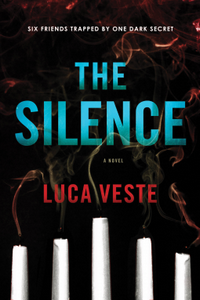
The King of the Crows by Russell Day: Prescient. Gripping. Haunting. Unpredictable. What stories should be.

King of the Crows

King of the Crows

by Russell Day

Kindle Edition, 456 pg.
Fahrenheit Press, 2020

Read: April 28-May 9, 2020

… for me at least, the first week of the Lockdown was the worst.

Knowing it had happened to me. I hadn’t escaped, I wasn’t one of the lucky ones. Lucky to be safe or lucky to be dead. Take your pick. I was neither.

That right there gives you a pretty good idea what kind of light and fluffy read this is going to be.

There are two timelines in this story—the primary focuses on a post-pandemic London, while the other shows what happened to a couple of the characters mid-pandemic (with plenty of material describing what the pandemic was like for others). In the primary timeline, Europe is a disaster—a “wasteland”—and eight years after the Outbreak, it’s beginning to put itself back together. But it’s going to take a long, long time to recover from this. Don’t let the fact that “eight years after” this fictional outbreak is 2028 bother you at all.*

* Good luck with that. I’ll get back to this in a bit.

I’m not going to try to list all the various ways that Day uses to tell this story: I’m certainly going to forget several. So here’s a partial list: here’s a third-person 2028 narrator describing a police investigation, a first-person perspective on the same investigation; a first-person account of that same detective’s life during the Outbreak; selections from a screenplay made about a group of Londoners during the Outbreak; selections from the Outbreak-memoir of one of those Londoners; and third-person narration of the same (N.B.: these three will vary in telling ways); redacted 2028 prison correspondence about the Outbreak; excerpts from scholarly works on aspects of the Outbreak (including a very illuminating work on the slang of the time); graffiti from 2021; internet message boards. Day weaves these together to tell his story, build the world, and help you to understand it. Frequently, I read something from the 2028 timeline, and understood it—only to find a new depth to it several pages later after getting another piece of the puzzle from 2020/2021. It’s hard to juggle that many narrative forms/voices/perspectives/calendars as a reader or a writer—Day pulled it off better than I did (any problems I had following things I attribute to myself, and it was pretty easy to clear out my misunderstanding with a minimum of backtracking*). It definitely helps paint the picture of the scope and variety of effects the sickness had on the world more efficiently than a consistent first- or third-person narrative would be able to.

* This would be easier in hardcopy than on an e-reader in my opinion. But that’s just a guess.

There are times (several of them) when I felt that the characters were getting lost amongst the plot and worldbuilding and sickness. But when I stopped and thought about it—and eventually got to the point where I didn’t have to—I realized I had a pretty solid idea about who these people were and was more invested in them than I expected. I thought there was so much going on that the people were getting hidden, but really, Day’s work was subtle—working in the characters into my subconscious like you give a dog its medicine. Normally, this isn’t something I require (or would like)—and it’s not Day’s usual M. O. (quite the opposite), but I think this approach really fit the novel and the story/world.

“They weren’t zombies,” he says, softly. “Don’t call them zombies.”

No one who was involved in the Outbreak for real uses the zee word.

So exactly what was the sickness?

I remember reading a couple of years ago about these ants that would succumb to a fungus which would short-circuit their brain and make them do certain things before killing them—or something like that, vague memories here. Then there were stories about parasites controlling the host’s actions—both of these stories had their 15 seconds of fame on social media around the same time (I may be messing the details up a little bit, but I’m not writing history here).

In Day’s world, one of these kinds of parasites will reside—asymptomatically, I should stress—in cats, who would pass it on to humans. Skipping the details, the humans would get very sick and then, survivors would maybe succumb to a psychosis that would make them violent. This sickness, HV-Tg (Human Variant-Toxo gondii), in a little more than a year would kill more than 20 million in Europe (at least 33% of France’s population) Et voilà!—an easy to believe pandemic that results in Zombie-like people wandering around.

Now, if one of those who’d “switched” and become violent infected you during an assault, well, you were likely to succumb. There were enough of these (“psychos” or “Gonzos”), and the sickness was so widespread, that the police and military couldn’t keep up, that civilians were forced to take action and defend themselves, their family and neighbors. People quickly forming into gang-like associations for mutual protection. It was a literal kill-or-be-infected (and likely killed) situation.

One such association became known as The Crows or The Kings of the Crows. They developed a legendary status mid-and post-Outbreak—and are the subjects of the memoir and film mentioned above. One of their number who happened to survive (and gain notoriety enough to get a publishing deal for a memoir) is the subject of the 2028 investigation. They survived the worst of the worst in one of the hardest-hit cities. They did so via means and methods that many (including their own) would find deplorable, but under circumstances that not only permitted, but required, those actions.

We also see what happens to an American in Paris for work when the Outbreak reaches the point that International travel is canceled (particularly to the U.S.). Her allies will never be considered the Kings of anything, and the contrast between how she survives to what the Crows do is pretty striking.

In 2028…eh…you know what? You should read that for yourself. I’m going to say something I’ll regret.

The biggest killer in those days wasn’t the disease or the psychos, it was stupidity.

However, it has been pointed out by many historians, logic was one of the first casualties of the Outbreak.

Some of the best moments of this book have nothing to do with advancing the plot, they’re little bits showing what the world of the Gondii-pandemic looks like. The man telling the story about taking his girlfriend to the ER because of a burn—how they were treated, and how she became infected. The soldiers coming back from a Middle East deployment being completely unprepared for what had happened to their home country. The mother and son who traveled with the Crows for awhile.

Ultimately, it’s not the story you think you’re getting…or is it? The marketing tag line is, “Ocean’s Eleven meets 28 Days Later.” It is, all things considered, a good, catchy line. I’m not sure it’s all that accurate a description of the novel (but it’s not inaccurate). What it is, really slides up on you—and when you see it it feels like it was obvious all along (even if you wouldn’t have said that 20 pages earlier). There’s a straightforward crime story at the heart of this novel—it’s just surrounded by so many layers, that you can miss it—there’s the sickness, there’s the horrible social and political context (both mid- and post-Outbreak), there’s what the characters are going through otherwise—and the whole thing is drenched in social commentary about 2020 society, e.g., sexism, economics, medical care.

And that’s not even touching the context we’re reading it in now. I truly wonder what I’d think of this book if I’d read it last Fall. I’d still like it, I’d still be impressed by it—but I don’t know if it would resonate with me the same way. There’s almost nothing about Gondii that’s comparable to COVID-19. But the way that people and governments respond—well, that’s pretty different, too. but if you can’t see what’s going on around us reflected in this novel? You’re not paying attention. That Day appears so prescient says something about his skill and observation (and a lot about Western culture, too).

I can see why people cling to the idea that the Gonzos were trying to tell us something. Something’s out there trying to get a message through: there’s a plan. Compared to the idea that it was all just chance, it’s a comfort of a type. Chance doesn’t care and can’t be appeased and can’t be reasoned with. Chance means it could all happen again.


5 Stars

The Sword-Edged Blonde (Audiobook) by Alex Bledsoe, Stefan Rudnicki: This Hard-Boiled Fantasy Mixes the Best of Both Genres

The Sword-Edged Blonde

The Sword-Edged Blonde

by Alex Bledsoe, Stefan Rudnicki (Narrator)
Series: Eddie LaCrosse, #1

Unabridged Audiobook, 8 hrs., 28 min.
Blackstone Audio, 2012

Read: April 22-24, 2020
Grab a copy from your local indie bookstore!


I’ve read this novel at least twice (13 and 11 years ago), and apparently have forgotten almost all of it. In fact, what I did remember as the climactic scene must belong to the second novel in the series, Burn Me Deadly. I can do better with the rest of the series (and not just because I actually wrote something about them—but I’m looking forward to taking another look at them in the coming months.

But I’m getting ahead of myself, I should introduce you to Eddie LaCrosse and his world. It’s your basic Fantasy world—swords, rumors of sorcery, small kingdoms, and so on. Eddie’s an ex-soldier, ex-mercenary, now “sword jockey” (basically a private cop). He’s got a little more on his résumé, but you’ll learn more about that as you dive in yourself. He’s been hired by an old friend, the King of a neighboring country to clear his wife of the horrific murder of her son. She doesn’t remember him, but when he meets her, Eddie realizes that he knew the Queen long before the King did.

Eddie’s investigation takes him through multiple kingdoms, into the remains of a cult, and into a criminal network that rivals anything that Varys put together for efficacy or ruthlessness. At the same time he does this, Eddie takes a trip through his personal history, reliving the time he knew the Queen (and events leading up to that). The two storylines are interwoven to help Eddie solve what seems like a perfect crime.

Both in the narration, LaCrosse’s character and the kinds of people we meet along the way, Bledsoe channels Chandler. LaCrosse is casually violent in a way that Marlowe indulged in a bit too often for me, and the (for lack of a better word) grotesque (in physical appearance and morality) criminals Eddie deals with in the latter parts of the book felt particularly Chandler-esque to me.

There’s some things that happen at the end that point to Eddie coming to terms with parts of his past that he’s been unable/unwilling to acknowledge existed. The character won’t change as a result of this (at least not much), but I think it opens the door for some of his rougher edges to be rounded out. How well that actually happens, I’ll have to see (I don’t trust my memory enough right now)—but at the very least, Bledsoe made it possible for the character to grow and evolve here.

Rudnicki’s narration didn’t really work for me initially—there was a quality to his voice that just didn’t click with me. But, I kept going because I liked the novel. Before the halfway mark, however, he’d won me over. I can’t put my finger on it (either good or bad), but he sold the emotional moments, the humor, and Eddie’s general attitude. Which is good enough for me.

It’s hard for me to rate this one on its own terms—I remember liking it. I remember what Bledsoe does with the characters. And those things color my rating, leading me to probably giving this another half-to-whole star more than I would otherwise. But also, for the world. The merging of Fantasy and Hard-boiled genres in a way that’s seamless and well-executed. I recommend this one and will be back for more soon.

Bookstooge posted about this book yesterday. It’s probably worth a read (I’ll read it later today, I didn’t want his voice in my head as I wrote this).


4 Stars

This post contains an affiliate link. If you purchase from it, I will get a small commission at no additional cost to you. As always, opinions are my own.

Page 63 of 153

Powered by WordPress & Theme by Anders Norén