Category: Mystery/Detective Fiction/Crime Fiction/Thriller Page 67 of 153

House on Fire by Joseph Finder: Out for Vengeance, Heller Takes on a Pharmaceutical Giant

House on Fire

House on Fire

by Joseph Finder
Series: Nick Heller, #4

Hardcover, 368 pg.
Dutton, 2020

Read: February 7-10, 2020
Grab a copy from your local indie bookstore!

I should have checked in with Patty weeks ago. I guess I was figuring that if [Sean] was back on drugs, she’d let me know. I obviously figured wrong. I was angry at myself for not staying more closely in touch.

He saved my life once; I should have been able to save his.

When you get right down to it, readers don’t know that much about Nick Heller at this point—it’s not that kind of series. One benefit of this is that it’s super-easy for Finder to drop in a character or two and say they’re an important part of Heller’s life without having to tweak their backstory a lot.

Sean and Heller served together, Sean came back with traumatic brain injury and, like so many, was given opioids to help. Like too many, he became addicted and battled that addiction for years. Ultimately, the opioids won. (this isn’t me spoiling anything, it’s the first few pages. I think it’s even on the cover).

While Heller does what he can to help the widow and her kids (his honorary nephews), he takes on a new client. At the funeral, he meets a member of the Kimball family—they own the company that makes the brand of opioids that destroyed Sean’s life. She tells Heller that she attends as many such funerals as she can, in sort of an act of protest. She wants Heller to break into her father’s records to find an old study that shows the company knew how addictive their drug was and released it anyway while covering up the study.

A chance to make some money, a chance to do some good—but more than that, a chance to take down the company that hooked Sean*? You bet our favorite private spy is going to go for that. He’s barely started the job when he runs into someone else looking into the family—another important character from Heller’s past, someone who worked with him in the Pentagon.

* Sure, another company’s product probably would’ve done the same thing to Sean, but Kimball Pharmaceutical held this particular gun.

From there, things get complicated and twisty—involving corporate shenanigans, international twists, family intrigue and big secrets tied to big money. All of which combine to make this a precarious situation for Heller. But Sean saved his life once, so…

I shouldn’t forget to add that there’s something going on with Heller’s actual nephew and Heller’s imprisoned father. I was glad to see the nephew again and would like to see more of him. His father? Well, he was useful to Nick, but man, I could go years without having to put up with him (which I think is the reaction Finder’s going for…if not, it should be because he nails it).

She tilted her head and smiled. “You went after this bomber?”

I nodded.

“Yes, of course you did,” she said. “You are sheepdog.”

“I’m a Sheepdog,” I said dubiously.

“I read somewhere there are three kinds people—is sheep, is wolves, and is sheepdog. Most people sheep—just kind and gentle people. They never hurt others, except by accident. Then there is predators—the wolves. They prey on weak people. They feed on sheep. These are the bad people.”

“Okay.”

“And then is Sheepdogs. They protect flock. They have drive to do this. They have gift of aggression.”

I nodded.

She said, “You are not sheep. You are not wolf. You are sheepdog. You are guard dog, not attack dog.”

This is why we like Heller, because Natalya (soon to be trophy wife about to marry into the Kimball family) here sums it up nicely—he has the drive to protect, and the aggression to do it. We see that on display in all sorts of ways in this book (and in the previous ones). If he was all about attack and aggression, he still might be fun to read about, but readers only get invested in him because of that drive to protect.

The other reason we latch on to Heller (I think, maybe it’s just me) is that he’s fallible. He’ll have a perfect plan that he’s executing well, but because that’s the way that life goes, something happens to totally derail the plan. And, unlike other thriller heroes, when things go wrong for Heller, he has to scramble to stay alive and to find a way to get the results he’s looking for—and doesn’t always succeed at that.

House on Fire has plenty of good action, a lot of excuses for Finder to make points about the opioid crisis—and our reactions to it—(and I appreciated him taking those opportunities), some good Heller backstory, plus a few satisfying twists. This was a good, solid read.

I do think the ending was a bit too abrupt and Finder didn’t wrap up everything as satisfactorily as I’m used to from him. So I didn’t rate this as highly as I would’ve expected. Still, I’m glad I read it and can’t imagine a Heller/Finder/thriller fan won’t enjoy this read. And I’ll be first in line for Nick Heller #5 in a couple of years.


3.5 Stars

2020 Library Love Challenge
This post contains an affiliate link. If you purchase from it, I will get a small commission at no additional cost to you. As always, opinions are my own.


Hi Five by Joe Ide: A Criminal for a Client, an Unreliable Witness, and a Larger Number than Usual that Want Him Dead. IQ has his work cut out for him.

Hi Five

Hi Five

by Joe Ide
Series: IQ, #4

Hardcover, 339 pg.https://www.mulhollandbooks.com/titles/joe-ide/hi-five/9780316509534/
Mulholland Books, 2020

Read: February 10-16, 2020

Grab a copy from your local indie bookstore!


Isaiah has tried to move on after the heartbreak of Wrecked, and has a new girlfriend. This is unfortunate for her—not because IQ is a bad boyfriend or anything—it’s just that when a low-life gun dealer needs Isaiah to investigate something for him, he threatens the poor girl to insure that Isaiah will do it.

What he needs Isaiah to do is clear his daughter of murder. She’s the only witness to the event, but can’t give the police (or our hero) much information about it, despite being in the same room as the murder. Why? Well (and this feels like spoiling something, but it’s on the book jacket), she has Dissociative Identity Disorder (DID)—what we used to call Multiple Personality Disorder—and given the stress and danger presented by a man being shot in her shop, Christina wasn’t “there” for most of what happened. Now, did her father bother mentioning this to Isaiah? Nope. but he thankfully figures that out fairly quickly. So now our intrepid investigator has to look into a murder with an eyewitness/prime suspect who didn’t see anything, and who can’t convince anyone who did see something to say something—and if he doesn’t succeed, someone he cares about will pay the penalty (and he assumes he’ll pay, too).

This is such a fantastic idea for a murder case—it could easily be a sloppily executed idea, but if someone does their homework and does a responsible job depicting DID, this is a wonderful fodder for drama. Please, if there are other examples of mystery writers doing this, fill up the comments with titles. I’d love to read other versions of this—and can’t believe that Ide’s the first to do this.

Most authors would be content to fully develop this idea and run with it for the whole novel. But not Ide. In fact, as interesting as it is, the murder case is not the most interesting thing about Hi Five. I’m pretty sure that’s impressive. To take a concept like that and say, “well, sure, but what’s important is the trouble that Isaiah finds himself in because of the investigation.” That’s bad enough, but Isaiah has recently run afoul of a gang of white supremacists after gang violence has hit someone that Isaiah and Dodson (particularly Dodson) respect and admire.

Oh, and Grace is back.

Ide also finds a way to work in some lighter stories and even a little sweetness. And the book never feels crowded, and everything gets dealt with in the space it needs. Sure, I’d have preferred to spend more time dealing with Christina and her “alters,” but that’s a personal taste thing. I’m a sucker for a good DID story. But what Ide wanted to focus on justifies cutting that storyline some of the space I’d prefer it get.

The tension is high and Isaiah has never seemed more human and fallible (including when he was being waterboarded because of some foolish moves).

Some of the reviews I’ve read about this book seem to think that Ide’s wrapping up the series here. I can see why they’d say that, Hi Five could certainly serve as a fitting end to the series. but it seems to e that Ide has more he wants to say. The way he left things with Isaiah points to a triumphant return. Also, toward the end of the novel, something pretty significant happens to Deondra and I just don’t see Ide leaving things where he did and just walking away—the scene is extraneous unless he’s coming back to follow up on it. I hope I’m reading things right, but if I’m not, this is a solid way to go out.

This is not my favorite of the series, but it is so, so good, that it doesn’t bother me too much. It’s just a pleasure to be back in this prose, in this world, with most of these characters. A great mystery (with a better hook), some great character development, a client you can’t help but loathe—but a subject that you’ll pull for (and want to see more of). Hi Five is just one more proof that Joe Ide is one of the best writers in the genre right now. This is a decent entry to start with, but you’d be better off starting with IQ. But honestly, just grab the nearest book by Ide and enjoy.


4 Stars

2020 Library Love Challenge
This post contains an affiliate link. If you purchase from it, I will get a small commission at no additional cost to you. As always, opinions are my own.
Classic Spenser: The Godwulf Manuscript by Robert B. Parker

Classic Spenser

The Godwulf Manuscript

The Godwulf Manuscript

by Robert B. Parker
Series: Spenser, #1

Mass Market Paperback, 204 pg.
Dell, 1973

Read: January 25-27, 2020

Grab a copy from your local indie bookstore!

Driving back to Boston, I thought about my two retainers in the same week. Maybe I’d buy a yacht. On the other hand maybe it would be better to get the tear in my convertible roof fixed. The tape leaked.

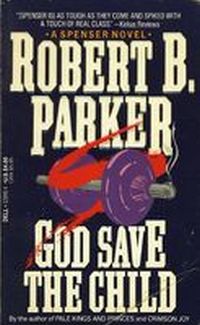
I came to this series about thirteen (possibly fourteen) years late, but to be fair, I would have been thirteen (possibly fourteen) when I started reading it. I wouldn’t have been able to appreciate Spenser without having spent some time with Leroy Brown, Jupiter Jones/Peter Crenshaw/Bob Andrews, Tabitha-Ruth Wexler and others (as I’ve invoked Brown, I hope I remember to draw a line between Sally Kimball and Spenser’s version when I discuss Promised Land). The Godwulf Manuscript wasn’t the first novel I read in the series, I’m going to guess I’d read three or four others before I found this in a used book store. I did find, I now know, a copy with the original cover (as seen above). A year or two later, I loaned it to a friend who proceeded to lose it. I got over it (probably because I didn’t care about things like early editions then) and despite losing that copy, that friend later became my first college roommate, and I didn’t kill him in his sleep for it. Not even once.

That excursus down memory lane means nothing to you, but I put it there in case that friend reads this post. I hope he remembers the Klingon proverb, bortaS bIr jablu’DI’ reH QaQqu’ nay’.

I’ll hold off on talking more about my background with this series for now, but the fact I’ve been reading, and re-reading, and re-re-reading, and re-re-re-reading these books since 1986 (possibly 1987) probably gives you a pretty good idea what I think of them. I could probably write lengthy posts on the first twenty novels in this series without reading them again—but where would be the fun in that? Of the twelve Spenser novels I’ll be revisiting this year, this one is in my bottom two and I’ve read it at least fifteen times, and I don’t see me stopping reading it anytime until I start sleeping the big sleep.

Yeah, that was a purposeful Raymond Chandler allusion. Why? Because this whole novel is a giant Chandler allusion*. From naming his main character after a British poet; to Spener’s attitude, demeanor, voice, etc.; to the opening paragraphs; and so, so much more this whole book screams Parker’s debt to and affection for Raymond Chandler. Spenser as a Shadow of Philip Marlowe will ebb and flow over the years, but I don’t think it’s ever more pronounced than it is in these pages.

* Yeah, there are other influences afoot in these pages, I realize. But Chandler is the primary influence, and this isn’t a dissertation. I don’t have the time to be exhaustive, I have at least 9 other posts I want to complete this week and if I don’t cut a corner or two, I won’t be able to get to them.

So what are these two retainers mentioned above? The first comes from an unnamed university that bears a striking resemblance to Northeastern (Parker’s employer when this was released). An illuminated manuscript has been stolen and is being held for ransom. The problem? (or at least one of them) The University doesn’t have the kind of cash the ‘script-nappers want. They do have a suspect, however, a radical political group on campus: SCACE (Student Committee Against Capitalist Exploitation). Catchy, eh? Spenser starts looking into the group, focusing on a couple of the leaders.

Within a few hours, one of those leaders is dead and another is the prime suspect for the murder. She’d called Spenser for help right after the murder, and he believes her (for compelling reasons you should read for yourself). This leads to the second retainer, her father—a pretty successful capitalist, it should be noted—hires Spenser to clear her for the murder.

The hunt for the manuscript and the murder will end up involving a cult, a couple of very dysfunctional marriages, drug dealing, a couple of hitmen, and a mob boss. Basically, Spenser has his hands full.

While there are many aspects of this novel that Parker will tweak for future installments, there’s a lot that he establishes here that he’ll revisit. Spenser gets fired because of his attitude (as demonstrated by his ignoring—rightly—the University’s insistence that he leave faculty alone), his being fired doesn’t stop him from sticking with the job, however. There’s a shootout in an unpopulated area near Boston*. Spenser cooks a pretty decent meal for himself (not quite Fritz Brenner’s level, but close enough for a guy cooking for one), and proves himself more literate than anyone looking at him would assume. The climactic fight will be echoed in upcoming books, featuring someone who has no business fighting anyone taking on a hardened criminal of sorts solely on the basis of love and desperation. Parker does get away from this, which is good—if only for the sake of variety—but man, I love it every time he uses this.

* My knowledge of Massachusetts geography comes wholly from the novels of Parker, William Tapply and Dennis Lehane, so I can’t be more specific than “unpopulated”.

Spenser physically roughs up a couple of college kids and verbally pushes around an older man. Each incident is followed by Spenser berating himself. This is the kind of thing that you don’t see a whole lot in the hardboiled world before Spenser’s debut. Parker will do a more subtle job in the future of showing that while Spenser will resort to violence when necessary, he doesn’t relish it (except when he knows the recipient is guilty of something) and regrets the act. But here, it’s pretty clear that Parker’s trying to show that Spenser isn’t unfeeling about acts of aggression.

There are things that show up here that will disappear—Spenser sleeps with two different women and is fairly casual about it. He’ll later become a paragon of monogamy, but that’s a couple of years away. Still, he’s less of a player next time we see him. He’s also a bit more antagonistic to most of the police that he encounters than he’ll be in books to come. Some of that is a shift in Spenser, some of that is a growth in the relationships he develops with individual members of BPD.

The main thing that sticks around in the future are some of the characters—we meet people here that Spenser still knows and interacts with on a regular basis. Spenser flirts a lot with the secretary for the head of Campus Security, and we’ll see her later. A reporter for the Campus newspaper gives Spenser a lot of help and information about various people/groups on campus, her name is Iris Milford and when Ace Atkins brought her back in 2015, I may have let out an audible whoop. We meet Spenser’s lawyer, Vince Haller, who not only helps Spenser, but the college student being framed. Haller will eventually disappear from the stage (I realize as I write this), but he’s a frequent presence for a long time to come.

But the three big recurring characters are Lt. Martin Quirk, Sgt. Frank Belson and Joe Broz. Spenser and Belson (a homicide detective) have some history and clearly respect (and even like) each other. Belson’s smart, appears lazy (appears), perpetually has a cheap cigar in his mouth (I think that’s a characteristic in this novel, if not, it will be next time we see him). Belson’s superior is Lt. Quirk. Quirk is a very no-nonsense cop, he’s driven, almost humorless, and has no use for private investigators, but sees a little value in Spenser and begins to trust him a bit over the course of this novel. Joe Broz, on the other hand, couldn’t be less a homicide detective if he tried—you could argue Broz (and his employees) are responsible for the continued careers for a handful of homicide detectives. He’s a crime boss of some notoriety and viciousness. At this point (and for some time to come), he’s the most powerful mobster in Boston (although we will soon meet competition). Spenser will be a thorn in Broz’s side for a long, long time.

It occurs to me that I haven’t described Spenser himself. He’s a former professional boxer (not that good, but he did get his nose broken by someone who was very good); a Korean War vet; a former Massachusetts State Trooper, assigned to the DA’s office in a County that fluctuates depending on Parker’s memory; and now a Private Investigator. He’s very literate, he likes to cook (as I mentioned), he drinks a lot, thinks he’s funnier than anyone else does (except the readers of the novels)—which brings him a lot of grief. We don’t get a lot of insight into it in this novel, but honor’s very important to him and it will influence the way he deals with clients, victims, criminals and everyone else along the way. He’s very much a latter-day knight.

I’m not sure that the mystery is all that clever, but the strength of this book is riding along with Spenser as he goes around annoying people until someone does something that he can catch them at (a strategy he’ll spell out in the future, but follows here). I love the voice, I enjoy the character, and watching him go about his business is a pure joy for me.

I haven’t discussed the action/fight scenes yet, and Parker’s approach to them (particularly in the first 15-20 of the series) has always greatly appealed to me. Parker has to address violence, given his chosen genre–and Spenser is a violent man. But in months to come, we see the character address that in such a way to give us insight into why Parker uses it the way he does (I think). So I’ll put a pin in this for now (also, this is long-winded enough at this point that I’ll take any excuse to wrap things up).

I, obviously, highly recommend this book—but I’ll be the first to say that the second is much better and the fourth and fifth in this series are better yet. You don’t have to start with this one for future books to make sense—in fact, you might appreciate Spenser more if you start later on. But for my money, you’re not likely to find many characters as compelling in contemporary (or at least late-Twentieth Century) hardboiled fiction. For introducing the character to the world/the world to the character of Spenser, The Godwulf Manuscript is well-worth the time. Even if it wasn’t the start of something big, it’s still entertaining enough for me to encourage you to read it.

This post contains an affiliate link. If you purchase from it, I will get a small commission at no additional cost to you. As always, opinions are my own.

Hidden Steel by Stuart Field: An Ambitious Thriller on Land and Sea


Hidden Steel

Hidden Steel

by Stuart Field
Series: John Steel, #2

Kindle Edition, 618 pg.
Next Chapter, 2019

Read: February 15-17, 2019


It sounds like the first volume of this series has John Steel working closely with a group of detectives from the NYPD, but the sequel has them (ultimately) pursuing the same criminal group from very independent directions—Steel is in Britain and then on a trans-Atlantic cruise ship following leads he uncovered while investigating his family’s death.

Meanwhile, Det. McCall and those she works within Homicide are investigating a serious of suspicious deaths (deaths that would be easily written off as random crimes or accidents). Eventually, the detectives conclude that they are murders, the question then shifts to why these people were killed as much as who did the killing.

Ultimately, as one would guess from the outset, the work that Steel and McCall are doing lead to the same culprits and there is plenty of interaction to satisfy fans between Steel and the team in New York over the course of the novel.

I want to stress that this is one of the most complex and ambitious plots that I’ve read in months. The more you read of this the wider-spread the scope of the action is. I can’t imagine how much planning this took to get all of the parts and pieces to line up just right with each other to produce this—I’m close to using the word audacious to describe the scope of the novel. Once it all starts to come together and the reader can understand all the ways that the criminals were moving to get their schemes rolling, the mind will reel.

Most of this book reads like the novelization of a TV episode/Movie. More often than not, the visuals evoked by the book belong to a visual medium. The way people move, stand dramatically, climb out of this or that, and so on is very screen-inspired. Once I realized this is what’s going on, everything made so much more sense.

I don’t like being this guy, but the number of proofreading problems in this book were very distracting. I don’t remember any words that were spelled incorrectly, but there were repeated instances of similar words being used instead of the correct ones, e.g. “guy’s” instead of “guys,” “he’s” instead of “his,” “draw” rather than “drawer,” and so on. There were scenes/passages that begin the same way they began, a sentence that is a direct contradiction of something mere paragraphs before; commas that serve no function; commas that are missing; unnecessary question marks; and so on. This kind of thing happened so frequently that it drew attention away from the action and I couldn’t focus.

At the end of the day, whatever good I’d want to highlight from the novel was offset by a problem, concern or drawback to either the logic, grammar or word choice. There’s a lot to commend, but the issues suck all my enthusiasm for it away. This is the kind of thing that will truly entertain an audience if it finds one, and I hope for Fields’s sake, it does.


My thanks to damppebbles blog tours for the invitation to participate in this tour and the materials (including a copy of the novel) they provided.

BOOK SPOTLIGHT: Hidden Steel by Stuart Field

Today is my day for the Book Tour for Hidden Steel by Stuart Field. Along with this spotlight post, I’ll be giving my take on the novel here in a bit. But let’s start by learning a little about this here book, okay?


Book Details:

Book Title: Hidden Steel (John Steel #2) by Stuart Field
Publisher: Next Chapter
Release date: December 25, 2019
Format: Ebook/Paperback
Length: 618 pages

Book Blurb:

In the UK, Detective John Steel is investigating the organization who killed his family. When he comes across information that something big is going to happen on the cruise ship Neptune, Steel goes undercover. He has fourteen days to figure out what is going to happen – and to stop it.

In New York, Steel’s NYPD partner, Detective Samantha McCall, is investigating a series of deaths. All seems run of the mill for the homicide detective until they find out that the deaths are somehow connected to the cruise ship John Steel is on.

McCall is convinced there is a mole in the department, but can she figure out who he is – and who he’s working for? Meanwhile, Steel is running out of options… and the clock is ticking.

About Stuart Field:

Stuart FieldStuart Field was born in the UK, in the West Midlands. He spent his early years in the army, seeing service in all the known (and some unknown) hotspots around the world. He now lives in Germany with his wife Ani. When not engaged in highly confidential security work, he writes thrillers which perhaps mimic his life-experience more than the reader would like to believe.

Purchase Links:

Amazon UK ~ Amazon US

My thanks to damppebbles blog tours for the invitation to participate in this tour and the materials (including a copy of the novel) they provided.

Reposting Just Cuz: Guilty Minds by Joseph Finder

My plan for today was to post about the new Nick Heller novel: House on Fire by Joseph Finder. But one thing led to another, and . . . well, that just didn’t happen (and I’m not sure when it will). Instead, I’ll be revisiting my posts about the first three in this thriller series. The first two have already been posted, and here’s the third.


Guilty MindsGuilty Minds

by Joseph Finder
Series: Nick Heller, #3

eARC, 400 pg.
Dutton, 2016

Read: June 1-2, 2016

The evil that men do lives after them;
The good is oft interred with their bones:
               – Julius Caesar, Act 3, scene ii

Everyone’s favorite private spy, Nick Heller, is back. This Jack Reacher with a budget gets hired to head off a scandal that may threaten the career of the Chief Justice of the Supreme Court. He’s not hired by the Justice, of course, but by a powerful friend. Washington, D.C. being Washington, D. C. not only does the Justice have powerful friends, he has powerful enemies. Heller assumes that they’re behind the scandal breaking on the gossip website, and sets his sites on not only stopping them but exposing them.

There’s more going on than even someone with Heller’s instincts expect — what seems like a pretty routine case (with high stakes) turns into something with life or death stakes. Not shocking, it’s why we read these things.

I love the way that Heller’s mind works — watching him prepare (even quickly) to break into an apartment, or take out a group of kidnappers is one of the highlights of these books. What’s even better is that his hacker can’t do everything. His buddies/colleagues make blunders. What’s more, Heller makes mistakes — errors in judgement, letting personal biases get in the way, bad assumptions. Sure, Heller’s super-human (it’s why we read him), but he’s not perfect. It’s his reaction to the mistakes, his recalculations, his new plans that separate Heller from a lot of these characters who are a little more perfect.

There’s a twist or two, people who aren’t what they seem (in good and bad ways for Heller), and some solid fight scenes (with and without weapons). Pretty much just what you want in a thriller. I’m not sure that I’m crazy about the resolution or the epilogue, but I don’t mind them and honestly I can’t think of a better way for things to play out (and before that, I had just that one complaint). So, I guess a great 380 or so pages, followed by a decent 20.

It took less than a page or two (hard to tell on my screen) to remember what I liked about the style of this series, Heller’s voice, and his crew (although this book relied less on his regular supporting cast than the previous two). If I quoted every snappy line from the first chapter, you’d stop reading this post as tl;dr (and the publisher would come after me) — and things got better from there. Great internal dialogue. Finder writes lean prose without an inch of fat, but it’s not dry, not lacking anything — it’s full of personality and intelligence. There was one thread that seemed pretty important that Finder just abandoned, which is odd for him. Still, anytime you get an action hero quipping about coffee, I’m going to pay attention.

I had coffee. I took one sip and put it down. It tasted like something brewed by someone who disapproved of coffee.

I appreciated the observation about airport/tarmac security, and just with that Heller had spent more time with that. Maybe in the fourth book?

Smooth prose, good action, well-paced, and just a fun story. A real pleasure to read from beginning to end.

I received this book from Net Galley in return for the above thoughts. Thanks to Net Galley and Dutton for the good read. As it was an ARC, there’s a chance that the quotation above might not be in the published version, I’ll try to confirm as soon as I can next month.

—–

4 Stars

Reposting Just Cuz: Buried Secrets by Joseph Finder

My plan for today was to post about the new Nick Heller novel: House on Fire by Joseph Finder. But one thing led to another, and . . . well, that just didn’t happen (and I’m not sure when it will). Instead, I’ll be revisiting my posts about the first three in this thriller series. This is the second in the series, so the first has already been posted, and the next is on the way, but first: Buried Secrets


Buried SecretsBuried Secrets

by Joseph Finder
Series: Nick Heller, #2

Hardcover, 386 pg.
St. Martin’s Press, 2011
Read: April 13, 2015

Private Spy, Private Investigator, Private Vengeance-Taker, whatever you want to call him, Nick Heller one of the best — he’s tough, he’s resourceful, troubled kids like him and he quotes The Punisher. Who doesn’t love that?

Heller’s relocated himself, his computer wiz, and his nephew to Boston since we saw him last, setting up shop marketing his peculiar trade. True to form, he’s pretty picky about who he accepts as a client, but there is one who he can’t turn away. Marshall Marcus, the richest man in Boston, was a lifeline for Heller’s mother after his father’s prison sentence was handed down. Now he needs a lifeline — actually, his 17 year old daughter does. She’s been kidnapped and will be executed if her father doesn’t give the men responsible exactly what they want.

The kidnapping itself, and the way Alexa is being held captive aren’t that novel — most readers who’ve watched a police procedural or two in the last few years will have seen one or two scenarios like it. But Finder does make it distinctive by making the man holding her into a particularly sick and evil man. Thankfully, we don’t spend so much time with Dragomir that the reader sympathizes with him, or starts to like him (à la Dr. Lecter). What he’s doing to Alexa is just wrong — as is pretty much everything that has led up to this point in his life.

Nick’s not just up against this twisted man — and those behind him — he also has to contend with a client who continually lies to him, an FBI official that seems to be blocking his efforts, and more than one person who isn’t who they say they are. Thankfully, he has Dorothy, his old military friends, international intelligence contacts, and a different FBI agent backing him.

There’s less action (as defined by explosions, gunplay, fights, etc.) than in Vanished, but it’s more suspenseful. In Vanished, it wasn’t until the closing pages that you had any idea what was happening with the victim — but here, there’s never any doubt about what’s going on with her, and what’s going to happen to her if Nick doesn’t put the pieces together. Soon. Which isn’t to say it’s all-thriller-all-the-time, there’s moments where Nick and the reader catch their breath. Even a couple moments of levity (Nick’s narrative voice helps a lot on that front) — his observation, “Veganism is apparently the paramilitary wing of vegetarianism” helped set the tone. Dorothy’s eventual use of the word “Pepsi” to close a chapter made me chuckle audibly (you’ll get it when you read this).

I should probably add that this book includes one of the grosser character deaths I’ve read in the last couple of years. Didn’t bother me much, he had it coming.

We get to see a bit more of Nick’s life and backstory this time. He’s a better-rounded character now. It’d have been easy to see him as a workaholic who had no contact with anyone outside of work and his nephew before. But that’s clearly not the case now. There’s not much more to him — but there used to be, and getting that glimpse helps you care a bit.

It’s taught, it’s a page turner, it’s a “I can always sleep later” kind of read. Man, oh man, I hope Finder has at least one other Heller adventure up his sleeve.
4 Stars

Reposting Just Cuz: Vanished by Joseph Finder

My plan for today was to post about the new Nick Heller novel: House on Fire by Joseph Finder. But one thing led to another, and . . . well, that just didn’t happen (and I’m not sure when it will). Instead, I’ll be revisiting my posts about the first three in this thriller series. The next two will follow soon.


VanishedVanished

by Joseph Finder
Series: Nick Heller, #1


Hardcover, 384 pg.
St. Martin’s Press, 2009
Read: April 7 – 8, 2015

I lost sleep over this one. Literally. I had to force myself to put this thing down so I could get a little shut-eye. Which wasn’t easy. After about 70 pages or so, I realized two things very clearly: I was hooked on this book and was going to have to get the next one in the series very soon. Neither feeling went away.

Last year, when I read FaceOff, the Jack Reacher/Nick Heller story was probably my favorite, so when I found myself wandering the library last week, with every thing on my “to get list” unavailable, I figured I’d finally give a full-length Heller story a try. Clearly, one of the better moves I’ve made.

Nick Heller is former Army Special Ops, turned corporate espionage hotshot. His estranged brother, Roger, is abducted (at best) leaving an injured wife behind. His nephew, Gabe, freaks out and calls his uncle for help, not willing to trust the police. So Nick, with “a very particular set of skills,” starts looking for his brother.

Heller’s similar to Reacher, but has more of a cerebral approach to things. I’m not sure that’s necessarily fair, maybe it’s that he takes a less direct approach to Reacher’s bull in a china shop approach. That’s not quite it, either. There’s something similar, yet very distinctive about their approaches. It’s more than just the fact that Heller has money and resources (and friends and family . . . ), while Reacher has a fresh set of clothes, a new toothbrush and whatever weapon he can take off a foe. Heller definitely has a better sense of humor — and a cell phone, maybe that’s it.

Heller definitely has to work — suffers some real investigative setbacks, is flat-out wrong on several fronts, blunders a bit, and has to go through some real emotional hardship. Making him human enough to really engage the reader (in a way that Reacher never can — not that I want to keep comparing the two).

Well paced, intelligent, some cool spycraft, some good fight scenes and a lot less gunplay than you’d expect — this is a thriller well worth your time.

—–

4 1/2 Stars

Winterkill (Audiobook) by C. J. Box, David Chandler: Pickett Battles Winter and Paranoia to Find Justice

I wish I knew what it was about Joe Pickett novels that made them difficult for me to write about. I ended up not writing anything about the first two books in the series and it took me three attempts to get this done (which was followed, naturally, by saving this as a draft rather than scheduling the post…). In the end, I was a bit more spoilery than I like to be, but the book has been out since ’04 (the audiobook since ’14), with 17 more books in the series. I’m giving myself a little more leeway with it than I’d normally grant myself.

Winterkill

Winterkill

by C. J. Box, David Chandler (Narrator)
Series: Joe Pickett, #3

Unabridged Audiobook, 11 hrs., 25 mins
Recorded Books, 2014

Read: January 29-31, 2020
Grab a copy from your local indie bookstore!


Joe Pickett is wrapping up a pretty routine day when he stumbles on to a U.S. Forest Service Supervisor acting in an irrational (at best) manner. While Joe’s trying to apprehend him (I’ll spare you the details, but it’s similar to the incident that kicked off the first book, and will give Joe’s critics plenty to mock him about), he’s murdered in a noteworthy manner.

As he was a witness (and the only one who can lead anyone to the crime scene), Joe’s attached to the investigation that features state officials, the Sheriff’s office and a Forest Service official (who brings a reporter in her wake). They quickly identify a suspect and make a fast (and brutal) arrest. Something in the way that the suspect reacts makes Joe wonder if they’ve got the right guy.

This wondering is compounded when the suspect reaches out to Joe a couple of days later to ask him two favors. Nate Romanowski is, among other things, a falconer who left two birds behind when he was arrested. Favor one is to feed the birds. Favor two is to get him out of jail—Nate and Joe have never met before, but Nate’s read about him and figures Joe’s his best shot after the events of the last two novels.

From a thing or two I’ve read, I think Nate’s going to be around for awhile. Which is fine with me, I enjoyed his character a good deal. He’s a former special-ops guy who wants nothing to do with any governmental entity anymore. He just wants to live on his own terms and take care of his birds. I could be wrong, but at this point, it looks like Box is establishing Nate as Joe’s Hawk/Joe Pike/Bubba Rogowski/Henry Standing Bear-figure. Although really, to qualify as Joe’s lethal pal, is a low standard—it’s not like Joe can use a firearm with any kind of accuracy. If my hunch is right, and he’ll be around more in the future, I’ll be very happy to know him better.

As before, Joe’s daughter Sheridan is a Point-of-View character as well. She doesn’t play as large a role in this novel, but when she shows up, it matters. Her appearances in the narrative are also a pretty good signal that it’s time for something heart-wrenching to happen.

Before I forget, I want to say something about Joe’s family. I love, love, love his family. His wife, Marybeth, may be the best Significant Other in crime fiction—supportive, tough, she’s not a wilting flower nor an obstacle to his work. His other daughter, Lucy, is as cute as you could hope for (am sure we’ll get something more than cuteness from her in a while). And how many crime fiction heroes are plagued by a mother-in-law like his—the dynamic between the two is wonderful.*

* Wonderful to read, that is. It’d be a miserable, unhealthy, and precarious situation to live through.

There are three factors that make it difficult for Joe (or anyone else) to investigate a murder. The first is snow. The novel takes place in the days before and after Christmas and even for this section of Wyoming, the snow is heavy. The second complicating factor is the arrival in town of a large group of people trying to shake off their pasts and find a peaceful place to live (I’ll explain in a bit). The third factor is that one of this group is Lucy’s mother—we saw her last in the first book when she abandoned Lucy after her husband’s murder. In the ensuing two years, Joe and Marybeth had taken her in as a foster daughter and were trying to adopt her. Until Mom showed up with a court order form a crooked judge demanding Lucy be turned over to her.

One of these would be difficult for Joe to overcome—all three? That’s just mean.

The group of people that came to town (technically, a campground outside of town) could be considered Survivalists, I’m not sure the best way to describe them. Most are those who were around during the biggest law enforcement stand-offs in recent history: e.g., Waco, Ruby Ridge, Montana Freemen. Their leader assures Joe (and would assure others if they’d listen) that they’re just looking to live a quiet life outside of Federal control.

But Strickland (the Forest Service official) doesn’t see them that way. She’s convinced that they’re anti-government activists, probably terrorists. They’re a threat that she’ll do anything to put down. And she (and her FBI cronies) are looking for a way to create another stand-off. Given the out-of-the-way nature of their location—and the snow—it’ll be a stand-off they can end without the press interfering. No press means the Feds can do whatever they think they need to in order to stop the stand-off.

By and large, the people working for the Federal Task force looking into the murder, the Survivalists, etc. are decent people trying to do their job—but Strickland and her cronies (and the Sheriff) are focused on their goals. The Survivalists/Freemen/whatever are antagonistic to the government, but they’re not necessarily trying to overthrow anything. Box does a truly commendable job of being sympathetic to their concerns/issues without coming down in their favor. It’s a real tightrope he’s walking along here, and he pulls it off magnificently.

I’ve now read six books by Box—the first three in two series.* And three of those (you could argue four of those, I guess) Box does something almost unthinkable to his protagonists/their family/friends. So many authors would do the kind of thing I’m talking about once very 5-8 books, and it’d be a big deal (think of the Battle in the Ministry in Harry Potter and the Order of the Phoenix). But Box does it routinely. Does this lessen the impact? Not for me yet. In fact, I couldn’t believe that he’d done what he did in this book for a few minutes, I kept waiting for something to happen revealing X had only appeared to have happened. It’s just brutal. How Pickett can make it to book 20 boggles my mind given the beating these people take. I’m not sure I’ll survive that long, given only The Highway Quartet Book 2, and Winterkill (I’m honestly still reeling from the first Pickett novel, Savage Run

* Okay, I read a stand-alone back in 2009, but that’s beside the point.

I do not think that Box did a sufficient (or credible enough) job explaining the odd behavior of the victim in the books opening pages. He does spend all of a sentence or two giving us Joe’s theory about it. I don’t buy it. This single point has been driving me crazy since the murder—yes, it’s overshadowed by the rest of a very strong book that shocked, surprised and entertained me so well. But…it’s going to be a long time before I can read a Pickett novel without hoping that he’ll revisit this and explain it better (I don’t expect Box will do so, but I’ll hope for awhile).

I really don’t have a lot to say about Chandler’s narration. It’s good, without drawing attention to itself. I’m pretty sure that when/if I get to the point I’m reading the novels rather than using an audiobook, I’m going to hear Chandler’s voice in my head. He is the voice of Joe Pickett for me.

At the end of the day, most of the “White Hat” guys really were “Black Hats.” The suspected “Black Hats” mostly wore a dirty gray. And almost everyone was just trying to do the right thing with limited knowledge (some of those with the most knowledge were deliberately taking illegal and immoral steps, but they’re the exception). There are a lot of moral questions to wade through in this novel and it’ll keep you thinking about it for a good amount of time.

In the midst of all that, Box managed to tell a pretty decent Crime Story, a compelling family story, and introduced us to a fascinating new character—while developing characters we’ve known and liked (or known and distrusted) already. It’s not going to be long at all before I’m fully addicted to these books if the next few are almost as good as this one.


3.5 Stars

2020 Library Love Challenge

This post contains an affiliate link. If you purchase from it, I will get a small commission at no additional cost to you. As always, opinions are my own.

San Diego Dead by Mark Nolan: A Modern-Day Privateer (and his dog) takes on a Powerful Drug Cartel


San Diego Dead

San Diego Dead

by Mark Nolan
Series: Jake Wolfe, #4

Kindle Edition, 348 pg.
2019

Read: January 30-February 3, 2020


Jake Wolfe is a former photojournalist, ex-Marine, ex-CIA asset, lawyer, Mafia “Made Man” and modern-day privateer. He recently saved the life of the new First Lady (before the election), and is on a first-name basis with her (and her husband). Men (who don’t want to kill him) admire him, women (who don’t want to kill him) swoon over him. But for Wolfe, none of that matters, as much as spending time with Cody, who is another Marine vet. Cody shares in most of Wolfe’s accomplishments—and gets the same reaction from men and women. The significant difference between the two is that Wolfe comes from Irish and Italian roots, and Cody is a yellow Labrador and Golden Retriever mix.

Together these two make a seemingly unstoppable force for truth, justice, and the American way. Apart they are capable but diminished, distracted, and less emotionally whole. Wolfe considers Cody a partner and makes it clear to any and all that they’re a package deal.

While on assignment for the Secret Service, the pair assassinates a man who provides boats for a Mexican Drug Cartel to smuggle drugs into the U.S. Around the same time a dear friend and fellow Vet crosses the same cartel, putting both men (and Jake’s girlfriend) in the cross-hairs pg of the leader of that cartel.

The cartel cuts a deadly and destructive swath from Mexico to L.A. attempting to eliminate these two, pushing the pair until they retaliate.

Most of the book is told from Wolfe’s point-of-view, with dips into the POV of his girlfriend or Cartel members. There are a couple of noteworthy sections told from Cody’s perspective—he’s closer to Crais’ Maggie than Quinn’s Chet in these, but he’s more thoughtful (and more human thinking) than Maggie. I wish we had a few more segments from Cody’s POV.

There are two paragraphs in which a ghost appears and saves the day. These two paragraphs have had me thinking far too much about them in contrast to the rest of the novel. They’re proverbial sore thumbs sticking out from the rest—but they also worked better than you’d think.

Recently, listening to interviews with Lee Goldberg, I was reminded of a genre that’s not really out anymore (and I’d totally forgotten about)—”Men of Action” or “Men’s Adventure.” These used to be at grocery stores, convenience stores and the like offering easy-to-read adventures featuring manly men doing manly (frequently super-patriotic) deeds, and deadly (and incredibly attractive) women. Years ago, Goldberg wrote a few of this type under the pen name Ian Ludlow—and now Goldberg’s protagonist of the same name writes that kind of book. See also: Mack Bolan, the Executioner; Remo Williams; and the like. Thanks to that reminder, I was able to see San Diego Dead for the return to that kind of story-telling and enjoy it for what it is. If not for that reminder, I’d have been annoyed, bothered, underwhelmed by the book. But realizing the inherent goals of this kind of writing, I was able to ignore that annoyance and channel it into reuniting such entertaining tropes/themes for contemporary audiences. It’s silly, cheesy fun—which is all it tries to be.

Would much of this work better if you’d read the previous novels? Probably. Does it work fine as a stand-alone? Yes. I’m not going to say that this is for everyone—it’s not (but what is?). If you (or someone you know) need a break from intense, serious, deliberate thrillers and could use solid action that places the emphasis on entertainment factor over all other considerations, give yourself a treat and check out Mark Nolan’s Jake Wolfe.


3 Stars

My thanks to damppebbles blog tours for the invitation to participate in this tour and the materials (including a copy of the novel) they provided.

Page 67 of 153

Powered by WordPress & Theme by Anders Norén