Category: Mystery/Detective Fiction/Crime Fiction/Thriller Page 84 of 153

Fahrenbruary Repost: A Mint-Conditioned Corpse by Duncan MacMaster: I run out of superlatives and can’t stop talking about this Mystery that filled me with joy.

Kirby Baxter is possibly my favorite new-to-me character from 2018, you can probably tell that from these next two reposts…And, yes, I’m sticking with the classic cover, although the paperback I bought myself last year has a niftier cover.

This is one of those times that I liked something so much that I just blathered on for a bit, and I’m not sure how much sense it made. The first and last paragraphs are coherent, I’m not really sure the rest is…

A Mint Condition CorpseA Mint Condition Corpse

by Duncan MacMaster
Series: Kirby Baxter, #1
Kindle Edition, 275 pg.
Fahrenheit Press, 2016
Read: July 27, 2018

Is this the best-writing I’ve encountered in a Detective Novel this year? Nope. Is this the most compelling, the tensest thrill-ride of a Mystery novel this year? Nope. Is this full of the darkest noir, the grittiest realism, the starkest exposure of humanity’s depths? Good gravy, no! This is, however, a joy to read; full of characters you’ll want to spend days with, that you’ll want to have over for Thanksgiving dinner just to lighten things up and distract you from Aunt Martha’s overcooked yams and dry turkey; a completely fun time that’s very likely most I’ve enjoyed a book in 2018. It is escapist. It is silly. It is clever.

Think Monk at it’s best. Psych at its least annoying. Castle at it’s most charming. Moonlighting season 1 — I’m going to stop now.

So Kirby Baxter is a comic book writer/artist who breathed new life into a stagnant character which led to the revitalizing of an entire comic book company (not quite as old as DC, nowhere near as successful as Marvel — and somehow hadn’t been bought out by either). He was unceremoniously fired just before he became incredibly well-off (and investments only improved that). Following his new wealth, a thing or two happened in Europe and he gained some notoriety there helping the police in a few countries. Now, he’s coming back to North America to attend OmniCon — a giant comic con in Toronto — returning to see a mentor rumored to attend and maybe stick his toe back in the industry that he loves.

While there we meet his colorist and friend, Mitch — a diminutive fellow, convinced he’s God’s gift to the ladies (most of whom hope he comes with a gift receipt), and just a riot to read about. Molly, a fan, former coworker and friend of Kirby’s who wears her heart on her sleeve (it’s not her fault if people don’t notice it). That needs to be better. Erica is many a dream-come-true — an impossibly good-looking model and would-be actress who is sincere and sweet. Her assistant Bruce is a pretty good guy, too. Her best friend and former mentor, Andi is almost as too-good-to-be-true, and married to a renowned DJ who is providing some of the entertainment at OmniCon. There’s comic dealers, a film director, a crazy actress, Kirby’s former boss, and so many other colorful characters that my notes include a joke about a cast the size of Game of Thrones.

And then there’s Gustav. Words I don’t know how to describe Gustav. Imagine having Batman as your Jeeves. He’s a valet/driver/bodyguard that Kirby picked up in Europe, combining the cool and lethal factor of Spenser’s Hawk, Plum’s Ranger and Elvis’ Pike (except he makes Pike seem chatty). I’d include Wolfe’s Saul Panzer, but Saul isn’t the lethal type that the rest are — but Gustav has the effortless magic about him that makes Saul a winner. If the rest of the book was “meh” and Gustav was still in it? I’d tell you to read the book.

At some point, a corpse shows up — and like the comic book world’s answer to Jessica Fletcher, Kirby identifies the death as a murder — not the accident it appears to be to many. For various and sundry reasons — starting with him being correct, and continuing on to the incidents in Europe — Kirby is roped into helping the police with the investigation. Also, like Fletcher, he’s uniquely gifted to help the police in these circumstances. He’s smart, he has a eidetic memory, can catch a tell or a microexpression like nobody’s business. You throw him into a consulting role with the police, with his friends along for the ride and I’m telling you, you’ve got the most entertaining mystery novel I’ve read this year.

This book’s look at comic conventions reminded me of A Hundred Thousand Worlds by Bob Proehl. But where this one is played for laughs, Proehl was serious — but both show an appreciation for, an affection for the culture that surrounds the cons and the people involved. After reading this, I was ready to buy tickets for the OmniCon.

It’s a funny, fast, romp — a very contemporary take on a Golden Age-mystery. Lots of twists and turns, more crimes than you think are happening and more villains than you can shake a stick at. I thought (and still do) that Duncan MacMaster’s Hack showed that he was an author to keep an eye on — this is better.

A Mint-Conditioned Corpse hit the sweet spot for me — a convergence of so many of my likes told with just the right tone (another one of my likes), while maintaining a pretty decent whodunit at the core. I probably smiled for the entire time I spent reading it — well, at least the last 90% once I started to get a feel for things — at 8% I made a note about Kirby “I’m really going to like him,” and a few paragraphs later, I wrote “I already really like him” about Mitch. And I was right about Kirby, and kept liking Mitch — the rest of the characters are about as good as them, and the story is as good as the people in it are. Is everyone going to enjoy this one as much as me? Nope. But I can’t imagine someone not having a ball reading this. Probably the 5-Star-est 5-Stars I’ve given this year.

—–

5 Stars

Fahrenbruary Repost: A Few Quick Questions With…Duncan MacMaster

Not only did the good people at Fahrenheit Press provide me with Duncan MacMaster’s Hack (which I just posted about), I got an interview with Mr. MacMaster as well! As usual, this is short and sweet, he’s got better things to do than come up with clever answers for me, y’know? Seriously, loved his answers. Give this a read and then scurry out to buy his book.

Would you like to give the elevator pitch for Hack? (for that matter, if you want to throw one in for A Mint Condition Corpse, that’d be fine, too)
The elevator pitch for Hack would be: A desperate man is hired to ghostwrite the autobiography of a washed up TV star with scandal in his past and murder in his future.

The pitch for A Mint Condition Corpse would be: A semi-retired artist’s trip to his favourite comic book convention is spoiled by murder, and only he can solve it.

Do you have experience as a Ghost Writer? Is Hack your way working out some demons? Or does it have a much more benign genesis?
I never specifically worked as a ghostwriter. I did do things like selling jokes to comedians (no one you ever heard of) so I know a bit about doing something that someone else gets credit for.

There is a certain amount of exorcism in the genesis of Hack. By the time I got to writing it I had spent a very long time getting metaphorically kicked in the head by the writing business. The joke market had dried up, and I spent years enduring rejections that ranged from the incoherent to the callous, and some career setbacks that were downright ridiculous.

As you could guess, those experiences left some demons that needed to be exorcised, and Jake Mooney, the hack writer of the title, did it for me. Jake’s had a life defined by setbacks and it’s made him bitter, cynical, and lonely. He sees being a credited author as a step towards some redemption as a writer, and solving the crimes as an attempt at redeeming himself as a human being.

Of course none of this was conscious while I was writing it. While putting down that first draft all I could think about was the plot, the characters and making sure everything made sense. I didn’t discover what I had done with Jake’s and my own hunger for redemption and validation until working on later drafts.

It was different with my first crime novel A Mint Condition Corpse. That started with a conscious decision to make Kirby Baxter, card-carrying comics geek, the Sherlockian hero instead of the comedy relief sidekick, and to use him as a vehicle to combine mystery with a satire of pop culture and the people who run it. Hack, has a lot more of my id running amok in it.

You’ve done a little in other genres, but your publications seem to be predominately in the Crime/Mystery genre. What is it about the genre that brings you back? Is there a genre you particularly enjoy, but don’t think you could write?
I’ve dabbled in science fiction, fantasy, and even horror, and I do plan to do more in those genres in the future, but mystery/crime does seem to have a grip on me. Probably because it deals with people who are at the extremes of their emotions, and also because it’s a genre that’s is still a wide open field when it comes to narrative possibilities.

I always credit my narrative style to SCTV. It was a sketch comedy show I watched as a child that parodied television and movies, and it taught me that popular culture is loaded with tropes and cliches that create expectations in the audience. If you know them and understand them, then you can use them to manipulate expectations to misdirect, surprise, amuse, and hopefully amaze the audience.

When I started reading crime fiction in my teens I began to see the patterns inherent in the genre, and started seeing how they could be manipulated to create something new and entertaining.

As for a genre I enjoy, but don’t think I could write….well, I’m not sure. I’m sure readers would tell me if I really screwed up. My bet would be on straight up horror without any sort of mystery to solve inside it.

What’s the one (or two) book/movie/show in the last 5 years that made you say, “I wish I’d written that.”?
Don Winslow’s The Power of the Dog, a relatively slim volume that contains an epic inside. It sets a high standard that I hope to come close to some day. For the most part I tend to avoid reading fiction while I’m writing. I have a bad habit of inadvertently imitating whoever I’m reading. I wrote some truly dreadful pastiches while I was on a Lovecraft reading binge in my early twenties. All sorts of gooey overwrought eldritch nonsense.
This one’s not about you directly, but what is it about Fahrenheit Press that seems to generate the devotion and team spirit that it does (or at least appears to)? I don’t know that I’ve seen as many authors from the same publisher talk about/read each other’s books — or talk about the publisher — as much as you guys seem to. Is it simply contractual obligation, or is there more?
There’s no contractual obligation for camaraderie at Fahrenheit Press, or the House of Love, as our fearless leader likes to call it.

I can sum it up this way: Joining Fahrenheit is like joining a punk band in the mid-70s.

We don’t know what the future holds, or what we will achieve in the end. All we do know is that we are a band of misfits who are all doing what we love, we’re breaking rules and conventions that some thought were inviolate, and that we are all in this wild ride together.

Fahrenheit has been the best experience I’ve ever had in publishing, and I’m sure my fellow authors will agree with me on that.

What’s next for Duncan MacMaster?
I just finished the first draft of a sequel to A Mint Condition Corpse, called Video Killed The Radio Star, and the brutal editing/rewrite process awaits me. I’m also developing a more experimental project examining male archetypes in crime fiction and the concept of the unreliable narrator. I am even outlining a potential sequel to Hack called Hacked, where Jake goes Hollywood. I’m hoping to complete all these projects and make them worthy of publication as soon as possible.

What happens after that, is anyone’s guess.

Thank you for having me on your blog.

Thanks for your time — I really appreciate it, and hope that the Hack‘s release is successful (as it deserves).

Fahrenbruary Repost: Hack by Duncan MacMaster

We’re focusing on Duncan MacMaster for the next few days of Fahrenbruary. Which means that things are going to be a lot of fun.

This feels a bit rushed to me — and more than a little vague. I guess it should, it was a little rushed, I liked this book enough that I pounded it out a couple of hours after finishing it, I didn’t want to sit on it for a while. And if the post is vague, it’s because this is the kind of mystery difficult to talk about without cracking open all the secrets, and because a lot of what I really liked about this is in the little details MacMaster gave. You need to experience it yourself to get what I’m saying.

HackHack

by Duncan MacMaster
Series: Jake Mooney, #1

Uncorrected Proof
Fahrenheit Press, 2017

Read: February 28 – March 1, 2016

Little victories, since they’re all I can hope for, they’re what I live for.

Jake Mooney used to be a pretty good reporter — good reputation, good results — but he got out of that game and got into a more lucrative field, even if it was more distasteful. Events transpired,  and that goes away — I’ll let you read it for yourself, but it involves lawyers and an ex-wife. Nowadays, he gets by being a ghost-writer for established authors who don’t have the time or ability to write their own material. Out of the blue, he gets an offer to help a former TV star, Rick Rendell, write his autobiography. He’ll even get credited for it. Credit — and a nice cash bonus. How can he say no?

Before you can say “Jessica Fletcher,” someone tries to kill Jake and then Rick is shot in front of a handful of witnesses, including Jake. Between his affection for (some of) the people in Rick’s life, worry over his own safety, curiosity, and his own sense of justice, Jake dives in and investigates the murder himself.

Jake finds himself knee-deep in a morass involving unscrupulous agents (I’m not sure there’s another kind in fiction), wives (current and ex-), Hollywood politics, an IRS investigation, a Drug Cartel, former co-stars, hedge fund managers, hit men, and a decades-old mysterious death. And a few more fresh deaths. . The notes he’s already taken for the book gives Jake fodder for his investigation — but the combination of notes and his continuing work provides the killer a constant target (and threat). As long as Jake’s working on the mystery/mysteries — and doing better than the police at uncovering crimes and suspects — the killer can’t just escape, Jake has to be stopped.

The voice was great, the mystery had plenty of twists and turns, Jake’s ineptitude with firearms was a great touch and served to keep him from being a super-hero. I really can’t think of anything that didn’t work. There’s not a character in the book that you don’t enjoy reading about. I had three strong theories about what led to Rick’s death and who was responsible — the one I feared the most wasn’t it (thankfully — it was a little too trite). My favorite theory was ultimately right about the who, but was absolutely wrong about everything else. I take that as a win — I felt good about my guess and better about the very clever plotting and writing that outsmarted me.

That’s more about me than I intended it to be, so let me try this again — MacMaster has set up a great classic mystery — a la Rex Stout or Agatha Christie. A dogged investigator with a personal stake in the case, supporting characters that you can’t help but like (or dislike, as appropriate), a number of suspects with reasons to kill the victim (with a decent amount of overlap between those two groups), and a satisfying conclusion that few readers will see coming. Hack is funny, but not in a overly-comedic way, it’s just because Jake and some of the others he’s with have good senses of humor. I chuckled a few times, grinned a few more.

I bought MacMaster’s previous book, A Mint Condition Corpse, when it came out last year — sadly, it’s languishing in a dark corner of my Kindle with a handful of other books from Fahrenheit Press (I’m a great customer, lousy reader, of that Press).  Hack wasn’t just an entertaining read, it was a great motivator to move his other book higher on my TBR list. Get your hands on this one folks, you’ll have a great time.

Disclaimer: I received a copy of this from the publisher, nevertheless, the opinions expressed are my own.

—–

4 Stars

Fahrenbruary Repost: Know Me from Smoke by Matt Phillips: A heart-wrenching noir love story.

Know Me from SmokeKnow Me from Smoke

by Matt Phillips

Kindle Edition, 193 pg.
Fahrenheit 13, 2018
Read: November 15 – 16, 2018

If you’re looking for an example of noir — in the classic sense — look no farther than Matt Phillips’ Know Me from Smoke. You can tell that’s going to be the case from the opening paragraphs. The first chapter builds on those first three or four paragraphs and sets the atmosphere, the mood, the tone for the rest of the book — and pretty much casts a spell on the reader, too. The second chapter — where we meet our second protagonist firms that up, and from there Phillips builds on this foundation to deliver a book that will stay with you long after you’re done with it.

But let’s step back from that for a minute — we begin by meeting Stella Radney. She’s in her mid-40’s, a lounge singer, and a widow still grieving her murdered husband twenty years after his death. During the robbery that left Virgil dead, Stella was shot as well and the bullet’s still in her hip — a constant reminder that her loss and pain are physical as well as emotional. Both pains seem a bit fresher in the beginning of the book because Stella’s been informed that new DNA technology (unavailable 20 years ago), has led the DA’s office to reopen the case and they hope to have an arrest soon. Stella’s feeling a little raw, hanging on only by more alcohol than is probably good for her and losing her self regularly in the music she performs.

Royal Atkins is a free man, a man with a second chance — a convicted killer released on a technicality and determined to make the best of his second chance. Sadly, a couple of men at his halfway house decide that the best thing for Royal would be to join them and pull a few stickups — and a few other forms of robbery as well. Royal resists — but it’s as clear to him as it is to the reader that this won’t last.

Stella and Royal meet and the chemistry is instantaneous. The chapter where they meet for the first time is possibly the best chapter I’ve read this year — just magic. For obvious reasons, Royal edits the personal history he tells Stella, and his associates from the halfway house use this to blackmail him into going along with them. He’s trying to build a new life, she’s trying to rebuild her life, and neither of them want to be alone in the process.

So we get to watch the growing love story of Stella and Royal, Royal’s history being used against him, the crime spree, and the certainty that this is going to all going to come to a messy end. A little before the halfway point, I put in my notes, “if I stop, some broken people get to live a decent life. If I read another chapter or two, everything will fall apart and lives will be ruined. So tempted to walk away from it.” I really was — I liked these two so much, I wanted to let them have this chance.

But there was no way I was going to stop, Phillips’ prose was too good to abandoned, and I had to see what actually happened to these characters (no matter how inevitable the end seemed). Seriously, I’d have kept reading just so Stella could think about her relationship to music and songs some more — those sections of the book are practically poetry.

There’s conversation between a couple of characters about Pulp Fiction — and Tarantino’s work feels appropriate to this book. But not that movie. Jackie Brown is the movie that this feels like. Maybe the novel, too, but I haven’t read Rum Punch. They’re both from the same species of sweet, second-chance at love story in the middle of a story of crime, criminals and ex-cons.

This is going to go for my entry for “Read a book you chose based on the cover” in the While You Were Reading challenge — it’s not entirely true, but the cover is fantastic and got me to read the blurb a few times, so it’s close enough.

I love that title, too.

There’s just so many things that are right about this book, and so little that’s wrong. This is a winner — it’ll grab you by the heartstrings, will pull you along through the highs and lows of this story, and only let you go some time after you finish (I’m not sure how long that effect will last, but it’s been almost a week and it really hasn’t let go yet).

—–

4 Stars

Fahrenbruary Repost: Burning Secrets by Ruth Sutton: A Child Abduction Sets Off a Disturbing Chain of Events

I originally posted about this for a blog tour — one of those that I ended up being very glad I participated in, this atmospheric mystery is one to check out.

Burning SecretsBurning Secrets

by Ruth Sutton

Kindle Edition, 264 pg.
Fahrenheit Press, 2018

Read: October 2 – 3, 2018

For a book that clocks in at 264 pages, Sutton packed in a lot of story. I’m having difficulty deciding what to focus on, I’ve got to say. If only all authors could present a guy with such problems . . .

This book starts off with a child abduction — a child, Helen Helsop, that we get to know a little bit before she’s abducted. Immediately I groaned, because the last thing I wanted to deal with is a book about a little girl getting snatched and then dealing with whatever abuse is looming. Without spoiling much, let me assure you — nothing like that happens. This is not that kind of kidnapped child story. This doesn’t mean that she’s been taken for benign or even beneficial reasons, however.

Helen hasn’t been living at home — she’s been staying with family in town so she can attend school. Because theirs is a farming community — predominately, or at least heavily, a dairy and cattle area, and this is 2001 — the height of the Foot and Mouth crisis. I’ll be honest, as an American in a pre-social media age, I didn’t have a strong grasp on the effect this had on smaller farmers — I just never was exposed to it. I got what it meant on the national/industry front, but didn’t think much more about it. If I had, it would’ve been obvious just how much this would decimate a community, an individual family, and why this was such a horrible crisis. Anyway, back to Helen — she hasn’t had a good time of it in this temporary home and is easily persuaded to leave. It’s hours (of course) before anyone notices that she’s missing, and even then, most of her family doesn’t believe she’s actually missing.

Before that, thankfully, the police are called in — we focus on DC Maureen Pritchard — a well-known fixture in the community (not as well-known as her father, however) and the newly-arrived DS Anna Penrose. There’s a little professional jealousy between the two — Pritchard envies another woman in a position she was denied and Penrose would love the acceptance and respect her fellow officers seem to have for Pritchard. But largely, they can put that aside to focus on Helen. It’s obvious from the start that the foster family and Helen’s actual family are both holding back from the police, but it’s hard to tell if it’s germane to the case, or if it’s just things that no one wants to share with outsiders.

This is all so compellingly told — the layers that Sutton is working on are something to behold. She’s excellent at revealing more and more about Pritchard and Penrose while they’re uncovering more about Helen’s life and whoever took her. You could make the case (I think you’d be wrong, but you can make it) that the mystery in this novel takes a back seat to the drama surrounding the women and their superiors. Initially, probably because we meet her first, I was pulling for Pritchard to solve the case, rescue the girl and save the day to put Penrose in her place. But soon, I just wanted the two of them to knock off the nonsense and just work together — preferably by being open with each other about what’s going on. I won’t say if I was ultimately satisfied in that desire, but I can say that Sutton deals with their relationship in a way that is absolutely believable and realistic — a very satisfactory job.

The greatest impediment to the search for Helen isn’t the fact that the family is hiding something(s), the difficulty in tracking down a person of interest, the cleverness of the kidnapper, finding a particular van in a decent size, getting a straight answer out of scared kids with overbearing/concerned parents interfering (for nefarious reasons or unintentionally), or any of the other absolutely understandable and inevitable roadblocks. Instead, it’s Detective Inspector Stanley Bell — he’s too focused on the budget and on impressing his DCI, not that we can forget his obvious misogyny and blatant racism. It’d have been easy for Sutton to leave him as a buffoon, an obstacle, a foil for Pritchard and Penrose — but she doesn’t, there are times when he seems to be a perfectly capable police officer. But those times are the minority — it is fun to watch his subordinates play him to get their way, Penrose learns from Pritchard’s example quickly on this front.

If I tried to talk about the kidnapper, I’d spoil it — if I tried to talk about Helen’s family, I’d fail. I can’t summarize what Sutton did there (I was reductionistic enough with the police — and I’d still be reductionistic if I’d included everything I wanted to say about them) — I’ve known men like her father and older brother. I could feel their pain, their frustration — with their life in general, even before Helen’s abduction, which just seemed like the next-to-last straw for them. Between Foot and Mouth, general hardships (physical and financial) related to this lifestyle, too much alcohol, and a wife who wants more than all this — it’s just too much for people to take.

The depiction of Helen is really strong, as well — she is a scared twelve year-old doing the best she can in a horrible circumstance. At some point the police don’t understand why she did X in a situation. I wanted to yell at them, “because she’s a scared little kid!” Of course, she’s not going to act like a rational adult. (The other thing I had a hard time buying was that given the emphasis the officers put on local knowledge, was that it was the outsider who understood the importance of getting his cows milked to a dairy farmer)

I’ve gone on too long, and haven’t said nearly enough. So let’s hit the important things as I try to wrap up.As I said at the outset — this is not a typical kidnapping novel. Every assumption you make early on in the book will prove to be mistaken, but it all feels organic, it all seemed natural. This isn’t one of those books where you can see the author moving pieces around to achieve her ends. I have no doubt she did — but I couldn’t see it. There’s some good action, some very clever policework, and a strong psychological-thriller bent to parts of this as well. There’s a strong Perry Mason-esque quality to the strategy the police employed at the end, which I appreciated. Burning Secrets ticks almost every box a mystery-fan will have on their list.

This is a novel about family secrets, family problems — all families, on some level, I’m sure. There are strong threads about options various women take to take care of their families and themselves — what lengths they may go to, what shortcuts they may take, what hard choices they may make — to secure happiness, health, or survival. This is a novel about change — individual and societal — how difficult that is. But none of these themes detract from a heart-stopping and heart-breaking story about a kidnapping and the consequences radiating from it. All in less than 300 pages — not a bad feat.

I have no idea if Sutton intends to write more about these characters (there’s every reason to think she will, given her track record) — but I’d love to spend more time with them. If Penrose and Pritchard can turn their détente into some sort of working understanding, or better, a real partnership, they’d be a fantastic combination (for drama, they’d still be interesting if they don’t form any closer relationship, but it wouldn’t be as fun to read). Sutton does have a pretty hefty backlist, and I should try to dive in — and you should, too. Start with this, though, it’ll whet your appetite for the rest.

—–

4 Stars
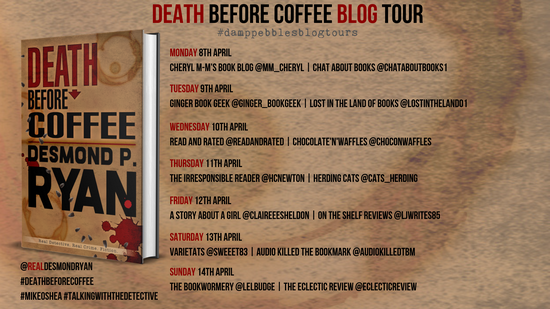
My thanks to damppebbles blog tours for the invitation to participate in this tour and the materials they provided.

Standing in Another Man’s Grave by Ian Rankin: Back in the saddle again, Out where Cafferty is a friend?

Standing in Another Man's GraveStanding in Another Man’s Grave

by Ian Rankin

Series: John Rebus, #18

Paperback, 432 pg.
Back Bay Books, 2013
Read: February 1 – 4, 2019

           Rebus had lost count of the number of cases he’d worked, cases often as complex as this one, requiring interview after interview, statement after statement. He thought of the material in the boxes, now being pared over by those around him–paperwork generated in order to show effort rather than with any great hope of achieving a result. Yes, he’d been on cases like that, and others where he’d despaired of all the doors knocked on, the blank faces of the questioned. But sometimes a due or a lead emerged, or two people came forward to furnish the same name. Suspects were whittled down. Alibis and stories unraveling after the third or fourth retelling. Pressure was sustained, enough evidence garnered to present to the Procurator Fiscal.

And then there were the lucky breaks–the things that just happened. Nothing to do with dogged perseverance or shrewd deduction: just sheer bloody happenstance. Was the end result any less of a victory? Yes, always. It was possible that there was something he had missed in the files, some connection or thread. Watching the team at work, he couldn’t decide if he would want them to find it or not. It would make him look stupid, lazy, out of touch. On the other hand, they needed a break, even at the expense of his vanity.

The book opens with Rebus at the funeral for another retired cop — it’s a strong reminder that there’s not much else in his future. A few more drinks, another handful of cigarettes, a few more unfinished books and then death. He’s got to find away to keep himself going. Having taken to retirement like a duck to the Sahara, Rebus has found work as a civilian in a cold-case unit. It doesn’t seem to be the most effective or active unit, but it’s something. True to form, he spends a lot of time butting heads with the head of the unit — who is actually a serving detective, unlike the rest of the civilians. There’s a chance when the book opens that Rebus could get re-hired as a detective, and he’s looking for anything to help that. When someone comes to visit the man who started this unit — who is now very retired and unavailable — Rebus sees his chance. He meets with this woman who claims that the recent disappearance of a young woman matches the circumstances of her daughter over a decade ago. Not just her daughter’s disappearance, but some others in the intervening years. If Rebus can demonstrate there’s a tie to these disappearances — and find out what’s happened to them and who’s responsible (preferably while the latest victim is still alive), that would go a long way to ensuring him a way back from retirement.

It doesn’t hurt that before coming to him, this distraught mother spoke to someone about the new missing person — DI Siobhan Clarke. Now, Clarke (and her boss) aren’t instantly convinced that Rebus has anything other than the desperate rantings of this woman, but she’s willing to give him enough rope to get started. Which is all Rebus needs to throw himself into things.

The latest woman to go missing has some tenuous connections to organized crime figures in Edinburgh, which may have made her a target — and also may give Rebus resources to find her that other victims’ families can’t give. He’s not shy about exploiting either option there. He also starts diving into the files and lives of the other missing women. What he finds isn’t encouraging, but it’s enough to keep investigation going. Rebus being Rebus, it’s not long before he starts finding enough strings to pull to get at least a few things unraveling. And once that starts, the rest of the case is vintage Rebus — asking questions, annoying the right (and the wrong) people, and finally putting everything together. The mystery is solved in a satisfactory way, but a lot of things were uncovered along the way that some would’ve preferred not being uncovered, relationships damaged, people hurt and lives changed. Even the positive outcomes were largely muddied, and the grays probably outnumbered the blacks and the whites.

Naturally, there’s a lot going on in this book beside the case(s). In this book, this primarily focused on three people in Rebus’ life (whether he wants them there or not).

One thing that’s new in Rebus’ retirement is that he’s picked up a new drinking buddy. Big Ger Cafferty has decided that he owes his life to Rebus (something that Rebus isn’t incredibly comfortable with). So Cafferty will take Rebus out for drinks on a regular basis. Rebus’ impression of Big Ger hasn’t changed at all, but free drinks are free drinks. so he lets Cafferty buy. The two of them being seen in public regularly together is proof to his detractors that all the rumors were true, however. This isn’t really making his case for him.

Having Rebus around is a challenge for his old friend and former mentee, Siobhan Clarke. She knows that Rebus is capable of pulling more than his fair share of rabbits from hats, and with a case/cases as messy as this, she’ll take his brand of results over nothing. But, he undercuts her leadership, he distracts her people from their tasks, and frankly, makes her look bad in front of her bosses. If she can’t control this civilian interloper, maybe she’s not the leader they thought she was. Maybe it’s just me, but I don’t think Siobhan of Exit Music and before wants to think she’d turn into the kind of DI she has, either. And Rebus makes her take stock of how much she may have “sold out” just by being around. Not that she’s become 100% by the book and in blind lockstep with the chain of command, but she’s a lot closer to it than she had been.

And, of course, we don’t say goodbye to our new friend, Malcolm Fox. We just get to see him in a new light. He’s now cast as an antagonist to Rebus. He’s not a villain, don’t get me wrong — but he’s working against Rebus, and definitely making his life harder. Of course, the way things were headed for much of this book, Siobhan might soon find herself as an antagonist to Rebus, too. It’s difficult seeing Fox in these terms, but thankfully we know we can like and trust him from his own two books, because there’s very little in these pages to commend him. But we know that Fox is a straight-shooter and he’s only got Rebus in his sights because he thinks he deserves it. Well, and maybe he got his nose bent out of shape by the man when he was in CID with him. But primarily it’s Rebus’ lifestyle — the smoking, the drinking, the going off on his own to investigate — Fox sees Rebus as a relic, the old model of detective that the service is trying to get away from. The kind of bad influence that could tank Clarke’s promising career. And then there’s his public drinking with Cafferty (not to mention all the rumors about the two of them). We know Fox is wrong — about the serious stuff anyway. But we also know he’s not totally wrong about Rebus. The only question is, will Rebus be able to win Fox over, or will he be able to work around him?

I like the Fox-Rebus dynamic, in the short-term. But I think it could get really old, really fast.

It looks like the next book will have Rebus back in CID, which is a shame. In a sense. Now, let me explain myself before Paul (and maybe others) fills my inbox/comments with objections. I’m not opposed to Rebus becoming a detective again. But I like Rebus doing cold case work. When he’s worked cold cases before — whether out of curiosity or because they’ve been reopened — he’s done really well, and the resulting books were really good. Fox did pretty good with a cold case, too, let’s not forget. In other words, Ian Rankin can write a very effective novel with his protagonists working cold cases, and I’d like to see Rebus doing nothing else for a while (especially as a civilian). Then again, we got a handful of Bosch novels doing that, why get greedy?

I enjoyed the Fox books, but this felt like coming home. It was only a few lines into the book before I think I “felt” the difference, we were back where we were supposed to be. I’m not sure how accurate that was then, but the book as a whole felt different than the Fox books did. Rankin kept a lot of plates spinning, balls in the air, or whatever cliché you want to use, here — he brought back Rebus, shook up his life a bit more, showed that Clarke was doing fine on her own, brought Fox in, showed what post-Big Ger Edinburgh was like, set up the next stage of Rebus’ career, and managed to tell a heckuva twisty murder/missing persons story. He probably accomplished a few other things, too, but that list is enough. Standing in Another Man’s Grave is just another bit of proof that Rankin is among the genre’s crème de la crème.

—–

4 Stars
2019 Library Love Challenge

A Few Quick Questions With…Jo Perry

One of the first things I did when I decided to participate in Fahrenbruary was to see if Jo Perry would participate in one of these Q&As (and thankfully she displayed poor judgment and agreed). I decided to post this today to commemorate the publication of the fourth book in her fantastic series, Dead Is Beautiful. It’ll be the next book I start and I’m hoping to have my post up about the book itself on Monday. I know the positive reviews are already popping up out there on teh IntraWebz. In the meantime, I hope you enjoy this.

What was your path to publication? What did you do to prepare yourself to this career in fiction?
I don’t believe anything prepares a person for writing fiction except writing and reading. My father’s formal education ended at fourth grade. He educated himself by reading and became a comedy writer. My mother had been a teacher. Both read relentlessly. Words, especially jokes were serious business: One wrong word and the joke’s punch evaporates.

I always wrote—mostly poetry, studied literature in college, got a Ph.D. in English, taught literature and writing, wrote episodic television and some other stuff. But despite all that I am very late bloomer when it comes to fiction. My first novel, Dead Is Better was published in 2015.

As for a “career in fiction,” I’m not there yet, but I’m very lucky that my husband, novelist Thomas Perry demonstrated how that’s done. This year he published his 26th novel, The Burglar.

Whatever one might think about Charlie (your protagonist we know best), there’s no denying that Rose is what most of your readers connect to. You recently posted something brief to Facebook about Rose’s origin — can you talk a little more about that?
During the scorching summer of 2008, I came upon a dusty, thirsty, exhausted, frightened dog that someone dumped in crowded home improvement store parking lot. I drove her home (she fell asleep immediately on the front seat of the car) and––after some listless attempts to find a home for her because we were strictly cat people––we were hers and we named her Lucy.

From the first moment she met me, Lucy upended my life, revealed new worlds and introduced me to people who have become deep, cherished, important friends. Lucy’s constancy, her sweetness despite being neglected and abused, her patience with me, a total dog-novice idiot, her sense of humor, her wisdom and her benevolence changed me completely. I experienced the bottomless, endless goodness dogs give us, and witnessed the casual and not so casual cruelties which human beings visit upon dogs hourly and daily.

The experience of knowing/experiencing Lucy, and Lola, the second dog who appeared to us, is the basis for Dead Is Better and the other books in the series—so yes, in general ways, Lucy is the model for Rose.

Outside some pretty extreme — and rare — circumstances, Charlie and Rose do little more than watch events unfold in front of them. What was the reasoning behind that choice? What are the special challenges behind that kind of protagonist for the writer?
I wanted my protagonists dead, which means that they would be ghosts. But I wanted none of the traditional ghostly machinery, telekinetic movement, special effects or general creakiness. So I set up some rules: In the afterlife the dead can touch each other, see each other and of course hear each other.

But in living world only the dead can see the dead.  They cannot be heard or felt or seen. The dead cannot affect anything directly.

The challenges are huge but fun and in some ways a relief from guns, computers, traditional violence, cell phones of crime fiction.  And ghosts are perfect voyeurs. They can spy all they want. They can float through walls. Through people. They can go anywhere at any time. And they are fearless because they cannot be killed.

Most of the time these limitations are liberating and inspiring. Other times they are a pain.

Is there a genre that you particularly enjoy reading, but could never write? Or are you primarily a mystery/suspense/thriller reader?
I love nonfiction. I don’t think I could write it well. Nonfiction demands meticulous, massive research and an ability to organize all of it into a compelling, graceful narrative.

I have become mystery/suspense/thriller reader now and love it.

What’s the one (or two) book/movie/show in the last 5 years that made you say, “I wish I’d written that.”?
TV: I wish I’d written Fauda, and The Method.

Books (short list) I wish I’d written Nikki Dolson’s All Things Violent, Grant Nicol’s A Place To Bury Strangers, Denial by Paddy McGrane, James Craig’s A Slow Death and A Shot At Salvation, Timothy Hallinan’s Pulped, For The Dead and Crashed, Saira Viola’s Jukebox, Fidelis Morgan’s The Murder Quadrille, Seth Lynch’s Salazar novels, Thomas Perry’s novels, esp. the Butcher’s Boy novels, the Jane Whitefield novels, and Strip; Derek Farrel’s Danny Bird mysteries, David Keenan’s This Is Memorial Device.

This one’s not about you directly, but what is it about Fahrenheit Press that seems to generate the devotion and team spirit that it does (or at least appears to)? I don’t know that I’ve seen as many authors from the same publisher talk about/read each other’s books — or talk about the publisher — as much as you guys seem to. Is it simply contractual obligation, or is there more?
In no way do F13Noir/Fahrenheit Press require their authors to, as they might say, flog their publishing house. The truth is that their writers and readers rave about them because they love them. They’re funny, they’re honest, they’re daring, and they take risks.

Too often publishers avoid risk entirely and busy themselves with policing genre boundaries to make the selling of books easier, i.e. so they can say, “This luminous thriller is Girl On A Train meets [insert name of best seller here].  Any book that violates genre norms or bends genres or or that is too weird is a no-no. An example: A publisher liked Dead Is Better except for one small thing—the dog. I was told that I couldn’t have a “dog detective.” That a dog protagonist in a mystery was not permitted. Was a rule breaker. That if I removed the dog, they’d look at the book again. Which means either that they didn’t like the dog, which is fine, or that they didn’t know how to sell the dog because a dead dog protagonist was too different, too weird, maybe too upsetting for some.

Fahrenheit Press/F13Noir don’t play that game or any games––which is extraordinary. They look for crime fiction that (and I cannot speak for them, but I infer this from their list) makes the reader feel something, that’s exciting, daring, fresh, brave. They look for powerful voices. They don’t try to tame crime fiction, they like it wild, unapologetic, unadulterated. In fact, they kind of dare writers to produce the most courageous books they are capable of writing.

That is miracle and I am endlessly grateful to them because of it.

Thanks for your time — and thanks for Charlie and Rose. I hope you enjoy continued success with them (and not just because that would guarantee me more of them to read).

Black Moss by David Nolan: A Mystery that will Haunt You in a Stunning Debut Novel

Black MossBlack Moss

by David Nolan
Series: Manc Noir Book 1


Kindle Edition, 291 pg.
Fahrenheit Press, 2018

Read: Febryary 11 – 12, 2019

           Danny had never been out here before. He’d heard the moors were bleak, but he wasn’t prepared for the sheer unrelenting nothingness of the area. It was like the world had been horizontally cut in two –sky at the top, moor at the bottom, with nothing to provide any form of relief from the two themes. Not even a tree. Not one. In any direction. Bleak.

David Nolan’s debut novel is one of those that I’m having a hard time gauging how much to say about the plot. If I don’t keep a foot on the brake pedal, I know I could easily go on and on and quickly give away everything — and where’d the fun be in that for you?

Not that “fun” is a good word for about 96% of the experience of this book. This isn’t one of those books (not that there’s anything wrong with that).

Half of this book is told in April of 1990. Rookie radio reporter Danny Johnston is assigned to cover a murder miles away from the story that he wants to cover (and that just about every other reporter in the Manchester area is covering), the real-life riot at Strangeways prison. As Danny is watching the police fight the wind, he sees the body they’re trying to cover with a tarp. It’s a young boy, clearly the victim of murder. A few days later, he’ll learn just how brutal the killing is — but it doesn’t matter. From the moment he saw the body, Danny was committed to making sure the killer is caught.

The other half takes place in 2016, when noted television report Daniel Johnston wraps his car around a tree. He’s drunk — he usually is, it turns out — and this is the last time. The iPhone video of his exit from the car and the drunken ranting and falling that ensues doesn’t do his image any favors. He’s facing criminal charges, the collapse of his career and therapy. Between some great medication, someone to listen and a lot of free time, he makes some progress on putting himself back together and decides to go back to Manchester to try to complete the quest he started so long ago. He also explores some of his own demons along the way — we don’t spend that much time with that, but enough to get a better idea what’s behind a lot of his own behavior.

In addition to Danny/Daniel, there’s a small-town newspaper reporter, three police detectives, several Radio Manchester employees, an MP and some residents of a children’s home and the woman who runs the place that serve as the major characters in 1990. In 2016, we still see most of these characters — just at new stages in their lives. Some of them have moved past this crime, others remember it as much as (if not more than) Danny. None of these characters are the kind of splashy or obviously entertaining individuals that many mystery novels are peppered with — they’re simply well-rounded people. Flawed, with obvious issues and strengths.

From the first chapter (see the quotation above) to the end — there is a bleak feeling pervading this work. Between the geography, the situation, and the weather that’s the best word for it. I don’t describe the feel of books often enough — but this is one of those books that the adjective “atmospheric” was invented for. There’s an atmosphere, a mood, an undercurrent running through this book. Hopelessness surrounds the so many of these characters. Wretched also works to describe the feeling.

Which isn’t to say that this is a book you trudge through — you don’t. You really don’t notice the time you spend in this book, it swallows your attention whole and you keep reading, practically impervious to distractions. Yes, you feel the harsh and desolate atmosphere, but not in a way that puts you off the book. You want to get to the bottom of things with Danny and his friends/allies.

The mystery part of this book is just what you want — it’s complex, it’ll keep you guessing and there are enough red herrings to trip up most readers. As far as the final reveal goes, it’s fantastic. I had an inkling about part of it — but I didn’t see the whole thing until just a couple of pages before Nolan gave it to us. Yet when the reveal is finished you’re only left with the feeling of, “well, of course — what else could it have been?”

And then you read the motivation behind the killing — and I don’t remember reading anything that left me as frozen as this did in years. There’s evil and then there’s this.

This is a stark, desolate book (in mood, not quality) that easily could’ve been borrowed (or stolen) straight from the news. Nolan’s first novel delivers everything it promises and more. You won’t be sorry if you give this one a shot, you’re not going to read a lot of books better — or as good — anytime soon.

—–

5 Stars

Fahrenbruary Repost: Dead is Good by Jo Perry

One more Charlie and Rose book for you this week — and it’s a doozy. I hope you’re enjoying this stroll through these books as much as I am — I’m enjoying them so much, that for the last two days I’ve forgotten to mention something incredibly important — the fourth book in this series, Dead Is Beautiful comes out tomorrow — Fahrenbruary 14th! Go — click and buy. Then come back tomorrow for a special treat.

Dead is GoodDead is Good

by Jo Perry
Series: Charlie & Rose Investigate, #3

Kindle Edition, 282 pg.
Fahrenheit Press, 2017
Read: August 3, 2017

Oh, and after all this time I learned something else about being dead.

Death is failure.

Death is loss.

Everything—who you are, what you know—goes.

Whoever you thought you were, you weren’t and you’re not.

When he was alive, Charlie Stone was married multiple times to pretty horrible women (if we’re to believe him — and we might as well, he seems pretty upfront and honest about this kind of thing), not that he was any catch, either. But he really only loved one person, Grace Morgan. Grace broke things off with Charlie and moved on with her life, but apparently after hearing about his murder, she was moved to change her approach to art — deciding to challenge the audience, forcing them to realize how close to death they are.

Yeah, it sounds pretty silly and pretentious to me, but hey…that’s not the important part of the story. Maybe if we got more examples of her art, I’d care more and maybe even understand. What is important about Grace, for our purposes, is that her life is in danger, it’s because of this danger that Charlie and Rose have been brought from their afterlife-limbo back to Earth.

The book opens with one of the more blatant suicide-by-cop scenes you’ve ever read, which is intended to serve as protection for Grace. It doesn’t work out, or the book would be really short. Powerless to do anything but watch and hope things turn out okay, Charlie and Rose travel around L.A. discovering for themselves what it was that endangered Grace in the first place — which brings them into a world of drugs, sweatshop workers, deceptive piñatas, and smuggled birds.

This is a very tangled story, it takes Charlie quite a while to put the pieces together — Rose has her own priorities in this mess and spends some time away from Charlie, unwilling to turn her focus on his behalf. The way that this criminal enterprise is eventually revealed to work not only seems like something that really exists, but is revealed in a way that is narratively satisfying.

Charlie will tell his readers over and over that there’s no character growth in death — that’s nonsense. Post-mortem Charlie is a much more emotionally mature and self-sacrificing kind of guy than pre-mortem Charlie was. In this book we see him come to — or at least acknowledge — a greater and deeper understanding of what love is, and what he allowed his previous relationship to become. It may not do him any good in the afterlife, but Charlie is better for it, and in someway we can hope that Grace is better off having gone through all this, so that whatever life has in store for her can be tackled face-on.

I love these characters — even while we readers don’t fully understand their circumstances, how they know where to go, what brings them to this world at certain times. Even while they don’t have much better of an idea than we do (at least Charlie doesn’t). I love how while they can’t interact with their environment, the people they see and events they watch unfold, they are driven to find answers, driven to care about what’s happening. There’s something about that compulsion — and success they have in figuring things out — that matters more than when Bosch or Spenser or Chin and Smith put all the pieces together to thwart someone.

This wasn’t as amusing as previous installments, but it was just as satisfying — maybe more so. For a good mystery with oddly compelling characters, once again, look no further than Jo Perry.

The L.A. County Department of Medical Examiner-Coroner has a gift shop?? Why isn’t anyone investigating this? It may be real, it may be popular and legal. But surely that’s a crime against tact, right?

—–

4 Stars

Fahrenbruary Repost: Dead is Best by Jo Perry

I like this post better than I liked my post on the first of the Charlie and Rose books (that we saw yesterday), but I still think I could’ve done better. Nevertheless, I agree with almost everything I said back in 2016 — especially the main point: get this book.

Dead is BestDead is Best

by Jo Perry
Series: Charlie & Rose Investigate, #2

Kindle Edition, 296 pg.
Fahrenheit Press, 2016

Read: May 2, 2016

You’d think that having given up the ghost I’d be beyond the grasp of my ex-stepdaughter, the parasite.

Sure, Charlie’s less-than-charitable assessment, doesn’t make it sound like death has mellowed him at all — or that we really want to spend a novel looking into the trials and tribulations of his ex-stepdaughter, Cali. (a quick aside: I loved Charlie’s rant about the pretentious names given to Cali and her peers, “Truth, Canyon, Druid, Turquoise, Vanilla and Road. Don’t tell me those are names–– they’re brands. “) But last time we learned that 1. Charlie has actually mellowed a bit, we just need more time to see it; 2. He’s generally right about his family; and it won’t take long before the reader will actually care about Cali. As difficult as she’ll make it.

Textbooks will tell you that Cali is a “troubled teen.” Which is a pretty vague, and a likely outdated, term. She’s a drinker, a drug user, defiant daughter (although once you meet her mother and current stepfather, you kind of get that) in trouble with the law. But it doesn’t take long once Charlie and Rose start to follow her for her to end up in more trouble than she — or anyone — deserves.

Once again, there’s very little that Charlie and Rose can do other than watch what’s happening and put two and two together in the almost vain hope that Charlie can do something about it. Rest assured, they do, and it doesn’t involve another near death experience (I was a little afraid they’d just be hanging around Surgical Centers waiting for the next opportunity to talk to another ghost). It’s hard to believe that a mystery series where no one knows that the main characters did anything works. But this does.

What can I say about Rose? She’s at once one of the most realistic dog characters I can remember reading lately (she doesn’t talk, narrate, have a point of view chapter, or communicate telepathically), and yet, as a ghost, is the hardest to believe. She’s such a good influence on Charlie, I’m glad whatever or Whoever brought them together after their deaths.

Charlie said something in the last book about death not being about learning anything or insight or growth, that he stays the same. I don’t believe it, he’s not the same guy. But it’s probably a good sign that he doesn’t realize it.

Something I should’ve mentioned when I talked about the previous novel, these chapter epigraphs are great. They represent a truly impressive collection of quotations about death, some funny, some thoughtful, just about all of them keepers. The book is worth the effort just to read these (but you should really focus on the rest of the book).

Perry’s freakishly short chapters make you think Robert Parker was prone to be long-winded and rambling, but they work. You could probably make the case that they’re a commentary on the transient nature of human life or something (if you wanted to, and I don’t). They keep things moving, really keep anything from dragging, and help you get how Charlie and Rose can jump from place to place with ease.

Funny, poignant, all-around good story-telling. Plus there’s a dog. You really can’t ask for more than that. It’s easy to see why people as diverse as Cat Warren and Eric Idle commend these books. I strongly recommend this one (and the predecessor).

—–

4 Stars

Page 84 of 153

Powered by WordPress & Theme by Anders Norén