Category: Fiction Page 102 of 348

Towel Day ’22: Some of my favorite Adams lines . . .

(updated 5/25/22)

There’s a great temptation here for me to go crazy and use so many quotations that I’d get in copyright trouble. I’ll refrain from that and just list some of his best lines . . .*

* The fact that this list keeps expanding from year to year says something about my position on flirting with temptation.

The Hitchhiker's Guide to the Galaxy

The Hitchhiker’s Guide to the Galaxy

Time is an illusion. Lunchtime doubly so.

This must be Thursday. . . I never could get the hang of Thursdays.

“You’d better be prepared for the jump into hyperspace. It’s unpleasantly like being drunk.”

“What’s so unpleasant about being drunk?”

“You ask a glass of water.”

(I’m not sure why, but this has always made me chuckle, if not actually laugh out loud. It’s just never not funny. It’s possibly the line that made me a fan of Adams)

He had found a Nutri-Matic machine which had provided him with a plastic cup filled with a liquid that was almost, but not quite, entirely unlike tea.

In those days spirits were brave, the stakes were high, men were real men, women were real women and small furry creatures from Alpha Centauri were real small furry creatures from Alpha Centuari. And all dared to brave unknown terrors, to do mighty deeds, to boldly split infinitives that no man had split before . . .

“Look,” said Arthur, “would it save you a lot of time if I just gave up and went mad now?”

The ships hung in the sky in much the same way that bricks don’t.

For a moment, nothing happened. Then, after a second or so, nothing continued to happen.

He attacked everything in life with a mix of extraordinary genius and naive incompetence, and it was often difficult to tell which was which.


The Restaurant at the End of the Universe

The Restaurant at the End of the Universe

It is a curious fact, and one to which no one knows quite how much importance to attach, that something like 85 percent of all known worlds in the Galaxy, be they primitive or highly advanced, have invented a drink called jynnan tonnyx, or gee-N-N-T’Nix, or jinond-o-nicks, or any one of a thousand or more variations on the same phonetic theme. The drinks themselves are not the same, and vary between the Sivolvian “chinanto/mnigs” which is ordinary water served at slightly above room temperature, and the Gagrakackan “tzjin-anthony-ks” which kills cows at a hundred paces; and in fact the one common factor between all of them, beyond the fact that the names sound the same, is that they were all invented and named before the worlds concerned made contact with any other worlds.

Reality is frequently inaccurate.

Life is wasted on the living.


Life, The Universe and Everything

Life, the Universe, and Everything

The Hitchhiker’s Guide to the Galaxy has this to say on the subject of flying. There is an art, it says, or rather, a knack to flying. The knack lies in learning how to throw yourself at the ground and miss.

(It goes on for quite a while after this—and I love every bit of it.)

“One of the interesting things about space,” Arthur heard Slartibartfast saying . . . “is how dull it is?”

“Dull?” . . .

“Yes,” said Slartibartfast, “staggeringly dull. Bewilderingly so. You see, there’s so much of it and so little in it.”


So Long, and Thanks For All The Fish

So Long, and Thanks for All the Fish

Of course, one never has the slightest notion what size or shape different species are going to turn out to be, but if you were to take the findings of the latest Mid-Galactic Census report as any kind of accurate guide to statistical averages you would probably guess that the craft would hold about six people, and you would be right. You’d probably guessed that anyway. The Census report, like most such surveys, had cost an awful lot of money and told nobody anything they didn’t already know—except that every single person in the Galaxy had 2.4 legs and owned a hyena. Since this was clearly not true the whole thing eventually had to be scrapped.

Here was something that Ford felt he could speak about with authority. “Life,” he said, “is like a grapefruit.”

“Er, how so?”

“Well, it’s sort of orangy-yellow and dimpled on the outside, wet and squidgy in the middle. It’s got pips inside, too. Oh, and some people have half a one for breakfast.”

“Is there anyone else out there I can talk to?”

Arthur had a swordfish steak and said it made him angry. He grabbed a passing waitress by the arm and berated her. “Why’s this fish so bloody good?” he demanded, angrily.

“Please excuse my friend,” said Fenchurch to the startled waitress. “I think he’s having a nice day at last.”


Mostly Harmless

Mostly Harmless

A common mistake that people make when trying to design something completely foolproof is to underestimate the ingenuity of complete fools.

Fall, though, is the worst. Few things are worse than fall in New York. Some of the things that live in the lower intestines of rats would disagree, but most of the things that live in the lower intestines of rats are highly disagreeable anyways, so their opinion can and should be discounted.


Dirk Gently's Holistic Detective Agency

Dirk Gently’s Holistic Detective Agency

There is no point in using the word ‘impossible’ to describe something that has clearly happened.

If it looks like a duck, and quacks like a duck, we have at least to consider the possibility that we have a small aquatic bird of the family anatidae on our hands.

Let’s think the unthinkable, let’s do the undoable. Let us prepare to grapple with the ineffable itself, and see if we may not eff it after all.

(I’ve often been tempted to get a tattoo of this)


The Long Dark Tea-Time of the Soul

The Long Dark Tea-Time of the Soul

There are some people you like immediately, some whom you think you might learn to like in the fullness of time, and some that you simply want to push away from you with a sharp stick.

It can hardly be a coincidence that no language on earth has ever produced the expression, ‘As pretty as an airport.’

The impossible often has a kind of integrity to it which the merely improbable lacks.

She stared at them with the worried frown of a drunk trying to work out why the door is dancing.

It was his subconscious which told him this—that infuriating part of a person’s brain which never responds to interrogation, merely gives little meaningful nudges and then sits humming quietly to itself, saying nothing.

As she lay beneath a pile of rubble, in pain, darkness, and choking dust, trying to find sensation in her limbs, she was at least relieved to be able to think that she hadn’t merely been imagining that this was a bad day. So thinking, she passed out.


The Last Chance to See

The Last Chance to See

“So what do we do if we get bitten by something deadly?” I asked.

He looked at me as if I were stupid. “You die, of course. That’s what deadly means.”

I’ve never understood all this fuss people make about the dawn. I’ve seen a few and they’re never as good as the photographs, which have the additional advantage of being things you can look at when you’re in the right frame of mind, which is usually around lunchtime.

I have the instinctive reaction of a Western man when confronted with sublimely incomprehensible. I grab my camera and start to photograph it.

Human beings, who are almost unique in having the ability to learn from the experience of others, are also remarkable for their apparent disinclination to do so.

The aye-aye is a nocturnal lemur. It is a very strange-looking creature that seems to have been assembled from bits of other animals. It looks a little like a large cat with a bat’s ears, a beaver’s teeth, a tail like a large ostrich feather, a middle finger like a long dead twig and enormous eyes that seem to peer past you into a totally different world which exists just over your left shoulder.

One of the characteristics that laymen find most odd about zoologists is their insatiable enthusiasm for animal droppings. I can understand, of course, that the droppings yield a great deal of information about the habits and diets of the animals concerned, but nothing quite explains the sheer glee that the actual objects seem to inspire.

I mean, animals may not be intelligent, but they’re not as stupid as a lot of human beings.


The Salmon of Doubt

The Salmon of Doubt: Hitchhiking the Galaxy One Last Time

I’ve come up with a set of rules that describe our reactions to technologies:
1. Anything that is in the world when you’re born is normal and ordinary and is just a natural part of the way the world works.
2. Anything that’s invented between when you’re fifteen and thirty-five is new and exciting and revolutionary and you can probably get a career in it.
3. Anything invented after you’re thirty-five is against the natural order of things.


And a couple of lines I’ve seen in assorted places, articles, books, and whatnot

I love deadlines. I love the whooshing noise they make as they go by.

A learning experience is one of those things that says, “You know that thing you just did? Don’t do that.”

The fact is, I don’t know where my ideas come from. Nor does any writer. The only real answer is to drink way too much coffee and buy yourself a desk that doesn’t collapse when you beat your head against it.

Solutions nearly always come from the direction you least expect, which means there’s no point trying to look in that direction because it won’t be coming from there.

Towel Day ’22: Do You Know Where Your Towel Is?

(updated and revised this 5/25/22)

The Hitchhiker’s Guide to the Galaxy has a few things to say on the subject of towels.

A towel, it says, is about the most massively useful thing an interstellar hitchhiker can have. Partly it has great practical value. You can wrap it around you for warmth as you bound across the cold moons of Jaglan Beta; you can lie on it on the brilliant marble-sanded beaches of Santraginus V, inhaling the heady sea vapors; you can sleep under it beneath the stars which shine so redly on the desert world of Kakrafoon; use it to sail a miniraft down the slow heavy River Moth; wet it for use in hand-to-hand-combat; wrap it round your head to ward off noxious fumes or avoid the gaze of the Ravenous Bugblatter Beast of Traal (such a mind-bogglingly stupid animal, it assumes that if you can’t see it, it can’t see you); you can wave your towel in emergencies as a distress signal, and of course dry yourself off with it if it still seems to be clean enough.

More importantly, a towel has immense psychological value. For some reason, if a strag (strag: non-hitch hiker) discovers that a hitch hiker has his towel with him, he will automatically assume that he is also in possession of a toothbrush, face flannel, soap, tin of biscuits, flask, compass, map, ball of string, gnat spray, wet weather gear, space suit etc., etc. Furthermore, the strag will then happily lend the hitch hiker any of these or a dozen other items that the hitch hiker might accidentally have “lost”. What the strag will think is that any man who can hitch the length and breadth of the galaxy, rough it, slum it, struggle against terrible odds, win through, and still knows where his towel is is clearly a man to be reckoned with.

Hence a phrase that has passed into hitchhiking slang, as in “Hey, you sass that hoopy Ford Prefect? There’s a frood who really knows where his towel is.” (Sass: know, be aware of, meet, have sex with; hoopy: really together guy; frood: really amazingly together guy.)

Towel Day, for the few who don’t know, is the annual celebration of Douglas Adams’ life and work. It was first held two weeks after his death, fans were to carry a towel with them for the day to use as a talking point to encourage those who have never read HHGTTG to do so, or to just converse with someone about Adams. Adams is one of that handful of authors that I can’t imagine I’d be the same without having encountered/read/re-read/re-re-re-re-read, and so I do my best to pay a little tribute to him each year, even if it’s just carrying around a towel.

Some time in 7th or 8th grade (I believe), I was at a friend’s house and his brother let us try his copy of the text-based Hitchhiker’s Guide game, and we were no good at it at all. Really, it was embarrassing. However, his brother had a copy of the novel, and we all figured that the novel held the keys we needed for success with the game (alas, for us it did not). My friends all decided that I’d be the one to read the book and come back in a few days as an expert.

I quickly forgot about the game. Adams’ irreverent style rocked my world—could people actually get away with saying some of these things? His skewed take on the world, his style, his humor…and a depressed robot, too! It was love at first read.

It was one of those experiences that, looking back, I can say shaped my reading and thinking for the rest of my life (make of that what you will). Were my life the subject of a Doctor Who or Legends of Tomorrow episode, it’d be one of those immutable fixed points. I read the books (particularly the first) so many times that I can quote significant portions of it, and frequently do so without noticing that I’m doing that. I have (at this time) two literary-inspired tattoos, one of which is the planet logo*. In essence, I’m saying that Adams has had an outsized influence on my life and is probably my biggest enduring fandom. If carrying around a (massively useful) piece of cloth for a day in some small way honors his memory? Sure, I’m in.

* I didn’t know it at the time, but Adams didn’t like that guy. Whoops.

One of my long-delayed goals is to write up a good all-purpose Tribute to Douglas Adams and his work post, and another Towel Day has come without me doing so. Belgium. Next year . . . or later. (he says for at least the 8th straight year, a work ethic I like to believe Adams would endorse).

In the meantime, here’s some of what I’ve written about Adams. A few years back, I did a re-read of all of Adams’ (completed) fiction. For reasons beyond my ken (or recollection), I didn’t get around to blogging about the Dirk Gently books, but I did do the Hitchhiker’s Trilogy:
bullet The Hitchhiker’s Guide to the Galaxy
bullet The Restaurant at the End of the Universe
bullet Life, The Universe and Everything
bullet So Long, and Thanks For All The Fish
bullet Mostly Harmless
bullet I had a thing or two to say about the 40th Anniversary of The Hitchhiker’s Guide to the Galaxy
bullet Last year, I took a look at the 42nd Anniversary Illustrated Edition of The Hitchhiker’s Guide to the Galaxy
Also, I should mention the one book Adams/Hitchhiker’s aficionado needs to read is Don’t Panic by Neil Gaiman, David K. Dickson and MJ Simpson. If you’re more in the mood for a podcast, I’d suggest The Waterstones Podcast How We Made: The Hitchhiker’s Guide to the Galaxy—I’ve listened to several podcast episodes about this book, and generally roll my eyes at them. But this is just fantastic. Were it available, I’d listen to a Peter Jackson-length version of the episode.

I’ve only been able to get one of my sons into Adams, he’s the taller, thinner one in the picture from a few years ago.

You really need to check out this comic from Sheldon Comics—part of the Anatomy of Authors series: The Anatomy of Douglas Adams.

TowelDay.org is the best collection of resources on the day. One of my favorite posts there is this pretty cool video, shot on the ISS by astronaut Samantha Cristoforetti.

Even better—here’s an appearance by Douglas Adams himself from the old Letterman show—I’m so glad someone preserved this:

Love the anecdote (Also, I want this tie.)

Nothing to See Here (Audiobook) by Kevin Wilson, Marin Ireland: This Family Drama Hits All the Right Notes

Nothing to See HereNothing to See Here

by Kevin Wilson, Marin Ireland (Narrator)

DETAILS:
Publisher: HarperAudio
Publication Date: October 29, 2019
Format: Unabridged Audiobook
Length: 6 hr., 40 min.
Read Date: May 16-17, 2022
Support Independent Bookstores - Visit IndieBound.org

What’s Nothing to See Here About?

Over a decade ago Lillian and Madison were roommates at a boarding school for the upper crust (or scholarship kids like Lillian). They were incredibly close until Lillian was expelled. Even then, Madison wrote Lillian regularly and Lillian responded sometimes. They didn’t see each other, only corresponded.

Madison’s gone on to success in politics—first as a campaign staffer, now as the wife of a Senator, who is likely to be tapped for a Cabinet position. Lillian…well, she’s not done really well for herself. The controversy over her expulsion followed her through school—she didn’t get the scholarships she needed to get out of her situation. She’s still living with her mother—which is a pretty contentious relationship.

Now Madison writes with a job offer/plea for help. The Senator’s previous wife has recently died and he needs to take custody of their children. Madison would like Lillian to act as a governess (Lillian keeps saying “nanny,” much to Madison’s consternation) for them, at least until her husband’s nomination is confirmed by the Senate.

There’s a catch. The twins will sometimes burst into flames. Like Johnny Storm without the flying or the trip into space that goes horribly wrong.

They won’t suffer any injury from it, but the same can’t be said for their clothing or anything near them. Lillian needs to keep them out of the press, away from Madison’s son, and hopefully under control. They want to/need to take care of the twins, but really don’t want to have anything to do with them.

This will be the best-paying job Lillian ever has held. She knows nothing about working with kids—and the only models she’s ever had for it are horrible. But she’ll do whatever Madison asks (and she could use the money). Also, she knows what it’s like to be a kid who needs a break—maybe she can help these kids out.

A Pleasant Twist

So you have a couple of kids who burst into flames from time to time. 97% of authors are going to devote the novels to the rest of the characters spending the bulk of the book trying to figure out how or why that happens, and what they can do to stop it/duplicate it/fight crime with it.

Wilson’s in that other 3%, thankfully. Yes, there are some efforts to learn why it happens, but that’s never the focus—and most of the time, those who are investigating aren’t characters who were supposed to be that sympathetic.

The focus remains on the kids as kids—how does Lillian help them feel safe? Wanted? Normal? She does work with them on not bursting into flame—but it’s not so much about the ability/affliction, but about helping them to be comfortable in their own skins—whatever temperature it is. It’s about self-acceptance (which leads to control).

How Was the Narration?

Normally, it takes me a chapter or two to “get into” a new-to-me narrator, or at least to decide what I think of the narration overall. But Ireland won me over within the first couple of minutes—as a certain janitor says, “I don’t know what IT is, but [s]he’s got it.”

She’s a narrator I’ll keep my eyes out for. I don’t know that I’ve seen her in anything, but I saw today that she’s going to be in the Justified revival—I’m looking forward to that.

So, what did I think about Nothing to See Here?

One of the reasons that I put off reading/listening to this book for so long, was that I remember The Family Fang falling apart in the end—or at least not ending as good as the first 80% or so of the book was*. I was more than a little apprehensive that the same thing would apply here. Thankfully, I was wrong.

* My memory of it is hazy, that’s just the sense I have—I could be wrong.

This book started strong and kept getting better—it didn’t end like I thought it would but ended the only way it could’ve (in retrospect). The only way it could’ve been better is for the middle bit to be longer and more detailed. These are fantastic characters, and the concept is just as fantastic. These kids belong in a speculative work of some kind—SF or Fantasy (Urban or otherwise). But no, Wilson puts them in the middle of a family drama. And it’s great to see. Funny, warm, and heartfelt—Nothing to See Here scored on all fronts for me.


4 1/2 Stars

This post contains an affiliate link. If you purchase from it, I will get a small commission at no additional cost to you. As always, opinions are my own.

The Traitor’s Heir by Anna Thayer: He’s Gonna Have to Serve Somebody

The Traitor's HeirThe Traitor’s Heir

by Anna Thayer

DETAILS:
Series: The Knight of Eldaran, #1
Publisher: Lion Fiction
Publication Date: May 15, 2014
Format: Paperback
Length: 541 pg.
Read Date: May 16-17, 2022
Support Independent Bookstores - Visit IndieBound.org

What’s The Traitor’s Heir About?

When the book opens, Eamon Goodman, the orphaned son of a bookbinder currently a cadet in the final stages of his training as a member of the army of the Master of the River Realm. He doesn’t seem to be very good at being a soldier but is committed to passing and taking the oath. Beyond that, his heart doesn’t seem to be in it, either—but maybe it’s just the best route for some sort of security for him.

He seems to be a decent guy in an army that doesn’t have a lot of them—although those traits seem to be highly valued. After taking his oath, and achieving more success than seems deserved he meets someone who claims to be a descendant of the true king, deposed some centuries ago. Eamon agrees to work for this King in the capital.

Eamon isn’t the Chosen One—that’s (presumably) the King. However, Eamon is a direct descendant of the last King’s First Knight—champion and advisor. He’s not the Chosen One—he’s more like the Chosen Sidekick. Eamon’s calling seems to be to aid the King to reclaim the throne and serve him.

He goes to the capital and follows the King’s wishes. Until, with the help of a beautiful noblewoman, he gets distracted and serves the Master. Then circumstances lead him back to the King. And then…he ping-pongs between the two until he makes a final choice.

What I Don’t Get…

I’ve run into this issue before, this isn’t me picking on Thayer. The reader is clearly to get invested in this struggle between the King and the Master, we’re supposed to want to see the Master defeated and the King to retake the throne. But…

There is no reason to root for the King and his forces here beyond “generations ago his ancestor lost the throne due to the duplicity of his trusted knight. We have no vision of how he’ll improve anything for anyone but those supporters of his that have to hide their allegiance or have to live in his secret campground. His being on the throne would allow them to live openly and/or in society. Yes, he seems to be kind, compassionate, and honorable, but…there are a lot of good guys who happen to be related to someone who used to be in power that shouldn’t be put back in a position of authority.

There aren’t a lot of reasons for the reader to want to see the downfall of The Master. Sure, he treats those sewing dissension in the populace and/or actively working to bring down his government harshly. But…what government doesn’t? The methods he uses seem extreme and capricious, but also seem like the kind of thing a government in this setting would do.

Don’t get me wrong, it’s clear that The Master is evil, he manipulates Eamon throughout—and anyone who gets “behind the curtain” to see how the government is run should have qualms about it. But John and Jane Smith working away in their village outside the city aren’t being oppressed. They’re not being starved. They’re not being exploited. The same is true for Jill or Joe practicing their trades or selling their wares in the cities.

I can tell you why Panem’s President Snow should be defeated. I can tell you why the Golds should be replaced by the government that Darrow’s revolt made possible. The Sheriff of Nottingham? Oh, absolutely—Robin Hood is in the right. The White Witch and her never-ending (and Christmas-free) Winter need to be overthrown. But I can’t tell you how things are going to be better for the River Realm or its people. That’s really hard for me to push past.

So, what did I think about The Traitor’s Heir?

Thayer has a thinly disguised allegory here—our protagonist is a good man who has sworn an allegiance to an evil master while being given grace by the rightful king, who appeals to him to freely choose to serve this king. Allegories aren’t necessarily supposed to be subtle, but this was just one degree shy of Pilgrim’s Progress-level obviousness. Go for allegory if you want, but unless you’re Bunyan, do something other than use it like a 2×4 in the hands of “Hacksaw” Jim Duggan.

Eamon didn’t struggle between the two who wanted his allegiance. If you think of his allegiance as a number line from -10 to 10, he was wholly devoted to -10 and then swung to the other extreme. Then he’d rush back to -10. He never spent any time at 5, or -5—always the extreme. Show me some wavering. Show him spending some time around 0, teetering in each direction. Give me conflict. All I see is a flake that two antagonists are vying over—for no discernible reason than his status as Chosen Sidekick.

Eamon is a problematic character for me—even without his wavering allegiances. I clearly can’t buy into the political struggle. I’m dissatisfied with the world-building (I had a section detailing it, but deleted it because this post was becoming too negative). This book was headed for the DNF pile…and yet.

And yet…

Thayer kept ensnaring me. I couldn’t stop reading. I wasn’t enjoying anything, didn’t think I was reading a decent book—but I had to know what the next page held. And the next. And the next. Sure, I kept checking the page number so I knew how much longer this would go (and kept wishing the number was closer to 541)—but I’d have to see what 253 held. It makes no sense to me—but Thayer got her hooks in me. Her knack for that means I can’t go lower than 3 (begrudging) stars

So yeah, this was a compelling, if frustrating, read. Your results may vary. I know at least one friend/sometimes reader of this blog will disagree with me (he is, after all, who recommended the book to me). Others are more than welcome—encouraged, even—to weigh in and tell me what I missed. Give this a shot if the idea appeals to you—the trilogy looks like it’ll take a different shape than most. Just that novelty may be enough to intrigue you (it pulls on me).


3 Stars

This post contains an affiliate link. If you purchase from it, I will get a small commission at no additional cost to you. As always, opinions are my own.

The Friday 56 for 5/20/22: Heroic Hearts edited by Jim Butcher and Kerrie L. Hughes

The Friday 56This is a weekly bloghop hosted by Freda’s Voice.

RULES:
The Friday 56 Grab a book, any book.
The Friday 56 Turn to Page 56 or 56% on your ereader. If you have to improvise, that is okay.
The Friday 56 Find a snippet, short and sweet.
The Friday 56 Post it.

from Page 56 of:
Heroic Hearts

Heroic Hearts edited by Jim Butcher and Kerrie Hughes, “Comfort Zone” by Kelley Armstrong

My faith in humanity has been tested by the sheer number of the last kind. Ghosts trapped in this realm by bitterness and a need for revenge. I’ve taken to humming “Let It Go” as my answer, which works much better on modern ghosts.

Then there are the ghosts who treat necromancers like an Internet connection. They want us to pop off an e-mail. Or check the stock market. Hey, you there, necromancer, can you tell me how the Cubs are doing this season? Can you tell me how my favorite TV show ended? Simple requests, easily completed, but once you start doing them, you never stop, and pretty soon, you have a dozen ghosts wanting weekly coffee dates, during which they watch you creep on their family and friends’ social media accounts.

Just say no. The mantra of necromancers everywhere.

Heroic Hearts ed. by Jim Butcher and Kerrie L. Hughes: Street-wise Herculeses to fight the rising odds

Heroic HeartsHeroic Hearts

edited by Jim Butcher and Kerrie Huges

DETAILS:
Publisher: Ace
Publication Date: May 3, 2022
Format: Paperback
Length: 345 pg.
Read Date: May 18-19, 2022
Support Independent Bookstores - Visit IndieBound.org

Heroes have fascinated humanity since we started telling stories. They became even more fascinating when we started writing the stories down—and achieved the status previously reserved for pantheons of deities when we started putting them on the big screen. Heroes have become big business.

But heroes, real heroes, aren’t titans or icons.

Real heroes are standing behind cash registers, starting cold trucks, getting kids out of bed. They’re the everyday humans who happen to be standing there when something bad happens, and when there is a sudden need for skill, courage, or intelligence. They’re the regular people in irregular circumstances who find themselves considering others first and standing up to do whatever needs to be done.

What’s Heroic Hearts About?

In her Foreword, Kellie Hughes describes this as

a collection of hopeful stories about courage, bravery, codes to live by, and people you can trust.

Who doesn’t love a hero story? Here we have twelve stories from a dozen UF authors all approaching this idea in their own distinctive ways. Some are stand-alones, some are parts of a series.

Authors I’m Not That Familiar With (if at all)

It’s the rare anthology that will be full of only authors you know well—half the point of one of these is to be exposed to someone new so you can decide if you want to read more by them.

Charlaine Harris wrote the only story I didn’t appreciate in this collection, I just couldn’t get into it. That’s likely something to do with my mood/what I ate today/something else. Most days, I simply wouldn’t have cared—I don’t think it’s in me to really like this one.

I thought the rest of the stories were entertaining and well-executed, but a few are going to get me to keep an eye out for authors/series. Chloe Neill’s “Silverspell” tempted me to check out the rest of that series, these are characters and a world I could spend more time with. Jennifer Brozek’s “The Necessity of Pragmatic Magic” was great—ditto for “Grave Gambles” by R.R. Virdi.

“Troll Life” by Hughes was just wonderful. It’s everything you want in a short story—we’re given a well-developed world, a handful of strong and interesting characters, a good plot, and it just made me smile throughout.

Authors I’m Very Familiar With

Kevin Hearne, Patricia Briggs, and Jim Butcher are what brought me to this collection. I’ve read everything I can by them, so that’s not surprising, right?

We meet up with Atticus, Starbuck, and Oberon in Australia, looking into the cause of a massive forest fire, in “Fire Hazard.” It’s told from Oberon’s point of view, which makes it a sure-fire win. I’ll read just about anything in Oberon’s voice—and this story demonstrates why. It’s funny and action-packed. Some of the best lines in the book are in this story, too.

I wasn’t that interested in “Dating Terrors,” by Patricia Briggs based on the idea. “Asil on a blind date” just doesn’t draw me in—sure, I’m curious about Asil’s activities, so I wanted to read it. But the concept didn’t grab me. That lasted only a few pages—now I want to see more about Asil’s date and her friends. Preferably with Asil around, but that’s not necessary. I should’ve known Briggs would hook me by the end, and come into it with better expectations.

This brings us to the story the book opens with (but I saved until the end), Jim Butcher’s “Little Things.” This happens days after Battle Ground, as the city (and its wizard defender) is trying to recover from those events. The “Little Things” this story focused on are Major General Toot-Toot Minimus, his forces, Lacuna, and Mister. When a threat to the castle slips by the guards and other defenses, these heroes have to rise to the challenge. It’s deceptively fun, light, and breezy. But it’s Butcher, you know he won’t let you off that easy. Dresden in the shadow of Battle Ground? The emotional core of this story isn’t small. The story made my day…I’ve got nothing negative to say about it.

So, what did I think about Heroic Hearts?

This is a strong collection of Urban Fantasy stories, with a little something for everyone. Anything I didn’t mention above was fine—they’re all written well, but some characters/stories aren’t for everyone, and that would describe the few I didn’t talk about. Every story was worth the time (except for that thing by Harris, I just didn’t see why that was written—and I wouldn’t be shocked to hear that most readers of the book will think I’m nuts for that).

This probably would’ve gotten a warm 3 Stars from me, if not for the Briggs and Butcher stories. I enjoyed almost all of these stories, and really only disliked one. But wow, those two were just outstanding. Nothing that made me as happy as those two did is going to get less than 4.

Even if you’re new to the genre or are only a fan of one or two of the authors, I expect you’ll find yourself enjoying most, if not all, of the book. Pick it up.


4 Stars

This post contains an affiliate link. If you purchase from it, I will get a small commission at no additional cost to you. As always, opinions expressed are my own.
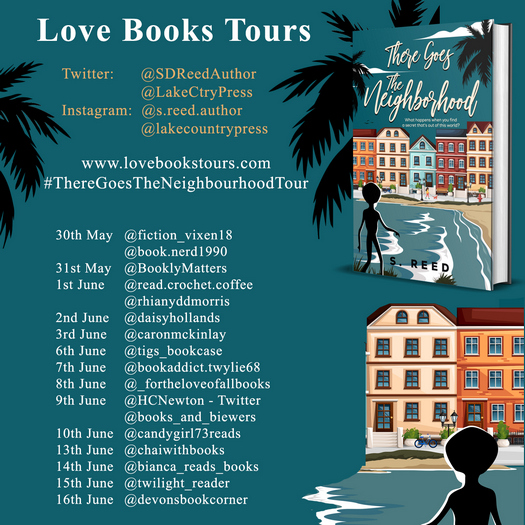
Lifesign (Audiobook) by Carl Goodman, Louise Brealey: A Gripping Procedural with a Little Something Extra

LifesignLifesign

by Carl Goodman, Louise Brealey (Narrator)

DETAILS:
Series: DI Eva Harris, #2
Publisher: Audible Originals
Publication Date: September 23, 2021
Format: Unabridged Audiobook
Length: 13 hr., 6 min.
Read Date: May 10-13, 2022

What’s Lifesign About?

DI Ava Harris continues her work outside her specialty and keeps proving she’s pretty good at it—the book opens with a great action sequence as she leads a team on a raid.

After that, Harris is taken to what looks like a lab—a lab (or an art installation?) full of many well-preserved dead bodies (partial or intact). It’s disturbing for her and the rest of the police (and the poor teen who found it)—it’s disturbing for the listener, too. Once again, Harris and her detectives are on the hunt for a possible serial killer.

It takes a lot of time and effort for the detectives to find a common link between the victims that will hopefully lead them to a suspect. But once they come up with a theory, it indicates that there are more victims to be found—possibly still living. The pressure, which had been strong already because of the number of bodies, becomes even stronger—they have lives to save.

Paging Aldous Leekie

20/20 introduced us to a quasi-religious group, with some shades of medical science that’s a little beyond what’s actually possible right now. Eva is concerned another one of their members is involved in this case as well.

She’s not wrong, but she’s not quite right, her investigation leads to her coming across several people who’ve taken their medical research even further. There’s a strong vein of transhumanism running throughout this novel, adding a flavor to this that you don’t get in Police Procedurals.

We’re not quite talking Cyberpunk-level weirdness. This is about halfway between where we are now and Johnny Mnemonic/Mirrorshades.

There’s some more thoughtful, serious, “how can we battle diseases in new ways” types of science involved, but there are also some more frivolous (for a lack of a better term) uses of this science, too. There are a couple of scenes in a nightclub that feel like they’re straight from the Orphan Black Season 1 episodes with the Neolution club full of body modifications.

I love that Goodman’s able to take a pretty solid police procedural and mix this in so that the books become more than what they are (although, honestly, I’m betting they’d be worth the time without it)—you get something to think about, react to—maybe even research—in addition to the mystery.

My Inner Prude*

* This is an observation/description, not evaluative. I know I have a number of readers who’d want to know this before grabbing the book (and a number who don’t care, too).

There are a few scenes in this that don’t bring out my Inner Prude—but keep it bubbling right below the surface. Thankfully, Eva’s inner prude is pretty loud, too, so she keeps herself at arm’s length from those situations—well, maybe a cubit’s length anyway.

There’s also a scene of assault that’s going to be too much for many—and almost me—but it’s brief and easily skippable. It will be referred to later, but without details.

A Strange Rabbit Trail

Maybe because the same person recommended the two series to me, maybe because there’s a level of reflection on things beyond the case that are common between the two series, but at some point, I asked myself, “What would (Peter Grainger’s) DC Smith think of this case? How would he tackle this?”

I had to stop the audio and ponder this for a while—I think Eva wouldn’t be that great at any of his cases (although she might be quicker to move on some suspects), but DC dealing with the transhumanism angle is a little thought experiment that’s going to linger with me.

And very likely only me. So I won’t bore you with any of my thoughts. I just had to mention it.

How’s the Narration?

I’m going to largely just copy what I said before: Brealey nailed this—she captures Harris’ analytical approach, the distance she’s keeping from her team and the assignment—and then how that distance crumbles—and general unease with some aspects of the assignment. She also does a great job portraying the rest of the cast, and the unexpected attitudes from some of the suspects.

I don’t know if I can separate my appreciation of Brealey’s work from Goodman’s, and don’t really see the point in trying. In my mind, they’re a package deal and should stay that way.

So, what did I think about Lifesign?

This is a pretty gripping read—and as I said, there’s more to it than just the thriller/procedural. As I said before, it’s a great combination and one that I want more of (assuming they’re done as well as Goodman does it)

The key to the enjoyment of both of these books is Eva Harris. She’s this great combination of confidence and doubt; conviction and (hidden) rage; skill and dumb luck. Also, I love seeing her struggle with enforcing the law and seeking justice, while dealing with her instinct of circumventing the law in order to achieve the right result. She’s not the first or only police protagonist to balance these things, but the way Goodman pursues it is what is going to keep me coming back as long as he produces them. Think Fiona Cummings with a different group of psychological issues and without the casual drug use, and you’re most of the way to understanding Eva.

I’m hooked, if there’s a third installment in this series, I’ll be there with bells on. In the meantime, if you have the means, I strongly suggest you give this a shot.


3.5 Stars

COVER REVEAL: A Long Way from Home by Brian W. Caves

Welcome to The Irresponsible Reader’s part in the Cover Reveal for Brian W. Caves’s A Long Way from Home! We’ll get to the (IMHO) impressive cover in a bit, but first, let’s read a little about the book, okay?

About the Book

The Watcher is a psychological thriller that will keep you hooked from the first page until the last…

What the reviewers are saying about A Long Way from Home:
A sleepy town in 1960s South Georgia, where to some residents, segregation is more important than catching a killer.

An ex-homicide detective from Chicago called to honour an old promise.

With a rising body count and a community guarding their secrets more fiercely than their children, asking questions could prove deadly for the outsider…

What the Reviewers Are Saying:

★★★★★ A book that grabbed me and took me back in time, it will enthral you

★★★★★ Outstanding! Caves has weaved a gripping story. I simply could not put it down

★★★★★ A powerful read

★★★★★ Thought-provoking and unmissable from the first page until the last

About the Author

Brian W. CravesI started out as an engineer, then an estate agent, followed by senior management roles in cable TV and telecoms. Spent a few years as a management consultant and now work in the language translation industry.

I have played music all my life. Classically trained on the clarinet from the age of eight until fourteen when my world took a quantum leap forward after hearing Jimi Hendrix and Voodoo Child on the radio. I thought, wow, I gotta do that. I dumped the clarinet and I picked up the guitar and have never put it down. I have played alongside topflight musicians, both live and in studios.

From a young age I read books like Treasure Island, Robinson Crusoe, Black Beauty, Swallows and Amazons, then The Famous Five, Billy Bunter, Jennings and Derbyshire, Biggles, and Tarzan. Agatha Christie had a major impact as did Georges Simenon. I penned short stories at school – mostly adventure, but it wasn’t until I became hooked on American Crime Noir that my urge to write came crashing to the forefront of my mind. Reading Hammett, Chandler, Jim Thompson, Macdonald, and the master, James M. Cain had the same effect on my potential writing career as Hendrix had for my music.

Currently, having been further influenced by the greats of Southern literature, I write crime stories based in the Deep South as well as UK based dark noir crime set in the county of Northamptonshire where I reside. Throw into the pot crime and horror short stories and novellas and you’ll have some idea of what goes on in my head.

The Cover

A Long Way from Home Cover
There’s something about that cover that grabs you, right? I love the detail on the bird. This releases on May 27, but why not go order your copy today?

Amazon US ~ Amazon UK


My thanks to Red Dragon Publishing for the invitation to participate in this reveal and the materials they provided.

Red Dragon Publishing

Conjured Defense by J.C. Jackson: A Solid Step Forward for this Series

Conjured DefenseConjured Defense

by J.C. Jackson

DETAILS:
Series: Terra Chronicles, #4
Publisher: Shadow Phoenix Publishing
Publication Date: June 20, 2019
Format: Paperback
Length: 252 pg.
Read Date: May 12-13, 2022
Support Independent Bookstores - Visit IndieBound.org

What’s Conjured Defense About?

Ketayl and Silver are sent to a Naval research facility to investigate some sort of mishap. There’s a company, Spelltech, that’s trying to incorporate technology and magic into a defense system. Not just merging tech and magic (like Ketayl does in her TIO work), but it’s a merging of divine and arcane magics—just like Ketayl and Silver.

They’re the ideal team to run this investigation—assuming they can get the cooperation of the Naval Command and Spelltech. The head of Spelltech seems eager to work with them, once he has a glimmer of an idea of what Ketayl can do—just the fact that Ketayl and Silver get along and can work together puts them ahead of any pair that they have to work with.

It’s not long before Ketayl realizes that Spelltech assembled something without any real understanding of what was going on with it. She’s not so sure either, but she’s getting closer. This sets off a series of “near-misses” with cars as they move around the base—and then things get worse.

So, what did I think about Conjured Defense?

It was a solid story and it’s good to see Ketayl’s powers continue to grow. Ditto for the relationship between the two partners—although it sometimes feels more appropriate for a couple of high schoolers. But hey, they’re elves and will live a long time, maybe things take longer.

Jackson’s action scenes are improving—there are a couple of great ones here. I re-read the first major action scene twice because it was so good (that’s not a comment on the ones I didn’t reread—I was too involved in the story to stop with those)

There are a few bits of dialogue that frustrate me. Jackson obviously has a clear vision for what’s going on in her world and with ongoing arcs, but she’s not the best a communicating that. Ketayl has ongoing conversations with both her partner and her sister in which they allude to something without coming out and saying it—which is perfectly fine and normal. However, there needs to be something in or around those conversations that makes sure the reader can pick up on the allusion. Maybe I’m being dense, or maybe this is a continuation of something from a previous book that I’m forgetting (if that’s the case, it needs to be clarified in this book)—but I don’t think so. I think it’s a case of Jackson knows what the characters are talking about and doesn’t realize that readers don’t.

As usual, that took a lot longer to say than the paragraph about the action scenes—and it means less to me than everything else. I like these characters and really enjoy exploring this world with them, I’ve got two more of these sitting on the shelf and am eager to dive in. Fast action, charming characters, and a great SF/Fantasy setting—what’s not to enjoy? Recommended.


3.5 Stars

This post contains an affiliate link. If you purchase from it, I will get a small commission at no additional cost to you. As always, opinions expressed are my own.

Right Behind Her by Melinda Leigh: Bodies, Secrets, Memories and More are Unburied

Right Behind HerRight Behind Her

by Melinda Leigh

DETAILS:
Series: Bree Taggert, #4
Publisher: Montlake
Publication Date: September 13, 2021
Format: Paperback
Length: 303 pg.
Read Date: May 10-11, 2022
Support Independent Bookstores - Visit IndieBound.org

What’s Right Behind Her About?

Since Bree has moved back, her brother Adam has been trying to get her to go visit their childhood home with him. It’s important for him to reconnect with her there, to get her help understanding the place where their father murdered their mother and then killed himself—he was too young to remember anything. He thinks it’ll be good for her, too. Bree has put it off for months, but as the novel opens, they’re finally there.

She’s able to show Adam around a little before things get too overwhelming for her—as they start to leave they stumble on someone squatting in their old barn. There’s an altercation, and in the aftermath, one of Bree’s deputies stumbles upon some human remains that had been buried in a shallow grave.

It’s a lot to ask of a novel’s first twenty pages—significantly advance a story arc and introduce the instigating event for a police procedural. All without cutting to a song by The Who (although one, or the NCIS/Castle instrumental themes, would have worked well at the close of Chapter 3). It’s the best opening in the series so far.

Given the evidence around the bodies, the killings happened long enough ago that Bree’s father is a suspect—but there are others as well. Bree and Matt turn up a lot of old secrets and scandals in their hunt for the murderer. And many of those involve Bree’s family.

Meanwhile, the County Supervisors are finally meeting with Bree about her budget—and it’s not going well. It doesn’t help that the squatter she arrested is the drug-addicted brother of one of the Supervisors directly involved.

Basically, this is not going to be the easiest period of her new career as County Sherrif.

I Admit to Some Apprehension

Let me preface this by saying that I like the series, and that doesn’t change in this book. Still, I think the books could easily become over-dramatic. Leigh’s avoided that, but there’ve been a time or two that I worried she might not. However, when I read in the description:

When he mysteriously disappears and Bree’s niece is kidnapped…

I will admit that I got nervous. This could easily have taken on the air of some sort of Lifetime movie or something. Her niece and nephew are great as part of Bree’s non-professional life—I really think things could get overwrought if they become part of the procedural.

It didn’t. Not even close. I breathed a big sigh of relief. I still think it’s a danger moving forward, but that’s for another day (or not).

So, what did I think about Right Behind Her?

This is easily the best of the series—in terms of writing, character, complexity of the case, and overall execution. While I’ve enjoyed them all, the second and third books made me wonder a bit if the series could live up to the expectations set by the first—I’m not that worried anymore.

There’ve been three storylines that have been going since the debut and I feared Leigh was going to stretch them out another 2+ books before really doing anything with them, and she made noticeable advancements in them all—actually, in every ongoing story, but those are the ones that were starting to chafe.

I still want a little more for Chief Deputy Todd Harvey. If Leigh had given us that in addition to all the rest? I’d probably be raving about this. I’m still recommending it heartily, but I’d be doing it with an exclamation point if she’d done something with Todd.

There’s some good sleuthing here, some great character moments, solid action, and even a little romance. If you like your police procedurals to have some heart, you’d do well to give these a try. I’m eager to see where Leigh takes these characters next, and I think you will be, too.


3.5 Stars

This post contains an affiliate link. If you purchase from it, I will get a small commission at no additional cost to you. As always, opinions expressed are my own.
Page 102 of 348

Powered by WordPress & Theme by Anders Norén