Category: Fiction Page 101 of 348

BOOK SPOTLIGHT: There Goes The Neighbourhood by S Reed

Today is the day for The Irresponsible Reader’s Book Tour Stop for S Reed’s There Goes The Neighbourhood—an eccentric SF with a lot of heart.

There Goes The Neighbourhood Poster

Book Details:

Book Title: There Goes The Neighbourhood by S Reed
Publisher: Lake Country Press
Release date: April 26, 2022
Format: Ebook/Paperback
Length: 258 pages

There Goes The Neighbourhood Cover

About the Book:

They say there are only five kinds of alien contact…

But what if there is a sixth kind?

Befriending one…

Poppy Field Lane is the place to be in the ’90s. It’s a quiet, affluent New York suburb filled with a few eccentric residents. One, in particular, Ignatius Feltrap.

Ignatius doesn’t abide by the snobbish rules of her cliché cul de sac, but when she stumbles upon the secret of a lifetime while walking on the beach… her life is thrown for an out of this world loop.

Turns out, extra-terrestrials are real.

Enter Væson, a sassy alien on the run from their home planet. Væon has blended in for years, while trying to evade capture from their own evil government along with Earth’s mysterious agency until, of course, Ignatius and her trusty Labrador, Alfie, blunder upon them. It doesn’t take long for a once in a lifetime friendship to form, and Ignatius vows to protect Væson at any cost.

Can they solve the mystery of Ignatius’s late husband’s death before the alien government and Earth’s top-secret one find where Væson is? And more importantly; can they do it before the annual Neighborhood Fete…

Purchase Link:

Amazon UK ~ Amazon US

My thanks to Love Books Group for the invitation to participate in this Tour.

Love Books Group

Attachments (Audiobook) by Rainbow Rowell, Rebecca Lowman: I Stumble All Over the Place Trying to Talk About This

AttachmentsAttachments

by Rainbow Rowell, Rebecca Lowman (Narrator)

DETAILS:
Publisher: Penguin Audio
Publication Date: July 27, 2020
Format: Unabridged Audiobook
Length: 8 hr., 55 min.
Read Date: May 31-June 2, 2022
Support Independent Bookstores - Visit IndieBound.org

A Bit of Backstory

I read this back when it was first published—I stumbled upon it browsing my library’s New Release shelf and decided to give it a try. I have no idea why—it’s been over a decade, and I couldn’t tell you. It probably seemed like something in the Hornby/Tropper/Gayle-vein, which was/is good enough for me.

It led me to read the next few books that Rowell put out, too—I had to give up on her stuff once she wrote a book set in the universe that Fangirl wrote fan-fic about. It got too meta for me, and honestly, I couldn’t get into that part of Fangirl in the first place.

A few weeks ago, my library added the audiobook to its digital shelf, and so it came up again as I was browsing New Releases. Needing a break from my typical listens, I decided to revisit this. I think if I’d thought about the story a bit, I wouldn’t have. But who knows.

What’s Attachments About?

I’m not going to be able to give my synopsis, because I’m going to end up tying myself in knots (see below), so I’m just going to appropriate the Publisher’s:

Beth and Jennifer know their company monitors their office e-mail. But the women still spend all day sending each other messages, gossiping about their coworkers at the newspaper and baring their personal lives like an open book. Jennifer tells Beth everything she can’t seem to tell her husband about her anxieties over starting a family. And Beth tells Jennifer everything, period.
When Lincoln applied to be an Internet security officer, he hardly imagined he’d be sifting through other people’s inboxes like some sort of electronic Peeping Tom. Lincoln is supposed to turn people in for misusing company e-mail, but he can’t quite bring himself to crack down on Beth and Jennifer. He can’t help but be entertained—and captivated—by their stories.
But by the time Lincoln realizes he’s falling for Beth, it’s way too late for him to ever introduce himself. What would he say to her? “Hi, I’m the guy who reads your e-mail, and also, I love you.” After a series of close encounters and missed connections, Lincoln decides it’s time to muster the courage to follow his heart . . . even if he can’t see exactly where it’s leading him.
Written with whip-smart precision and charm, Attachments is a strikingly clever and deeply romantic debut about falling in love with the person who makes you feel like the best version of yourself. Even if it’s someone you’ve never met.

The Other Attachments

Obviously, Lincoln and Beth are the central characters of this novel and the relationship/lack thereof/whatever-you-want-to-call-it between them is the important bit. But the title is Attachments, and it’s the other attachments where this novel shines brightest (and least problematically…but that’s for later).

The e-mails between Beth and Jennifer are what hooks the reader—as much as they hook Lincoln. Their friendship, the support, the advice—that link is what’s going to get the reader invested in Beth.

Lincoln’s lack of attachments to others—other than his sister and mother, anyway—is what’s going to draw the reader in. You feel for him—you know he’s pretty much alone in this world—defined mostly by the broken attachment to his ex-. And that was, what, almost a decade ago? He can’t move on yet—and you see that in his relative lack of attachments. The closest thing he has to a real relationship (of any kind) is with his D&D group. It’s when Lincoln starts putting energy (spurred by reading these emails and realizing he needs something else in his life) into building/strengthening attachments/relationships with others that Lincoln is able to move on from his ex- and turn into someone that would attract Beth (or anyone else, and there are possibilities). Not just attract, but would be good for—he needs to remember how to be a good friend/romantic partner.

This aspect of the novel deserves more space, but someone else needs to do that.

So….How Did this Age?

When I mentioned to my wife that I was listening to this book (that she also enjoyed a decade ago), she asked, “How did that age? Does it work today?” And…I’m not sure.

I reflexively grant the benefit of the doubt to a book written in another period—yes in Classic book X, a character might use a term no one would use today, but that doesn’t mean the book/author is whatever -ist we’d call them now. The most counter-cultural novel of 50 years ago will seem regressive today. So, there’s a little bit of that going on.

Still, there’s no getting around the fact that Lincoln reading private correspondence and basing his infatuation off of that is creepy with a capital EEP. In 2022, there’s no way Rowell gets this published. It’s arguable that she shouldn’t have got it published in 2011.

I’m not saying Beth’s actions toward Lincoln before they meet are less creepy, but they’re negligible. Especially if you compare the two. (really not endorsing moral equivalence the way that it looks there…I don’t think).

But…ugh. This is where I reveal that I’m a horrible person, I guess. The way Rowell presents it, and the way the characters are frank about the wrongness of what he did, kind of wins me over. The last couple of chapters are so sweet that you want to see them get past this horrible hurdle. Rowell’s charm and wit carry you to this point and then you just want these two crazy kids to get past this and live a happy life together.

It’s horrible, it’s terrible, and it’s problematic in more ways than I can express in this post if I talked about nothing else. And that should not be minimized. Buuuut, it’s cute and charming and funny, and you kind of melt. (which probably does that minimizing that I just said shouldn’t be done…)

On the Other Hand…

So I wrote the above section, as honestly as I could, set it down, and did something else. And a voice started yelling in the back of my head. “But Lincoln was wrong!” He cyber-stalked Beth, invaded her privacy, violated his job duties, and probably should be prosecuted.

If I came at this fresh today. If I listened/read this without the baggage of remembering that I enjoyed this, enjoying what Rowell produces (unless it involves adolescent wizards), and generally trusting her—I wouldn’t finish it. I’d have definitively DNF’d this, given it a 1-Star, and written Rowell off forever, not even glancing at anything else she wrote.

How was the Narration?

None of the problems of the work should be laid at Rebecca Lowman’s feet—she knocked this out of the park. It can’t be easy portraying someone reading the emails of others and letting that bring out a personality, but she does it. Also, she makes you believe the emails are dialogue, not extended monologues. Really good job by Lowman (and the director/editor, too).

Lowman also did the Eleanor parts of the Eleanor & Park audiobook. I remember thinking she crushed that, too, a few years ago when I listened to it. Basically, I need to keep an eye out for audiobooks by her.

So, what did I think about Attachments?

I…I just don’t know. I gave this 4 1/2 stars when I first read it. And I can absolutely see why. But I also know that I’d give it 1 1/2 stars as I DNFed it today (Rowell’s wit would’ve forced me to give it that extra half, no matter what moral bankruptcy existed).

I did find it interesting that I remembered the plot so poorly—the last hour or so felt like I’d never read it before. I’d remembered a completely different plotline for the last third or so of the book (and have spent a week trying to figure out what novel/movie’s plot I’d unconsciously merged with this one). I got the broad overview right, but wow…the things I got wrong. But then again, it has been a decade-plus.

I can’t recommend this book, and probably shouldn’t have. But if you read it (and can get past the hero being a stalker), you’re going to enjoy it. If Rowell gets back to writing things that don’t involve teen magic users, I will gladly read it. I love her style, her humor, her references, and the way she damaged characters finding love—particularly the way they express that love. Her dialogue is some of the best around.

I just feel icky that I enjoyed this so much.

This post contains an affiliate link. If you purchase from it, I will get a small commission at no additional cost to you. As always, opinions expressed are my own.

PUB DAY REPOST: The Knave of Secrets by Alex Livingston: One night in Valtiffe and the Tough Guys Tumble

The Knave of Secrets Tour Banner

The Knave of SecretsThe Knave of Secrets

by Alex Livingston

DETAILS:
Publisher: Solaris (US), Rebellion Publishing (UK)
Publication Date: June 7, 2022 (US), June 9, 2022 (UK)
Format: eARC
Length: 400 pg.
Read Date: April 28- May 2, 2022
Support Independent Bookstores - Visit IndieBound.org

What’s The Knave of Secrets About?

Valen Quinol has pretty modest ambitions—he’s not looking to become rich or famous or anything, he’s seeking stability and comfort. He wants to open a casino with his wife, he just needs to get the money to do that. Earlier in his life, he went to wizarding school and left in a pretty noteworthy fashion, when it was clear that his scholarly ambitions were going to be thwarted. So he turned to the only thing he knew he could support himself with—gambling. And sure, in addition to being a pretty savvy gamesman, he became pretty skillful in ways to rig games.

Valen’s wife, a friend who left school with him—Teneriève—and another friend work with him now—traveling around from casino to casino, from tavern to inn, etc. making enough money to support themselves, and maybe put a little away.

After the reader meets the crew, a local ganglord pays Valen and Margo a visit to hire/threaten them into doing a job for him. Valen typically shuns his work, but this one comes with some tantalizing bait—Valen will be given the buy-in for a local tournament and can keep the money he earns. All he has to do is make sure one competitor walks losing everything they came to play with. If he turns this down, well, there’ll be a duel in his future. And Valen’s a cardsharp, not a fighter. It will not go well for him.

Because this isn’t that kind of Fantasy novel, Valen and his talents go with the less violent option. What Valen doesn’t realize—and his sponsor doesn’t either—what the defeat of his target is going to kick off and drag them all into.

Espionage, murder, political intrigue, societal upheaval—and the imminent possibility of a world war. All because of a game of chance.

We get to watch Valen and his crew (partially) realize what they’ve instigated, as well as getting points of view of several of the major players in the fallout.

Teneriève

Teneriève is one of the more interesting characters in the novel—she’s from a group that’s essentially an analogue to the Roma, and faces hostility and discrimination everywhere she goes. Valen’s crew are the only family she’s known since leaving home, but even then, she doesn’t feel secure—not because of anything they do/think, but because of her own issues.

Her story arc doesn’t go the way you think it will initially, and I’m glad it didn’t. Her story definitely doesn’t get wrapped up in a tidy bow. She could probably serve as the central character in a follow-up novel because there’s a lot to her that could be explored. I also really appreciated while the Roma-esque nature of her background informs her actions and attitudes, her story isn’t all about that identity.

Quick tip: As good as the other storylines are, pay special attention to her scenes, they’re better (and frequently more frustrating and rewarding) than the rest.

Something that Just Occurred to Me

Before I hit Publish, I was struck by the thought that this is one of the most PG-13 Fantasy novels I’ve read in a dog’s age that wasn’t targeted at an MG audience. Maybe even PG (but a couple of the deaths probably shove it into the PG-13 world).

I don’t know that this is a plus or a minus in some readers’ minds, but I thought it was noteworthy—who writes like that anymore?

So, what did I think about The Knave of Secrets?

I’ll tell you this upfront: I was not in the right frame of mind for this book when I started it. A novel with a new magic system, an involved history, a complicated (but not convoluted) political situation, and gambling—and people cheating at gambling. So you’ve got to understand the new games pretty well to visualize not just how to play, but how to cheat. Frankly, that’s a lot of work.

Now, that’s not unusual for a Fantasy novel—and I’m not complaining. I’m just saying that when I started this book I didn’t have the mental energy to dive in, and I really wasn’t in the mood for it. So when I say that before the halfway point Livingston had me very engaged and invested in the plot and characters, that’s saying something.

Livingston has done his homework and has created a very rich world here, we get to see some of it, but probably not all of it. Whether or not this is true, he really gives the sense that he knows all of the ins and outs of the history of these nations going back centuries—and (most importantly) has resisted the impulse to dump it all on the reader. Instead, he gives us just what we need to ground the story and character actions. Give me a book that hints at worldbuilding any day over a book that reads like a history textbook (however interesting the history may be).

All the marketing for this mentions The Lies of Locke Lamora, and insofar as the book centers on a specialized form of criminals fleecing the rich, sure, I can get behind it. But this has a very different flavor and feel than Lynch’s novel. Some marketing mentions The Mask of Mirrors—and that feels a bit more on point. Other comparisons involve Casino Royale—beyond the gambling, I don’t know if that’s appropriate or not, I fell asleep each of the four times I started that flick. The political intrigue of this makes it more like The Mask of Mirrors or the less bloody and sexy parts of A Song of Ice and Fire. I don’t point this out (just) to criticize the marketing materials, just to help expectations—don’t go into this novel to meet the next Gentleman Bastards, go into it for a new and distinct kind of Fantasy novel.

Despite not being in the right headspace for The Knave of Secrets and going into it with wrong expectations, I ended up pretty impressed with this novel and would definitely recommend this to a wide audience. It’s a satisfying read that will leave you wanting to know more about this world and most of these characters.

This post contains an affiliate link. If you purchase from it, I will get a small commission at no additional cost to you. As always, opinions are my own.


My thanks to The Write Reads for the invitation to participate in this tour and the materials (including the novel via NetGalley and Rebellion/Solaris) they provided.

Dirt Road Home by Alexander Nader: From the Motor City to Small Town Tennessee

Dirt Road HomeDirt Road Home

by Alexander Nader

DETAILS:
Publisher: Winding Road Stories
Publication Date: April 15, 2022
Format: eARC
Length: 268 pgs.
Read Date: June 1-2, 2022

What’s Dirt Road Home About?

After a succession of horrible boyfriends (abusive, addicts, etc.) over the years, Rose Davis started seeing someone online. And things were going pretty well for them—so well, in fact, that Rose and her adolescent sons move from Detroit to a small Tennessee town to be with him.

Her sons, Logan and Dex, aren’t crazy about this move. Logan (who is the protagonist, by the way) is 6 weeks away from high school graduation and turning 18. Dex is a year behind him. They’re Detroit through-and-through, comfortable on the streets there, they live and breathe internal combustion engines, and cannot imagine living anywhere else, but they have no choice*.

* Okay, that part rang a little false for me. He’s close enough to 18, that Logan could’ve stayed behind. He could’ve crashed with some friends—or a series of friends—or something. Child Services isn’t going to swoop in and put someone his age into the system. But suspend disbelief for it and it’s fine.

On their first night in town, Logan and Dex get into a tussle with a couple of local high school football stars, and instead of simply being the new kids in school, they’re those guys. They’re trouble. The fight video is online, putting a giant target on their back.

Logan’s ability with cars helps him find a niche, a way to fit in. He and Dex take part in some street racing and find some friends—or at least people who aren’t instinctually antagonistic toward them.

More importantly, Logan meets Leah there. She’s a stunning, confident, and charming young woman in his class who will turn his life upside down. Maybe life in the South won’t be that bad after, all.

Greg McCarter

The MVP of this book has got to be Rose’s new boyfriend, the one they move to Tennessee to be with. With only one major character flaw (which, granted, is debatable and a minor spoiler, so that’s all you get), he’s about to perfect as you’re going to get. And sure, those characters are unrealistic, but every now and then, coming across one is fine.

He’s exactly the kind of guy that Rose needs to be with (even if, like Logan, the reader doesn’t understand her appeal to him). He’s absolutely the right kind of adult make for Logan and Dex to have in their lives. You can’t help but wonder how things would’ve turned out for all four of them had they moved to Tennessee a year or two earlier.

Still, he’s the kind of guy that would improve almost any novel—if Nader had put him as the central character of a book, he’d be just as appealing—maybe more so. I know my appreciation for this novel went up a notch or two when he was in a scene.

A Problem that Only I’m Going to Have

Back in April, Pay Dirt Road was published, and about that time Winding Road Stories reached out to me about Dirt Road Home. I cannot tell you how often I’ve conflated the two titles since then. They couldn’t be more different in any way, but those titles? I have been and am forever going to refer to them both as Pay Dirt Road Home.

So, what did I think about Dirt Road Home?

This is tagged as a coming-of-age story. And technically it is, sure. But I’d want to call it something else. It’s a coming-home story, which is tricky because Logan’s really never had one. But that’s what separates this from so many coming-of-age stories, it’s about more than Logan maturing—it’s about the atmosphere that gets him there.

My only complaint with this book is that everything happens too quickly. I’m not saying it’s too fast-paced, I’m just saying that if Logan had been 3 months away from graduation instead of 6 weeks, and that the events that happened between the fight their first night and the Event That Changes Everything right before the dénouement had taken more weeks, I’d have bought everything a little easier.

I bought it all in the moment, although there was a voice in the back of my head saying, “Slow down and think about things, kid.” The problem for me came when I put the book down and thought about it. I’m not saying what happens to—and within—Logan and the rest couldn’t happen like that, I just could have accepted and liked it more. Also, I wanted to see the relationships between Logan and those new to his life more—I really liked Greg and Leah’s parents, in particular, and more scenes with them would’ve improved this already good novel.

Tossing that aside—this is a fun story. It’s sweet, it’s hopeful, and it’s heartfelt. It’s a giant departure from the rest of Nader’s work (judging by the 120 seconds I spent researching him). It’s reminiscent of James Bailey‘s YA novels and Headphones and Heartaches. I need to read things like this from time to time—things that focus on growth, improvement, and contentment/happiness. That’s what this book’s premise promises and that’s what it delivered.

Disclaimer: I received this eARC from Winding Road in exchange for this post, the opinions expressed are my own.

3 Stars

In a House of Lies by Ian Rankin: The Past and Present Collide for Rebus, Clarke, and Fox

In a House of LiesIn a House of Lies

by Ian Rankin

DETAILS:
Series: John Rebus, #22
Publisher: Little, Brown and Company
Publication Date: December 31, 2018
Format: Hardcover
Length: 372 pg.
Read Date: May 24-27, 2022
Support Independent Bookstores - Visit IndieBound.org

What’s In a House of Lies About?

A decade and change ago, a private investigator went missing. John Rebus was part of the team that spent weeks looking for him—interviewing his client, his family, his boyfriend, the target of his current investigation, and everyone else they could think of. At least that’s what the paperwork said. There’s some question about that—and the family of Stuart Bloom has forced more than one investigation into the original search.

Now his body is discovered—in an area that had been well-searched originally. There’s reason to believe that the body had been somewhere else for years. Now the police—a team featuring DI Siobhan Clarke—have to decide where it was as well as who killed him. This involves taking a fresh look at the old case as well as a new investigation. The original detectives (those who are still alive, that is) and some of the uniformed officers are brought in for questioning—which means that Rebus is under the microscope once again. This suits him fine—it’s a chance for him to have a part in closing the case once and for all (at least in his mind)

Meanwhile, Malcolm Fox’s boss assigns him to take one final look at the original investigation—given the new discovery, can they find police misconduct at the root?

Also, Clarke’s being harassed by someone—only crank calls and vandalism, so far. She doesn’t want to do anything official about it, so she asks Rebus to look into things—if nothing else, it might keep him out of her hair while she looks for Bloom’s killer. Might.

There’s a lot to untangle in these pages, thankfully, Rankin’s three detectives are on the cases.

What did I think about In a House of Lies?

This post feels entirely too short. I’m struggling here. What do I say about Rankin or Rebus (or Clarke or Fox) that I haven’t already said? I’m willing to believe that I’ve asked this question when discussing at least 3 previous books. I’m sorely tempted to just post something like: “Ian Rankin wrote a book about John Rebus. You know what to do.”

I was particularly impressed at the way Rankin got the band (on both sides of the law) back together here—for the reader, it’s expected—probably even inevitable. But it comes across as organic and unforced. Between Rebus’ retirement, and the divergent paths that the others’ careers have taken, that’s no mean feat. Unlike, say, Renée Ballard, Siobhan Clarke isn’t soldiering on with those she can’t trust. Ballard has to get Bosch involved, Clarke chooses to ask for his help and/or lets him push his way in.

Solid mysteries, expertly plotted and executed, full of characters (new and old) that you believe and get invested in. In a House of Lies feels as fresh and as compelling as Knots and Crosses.


4 Stars

This post contains an affiliate link. If you purchase from it, I will get a small commission at no additional cost to you. As always, opinions expressed are my own.

A Snake in the Raspberry Patch by Joanne Jackson: A Family and a Small Town in Upheaval In the Shadow of a Brutal Crime

Let me begin with an apology. I’d assured the publicist that got me this book that I’d have this posted pre-release and somehow scheduled to start reading it a month after publication. That makes this post 5-6 weeks overdue. My sincere apologies to Wiley Sanchez, Stonehouse Publishing, and Joanne Jackson.


A Snake in the Raspberry PatchA Snake in the Raspberry Patch

by Joanne Jackson

DETAILS:
Publisher: Stonehouse Originals
Publication Date: May 1, 2022
Format: eARC
Length:300
Read Date: May 28-31, 2022
Support Independent Bookstores - Visit IndieBound.org

What’s A Snake in the Raspberry Patch About?

It bothers me that for the second book in a row, I’m taking the easy way out and using Publisher’s Description here, but the draft I just deleted was too cumbersome and long to bother you with.

It is the summer of 1971 and Liz takes care of her four sisters while waiting to meet the sixth Murphy child: a boy. And yet, something is not right. Adults tensely whisper in small groups, heads shaking. Her younger sister, Rose seems more annoying, always flashing her camera and jotting notes in her notepad. The truth is worse than anyone could imagine: an entire family slaughtered in their home nearby, even the children. The small rural community reels in the aftermath. No one seems to know who did it or why. For Liz, these events complicate her already tiring life. Keeping Rose in line already feels like a full time job, and if Rose gets it in her head that she can solve a murder… The killer must be someone just passing through, a random horror. It almost begs the question: where do murderers live?

The Setting

A Saskatchewan farm town in the 1970s is not a likely setting for a novel about a murder—much less several murders. A 1980s Hawkins, Indiana is a more likely setting for a pan-dimensional showdown, really. I mean, Canada is unlikely enough for a murder mystery*, but rural Canada in the Seventies?

* Yes, I’m aware that even Canadians are murderers/the victims of murders. But c’mon, who thinks about it when it comes to fictional crime? Ireland, Scotland, England? Sure. The U.S.? Of course. Even Scandi Noir is a thing. But no one’s ever thought about Great White North Noir.

This setting was particularly effective—there’s an isolation to the community, it’s tight-knit, and there’s a self-reliance that it displays as well. The police/RCMP are referred to, but not really seen—this is a town that has no need for police, and even when there is one, you can’t tell. I kept slipping into thinking that the town was smaller than it must’ve been—but even there, that works. You get the atmosphere where everyone knows everyone else’s business, yet they don’t know (cannot believe) anyone who would kill anyone else—particularly a woman and her children. They know what family needs help dealing with a death or birth without having to be asked, but they don’t know who might murder anyone.

That setting seems like it’s just as likely there that a smart girl with a camera and an unhealthy interest in crime would solve the crime before anyone else would. Maybe even more likely.

The Murderer’s Identity and The Reveal

Jackson provides plenty of clues to the killer’s identity early on and keeps leaving them in the open—she doesn’t care if the reader guesses or not—and by the end she might as well have written a Brontë-esque, “Reader, ____ murdered them.” Because that’s not important.

Well, it’s important, but that’s not what she was writing about.

We’re supposed to lock in on Liz and Rose. What they’re dealing with during and following that summer. The clues they inadvertently or intentionally collect. And how they put the pieces together and their reaction to the solution (and their family’s reaction, too). I thought it was a good novel all along, but in the last couple of chapters—the Reveal—my estimation rose significantly.

So, what did I think about A Snake in the Raspberry Patch?

I’m not sure how important this is, but I thought I should mention it. Just because the would-be sleuth is a juvenile, it’d be a mistake to think this was a YA or MG novel—I think it could be read by an older MG reader or a YA reader, but it’s not targeted at that audience.

I’ve already mentioned a few of the ways that this is an atypical mystery novel, there are a few others, too. This is more about growing up in the shadow of a crime—and other trauma—rather than it is a mystery novel. It’s more Ordinary Grace than The Sweetness at the Bottom of the Pie (although Rose would love Flavia de Luce (either as a fictional character or a co-belligerent). But in the closing pages, it feels more like a murder mystery than some sort of “non-genre” work. And the mystery aspects of the novel here are far more effective than anything Krueger did in Ordinary Grace (I enjoyed the whole novel more, too)

There’s a starkness to this world and novel that makes everything a bit more haunting—that’s the Saskatchewan farm town as well as Liz’s outlook.

There’s one line of dialogue—it’s after the climactic events that leads to the reveal. That line sets up the reveal, actually. (I’m trying to be vague here) My gut tells me that a reader’s reaction to this one line is going to determine what they think of the book. I’ve gone back and forth about it in the last couple of days—it’s either a perfectly worded setup, or it’s too on-the-nose. As I write this, I’m leaning towards both—it’s necessary, and the on-the-nose-ness is the most economical way of accomplishing what it does. I’m likely spending more time on that sentence than is called for.

It took me a little bit to “get” this novel, but the more I read, the more the situation and characters burrowed into my mind, and at this point, I think they’re going to linger in my mind longer than usual. And I’m okay with that. This’ll haunt you, folks, in a good way. Give it a shot.

Disclaimer: I received this eARC from the author via Wiley Saichek and Saichek Publicity in exchange for this post—while I appreciate that, the opinions expressed are wholly mine.


3.5 Stars

This post contains an affiliate link. If you purchase from it, I will get a small commission at no additional cost to you. As always, opinions are my own.

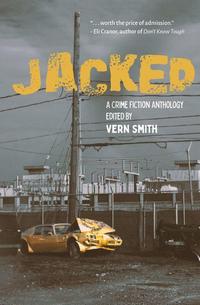
Jacked edited by Vern Smith: A Dynamite Collection of Short Crime Fiction

JackedJacked

edited by Vern Smith

DETAILS:
Publisher: Runamok Books
Publication Date: July 1, 2022
Format: eARC
Length: 258 pg.
Read Date: May 23-26, 2022
Support Independent Bookstores - Visit IndieBound.org

What is Jacked?

Run Amok Books is a indie press from New Jersey, and they’ve recently launched a crime imprint. Jacked is their “inaugural anthology,” with 20 stories of all sorts of Crime/Thriller Fiction on display.

There’s some gritty realism, there’s some noir, there’s a police procedural/samurai mash-up set in the 80s, and there’s even a “cozy espionage” (a subgenre I learned was a thing in this book). You’ve got stories featuring cops, bikers, hipsters, thrill-seeking teens, kids just trying to survive, a mechanic, addicts, rookie publicists, and rookie criminals.

Some were harrowing. some were bleak, some made me grin, several shocked me, some depressed me, some made me recoil, and I didn’t really know how to react to a couple of them.

Basically, no matter how particular your Crime Fiction Taste is, you’re going to find at least one story in here that’s going to appeal to you.

Stories that I Have to Talk About

I thought about writing a sentence or two about each story but decided that never works out well for anyone—the post becomes too long to read and to write. Also, there are a handful that I’d end up ruining by saying something (a shocking twist in a 6-page story doesn’t carry an impact when you know it’s coming).

Looking over my notes, I found myself singing “One of these things is not like the others,” when I came to “Nick Flaherty and the Body in the Lab” by Anne Louise Bannon. While you get all sorts of things in an anthology, this seemed more unlike the rest than any other story. So it stands out just for that—but I think this would’ve stood out to me regardless. I like the protagonist’s style, the narrative voice, and the world that Bannon created here. This is a spin-off of her Operation Quickline series, and I’ve added the first one to my “Buy This” list.

I really should pay more attention to titles, I know (I really only think of them in retrospect). But sometimes it pays off—there’s a better than even chance that I’d have rolled my eyes at Matt Witten’s “The TikTok Murder” if I had. I’m an old crank, I can’t take TikTok seriously—and the murder of an up-and-coming TikTok star isn’t going to get me excited. But the single note I wrote about this when I was finished was “this is exactly what I wanted to read today.”

“Samurai ’81” by Andrew Miller is one of the best concepts I’ve run across this year—you’ve got a young LAPD detective being mentored by an older, but not that-jaded detective. Not just in how to be a better homicide detective, but in being a Japanese-American detective in the early 80s. Then you throw in modern-day samurai—with the swords and everything. Who puts these things together? And how isn’t this a series already? (seriously, I have money ready to spend)

I had to limit myself to these—there are another half-dozen I could go on about.

So, what did I think about Jacked?

As with just about every anthology, in this Whitman’s Sampler of Crime, there are going to be a couple of stories that you’re going to want to spit out after taking a bite. I won’t name those for me—because I know there are those people in the world who like those orange creams or cherry cordials, even if I don’t understand them. Percentage-wise, they were smaller than I’m used to in a collection as eclectic as this one.

But even the worst story was so well-written, so well-executed that I can’t write it off as bad, just…very not-for-me. But the rest were absolutely worth my time—every single one was a well-written short story and I could see where it would rise to the top of a submissions pile. Jacked is one of those collections that I’m going to remember for a while.

If this anthology is any indication, Run Amok Crime is one to keep an eye on as are every one of the contributors.

This post contains an affiliate link. If you purchase from it, I will get a small commission at no additional cost to you. As always, opinions expressed are my own.
20 Books of Summer 2022: Kickoff

20 Books of Summer
Cathy at 746 Books is hosting 20 Books of Summer again. This challenge has been fun the last couple of years, and has proved to be a good way for me to actually read some of those “I need to read those one day” books. I’m being very ambitious this year with some of my selections, but some of those are pulling double-duty and are taking care of another reading challenge, too. It’s going to be an actual challenge to get all of these read, but I think I’m up for it. It’s a little risky with two trilogies and three books from another new-to-me series—I could end up really disliking myself, but I really want to clean up some of my shelves, you know?

I’m going with the unofficial US Dates for Summer—Memorial Day to Labor Day (today through September 5th), just because it’s easier for me to think that way. And I’ve needed those first few days of September the last two years, but let’s not think about that. Well, I say I’m starting today, but it’s going to be next Tuesday at the earliest that I get to read one of these books…proper planning and all that…

This summer, my 20 are going to be:

1. The Deepest Grave by Harry Bingham
2. Condemned by R.C. Bridgstock
3. Payback by R.C. Bridgstock
4. Persecution by R.C. Bridgstock
5. AMORALMAN: A True Story and Other Lies by Derek DelGaudio
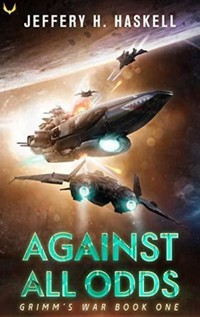
6. Against All Odds by Jeffery H. Haskell
7. One Decisive Victory by Jeffery H. Haskell
8. With Grimm Resolve by Jeffery H. Haskell
9. A World Without Whom: The Essential Guide to Language in the Buzzfeed Age by Emmy J. Favilla
10. Composite Creatures by Caroline Hardaker
11. Divine and Conquer by J.C. Jackson
12. Mortgaged Mortality by J.C. Jackson
13. The Ghost Machine by James Lovegrove
14. Roses for the Dead by Chris McDonald
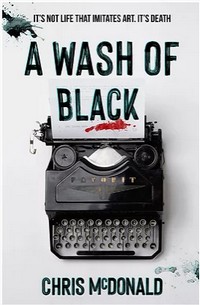
15. A Wash of Black by Chris McDonald
16. Whispers in the Dark by Chris McDonald
17. Down the River unto the Sea by Walter Mosely
18. Crazy in Poughkeepsie by Daniel Pinkwater
19. Ghost of a Chance by Dan Willis
20. The Border by Don Winslow

(subject to change, as is allowed, but I’m going to resist the impulse to tweak as much as I can).
20 Books of Summer '22 Chart

PUB DAY SPOTLIGHT: A Long Way from Home by Brian W. Caves

It’s publication day for Brian W. Caves’s A Long Way from Home, and I’m glad to help spread the word about the book. Make sure to give this a look!

Book Details:

Title: A Long Way from Home by Brian W. Caves
Genre: Mystery
Publisher: Red Dragon Publishing
Release date: May 27, 2022
Format: Paperback/Ebook
Length: 363 pages
A Long Way from Home Cover

About the Book

A sleepy town in 1960s South Georgia, where to some residents, segregation is more important than catching a killer.

An ex-homicide detective from Chicago called to honour an old promise.

With a rising body count and a community guarding their secrets more fiercely than their children, asking questions could prove deadly for the outsider…

What the Reviewers Are Saying:

★★★★★ A book that grabbed me and took me back in time, it will enthral you

★★★★★ Outstanding! Caves has weaved a gripping story. I simply could not put it down

★★★★★ A powerful read

★★★★★ Thought-provoking and unmissable from the first page until the last

Purchase Links:

Amazon US ~ Amazon UK

About the Author

Brian W. CravesI started out as an engineer, then an estate agent, followed by senior management roles in cable TV and telecoms. Spent a few years as a management consultant and now work in the language translation industry.

I have played music all my life. Classically trained on the clarinet from the age of eight until fourteen when my world took a quantum leap forward after hearing Jimi Hendrix and Voodoo Child on the radio. I thought, wow, I gotta do that. I dumped the clarinet and I picked up the guitar and have never put it down. I have played alongside topflight musicians, both live and in studios.

From a young age I read books like Treasure Island, Robinson Crusoe, Black Beauty, Swallows and Amazons, then The Famous Five, Billy Bunter, Jennings and Derbyshire, Biggles, and Tarzan. Agatha Christie had a major impact as did Georges Simenon. I penned short stories at school – mostly adventure, but it wasn’t until I became hooked on American Crime Noir that my urge to write came crashing to the forefront of my mind. Reading Hammett, Chandler, Jim Thompson, Macdonald, and the master, James M. Cain had the same effect on my potential writing career as Hendrix had for my music.

Currently, having been further influenced by the greats of Southern literature, I write crime stories based in the Deep South as well as UK based dark noir crime set in the county of Northamptonshire where I reside. Throw into the pot crime and horror short stories and novellas and you’ll have some idea of what goes on in my head.


My thanks to Red Dragon Publishing for the invitation to participate in this Spotlight and the materials they provided.

Red Dragon Publishing

Don’t Know Tough by Eli Cranor: Glory Days, Well, They’ll Pass You By…

Don't Know ToughDon’t Know Tough

by Eli Cranor

DETAILS:
Publisher: Soho Crime
Publication Date: March 22, 2022
Format: Hardcover
Length: 322 pg.
Read Date: May 19-23, 2022 
Support Independent Bookstores - Visit IndieBound.org


I feel like I said too much here—I didn’t give away any plot points (I don’t think), but I still think I maybe said too much. I don’t know how else to talk about this novel. Also, I don’t think it matters what I say, just read the first two pages of Don’t Know Tough and it won’t matter what I put here—you’re going to have to read the rest or will just walk away.

Either way, you’re probably wasting time if you read this post when you could just read the @#$&! book.

What’s Don’t Know Tough About?

Billy Lowe is a running back for a small-town Arkansas High School Football team. He’s practically half the team by himself. They wouldn’t be in the State Championship playoffs without him—and they won’t win anything without him, either.

So when he gets himself in trouble—with the school and potentially the legal system—for repeatedly giving a beating to the son of one of the area’s richest men, their first-year coach’s dreams of glory are in jeopardy.

Then, the boyfriend of Billy’s mother is found dead—likely murdered. Things go from dismal to worse.

Billy

Billy has been valued for one thing in his life—he’s a great football player. He’s the son of a high school football legend. The younger brother of a phenomenal high school player. After High School, he will likely produce a few kids who will go on to be high school football players.

He’s also the target of his mother’s drunken and abusive boyfriend. Everyone living in their trailer is. Her boyfriend (Billy refuses to use his name) replaced the drunken abusive father and husband who abandoned them years ago.

His life is defined by football and abuse. Everything else is just filler.

It’s no wonder then that Billy is full of rage and need for some kind of affection beyond his mother’s imperfect attempts to express her love.

He doesn’t know how to live. He doesn’t know how to be an adult. He knows how to be hurt and how to hurt. We see that immediately in the first two pages—the next 320 are just the repercussions of that.

Coach Trent Powers

Coach Trent sees himself in Billy. His teenaged years featured several different Foster Homes until his high school coach brought him into his home and family and changed his life. He found stability, family, and Christianity. He went on to marry his coach’s daughter.

Trent wants to copy and paste his experience onto Billy (except that whole marrying the coach’s daughter thing—there’s no way that Mrs. Powers would accept that). He has far less time to replicate that scenario than his coach had, but he still thinks he can make it work.

He fails to see the things that separate Billy and his teenaged-self. More importantly, he fails to see the differences between himself and his coach. He is earnest, idealistic, and desperate—he thinks he can impose success on the situation if he wants it enough, if he believes it enough.

At one point, Trent tries to evangelize Billy. It epitomizes this whole endeavor and is one of the more painful scenes in a novel that has an overabundance of painful scenes. I wanted to call a time-out, stop the scene and talk to Trent for a minute. This is not how you present the Gospel, sir, as if simply saying “Jesus” will solve every problem. Go read 1 Corinthians 15:1-11 and try again, stop rushing it. I think he’s genuine, I think this is a heartfelt attempt on his part to help Billy, I am convinced that Trent thinks he’s doing the right thing—but he’s approaching the whole thing incorrectly.

Trent sees himself as the Evangelical Louanne Johnson/Jaime Escalante/Principal Joe Clark/Sister Mary Clarence mixed with Coach Eric Taylor, who will rescue this kid. Sadly, he’s really just a combination of Ned Flanders and Michael Scott. I liked him, wanted him to succeed, and never thought for a moment he would/could, or should.

Race

You hear football, the South, and Crime Fiction and you think this book is going to be about race/racism—at least in part. And you’d be wrong—as hard as that is to believe.

But you’d also be almost right. One of the more impressive things about Don’t Know Tough is the subtle way it is and it isn’t about race in the South.

So, what did I think about Don’t Know Tough?

I was blown away by this. I should stop there before I go overboard with praise. But, I’m not going to. Feel free to stop reading now, though, I’m not going to improve on those six words.

I should probably start off by saying, as un-American as it is, I don’t like football. I don’t see why it’s popular, I wish so many young people in this country wouldn’t sign themselves up for the lasting physical and mental damage that it brings. I do not understand the religious fervor that grips fans of the sport—particularly in Texas and the South when it comes to high school and college teams. And frankly, I don’t know that I want to.

But hey, Dani Rojas speaks for millions when he says, “Football is life.” (even if he’s talking about the other football). So bring on the books about it—especially if you’re going to write them the way that Eli Cranor does. If you’re going to give me something this good, I don’t care what subculture, sport, or location it is—I’m going to lap it up.

As I stumbled through saying above, Don’t Know Tough is about race, it’s definitely about class and family. But it’s primarily about being an adult, about being a man, and how one gets to that stage in life—about mentorship and being mentored. Both Trent and Billy find themselves in situations where they have a greater degree of responsibility than they’re accustomed to or prepared for. Billy is thrust into it by his actions and other people’s actions. Trent decides to take it upon himself. At the same time, everyone around them recognizes them as still being (essentially) children and treats them accordingly.

This is a novel about heartbreak, despair, about clinging to a dream as it crumbles around you (whether or not you realize that’s what’s going on). There is a sense of inevitability about everything that happens to Billy, Trent, and their families—even if any of them realized what was happening and tried to change things, it just wouldn’t matter.

And all of it is told in prose that is beautiful, visceral, empathetic, and honest—I cannot convey to you the greatness of Cranor’s writing properly. I’ll either not be effusive enough in my praise, or I’ll come across as over-hyping it. He invites the reader to think about Hemingway* as you read this—in terms of themes, story, and character—but I’d like to think I’d have gotten there on my own.

* The Old Man and the Sea in particular, but I think it’s safe to bring other works into the conversation.

This is a brutal novel. As I read, I wanted it to end sooner than it did to just stop the suffering of these poor characters. But I wanted to read another couple hundred pages of Cranor’s writing.

Reading Don’t Know Tough is like watching a series of defensive highlights on the NFL Network—hit after hit after hit after bone-crushing hit. It will leave you psychically battered and bruised—and oddly wanting more.


5 Stars

This post contains an affiliate link. If you purchase from it, I will get a small commission at no additional cost to you. As always, opinions expressed are my own.

Page 101 of 348

Powered by WordPress & Theme by Anders Norén