Category: Fiction Page 178 of 341

Reposting Just ‘Cuz — Re Jane by Patricia Park

So, I couldn’t get anything written tonight — but wanted to get something up, so for no real reason, here’s a post from 5 years ago (or so)

Re JaneRe Jane

by Patricia Park
Hardcover, 338 pg.
Pamela Dorman Books, 2015

Read: July 6 – 8, 2015

There are two ways to look at this book — as a retelling of Jane Eyre and as a novel on its own terms. It’s clearly indebted to Jane Eyre — frequently, the allusions are subtle; sometimes, she might as well be jumping up and down waving a flag. Still, Park’s her own writer — this is its own story, with its own characters — and a heroine who’s not just Brontë’s best-known character thinly disguised.

If you haven’t read Jane Eyre, first of all — shame on you. Secondly, yes, you can read this and appreciate it — you’ll just miss some of Park’s cleverness. Instead, what you’ll get is a straight-forward story about the trials and travails (and travels) of a young Korean-American woman.

Jane Re’s a half-Korean college graduate who becomes a nanny for the daughter of a couple of silly (white) New Yorkers — she’s a stereotypical college professor in Women’s Studies, he’s a henpecked high-school English teacher. Their daughter was adopted from China, and is now old enough that she doesn’t need a nanny — which makes the whole thing a greater challenge. Still, it’s better than the alternative — returning to live with her uncle and aunt, who were forced to take her in after the death of her mother in Korea (and her family there being unwilling to keep her).

Then through a series of events you can read about yourself, she finds herself living for a bit in South Korea. This is as fascinating as you’d think it’d be. It’s not just about a young South Korean woman, it’s about a young half-South Korean woman, raised in the States (by people who left Korea decades before), trying to acclimate to Korea. A stranger in the U.S. to many because of culture and appearance, finds herself a greater stranger there for the same reasons.

Which leads to . . . spoiler stuff. Which is even more interesting. Along the way there’s a whole mess of family issues, stranger-in-a-strange-land issues, self-acceptance issues, romance issues, and other things I can’t pair with the word “issues.” Jane goes through a lot, I’ve got to say — maybe a wider-range of challenges than Eyre. I frequently found myself wanting a bit more spunk, a bit more chutzpah from Jane throughout. But, like her namesake, when she needed it, she found it within — and it was great to see.

Park makes a pivotal choice in her selection of chronological setting — and one that worried me. It’d have been so easy to go wrong with this, and I’m used to seeing it go badly — but Park pulls it off, and actually makes it work for her.

In the end, I liked Jane. I rooted for her. I liked (some of) her family and friends. I was invested in the story. It’s not going to go down as good as, or as important as, its inspiration — but it’s a well-written, warm, look at a woman learning how to take charge of her life.

—–

4 Stars

Base Cowboys by Mark Farrer: Enjoyable Scottish Crime Novellas about a wandering antihero

Base CowboysBase Cowboys

by Mark Farrer
Series: Cullen, #1

Kindle Edition, 356 pg.
Funny Business Press, 2019

Read: July 22, 2019

This is a collection of three novellas featuring Farrer’s character of Cullen in and around a city near the Scottish border — Dirty Barry, Bronchial Billy and Pale Ale Rider. As you can probably guess from the plays on Eastwood film titles, we’re supposed to be thinking of an Eastwood-hero type, wandering into the midst of someone else’s (or several someone elses) life and setting things right, stopping a crime, etc. Also, from the play in the titles, they’re of a lighter tone — they’re described as comic, I didn’t particularly find them that, but they are clearly written for the fun side of Crime Fiction, not the serious, dark, or brooding side.

Dirty Barry tells the story of the world’s sleaziest dentist. For sport, he has affairs/one night stands/flings with as many married patients as he can — blackmailing them to continue as he sees fit. Until one day, Cullen walks in with some tooth pain. We meet Big Paul here (more on him later), and three other characters who more than make up for the sleaze brought in by Barry.

Bronchial Billy is about a boorish octagenarian would-be-slumlord (if he had more than one house he rented, he might qualify). He annoys Cullen one night due to his drunken revelry, which ends up toppling a series of dominoes — Billy’s family, hobbies, and livelihood will never be the same. Big Paul’s around for some of this and has a connection to one of Billy’s tenants.

Pale Ale Rider is probably my favorite of the three. It’s the story of a teenage petty criminal with the eyes of a serial killer, the young woman who puts him on a trajectory toward more serious crime and the small brewery (and some employees thereof) that unwittingly provide him a home base and the means for his crimes.

The central character, who really isn’t around as much as you might expect is Cullen, an ex-police detective anti-hero type. Homeless by choice, and living entirely off-the-grid (and unaware of much happening on the grid), he wanders around the country righting wrongs and living life on his own terms (like TV’s David Banner — without the gamma-radiation-induced temper issue). I don’t particularly mind or dislike him, I just don’t think he’s that interesting — I see where he’s supposed to be, but he never clicked for me. I think I need a little more of/about him before I could be hooked.

On the other hand, there’s one other character who shows up in each story that I did find pretty interesting, and would happily read more of — Big Paul/Beep (a nickname we see explained repeatedly, but not used) is a laid-back carpenter, with a very casual attitude toward life, money and punctuality. He’s not the most educated of men, but later shows some signs of effort to change that. He’s just a fun character, someone you’d probably like to hang out with.

Almost every other character is pretty well-drawn and fleshed-out. Yeah, we learn a bit too much about them in info dumps, but Farrer does a good job of building on those descriptions and rounding out the characters in the following pages. From the titular characters to their victims, family or friends these characters are what make the novellas compelling and interesting. They’re the real stars of the various novellas and the reason to keep reading.

Aside from a pretty non-compelling protagonist, my major complaint is the amount of crass descriptions and depictions of sex. Yes, sex is very important to one plot and is a powerful motivator in the others, and thankfully we’re not given a detailed description of the act. But it’s too pervasive for me, particularly the way it’s talked about (by both characters and narration). Call me a prude, or whatever, but it just struck me as distasteful.

These are fast, off-beat, readable works full of compelling characters (if you ignore the protagonist, who isn’t bad, he’s just not as interesting as the rest) — this book/these novellas are just the thing for a quick, refreshing read — not a full meal, but a hearty snack. I do recommend reading them separately, I think they’d be more enjoyable not read back-to-back-to-back, but that’s tough to say with any degree of certainty. Give them a shot.

—–

3 Stars

LetsReadIndie Reading Challenge 2019 Cloak & Dagger Challenge


My thanks to damppebbles blog tours for the invitation to participate in this tour and the materials (including a copy of the collection) they provided.

BOOK SPOTLIGHT: Base Cowboys by Mark Farrer

Today I welcome the Book Tour for the entertaining Base Cowboys by Mark Farrer. Along with this spotlight post, I’ll be giving my take on the novel here in a bit. But before I get to talking about the book, let’s start by learning a little about this here book, okay?


Book Details:

Book Title: Base Cowboys by Mark Farrer
Release date: July 22, 2019
Format: Paperback/Ebook
Length: 356 pages

Book Blurb:

BASE COWBOYS is a comic crime trilogy set in the Scottish Borders. It is the sixth laugh-out-loud book in the CULLEN series written by Borders author Mark Farrer and will appeal to readers of Christopher Brookmyre, Carl Hiaasen, Nick Spalding or Tom Sharpe. The book tells the stories of three amoral ne’er-do-wells, their unfortunate and accidental intrusion into Cullen’s life, and the imaginative ways he finds of ensuring (his) justice is done:

Dirty Barry
The first casualty of adultery is… the tooth!

Barry Sullivan is a sordid dentist who resorts to blackmail to keep his string of married women in line. But now Cullen has toothache – and a very different interpretation of the dental code of practice.

Bronchial Billy
Meet Billy – the fastest gun in a vest.

Billy is a geriatric slum landlord desperate to win first prize in a Country & Western gunfight competition. But his trigger-happy birthday celebrations provoke Cullen, and now Billy must pay. Will he meet his High Noon at the Grand Ole Opry or will he go out with a bang? Whatever happens, there’s sure to be fireworks.

Pale Ale Rider
There’s trouble brewing…

Tyler is a teenage tearaway with the eyes of a serial killer. But when he decides to rob Big Paul’s local pub, he gets more than he bargained for. Will Tyler lose his bottle, or just get smashed? Cullen thinks he’s seen dead eyes like those before, and now he has a plan: he’s not bitter, he’s just a little twisted.

About Mark Farrer:

Mark FarrerMark Farrer is the author of six comedy novels and novellas, each set in the Scottish Borders with a distinctive Scottish backdrop – whether salmon farming, textile mills, Rugby Sevens or the Scottish criminal justice system. His books are multi-stranded storylines involving larger-than-life characters, whose plans and incompetence inevitably exceed their wits. All feature an itinerant loner, Cullen, who lives off the grid and finds himself inadvertently drawn into someone’s crazy scheme, only for his own (very individual) sense of right and wrong to be offended. That’s generally when things start to go wronger.

Mark Farrer’s Social Media:

Twitter ~ Facebook ~ Website ~ Amazon Author Page

Purchase Links:

Amazon UK ~ Amazon US


My thanks to damppebbles blog tours for the invitation to participate in this tour and the materials (including a copy of the collection) they provided.

Heart of Barkness by Spencer Quinn: Chet & Bernie are Back in Action as they Work to Clear a Country Music Legend

Heart of BarknessHeart of Barkness

by Spencer Quinn
Series: Chet and Bernie, #9
Hardcover, 299 pg.
Forge Books, 2019

Read: July 9 – 10, 2019

It’s been 4 years—4 long years (28 dog years!) since the publication of Scents and Sensibility, so it’s understandable (but personally troubling) that I’d forgotten it ended on something of a cliffhanger. It came back to me rather quickly as Quinn resolved it in the opening pages, but I’d still encourage those whose memory might be equally sketchy to re-read at least the last chapter of Scents before starting this.

For those who aren’t familiar with the series, Chet’s a very large mixed-breed dog, who flunked out of Police Dog Training at the very end of the course. Since then, he was adopted by Bernie Little, a Private Investigator. The two make a fantastic team, and Chet narrates the novels recounting some of their adventures. Chet’s a fantastic character and a very good dog. He’s got a short attention span and will frequently lose track of what he was talking about, he is utterly devoted to Bernie and is convinced that everything his partner does is the greatest. Bernie seems to be a pretty good PI, thankfully (but you have to read between the hagiographic lines from Chet).

The core of this novel revolves around an elderly legendary country singer, Lotty Pilgrim (I see her as latter-day Loretta Lynn-type). She’s fallen on hard times (a tried and true mix of being too trusting and bad business management) and is playing in a dive bar in Phoenix when she meets Bernie and Chet. Bernie foils an attempt to steal her tip jar, and then when he attempts to follow up on that attempt, he learns somethings that disturb him. Soon after this, Lotty’s current business manager is killed and Lotty is the chief/only suspect — and is even on the verge of confessing to it.

Bernie doesn’t believe it for a second—neither does Chet, I should add—and can’t stomach the idea of her confessing like that. So he launches an investigation of his own—despite very insistent suggestions from local Law Enforcement to mind his own business. Bernie’s investigation involves a lot of digging into the past as well as the expected digging into the present. The more he digs, the more questions it seems to raise Chet would interject here to say that’s Bernie’s plan.

Throughout the series, Chet will compare what they’re doing with to something they did in a past case—usually not one that’s recorded in a novel. We learn a lot about Bernie through these quick flashbacks. Chet seems to reveal a lot more this time then he has in the past, and I’m glad we don’t get the full story about at least one of those cases—it sounds pretty grim.

The one thing I want to mention that separates this from the rest of the series is pretty tricky without giving anything away. But there’s something that happens in every book—a well that Quinn returns to too often for my taste. And it’s absent in this book. I loved that. Variety is good for the fans.

I don’t want to take the time to talk about all the new characters—but as the plot centers around Lotty Pilgrim, I want to talk about her for a moment. She’s not technically Bernie’s client, but his efforts are focused on keeping her out of trouble—especially if she doesn’t deserve it. She’s an intriguing character—an object of admiration and pity at the same time; she’s still actively writing and performing, while relegated to a trivia quiz answer in the culture; she’s fiercely independent and feisty, but she’s also clearly the victim of her past, several people in the music industry, and (as I said before) a trusting nature. She’s ridden with guilt, and a lot of her problems may be self-inflicted in a twisted form of penance. All said, I liked her as a person. I wouldn’t think that there’s more for Quinn to do or explore with her, I’d be happy to be proven wrong

Of course, the book’s not all business for the Little Detective Agency. Bernie’s been divorced for a while and sees his son (Chet’s second-favorite human) regularly, and started seeing Suzie in the first novel. There are big developments on the Suzie front here—but that seems kind of par for the course over the last two or three novels, and while I’m not crazy about them, I don’t know that I’m opposed to it. I think the next book (thankfully, I’ve seen Quinn state it’s finished) will tell me a lot about that

Is this a decent jumping-on point? Yeah, it’d work—almost the entire series works as one (I’m not sure Paw and Order or The Sound and the Furry would be). But obviously, you’d pick up on nuances, background, and so on if you start at the beginning. It was so good to spend time with these two again, and the book itself is one of the best in the series—both in terms of plot and character moments for the protagonists. It’s funny, heartfelt, clever, suspenseful, and satisfying. And it features a dog. Really can’t ask for more.

At one point, Lotty writes a song about Chet, cleverly entitled “Song for Chet.” It was recorded and a video made with clips provided by Quinn’s fans. I just can’t leave this post without sharing it:

—–

4 Stars

2019 Cloak & Dagger Challenge

✔ A book with your favorite animal on the cover or in the title

The Iron Gate (Break Kickstarter)

Iron Gate Break Kickstarter

Next year will see the publication of the next story in one of my favorite Urban Fantasy series, the criminally underselling Twenty Palaces. This is music to these ears, I will read just about anything Harry Connolly puts out, and will read Twenty Palaces until he stops. Kickstarter is trying something new, and Connolly is taking advantage of it. He’s running the campaign on a on a per-word rate.

So here’s the deal: the minimum pro rate for short fiction is five cents/word, so for every five bucks pledged to this campaign, I’ll write a hundred words. Upper limit… let’s say two hundred thousand words, which would be two new Twenty Palaces novels.

Not that I expect to reach that limit–to be honest, I’m half-expecting that I won’t make the basic goal.

The good news: he hit the bottom level of funding in less than an hour, and is over 600% of it right now. I’ve got to wait a couple of days to figure out how much I can kick in, but I’ll be sponsoring over 100 words. You should, too!

Magic for Liars by Sarah Gailey: A PI, a Horrific Death, and a Magical High School combine for a solid novel

Magic for LiarsMagic for Liars

by Sarah Gailey


Hardcover, 333 pg.
Tom Doherty Associates, 2019

Read: June 24 – 25, 2019

           But this? A real murder case? This was the kind of thing that private detectives didn’t do anymore. It was what had made me get my PI license in the first place―the possibility that I might get to do something big and real, something nobody else could do. I didn’t know the first thing about solving a murder, but this was my chance to find out if I could really do it. If I could be a real detective, instead of a halfway-there failure. If this part of my life could be different from all the other parts, all the parts where I was only ever almost enough.

I won’t try to pinpoint the first lie I told myself over the course of this case. That’s not a useful thread to pull on. The point is, I really thought I was going to do things right this time. I wasn’t going to fuck it up and lose everything. That’s what I told myself as I stared at the old picture of me and Tabitha.

This time was going to be different. This time was going to be better. This time, I was going to be enough.

I can’t describe the book more succicently than the blurb does, so let’s use it and save us all some time (if you ignore the 4 drafts of it that I’ve abandoned):

When a gruesome murder is discovered at The Osthorne Academy of Young Mages, where her estranged twin sister teaches Theoretical Magic, reluctant detective Ivy Gamble is pulled into the world of untold power and dangerous secrets. She will have to find a murderer and reclaim her sister―without losing herself.

Ivy is a PI (much more on that in a moment), a Muggle (if you will allow me to import a term), who is totally not jealous of her twin sister, Tabitha, a gifted magic user. Except that she’s absolutely jealous and angry with her sister for somethings she did and didn’t do back in high school. But she knows about the world of magic―at least that it exists―which makes her the best candidate to come in and investigate the murder that has been officially described as an accident.

There’s a Hogwarts joke on page one, which was a relief for me―it was going to be that kind of book. Yeah, there’s magic and fantasy elements, but there’s also SF/F fiction and an awareness of it. So there’s a Potter-esque element to this, but there’s a very The Magicians feel, too. The magic in it is at once like most Fantasy/Urban Fantasy magic, but Gailey puts a distinctive stamp on it―it’s as fantastic as you want it to be, but it’s also pretty dull (except in a couple of scenes). Dull’s not the right word, but most of the time you see magic, it’s not as exciting as it was the first few times you saw it in Hogwarts (or Diagon Alley) or in Brakebills. Which is because the focus isn’t on the magic―the focus is on the relationship between Ivy and Tabitha, Ivy coming to terms with her Muggle-ness/place in the world, and events and relationships with the students. Now, when the story calls for magic to take center stage, it does so in a wonderful way―but typically, the magic takes a back seat to other things.

Ironically enough, given the setting, Ivy Gamble might be the most realistic PI that I’ve read about lately. The types of cases she works, her financial situation, her awareness of her liabilities (as quoted above, she knows the case she’s taken on is beyond her grasp―but that doesn’t mean she won’t try), the way she thinks about life. She screams authentic―at least compared to most fictional counterparts. She’s good at what she does, but she’s no Spenser, Elvis Cole or Lydia Chin―she’s close to Kinsey Millhone, but not quite. I love listening to her talk about being a private detective:

           Here’s the truth about most detective work: it’s boring, grueling, and monotonous. It involves a lot of being in the right place at the wrong time. But if you spend enough hours being in the right place, eventually, it’ll be the right time. You have to be able to recognize it.
           The other active cases were small potatoes-two disability claims, three cheating spouses, one spouse who wasn’t cheating after all but whose husband couldn’t believe that she had really taken up pottery. She was pretty good at it too.
           I’ve always had a good memory for names. Someone once told me at a conference that’s all it really takes to be a private detective: a good memory for names and faces, an eyeball for details, and. a halfway decent invoicing system.

And while Ivy may not be the best detective in the world, she’s good―and she knows how to put on enough of a show that she can convince everyone else that she’s good enough for the task at hand. While she’s lying to herself about a lot, she’s lying to everyone around her, too. She’s not the only one who’s gifted at self-delusion/self-deception. The word “Liars” is in the title for a reason, and the attentive reader (even the half-awake reader) will see why.

The book’s about a lot more than self-deception, there’s a lot about the role of/importance of family to one’s identity―and how a lack of communication coupled with poor assumptions can warp that.

Gailey kept the plot moving quickly―even as the emotional and familial aspects of the story took their time to work things out. Which is a pretty neat trick, a lot of authors would’ve let things slow down so Ivy and Tabitha could rebuild their relationship, so Ivy could do the soul-searching she needed to, to get deeper into some of the high school relationships, etc. And Gailey hits all those beats (and more), but she does it while keeping the pace going, so you’re turning the pages as fast as you can even while you want to explore the quieter aspects of the story.

Magic for Liars is well-written, well-paced, with a great solution―both to the main plot and to the other storylines, in a wonderful world told in a creative way. But I wanted a little more from it. I can’t put my finger on just where it came up a little short for me, but it did. But make no mistake―I recommend people go read this, because I think most readers will like it more than I did. And I did like the book, I just wanted to like it more. I can’t imagine that Gailey will return to this world (or to these characters, anyway)―but if I’m wrong, I’ll definitely read a sequel. Either way, I’ll definitely be on the lookout for whatever Gailey’s got coming next

—–

3.5 Stars

2019 Library Love Challenge2019 Cloak & Dagger Challenge

Indie Crime Crawl: Ad Fontes — The Publishers

Okay, for my last couple of posts for the Indie Crime Crawl, I’ve decided to go back to the sources—the authors and publishers of the Indie Crime books I’ve been thinking about/talking about all this week. Check them out. Without them, we wouldn’t have anything to talk about.

I’ve put a few in bold that you definitely want to check out—but I’ve enjoyed offerings from all of these.

(N.B.:this is not an exhaustive list, nor is it intended to be—there are a lot of indie publishers out there, I’m not going to pretend to know them all; I just pulled these lists from glancing through my logs and I might have not recognized some as indies without checking further; I couldn’t find an active site for some; and/or avoided some that I wasn’t that impressed with.)

Indie Crime Crawl: Ad Fontes — The Authors

Okay, for my last couple of posts for the Indie Crime Crawl, I’ve decided to go back to the sources—the authors and publishers of the Indie Crime books I’ve been thinking about/talking about all this week. Check them out. Without them, we wouldn’t have anything to talk about.

I’ve put a few in bold that you definitely want to check out—but I’ve enjoyed offerings from all of these.

(N.B.:this is not an exhaustive list, nor is it intended to be—there are a lot of indie publishers out there, I’m not going to pretend to know them all; I just pulled these lists from glancing through my logs and I might have not recognized some as indies without checking further; I couldn’t find an active site for some; and/or avoided some that I wasn’t that impressed with.)

A David Ahern
Carolyn Arnold
B Cheryl Denise Bannerman
C.G. Barrett
Gray Basnight
Clare Blanchard
Leopold Borstinski
Simon Bower
Rebecca Bradley
Steph Broadribb
Matt Brolly
Jonathan Charles Bruce
Nathan Burrows
C Jacqueline Chadwick
Jim Cliff
E. J. Copperman, Jeff Cohen
D Russell Day
F Alan J. Field
Tony J. Forder
G Paul Gadsby
Dave Gehrke
Robert Germaux
M.K. Graff
Chris Grams
H Nancy Hersage
Noelle Holten
J Michael RN Jones
Brent Jones
K Joe Klingler
Nick Kolakowski
Charles Kriel
L Neil Lancaster
David Harris Lang
Rich Leder
Ken Levine
Jim Lusby
M Max McBride
Russel D. McLean
Duncan MacMaster
Luna Miller, Aidan Isherwood (Translator)
Dreda Say Mitchell
Fidelis Morgan
Todd Morr
N David Nolan
O Judith O’Reilly
P Richard Paolinelli
Ian Patrick
Nicky Peacock
Jo Perry
Matt Phillips
Q Nick Quantrill
Bryon Quertermous
R Mark Rapacz
Gary Raymond
Betsy Reavley
Miranda Rijks
Nathan Ronen
S. J. Rozan
Desmond P. Ryan
OMJ Ryan
S Carl Schmidt
Mindy M. Shelton
Rob Sinclair
Dave Sinclair
James Stansfield
Jay Stringer
Ruth Sutton
V Jon Voss
W Chuck Waldron
Frank Westworth
Dale Wiley
Anna Willett
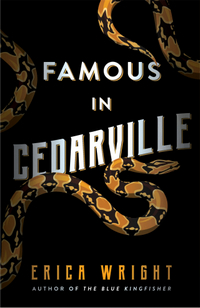
Erica Wright
Erich Wurster
Z Mark David Zaslove

IndieCrimeCrawl — a couple more highlights

So who forgot to hit “Publish” last night?
Hey, I found time to do another one of these. The hashtag has primarily been sales (great sales) from various publishers and various and sundry Indie publishers shining the light on other Indie publishers. How cool is that? So seriously, go check out the hashtag and find some great reads — #IndieCrimeCrawl.

Beyond that, there were two things that I wanted to highlight — the list shoudl probably be longer, but I ust don’t have the time, so again, I refer you to Twitter.:

I expect this weekend will be pretty quiet, but that hashtag will still be worth checking out.

Worst Case Scenario by Helen Fitzgerald: Move over Murphy, it’s Mary Shield’s Law now

The last book I’ll look at for #IndieCrimeCrawl (not my last post for the Crawl) is the latest from Helen Fitzgerald. Unlike the others I’ve blogged about this week, Fitzgerald is a new author to me, and the only thing I know about her is that a few weeks ago, about half of my bookish twitter feed was full of people praising this book. I don’t remember who is the one that convinced me I should pick up this book — I could pretty much pick a name at random and come up with a decent candidate though. I don’t see anyone but an independent publisher allowing this story to be told in the way it is. I think many publishers would take a version of this novel — a restrained and somewhat neutered version of it, sure — but not this version. This protagonist, this story, this author and this publisher are textbook examples of the strengths of Independent Crime Fiction. Without further ado:

Worst Case ScenarioWorst Case Scenario

by Helen Fitzgerald


Paperback, 207 pg.
Orenda Books, 2019

Read: July 13 – 15, 2019

           When Mary decided to get her diploma [to become a Social Worker], she believed it would be her role to stand on bridges and stop people jumping off. Very soon after qualifying she realised she would never stand on bridges. She and everyone else were too busy catching casualties downstream. Except for sex offenders. If you saw a drowning sex offender being swept with the current you threw a large rock at him. Mary had done her best work in her first five years in the job. Those early cases were the ones she could recall, where she’d made the time and had an impact. She should have been forced to resign at the five-year mark. Every worker should.
           Please let me get through today without killing a child, they’d all be thinking, as Mary had thought for the last thirty years. Please help me not ruin a child’s life. She’d prayed each day that she’d get through it without fucking up, without turning out to be the bad guy after all. No-one in the office was expecting fame, riches, or even thanks, even though each worker would have made an excellent protagonist in It’s a Wonderful Life. They all saved lives, all the time, but no-one ever noticed. Boy did people notice when it went wrong, though.

Mary Shields is a social worker/probation officer, and I can’t imagine that there are many in either field that can’t recognize themselves a little in those above quotations (I couldn’t pick one). It’s probably my (understandable) lack of knowledge about Scottish penology/jurisprudence, but I don’t get exactly how her job works. She refers to herself as a social worker, and seems to work for a private employer, while she manages people on probation. It didn’t impact the novel for me, it’s just something I stumbled over a few times.

Before I go on, can I just ask something? Police procedurals and PI novels are never going away, but are we done with Forensic Scientists/CSI-types now and moving on to Probation/Parole Officers? Maybe it’s just me, but I’ve gone my entire life without reading a book focused on/featuring a Probation Officer and now I’ve read two in the last month and a half. I’m all for it, if the books are as good as these two are, I should stress.

Anyway, Mary is going through several changes in her life — including The Change. Her adult son has finished school and has found gainful enough employment that he has moved into his own place, her husband—a struggling artist for years is on the brink of making good, reliable money; and her own employment is getting the best of her—the schedule, the clients, the management—it’s all too much and with Roddie about to have a reliable income, she’s decided to give her notice once things become official for him. Having made that decision, she’s being a little less careful than she should be with her clients. Instead of doing everything by the book and diplomatically, she’s going to cut to the chase and do what she can to protect society from her clients and do what’s right for the people around them (even if they don’t want her to.)

The strategy sounds all well and good, but the execution could use a little work. Mary describes her role to one client as imagining the worst case scenario and then working to make sure it doesn’t happen. Well, she couldn’t imagine this scenario if she’d tried. Things start to go wrong immediately, and to a degree she can’t cope with.

The biggest example of this (but far from the only) is Liam Macdowall, her newest client. He was convicted of murdering his wife, and is on the verge of release. Not at all coincidentally, on the same day, his book is due to be published. It’s a series of letters he wrote to his dead wife from prison, essentially exonerating himself and putting the blame for the problems on his life on her. He’s become the poster child for Men’s Rights Activists throughout the country and his release is the occasion for protests (not necessarily the non-violent kind) for feminist groups as well as his fellow MRAs. Mary lays down the law on the eve of his release, setting forth very strict guidelines and expectations for him. Which is begins openly defying within hours of his release.

Before Mary can do anything about it, thing after thing after thing go disastrously wrong—regarding Macdowall, but with other clients, too. I can’t get into the details, but let’s just say the best of the things that go wrong is that her own son begins dating Macdowall’s oddly devoted daughter and sipping the MRA Kool-Aid. Everything that Mary tries to do to either fix the problems in her life, or just alleviate them, fails miserably. The only thing thing that doesn’t blow up in her face is retreating home to her bed and streaming Sex and the City. Her life doesn’t go from bad to worse just once or twice, but at every turn, she finds another level of worse for things to go to.

I’ve never talked about Christopher Buckley on this site, which is a crying shame (if only because I’d like to link to the posts demonstrate this point), but I haven’t read anything by him since I started here. I’ve been reading him since the late Eighties and love his approach to satire. The problem with all of his novels (with one exception) is that the last 5-10% seems to get away from him—like a fully-loaded shopping cart speeding down a hill. No brakes and only gravity and momentum exercising any control over what happens to it, while the wheels are close to falling off. I mention this only because I kept thinking of Buckley’s endings while reading this. There are two significant differences—the out-of-control part set in around the 25% mark and somehow (I wish I could understand how) Fitzgerald pulled it off. I do think in the last 15 pages or so, the wheels got a little wobbly, but while things felt out-of-control, Fitzgerald kept things going exactly where she intended.

While I don’t understand fully how Fitzgerald kept things from spiraling out of control in the novel (not Mary’s life) is the character of Mary Shields. She’s just fantastic. She’s funny (usually unintentionally); earnest but jaded; angry at so much of what’s going on around her; fully aware that she’s a mess (and not getting better); yet she pushes on in her Sisyphean tasks to the best of her ability. Her life is a car wreck, and we are invited to rubberneck as we drive by. When we read:

           …she didn’t want to kill [Macdowall’s MRA publisher], as this would mean losing the moral high ground.

we actually understand her frame of mind. She’s a woman whose life is crumbling around her and she’s doing all she can to hold it together for just a few more days until she can retire.

We don’t get to spend enough time with other characters to get a strong sense of them—this is all about Mary and the disaster that is her professional, personal, and family life. I liked the portrayal of almost everyone else in the book, I just wish the style of the novel allowed Fitzgerald to develop them more fully. Particularly the MRAs—I felt that their depiction was rather shallow and lacked nuance, making them rather cartoon-y. Sure, you could argue that she’s just being accurate and MRAs are cartoon-y, but I’d like to see a bit more subtlety in their portrayal. But on the whole, things are moving so fast, and Mary bounces from one calamity to another so rapidly that there’s no time to develop anyone else.

There’s a lot about this book that I’m not sure about, and a significant part of me wants to rate it lower. But I can’t largely because of Mary Shields. I’ve never read anything or anyone like her. This is definitely a Gestalt kind of novel—various parts of it may not make a lot of sense; or may be good, but not great. But the whole of the novel is definitely greater than the sum of its parts—when you take all the parts that may not be that stellar and combine them the way that Fitzgerald did—and with Mary at the core—it works, it all really works.

Insane, fun, insanely fun—and probably a little closer to reality than any one is ready to admit. I have a number of family members and friends in the social work/probation/parole fields—and I’m probably going to insist that most of them read this while I encourage all of you to do the same. I can virtually promise that you won’t read anything like this anytime soon.

—–

4 Stars

Page 178 of 341

Subscribe via Email

Enter your email address to subscribe to The Irresponsible Reader and receive notifications of new posts by email.

Powered by WordPress & Theme by Anders Norén