Category: Fiction Page 274 of 341

Calamity by Brandon Sanderson

CalamityCalamity

by Brandon Sanderson
Series: The Reckoners, #3

Hardcover, 417 pg.
Delacorte Press, 2016

Read: March 30 – April 2, 2016

There was more connectivity between city-states in the Fractured States than I’d once assumed. Perhaps the Epics could have survived without any kind of infrastructure, but they tended to want subjects to rule. What good was it to be an all-powerful force of destruction and fury if you didn’t have peasants to murder now and then? Unfortunately peasants had to eat, or they’d go and die before you got a chance to murder them.

That meant building up some kind of structure in your city, finding some kind of product you could trade. Cities that could produce a surplus of food could trade for power cells, weapons or luxuries. I found that satisfying. When they’d first appeared, the Epics had wantonly destroyed anything and everything, ruining the national infrastructure. Now they were forced to bring it all back, becoming administrators.

Life was so unfair. You couldn’t both destroy everything around you and live like a king.

I really enjoyed Steelheart, the first novel in this trilogy — and Firefight was a lot of fun, if not as good — it wasn’t anything serious, weighty, or bogged-down with teenage drama. Just a fun story about super-powered individuals ruling over a post-apocalyptic dystopia and the non-super-powered rebels trying to take them down. So, how’d Brandon Sanderson wrap things up? In a very mixed bag — an ending that was honest, consistent, and fitting for the series, but one I really didn’t care for.

Which is going to take some explanation.

David’s voice is as friendly, upbeat, and nerdy in the way that charmed me in the beginning. Even weighted down with added burdens and losses, he’s hung onto his core personality. His metaphors are as painful as ever — his ability to get his teammates to go along with the biggest of hare-brained schemes is intact and still astounding.

I wanted answers. They were probably here somewhere. Maybe I’d find them behind that group of robotic war drones that were extending their gun arms from behind the freezers in front of me.

Oh.

But he isn’t the same kid we met on the streets of Newcago — he’s lost his drive for revenge, it’s evolved into something else (and/or been revealed or better understood to be something else). He’s not out for blood, not out for simply overthrowing the Epics. He still wants to stop them, to restore rule to non-Epics and free them from the tyranny they’re under. But it’s because of wrong and right, for deeper reasons, purer motives.

He’s not the only one who’s changed and grown — Megan, the love of his life and former foe, has greater understanding of herself and her powers, she’s gaining more and more control of both. Part of it is self-acceptance, part of it is David’s faith in her. Either way, she’s a more entertaining character — and a less threatening force (at least as far as The Reckoners are concerned).

Thanks to their travel and experience, David and the others have a better understanding of how the world works (see the above quotation for a hint) — and some of the Epics have had to make adjustments, if for no other reason to keep their subjects alive and working. From a surprising source, we learn how the Reckoners tech works — as do they — and it’s pretty odd (and interesting). Not only that — the source of Calamity, the source of the Epics’ powers is revealed. You really can’t ask for more than that.

Well, actually you can — one of the other things that comes out of the growth and development of David (and the rest) over the series, and especially over this book, are some underlying themes that come out. They’ve been there since the beginning if you knew how to look, but here, Sanderson makes them explicit. I really appreciated them as they surfaced — I’m not sure that a lot of the YA crowd that this is targeted for would as much as I did, but many would. The last scene is pretty heartwarming, really — something I wouldn’t have expected at pretty much any point in the series (and has nothing to do with romance, for the record).

So why am I lukewarm about this? While the execution was consistent, the tone was right on-pitch and Sanderson didn’t cheat anywhere along the way to the series conclusion, I just didn’t like it. I didn’t like the explanation given for the source of the powers. I didn’t like the way the last half of the book played out (mostly everything after the last battle with the Prof, really — so less than half, but the groundwork was laid at about the 50% mark). Sanderson told the story he wanted to, in a way that made sense to the rest of the series, and he never copped out or went for high drama over being true to his story. So I can’t judge it too harshly. I just didn’t care for the way it played out. Which pretty much just means that Sanderson wrote the ending he wanted and not the one I wanted. Sure, I think it’s tacky, but you can add that to the very long list of things that he didn’t ask me.

I wasn’t wowed, wasn’t thrilled with things in the end. But I really can’t complain about any of it. Fans of — or at least readers of — the series should check out the conclusion, just to get the closure it brings. Hopefully, you’ll get more out of it than I did.

—–

3 Stars

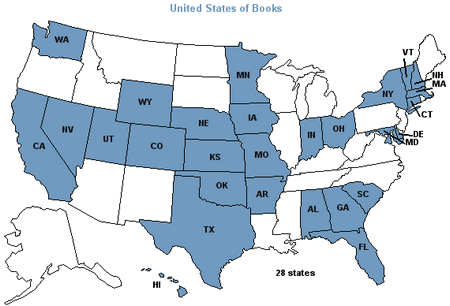
United States of Books – The Grapes of Wrath by John Steinbeck

The Grapes of Wrath The Grapes of Wrath

by John Steinbeck

Author: C.H. Armstrong at C.H. Armstrong Books & Blog

SYNOPSIS

(From Goodreads.com)

First published in 1939, Steinbeck’s Pulitzer Prize winning epic of the Great Depression chronicles the Dust Bowl migration of the 1930s and tells the story of one Oklahoma farm family, the Joads, driven from their homestead and forced to travel west to the promised land of California. Out of their trials and their repeated collisions against the hard realities of an America divided into haves and have-nots evolves a drama that is intensely human yet majestic in its scale and moral vision, elemental yet plainspoken, tragic but ultimately stirring in its human dignity.

A portrait of the conflict between the powerful and the powerless, of one man’s fierce reaction to injustice, and of one woman’s stoical strength, the novel captures the horrors of the Great Depression and probes the very nature of equality and justice in America.

Sensitive to fascist and communist criticism, Steinbeck insisted that “The Battle Hymn of the Republic” be printed in its entirety in the first edition of the book—which takes its title from the first verse: He is trampling out the vintage where the grapes of wrath are stored.” As Don DeLillo has claimed, Steinbeck shaped a geography of conscience” with this novel where there is something at stake in every sentence.” Beyond that—for emotional urgency, evocative power, sustained impact, prophetic reach, and continued controversy—The Grapes of Wrath is perhaps the most American of American classics.

REVIEW

5 Stars

When The Grapes of Wrath was released in 1939, it was not only an instant bestseller, but it was met with no small amount of criticism and anger. Steinbeck brought to the world the devastation of the Dust Bowl but, more importantly, the horrors and blatant racism that greeted migrant workers searching for better lives. For as many who read Steinbeck’s epic novel and heralded it as the true “Great American Novel,” an equal number were aghast at the raw truths he portrayed and sought to have it banned or even burned. Nearly seventy years later, it’s still at the center of much controversy and is listed as Number Two among the Top 10 Most Banned Books (Shortlist.com).

The Grapes of Wrath is an epic novel depicting the mass westward migration of Oklahomans (and neighboring states) during The Great Depression of the 1930s and the simultaneous Dust Bowl. It was a time when the overuse of the land had turned the once fertile farming soil into dust, making it unfit for the growing of crops. With no money coming in from the crops, banks swooped in and called in loans on the land, and forced tenant farmers and their families out of the homes they’d known for generations. The result was mass homelessness that led to a great migration to California and nearby states in search of jobs.

At the center of Steinbeck’s novel is the Joad family. Their eldest son has just been released from prison and returns home to find his family packing up their meager belongings, ready to depart for California and hopes for a better life. So begins the story of the Joad family and their journey west. But they soon realize that their travels will neither be easy, nor as idyllic as they had imagined. Instead of green fields of orange trees ripe with fruit just for the picking, they’re met with numerous hardships and discrimination. California – the land of plenty and the focus of their dreams – doesn’t want them. They’re not only barred from entrance but, once gaining access, are met with conditions more deplorable than those they’ve left behind.

When The Grapes of Wrath was first released, it was met with criticism from groups crying foul at Steinbeck’s depictions for how migrant workers were treated. In truth, Steinbeck revealed that his novel was a watered-down version of the true horrors of the workers – the truth was worse than the fiction of his novel. As a native Oklahoman and one who finds pride in the name “Okie,” I can only tell you that I truly loved this novel. I loved Steinbeck’s descriptive prose; but more than that, I loved the truth behind his words, which echoed through my mind long after I turned the last page.

Many will say that The Grapes of Wrath is a depressing novel. On the contrary, I found it to be a book of hope and a testament to the strength of the human spirit. Yes, it was difficult to read about the hundreds of thousands of starving migrant people; and it was even more difficult to come to terms with the fact that “this really happened!” But what I really got from the story was a lesson in discrimination and racism, and hope for the future of mankind. You see, even when all had been taken from them and there seemed to be no real hope in the foreseeable future, the Okies refused to just lay down and die. They refused to let the “big guy” get the best of them. They trudged on through death, hopelessness, starvation and despair. They did their best to keep their families together, and they never failed to lend a helping hand to one whose need was even greater than their own. Nearly 100 years later, the majority of Oklahomans still possess those admirable qualities.

A Devil in Hong Kong by David Harris Lang

I’m going to be brief here, thanks to my away-from-home-readathon last week, I’m very behind, and I don’t have much to say about this one. I’m going to be vague, too — because I just can’t muster up enough enthusiasm to get too specific about the book (and if I did, I’d end up not being brief…)

A Devil in Hong KongA Devil in Hong Kong

by David Harris Lang

Kindle Edition, 312 pg.
Merrimack Media, 2016

Read: March 19 – 22, 2016

This started off with a slightly disturbing and intriguing chapter involving torture, a distinctively tattooed man and an ancient artifact — a white jade burial suit. Which was enough to get me interested, even if the scene was a told in a heavy-handed manner (and, for the record, I’m not that into torture scenes, but it does work at getting a reader’s attention).

Sadly, the start was wasted by then turning to an uninteresting historical tour following the suit from its creation in the year 889 through its discovery by amateur archaeologists and eventual disappearance — there was decent material there in a pulp-y sense, but Lang just didn’t sell it. The suit shows up on the black market in the late 20th century, and that starts the dominoes falling to get us to the first scene.

When we return to the modern time, we meet a loser video game player who is “recruited” to join a private intelligence/criminal enterprise. Nothing about this storyline, the characters involved, or the way that the Chinese government uses them for Black Ops was believable, well-told, or interesting. Nothing.

We then get to the Hong Kong detectives investigating the brutal murder that happened following the initial torture scene. These guys are so clichéd, the interaction between them is so stiff, and the way they do their business is — well, I just didn’t like it.

Do you sense a trend?

There’s not one character here that I want to spend any more time with — strike that. The tattooed man has promise — give me a book focusing on him — or the hunt for him in other contexts — I’d probably indulge in it (I might end up regretting the indulgence, but you never know)

The writing here was mediocre at best. The plotlines, the “twists”, the incredible coincidences, etc. were pure melodrama — and don’t get me started on the denouement, I could do 500+ words on it alone, and I’d end up dropping my rating. The dialogue? Painful. Really painful — like the kind of thing that Joel and the Bots (or Mike and the Bots, or Jonah and the Bots) should be mocking. Still, you give this one decent edit from someone with an ear for dialogue and another edit by someone focusing on cleaning out the plotlines and I can see where this would appeal to fans of Dan Brown and/or James Patterson.

There’s a hint of a decent novel buried under a lot of nonsense here, I guess that’s the best I can say. Your mileage may vary, but I wouldn’t recommend it.

Disclaimer: I was provided with a copy of this by a friend of the author in exchange for this post, which was half-baked, I realize, and I feel bad for that. On the other hand, he may not want to see the fully-baked version.

—–

2 1/2 Stars

Heroes and Villains: Pawn in the Game by Tara R

Heroes and Villains: Pawn in the Game Heroes and Villains: Pawn in the Game

by Tara R
Series: Heroes and Villains, #1

Kindle, 243 pg.
2015

Read: March 26 – 27, 2016


I’m not really sure where to start with this, to tell you the truth. Tara R has put a lot of effort into this, there’s clearly an ambitious story she’s wanting to tell. Sadly, she’s not the kind of writer (yet?) who can pull it off.

She has a hard enough time pulling off basic grammar, punctuation and vocabulary, much less a consistent voice and created culture. I’d given up on this thing by the end of chapter three, but was willing (and eager) for her to win me back — it’s been done before. It’s been done in the last week, but this novel just isn’t capable of it.

I’d try to describe the book a little, but I’m not sure I can — it’s a dystopian fantasy, a world full of despots using their subjects as cannon fodder. There’s magic, to a degree, there’s widespread suffering and abuse, there’s an idealistic revolutionary or two — but no golden age to hearken back to. Just an idea (with no observable origin) that the world could be better. But there’s no one on this world that’s ever seen a better world, so why they’d think there is one is beyond me.

That said, various people — royalty and commoners both, have senses of humor, moments of joy and joking, and even non-royals get dressed in tuxedos (because what epic fantasy doesn’t have guys in tuxes?). In fact, for a dytopian world, it frequently doesn’t seem that bad — except for the people talking about how horrible it is all the time. Again, there’s no basis for them to think so given that this is the way the world has always worked.

The various governmental entities, secret societies, and would-be insurrections just don’t make sense. Their operation isn’t coherent (nor do they fit the setting), their goals are confusing — and then you get the totally out of the blue and bizarre lecture on DNA and I just gave up. This is a barely educated society, and sure, our protagonist is founding secret schools all over the place, but it’s a mighty big leap to go from an agrarian-based culture in a near-constant state of war with only underground schools to people casually discussing genetic manipulation.

Could I have tried harder to understand everything? Maybe — but I was really searching for something to hold on to, I tried pretty hard. But other than curiosity, there was no reason to — there’s not a single character interesting enough to keep you going, to make you care whether they live, die, or are never mentioned again in any way by the author.

It is simply, and perhaps too bluntly, a disappointing mess.

I’m giving it two stars because I didn’t actively hate it. Also, I do think that there’s something buried deep down here that’s worth looking at, and I really do think that in Tara R’s mind, this all makes sense — she’s clearly put the time and thought into it. But she just did not get that to the page. If you’re willing to put in the work, you might find the nuggets. But I wouldn’t recommend spending your time on it, it’s just not worth it.

Disclaimer: I was provided with a copy of this by the author in exchange for an honest review, she hopefully doesn’t regret that exchange too much.

—–

2 Stars

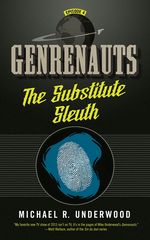
The Shootout Solution (Audiobook) by Michael R. Underwood, Mary Robinette Kowal

The Shootout SolutionThe Shootout Solution

by Michael R. Underwood, Mary Robinette Kowal
(Narrator)
Series: Genrenauts, Episode 1

Unabridged Audiobook, 3 hours and 25 minutes
Macmillan Audio, 2015
Read: March 23, 2016


I thoroughly enjoyed the story about Leah Tang’s introduction to the wonderful and crazy world of the Genrenauts — and it’s sequel — when I read it last November. When heading out for a road trip, I figured it’d be a good distraction from the road for my wife, son and I. It’s a fun story, filled with characters you want to root for on an adventure that we all would like to take. I mean seriously, a rocketship ride to the Old West? Sign me up.

For me, this time it was a little easier to grasp the explanations given for what the team is up to — the new reality (better, realities) that Leah finds herself in this time out. Partially because I already knew it, partially because I find that kind of thing easier to digest when I hear it (so why don’t I listen to more audiobooks?)

On the whole, I was really impressed with Kowal’s narration. My wife and I weren’t crazy about her characterization of King — the voice was hard to understand, I really didn’t think it matched the description Underwood gave. I had virtually no other complaints — and in fact, really enjoyed her work. It was a little hard for me to deal with the fact that it took nearly three-and-a-half hours to get through, I’m used to spending a lot less time with Underwood’s works (most of them, anyway). But I did appreciate being forced to soak in the world, think about things a bit more than I would have on my own.

I was hoping we’d get through the second installment as well, but we weren’t able to squeeze that in. I’m curious what Kowall did with some of the characters we meet there, and hope I can figure out a time to get to it soon.

If you liked the novella — or if you think you’d like the book, but haven’t gotten around to grabbing it, the audiobook is well worth the small investment of time and money.

—–

4 Stars

United States of Books – The Descendants by Kaui Hart Hemmings

The DescendantsThe Descendants

by Kaui Hart Hemmings

Author: Teri at Sportochick’s Musings

Synopsis

Narrated in a bold, fearless, unforgettable voice and set against the lush, panoramic backdrop of Hawaii, The Descendants is a stunning debut novel about an unconventional family forced to come together and re-create its own legacy.

Matthew King was once considered one of the most fortunate men in Hawaii. His missionary ancestors were financially and culturally progressive–one even married a Hawaiian princess, making Matt a royal descendant and one of the state’s largest landowners.

Now his luck has changed. His two daughters are out of control: Ten-year-old Scottie is a smart-ass with a desperate need for attention, and seventeen-year-old Alex, a former model, is a recovering drug addict. Matt’s charismatic, thrill-seeking, high-maintenance wife, Joanie, lies in a coma after a boat-racing accident and will soon be taken off life support. The Kings can hardly picture life without her, but as they come to terms with this tragedy, their sadness is mixed with a sense of freedom that shames them–and spurs them into surprising actions.

Before honoring Joanie’s living will, Matt must gather her friends and family to say their final goodbyes, a difficult situation made worse by the sudden discovery that there is one person who hasn’t been told: the man with whom Joanie had been having an affair, quite possibly the one man she ever truly loved. Forced to examine what he owes not only to the living but to the dead, Matt takes to the road with his daughters to find his wife’s lover, a memorable journey that leads to both painful revelations and unforeseen humor and growth.

Review

Though traditionally this book would not of caught my eye I was interested in reading it because of my love for Hawaii. From the start the author did an admirable job of creating irritating spoiled children in the characters of Scottie and Alex. The addition of Alex’s friend, Sid who has his own set of problems and annoyingness rounded off for me a difficult read. It is not that the book isn’t well written but I wanted to take all of them over my knee and spank them or hug them to death.

As a mother I was stressed during this whole book and angry with Matt that he had not been more present in his daughter’s upbringing and he allowed his wife free rein without question. As the story went on though he started to show superb judgement in how he handled so many of the new situations that showed up. The author did a fine job in the steadiness of Matt still making mistakes and where his aha moments happened, causing a change in his thoughts and actions.

Joanie is written in a very believable manner and one wonders if she ever thought of the damage she was doing to her children or if she was that clueless that she thought she was helping them. Her character is not likable for all the thoughtless damage she did to everyone around.

For me the interaction between Matt and Sid was the most impactful part of the story. Both of these two saved each other is ways that only they understood. What these two did for each other was amazing and heartfelt making me cry.

For this review I listened to it via audible and referenced the ebook version as well. I wonder if I had only read the book if I would have had a different outcome in my review. Though I haven’t seen the movie I wonder how this book would come across on the screen so out of curiosity I will see it though.

I give this 3-1/2 STARS.

(fwiw, I had a few things to say about this a couple of years ago)

Got Luck Launch Day!

Got LuckYesterday, I blogged about the book, Got Luck by Michael Darling — which I really enjoyed, and today is the release day.

The publisher, Future House Publishing, has this to say:

Police-officer-turned-private-investigator Goethe “Got” Luck is known for rolling with the punches and never taking anything too seriously. When he picks up a seemingly dead-end murder case, his life begins to take a crazy turn. Shot at, chased by people he has never met, and attacked by an invisible liondog, Got quickly learns that there is more to this world than meets the eye.

He discovers the Fae. The Eternals. They who dwell in the Behindbeyond. Once, they ruled over ancient realms, but over the centuries, their power dwindled. Now someone wants to restore their rule and subjugate humankind. All it will cost is thousands of human lives.

The clock is ticking. Getting the world out of this one will take a couple friends, more than a few well-placed insults, and a whole lot of Luck.

To kick-off the release, Future House has a few things you should take note of:

  1. Got Luck is on sale for just $0.99 until March 30th at Amazon. (Not that $4.99 is a bad price for it after the sale)
  2. They’re sponsoring a Goodreads giveaway beginning on the 27th.
  3. They also have a drawing going on for an autographed copy of Got Luck. Check out details on that here.

There are more details about the book, the giveaways, and all that on the book’s Launch Page — be sure to check it out.

Got Luck by Michael Darling

Got LuckGot Luck

by Michael Darling

Kindle Edition, 327 pg.
Future House Publishing, 2016

Read: March 15 – 19, 2016


When we meet Goethe “Got” Luck, he’s one part Harry Bosch (at least they both have unfortunate, yet cool, first names), two parts Elvis Cole. Seriously, he’s a barely disguised Elvis pastiche — his partner, Nat is about as close to Joe Pike as you could want (if you wanted to argue he’s Hawk and Henry Cimoli rolled into one to go with Luck’s Spenser, I wouldn’t argue…much). If that’s all that Luck was — a wise-cracking, private eye in the Spenser/Elvis Cole mold — I’d probably have been rather content. Darling appears to have the chops to have pulled off a compelling telling of the investigation into the death of Barry Mallondyke on behalf of his widow.

But wait, there’s more — before he gets too far into the investigation, some things begin to happen to Got that he really can’t wrap his head around. And then — he finds himself doing some things he can’t explain, and before you can say An Taobh Thiar Agus Níos Faide he finds himself in The Behindbeyond, the land of the Fae. A land of magic, magic beings and many things beyond belief. Those he meets in the Behindbeyond are not the only supernatural beings around — Luck is, too.

So, we get the origin story of a new Urban Fantasy hero — he continues to investigate the murder, while learning about his new magic abilities and the new reality that he’s now aware of. A pretty fun combination, if you ask me. He’s not quite as reliant on his magic as say, Harry Dresden or Atticus O’Sullivan; but it’s there, for him to use the way that most P.I.’s would use a pistol.

There’s a promising set of supporting characters in both realities (hard to believe that I haven’t even mentioned Erin, the drop-dead gorgeous medical examiner), a compelling killer, and a little boy who keeps showing up in just the right place. Even a lot of the “lesser” criminals that Luck and Nat have to contend with are pretty entertaining.

I didn’t even finished the first chapter before I decided that Luck and I were going to be pretty good friends. And from about the mid-way point, on, I stopped reading the book because I was doing so because the publisher sent it to me, I really wasn’t even reading it to post about it. I was reading it for the pure pleasure — as a fan. That doesn’t happen too often.

This is pretty clearly a first novel — or at least one written early in a career — so Darling’s got room to grow in his craft. Got Luck could’ve been better, but — man, oh, man, this hit all my buttons — the characters, the world, the narrative voice, the magic — and that ending. I hope this is the first of many. If we’re lucky, it will be.

(ugh, sorry — I don’t know what came over me, that last line was shameless.)

Disclaimer: I received my copy of Got Luck from the friendly folks at Future House Publishing in exchange for an unbiased review.

—–

4 Stars

Elphie and Dad go on an Epic Adventure by Hagit R. Oron, Or Oron

Elphie and Dad go on an Epic Adventure Elphie and Dad go on an Epic Adventure

by Hagit R. Oron, Or Oron (Illustrator)
Series: Elphie’s Books, #1

Kindle Edition
, 25 pg.
Orons, 2016
Read: March 15, 2016


Picture books are not the usual fare around here, true. But Hagit Oron asked, and I figured, why not? Now, can I get this post up without using more words than the book did?

Elphie is a little elephant accompanying his dad on an errand — but his dad is one of the good ones, and instead of dragging Elphie along — he entices the child by promising an “epic adventure”. Wearing a cape and carrying a wooden sword, the two set out for a walk to the store.

Along the way, Elphie does battle with imaginary foes, and has one very close call that wasn’t imaginary enough. With some guidance from Dad, a great imagination, and a helpful store clerk — Elphie has an epic adventure indeed.

I really appreciated Dad — he’s not perfect (he gets distracted in a very real and relatable way), but he’s trying — and he recovers from a mistake well. A good guy, not a buffoon, not a super-hero. There’s not enough dads like that in books.

The art is great. The colors are vibrant, the drawings pop just right. It’s not fantastic, which I honestly get annoyed by in kids’ books. It’s friendly and eye-catching, very accessible, and engaging — enough so that you get drawn into it, but not so much that it detracts from the words. The art serves the story — and will keep the attention of those who can’t yet read.

It’s been a few years (almost ten) since I’ve read picture books on a regular basis. This is just the kind of thing I’d have liked then, and would’ve read — and then have been “compelled” to read again (and again and again). For those with kids — or grandkids — or who might have a kid nearby your Kindle, pick it up.

Disclaimer: I was provided with a copy of this book by the author in exchange for this post.

—–

3 Stars

United States of Books – A Prayer for Owen Meany by John Irving

A Prayer for Owen MeanyA Prayer for Owen Meany

by John Irving

Hardcover, 543 pg.
William Morrow & Co., 1989
Read: March 4 – 10, 2016

[Marilyn Monroe] was just like our whole country — not quite young anymore, but not old either; a little breathless, very beautiful, maybe a little stupid, maybe a lot smarter than she seemed, and she was looking for something . . . She was never quite happy, she was always a little overweight. She was just like our whole country.

I’m not sure why I picked that quotation from this book, but there’s something that appealed to me about it (even if I don’t necessarily agree). You’ll note that there are both upper and lower case letters there — Owen Meany’s dialogue is always given to us in all caps. Which is annoying (it’s supposed to be), and difficult to read in extended speeches (Owen’s voice is hard to listen to), and makes you wish he’d shut up (duplicating the experience of most people who heard him).

A medical explanation for this is given, eventually. But the only explanation that Owen needs is that God gave him his voice. The same for his diminutive stature (about 5′ 0″ as an adult) — God made him that way, for His own reason.

But I’m getting ahead of myself — John Irving’s probably best known for The World According to Garp, which was one of the bigger disappointments of my college reading, so I wasn’t really looking forward to spending more time with him. You add in the fact that this is a 500+ page book with only nine chapters, and it’s downright intimidating. I’m not going to say that you shouldn’t be intimidated and that it’s a pretty easy read — it’s a challenge, it’s frequently a slog — but in the end, it’s rewarding.

When the book starts, Johnny Wheelwright (the narrator) doesn’t seem particularly fond of Owen Meany — in fact, you get the impression that he’s just one of those kids he happens to know, and he’s not that happy about it. But before long, it’s clear that he and Owen are really close — even though (because?) Owen’s responsible for the greatest tragedy of Johnny’s childhood.

John finds himself as an observer to Owen’s life, as his defender, his advocate, his way to the greater world. While Owen is constantly trying to help his friend — help him to achieve, help him to think, help him to believe. It’s a great friendship — and without the other, each was diminished. Owen less so, but in important ways.

The narrative is rambling — John starts to tell us about something, the plot moves forward a bit, but then he goes back in history to give context. Sometimes weeks, sometimes years and far more detail than you think is necessary. Eventually, you see that this is sort of the approach that the overall narrative is taking — John has something he needs to tell the reader, but he doesn’t want to. So he tells you many other things, anecdotes, vignettes, details you don’t need — anything to delay what he wants to say. He does get to it. And by that time, you’re not sure you want him to.

The story is told from the perspective of forty-something John, now a teacher at a Private School in Toronto — he spends his days reading the news about the United States, and ranting (or trying not to) to anyone near him about what President Reagan is doing. I’m not sure why we spend so much time dwelling on him in the present, we don’t need it — it adds almost nothing to the narrative. If anything, I think it might lessen the impact of the rest. The adult John telling the story about his childhood, about Owen, about their growing up together, and so on is essential — we need his perspective, his distance. What we don’t need is to hear John’s rants about Reagan, the poor reading/study habits of teenage girls.

I’m not sure that I get a whole lot of understanding of New Hampshire from this book — Owen’s family working in the granite industry doesn’t tell us much, New Hampshire is The Granite State — everyone who survived 4th grade knows that. If anything, Irving was wanting to talk about America — as an ideal, and as something that falls short of that ideal. Monroe was one example, John Kennedy’s moral failings another, Vietnam a recurring theme, and, of course, the Iran-Contra Scandal. Each of these, as either a representative individual, or representative act, demonstrates how far (in John’s/Owen’s view, at least) the United States has fallen short of the ideals it should strive for — if not achieve.

Ultimately, when I enjoyed this book, it felt like it was in spite of what I was reading. But I laughed, I cared, I kept reading — and then when I was finished, I appreciated the work as a whole, and felt a lot more affection for it than I expected. It’s hard to explain, but I liked this one and heartily recommend it.

—–

4 Stars

Page 274 of 341

Powered by WordPress & Theme by Anders Norén