Category: Fiction Page 339 of 341

Dusted Off: Summer Reading: Dead Beat by Jim Butcher

So the Offspring are out of stuff to read, and since I have to drop by my doctor’s office anyway, we head off to the library. There’s virtually nothing left on my “to read” list that isn’t also on my “to buy as soon as I have the $” list–and the exceptions aren’t owned by the library [sigh]. So I just start meandering (not a fun thing to do with 4 kidlets in tow).

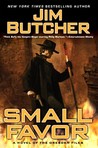
I vaguely remembered reading something about The Dresden Files by Jim Butcher, and lo and behold, the library has the 7th in the series–Dead Beat. I try not to jump in so mid-stream, but figured it was worth a shot. Here’s the set-up, Harry Dresden’s a PI. Loner-type. Has a pal in the police department that feeds him some work. But he free-lances as well. Loose collection of friends who can help him out–Bob, who seems to have background on everything; his half-brother who’s good for added muscle and to bounce ideas off of; Butters in the morgue; and so on. Typical hard-boiled PI novel stuff.

Oh…but there’s a twist: Harry’s a wizard, Bob’s a talking skull, his brother’s a vampire, and Butters is a one-man Polka band.

This was a great read, basically Harry Potter meets Elvis Cole. That’s pretty much all I need to say. I loved it. Knocked it off in less than a day. Would’ve been better if I’d been able to start with the first book, but now I have a reason to make an effort to get it.

Characters were good, plot moved along alright, good mix of humor and action from the hero, and a satisfactory conclusion. Denouement could’ve been a bit longer for me. But that’s what the next book is for, I guess.

Figured since I’d recently talked about how amazon could’ve done better than recommend Harris to me, I should point out that this had also been recommended to me by everyone’s favorite internet store. So for this summer, they’re batting .500

Grade: A. Solid effort, great twist on the genre.

Dusted Off: Casablanca

I liked Hugh Laurie’s The Gun Seller so much, thought I’d give a sample to encourage you to pick up the book. Also, just thought it was entertaining enough on it’s own to be worth the while. It definitely belongs in the, “if I ever got around to writing fiction again, this is what I’d want to sound like” file.

Don’t go to Casablanca expecting it to be like the film.

In fact, if you’re not too busy, and your schedule allows it, don’t go to Casablanca at all.

People often refer to Nigeria and its neighbouring coastal states as the armpit of Africa; which is unfair, because the people, culture, landscape, and beer of that part of the world are, in my experience, first rate. However, it is true that when you look at a map, through half-closed eyes, in a darkened room, in the middle of a game of What Does That Bit Of Coastline Remind You Of, you might find yourself saying yes, all right, Nigeria does have a vaguely armpitty kind of shape to it.

Bad luck Nigeria.

But if Nigeria is the armpit, Morocco is the shoulder. And if Morocco is the shoulder, Casablanca is a large, red, unsightly spot on that shoulder, of the kind that appears on the actual morning of the day that you and your intended have decided to head for the beach. The sort of spot that chafes painfully against your bra strap or braces, depending on your gender preference, and makes you promise that from no on you’re definitely going to eat more fresh vegetables.

Casablanca is fat, sprawling, and industrial; a city of concrete-dust and diesel fumes, where sunlight seems to bleach out colour, instead of pouring it in. It hasn’t a sight worth seeing, unless half-a-million poor people struggling to stay alive in a shanty-town warren of cardboard and corrugated iron is what makes you want to pack a bag and jump on a plane. As far as I know, it hasn’t even got a museum.

You may be getting the idea that I don’t like Casablanca. You may be feeling that I’m trying to talk you out of it, or make your mind up for you; but it really isn’t my place to do that. It’s just that, if you’re anything like me–and your entire life has been spent watching the door of whatever bar, café, pub, hotel, or dentist’s surgery you happen to be sitting in, in the hope that Ingrid Bergman will come wafting through in a cream frock, and look straight at you, and blush, and heave her bosom about the place in a way that says thank God, life does have some meaning after all–if any of that strikes a chord with you, then Casablanca is going to be a big [bleep] disappointment.

Dusted Off: Summer Reading: Dead Until Dark by Charlaine Harris

Unless you’re as blind as a bat, not very observant, or have never visited amazon.com. you know that one of their biggest and oldest features is the recommendations. Based on a few of my purchases/ratings, amazon has been telling me to read the Southern Vampire Mysteries by Charlaine Harris. Bored, not wanting to spend money on a couple of books I really want to read, I decide to grab one from the library. Thankfully, they had the large-print version of the first in the series, Dead Until Dark.

The protagonist/narrator is Sookie Stackhouse. Sookie’s your typical young southern lady, lives with her grandmother, likes a quiet life, has a good-hearted-yet-wild brother who needs to settle down, works as a cocktail waitress…oh yeah, and she’s a telepath. Like I said, typical. She lives in a small Louisiana town filled with antebellum homes and all the people she’s known her entire life.

Things change when a vampire comes into her bar. For one thing, she can’t read his mind–not having to exert the effort to not read his mind is quite the treat for her.

Vampire? Yeah, a vampires. In this world, Vampires had recently become a legally-protected minority, still struggling for social acceptance (think the Newcomers in Alien Nation).

This particular vampire’s name is Bill Compton (name’s not exactly up there with Lestat or Armand…or even Angel, Drusilla, Spike), a veteran of The War Between the States with a kind heart (or something like that). Sookie and Bill hit it off, become friends, he spends time with her TWBtS buff grandmother, delighting her with eye-witness accounts. We also get to meet some other vampires…not the fine-upstanding citizens like Bill (who’s “mainstreamed”), but creepy, murderous, fiends.

Enter the plot-complication. A series of vampire-related murders. Is it Bill? Is it a Vampire that Bill knows/brought into the community? Is it someone else in Sookie’s life? While they stumble their way to discovering the murderer, Sookie and Bill fall in love, deal with social stigmas (from both of their cultures), and have a narrow escape or two.

This was an okay, light read. Sookie’s charming, sweet, not too neurotic (was afraid I was in for a second-rate Bridget Jones with a twist). I wouldn’t mind reading what happens to the couple next, but I’m not rushing out to grab it (contra Solomon vs. Lord/Thin Blue Alibi). Give it a try if you’re desperate for something new.

Grade: C+ not really a triumph for amazon’s personality test.

Dusted Off: Summer Reading: The Gun Seller by Hugh Laurie

Imagine that you have to break someone’s arm.

Right or Left, doesn’t matter. The point is that you have to break it, because if you don’t…well that doesn’t matter either. Let’s just say that bad things will happen if you don’t.

Now, my question goes like this: do you break the arm quickly–snap, whoops, sorry, let me help you with that improvised splint–or do you drag the whole business out for a good eight minutes, every now and then increasing the pressure in the tiniest of increments, until the pain becomes pink and green and hot and cold and altogether howlingly unbearable?

Well exactly. Of course. The right thing to do, the only thing to do, is to get it over with as quickly as possible. Break the arm, ply the brandy, be a good citizen. There can be no other answer.

Unless.

Unless unless unless. What if you were to hate the person on the other end of the arm? I mean really, really hate them.

This was a thing I now had to consider.

I say now, meaning then, meaning the moment I am describing; the moment fractionally, oh so bloody fractionally, before my wrist reached the back of my neck and my left humerus broke into at least two, very possibly more, floppily joined-together pieces.

So begins Hugh Laurie’s The Gun Seller. Of course, Laurie is best known to the world as Blackadder’s Georges (the nasty German Prince Ludwig in Blackadder II, the spoiled Prince George in Blackadder III, the bumbling Lt. the Honorable George Colhurst St. Barleigh in Blackadder Goes Forth, etc.); Bertie Wooster; the tall crook (Jasper) in 101 Dalmatians; Stuart Little’s Dad; The Gentleman on the Plane who has to listen to Rachel blather on; and Dr. Gregory House (among many, many other roles). Okay, so he can act–but can he write? That very question kept me from buying the book years ago when I first saw it. Finally took the plunge thanks to the local library. The answer is: Yes. Maybe he’s better at the latter. In fact, once House, M.D. finishes it’s 10th and final year, maybe he should take a break from acting and write more–just to appease me.

This is one entertaining book. Very funny. And what else would you expect of a global-ranging book about terrorism, the weapons industry, and the role of government; involving the CIA, the British Ministry of Defense, a terror cell, multinational corporations, conspiracy nuts, and, naturally, an art gallery. Stumbling through it all is Thomas Lang, a former Scots Guards officer turned general ne’er do well, trying not to become an international terrorist.

I remember going through the Director’s Commentary to The Whole Nine Yards, and he said something like how they could’ve easily used the same script (only changing a couple of words) and made it into a very noir movie instead of the comedy it was–changing the lighting, the score, the cuts…little things. This book is very much the same. It would’ve been very easy for this to be a Robert Ludlum clone–the plot, most of the characters (if not all), the settings, etc. We’ve seen them all a million times before. But the way Laurie narrates the events prevents that from happening. Instead, it becomes charming, droll, and occasionally, laugh-out-loud funny.

He does this fairly seamlessly. In lesser hands (say, Dan Brown’s), this would be jarring, jumping back and forth between comedy and suspense. But I don’t think Laurie hit an off-note once. In a matter of pages you read a very graphic torture scene, a line like: “There’s an undeniable pleasure in stepping into an open-top sports car driven by a beautiful woman. It feels like you’re climbing into a metaphor”; a description of a complicated espionage set-up, and then a paragraph like:

Somewhere a clock ticked. Quite fast. Too fast, it seemed to me, to be counting seconds. But then this was an American building, and maybe Americans had decided that seconds were just too [bleep] slow, and how’s about a clock that can do a minute in twenty seconds?

That’s not to say you’re laughing at a grisly murder or anything–in fact, violence is depicted in such a way that it highlights the depravity, the bleakness, the pointlessness of it all. It’s the people, the settings, the non-life ending events that are treated with a light touch.

Ricky felt a lot worse about himself at this moment; most probably because he’d managed to get himself into one of those situations where you’re naked in the cellar of a strange building, in a strange country, with strangers staring at you, some of whom have obviously been hurting you for awhile, and others of whom are just waiting to take their turn. Flickering across the back of Ricky’s mind, I knew, were images from a thousand films, in which the hero, trussed-up in the same predicament, throws back his head with an insolent sneer and tells his tormentors to go screw themselves. And Ricky had sat in the dark, along with millions of other teenage boys, and duly absorbed the lesson that this is how men are supposed to behave in adversity. They endure, first of all; then they avenge.

…Ricky had neglected to notice the important advantages that these celluloid gods had over him. In fact, there really is only one advantage, but it is a very important one. The advantage is that films aren’t real. Honestly. They’re not.

In real life, and I’m sorry if I’m shattering some deeply cherished illusions here, men in Ricky’s situation don’t’ tell anyone to go and screw themselves. They don’t sneer insolently they don’t spit in anyone’s eye, and they certainly, definitely, categorically don’t free themselves in a single bound. What they actually do is stand stock still, and shiver, and cry, and beg, literally beg, for their mother. Their nose runs, their legs shake, and they whimper. That is what men, all men, are like, and that is what real life is like.

Sorry, but there it is.

Thomas Lang begins the novel seemingly care-free. A man unattached from friends, job, love…anything but himself. He seemingly as a moral core, but runs from the question, “Are you a good man?” As the novel develops, and the stakes get higher and whatnot. The ironic detachment transforms into commitment to people, to right and wrong. While there are “trigger points” to this transformation, where it takes a significant leap forward–the gradualness to Lang’s growth belies Laurie’s experience in fiction.

The Gun Seller was published in ’96, and thanks to the events of the past few years, the views on terrorism espoused by Lang, the MOD, the CIA, etc. are a bit dated. And that’s really the worst thing I can say.

Grade: A. Bonus points because one of his chapter’s epigraphs is from John Owen, my favorite puritan.

Dusted Off: Summer Reading: Thin Blue Alibi by Paul Levine

So I come back from GA, and not only had my wife finished Solomon vs. Lord on my recommendation–but she’d procured and finished the sequel. However, she warned “It’s not as good.” Only slightly daunted I dived in (no pun intended). She was right. But that’s not to say the book isn’t good, it is. But it doesn’t feel as fresh–that’s the nature of sequels. When I finished the book, I uttered a Nero Wolfean “Satisfactory.”

2 main story lines, and a few nice subplots to keep things interesting. Plot number 1: Victoria’s “Uncle” Griff (her dad’s old business partner) runs his yacht onto shore in the Keys–conveniently enough, he almost kills Victoria and Steve in the process, but at least they’re the first on the scene to discover that Griff’s passenger has a spear through his chest, so they can get to lawyerin’ as soon as possible.

Plot number 2: Victoria wants to split the firm up–get out on her own, so she’s not standing in Steve’s shadow. She’s not looking to split from him personally, but there are subconscious undertones in that direction.

Plot 2 is further complicated by Uncle Griff’s son, her first love, childhood friend, etc. who she hasn’t seen in years is back on the scene. And is a total hunk. And rich. And not a frequently uncouth jerk.

Some of the supporting cast from the last book wasn’t around, which is good, I think. But those present were still a pleasant addition. The cameo by (and several references to) a certain salt-shaker seeking musician was a nice touch. The mystery was craftier than last time, and I think the plotting was a little better. But the latter are secondary to me–esp in this kind of book. It’s about the characters–do I like them? Do I want to spend time with them? And for almost everyone in this book, it’s yes. I spent about half the book really not liking Victoria…seemed like a prissy little brat with a healthy dose of finicky on the side. By the end of the novel, I’d come around again, but that left a bad taste in my mouth.

Here’s my major complaint. Plot line #2. I never, not for one second, thought that Victoria would split up the team or the couple. So that entire thing was an endurance test “how much longer do I have to put up with this?” Contrast that compare/contrast to Kenzie and Gennaro in Lehane’s books–or even Spenser and Susan in The Widening Gyre and Valediction. Sure, those aren’t comic novels (esp. Lehane’s), but there was real risk of loss, there was real pain, real conflict. I think Levine is capable of putting these two in a situation where I could worry about them–but this wasn’t it.

That said, I’d give the first installment an A and this a B+. Well worth the time and money (or trip to the library). Looking forward to #3 in the series in a month–thanks Gerald, for the tip.

Dusted Off: Summer Reading: Angels Flight by Michael Connelly

Okay, Midway to Denver–hoped I could make it. Had a bunch of time in the airport before my flight, but I tried to do sermon prep and fuss with papers, so I don’t finish it too early into the trip. Was really looking forward to this one. I wasn’t disappointed at all.

In retrospect, I’m not certain this is the best of the Harry Bosch series–but as I read it, I was convinced it was–maybe not the best written, but most effective of the batch to this point. This particular L.A. murder is committed and investigated with the OJ trial and Rodney King case in the back of everyone’s mind. The city was portrayed as a tinderbox waiting to burst into flames again–black officers and detectives were used as a PR tool, white/black and in between showed their prejudices, and every character in the book waited for the other shoe to fall–it wasn’t a case of if there’d be another riot, just when.

There’s a few other aspects I’d like to touch on–and have got 3 or 4 paragraphs waiting to go, but I can’t write them without spoilers. This is one to read, folks.

Since I mentioned it below he dealt well with bringing back another character from the previous Bosch novel. An FBI agent that Harry’d clashed with is brought back to work the case with him–Harry now sees him as an ally (and vice versa) and the two quickly work together, allowing Harry to do exactly what needs to be done. Good to see him not fight with every single law enforcement type outside of his circle. Hope that’s a trend that continues.

Oh, and the references to the book/movie Blood Work were probably the funniest things I’ve read from Connelly (not a lot to compare it to–dude’s no Parker/early Crais)…a touch heavy handed the 2nd time, but well done.

Dusted Off: Summer Reading: Appaloosa by Robert B. Parker

Trunk Music was clearly not going to get me to Midway airport, so I had to do something–wandered around some bookstore in the Denver Airport for awhile, seeing a few things I’d been meaning to buy and a few I added to that list–but all more money than I was willing to fork out at the time. Thankfully, I spied Robert B. Parker’s Appaloosa before plunking down full cover price for some hardcover I was mildly interested in. It got me to Midway, and even gave me a few minutes of pre-sleep reading while at GA.

This is Parker’s second western novel–he did a western film for TNT (I think), too. While I wouldn’t call his previous western, Gunman’s Rhapsody (a retelling of the Wyatt Earp/Doc Holiday story) a complete waste of time, I did spend too much time thinking “they got this better in Tombstone.” But Parker’s been hitting his marks better lately (particularly with Double Play), so I had hope for this.

This was certainly better than Gunman’s Rhapsody. And better than, say, Potshot or Perish Twice. This isn’t Parker at his best. It’s him at his comfortable mediocre.

Basically we have two guns for hire–the veteran gun, Virgil Cole and Everett Hitch, his junior partner–men who travel from bad town to bad town, hiring on as peace officers, laying down a Draconian law, until the town gets cleaned up. Then they move on to the next town. Hmmm, sound like someone that Kurt Russell and Sam Elliott have played? They get hired on in Appaloosa to do just that.

So Cole and Everett drink a little, shoot a little, be tough, talk in obscure phrases, spend time with women of questionable repute…town gets cleaned up ‘cept for one man and his outfit…you can pretty well finish it all from there. There are a couple of twists to the story I hadn’t seen a million times–but I’m not a big western guy (tv, film or print), so I can’t say for certain how much of a cliché it is.

The most jarring thing about the story to me–and maybe the thing that keeps me from giving it a C+–is the dialogue. I have no problem with historical novels using contemporary language. I recall a handful of writing teachers telling us we had to make a choice when writing historical fiction–modern dialogue or vocab and diction proper to the time. Pick one and stick with it. Parker didn’t. He tended towards “Western” sentence structures (think Mal and Jayne in Firefly), with the occasional malapropism thrown in to make sure that Cole sounds uneducated. But he used contemporary jargon, contemporary attitudes. Parker’s given himself a reputation for being lax on the research front, and this confirms it for me.

I’ll give it a C- because it kept me occupied, didn’t feel entirely cheated out of my money, and I liked the horses–even if the metaphor there was heavy handed. (think Spenser coming out of the theater after seeing Empire Strikes Back)

Oh, just noticed on IMDB that Appaloosa’s going to be a movie directed by Ed Harris, Viggo Mortensen’s attached. I could buy him as Cole. Honestly think it’d make a better movie than a book.

Dusted Off: Summer Reading: Trunk Music by Michael Connelly

I’m not exactly sure how this happened, but Michael Connelly has become my go-to guy for airplane reading. I’m guessing the way he writes keeps me distracted from what’s going on around me (y’know the whole hurtling through the air at hundreds of miles an hour and way too many feet off the ground). I picked up the next two Harry Bosch novels on my list to read to and from GA. I took care of most of Trunk Music by the time we hit Denver–and was able to finish the rest along the way to Chicago.

This was a really good read. Harry’s well, Harry. Tough, smart, cynical. His partner, Jerry Edgar, is back and more competent than before. Kizmin Rider is the new teammate–I like her a lot. The new lieutenant, Grace Billets adds a different dynamic to the series–I was tired of the antagonism between Harry and Lt. Pounds.

Of course, Internal Affairs gets in the middle of this–Harry’s in hot water with them again. When isn’t he? I get that this is a sure-fire way to add drama, but puh-leez, can we please get through a novel without these jokers getting involved?

Given recent discussion over at spensneak about Parker’s penchant for bringing characters back time and time again, I thought that one of the strong points of this book was the way that one particular character was brought back into Harry’s life. The same person, in a very different set of circumstances, and very clearly changed due to their previous encounter. Handled very well.

The action keeps hopping back and forth between LA and Vegas, with our intrepid detective in the center of it. Rider and Edgar do their share of the work, too. Probably see more good police work out of them than I remember from anyone else Harry worked with up to this point. Hope to see more examples of other good cops in the future.

The twists and turns are delivered well. After you read a few books by Connelly and you know he’s going to be pulling fast ones on you, changing the what you’re sure is the inevitable conclusion several times–but even knowing that, you can’t help but be thrown by them the way he does it. The action scenes play out well, vividly described, but not overburdening in detail.

Ending was quite satisfactory–a very subtle move for ol’ Harry. Good to see him do it.

This is the kind of book that Dan brown needs to study before he inflicts another dose of Langdon upon us all.

Dusted Off: Summer Reading: Solomon vs. Lord by Paul Levine

Few months back, I’d read Gerald So’s post about this romantic comdey-ish novel, put it on my amazon wish list, and let it sit there for while. Finally got around to throwing it in the shopping cart so I could get the free shipping.

Boy, am I ever glad I did that! Paul Levine has got himself a new fan. This was a fun read, very likeable characters, clever writing, and a satisfactory mystery.

Okay, so here’s the setup (very minor spoiler): You’ve got your easy-going, maverick, street smart, fun-loving guy with the unorthodox methods, Steve Solomon (read: David Addison, Sam Malone, Dharma Finklestein); and you’ve got your uptight, gorgeous, book smart, cultured, plays-by-the-rules gal, Victoria Lord (read: Maddie Hays, Diane Chambers, Greg Montgomery). He’s a defense lawyer, she’s a prosecutor (at least until she gets fired due to his antics). His name’s monosyllabic, hers isn’t. Hilarity and attraction ensues. Sure, have seen and read this more times than I can count. And it either works or it doesn’t. There is no middle ground. And it does. Wonderfully.

Their chemistry, the back-and-forth, the will-they-or-won’t-they fit nicely into the case that they try together. Actually, it’s not really a will-they-or-won’t-they, it’s a when-will-they. Levine tells (occasionally retells) the story by flipping back and forth between either perspective. Again, that’s something that works or it doesn’t. It worked.

The supporting cast of characters is great as well–Steve’s father, the gang of retirees who hang out at the courthouse, Victoria’s friend, her fiancé, the models who own the building Steve’s office is in, their client…they all fall into the category of “have seen this before,” but Levine uses them well–and they don’t normally feel like the clichés they could so easily be.

There’s one member of the supporting cast who doesn’t feel like he came from a paint-by-number mystery: Steve’s nephew, Bobby. Don’t want to give too much away, but he’s a sweet 10-year old boy, with a memory that won’t quit, autistic tendencies, the ability to make any name into a dirty anagram, and a loving uncle. Victoria will come to locate the decency of Steve in Bobby–and I have come to center the humanity of the series in Bobby.

The book can feel like a pilot episode for a TV series–and Gerald says there’s maybe one in the works. I hope not. I just can’t imagine them getting Bobby right–he’ll either be cast off, or turned into a Wesley Crusher-esque wunderkind. If they do push ahead–the success or failure of the show will be dependent upon one thing: casting. They get the right Steve and the right Victoria and the show will work. If not, fuhgeddaboutit.

Highly recommended–I’m pretty sure I had a smile on my face most of the time I was reading it–and for a book that clocks in just under 600 pages, that’s saying something.

Dusted Off: Summer Reading: Skin Tight by Carl Hiaasen

There’s just no way that I could read this during the school year–but that’s not a slam, I just couldn’t justify the time. But it’s summer, and my brain is mushy. So I grabbed a couple of books just to read–not to think about, mull over, swim in (like Gibson’s foray out of SF)–just to read. I’d been wanting to try Hiaasen for awhile, and Skin Tight was the earliest work by him at the library, so figured I’d give it a try.

Glad I did–this was a fun read…dialogue was fairly snappy, some authentically comic situations, characters weren’t brilliantly drawn, but well enough. I can see why Dave Barry’s novels are (favorably) compared to his, and that’s a compliment. Probably a better way to spend a couple of hours than most of the fare at the movies this summer–but with as much lasting quality. Thumbs up.

…speaking of mushy brains: another book I checked out from the library should be arriving by the end of the week from amazon.com–which I was reminded of once I came home. How stupid can I be? Kletois and Norris are kindly uninvited to answer that one in the comments 🙂

Page 339 of 341

Powered by WordPress & Theme by Anders Norén