Category: Fiction Page 34 of 339

Steam Opera by James T. Lambert: Choosing It Not Because It Was Easy…

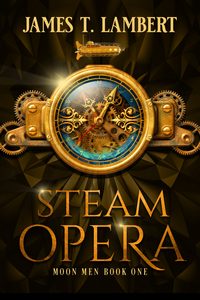
Cover to Steam Opera by James T LambertSteam Opera

by James T. Lambert

DETAILS:
Series: Moon Men, Book One
Publisher: Bert Books
Publication Date: November 18, 2022
Format: Paperback
Length: 416 pg.
Read Date: July 8-12, 2024

What’s Steam Opera About?

I’m both tired and apt to meander too much when trying to answer this question, so I’m just going to lift the answer from Lambert’s website:

London, England, 1894

Patrick Smythe lives a comfortable life in London coming up with new inventions. His close friend Thomas Melton finances many of these ventures and together they advance technology. Geoffrey Trenton takes the occasional investigative work after retiring from Scotland Yard.

Airships fill the sky

The world is on the move with dirigibles and Zeppelins hauling freight and passengers. On land and sea people travel at will in an era of plenty.

Unbridled invention fills the laboratories

New discoveries fill the news as scientists probe past the boundaries of human knowledge. Every field advances as knowledge of the natural world drives new innovation.

Telescopes scan the heavens

The Royal Observatory at Greenwich has a new telescope and the astronomers are using it to view the universe. Even when they’ve been told to take the night off. A strange discovery and a brutal murder draws Trenton out of retirement to investigate.

And we want to go to the moon!

Patrick develops his most ambitious project: a trip to the moon and back! With Thomas’s help securing financing and Trenton running security, what could possibly go wrong? But a mysterious organization wants to prevent this and will go to any length to stop them!

My Big Complaint

The next section will touch on a maybe larger concern. Or maybe it’s a quirk. I’m not sure. But I had an easier time getting over it than this part. There’s a quick arc that introduces us to the future security chief for this endeavor—it starts out pretty interesting, maybe more interesting than the “go to the moon” story at that point. And just as that story gets your hooks into you…it’s dropped. I do think that I can see where and how Lambert is going to pick it up again in the future. But the way he abandoned the story in this novel was abrupt and off-putting.

Lambert is capable of better.

Um…Where’s all the Steam?

You call something Steam Opera, you set it in the latter 1800s in London, you make it about inventors and engineers (among others), you give it that color scheme and cover design—you sorta indicate to your reader that this is going to be a Steampunk novel.

But we really don’t get one—we get a lot of Zepplins and dirigibles, science that’s more advanced than it should be, and the rest of it is pretty era-appropriate. No gadgets, no science that’s hard to pull off on this side of the Industrial or Digital Revolutions. Sure, there are plenty of people wearing goggles—but that’s about it. This is the least Steam-punky Steampunk I think I’ve read.

And I know Lambert can pull off Steampunk gadgets—Aether Powered demonstrated that clearly. So why not here?

Really, why not?

So, what did I think about Steam Opera?

Okay—all I’ve really said after the description sounds negative, and I don’t want to sound that way. Because once you get past the above quibbles (which is really pretty easy), this is a perfectly entertaining read.

This is easily the most ambitious of Lambert’s first three novels, and his writing has improved over what his first books delivered (and I liked those I want to stress). His characters, prose, eye for detail, and imagination are better represented here (as is a capability to carry a story for another 100 pages or so than he has in the past). If he keeps improving like this, he should get the fanbase he deserves.

Lambert does a good job with the pacing—sometimes it seems he speeds up more than is advisable, and occasionally he swings the other way—but overall, he keeps things moving well enough to keep you engaged while dipping into some pretty technical areas (even if the technology is made up). It’d have been very easy for him to get so into the technical descriptions that he’d kill any momentum and turn this thing into a slog. All things considered, he made the right choices on that front.

And the technical bits themselves? I think Lambert really succeded there—both the way he adapted Zepplin-esque technology to mimic the work that the Atlas and other rockets did in our timeline and in the way he described their flight while still in Earth’s atmosphere—I bought it all. It seemed plausible enough for this world (moreso than, say, the music devices that The Ministry of Peculiar Occurrences enjoyed, for example)—particularly the in-flight moments.

I wouldn’t have minded some more named characters—and some female characters would’ve been good to see*. This is very much a book about Moon Men. However, the characters we did get were engaging and interesting (even the antagonists). The more time we spent with all of them, the more I wanted to spend time with them—which is always a good sign.

* The lack of female characters probably deserves its own section, I now realize—but what more is there to say? Yes, the Victorian-era was dominated by men in engineering and business, so it helps things ocme across as more realistic to not have women around. But if we’re going for that level of realism…maybe keep everyone on Earth?

What we learn in the closing pages and what leads up to them is came out of nowhere—or so it seems, but really didn’t. What’s better is it sets up the next book and satisfies your curiosity about “Why is this a Book One?” Sure, it creates a whole bunch of new curiosity about Book Two (and maybe beyond, I’m not sure how long Lambert is thinking), but that’s the point. As long as you give me some answers, you can add all the questions you want.

In short, I had plenty of fun with this book and this world, and am eager to return to it. As good as Lambert’s next release, Relics of War, looks—I can’t help but be irked that it’s not Moon Men Book Two. I really want to know where he’s going with this. But that’s a problem for future-H.C. Present-H.C. is happy to recommend this to you and strongly suggests you become familiar with the very pleasant experience that is reading a James T. Lambert novel.

3 Stars

20 Books of SummerLiterary Locals logo

BOOK SPOTLIGHT: Anticipation by Neil Taylor

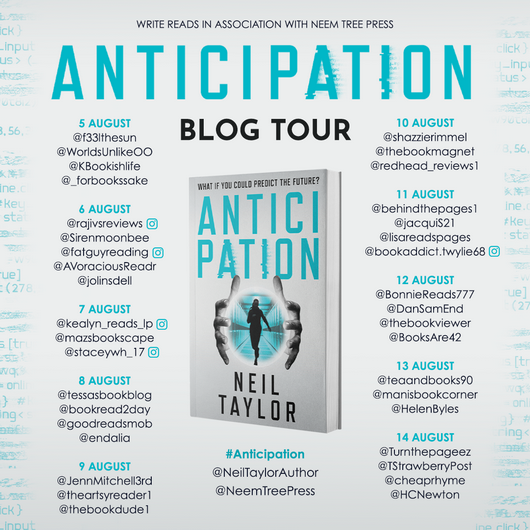
I’m very pleased today to welcome The Write Reads Spotlight Blitz for this nifty-looking YA Thriller about AI by Neil Taylor, Anticipation ! The Tour wraps up today, so be sure you check out https://twitter.com/WriteReadsTours to see what people have been saying about the book, what little I’ve read makes this sound promising. But for now, let’s learn a little bit about the book, shall we?
Anticipation by Neil Taylor Tour Banner

Book Details:

Title: Anticipation by Neil Taylor
Genre: YA (12 to 18), AI thriller
Publisher: Neem Tree Press
Format: Paperback/eBook
Length: 304 pages
Publication Date: August 8, 2024 (it’ll be available in the Western Hemisphere in February)
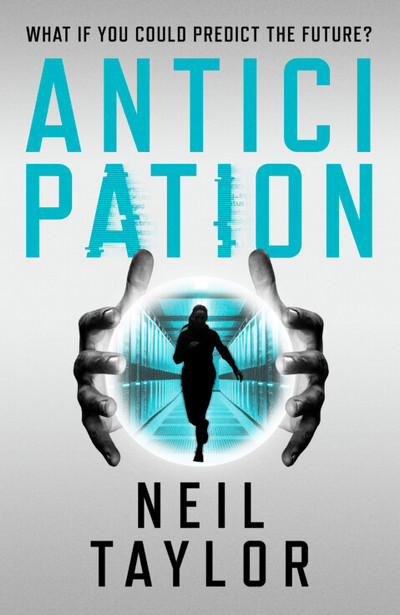
Cover for Anticipation by Neil Taylor

About the Book:

You are being played.

Your every move is being watched by businesses hoping to manipulate your behaviour. Every picture, every post, every like, every follow, every purchase, every search.

When 17-year-old Riya Sudame inherits her father’s secret AI algorithm, she and a handful of carefully selected Keyholders hold the power to predict people’s future using their online data. But with great power comes great responsibility, and they must safeguard it from falling into the wrong hands.

Enter Jim Booker, a powerful social media tycoon, who will stop at nothing to steal the technology for himself. Soon Riya faces a critical choice. Fighting ruthless tech giants seems like an impossible task—wouldn’t it be easier to relinquish her father’s creation in exchange for a normal teenage life?

But if she does, she will have to live with the knowledge that she is the reason that, like everyone, you are being played.

Neil Taylor marks his debut in this dark, twisty AI YA thriller.

Book Links:

Amazon UK ~ Goodreads ~ Neem Tree Press

About the Author:

Neil TaylorNeil Taylor is a software industry professional whose career has spanned Europe, Japan, and the USA. Now based in Durham, England, Neil works remotely for a leading cloud-based software and services company. With more than two decades of software experience, Neil possesses a deep understanding of how company motivations influence customers and users. Fascinated by the convergence of big data and behavioural science in the tech industry, Neil’s debut YA book, “Anticipation,” delves into the perilous implications of unchecked social media and AI development.


My thanks to The Write Reads for the invitation to participate in this tour and the materials they provided.

PUB DAY REPOST: The Last Shield by Cameron Johnston: You Will Sit Up and Say, “Yippee-ki-yay”

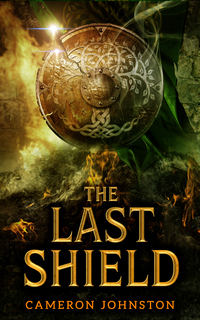
Cover of The Last Shield by Cameron JohnstonThe Last Shield

by Cameron Johnston

DETAILS:
Publisher: Angry Robot
Publication Date: August 13, 2024
Format: eARC
Length: 368 pg.
Read Date: July 31-August 2, 2024
Buy from Bookshop.org Support Indie Bookstores

What’s The Last Shield About?

Briar is the commander of the Shield, the Royal Guard protecting the soon-to-be-King; his uncle, the Lord Regent; and the castle that serves as the capital for the realm of Sunweald. She’s been in the post for several years, also serving as the personal bodyguard and confidant of the regent.

There are two neighboring kingdoms that would like to take over Sunweald, as well as to loot the castle’s vault, which, according to legend, contains the kind of magical weaponry that can remake the world. Keeping that vault safe, secure, and unmolested is one of Briar’s primary responsibilities.

The prince is set to take over in just a couple of years, and Kester is the prototypical spoiled, indolent, and irresponsible royal who no one can imagine can/should assume the throne. Maybe, if he grows up a lot before becoming an adult, but that seems unlikely. Meanwhile, the realm is in the incredibly capable and wise hands of his uncle Alaric

During a seasonal religious rite, an attack against the royal family leaves several guards dead and Briar near death, they have foiled the attempt, but at a great cost. After a long convalescence she’s recovered enough to move around a little bit, but not fit to return to active duty. After half a year of waiting and plotting, the survivors and some mercenary allies attack the castle from within—taking Alaric and some of the staff hostage, and killing others. Briar and Kester happen to be in just the right place and escape the sweep that collected so many. It’s up to them, each in their own way, to use Briar’s knowledge of the castle (and hidden passageways) to mount a rescue mission and to take down the small force who have taken over.

Shields

I’m talking literal shields here, not Briar and her guard.

Growing up, the only way I saw shields used was defensively—to block arrows or swords—until someone had to valiantly discard them because their dominant hand/arm was injured and they had to desperately use their shield arm to wield a sword, obviously. The only exception to this was Captain America (and a DC clone or two) and his implausible use of his.

And that’s pretty much how I saw the objects until now. But Clay Cooper and Briar have got me thinking about them as offensive weapons now. Their shields are very different in terms of size and material—but they’re both effectively used as a weapon. Briar does use her defensively, of course, but both prior to her time as a guerrilla fighter and now, she shows that a shield can be a potent weapon.

So my questions are: Have I missed how people use these things offensively all along? (either by reading the wrong things or not remembering anything but the swordplay, archery, and/or magic) Or have we entered an age where authors are embracing the full range of these objects strapped to an arm?

The Die Hard-Ness of it All

The Publisher’s description of this novel starts off with, “A gender-flipped Die Hard set in a mysterious castle.” And that’s absolutely what the book is—is that description reductionistic? Yes. Is it apt? Also, yes. But it’s also so much more than that summary. (but what a great elevator, pitch, right?)

I do not know if Johnston set out to write this as a Fantasy Die Hard, but at some point, he had to realize that’s what he was doing and (if you ask me) leaned into it. There are just too many similarities for me to believe anything else. But really, there’s one paragraph that seals the deal—I won’t give you details (but you’ll recognize it), but it is borrowing/appropriating/stealing an indelible image from the film. After reading that I knew it wasn’t just some ingenious marketer at Angry Robot who tagged it as “A gender-flipped Die Hard set in a mysterious castle,” as I half-way wondered, but it was Johnston’s intention. There’s just no way he does that.

I should stress that just because it’s a version of a movie that you likely know very well—do not think you know how this book is going to go. There’s plenty of suspense for the reader, as well as magical creatures that might have sent John McClane running for the hills.

Would I have been thoroughly entertained by The Last Shield without all the parallels to one of my all-time favorite movies? Yes. But being able to watch Johnston’s take on McClane, Nakatomi Tower, and the rest? It’s just an extra layer of frosting on an already delicious cake.

I do wish we’d gotten a Thornberg/William Atherton-esque character (should that get a spoiler warning), a non-villain that you despise almost as much as (if not more than) Gruber/his crew. Not because the novel was lacking anything, it’s just satisfying to see them get their comeuppance.

So, what did I think about The Last Shield?

This is a heckuva thrill-ride. Like its cinematic predecessor, the action in this novel is top-notch. It’s not non-stop, there are moments of reflection, of exhaustion, of trying to figure out how to survive—much less succeed against this force. The set-up to the main action also takes longer than you might think (but you should really just relax and let Johnston do his thing, it’s all important and helps establish what comes later). I was hooked almost immediately—and while I wondered when the “Die Hard” part of the book would kick in, I really didn’t care. I was having a good enough time with Briar, Alaric, and the rest.

But, boy howdy, when the action kicked in? What was a perfectly enjoyable book got so much better. Johnston can write an action scene—whether the action is hand-to-hand, bladed weapon against something else, supernatural-based…you name it, he can handle it with panache and aplomb. It’s well paced—with just enough downtime between fight scenes for you and the characters to be ready for the next. Once the book builds up enough steam, forget it—you’re not going to willingly put it down.

It’s not all about swords, shields, axes, and spells, however. Briar dealing with her injuries and recovery—both before the “Hans Gruber” moment and afterward—is done to almost perfection. There’s real growth—and real injury (and not just physical)—to be seen in several other characters. No one survives this time unscathed in one way or another.

The noted attorney and political operative Ainsley Hayes, noted, “they’re all about duty” when discussing the work of Gilbert and Sullivan.* This book, at its core, is just as much about duty as The Pirates of Penzance or H.M.S. Pinafore. Briar, ready to give her life fighting when she’s unfit for battle; Alaric, giving up decades of his life to step in as Lord Regent and govern; Kester figuring out what his obligations are to those he rules; several servants, guests, and others in the castle during the takeover carrying out their duties in what limited capacities they can as hostages—and the utter abandonment of duty by others. The Last Shield doesn’t have to be thought of in terms of good vs. evil (while it applies, it’s problematic when it comes to some characters). Instead, I suggest that it’s better seen whether these people live up to their duty/obligation or do they abandon that for selfish gain.**

And, there is something incredibly appealing to that way of thinking in our incredibly polarized and me-centric time. All sorts of people considering the cost and putting aside their wants/desires/lives in favor do doing what they’re supposed to do anyway.

* Yes, there’s no need to bring Ainsely into this, but I can’t help thinking of her and that line—or Leo, or Lionel Tribbey, etc.—when I think about duty.
** There are one or two characters who took over the castle that you could put forward against my claim, but I think I could make a strong (spoiler-filled) case in my defense, so I won’t do that pre-emptively.

I should probably talk a little about the three magic systems at work in this world—but this thing is going on too long already. But I really like seeing that diversity at work.

It wasn’t until I was preparing this post that I realized that Johnston wrote The Maleficent Seven, a book I’ve been meaning to get around to for ages. Now I’m even more motivated to do that (The Traitor God, too, come to think of it).

But that’s for another day, for today, I just want to revel in the near-perfection of this roller-coaster of a novel. I had such a good time with this novel and I’ve been telling everyone I know about it (I even think I sold the manager of a local bookstore on it, hopefully, he continues that chain). I was ready to read it again as soon as I was done.

Fantasy readers and action-adventure readers alike will dig this one. Go get your orders in now, unless you’re reading this on or after August 13—in that case, run down to your local indie bookstore and pick it up.

Disclaimer: I received a copy of this book from Angry Robot Books via NetGalley—thanks to both for this.


4 1/2 Stars

This post contains an affiliate link. If you purchase from it, I will get a small commission at no additional cost to you. As always, the opinions expressed are my own.
Irresponsible Reader Pilcrow Icon

The Last Shield by Cameron Johnston: You Will Sit Up and Say, “Yippee-ki-yay”

Cover of The Last Shield by Cameron JohnstonThe Last Shield

by Cameron Johnston

DETAILS:
Publisher: Angry Robot
Publication Date: August 13, 2024
Format: eARC
Length: 368 pg.
Read Date: July 31-August 2, 2024
Buy from Bookshop.org Support Indie Bookstores

What’s The Last Shield About?

Briar is the commander of the Shield, the Royal Guard protecting the soon-to-be-King; his uncle, the Lord Regent; and the castle that serves as the capital for the realm of Sunweald. She’s been in the post for several years, also serving as the personal bodyguard and confidant of the regent.

There are two neighboring kingdoms that would like to take over Sunweald, as well as to loot the castle’s vault, which, according to legend, contains the kind of magical weaponry that can remake the world. Keeping that vault safe, secure, and unmolested is one of Briar’s primary responsibilities.

The prince is set to take over in just a couple of years, and Kester is the prototypical spoiled, indolent, and irresponsible royal who no one can imagine can/should assume the throne. Maybe, if he grows up a lot before becoming an adult, but that seems unlikely. Meanwhile, the realm is in the incredibly capable and wise hands of his uncle Alaric

During a seasonal religious rite, an attack against the royal family leaves several guards dead and Briar near death, they have foiled the attempt, but at a great cost. After a long convalescence she’s recovered enough to move around a little bit, but not fit to return to active duty. After half a year of waiting and plotting, the survivors and some mercenary allies attack the castle from within—taking Alaric and some of the staff hostage, and killing others. Briar and Kester happen to be in just the right place and escape the sweep that collected so many. It’s up to them, each in their own way, to use Briar’s knowledge of the castle (and hidden passageways) to mount a rescue mission and to take down the small force who have taken over.

Shields

I’m talking literal shields here, not Briar and her guard.

Growing up, the only way I saw shields used was defensively—to block arrows or swords—until someone had to valiantly discard them because their dominant hand/arm was injured and they had to desperately use their shield arm to wield a sword, obviously. The only exception to this was Captain America (and a DC clone or two) and his implausible use of his.

And that’s pretty much how I saw the objects until now. But Clay Cooper and Briar have got me thinking about them as offensive weapons now. Their shields are very different in terms of size and material—but they’re both effectively used as a weapon. Briar does use her defensively, of course, but both prior to her time as a guerrilla fighter and now, she shows that a shield can be a potent weapon.

So my questions are: Have I missed how people use these things offensively all along? (either by reading the wrong things or not remembering anything but the swordplay, archery, and/or magic) Or have we entered an age where authors are embracing the full range of these objects strapped to an arm?

The Die Hard-Ness of it All

The Publisher’s description of this novel starts off with, “A gender-flipped Die Hard set in a mysterious castle.” And that’s absolutely what the book is—is that description reductionistic? Yes. Is it apt? Also, yes. But it’s also so much more than that summary. (but what a great elevator, pitch, right?)

I do not know if Johnston set out to write this as a Fantasy Die Hard, but at some point, he had to realize that’s what he was doing and (if you ask me) leaned into it. There are just too many similarities for me to believe anything else. But really, there’s one paragraph that seals the deal—I won’t give you details (but you’ll recognize it), but it is borrowing/appropriating/stealing an indelible image from the film. After reading that I knew it wasn’t just some ingenious marketer at Angry Robot who tagged it as “A gender-flipped Die Hard set in a mysterious castle,” as I half-way wondered, but it was Johnston’s intention. There’s just no way he does that.

I should stress that just because it’s a version of a movie that you likely know very well—do not think you know how this book is going to go. There’s plenty of suspense for the reader, as well as magical creatures that might have sent John McClane running for the hills.

Would I have been thoroughly entertained by The Last Shield without all the parallels to one of my all-time favorite movies? Yes. But being able to watch Johnston’s take on McClane, Nakatomi Tower, and the rest? It’s just an extra layer of frosting on an already delicious cake.

I do wish we’d gotten a Thornberg/William Atherton-esque character (should that get a spoiler warning), a non-villain that you despise almost as much as (if not more than) Gruber/his crew. Not because the novel was lacking anything, it’s just satisfying to see them get their comeuppance.

So, what did I think about The Last Shield?

This is a heckuva thrill-ride. Like its cinematic predecessor, the action in this novel is top-notch. It’s not non-stop, there are moments of reflection, of exhaustion, of trying to figure out how to survive—much less succeed against this force. The set-up to the main action also takes longer than you might think (but you should really just relax and let Johnston do his thing, it’s all important and helps establish what comes later). I was hooked almost immediately—and while I wondered when the “Die Hard” part of the book would kick in, I really didn’t care. I was having a good enough time with Briar, Alaric, and the rest.

But, boy howdy, when the action kicked in? What was a perfectly enjoyable book got so much better. Johnston can write an action scene—whether the action is hand-to-hand, bladed weapon against something else, supernatural-based…you name it, he can handle it with panache and aplomb. It’s well paced—with just enough downtime between fight scenes for you and the characters to be ready for the next. Once the book builds up enough steam, forget it—you’re not going to willingly put it down.

It’s not all about swords, shields, axes, and spells, however. Briar dealing with her injuries and recovery—both before the “Hans Gruber” moment and afterward—is done to almost perfection. There’s real growth—and real injury (and not just physical)—to be seen in several other characters. No one survives this time unscathed in one way or another.

The noted attorney and political operative Ainsley Hayes, noted, “they’re all about duty” when discussing the work of Gilbert and Sullivan.* This book, at its core, is just as much about duty as The Pirates of Penzance or H.M.S. Pinafore. Briar, ready to give her life fighting when she’s unfit for battle; Alaric, giving up decades of his life to step in as Lord Regent and govern; Kester figuring out what his obligations are to those he rules; several servants, guests, and others in the castle during the takeover carrying out their duties in what limited capacities they can as hostages—and the utter abandonment of duty by others. The Last Shield doesn’t have to be thought of in terms of good vs. evil (while it applies, it’s problematic when it comes to some characters). Instead, I suggest that it’s better seen whether these people live up to their duty/obligation or do they abandon that for selfish gain.**

And, there is something incredibly appealing to that way of thinking in our incredibly polarized and me-centric time. All sorts of people considering the cost and putting aside their wants/desires/lives in favor do doing what they’re supposed to do anyway.

* Yes, there’s no need to bring Ainsely into this, but I can’t help thinking of her and that line—or Leo, or Lionel Tribbey, etc.—when I think about duty.
** There are one or two characters who took over the castle that you could put forward against my claim, but I think I could make a strong (spoiler-filled) case in my defense, so I won’t do that pre-emptively.

I should probably talk a little about the three magic systems at work in this world—but this thing is going on too long already. But I really like seeing that diversity at work.

It wasn’t until I was preparing this post that I realized that Johnston wrote The Maleficent Seven, a book I’ve been meaning to get around to for ages. Now I’m even more motivated to do that (The Traitor God, too, come to think of it).

But that’s for another day, for today, I just want to revel in the near-perfection of this roller-coaster of a novel. I had such a good time with this novel and I’ve been telling everyone I know about it (I even think I sold the manager of a local bookstore on it, hopefully, he continues that chain). I was ready to read it again as soon as I was done.

Fantasy readers and action-adventure readers alike will dig this one. Go get your orders in now, unless you’re reading this on or after August 13—in that case, run down to your local indie bookstore and pick it up.

Disclaimer: I received a copy of this book from Angry Robot Books via NetGalley—thanks to both for this.


4 1/2 Stars

This post contains an affiliate link. If you purchase from it, I will get a small commission at no additional cost to you. As always, the opinions expressed are my own.
Irresponsible Reader Pilcrow Icon

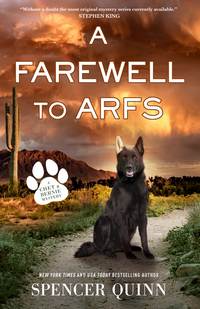
PUB DAY REPOST: A Farewell to Arfs by Spencer Quinn: The World Breaks Every One, Except Maybe Chet

Cover to A Farewell to Arfs by Spencer QuinnA Farewell to Arfs

by Spencer Quinn

DETAILS:
Series: Chet and Bernie, #15
Publisher: Forge
Publication Date: August 6, 2024
Format: eARC
Length: 288 pg.
Read Date: July 24-27, 2024
Buy from Bookshop.org Support Indie Bookstores

What’s A Farewell to Arfs About?

We start off this book with Bernie and Chet finishing a case for the Sonoran Museum of Art (an institution we learned about a couple of books ago), and with things looking up—and money in Bernie’s pocket—this is a pretty happy way to start things.

But soon after that, Chet overhears a phone call that their neighbor, Mr. Parsons, is having—and the reader knows things are going bad for him. Bernie learns the next day that Mr. Parsons has been the victim of a phone scam and is wiped out. Bernie starts looking into it—and into the Parsons’ ex-con of a son. It looks like he may have turned his life around, and is helping other former inmates adjust to the outside world and to stay on the right path. But is that what’s really going on?

If Billy Parsons isn’t involved—who is? And is there any chance that Bernie can get back any of the Parsons’ money?

Charlie and Esmé

Bernie’s son, Charlie, has been a consistent pleasure in the series—particularly because of Chet’s devotion to him. But adding his best friend, Esmé, in the last couple of books has made the character much more enjoyable for me.

I really enjoy their dynamic, for those familiar with Syfy’s Resident Alien show, it’s similar to the dynamic of Sahar and Max, only Esmé has a little more patience with Charlie than Sahar does with Max.

Even better, we get to meet Esmé’s father in this book—who seems like a good guy for Bernie to talk to in general—he has no knowledge of Bernie’s past, he’s not involved with policing, investigations, or anything like that. Just a friendly guy—who happens to be smart and (coincidentally) involved in an area that Bernie needs help understanding for the case. I enjoyed their conversation and hope we get more in the future.

(still, I do like the way that Charlier got to shine a little brighter this time than he usually does)

Bernie’s Past

Whoa. I did not expect any of what we learned about Bernie’s father in this book. Frankly, I didn’t think we’d ever learn anything about him—we barely know anything about his mother (and I’m okay with that based on Chet’s descriptions). But all of a sudden, there’s a lot about Harry Little being talked about.

It works—don’t get me wrong—and now I want to know more about Harry, his relationship with Bernie, and what was going on with him in general. We don’t get that (now?), but we get a glimpse of the man that was a presence in Bernie’s life until his early death. And that’s not nothing.

Feelings, Nothing More than Feelings

So, all the stuff about Harry Little added some emotional weight to the novel. But we didn’t need any of it—I’m not objecting, don’t get me wrong—but the last thing this book needed was more going on emotionally.

There’s some drama between Bernie and Weatherly. Bernie’s found a new way to botch things up with a woman—no real surprise there. The only plus is that it is a new way—he’s not repeating mistakes he made with Leda or Suzie. Maybe there’s some growth there—but it’s not Bernie at his best.

Related to that are some real dark moments for Bernie—we’ve seen hints of things like this from him before. But I don’t think it was ever this pronounced. Bernie is not always a good guy, he’s not only a white knight—there’s a noir character in him, battling to come out. And Bernie’s control slips early on in the novel and he has to reckon with the fallout.

But that’s not all. The Parsons have been aging and declining in health for a few books now, and for them to get wiped out like this—and then whatever that may or may not say about their son? There’s just no way to read this without your heartstrings being tugged. Scratch that—they’re yanked.

I don’t want to be unclear here (he says after probably giving the wrong impression). This is still a Chet and Bernie book like fourteen that have come before. Chet’s still irrepressible, he’s still an unreliable narrator obsessed with Bernie, food, smells, putting his teeth on perps, and snacks. He will make you laugh, and you will enjoy Bernie tracking down clues and the rest. But, like the better installments of this series, there’s a lot more going on than Chet’s antics—and Quinn makes sure that the depth is there.

So, what did I think about A Farewell to Arfs?

I admit that I was hoping for a criminal named Mike Craven to show up—to get back at Craven’s accidental use of Quinn’s name in last year’s Fearless. But it’s probably too soon for that—maybe in the next couple of years?

Once I saw what Mr. Parsons was doing on the phone, I muttered to myself (and texted a friend) that “Quinn’s getting all the mileage he can out of the research he did for Mrs. Plansky’s Revenge.” More power to him, obviously, but it did feel a little like a re-run. Thankfully, the story went in a very different direction—as I assumed it would, but still. In fact, while this might have been the result of the same research, the nature of the phone scam was different enough to shut me up.

I’m not sure that Weatherly handled things as well as she could’ve, but I’m not bothered by an imperfect character—she can be as flawed as Bernie. But that was the only hitch I found in this book or the events in it.

I really appreciated the depth we see of Bernie’s character, an angle or two that we haven’t spent that much time looking at before—we get to focus on. There’s more to him than being a decent PI with a lousy approach to finances. And if how he treats the Parsons doesn’t make your heart melt a little, you weren’t paying attention.

We get the usual chuckles (including Chet giving the reader a good idea about what he thinks about legalized marijuana), a good story, all the feels I described above (and more), and some good action scenes. What more is there to ask for?

Nothing that I can think of.

Disclaimer: I received a copy of this book from Tor Publishing Group via NetGalley—thanks to both for this.


4 1/2 Stars

This post contains an affiliate link. If you purchase from it, I will get a small commission at no additional cost to you. As always, the opinions expressed are my own.
Irresponsible Reader Pilcrow Icon

A Farewell to Arfs by Spencer Quinn: The World Breaks Every One, Except Maybe Chet

Cover to A Farewell to Arfs by Spencer QuinnA Farewell to Arfs

by Spencer Quinn

DETAILS:
Series: Chet and Bernie, #15
Publisher: Forge
Publication Date: August 6, 2024
Format: eARC
Length: 288 pg.
Read Date: July 24-27, 2024
Buy from Bookshop.org Support Indie Bookstores

What’s A Farewell to Arfs About?

We start off this book with Bernie and Chet finishing a case for the Sonoran Museum of Art (an institution we learned about a couple of books ago), and with things looking up—and money in Bernie’s pocket—this is a pretty happy way to start things.

But soon after that, Chet overhears a phone call that their neighbor, Mr. Parsons, is having—and the reader knows things are going bad for him. Bernie learns the next day that Mr. Parsons has been the victim of a phone scam and is wiped out. Bernie starts looking into it—and into the Parsons’ ex-con of a son. It looks like he may have turned his life around, and is helping other former inmates adjust to the outside world and to stay on the right path. But is that what’s really going on?

If Billy Parsons isn’t involved—who is? And is there any chance that Bernie can get back any of the Parsons’ money?

Charlie and Esmé

Bernie’s son, Charlie, has been a consistent pleasure in the series—particularly because of Chet’s devotion to him. But adding his best friend, Esmé, in the last couple of books has made the character much more enjoyable for me.

I really enjoy their dynamic, for those familiar with Syfy’s Resident Alien show, it’s similar to the dynamic of Sahar and Max, only Esmé has a little more patience with Charlie than Sahar does with Max.

Even better, we get to meet Esmé’s father in this book—who seems like a good guy for Bernie to talk to in general—he has no knowledge of Bernie’s past, he’s not involved with policing, investigations, or anything like that. Just a friendly guy—who happens to be smart and (coincidentally) involved in an area that Bernie needs help understanding for the case. I enjoyed their conversation and hope we get more in the future.

(still, I do like the way that Charlier got to shine a little brighter this time than he usually does)

Bernie’s Past

Whoa. I did not expect any of what we learned about Bernie’s father in this book. Frankly, I didn’t think we’d ever learn anything about him—we barely know anything about his mother (and I’m okay with that based on Chet’s descriptions). But all of a sudden, there’s a lot about Harry Little being talked about.

It works—don’t get me wrong—and now I want to know more about Harry, his relationship with Bernie, and what was going on with him in general. We don’t get that (now?), but we get a glimpse of the man that was a presence in Bernie’s life until his early death. And that’s not nothing.

Feelings, Nothing More than Feelings

So, all the stuff about Harry Little added some emotional weight to the novel. But we didn’t need any of it—I’m not objecting, don’t get me wrong—but the last thing this book needed was more going on emotionally.

There’s some drama between Bernie and Weatherly. Bernie’s found a new way to botch things up with a woman—no real surprise there. The only plus is that it is a new way—he’s not repeating mistakes he made with Leda or Suzie. Maybe there’s some growth there—but it’s not Bernie at his best.

Related to that are some real dark moments for Bernie—we’ve seen hints of things like this from him before. But I don’t think it was ever this pronounced. Bernie is not always a good guy, he’s not only a white knight—there’s a noir character in him, battling to come out. And Bernie’s control slips early on in the novel and he has to reckon with the fallout.

But that’s not all. The Parsons have been aging and declining in health for a few books now, and for them to get wiped out like this—and then whatever that may or may not say about their son? There’s just no way to read this without your heartstrings being tugged. Scratch that—they’re yanked.

I don’t want to be unclear here (he says after probably giving the wrong impression). This is still a Chet and Bernie book like fourteen that have come before. Chet’s still irrepressible, he’s still an unreliable narrator obsessed with Bernie, food, smells, putting his teeth on perps, and snacks. He will make you laugh, and you will enjoy Bernie tracking down clues and the rest. But, like the better installments of this series, there’s a lot more going on than Chet’s antics—and Quinn makes sure that the depth is there.

So, what did I think about A Farewell to Arfs?

I admit that I was hoping for a criminal named Mike Craven to show up—to get back at Craven’s accidental use of Quinn’s name in last year’s Fearless. But it’s probably too soon for that—maybe in the next couple of years?

Once I saw what Mr. Parsons was doing on the phone, I muttered to myself (and texted a friend) that “Quinn’s getting all the mileage he can out of the research he did for Mrs. Plansky’s Revenge.” More power to him, obviously, but it did feel a little like a re-run. Thankfully, the story went in a very different direction—as I assumed it would, but still. In fact, while this might have been the result of the same research, the nature of the phone scam was different enough to shut me up.

I’m not sure that Weatherly handled things as well as she could’ve, but I’m not bothered by an imperfect character—she can be as flawed as Bernie. But that was the only hitch I found in this book or the events in it.

I really appreciated the depth we see of Bernie’s character, an angle or two that we haven’t spent that much time looking at before—we get to focus on. There’s more to him than being a decent PI with a lousy approach to finances. And if how he treats the Parsons doesn’t make your heart melt a little, you weren’t paying attention.

We get the usual chuckles (including Chet giving the reader a good idea about what he thinks about legalized marijuana), a good story, all the feels I described above (and more), and some good action scenes. What more is there to ask for?

Nothing that I can think of.

Disclaimer: I received a copy of this book from Tor Publishing Group via NetGalley—thanks to both for this.


4 1/2 Stars

This post contains an affiliate link. If you purchase from it, I will get a small commission at no additional cost to you. As always, the opinions expressed are my own.
Irresponsible Reader Pilcrow Icon

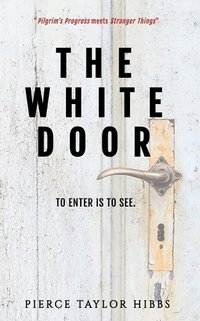
Some Further Thoughts about The White Door by Pierce Taylor Hibbs

Cover for The White Door by Pierce Taylor HibbsThe White Door

by Pierce Taylor Hibbs

DETAILS:
Publisher: Truth Ablaze
Publication Date: August 15, 2024
Format: eARC
Length: 484 pg.
Read Date: July 7-20, 2024
Buy from Bookshop.org Support Indie Bookstores


Obviously, this will make more sense if you’ve read my original post about The White Door. And I should add that these are just thoughts that’ve come to mind as I’ve continued to chew on this book. I’m not making a full argument here, or anything like that. Some ruminations is all. (the conclusion is particularly weak, if you ask me, because I am just ruminating. )

One thing readers really like to do is to try to determine what they can about a novelist’s beliefs, points of view, and whatnot from the way things in their novel(s) are depicted. Frequently, some of the theories are pretty out there—and even those that are closer to reality are limited and have some noteworthy flaws.

That’s not the case with this book—Hibbs has already written a good number of non-fiction books showing his views on a number of ideas and topics. So readers of this novel have a different task before them (if they’re of a mind to wonder about these things)—how are Hibbs’ ideas depicted and brought to “life” in this novel? Are they at all? I haven’t read all of Hibbs’ previous work (yet), but I’ve read a number of his books and thought about them while reading the novel.

An obvious point here is that the protagonist, Seth, has an anxiety disorder, not unlike the one that Hibbs talked about in Struck Down but Not Destroyed: Living Faithfully with Anxiety. But there are plenty of other places you can see Hibbes’ previous writing.

In my original post, I said a couple of things that I want to return to. The first is:

…there are two doors (in places that have no business having doors, see McGuire’s Wayward Children series for examples). A white one and a black one—those who walk through them are changed. What, and how, they see is altered in ways that say a lot more about the doors than anything else.

The second thing is:

First of all, anyone who’s read much of Hibbs is going to recognize his thinking here. Narnia, Seth, and Cleft sound like they’ve studied Hibbs’ work (ignoring the anachronism there)—which is good. If only so you know that you’re supposed to think they’re on the right path. Other characters largely sound ilke they’re on their way to sounding that way, too.

Two of Hibbs’ books that came to mind were Finding God in the Ordinary and In Divine Company: Growing Closer to the God Who Speaks.

The part of In Divine Company* that came to mind in The White Door was:

We live in what I have called a worded world, a world that everywhere reveals something about the God who made it, a world that, in a sense, “speaks” about God.

* He also has a book called The Speaking Trinity and His Worded World that probably does a better job of explaining this point and expanding on it, but I haven’t read that one yet.

In Finding God in the Ordinary, Hibbs quotes John Calvin:

Whichever way we turn our eyes, there is no part of the world, however small, in which at least some spark of God’s glory does not shine. In particular, we cannot gaze upon this beautiful masterpiece of the world, in all its length and breadth, without being completely dazzled, as it were, by an endless flood of light. Accordingly, in Hebrews, the apostle aptly calls the world the mirror of things invisible, because the structure of the world serves as a mirror in which we behold God, who otherwise can not be seen (Heb 11:3).

Calvin influenced Hibbs on this point, and you can see it in the rest of that book. Let me bring up a few other short quotations from the book along those lines:

if we do not search for God in the ordinary, we do not perceive the world as it truly is. God has revealed that his entire creation manifests his character.

The whole earth, every crevice of creation, has been endowed by God himself with a revelatory component. We can choose to ignore this component if we wish, but then we will not be seeing the world as it truly is. We will be seeing a world of our own making.

if we do not search for God in the ordinary, we will miss very precious parts of life.

The tagline on the cover of The White Door is: “To enter is to see.” This is part of what I meant by “What, and how, they see is altered.” Both Roland (Cleft’s steward dog) and Cleft call those who’ve gone through the White Door “gazers”*

* I called them “seekers” in my original post. Oops. Why do I take notes, if I’m not going to look at them while writing?

These people gaze upon the world in a clearer fashion than they have before as if a film had been cleared off what they see. They see things in a new way—able to seek God in the ordinary, perceiving the world as it truly is. Not completely—and not necessarily all in the same way. Yet, their vision is better. They see things that others do not/cannot.

Now, walking through this door is in some way analogous of or is an allegory of regeneration. I have questions about it (as I talked about before), and I’m not sure if that’s because I misunderstood something or if Hibbs was unclear (I fully expect the former, but I think it’s the latter).* Regardless, that’s the case. Given “eyes to see and ears to hear,” these gazers see things that others don’t. In our world, it’s because darkened eyes don’t think of it, and renewed eyes need to be taught it (so we get books like Finding God in the Ordinary and teaching along those lines)—but when we know we can see the world, the skies, and nature in general declaring the glory of God—we, like those gazers, do see things others don’t.

* To paraphrase Mr. Simon, when I get something wrong, I’m the first to admit it, the last one to know-ow-ow-ow.

On the other hand, those who walk through the Black Door also have their sight altered. As you might imagine, it’s not as beneficial—but that’s all I’m going to say about that.

I really appreciate the way that Hibbs put “flesh” on his arguments from other books in this novel—not just for a good way to solidify it in the minds of his non-fiction readers, but to provoke his novel’s readers to consider how that piece of fiction might apply to their lives.

This post contains an affiliate link. If you purchase from it, I will get a small commission at no additional cost to you. As always, the opinions expressed are my own.
Irresponsible Reader Pilcrow Icon

REPOST: Scareground by Angela Kecojevic: A Twisty and Fun Ride for the MG Crowd

Scareground Tour Banner

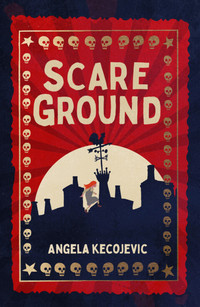
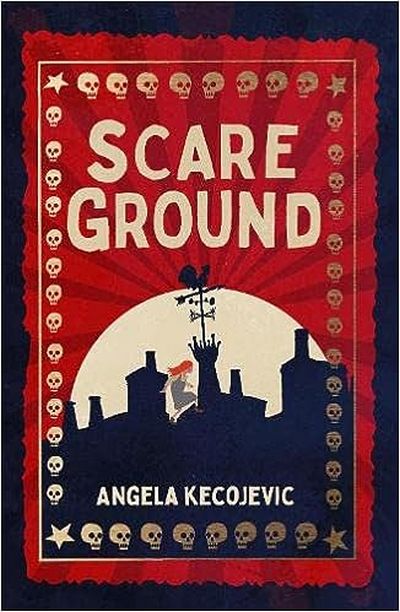
ScaregroundScareground

by Angela Kecojevic

DETAILS:
Publisher: Neem Tree Press
Publication Date: September 7, 2023 (UK), August 6, 2024 (US)
Format: eARC
Length: 304 pg.
Read Date: September 6-8, 2023

What’s Scareground About?

Nancy’s an adventuresome girl who helps in her (adoptive) parents’ bakery. There’s something about her that puts most children off—but on the whole, she enjoys her life—and gets up to a lot of mischief by running all over the rooftops of the small town she lives in. (she seems a little young, and historically early to practice Parkour, but really that’s what she does).

Through her antics, she has managed to make one friend, Arthur. Arthur’s father is overprotective due to his mother’s death and keeps a short leash on his son. But these two find ways to stretch the leash and have fun together.

Some strange things start happening in their town, pointing to the arrival of a fair. There’s no way that either of them will be permitted to attend, but they’re determined to have a look. It seems fun enough, it’s something that doesn’t happen often (not in their lifetimes, anyway), and they’ve been forbidden by their parents. For pre-teen Middle-Grade characters, you know that means they’ll sneak into it and get into adventures. Nancy has another reason to go—but she can’t bring herself to tell Arthur—she’s pretty sure that she’ll learn something about the circumstances around her parents leaving her to be found and taken in by the Crumpets.

And they do sneak in, they do get into adventures—most of which are far beyond what they could’ve imagined. The fair—the Scareground—is much more than a typical traveling fair.

Kecojevic’s Language

There’s something about the language—particularly a couple of word choices—that bothered me. A few words (like “macabre,” and “maritime”) are used perhaps too often. It feels like someone learned a new word and was trying to squeeze it in as often as possible. I obviously don’t think that’s what happened—it just feels that way.

Aside from that, the vocabulary and phrasing do strike me as someone trying to capture or create a mood—a feel to the book. One that’s reminiscent of a fairy tale or a story from another time. I don’t know that Kecojevic was entirely successful at it, however. But you can’t help but see that’s what she was going for, and it adds just the right amount of whimsy to enliven this story and the characters (Nancy in particular).

So, what did I think about Scareground?

As many good things that were in the book, several little choices that Kecojevic made added up—like the final words of the prologue which were an over-the-top threat delivered to no one at all just so the villain could monologue for a bit—and almost makes this book die a death of a thousand cuts. Please note the “almost” there. Thinking back to the prologue—you snip that monologue and you’ve got a nice, disturbing introduction to the book.

The book works well if you take it on the surface, enjoy Nancy and Arthur—and the friends they make along the way—and get caught up in the story and the strange world it takes place in. If you think about many aspects too much, it doesn’t hold up too well. It’s not a house of cards by any means, but maybe balsa wood.

Or, come to think of it—think of this as a carnival ride or fair attraction. That’s appropriate, right? It might be a spooky ride through a house of horrors, it might be an exciting-looking roller coaster, or it might be a pretty carousel—but if you look behind the curtain, or too closely at the structure, or spend too much time looking at the paint job on the horses or the lighting fixtures, and it’s less impressive.

Thankfully, you’re not going to find a lot of the target audience dwelling on aspects—they’re going to be in it for the ride. Which, getting back to my main point—works well when you take Scareground that way.

Nancy and Arthur are a whole lot of fun. The Crumpets are a delightful couple and the kind of parents (biological or not) that you want to see in fiction. And so many other characters could be talked about in this way. Nancy’s extra abilities are a wonderful, imaginative touch—but so is her heart and drive. Arthur matches that heart and drive without her abilities, and it’s their friendship that makes a lot of this work.

It’s a fast and strange ride that will entertain, for sure. I recommend it to readers of the right age.

Disclaimer: I received this eARC from Neem Tree Press via NetGalley in exchange for this post—thanks to both for this.

My thanks to The Write Reads for the invitation to participate in this tour and the materials they provided.

BOOK SPOTLIGHT: Scareground by Angela Kecojevic

This morning, I’m very pleased to welcome The Write Reads Ultimate Blog Tour for Angela Kecojevic’s Scareground, celebrating the U.S. Release next week. In addition to this Spotlight, my post about the book will be coming along soon. Today is the first day of the tour, so keep an eye on https://twitter.com/WriteReadsTours—to see what all the other bloggers involved are going to say about this twisty, fun MG book. But for now, let’s learn a little bit about the book, shall we?

Scareground Tour Banner

Book Details:

Title: Scareground by Angela Kecojevic
Genre: Middle Grade, Spooky mystery
Age Category: Middle Grade
Publisher: Neem Tree Press
Release date: August 6, 2024
Format: Paperback/Ebook
Length: 304 pages
Scareground Cover

About the Book:

Roll up, roll up, the Scareground is in town!

Twelve-year-old Nancy Crumpet lives above a bakery and her life is a delightful mix of flour, salt, and love. Yet her mind is brimming with questions no one can answer: Why did her birth parents disappear? Why can she speak with the sky? And why must she keep her mysterious birthmark hidden?

Everything is about to change when the Scareground returns to Greenwich. Nancy is convinced it holds the answers to her parents’ disappearance. Nancy and her best friend Arthur Green meet the fair’s spooky owner, Skelter, and discover a world full of dark magic and mystery. Nancy must confront her greatest fears to get to the truth. But is she ready for all the secrets the Scareground will reveal?

Book Links:

Amazon UK ~ Amazon US

About the Author:

Angela Kecojevic
Angela Kecojevic is a senior librarian, author and creative writing tutor. She has written for the Oxford Reading Tree programme and the multi-award-winning adventure park Hobbledown where her characters can be seen walking around, something she still finds incredibly charming! She is a member of the Climate Writers Fiction League, a group of international authors who use climate issues in their work. Angela lives in the city of Oxford with her family.

Author Links:

Website ~ Twitter ~ Instagram ~ TikTok ~ Threads ~ Linktree

My thanks to The Write Reads for the invitation to participate in this tour and the materials they provided.

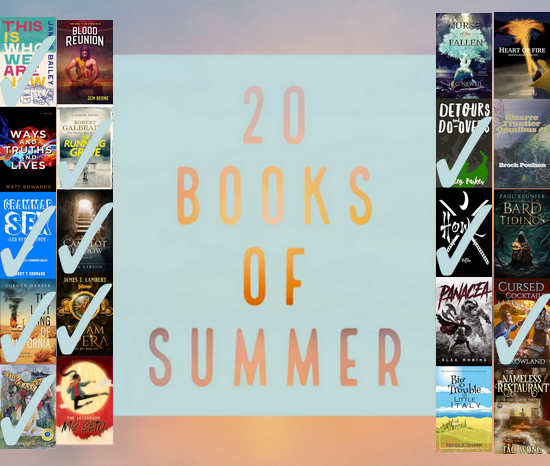
20 Books of Summer 2024: July Check-In

20 Books of Summer
Here’s a quick check-in for this challenge run by Cathy at 746 Books.

I am making a substitution, I had to DNF one of the books. With prejudice. That’s really all I want to say about it. (but that’s why one books is out of order on the graphic and list below).

Math is not my friend right now…I’m 50% done with the reading for this challenge with 33% of the time left. And I’ve written about 15% of the books.The book I’m substituting is one I need to be posting about on August 15, so that will help the latter stat at least.

Things aren’t looking good at this point. But I’m going to go down swinging (or reading…probably reading)

Let’s take a quick look at my progress in June:

✔ 1. This is Who We Are Now by James Bailey
2. Blood Reunion by JCM Berne
3. Ways And Truths And Lives by Matt Edwards
✔ 4. The Running Grave by Robert Galbraith
✔ 5. Grammar Sex and Other Stuff: A Collection of (mostly humorous) Essays by Robert Germaux (my post about it)
✔ 6. The Camelot Shadow by Sean Gibson
✔ 7. Last King of California by Jordan Harper
✔ 8. Steam Opera by James T. Lambert
✔ 9. The Glass Frog by J. Brandon Lowry
10. The Legendary Mo Seto by A. Y. Chan
11. Curse of the Fallen by H.C. Newell
12. Heart of Fire by Raina Nightengale
✔ 13. Detours and Do-overs by Wesley Parker (my post about it)
14. Bizarre Frontier Omnibus #1 by Brock Poulson
✔ 15. Howl by e rathke (my post about it)
16. Bard Tidings by Paul J. Regnier
17. Panacea by Alex Robins
✔ 18. Cursed Cocktails by S.L. Rowland
19. Big Trouble in Little Italy by Nicole Sharp
20. The Nameless Restaurant by Tao Wong

(subject to change, as is allowed, but I’m going to resist the impulse to tweak as much as I can).

20 Books of Summer '24 July Check In Chart

Page 34 of 339

Powered by WordPress & Theme by Anders Norén