Category: Fiction Page 6 of 350

The Irresponsible Reader On…Self-Published Steampunk

(updated 7/21/26)
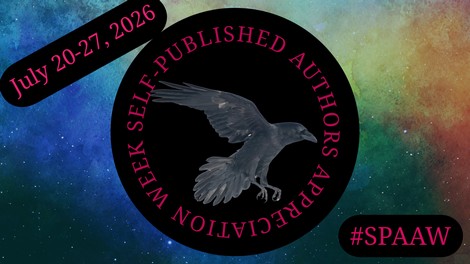
Self-Published Author Appreciation Week Banner has a gray bird on a black disk. Around the disk are the words, 'Self Published Authors Appreciation Week.' In the top left corner, it says, 'July 20-27, 2026.' In the bottom right corner it says, '#SPAAW'

From the first moment that people did the strange thing of asking me to talk about their books on my blog, I’ve been impressed by the quality of a lot of what’s been published by authors going out on their own, taking all the risks, shouldering all the responsibility, and doing all the work to get their words, their dreams, their blood, sweat, and tears on to the page (paper or electronic). This should be celebrated—it’s definitely appreciated, as we’re trying to show this week.

As part of this week-long celebration, I’m continuing my habit of highlighting the self-published works that I’ve blogged about over the last few years (or meant to blog about, but at least read)—just a sentence or two. Hopefully, this’ll be enough to make you click on the link to the full post. Beyond that, it’d be great if I inspired you to add a few of these to your TBR. Also, be sure you check out the other posts over at the SPAAW Hub.

Today I’m focusing on Self-Published Steampunk. Sadly, this list is the same as last year’s. It’s still so small that it hardly seems to justify a separate list. But I kept these on their own so they wouldn’t get lost in the SF mix. Consider this an open invitation for people to fill up my comment section with recommendations so I can post a longer version of this list next time I run this.

bullet The Curse of the Silver Pharaoh by Pip Ballantine & Tee Morris—set in the same world as their Ministry of Peculiar Occurrences series, this puts the adventurous group of homeless kids the Ministry uses in a private school to find an Egyptian artifact. I still need to write my post on it, but it’s worth your time.
bullet Bartleby and James: Edwardian Steampunk Chronicle by Michael Coorlim—these short stories are a nice little dose of Steampunk with a thin coating of Victorian P.I. Light fun. (my post about it)
bullet Bodacious Creed: A Steampunk Zombie Western by Jonathan Fesmire—the reanimated corpse of one of the most-feared lawmen in the West roots out a criminal organization set to rule California. (my post about it)
bullet Bodacious Creed and the Jade Lake by Jonathan Fesmire—Creed heads to SF and tangles with a human trafficking ring. (my post about it)
bullet Bodacious Creed and the San Francisco Syndicate by Jonathan Fesmire—Creed has settled into San Francisco and is on the hunt for an outlaw who uses machines to alter the bodies and minds of his victims. I haven’t read this yet, but I can’t pass up the chance to talk about it. Really looking forward to diving in.
bullet Aether Powered by James T. Lambert—A UW Engineering student inherits a trunkful of steampunk goodies from a distant relative. Action ensues. (my post about it)
bullet Steam Opera by James T. Lambert—An imaginative engineer/inventor and a gutsy investor attempt to land on the moon pre-1900. (my post about it)
bullet The Silk Empress by Josef Matulich—a brilliant and reckless British orphan finds himself on an airship on the Silk Road (well, technically, above it). It’s a rollicking adventure. (my post about it)
bullet The Golden Spider by Anne Renwick—a steamy Kraken-filled Steampunk story, lots of good action, and great inter-personal moments. (my post about it)

If you're a self-published author that I've featured on this blog and I didn't mention you in this post and should have. I'm sorry (unless you're this guy). Please drop me a line, and I'll fix this. I want to keep this regularly updated so I keep talking about Self-Published Authors.

Visit the SPAAW 2026 Hub to see what other Self-Published Appreciation Posts are out there.
Self-Published Authors Appreciation Week circle logo and the Irresponsible Reader Pilcrow in front of an open book

The 2026 Self-Published Authors Appreciation Week Logo was made by Witty and Sarcastic Book Club

Manitou by Glen Gabel: It Went Badly

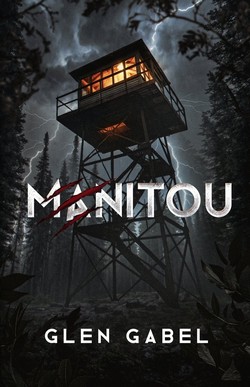
Cover of Manitou by Glen GabelManitou

by Glen Gabel

DETAILS:
Publication Date: March 21, 2026
Format: Paperback
Length: 367 pg.
Read Date: June 23-25, 2026
Buy from Bookshop.org Support Indie Bookstores

Roy glanced at Tahney. He looked feeble in the firelight, but his eyes were sharp and knowing, flashing a final warning that gave Roy pause. Even with every assurance and every answer in place, an icy dread still pricked at him. As they slowly pulled away from the cabin in Jess’s jeep, he could hear Tahney’s final warning linger in his mind.

“It will go badly.”

What’s Manitou About?

A (mostly) functional alcoholic forest ranger interrupts his attempt at ending his life to go to the site of a small plane crash in the forest. What he finds when he gets to the crash site is a pile of cocaine and a severed arm from the pilot. It’s never easy to see a human like that—but something strikes Roy Farmer as odd about the scene.

It doesn’t matter, the local sheriff chases him off so he and his people can take care of things until the DEA shows up. Roy can’t let it go, though, he believes the sheriff is corrupt and that the drugs may not end up with the DEA. So he starts to do some unofficial digging by talking to a local drug dealer.

It turns out that there’s a local motorcycle club that seems to be trying to expand its business and take on partners from south of the border. But there’s another source for narcotics in the small mountain town, too.

And then more people start dying deaths as grizzly as the pilot did (if not more so). It almost seems impossible for a human to do what the killer is doing—but the only other option isn’t one that Roy Farmer is prepared to believe possible.

Why did I pick this up? Why did I keep reading?

I picked this up because I keep running into Gabel at local events and he seems like a good guy—one that I want to read. And he’s been talking about working on this since we first met, so when it was in front of me finally, I had to try it.

I kept at it because it moved fast and I couldn’t stop asking “what’s next?” Either one of those is generally enough to keep me invested—you add both together—along with a subtle garnishing of “is Character X going to make it?”—and of course I’m staying with it.

What does this book tell us about humanity?

I’m not sure it has a lot to say about humanity or the human condition, really. The book isn’t quite focused on that sort of thing.

But there is a strain of—where did it go wrong? (well, with a couple of the characters that’s not the question, they’re very aware). This marriage, that career, this lifestyle, this dream…something happened that turned it from something good, positive, successful into a struggle to keep going. Into crime, addiction, corruption, or something worse.

Something similar could be said of the small town that this all takes place in. Once it was a thriving—or at least healthy—community where people could raise kids, see them start their adult lives, maybe start families of their own—and so on. Now, it’s a place that kids want to leave when they can. It’s a place that adults want to leave if they could. Or just to wait until their eventual death, stuck in one place because of inertia or loss of hope.

I’m not going to say that anyone comes out of this book whole and ready. I’m not going to say that anyone comes out of this book at all. But somewhere along the line some of these characters realize that they need to make a change, they might even have a glimmer of an idea how to fill that hole in their lives that was created when things started to go wrong.

So, what did I think about Manitou?

This one is a little out of my genre-preferences. It’s near the border of Fantasy and Horror. I think maybe half a foot crosses the border into Horror (maybe more). But it also feels like something that someone trying to C.J. Box would come up with. Actually, replacing the Manitou with a drug-crazed serial killer (or cult of them) would make it look like someone trying to do Joe Pickett, but edgy.*

I joked in a WWW post that there were too many characters in the book, but given the mortality rate, I expected it to get to a manageable level soon. It’s actually not much of a joke—that’s a pretty good way to think of the book. It was too, too crowded with promising characters that would be killed shortly (or several chapters) after their introduction. Some took me completely by surprise when and how it happened. But most were clearly coming from miles away—that didn’t make them less horrific, it just made it easier to take.

I will note that there is one death that I think I understand the reasoning behind, but I will be chastising Gabel about next time I see him.

If the criminal activities in the book were more of a focus, I think I’d have a quibble or two about the depiction of it—it seems a little too easy and obvious. But given the role of them is just to propel certain characters along—and to provide a red herring (for the characters, not the readers) into what’s going on. I’m going to hold my fire on them. Again, if you take out the Manitou, there’s a decent crime novel here after a couple of editing passes.

From the beginning, Gabel focuses on two characters—and it’s pretty obvious that he’s doing so. They’re clearly the protagonists and are going to survive the novel—or at least up to the climactic scene so that you’ll be extra outraged when they meet a violent end. I’m not going to say which way(s) that Gabel goes with them in the end. But keep your eyes on them, everything that Gabel wants to say is there.

Well, at least everything he wants to say about people is there. The overall message of the book—be careful who you don’t give several pounds of cocaine to—comes through without them. And really, who doesn’t need to hear that? Yes, it’s stupid to feed a deer; it’s dangerous to feed a bear—but it’s asking for wanton destruction when you give coke to an unknown.

I’ve gotten off the path here—this is a solidly entertaining novel. The story moves quickly, the action is fierce, and the twists are enough to keep you near the edge of your seat.

* Actually, I think the book might belong in Horror if only because it violates a “rule” that I’ve heard even hard-core noir and/or serial killer novelists won’t touch.

This post contains an affiliate link. If you purchase from it, I will get a small commission at no additional cost to you. As always, the opinions expressed are my own.

Visit the SPAAW 2026 Hub to see what other Self-Published Appreciation Posts are out there.

Self-Published Authors Appreciation Week circle logo and the Irresponsible Reader Pilcrow in front of an open book
20 Books of Summer 2026
Literary Locals logo

Image by OpenIcons from Pixabay
The 2026 Self-Published Authors Appreciation Week Logo was made by Witty and Sarcastic Book Club

The Irresponsible Reader On…Self-Published “General” Fiction

(updated 7/20/26)
Self-Published Author Appreciation Week Banner has a gray bird on a black disk. Around the disk are the words, 'Self Published Authors Appreciation Week.' In the top left corner, it says, 'July 20-27, 2026.' In the bottom right corner it says, '#SPAAW'

From the first moment that people did the strange thing of asking me to talk about their books on my blog, I’ve been impressed by the quality of a lot of what’s been published by authors going out on their own, taking all the risks, shouldering all the responsibility, and doing all the work to get their words, their dreams, their blood, sweat, and tears on to the page (paper or electronic). This should be celebrated—it’s definitely appreciated, as we’re trying to show this week.

As part of this week-long celebration, I’m continuing my habit of highlighting the self-published works that I’ve blogged about over the last few years (or meant to blog about, but at least read)—just a sentence or two. Hopefully, this’ll be enough to make you click on the link to the full post. Beyond that, it’d be great if I inspired you to add a few of these to your TBR. Also, be sure you check out the other posts over at the SPAAW Hub.

Today I’m focusing on General Fiction (for lack of a better term)—there’s some Lad Lit, a dash of historical fiction, some humor, a couple of things I don’t know how to categorize beyond “Fiction”, and a bit more. Hopefully, you can find something that tickles your fancy.

bullet Dispatches from a Tourist Trap by James Bailey—Jason (see below) and his mother move from Seattle to a small town in the middle of Washington to stay with her parents as she establishes a life away from her husband. Hilarity and conflict ensue. (my post about it)
bullet The First World Problems of Jason Van Otterloo by James Bailey—an epistolary novel (through emails) from a 13-year-old whose life is turned upside down in 2003 Seattle. A lot of heart and a few laughs. (my post about it)
bullet This Is Who We Are Now by James Bailey—he doesn’t just write YA, Bailey attacks coming-of-Middle-Age, too. This not-so-young man, deals with changes to his parents’ lives, his younger siblings’ successes (and struggles) and coming to grips that his life may not end up just the way he wanted it to.
bullet The Glamshack by Paul W. Cohen—A lifestyle reporter’s obsessive love for a woman and the havoc it wreaks on his life. (my post about it)
bullet Ways And Truths And Lives by Matt Edwards—this is tough to summarize in a sentence, but let me try, because this is more about the internal life. James Dall is a struggling writer and reporter, who is still trying to figure out what he thinks about life, love and meaning. This is about him on the verge of making a big move for his life and career, and those things that move him to it.
bullet The Chronicles of Iona: Exile by Paula de Fougerolles—The first novel in a series about the founding of Iona. Some historical fiction with a hint of Fantasy. (my post about it)
bullet Love Stories by Robert Germaux—based on actual events, the story of a love that might have been, and one that is. (my post about it is forthcoming)
bullet Not Awkward by Matthew Hanover—a young man attends the funeral of his ex’s father and gets roped into staying during shiva in the days leading to his wedding. Nah, not awkward at all. (my post about it)
bullet Not Dressed by Matthew Hanover—Hanover’s (seemingly) effortless charm makes this “romantic comedy of how love goes wrong—and right—when you’re a twenty-something still figuring out how to adult” a real winner. (my post about it)
bullet Not Famous by Matthew Hanover—Hanover’s first novel is about a guy who falls for a socially awkward musician. It will steal your heart. (my post about it)
bullet Not Prepared by Matthew Hanover—a bachelor takes in his eleven-year-old-goddaughter when her mother skips town, and maybe finds love, too. Great stuff. (my post about it)
bullet The Flight of the Pickerings by John Grayson Heide—a heart-warming story about an older couple dealing with dementia and the end of their life together get their world turned upside down when their rebellious teenage grandson comes to live with them. (my post about it)
bullet Didn’t Get Frazzled by David Z. Hirsch, MD—a bildungsroman following a 20-something through his 4 years of medical school: from Gross Anatomy to the verge of residency. (my post about it)
bullet Love and Other Monsters in the Dark by K. B. Jensen—I could probably put this on most of my Self-Published Fiction lists, so I’ll limit it to this one. It’s sort of the same genre as The Twilight Zone—SF, Fantasy, Horror, Crime. Sudden Fiction and Short stories that’ll knock your socks off. (my post about it)
bullet XYZ by William Knight—A mature, old-school programmer has to start his career over at a 21st Century Startup as his family life falls apart in every way imaginable. Clearly a comedy. (my post about it)
bullet Dirt Road Home by Alexander Nader—A lot of charm fills this YA(ish) Coming of Age story about a teen forced to move from Detroit to a small town in Tennessee before graduation. (my post about it)
bullet Coffee and Condolences by Wesley Parker—A widower tries to begin recovering from the deaths of his wife and children by reconnecting with his step-sister and maybe finds love. (my post about it)
bullet Detours and Do-overs by Wesley Parker—A sequel to the next on the list. This follow-up had a lot of heart. (my post about it)
bullet Headphones and Heartaches by Wesley Parker—A teen finds home, safety, and love in a Foster Home, but is torn about leaving his mother behind. One sentence doesn’t do it justice, I simply loved this one. (my post about it)
bullet The Worst Man by Jon Rance—Ollie’s desperately in love with the girlfriend/fiancée of the man who’s been his best friend since childhood. And now he has to be the best man at the wedding he wants to derail. (my post about it)
bullet The Summer Holidays Survival Guide by Jon Rance—an out-of-shape teacher tries to prepare for a half-marathon while surviving the summer with his three kids, a marriage on the rocks, and his father (with dementia) moving in. (my post about it)
bullet However Long the Day by Justin Reed—A Depression-era take on The Prince and the Pauper, an impressive debut (my post about it)
bullet The Crescent and the Cross by Kurt Scheffler— the story of The Battle of Tours (in 732) and events leading up to it, told through the lives of people close to Charles Martel and Charles on the one hand and a couple of the leaders of the Muslim forces involved in the Arab invasion of France. (my post about it)
bullet In Ten Years by Ian Shane—The reductionist description is “A 21st Century When Harry Met Sally“. We watch a couple of college friends over 18 years start to figure out that they’re in love. Hilarious and sweet. (my post about it)
bullet Postgraduate by Ian Shane—When your life falls apart, why not take your college radio show and turn it into an Internet radio show? And then, why not attend a reunion with the old college radio gang, including “The One That Got Away” (because you foolishly dumped her)? (my post about it)
bullet Radio Radio by Ian Shane—A maverick DJ is forced to get creative when a corporate radio management team takes over his station. A love letter to what radio used to be as much as anything else. (my post about it)
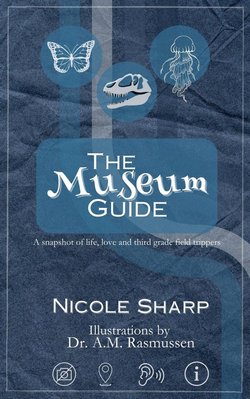
bullet The Museum Guide by Nicole Sharp—”A snapshot of life, love and third grade field trippers” in a natural history museum. (my post about it)
bullet The Jackals by Adam Shaw—A local band on the verge of making it big/big-ish falls apart after high school due to a love triangle that shouldn’t have happened. When one member of the band dies, the group has to get together for a funeral and to clean up his stuff. (that’s a bad summary, but best I can do in a sentence) (my post about it)
bullet KA-E-RO-U Time to Go Home by B. Jeanne Shibahara—I’m so glad the blurb contains a one-sentence description because I couldn’t write one: “Desert-dweller Meryl travels to Japan, returns a WWII flag, and brings home an understanding of life that opens her heart for the unexpected.” (my post about it)
bullet Lingering by Melissa Simonson—It’s sort-of SF, sort-of a Thriller, but not really either, so I put this here. This is a novel about grief, about dealing with death—while telling the story about an effort to design an AI to mimic a dead loved one in order to help a survivor cope. (my post about it)
bullet We Be Dragons by Michael Weitz—It’s a trip back to the mid-80s in an Idaho small town. A group of boys spend the summer playing D&D, working, and thinking about girls. A local woman succumbs to Satanic Panic and tries to shut them down. As a bonus, we get several chapters from the game’s POV. (my post about it)
bullet Leveled Up Love by Tao Wong & A. G. Marshall—It’s LitRPG-ish, it’s also a Rom-Com. You mash the two of those together and you get this entirely entertaining and sweet read. (my post about it)

If you're a self-published author that I've featured on this blog and I didn't mention you in this post and should have. I'm sorry (unless you're this guy). Please drop me a line, and I'll fix this. I want to keep this regularly updated so I keep talking about Self-Published Authors.

Visit the SPAAW 2026 Hub to see what other Self-Published Appreciation Posts are out there.
Self-Published Authors Appreciation Week circle logo and the Irresponsible Reader Pilcrow in front of an open book

The 2026 Self-Published Authors Appreciation Week Logo was made by Witty and Sarcastic Book Club
We Be Dragons by Michael Weitz: A Nice Bit of 80s Nostalgia

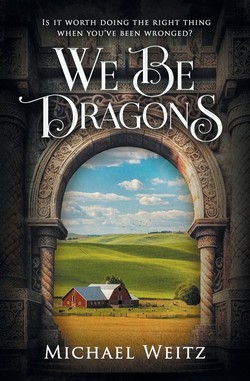
Cover of We Be Dragons by Michael WeitzWe Be Dragons

by Michael Weistz

DETAILS:
Publisher: Rook & Rook
Publication Date: May 23, 2025
Format: Paperback
Length: 438 pg.
Read Date: June 15-18. 2026
Buy from Bookshop.org Support Indie Bookstores

What’s We Be Dragons About?

It’s 1986 in Weston, ID, a small town in Northern Idaho, near Moscow (interestingly, that actual town in Idaho with that name is on the southeast corner, and is probably smaller). It’s practically idyllic—wholesome town, solid community where everyone knows everyone and looks out for each other. We focus on a group of six teens in the summer before their senior year, one of the last chances they have to make money for college. Their big concerns are getting to an AC/DC concert, trying to come up with the nerve to ask out a girl, overbearing bosses, and keeping their cars running. Well, and their D&D game.

Which, to their surprise, is becoming controversial—someone in the large church just outside of town has decided to buy into all the hype surrounding the game right then—that it’s Satanic, involves actual demons and spells, and will lead children to a life of destruction, drugs, and deviancy. She’s trying to rile up the city against this kind of thing—and they’re about to become the poster children for this effort.

The book focuses on John Brewer, the DM for the game, who loses his job at the beginning of the summer—thanks to some changes in town. He ends up having to scramble for a job helping with the harvest efforts (and the run-up to them) for a farm a little way out of town, where he and Toff, another member of the group, live during the week.

There are three types of chapters in this book, and I want to attack each of them in turn.

The A Story

There’s the everyday life chapters—the slice of life, the coming-of-age stuff. This is perfectly fine. I do wonder if John acts a little too immature for someone of h is age and place in life (especially compared to his friends). But then again…at that age, how many of us acted like we were supposed to?

The main conflict in these chapters if between John and his boss who is antagonistic toward him from the instant he hires John. Toff tries to keep John and his temper in check (and it mostly works). Jim Henley, the farmer in question, attends the same church as the anti-D&D crusader, but that doesn’t seem to be all of it. There’s something else afoot.

Mrs. Henley and the other adults on the farm seem to be fine with Toff and John—they’re friendly and helpful, taking the boys under their wings to show them what to do. Their basic decency really makes you wonder about Jim.

The Gaming Nights

Then we get the chapters where we see the gang as a D&D session begins or ends. I really loved these chapters—it feels so right. This is what a gaming session should be like—although some of these chapters feature the abrupt interruption of the anti-D&D campaigners breaking up the games in various ways. Those interruptions are not what a gaming session should be like, but the way that the teens and John’s mom react are really good.

Paulette Dickerson keeps interrupting the games—ignoring common manners and private property laws in an unbelievable, yet completely believable, way. Sometimes with an audience, sometimes with just a henchman/hanger on. The police get involved more than once.

These chapters sold me on the book more than anything else—it’s the core of the book. I enjoyed watching the reactions to Paulette and her antics. But more than that, it’s just watching the way the boys play.

The Game POV

If the core of the book is the gaming nights, then the chapters which are told about the game—from the POV of the characters—are the cherry on top. It’s basically scenes from a fantasy novel. We don’t see Truck, Charlie, or Nick—we see the characters Kryger, Domo, Bellator, and the rest—plus all the monsters and hazards that John throws at them.

These chapters are just perfect. I mean, I might not love them if they were in a proper Fantasy novel (I’d need to see more to form an opinion). But in this format? Just love them.

My sole complaint is that there aren’t enough of them.

So, what did I think about We Be Dragons?

I liked the book. I thought the anti-D&D stuff ended well. I thought the character arcs were pretty well resolved. I’m not 100% that the A Story chapters told a story that needed to be told, or had a satisfying/worthwhile conclusion. But, I’m not annoyed by that—and the pluses of this book outweigh that.

It took Weitz a little while to settle into the book—he was trying too hard initially to set the stage, I think. Two detailed descriptions of oil changes in the first 20 pages seems a little overkill. But once he settled into things, that went away. He nails the setting—granted, I didn’t move to the area until 5 years after the events depicted here, but his description jibed with my memories. Once we move past the opening chapters, the writing was smooth and while you wouldn’t ever call this a fast-paced novel, it reads like one.

The two antagonists of the book—Paulette Dickerson and Jim Henley—were a bit too thinly drawn to take seriously. I don’t get where Henley is coming from or his capricious treatment of his workers—why did any of the adults stick with him? Was work that hard to find in the community? Paulette is a good representation of the worst of the Satanic Panic of the time. But she feels as solid as a Hollywood backdrop. I just didn’t believe her (I believed people’s reactions to her, though).

All that said—this is a nice way to spend some time. Weitz does a good job of taking you back to the 80s (especially if you’re familiar with smaller rural towns), and reminding the reader about high school friendships—and, for some of us, that group of geeky guys they could spend quality time with.

This post contains an affiliate link. If you purchase from it, I will get a small commission at no additional cost to you. As always, the opinions expressed are my own.

Visit the SPAAW 2026 Hub to see what other Self-Published Appreciation Posts are out there.

Self-Published Authors Appreciation Week circle logo and the Irresponsible Reader Pilcrow in front of an open book
20 Books of Summer 2026
In large letters 'Literary Locals' and in smaller 'The Irresponsible Reader' are at the bottom of the image. An image of a book opening and snow-capped mountains rising from between the pages, a stalk of some sort of grain is next to each side of the book, like parentheses.

Image by OpenIcons from Pixabay
The 2026 Self-Published Authors Appreciation Week Logo was made by Witty and Sarcastic Book Club
The Museum Guide by Nicole Sharp: A Literary Stroll through Lives and a Museum

Cover of The Museum Guide by Nicole SharpThe Museum Guide

by Nicole Sharp

DETAILS:
Publication Date: June 1, 2024
Format: Paperback
Length: 50 pg.
Read Date: May 2, 2026
Buy from Bookshop.org Support Indie Bookstores

What’s The Museum Guide About?

This is a very small novella, so I have to be careful not to say too much. The text on the cover describes the book very well: “A snapshot of life, love and third grade field trippers.”

We follow museum docent Martha Stein as she guides a class of third-graders through a natural history museum. Third-graders + museum = barely-controlled chaos, and we do get to see Martha and the teacher try to maintain that. But as Martha takes them around, the narration pauses to watch a security guard, an event planner, a museum visitor, someone working on a display, and so on.

We see where they are that day—their emotions, the goings on in their life, just a quick glimpse—as if they’re displays at a museum we’re strolling through.

So, what did I think about The Museum Guide?

I’m more afraid to say much here than I was above. This feels like one of those things that the more you talk about it, the worse the subject is for it. To come back to this well one too many times, it’s one of those beautiful displays in a museum that it’s best to just stand and take in rather than to try to talk about. (there’s a scene in Walter Mosley’s Ghalen that captures this wonderfully, where a man just stands in front of a painting for hours, unable to really talk about what he’s seeing)

This novella has none of the zaniness of Sharp’s other work, or really almost any other characteristic of it. However, it does have the same quality of writing, story-telling, and character. How she’s able to draw so many strong characters in a mere fifty pages is something else.

If anything, it’s assuring to see that she has another gear—as delightful as her typical gear is.

I was completely immersed in this and was utterly charmed by it. It was over too soon for my taste (although I couldn’t tell you how it could be expanded/extended without losing something).

The Museum Guide is a very pleasant way to spend an afternoon, and I’d encourage you to get it.

This post contains an affiliate link. If you purchase from it, I will get a small commission at no additional cost to you. As always, the opinions expressed are my own.

Visit the SPAAW 2026 Hub to see what other Self-Published Appreciation Posts are out there.

Self-Published Authors Appreciation Week circle logo and the Irresponsible Reader Pilcrow in front of an open book
In large letters 'Literary Locals' and in smaller 'The Irresponsible Reader' are at the bottom of the image. An image of a book opening and snow-capped mountains rising from between the pages, a stalk of some sort of grain is next to each side of the book, like parentheses.

Image by OpenIcons from Pixabay
The 2026 Self-Published Authors Appreciation Week Logo was made by Witty and Sarcastic Book Club
Opening Lines: The Daughters’ War by Christopher Buehlman

We all know we’re not supposed to judge a book by its cover (yet, publishing companies spend big bucks on cover design/art, and we all do judge them that way). But, the opening sentence(s)/paragraph(s) are fair game. So, when I stumble on a good opening (or remember one and pull it off the shelves), I like to throw it up here (especially if I’m out of time to come up with a post that involves writing on my part).

from The Daughters’ War by Christopher Buehlman:

I saw my first goblin the same day I saw my first shipwreck.

I was under sail, on my way to war.

On my way to fall in love with death, and with a queen.

On my way to lose all of my friends, and two of my brothers.

I would see a great city fall in blood and fire, betrayed by a false god.

Later, I would be commanded to die on a high stone bridge, but I would fail in this.

The rest of the First Lanza of His Majesty’s Corvid Knights would not fail.

This is not a happy story, but it is a true one.

I have no time for lies, or for liars.

Opening Lines Logo

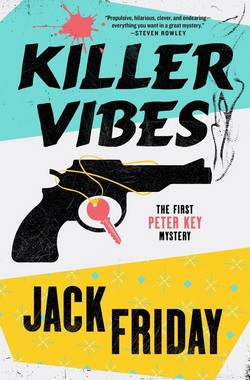
PUB DAY REPOST: Killer Vibes by Jack Friday: Weird (and Dangerous) Times in a Weird City

Cover of Killer Vibes by Jack FridayKiller Vibes

by Jack Friday

DETAILS:
Series: Peter Key Mysteries, #1
Publisher: Minotaur Books
Publication Date: July 14, 2026
Format: eARC
Length: 352 pg.
Read Date: July 6, 2026
Buy from Bookshop.org Support Indie Bookstores

What’s Killer Vibes About?

Peter Key is an aimless, small-time weed dealer in his late 20s trying to live like someone in their late teens/early 20s. And that lifestyle is falling apart for him (to mix genres, think a less put-together, but better read, version of Cameron at the beginning of Remarkably Bright Creatures).

Then in an almost deus ex machina move—a lawyer shows up to tell him that his uncle (who he barely knew) is: 1. dead, 2. left him a house, a car, and some other things, and 3. left him a pile of debt.

All Peter can hear is the house part—as he’s about 20 minutes away from being homeless at that point. The lawyer has a bunch of advice about selling the home, getting rid of the debt, and whatnot. Peter wants to just move in and do so right now.

The house is a pigsty, his uncle was clearly going through a hoarding period in his life, and there are so many real estate brokers and bankers pushing him to sell the place that it feels uncomfortable. Add in some mysterious threats and warnings—and a car or two that seems to be following him everywhere.

Peter starts wondering about all this—including the way his uncle died, and starts playing amateur detective.

It’s not long before he runs into a PI who oddly enough, offers him a job and starts to show him better ways to go about what he’s trying to do.

Things get worse for Peter from there. (But better for the reader.)

Austin

What I know about Austin is so minimal. Tres Nevarre spent some time there and probably formed my initial impressions, I’ve heard about SXSW® (and wish I had an excuse to visit it firsthand), and there’s the whole “Keep Austin weird” thing that you can’t help but hear about. So…yeah, I have very little and very shallow understanding of it.

And I’m not saying that reading one mystery novel has set me straight and I’m as close to a native as you can get.

But I feel like I have a much better—grounded, fuller, and possibly nuanced—idea about it. Assuming Friday wasn’t just blowing smoke about his own city. The mix of poverty and obnoxious wealth so close to each other; a city where super exclusive poker games are regular things for the mega-rich and Beyoncé listening parties are loud and joyfully raucous; and some third thing to really round out this list.

In keeping with the title of the book, I think we’re treated to some good Austin Vibes here. And I found that great. I don’t need another Chicago, NYC, LA, or Boston PI (not that I won’t read them!), I really like getting to know another city.

Why did I pick this up? Why did I keep reading?

I requested this from NetGalley because of the phrase in the blurb: “self-proclaimed ‘laziest private investigator in Texas.'” That was enough. Now, I’m not so sure I see him as all that lazy (yet), but that line was enough to get me interested.

Once I started reading, why did I stick with it? That’s really easy—the mystery was complex without getting convoluted, the writing was crisp and clear, the characters leapt off the page—and while Peter is woefully under-qualified to tackle the things he does in this book, somehow he gets by on instinct. That’s just fun to watch.

What does this book tell us about humanity?

All families are messy. Some families are messier than others. That’s really all it boils down to here.

The first family unit we meet in this book (a couple of brothers, plus the girlfriend of one brother) is messy enough that the prudes in the readership might wonder if they want to keep pushing on (I sure did). And, honestly? It turns out that they’re the healthiest family in the book. By a mile. (however, most will not engage the prude-reflex, I should assure you).

And yet—in some way—for most of them, the family bonds, the family loyalty, the impulse to turn to family, etc. is incredibly strong. Arguably, they are the strongest when it shouldn’t be. There are some who have severed that bond—for good or ill.

But for those who haven’t—this book shows focuses on the trouble that can bring—in multiple ways and levels.

So, what did I think about Killer Vibes?

It has been a good, long, time since I read a book that was so obviously a pilot for the rest of a series. It’s about establishing the character, getting him into a new city and trying to rebuild his life, getting involved with a PI to learn from, and then starting in that career—oh, and getting a dog. And as a pilot, it was great.

I do have high hopes for this series. But I think we’re really going to need book 2 to really get an idea what it’ll be like. This novel is too focused on Peter and his family to really get a sense for what kind of stories this is going to be made up of. We know a couple of the characters we should expect to see—Grady, his receptionist, Peter’s friend…but that’s really it. So we can make a guess or two, but…it’s hard to really know. And I’m okay with that. Killer Vibes was good enough that I’m back.

But let me focus on this as a novel. Boy howdy, this was good. As a person, Peter isn’t someone I want to get to know—I think I’d enjoy knowing them, but the getting acquainted part would be difficult for me. And I kind of felt that way about the character at the beginning, too—I was interested in what was going on with him. I also really wanted to see how he goes from the kind of petty criminal that season 1 Jesse Pinkman would look down on, to a PI by the end of the novel.

But the more time I spent with him and watching him navigate the dangerous situation he found himself in—the more I liked him. Even if you don’t like him as a character—he’s a fun bumbling amateur detective in way over his head. Nevertheless, he’s largely successful at it, too. And who can’t enjoy that?

The mysteries surrounding Peter, his house, and his uncle are rich ground for readers to immerse themselves in*. There’s really not a character that you don’t want a little more of (after chapter 2, anyway)—they’re colorful, they’re multilayered, many of them are witty, and they feel real. The stakes are believable. And Friday knows his way around pacing, plot turns/twists, and how to reveal answers/clues/partial answers in a mystery.

Killer Vibes had it all. Mystery readers are going to want to be sure they make time for this one this summer.

* I know you can’t immerse yourself in ground, but roll with it, will ya?

Disclaimer: I received this eARC from St. Martin’s Press via NetGalley in exchange for this post which contains my honest opinion—thanks to both for this.

This post contains an affiliate link. If you purchase from it, I will get a small commission at no additional cost to you. As always, the opinions expressed are my own.
Irresponsible Reader Pilcrow Icon

What Can I Possibly Say about Dungeon Crawler Carl That You Haven’t Read Dozens of Times?

Okay, after putting it off for months, I finally got around to reading the paperback I bought last year. Then a friend got me the audiobook—and I had to see if Hays was as great as everyone said. So I did both versions in a month. Which isn’t how I usually do things, but sometimes…


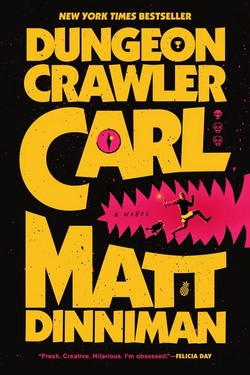
Cover of Dungeon Crawler Carl by Matt DinnimanDungeon Crawler Carl

by Matt Dinniman, read by Jeff Hays

DETAILS:
Series: Dungeon Crawler Carl, #1
Publisher: Ace; Audible Studios
Publication Date: December 30, 2025; January 28, 2021 
Format: Paperback, Audiobook
Length: 427 pg.; 13 hrs., 31 min.
Read Date: June 9-11, 2026; June 26-30, 2026
Buy from Bookshop.org Support Indie Bookstores

“Not everything will be social commentary.”

“It’s usually just stupid,” I muttered.

“It’s entertainment,” Mordecai said.

What’s Dungeon Crawler Carl About?

For the maybe 5 of you who haven’t learned this (inadvertently or purposefully), after living amongst us for decades, an alien race nearly wipes out the human race in an instant. Every human being—or physical object, plant, or animal—that was in an enclosed space was crushed when those buildings flattened. Those who survived were given the opportunity to enter a Dungeon to compete in a Hunger Games sort of reality show for several alien races to watch.

Sadly, for Carl, he only survived this because he was outside to catch his ex-girlfriend’s cat in the middle of the night. As he thought this would be a quick dash outside, he was wearing a jacket, t-shirt, boxers, and his girlfriend’s Crocs. Somehow, he didn’t realize he’d be in these clothes—and only these clothes—for (possibly) the rest of his life.

On the other hand, Carl is a veteran of the Coast Guard with plenty of experience in explosives, who worked as a marine technician in Seattle before the Dungeon.

The series is about he and that cat doing everything they can to survive the Dungeon.

Grand Champion, Breed Winner Regional, National Winner Princess Donut the Queen Anne Chonk

Cats are assholes. I get it. But do you know why people like cats, despite their asshole-ness? It’s because they don’t fucking talk. If they did, and they were all like you, they’d all be extinct because we’d have killed you all by now.

Ignoring my mild allergy, I’m not anti-cat. I’m just ambivalent about them. It generally comes across as a vague dislike (especially if I’m not ignoring my mild allergy). And when it comes to fictional Felis catus representation, I’m ambivalent at best.

So imagine my surprise when I’m about halfway through this book when I have to confess to my cat-loving daughter that there’s a good chance that my favorite new character of the year is a particular tortoiseshell Persian cat—”one of those fluffy, flat-faced cats that look like they need to be sitting on the lap of a Bond villain.” Okay, her surprise was bigger than mine.

Princess Donut is just so much fun—well, at least once she eats the Enhanced Pet Biscuit which turns her into a talking, sentient cat with plenty of memories of her life before the Dungeon (mostly to Carl’s consternation). She soon picks up the ability to hurl magic missiles from her eyes.

She is vain, she is mildly manipulative when it comes to Carl, her charisma score enables her to charm just about every NPC they encounter (and she does okay with the rest, too). Thanks to her history of competing in cat shows, she’s a natural when it comes to dealing with the media.

And…I don’t know…she’s got buckets of je ne sais quoi and I can’t get enough of her. I’m not sure I trust her choice in pets (she adopts a baby velicraptor-like creature toward the end of the book), but I can’t see how that won’t prove to be hilarious down the road (just seeing some fan art online assures me of that).

One Monster Description That Tells You a Lot About the Book

Part of a collective mind intent upon destroying any semblance of scientific progress in the universe, the Krakaren is the only communal brain entity in the galaxy who actually gets stupider as time moves on. Consisting of multiple, shrieking tentacles, members of the Krakaren cooperative spend their days birthing their disease-laden minions, creating and selling harmful products, attempting to debate scientific experts, and proselytizing to the weak-minded, all in an attempt to… Well, nobody knows what the hell their end goal is. Even Eris, Goddess of Chaos, doesn’t want anything to do with these crazy assholes.

(was this essentially me reaching to find an excuse to post that quotation? Yes. But also…it really does give you the flavor of the prose, humor, and strangeness of the monsters)

A Quick Word about the Narration

Jeff Hays is on his way to being my favorite audiobook narrator. He’s got stiff competition, but after two books, he’s got a shot at knocking people like Lorelei King, Gildart Jackson, Luke Daniels, and Ray Porter off the podium.

His choice to base Carl’s voice off of Patrick Warburton (and his performance of it) was inspired. His portrayal of Princess Donut is dynamite. And the way he does every other character is great.

If this is how polished he is with the first book—I can only imagine he’ll be fantastic once he gets some experience with Dinniman’s characters and style.

So, what did I think about Dungeon Crawler Carl?

If we get to the point where we don’t help each other anymore, that’s when we stop being human.

I really do think that it’s possible to dig deep with a lot of this book, to sink your teeth into it and see that Dinniman is accomplishing a lot and has a lot to say.

It’s also entirely possible to shutdown all your critical faculties and just have a blast with this book.

Both are totally appropriate ways to enjoy this (well, that’s true of just about every book—but it feels truer here).

I’m going to try to dig deeper when I get to future installments. But for now, I’ll just note that this is more than just jokes and killing things and leave it at that.

Dinniman draws on a bunch of video games, Douglas Adams, The Hunger Games, The Running Man, Ready Player One to create this world—and that would be enough, but when you add in his particular brand of humor and heart…I tell you what, that’s just great stuff.

If you, like me, have held off from this for whatever reason you have. Reconsider it. This is one of the most entertaining books I’ve read in ages, and I’m counting down the days until they finally release book two in paperback (and/or I decide to pay for the hardcovers).

This post contains an affiliate link. If you purchase from it, I will get a small commission at no additional cost to you. As always, the opinions expressed are my own.
Irresponsible Reader Pilcrow Icon

Killer Vibes by Jack Friday: Weird (and Dangerous) Times in a Weird City

Cover of Killer Vibes by Jack FridayKiller Vibes

by Jack Friday

DETAILS:
Series: Peter Key Mysteries, #1
Publisher: Minotaur Books
Publication Date: July 14, 2026
Format: eARC
Length: 352 pg.
Read Date: July 6, 2026
Buy from Bookshop.org Support Indie Bookstores

What’s Killer Vibes About?

Peter Key is an aimless, small-time weed dealer in his late 20s trying to live like someone in their late teens/early 20s. And that lifestyle is falling apart for him (to mix genres, think a less put-together, but better read, version of Cameron at the beginning of Remarkably Bright Creatures).

Then in an almost deus ex machina move—a lawyer shows up to tell him that his uncle (who he barely knew) is: 1. dead, 2. left him a house, a car, and some other things, and 3. left him a pile of debt.

All Peter can hear is the house part—as he’s about 20 minutes away from being homeless at that point. The lawyer has a bunch of advice about selling the home, getting rid of the debt, and whatnot. Peter wants to just move in and do so right now.

The house is a pigsty, his uncle was clearly going through a hoarding period in his life, and there are so many real estate brokers and bankers pushing him to sell the place that it feels uncomfortable. Add in some mysterious threats and warnings—and a car or two that seems to be following him everywhere.

Peter starts wondering about all this—including the way his uncle died, and starts playing amateur detective.

It’s not long before he runs into a PI who oddly enough, offers him a job and starts to show him better ways to go about what he’s trying to do.

Things get worse for Peter from there. (But better for the reader.)

Austin

What I know about Austin is so minimal. Tres Nevarre spent some time there and probably formed my initial impressions, I’ve heard about SXSW® (and wish I had an excuse to visit it firsthand), and there’s the whole “Keep Austin weird” thing that you can’t help but hear about. So…yeah, I have very little and very shallow understanding of it.

And I’m not saying that reading one mystery novel has set me straight and I’m as close to a native as you can get.

But I feel like I have a much better—grounded, fuller, and possibly nuanced—idea about it. Assuming Friday wasn’t just blowing smoke about his own city. The mix of poverty and obnoxious wealth so close to each other; a city where super exclusive poker games are regular things for the mega-rich and Beyoncé listening parties are loud and joyfully raucous; and some third thing to really round out this list.

In keeping with the title of the book, I think we’re treated to some good Austin Vibes here. And I found that great. I don’t need another Chicago, NYC, LA, or Boston PI (not that I won’t read them!), I really like getting to know another city.

Why did I pick this up? Why did I keep reading?

I requested this from NetGalley because of the phrase in the blurb: “self-proclaimed ‘laziest private investigator in Texas.'” That was enough. Now, I’m not so sure I see him as all that lazy (yet), but that line was enough to get me interested.

Once I started reading, why did I stick with it? That’s really easy—the mystery was complex without getting convoluted, the writing was crisp and clear, the characters leapt off the page—and while Peter is woefully under-qualified to tackle the things he does in this book, somehow he gets by on instinct. That’s just fun to watch.

What does this book tell us about humanity?

All families are messy. Some families are messier than others. That’s really all it boils down to here.

The first family unit we meet in this book (a couple of brothers, plus the girlfriend of one brother) is messy enough that the prudes in the readership might wonder if they want to keep pushing on (I sure did). And, honestly? It turns out that they’re the healthiest family in the book. By a mile. (however, most will not engage the prude-reflex, I should assure you).

And yet—in some way—for most of them, the family bonds, the family loyalty, the impulse to turn to family, etc. is incredibly strong. Arguably, they are the strongest when it shouldn’t be. There are some who have severed that bond—for good or ill.

But for those who haven’t—this book shows focuses on the trouble that can bring—in multiple ways and levels.

So, what did I think about Killer Vibes?

It has been a good, long, time since I read a book that was so obviously a pilot for the rest of a series. It’s about establishing the character, getting him into a new city and trying to rebuild his life, getting involved with a PI to learn from, and then starting in that career—oh, and getting a dog. And as a pilot, it was great.

I do have high hopes for this series. But I think we’re really going to need book 2 to really get an idea what it’ll be like. This novel is too focused on Peter and his family to really get a sense for what kind of stories this is going to be made up of. We know a couple of the characters we should expect to see—Grady, his receptionist, Peter’s friend…but that’s really it. So we can make a guess or two, but…it’s hard to really know. And I’m okay with that. Killer Vibes was good enough that I’m back.

But let me focus on this as a novel. Boy howdy, this was good. As a person, Peter isn’t someone I want to get to know—I think I’d enjoy knowing them, but the getting acquainted part would be difficult for me. And I kind of felt that way about the character at the beginning, too—I was interested in what was going on with him. I also really wanted to see how he goes from the kind of petty criminal that season 1 Jesse Pinkman would look down on, to a PI by the end of the novel.

But the more time I spent with him and watching him navigate the dangerous situation he found himself in—the more I liked him. Even if you don’t like him as a character—he’s a fun bumbling amateur detective in way over his head. Nevertheless, he’s largely successful at it, too. And who can’t enjoy that?

The mysteries surrounding Peter, his house, and his uncle are rich ground for readers to immerse themselves in*. There’s really not a character that you don’t want a little more of (after chapter 2, anyway)—they’re colorful, they’re multilayered, many of them are witty, and they feel real. The stakes are believable. And Friday knows his way around pacing, plot turns/twists, and how to reveal answers/clues/partial answers in a mystery.

Killer Vibes had it all. Mystery readers are going to want to be sure they make time for this one this summer.

* I know you can’t immerse yourself in ground, but roll with it, will ya?

Disclaimer: I received this eARC from St. Martin’s Press via NetGalley in exchange for this post which contains my honest opinion—thanks to both for this.

This post contains an affiliate link. If you purchase from it, I will get a small commission at no additional cost to you. As always, the opinions expressed are my own.
Irresponsible Reader Pilcrow Icon

Just A Couple of Thoughts about Artificial Condition by Martha Wells

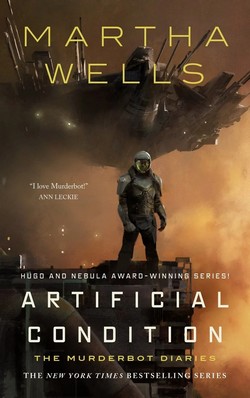
Cover of Artificial Condition by Martha WellsArtificial Condition

by Martha Wells

DETAILS:
Series: The Muderbot Diaries, #2
Publisher: Tordotcom
Publication Date: May 08, 2018
Format: Hardcover
Length: 158 pg.
Read Date: June 19, 2026
Buy from Bookshop.org Support Indie Bookstores

What’s Artificial Condition About?

For the first time in its existence, Murderbot is free to go where it wants (although it needs to be careful about where, so it’s not mistaken for a rogue unit), do what it wants, all for itself.

Somewhat surprisingly—at least that’s how I reacted for half-a-second and then it made total sense—it wants to go back to the mining colony where it killed so many humans to try to understand what happened. And how it relates to the hacking of its governor module.

Along the way, it befriends a transport vessel, and hires on to protect some scientists who are trying to take on a mega-corporation.

So, what did I think about Artificial Condition ?

Okay, so why did I sleep on this for so long? Yes, I should’ve just bought and read the entire series (available at the time) back in 2023 when I read All Systems Red. But I didn’t. Then I bought this one back in February 2025—and still didn’t read it until June.

I promise you, there has been much in the way of self-berating since I started reading this.

The novella is so short, that to give it my usual treatment seems like too much. So let me just cut to the chase:

Not only does Murderbot make a new friend (although the road to friendship was bumpy) with the transport ship it dubbed, ART. But there’s a connection made with another ‘bot, too. There’s a growing network of connections of beings with similar intelligence and interests (especially in episodic media) for our friend, and I’m enjoying it as much as I wonder where Wells is taking us with that notion.

The humans Murderbot tries to help this time aren’t quite at the same level as the PreservationAux crew when it comes to taking care of themselves—or at paying attention Murderbot. But it was good to see it try with others, even as what it learns about itself by interaction with them is a little sad.

On the other hand, watching Muderbot deal with humans who are trying to take advantage of his new group…well, that’s another kind of satisfying.

As much as I enjoyed the first of The Murderbot Diaries, this one really set the hook in . The character development was fantastic—as is watching its increasing self-awareness, and…well all the intangible stuff doing on with the former SecUnit. The narrative voice alone is worth coming back for—but there are a multitude of reasons to do so.

If you—like me—continue to sleep on this series. Quit it. You won’t be sorry.

This post contains an affiliate link. If you purchase from it, I will get a small commission at no additional cost to you. As always, the opinions expressed are my own.
Irresponsible Reader Pilcrow Icon

Page 6 of 350

Powered by WordPress & Theme by Anders Norén