Category: Fiction Page 9 of 350

Towel Day ’26: Some of my favorite Adams lines . . .

(updated 5/25/26)

A Blue towel with the words Towel Day on it

There’s a great temptation here for me to go crazy and use so many quotations that I’d get in copyright trouble. I’ll refrain from that and just list some of his best lines . . .*

* The fact that this list keeps expanding from year to year says something about my position on flirting with temptation.
The Hitchhiker's Guide to the Galaxy

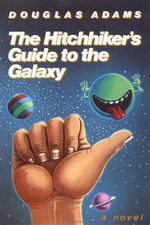
The Hitchhiker’s Guide to the Galaxy

Time is an illusion. Lunchtime doubly so.

This must be Thursday. . . I never could get the hang of Thursdays.

“You’d better be prepared for the jump into hyperspace. It’s unpleasantly like being drunk.”

“What’s so unpleasant about being drunk?”

“You ask a glass of water.”

(I’m not sure why, but this has always made me chuckle, if not actually laugh out loud. It’s just never not funny. It’s possibly the line that made me a fan of Adams)

He had found a Nutri-Matic machine which had provided him with a plastic cup filled with a liquid that was almost, but not quite, entirely unlike tea.

“You know,” said Arthur, “it’s at times like this, when I’m trapped in a Vogon airlock with a man from Betelgeuse, and about to die of asphyxiation in deep space that I really wish I’d listened to what my mother told me when I was young.”

“Why, what did she tell you?”
“I don’t know, I didn’t listen.

In those days spirits were brave, the stakes were high, men were real men, women were real women and small furry creatures from Alpha Centauri were real small furry creatures from Alpha Centuari. And all dared to brave unknown terrors, to do mighty deeds, to boldly split infinitives that no man had split before . . .

“Look,” said Arthur, “would it save you a lot of time if I just gave up and went mad now?”

The ships hung in the sky in much the same way that bricks don’t.

For a moment, nothing happened. Then, after a second or so, nothing continued to happen.

“Space,” [The Guide] says, “is big. Really big. You just won’t believe how vastly, hugely, mindbogglingly big it is. I mean, you may think it’s a long way down the road to the chemist’s, but that’s just peanuts to space, listen…”

He attacked everything in life with a mix of extraordinary genius and naive incompetence, and it was often difficult to tell which was which.

He felt that his whole life was some kind of dream and he sometimes wondered whose it was and whether they were enjoying it.


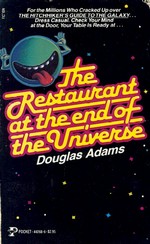
The Restaurant at the End of the Universe

The Restaurant at the End of the Universe

It is a curious fact, and one to which no one knows quite how much importance to attach, that something like 85 percent of all known worlds in the Galaxy, be they primitive or highly advanced, have invented a drink called jynnan tonnyx, or gee-N-N-T’Nix, or jinond-o-nicks, or any one of a thousand or more variations on the same phonetic theme. The drinks themselves are not the same, and vary between the Sivolvian “chinanto/mnigs” which is ordinary water served at slightly above room temperature, and the Gagrakackan “tzjin-anthony-ks” which kills cows at a hundred paces; and in fact the one common factor between all of them, beyond the fact that the names sound the same, is that they were all invented and named before the worlds concerned made contact with any other worlds.

Reality is frequently inaccurate.

Life is wasted on the living.


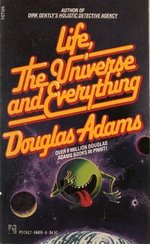
Life, The Universe and Everything

Life, the Universe, and Everything

The Hitchhiker’s Guide to the Galaxy has this to say on the subject of flying. There is an art, it says, or rather, a knack to flying. The knack lies in learning how to throw yourself at the ground and miss.

(It goes on for quite a while after this—and I love every bit of it.)

“One of the interesting things about space,” Arthur heard Slartibartfast saying . . . “is how dull it is?”

“Dull?” . . .

“Yes,” said Slartibartfast, “staggeringly dull. Bewilderingly so. You see, there’s so much of it and so little in it.”


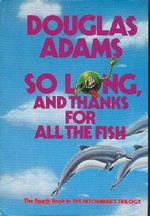
So Long, and Thanks For All The Fish

So Long, and Thanks for All the Fish

Of course, one never has the slightest notion what size or shape different species are going to turn out to be, but if you were to take the findings of the latest Mid-Galactic Census report as any kind of accurate guide to statistical averages you would probably guess that the craft would hold about six people, and you would be right. You’d probably guessed that anyway. The Census report, like most such surveys, had cost an awful lot of money and told nobody anything they didn’t already know—except that every single person in the Galaxy had 2.4 legs and owned a hyena. Since this was clearly not true the whole thing eventually had to be scrapped.

Here was something that Ford felt he could speak about with authority. “Life,” he said, “is like a grapefruit.”

“Er, how so?”

“Well, it’s sort of orangy-yellow and dimpled on the outside, wet and squidgy in the middle. It’s got pips inside, too. Oh, and some people have half a one for breakfast.”

“Is there anyone else out there I can talk to?”

Arthur had a swordfish steak and said it made him angry. He grabbed a passing waitress by the arm and berated her. “Why’s this fish so bloody good?” he demanded, angrily.

“Please excuse my friend,” said Fenchurch to the startled waitress. “I think he’s having a nice day at last.”


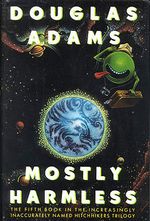
Mostly Harmless

Mostly Harmless

A common mistake that people make when trying to design something completely foolproof is to underestimate the ingenuity of complete fools.

Fall, though, is the worst. Few things are worse than fall in New York. Some of the things that live in the lower intestines of rats would disagree, but most of the things that live in the lower intestines of rats are highly disagreeable anyways, so their opinion can and should be discounted.


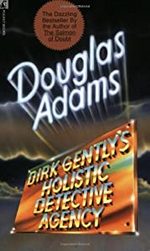
Dirk Gently's Holistic Detective Agency

Dirk Gently’s Holistic Detective Agency

There is no point in using the word ‘impossible’ to describe something that has clearly happened.

If it looks like a duck, and quacks like a duck, we have at least to consider the possibility that we have a small aquatic bird of the family anatidae on our hands.

Let’s think the unthinkable, let’s do the undoable. Let us prepare to grapple with the ineffable itself, and see if we may not eff it after all.

Sherlock Holmes observed that once you have eliminated the impossible then whatever remains, however improbable, must be the answer. I, however, do not like to eliminate the impossible.

(I’ve often been tempted to get a tattoo of this)


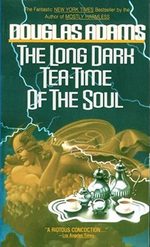
The Long Dark Tea-Time of the Soul

The Long Dark Tea-Time of the Soul

There are some people you like immediately, some whom you think you might learn to like in the fullness of time, and some that you simply want to push away from you with a sharp stick.

It can hardly be a coincidence that no language on earth has ever produced the expression, ‘As pretty as an airport.’

The impossible often has a kind of integrity to it which the merely improbable lacks.

She stared at them with the worried frown of a drunk trying to work out why the door is dancing.

It was his subconscious which told him this—that infuriating part of a person’s brain which never responds to interrogation, merely gives little meaningful nudges and then sits humming quietly to itself, saying nothing.

As she lay beneath a pile of rubble, in pain, darkness, and choking dust, trying to find sensation in her limbs, she was at least relieved to be able to think that she hadn’t merely been imagining that this was a bad day. So thinking, she passed out.


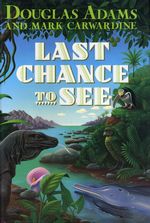
The Last Chance to See

The Last Chance to See

“So what do we do if we get bitten by something deadly?” I asked.

He looked at me as if I were stupid. “You die, of course. That’s what deadly means.”

I’ve never understood all this fuss people make about the dawn. I’ve seen a few and they’re never as good as the photographs, which have the additional advantage of being things you can look at when you’re in the right frame of mind, which is usually around lunchtime.

I have the instinctive reaction of a Western man when confronted with the sublimely incomprehensible. I grab my camera and start to photograph it.

Human beings, who are almost unique in having the ability to learn from the experience of others, are also remarkable for their apparent disinclination to do so.

The aye-aye is a nocturnal lemur. It is a very strange-looking creature that seems to have been assembled from bits of other animals. It looks a little like a large cat with a bat’s ears, a beaver’s teeth, a tail like a large ostrich feather, a middle finger like a long dead twig and enormous eyes that seem to peer past you into a totally different world which exists just over your left shoulder.

One of the characteristics that laymen find most odd about zoologists is their insatiable enthusiasm for animal droppings. I can understand, of course, that the droppings yield a great deal of information about the habits and diets of the animals concerned, but nothing quite explains the sheer glee that the actual objects seem to inspire.

I mean, animals may not be intelligent, but they’re not as stupid as a lot of human beings.


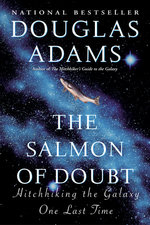
The Salmon of Doubt

The Salmon of Doubt: Hitchhiking the Galaxy One Last Time

We are stuck with technology when what we really want is just stuff that works.

I’ve come up with a set of rules that describe our reactions to technologies:
1. Anything that is in the world when you’re born is normal and ordinary and is just a natural part of the way the world works.
2. Anything that’s invented between when you’re fifteen and thirty-five is new and exciting and revolutionary and you can probably get a career in it.
3. Anything invented after you’re thirty-five is against the natural order of things.

The fact that we live at the bottom of a deep gravity well, on the surface of a gas covered planet going around a nuclear fireball 90 million miles away and think this to be normal is obviously some indication of how skewed our perspective tends to be.


And a couple of lines I’ve seen in assorted places, articles, books, and whatnot

I love deadlines. I love the whooshing noise they make as they go by.

A learning experience is one of those things that says, “You know that thing you just did? Don’t do that.”

The fact is, I don’t know where my ideas come from. Nor does any writer. The only real answer is to drink way too much coffee and buy yourself a desk that doesn’t collapse when you beat your head against it.

Solutions nearly always come from the direction you least expect, which means there’s no point trying to look in that direction because it won’t be coming from there.
Don't Panic

Towel Day ’26: Scattered Thoughts about Reading The Hitchhiker’s Guide to the Galaxy Trilogy

(updated and revised this 5/25/26)

A Blue towel with the words Towel Day on it
I’ve been trying for a few years now to come up with a tribute to Adams. This isn’t quite what I had in mind, but it’s a start. In my mind, this is a work in progress (a multiple-year project), but I’m posting it anyway. Next year’s version will be better—or at least more complete.


Some time in 7th or 8th grade (I believe), I was at a friend’s house, and his brother let us try his copy of the text-based Hitchhiker’s Guide game, and we were no good at it at all. Really, it was embarrassing. However, his brother had a copy of the first novel, and we all figured that the novel held the keys we needed for success with the game (alas, it did not help us one whit). My friends all decided that I’d be the one to read the book and come back in a few days as an expert.

I fell in love with the book almost instantly, and I quickly forgot about the game. Adams’ irreverent style rocked my world—could people actually get away with saying some of these things? His skewed take on the world, his style, his humor…and a depressed robot, too! It was truly love at first read. As I recall, I started re-reading it as soon as I finished it—the only time in my life I’ve done that sort of thing.

Also, I finally understood that song, “Marvin, I Love You,” that I kept hearing on Dr. Demento.

It was one of those experiences that, looking back, I can say shaped my reading and thinking for the rest of my life (make of that what you will). Were my life the subject of a Doctor Who or Legends of Tomorrow episode, it’d be one of those immutable fixed points. I got my hands on the next three books as quickly as I could (the idea of a four-volume trilogy was one of the funniest ideas I’d encountered up to that point in my life), and devoured them. I do know that I didn’t understand all of the humor, several of the references shot past me at the speed of light, and I couldn’t appreciate everything that was being satirized. But what I did understand, I thought was brilliant. Not only did I find it funny, the series taught me about comedy—how to construct a joke, how to twist it in ways a reader wouldn’t always expect, and when not to twist but to go for the obviously funny idea. The trilogy also helped me to learn to see the absurdity in life.

One of the big lessons that HHGTTG taught me was something I didn’t realize for quite some time- I noticed and talked about it, but I didn’t really realize what was going on. Whether in the game, the novel, the TV show, or the radio show (my local library getting those tapes was a revelation)–Adams took several key scenes and put them in different order, almost completely intact (although with some different jokes sometimes). Each time he did that, it was to play to the strength of the various media. I learned later that he did this for a couple of other versions, and then the movie. When it comes to story–you can keep the big items and play with them to get them to serve your aim, without doing any real damage to the core of your story/point. Like I said, it took a while for me to get the vocabulary to describe that–or to spend any time thinking about it beyond, “hey, that’s cool how he did that.” It’s just one of those things that stuck deep in my mind.

Outside of one family member–HHGTTG was my first exposure to an atheist. I mean, I knew they existed–the way I knew Australia existed. I’d read about it in books, maybe seen it on a TV show or something (hey, I was a kid from a small town in Southern Idaho in the 80s). But here was a guy wearing that on his sleeve–but he made a joke about it. Well, he made a few jokes–several by the end of the trilogy (including at least one that undercut them all). I didn’t threaten my young faith or rattle me, it was more of a “huh, so that’s what they’re like.” Nothing scary, just silly. I also have to say–again, sheltered kid from Idaho pre-Internet–that one of those jokes involved someone getting killed at a zebra crossing. It wasn’t until a few reads in that I started to wonder if that was actually a thing, and not another of his Adams’ jokes about a special road crossing for those particular animals. It was a learning experience for me in many ways.

Years later, when the final volume (by Adams) was released, I’d already cemented what I thought about the books from these frequent re-reads. I’m not sure that Mostly Harmless changed things much (except for making me think for the first time that maybe I didn’t want him to write more in this series). His non-Hitchhiker’s work illustrated that he was capable of making you see things in a new light–either with a smile or a sense of regret—even when he wasn’t writing the trilogy, even when he was writing non-fiction. It was never the setting or the genre—it was Adams.

But here on Towel Day—as with most of the time I talk about Adams (but I need to change that), it comes down to where I started—the Trilogy. I read the books (particularly the first) so many times that I can quote significant portions of them, and frequently do so without noticing that I’m doing that. I have (at this time) two literary-inspired tattoos, one of which is the planet logo* featured on the original US covers. In essence, I’m saying that Adams and the series that made him famous have had an outsized influence on my life and are probably my biggest enduring fandom. If carrying around a (massively useful) piece of cloth for a day in some small way honors his memory? Sure, I’m in.

So, Happy Towel Day, You Hoopy Froods.

* I didn’t know it at the time, but Adams didn’t like that guy. Whoops.

Don't Panic

Towel Day ’26: Do You Know Where Your Towel Is?

(updated and revised this 5/25/26)

A Blue towel with the words Towel Day on it

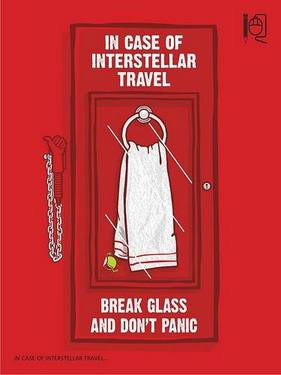
The Hitchhiker’s Guide to the Galaxy has a few things to say on the subject of towels.

A towel, it says, is about the most massively useful thing an interstellar hitchhiker can have. Partly it has great practical value. You can wrap it around you for warmth as you bound across the cold moons of Jaglan Beta; you can lie on it on the brilliant marble-sanded beaches of Santraginus V, inhaling the heady sea vapors; you can sleep under it beneath the stars which shine so redly on the desert world of Kakrafoon; use it to sail a miniraft down the slow heavy River Moth; wet it for use in hand-to-hand-combat; wrap it round your head to ward off noxious fumes or avoid the gaze of the Ravenous Bugblatter Beast of Traal (such a mind-bogglingly stupid animal, it assumes that if you can’t see it, it can’t see you); you can wave your towel in emergencies as a distress signal, and of course dry yourself off with it if it still seems to be clean enough.

More importantly, a towel has immense psychological value. For some reason, if a strag (strag: non-hitch hiker) discovers that a hitch hiker has his towel with him, he will automatically assume that he is also in possession of a toothbrush, face flannel, soap, tin of biscuits, flask, compass, map, ball of string, gnat spray, wet weather gear, space suit etc., etc. Furthermore, the strag will then happily lend the hitch hiker any of these or a dozen other items that the hitch hiker might accidentally have “lost”. What the strag will think is that any man who can hitch the length and breadth of the galaxy, rough it, slum it, struggle against terrible odds, win through, and still knows where his towel is is clearly a man to be reckoned with.

Hence a phrase that has passed into hitchhiking slang, as in “Hey, you sass that hoopy Ford Prefect? There’s a frood who really knows where his towel is.” (Sass: know, be aware of, meet, have sex with; hoopy: really together guy; frood: really amazingly together guy.)

Towel Day, for the few who don’t know, is the annual celebration of Douglas Adams’ life and work. It was first held two weeks after his death, fans were to carry a towel with them for the day to use as a talking point to encourage those who have never read HHGTTG to do so, or to just converse with someone about Adams. Adams is one of that handful of authors that I can’t imagine I’d be the same without having encountered/read/re-read/re-re-re-re-read, and so I do my best to pay a little tribute to him each year, even if it’s just carrying around a towel. TowelDay.org is the best collection of resources on the day.

In commemoration of this date, here’s most of what I’ve written about Adams. I’ve struggled to come up with new material to share for Towel Day over the years, mostly sticking with updating and revising existing posts. And, this year is no exception. A few years back, I did a re-read of all of Adams’ (completed) fiction. For reasons beyond my ken (or recollection), I didn’t get around to blogging about the Dirk Gently books, but I did do the Hitchhiker’s Trilogy:
bullet The Hitchhiker’s Guide to the Galaxy
bullet The Restaurant at the End of the Universe
bullet Life, The Universe and Everything
bullet So Long, and Thanks For All The Fish
bullet Mostly Harmless
bullet I had a thing or two to say about the 40th Anniversary of The Hitchhiker’s Guide to the Galaxy
bullet I took a look at the 42nd Anniversary Illustrated Edition of The Hitchhiker’s Guide to the Galaxy

I should also point to a posts I wrote about Douglas Adams’ London by Yvette Keller and 42: The Wildly Improbable Ideas of Douglas Adams edited by Kevin Jon Davies—both are great ways of filling out one’s understanding of Adams and his work. I have to mention the one book that Adams/Hitchhiker’s aficionado needs to read is Don’t Panic by Neil Gaiman, David K. Dickson and MJ Simpson.

If you’re more in the mood for a podcast, I’d suggest The Waterstones Podcast How We Made: The Hitchhiker’s Guide to the Galaxy—I’ve listened to several podcast episodes about this book, and generally roll my eyes at them. But this is just fantastic. Were it available, I’d listen to a Peter Jackson-length version of the episode.

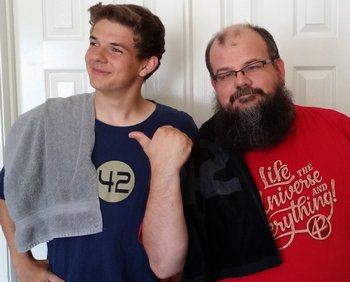
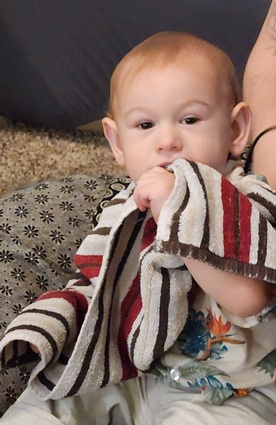
I’ve only been able to get one of my sons into Adams, he’s the taller, thinner one in the picture from a few several years ago.

I’m trying to pass this on to the next generation as well. Here’s his son, the Grand-critter, from 2 years ago:

You really need to check out this comic from Sheldon Comics—part of the Anatomy of Authors series: The Anatomy of Douglas Adams.

Lit in a Nutshell gives this quick explanation of The Hitchiiker’s Guide:

One of my favorite posts there is this pretty cool video, shot on the ISS by astronaut Samantha Cristoforetti.

Even better—here’s an appearance by Douglas Adams himself from the old Letterman show—I’m so glad someone preserved this:

Love the anecdote (Also, I want this tie.)

Don't Panic

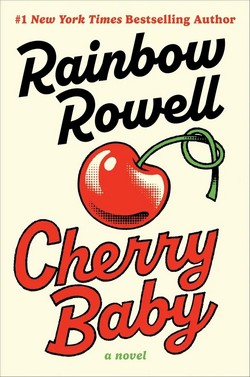
Cherry Baby by Rainbow Rowell: Her Course of Love Sure Didn’t Run Smoothly

Cover of Cherry Baby by Rainbow RowellCherry Baby

by Rainbow Rowell

DETAILS:
Publisher: William Morrow
Publication Date: April 14, 2026
Format: Hardcover
Length: 406 pg.
Read Date: April 30-May 1, 2026
Buy from Bookshop.org Support Indie Bookstores

The tears on Cherry’s cheeks were fat.

In the months after Tom left—and the months after it became clear that he wasn’t coming home—Cherry’s tears had changed.

There were days when her eyes felt so full, the tears ran in rivulets. She’d swear that crying had never felt that way before—that before, she’d cried drops, and now, she cried streams. There must be some science to it, one sort of crying for transient pains and another sort for crippling grief.

What’s Cherry Baby About?

Cherry is a pretty successful marketer in Omaha; her husband was in advertising and did a little webcomic in his spare time. It was semi-autobiographical and had almost no followers. At some point, around the time that they started to see each other, a new character, “Baby” enters the cast (unbeknownst to her). Sometime after that, Tom’s comic caught fire. It was published in book form—and optioned as a film.

Now Tom is in L.A. working on the movie, and Cherry—along with his dog—are still in Omaha. Cherry and Tom are getting a divorce. And Cherry isn’t taking it well.

She’s in full-grieving mode. A few months in, she treats herself. Tom hated concerts, she’s always loved them, and one of her all-time favorite bands will be doing a show in town. So she goes, anticipating a pick-me-up. While there, Cherry runs into Russ—a friend from college. Russ isn’t “the one who got away.” But he is the big “what if” question in her life.

Apparently, the feeling was mutual. Even better, Russ hasn’t read Tom’s comic and knows nothing about it. He’s probably the only person in Omaha who doesn’t connect Cherry and Baby (even her family equates them, which Cherry hates). What could be better?

A solid meet-again-cute. A woman in need of a fresh start. A guy who is almost perfect. What could be better?

Fat Girl Life

A fat girl can’t wait for boys to pluck her like a flower or find her on the beach like a seashell.

Cherry had never been Cinderella. She’d always been the prince chasing down what she wanted. (She’d been a witch, enchanting apples.) She’d had to reach for things. For love. For attention.

Cherry has had nothing but Fat Girl Summers her whole life. And the other three seasons, too. She’s fat—she tells us this from the outset. Her mother and her sisters are, too. It’s not due to laziness, overeating (not that any of them are shy about eating, however), lack of exercise, sedentary lifestyles, or whatever. It’s a genetic thing; their family is just fat. And they’re all okay with it.

Well, they’re more than okay with it. Not quite proud of it, but unashamed is the better word.

And the fastest way to get on Cherry’s bad side is to imply there’s something wrong with it. She’s pretty (possibly more than pretty, it’s hard to judge from the way it’s presented), charming, fun, caring, and fat. In her eyes, she’s the whole package.

And it’s really hard to argue with her (if you wanted to).

This, obviously, has shaped her life—it’s not easy for Fat Girls/Women/Boys/Men in the U.S. She accepts it, realizes how it molded her personality and expectations—but thanks to her mothers and sisters, she’s been able to gain the level of confidence that she can get through it. Not unscathed, but whole.

The Proverbial Door is Ajar

Granted, it’s been a while since I read Rowell—but this is a bit, ahem, spicier than I appreciate. Definitely more than I’m used to with her. The door does close—eventually—on the sex scenes, but it stays open a lot longer than I think it needed to (or opens earlier than it needs to).

But that’s a matter of taste, I realize. And I’m not trying to put down Rowell here, I think I get why she made the decisions she did in this regard. But I’m not suggesting this book to my mother, sister, or daughter (but I wouldn’t discourage their reading it, either).

Why did I pick this up? Why did I keep reading?

I picked this up because I really enjoy Rowell’s writing (well, I couldn’t make myself pay attention to the fan fiction bits of Fangirl, so I didn’t read the spin-offs, but otherwise…), and I was glad to get a chance to read her again.

I stuck with it because I really liked Cherry and got invested in her life. Also, Rowell’s voice and tone is just so comfortable, there’s no reason to think about stopping.

I’m sure there’s a better way to put it—but comfortable is better than cozy, which I keep using. There’s a warmth, a humanity, and a little bit of humor—and so much heart. You just want to keep reading, no matter what’s happening (or isn’t happening.)

What does this book tell us about humanity?

I think this book has a lot to say about the need to love and the need to be loved—as you are and as the object of your love is. Not as you want them to be, not as they were, but as they are (although as they were does play a role)—and the same for you. Loved as you are, for who you are.

Not just romantic love, either. There’s friend love and family love, too. The book focuses on romantic love, but family love comes in second.

The depictions aren’t always pretty—in fact, in this book, many of them are messy and nasty, with a great sense of “it shouldn’t be like that.”

So, what did I think about Cherry Baby?

Cherry had trusted Tom. She’d taken him for granted—she’d thought that she was supposed to. She’d believed they were a settled question.

Cherry’s family is a nice, vaguely Lutheran, group who want four things for Cherry: 1. to be happy; 2. to get back together with Tom; 3. failing that, to start dating this nice man from their church; and 4. to come back to church (there’s a not-at-all-subtle link between 3 and 4). They’re a loving, close family, but really don’t get what makes Cherry tick. Still, their interactions—in person or in group chats is one of the many, many highlights of the book.

Stevie, Tom’s dog, is another one. She’s a Newfoundland-Great Pyrenees mix, and the cause of a huge increase in lint/hair rollers in Cherry’s budget. She was more dog than Cherry was ready for when Tom got her. And then when he left, the two only had each other. And a great bond was made. Stevie’s chaotic energy is wonderful. And one scene (spoiler: the dog lives) with the two of them toward the end of the book, just about broke me.

The rest of the book is just great. Once we meet Tom (in the book’s present), you understand why Cherry loves him—and why it’s so hard for her to be going through this period. When we see him at the beginning of their relationship, you have a hard time believing they’d go wrong. The romance with Russ could be just the thing to keep her afloat in this dark period in her life—and you can see it working.

But like that one guy said, the course of love never did run smooth. And some roads are bumpier than others. With sharp drop-offs to either side. And maybe some snow.

Still, Cherry’s the kind of person you want to watch navigate that course—so you can root for her, cheer for her, and maybe weep with her.

This post contains an affiliate link. If you purchase from it, I will get a small commission at no additional cost to you. As always, the opinions expressed are my own.
Irresponsible Reader Pilcrow Icon

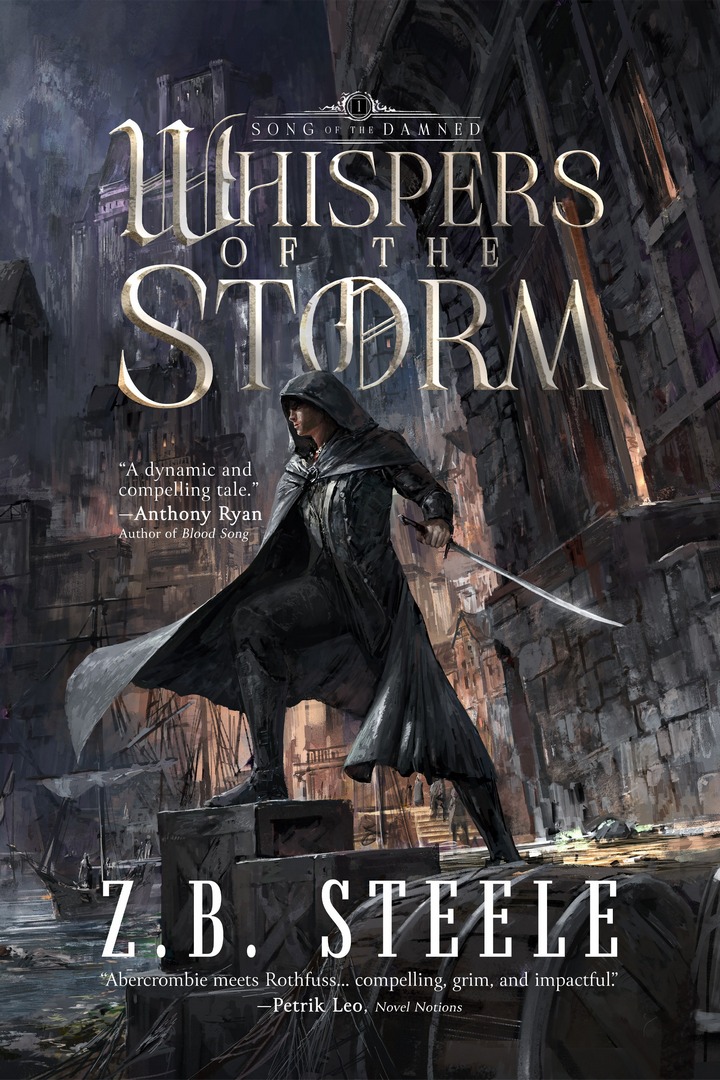
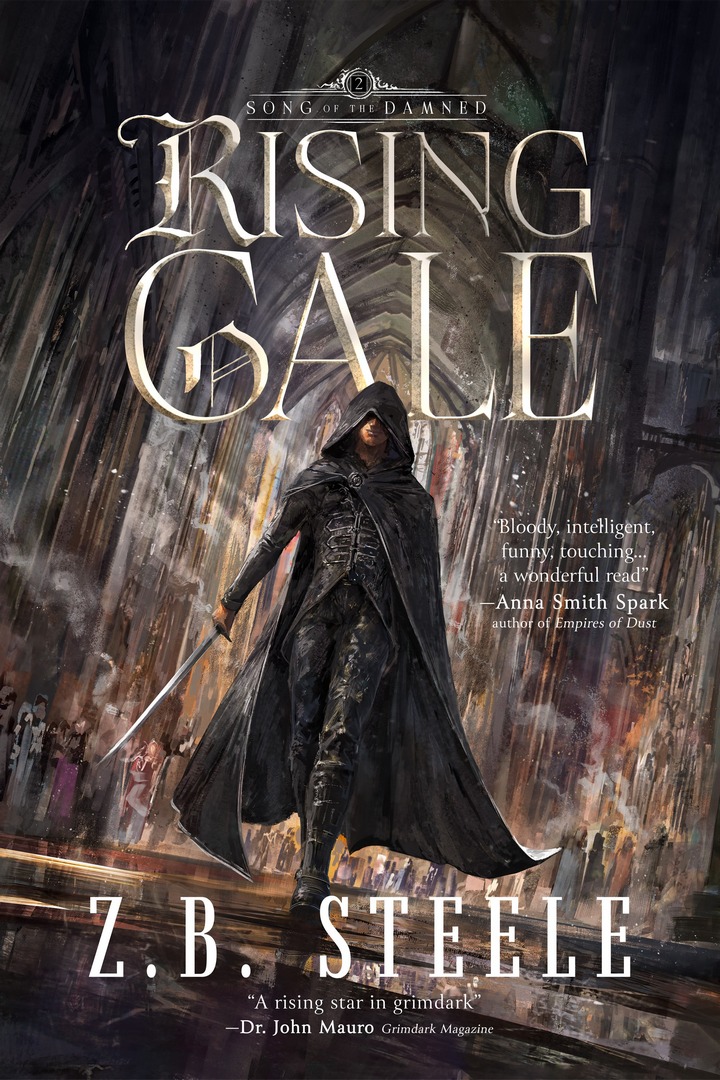
Cover Reveal: Whispers of the Storm and Rising Gale by Z.B. Steele

I’m very pleased today to pitch in with the Cover Reveal for the new covers of Z.B. Steele’s upcoming Rising Gales and its predecessor, Whispers of the Storm. Steele’s book has received love for multiple years in my Spreading the Self-Pub Love series. And these covers are going to help get more people to pick them up and become fans. These covers are eye-grabbers.

Before we get to the reveals, let’s learn a bit more about the books and the author, shall we? It’ll just take a moment.

About the Books:

Whispers of the Storm

CREDLIN OF THE WOLVES
VANGUARD, LEGEND, ASSASSIN, REAPER

Listen to my story:

I wasn’t always the monster they see me as. Half of the songs they sing are stories of my grandeur. The other half are tales of my misdeeds.

The sad truth is that they’re all true.

So, listen to my tale and learn why it all happened. Learn the reason for the war, the reason for all the death.

Listen to my tale and listen well. I won’t be alive long enough to tell it again.

If you’re buying an e-Book, the cover will update sometime today–and the physical copies will switch soon. So if you want to get a classic, collector’s edition of the original cover–buy now!

Rising Gale

My execution draws near…

The noose beckons. My days dwindle. And still, my story is unfinished.

Tears are left to be shed. Blood has yet to be spilled. Lend me your ear once more to hear of sins and failures. Of swords and shadows. Of violet lightning and black blood.

For it was I who began the war of the gods.

Releases on June 16.

About the Author

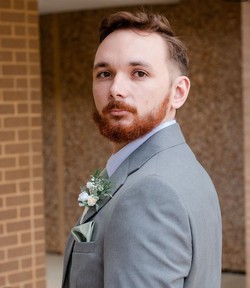
Z.B. SteeleZ.B. Steele, a Peachtree City, GA, native, now lives in the Birmingham area with his wife, Gabrielle, and their daughter. When not writing or reading, he can be found drinking, crying, staring into the abyss, or some combination of the three.

Steele loves hip-hop, grunge, RPGs, movies, and anime. He’s “willing to argue, any time, anywhere.”

and now…

The Covers

Click on these to embiggen–you’re going to want to see them.
cover for Whispers of the Storm by Z.B. Steele

cover for Rising Gale by Z.B. Steele

Kudos to these fine folk for their work on this eye-grabber:
Artist: Jeff Brown
Interior formatting for physicals: Abel Montero

Irresponsible Reader Pilcrow Icon

51% by Matt Witten: The SF-ish Mystery I Wish I Could Get Everyone to Read

Cover of 51% by Matt Witten51%

by Matt Witten

DETAILS:
Publisher: Level Best Books
Publication Date: April 28, 2026
Format: eARC
Length: 370 pg.
Read Date: May 4-5, 2026
Buy from Bookshop.org Support Indie Bookstores

What’s 51% About?

NYPD, Inc. detective Juke O’Keefe is assigned the case of a woman who was the victim of a murder and left in the street. He wants to find the killer. His partner, a crime marketing consultant, Haylee Navarro, isn’t so sure it’s the right case to take. If for no other reason, she doesn’t think they’ll be able to get much money for the investigation, and given the state of the victim, there are probably not many people who will care that much about finding the killer. Particularly when they find a chip embedded in her, signifying that she’s 51% owned by the syndicates.

If almost every word in that paragraph seems wrong, that just means you’re paying attention. Also, welcome to the dystopia depicted in this book.

Juke’s investigation (because Haylee’s just not that convincing compared to the uncompromising standards he holds himself to) brings the pair into contact with the upper echelons of NYC’s economy, to the poorest corners, working against an AI, and even across the path of a resistance movement on the verge of a significant move.

The Worldbuilding

It’s just exquisite. You could easily just read this for the worldbuilding alone, paying no attention to the plot or characters (outside of how both reveal the world). I remember early cyberpunk being defined as being fifteen minutes in the future—assuming I remember that correctly, Witten has set this novel 7 minutes into the future.

Gen Delta’s sensibilities rule (informally) societal mores, almost(?) everything that is government-provided for us has been privatized, and corporate syndicates “own” percentages of people indebted to them. If you need medical care, go to college, etc. you need to take out a loan which represents a certain percentage of you. If you’re a police officer wanting to investigate a crime, you essentially need to crowd-fund the money necessary for forensics and the investigation. So each detective is partnered not with another detective, but a PR agent who will shoot and promote videos about your case to capture the attention and emotions of viewers to raise that money.

Witten does a great job of explaining this process better than I just did in a non-infodump way.

From the slang to the tech to the finances and beyond—this world feels real, lived in, like a nigh-inevitiable future we’re heading toward.

Why did I pick this up? Why did I keep reading?

When Witten sent me the description, I was hooked. Particularly in his hands—I just didn’t see how it couldn’t be good.

I kept reading because the execution lived up to the premise—the worldbuilding was great, and the story was just as good. You read just a little bit of this, and you’re going to need to keep going.

What does this book tell us about humanity?

I’m not sure that I have a good answer to this. There’s a lot of ugliness in the book—both corporately and individually. But the one thing that came up time and time again is people realizing how they’ve messed up (in big and small ways), and resolving to try to make a difference to make things better for others. Some do this in little ways—just feeding neighborhood cats. Others put their future at risk to protect an innocent person from wrongful arrest. Things like that. There’s just enough of that to keep you from utter despair as you walk through this world.

Or maybe the message is that Canada is the place to go in North America—as it has been for decades.

So, what did I think about 51%?

At its core, 51% is a murder mystery—yes, there’s a lot of futurism noise, political and social commentary, and the rest. But Juke’s hunt for a killer, the red herrings, the leads that don’t work out, and the race against other factors to make sure the right person is arrested—that’s the focus. And, as Jacked and Killer Story have capably demonstrated that Witten knows his way around a crime thriller.

I think the characters—even those on the side of the syndicates that own people—are well-written and complex (although there are some that are little more than stereotypes, but they’re well executed representatives of the type, so it’s hard to complain about them). There are no wholly straightforward motives; everyone has some shading about them.

The reveal of the murderer was well done, and the way the storylines are resolved is very satisfying.

I had a real blast with this one. I really relished the experience of being in the world and watching Juke’s crusade and Haylee getting pulled along in his wake (but also really not doing that). 51% is the kind of book that makes me wish I had a bigger audience so I could tell more people about it. Go read this thing, you’ll be glad you did.

Disclaimer: I received this eARC from the author in exchange for this post, which contains my honest opinion—which worked out well for both of us, I think.

This post contains an affiliate link. If you purchase from it, I will get a small commission at no additional cost to you. As always, the opinions expressed are my own.
Irresponsible Reader Pilcrow Icon

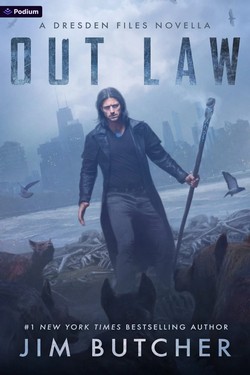
Out Law by Jim Butcher: A Brief Case Sheds New Light on Harry’s Past

Cover of Out Law by Jim ButcherOut Law

by Jim Butcher

DETAILS:
Series: The Dresden Files, #18.75
Publisher: Podium Publishing
Publication Date: May 05, 2026
Format: Paperback
Length: 194 pg.
Read Date: May 5, 2026
Buy from Bookshop.org Support Indie Bookstores

Marcone is an asshole.

And I was furious.

But some part of me realized that I would not have been so angry if he didn’t have a point in there somewhere. And I was past the point in my life where I would let my anger direct my reactions.

You know. Mostly.

What’s Out Law About?

Shortly after Twelve Months (or parallel to the last chapter or so), Johnny Marcone shows up at Dresden’s castle to call in a favor. He wants Dresden to help one of his “employees” to go straight.

Dresden knows it can’t be that easy—Marcone isn’t going to square their debts for honorable reasons (he wouldn’t believe that before the revelation in Battle Ground, and there’s no way he will believe that now). But it seems that this man is sincere in his desire to live a “straight” life, and Harry’s not going to walk away from someone trying to turn over a new leaf.

So…Harry’s in, and finds ways to help extricate this man on legal, criminal, and magical fronts. While keeping an eye open for clue’s into Marcone’s real motivation.

So, what did I think about Out Law?

“Kid, there’s plenty of evil out there. No-kidding, black-hat, malicious-as-Maleficent evil. You don’t run into it every day. Most people can’t get there. Most people don’t run into it in a lifetime. But it’s real, and there’s no mistaking it when you find it. Whatever this Creature was, it was the genuine article. I mean, it hit a dog and everything.”

At this point, it’d take a real dud for me to complain about a Butcher novella—I think that’s clear. But I’m not seeing a lot to quibble with here regardless.

This is a direct sequel to The Law, featuring many characters from it. It also feeds into the overall arc of the series—particularly to Changes. For that alone, it’s worth the read. Seeing Felix and Bear in action again helps solidify them in the series post-Twelve Months (we even get a glimpse of the Spice Goyles).

It was satisfying—some good lines, some great actions, and a solid conclusion. Not much more to ask for from a novella. Fans will not want to pass this up.

This post contains an affiliate link. If you purchase from it, I will get a small commission at no additional cost to you. As always, the opinions expressed are my own.
Irresponsible Reader Pilcrow Icon

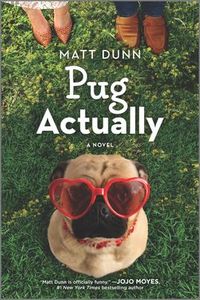
REPOSTING JUST CUZ: Pug Actually by Matt Dunn: A Rescue Dog Tries to Return the Favor

Cover of Pug Actually

Pug Actually

by Matt Dunn

Paperback, 313 pg.
Mira Books, 2021

Read: October 5-6, 2021
Grab a copy from your local indie bookstore!

What’s Pug Actually About?

Julie is in a bad relationship, for the last few years she’s been seeing a married man. You know the type—after a few months, he reveals that fact and keeps promising to leave his wife, but… Oh, he’s also her boss. Even if he wasn’t married, he doesn’t treat her well (and is definitely not a dog person). There’s just nothing good to say about Luke.

But Julie really doesn’t see that. Her dad. Jim, and her best friend, Pryia, do—but they can only say so much. But her other best friend, Doug, decides he’s going to do something about it. He starts looking for suitable matches—he doesn’t understand human attractiveness, so he knows he’s at a disadvantage. Early on, he tries to arrange a “meet cute” by knocking over someone’s coffee in the park, but has to abandon that method.

Then Julie is introduced to a recent divorce, Tom. Doug likes him right away (as does Julie’s dad)—even if he is a (gasp) veterinarian. Doug fakes a limp to get taken to Tom’s office, puts up with dog exercise classes in the part, and generally does everything he can to keep the two meeting up. He also steps up his antagonism toward Luke, to try to make it clear to Julie who he prefers.

Doug is a pug who was rescued by Julie and her dad after the death of Julie’s mom. He decides that rescuing can work both ways—and determines that he’s going to find Julie a better guy than Luke.

Without realizing that’s what they’re doing, Jim and Priya help out—discouraging time with Luke and playing up Tom (or anyone else), Jim even is partially responsible for introducing Tom to her.

Slowly something maybe starts between Julie and Tom, and things definitely (and largely independently from the Tom story) get worse between Julie and Luke. And Doug’s along all the while doing his best to help.

The Very Sweet Subplot

When Jim and Doug take their walks, Jim has a habit of stopping by a coffee shop run by a woman named Dot. Dot’s interest in Jim is about as obvious as Doug being a dog. But Jim’s not ready to see anyone after his wife, so is either oblivious or chooses to be. Tom is actually Dot’s son.

About the time that Tom meets Julie, Jim finally opens himself up to the idea of seeing someone. Watching Dot and Jim’s relationship start is possibly the best part of the book (it certainly comes with less drama and more fun).

Doug as Narrator

Going back to Debora and James Howe’s Harold and up through Spencer Quinn’s Chet, I’ve been a sucker for dog narrators. It’s a weakness, and not one I’m in any rush to lose. Doug is one more in a line of dog narrators that has charmed his way into my heart.

Doug’s rather erudite and educated for a canine writer. Sure, there are human things he doesn’t understand, and a few things that a small pug can’t see. But he’s not as easily distracted as Chet, for example. He’s capable of rattling off a Chinese proverb in Chinese—perhaps because he is a pug, because he doesn’t show an affinity for other languages.

He’s also like every dog I’ve ever met, but especially like the pug sitting next to me, and is always hungry—and a little pudgy (hence the need for the exercise class). And while everyone will talk about his need to lose weight, he’s really good at getting them to give him a treat (or finding some on his own).

I really enjoy everyone spelling V-E-T every time they mention Tom’s profession, although as Doug notes, he can spell. The reliable “Big Stretch!” said by everyone who isn’t Luke when Doug stretches brought a grin to my face (and has made me a bit self-conscious when I do the same to my canine companions).

So, what did I think about Pug Actually?

This is a sweet, cute book. Pug Actually is a pretty standard rom-com, you can see most of the story beats coming, but Dunn writes them in an effective way, so who cares? Adding Doug to the mix adds a layer of charm and humor that help make this more than standard.

There’s a moment near the end that really doesn’t seem necessary to add one last hurdle to the Tom and Julie romance. It soured my wife a bit on the book, but me less so. I see where it was necessary—or at least helpful—to give Doug a couple of more shining moments. But the ending was nice enough to make up for whatever stumble that plot point made.

When he was on the Author Stories podcast, Dunn suggested that there might be a sequel in the works. If one appears, I’ll jump on it.

If you’re in the mood for a pleasant, light read, I recommend this. Even better if you’re in the mood for a rom-com. If you’re a dog lover, it’ll help, but even cat people should find plenty to love here.


3.5 Stars

This post contains an affiliate link. If you purchase from it, I will get a small commission at no additional cost to you. As always, opinions are my own.

A Violent Masterpiece by Jordan Harper: This Place is a Crime.

I don’t know what I was thinking requesting this from NetGalley. I have the hardest time writing about Harper’s books. I only managed to get one word posted about his last one—and that’s not enough for NetGalley. So, yeah, this took several days longer than it should’ve. But I can almost live with this.


Cover of A Violent Masterpiece by Jordan HarperA Violent Masterpiece

by Jordan Harper

DETAILS:
Publisher: Mulholland Books
Publication Date: April 28, 2026
Format: eARC
Length:TEXT
Read Date: April 27, 2026
Buy from Bookshop.org Support Indie Bookstores

The Sequel-ness of the Book

This is a follow-up to 2023’s Everybody Knows, but I really wouldn’t say this is a sequel. It’s more of a shared universe kind of thing. The Venn Diagram of the two novels does have some overlap in terms of characters, locations, corporate entities, and events. But the two novels are entirely self-contained and you don’t need to read Everybody Knows to fully appreciate A Violent Masterpiece.

That said—if you read Everybody Knows and want to know what happens in those situations (or at least many of them) six months down the road—you’ll be satisfied. But honestly, that was such a perfect way to end a novel, if you don’t want to step back in—you’re good.

Similarly, if you read A Violent Masterpiece and think “I’d like to know a little bit about how things got to this point,” Everybody Knows, exists. But you have everything you need in these pages.

Now, with that out of the way…

What’s A Violent Masterpiece About?

Take some characters:

The first is Jake Deal. He livestreams crime scenes, tours of historic L.A. crimes, and more. He used to work for a TMZ-like media company, and he still has the skills to get the dirt on people. He’s given an opportunity to make some good money if he uses those skills on a few targets.

A homeless woman, dealing with some dubious legal charges, who is trapped in an uncaring (at best) system.

A serial killer, the L.A. Ripper, killing women throughout the city. The LAPD isn’t prepared to call the killings related, but the rumor mill and the Internet are more than prepared to.

A former TV star/producer who is (very credibly) accused of any number of sex crimes, who is prepared to start naming names of accomplices and others who are just as guilty (if not more so). If he’s going down, he’s not going down alone.

Kara Delgado, a former barista, who was sucked in by the glamor and glitz—and generous salary—to work for a private concierge company. In that role she’ll procure just about anything someone who has the money wants. She’s not sure that that “just about anything” covers anymore, and is starting to have some doubts about the whole thing (but can she walk away?)

Jake’s former boss at the not-TMZ company. She used to work with the producer. She’s involved with some of the same people that use Kara’s company, too. She finds herself entangled in the legal and financial fallout of the producer’s fall into ignominy.

A defense lawyer—think Mickey Haller in the opening pages of The Lincoln Lawyer (before he starts to make a name for himself and some bigger money). Doug Gibson thinks of himself as the knife you bring to a gunfight—and while he may not win, the prosecution’s case will not walk away unscarred.

Throw these characters, a couple of corporations, other entities and far, far more money than a mortal and comprehend and mix them into the heat of L.A.—with all its lights, parties, action, would-be stars, hangers-on, drugs, wealth, and violence. They’re all on courses that will collide—the questions are, who will survive, what will be made known, will anyone I didn’t just name care, and will anything change?

Why did I pick this up? Why did I keep reading?

Jordan Harper. ‘Nuff said.

What does this book tell us about humanity?

There are no guys with white hats running to the rescue. The one character here who is tempted in their better moments to regard themselves that way isn’t really—and when pushed just right, falls apart and casts off his morality.

But for many of the characters—our three primary and at least one other (that I will remain vague on), there can come a breaking point. A point where they cannot keep going down whatever destructive/self-destructive, amoral path they’re on and they are and they have to depart from that path and try to balance the scales, make amends, mitigate the evil they see (and may have participated in). They’re relatable, they’re believable—they’re broken and trying to make their way in the world to find a little peace for themselves, and maybe some others, too. They’re not trying to fix every injustice, right every wrong—just maybe not let things get worse in their immediate circle.

Alternatively, I’d like to say that Harper shows how even at their worst, there are glimmers of hope of some people—there are some “villains” that aren’t all bad, there’s a streak of goodness in them, some kindness—even a part of them that regrets the evil they do and they want to turn from it—and just might. I’d like to say that, but no. There are some truly vile, corrupt, and evil people—alone or in concert with others—that are wholly despicable.

That’s fitting for a noir novel. It also seems pretty realistic.

So, what did I think about A Violent Masterpiece?

So yeah, things sound pretty bleak after that last sentence. But here’s the difference between reality—in all of it’s banality, evil, and bleakness—and a Harper novel. Harper’s voice, style, characterization, and dialogue are just beautiful. You can get lost in that, revel in it, enough that you can set aside the depravity from time to time and just focus on that.

I think the pacing of this book is a little faster, a little smoother, than Harper’s previous novels. I’d even say that the primary characters are 1-3% more likable. Although, even as I say that, I want to note that every one of Harper’s novels feel so different from each other that it’s hard to say something like that with any degree of confidence. Even the two that are most related.

This is a book that’s going to haunt me. Probably not to the point that Everybody Knows did, just due to the nature of the last couple of chapters of each.

Political commentary, social commentary, cultural commentary—even pop culture commentary. There’s little that Harper doesn’t put in his sights. And he nails it at every turn.

From the first chapter, it was clear that this was going to be a rollicking read. I found myself in a situation with nothing to do but read for a couple of hours and was able to read the first half of this in one sitting. And despite the situation being resolved, I thought about sticking it out longer so I could finish, no matter what side of midnight it was. It was good to get a breather to mull on the book some—but boy howdy, it’d have been satisfying to gulp it in one.

This is a harrowing look at L.A. and the industries the run it (and the money and depravity they allow to flourish). But it’s not just about L.A.—as the novel reminds us, L.A. is America. Everything that happens in this novel happens all around the country on different scales. We’re swimming in it, it’s just a matter of if we want to see it. Harper holds the mirror up to L.A., to the U.S.A., and to ourselves. The challenge is not to avert our eyes.

This is just a brilliant read.

Disclaimer: I received this eARC from Little, Brown and Company via NetGalley in exchange for this post, which contains my honest opinion—thanks to both for this.

This post contains an affiliate link. If you purchase from it, I will get a small commission at no additional cost to you. As always, the opinions expressed are my own.
Irresponsible Reader Pilcrow Icon

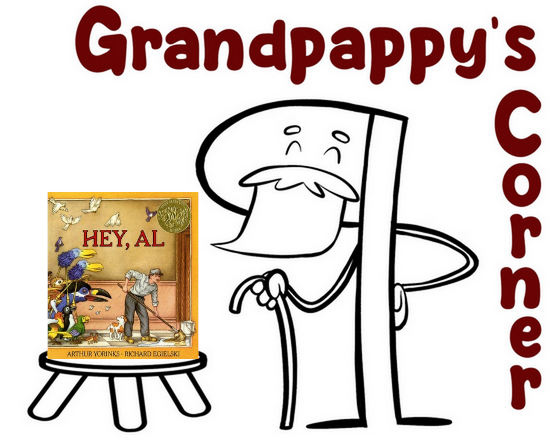
Grandpappy’s Corner: Hey, Al by Arthur Yorinks, Richard Egielski (Illustrator): Maybe a Little Creepy, But Sweet

The words Grandpappy's Corner next to an older-looking anthropomorphized pilcrow, with a copy of Hey, Al by Arthur Yorink sitting on a wood stool.

Hey, Al

by Arthur Yorinks, Richard Egielski (Illustrator)

DETAILS:
Publisher: Square Fish
Publication Date: May 01, 1989
Format: Hardcover
Length: 32 pgs.
Read Date: April 18, 2026
Buy from Bookshop.org Support Indie Bookstores

What’s Hey, Al About?

Al is a janitor, and Eddie is his faithful dog. They do everything together–work, leisure, you name it. They live in a cramped apartment in New York. And the quarters might be a little too tight for the two, even as close as they are (Eddie, in particular, seems to want more).

One day, a giant bird offers them a way out–he offers to take the two of them somewhere to get away from all of their lives. That’s a bit much for Al to take in, and he resists. But Eddie puts his foot down, so the next day this giant bird takes them to its home–a floating island in the sky.

Because, of course, it is.

This island is populated by all sorts of various birds best described larger-than-they-should be, and the life seems idyllic.

But, as everything does, there is a cost to this. And it’s not long before the pair learn what it is. Is it too much?

Let’s Talk about the Art for a Minute

Oh, it’s just great. Apparently, Yorinks and Egielski work together a lot–and they should. Egielski’s illustrations are just dynamite. They perfectly capture the story–and they’re attention-grabbing enough that a young reader might not really care about the text, as long as they can flip through the book to look at the illustrations.

The birds are fantastic–and that island (gravity-defying as it may be) looks gorgeous. The emotions–positive and negative–of Al and Eddie are conveyed perfectly.

It’s just great.

How is it to Read Aloud?

It’s fine–there’s nothing dazzling about the text, it’s a solid story that the grown-up reader will be able to make it through just fine while looking at all the art with their younger audience.

So, what did I think about Hey, Al?

Honestly, it seemed a little dark for a couple of pages, given the audience. But I remember kids’ books don’t need to make everything too exciting and happy–kids can handle a little darkness (especially if there’s a happy ending–and spoiler alert, there is one.)

This is just a wonderful book read–full of imagination. It’s one to get your hands on (even if you’re a little “too old” for it).

This post contains an affiliate link. If you purchase from it, I will get a small commission at no additional cost to you. As always, the opinions expressed are my own.
Grandpappy Icon

Page 9 of 350

Powered by WordPress & Theme by Anders Norén