Category: Science Fiction Page 26 of 34

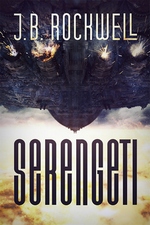
Serengeti by J.B. Rockwell

SerengetiSerengeti

by J.B. Rockwell
Series: Serengeti, #1

Kindle Edition, 288 pg.
Severed Press, 2016

Read: February 7 – 8, 2016


Serengeti is the AI that runs/inhabits a Valkyrie class warship. She and the rest of the fleet of the Meridian Alliance are hunting for ships belonging to the Dark Star Revolution. Sadly, the hunt finds them — but the DSR ships were waiting for them. The ensuing battle doesn’t go well for the Alliance — and Serengeti barely survives, and the crew aboard her is decimated.

They escape the scene of the battle, but don’t end up where they’re supposed to be — and so Serengeti begins her trek to return to the fleet, limping along while hoping her remaining crew in the lifeboat will make it. She and a couple of repair robots make the long, limping journey alone — relying only on each other, some surprising ingenuity and hope to make it.

To help her — both for companionship and because she needs some better help, Serengeti upgrades a robot friend and the two quickly learn to rely on each other for moral support, encouragement and basic needs. It’s a pretty cool story in that way, and not one I can remember seeing anything like before. It’s like the Firefly episode, “Out of Gas,” starring a non-bickering C3-PO and R2-D2. But not at all, really.

There’s some humor, a lot of heart, and some good SF action to be found in these pages. I’m not sure what else to say without spoiling it, so I’ll keep this brief. This is a solid SF adventure with some surprisingly sympathetic AI protagonists. It’s the first of a duology — and I fully intended on getting my hands on part two pronto.

Disclaimer: I received this book from the author in exchange for this post — I appreciate it.

—–

3 Stars

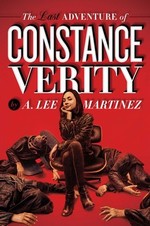
The Last Adventure of Constance Verity by A. Lee Martinez

I’ve been trying to finish this since September — thankfully, today being A. Lee Martinez Appreciation Day gave me the motivation.

The Last Adventure of Constance VerityThe Last Adventure of Constance Verity

by A. Lee Martinez
Series: Constance Verity, #1

Hardcover, 384 pg.
Saga Press, 2016

Read: September 8 -12, 2016

“I didn’t think you believed in jinxes,” said Tia.

Connie didn’t.

But she wasn’t so sure that jinxes didn’t believe in her, and they’d had a long, long time to build a grudge.

I go in to a Martinez book assuming I’ll like it, this one took less time than usual for me to know I liked it. Lines like that are just part of why.

Thanks to a gift from a fairy godmother, since she was 7, Constance Verity has been saving the world as she goes on unbelievable adventure after unbelievable adventure — she travels the galaxy, time, alternate realities and all over (and under) the Earth. She’s run into demons, aliens, wizards, killer robots, mad scientists and many more threats — and overcome them all. A couple of decades later, she’s starting to think that she’s missing out on something despite all the excitement. She’s missing out on being ordinary.

Haven’t you saved the world on multiple occasions?”

“That’s what people tell me, but I’m beginning to think that the world isn’t as fragile as all that. The universe got along just fine for billions of years without me. I don’t think it needs me to save it. I think it all works out about the same in the end. Sometimes, I like to think of myself with a dead-end job that I dislike, a husband who is letting himself go, and some ungrateful kids I take to soccer practice. It sounds dreary, but at least it would be my life.”

Connie doesn’t stop to consider if she’s really cut out for ordinary, but if anyone can rise to the challenge of normality, it’s Constance Verity.

So she and her sidekick best-friend, Tia, head out to get that normal life for her. Step 1: Kill her fairly godmother.

I really don’t know what to say about the book beyond this without getting into more details than I ought. I guess I could say a few things about character. Connie is a great character, for someone who’s lived a superhuman life, she’s really human. Tia is incredible — wise, funny, caring, a real good friend. The relationship between the two is almost perfect.

This is a typical Martinez — a strange combination of loony and thoughtful. You can laugh and then be struck by a profound thought within a couple of pages. This is a fun adventure (a handful, really), and a bit of a commentary on heroes, villains, tropes and themes in SF stories (particularly the pulp-ier variety).

This is the first installment in a series — which is something Martinez hasn’t done before — I have no clue how he’ll pull this off, the book ends like I’d expect a Martinez stand-alone to end, so I have no idea how he’s going to follow this up. But I cannot wait to see.

—–

4 Stars

The Best Novels I Read in 2016

Yeah, I should’ve done this earlier, but I just needed a break from 2016 for a couple of days. Most people do this in mid-December or so, but a few years ago (before this blog), the best novel I read that year was also the last. Ever since then, I just can’t pull the trigger until January 1.

I truly enjoyed all but a couple of books this year (at least a little bit), but narrowing the list down to those in this post was a little easier than I expected (‘tho there’s a couple of books I do feel bad about ignoring). I stand by my initial ratings, there are some in the 5-Star group that aren’t as good as some of the 4 and 4½ books, although for whatever reason, I ranked them higher (entertainment value, sentimental value…liked the ending better…etc.). Anyway, I came up with a list I think I can live with.

(in alphabetical order by author)

Morning StarMorning Star

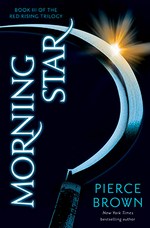
by Pierce Brown
My original post
I was a little surprised (but not really) today to see that every book in the trilogy made my year-end Best-Of list — so it makes sense that this one occupies a space. But it’s more than that, this book was an exciting emotional wringer that ended the trilogy in a perfect way. I can’t recommend this one enough (but only for those who’ve read the first two). When I was informed a month ago that there was going to be a follow-up series? I let out a whoop, thankfully none of my family noticed, so I don’t have to feel too silly.
5 Stars

A Star-Reckoner's LotA Star-Reckoner’s Lot

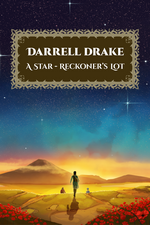
by Darrell Drake
My original post
I’m afraid if I start talking about this one that I’ll spill a few hundred words. Let me just slightly modify something I already wrote and spare us all the effort (that could be better spent actually reading these books). I’m afraid I’ll overuse the word imaginative if I tried to describe what Drake has done here in the depth I want to in this book about pre-Islamic Iran. You haven’t read a fantasy novel like this one before — almost certainly, anyway — but you should.
4 1/2 Stars

Blood of the EarthBlood of the Earth

by Faith Hunter
My original post
This probably should be a dual entry with Blood of the Earth and Curse on the Land, but that felt like cheating. Between the two, I thought that this was a slightly better work, so it got the spot. While remaining true to the Jane Yellowrock world that this springs from, Hunter has created a fantastic character, new type of magic, and basis of a series. I love these characters already (well, except for those I wasn’t crazy about previously) and can’t wait for a return trip.
4 1/2 Stars

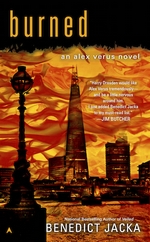
BurnedBurned

by Benedict Jacka
My original post
I’m just going to quote myself here: I’ve seen people call this the Changes of the Alex Verus series — and it absolutely is. I’d also call it the Staked in terms with the protagonists coming to grips with the effects that his being in the lives of his nearest and dearest has on their life, and what that means for his future involvement with them. Which is not to say that Jacka’s latest feels anything like Butcher’s or Hearne’s books — it feels like Verus just turned up half a notch. It’s just such a great read — it grabs you on page 2 and drags you along wherever it wants to take you right up until the “He is not actually doing this” moment — which are followed by a couple more of them.
5 Stars

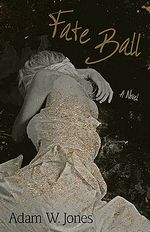
Fate BallFate Ball

by Adam W. Jones
My original post
Since the Spring when I read this, I periodically reminded myself to keep this in mind for my Top 10, I was that afraid I’d forget this quiet book. It’s not a perfect novel, there are real problems with it — but it was really effective. I fell for Ava, just the way Able did — not as hard (and only in a way that my wife wouldn’t mind) — but just as truly. This one worked about as well as any author could hope one would.
4 1/2 Stars

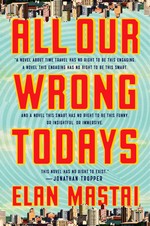
All Our Wrong TodaysAll Our Wrong Todays

by Elan Mastai
My original post
My all-time favorite time-travel novel, just a fun read, too. I will over-hype this one if I’m not careful. So, so good.
5 Stars

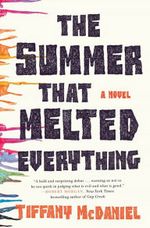
The Summer that Melted EverythingThe Summer that Melted Everything

by Tiffany McDaniel
My original post
I’m not sure what I can say about this book that others haven’t — this trip into a magical realism version of the 1980’s Mid-West will get you on every level — it’s entertaining, it’s thought-provoking, the language is gorgeous, the characters are flawed in all the right ways. I wish this was getting the attention (and sales!) that it deserves — I really hope its audience finds it.
5 Stars

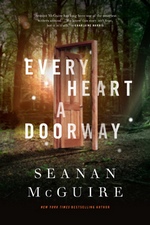
Every Heart a DoorwayEvery Heart a Doorway

by Seanan McGuire
My original post
Here’s a book that doesn’t have to worry about attention or audience, it has one — and it’s probably growing. It deserves it. Short, sweet (and not-sweet) and to the point. I may have to buy a two copies of the sequel so I don’t have to fight my daughter for it when it’s released.
5 Stars

Lady Cop Makes TroubleLady Cop Makes Trouble

by Amy Stewart
My original post
Stewart took the really good historical crime novel she wrote last year and built on that foundation one that’s far more entertaining without sacrificing anything that had come before. We’ll be reading about the Kopp sisters for a while, I think.
4 Stars

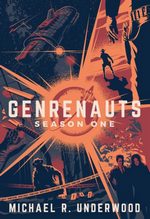
Genrenauts: The Complete Season One CollectionGenrenauts: The Complete Season One Collection

by Michael R. Underwood
My original post
Yeah, here I am again, flogging Underwood’s Genrenaut stories — whether in individual novellas, audiobooks, or in this collection — you need to get your hands on this series about story specialists who travel to alternate dimensions where stories are real and what happens in them impacts our world — Underwood has a special alchemy of Leverage + The Librarians + Quantum Leap + Thursday Next going on here, and I love it.
5 Stars

There were a few that almost made the list — almost all of them did make the Top 10 for at least a minute, actually. I toyed with a Top 17 in 2016 but that seemed stupid — and I’ve always done 10, I’m going to stick with it. But man — these were all close, and arguably better than some of those on my list. Anyway here they are: What You Break by Reed Farrel Coleman (my original post), Children of the Different by SC Flynn (my original post), Thursday 1:17 p.m. by Michael Landweber (my original post), We’re All Damaged by Matthew Norman (my original post), A Hundred Thousand Worlds by Bob Proehl (my original post), and Mechanical Failure by Joe Zieja (my original post).

I hope your 2016 reads were as good as these.

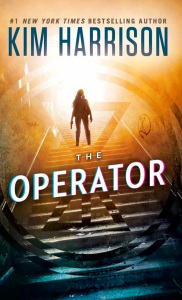
Pub Day Repost: The Operator by Kim Harrison

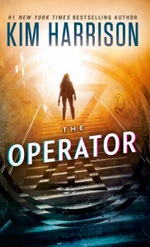
The OperatorThe Operator

by Kim Harrison
Series: The Peri Reed Chronicles, #2
ARC, 468 pg.
Pocket Book, 2016
Read: October 17 – 20, 2016

I loved Peri Reed’s debut in The Drafter last year — it was one of my 10 favorites of 2015, so to say I was eager to read this is somewhat of an understatement. Sure, I was a little apprehensive, too — could Harrison pull it off again? Thankfully, yes she could. You may be able to jump in to the series with this point, but I really wouldn’t recommend it at all. Go read The Drafter.

The Operator picks up with Peri in a much better place (mentally, at least) than we left her in — she’s living out of the business, she runs a coffee shop that’s marketed towards the elite of Detroit — the moneyed, those wanting the most secure networks while sipping their morning caffeine fix, and those willing to spend an exorbitant amount on coffee.

She’s working really hard to convince herself that this is the life she wants when her past catches up with her. And before she knows it, she’s got the remnants of Opti trying to bring her back in — and the government’s version of a “clean” Opti doing their best to recruit her (and honestly, they’re taking more of a “stick” approach than a “carrot” approach).

Faces from her past — those she trusts, but not enough; those she trusts, but doesn’t want to; and those she’ll never trust — compete (on both sides) with people she doesn’t know and doesn’t trust. And, as always, Peri doesn’t even know if she can trust herself — but she’s very clear on what she wants: out. Out of the life, out of the spy business, out of everything that defines her. To get there, she’s going to have to rely on everything that she’s trying to get away from, but that’s a price she’s willing to pay. It may be Quixotic, but it’s all she’s got (other than her cat).

It is difficult to talk about the plot without giving too much away, so that’s as specific as I can get.

If there was a problem with The Drafter was that it was sometimes as confusing for the reader as it was for Peri to know what was going on (I’m not saying, it was poorly written — but as things were filtered through Peri’s perception, which were pretty in flux . . .). In The Operator, we don’t have that problem — Peri’s sometimes not sure what she’s doing, or that she’s doing it for the reasons she thinks that she is — but she’s very clear about what’s going on. Actually, sometimes, I think she’s the only one who sees the whole board and understands what’s going on. Which makes everything much easier for the reader to follow.

She had a clear objective, clear obstacles to overcome, and the gumption and skills to get the jobs done. The only question is: can she accomplish all she’s set out to accomplish before she’s killed or has her mind wiped?

Characters — again, this is tough. I’d like to say X at first seemed like a good antagonist — if not enemy — but then Y happens and X does Z and reveals that they can be a trusted ally and possible friend. But if I’m going to do that, I might as well reveal half the plot. There are some great new character, I’ll say instead, and every one that Peri ends the book trusting/befriending, I’d like to spend a lot more time with. A couple of decent new enemies/antagonists — I think we get enough of them. The people who survived The Drafter and made it to these pages, we learn more about them and pretty much cement our appraisals of from last time out. As always, Harrison gets almost every character note right, I think I’d have an easier time noting where she fumbles on that front.

If for whatever (very wrong) reason you ignore the story, this book is worth reading just for on a tiny little details that Harrison has filled this with to make a slightly futuristic future in this world. You can recognize it as our world, but it’s future-enough to be a totally new world so you don’t recognize everything. I’m not sure those sentences make sense, but you probably get my gist. I could do a post just on the future tech, culture, economics, etc. I’m not going to do that — just not enough time on my hands — but I could, because the world Harrison has surrounded Peri with is just that developed and detailed. And almost none of the details like that have any bearing on the plot beyond grounding the characters. I love that.

This may not be as well executed as its predecessor, but Harrison spent so much of The Drafter setting up the world while telling the story — where this time, she just gets to play in the world and tell the story. I think I enjoyed this one more, while I didn’t admire it as much. I have a few ideas what Peri and the rest will be up to in The Agent, but I’m more than prepared for Harrison to do something better than those. All I know for sure is that it’s too long before it’s released. The Operator is a slick, sleek, SF adventure novel that’s sure to satisfy on several levels.

Disclaimer: I received an ARC of this book from Pocket Books, and I thank them very much.

—–

4 1/2 Stars

The Last Star by Rick Yancey

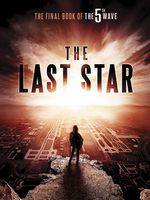
The Last StarThe Last Star

by Rick Yancey
Series: The 5th Wave, #3

Hardcover, 338 pg.
G.P. Putnam’s Sons Books for Young Readers, 2016

Read: November 3 – 5, 2016

Since the Arrival, I’ve been beset by more cravings than a women pregnant with triplets, and always for things I’ll never taste again. Chocolate ice cream cones. Frozen pizza. Whipped cream in a can. Those cinnamon rolls Mom made every Saturday morning. McDonald’s french fries. Bacon. No, bacon was still a possibility. I would just have to find a hog, slaughter it, butcher it, cure the meat, then fry it up. Thinking about the bacon — the potential of bacon — gives me hope. Not all is lost if bacon isn’t.

Seriously.

And there’s the best that this series can do — when there’s no reason for hope, no reason to keep going — Yancey’s characters find a reason (other than inertia) to keep struggling, to keep walking, to keep surviving, to keep hoping.

Sadly, I pretty much needed that same kind (not extent, kind) of perseverance. I thought The 5th Wave rocked, and I enjoyed The Infinite Sea, but not as much — but the wheels really came off this time. It’s not an Allegiant-level disappointment, but it was closer than anyone should want.

The writing was skillful — I liked a lot of what the book had to say about humanity, enlightenment, and teddy bears (no, really). Yancey nailed the character beats, moments, observations — but he utilized this great writing and surrounded these strong elements with a story that just wasn’t worth telling. Somehow in the end, the whole was <iLless than the sum of its parts (anyone know the German for that?).

I’m going to skip the plot summary because it’s just the next stage in the series, leading up to the final confrontation between the survivors we’re following and Humanity’s foes. That’s really all you need to know — and everyone who’s been reading the series knew that already.

This is the 10th book I’ve read by Yancey, and it’s so clearly the weakest link. I’d still recommend this book for those who’ve read the first two — but on the whole, I’d tell those who hadn’t started the series to skip it. I’m more than ready to give whatever Yancey does next a chance, if for no other reason than to get the taste of this out of my mouth.

—–

3 Stars

Cyber World: Soundtrack of Humanity’s Tomorrow

Cyber WorldCyber World: Soundtrack of Humanity’s Tomorrow


Hex Publishers, 2016


I enjoy music, I listen to a lot of it — but I’m no expert, so take this for what it is.

Okay, I’m not technically an expert on the other stuff I write about, but I’m closer to one when it comes to writing than I am music. But at least with books I have an idea how to talk about them, I really don’t know what to say about music — “I give him a 42 but I can’t dance to it!”

There’s a very 80’s-vibe to a lot of this music (a good thing, by and large, in my opinion . The Scandroid songs sound to me like something out of a British synth-pop band. Which may make it less than appealing for some, but it works for me (although some of the lyrics could be more interesting). I did learn what the word “Aphelion” means, though, so there’s that.

The best stuff on the album are the instrumentals — Celldweller’s “Patched in” is great background music — I’ve already been using while writing and reading. Which is not to take anything away from Mega Drive’s two songs — I alternate which of those I like best, but both are getting a lot of play time on my devices.

The three instrumental songs, in particular, do a great job of getting you into the right mood for the kind of stories the book tells — where those with vocals take you back to the era where Cyberpunk was born. So they can also put you in the right frame of mind.

A good companion piece to the anthology, and a fun listen overall. I recommend it.

Disclaimer: I was provided with a copy of this album by the publisher, which was going above and beyond. I thank them for this — it was very generous and pretty cool of them.

—–

3 Stars

The Operator by Kim Harrison

The OperatorThe Operator

by Kim Harrison
Series: The Peri Reed Chronicles, #2

ARC, 468 pg.
Pocket Book, 2016

Read: October 17 – 20, 2016


I loved Peri Reed’s debut in The Drafter last year — it was one of my 10 favorites of 2015, so to say I was eager to read this is somewhat of an understatement. Sure, I was a little apprehensive, too — could Harrison pull it off again? Thankfully, yes she could. You may be able to jump in to the series with this point, but I really wouldn’t recommend it at all. Go read The Drafter.

The Operator picks up with Peri in a much better place (mentally, at least) than we left her in — she’s living out of the business, she runs a coffee shop that’s marketed towards the elite of Detroit — the moneyed, those wanting the most secure networks while sipping their morning caffeine fix, and those willing to spend an exorbitant amount on coffee.

She’s working really hard to convince herself that this is the life she wants when her past catches up with her. And before she knows it, she’s got the remnants of Opti trying to bring her back in — and the government’s version of a “clean” Opti doing their best to recruit her (and honestly, they’re taking more of a “stick” approach than a “carrot” approach).

Faces from her past — those she trusts, but not enough; those she trusts, but doesn’t want to; and those she’ll never trust — compete (on both sides) with people she doesn’t know and doesn’t trust. And, as always, Peri doesn’t even know if she can trust herself — but she’s very clear on what she wants: out. Out of the life, out of the spy business, out of everything that defines her. To get there, she’s going to have to rely on everything that she’s trying to get away from, but that’s a price she’s willing to pay. It may be Quixotic, but it’s all she’s got (other than her cat).

It is difficult to talk about the plot without giving too much away, so that’s as specific as I can get.

If there was a problem with The Drafter was that it was sometimes as confusing for the reader as it was for Peri to know what was going on (I’m not saying, it was poorly written — but as things were filtered through Peri’s perception, which were pretty in flux . . .). In The Operator, we don’t have that problem — Peri’s sometimes not sure what she’s doing, or that she’s doing it for the reasons she thinks that she is — but she’s very clear about what’s going on. Actually, sometimes, I think she’s the only one who sees the whole board and understands what’s going on. Which makes everything much easier for the reader to follow.

She had a clear objective, clear obstacles to overcome, and the gumption and skills to get the jobs done. The only question is: can she accomplish all she’s set out to accomplish before she’s killed or has her mind wiped?

Characters — again, this is tough. I’d like to say X at first seemed like a good antagonist — if not enemy — but then Y happens and X does Z and reveals that they can be a trusted ally and possible friend. But if I’m going to do that, I might as well reveal half the plot. There are some great new character, I’ll say instead, and every one that Peri ends the book trusting/befriending, I’d like to spend a lot more time with. A couple of decent new enemies/antagonists — I think we get enough of them. The people who survived The Drafter and made it to these pages, we learn more about them and pretty much cement our appraisals of from last time out. As always, Harrison gets almost every character note right, I think I’d have an easier time noting where she fumbles on that front.

If for whatever (very wrong) reason you ignore the story, this book is worth reading just for on a tiny little details that Harrison has filled this with to make a slightly futuristic future in this world. You can recognize it as our world, but it’s future-enough to be a totally new world so you don’t recognize everything. I’m not sure those sentences make sense, but you probably get my gist. I could do a post just on the future tech, culture, economics, etc. I’m not going to do that — just not enough time on my hands — but I could, because the world Harrison has surrounded Peri with is just that developed and detailed. And almost none of the details like that have any bearing on the plot beyond grounding the characters. I love that.

This may not be as well executed as its predecessor, but Harrison spent so much of The Drafter setting up the world while telling the story — where this time, she just gets to play in the world and tell the story. I think I enjoyed this one more, while I didn’t admire it as much. I have a few ideas what Peri and the rest will be up to in The Agent, but I’m more than prepared for Harrison to do something better than those. All I know for sure is that it’s too long before it’s released. The Operator is a slick, sleek, SF adventure novel that’s sure to satisfy on several levels.

Disclaimer: I received an ARC of this book from Pocket Books, and I thank them very much.

—–

4 1/2 Stars

Coming Attractions: The Operator by Kim Harrison

The OperatorThe Operator

by Kim Harrison
Series: The Peri Reed Chronicles, #2

All this week, I’ve been planning on posting my thoughts about Kim Harrison’s The Operator, the sequel to The Drafter, right now. But as I sat down to write it, I realized I was just too tired. Sure, I could get something finished, but it wouldn’t be good enough. This is a book that deserves something good.

I loved The Drafter — I’ve been saying for a year now that it’s the best thing she’s written. In many ways, I enjoyed this book more — but I’m not sure it’s as well-executed (still thinking about it). Anyway, I wanted to say a little something about it — The Operator comes out just before Thanksgiving, order it now so you have something to do while your family watches football.

Time Siege by Wesley Chu

Time SiegeTime Siege

by Wesley Chu
Series: Time Salvager, #2

Hardcover, 341 pg.
Tor Books, 2016

Read: August 15 – 16, 2016


This is, in a sense, one of the most pointless posts I’ve done. If you’ve read Time Salvager, then I can’t imagine you needing to be convinced to read Time Siege, maybe you need convincing to move it up on your TBR, or just a reminder that this is out there. If you haven’t read Time Salvager, you shouldn’t read Time Siege yet because it won’t make all that much sense. But I’ll try to say a little about the book.

This book really could just be the next chapters of Salvager. It’s just taking the story to the next step — yes, there are distinct plot and character arcs, but on the whole, it’s just what should come next. Making it hard for me to know what to say. Some things that I thought were pretty well resolved in Siege are dealt with again, and hopefully resolved (or closer to it) now. Some characters come back in ways that I couldn’t have expected, some in ways that were exactly what I expected.

One thing that’s crystal clear now — and has been evident all along, really — is that Wesley Chu can write a fight scene. Whether it’s single combat or larger forces, he delivers. The scenes are suspenseful, intense, and believable. He captures what I imagine both the chaos and order of a battle would be like for those involved and those behind the lines.

Somewhere along the line, I got the impression that this was a duology, not a trilogy. So I spent most of the book thinking that this could be a dark, yet satisfying ending. Definitely not an “Everybody Lives happily every after” ending, but one that wraps things up well. Then the satisfying part became untenable (possible, but not likely) . . . and thankfully, it quickly became clear that it was going to be a trilogy. That said, everything is hanging in the balance here at the end of Time Siege, and it’s going to take a lot of heroics for there to be even a chance for an ending that doesn’t involve the doom of humanity. Even with a lot of heroics, that’s a distinct possibility — part of me wants that to happen, just to see how Chu pulls it off.

I remember liking Salvager more than I did, but whatever — the sequel did everything it needed to do to push the story forward into the third book, with heightened action, more investment in the characters and what happens to them. Chu accomplished everything he needed to here and more. I could really use a time machine now to get my hands on the concluding volume.

—–

4 Stars

Genrenauts: The Complete Season One Collection by Michael R. Underwood

Genrenauts: The Complete Season One CollectionGenrenauts: The Complete Season One Collection

by Michael R. Underwood
Series: Genrenauts, #1-6

Kindle Edition, 544 pg.
2016


Parallel to our world are various worlds populated by fictional characters in a wide variety of genres (Western, SF, Romance, etc), and when things go wrong in the stories, things go wrong in our world. For example, broken Romance world stories = higher divorce rates here. In this world, there are a number of teams of story specialists who shift to the other worlds to fix the stories and set things back on course here. Leah Tang — a struggling stand-up comic by night, struggling receptionist by day — is the newest recruit. Join her as she learns the ropes, rights wrongs, struggles with ethics, and gets shot at while cracking jokes.

Originally printed as 6 episodes in 5 novellas, now collected in one season-long omnibus, Genrenauats as become one of my favorite series this year and I’m glad to get one more chance to talk about it with the release of the collection this week.

There’s a great cast of characters here, all of which deserve the reader’s time and focus. For example, I was tempted to not-really-ignore, but relegate Angstrom King to back burner status in my mind. He’s the leader, he points the team in a direction, but the real excitement’s with the rest. This was a mistake on my part — think of him like Capt. Picard. Sure, for the most part he sits around in his ready room with some Earl Gray (hot) — but really, some of the more interesting things that happen in he series are because of his actions. King’s not Jean-Luc, but there’s a similar quality.

I love a good team — fiction, TV, comics, you name it — the interaction, the teamwork, the dynamics, there’s really nothing like it. There’s a great team in these novellas — some of the intra-team camaraderie got pushed aside for a little romance that doesn’t really work for me (but I get why it would for others and appreciate the way Underwood’s tackling it). Overall, it’s built on solid interactions and relationships that have plenty of room to grow and develop over the many seasons that we hopefully get of this.

Each adventure gives Underwood an opportunity to talk about various genres — to talk about the clichés, tropes, archetypes, pluses, minuses, and so on of each genre. And one visit to each won’t be enough to fully explore these. Don’t get me wrong, we’re not talking Master’s Theses-esque discussion, he jokes about them, plays with them, sometimes turns them upside down while telling his tale.

The collection includes:
The Shootout Solution — We meet Leah Tang, Angstrom King and the rest of his team. We’re also introduced to the concept of Genrenauts, Story Worlds, the effects that they can have on our world — also, we get a pretty decent story in Western World. Not bad for 148 pages. (For more details, you might want to read my original blog post, my blog post about the audiobook)

The Absconded Ambassador — The team goes to Science Fiction World to help out on a DS9-like Space Station. On the verge of a major treaty being finalized and signed, the Terran ambassador has been kidnapped. It’s up to King and co. to rescue the ambassador and keep the shaky alliance from crumbling in her absence. We learn a little more about everyone, and while having a lot of fun with genre conventions. ( my original blog post, my blog post about the audiobook)

The Cupid Reconciliation — The team gets back up to full strength in time to go rescue a Rom-Com gone awry. Underwood really lets things fly when it comes to observations about the genre and playing with conventions while using them for comedic — and narrative — value. Also — a couple of seeds that were planted in the first two novellas are watered enough that you can see season/season-plus story arcs beginning to grow. The series took a big jump in quality here. ( my original blog post)

The Substitute Sleuth — A Police Procedural needs some help, a no-nonsense cop’s off-the wall/out-of-the-box partner takes a bullet and another pair of mismatched detectives needs to come in and close the case. We get some major backstory stuff here, and the season arc is moved along nicely. The detective story itself isn’t my favorite, but what Underwood does with the tropes, themes, conventions, etc. is really good — it is more of a TV detective story than a novel detective story. Think Castle, not Harry Bosch (whoops, thanks Amazon, you ruined that point…). ( my original blog post)

The Failed Fellowship (Part 1 & 2) — This think kicks off with Leah Tang ranting about fantasy fiction and 5 episodes later, she gets to spend 2 episodes in Fantasy World, where a Chosen One with a Magic Artifact story has fallen to pieces. Leah’s in hog heaven, the rest of the team are at the top of their game and Underwood is, too. Rollicking good adventure. Best of the batch in every way. ( my original blog post)

I dig this series, and having all of the novellas in one handy collection is going to make it easier (I hope) for others to discover it — the collection is also a little cheaper than buying all the individual stories, which will also going to make things easier for people to discover it. If you haven’t dipped your toe in this world/these worlds yet, what are you waiting for?

—–

5 Stars

Page 26 of 34

Powered by WordPress & Theme by Anders Norén