Whoops. Missed posting Thursday. I’ll try (no promises) to get two up today.
—–
 The Girl with the Iron Touch by Kady Cross
My rating: 4 of 5 stars
Another fun installment in Cross’ Steampunk Chronicles. As silly as I feel reading a book with the Harlequin Teen logo on it, I really enjoy this series (‘tho maybe I should switch to the ebook edition to protect my rep). Once again, Cross balances a steampunk-y adventure story with strong emotional plotlines, with some fun banter between her characters, making for an addictive read.
This time out the primary focus is on Emily — the technomancer, and on both her personal and professional crisis. Just as it seems she’s making some progress on getting Sam to say how he feels about her, as well as to accept what she did to save his life, she’s kidnapped by a bunch of automatons so she can perform a brain transplant from a very injured scoundrel into a semi-organic android. No really, that makes sense in context.
Everyone else, in one way or another, is dealing with the fallout from their trip to the U.S. (and from the events in the first book), while also trying to find Emily and bring her home safely. Obviously, it’s worst for Jasper, more withdrawn from both his friends and the events in the book as a whole.
Griffin and Finley are also dealing with their relationship’s progress — with all the complications, ups adn downs that such entails. Griffin started dealing with something relating to his power in the States and it’s having a devastating impact on him back home (and in turn, that’s impacting everyone around him), causing Finlay to fret over him. My biggest beef with this book comes from the Finlay/Griffin interactions, which are far too similar to the Emily/Sam interactions, covering nearly the same grounds with both couples.
There’s a new character introduced that should provide a good deal of fodder for storylines in the future, and I eagerly await more of her. Really can’t say more without entering Spoiler City, so, I’ll just limit myself to saying that Cross’ creativity and inventiveness is on full display with her creation, and she’s already one of my favorites in the series.
One other note, one of the automatons we spend the most time with was described as a spider with a doll’s head. I certainly hope Cross was trying to get her readers to envision that creepy doll from Toy Story — because every one I know whose read this is seeing that.* Griffin and his team find her just as unnerving as Woody and Buzz did (don’t blame them), either.
Things are getting harder, and stakes are getting higher for our intrepid adventurers — whatever’s next will likely push them further yet.
This was a fun, quick read and I’m already impatiently waiting for the next installment.
*That’d be my wife and I.




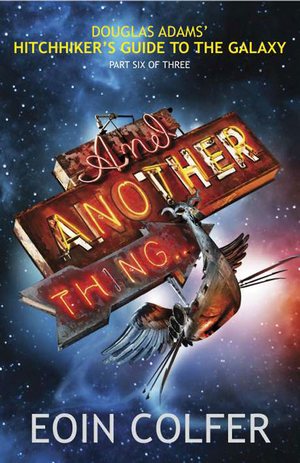
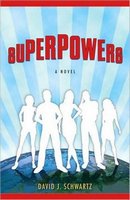 If one’s going to write about superheroes there’s really only so much you can do–A. Write a prose equivalent of a comic book or B. Go out of your way to make sure that no once can describe your work as an example of “A.” Typically, the “A” books are shoddy, and wouldn’t be accepted as a script by a decent comic publisher; and the “B” books are so caught up in not being “A”s that they lose something–they might do well exploring the nature of “heroes” or satirizing/politicizing the genre or whatever, but they don’t work as novels.