Category: Urban Fantasy Page 23 of 44

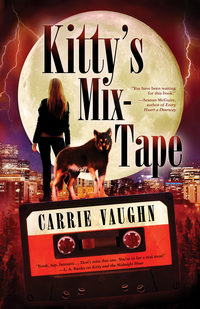
Kitty’s Mix-Tape by Carrie Vaughn: One More Trip to Kitty’s World in this Collection

Kitty's Mix-Tape

Kitty’s Mix-Tape

by Carrie Vaughn
Series: Kitty Norville

eARC, 288 pg.
Tachyon Publications, 2020

Read: September 12-14, 2020
Grab a copy from your local indie bookstore!

What’s Kitty’s Mix-Tape?

That’s an easy question: this is the second collection of short stories (previously published) set in the world of Kitty Norville, the werewolf turned talk radio star. We get a lot of stories featuring Kitty and/or her friends and allies (and one foe), and we get some stories that just happen to take place in the same reality even if they really don’t have any cross-over with the series.

There’s an introduction by Emma Bull that by itself would make a great review of this book (and maybe the series). Really, writing anything else after reading Bull seems superfluous.

Kitty & the Gang

I’m going to have a hard time keeping myself from talking too much about the stories featuring Kitty and her friends—Kitty and Ben going to her 10-year high school reunion was the perfect way to start off this book. Quick, fun, and a great way back into this world.

“It’s Still the Same Old Story,” could’ve fit into The Immortal Conquistador that I talked about a few months back—except it didn’t fit into the story arc of that one. But for those who wonder what Rick was up to in the early part of the twentieth century, this will give you a good idea. This is possibly my favorite thing focusing on Rick to date.

On the eve of their wedding in Kitty and the Dead Man’s Hand Ben disappears off on his own for a while, Vaughn finally lets us know what he was up to at the time. I’d forgotten all about that until I read this story, but I remember wondering then (as I was supposed to) what he’d been up to—it’s nice to have that answered.

There was a dynamite story about Detective Jessi Harden of Denver PD investigating a murder with a supernatural angle that doesn’t involve any of the series regulars. This would be the basis of a great follow-up series if Vaughn was in the mood for something. Hardin tackling “woo woo” crimes (I think that’s what the New Orleans PD calls them in the Yellowrock books) would be compelling as all get out.

One more that I want to mention is called “Kitty Learns the Ropes.” In this story, Kitty meets a professional athlete who happens to be a werewolf. Does that give him an unfair advantage? Should he disclose his situation to the world? Can’t this guy who never asked to be supernatural just live is life?

I’m going on too long, so I’ll summarize a few other standouts: there’s a fun little story with Odysseus Grant, and some cute bits with Kitty and her pack dealing with the Super Blood Moon and the like, and a showdown with some Federal Agents.

Other Stories

There are some stories that aren’t about Kitty or her friends, too, but just take place in her universe. There are two that take place in Regency England, “The Island of Beasts” and “The Beaux Wilde.” I enjoyed them both, and it is interesting to see Vaughn try to put her werewolves in that world. I would eagerly read more stories or a novel about the characters in “The Beaux Wilde.”

There’s also a sequel to a story from her previous short story collection, Kitty’s Greatest Hits about a child of a selkie who grows up to be a Navy SEAL (what else could such a son be)? I liked that one, too, but it seemed to be missing a little something from the end. But I’m pretty sure it was supposed to feel that way.

The tale about Nazis attempting to use werewolves in the war didn’t do much for me—but I think that’s mostly a me thing. It was a good story, just not the sort of thing I think I’d seek out.

The Songs

Vaughn includes a list of songs that embody the various stories for her, which she did for the novels, too. I think if you consider this list as a track list for a mixtape, you’d end up with something that Rob Fleming (in any incarnation) would look upon with scorn. If you take them as pieces to go with the stories, it’s a lot of fun, and adds a nice little dimension to them.

I will admit that I didn’t listen to them as I read—I think it would work though. They’re also a good tool to use to ruminate on the stories a bit.

So, what did I think about Kitty’s Mix-Tape?

There wasn’t a dud in the bunch, which is rare for a short story compilation—sure, I liked the ones about Kitty and her friends best, because that’s what I came to the collection for. But I liked them all.

The back cover promises that this is “the final installment” of the series, but Vaugn talks about staying tuned because it’s great to have a pre-existing world to write stories in. If the blurb is right, I’m glad I got a little more time in this world, but I’m hoping that staying tuned will pay off.

This may not be a great introduction to the werewolf DJ named Kitty, but it might work as one just fine, it’s certainly a good tour of the world. But it’s definitely the kind of thing that Kitty’s readers should come for. It’s one of the best collections I’ve read this year—and maybe for a good chunk of last year, too. Give it a whirl.

Disclaimer: I received this eARC from Tachyon Publications via NetGalley in exchange for this post—thanks to both for this.


4 Stars

This post contains an affiliate link. If you purchase from it, I will get a small commission at no additional cost to you. As always, opinions are my own.

May Day by Josie Jaffrey: Even Vampires Need Law Enforcement

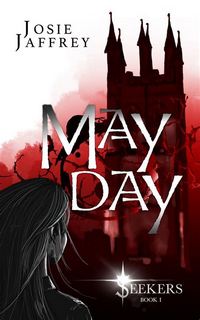
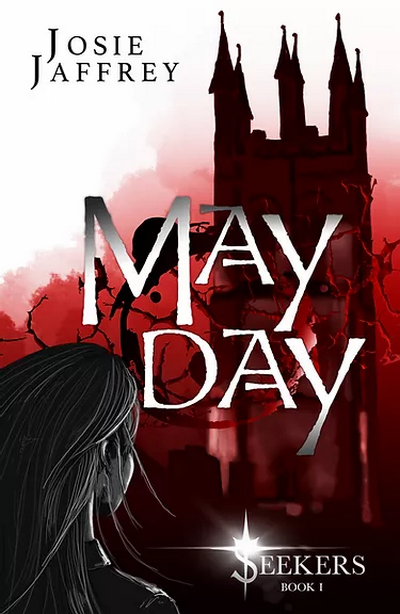
May Day

May Day

by Josie Jaffrey
Series: Seekers, Book 1

eARC, 388 pg.
Silver Sun Books, 2020

Read: September 14, 2020

What’s May Day About?

Our protagonist and narrator is a Silver, Jack Valentine. Silver’s the term that vampires in this reality use to describe themselves. But she’s no ordinary Silver, she’s a Seeker—essentially a vampire police detective. She and her colleagues in Oxford witness a Silver throwing a mortal to their death from a tower but are unable to immediately apprehend them.

Jack is forced to team up with a local baron—with whom she has a long-standing grudge–to gain the necessary social access to properly investigate the killing. Along the way, she finds a vampire who is molesting mortals (who, thankfully, won’t remember anything) and stumbles onto a conspiracy that may be too much for Jack and the other Seekers to adequately deal with.

A Great Idea

A group of vampires tasked with keeping the existence of vampires secret, erasing evidence of their existence whenever possible, and bringing reckless and criminal (by vampire, not mortal, standards) vampires to heel is a great idea. In retrospect, I’m surprised no one has thought of this before*.

* I realize I’m leaving myself open to correction on this point, if others have done this—let me know, I’d like to see other takes on this idea.

Jaffrey goes even a step further and gives us political intrigue and possible corruption in the upper echelons of both the Seekers and other bodies. The sort of thing that Harry Bosch would call “high jingo.” Establishing the Seekers and introducing some high jingo in a way that feels both realistic and mysterious is a nice accomplishment.

A Question of Emphasis

It’s entirely possible (perhaps probable) that word/page count would put the lie to this section. But I’m emphasizing on how it seemed to this reader—what my experience was. But I’d say that the crime/investigation story (the part that the Book Blurb talks about) is about 40% of the book. The other 60% focuses on Jack’s personal life (and a little about the personal lives of her colleagues).

Jack’s a relatively young vampire and is regarded as pretty immature. Which is fitting, because she is. She drinks to excess, regularly, and to an extent that threatens her job. She gets involved in a love triangle (or at least a lust triangle) that the text spends an awful lot of time on. The side of the triangle that Jaffrey spends the most time on—and gives the most details about—is the one that Jack tells everyone who asks (and the reader) repeatedly that she’s not interested in, and is dead-set against.

The idea of a cop (or cop-like character) who is a mess, both in their professional and personal life, is nothing new—and at times seems de rigueur. It’s just those sub-plots (however integral to the overall story they may prove) should serve as a support to the main plot—it’s right there in the “sub.” They should illustrate who the protagonist is, show them in a different light than the main plot (perhaps help explain who they seem to be). Here, it’s almost as if the May Day murder is the subplot.

So, what did I think about May Day?

I liked the concept of the Seekers, I thought the entire case was well-conceived and well-executed. The two (maybe three, it depends how you want to count them) other ongoing problems that Jack and the others uncover were both exactly the kinds of thing that “Vampire cops” should get into and both leave plenty of fodder for follow-up volumes. This part of the novel is strong, inventive, and is why I recommend May Day.

What tempers my enthusiasm is the balance of the book, Jack Valentine is an interesting character, but her love life and her personal dysfunctions and self-destructive tendencies are overemphasized. I’m very likely in the minority here, I realize, but spending as much time with the mess that is Jack’s personal life—especially when you throw in the triangle—it leaves me cold and sucks out some of my appreciation of the novel as a whole. I do recommend this original slant on Urban Fantasy, and think that UF reader will find a lot to enjoy in its pages.


3 Stars

My thanks to The Write Reads for the invitation to participate in this tour and the materials they provided.

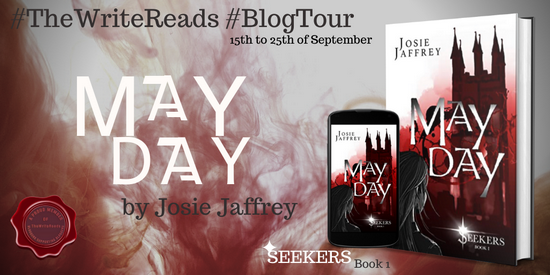
BOOK SPOTLIGHT: May Day by Josie Jaffrey

I’m very pleased today to welcome The Blog Tour for May Day by Josie Jaffrey. This Tour Stop consists in this little spotlight post and then my take on the novel coming along in a bit. Let’s start by learning a little about this novel, okay?

Book Details:

Book Title: May Day by Josie Jaffrey
Publisher: Silver Sun Books
Release date: July 9, 2020
Format: Ebook/Paperback
Length: 388 pages

Book Blurb:

If the murderer you’re tracking is a vampire, then you want a vampire detective. Just maybe not this one.

It’s not that Jack Valentine is bad at her job. The youngest member of Oxford’s Seekers has an impressive track record, but she also has an impressive grudge against the local baron, Killian Drake.

When a human turns up dead on May Morning, she’s determined to pin the murder on Drake. The problem is that none of the evidence points to him. Instead, it leads Jack into a web of conspiracy involving the most powerful people in the country, people to whom Jack has no access. But she knows someone who does.

To get to the truth, Jack will have to partner up with her worst enemy. As long as she can keep her cool, Drake will point her to the ringleaders, she’ll find the murderer and no one else will have to die.

Body bags on standby.

May Day is the first book in Josie Jaffrey’s Seekers series, an urban fantasy series set in Oxford, England.

Book Trailer:

Purchase Links:

Amazon UK ~ Amazon US

My thanks to The Write Reads for the invitation to participate in this tour and the materials they provided.

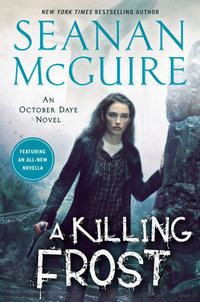
A Killing Frost by Seanan McGuire: McGuire’s Latest Will Satisfy—and Shock—All of Toby’s Fans.

A Killing Frost

A Killing Frost

by Seanan McGuire
Series: Toby Daye, #14

Hardcover, 302 pg.
DAW, 2020

Read: September 9-11, 2020
Grab a copy from your local indie bookstore!

…I was about to do something monumentally stupid for the sake of potentially saving Simon.

Simon Torquill. The man I’d once considered to be be my greatest enemy The man I was now willingly risking everything I had for the opportunity to save. Faerie isn’t fair and the world doesn’t make sense.

“You sound scared.” [Danny said]

“I am.”

“If this is somethin’ that scares you…”

What’s A Killing Frost About?

Simon Torquill. Is there any name that promises as much upheaval to Toby Daye’s life as much as his? I’m getting ahead of myself, though. Actually, I could just answer my first question with his name and move on to the next section of this post…

Anyway, Toby takes a break from working with May to find a wedding dress that she a. likes and b. doesn’t mind getting covered in blood—because who are we kidding here, if Toby’s wearing it, it’s going to be covered in blood before the end of the day. She and Tybalt are out on a date, having a perfectly enjoyable time when they’re interrupted by Patrick and Dianda Lorden. The Lordens are worried that Toby’s lack of diplomatic training has opened her up to a problem.

See, if she doesn’t invite Simon Torquill to her wedding—thanks to some silly Faerie custom—she’s liable to create an opportunity for Simon or someone claiming to act on his behalf to attack her in a pretty grievous way. Of course, to invite him, she’s going to have to find him—and after The Brightest Fell, we all know that’s not going to be easy.

So, May, Quentin, Toby and Spike(!) head out to do the nigh-impossible, find Simon and get him to the wedding.

Wither art Thou, Tybalt?

Thanks to a warning from Karen, for everyone to survive, Tybalt can’t accompany Toby on this little quest. This is just about the most Tybalt-free book I can think of (second only to The Brightest Fell). When he’s around, it’s important that he is and he makes a big impact.

It’s strange to have him gone so much, but I think it worked pretty well as a change of pace and heightened the reader’s appreciation for him when he was around.

At one point, [name withheld] describes the relationship between Tybalt and Toby,

It’s clear to anyone with eyes how much he loves you, and I’ve held your blood on my tongue. Your love for him flavors everything you are.

In any other series, that might be disgusting/strange. But in this context? That’s one of the sweetest sentences I can think of.

There’s Just So Much I Can’t Talk About

Because I keep a pretty strict no-spoiler policy to these posts, there’s just so much that I can’t talk about that I really want to. Even if I spoiled things, I couldn’t talk about them too much because we’re going to need a book or five to figure out how things work out. McGuire’s one of the best at planting seeds and then seemingly ignoring them for several books just to have them spring up and bear fruit when you least expect it.

One of those forgotten seeds bears series-altering fruit here while she’s planting seeds relating to Walther and Cassie—but more importantly to Stacy. There’s a shattering scene with Luna and Sylvester. There’s something afoot with Rayseline, too. August does something surprising. Amandine’s furious by the end of the novel (that can’t be good). And we learn something blood-curdling about Eira Rosynhwyr that might make an enraged Amandine seem trivial.

And then there’s…yeah, you know what? I just can’t even hint at the rest. Go read it and we can talk.

So, what did I think about A Killing Frost?

This is not a book designed to welcome new readers to the series. I’m sure there’s enough to draw in someone who’s said to themselves, “I keep hearing about this series, I wonder what it’s about?” But really, it’s not a great entry point. If you’re one of those readers, drop a comment and I’ll try to give you a better entry point.

But for readers of this series? They’re going to be in hog-heaven. Take out all of the spoiler stuff I alluded to/avoided above, and you’ve got yourself a great Toby adventure, full of thrills, twists, grievous wounds, nasty curses, and heroism of all sorts.

Include the stuff I didn’t talk about? You’ve got a jaw-dropping novel full of so many heart-warming and heart-wrenching moments that it’d be hard to enumerate them. This isn’t McGuire’s best novel in the series, but it’s great. And fans will be discussing, dissecting and reveling in it for years.


4 1/2 Stars

This post contains an affiliate link. If you purchase from it, I will get a small commission at no additional cost to you. As always, opinions are my own.
20 Books of Summer 2020: Wrap-Up

20 Books of Summer
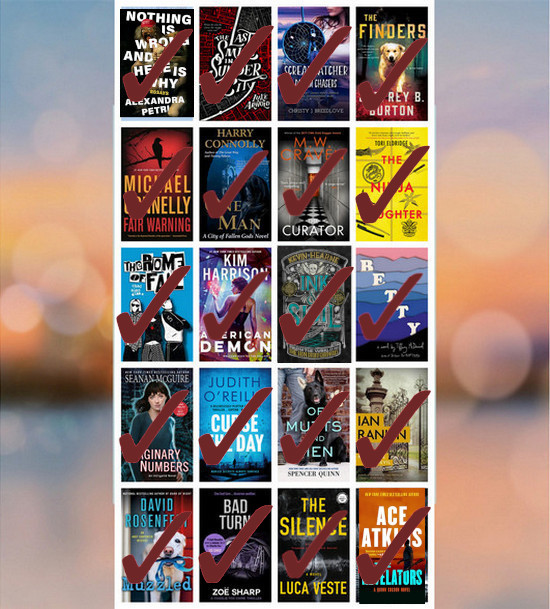
Well, that’s a wrap on the 2020 20 Books of Summer. You may accuse me of playing fast and loose with the challenge (and you’d be right!), but this seems like a casual enough thing that I really don’t care (and I can’t imagine anyone else does, either). As I mentioned last month, I did a lousy job of taking into account new releases, review copies, and life when I made the original list. I made a valient effort, but I just couldn’t post about all these books by September 1 (I did read all of them by the end of August, I note only semi-defensively), but in that last week, it hit me, June 1-August 31 isn’t really “Summer.” It works as a rough designation, but June solstice to the September equinox is a better definition. I’m not that pedantic though (well, about seasons). But here in the States, “Summer” also is defined as the period from Memorial Day through Labor Day, which was just the time I needed to get everything posted.

So I’m calling this a win. I liked the focus this gave me for the last couple of months, and I know I read some things I’ve been meaning to read for months because they were on this list and I couldn’t make (yet another) excuse to put it off. I think next year I’ll do a better job of taking into account New Releases when I make my list (how Peace Talks wasn’t the first book I put down I’ll never know) to make life easier for me–I also think I’ll put down more of the books I own, but keep delaying on. I really like freeing up space on my (literal) TBR shelf.

I had a lot of fun doing this and looking at others working their way through the challenge. Congrats to the winners.


✔ 1. Nothing Is Wrong and Here Is Why by Alexandra Petri (my take on the book)
✔ 2. The Last Smile in Sunder City by Luke Arnold (my take on the book)
✔ 3. Screamcatcher: Dream Chasers by Christy J. Breedlove (my take on the book)
✔ 4. The Finders by Jeffrey B. Burton (my take on the book)
✔ 5. Fair Warning by Michael Connelly (my take on the book)
✔ 6. One Man by Harry Connolly (my take on the book)
✔ 7. The Curator by M. W. Craven (my take on the book)
✔ 8. The Ninja Daughter by Tori Eldridge (my take on the book)
✔ 9. The Rome of Fall by Chad Alan Gibbs (my take on the book)
✔ 10. American Demon by Kim Harrison (my take on the book)
✔ 11. Ink & Sigil by Kevin Hearne (my take on the book)
✔ 12. Betty by Tiffany McDaniel (my take on the book)
✔ 13. Imaginary Numbers by Seanan McGuire (my take on the book)
✔ 14. Curse the Day by Judith O’Reilly (my take on the book)
✔ 15. Of Mutts and Men by Spencer Quinn (my take on the book)
✔ 16. Rather Be the Devil by Ian Rankin (my take on the book)
✔ 17. Muzzled by David Rosenfelt (my take on the book)
✔ 18. Bad Turn by Zoë Sharp (my take on the book)
✔ 19. The Silence by Luca Veste (my take on the book)
✔ 20. The Revelators by Ace Atkins (my take on the book)

20 Books of Summer Chart Aug

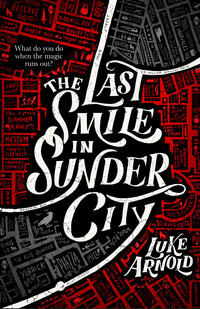
The Last Smile in Sunder City by Luke Arnold: A Fantasy Novel that Defies My Pithy Headline Composing Abilities

The Last Smile in Sunder City

The Last Smile in Sunder City

by Luke Arnold
Series: The Fetch Phillips Archives, #1

Kindle Edition, 368 pg.
Orbit, 2020

Read: August 26-27, 2020
Grab a copy from your local indie bookstore!


I think this could be my longest post ever, and I’d still leave things left unsaid, you wouldn’t believe the length of my notes for a book of this size. I’ll try to hit the most important points. To fill in whatever lacunae appears below, you should probably also read what was said over at Witty and Sarcastic Bookclub, The Tattooed Book Geek, Grimdark Magazine, and FanFi Addict—they’re what convinced me to buy the book.

“So, you’re a Man for Hire?”

“That’s right.”

“Why don’t you just call yourself a detective?”

“I was worried that might make me sound intelligent.”

The Principal wrinkled his nose. He didn’t know if I was trying to be funny; even less if I’d succeeded.

“What’s your relationship with the police department?”

“We have connections but they’re as thin as I can make them. When they come knocking I have to answer but my clients’ protection and privacy come first. There are lines I can’t cross but I push them back as far as I can.”

What’s The Last Smile in Sunder City About?

Fetch Phillips is hired to find a missing vampire, Edmund Albert Rye, an instructor at an exclusive private school for the children of magical creatures (lycanthropes, vampires, elves, dwarfs, etc.). It’s been a few days since he was seen, which is uncharacteristic enough that the principal’s getting nervous—he’s tough, but he’s been unwell. He, the students, and staff just need to know what happened to him.

I made my way east along Fourteenth Street without much hope for what I might be able to find. Professor Edmund Albert Rye; a man whose life expectancy was already several centuries overdue. I doubted I could bring back anything more than a sad story.

I wasn’t wrong. But things were sticking to the story that knew how to bite.

Fetch gets to work, enjoying the feeling of a good amount of cash in his pocket. The first step is the city library, Rye’s been living in the attic for that last several years, so he could enjoy some privacy and the sunlight. The librarian is just as worried as the principal had been.

It’s really not long before Fetch’s investigation brings him to an old private club for Vampires—and he find the remains of a couple of vampires. The lab concludes that it Rye wasn’t one of the fresh corpses. There’s another dead magical creature there, one that Fetch has never seen, and it takes a couple of days for the results identifying that to come in, too.

One thing that Fetch learns fairly soon is that Rye isn’t the only one missing, a girl vanished around the same time as he did. Now, Fetch has to track down a missing vampire and a teen-aged Siren. His work is definitely cut out for him.

Because he knows from the get-go that the story he’ll bring back to his employer won’t have a happy ending, he has a hard time pursuing it head-on. He keeps finding little things to distract himself, to slow the investigation. Even when the missing girl gets factored in, and he knows he needs to be fully committed just to have a chance to find her, to. He really can’t pull it off. The sad story just became so much sadder, and he doesn’t want to know the depth of that sadness.

Fetch Phillips

While the majority of the book traces this story, we also get several flashback chapters tracing Fetch’s tragic childhood, decent (but not great) adolescence and then troubled adulthood leading up to the point where he helped the Human Army destroy all the magic in the world. It’s an event called the Coda, and it occurred six years before Fetch was hired by the school. All magical creatures lost the abilities that distinguished their races, and the world was never the same. As an act of penance that no one but Fetch cares about, he’s since refused to work for humans, only for formerly-magic creatures. Which is what brought him to the search for Rye.

Fetch is a broken man—he wasn’t in great shape before the Coda, but he’s worse after it. An ex-soldier, convicted criminal, ex-prisoner, and now a drunk, with moments of sobriety (fewer than he should have while on a job, but all that money can buy many drinks).

There was a hangover on the horizon, along with something else. Something sort of stupid.

A devil was sitting on my shoulder whispering the kinds of things that stopped working on me years ago. I was only in my thirties but I was old. You don’t measure age in years, you measure it in lessons learned and repeated mistakes and how hard it is to force a little hope into your heart. Old just means jaded and cynical and tired. And boy, was I tired.

It’s the penance that drives him. He’d been an author of so much of what was wrong with the world, and he’s doing what he can to alleviate it just a little bit. It’s the only thing keeping him going. It’s not enough, but it’s all he has.

Fetch is such a rich character. It’s hard to like him, it’s hard to find anything redeemable in him*, any reason to be interested in what happens to him. But you can’t help pull for this broken, beaten, disillusioned, and cynical man.

* Which is, admittedly, the point of redemption.

What a Piece of Worldbuilding

This is such an incredibly conceived world. The Coda is so fresh that the citizens have started to move on, but aren’t used to dealing with the post-magical world. And so many of them are still hoping that it’ll all come back just as suddenly as it left.

The mixture of the fantasy elements and Human tech and science in this world, picking up the slack for the things that magic can’t do anymore is so rich, so well designed, so well-written that the reader has to stop every so often and try to take it in.

Even if I didn’t really like the book all that much, I’d still be recommending the book for the worldbuilding. It’s a master class in how to do it, how to describe it, and how to reveal it to the reader.

A Gripe

Just so, so, so many extended passages in italics. I won’t try to make a case against them, Benjamin Dryer does a better job than I possibly could. I just find them aggravating. It’d be so easy to indicate that something’s a flashback without them and spare readers the annoyance.

So, what did I think about The Last Smile in Sunder City?

Maybe nobody gets better. Maybe bad people just get worse. It’s not the bad things that make people bad, though. From what I’ve seen, we all work together in the face of adversity. Join up like brothers and work to overcome whatever big old evil wants to hold us down. The thing that kills us is the hope. Give a good man something to protect and you’ll turn him into a killer.

Fetch is a classic hard-boiled detective in a classically noir tale—the fact that it takes place in a Fantasy world (yet full of fairly modern technology) is just icing on a pretty tasty cake. The narrative voice is great, the writing leaps to life, and I can’t say enough about the way the world—and the novel—were designed and executed.

This probably deserves more than the 4 Stars I’m giving it, but I just didn’t connect with the story, with Fetch, with everything else going on as much as I wanted to. This regrettably ends up in the category of books that I admire more than I enjoy. But my admiration of this is so high that it almost doesn’t matter. This is a great Fantasy novel, and one unlike any you’ve read.

The sequel is out in a couple of weeks—I’m coming back to this world because now that Arnold doesn’t have to spend so much time explaining how the world works (or, more properly, how it no longer works) that he’ll be able to focus on telling a story or two, and I want to see what heights he’s capable of when the rules have already been established.

Do I recommend this book? Oh yeah. You’ll probably like it more than I did (I’m a little worried about hitting “publish” on this, as I know I’m one of the less enthusiastic readers of this). And even if you don’t, you’ll be just as impressed as I am with Arnold’s imagination and skill.


4 Stars

20 Books of Summer

This post contains an affiliate link. If you purchase from it, I will get a small commission at no additional cost to you. As always, opinions are my own.
Catch-Up Quick Takes: Skeleton Key by Anthony Horowitz, Simon Prebble; Deadly Assessments by Drew Hayes, Kirby Heyborne

The point of these quick takes posts to catch up on my “To Write About” stack—emphasizing pithiness, not thoroughness.

Skeleton Key

Skeleton Key

by Anthony Horowitz, Simon Prebble (Narrator)
Series: Alex Rider, #3
Unabridged Audiobook, 6 hrs., 57 min.
Recorded Books, 2013
Read: August 21-24, 2020
Grab a copy from your local indie bookstore!

(the official blurb)
So for two books now, we get this outline: Alex does something gusty and dangerous, which transitions into him taking on a case for MI-6 that’s as risky as you could want.

This time he runs afoul of a Chinese criminal organization at Wimbledon before he’s loaned out to the CIA who really needs a teen to sell a couple of agents as a family unit, out for vacation near the Caribbean. They’re actually hunting for a nuclear weapon and some ex-Soviets wishing for a comeback for the USSR.

I honestly found his antics around Wimbledon and that more interesting than the main story, but it wasn’t bad. Silly fun stuff that undoubtedly works better for the target audience (MG readers of a decade ago) than me, but it’s good enough for me to keep going.

3 Stars

Deadly Assessments

Deadly Assessments

by Drew Hayes, Kirby Heyborne (Narrator)
Series: Fred, The Vampire Accountant, #5
Unabridged Audiobook, 9 hrs., 9 min.
Tantor Audio, 2018
Read: August 5-6, 2020
Grab a copy from your local indie bookstore!

(the official blurb)
Hayes is really getting better at bringing books together as a novel. Still, it’s basically four serialized short stories pretending to be a novel, but this one was a whole lot closer to being a whole.

While Krystal is off doing something to get her released from her prior engagement (Fae contracts aren’t that easy to break), Fred gets a visit from the ruling Council for vampires to see if he and his clan are up to snuff. While they’re at it, their representative is going to fill Fred in on all the stuff he should’ve learned from his sire.

Stuff ensues. Fred learns a lot but doesn’t change fundamentally. He’s still the same mild-mannered guy, even if he’s determined he’s going to have to be a bit more. There’s some really good stuff about his ex-employee, Alfred, coming into his own.

This light UF series keeps getting better.
3.5 Stars

2020 Library Love Challenge
This post contains affiliate links. If you purchase from any of them, I will get a small commission at no additional cost to you. As always, opinions are my own.

Tales from the Folly by Ben Aaronovitch: Entertaining Quick Dips into the Rivers of London

Tales from the Folly

Tales from the Folly: A Rivers of London Short Story Collection

by Ben Aaronovitch
Series: The Rivers of London

Kindle Edition, 139 pg.
JABberwocky Literary Agency, Inc., 2020

Read: August 1-3, 2020


If asked, I’d have thought I posted about this book weeks ago, so imagine my surprise this past weekend when I saw this title still on my “To Be Written” list when I was checking for something else. Better late than never…

What are the Tales from the Folly?

The subtitle pretty much gives it away, really. These are shorter works set in the Rivers of London series. The Folly is the unofficial name for the recognized British magical organization, following in the first formal study of magic made by Sir Isaac Newton (no known relation, but that doesn’t stop me from claiming him as an uncle), it’s currently formally organized as the Special Assessment Unit of the Metropolitan Police. The Folly is also the nickname for their headquarters. Either use works for this collection.

There are seven short stores (or one novella and six short stories) told from Peter Grant’s perspective—just like the series. Then there are four stories from the point of view of other characters in the series and three “moments” (Aaronovitch’s term for “something that is more of a mood than a story, something that will last a page or two and conjure an atmosphere).

Peter Grant Stories

Obviously, this is Peter’s series (at least so far…), so he gets the bulk of the space. Most of these take place around the time of the first few books in the series, but at different stages of Peter’s development. I enjoyed them all and most of them are good enough to justify the purchase price on their own.

I can’t put my finger on why, exactly, but the first story “The Home Crowd Advantage” is my favorite. It’s about a French practitioner who got up to no good during the 1948 London Games who revisits the scene of the crime in 2012 when rookie apprentice Peter Grant is the only one around to deal with him.

The last entry in this section is the novella, A Rare Book of Cunning Device that I talked about when it was released as an Audible Original in 2017. It’s rare for me to go from hearing a work to reading it, so it was interesting that way. I enjoyed it just as much this time around, but I think Holdbrook-Smith’s voice is a better one for this series than whatever is echoing around in my skull.

Everyone Else

The fact that Aaronovitch is able to tell stories outside of Peter’s perspective shows the strength of the series in my book, he’s built the world and the characters out enough that they can carry the weight of a narrative for at least a little bit.

We get a story from the perspective of one of the Rivers, one from Abigail’s perspective that will warm the cockles of your heart (and maybe make you a little sad for a bit), a nice one featuring Vanessa Sommer from Germany (making me hope we get back to Germany for another novel soon), the answer about what happened to the River Lugg after Foxglove Summer. Then there are the moments, one featuring Nightengale, one with Reynolds and one with Sommer’s pal Tobias Winter years before The October Man

So, what did I think about Tales from the Folly?

That’s easy, I thought it was great. I’d buy volume 2 tomorrow, and volume 3 next month. If Aaronovitch wrote that quickly, anyway. They’re like the comic series in a way—a nice way to spend some time in this universe without having to put in the time of a novel.

The collection covered the gamut of emotions and types of story typical of the series with Aaronovitch’s evident charm and skill. It’s a must for every Rivers of London fan.


4 Stars

Pub Day Repost: Ink & Sigil by Kevin Hearne: This Atypical UF is full of Action and Laughs (and Deadly Raisins)

Ink & Sigil

Ink & Sigil

by Kevin Hearne
Series: Ink & Sigil, #1

eARC, 336 pg.
Del Rey , 2020

Read: August 12-14, 2020
Grab a copy from your local indie bookstore!


The biggest challenge to writing about this book is choosing what not to talk about, I really feel like I could go on and on and on about it. Then the pendulum swings to the point I don’t say much at all…

What’s Ink & Sigil About?

Aloysius MacBharrais is a Sigil Agent—one of five on the Earth. They’re tasked with preserving the various treaties that supernatural creatures had set up throughout the world to keep the peace and govern the activities of the various pantheons on the mortal plane. They’ve been equipped with the barest magical tools necessary to get the job done—largely by Brighid of the Tuatha Dé Dannan to make up for the work that her Druid wasn’t doing when he was hiding for centuries on end.* Thre’s more to it, but that’ll work for starters.

* See everything that Atticus O’Sullivan was doing before the first of the Iron Druid Chronicles.

Al has horrible luck when it comes to apprentices, they keep falling prey to accidental death. The most recent is Gordie, who died after choking on a raisin scone. Before I get into things, can I say how wonderful it is to have a magic-user—even an apprentice—die by such mundane means (and you have never, I mean ever, come across this many jokes about raisins or scones in your life)? As Al goes to Gordie’s house to clean up all traces of his magic tools, he discovers that Gordie’s been up to some pretty dark and criminal stuff right under his nose.

This book takes Al and his associates around Scotland and even to the U.S. finding out just what Gordie was into and trying to set it right.

A New Kind of UF

There are outliers, but largely, Urban Fantasy series deal in variations on a theme—I’m not complaining, I’m into most of them. But basically, you’ve got a wizard (or something like that), a vampire, and/or a werewolf doing a P.I./Private Security/Hunter thing. There are different kinds of magic users, or vampire types, or were-species, but really, that’s about it. Lately, some variations have come from using different kinds of protagonists, like whatever Nell Ingram is or…(I had another example when I started this paragraph), but you get the point.

Here our variation comes in the type of mage—he uses sigils, particular designs in particular (and strange) inks which give a temporary effect to the bearer or beholder. Also, Al’s an elderly Scot who wears a derby and has an immaculately-styled mustache. He’s about as far from the grizzled hero in a leather jacket/trenchcoat as you can get. Outside of supporting characters or Marley Jacobs from A Key, an Egg, an Unfortunate Remark, you don’t see that (outside of characters who are supernaturally old, but appear young) .

Al’s associates aren’t standard either, but I’m going to resist using 3-4 paragraphs talking about them. I’m just going to say I enjoyed them all and can’t wait to spend more time with them.

Iron Druid Tie-in

As indicated above, this takes place in the same universe as The Iron Druid Chronicles, sometime after Scourged and contains references to some of the series’ events and characters. Al himself shows up in a short story in Besieged as a minor character.

There’s a brief appearance by Atticus and Oberon, and a longer one with Brighid. Both were a lot of fun, and the Atticus one was pretty sweet. I enjoyed seeing Brighid from someone else’s point of view. The door is open for more IDC characters to show up, but it’s not necessary, which I appreciate.

You do not have to have read the IDC to get into this, and not catching all the allusions/references/cross-overs will not diminish anything for you. It’s a spin-off, but isn’t dependent on the original.

Did Hearne Regret this Choice?

Al’s a Glaswegian and most of the book takes place in and around Glasgow. Hearne made the choice to write all the dialogue (and even Al’s first-person narration) in the dialect. Most authors wouldn’t have gone this far, and I have to wonder how often Hearne questioned this choice as he wrote—talk about making things hard on yourself. I enjoyed it—and it really helped me “hear” Al and everyone.

So, what did I think about Ink & Sigil?

While the IDC contained more than it’s share of laughs (and even The Seven Kennings had amusing moments), this seemed like a better merging of jokes and story. It feels like a natural outgrowth of The Tales of Pell (but not as humor-focused as those). For sheer enjoyment value, this was fantastic.

The story was pretty strong, too. But a lot of space was devoted to introducing us to this particular corner of the world and the cast of characters. I’d like to see what Hearne does with a novel where he doesn’t have to do that.

The world is familiar, yet Hearne’s doing something new in it. The characters are just not what you’re used to seeing in the genre. The plot was great—and speaks clearly to our current situation. And I laughed a lot. There’s little to complain about here and a lot to commend. I had a blast and I think most readers will, too. I can’t wait for the sequel.

Disclaimer: I received this eARC from Random House Publishing Group – Ballantine via NetGalley in exchange for this post—thanks to both for this.


4 1/2 Stars

20 Books of Summer

Ink & Sigil by Kevin Hearne: This Atypical UF is full of Action and Laughs (and Deadly Raisins)

Ink & Sigil

Ink & Sigil

by Kevin Hearne
Series: Ink & Sigil, #1

eARC, 336 pg.
Del Rey, 2020

Read: August 12-14, 2020
Grab a copy from your local indie bookstore!


The biggest challenge to writing about this book is choosing what not to talk about, I really feel like I could go on and on and on about it. Then the pendulum swings to the point I don’t say much at all…

What’s Ink & Sigil About?

Aloysius MacBharrais is a Sigil Agent—one of five on the Earth. They’re tasked with preserving the various treaties that supernatural creatures had set up throughout the world to keep the peace and govern the activities of the various pantheons on the mortal plane. They’ve been equipped with the barest magical tools necessary to get the job done—largely by Brighid of the Tuatha Dé Dannan to make up for the work that her Druid wasn’t doing when he was hiding for centuries on end.* There’s more to it, but that’ll work for starters.

* See everything that Atticus O’Sullivan was doing before the first of the Iron Druid Chronicles.

Al has horrible luck when it comes to apprentices, they keep falling prey to accidental death. The most recent is Gordie, who died after choking on a raisin scone. Before I get into things, can I say how wonderful it is to have a magic-user—even an apprentice—die by such mundane means (and you have never, I mean ever, come across this many jokes about raisins or scones in your life)? As Al goes to Gordie’s house to clean up all traces of his magic tools, he discovers that Gordie’s been up to some pretty dark and criminal stuff right under his nose.

This book takes Al and his associates around Scotland and even to the U.S. finding out just what Gordie was into and trying to set it right.

A New Kind of UF

There are outliers, but largely, Urban Fantasy series deal in variations on a theme—I’m not complaining, I’m into most of them. But basically, you’ve got a wizard (or something like that), a vampire, and/or a werewolf doing a P.I./Private Security/Hunter thing. There are different kinds of magic users, or vampire types, or were-species, but really, that’s about it. Lately, some variations have come from using different kinds of protagonists, like whatever Nell Ingram is or…(I had another example when I started this paragraph), but you get the point.

Here our variation comes in the type of mage—he uses sigils, particular designs in particular (and strange) inks which give a temporary effect to the bearer or beholder. Also, Al’s an elderly Scot who wears a derby and has an immaculately-styled mustache. He’s about as far from the grizzled hero in a leather jacket/trenchcoat as you can get. Outside of supporting characters or Marley Jacobs from A Key, an Egg, an Unfortunate Remark, you don’t see that (outside of characters who are supernaturally old, but appear young) .

Al’s associates aren’t standard either, but I’m going to resist using 3-4 paragraphs talking about them. I’m just going to say I enjoyed them all and can’t wait to spend more time with them.

Iron Druid Tie-in

As indicated above, this takes place in the same universe as The Iron Druid Chronicles, sometime after Scourged and contains references to some of the series’ events and characters. Al himself shows up in a short story in Besieged as a minor character.

There’s a brief appearance by Atticus and Oberon, and a longer one with Brighid. Both were a lot of fun, and the Atticus one was pretty sweet. I enjoyed seeing Brighid from someone else’s point of view. The door is open for more IDC characters to show up, but it’s not necessary, which I appreciate.

You do not have to have read the IDC to get into this, and not catching all the allusions/references/cross-overs will not diminish anything for you. It’s a spin-off, but isn’t dependent on the original.

Did Hearne Regret this Choice?

Al’s a Glaswegian and most of the book takes place in and around Glasgow. Hearne made the choice to write all the dialogue (and even Al’s first-person narration) in the dialect. Most authors wouldn’t have gone this far, and I have to wonder how often Hearne questioned this choice as he wrote—talk about making things hard on yourself. I enjoyed it—and it really helped me “hear” Al and everyone.

So, what did I think about Ink & Sigil?

While the IDC contained more than it’s share of laughs (and even The Seven Kennings had amusing moments), this seemed like a better merging of jokes and story. It feels like a natural outgrowth of The Tales of Pell (but not as humor-focused as those). For sheer enjoyment value, this was fantastic.

The story was pretty strong, too. But a lot of space was devoted to introducing us to this particular corner of the world and the cast of characters. I’d like to see what Hearne does with a novel where he doesn’t have to do that.

The world is familiar, yet Hearne’s doing something new in it. The characters are just not what you’re used to seeing in the genre. The plot was great—and speaks clearly to our current situation. And I laughed a lot. There’s little to complain about here and a lot to commend. I had a blast and I think most readers will, too. I can’t wait for the sequel.

Disclaimer: I received this eARC from Random House Publishing Group – Ballantine via NetGalley in exchange for this post—thanks to both for this.


4 1/2 Stars

20 Books of Summer

Page 23 of 44

Powered by WordPress & Theme by Anders Norén