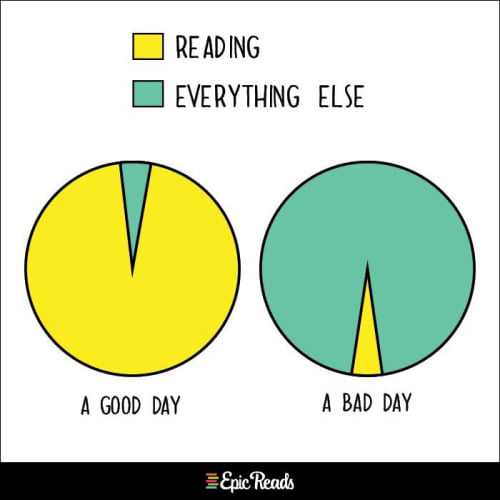
Okay, I think I’ve got the whole reading and listening adjustment to the new job handled, now I’ve got to figure in blogging—which, as you may have noticed, isn’t going as well as it has in the past. Am sure I’ll figure something out, but that “to write about” pile is growing. If anyone knows of an app that allows me to just think about a post rather than having to sit and type, please mention it in the comments!
I’d like to say hi and extend a warm welcome to Mahmoud Dualeh who followed the blog this week. Don’t be a stranger, and use that comment box, would you?
(Updated and Revised again)
It’s National Dog Day, the annual celebration of “all dogs, mixed breed and pure. Our mission is to help galvanize the public to recognize the number of dogs that need to be rescued each year and acknowledges family dogs and dogs that work selflessly each day to save lives, keep us safe and bring comfort.” So it seemed like a good day to post another version of this.
This was a hard post to come up with a name for*, essentially this post came from a comment not too long ago about being hesitant to read books about animals if the reader doesn’t know if they survive the book. I get that, I absolutely do. I still bear the scars of Where the Red Fern Grows and Marley and Me (sure, that wasn’t that long ago, but the wound still stings). So, for readers like my correspondent, here are some perfectly safe books prominently featuring dogs!
I plan on updating this when I can remember to, so by all means, chime in with comments about Dogs I’ve forgotten about/haven’t yet!
Non-Fiction
The Particulars of Peter by Kelly Conaboy—this is a collection of humorous essays giving Conaboy the opportunity to rave about her dog, Peter. In her eyes, Peter is a perfect dog, and as you read this, you’ll be tempted to agree. (my post about it) Olive, Mabel & Me by Andrew Cotter—Cotter’s charming book describes his life with the two dogs that rocketed to international stardom (and brought him along). (my post about it) My Life as a Dog by L. A. Davenport—Davenport’s short little book about the relationship between the author and his dog, Kevin, a black and tan, pure-bred dachshund. It focuses on what the two of them did over two days and then a weekend selected from the years they spent together. (my post about it) What the Dog Knows: The Science and Wonder of Working Dogs by Cat Warren—Warren basically covers three topics: there’s the science and history of using working dogs (of all sorts of breeds, not to mention pigs(!), birds, and even cats) to find cadavers, drugs, bombs, etc.; there’s the memoir of her involvement with cadaver dogs via her German Shepherd, Solo; and anecdotes of other cadaver dogs and trainers that she’s encountered/learned from/watched in action. (my post about it) What the Dog Knows Young Readers Edition by Cat Warren, Patricia J. Wynne—The above book adjusted for younger readers, with some great illustrations. It’s not dumbed-down, just adjusted. (my post about it)
Fiction
Mace Reid K-9 Mystery series by Jeffrey B. Burton—A Dog Trainer/Cadaver Dog Handler and his dogs get involved in serial killer cases. (my post about it) Suspect by Robert Crais—One of my all-favorite books, a cop with PTSD gets assigned to the K-9 Unit and works with a dog fresh from Afghanistan combat. (my post about it) The pair also plays a major role in The Promise. Pug Actually by Matt Dunn—Doug, a loyal pug, plays cupid for his owner. I haven’t actually read this yet, but as I heard that Dunn is thinking about a sequel, so I’m pretty sure Doug makes it. Stepdog by Nicole Galland—A love story where the major impediment to happily ever after is her dog (a gift from her ex). (my post about it) Oberon’s Meaty Mysteries by Kevin Hearne (Audiobooks narrated by Luke Daniels)—Oberon, the scene-stealing Irish Wolfhound from The Iron Druid Chronicles narrates this series of novellas (my posts about them). Neah Bay series by Owen Laukkanen—Lucy is a dog who is trained by prisoner Mason Burke, who has to track her down when he gets out. She’s a service dog for Marine Vet Jess Winslow. Lucy connects the two humans in her life and helps to keep them safe when a corrupt deputy comes after Jess. (my post about them) I Thought You Were Dead by Pete Nelson—I’m not sure how to sum this one up in a sentence. It’s a pretty typical novel about a troubled writer with a romantic life and family in shambles. But his dog is the thing that makes all the difference. (my post about it) Chet and Bernie books by Spencer Quinn—Bernie Little is a PI in Phoenix. Chet’s his four-legged partner and the series narrator. It’s too fun to miss. (my posts about them) The Right Side by Spencer Quinn—”a deeply damaged female soldier home from the war in Afghanistan becomes obsessed with finding a missing girl, gains an unlikely ally in a stray dog, and encounters new perils beyond the combat zone.” (my post about it) Woof by Spencer Quinn—The beginning of an MG series about a with a penchant for trouble and her dog. (my post about it) Andy Carpenter books by David Rosenfelt—Andy Carpenter is New Jersey’s best defense lawyer and a devoted dog owner. He helps run a rescue shelter, too–and almost every client he takes as some sort of connection with a dog. These books aren’t dog-centric like the others on this list, but they’re dog-heavy. (my posts about them) The K-Team books by David Rosenfelt—a spin-off from the Andy Carpenter series. This features a PI team made up of Andy’s wife/investigator, Laurie; the near super-heroic Marcus; and Corey Douglas, a freshly-retired K-9 officer. His canine partner, Simon Garfunkel, co mes along, too. Simon Garfunkeldoesn’t play a giant role in the books, but he gets at least one good action scene per book. (my posts about them) Voyage of the Dogs by Greg van Eekhout—SF for all ages about a team of dogs on a long-distance space flight. (my post about it)
Some books that belong on this list, but might be a bit too close to not fitting on it for some readers Lessons From Lucy by Dave Barry—there’s a strong “my beloved dog is old and will die soon-vibe throughout this (it’s the whole point), so some may want to avoid it. But the focus is on what Barry is learning from his aging but still full-of-life dog. (my post about it) Dead is … series by Jo Perry—the canine protagonist in these mystery novels is a ghost, so there’s a dog death involved. But we meet her as a ghost, so she won’t die (again) in the series. (my posts about them) Lessons from Tara by David Rosenfelt—Inspired by the death of their dog, Tara, the Rosenfelt’s now operate a no-kill shelter for senior dogs. This is the story about the origins and day-to-day of that life. There’s discussion of Tara’s death, and he has to cover the end of days for dogs, but it’s not the focus of the book. One some will want to avoid, but you probably shouldn’t. (my post about it)
I brainstormed this a bit with my family, and wanted to share some of those titles that didn’t make the cut, just because I enejoyed their creativity: These Dogs Didn’t Go To Heaven/Not All Dogs Go to Heaven implies these dogs aren’t wonderful creatures, and that’s a solid loser No Kleenex Required too vague, and not necessarily true, they’re just not required because of a death The Best Bois Books Where the Author isn’t A Heartless Bastard (Looking at You, Marley and Me) too long, and boy howdy, does it seem my son has bigger issues with the book than I did Books that Even PETA Would Be Okay With Books for the Vegan in You suggests the dog books I don’t mention are in favor of eating them… Paw Patrol I’m almost confident my daughter’s boyfriend suggested as a joke, for his sake I’m assuming it was Pawfect Dog Stories I refuse to resort to that kind of joke
Another day without a “real” post. The struggle with my new schedule continues–I really thought I had a post ready to go today, I just needed a bit more work. And then I started reading, and didn’t get around to writing. I’m on a roll when it comes to books—not sure it’ll be enough for the 20 Books of Summer, but it’ll be close. It helps that I’ve hit a streak of good ones, too. Let’s take a quick look at some of them with this WWW Wednesday!
I’m not sure why, but since I listened to these paragraphs last week, I’ve come back to them a few times. Sure, Gildart Jackson’s narration was part of it, but I just really liked this. We tend to focus on plot, magic systems, characters, and whatnot–but it’s the little moments like this that really make a book stand out. They don’t advance the plot, they don’t really reveal a lot about the narrator, but they shed a little light–adding flavor to someone we know.
by Benedict Jacka Most people in the world don’t travel much. In a lot of cases, it’s because they just don’t want to. Either they don’t have any real interest in seeing other places, or they’re too occupied with the life they’re living already. But for a lot of people, it’s not a case of not wanting to, it’s that they can’t—either they don’t have the time or the money, or there’s something actively preventing them from leaving. When you’re in that second group, you usually have fantasies about getting to travel and see the world, visiting different cultures and having new experiences. There are people who spend their whole lives dreaming about journeys overseas.
So it’s really kind of sad that once you finally do get to spend a lot of time travelling, you tend not to appreciate it very much. Take me, for instance. I’ve visited more countries of the world than I can easily remember. I’ve even visited places not in this world, from bubble realms to shadow realms to the dreamscapes of Elsewhere. I’ve stood upon the tops of towers and looked out over castles the size of cities, walked through ancient forests where the trees have passed hundreds of years without hearing a human footstep, seen impossible alien landscapes that could never exist on Earth. Unfortunately, in pretty much every one of those cases, I’ve generally had more pressing concerns to worry about either there are people trying to kill me, or people who might want to kill me, or things that aren’t people that might want to kill me, or people or things that don’t necessarily want to kill me but nevertheless are important enough that it’s highly advisable for me to pay attention to them instead of spending my time sightseeing. Usually the place I’m visiting becomes a blur, a few brief images standing out in my memory while I spend my time dealing with various threats and problems. And by the time they’re all sorted out, it’s time to move on.
Episode (or two) you might want to give a listen to: No Stupid Questions Episode 64—the second question this week was dealing with “should you feel guilty if you don’t read books?” the discussion of which should interest readers of this post (nothing against the first question, it’s just not that germane).
That I’m Excited About and/or You’ll Probably See Here Soon: In Ten Years by Ian Shane—a When Harry Met Sally-esque take on two friends who make pact to marry at 40 if they’re both single. In case you missed the four posts here about it recently—here’s my take. How to Be Fearless: In 7 Simple Steps by Jessica Hagy—I’ve been reading Hagy’s daily webcomic of Venn diagrams for years, here she combines them with encouragement to “shake off worry and get to work.”
I’d like to say hi and extend a warm welcome to Marilynn Champion who followed the blog recently.
One day, I’ll update this, if for no other reason than I’ve actually finished The History of Tom Jones, a Foundling. But today is not that day. Still, I liked this post and could use a break from composing something new.
Last week, Witty and Sarcastic Bookclub posted Classically Cool- Let’s Talk Classics!, and it got me a-thinkin’, what Classics would I mention as faves?
Dickens doesn’t do anything for me, ditto for the overwhelming amount of Shakespeare I’ve read, Hawthorne makes me angry, I don’t get Melville’s appeal (but I also kind of do…I just don’t want to put in the effort)…but by and large “The Classics” (aka the Canon) are Classics for a reason (not because some nameless, faceless group of (now-)Dead, White Males exercised hegemonic powers to impose their tastes, either).
Still, there are some favorites:
Starting with The Oresteia (for chronology’s sake), this is the only existing example we have of a Greek dramatic trilogy. This series showing the fall-out of the Trojan War for Agamemnon and his family/kingdom and is pretty impressive.
Call me silly, but Beowulf has always really worked for me. I don’t know how to rank the various translations, I’ve read a handful and don’t think I ever knew a single translator’s name. I’ve meant to try the Haney translation since it came out, but haven’t gotten to it yet—the same goes for Tolkein’s. From about the same time (a little later, I believe, but I’m not going to check because if I start researching this post, it’ll never get finished) is The Dream of the Rood, a handly evangelistic tool (one of the better-written ones) in Old English.
Moving ahead a couple of centuries (I’ll pick up the pace, don’t worry, the post won’t be that long) and we get Gawain and the Green Knight, which is fun, exciting and teaches a great lesson. Similarly, we have that poet’s Pearl, Patience, and Purity. I don’t remember much about the latter two, beyond that I liked them, but the Pearl—a tale of a father mourning a dead child and being comforted/challenged in a dream to devotion—is one of the more moving works I can remember ever reading.
I want to throw in Tom Jones (technically, The History of Tom Jones, a Foundling) by Henry Fielding here, but I’ve never actually completed it. Which says more about my patience and how distracted I can get than the book—which is an impressive work. I’ve gotta get around to actually finishing it at some point.
I can’t remember the titles for most of the Robert Burns poems I’ve read—”A Red, Red Rose” and “To a Mouse, on Turning Her Up in Her Nest With the Plough, November, 1785” (one of the best titles in history) are the exceptions—but most of them were pretty good. And I’m not a poetry guy.
Skipping a few centuries and we get to Alexandre Dumas’ The Three Musketeers. If all you know is the story from movies, you’re in for a treat when you actually read this thing. I’ve read it a few times, and each time, I’m caught off-guard at how fast-moving it really is, how entertaining and exciting it can be. It’s not a classic by any stretch of the imagination, but I feel compelled at this point to mention that the book about Dumas’ father, The Black Count: Glory, Revolution, Betrayal, and the Real Count of Monte Cristo by Tom Reiss is a must-read for any fan of Dumas.
I don’t remember how Ivanhoe by Sir Walter Scott ended up on my bookshelf (I think whatever relative took me to the bookstore said I could get something silly and trashy (in their view) if I got a Classic, too). But a few years later, I finally got around to reading it at about the same time that another kid in my class (we were High School sophomores) was reading it—both of us talked about how it was pretty good, but too much work. Until we got to a point somewhere in the middle (he got there a day before I did, I think) and something clicked—maybe we’d read enough of it that we could really get what was going on, maybe Scott got into a different gear, I’m not sure—and it became just about the most satisfying thing I’d read up to that point in my life.
Jane Eyre by Charlotte Brontë is one of my favorite books, probably belonging in the Top 3. Go ahead and roll your eyes at the idea of me saying that about a romance novel, that just means you’ve misread the book. This tale about integrity, about staying true to what one holds dear, what one believes, and to what is right despite everything and everyone around you is exciting, inspiring, fantastically written, and so-memorable. And, yeah, there’s a nice love story to go along with that 🙂
Speaking of love stories, we now get to my favorite, Edmond Rostand’s Cyrano de Bergerac. I steadfastly refuse to learn anything about the actual figure, because I don’t want anything to ruin this for me. When I first read the play in junior high, I considered the best parts the lead-up to the duel in Act I, and Christian’s trying to pick a fight with Cyrano the next day. Now I know the best parts are Christian’s realization in Act IV and Cyrano’s reaction to it and then, of course, Cyrano’s death (I’m fighting the impulse to go read that now instead of finishing this post). And don’t get me started about how this play’s balcony scene leaves any other romantic balcony scene in the dust.
I can’t pass up an opportunity to praise, The Adventures of Huckleberry Finn, Mark Twain’s tour de force. Satire, social commentary, general goofiness, and some real heart. This book has it all.
I’m not sure that Ambrose Bierce’s The Devil’s Dictdionary is technically a “Classic.” But I’m counting it as one. It’s hilarious, it’s incisive, it’s a great time for those who like to subtly (and not-so-subtly) play with words. Yeah, it’s cynical—but it’s idealistic, too (as the best cynics are). If you haven’t sampled it yet, what’s wrong with you?
I feel strange dubbing anything from the Twentieth Century as a Classic, so I won’t talk much about The Old Man and the Sea, The Great Gatsby, Winesburg, Ohio or Our Town (the best way short of having a dog die to make me cry is get me to read/watch Act III). But I do feel safe mentioning To Kill a Mockingbird by Harper Lee, the ground-breaking, thought-shaping, moving, inspiring, and (frequently) just plain fun look at a childhood in the south.
When I started this, I figured I’d get 4-5 paragraphs out of the idea. I guess I overshot a little. Anyway, that’s what came to mind when I read W&S’ post—maybe other works would come to mind if I did this another time, but for now, those are my favorite Classics. What about you?
This is a book-blogger-heavy collection this week—which I love doing (hey, this is the end of Book Blogger Appreciation Week—a nice coincidence). Hope you find something you enjoy!
That I’m Excited About and/or You’ll Probably See Here Soon: Paper & Blood by Kevin Hearne—the second adventure of Al MacBharrais features a great postscript to the Iron Druid Chronicles–and is a pretty bonkers book, too. I talked about it a little recently. Meadowlark: A Coming-of-Age Crime Story by Ethan Hawke, Greg Ruth—why, what do you know, I found a graphic novel I’m interested in without needing Lashaan to recommend it first! A father-son crime novel traces the course of one dramatic day. What little I’ve seen of the art looks great (up to the “casting” of Hawke as the father)
So, it’s a little too early to really know how things are going to change with the new job as far as time for books and audiobooks—but I can tell you how it’s going this week. I’ve found about the same time to read—it’s shifted and in different sized chunks. So that’s a relief. But audiobook-time has taken a dive, maybe this week I’ll be able to finish the not-very-long book that I started Friday. In the midst of all the personal upheaval, one thing has remained constant—it’s time for WWW Wednesday!
I was tagged by Esther at Cozy with Books to tackle this Book Tag, which was awfully nice of her because this was a lot of fun to do. As far as I can tell, this tag originated over on the Booktube channel Tia and All the Books a few years ago.
Adaptation Snob: Do you always read the book before watching the film/TV show?
Almost always. Sometimes I watch a thing and then discover it’s an adaptation, which leads me to the source material—like Vagrant Queen or Justified. If there’s something I’m interested in, I’ll try to read the source material first, but I can’t always do that—I was able to with Stumptown and Dash & Lily’s Book of Dares. That’s actually what originally lead me to The Dresden Files, now that I think about it.
Occasionally, I’ll be interested in an upcoming adaptation and hold off on the source material, though. I knew Game of Thrones would have to tweak the source material—there’s just no way that it couldn’t. So I waited until after Season One to read any of it. I wanted the show to be able to exist in my mind aside from the book. I purposely didn’t want to be saying, “oh, that was different in the book” every few minutes. Then I was able to be able to put the books in a different mental category as I dove in. Basically, “Baelor” (Season 1, Episode 9) floored me.
That doesn’t happen often, though. Generally, I’m “book first” and maybe the other stuff later.
Format Snob: You can only choose 1 format in which to read books for the rest of your life. Which one do you choose: physical books, eBooks, or audiobooks?
The answer I want to give: Physical Books. There’s the history, the tradition, the paper, the smells, the weight of a book in your hands—the example of Samuel T. Cogley that got implanted in my brain at an early age…
Actual answer: If we’re talking the rest of my life, I’ve gotta go with eBooks. I only have so much space to store them (and I get hives thinking about downsizing what’s already there, as much as I should do that). But most importantly, my eyesight is getting worse and worse, and there’s only so much that medical science/my wallet can do for that. Eventually, reading a physical book is going to be more trouble than it’s worth. Resizing font size (and font) as needed is the best way to deal with that.
Ship Snob: Would you date or marry a non-reader?
I’d better not date a non-reader, my wife would not approve.
I guess the answer to this would depend on what you define as a reader. By the standards of book bloggers, I did not marry a reader (although she’s had a couple of atypical years where she did). By the standards of almost everyone else she and I know, I did.
The better question to ask is: would I marry someone who doesn’t support and indulge my reading/book hoarding and isn’t willing to put up with me talking about books and what I’m currently reading. And that would be a hard no. Thankfully, the love of my life isn’t that kind of person—in fact, she encourages and enables my addiction. It probably keeps me out of her hair.
Genre Snob: You have to ditch one genre – never to be read again for the rest of your life. Which one do you ditch?
That’s a no-brainer. Over the course of my life, I’ve only dabbled in Horror. I’ve appreciated most of those, but even the best of those haven’t made me say, “You know what? I need to read things like that.” Given a lot of what I read, that might seem odd to some people (and occasionally does to me, too), I can only shrug.
Uber Genre Snob: You can only choose to read from one genre for the rest of your life. Which genre do you choose?
I’m sure any reader of this blog for more than 2 weeks can sing along with this answer: Mystery/Detective/Crime Fiction. Every month and/or year, when I look at my stats, this genre accounts for at least a third of what I read. And that’s only because I ignore a lot of titles/authors*.
* I ignore a lot of titles/authors in other genres, too, due to time constraints.
I have to admit, it’s kind of a cheat to say that, though. A half-way decent (never mind really good) Crime Fiction Novelist can use any genre to produce their work—I’ve read Humorous Crime (Dave Barry’s stuff, or Ken Levine, or Duncan McMaster); Ghosts in Crime (Jo Perry’s Charlie and Rose books); Zombies in Crime (The King of Crows); Westerns (William DeAndra’s Lobo Blacke/Quinn Booker mysteries, Hockensmith’s Holmes on the Range books); SF Crime (The Stainless Steel Rat, The Caves of Steel); Crime in Fantasy Worlds (Dragon Precinct, Eddie LaCrosse books); YA Crime (Robert B. Parker wrote a couple; the Digby & Zoey books); the romance between Spenser and Susan, Kenzie and Gennarro, Elvis Cole and Lucy Chenier, and even the “when will they just admit what we’ve known since halfway through The Cuckoo’s Calling” of Cormoran and Robin beats just about every Romance novel I’ve ever read (Digby & Zoey, too, now that I’m thinking about it).
Community Snob: Which genre do you think receives the most snobbery from the bookish community?
There’s part of me that wants to say anything that diverges from a progressive social worldview, no matter the motivation behind it. Buuuuut that’s a little too serious for this kind of thing.
I guess the snobbery would be directed to Romance (I might have unintentionally brushed against it above). At least in the circles that I find myself in. There’s talk about/appreciation for SF, Fantasy, Crime, Urban Fantasy—and YA versions of all of those. People will nod to classics and talk about some commercial literary fiction, and so on. Steampunk, Westerns, Non-Fiction of all sorts, too, make the occasional rounds. But almost nothing about Romance.
But I’m willing to bet that in Romance-heavy bookish communities, there’s a snobbery about other genres—and I’m betting the numbers in those Romance-leaning communities are pretty significant, so their snobbery is nothing to shrug off.
I took a writing class a few years ago from one of the more commercially/critically successful local authors, who all but said that SF/Fantasy/Crime Fiction were wastes of time and not worthy of his attention. He said this after I’d submitted one assignment that was SF (but before he read my piece). He gave begrudging compliments about it and even managed to give a suggestion or two that helped it.
Basically, if you look for snobbery somewhere you’re likely to find it. People are garbage.
Snobbery Recipient: Have you ever been snubbed for something that you have been reading or for reading in general?
(Curiously, most of the blog versions I’ve seen of this Tag don’t have this prompt, but it was part of the original, and I thought it’d be fun to think about)
First, this question reminded me of a bit from the late Bill Hicks. You’ve got to watch the first two minutes of this:
If you’re not in the mood to take 2 minutes of your time to watch that, here’s a version of it that I lifted from JR’S Free Thought Pages. But you should watch the original instead of reading—it’s far superior. His timing and his expressions are chef’s kiss worthy).
I was in Fyffe, Alabama last year. After the show, I went to a Waffle House. I’m not proud of it, I was hungry. And I’m eating, I’m alone and I’m reading a book, right? Waiter walks over to me:
“Hey, what you readin’ for?”
Is that like the weirdest $#!% question you’ve ever heard? Not what am I reading, but what am I reading … for.
“Well, $#!% damn it, you stumped me. Why do I read? Hmm … I guess I read for a lot of reasons, and the main one is … so I don’t end up being a $#!% waffle waiter.”
But then, this trucker in the next booth gets up, stands over me and goes:
“Well, looks like we got ourselves a reader.”
What the $#!% going on here? It’s not like I walked into a Klan rally in a Boy George outfit, $#!% damn it. It’s a book!
I remember in Middle School/High School, getting a little flack for non-required reading (especially when I was supposed to be doing homework)—but generally, that quickly switched to a compliment from whoever gave the flack. But in college and after? Yeah, either from reading “popular fiction” (okay, I remember one would-be intellectual in high school who did that), fiction in general, religious books, and so on. But generally, I tune that out and turn the page (literally). But occasionally, it still gets under my skin.
I remember Felicia Day saying somewhere that’s the best thing about an e-Reader, no one knows what you’re really reading—and if you’re reading trash, you can just fib and say you’re chewing through Proust or whatever. Maybe that counts as another vote for the eBook question earlier.
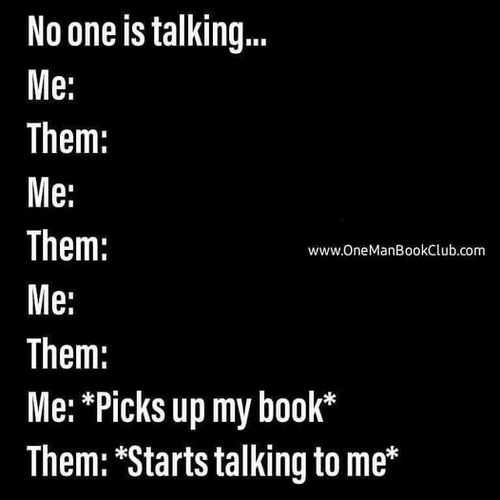
Conversely, reading something specifically or in general is a great way to invite the right kind of people to talk to you. As that meme says, it’s like having a book recommend people to you.
wow…I got carried away there, didn’t I?
As usual, I’m not tagging anyone in this—but I’d like to see what you all have to come up with. Although I will tag Esther to add that last prompt, “Snobbery Recipient,” to her post, I’m curious how she’d respond.