Category: News/Misc. Page 212 of 242

Saturday Miscellany – 6/18/16

Only a few odds ‘n ends over the week about books and reading that caught my eye. You’ve probably seen some/most/all of them, but just in case:

    This Week’s New Releases I’m Excited About and/or You’ll Probably See Here Soon:

  • The Ghost Rebellion by Pip Ballantine & Tee Morris — Yay! The 5th Ministry of Peculiar Occurrences novel is here. I enjoyed this one, I think you will, too. (I posted about it last week)
  • The Last Adventure of Constance Verity by A. Lee Martinez — Martinez is writing a series, which is enough to get me interested. Add in the hero who’s been saving the world for about 30 years, and just wants to be normal, and I’m beyond interested.
  • Shadowed by Karen E. Olson — so, Nicole Jones’ attempt to lie low on Block Island failed. What do you want to bet her Canadian location works out better? Yeah, me neither.
  • Stiletto by Daniel O’Malley — This is sitting on my TBR shelf (literally), and it’s driving me crazy that I can’t fit it in for a couple of weeks.
  • Man On A Rock by Grant Sutherland — Fahrenheit Press’ first novella looks like the kind of thriller summers are designed for. (you know, if summers were designed for people who read)
  • Escapology by Ren Warom — looks like a classic cyberpunk novel, just brand spankin’ new.
  • Mechanical Failure by Joe Zieja — SF with action and humor. I’m reading comparisons to Scalzi and Adams. Even without those, this looks fun.

Lastly, I’d like to say hi and welcome to Alois Larc and greatestcatpics for following the blog this week.

In Medias Res: The Asset by Shane Kuhn

as the title implies, I’m in the middle of this book, so this is not a review, just some thoughts mid-way through.

—–

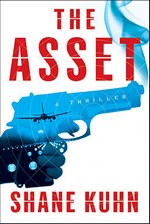
The Asset
The Asset

by Shane Kuhn

This is not the Shane Kuhn you know. Well, sort of. This is a standalone thriller about Airport/Airplane Security, Terrorism, and the USA’s efforts to keep the friendly skies, well, friendly. It’s not as fun and funny as The Intern’s Handbook or Hostile Takeover (or whatever they’re called in your part of the world). BUT it is just as well-written and suspenseful — and a little easier to believe, actually.

There are hints, suggestions, indicators, and other things pointing to an immanent terrorist attack on the U.S., and not enough people are taking the situation seriously. At least, least that’s the point of view of Kennedy, the security expert and protagonist, who is taking it very seriously. Taking place over 64 days (not a spoiler, that’s literally the 2nd line — although, there could be some action that takes place after that). Will Kennedy be in time to stop it? How will he? this is a pulse-pounder, a nail-biter, a “oh, crud — do I really have to go to work tomorrow? Do I actually need to sleep before then?” kind of book.

I think I’d prefer it to be harder to believe than the other two books, come to think of it.

I’m almost at the mid-way point of the ARC (with thanks to Simon & Schuster and Shane Kuhn) and I’m telling you now, you want to pre-order this, get on your library’s wait-list, or whatever (legal) thing you do to get your hands on a book. It comes out on July 12, you want to be ready for it.

Audiobooks and Other Programming Notes

Two days without a post about a book, which is pretty annoying — I’ve been working on a couple, but somehow I haven’t finished any since Tuesday. Sorry!

So my new job involves a lot of — I want to say mindless work, but that’s not true. Le’s just say that there’s a lot of work where you’re isolated and could use something to occupy part of your mind. So I’ve been listening to more audiobooks than normal. Many of which are books I’ve read before, so they’re sort of part of the Reread Project. But I’m working in a few new books, too. I need to get better a simply regurgitating what I’ve said before about these re-reads, I realize.

Let me just say, I’m really disappointed in the tastes of whoever it is in my library that borrows audiobooks. Based on the selection, there’s high demand for lousy books.

Come to think of it, looking at the shelves, that’s true of paper books, too — it’s just more obvious in the small sample size of audiobooks.

Anyway, when it comes to audiobooks, it’s impossible to just keep things to the writing itself, performance comes in to play, too. So I have to talk that some (and I’ve listened to a couple lately that have hurt the books, and a couple that have helped the books, one or two that made no difference). I want to keep the focus on writing, story, character — but part of the audiobook experience is the narrator(s). I may end up lumping a few write-ups into one post instead of several individual. Also, I’m going to try to keep the audiobook talk to Fridays (no reason, just wanted to pick a day).

So, that’s what’s going on with me — a little writer’s block, a whole bunch of good books, a new type of book showing up regularly, and me falling more and more behind on posts.

What are you reading lately?

A Nifty Surprise from Pocket Books!

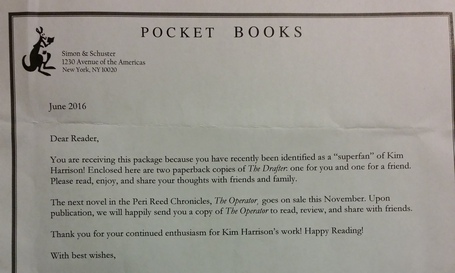
When I got home from work today, a package containing this letter was waiting for me:

For those who can’t make it out, it reads:
Dear Reader,

You are receiving this package because you have recently been identified as a “superfan” of Kim Harrison! Enclosed here are two paperback copies of The Drafter, one for you and one for a friend. Please read, enjoy and share your thoughts with friends and family.

The next novel in the Peri Reed Chronicles, The Operator, goes on sale this November. Upon publication, we will happily send you a copy of The Operator to read, review, and share with friends.
Thank you for your continued enthusiasm for Kim Harrison’s work! Happy Reading!

With best wishes,

Now, this is coolest surprise I’ve received in quite a while. I’ve already got a copy of The Drafter, so I guess I have two for friends. I’ll figure out how I’m going to give these away soon (feel free to leave suggestions in the Comments below). As far as sharing my thoughts on it? I’ve done a bit of that already (here, here, and a little bit here)– but in essence, it’s the best thing I’ve read by Harrison, ever. And as a newly official Kim Harrison Superfan, when I say it’s the best, that means something 🙂 (or maybe, as a superfan, I’m too biased to pay attention to, but let’s ignore that possibility)

And getting a copy of The Operator? Suh-weet!

Here’s my question, though: How the grawlix did they get my address?!?!

Saturday Miscellany – 6/11/16

Odds ‘n ends over the week about books and reading that caught my eye. You’ve probably seen some/most/all of them, but just in case:

    This Week’s New Releases I’m Excited About and/or You’ll Probably See Here Soon:

  • Infomocracy by Malka Older — post-cyberpunk, political-technological thriller.
  • The Bookman by Lavie Tidhar — Angry Robot republished this Victorian adventure that I always meant to get around to. Good reminder.

Lastly, I’d like to thanks to a href=”https://thereadingdesk.wordpress.com/” target=”_blank”>Vijayalakshmi Harish for all the encouragement this week, check out her pretty nifty blog, too.

(source unknown)

Saturday Miscellany – 6/4/16

Odds ‘n ends over the week about books and reading that caught my eye. You’ve probably seen some/most/all of them (especially if you read BookRiot a lot), but just in case:

    This Week’s New Releases I’m Excited About and/or You’ll Probably See Here Soon:

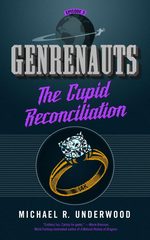
  • The Cupid Reconciliation by Michael R. Underwood — The bestest
    Genrenaut
    story yet. I hope you all are reading this series (or at least buying them).
  • We’re All Damaged by Matthew Norman — Norman’s follow-up to Domestic Violets is a strong candidate for my year-end list. Probably a stronger candidate if I ever get around to reading it. Still, it looks nice on my TBR shelf.
  • The View from the Cheap Seats: Selected Nonfiction by Neil Gaiman — do I really need to say more than just the author’s name?
  • Death by Cliché by Bob Defendi — “Death by Cliché is a heartwarming tale of catastrophic brain damage. Share it with someone you love. Or like. Or anyone at all. Buy the book.” The Big Idea about it.

Lastly, I’d like to say hi and thanks to Sidney (in case you’re reading this) for the very nice and helpful email this week.

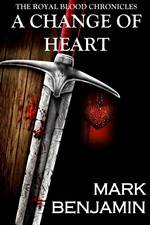
A Change of Heart by Mark Benjamin

A Change of HeartA Change of Heart

by Mark Benjamin
Series: The Royal Blood Chronicles, #1

Kindle Edition, 426 pg.
Mark Benjamin, 2016

Read: May 26 – 31, 2016

When I listen to/read interviews with authors, I hear frequent mentions of “Trunk Novels” (writers of other formats have similar labels for their scripts or whatever), the novels they wrote at the beginning of their careers that they don’t try to submit to agents/publishers, but use to learn their craft. Then they put them in a trunk (or a disused folder on their hard drive), and move on. In the age of digital publishing, there are (I fear) a lot of what would otherwise be Trunk Novels up for sale at various places online. I think ten years ago, A Change of Heart would probably have been that kind of learning experience for Mark Benjamin, instead, it went up for sale last weekend.

Don’t get me wrong — it’s not a bad book. Sure not a good book, either.

A Royal vampire is about to die, but he knows (based on a prophetic vision) that he will sire the most powerful vampire in history. Which means he’d better get to siring, and quick. Thankfully, a bullied bookworm stumbles upon him at just this point, and just before dawn, Gabriel Harper is turned into a vampire.

What follows for Gabe is a lot like the best part of the Tobey Maguire Spider-Man movie, he stops wearing glasses, becomes muscular and coordinated, confident enough to take on bullies and talk to girls. Sure, he has a craving for raw meat — but you can’t get everything you want, right?

Gabe and his friends are out celebrating their graduation a couple of months later and are almost attacked by some vampires. This attack (and Gabe’s probable successful defense of his pals) is prevented by a group of paramilitary men. These are members of the Silver Legion — a group dedicated to hunting down vampires (see The Initiative from Buffy season 4). Because Gabe & co saw them, they are drafted into the Legion. Basically. It’s not really that well justified, honestly.

The Legionnaires are supposedly a well-oiled machine, but basically are on the verge of falling apart — petty rivalries, glory-hounds, secret initiatives and politics are about to tear everything apart. How supernaturally strong creatures haven’t destroyed them yet is just a sign that they’re not trying that hard. The Vampire Courts are just as rife with internal weaknesses and schemes, which probably explains why the Legion still has a chance.

Benjamin did pull off a late surprise — I’d sussed it out before he revealed it, but not long before. I’ve got to give him that (which sounds more begrudging than I intended). On the whole, the intertwining plots just make everything unnecessarily convoluted — he was going for complex, but missed. The last two chapters were clearly intended to spur readers on to the sequel, but I’m not sure they set the bait quite right — the last chapter in particular was more obscure than mysterious.

Weak plot elements can be forgiven and/or overlooked if you’re given characters you can care about. And there just aren’t that many of them here. There are a few characters I like, but just a bit — the way that Benjamin writes these people make it hard to like, empathize with, or care about.

There was a lot of talk about senility, occasionally involving people a decade or two away from it. Along the same lines, you’ve got a lot of college students (on the verge of graduation, no less) acting like high schoolers. For that matter, the back-biting, scheming, and jealousy displayed by both members of the Legionnaires and Vampires seems fit for Beverly Hills, 90210. Don’t get me started on discussions of virginity — I cannot believe adults carrying on that way.

I didn’t intend on writing a negative post here — I liked bits of it, and I’ve read worse things this year — mostly, I didn’t mind it and am pretty lukewarm about it. Benjamin was trying, he set his sights on the sky and tried to hit it. Sadly he didn’t.

In short, there are worse ways to spend some time than with this book — and underneath a lot of mis-directed ambition, there’s the makings of a good book.

Disclaimer: I received a copy of this book from the author in exchange for this post — sorry about that Mr. Benjamin.

—–

2 1/2 Stars

A Few Quick Questions With…Walt Hackman

Late last year, I was approached by Walt Hackman to read and review his book, No Problem, Mr. Walt. Which was absolutely not my kind of book, but there was something about it that appealed to me. I’m glad I did, it was quite a tale. I reposted my take on it earlier today, in honor of the book launch tomorrow. Walt was kind enough to take part in a Q & A with me — which was enough to make me want to re-read the book. Hopefully, it convinces some of you to give it a first read.

I’m always interested in the writing process, why writers make the choices they make along the way — why did you decide to approach your story by mixing Chinese history with the story of your junk?
When I started to outline and write “No Problem, Mr. Walt” it was not in chronological order. As each Chapter unfolded, I found myself writing about subject matter that emerged along with my story – like the reference to caulking from Marco Polo’s journal or the Cultural Revolution – and it occurred to me that including snippets of Chinese history would assist the reader by providing context to make my story more relevant. So, at the beginning of Chapter Two I begin with “I think it is safe to say that the average American may suffer a bit of historical amnesia regarding China’s recent history. Therefore, I have decided to start in the next chapter with the last Emperor Pu Yi in the early 1900s, and present the reader with a brief history up to the present; these bits of history will be presented at the beginning of each chapter. If you understand China’s recent past, it will be easier to understand references to history in the story, and easier to understand present-day China.”
For that matter, why did you decide to Where there some anecdotes/memories that you wanted to put in the book, but couldn’t find a way to fit them into the narrative? Care to share any?
Yes, there are a few but these stand out: the initial draft included poetry that I wrote depicting experiences I had such as the bus ride in Chapter 23. However, the editor felt including them would take away from the story’s narrative so I kept the content they included but the poems themselves were removed.

More importantly, my journey began with the sudden death of my only son Wally, which is something I find very difficult to talk or write about even to this day. I feel there are no words adequate to explain the anguish, sadness and magnitude of our loss. Those parts of the story that dealt with “Rebuilding a (my) Life” were tough for me to write (and rewrite).  That being said, Wally’s death was the catalyst that propelled me on that improbable journey and is an important part of the story even though I only talk about it briefly in the Preface.  I did the best I could to address it but feel that in a future revision I might find a better way to tell that part of the story. My daughter Lynn is a writer and owned the Mei Wen Ti from 2000 to 2008, I think hers might be the voice that best explains that time in our lives and we’ve been discussing a collaboration.

What was the biggest surprise about the writing itself?
Steven King said in On Writing, “….I believe the first draft of a book – even a long one – should take no longer than three months, the length of a season.” For me, my biggest surprise was how long it took me to write the book. Not months but years!

I tell people it was easier to build a boat in China than it was to write a book about it.  Even though I approached my writing with discipline, I found it impossible for me to write a fixed amount daily or weekly like King suggested. I set a goal and really believed that I would get the book completed before the China Olympics in 2008. But looking back, I would still do it all over again because this project has never been about notoriety or money, I have always thought it could be a good story that people might enjoy.

A lot of what makes a writer are the books that he’s read — what books in particular do you think made you the writer you are/the book the book it is? (other than the books on Chinese history, etc.) .
Before starting the book, I read Steven King’s On Writing. One of his main points is that generally, if you want to be a good writer you must be a good reader. I’ve always been an avid reader but I began reading a lot more beginning with every book Steinbeck ever wrote. Somehow, knowing I was going to write a book caused me to notice writing subtleties and styles that I liked. After all the Steinbeck, I read Hemingway’s Boat, The Sun Also Risesand A Farewell to Arms, etc. Even though King’s On Writing is centered around writing fiction, it helped me and I often referenced it along the way.
You’ve lived quite a life — is there another book in you?
The answer is yes. I have given this more thought than you can imagine. I’d like to write a revision of No Problem, Mr. Walt that would meet approval for sale in China (i.e. tone down any reference to Communism that might be viewed as “unfavorable”) And similar to how I included Chinese history for western audiences, this version would be a juxtaposition that includes U.S. history and customs.

On my trips to China, people were fascinated about the junk (surprisingly, you don’t see a whole lot of them especially the size and style of the Mei Wen Ti) and the fact that I was even there building it. Junks (sail boats) have not been built in China now for many years since the introduction of modern engines. Many people I met wanted to know what I was doing in China, why I walked to the bus station and rode the bus, why I was wearing cowboy boots, if I liked the food, if I could tell them about California, why the U.S. was selling our latest jets to Taiwan, etc. Lastly, I believe the book is a simple story that the current generation of Chinese people would enjoy. The collaborative work with my daughter is also a possibility since No Problem, Mr. Walt ends with the delivery of the Mei Wen Ti on the docks in San Pedro. The story that proceeded to unfold after the Mei Wen Ti hit U.S. soil (or rather, water) is a unique one all its own!

May 2016 Report

So, here’s what happened here in May.

Books Read:

Still Reading:

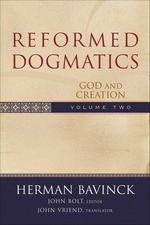
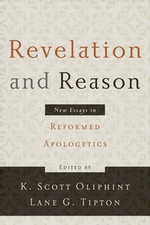
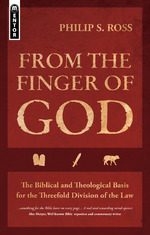
Reformed Dogmatics, Volume 2 Revelation and Reason From the Finger of God

Reviews Posted:

How was your month?

Saturday Miscellany – 5/28/16

Odds ‘n ends over the week about books and reading that caught my eye. You’ve probably seen some/most/all of them, but just in case:

    This Week’s New Releases I’m Excited About and/or You’ll Probably See Here Soon:

  • A Mint Condition Corpse by Duncan MacMaster — a geek-centric mystery. Okay. I’ll bite. From Fahrenheit Press, who else?
  • The Last Star by Rick Yancey — Loved The 5th Wave, was less into the sequel — but am really looking forward to this.
  • Dietland by Sarai Walker — this looks fun. ” Part coming-of-age story, part revenge fantasy, Dietland is a bold, original, and funny debut novel that takes on the beauty industry, gender inequality, and our weight loss obsession—from the inside out, and with fists flying.” Check out the trailer.
  • Dark Run by Mike Brooks — a space opera about smugglers, con artists and thiefs. Sounds good to me.

Lastly, I’d like to say hi and welcome to Senna and Beth from Hello Beautiful Book Blog for following the blog this week.

Page 212 of 242

Powered by WordPress & Theme by Anders Norén