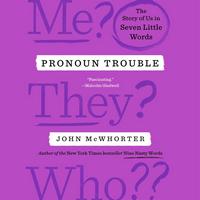
Music Monday's originated at The Tattooed Book Geek's fantastic blog and has shown up hither, thither, and yon since then.
![]()

Music Monday's originated at The Tattooed Book Geek's fantastic blog and has shown up hither, thither, and yon since then.
![]()
Odds ‘n ends about books and reading that caught my eye this week. You’ve probably seen some/most/all of them, but just in case:
The Best Villains in Literature Bracket: The Final Showdown—this is not who I expected to see in the final bracket, but it really makes sense. Also, if you haven’t been checking in, all the bracket posts (and other things posted on the theme of literary villains this week) are worth your time.
Terry Brooks announced his “semi-retirement” this week—at one point in my life this would’ve been devasting news. Now I can see it as the smart move it is—I hope he enjoys a long time of not-writing-that-much.
A Lifelong Love of Field Guides: A celebration of field guides, the little books that changed the way we interact with nature
How To Manage Your Reading Habit When You’ve Got No Money- A Book Bloggers Guide to The Cost-Of-Living Crisis
The Art of Reading Aloud
Marching Through MORE Inspirational Books!
The Columbus [Ohio] Metropolitan Library asks, Every 2 seconds, a book is rescued from captivity. Will you be a hero for a library item in need?

A Book-ish Related Podcast episode (or two) you might want to give a listen to:
Crime Time FM NICK KOLAKOWSKI In Person With Paul—was a great conversation about writing in general and Kolakowski’s new book.
SFF Addicts Ep. 145: John Scalzi—was great
The Thriller Zone Episode 217: Marshall Karp’s Killer Secrets: Writing Thrillers that Pack a Punch

To help talk about backlist titles (and just for fun), What Was I Talking About 10 Years Ago Week?
Uneasy Relations; Skull Duggery; Dying on the Vine by Aaron J. Elkins—Nunc hoc in marmore non est incisum
I mentioned the releases of: Anti-Hero by Jonathan Wood; World Gone By by Dennis Lehane; The Mirror World of Melody Black by Gavin Extence; What the Dog Knows: Scent, Science, and the Amazing Ways Dogs Perceive the World by Cat Warren [wonderful read]; and Archie in the Crosshairs by Robert Goldsborough

This Week’s New Releases that I’m Excited About and/or You’ll Probably See Here Soon:
Installment Immortality by Seanan McGuire—The war with the Covenant heats up and everyone’s favorite Nanny has to step up again. I had a few things to say about it recently.
Where the Bones Lie by Nick Kolakowski—Kolakowski brings his best for this contemporary L.A. noir about a traumatized ex-fixer trying to solve an old murder. I did a better job of talking about it earlier this week.
INTRO
This meme was formerly hosted by MizB at A Daily Rhythm and revived on Taking on a World of Words—and shown to me by Aurore-Anne-Chehoke at Diary-of-a-black-city-girl.
The Three Ws are:
What are you currently reading?
What did you recently finish reading?
What do you think you’ll read next?
Seems easy enough, right? Let’s take a peek at this week’s answers:
![]() |
![]() |
| Bloody Rose by Nicholas Eames |
Bibliophobia: A Memoir by Sarah Chihaya, read by Traci Kato-Kiriyama |
Bloody Rose has been on the top of my To Be Read pile since it was published in 2018, but I wasn’t sure it could live up to its predecessor, so I put it off, and off, and off, and off…I have to stop running from it. The first 100 pages don’t live up to Kings of the Wylde, but what does? It’s still plenty of fun (as I expected)–and there’s plenty of time for it to get better.
When this posts, I’ll be about 30 minutes into Bibliophobia, so I really don’t know much about it. But how do I not get sucked in? I mean, look at this first paragraph from the blurb:
Books can seduce you. They can, Sarah Chihaya believes, annihilate, reveal, and provoke you. And anyone incurably obsessed with books understands this kind of unsettling literary encounter. Sarah calls books that have this effect “Life Ruiners”.
This book is a memoir about her life with some Life Ruiners. I don’t know that I can think about books that way (check with me in 7 hours of this), but it sounds fascinating.
![]() |
![]() |
| Breaking Bread with the Dead: A Reader’s Guide to a More Tranquil Mind by Alan Jacobs |
Ashes Never Lie by Lee Goldberg, read by Eric Conger, Nicol Zanzarella |
Breaking Bread with the Dead is another stack of reasons that I want to be Alan Jacobs when I grow up.
As I said about Ashes Never Lie last week, Sharpe & Walker + Eve Ronin = fun.
![]() |
![]() |
| A Drop of Corruption by Robert Jackson Bennett |
A Little History of Music by Robert Philip, read by Zeb Soanes |
As intimidated as I was to start Bloody Rose, I’m even more intimidated by A Drop of Corruption. The first in this series is one of the two best books I read last year. I doubt I’ll say the same about this one, but I bet it’ll be in teh running.
As for A Little History of Music? Eh, I was in the mood to learn a little something. Seemed like a good fit. (although I have a few library books on hold, if one of them comes through I can remain a little ignorant a bit longer)
![]()

This week’s topic is, “Top 5 books with a place in the title. Any location or place in a title is fine — just share your top five with us.” I’m adding the proviso that these are the first five that I could think of with favorable memories, there are likely some I liked better (in a true Top 5 version), but these are all solid reads that tell us a lot about the location, where the place is important–even integral to the plot (which is probably why they occurred to me when thinking about place).
![]() |
![]() The Restaurant at the End of the Universe by Douglas Adams The universe is a place, it’s actually all the places. So it’s a good one to start with (in addition to the whole alphabetical thing). Sure, it’s kind of depressing to think of it ending, but at least you get a good meal beforehand. Even if it’s sentient, it’s at least tasty. And then you get to see all of Creation come to it’s timely end. |
![]() |
![]() Witches of Lychford by Paul Cornell We go from evereything everywhere to a tiny town in England. Sure, it’s a very important town, playing a vital supernatural role–so that makes up for the change in size. It’s a cliche to describe a city as a character in a book/movie/etc. But it really is true here, still, it’s a cliche, so I won’t say it.. |
![]() |
![]() 6 Ripley Avenue by Noel Holten 6 Ripley Avenue is not a place anyone wants to be. Including most of the people who work there. And that’s before the murders start. It’s a probation hostel for violent criminals (for Americans, think of it as a half-way house for parolees). In addition to the staff (some of which should not be trusted, some of which should not be in this particular line of work), eight of these parolees live at the titular location. And then, as I said, people start to be killed. And the Airbnb rating really starts to tank. |
![]() |
![]() Perelandra by C.S. Lewis Yeah, the Venus we can see is beautiful (hence the whole “Venus” thing). It’s captured imaginations for centuries now. But underneath the clouds, the planet known as Perelandra is exponentially better than our wildest imaginations. You could almost call it Edenic. (arguably you should call it that). Ignore the plot if you wanted to (I’m not sure you should, but you could), the descriptions of the planet, the animal and plant life there, the geography…it’d be perfectly worth your time. |
![]() |
![]() The Black Mountain by Rex Stout Is this the best Nero Wolfe/Archie Goodwin novel? It’s not even in the running. But it is striking in its singularity (it largely takes place in Montenegro, near or under the shadow of the Black Mountain). It centers on regional politics, regional history, and leaves our poor American narrator out in the cold of most of the action. I really enjoy it because of the differences, at least 70% of what I know about Montenegro (particularly pre-1990s Montenegro) comes from this book (this says more about me and my education than it says about the book).
|

![]()
I finished 25 titles (6 up from last month, 3 up from last February), with an equivalent of 6,424 pages or the equivalent (1,116 up from last month), and gave them an average of 3.4 stars (.4 stars down from last month).
My late 2024 slowdown in posting continues, and I’m getting better with accepting that, while still trying to figure out how to get around it. But basically, I’m reading a lot and enjoying talking about that–that’s good enough for me.
So, here’s what happened here in February.
Books/Novels/Novellas Read/Listened to
Still Reading
Ratings
![]() |
0 | ![]() |
3 |
![]() |
1 | ![]() |
2 |
![]() |
7 | ![]() |
0 |
![]() |
10 | ![]() |
0 |
![]() |
3 | ||
| Average = | 3.4 |
|---|
TBR Stacks/Piles/Heaps
| Audio | E-book | Physical | Goodreads Want-to-Read |
NetGalley Shelf/ARCs/Review Copies |
|
|---|---|---|---|---|---|
| End of 2024 |
3 | 68 | 78 | 167 | 10 |
| 1st of the Month |
4 | 68 | 80 | 168 | 9 |
| Added | 1 | 3 | 4 | 3 | 4 |
| Read/ Listened |
2 | 20 | 6 | 0 | 4 |
| Current Total | 3 | 69 | 78 | 171 | 9 |
Breakdowns:
“Traditionally” Published: 20
Self-/Independent Published: 5
| Genre | This Month | Year to Date |
|---|---|---|
| Children’s | 3 (12%) | 9 (4%) |
| Fantasy | 2 (8%) | 9 (4%) |
| General Fiction/ Literature | 3 (12%) | 9 (4%) |
| Mystery/ Suspense/ Thriller | 4 (16%) | 9 (20%) |
| Non-Fiction | 4 (16%) | 7 (16%) |
| Science Fiction | 3 (12%) | 11 (5%) |
| Theology/ Christian Living | 3 (12%) | 0 (0%) |
| Urban Fantasy | 3 (12%) | 6 (14%) |
| “Other” (Horror/ Humor/ Steampunk/ Western) | 0 (0%) | 0 (0%) |
Review-ish Things Posted
Other Things I Wrote
Other than the Saturday Miscellanies (1st, 8th, 15th, and 22nd), I also wrote:
Enough about me—how Was Your Month?


Music Monday's originated at The Tattooed Book Geek's fantastic blog and has shown up hither, thither, and yon since then.
Having the Grandcritter live with us for a while has really done a number to my music listening…
![]()
We all know we’re not supposed to judge a book by its cover (yet, publishing companies spend big bucks on cover design/art and we all do judge them that way). But, the opening sentence(s)/paragraph(s) are fair game. So, when I stumble on a good opening (or remember one and pull it off the shelves), I like to throw it up here. In these few paragraphs, you see exactly how he argues for the rest of the book.
from Miracles by C.S. Lewis:
In all my life I have met only one person who claims to have seen a ghost. And the interesting diing about the story is that that person disbelieved in the immortal soul before she saw the ghost and still disbelieves after seeing it. She says that what she saw must have been an illusion or a trick of the nerves. And obviously she may be right. Seeing is not believing.
For this reason, the question whether miracles occur can never be answered simply by experience. Every event which might claim to be a miracle is, in the last resort, something presented to our senses, something seen, heard, touched, smelled, or tasted. And our senses are not infallible. If anything extraordinary seems to have happened, we can always say that we have been the victims of an illusion. If we hold a philosophy which excludes the supernatural, this is what we always shall say. What we learn from experience depends on the kind of philosophy we bring to experience. It is therefore useless to appeal to experience before we have settled, as well as we can, the philosophical question..
If immediate experience cannot prove or disprove the miraculous, still less can history do so. Many people think one can decide whether a miracle occurred in the past by examining the evidence “according to the ordinary rules of historical enquiry.” But the ordinary rules cannot be worked until we have decided whether miracles are possible, and if so, how probable they are. For if they are impossible, then no amounnt of historical evidence will convince us. If they are possible but immensely improbable, then only mathematically demonstrative evidence will convince us: and since history never provides that degree of evidence for any event, history can never convince us that a miracle occurred. If, on the other hand, miracles are not intrinsically improbable, then the existing evidence will be sufficient to convince us that quite a number of miracles have occurred. The result of our historical enquiries thus depends on the philosophical views which we have been holding before we even began to look at the evidence. The philosophical question must therefore come first.
Here is an example of the sort of thing that happens if we omit the preliminary philosophical task, and rush on to the historical. In a popular commentary on the Bible you will find a discussion of the date at which the Fourth Gospel was written. The author says it must have been written after the execution of St. Peter, because, in the Fourth Gospel, Christ is represented as predicting the execution of St. Peter. “A book,” thinks the author, “cannot be written before events which it refers to.” Of course it cannot–unless real predictions ever occur. If they do, then this argument for the date is in ruins. And the author has not discussed at all whether real predictions are possible. He takes it for granted (perhaps unconsciously) that they are not. Perhaps he is right: but if he is, he has not discovered this principle by historical inquiry. He has brought his disbelief in predictions to his historical work, so to speak, ready made. Unless he had done so his historical conclusion about the date of the Fourth Gospel could not have been reached at all. His work is therefore quite useless to a person who wants to know whether predictions occur. The author gets to work only after he has already answered that question in the negative, and on grounds which he never communicates to us.

Odds ‘n ends about books and reading that caught my eye this week. You’ve probably seen some/most/all of them, but just in case:
The Best Villains in Literature Bracket: Ides of March Madness—LitHub is about to crown the ultimate Villain in Lit. Vote now (if you can choose…some of these are brutal choices)
Inside a Collection of ‘Imaginary’ Books
The Digital Packrat Manifesto—the case for building your own digital library (and choosing your digital storefronts with care)
From the Gut: A Literary History of Indigestion—Oddly fascinating piece (and you must read the footnotes)
Harper To Publish New Collection of Stories and Essays by Harper Lee—Huh. Well, might as well, I guess. Probably will be better than that last published book with her name on it
Turns Out, There’s a Sequel to The Westing Game—this is, no doubt, the item from this list that I’m most invested in. It’s possibly the single piece of writing I’m most invested in this month.
Thomas Trang’s “Dark Neon & Dirt”: A Gritty, Twisty Riff on L.A. Noir—Nick Kolakowski talks to Thomas Trang about Tran’s upcoming book (which looks great, incidentally)
Speaking of Nick Kolakowski, The Writer’s Dossier 3/3/2025 – The Nick Kolakowski interview—Kolakowski talks about things like his latest novel (which you really should read), evolving as a writer, and his experience with Craig Ferguson
Tolkien Against the Grain: The Lord of the Rings is a book obsessed with ruins, bloodlines, and the divine right of aristocrats. Why are so many on the left able to love it?—pretty sure I’d have never thought about considering this
A New Harper Lee Book is Being Published: Why Is There No Controversy This Time?—Brianna asks a good question
Three Years of Roars and Echoes—Congrats to Lashaan! The man responsible for at least 70% of the comics/graphic novels I’ve read in the last decade, and almost all of the Tolkien from that period, too.
Carol’s Captivating Character of February Link-Up—a good pick (and a good reminder for me to finalize my choice)
bedsidebibliophile succinctly nails the thinking behind a 5 star rating
If you don’t “awwww” at this bookstore’s story, there’s something broken in you

To help talk about backlist titles (and just for fun), What Was I Talking About 10 Years Ago Week?
Stone Quarry by S. J. Rozan
Pin Action: Small-Time Gangsters, High-Stakes Gambling, and the Teenage Hustler Who Became a Bowling Champion by Gianmarc Manzione (I’d forgotten about this one, not sure I’m glad to be reminded)
The Girl Who Circumnavigated Fairyland in a Ship of Her Own Making by Catherynne M. Valente
I talked about the release of: A Key, an Egg, an Unfortunate Remark by Harry Connolly; Dead Heat by Patricia Briggs; Pocket Apocalypse by Seanan McGuire; Heir to the Jedi by Kevin Hearne; and Live Right and Find Happiness (Although Beer is Much Faster): Life Lessons and Other Ravings from Dave Barry by Dave Barry

This Week’s New Releases that I’m Excited About and/or You’ll Probably See Here Soon:
Don’t Tell Me How to Die by Marshall Karp—Domestic thriller, a look at grieving and preparation for death, and a rollicking good time. I raved about it recently (and will do so again at the drop of a hat)
Cold Iron Task by James J. Butcher—I have no idea what this third Unorthox Chronicle is about, because I can’t let myself be tempted, I just have too much to do. I’ve even loaned it to a friend just to get it out of the house so I can focus on some other things.
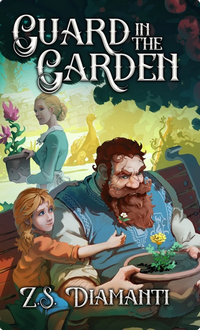
Guard in the Garden by Z. S. Diamanti—A cozy fantasy about an injured Dwarven soldier finding his second act. If this is half as charming as it looks, you’ll be in for a good time
Thaumaturgic Tapas by Tao Wong—you have to give this a second look for the title alone, right? The Nameless Restaurant struggles with success
Finlay Donovan Digs Her Own Grave by Elle Cosimano—My patience for Finlay’s antics is waning, but these are still guaranteed good times. Bringing in her nosy neighbor? Yeah, this should be fun.
Kills Well With Others by Deanna Rayburn—These senior assassins are called back into action.
I’m a Dumbo Octopus! by Anne Lambelet—this kid-level introduction to cephalopods looks adorable
See Friendship by Jeremy Gordon—A “young man who learns the devastating truth behind his friend’s death, propelling him on an odyssey of discovery into the nature of grief in the digital age, the limits of memory, and the meaning of friendship.”
Earlier today, I posted a spotlight about Reena Bhojwani’s novel Fragrant Soup. Now, I’ve got this look behind the scenes as Reena describes part of how she transformed this short story into a novel. I know she has more to say along these lines, and I hope she comes back to share some more. Either way, I’m very glad to present this Guest Post.
How Reading Can Help You Grow a Short Story into a Novel
I grew my short story of 5000 words into a novel with the same name that’s now over 62,000 words long.
So the question is how? And the answer is not linear. Although, one of the things I did very consciously and throughout was: reading.
I jumped in with both feet and scoured the Internet and the local libraries for books. I read some non-fiction articles, blogs and memoirs, but I also tried to read within the genre I was trying to write, which brought me to various forms of Asian fantasy stories. I tried to keep it to Young Adult and Middle Grade Asian and South East Asian Fantasy stories because they were closest to my target. However, on the side I continued to read romance novels, thriller, horror and a bit of middle grade fiction but not specifically Asian fantasy. I needed to know what was out there so I would know how to answer the annoying question “What books are your books like?” And also “What books are you books not like?”
Some other reasons to read widely were:
For sensitivity: This was me reading as a writer to see how sensitive or potentially offensive subject matter was dealt with when I read within my genre. For example, how certain descriptive phrases were written or how certain (possibly) taboo concepts were covered by certain writers. Taking notes either on a separate page or on post-its to then stick into the book as I read started becoming a habit.
For style: Again, this would mean reading as a writer. To be aware of nuances in dialogue, description and pacing. When I read other genres, I noticed things like choice of narrative perspective, chapter lengths and other devices that I would otherwise have allowed to slip through the cracks. Why certain things were done and certain choices were made while others were not. This is where I started noticing there were several books written with snippets of Mandarin, but I didn’t come across any with Cantonese in them.
For inspiration: I ended up getting so many ideas for my story while I was reading other pieces of fiction. However, inspiration doesn’t mean plagiarising. Sometimes I got an idea because there was a plot twist I was reading about or because a new character was introduced and I thought, “THAT’S IT! I can do that! EUREKA!” That doesn’t mean I took their character and shoved it into my narrative. It just made me realise that adding a character could help me make a certain part of the story work better. And equally, I had moments when I thought, “It makes sense now. This character/part/section has to go. It’s time to kill this darling.” Not because I knew they needed to go but because I realised.
While reading, I came across so many books in a series that I eventually realised I could turn my story into a series… and so I did! (Well, I started. I’ve only finished book 1 and the ‘Sneak Peek!’ Section of book 2!) Inspiration came come from content, style or just general concepts.
For what doesn’t work: The more books you read that you DON’T LIKE or that have been criticised in the field you’re interested in, the more insight you will get about what NOT to do, or what to watch out for or avoid, which is sometimes more helpful than what to do. The key is knowing not to get too caught up in it all. Take what you need and move on.
It’s important to note though that reading should happen all the way through in the ideal world, but there’s aren’t enough hours in a day and many of us can’t quit our day jobs or read through the night and function properly the next day, so some form of a balanced book diet with a frequency of your choice is best.
There are lots of tidbits of advice I have after I chose to grow my short story into a novel, so if you want to know more, you’ll have to comment on write to me and let me know. You can find me at www.inspiredmusehk.com.
You can find more information about Reena Bhojwani and her books at her website, Inspired Muse.
![]()
What a difference a week makes–after talking about a few lackluster (or worse) books at the end of February, I ended the month very strong and the first books of March have continued that streak. It’s a nice place to be.
This meme was formerly hosted by MizB at A Daily Rhythm and revived on Taking on a World of Words—and shown to me by Aurore-Anne-Chehoke at Diary-of-a-black-city-girl.
The Three Ws are:
What are you currently reading?
What did you recently finish reading?
What do you think you’ll read next?
Seems easy enough, right? Let’s take a peek at this week’s answers:
![]() |
![]() |
| The Library Game by Gigi Pandian |
Every Tom, Dick & Harry by Elinor Lipman, read by Piper Goodeve |
I just started The Library Game today. I thought Pandian had wrapped up this series with the last book, I’m glad to see that I was wrong and I’m eager to see where the series goes from here.
Lipman’s Ms. Demeanor was entertaining enough (although it had its drawbacks), and I’m curious to try something else by her.
![]() |
![]() |
| Perelandra by C.S. Lewis |
Red Team Blues by Cory Doctorow, read by Wil Wheaton |
Perelandra blew me away this week, just as much as it did 20+ years ago when I read it the first time.
A couple of weeks ago in a Saturday Miscellany post, I said something about getting around to trying Doctorow sometime, the manager of Shared Stories told me that I really should start with Red Team Blues. He was right.
![]() |
![]() |
| Breaking Bread with the Dead: A Reader’s Guide to a More Tranquil Mind by Alan Jacobs |
Ashes Never Lie by Lee Goldberg, read by Eric Conger,Nicol Zanzarella |
It’s time for me to wrap-up my review of Jacobs’ trilogy.
And I’ll be tackling Ashes Never Lie on audio. Sharpe & Walker + Eve Ronin = fun.
![]()
Powered by WordPress & Theme by Anders Norén