Music Monday’s originated at The Tattooed Book Geek‘s fantastic blog and has shown up here and there since then.
yay…nothing seasonal today.


Music Monday’s originated at The Tattooed Book Geek‘s fantastic blog and has shown up here and there since then.
yay…nothing seasonal today.


It probably says something about me that 40% of this list was written pre-20th Century (I have some friends who’d opine that it says I read too many contemporary authors). My reading plans for 2024 (as sketchy as they are at the moment), suggest I could be looking at a similar number next year. I actually hope so—this was good for me.
As always, re-reads don’t count for these lists.
(in alphabetical order by author)
The Nicene Creed: An Introductionby Phillip Cary
My original post
This is a fantastic introduction to the Nicene Creed and/or some of the doctrines taught by it (technically, the Nicene-Constantinopolitan Creed, but who calls it that outside of technical discussions?). In many cases, it’ll be a review of ideas—but even in those cases, Cary will likely shed a different light on it, or make you think about the idea in a way you’re not used to. This can be a quick and breezy read, but it’s a mistake to let Cary’s simple and straightforward text let you read quickly—because there’s a lot to think about and reflect on here. Even if—especially if, actually—you recite the Creed on a regular or frequent basis every Lord’s Day. This is a great way to stop and meditate on these essential truths of the Christian faith.

The Existence and Attributes of God: Updated and Unabridgedby Stephen Charnock, edited by Mark Jones
An original post (another is forthcoming)
This isn’t a definitive, exhaustive work on God’s attributes (or existence)—it cannot be (and would be blasphemous to suggest otherwise). But when you’re in the middle of a chapter, it’d be easy to think it is. Not just because of the depth Charnock goes into on each topic, but the angles he approaches it from. In the middle of the Discourse on God’s Knowledge, I was astounded, for example, by how many different ways he found to talk about it. It’s easy to see why this work has stood the test of time and can’t imagine anything in the 21st Century topping it (maybe someone will get their act together in the 22nd).

Who Chose the Gospels?: Probing the Great Gospel Conspiracyby C. E. Hill
My original post
An alternate title for the book could be, how do you solve a problem like Iraneaus? Or, more to the point, how do you ignore his (early date) recognition of only 4 gospels—Matthew, Mark, Luke, and John—despite what we’re told about the state of gospel availability and canonization by so many today. Hill examines some of the time frames, uses, content, and provenance of some of the so-called competitor gospels (i.e., those that never were considered canonical) to compare them to both the canonical gospels and those early figures of the Church we see discussing the gospels. But primarily, Hill is concerned with the use of and testimony regarding the canonical gospels—and the evidence regarding their use by the Church and when it started. What’s more, he discusses (and educates) these ideas while being entertaining (never sacrificing educating for entertaining). Hill is careful and thorough, acknowledging challenges to his position about the emergence of the fourfold Gospel to the place it holds today. But he’s consistent in showing how those challenges don’t have the weight and merit that so many in our culture assume they do.

On the Apostolic Preachingby Irenaeus of Lyons , John Behr (Translator)
My original post
This is exactly what I want to see out of a 2nd Century writer—because it’s the kind of thing I appreciate in a 21st Century Writer. It’s reassuring to see that the central idea of what Apostolic Preaching ought to be is pretty much the same for both eras—yeah, some of what Irenaeus wrote could use some fine-tuning (and he’d likely say the same of what shows up in one of the Essential Studies in Biblical Theology volumes I’ve discussed). But their modus operandi are so similar, that it’s clear that they’re walking in the same direction. This is a a quick, approachable read—as relatable today as it had to have been centuries ago (although I guess it’d be safe to say that many of his readers might not be ready to hear what he said in the same way I was). I was very encouraged by this and wish I’d read it years ago so I could be on my fifth or sixth reading now.

The Beginning and End of All Things: A Biblical Theology of Creation and New CreationMy original post
Klink starts by saying that a doctrine of creation needs to be about more than what happened in Genesis 1-2, piquing my interest and getting me on his side immediately. His point is that the doctrine needs to concern itself with why God made the Earth—what was His purpose in creating, what’s His goal for the creation, and so on. It’s about the goodness of the creation and how we are to enjoy and preserve it. It’s ultimately about the new creation, what is going to happen on that Last Day when creation is renewed, restored, and recreated. This is a refreshing, warm, and pastoral look at a doctrine we too often limit to a narrow question, missing the big picture.

Flood and Fury: Old Testament Violence and the Shalom of GodI read this book back in March, and have yet to write a post about it because I’m still wrestling with some of Lynch’s positions and arguments. The biggest area that I was working through and on was his treatment of the relation of the Flood to the Covenant in the Garden and the Noahaic covenant to that covenant as well. The next book on this list helped me tremendously (mostly to Lynch’s detriment). But that’s not to say that I didn’t get anything from that portion of the book, it just made me think a lot—so much that I couldn’t write anything about the book as a whole. The portions of the book on Divine Violence in general (how to think of it, how not to think of it or avoid the idea, either) and about the conquest of Canaan are strong and very helpful.

God to Us: Covenant Theology in ScriptureMy original post
I’ve read more books on Covenant Theology than I can easily count, and if this isn’t the best, it’s so close to it as not to matter. Myers gives his readers a thorough introduction to Covenant Theology as it came to the Protestant Church from the Reformation—particularly the English Reformation and the explanation offered by the Westminster divines and their contemporaries. His introduction is readable, clear, and helpful to the layman willing to put in a little work—but he’s not just repeating what the previous generations gave us, he’s looking at contemporary theology and insights as well.
That our Lord would condescend to His people in covenant is mind-blowingly gracious in the first place—that He does so to rebels in order that he could win them to Himself? That should drive us to worship. And the more we understand the gracious and remarkable nature of these covenants, the more we should be driven to it. Myers brings his readers to this point repeatedly—sometimes just by explaining something clearly—sometimes by applying his explanation to the reader to help us understand how it should make us reflect in worship.

The Holy Spirit: An Introductionby Fred Sanders
My original post
A very capable, useful, and timely introduction to Pneumatology. Sanders doesn’t allow himself to get drawn into the flashy and controversial aspects of the doctrine of the Spirit (not that he shies away, either)—he sticks to the basics and essentials (and a good understanding of those will eliminate the need to discuss some of the controversial areas). Sanders’s tone is certainly engaging—he never loses sight of the importance of what he’s talking about, and the necessary reverence. But he’s okay with being chatty and a little witty with the reader. He’s able to break down some complicated and technical points in a way that the reader can find them understandable and compelling. It’s just so helpful, and so good, that I can’t help but recommend this one.

The Shadow of Christ in the Book of Lamentations: A Guide to Grieving with FaithMy original post
I didn’t expect this to come up as an option for this year’s list, I thought I read this a year or two ago, not 11 months ago. But I was glad to look over my notes and post about it again for this post. This is a very accessible and thorough—without trying to be exhausting—look at the book of Lamentations and how it reveals Christ to the reader for his assurance and comfort in trial.

I Will Build My Church: Selected Writings on Church Polity, Baptism, and the Sabbathby Thomas Witherow, Edited by Jonathan Gibson
My original post
Yes, this is kind of a cheat—because I have read one of the three works (plus a lengthy biographical essay) in this collection. But it’s a self-imposed rule, so I’m not going to be that precious about it (this once). Also, reading it in the midst of all this other material gave The Apostolic Church: Which Is It? a different vibe (for lack of a better term). It’s not just a defense of Presbyterian Church Polity, but it’s part of an apologetic for Presbyterian Distinctives as a whole.
And that’s what Winslow’s mission was—to present Presbyterianism as not just another flavor for Irish Protestants to pick, but one that has a message, a conviction about their distinctives, and Biblical reasoning—not just whim or tradition—behind them. Sure, some of it will feel dated to contemporary readers. And it should—but that doesn’t make any of it bad. Nor does it disprove any of Winslow’s arguments (in fact, some of our contemporary situations would lead the reader to say, “he was right, if we do X, Y will follow.”)

![]()
As great/enjoyable/fulfilling they all may be, after all the days off from work, visiting family/friends, and folderol of the last couple of weeks, I’m looking forward to getting back to routine. A routine that will provide me more opportunities to mess around online and find things for this post, too, he adds feeling this is a bit skimpy this week.
Skimpy it may be, but if you make it to the end of this without adding at least looking into one book for future reading, I’ll be surprised.
Odds ‘n ends about books and reading that caught my eye this week. You’ve probably seen some/most/all of them, but just in case:
In Praise of Reading: How Literature Enables Us to Inhabit New Worlds —I don’t know if I buy this, but I enjoyed musing through the piece
Five for Them, One for Me, with S.A. Cosby—a nice, quick, interview with Cosby
Another week, another batch of Best of 2023 lists. I’m telling you, these are not helping me cut down on my TBR lists:
On Before We Go Blog, we have Nathan’s Top 25 Reads of 2023
Jo Linsdell’s Best Reads of 2023
Top 10 Books I Read In 2023—Steven Writes is done with his categories and goes nice and straightforward here at the end.
My 10 best books of 2023—from Spells and Spaceships
Fan Fi Addict’s David S’ Top 5 Books I Read in 2023
Raven’s Books Of The Year 2023
Peat Long’s Top 10 Books Read in 2023
The damppebbles Top Ten(ish!) of 2023
Bookstr Predictions: Bookish Trends We Think We’ll See in 2024
Trends I Think We’ll See in Book Blogging in 2024—Pages Unbound has another take
Getting on top of my TBR pile: a modest proposal—Mike Finn sets out to exercise an amount of self-will that I’m incapable of. I wish him well.
Top Book Bloggers to Follow in 2024—a good list
Why I Don’t Keep Track of New Book Releases—makes sense to me
This Week’s New Releases that I’m Excited About and/or You’ll Probably See Here Soon:
The Cadillac Job by Stacy Woodson—a car thief on a noble mission with deadly stakes

Lastly, I’d like to say hi and extend a warm welcome to Kal @ Reader Voracious, who followed the blog this week. I hope you enjoy the content and keep coming back.


Back when I started this site, I knew the content would be largely “genre”-oriented. I’d have wagered the content would be roughly 1/3 Mystery/Detective fiction, 1/3 Urban Fantasy, and slightly less than 1/3 SFF, with “non-genre” fiction, humor, and non-fiction being enough to make my one-thirds just an approximation (honestly, if you asked me what I read regularly, that’s pretty much how I’d describe it today). Actual numbers show that’s wrong—it’s typically almost 40% Crime/Thriller Fiction, the rest of fiction is around 30% combined. This is just a long-winded way to get to these two points: because Crime Fiction takes such a big chunk of my reading, it gets its own “Favorite” list, but none of the others really garner enough numbers for their own.
When it comes to this particular list of favorites this year, it was harder than I expected. I got it down to 17 with relatively no problem. But trimming those last 7 was difficult. I waffled a bit—and considered a top 15, but I talked myself out of it and have a list of 10 favorite non-Crime Fiction Novels of 2023 that I really like. Hopefully, you will, too.
As always, re-reads don’t count—only the works that were new to me.
(in alphabetical order by author)
Chain-Gang All-StarsMy original post
If there’s a book I’ve recommended more frequently this year, I can’t think of it. I’ve also bought more copies of it to give away than any other. At the core, this is a satire and critique of the American culture–particularly as it relates to sports, mass entertainment, and (most importantly) the carceral system. Pitting convicted felons against each other in gladiatorial fights-to-death, selling merch featuring them, turning them into Reality TV personalities between bouts…Adjei-Brenyah holds up the worst of the US to look at.
It’s a book about death—violent death at the hands of violent people who only hope to go on so they can kill again—However, in a serious way the book is really about life. It’s a celebration of life, a call to protect it, a call to see it for what it is. It’s a reminder that “where life is precious, life is precious.” It’s impossible to read this without being moved–perhaps to action. But it’s also a visceral and exciting read that can entertain you without forcing you to think deeply about what it wants you to.
(I don’t know why I knocked it 1/2 a star at the time…I can’t think of a reason for it now, but…)

Partial Functionby JCM Berne
My original post
This has none of the socially redeeming characteristics of the above book. But it does have wuxia-inspired magical martial arts, super-powered dinosaur-like monsters, a John Wick/Bryan Mills character if played by Michelle Yeoh, and snappy dialogue. It’s a story about a retired warrior who gets back to work so she can rescue her kidnapped daughters and the wake of destruction that follows (a mighty wake it is, too). And it’s just fun from beginning to end.

The Perception Of Dollsby Anthony Croix, Edited by Russell Day
My original post
I did an inadequate job of describing this book and what I was blown away by in 15 paragraphs. There’s no way I’m going to manage it in the 1-2 paragraphs I give myself for this.
I’m dazzled by this book. I was hooked to an extent I’m not used to. I was captivated. I was (at least momentarily) obsessed with it. That’s worn off in the 50 weeks it’s been since I’ve finished, but it would take me no more than 5 pages of a re-read to get back to that. This is a recounting of one investigative reporter’s look into a triple homicide and attempted suicide in a home, the paranormal research that occurred in that home decades later, and the very strange (to put it mildly) things that happened to everyone involved in both of those things.
Russell Day takes you on a ride that you will find difficult to articulate (which is fine, he does a fine job of it on his own) and that will linger in the back of your mind for a long time.

The Hero InterviewsMy original post
The child and sibling of heroic adventurers, Elburn Barr, has taken a different path in life—one fit for someone with his particular set of skills (or lack thereof). He is a Loremaster—no spells, weapons, or danger for him, thank you very much. At this point in his life/career, Elburn has set out to understand what makes a hero tick—what is it that drives them, what early influences molded them, how do they keep going on? Does it vary from type to type? Are Barbarians made of different stuff from a Cleric or a Thief? What about a Ranger or a Wizard? In addition to interviewing various leading examples of each type of hero, he talks to non-heroes, too. Like a farmer whose farm was saved(?) by some heroes from a dragon, the curator of a hero museum, people who run/design dungeons, etc.
This is a novel trying to look like a series of comic episodes/scenes/lines. It takes a while to see the plotlines emerge—it really does seem to be a light-hearted look at D&D clichés, stereotypes, tropes, etc. at the beginning—but eventually, you start to see the story arcs emerging and even start to see the protagonist grow and develop. That’s something I didn’t expect to see when I started reading this because I did think it was just a series of comedic bits. It’s hard to tell if Ewington is more interested in telling a story or making his jokes—in the end he gives you enough of both that the question is academic.

Not PreparedMy original post
Hanover’s fourth novel is the first to have a protagonist outside of their 20s, and the added maturity pays off. While this book is at heart a Rom-Com, the romantic story takes a backseat to the love story between the girl who needs a family and a bachelor who didn’t expect one. There’s still plenty of “rom”, and a good amount of “com” of a handful of stripes (particularly when it comes to a single man being thrust into dealing with a young girl at the cusp of puberty)—but there’s a lot more, too. Told with Hanover’s trademark wit, charm, and grace—prose that moves so smoothly you don’t realize how long you’ve spent sucked into his book. The emotions are real and grounded—both positively and negatively. His depictions of anxiety really impressed me, and there are scenes that got me choked up.

An Inheritance of MagicMy original post
Any fears anyone had about Jacka’s post-Alex Verus career should have been assuaged by this book. It’s an introduction to a new kind of magic, a new kind of magic society, and a protagonist who is so different from Verus that you wouldn’t guess that Jacka wrote it if you didn’t have his name all over the place. This is kind of the reverse of the Hanover book—Jacka moves on from a mature character who knows his place in the world to one who is immature, unsure of his own abilities, and a complete beginner to the magical society of England (and, presumably, the rest of the world). And Jacka nails all of it. I couldn’t believe how easily I took to this world and I anticipate getting more immersed in it.

Mrs. Covington’sMy original post
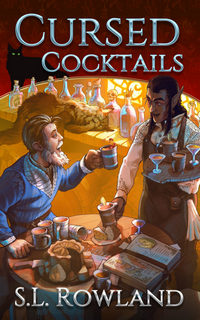
The thing with Cozy Fantasy is that the plot comes second (if not tertiary) to things like character and atmosphere. Mrs. Covington’s shines here–it’s such a pleasant, comfy atmosphere that it trumps everything else. A treasure hunt with the staff of the friendliest bar this side of Cheers! might be the plot of this cozy fantasy novel. But the book’s core is kindness, community, optimism, and helping. Also, Nachos. Brought to you in a great fantasy world with a light and engaging voice, Mrs. Covington’s will leave you snug and content.

On the Savage SideMy original post
This was just a brutal read. Every time you get a glimmer of hope, a glimmer of a feeling that things might be okay for some of these characters—something snuffs it out. But there’s another source right around the corner. But there’s beauty in the darkness. And a drive to keep persevering shared by the reader and the characters. I wondered more than once why some of them kept trying—but they did. There’s a serial killer on the loose, and a good deal of the plot is about that. But this isn’t about the hunt for the killer or anything like that. It’s a novel about the women who may be his target and their fears about it. It’s also about the rest of their lives—how they got to the point where the killer might be hunting them and what might happen if they get out of there.
Like always, Tiffany McDaniels delivered a book that’s going to stay in my subconscious for a while—lurking there, making me rethink what I read from time to time. It’ll probably stay there until her next novel comes along (Betty‘s been there for a couple of years, and really only was dislodged by this one—and The Summer that Melted Everything is still there all these years later). It’s somber, it’s sober, and it’s difficult to read. But it’s so worth it in ways I cannot adequately explain. It’ll make you think. It’ll make you feel.

According to Markby H. B. O’Neill
Unlike the first 8 books on this list, I haven’t written anything about this until now. The pitch I was given about the book was, “It’s about a love affair gone wrong and a guy who’s obsessed with Mark Twain who becomes a voice in his head that eventually leads to Twain pushing the fella towards suicide.” I don’t know if this makes it sound appealing to you or not. So let me say this: If Chain-Gang All-Stars is the book I’ve recommended most this year, then According to Mark is in 3rd or 4th place. Given that I read it at the end of November, that tells you how much I’ve been talking about it lately. It’s comic. It’s dark. It’s disturbing (on more levels and in more ways than I can describe). There’s a fantastic and real love story in the center of it. It’s heartbreakingly sad. If you’ve read anything like this before now, I’d be surprised (and I want to know what it is!), but you’re going to want to read this when it’s published soon.
There’s more I should say, but I’m going to do it in a longer format.

Guards! Guards!by Terry Pratchett
I spent some time earlier this fall asking for recommendations to get me to give Discworld another shot—and overwhelmingly, this book was recommended to me. Everyone who did that was utterly correct. It’s one of the best mixes of story and comedy that I can recall reading and I can see after a re-read or two (which it’ll almost certainly get from me) that at least one book in this series within the Discworld series is going to end up in my pantheon of comedic greats. I’m working hard to ensure I get to the rest of these in 2024 because now that I understand what I was missing with Pratchett, I don’t want to miss out any longer.

![]()

My 2023 Wrap up continues and now we’re on to the Non-Fiction list. While I liked a number of works that didn’t make this list, I felt strange calling them a “favorite.” So, we have 7 instead of the nigh-obligatory 10. These are the ones that stuck with me through the year; the ones I cited in conversation; that I thought about when reading something else or watching something on TV. Yeah, there’s some overlap between this list and the audiobook list from yesterday—lately, most Non-Fiction books I work through are in audiobook format. So it makes sense, even if it makes this post seem like an echo.
As always, I only put books that I’ve read for the first time on this list. I don’t typically return to NF books (outside of looking up things for one or three points), but occasionally I do—for example, The Pleasures of Reading in an Age of Distraction by Alan Jacobs would get a permanent spot on this list, were it not for this rule.
(in alphabetical order by author)
Cunk on Everything: The Encyclopedia Philomenaby Philomena Cunk
My original post
If you’ve ever watched a video clip or a full episode of Philomna Cunk’s various shows/specials, you know just what you’re going to get in this Encyclopedia. If you don’t, finish reading this post and then go find some. Probably pound-for-pound the funniest thing I read this year. Utterly useless outside of that—in case that wasn’t clear. Whether you go from cover to cover, or dip into it here and there (probably for longer than you intend to)—these brief entries are almost certainly going to be a burst of entertainment for you. Not all of them are going to work for every reader—but never fear, just turn the page and you’re probably going to come across one that will.

Like, Literally, Dude: Arguing for the Good in Bad Englishby Valerie Fridland, Narrated by Valerie Fridland, Joniece Abbott-Pratt, Keylor Leigh, Andrew Eiden, Christopher Ryan Grant, Ellen Archer, Eileen Stevens and Nicky Endres
I’m a sucker for entertaining books about language, grammar, etc. Fridland’s apologetic for “Bad” English drives my inner prescriptivist, up the wall—but she joins the growing number of writers who are sealing up that prescriptivit’s coffin. How good is this book? Her chapter (or maybe it was a section of a chapter) on “Um” and “Uh” was fascinating. If she can pull that rabbit out of a hat, imagine how good she can be when she talks about the use/overuse of “like,” the history of “Dude,” or the figurative use of “literally”—and so much more. I spent most of the time listening to this book just geeking out in a way that made me regret not becoming a sociolinguist myself.

Kneading Journalism: Essays on baking bread and breaking down the newsby Tony Ganzer
My original post
There’s just so much to commend about this book that this little paragraph isn’t going to come close to hitting it all. Partial memoir, small bread-recipe book, and some great insights into the state of journalism and what it means for our society. This is a great read—challenging, but in a friendly, welcoming way. Thoughtful and thought-provoking without being combative or overly critical. Ganzer has a point of view—and makes no claim about lack of bias here—but isn’t pushing a partisan outlook, just a pro-responsible press outlook. Brief, but not insubstantial.

Nasty, Brutish, and Short: Adventures in Philosophy with My KidsMy original post
This was a great listen—Hershovitz is the kind of lecturer you want to pay attention to (or so imagine based on this). This book succeeded on multiple fronts: it was frequently amusing, if not downright funny; it was educational; it was insightful (even when I disagreed with what he did with the insights); it was thoughtful; it offered (largely by example, not being didactic) good parental advice; and kept this particular listener fully engaged throughout. Just what you want from an audiobook.

100 Places to See After You Die: A Travel Guide to the Afterlifeby Ken Jennings
My original post
A fun and informative traveler’s guide through afterlives depicted in Mythology, Religion, Books, Movies, Music and Theater, and from a few other sources. Jennings brushes against irreverancy, but (I think, I’m open to correction) stays on the respectful side. I absolutely had a blast with this—and learned quite a bit, too. It’s one that I’ll return to primarily as a reference, but I will appreciate the perspective and humor as I check my facts. The only problem I have with it is the lack of footnotes/endnotes—I want some source material!

Sundry Notes of Music: an Almost Memoirby Ian Shane
My original post
Given how much I like Shane’s novels, it’s probably to be expected that I enjoyed getting some insight into the novelist. And as most of his novels are centered around music/people obsessed with music, it’s fitting that this memoir focuses on songs. There are parts of this book that are very funny—some bittersweet, some tragic, some simply thoughtful. Multiple essays will hit all of those points and more. They’re all engaging in various ways. Not one track on this playlist is going to leave you looking for the skip button.

The Worst We Can Find: MST3K, RiffTrax, and the History of Heckling at the Moviesby Dale Sherman
My original post
Sherman is a man who knows about riffing on movies and helps the readers get a better knowledge of it, too. Yes, the focus is on Mystery Science Theater 3000‘s original run (runs?), but he talks about the show’s predecessors and the various projects that have sprung from it, too. Even if you know a lot about the show, its performers, etc., you’re probably going to learn something. And if you don’t? You’re going to enjoy the dashes of perspective that Sherman gives about movies in general and MST3K specifically. Everyone who did what they could to keep circulating the tapes in the 90s is going to eat this book up. Fans of more recent vintage likely will, too.

![]()

I’ve posted favorite Picture or Children’s books before, but now that I’m a Grandfather, I’m thinking about these things more. So, it’s not unusual for me to read these kinds of books, but I’m doing more of it. I fully expect this post to grow in the years to come.
I practically guarantee these will tickle you and/or warm your heart.
(in alphabetical order by author)
FarmhouseMy original post
It’s not the text of this book (not that there’s anything wrong with it), it’s largely the art that makes this stand out. The combination of the two…the whole experience of this book is what makes this makes this one memorable. I’m not sure what about the book will appeal to the Picture Book crowd, but the adults in their life are going to love spending time with this.

Saint Patrick the Forgiver:by Ned Bustard
My original post
I kicked off this series with this book, so there’s a little bit of sentiment going for it. I really appreciated the way that Bustard dealt with a lot of history and some pretty serious topics in an age-appropriate way. He avoided moralism, too. All while giving the reader a fun experience, with some eye-catching art. A great introduction to Patrick that will hopefully spur a child’s interest in him for a long time to come.

How Dinosaurs Went Extinct: A Safety Guideby Ame Dyckman, Jennifer Harney (Illustrator)
I can’t believe I forgot to write about this book. It’s one I stumbled across on the shelves while shopping for something else, and after a quick flip through it, I added it to the stack. It’s silly, the colors are loud, the illustartions practically leap off the page. It’s really impressive just how much Harney squeezed into each drawing. Parents will have a lot of fun reading this one, and I think it’ll be catching.
(at least, I don’t have a post to check and I don’t have time to re-read it now.)
Noodle Conquers Comfy Mountainby Jonathan Graziano, Dan Tavis (Illustrator)
My original post
The illustrations are adorable (and yes, you should pronounce it that way when talking about this book). The story is super-cute. While the first one was a nice intro to Noodle and his person, this is just a story about Noodle. It’s not a cuteness overload, but you’ll get close.

Every Dreaming CreatureMy original post
This book about a child’s dream looks and feels like one. It’s comfy, it’s cozy, it’ll help an adult and (hopefully!) a child calm down and think about drifting off to their own dreamland. I cannot say enough about this art.

Sophie and the Heidelberg Catby Andrew Wilson, Helena Perez Garcia (Illustrator)
My original post
Very possibly the best and clearest (definitely most succicinct) presentation of the Gospel and the assurance that is promised to those who have been bought by Christ I read this year. It’s an explanation of the first question and answer of the Heidelberg Catechism, which helps a lot. A nice bit of imagination, a dash of whimsy, good art, and a fantastic message. My wife and I have given away so many copies of this so far, it’s kind of mind-boggling.

![]()
Welcome to my first WWW post of 2024, starting with this one, we’ll (very likely) be taking 52 looks at what books I’m reading and listening to throughout the year through the magic of this weekly meme. Feel free to leave a comment with a link to your WWW or just tell us what you’re reading. I enjoy reading these!
This meme was formerly hosted by MizB at A Daily Rhythm and revived on Taking on a World of Words—and shown to me by Aurore-Anne-Chehoke at Diary-of-a-black-city-girl.
The Three Ws are:
What are you currently reading?
What did you recently finish reading?
What do you think you’ll read next?
Seems easy enough, right? Let’s take a peak at this weeks answers:
I’ve got two really entertaining Fantasy novels that couldn’t be more different here. I’m reading Book 3 of The Azure Archipelago by K.R.R. Lockhaven, and am listening to The Blacktongue Thief by Christopher Buehlman on audiobook.
I just finished Russell W. Johnson’s The Moonshine Messiah and Such Sharp Teeth by Rachel Harrison, Kristen Sieh (Narrator) on audio. One of those was great and the other was good enough.
My next book should be the ARC for The Tainted Cup by Robert Jackson Bennett, which looks great (and will finally cross Bennett off my “Authors I Should Try” list). My next audiobook should be Miles Morales Suspended by Jason Reynolds, Narrated by: Guy Lockard and Nile Bullock. Almost everything I know about Miles came from Reynolds’ first novel about him, I’m so glad to finally stumble onto this one.
![]()
Well…this doesn’t look the way I want it to. But here goes:

My plans this year focused on the two series that I’ve started—Literary Locals and Grandpappy’s Corner—both of which went well last year.
Then there’s the perennial, “Cut down on my Goodreads Want-to-Read list and the unread books that I own.” How did I do on that?
| Audio | E-book | Physical | Goodreads Want-to-Read |
|
|---|---|---|---|---|
| End of 2022 | 5 | 45 | 42 | 143 |
| End of 1st Quarter | 4 | 44 | 54 | 142 |
| End of 2nd Quarter | 5 | 50 | 56 | 145 |
| End of 3rd Quarter | 5 | 51 | 58 | 151 |
| End of 4th Quarter | 6 | 47 | 68 | 153 |

Let’s move right along to see how I did with the Reading Challenges…
2023 Book Challenges
Goodreads Challenge
It should show a few more read, but Goodreads doesn’t have them in the list, and I’m too lazy to bother submitting them. Still, there I’m success.

and now, it’s time for the less than successful marks
12 Books
I got behind in March and never got back to this. It really drove me crazy, because I wanted to read these, but the idea of being behind ended up being a mental block. I’m working on this for next year. And I only wrote about one of the three I managed to read.

2023 While I was Reading

I finished this one…although #4 isn’t probably what Ramona was going for. This is the last time I’ll be participating in this challenge, as Ramona’s retiring her blog. I feel bad that I didn’t do better for this last go-round. But…eh. I gave it a shot.
Your TBR Reduction Book Challenge

I’m on-target for this one (as much as I can be), and have even got a couple of the Stretch Goals accomplished.
January – End to end temptation I give you permission to read the most recent book you have got on top of your TBR. For many this is one we only get to read eventually but for now I want you to pick up the newest book in Mount TBR and read it. Can you remember the last time you did that? It’s a good habit to get into and January is all about starting good habits: The Perception of Dolls by Anthony Croix, Edited by Russell Day
Stretch Goal – Read the oldest book in Mount TBR it has waited long enough: Bartleby and James: Edwardian Steampunk Chronicle by Michael Coorlim
February – Short steps For the shortest month of the year I want you to read 28 short stories. This can be a TBR collection, anthology or even backlog of magazines that you have. Life is fast but use this challenge to appreciate the skill of the short story writer. Play your skills right you may get more than one book read this way. eh…I get partial credit for this, Noirville contained every short story I had unread, but it’s only fifteen stories. I did read extra novellas for the Stretch Goal, though. So I’m calling this okay?
Stretch Goal – Read four novellas one for each week of the month. Bad Memory by Jim Cliff, Anna and the Vampire Prince by Jeanne C. Stein, and Broken by Don Winslow (which is six novellas).
March – Fresh Starts This time for the beginning of spring you need to start a series you have never read before. Release this work from Mount TBR! Justice Calling by Annie Bellet
April – Open and Shut Case For the month named after the latin for ‘to open’ you need to read a standalone book with no sequel or links to any other book. Something new and something you can let go after reading it: The Winter of Frankie Machine by Don Winslow
May – Crowning Glory? the UK has a lot of bank holidays including a coronation this month so suitably let’s pick a book about revolution or a change of those in power. Questland by Carrie Vaughn
June – long reading days or longest nights Irrespective of your hemisphere you have time for reading either in the joys of summer or depths of winter. Your challenge here is to find the largest tale on Mount TBR and finish it. Let that monster get off your back: Ink Black Heart by Robert Galbraith
July – Holidays are coming! let’s go travelling find a book by the author who lives the furthest from you on the globe. I give you seven months to do the maths! Let’s explore the fiction of places very much not like our own: Eternity Fund by Liz Monument (Australia)
August – Holiday Treats reward time you get to choose the book in your TBR pile no Themes, clues of queries to ask. Just take one off the list!: Lemon Man by Ken Bruton
September – Seven Deadly Tempts read a book linked however you want to one of the seven deadly sins. Booktempting I stress is not one of them. Indulge yourselves: Cash Rules Everything Around Me by Rob Gittins. If that title doesn’t scream Greed, I don’t know what does (the other 6 show up as well in the book)
October – Spooky Season cometh read a book with a spooky or dark theme. Unsettle yourself prior to Halloween: Evil Embers by Cristelle Comby
November – Small Press Big Stories read a book that is published by a printing house that is not connected to the auk/US Big Five publishers: Evil Valley by Simon Hall
December – Don’t forget to say thank you it’s been over a year treat yourself to a book someone else gifted you. If you liked it tell that person!: Vicious Dogs by Henry Brock
Beat the Backlist Reading Challenge;

I’ve got 16 of the 24 categories taken care of. So, I guess I’m okay-ish here. I’ll have a few others accomplished by the end of the year, but I think this is going to be an incomplete challenge.
|
|
Basically, 2 out of 4 (the Goodreads challenge isn’t really much of one). Not really my best. But…these things are for fun and to make me think about reading in a slightly different way. It succeeded there, as much as I didn’t.
![]()
(Image by Clker-Free-Vector-Images from Pixabay)

Music Monday’s originated at The Tattooed Book Geek‘s fantastic blog and has shown up here and there since then.
(last holiday season song for a while)

Powered by WordPress & Theme by Anders Norén