Category: Quotations Page 2 of 30

Opening Lines: The Blacktongue Thief by Christopher Buehlman

I need to re-read this book, which I remember quite enjoying, but I was a little fuzzy on the details. Well, it took me just this long to remember how much I enjoyed it.

I was about to die.

Worse, I was about to die with bastards.

Not that I was afraid to die, but maybe who you die with is important. It’s important who’s with you when you’re born, after all. If everybody’s wearing clean linen and silk and looking down at you squirming in your bassinet, you’ll have a very different life than if the first thing you see when you open your eyes is a billy goat. I looked over at Pagran and decided he looked uncomfortably like a billy goat, what with his long head, long beard, and unlovely habit of chewing even when he had no food. Pagran used to be a farmer. Frella, just next to him in rusty ring mail, used to be his wife.

Now they were thieves, but not subtle thieves like me. I was trained in lock-picking, wall-scaling, fall-breaking, lie-weaving, voice-throwing, trap-making, trap-finding, and not a half-bad archer, fiddler, and knife-fighter besides. I also knew several dozen cantrips—small but useful magic. Alas, I owed the Takers Guild so much money for my training that I found myself squatting in the Forest of Orphans with these thick bastards, hoping to rob somebody the old-fashioned way. You know, threaten them with death.

from The Blacktongue Thief by Christopher Buehlman

Opening Lines Logo

Opening Lines: The Bright Sword by Lev Grossman

We all know we’re not supposed to judge a book by its cover (yet, publishing companies spend big bucks on cover design/art and we all do judge them that way). But, the opening sentence(s)/paragraph(s) are fair game. So, when I stumble on a good opening (or remember one and pull it off the shelves), I like to throw it up here (especially if I’m out of time to come up with a post that involves writing on my part). In these few paragraphs, you’re immediately into this Arthurian world, you get a hint of the combat, and an idea of the tone/humor of the rest of the book. I thought this was a good opening and the book got better from here.

from The Bright Sword by Lev Grossman:

Collum punched the other knight in the face with the pommel of his sword gripped in his gauntleted fist, so hard the dark inlaid metal dimpled under his knuckles, but his opponent showed absolutely no sign of falling over or surrendering to him. He swore under his breath and followed it up with a kick to the ankle but missed and almost fell down, and the other knight spun gracefully and clouted him smartly in the head so his ears rang. He would’ve given a thousand pounds to be able to wipe the sweat out of his eyes, not that he had a thousand pounds. He had exactly three shillings and two silver pennies to his name.

The two men backed off and circled each other, big swords held up at stiff angles, shifting from guard to guard, heavy shards of bright sunlight glancing and glaring off the blades. They’d dropped their shields after the tilt to have both hands free. No mistakes now, Collum thought. Circles not lines, Marshal Aucassin whispered in his mind. Watch the body not the blade. He threw a diagonal cut that glanced harmlessly off the other knight’s shoulder. The inside of his helmet was a furnace, sharp smells of hay and sweat and raw leather. He’d come here to test himself against the flower of British chivalry, the greatest knights in the world, and by God he was getting what he came for. He was getting the stuffing beaten out of him.

They stepped lightly, testing, offering, up on the balls of their feet. Every tiny movement made their armor squeak and clank and jingle in the quiet of the meadow; even the tips of their swords made tiny whips in the stifling air. Why—why had he thought this was a good idea? Why hadn’t he stayed back on Mull? Heatstroke prickled at the back of Collum’s neck. They weren’t fighting to the death, but if he lost he’d lose his horse, and his armor, which he hadn’t gone through all the trouble of stealing it from Lord Alasdair just so he could hand it over to some nameless knight who probably had half a dozen spares waiting for him back at his cozy castle.

Opening Lines Logo

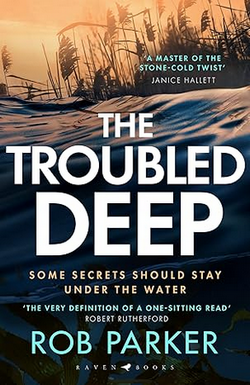
Opening Lines: The Troubled Deep by Rob Parker

This was a mistake, I knew I didn’t have time to read this book anytime soon. But I sucummbed to temptation when I took it out of the package. Now I’m kicking myself–I need the next 360 pages.

Mum and Dad really like parties. They go to three or four a week sometimes, but we are never allowed to go with them. Me and my big brother, that is. They say it’s because the parties always finish too late. That there are no party games, no ice cream, no musical statues. That we’d be home too late for school the next day.

They are probably right about this, but that doesn’t mean I don’t want to go. Getting all dressed up the way Mum does in her sparkly frocks and jangling earrings. My brother could get cleaned up like Dad does too, handsome in a suit or a leather jacket. Mum and Dad always look so special as we wave from the window, watching them leave Brindley Hall in their super cool Jaguar car.

Dad taught me an old-timey rhyme about it and I like the way it rolls off the tongue. Father’s car is a jaguar, and pa drives rather fast. I am going to tell the other children at school on Monday.

If I get to school on Monday.

Because tonight, it has all been different. This time, when it went dark, the babysitter didn’t come, and Mum told us both to get dressed smartly instead. This time, we got to go with them in the Jaguar car, named after a big cat, because it goes so fast.

I wish it had been faster. I wish we’d gone far away from here.

I wish it hadn’t gone into the water.

I wish I wasn’t stuck in it, me and my brother looking at each other in the back as freezing water comes up through gaps in the floor.

I wish we were at home.

I wish we’d never gone to that party.

from The Troubled Deep by Rob Parker

Opening Lines Logo

Opening Lines: The Lies of Locke Lamora

Head & Shoulders used to tell us that, “You never get a second chance to make a first impression.” That’s true for wearing dark shirts, and it’s especially true for books. Sometimes the characters will hook the reader, sometimes the premise, sometimes it’s just knowing the author—but nothing beats a great opening for getting a reader to commit. This is coming up next for my Fantasy Book Club, and I’m more than excited for the excuse to read it again.

At the height of the long wet summer of the Seventy-seventh Year of Sendovani, the Thiefmaker of Camorr paid a sudden and unannounced visit to the Eyeless Priest at the Temple of Perelandro, desperately hoping to sell him the Lamora boy.

“Have I got a deal for you!” the Thiefmaker began, perhaps inauspiciously. “Another deal like Calo and Galdo, maybe?” said the Eyeless Priest. “I’ve still got my hands full training those giggling idiots out of every bad habit they picked up from you and replacing them with the bad habits I need.”

“Now, Chains.” The Thiefmaker shrugged. “I told you they were shit-flinging little monkeys when we made the deal, and it was good enough for you at the—”

“Or maybe another deal like Sabetha?” The priest’s richer, deeper voice chased the Thiefmaker’s objection right back down his throat. “I’m sure you recall charging me everything but my dead mother’s kneecaps for her. I should’ve paid you in copper and watched you spring a rupture trying to haul it all away.”

“Ahhhhhh, but she was special, and this boy, he’s special, too,” said the Thiefmaker. “Everything you asked me to look for after I sold you Calo and Galdo. Everything you liked so much about Sabetha! He’s Camorri, but a mongrel. Therin and Vadran blood with neither dominant. He’s got larceny in his heart, sure as the sea’s full of fish piss. And I can even let you have him at a … a discount.”

The Eyeless Priest spent a long moment mulling this. “You’ll pardon me,” he finally said, “if the suggestion that the minuscule black turnip you call a heart is suddenly overflowing with generosity toward me leaves me wanting to arm myself and put my back against a wall.”

The Thiefmaker tried to let a vaguely sincere expression scurry onto his face, where it froze in evident discomfort. His shrug was theatrically casual. “There are, ah, problems with the boy, yes. But the problems are unique to his situation in my care. Were he under yours, I’m sure they would, ahhhh, vanish.”

“Oh. You have a magic boy. Why didn’t you say so?” The priest scratched his forehead beneath the white silk blindfold that covered his eyes. “Magnificent. I’ll plant him in the fucking ground and grow a vine to an enchanted land beyond the clouds.”

“Ahhhhh! I’ve tasted that flavor of sarcasm before, Chains.” The Thiefmaker gave an arthritic mock bow. “That’s the sort you spit out as a bargaining posture. Is it really so hard to say that you’re interested?”

The Eyeless Priest shrugged. “Suppose Calo, Galdo, and Sabetha might be able to use a new playmate, or at least a new punching bag. Suppose I’m willing to spend about three coppers and a bowl of piss for a mystery boy. But you’ll still need to convince me that you deserve the bowl of piss. What’s the boy’s problem?”

“His problem,” said the Thiefmaker, “is that if I can’t sell him to you, I’m going to have to slit his throat and throw him in the bay. And I’m going to have to do it tonight.”

from The Lies of Locke Lamora by Scott Lynch

Opening Lines Logo

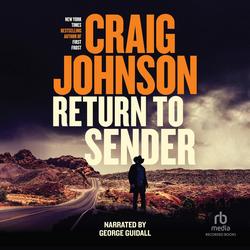
Opening Lines: Return to Sender by Craig Johnson

We all know we’re not supposed to judge a book by its cover (yet, publishing companies spend big bucks on cover design/art and we all do judge them that way). But, the opening sentence(s)/paragraph(s) are fair game. So, when I stumble on a good opening (or remember one and pull it off the shelves), I like to throw it up here. In these few paragraphs, you’re immediately in Walt’s world, knowing you’re in for some good conversations and a slower pace. I’m starting this one tonight, but took a sneak peak.

from Return to Sender by Craig Johnson:

“Nobody smiles anymore.”

“Excuse me?”

“Have you noticed? Nobody smiles anymore.” Mike adjusted himself in the tiny postal Jeep, setting his back against the passenger-side door as he sat on the floor beside Dog so no one would see him in the September early morning light. “Remember when we were growing up how you were taught that when you walked down the street and you met a stranger, that you smiled or said hello?” He sighed, staring at the plethora of mail and packages in the back as if it were a weight he could no longer bear. “People don’t do that anymore.”

Mike Thurman, my late wife’s cousin, was in a bad mood, but that didn’t mean he didn’t have a point.

Opening Lines Logo

Towel Day ’25 (observed): Some of my favorite Adams lines . . .

(updated 5/26/25)

A Blue towel with the words Towel Day on it

There’s a great temptation here for me to go crazy and use so many quotations that I’d get in copyright trouble. I’ll refrain from that and just list some of his best lines . . .*

* The fact that this list keeps expanding from year to year says something about my position on flirting with temptation.

The Hitchhiker's Guide to the Galaxy

The Hitchhiker’s Guide to the Galaxy

Time is an illusion. Lunchtime doubly so.

This must be Thursday. . . I never could get the hang of Thursdays.

“You’d better be prepared for the jump into hyperspace. It’s unpleasantly like being drunk.”

“What’s so unpleasant about being drunk?”

“You ask a glass of water.”

(I’m not sure why, but this has always made me chuckle, if not actually laugh out loud. It’s just never not funny. It’s possibly the line that made me a fan of Adams)

He had found a Nutri-Matic machine which had provided him with a plastic cup filled with a liquid that was almost, but not quite, entirely unlike tea.

“You know,” said Arthur, “it’s at times like this, when I’m trapped in a Vogon airlock with a man from Betelgeuse, and about to die of asphyxiation in deep space that I really wish I’d listened to what my mother told me when I was young.”

“Why, what did she tell you?”
“I don’t know, I didn’t listen.

In those days spirits were brave, the stakes were high, men were real men, women were real women and small furry creatures from Alpha Centauri were real small furry creatures from Alpha Centuari. And all dared to brave unknown terrors, to do mighty deeds, to boldly split infinitives that no man had split before . . .

“Look,” said Arthur, “would it save you a lot of time if I just gave up and went mad now?”

The ships hung in the sky in much the same way that bricks don’t.

For a moment, nothing happened. Then, after a second or so, nothing continued to happen.

<

blockquote>“Space,” [The Guide] says, “is big. Really big. You just won’t believe how vastly, hugely, mindbogglingly big it is. I mean, you may think it’s a long way down the road to the chemist’s, but that’s just peanuts to space, listen…”

He attacked everything in life with a mix of extraordinary genius and naive incompetence, and it was often difficult to tell which was which.

He felt that his whole life was some kind of dream and he sometimes wondered whose it was and whether they were enjoying it.


The Restaurant at the End of the Universe

The Restaurant at the End of the Universe

It is a curious fact, and one to which no one knows quite how much importance to attach, that something like 85 percent of all known worlds in the Galaxy, be they primitive or highly advanced, have invented a drink called jynnan tonnyx, or gee-N-N-T’Nix, or jinond-o-nicks, or any one of a thousand or more variations on the same phonetic theme. The drinks themselves are not the same, and vary between the Sivolvian “chinanto/mnigs” which is ordinary water served at slightly above room temperature, and the Gagrakackan “tzjin-anthony-ks” which kills cows at a hundred paces; and in fact the one common factor between all of them, beyond the fact that the names sound the same, is that they were all invented and named before the worlds concerned made contact with any other worlds.

Reality is frequently inaccurate.

Life is wasted on the living.


Life, The Universe and Everything

Life, the Universe, and Everything

The Hitchhiker’s Guide to the Galaxy has this to say on the subject of flying. There is an art, it says, or rather, a knack to flying. The knack lies in learning how to throw yourself at the ground and miss.

(It goes on for quite a while after this—and I love every bit of it.)

“One of the interesting things about space,” Arthur heard Slartibartfast saying . . . “is how dull it is?”

“Dull?” . . .

“Yes,” said Slartibartfast, “staggeringly dull. Bewilderingly so. You see, there’s so much of it and so little in it.”


So Long, and Thanks For All The Fish

So Long, and Thanks for All the Fish

Of course, one never has the slightest notion what size or shape different species are going to turn out to be, but if you were to take the findings of the latest Mid-Galactic Census report as any kind of accurate guide to statistical averages you would probably guess that the craft would hold about six people, and you would be right. You’d probably guessed that anyway. The Census report, like most such surveys, had cost an awful lot of money and told nobody anything they didn’t already know—except that every single person in the Galaxy had 2.4 legs and owned a hyena. Since this was clearly not true the whole thing eventually had to be scrapped.

Here was something that Ford felt he could speak about with authority. “Life,” he said, “is like a grapefruit.”

“Er, how so?”

“Well, it’s sort of orangy-yellow and dimpled on the outside, wet and squidgy in the middle. It’s got pips inside, too. Oh, and some people have half a one for breakfast.”

“Is there anyone else out there I can talk to?”

Arthur had a swordfish steak and said it made him angry. He grabbed a passing waitress by the arm and berated her. “Why’s this fish so bloody good?” he demanded, angrily.

“Please excuse my friend,” said Fenchurch to the startled waitress. “I think he’s having a nice day at last.”


Mostly Harmless

Mostly Harmless

A common mistake that people make when trying to design something completely foolproof is to underestimate the ingenuity of complete fools.

Fall, though, is the worst. Few things are worse than fall in New York. Some of the things that live in the lower intestines of rats would disagree, but most of the things that live in the lower intestines of rats are highly disagreeable anyways, so their opinion can and should be discounted.


Dirk Gently's Holistic Detective Agency

Dirk Gently’s Holistic Detective Agency

There is no point in using the word ‘impossible’ to describe something that has clearly happened.

If it looks like a duck, and quacks like a duck, we have at least to consider the possibility that we have a small aquatic bird of the family anatidae on our hands.

Let’s think the unthinkable, let’s do the undoable. Let us prepare to grapple with the ineffable itself, and see if we may not eff it after all.

(I’ve often been tempted to get a tattoo of this)


The Long Dark Tea-Time of the Soul

The Long Dark Tea-Time of the Soul

There are some people you like immediately, some whom you think you might learn to like in the fullness of time, and some that you simply want to push away from you with a sharp stick.

It can hardly be a coincidence that no language on earth has ever produced the expression, ‘As pretty as an airport.’

The impossible often has a kind of integrity to it which the merely improbable lacks.

She stared at them with the worried frown of a drunk trying to work out why the door is dancing.

It was his subconscious which told him this—that infuriating part of a person’s brain which never responds to interrogation, merely gives little meaningful nudges and then sits humming quietly to itself, saying nothing.

As she lay beneath a pile of rubble, in pain, darkness, and choking dust, trying to find sensation in her limbs, she was at least relieved to be able to think that she hadn’t merely been imagining that this was a bad day. So thinking, she passed out.


The Last Chance to See

The Last Chance to See

“So what do we do if we get bitten by something deadly?” I asked.

He looked at me as if I were stupid. “You die, of course. That’s what deadly means.”

I’ve never understood all this fuss people make about the dawn. I’ve seen a few and they’re never as good as the photographs, which have the additional advantage of being things you can look at when you’re in the right frame of mind, which is usually around lunchtime.

I have the instinctive reaction of a Western man when confronted with sublimely incomprehensible. I grab my camera and start to photograph it.

Human beings, who are almost unique in having the ability to learn from the experience of others, are also remarkable for their apparent disinclination to do so.

The aye-aye is a nocturnal lemur. It is a very strange-looking creature that seems to have been assembled from bits of other animals. It looks a little like a large cat with a bat’s ears, a beaver’s teeth, a tail like a large ostrich feather, a middle finger like a long dead twig and enormous eyes that seem to peer past you into a totally different world which exists just over your left shoulder.

One of the characteristics that laymen find most odd about zoologists is their insatiable enthusiasm for animal droppings. I can understand, of course, that the droppings yield a great deal of information about the habits and diets of the animals concerned, but nothing quite explains the sheer glee that the actual objects seem to inspire.

I mean, animals may not be intelligent, but they’re not as stupid as a lot of human beings.


The Salmon of Doubt

The Salmon of Doubt: Hitchhiking the Galaxy One Last Time

We are stuck with technology when what we really want is just stuff that works.

I’ve come up with a set of rules that describe our reactions to technologies:
1. Anything that is in the world when you’re born is normal and ordinary and is just a natural part of the way the world works.
2. Anything that’s invented between when you’re fifteen and thirty-five is new and exciting and revolutionary and you can probably get a career in it.
3. Anything invented after you’re thirty-five is against the natural order of things.


And a couple of lines I’ve seen in assorted places, articles, books, and whatnot

I love deadlines. I love the whooshing noise they make as they go by.

A learning experience is one of those things that says, “You know that thing you just did? Don’t do that.”

The fact is, I don’t know where my ideas come from. Nor does any writer. The only real answer is to drink way too much coffee and buy yourself a desk that doesn’t collapse when you beat your head against it.

Solutions nearly always come from the direction you least expect, which means there’s no point trying to look in that direction because it won’t be coming from there.

Don't Panic

Opening Lines: A Scanner Darkly by Philip K. Dick

Head & Shoulders used to tell us that, “You never get a second chance to make a first impression.” That’s true for wearing dark shirts, and it’s especially true for books. Sometimes the characters will hook the reader, sometimes the premise, sometimes it’s just knowing the author—but nothing beats a great–or strange–opening for getting a reader to commit.

Once a guy stood all day shaking bugs from his hair. The doctor told him there were no bugs in his hair. After he had taken a shower for eight hours, standing under hot water hour after hour suffering the pain of the bugs, he got out and dried himself, and he still had bugs in his hair; in fact, he had bugs all over him. A month later he had bugs in his lungs.

Having nothing else to do or think about, he began to work out theoretically the life cycle of the bugs, and, with the aid of the Britannica, try to determine specifically which bugs they were. They now filled his house. He read about many different kinds and finally noticed bugs outdoors, so he concluded they were aphids. After that decision came to his mind it never changed, no matter what other people told him… like “Aphids don’t bite people.”

They said that to him because the endless biting of the bugs kept him in torment. At the 7-11 grocery store, part of a chain spread out over most of California, he bought spray cans of Raid and Black Flag and Yard Guard. First he sprayed the house, then himself, The Yard Guard seemed to work the best.

from A Scanner Darkly by Philip K. Dick
Cover of A Scanner Darkly by Philip K. Dick

Opening Lines Logo

Nero Wolfe on Taxes

I can’t tell you when this became a (largely) annual thing for me to post, but it was on a blog that pre-existed this one. As always, it seems like a good day to post it.

Nero Wolfe Back CoversA man condemning the income tax because of the annoyance it gives him or the expense it puts him to is merely a dog baring its teeth, and he forfeits the privileges of civilized discourse. But it is permissible to criticize it on other and impersonal grounds. A government, like an individual, spends money for any or all of three reasons: because it needs to, because it wants to, or simply because it has it to spend. The last is much the shabbiest. It is arguable, if not manifest, that a substantial proportion of this great spring flood of billions pouring into the Treasury will in effect get spent for that last shabby reason.

–Nero Wolfe
from And Be a Villain

Opening Lines: Miracles by C.S. Lewis

We all know we’re not supposed to judge a book by its cover (yet, publishing companies spend big bucks on cover design/art and we all do judge them that way). But, the opening sentence(s)/paragraph(s) are fair game. So, when I stumble on a good opening (or remember one and pull it off the shelves), I like to throw it up here. In these few paragraphs, you see exactly how he argues for the rest of the book.

from Miracles by C.S. Lewis:

In all my life I have met only one person who claims to have seen a ghost. And the interesting diing about the story is that that person disbelieved in the immortal soul before she saw the ghost and still disbelieves after seeing it. She says that what she saw must have been an illusion or a trick of the nerves. And obviously she may be right. Seeing is not believing.

For this reason, the question whether miracles occur can never be answered simply by experience. Every event which might claim to be a miracle is, in the last resort, something presented to our senses, something seen, heard, touched, smelled, or tasted. And our senses are not infallible. If anything extraordinary seems to have happened, we can always say that we have been the victims of an illusion. If we hold a philosophy which excludes the supernatural, this is what we always shall say. What we learn from experience depends on the kind of philosophy we bring to experience. It is therefore useless to appeal to experience before we have settled, as well as we can, the philosophical question..

If immediate experience cannot prove or disprove the miraculous, still less can history do so. Many people think one can decide whether a miracle occurred in the past by examining the evidence “according to the ordinary rules of historical enquiry.” But the ordinary rules cannot be worked until we have decided whether miracles are possible, and if so, how probable they are. For if they are impossible, then no amounnt of historical evidence will convince us. If they are possible but immensely improbable, then only mathematically demonstrative evidence will convince us: and since history never provides that degree of evidence for any event, history can never convince us that a miracle occurred. If, on the other hand, miracles are not intrinsically improbable, then the existing evidence will be sufficient to convince us that quite a number of miracles have occurred. The result of our historical enquiries thus depends on the philosophical views which we have been holding before we even began to look at the evidence. The philosophical question must therefore come first.

Here is an example of the sort of thing that happens if we omit the preliminary philosophical task, and rush on to the historical. In a popular commentary on the Bible you will find a discussion of the date at which the Fourth Gospel was written. The author says it must have been written after the execution of St. Peter, because, in the Fourth Gospel, Christ is represented as predicting the execution of St. Peter. “A book,” thinks the author, “cannot be written before events which it refers to.” Of course it cannot–unless real predictions ever occur. If they do, then this argument for the date is in ruins. And the author has not discussed at all whether real predictions are possible. He takes it for granted (perhaps unconsciously) that they are not. Perhaps he is right: but if he is, he has not discovered this principle by historical inquiry. He has brought his disbelief in predictions to his historical work, so to speak, ready made. Unless he had done so his historical conclusion about the date of the Fourth Gospel could not have been reached at all. His work is therefore quite useless to a person who wants to know whether predictions occur. The author gets to work only after he has already answered that question in the negative, and on grounds which he never communicates to us.

Opening Lines Logo

Highlights from January: Lines Worth Repeating

Highlights from the Month

Cover of The Boys of Riverside by Thomas Fuller

The Boys of Riverside: A Deaf Football Team and a Quest for Glory by Thomas Fuller

Desire is a tree with leaves, hope is a tree in bloom, enjoyment is a tree with fruit.


Cover of Sleep No More by Seanan McGuire

Sleep No More by Seanan McGuire

Romantic love is not required to live a full and happy life, my seedlings,” Father had told us, watching carefully to be sure we took his message to heart, “but if you cannot love one who loves you truly in return, find friends, find companions, find people who will tell you the truths you cannot carry and unveil the lies you cannot see. Most of all, cleave to each other, for you will be the only sure support you have in all this world.

The force of their wanting cut channels in the world.

You’re his child because parentage is so much more than blood. Parentage is showing up and being present, is love and learning and compassion and care.


Cover of Pushing Ice by Alastair Reynolds

Pushing Ice by Alastair Reynolds

Svetlana forced herself to nod. She could never quite overcome a lingering prejudice against the comet miners. They were too brave, too courageous. Svetlana thought that the only kind of person you wanted anywhere near any part of a fusion motor was someone with a strong aversion to risk.

Cowards were exactly the kind of people you wanted around nuclear technology.

“You could give scheming lessons to Machiavelli,” Parry said.

“I did. He flunked.”


Cover of Sword & Thistle by S.L. Rowland

Sword & Thistle by S.L. Rowland

When he smiled, Dobbin recognized him by his missing front teeth. Hildir had lost them in an unfortunate accident involving too many drinks, a frying pan, and a gelatinous cube.

On nights like this, he wondered if he could ever truly give it up. The traveling, the exploration, meeting new people, and experiencing the hidden treasures of Aedrea. To settle down in one place for the rest of his life trapped in a cage…

Then again, wasn’t that what books were for? He could live a hundred lives and still sleep in a warm bed at night.

“We’re adventurers. We make our living doing stupid things.”

“You can lead a griffin to the mountains, but you can’t make it fly.”


Cover of Subculture Vulture by Moshe Kasher

Subculture Vulture: A Memoir in Six Scenes by Moshe Kasher

Once at the mechanic, you find out what the problem is. Busted transmission, engine failure, acute cirrhosis. That knowledge is VITAL. Without it you cannot move forward. But that knowledge doesn’t fix the car. It only makes the fixing of the car possible.


Cover of I Cheerfully Refuse by Leif Enger

I Cheerfully Refuse by Leif Enger

The world was so old and exhausted that many now saw it as a dying great-grand on a surgical table, body decaying from use and neglect, mind fading down to a glow.

Lark laughed. It was her habit when delighted to rise lightly on tiptoe as if forgotten by gravity.

Why do this to yourself you say, and I reply Why not?

As enemies go, despair has every ounce of my respect.

He was suspected of wisdom but it’s a tough thing to prove …


Cover of The Innocent Sleep by Seanan McGuire

The Innocent Sleep by Seanan McGuire

Love is a knife forever suspended an inch from your heart, and if it falls or you stumble into it, you can all too easily find yourself impaled and bleeding.

Like every other baby I’d seen, he looked nothing like his parents, and more like the unpleasant blend of a salmon and a drowned human.

From a great enough height, even water may turn into a weapon.


(Image by DaModernDaVinci from Pixabay)

Page 2 of 30

Powered by WordPress & Theme by Anders Norén