Category: Quotations Page 4 of 30

Towel Day ’24: Some of my favorite Adams lines . . .

(updated 5/25/24)

Towel Day

There’s a great temptation here for me to go crazy and use so many quotations that I’d get in copyright trouble. I’ll refrain from that and just list some of his best lines . . .*

* The fact that this list keeps expanding from year to year says something about my position on flirting with temptation.

The Hitchhiker's Guide to the Galaxy

The Hitchhiker’s Guide to the Galaxy

Time is an illusion. Lunchtime doubly so.

This must be Thursday. . . I never could get the hang of Thursdays.

“You’d better be prepared for the jump into hyperspace. It’s unpleasantly like being drunk.”

“What’s so unpleasant about being drunk?”

“You ask a glass of water.”

(I’m not sure why, but this has always made me chuckle, if not actually laugh out loud. It’s just never not funny. It’s possibly the line that made me a fan of Adams)

He had found a Nutri-Matic machine which had provided him with a plastic cup filled with a liquid that was almost, but not quite, entirely unlike tea.

In those days spirits were brave, the stakes were high, men were real men, women were real women and small furry creatures from Alpha Centauri were real small furry creatures from Alpha Centuari. And all dared to brave unknown terrors, to do mighty deeds, to boldly split infinitives that no man had split before . . .

“Look,” said Arthur, “would it save you a lot of time if I just gave up and went mad now?”

The ships hung in the sky in much the same way that bricks don’t.

For a moment, nothing happened. Then, after a second or so, nothing continued to happen.

<

blockquote>“Space,” [The Guide] says, “is big. Really big. You just won’t believe how vastly, hugely, mindbogglingly big it is. I mean, you may think it’s a long way down the road to the chemist’s, but that’s just peanuts to space, listen…”

He attacked everything in life with a mix of extraordinary genius and naive incompetence, and it was often difficult to tell which was which.

He felt that his whole life was some kind of dream and he sometimes wondered whose it was and whether they were enjoying it.


The Restaurant at the End of the Universe

The Restaurant at the End of the Universe

It is a curious fact, and one to which no one knows quite how much importance to attach, that something like 85 percent of all known worlds in the Galaxy, be they primitive or highly advanced, have invented a drink called jynnan tonnyx, or gee-N-N-T’Nix, or jinond-o-nicks, or any one of a thousand or more variations on the same phonetic theme. The drinks themselves are not the same, and vary between the Sivolvian “chinanto/mnigs” which is ordinary water served at slightly above room temperature, and the Gagrakackan “tzjin-anthony-ks” which kills cows at a hundred paces; and in fact the one common factor between all of them, beyond the fact that the names sound the same, is that they were all invented and named before the worlds concerned made contact with any other worlds.

Reality is frequently inaccurate.

Life is wasted on the living.


Life, The Universe and Everything

Life, the Universe, and Everything

The Hitchhiker’s Guide to the Galaxy has this to say on the subject of flying. There is an art, it says, or rather, a knack to flying. The knack lies in learning how to throw yourself at the ground and miss.

(It goes on for quite a while after this—and I love every bit of it.)

“One of the interesting things about space,” Arthur heard Slartibartfast saying . . . “is how dull it is?”

“Dull?” . . .

“Yes,” said Slartibartfast, “staggeringly dull. Bewilderingly so. You see, there’s so much of it and so little in it.”


So Long, and Thanks For All The Fish

So Long, and Thanks for All the Fish

Of course, one never has the slightest notion what size or shape different species are going to turn out to be, but if you were to take the findings of the latest Mid-Galactic Census report as any kind of accurate guide to statistical averages you would probably guess that the craft would hold about six people, and you would be right. You’d probably guessed that anyway. The Census report, like most such surveys, had cost an awful lot of money and told nobody anything they didn’t already know—except that every single person in the Galaxy had 2.4 legs and owned a hyena. Since this was clearly not true the whole thing eventually had to be scrapped.

Here was something that Ford felt he could speak about with authority. “Life,” he said, “is like a grapefruit.”

“Er, how so?”

“Well, it’s sort of orangy-yellow and dimpled on the outside, wet and squidgy in the middle. It’s got pips inside, too. Oh, and some people have half a one for breakfast.”

“Is there anyone else out there I can talk to?”

Arthur had a swordfish steak and said it made him angry. He grabbed a passing waitress by the arm and berated her. “Why’s this fish so bloody good?” he demanded, angrily.

“Please excuse my friend,” said Fenchurch to the startled waitress. “I think he’s having a nice day at last.”


Mostly Harmless

Mostly Harmless

A common mistake that people make when trying to design something completely foolproof is to underestimate the ingenuity of complete fools.

Fall, though, is the worst. Few things are worse than fall in New York. Some of the things that live in the lower intestines of rats would disagree, but most of the things that live in the lower intestines of rats are highly disagreeable anyways, so their opinion can and should be discounted.


Dirk Gently's Holistic Detective Agency

Dirk Gently’s Holistic Detective Agency

There is no point in using the word ‘impossible’ to describe something that has clearly happened.

If it looks like a duck, and quacks like a duck, we have at least to consider the possibility that we have a small aquatic bird of the family anatidae on our hands.

Let’s think the unthinkable, let’s do the undoable. Let us prepare to grapple with the ineffable itself, and see if we may not eff it after all.

(I’ve often been tempted to get a tattoo of this)


The Long Dark Tea-Time of the Soul

The Long Dark Tea-Time of the Soul

There are some people you like immediately, some whom you think you might learn to like in the fullness of time, and some that you simply want to push away from you with a sharp stick.

It can hardly be a coincidence that no language on earth has ever produced the expression, ‘As pretty as an airport.’

The impossible often has a kind of integrity to it which the merely improbable lacks.

She stared at them with the worried frown of a drunk trying to work out why the door is dancing.

It was his subconscious which told him this—that infuriating part of a person’s brain which never responds to interrogation, merely gives little meaningful nudges and then sits humming quietly to itself, saying nothing.

As she lay beneath a pile of rubble, in pain, darkness, and choking dust, trying to find sensation in her limbs, she was at least relieved to be able to think that she hadn’t merely been imagining that this was a bad day. So thinking, she passed out.


The Last Chance to See

The Last Chance to See

“So what do we do if we get bitten by something deadly?” I asked.

He looked at me as if I were stupid. “You die, of course. That’s what deadly means.”

I’ve never understood all this fuss people make about the dawn. I’ve seen a few and they’re never as good as the photographs, which have the additional advantage of being things you can look at when you’re in the right frame of mind, which is usually around lunchtime.

I have the instinctive reaction of a Western man when confronted with sublimely incomprehensible. I grab my camera and start to photograph it.

Human beings, who are almost unique in having the ability to learn from the experience of others, are also remarkable for their apparent disinclination to do so.

The aye-aye is a nocturnal lemur. It is a very strange-looking creature that seems to have been assembled from bits of other animals. It looks a little like a large cat with a bat’s ears, a beaver’s teeth, a tail like a large ostrich feather, a middle finger like a long dead twig and enormous eyes that seem to peer past you into a totally different world which exists just over your left shoulder.

One of the characteristics that laymen find most odd about zoologists is their insatiable enthusiasm for animal droppings. I can understand, of course, that the droppings yield a great deal of information about the habits and diets of the animals concerned, but nothing quite explains the sheer glee that the actual objects seem to inspire.

I mean, animals may not be intelligent, but they’re not as stupid as a lot of human beings.


The Salmon of Doubt

The Salmon of Doubt: Hitchhiking the Galaxy One Last Time

We are stuck with technology when what we really want is just stuff that works.

I’ve come up with a set of rules that describe our reactions to technologies:
1. Anything that is in the world when you’re born is normal and ordinary and is just a natural part of the way the world works.
2. Anything that’s invented between when you’re fifteen and thirty-five is new and exciting and revolutionary and you can probably get a career in it.
3. Anything invented after you’re thirty-five is against the natural order of things.


And a couple of lines I’ve seen in assorted places, articles, books, and whatnot

I love deadlines. I love the whooshing noise they make as they go by.

A learning experience is one of those things that says, “You know that thing you just did? Don’t do that.”

The fact is, I don’t know where my ideas come from. Nor does any writer. The only real answer is to drink way too much coffee and buy yourself a desk that doesn’t collapse when you beat your head against it.

Solutions nearly always come from the direction you least expect, which means there’s no point trying to look in that direction because it won’t be coming from there.

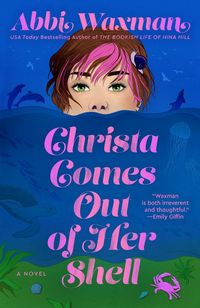
Opening Lines: Christa Comes Out of Her Shell by Abbi Waxman

Head & Shoulders used to tell us that, “You never get a second chance to make a first impression.” That’s true for wearing dark shirts, and it’s especially true for books. Sometimes the characters will hook the reader, sometimes the premise, sometimes it’s just knowing the author—but nothing beats a great opening for getting a reader to commit.

So, I’m going to kick off by making one thing very clear: None of this was my fault. I was part of it, sure, but only like a flea is part of a cat. I was carried along, contributing my own pain-in-the-ass factor, no argument there, but I was mot, in any sense, driving the bus. Let’s not forget that when this story starts, was literally on an island in the middle of nowhere. Hands full, head busy, heart well guarded. Safe as houses, baby.

Wait, that’s not completely accurate. The island of Violetta isn’t in the middle of nowhere; it’s slightly to the right of Africa, many hundreds of miles into the Indian Ocean. It’s a geography cal, political and sociological anomaly, It’s also home to a frozwn vodka drink called the Barrier Island, beyond which no man may safely travel, but that’s a sidenote. It lies two days’ sail from a large French-speaking island more than five hundred miles off the east African coast, which is probably why the French didn’t bother to claim it. It was ignored by the Mauritians, because they thought the French already nabbed it, and blithely disregarded by the British, who had no idea who owned it, but had no reason to think was them.

No one paid much attention to it at all until the 1950s, when an enterprising young Violettan by the name of Agnes Bottlebrush did a school project on the even younger United Nations and then quietly applied for membership for Violetta (Agnes was an overachiever with time on her hands). As the result of a series of fortunate and slightly comedic events, Violetta became the smallest member of the United Nations, and Agnes received a rapid promotion to Head Girl. Then she walked around to everyone’s houses and handed them a copy of the UN Charter and gathered suggestions for what to put on the flag.

from Christa Comes Out of Her Shell by Abbi Waxman
Christa Comes Out of Her Shell Cover
I’m not sure what happens over the next 369 pages (in a sense). I just want almost 400 pages like this.

Opening Lines Logo

Highlights from March: Lines Worth Repeating

Highlights from the Month
What better day than the last day of April to finish my March wrap-up?

A Blight of Blackwings

The Blight of Blackwings by Kevin Herne

I waved at Constable du Bartylyn, who was passing by and had absolutely no updates on my stolen furniture, save for a speculation that someone else must have farted on it by now, and if I thought about that long enough, it might make me feel a little bit better about never seeing it again.

He walked away, whistling, and I thought he was a singularly strange individual for trying to comfort me with thoughts of thieves tooting their foghorns on my property. But perhaps I should give him full Marks for innovative community policing.

“Have you ever heard of the lizards in Forn that can change the color of their skin to match their surroundings? They’re called chameleons.”

“Yes, I’ve heard of them. I’d love to actually see one someday.”

After witnessing that performance, I think grief can be thought of as a chameleon. It can change its color or pattern, but underneath it all it’s still an ugly lizard on a branch, waiting patiently for the right time to strike.”

“You realize that every time I’m sad from now on I’m going to think chameleons?”

A mob is not the best, though. It’s strange to be in one, to realize that, Hey, I’m part of a mob right now, and mobs are pretty famous for not doing anything nice to other people. No one sees a mob tearing down the street and thinks, Oh, neat! I wonder what kindness they will bestow upon our neighbors! No one wishes a mob would form outside their neighborhood.


Moonlight Mile

Moonlight Mile by Dennis Lehane

It’s odd how fast a beautiful woman can turn a guy’s mind into lint storage. Just by being a beautiful woman.

I normally can’t stand vice-free people. They conflate a narcissistic instinct for self-preservation with moral superiority. Plus they suck the life right out of a party.

…I looked out the window and felt old. It was a feeling I’d had a lot lately. But not in a rueful way. If this is how twenty-somethings spent their twenties these days, they could have their twenties. Their thirties, too.


Dead Ground

Dead Ground by MW. Craven

Poe had missed something. he didn’t know what, but his second brain, the one that ticked over in the background while his primary brain made rash decisions was working overtime. He recognized the signs, nervous energy and an inability to concentrate on anything.


Soul Taken

Soul Taken by Patricia Briggs

“The thing that we thought might end up with Adam dead looks like it will work out okay,” I told her dryly as her feet hit the ground again. “We have another situation to replace it that might end up with Adam dead. Or me dead. Or maybe the whole pack. But at least we solved one deadly situation before we picked up another one.”

“Business as usual,” said Tad.


Heaven's River

Heaven’s River by Dennis E. Taylor

All actions have risks. Most inactions even more so.

What it lacks in elegance, it makes up for with wads of unearned optimism. Let’s do it.

Sadly, it was like most political arguments. No one was willing to debate their base assumptions, or justify them, or compromise on them. The simple tactic being that if you repeated your assertion often enough, with enough emotion and volume, the opponents would somehow be forced to see things your way.


Podkin One-Ear

Podkin One-Ear by Kieran Larwood

“Stories belong to the teller,” says the bard. “At least half of them do. The other part belongs to the listeners. When a good story is told to a good listener, the pair of them own it together.”

(Image by DaModernDaVinci from Pixabay)

EXCERPT from Crimson Arches by Rebecca Carey Lyles: What was going on?

Crimson Arches CoverAs we continue to celebrate the Publication Day of Crimson Arches, here’s a little sample to whet your appetite, and a quick reminder that both books (so far) in this series are available for a great price.


from Crimson Arches by Rebecca Carey Lyles

What was going on?

Far ahead on the two-lane highway that divided the flat desert like an endless gray ribbon, a light flashed. Kasenia Clarke squinted but saw nothing unusual, not even a dust devil twirling across the arid plain. Had to be sunlight reflected off a car window or a bumper. She lowered the sun visor to block the bright orb’s merciless glare, and a flicker in the rearview mirror caught her eye.

What was going on?

A siren sounded behind her. This time, she couldn’t miss the frenetic red-and-blue beams coming closer by the second. Heart in her throat, she glanced at the speedometer and steered to the side. She wasn’t speeding, and the kidnapping charges had been dropped a year ago. Even so, her stomach clenched at the reminder of her arrest and incarceration, experiences she hoped to never repeat.

A State Trooper’s SUV screamed past, buffeting her car. Kasenia cringed. The ear-piercing sound shook her to her core. The trooper wasn’t after her, thank God, but someone up ahead was injured or in trouble. After a quick check for other cars, she drove onto the blacktop, only to hear another siren. This time, she swerved off the highway mere moments before an ambulance wailed by her window.

When no more emergency vehicles followed, Kasenia checked one more time. With deep breaths to slow her racing pulse, she pulled onto the road again, grateful the sirens hadn’t triggered a panic attack.

She’d traveled several more miles when she topped a rise and saw a string of cars that appeared to be at a standstill several miles ahead. Black smoke billowed in the distance.

More sirens. More lights. Again, she reduced speed and maneuvered out of the way. A second ambulance passed, this one trailed by a firetruck, then a tow truck, and another firetruck.

“Jesus,” she whispered, “please help those who’ve been injured and give the first responders wisdom.” Almost every time she rode with her grandpa, someone would speed past on a straightaway. And every time, he’d grouse, “What does that bloomin’ blockhead think this is, a racetrack?” Sadly, sometimes those drivers caused horrible accidents.

She rolled onto the road, this time to slowly approach the last vehicle in the queue. Braking to a stop, she sat for a moment, taking in the situation. Despite the heat, people stood outside their cars, gaping at the enormous black smoke cloud.

Before she switched off the AC, Kasenia twisted her hair to fit it into the crown of her wide-brimmed straw sunhat and adjusted her sunglasses, which usually prevented recognition. But not always. The hat was an extra precaution to hide her copper-colored hair, which tended to attract attention.

Modeling required her to be in the spotlight during photo shoots—she was used to that. But since the Shadow Ranch debacle, almost every time she left home, curious people gathered around her like mice to cheese. They bombarded her with questions about the ranch, Brewster, the sister wives, running away. They took cell phone pictures without her permission and begged for autographs. Yet in a year’s time, not a single person had asked how she and Sam and the others were coping with the trauma since their perilous escape.

Her lawyer advised her to say she wasn’t allowed to answer questions or give autographs, and to keep walking, so that’s what she did.

In addition to local notoriety, her photo had been plastered on the front cover of nearly every magazine on the grocery-store racks. All because she’d stupidly fallen for Brewster’s lies and allowed him to trick her into a fake marriage. Then there was the meddling media, as Grandpa Gordon called reporters who appeared from nowhere, snapping pictures and sticking microphones in her face. All these months later, they still clamored for interviews about her Shadow Ranch experience.

Kasenia switched off the ignition and reached for the door handle. The silver SUV she’d parked behind had a Montana license plate. Good. People from up north wouldn’t know anything about her or Shadow Ranch.


Read the rest in Crimson Arches by Rebecca Carey Lyles to see what happens from here in this follow-up to Shadow Ranch.

Irresponsible Reader Pilcrow Icon

Nero Wolfe on Taxes

I can’t tell you when this became a (largely) annual thing for me to post, but it was on a blog that pre-existed this one. As always, seems like a good day to post it.

Nero Wolfe Back CoversA man condemning the income tax because of the annoyance it gives him or the expense it puts him to is merely a dog baring its teeth, and he forfeits the privileges of civilized discourse. But it is permissible to criticize it on other and impersonal grounds. A government, like an individual, spends money for any or all of three reasons: because it needs to, because it wants to, or simply because it has it to spend. The last is much the shabbiest. It is arguable, if not manifest, that a substantial proportion of this great spring flood of billions pouring into the Treasury will in effect get spent for that last shabby reason.

–Nero Wolfe
from And Be a Villain

Opening Lines: Miracles by C.S. Lewis

from Miracles by C.S. Lewis:

In all my life I have met only one person who claims to have seen a ghost. And the interesting thing about the story is that that person disbelieved in the immortal soul before she saw the ghost and still disbelieves after seeing it. She says that what she saw must have been an illusion or a trick of the nerves, And obviously she may be right. Seeing is not believing.

For this reason, the question whether miracles occur can never be answered simply by experience. Every event which might claim to be a miracle is, in the last resort, something presented to our senses, something seen, heard, touched, smelled, or tasted. And our senses are not infallible. If anything extraordinary seems to have happened, we can always say that we have been the victims of an illusion. If we hold a philosophy which excludes the supernatural, this is what we always shall say. What we learn from experience depends on the kind of philosophy we bring to experience. It is therefore useless to appeal to experience before we have settled, as well as we can, the philosophical question.

If immediate experience cannot prove or disprove the miraculous, still less can history do so. Many people think one can decide whether a miracle occurred in the past by examining the evidence “according to the ordinary rules of historical inquiry.” But the ordinary rules cannot be worked until we have decided whether miracles are possible, and if so, how probable they are. For if they are impossible, then no amount of historical evidence will convince us. If they are possible but immensely improbable, then only mathematically demonstrative evidence will convince us: and since history never provides that degree of evidence for any event, history can never convince us that a miracle occurred. If, on the other hand, miracles are not intrinsically improbable, then the existing evidence will be sufficient to convince us that quite a number of miracles have occurred, The result of our historical enquiries thus depends on the philosophical views which we have been holding before we even began to look at the evidence, The philosophical question must therefore come first.

Here is an example of the sort of thing that happens if we omit the preliminary philosophical task, and rush on to the historical. In a popular commentary on the Bible you will find a discussion of the date at which the Fourth Gospel was written. The author says it must have been written after the execution of St. Peter, because, in the Fourth Gospel, Christ is represented as predicting the execution of St. Peter. “A book,” thinks the author, “cannot be written before events which it refers to.” Of course it cannot—unless real predictions ever occur. If they do, then this argument for the date is in ruins, And the author has not discussed at all whether real predictions are possible. He takes it for granted (perhaps unconsciously) that they are not. Perhaps he is right: but if he is, he has not discovered this principle by historical inquiry. He has brought his disbelief in predictions to his historical work, so to speak, ready made. Unless he had done so his historical conclusion about the date of the Fourth Gospel could not have been reached at all. His work is therefore quite useless to a person who wants to know whether predictions occur, The author gets to work only after he has already answered that question in the negative, and on grounds which he never communicates to us.

This book is intended as a preliminary to historical inquiry. I am not a trained historian and I shall not examine the historical evidence for the Christian miracles, My effort is to put my readers in a position to do so. It is no use going to the texts until we have some idea about the possibility or probability of the miraculous, Those who assume that miracles cannot happen are merely wasting their time by looking into the texts we know in advance what results they will find for they have begun by begging the question.

Opening Lines Logo

EXCERPT from Rift in the Soul by Faith Hunter: Waiting in the MOC’s Foyer

Rift in the Soul Schedule Banner

from Rift in the Soul by Faith Hunter

Waiting in the MOC’s Foyer

Patterns at my feet drew my eye. The foyer had been refloored in white marble. In the center, tiny pieces of gray marble, brass, and glistening steel had been inlaid and formed a pair of blades, the mosaic marble handles crossed. The single-edged blades themselves had been embedded in the floor; they appeared real but were strangely shaped. One blade looked as if an ax had been crossed with a machete and then a dragon had taken a bite out of the unsharp edge. I knew nothing about fighting with blades, but even I could tell the dragon-bitten section was for snagging an opponent’s blade out of their hand. The other blade was similar but without the snagging-dragon-bite, and a longer cutting edge. They were different but they were also clearly a pair of blades intended to be used together. The ends of the blades, where they should have attached to real handles—hilts?—were made of brass or gold and were shaped like dragon snouts, as if the steel was erupting from their mouths. Above and between the crossed blades was a green, faceted square.

“Ingram,” FireWind snapped. There was an edge of “pay attention” in the tone.

“What’s that?” I pointed at the floor.

“Ming’s new crest,” FireWind said, his tone still sharp. “Since she became MOC.”

As if my up-line boss hadn’t just snapped at me, I holstered my weapon and started taking pictures, sending them back to HQ. Aya grunted in approval. I was learning how to read him. I flipped on more lights and took shots of the parlor to the left and the hallways leading off into darkness. According to county records the clan home of the Master of the City was nearly twelve thousand square feet, so I wasn’t getting much of the house, but it was the first time I’d been in a position to film it.

As I worked, Rick explained to me, still a newbie, “It’s customary for the Master of the City, the most powerful Mithran in the territory, to have their crest inlaid in the entry floor of the city’s Council Chambers headquarters, to remind friends and visiting enemies alike who they would have to fight and conquer. Ming is both the MOC and head of the only vampire clan in Knoxville, so her home does double duty.”

Ming had been given MOC status by Jane Yellowrock. I remembered that. When I had taken photos of everything I could without wandering around, I pulled the psy-meter from my pocket and quickly took a reading of Ming’s foyer. The readings were all over the place.

At a warning signal from Rick, I slid the device away.

https://www.penguinrandomhouse.com/ Copyright Faith Hunter


Read the rest in Rift in the Soul by Faith Hunter to see what happens from here in this pivotal novel for this universe.

My thanks to Psst…Promotions for the invitation to participate in this tour and the materials (including the book via NetGalley and Berkley Publishing Group) they provided.

Highlights from February: Lines Worth Repeating

Highlights from the Month
Murder Crossed Her Mind

Murder Crossed Her Mind by Stephen Spotswood

…when you might be stepping into danger,it’s always better to err on the side of armed.

He had nabbed the shadowiest corner in the place, but I’d seen him close-up and in daylight, and I don’t know why he bothered hiding. He could’ve had his photograph in the dictionary under the entry “nondescript.” Medium height, medium build, hair brown, eyes brown, suit brown, face symmetrical but not so much that you’d notice. The only thing that marked him as anything other than a Fuller Brush Salesman was the relationship between him and the room. Those flat brown eyes (and I’m not knocking the shade, mine are teh color of mud) never stopped moving, if a fly happened to wander into the room, Faraday would’ve clocked it. If he could’ve he’d have frisked it for a weapon and wired it for sound.


Return of the Griffin

Return of the Griffin by JCM Berne

Rohan scratched his beard. “Well, I hope you’re wrong. There’s a first time for everything, right?”

“As there are many things that have never happened, there is not, in fact, a first time for everything.”

“You’re taking all the fun out of my apocalypse.”

“Of course. ‘Wei Li,’ my name, means, ‘she who removes joy from catastrophe.’ In my native language.”

“Really?”

“Of course not.”


Soundtrack of Silence

Soundtrack of Silence: Love, Loss, and a Playlist for Life by Matt Haig

Not to try to bill myself as a relationship counselor, but when a beautiful woman—who is smart and driven enough to be in med school, fit enough to run a marathon, thoughtful enough to raise money for your rare neurological condition, and patient and confident enough to to move in with your parents—sticks with you as you relearn how to walk, you would be a fool not to marry her. Those are the rules.


Fortune Smiles

Fortune Smiles by Adam Johnson

DJ understood that in South Korea, Americans were considered friends. He’d never really believed they were the enemy. After all, hadn’t Americans invented scratch-off lottery tickets, crystal meth, hundred-dollar bills and, most important, the catalytic converter?

“Do you believe in second chances?” she asked. “Can people change their nature?”

DJ leaned against the bus shelter. “Those are two different questions,” he said.


The Other Family Doctor

The Other Family Doctor: A Veterinarian Explores What Animals Can Teach Us About Love, Life, and Mortality by Karen Fine

Sometimes, this human-animal love is present in our lives but not central. We may have busy lives in which our pets are just a part. Perhaps we don’t think of them as a fundamental presence, but they are there, as solid and reliable as a comfortable chair to sink into at the end of each day. Our pets bear witness to the intimate, everyday details of our daily existence, weaving and threading their own personalities into our lives and households. With them, we are home. When they are gone, we feel their absence deeply.


Emily Wilde's Map of the Otherlands

Emily Wilde’s Map of the Otherlands by Heather Fawcett

“There is nothing trivial about good coffee.”

“The problem is not the packing, I admit; I simply dislike traveling. Why people wish to wander to and fro when they could simply remain at home is something I will never understand. Everything is the way I like it here.”


City on Fire

City on Fire by Don Winslow

Danny misses the ocean when he’s not here.

It gets in your blood, like you got salt water running through you. The fishermen Danny knows love the sea and hate it, say it’s like a cruel woman who hurts you over and over again but you keep going back to her anyway.

Providence is a gray city.

Gray skies, gray buildings, gray streets. Gray granite as hard as the New England pilgrims who hacked it out of the quarries to build their City on the Hill. Gray as the pessimism that hangs in the air like the fog.

Gray as grief.


Another Girl

Another Girl by Peter Grainger

Green put a chair by his desk and made her sit down on it. The rest of them moved a little closer, made conversation, and tried not to stare at the damage done to her face. It would heal on the outside, of course. But it’s the other side we need to worry about.

…common sense and the law are not always the close bedfellows we’d like them to be…


A Quantum Love Story

A Quantum Love Story by Mike Chen

“I had a breakfast shake. And, um, something for lunch. Something from the Hawke café. I can’t remember what.”

“Okay. So you had sustenance today. That’s not eating. Every single meal is a chance for a new experience.” He took a carton in each hand and waved them in front of her. “Smell this. This is eating. It’s different from sustenance.”

Such a thought seemed like a declaration in a foreign language. Of course she enjoyed a good restaurant, but when every second counted, taking the time to savor a single meal seemed, well, a little counterproductive.

“Time’s gonna pass, but if you slow down a little, you might enjoy it. That’s what eating is all about.”

So her truth proved to be stranger than fiction. Which made it harder than fiction


Spells for the Dead

Spells for the Dead by Faith Hunter

What I knew about alcohol could be written on my little fingernail in longhand…


(Image by DaModernDaVinci from Pixabay)

Opening Lines: City on Fire by Don Winslow

We all know we’re not supposed to judge a book by its cover (yet, publishing companies spend big bucks on cover design/art and we all do judge them that way). But, the opening sentence(s)/paragraph(s) are fair game. So, when I stumble on a good opening (or remember one and pull it off the shelves), I like to throw it up here. There are so few writers that can grab you like Winslow can from the get-go.

from City on Fire by Don Winslow:

Danny Ryan watches the woman come out of the water like a vision emerging from his dreams of the sea.

Except she’s real and she’s going to be trouble.

Women that beautiful usually are.

Danny knows that; what he doesn’t know is just how much trouble she’s really going to be. If he knew that, knew everything that was going to happen, he might have walked into the water and held her head under until she stopped moving.

But he doesn’t know that.

So, the bright sun striking his face, Danny sits on the sand out m front of Pasco’s beach house and checks her out from behind the cover of his sunglasses.

Opening Lines Logo

Highlights from January: Lines Worth Repeating

Highlights from the Month
I’m back with this look at some of the best lines I came across last month. I wish a couple of the ARCs I read were published so I could use some lines from them–it probably would’ve almost doubled the size of this post.
The Blacktongue Thief

The Blacktongue Thie by Christopher Beuhlman

Only the strong, the rich, and the dying think truth is a necessity; the rest of us know it for a luxury

And there’s humanity in a glimpse—we’ve always got a copper for a stone idol, but none for the beggar in its shadow.

To conquer a kingdom, a thousand is not enough. To free a prisoner, ten is too many.


Miles Morales Suspended

Miles Morales Suspended by Jason Reynolds

The moon was a lightbulb dangling from a high ceiling, But in Brooklyn, there were no stars. Not in the sky. Miles, climbed along side his building up to the roof. Once there, he looked out at the New York City skyline and imagined that all the stars that were supposed to be there had fallen, and now sparkled much closer to the ground.


Charm City Rocks

Charm City Rocks by Matthew Norman

For parents, the drawback to loving their children so much is the anxiety that comes with it-—like love’s neurotic cousin…

He’d like to know what she almost said. One of the worst things about being a person is that when you don’t know something, you assume the absolute worst.

Another one of the worst things about being a person: when we’re not busy imagining the worst, too often we allow ourselves to imagine the best, and that almost never pans out.


Everyone in My Family Has Killed Someone

Everyone in My Family Has Killed Someone by Benjamin Stevenson

“I’m sorry about before,” I said. Seeing as we were shoulder to shoulder, I spoke outwards, lobbing my apology into the void of the mountain. It’s the only way blokes know how to show humility, by pretending we’re at a urinal.

Witty repartee is not well serviced by truth.


Calculated Risks

Calculated Risks by Seanan McGuire

I hate it when people tell me not to be afraid. They never do that when something awesome is about to happen. No one says “don’t be afraid” and hands you an ice cream cone, or a kitten, or tickets to Comic-Con.


Hacker

Hacker by Duncan MacMaster

<

The campus was bustling.

The air was fresh.

However, I couldn’t shake the feeling that there were a pair of eyes boring holes into the back of my head. I turned around suddenly, and among the milling throng of students and staff going back and forth, I did catch someone doing an instant turn into a doorway.

Were the police tailing me?

Was the killer tailing me?

Was I being a paranoid moron?

All three were distinct possibilities.


The City of Scale

The City of Scales by M. T. Miller

Ask, receive, then grieve over the folly of your desire.

The person behind the counter rose; a burly, shirtless creature resembling an oversized egg pretending to be a man.

But this hunt, not unlike a broken latrine, is a gift that keeps on giving.

“Suggestions?”

“None,” said the captain. “Unless someone finds us and we have to subdue them. If that happens, we should move at that moment.”

“No complaints from me,” Amelie said, knowing that she was telling a lie. If things turned sour, she would grumble all the way to her dying breath.

“Easy, no?”

“Not as easy as drowning,” the captain said. “But it could work.

“And my professional opinion is that I have no idea.”


Dream Town

Dream Town by Lee Goldberg

“You’re cruel, which you’ve already proven today by trying to starve me to death,” Duncan said. “We skipped lunch.”

“How is that my fault?”

“You were driving,” he said. “We were caught up in the momentum of the case.”

“He who holdeth the steering wheel decideth whether to driveth- through or not to driveth- through,” Duncan said. “It’s in the Bible. Or maybe it was Shakespeare. I can’t remember, because I’m too hungry.

(Image by DaModernDaVinci from Pixabay)
Page 4 of 30

Powered by WordPress & Theme by Anders Norén