In an effort to keep my “To Write About” pile from getting out of control, I’ve set a requirement to myself to write a catch-up post at the end of the following month (e.g., At the end of February, write about January books; at the end of June, write about the May books I haven’t gotten to yet; etc.). As always, the point of these quick-takes is to emphasize pithiness, not thoroughness.
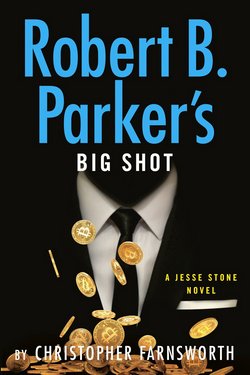
by Christopher Farnsworth
DETAILS:
Series: Jesse Stone, #23
Publisher: G.P. Putnam's Sons
Publication Date: February 10, 2026
Format: Hardcover
Length: 320 pg.
Read Date: February 19-20, 2026

This was a perfectly decent Jesse Stone adventure. Jesse’s fate never felt like it was really in danger—but that’s okay, it’s about the struggle, the journey, right?
I’m a little disheartened by the way that Farnsworth is dealing with Lundquist. I know he’s not Healey—and I’m glad for it, I don’t want Farnsworth or anyone else turning him into a version of him. But the version of him being all by the book and cold here, really doesn’t match with the willing-to-be-maverick we met in Pale Kings and Princes, and I don’t think we’ve been given reason for that change (and I want to say this isn’t the first time I’ve been troubled by his characterization).
I really didn’t like Molly’s depiction for good chunks of the book—Farnsworth had a plan for her, and I liked most of what she did—I just think there was a better way to set up her investigative arc. (it’s hard to talk about vaguely). I think Farnsworth is really finding difficulty with her as she grows as a police officer—I think Lupica, did, too. Hopefully he figures it out soon (I should note, I like the way he’s dealing with Suit in the same situation).
Anyway, it’s not a stellar installment in the long-running series—but it did its job well.

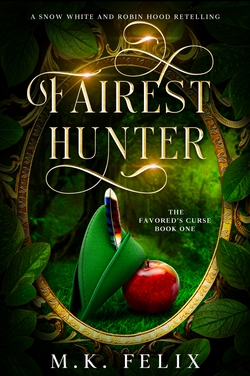
by M. K. Felix
DETAILS:
Series: The Favored's Curse, #1
Publication Date: January 9, 2026
Format: e-Book
Length: 351 pg.
Read Date: February 25-26, 2026
A little heavy on the romance for my taste—but that’s what it’s marketed as, so I lived with it. I’ll note it’s pure and chaste romance, with no need for doors to be closed (well, at least the primary romance…the door might be firmly shut on another).
So it’s a gender-swapped Robin Hood—who also happens to be the King’s Huntsman. So, instead of taking the (male) Snow White figure and leaving him with some dwarves, he’s left with six merry men. These men rob from the rich, give to the poor, while looking for an opportunity to take out the Evil King (who turns out to be using a bespelled mirror to work his magic).
It’s a fun story, just deep enough to justify—fast acting enough that you don’t care. I quite enjoyed it and am looking forward to reading further in the series.
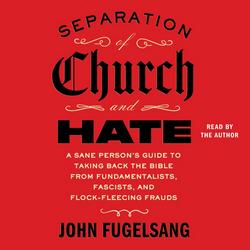
by John Fugelsang
DETAILS:
Publisher: Simon & Schuster Audio
Publication Date: September 09, 2025
Format: Unabridged Audiobook
Length: 9 hrs., 24 min.
Read Date: January 30-February 2, 2026
Okay, I’d played with doing a full post on this one, interacting with all the issues I had—but I didn’t take notes or anything as I was listening. So, I’ll try this.
First—I have a lot of sympathy toward the Fugelsang’s goals and aims. Not to the same extent as he does—but still, I lean in very similar directions and/or share concerns.
Second—this book is a mess. There’s a good deal of re-hashing of Liberal* Theology that has been answered no later than the 1920s and 30s. There’s as much special pleading and Scripture twisting in these pages as he accuses those he takes issue with of doing. His notion of the purpose of Christianity, its content, and its focus—are completely wrong and foreign to the Bible itself. (as is the case for many of his targets).
I’m glad I read it because it scratched an itch in curiosity, but…that’s the only good thing I can say about the experience.
* There’s a distinction between Liberal Theology and Liberal Politics. While the Venn diagram has some overlap (a lot of overlap for Fugelsang), they shouldn’t be confused.
by Drew Hayes, read by Kirby Heyborne
DETAILS:
Series: Fred, The Vampire Accountant, $9
Publisher: Tantor Media, Inc
Publication Date: January 13, 2026
Format: Unabridged Audiobook
Length: 11 hrs., 44 min.
Read Date: February 25-27, 2026
Fred’s adventures bow out the same way they entered the scene—mildly amusing, full of kindness and hope, generosity of spirit, and community. There’s almost no suspense—which is fine, this series didn’t depend on that.
It’s just Fred facing overwhelming odds, coming up with a clever solution or two, relying on his friends (and them relying on him, too). He found a new level to his magic—which was pretty cool, I’ve gotta say. And scored some major victories. The last chapter (or was it an epilogue?) ties up a lot of loose ends and provides a glimpse into Fred’s future.
Heyborne’s narration was as good as ever.
This was a fitting and entertaining ending to this series. Glad I was along for the ride.
by Hwang Bo-reum, translated by Shanna Tan, read by Rosa Escoda
DETAILS:
Publisher: Bloomsbury Publishing
Publication Date: December 2, 2025
Format: Unabridged Audiobook
Length: 3 hrs., 49 min.
Read Date: February 23-24, 2026
This was a perfectly pleasant book. And that’s about all I have to say—there was nothing that made me think—wow! She gets it. Nothing where I thought—I’ve been trying to find the words to express that as a reader. Just a vague pleasantness—that maybe went on too long. Maybe 25-40 ways, max, would’ve worked better.
There seemed to be an expectation that the reader would be familiar with her other work(s) anytime she referenced them—and if you weren’t (or even aware of their existence), it was hard to connect with what she was saying. I can both understand that given the nature of this book she didn’t have time (or possibly the need) to add context, explain the gist of whatever she was referencing. But…it left me cold.
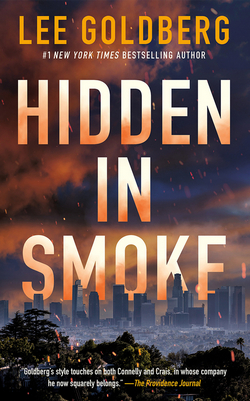
by Lee Goldberg
DETAILS:
Series: Sharpe & Walker, 3
Publisher: Thomas & Mercer
Publication Date: April 22, 2025
Format: e-Book
Length: 300 pg.
Read Date: February 5-6, 2026
I feel like I should have a lot to say about this book—but I don’t. Goldberg delivers what we expect from him—a fast and fun story, some good twists, some great lines—and the return of a few characters I didn’t expect to see again.
There’s part of me that wonders about the scope of all the fires in this series—but, we’ve all seen what happens to California all too often lately. It’s sadly realistic.
I really enjoy these characters, and can’t imagine that ending. I just hope that I can find something to say about the next book (which I can’t wait for).
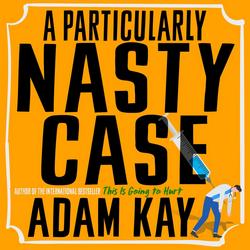
by Adam Kay, read by Andrew Serkis
DETAILS:
Publisher: Hachette Audio
Publication Date: September 16, 2025
Format: Unabridged Audiobook
Length: 10 hrs., 9 min.
Read Date: February 2-5, 2026
This was…a mess. There’s just no character that I could enjoy spending much time with. The characters’ motivations seem inconsistent and capricious. The comedy (or what I think was comedy) didn’t work, the mystery was pretty weak, and the book seemed more interested in the chaos surrounding the murder than anything else.
Take the murder out, tell some other kind of story, and it probably would’ve worked better. And still wouldn’t have been for me—but I wouldn’t have complained about it.
by Austin Kelley, Jacques Roy
DETAILS:
Publisher: Simon & Schuster Audio
Publication Date: April 15, 2025
Format: Unabridged Audiobook
Length: 7 hrs., 1 min.
Read Date:
If the destination was satisfying, I think I could’ve put up with the journey. If the journey was a bit more interesting/engaging, I could’ve put up with the destination.
But a miss on both, just made this a waste of potential. I liked the premise, there were some good moments, I liked the writing—it just seemed wasted.
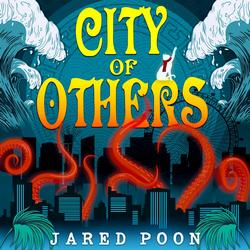
by Jared Poon, read by David Lee Huynh
DETAILS:
Series:  The DEUS Files, #1
Publisher: Hachette Audio
Publication Date: January 13, 2026
Format: Unabridged Audiobook
Length: 9 hrs., 16 min.
Read Date:
This is the first installment in what could become a favorite UF series. Think about the Folly (from The Rivers of London)* filled with humanoid characters from McGuire’s InCryptid series. But set in Singapore. our under-funded and overworked team deal with the supernatural side of Singapore—without letting the non-supernatural set know what they’re up to.
As things are wont to do—something goes wrong, in a very significant way—and the entire city (at least) is soon at risk.
Poon writes with a lighter touch, but he’s not afraid to let things get serious. There are some great emotional moments, and some great mystical/magical scene, too.
* It might be more accurate to describe it as Strout’s Department of Extraordinary Affairs than the Folly—but the Folly is better known.
This post contains affiliate links. If you purchase from any of them, I will get a small commission at no additional cost to you. As always, opinions are my own.