Category: Non-Fiction Page 34 of 61

My Favorite Non-Fiction Books of 2021

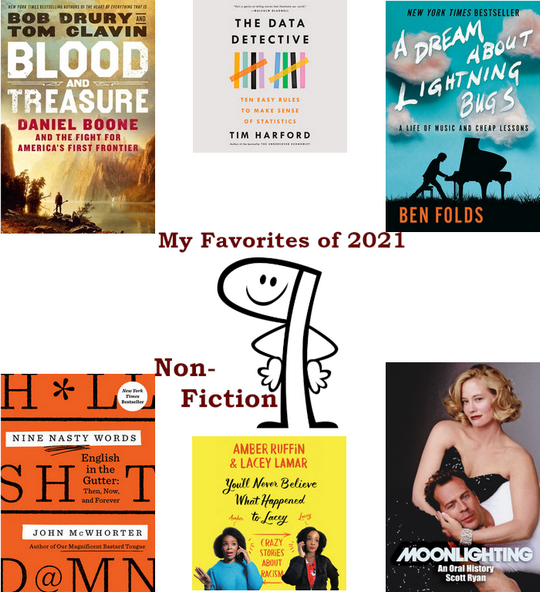
Favorite Non-Fiction 2021
My 2021 Wrap up continues and now we’re on to the Non-Fiction list. While I liked a number of works that didn’t make this list, I felt strange calling them a “favorite.” So, we have 6 instead of the nigh-obligatory 10 (Hartford had two books on the list, but I wouldn’t let someone else do that on another list, so I trimmed one from this). Like last year, I was surprised that I’d given so many of these 3 or 3 1/2 stars. But these are the ones that stuck with me through the year; the ones I cited in conversation; that I thought about when reading something else or watching something on TV. Really, that’s what’s important, right?

As always, I only put books that I’ve read for the first time on this list. I don’t return to NF books (outside of looking up things for one or three points), but occasionally I do—for example, The Pleasures of Reading in an Age of Distraction by Alan Jacobs would get a permanent spot on this list, were it not for this rule.

(in alphabetical order by author)

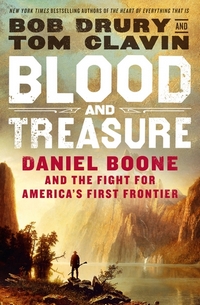
Blood and TreasureBlood and Treasure: Daniel Boone and the Fight for America’s First Frontier

by Bob Drury and Tom Clavin

My original post
This book de-mythologized—and then re-mythologized (to a point) Daniel Boone, who ended up being more interesting (and more human) than I anticipated. Some of the writing was fantastic and you could forget you were reading history (there were other parts that were so dry it could be nothing else). The book looks at both Boone and the Fight for the Frontier—against Indians, French, and the English. It’s the kind of history book that convinces me that I should read more history—not to better myself, just because it’s worthwhile.

3.5 Stars

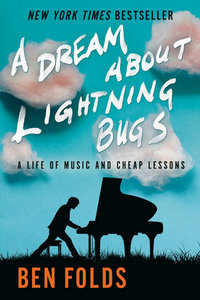
A Dream About Lightning BugsA Dream About Lightning Bugs: A Life of Music and Cheap Lessons

by Ben Folds

I haven’t written a post about this book yet, so it’s hard for me to try to give a thumbnail here. I enjoyed getting to know Folds a bit better—warts and all (and he’s not afraid to bring up some of the warts). Where this book really impressed me was when he talked about music—performing, creating, listening, what it means to a listener/performer. I’ve already returned to some of that material to reread—I’m not a musician, but I appreciate someone that thoughtful about it. It’s inspirational.

Also, his stuff about Shatner is just great.

3.5 Stars

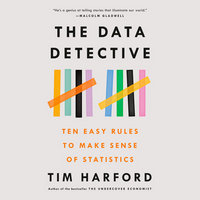
The Data Detective: Ten Easy Rules to Make Sense of StatisticsThe Data Detective: Ten Easy Rules to Make Sense of Statistics

by Tim Harford

My original post
This is one of those books I should go back and re-read, taking copious notes to help me internalize the points. We’re subject to people at work, on the news, online, and from the government throwing numbers, statistics, and “studies show” so often that it can be overwhelming. So much so that many people blindly accept everything they’re told from that formula, or doubt it all. Hartford’s point is that we should be skeptical, but to use that skepticism to dig out the real meaning behind the study/statistic and then use it for our advantage as a voter, citizen, employee, or person (or all of the above). Crystal clear writing, easily applicable, and more useful than most books on related subjects.

Actually, I think I just convinced myself to re-read it soon.

3 Stars

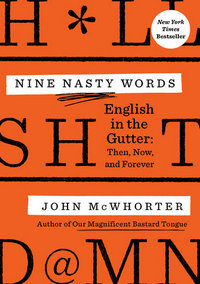
Nine Nasty WordsNine Nasty Words: English in the Gutter: Then, Now, and Forever

by John McWhorter

My original post
I’m a sucker for an entertaining look at language, and that’s what McWhorter delivered here. While I try to eschew the use of profanity, we’re surrounded by it so much more than we likely realize, so I might as well learn more about it, right? This was a solid look at the background and development of these “Big 9” words—in particular, I enjoyed McWhorter’s demonstration of how the words function as various parts of speech, as well as the varying nuances of meaning.

3 Stars

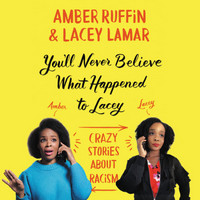
You'll Never Believe What Happened to LaceyYou’ll Never Believe What Happened to Lacey: Crazy Stories about Racism

by Amber Ruffin, Lacey Lamar

My original post
I talked about this in my favorite audiobook post, too, never fear—this’ll be the last time I bring it up this week.

Early on, Ruffin writes:

Twice a week, I get a text from my sister that says, “Can you talk?” It’s my favorite because I know I’m about to be transported to a place that exists in real life and fantasy: the place where coworkers will put their whole hand in your hair, talking ’bout “It’s fluffy like a dog.” I realize this sounds terrible, but it’s like watching Dateline. You can’t believe it was the GIRLFRIEND who killed the HUSBAND! It’s the edge of reality. Technically, it happens, but it is barely plausible. Excited, I steal away to the elevator banks at work and listen to Lacey tell me a new horror story. It’s fantastic. As I stand there, mouth agape, listening to some new fresh hell, I am always struck by the fact that these stories will only exist in this phone call. Some will go on to become stories once the topic turns to “racist people at work” one night when Lacey is hanging out with her friends, but she’ll forget most of them because of the sheer volume. The. Sheer. Volume.

That’s what this book is, a distillation of that volume. A compilation of the best/worst of those stories. They are tragic. They are sobering. They are frequently pretty funny. But only in the way they’re told. Lamar and Ruffin share these stories with an air of “you have to laugh or you’ll cry.” The kind of resigned laughter when you realize that your situation isn’t going to get better any time soon, so you might as well find the pleasure in it. A lot of this is hard to listen to/read—but it’s usually worth it. There’s also a decent level of “a spoonful of sugar helps the medicine go down” running throughout this.

4 Stars

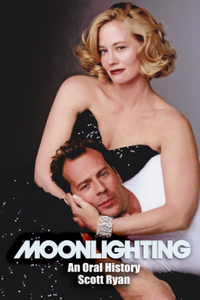
Moonlighting: An Oral HistoryMoonlighting: An Oral History

by Scott Ryan

My original post
It’s probably the most fun I’ve had with a book this year. Somehow, Ryan’s able to capture a little bit of the flavor of the show while getting into the history. Moonlighting was a revolutionary show, and he is able to talk to just about every significant figure involved in the creation and production of it for this history. He chronicles the ups, downs, and all-around zaniness. There are deep-dives on important episodes and or tricky scenes, as well as broader looks at themes, storylines, characters, etc. It’s easy to forget just how magical this show was, but spending some time with Ryan will remind viewers of a certain age of just what a ground-breaking, oft-controversial, and entertaining series it was.

5 Stars

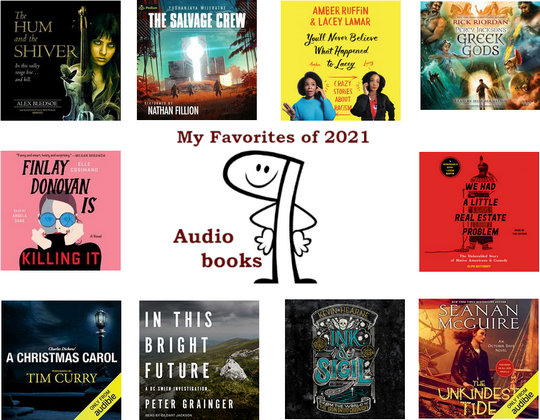
My Favorite Audiobooks of 2021

My Favorite Audiobooks of 2021
Last year I kicked off my Year-End Retrospective with a look at my favorite audiobooks, I might as well repeat that this year. How do I keep this from being just a rehash of my other year-end lists? By focusing on the audiobook experience over the content. What was it like to listen to it? How engaging was it, how did the narrator do? Was it a good match in terms of tone, content, and performance? All of these books are/were good—but the audiobooks are a bit better because of the narrator and the rest of the people involved in the production.

(in alphabetical order by author)

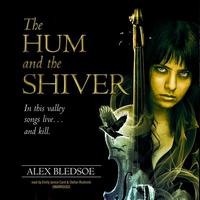
The Hum and the ShiverThe Hum and the Shiver

by Alex Bledsoe, Emily Janice Card(Narrator), Stefan Rudnicki (Narrator)

This was my third or fourth trip through this book (maybe, fifth, but I don’t think so). I’m not sure if that means it was easy for me to be impressed—or maybe it was really hard because I had high expectations. Regardless, Rudnicki and Card took me to Cloud County and the land of the Tufa. I could believe that these people lived, breathed, and walked around in this world—and yet were otherworldly, as they ought to be. I knew Rudnicki could make me believe in a Fantasy world—it turns out that he can make me believe in this one, too. Card was right there with him.

4 Stars

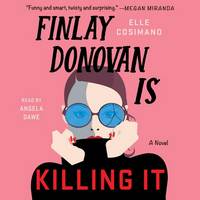
Finlay Donovan Is Killing ItFinlay Donovan Is Killing It

by Elle Cosimano, Angela Dawe (Narration)

My original post
This is on the list because of Dawe’s narration. The text was entertaining enough, sure, but her narration is what made sure I remembered the book during the list-making time. The novel was a tricky balancing act between the various tones and characters, and Dawe makes you believe it. She captured the comedic sense of the novel along with the tension and emotional moments. There were a few accents involved and she did a believable job with them, too.

3.5 Stars

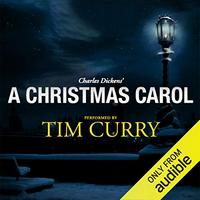
A Christmas Carol: A Signature Performance by Tim CurryA Christmas Carol: A Signature Performance by Tim Curry

by Charles Dickens, Tim Curry (Narrator)

My original post
I’ve said it before, I’ll say it again: all you need to know about this is: Tim Curry. This wasn’t the performance I expected—I figured I was in for something near to over-the-top, with Curry going to town with the text. Instead, we’re treated to a respectful, restrained performance giving Dickens’ classic just the right emotional weight, sentimentality, personality, and life.

5 Stars

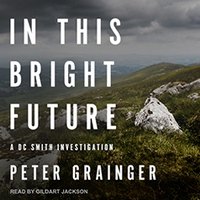
This Bright FutureIn This Bright Future

by Peter Grainger, Gildart Jackson (Narrator)

My original post
Grainger and Jackson together have made this one of my Top 3 audiobook series, period. So my only question was how many of the books would end up on this list. I ended up limiting myself to one, and therefore it had to be this one—we get so little of our typical characters and settings, but Jackson is able to make Belfast as warm and homey as King’s Lake. There are elevated dangers and emotions in this book that we don’t typically get with D.C. Smith, but Jackson doesn’t miss a beat. Grainger puts D.C. through his paces, too. Both are at the top of their game—making D.C. at the top of his, too.

4 Stars

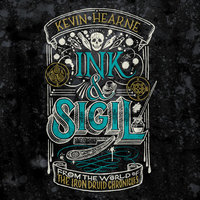
Ink & SigilInk & Sigil

by Kevin Hearne, Luke Daniels (Narrator)

Even though a pro like Luke Daniels is constantly doing voices/accents for his characters and the narration is almost never his “natural” voice (assuming he even has one anymore), I have to think that maintaining a Glaswegian accent for as long as he did for this book (ten hours and change, I think) has to be an added level of difficulty. Not that you can tell from listening to this. I thought the novel was a rollicking good time and just the way you should introduce a new series. The audiobook version just cemented that.

4 1/2 Stars

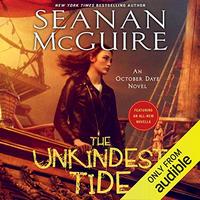
The Unkindest TideThe Unkindest Tide

by Seanan McGuire, Mary Robinette Kowal (Narrator)

This novel was the payoff (as far as we know so far, I wouldn’t put it past McGuire to turn it upside down later) to a storyline that had been lingering and building for years, I remember being stunned when reading it—just that aspect of The Unkindest Tide brought a great combination of anticipation, grief, suspense, and surprise. The story of the novel—the trip to the Duchy of Ships, the intrigue around Dianda, etc. was as solid as it gets, too. I remembered all this going in, so it was all teed up for Kowal—and she nailed it, it almost felt like I hadn’t read the book before and was discovering it fresh. A narrator who can do that is tops in my book.

4 1/2 Stars

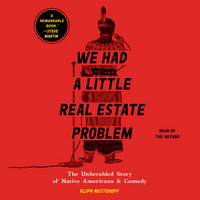
We Had a Little Real Estate ProblemWe Had a Little Real Estate Problem: The Unheralded Story of Native Americans and Comedy

by Kliph Nesteroff

My original post
As I was trimming down the list of audiobooks I listened to last year for this list, I didn’t expect that this would stay on the list. A history of Native Americans in Comedy, really? But I kept not deleting it…so I started thinking of it—there’s a social history, an entertainment history, with individual profiles mixed it—it has it all. What’s more, despite a pretty dry (but never boring) narration, and not using clips of original performances, the comedy of these individuals comes through. In the midst of hardship, suffering, prejudice, and hard breaks, there are some solid laughs. It’s hard not to keep thinking about that.

4 Stars

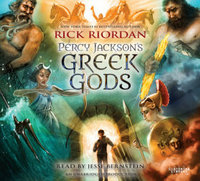
Percy Jackson's Greek GodsPercy Jackson’s Greek Gods

by Rick Riordan, Jesse Bernstein (Narrator)

I started working on a post last year about contemporary myth retellings (and I intend on finishing it before my unconceived grandkids are ready to read it), and listened to this as part of that. In many ways, the book and the information didn’t fare well compared to things like Gaiman and Fry have recently produced. But this is here and they’re not—because as an audiobook this is a great experience. Bernstein is Percy Jackson here, and it felt like something ol’ Percy was sitting down and relating to future Camp Halfblood residents. It inspired me to listen to the original Percy Jackson series again just so I can listen to Bernstein perform this character.

3 Stars

You'll Never Believe What Happened to LaceyYou’ll Never Believe What Happened to Lacey: Crazy Stories about Racism

by Amber Ruffin, Lacey Lamar

My original post
I’m still telling people about this audiobook/book nine months later. I can’t think of a book that made me angrier, sadder, or made me laugh as much in 2021 (or a few years before it, either). This did all three. Ruffin’s narration, Lamar’s stories, their hurt, and their optimism make this a must-listen.

4 1/2 Stars

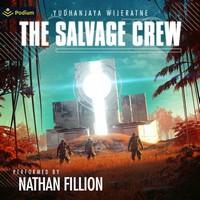
The Salvage CrewThe Salvage Crew

by Yudhanjaya Wijeratne, Nathan Fillion (Narrator)

My original post
This is a very strange SF story about a sentient AI (based on the memories and personality of an engineer). I think I’d have enjoyed the story had I read the novel, but it’s Nathan Fillion that brought it to life. That same charm that makes you like Caleb, Mal, Castle, and Nolan shines forth and makes you believe in this malfunctioning (at least eccentrically-functioning) AI and get invested in the AI’s survival and that of his ragtag crew.

4 Stars

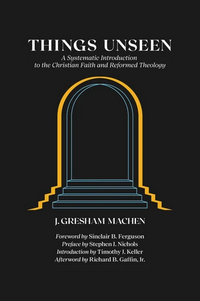
Things Unseen: A Systematic Introduction to the Christian Faith and Reformed Theology by J. Gresham Machen: Concise Looks at Fundamental Doctrines

Things Unseen

Things Unseen:
A Systematic Introduction
to the Christian Faith
and Reformed Theology

by J. Gresham Machen

Hardcover, 426 pg.
Westminster Seminary Press, 2020

Read: January 3-December 26, 2021/td>

What’s Things Unseen About?

Starting in 1934 and continuing until his death in 1937 (although he had plans to keep it going for at least another two years), J. Gresham Machen delivered a series of radio addresses on WIP in Philadelphia. The addresses focused on the Christian doctrine of the Bible and what the Bible tells us about God, the Christian view of Man, and then doctrines of salvation (this was cut off before he completed it).

While not technically a Systematic Theology, the outline matches how many/most Systematics cover the topics.

These addresses had been collected and published in collections in previous decades, but now, they’re published in one attractive (and seemingly durable) volume.

So, what did I think about Things Unseen?

With a couple of weekends off for travel or sickness, I read a chapter a week this last year, and it was a great practice. The addresses took thirty minutes or so a week when delivered, so they take only a few minutes to read. But minutes that serve as a wonderful reminder of the basics of Christian Doctrine.

In the 1930s, the vogue was to downplay Reformed distinctives, as well as a whole-hearted belief in a supernatural Christianity. Machen flies in the face of that and was bold in his teaching on both fronts. He’s succinct, pastoral, accessible, and even witty. These are not talks for scholars, or dumbed-down–they’re straightforward presentations of the topics for everyone.

Were this a smaller collection, I might be able to get deeper about some of the topics–but there’s just too much to try to talk about. But it’s all great–this has been one of the most rewarding books I’ve read in a few years. Even when Machen is merely restating what generations before him taught, there’s a freshness to his presentations that really are appealing.

I can’t recommend this enough.


5 Stars

Catch-Up Quick Takes: A Few 2021 Books I Can’t do a Full Post About

The point of these quick takes posts is to catch up on my “To Write About” stack—emphasizing pithiness, not thoroughness.


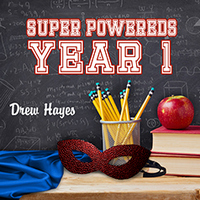
Super Powereds: Year 1

Super Powereds: Year 1

by Drew Hayes, Kyle McCarley (Narrator)
Series: Super Powereds, #1
Unabridged Audiobooks, 26 hrs., 11 min.
Tantor Audio, 2016
Read: November 19-25, 2021
Grab a copy from your local indie bookstore!

(the official blurb)
Lander University has a program that most universities don’t. They offer a Hero Certification Program—a way for super-powered students to become qualified to be a super-hero. This book focuses on five particular students—they’re not just super-powered, they’ve got a secret, too.

As the title suggests, this book follows them over the first year—as they grow, increase in power and ability, develop bonds, and so on. The book is a nice mashup of superhero training and dumb college kids being dumb college kids.

I went into this expecting something that felt a lot like Fred, the Vampire Accountant. This was less like it than I thought possible—it’s much longer, it doesn’t feel like a collection of interconnected short stories, it’s a novel.

I was impressed at how different it is, sure. But I liked the story, world, and characters. I’m not sure I’m up for four more in this series, but I have a feeling that Hayes will change my mind.


3.5 Stars

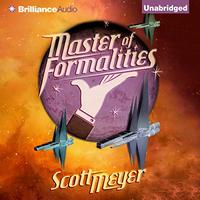
Master of Formalities

Master of Formalities

by Scott Meyer, Luke Daniels (Narrator)
Unabridged Audiobook, 14 hrs., 58 min.
Brilliance Audio, 2015
Read: November 12-17, 2021
Grab a copy from your local indie bookstore!

(the official blurb)
Thousands of years in the future, elaborate rules of honor, etiquette, and form have been imposed on the planetary governments to preserve order—even in the midst of war. We’re talking rules that Downton Abbey’s Carson would find overly elaborate and restrictive.

Two planets have been at war for decades—but things have come to a tipping point. It’s up to the two arbiters of these rules on these planets to keep things under control.

This book did something I didn’t expect—I would have admitted it was possible, but wouldn’t have expected that Scott Meyers and Luke Daniels produced something that left me frequently bored and that I had a hard time connecting with at all. It was clever, but that cleverness strayed into convolutedness in the plot. Good enough to listen to, but by a hair.


3 Stars

See Her Die

See Her Die

by Melinda Leigh
Series: Bree Taggert, #2
Kindle Edition, 315 pg.
Montlake, 2020
Read: September 30-October 2, 2021
Grab a copy from your local indie bookstore!

(the official blurb)
I don’t have much to say about this book, which is why it’s here, but I wish I did. There’s just something nice about this series, and I’d like to talk about it more.

This is really a follow-up to the first in the series—okay, so Bree got herself the job, what’s she going to do with it? How are the vets in the department and the community as a whole going to handle her coming in? How is she going to do with the whole parental figure for her niece and nephew? Etc. We don’t get definitive answers, but we get some good ideas.

But more importantly, there’s a creepy killer on the loose. In the end, that story is both too outlandish to buy, and I can actually imagine reading about this happening.

I’m coming back for more.


3 Stars

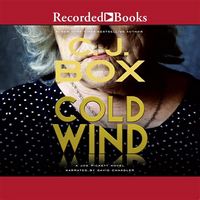
Cold Wind

Cold Wind

by C. J. Box, David Chandler (Narrator)
Series: Joe Pickett, #11
Unabridged Audiobook, 11 hrs., 13 min.
Recorded Books, 2011
Read: August 23-24, 2021
Grab a copy from your local indie bookstore!

(the official blurb)
Wow. There’s a lot going on in this one. The events of the Nate story were horrible, but Box pulled it off in a way that will be good for the character/series long-term.

Killing Missy’s husband Earl on the other hand…well, like Joe himself, I’m not crazy about any time we spend with Missy, so making her a focal point of a novel isn’t going to make me thrilled with it. But, I ended up really liking this one, too.

These books don’t inspire a lot of thought or writing from me—and maybe they should—but I do consistently enjoy them. Chandler’s narration is solid as ever. At this point, I don’t think I can switch to the print version of the series—I need his voice for Joe and the gang.


4 Stars

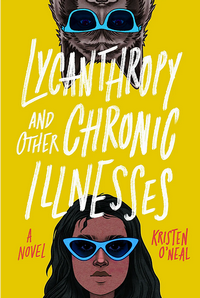
Lycanthropy and Other Chronic Illnesses

Lycanthropy and Other Chronic Illnesses

by Kristen O’Neal
Hardcover, 379 pg.
Quirk Publishing, 2021
Read: June 2, 2021
Grab a copy from your local indie bookstore!

(the official blurb)
It’s really bothering me that I haven’t gotten a full post out of this yet—and it’s been long enough (and I lost my notes) that anything I end up saying will be super vague and would be too much work to get a longer post.

In a Discord support for chronic illnesses, a group of people from around the world from a variety of age groups, come together to share struggles common to people with a variety of ailments and disorders. A couple of them realize they live nearby and strike up a friendship. Eventually, one of them disappears from contact for too long, so the other takes it upon herself to go try to find her friend IRL.

It turns out that this friend’s chronic illness is a case of lycanthrophy—things get strange and heartwarming from there.

A lot of this is told in modern-epistolary: texts, emails, Discord chats, tumblr posts, etc., etc. I loved the jumble of methods used to tell the story. It really captures the feel for these characters and their lives.

If you look at places like Goodreads, you’ll see a lot of controversy about elements of this book. I didn’t know about any of it until I’d read the book. 96% of what I saw doesn’t reflect the book, and seems to stem from one or two people who hadn’t read the book. Ignore it all.

This was a fun, earnest story that addresses serious things like living with chronic disease and finding your place in the world along with silly things like Lycanthropy and excessive binge-watching with friends. A nice break from reality that maybe helps you think about some things.


3 Stars

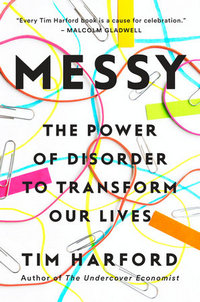
Messy

Messy: The Power of Disorder to Transform Our Lives

by Tim Hartford, Nicholas Guy Smith (Narrator)
Unabridged Audiobook, 9 hrs., 45 min.
Penguin Audio, 2016
Read: December 16-17, 2021
Grab a copy from your local indie bookstore!

(the official blurb)
I think I’m going to have to make a point to listen to more Hartford books—between the time I put this on my TBR list and picking it up, I’d forgotten it was by the man behind The Data Detective.

The basic premise is this—people who are messy (not those full of utter chaos in habits or possessions), function better than those who are ruled by rigid standards—either metaphorically or literally. When rules (primarily at work) are too inflexible it hurts productivity and satisfaction in the work.

So let people organize their work and workplaces as they will, don’t impose a filing system on people who don’t want it, etc. Sure, keep things tidy, but beyond that…let the individual reign. That’s a horrible oversimplification, but to do it justice would take…well, most of this book. Just go with that as a thumbnail and read/listen to it. It’s entertaining, thought-provoking, and empowering.

I think this went on a bit too long—perhaps if the last couple of chapters had been excised, it would’ve been better. But I might change my mind on a re-read/re-listen.


3.5 Stars

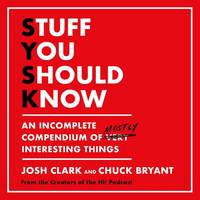
Stuff You Should Know

Stuff You Should Know:
An Incomplete Compendium
of Mostly Interesting Things

by Josh Clark and Chuck Bryant
Unabridged Audiobook, 9 hrs.
Macmillan Audio, 2020
Read: December 27-28, 2021
Grab a copy from your local indie bookstore!

(the official blurb)
Very little (if any) of this fits into things I should know, and I’m glad the subtitle talks about “Mostly Interesting” things. It’s a strange hodgepodge of in-depth look at topics like…the history of facial hair, Murphy beds, Mezcal, and child prodigies.

It was fine, but nothing special. Before I started it, I figured this would end up turning me into a subscriber to the podcast. It didn’t, but I can see why people would listen to it—the narrators/hosts are pretty engaging and had an interesting approach to their explanations. Maybe it was these topics, the randomness of the topics, or…I don’t know. I just didn’t see the point. It made for a good soundtrack to my workday, but within two days, I’ve pretty much forgotten everything I heard.


2 1/2 Stars

2021 Library Love Challenge 2021 Audiobook Challenge

This post contains affiliate links. If you purchase from any of them, I will get a small commission at no additional cost to you. As always, opinions are my own.

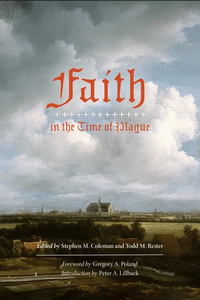
Faith in the Time of Plague Edited by Stephen M. Coleman and Todd M. Rester: Reformation and Post-Reformation Voices Speak to Our Moment

Faith in the Time of Plague

Faith in the Time of Plague

Edited by Stephen M. Coleman and Todd M.Rester

Hardcover, 309 pg.
Westminster Seminary Press, 2021

Read: November 7-December 12, 2021

The main point? Two rocks must be steered clear of: stupid boldness and exceedingly vicious fear. On the first, one does those things that while we fear nothing—would often lose ourselves and others. On the second it happens that as we would look to our own life, we would desert the work of Christ. Therefore, let us fear what can happen if we fail to avoid those evils. But let us be confident in the Lord and let us remain as steadfast as possible—even to the point of death—in our calling and in the work of Christ.

What’s Faith in the Time of Plague About?

The Editors describe the book like this:

The body of extant plague writings is vast and much of it remains unavailable in English. The selections in this book were determined to a great extent by the treasures that came to light in translating the 1655 pamphlet Variorum tractatus theologici de peste, which makes up Part I of the book. This collection of tracts is an unparalleled Post-Reformation treatment of the plague, from pastoral and scholarly points of view. Part II consists of those Reformation and Post-Reformation works that Beza, Rivet, Voetius, and Hoornbeeck [the authors in Part I] engaged with frequently (Zanchi, Abbot, and Ursinus). Alongside those pieces are additional contemporary works that we felt would be especially useful for pastors, scholars, and interested readers to have available in book form (Zwingli, Luther, Lavater, and Rawlet), and which give the reader a more complete picture of the Reformed tradition’s branch of plague writings. Each of these eleven authors addresses the unique questions posited by the plague in distinct ways, yet each does so by definitively Reformed methods—grounded in Scripture, historically informed, and always with the issue of faith in Christ at the forefront.

There are also two appendices, On Mortality by Cyprian of Carthage—a work that multiple authors in the main texts refer to (and likely shape even those who don’t) and the section Prayer and Thanksgiving from the Book of Common Prayer—an application of all the theology of the main texts.

Part 1: Variorum tractatus theologici de peste

The various works in part one are careful, methodical, Scriptural, and thorough—they cover all the bases. The treatise by Beza seems to both reflect the thinking of the rest of the Reformation as much as it shapes everything that comes after (or at least everything in the book).

Some parts of this took some work to get through, but it was worth it.

Part II: Reformation and Post-Reformation Plague Writings

Others sin on the right hand. They are much too rash and reckless, tempting God and disregarding everything which might counteract death and the plague. They disdain the use of medicines; they do not avoid places and persons infected by the plague, but lightheartedly make sport of it and wish to prove how independent they are. They say that it is God’s punishment; if he wants to protect them he can do so without medicines or our carefulness. This is not trusting God but tempting him. God has created medicines and provided us with intelligence to guard and take good care of the body so that we can live in good health.

For me, this part of the book (roughly a third) was the most rewarding. Luther’s Whether One May Flee from a Deadly Plague covered most/all of the points in Part I, but in a pithier and more digestible fashion. Which is what you expect from Luther, right?

Zwingli’s Plauge Hymn is great. I really don’t know what else to say.

The most moving, the most personal entry in the volume is John Rawlet’s A Letter to my Mother is clearly part of that preparation for death mentioned in the post last week. In this printing, it’s an eleven-page letter* written by an Anglican minister in London sure he was soon to contract the plague and die. He was wrong about contracting the plague and never sent the letter—but he was ready for it.

* Hard to fathom in the age of texts, tweets, and email.

An Unimportant Observation

I’m pretty sure I’ve never run into the word “licit” as often as I have in this work. Like most people (especially those who read a lot of Crime Fiction), I run across “illicit” all the time. But “licit”? Almost never.

Maybe it’s a quirk of the translators, but I doubt it. It’s just refreshing to see the word—and it’s one I’m going to try to use more often.

So, what did I think about Faith in the Time of Plague?

One thing that struck me was how often these Reformation authors appealed to earlier theologians (like Cyprian). But largely not about plagues or other diseases. Instead, it was how they approached the response to persecution—could believers flee from it, or do they have to run toward it or simply wait for it? Both persecution and disease come from the Lord—as both trial and result of sin.

I have to say, I’m not sure I’d have approached it that way before.

Those looking for easy answers to “how would the early Church or Reformers” deal with COVID-19 (or the like)”, will be disappointed. There are no quick and easy answers here. But this can remind readers that the Church has been through similar—and worse—times before. She likely will again. There have been careful, pastoral responses to it in the past, and that can be true again. We don’t have to have a snappy, one-size-fits-all approach at the first sign of trouble, but we are called to gracious, Christ-honoring, people-serving responses.

These are some excellent examples of how to do it. This isn’t the easiest, breeziest thing I’ve read this year—it might even be the furthest from it. But it’s an invaluable resource and I’m glad Westminster Seminary Press brought it to us.

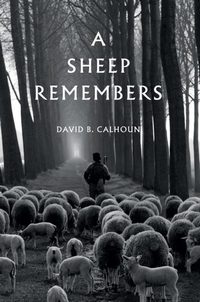
A Sheep Remembers by David B. Calhoun: Remembering Psalm 23

A Sheep Remembers

A Sheep Remembers

by David B. Calhoun

Paperback, 137 pg.
Banner of Truth Trust, 2021

Read: December 12, 2021
Grab a copy from your local indie bookstore!

All the circumstances of the pilgrimage—want, weariness, journeyings, wanderings, perplexities, the shadowed mysteries of the valleys, the thronging enemies, and the infinite beyond—are present; and the singer knows them. They are, however, only mentioned to sing of their negation by the graciousness of the Shepherd. Want is cancelled. For weariness he has green pastures of rest. On journeys he leads by pleasant ways. From wanderings he restores. Through perplexities he guides, and that by right ways. In the valleys of death’s shadow his presence cancels fear. In the presence of enemies he makes a feast, and he is a host royal in bounty.

What’s A Sheep Remembers About?

RIght out of the gate, Calhoun cites Spurgeon: “I cannot say anything new on this text…But I can remind you of old and precious truths,” and that’s pretty much Calhoun’s mission statement, reminding readers about Psalm 23. He’s not trying to shake things up with a new understanding, he’s not going for bold scholarship, or something along those lines. It’s simply an exercise in taking a slow look at what we already know, to remember the old and precious truths.

Each chapter takes a verse (or less) and reflects on it—the chapter starts with a version of the Psalm or a hymn based on it, then there’s a commentary on the phrase(s) examined, something written by a shepherd to help the reader understand (literal) sheep and their ways, illustrations from others to help understand the theme of the chapter and then a part of his own life story. The commentary sections are largely strings of quotations from other writers of various theological persuasions and varying degrees of orthodoxy, with a little addition from Calhoun–mostly to tie them together.

Preparing to Die

Calhoun talks about this in the book a bit—the Puritans had a practice to prepare for death, when terminally ill (or at least when they would suppose they were), they’d meditate on death, and the state of their soul as they neared it. In many ways, that’s what this book was for him.

Calhoun had been battling cancer for years, and he knew his death was imminent—he actually died shortly after delivering the final version of the manuscript to the publishers. You can tell from the latter chapters that he was very aware of the shortness of his time. Which adds some poignancy to this work—particularly the chapters concerning “Yea, though I walk through the valley of the shadow of death” and “And I will dwell in the house of the Lord forever.”

Supplementary Material

I don’t typically talk about this kind of thing—because, why would I? But these merit a mention.

Calhoun includes an Addendum of Additional Versions of Psalm 23—the versions included in the text were good, but I guess that there just weren’t enough chapters for everything he wanted to use. I haven’t seen most of these before and I’m glad I was exposed to them.

The Bibliography is your standard bibliography, but Calhoun includes some personal notes describing the works—that’s a nice touch, and I wish more people would do that.

So, what did I think about A Sheep Remembers?

How could I be joyful when my body was slowly, perhaps not so slowly, dying? I have lost sight in one eye and the other eye is failing, as is my hearing. I have been hospitalized seven or eight times in the last three years with pneumonia. I can no longer swallow food or talk very well. And, most disturbing, my mind is letting me down. How could I be joyful when all this was happening to me? In the valley I learned that joy comes, not from my feelings, nor from my daily experiences, but from the inner conviction that my life is going according to God’s plan. Joy is a gift of God. David wrote, ‘You have put more joy in my heart than they have when their grain and wine abound’ (Psa. 4:7).

This book isn’t just about Psalm 23 in the abstract, it’s about Calhoun’s Shepherd guiding him through his cancer. The latter is what made this book worth reading.

Like the other book I’ve read by Calhoun, In Their Own Words, the bulk of the text seems to be tiny quotations—that quotation I open this post with isn’t Calhoun, it’s G. Campbell Morgan—and it’s one of the longest quotations Calhoun uses, many are a single sentence long. It takes a certain genius to have these various sources on hand and be able to cite them together in such a way to present an argument. But really, Calhoun seems to use these to frame his argument, rather than to support it.

I appreciated the work, I profited from it—but I think it could’ve been stronger. If there was more of Calhoun, and less a medley of other writers—I think it would’ve been.

Still, it’s hard to walk away from time in this Psalm and not be refreshed. And the quotations, sayings, metrical versions, and paraphrases assembled here all help that endeavor. It’s hard to say anything bad about that.


3 Stars

This post contains an affiliate link. If you purchase from it, I will get a small commission at no additional cost to you. As always, opinions are my own.

We Had a Little Real Estate Problem (Audiobook) by Kliph Nesteroff: One of Those Books You Didn’t Know was Needed Until You Read It

We Had a Little Real Estate Problem

We Had a Little Real Estate Problem:
The Unheralded Story of
Native Americans and Comedy

by Kliph Nesteroff

Unabridged Audiobook, 9 hrs., 34 min.
Simon & Schuster Audio, 2021

Read: December 8-9, 2021
Grab a copy from your local indie bookstore!

What’s We Had a Little Real Estate Problem About?

This book sketches a broad history—roughly from the end of the 19th Century to the present—of Native Americans in comedy. He starts with things like wild west shows and circuses—where people like P. T. Barnum presented “authentic Indian” practices, but would define what was authentic for the people who’d do the performing, and would punish them if they did anything actually authentic. So right away, you know this is going to be a feel-good story.

In the early days of Movies and TV, it’s not much better for most—Indians were stereotyped and usually played by Whites. Sure, you’d get occasional people like Will Rogers as the exception. Nesteroff chronicles the struggles for representation from then up to “Iron Eyes” Cody (and beyond, I’m sure).

Then he sketches out the bright spots for Native Americans in the contemporary comedy scene, from stand-up to theater to TV writing. Nesteroff spent a lot of time on Charlie Hill’s life, career, and legacy—who made a lot of the contemporary advances possible. Frankly, he could’ve spent more time on it and kept me interested (although what he gave was sufficient). His interactions with Richard Pryor was fascinating.

Interspersed with the history are brief profiles of individual comedians/teams and their careers. So it’s not just a history of the industry, but we get spotlights on individuals, too. They were definitely the highlights of the book for me.

How Funny Was It?

Nesteroff kept the narration restrained—he’s a stand-up, so I’m sure his instincts were to perform (at least) a bit more than he did. But he read it the same way you’d read a book about productivity. I’d think that would be particularly difficult when he read a transcript or script from a comedy piece/interview. But even then—the material shone through and I found myself audibly chuckling frequently. Funny stuff is funny (would’ve been funnier in the original, I’m sure, but getting permissions necessary to do that would’ve made this audiobook too expensive to produce)

So, what did I think about We Had a Little Real Estate Problem?

I heard Marc Maron talk about this book a little on his podcast (but I haven’t gotten around to any of the episodes with the author), and it seemed like it’d be up my alley. I love hearing about the business of comedy and the people that are behind it. Focusing on this one story? Sounded like a great idea. And I think Nesteroff pulled it off.

I guess I would think as a history, it’s probably incomplete—but I’m not sure how you can do a comprehensive history of something like this.

I think the central premise of this—media depictions of Native Americans makes them conform too much to a stolid, serious, stoic type—or a tragic one. It’s hard to believe that encompasses any culture—much less the great number of Native American cultures in North America. To promote understanding between cultures in the US and Canada, we ought to see all aspects of them.

The profiles—either brief or extended (like Charlie Hill and Will Rogers)—were interesting enough to make me go check out samples (and sometimes more) of the work. The overall narrative was interesting and optimistic.

I think the book worked—if you’re at all interested in the behind-the-scenes of comedy, about those who make the movies/shows/stand-up you enjoy, you’ll probably think so, too.


4 Stars

2021 Library Love Challenge 2021 Audiobook Challenge

This post contains an affiliate link. If you purchase from it, I will get a small commission at no additional cost to you. As always, opinions are my own.
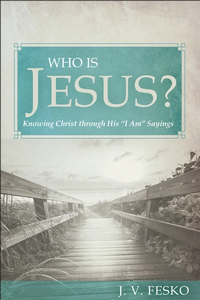
Who Is Jesus? Knowing Christ through His “I Am” Sayings by J. V. Fesko

Who Is Jesus?

Who Is Jesus?:
Knowing Christ through
His “I Am” Sayings

by J. V. Fesko

Paperback, 93 pg.
Reformation Heritage Books, 2016

Read: December 5, 2021
Grab a copy from your local indie bookstore!

What’s Who is Jesus? About?

This book does three things—at the same time—first and foremost, it looks at all fourteen times that Jesus uses the phrase “I am,” in the Gospel of John, and discusses the context and meaning of it. Fesko doesn’t just look at Christ’s meaning of “the door,” “the bread of life,” and so on, but the significance of the use of “I am” (ἐγώ εἰμι, ego eimi).

Secondly, it looks at the “seven signs of divinity” presented in John—and how they’re intertwined in the “I am” sayings. But Fesko doesn’t let the focus linger on these signs.

Lastly, and this is the unique part of this study, is to look at the Old Testament allusions and roots of the fourteen “I am”s. Seeing how Christ was self-consciously pointing to the Scriptures to show how he fulfills them is a real treasure.

Fesko concludes each chapter with a few paragraphs of application to the reader and some questions for further study.

So, what did I think about Who is Jesus??

This might not be the best comparison, but it’s the one that I kept thinking of as I read this, so…if you don’t like this, I’ll give you a full refund for the cost of your subscription.

In The West Wing, there were repeated worries about the President’s approach to things—the way he interacts with people, there’s “The President at his Best”/”The Professor” or “Uncle Fluffy.” Fesko’s books feel like they’re written the same way. For example, Death in Adam, Life in Christ: The Doctrine of Imputation or Word, Water, and Spirit: A Reformed Perspective on Baptism are products of “The Professor.” Who is Jesus? is pure Uncle Fluffy.

This is not a complaint. This is an observation. Well, okay, maybe a little of a complaint. I’m glad this was the Uncle Fluffy Fesko—I appreciated that this was an accessible, short read—but I think it could’ve used a little more of The Professor. Just a little more depth would’ve been great. But it’s good as it is, just could’ve been a bit better.

At the same time—you give me a version of this book by The Professor? I’m there in a heartbeat.

Who is Jesus? is a quick read (it’s very easy to be too quick about it, I had to tap my breaks a few times), but it’s a good read. There’s a richness to the study of the “I Am” sayings and a real reward to looking at their Old Testament roots. This is well-worth your time, it’d be good for Bible Studies, Sunday Schools—even Family Worship aids.


3 Stars

This post contains an affiliate link. If you purchase from it, I will get a small commission at no additional cost to you. As always, opinions are my own.

Dr. Rick Will See You Now by Dr. Rick is a Thing that Actually Exists (and I chuckled at)

Dr. Rick Will See You Now

Dr. Rick Will See You Now

by Dr. Rick

Kindle Edition, 119 pg.
Eleven Letter Press, 2021

Read: December 6, 2021

What’s Dr. Rick Will See You Now About?

I don’t know if my out-of-the-U.S. readers will have been exposed to these commercials, but I assume that everyone in the U.S. has seen these advertisements from Progressive Insurance–Dr. Rick is an expert in “parentamorphisis,” and advises his clients on how to beat it.

What is parentamorphisis? That’s when doing things like owning your first home turns you into your parents and gets you started doing things like making dad jokes, talking too much about parking, giving unsolicited advice at a hardware store, printing out directions for driving, and so on.

This book is a collection of quizzes and tips on how to avoid becoming your parents–a few items are similar/the same as the commercials, but most aren’t. There’s a combination of text, photos, and simple drawings to illustrate
“Dr. Rick”

I didn’t see anywhere in the book (I may have overlooked it) where the author(s) were identified as other than the Dr. Rick character–Progressive Marketing Department, or something like that, I guess. I’d like to give them the credit due, but…I guess that’s not to be.

So, what did I think about Dr. Rick Will See You Now?

This is cute. I find these advertisements pretty amusing, and this is just like sitting down and watching a series of them.

And, hey, it’s free. Free chuckles and something to do for a little bit. That’s a pretty good deal.


3 Stars

Psalms that Curse by Sean McGowan: A Primer on Controversial Prayers

Psalms that Curse

Psalms that Curse

by Sean McGowan

Kindle Edition, 90 pg.
Reformation Zion Publishing, 2021

Read: November 28, 2021

What’s Psalms that Curse About?

Simply put:

…in our modern day some psalms have seemed to not “make the cut.” To say it another way, some would argue that not all the psalms should be sung or prayed today, particularly the ones that speak out harshly against enemies. Some popular approaches would say that these psalms were for a different time, or only to be used by the old covenant people of God. But the burden of proof rests on them to demonstrate why some of these psalms cannot be sung or prayed today, while the others can. Should the psalms that present “harsh language” and make us uncomfortable at times still be considered relevant for the church today? Should we still be able to sing, and specifically pray, these kinds of prayers today?

McGowan first sketches out the role of the Psalms and then ends with the question above, then he spends a chapter focusing on the imprecatory psalms and various views about them floating around the Church. He then focuses his attention on Psalm 137 and uses the exegesis of the psalm to establish his view on the purpose of imprecatory psalms. Then he spends a chapter on the use of them in the New Testament—or are they even compatible with a New Testament ethic? (short answer: yes)

This is short work, and the depth of each chapter reflects that—but McGowan covers the essentials in each.

Comparing This to Others

I don’t typically do books on similar topics back-to-back like this, but I saw this talked about on a couple of podcasts I listen to after I read The Morality of God in the Old Testament, and was curious about another take on it.

McGowan’s take is different from similar works I’ve read here in the past—like The Morality of God in the Old Testament and War Psalms of the Prince of Peace—he quotes the latter, labeling it “inadequate” (along with other views, he didn’t single it out). McGowan’s thesis is more straightforward and less nuanced than Beale’s (not superior or inferior, just more direct).

This is a primer—as McGowan reminds the reader—so he doesn’t spend time analyzing or critiquing differing views, he mentions them briefly to distinguish his—but the focus of this short book is on his take.

Would I have preferred analysis and critique? Seeing how his views match up against others? Yes. But I’m not going to fault a guy for writing the book he wanted to rather than the one I wanted (at least until I’m wealthy enough to act as a patron).

Besides, this gives me a chance to chew on the ideas myself.

So, what did I think about Psalms that Curse?

We are not saying that the only way to respond to intense persecution is to call down God’s vengeance. In fact, the normative response should be to pray for God to convert them…what we are arguing for is a recovery of the prayer of imprecation. We are arguing for the category. We are arguing that the prayer of imprecation should have a seat at the table, not for it to be the only thing at the table.

Hard to argue against that.

I don’t know that McGowan convinced me with his position about the—but he impressed me with the argument. It’s a short work, but he does the work. First, he established his thesis from a noteworthy example of an imprecatory psalm, and then after showing his thesis at work he tactfully and pastorally lays out how the believer ought to apply it. Hard to ask for more.

I really appreciated the chapter exegeting Psalm 137 and the concluding chapter, focusing on the way the Christian ought to pray imprecatory prayers. It was an important chapter and one that I hope many encounter. I think there’s some good overlap there with some of what Adams suggested in his work, too.

Not a perfect book, but a good one, a helpful one, and a thought-provoking one. A work that should lead the reader back to the psalter for study and reflection.


3.5 Stars

Page 34 of 61

Powered by WordPress & Theme by Anders Norén