Category: Non-Fiction Page 35 of 61

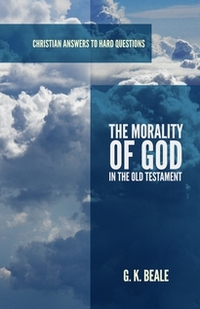
The Morality of God in the Old Testament by G.K. Beale

This is a lot shorter of a work than I usually talk about, but I needed a short read to break up longer, heavier reads. So now I guess I get to talk briefly about it before I talked about longer, heavier reads. (not that this is lightweight by any means)


The Morality of God in the Old Testament

The Morality of God
in the Old Testament

by G.K. Beale
Series: Christian Answers to Hard Questions

Booklet, 43 pg.
P&R Publishing and Westminster Seminary Press, 2013

Read: November 21, 2021
Grab a copy from your local indie bookstore!

What’s The Morality of God in the Old Testament About?

Believers and unbelievers alike stumble over some of what seems immoral in the Old Testament. Particularly what seems to be evil on the part of God. For example: God’s commands to exterminate the Canaanites and the imprecatory (cursing) Psalms.

How ought the believer to respond to their own questions about this, much less the questions from those outside the faith?

Beale looks briefly at a couple of popular responses to this and finds them wanting. In their place, he suggests a “plausible fivefold approach.”

There seems to be a better way to look at this problem. We will explore it from five different angles, which will help us to understand it more thoroughly. First, how does the killing of the Canaanites demonstrate God’s justice and righteousness? Second, how could Israel’s unique commission as a “kingdom of priests” (Ex. 19:6) shed light on the extermination of the Canaanites? Third, how does God’s sovereignty over all things help us to better understand that he can be considered blameless in all that he does, despite the problems just mentioned above? Fourth, how does the idea of God’s judgment of unbelieving humanity at the end of time shed light on this problem? Finally, how does the law of loving one’s neighbor now and at the end of time help us to better apprehend the issue about the Canaanites and the psalmist’s cursing of his enemies (though this last point has some overlap with the fourth point)?

Each question gets a couple of pages of explanation before moving on, so that the reader is given the complete fivefold approach along with some idea of how the ideas are worked out.

So, what did I think about The Morality of God in the Old Testament?

Not surprisingly, my main concern is length. I want to see each of these points better developed–I don’t think this has the makings of a 200+ page book or anything, but I think it could easily be twice as long to really flesh out some of the points.

The brevity works against itself primarily in that I don’t get to see the ideas examined thoroughly, or tested. The reader is given enough to understand the fivefold approach, enough to chew on it. But I’d like to see it worked out. I’d like to see Beale work through one of the difficult passages, or one of the Psalms in question and show “here’s where we see this and over there is where you see that aspect in action,” etc.

But the point of this series, the point of this being a booklet is for a short introduction to the idea. It’s supposed to be enough to show the reader that there are answers to the hard questions, just not enough to convince them. So I have to take it on its own terms–as such, it’s fine. Even more than fine. And I think there’s something to that fivefold approach, I just want to be convinced. I’m just going to need to look elsewhere for that.


3.5 Stars

This post contains an affiliate link. If you purchase from it, I will get a small commission at no additional cost to you. As always, opinions are my own.

Catch-Up Quick Takes: The Case of the Missing Marquess; Dark Arts and a Daiquiri; Breaking Silence; Everything Happens; Based on a True Story: A Memoir; How to Resist Amazon and Why; Nothing Like I Imagined

The point of these quick takes posts is to catch up on my “To Write About” stack—emphasizing pithiness, not thoroughness. This time, I’ve got a handful of 3 Star reads/listens (I don’t think I planned it that way, it just worked out).


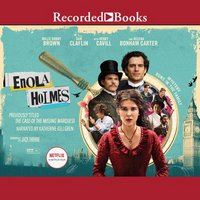
The Case of the Missing Marquess

The Case of the Missing Marquess

by Nancy Springer, Katherine Kellgren (Narrator)
Series: Enola Holmes, #1
Unabridged Audiobook, 4 hrs., 31 min.
Recorded Books, 2008
Read: November 1, 2021
Grab a copy from your local indie bookstore!

(the official blurb)
This is a cute read for people who like the idea of Sherlock Holmes, but aren’t that interested (or ready) in the real thing. Which may sound dismissive, but it’s not supposed to be. I can easily see why the people behind the movie(s) latched onto this character. I can also easily see why they tweaked the content of this book and expanded it for the first movie (does the second book some/all of what they used to expand?).

I don’t know that I’m going to go the distance with this series, but I can easily see going for one more dip in the pool.

Fast, amusing and pretty clever. This look at Sherlock and Mycroft’s little sister is a pleasant little book.

3 Stars

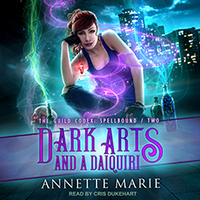
Dark Arts and a Daiquiri

Dark Arts and a Daiquiri

by Annette Marie, Cris Dukehart (Narrator)
Series: The Guild Codex: Spellbound, #2
Unabridged Audiobook, 7 hrs., 39 min.
Tantor Audio, 2018
Read: October 22-25, 2021
Grab a copy from your local indie bookstore!

(the official blurb)
For book 2 to remove our non-magical bartender to a guild of Magic Users from the Guild Members for the majority of the book is a pretty gutsy move. I’m not sure it was the right way to go, and I’m not sure it was successful. But it was gutsy.

The story was…okay, I guess. It really didn’t do a lot for me, but the last few chapters—pretty much when Tori reunites with her friends made the whole thing worth it. And the Dresden File hat-tip was fantastic.

I’m still in on this series/group of series, but I bet when all is said and done, this’ll be the one to forget.

3 Stars

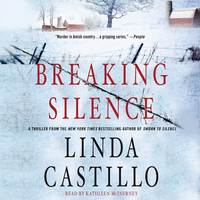
Breaking Silence

Breaking Silence

by Linda Castillo, Kathleen McInerney (Narrator)
Series: Kate Burkholder, #3
Unabridged Audiobook, 9 hrs., 21 min.
Macmillan Audio, 2011
Read: October 20-21, 2021
Grab a copy from your local indie bookstore!

(the official blurb)
Another horrific murder in Amish country. I’d love for a few books to involve other crimes in this community. I realize it’s her shtick, but a little variety could help things.

That aside—the villain of this piece is horrible and creepy, and you can feel the evil. Watching Kate and Agent Tomasetti try to figure out the motive behind the killing and the identity of the killer was a fun ride. I really do like these individually—even if I wonder about the series as a whole.

3 Stars

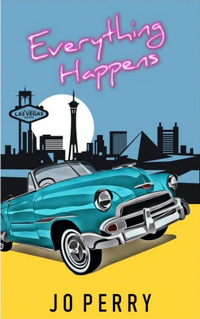
Everything Happens

Everything Happens

by Jo Perry
Kindle Edition, 119 pg.
Fahrenheit Press, 2019
Read: October 18-19, 2021

(the official blurb)
This starts as the story of a nurse trying to get a quickie divorce from a loser and then turns into a story of carjacking, kidnapping, attempted kidnapping, robbery, vengence, betrayal, and car chases.

Basically: just another weekend in Vegas.

I was riveted throughout, but…I couldn’t stop asking, “Why?” I’m not sure I saw the point of the whole thing—but you know what? I didn’t care, I enjoyed it too much to bother with things like that.

3 Stars

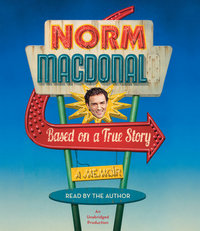
Based on a True Story: A Memoir

Based on a True Story: A Memoir

by Norm Macdonald, Tim O’Halloran (Narrators)
Unabridged Audiobook, 7 hrs., 18 min.
Random House Audio, 2016
Read: October 12-14, 2021
Grab a copy from your local indie bookstore!

(the official blurb)
A fictionalized version of MacDonald’s memoir, it’s hard to tell what’s memoir, what’s a joke, what’s a mixture. The more obviously genuine moments are marred by their vicinity to the clearly fictional. As a book? This is a mess—a self-indulgent, erratic, mess.

But wow. This was funny—even most of what I didn’t like was funny.

Don’t go into this thinking you’ll understand MacDonald’s life, career, or humor better. Go into it expecting a strange performance art-like experience with some giant laughs and you’ll be set.

3 Stars

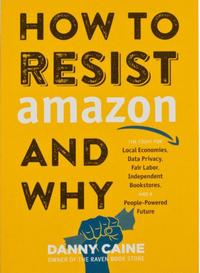
How to Resist Amazon and Why

How to Resist Amazon and Why:
The Fight for Local Economics,
Data Privacy, Fair Labor,
Independent Bookstores,
and a People-Powered Future!

by Danny Caine
Paperback, 113 pg.
Microcosm Publishing, 2021
Read: October 6, 2021
Grab a copy from your local indie bookstore!

(the official blurb)
This is a no-holds barred critique (screed?) against Amazon—their business practices, the way they treat employees, the way they deal with governments, their security products…and just about everything else. It’s also a call to arms against the giant.

I have a lot of sympathies for Caine’s positions and desires—and agree with most of them. I also follow some of the practices he espouses (not as many as I want, but hey…I’m on a budget).

Still, I’m not sure the megastore is a super-villain—it may resemble one, very closely. As much as we might want it to be.

Read this—blanch at some of it—but take it with a grain of salt.

3 Stars

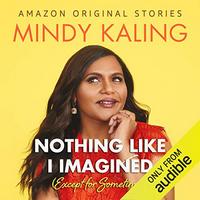
Nothing Like I Imagined

Nothing Like I Imagined (Except for Sometimes)

by Mindy Kaling
Unabridged Audiobook., 2 hrs., 19 min.
Brilliance Publishing, 2020
Read: October 1, 2021

(the official blurb)
I really enjoyed Is Everyone Hanging Out Without Me? (And Other Concerns) and Why Not Me?—this has the same kind of humor—and the audio versions of all three are equally charming.

But I don’t know, this seemed lifeless? Sweet and genuinely funny, but it left me wanting a bit more. I don’t think it was just the length, either.

3 Stars


This post contains affiliate links. If you purchase from any of them, I will get a small commission at no additional cost to you. As always, opinions are my own.

My Theology: Return from a Distant Country by Alister McGrath

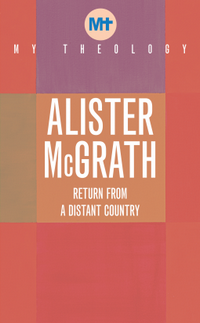
Return from a Distant Country

My Theology:
Return from a Distant Country

by Alister McGrath
Series: My Theology

eARC, 96 pg.
Darton, Longman & Todd, 2021

Read: November 14, 2021
Grab a copy from your local indie bookstore!

What’s Return from a Distant Country About?

In this brief work, McGrath starts off with a brief spiritual biography—sketching out his early life and interests and then what brought him to faith while a student at Oxford.

He then gives a brief definition of theology and how he sees himself as a theologian, and how he’s demonstrating both in his own work. He then sketches out four main themes in his own work and theology—historical theology, the relation between natural sciences and theology, Christian Apologetics, and theological education—both a look at his and then how he tries to educate others.

The My Theology Series

The publisher’s website (Darton, Longman & Todd) describes this series as: “The world’s leading Christian thinkers explain some of the principal tenets of their theological beliefs.” The US Publisher (Fortress Press) helpfully adds “in concise, pocket-sized books” to that description. It looks to be sixteen projected volumes published from September 2021-March 2022 (in the UK), this volume will be published in the U.S. in January, and I would expect the rest to follow a similar schedule.

I think that’s an interesting, and potentially fascinating, idea. I don’t recognize the overwhelming majority of names, which I guess indicates how far my finger is from the pulse of the world’s leading Christian thinkers. I’m a little curious as to who these people are, which might lead me to read some more of these books.

So, what did I think about Return from a Distant Country?

I’ve started reading “intellectual biographies” in the last few years, and I guess this is pretty much a (mini) intellectual autobiography, which isn’t the way I’m used to reading. As such it was an interesting exercise. There was a time when I’d frequently read McGrath’s work, but it’s been a long time since I did—not that I didn’t appreciate it, I just had other priorities. It was nice to touch base with him after all this time. Seeing how he views his work within these four themes–and what he thinks about them–helps the reader understand him as a thinker, theologian, and (I’d imagine) person better than you did before.

I enjoyed this work, and think I got something out of it but it wasn’t as good as I’d hoped. Too much of McGrath’s description of his work makes it seem like Christianity is a largely—maybe even almost exclusively—a cognitive matter—all about thinking the right things to the exclusion of feeling, belief, and action. That’s a tendency for those in the neighborhood of conservative evangelicalism—particularly those with some connection to Reformed theology. I personally would’ve appreciated it if McGrath had made it clear that wasn’t his intention or belief. But that’s a more of a me thing than a substantive criticism.

I wouldn’t say that this book gave me new insight into Christian theology or any of the themes he addressed. But I got a better insight into who McGrath is and what I should expect as I read his other work—which, for a series called “My Theology” makes a lot of sense.

Disclaimer: I received this eARC from Darton Longman Todd via NetGalley in exchange for this post—thanks to both for this.


3 Stars

This post contains an affiliate link. If you purchase from it, I will get a small commission at no additional cost to you. As always, opinions are my own.

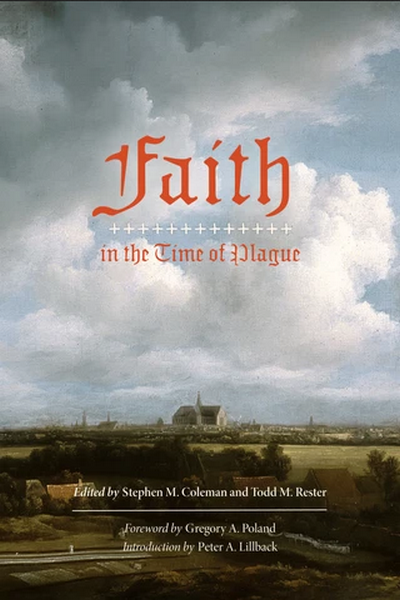
BOOK SPOTLIGHT: Faith in the Time of Plague Edited by Stephen M. Coleman, Todd M. Rester

Life events and questionable time management have left me without anything new to post today. So, I’m just going to put up a Spotlight post about one of the works I’m working my way through. I’m also not sure how I’m going to have anything to say about this when I’m done, so this may end up being my only post about it. It’s the kind of book that as you read it, you hope that other people are aware of it so they can benefit from it, too. It’s fascinating and (sadly) timely.

This is pretty much just material I’ve copied and pasted from the publisher’s site. I hope they don’t mind.

Book Details:

Book Title: Faith in the Time of Plague Edited by Stephen M. Coleman, Todd M. Rester
Publisher: Westminster Seminary Press
Release date: September, 2021
Format: Hardcover/Ebook
Length: 400 pages

Book Blurb:

We often hear the Covid-19 pandemic described as “unprecedented”, yet for Christians of earlier times, plague was nothing new. For generations, Church leaders regularly faced the sorts of ethical questions that still prove divisive today.

Selecting from the great “plague writings” of the historic church, Todd M. Rester and Stephen M. Coleman have translated and assembled a one-of-a-kind anthology. The wisdom of the past collected in this book offers much needed and trustworthy illumination for pastors, leaders, and laypeople in times of crisis and uncertainty.

Many of the works appearing in Faith in the Time of Plague have never been available in English until now. Included in this volume are the writings of Martin Luther, Theodore Beza, Ulrich Zwingli, Cyprian of Carthage, Zacharias Ursinus, Gijsbert Voetius, and many more.

Introduced by Peter A. Lillback, Faith in the Time of Plague also includes a Foreword from Mayo Clinic Virologist, Dr. Gregory A. Poland.

Book Trailer:

Purchase Link:

Westminster Bookstore

About the Editors:

Stephen M. Coleman (PhD, The Catholic University of America) is assistant professor of Old Testament and biblical languages at Westminster Theological Seminary, co-editor of the Westminster Theological Journal, and senior research fellow at the J. Alan Groves Center for Advanced Biblical Research. A graduate of Grove City College (BA, 2002), Westminster Seminary California (MDiv, 2005), and The Catholic University of America (MA, 2010/PhD, 2016), he previously served as associate pastor at Wallace Presbyterian Church in College Park, Maryland (2008–2017) and Assistant Pastor of Valley Presbyterian Church in North Hills, California (2005–2008).

Todd M. Rester
(PhD, Calvin Theological Seminary) is associate professor of church history at Westminster Theological Seminary. Dr. Rester is a post-doctoral research fellow at Queen’s University Belfast (September 2016–present). During his time as a research fellow at Queen’s University Belfast, Dr. Rester has served the institution as a guest lecturer in the Master of Arts, History of Religion department as well as various undergraduate history courses. In addition to his time at Queen’s University Belfast, Dr. Rester has taught as an adjunct professor at Puritan Reformed Theological Seminary (2010–2016), Kuyper College (2013–2015), and Calvin Theological Seminary (2011–2015). He also works as a translator for the Dutch Reformed Translation Society (2009–present). Dr. Rester’s academic interests include but are not limited to: the history of the doctrine of Scripture and its reception; early modern and Enlightenment conflicts between theology and philosophy on general and special revelation; and early modern and post-Enlightenment models of missiology.

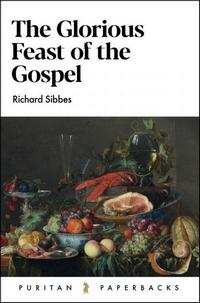
The Glorious Feast of the Gospel by Richard Sibbes: An Entirely Okay Collection of Sermons

The Glorious Feast of the Gospel

The Glorious Feast of the Gospel

by Richard Sibbes

Paperback, 166 pg.
The Banner of Truth Trust, 2021

Read: October 31, 2021
Grab a copy from your local indie bookstore!

What’s The Glorious Feast of the Gospel About?

The subtitle to this when originally published was “or Christ’s Gracious Invitation and Royal Entertainment of Believers,” it’s a series of nine sermons on Isaiah 25:6-9.

Banner of Truth reprinted the original title page, which does a better job of summarizing the book than I could. It states that among other things, “these Comfortable doctrines” are addressed in the book:

1. The Marriage Feast between Christ and his Church.
2. The vaile of Ignorance and Vnbeliefe removed.
3. Christ’s Conquest over death.
4. The wiping away of teares from the faces of Gods people.
5. The taking away of their Reproaches.
6. The precious Promises of God, and their certaine performance.
7. The Divine Authority of the Holy Scriptures.
8. The Duty and comfort of waiting upon God.

So, what did I think about The Glorious Feast of the Gospel?

I was genuinely excited when I saw that the Banner would be publishing a new Sibbes book, but it didn’t live up to my hopes. I’m going to go with the assumption that this wasn’t the right time for me to read this book. I just didn’t connect with it—I’m not saying it was bad, it just left me with a feeling of “meh.”

Sermons 5, 6, and 9 did grab me—proving that I’m not totally dead inside. Sermon 5, in particular, on the comforts of the Gospel as seen through “And all tears shall be wiped away from all faces” (v. 8), made the experience of the book worthwhile.

Once upon a time, Richard Sibbes was my “go-to” Puritan, so I do find it surprising when I don’t connect that well with a book by him. So, my assumption is that when I read this again in 2023-5, my reaction will be different. But for today, this was an okay book, but not a must-read.

3 Stars

This post contains an affiliate link. If you purchase from it, I will get a small commission at no additional cost to you. As always, opinions are my own.

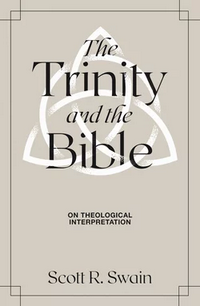
The Trinity and the Bible: On Theological Interpretation by Scott R. Swain: A Demanding and Rewarding Look at a Fundamental Doctrine

The Trinity and the Bible

The Trinity and the Bible:
On Theological Interpretation

by Scott R. Swain

Hardcover, 131 pg.
Lexham Press, 2021

Read: October 17-24, 2021
Grab a copy from your local indie bookstore!

Scriptural Trinitarianism is not unformed, inchoate Trinitarianism. As the self-revelation of the Triune God through his authorized and anointed prophets and apostles, scriptural Trinitarianism is the primary discourse of Trinitarian theology: normative, fluent, and eloquent. Ecclesiastical Trinitarianism, the Trinitarian theology of the churchs sermons, hymns, confessions, and creeds, is the secondary discourse of Trinitarian theology. Ecclesiastical Trinitarianism, at its best, is the attempt to represent the “grammar” of Scripture’s primary Trinitarian discourse in new settings and on new occasions, not to refine or develop what would otherwise be unrefined and undeveloped without it but to promote the church’s greater fluency in reading Scripture’s primary Trinitarian discourse and in responding to that discourse in its own eloquent expressions of prayer, proclamation, and praise of the Triune God.

What’s The Trinity and the Bible About?

I’m going to keep this short, because I’m sure that if I try to really get into the material, I’m only going to show how ill-equipped I am to discuss it in a meaningful fashion.

Rather than one overarching topic, this is a collection of papers that seek to show both how the Bible reveals the Trinity and how the Trinity shapes our reading of the Bible.

Swain describes the book in his introductory chapter:

Some of [the chapters] began as formal academic lectures; all of them have been published previously in various books and journals, The first and second chapters address the broader hermeneutical framework of Trinitarian biblical exegesis as well as the reception of one particular instance of such exegesis in North American Reformed and evangelical theology. The final three chapters address different aspects of Trinitarian theology by means of exegetical attention to different forms of New Testament literature, including Gospel, Epistle, and apocalyptic.

The Table of Contents, to match up with Swain’s description, is:

1. (Re)turning to the Subject: Trinity and Biblical Interpretation
2. The Bible and the Trinity in Recent Thought: Review, Analysis, and Constructive Proposal
3. B. B. Warfield and the Biblical Doctrine of the Trinity: A Historical Experiment
4. God’s Lordly Son: Mark 12:35–37 and Trinitarian Christology
5. Heirs through God: Galatians 4:4–7 and the Doctrine of the Trinity
6. To Him Who Sits on the Throne and to the Lamb: Hymning God’s Triune Name in Revelation 4–5
7. Seven Axioms: On the Trinity, the Bible, and Theological Interpretation

So, what did I think about The Trinity and the Bible?

Theological interpretation of Scripture prepares us for the vision of the Triune God by cultivating our capacities for spiritual perception and by attuning our affections to the intelligible and adorable good that the Triune God is. But theological interpretation of Scripture is more than mere preparation for this happy vision. Like the Israelite spies who tasted the grapes of Eschol before entering the Promised Land, theological interpretation of Scripture enables us to participate in this happy vision in advance by helping us perceive traces of God’s Triune glory in God’s good creation and by serving faith’s grasp of God’s Triune glory in the mediate adumbrations and attestations of that glory in the prophetic and apostolic scriptures (2 Cor 4:6).

This is not an easy read, even at 131 pages, it took several hours for me to get through it (honestly, after reading the first chapter, I wondered if I should limit myself to one chapter a week).

But it was worth the effort, every bit of it. Like a lot of the more scholarly theological books I read, I was reminded frequently while reading that I’m not an academic and this is above my weight class. But it wasn’t inaccessible, just difficult and required a little commitment.

But like the best academic theology, there were moments of the most doxological writing—or doxology-inspiring writing (or a mix). There are paragraphs and paragraphs that I wish I could commit to memory, so I could use them at the drop of my hat in conversation and in prayer.

The “Seven Axioms: On the Trinity, the Bible, and Theological Interpretation” (Chapter 7), in particular, are the kinds of things that everyone needs to learn and I think I’m going to read a few times over the next few weeks/months and really internalize.

I strongly recommend this to anyone who wants to solidify their understanding of the Trinity and wrestle with Scriptural texts, theology, and history for that.


5 Stars

This post contains an affiliate link. If you purchase from it, I will get a small commission at no additional cost to you. As always, opinions are my own.

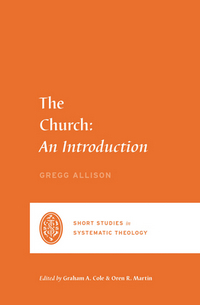
The Church: An Introduction by Gregg Allison: Tries to Do Too Much and Falters

The Church: An Introduction

The Church: An Introduction

by Gregg Allison
Series: Short Studies in Systematic Theology

Paperback, 164 pg.
Crossway, 2021

Read: October 10, 2021
Grab a copy from your local indie bookstore!

What’s The Church: An Introduction About?

Allison starts with a good Introduction, sketching the ambiguity of the current English term “church”—driving home the need for a book like this. He then spends two chapters with the foundation—outlining both the relationship between the Trinity and the Church and then with a broad overview of the Scriptural doctrine of the Church.

Then he moves into the bulk of the book:

I will present the church in terms of its local expression according to the following topics: identity, leadership, government, ordinances or sacraments, ministries, and future. For each topic, the first section—mere ecclesiology—presents the common ground shared by most churches throughout history. This aspect addresses the essence, or core, of the church’s identity, leadership, government, ordinances or sacraments, ministries, and future. The second section—more ecclesiology—describes how this essence expresses itself in the actual identity, leadership, government, ordinances of sacraments, ministries, and future of particular churches.

So, what did I think about The Church: An Introduction?

In summary, ecclesiology properly begins with a consideration of the doctrine of God. Specifically, it is grounded in Trinitarian theology, which leads to this conclusion: There is one people of God, who from eternity past has graciously elected all those who will believe in him by faith and walk with him in obedience, worship, love, and service. This one people of God consists of two aspects: the people of Israel in old covenant relationship with him and the people of the church in new covenant relationship with him. Specifically in regard to this second aspect, the church is the body of Christ and temple of the Holy Spirit. As the body, the church submits to its head, celebrates its diversity of people and gifts, lives out its siblingship in all purity, and portrays and fosters its unity by participation in the Lord’s Supper. As the temple of the Holy Spirit, the church in which he dwells is birthed, empowered, gifted, directed, sent, and sanctified by the Spirit.

The first couple of chapters got me excited for the book, and then after that, each chapter annoyed me more. He totally squandered that start—the “Mere” portions of the chapters were generally decent, but far too short. The “More” portions on the other hand…didn’t belong in a book like this (for the most part)—to get into all my problems would involve getting into the nitty-gritty of the arguments. They seemed to be what he wanted to write about more than the “Mere” bits and aren’t really introductory ecclesiology.

Also, and this is just one of those things, one chapter felt like it was written in response to my pastor’s sermon that day—each point seemed to be counter one of his (or vice versa). I was already having issues with the book, but that might have been the straw that broke the camel’s back for me. (not that I think my pastor is infallible, it was just bad timing—and a bad take on the text)

If this was the first book in the Short Studies in Systematic Theology that I’d read, I probably wouldn’t have come back for more. But, as it’s the fifth, I can keep going, trusting that this was a fluke.

In the end, I think this book tried to do too much. It tried to be all things to all people rather than embracing a confessional point of view as well as getting hung up on the structure, and ends up not accomplishing much at all. Focusing on and fleshing out the “More” portions would’ve made for a better read, a more profitable read, and a less problematic read. File this one under “don’t bother.”


2 Stars

This post contains an affiliate link. If you purchase from it, I will get a small commission at no additional cost to you. As always, opinions are my own.

Catch-Up Quick Takes: Out of House and Home; Word by Word; Scarface and the Untouchable; Yearbook; Is This Anything?

The point of these quick takes posts is to catch up on my “To Write About” stack—emphasizing pithiness, not thoroughness. Here are some recent-ish audiobooks (and one left-over from 2020!).


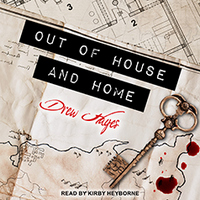
Out of House and Home

Out of House and Home

by Drew Hayes, Kirby Heyborne (Narrator)
Series: Fred, The Vampire Accountant, #7
Unabridged Audiobook, 11 hrs., 11 min.
Tantor Audio, 2021
Read: September 29-30, 221
Grab a copy from your local indie bookstore!

(the official blurb)
Wow, it’d been almost ten months since I’d listened to a Fred, the Vampire Accountant book. After a pretty steady diet of them for a while, the break was a little strange.

Anyway, the wedding’s behind him, so there’s another new challenge for Fred—someone’s coming for him, and the House of Fred. This isn’t new, but the openness, brazenness, and intensity of the attacks are.

Fred has to be his most creative to get through this challenge with both his ethics and clan intact. Not to mention his life.

For reasons that make sense (and make some of the drama possible), Krystal was not around for most of this book. That bugged me, I’d have liked to have seen a bit more about married life between the two. Oh, well, there’s time for that to come.

Gentle humor, just enough action to keep you going, and a bunch of pleasant characters. The seventh installment of this series proves there’s plenty of life left in this story of the undead.

3.5 Stars

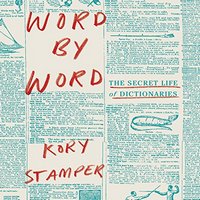
Word by Word

Word by Word: The Secret Life of Dictionaries

by Kory Stamper
Unabridged Audiobook, 9 hrs., 48 min.
Random House Audio, 2017
Read: September 16-20, 2021
Grab a copy from your local indie bookstore!

(the official blurb)
If you’ve ever wondered how a dictionary—at least Merriam-Webster dictionaries—is produced, this is the book for you. If you hadn’t but the idea sounds pretty good now that you know a book like that exists (like I was), good news. Kory Stamper’s book will satisfy.

As the blurb says,

She explains why small words are the most difficult to define, how it can take nine months to define a single word, and how our biases about language and pronunciation can have tremendous social influence. And along the way, she reveals little-known surprises—for example, the fact that “OMG” was first used in a letter to Winston Churchill in 1917.

I found her discussion about trying to refresh the definition of “bitch” in the twenty-first century, with all the history and varied usage to pair nicely with John McWhorter’s chapter on the word in Nine Nasty Words. I’d love to hear the two of them discuss it.

There’s some humor, some scholarship, and word-nerd fun. It’s an entertaining and enlightening book.
3.5 Stars

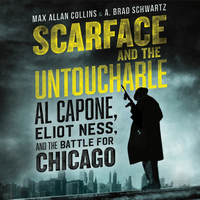
Scarface and the Untouchable

Scarface and the Untouchable: Al Capone, Eliot Ness, and the Battle for Chicago

by Max Allan Collins and A. Brad Schwartz, Stefan Rudnicki (Narrator)
Unabridged Audiobook, 18 hrs., 36 mins
HarperCollins Publishers, 2018
Read: June 14-21, 2021
Grab a copy from your local indie bookstore!

(the official blurb)
There is a lot of de-mythologizing in this history of Capone and Ness—not just of some of the myths that surrounded them during the 1920s and 30s—but of many of the “de-mythologizing” works that have been written about them since. According to Collins and Schwartz, both men—especially Ness—have been the victim of so much revisionist history that it’s almost impossible to really get at what these two did and were like.

Still, the authors think they’ve got it—or at least closer to it than others due to their research methods, etc. Hopefully, they have—I don’t know. They did tell a pair of compelling stories about Capone, Ness, and how they both rose to notoriety—and kept it.

I do think a text version of this would work a little better—I had a hard time tracking some of the not-as-important names/dates/events. It could be me, and probably is. I don’t think it was Stefan Rudnicki’s fault at all—he did a great job with the work (and it was nice to hear him doing something other than Alex Bledsoe novels).

3 Stars

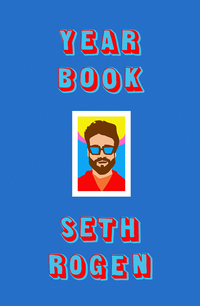
Yearbook

Yearbook

by Seth Rogen (and a whole lot of other people)
Unabridged Audiobook, 6 hrs., 13 min.
Random House Audio, 2021
Read: September 7-8, 2021
Grab a copy from your local indie bookstore!

(the official blurb)
Simply put, this is a collection of stories from Rogen’s life—from doing stand-up as a teenager to his work on TV and in movies. There’s—no surprise at all—a lot of references to and stories about drug use.

I’m not a huge Rogen fan—have enjoyed some of his work, but not most of it. I have always appreciated his ability to tell a story in interviews, though, and that’s what we get here. Great literature? Nope. Insightful look into the human condition and/or the Entertainment Industry? Nope. Silly fun? Yup. I can’t imagine anyone picking up a Rogen book looking for more than the last option, anyway. So you get what you expect.

This was definitely a book to listen to on audio—listening to Rogen tell these stories adds a bit of humor and flavor to it that I think just reading it wouldn’t deliver.
3 Stars

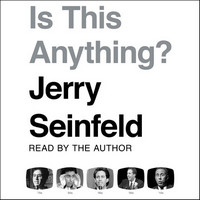
Is this Anything?

Is This Anything?

by Jerry Seinfeld
Unabridged Audiobook, 6 hrs., 15 min.
Simon & Schuster Audio, 2020
Read: December 15-16, 2020
Grab a copy from your local indie bookstore!

(the official blurb)
Jerry Seinfeld keeps the notebooks he writes his jokes in and has always done so. Which made compiling this collection possible. This is a collection of what Seinfeld considers his best material.

It’s organized by decade, with a little narrative added to discuss his career/family. But it’s primarily joke after joke after joke after joke. As I recall, SeinLanguage was essentially the same thing, but the last time I read that was in the 1990s, and my copy is in a box. So I can’t verify that.

I’m not sure audio was the best method for me. It felt like listening to a comedy album recorded in a studio rather than in front of an audience. It just felt strange to hear it all without laughter or other audience reaction—or his reaction to the audience. Also, I think it’d work better taken in parts—not the whole 6 hours in a clump (I guess 2 clumps).

Still, it’s material from one of the best around—it’s an entertaining time.

3 Stars

2021 Library Love Challenge 2021 Audiobook Challenge

This post contains affiliate links. If you purchase from any of them, I will get a small commission at no additional cost to you. As always, opinions are my own.


What God Has to Say about Our Bodies by Sam Allberry: The Body and the Christian

It is frequently difficult to remember that this is a book blog and not a theology blog and I’m frequently tempted to engage with the teaching presented in a book, rather than talking about a book as a book. This is one of those times…I ended up deleting about 5 paragraphs from this (and was gearing up to write more when I remembered what I was supposed to be writing).


What God Has to Say about Our Bodies

What God Has to
Say about Our Bodies:
How the Gospel Is Good News
for Our Physical Selves

by Sam Allberry

Paperback, 185 pg.
Crossway, 2021

Read: October 3, 2021
Grab a copy from your local indie bookstore!

What’s What God Has to Say about Our Bodies About?

At the center of the Christian faith is the belief that by coming to earth as one of us, Christ could die for our sins, rise to new life, bring us into fellowship with God, and begin the process of putting right all that’s gone wrong. But at the center of that claim, tucked away where we don’t always see it, is the notion that to become one of us, Jesus had to become flesh. To become a human person, he needed to become a human body.

Become a body, not simply don one for a few years…

Bodies matter. Jesus couldn’t become a real human person without one. And we can’t hope to enjoy authentic life without one either. That his body matters is proof that mine and yours do too. He became what he valued enough to redeem. He couldn’t come for people without coming for their flesh and without coming as flesh.

From the foundation that bodies matter, that humans aren’t just souls trapped in bodies, but are bodies with souls, Allberry sketches out a theology of the body. Something that the Western Church just hasn’t thought a lot about recently.

He discusses things like: identiry, sex, gender, disease, death, the body and discipleship, resurrection. There isn’t a lot of Law in these pages (though it’s not antinomian), as the subtitle says, it’s about the Gospel and what it means for our bodies (both in weakness and in promised renewal).

High Points

Hardwired into most of us is some sense that we all get what we deserve. So it is easy to apply that mindset to sickness and infirmity and wonder if the suffering isn’t some sort of payback for sins. But Jesus is unequivocal in his response: “It was not that this man sinned, or his parents” (John 9:3). We’re not to extrapolate from someone’s suffering what they might have done to deserve it. It doesn’t work like that. The main connection between suffering and sin is at a general, humanity-wide level rather than at an individual level. It is not that one person’s suffering is a sign of his or her sin, but that anyone’s suffering is a sign of everyone’s sin.

While reading the book and when I sat down to write this, I had in mind two specific chapters to mention, but flipping through it, I almost doubled the list (and there was a danger I’d have gone further). Basically, I’m saying there’s a lot to like here.

But let’s get back to the highpoints of the book—I’m going to stick with my original plan and mention chapters 1 and 5.

Chapter 1, “Fearfully and Wonderfully Made: The Body and its Creator,” is one of those things that I wish everyone would read. It’s foundational for this book, and a vital reminder that our bodies are made and made for a purpose.

“Subjected to Futility: The Body, Affliction, and Shame,” Chapter 5, is similarly foundational—in a fallen world, each of us is confronted daily by the weakness of the body—affliction, sickness, and even shame. Some of the problems discussed in this book aren’t things that we all struggle with—and even with the certainty of death for all of us, it’s clear that in the West we’re pretty good at denying that. But weakness? Sickness? Infirmity? We’ve all dealt with that—deal with it all the time, and seeing that in Scriptural light, in terms of the Gospel, is just so helpful.

So, what did I think about What God Has to Say about Our Bodies?

We need to know this. In too many areas of our discipleship we have separated our Christianity from our bodies. There are areas of our physical life that we think are irrelevant to our faith, and there are parts of our Christian life that we think have nothing to do with our bodies.

The truth is that the New Testament often speaks of discipleship in bodily terms, and in ways that tend to surprise us…These things are not trivial or spiritually irrelevant. The problem many of us have is that we are oblivious to their spiritual significance; we don’t see them as part of our discipleship and service to God.

I’ve read a few books by Allberry (and my wife owns a couple I haven’t gotten to yet), and this is noticeably longer and goes a bit deeper than he normally writes, but still, it’s an introductory volume. So I’m left wanting a little more.

That said, it’s an introductory discussion The Church (and others) need. The contemporary Church’s teaching on the body, on physical-ness is so narrow, so negative*, so deficient that it’s pointless. This is a good corrective. It’s only a first step, but we need to start somewhere. Regardless, Allberry’s writing is crisp, clear, engaging–the prose flows smoothly and the ideas are clear.

* Basically “taste not, touch not” kind of things.

I do wonder if Allberry had gone a little deeper if I’d quibble more or even downright disagree with him on some things, but here? I just spent time appreciating that he was addressing topics and ideas that I haven’t really seen done before. I do strongly recommend this—not as a final word, but as the beginning of a course of study (now I just have to figure out where to go from here).

Introductory and basic or not—I really commend this to your attention.


4 Stars

This post contains an affiliate link. If you purchase from it, I will get a small commission at no additional cost to you. As always, opinions are my own.

Catch-Up Quick Takes: The Treadstone Exile, Warping Minds & Other Misdemeanors, In a Sunburned Country, Pray for Silence

The point of these quick takes posts is to catch up on my “To Write About” stack—emphasizing pithiness, not thoroughness. Here are some recent-ish audiobooks.


The Treadstone Exile

by Joshua Hood, Ron Butler (Narrator)
Series: Treadstone, #2
Unabridged Audiobook, 9 hrs., 1 min.
Penguin Audio, 2021
Read: September 2-3, 2021
Grab a copy from your local indie bookstore!

(the official blurb)
I thought the first novel in the series was a heckuva thrill ride, but a little thin on character and believability. Still, the follow-up sounded fun.

Wow, was I wrong. The characters were just as thin (maybe thinner), I didn’t ever get invested in—or even mildly curious about—the plot. The action scenes were great, though.

Still, I think I’m done with the series.
2 Stars

Warping Minds & Other Misdemeanors

Warping Minds & Other Misdemeanors

by Annette Marie, Rob Jacobson, Iggy Toma (Narrator)
Series: Guild Codex: Warped, #1
Unabridged Audiobook, 6 hrs., 34 min.
Tantor Audio, 2020
Read: August 26, 2021
Grab a copy from your local indie bookstore!

(the official blurb)
This book (and series, I guess) kicks off in the aftermath of Three Mages and a Margarita—and I love the idea of multiple series that are interwoven yet independent. It’s going to get difficult to track at some point, I bet, but that’s on me.

When the officials sweep in to clean up after 3 Mages one of the mages arrested is a low-powered psychic, Kit Morris. Really, the MPD is more interested in who Kit can lead them to than him—and they’re playing hardball with him to get to his higher-powered pals.

What ensues is Kit trying to play the Agent who’s trying to get him to flip and looking for a chance to escape (and neither working too well). A strange alliance forms between them.

I had a lot of fun with this one, maybe more than I did with its predecessor. Iggy Toma sold me on the characters, too, I really enjoyed the narration. I’m looking forward to spending more time in this world.
3 Stars

In a Sunburned Country

In a Sunburned Country

by Bill Bryson
Unabridged Audiobook, 11 hrs., 54 min.
Random House, 2000
Read: August 24-25, 2021
Grab a copy from your local indie bookstore!

(the official blurb)
I remember reading Bryson’s The Mother Tongue back in the ’90s and have often thought about trying him again—but anytime the thought occurred to me, I couldn’t find one of his books available. So when I saw this as available from the library I jumped on it. Not the best move.

This is a travelogue of a trip or two that Bryson took around Australia. It’s fairly amusing, mildly interesting, and not a complete waste of time. That’s about all I can say for it—the few pages/minutes he spends on Cricket were laugh-out-loud funny. The rest of the book barely maintained my interest.

Your results may vary, but this just didn’t do it for me.
2 Stars

Pray for Silence

Pray for Silence

by Linda Castillo, Kathleen McInerney (Narrator)
Series: Kate Burkholder, #2
Unabridged Audiobook, 11 hrs., 27 min.
Macmillan Audio, 2010
Read: August 16-17, 2021
Grab a copy from your local indie bookstore!

(the official blurb)
At the rate these books are going, by the time this book reaches book 14 (expected next year), I don’t see how anyone is going to be left alive in Painters Mill. A small town like this just can’t take a lot of mass murders, can it?

But for now, Book 2 still has a nice, bustling community full of people. In fact, an Amish family moved to town about a year ago. But when we meet them, they’re the victims of murder. Chief Kate Burkholder comes across one of the most disturbing crime scenes I’ve seen in fiction—and that’s saying something. But as Kate digs into the family’s past trying to find a motive for the butchery, it seems that the gruesome murders weren’t the worse expression of evil in the novel.

Gripping story, solid narration by Kathleen McInerney, but I could use a little more growth in Kate. Still, I’m going to be back for more pretty soon.
3 Stars

2021 Library Love Challenge 2021 Audiobook Challenge

This post contains affiliate links. If you purchase from any of them, I will get a small commission at no additional cost to you. As always, opinions are my own.

Page 35 of 61

Powered by WordPress & Theme by Anders Norén