Category: Non-Fiction Page 37 of 61

These Dog Days Aren’t Over

(Updated and Revised again)
It’s National Dog Day, the annual celebration of “all dogs, mixed breed and pure. Our mission is to help galvanize the public to recognize the number of dogs that need to be rescued each year and acknowledges family dogs and dogs that work selflessly each day to save lives, keep us safe and bring comfort.” So it seemed like a good day to post another version of this.

These Dog Days Aren't OverThis was a hard post to come up with a name for*, essentially this post came from a comment not too long ago about being hesitant to read books about animals if the reader doesn’t know if they survive the book. I get that, I absolutely do. I still bear the scars of Where the Red Fern Grows and Marley and Me (sure, that wasn’t that long ago, but the wound still stings). So, for readers like my correspondent, here are some perfectly safe books prominently featuring dogs!

I plan on updating this when I can remember to, so by all means, chime in with comments about Dogs I’ve forgotten about/haven’t yet!

Non-Fiction

bullet The Particulars of Peter by Kelly Conaboy—this is a collection of humorous essays giving Conaboy the opportunity to rave about her dog, Peter. In her eyes, Peter is a perfect dog, and as you read this, you’ll be tempted to agree. (my post about it)
bullet Olive, Mabel & Me by Andrew Cotter—Cotter’s charming book describes his life with the two dogs that rocketed to international stardom (and brought him along). (my post about it)
bullet My Life as a Dog by L. A. Davenport—Davenport’s short little book about the relationship between the author and his dog, Kevin, a black and tan, pure-bred dachshund. It focuses on what the two of them did over two days and then a weekend selected from the years they spent together. (my post about it)
bullet What the Dog Knows: The Science and Wonder of Working Dogs by Cat Warren—Warren basically covers three topics: there’s the science and history of using working dogs (of all sorts of breeds, not to mention pigs(!), birds, and even cats) to find cadavers, drugs, bombs, etc.; there’s the memoir of her involvement with cadaver dogs via her German Shepherd, Solo; and anecdotes of other cadaver dogs and trainers that she’s encountered/learned from/watched in action. (my post about it)
bullet What the Dog Knows Young Readers Edition by Cat Warren, Patricia J. Wynne—The above book adjusted for younger readers, with some great illustrations. It’s not dumbed-down, just adjusted. (my post about it)

Fiction

bullet Mace Reid K-9 Mystery series by Jeffrey B. Burton—A Dog Trainer/Cadaver Dog Handler and his dogs get involved in serial killer cases. (my post about it)
bullet Suspect by Robert Crais—One of my all-favorite books, a cop with PTSD gets assigned to the K-9 Unit and works with a dog fresh from Afghanistan combat. (my post about it) The pair also plays a major role in The Promise.
bullet
Pug Actually by Matt Dunn—Doug, a loyal pug, plays cupid for his owner. I haven’t actually read this yet, but as I heard that Dunn is thinking about a sequel, so I’m pretty sure Doug makes it.
bullet Stepdog by Nicole Galland—A love story where the major impediment to happily ever after is her dog (a gift from her ex). (my post about it)
bullet Oberon’s Meaty Mysteries by Kevin Hearne (Audiobooks narrated by Luke Daniels)—Oberon, the scene-stealing Irish Wolfhound from The Iron Druid Chronicles narrates this series of novellas (my posts about them).
bullet Neah Bay series by Owen Laukkanen—Lucy is a dog who is trained by prisoner Mason Burke, who has to track her down when he gets out. She’s a service dog for Marine Vet Jess Winslow. Lucy connects the two humans in her life and helps to keep them safe when a corrupt deputy comes after Jess. (my post about them)
bullet I Thought You Were Dead by Pete Nelson—I’m not sure how to sum this one up in a sentence. It’s a pretty typical novel about a troubled writer with a romantic life and family in shambles. But his dog is the thing that makes all the difference. (my post about it)
bullet Chet and Bernie books by Spencer Quinn—Bernie Little is a PI in Phoenix. Chet’s his four-legged partner and the series narrator. It’s too fun to miss. (my posts about them)
bullet The Right Side by Spencer Quinn—”a deeply damaged female soldier home from the war in Afghanistan becomes obsessed with finding a missing girl, gains an unlikely ally in a stray dog, and encounters new perils beyond the combat zone.” (my post about it)
bullet Woof by Spencer Quinn—The beginning of an MG series about a with a penchant for trouble and her dog. (my post about it)
bullet Andy Carpenter books by David Rosenfelt—Andy Carpenter is New Jersey’s best defense lawyer and a devoted dog owner. He helps run a rescue shelter, too–and almost every client he takes as some sort of connection with a dog. These books aren’t dog-centric like the others on this list, but they’re dog-heavy. (my posts about them)
bullet The K-Team books by David Rosenfelt—a spin-off from the Andy Carpenter series. This features a PI team made up of Andy’s wife/investigator, Laurie; the near super-heroic Marcus; and Corey Douglas, a freshly-retired K-9 officer. His canine partner, Simon Garfunkel, co mes along, too. Simon Garfunkeldoesn’t play a giant role in the books, but he gets at least one good action scene per book. (my posts about them)
bullet Voyage of the Dogs by Greg van Eekhout—SF for all ages about a team of dogs on a long-distance space flight. (my post about it)

Supportive Roles

These dogs aren’t as significant a presence in their books as the prior group, but they’re important enough to mention.
bullet Mouse from The Dresden Files by Jim Butcher. (my posts about them)
bullet The Midnight Plan of the Repo Man by W. Bruce Cameron and the sequel Repo Madness by W. Bruce Cameron(my posts about them)
bullet Edgar from the Washington Poe books by M. W. Craven. (my posts about them)
bullet Rutherford from The TV Detective series by Simon Hall (my posts about them)
bullet Oberon from the Iron Druid Chronicles by Kevin Hearne. (my post about them)
bullet Ruffin from the I. Q. series by Joe Ide. (my posts about them)
bullet Dog from the Walt Longmire books by Craig Johnson (my posts about them)
bullet Purvis (and Beau) from The Good Kill by John McMahon (my posts about them)
bullet Trogdor from The Golden Arrow Mysteries by Meghan Scott Molin (my post about them)
bullet Mingus from The Drifter by Nicholas Petrie (my post about it)

Books with paws on both sides of the line

Some books that belong on this list, but might be a bit too close to not fitting on it for some readers
bullet Lessons From Lucy by Dave Barry—there’s a strong “my beloved dog is old and will die soon-vibe throughout this (it’s the whole point), so some may want to avoid it. But the focus is on what Barry is learning from his aging but still full-of-life dog. (my post about it)
bullet Dead is … series by Jo Perry—the canine protagonist in these mystery novels is a ghost, so there’s a dog death involved. But we meet her as a ghost, so she won’t die (again) in the series. (my posts about them)
bullet Lessons from Tara by David Rosenfelt—Inspired by the death of their dog, Tara, the Rosenfelt’s now operate a no-kill shelter for senior dogs. This is the story about the origins and day-to-day of that life. There’s discussion of Tara’s death, and he has to cover the end of days for dogs, but it’s not the focus of the book. One some will want to avoid, but you probably shouldn’t. (my post about it)


  • I brainstormed this a bit with my family, and wanted to share some of those titles that didn’t make the cut, just because I enejoyed their creativity:
    bullet These Dogs Didn’t Go To Heaven/Not All Dogs Go to Heaven implies these dogs aren’t wonderful creatures, and that’s a solid loser
    bullet No Kleenex Required too vague, and not necessarily true, they’re just not required because of a death
    bullet The Best Bois
    bullet Books Where the Author isn’t A Heartless Bastard (Looking at You, Marley and Me) too long, and boy howdy, does it seem my son has bigger issues with the book than I did
    bullet Books that Even PETA Would Be Okay With
    bullet Books for the Vegan in You suggests the dog books I don’t mention are in favor of eating them…
    bullet Paw Patrol I’m almost confident my daughter’s boyfriend suggested as a joke, for his sake I’m assuming it was
    bullet Pawfect Dog Stories I refuse to resort to that kind of joke

(Images by S K from Pixabay and josmo from Pixabay

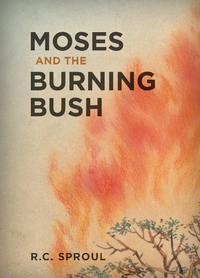
Moses and the Burning Bush by R. C. Sproul: A Brief Examination at What God Shows Moses About Himself

Moses and the Burning Bush

Moses and the Burning Bush

by R. C. Sproul

Kindle Edition, 103 pg.
Reformation Trust Publishing, 2018

Read: August 15, 2021
Grab a copy from your local indie bookstore!

What’s Moses and the Burning Bush About?

One of the church’s biggest problems is that we don’t understand who God is. But in that one revelation—the theophany in which God appeared to Moses—the transcendent majesty of God was partially unveiled. What had been invisible became visible through the theophany.

Sproul examines—briefly—just what God says about himself when he revealed himself to Moses. He shows His holiness, His glory, His Aesity, and more—here is even, as Sproul puts it, “A Shadow of Christ.”

In ten short chapters, Sproul opens up the account of Moses’s encounter with the Lord in the bush that was on fire, but was not consumed.* He doesn’t just camp out in Exodus 3, but spends time in Isaiah, Genesis, and other places, although he brings it all back to this point.

* I’ve learned to appreciate Scott Oliphant’s point that calling it a “burning bush” misses the point, it’s only supernatural to call it an “unburning bush.”

So, what did I think about Moses and the Burning Bush?

… in the burning bush we see the revelation of the person of God, of the power of God, and of the eternality of God. We see the revelation of the compassion of God, the redemption of God, and now, finally, the truth of God.

It has been ages—or at least it feels like it has been—since I’ve read an R. C. Sproul book (at least for the first time). There’s a clarity to the prose that’s almost untouchable by anyone else. He can express deep thoughts in a way that anyone can understand—not that there were a lot of tricky concepts this time out, but that voice is still there. And I’m going to miss it.

This is a nice book, as a sketch of these ideas. I think Sproul was capable of more, he could’ve got into all of these areas with more detail, could have fleshed out the concepts more—and given the reader something to chew on. I’m sure he had his reasons for not, I just wish he’d done more.

Still, if all you’ve thought of is the event itself—not what it meant beyond God calling Moses, it’s probably a good way to introduce yourself to it, but beyond that, there’s probably limited value.


3 Stars

This post contains an affiliate link. If you purchase from it, I will get a small commission at no additional cost to you. As always, opinions are my own.

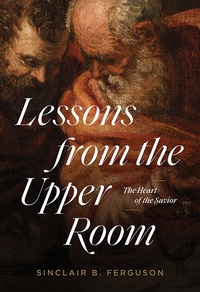
Lessons from the Upper Room: The Heart of the Savior by Sinclair B. Ferguson: A Guided Tour through The Savior’s Night before His Death

Lessons from the Upper Room

Lessons from the
Upper Room: The Heart
of the Savior

by Sinclair B. Ferguson

Kindle Edition, 241 pg.
Ligonier Ministries, 2021

Read: July 25, 2021
Grab a copy from your local indie bookstore!

What’s Lessons from the Upper Room About?

In his Gospel, John spends 4 chapters (13-17)* on the night before Jesus was betrayed. The last night He spent teaching, serving, praying with (and for), and being with the Twelve (then Eleven). In this book, Ferguson walks through those chapters, well…let him describe it in his own words:

Lessons from the Upper Room is by no means a complete exposition of John 13– 17. If that were attempted—to adapt some words of John himself—an entire bookcase could not contain the books that would be written!

Nor are these pages a commentary in any technical sense. They are, perhaps, more like the “audio description” function on my “smart” TV set. This facility provides a running commentary on the action taking place on the screen to help those who can follow the dialogue but are too visually handicapped to see it.

* Yes, I know John didn’t think of it in terms of chapters, shush, you know what I mean.

That’s basically what this is, a guided tour through these beloved passages from a trusted guide—pointing out interesting features, maybe helping the reader to think of them in a way they didn’t think of before. Maybe picking up a detail they never notice (or had forgotten they had).

Occasionally, there’s a pointed observation, a reminder that we should do more than read these words, a call to action. Nothing burdensome (see Matt. 11:30), but nevertheless, Jesus’ followers are to serve others as he did himself before supper.

So, what did I think about Lessons from the Upper Room?

I don’t have much to say about this book—that simple description is really all you need to know. Especially if you’re familiar with Ferguson, you know that what you’re getting is helpful.

Speaking of being familiar with Ferguson, I really want to get my hands on the talks that this book started out as. They have to be great—as much as I like Ferguson’s writing, his teaching and preaching are so much better.

I’m not sure I learned a whole lot from this read—a did pick up a thing or two. But this refresher on these passages is a great way to look at again at them. It’s warm, it’s reassuring, it’s stimulating. I can see this as the kind of thing I can read every couple of years as a little boost.

I commend this to you and your attention—it’ll reward your time.


3.5 Stars

Catch-Up Quick Takes: The Data Detective; All Creatures Great and Small; The Miracle Pill

The point of these quick takes posts is to catch up on my “To Write About” stack—emphasizing pithiness, not thoroughness. This time we’re looking at some recent Non-Fiction Audiobooks.


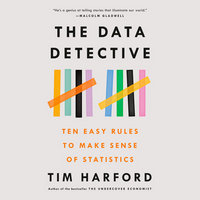
The Data Detective: Ten Easy Rules to Make Sense of Statistics

The Data Detective: Ten Easy Rules to Make Sense of Statistics

by Tim Harford
Unabridged Audiobook, 10 hrs., 24 min.
Penguin Audio, 2021
Read: May 19-21, 2021
Grab a copy from your local indie bookstore!

(the official blurb)
On the one hand, Hartford’s aim is to dispel the myth that “to really lie, you use statistics.” But part of what he ends up saying is that they are pretty handy tools for (at least) misleading people. So I’m not sure the book’s as successful as it could’ve been.

But what Hartford really does is show how to interpret statistics, to look behind the headlines and look at what the studies (or whatever) were looking into, what were they asking? And then to take the results reported in the news (or wherever) to use them to better understand things.

It’s basically a guide to teach yourself critical thinking skills—something we could all use more of. I really enjoyed it, and probably need to read/listen to it a few more times to really internalize it.
3 Stars

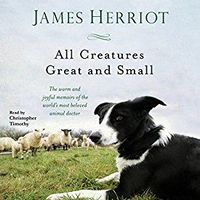
All Creatures Great and Small

All Creatures Great and Small

by James Herriot, Christopher Timothy (Narrator)
Series: All Creatures Great and Small, #1
Unabridged Audiobook, 15 hrs., 41 min.
Macmillan Audio, 1999
Read: May 17-19, 2021
Grab a copy from your local indie bookstore!

(the official blurb)
I read this series back in junior high—I remember liking them, I remember eventually getting to the point that I wondered if mother cows/sheep/horses always had problems delivering, and…well, that’s about it really.

I didn’t remember how much drinking there was, or the interpersonal stuff between Herriot and the vet he worked for, or the silliness of some of the other interactions he had with people. Which is a shame—because that was just so much fun.

There were some really moving parts, too—I probably skimmed over them in my youth, but I enjoyed dwelling on them now.

This was a sweet book, and it’s easy to see why people have been reading this series for years—and will probably continue to do so. I’m coming back for more as soon as I can.
3 Stars

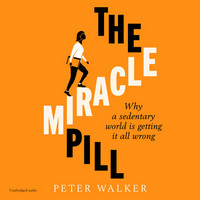
The Miracle Pill

The Miracle Pill

by Peter Walker
Unabridged Audiobook, 7 hrs., 58 min.
Simon & Schuster Audio UK, 2021
Read: May 3-4, 2021
Grab a copy from your local indie bookstore!

(the official blurb)
So, basically, here’s the thing the book is pushing: moving more improves our health. Little things like walking and riding bikes—and sitting less—will do wonders to help our health in ways we can’t imagine. Essentially, he argues that if we could take an expensive pill that would have the same impact, we all would. So why not do the free, natural thing?

Walker addresses several different ways that sedentary life can have an adverse impact on health and the ways that movement (walking, cycling, etc.) can reverse that. He talks about the small changes (that hopefully lead to larger changes) that can make dramatic improvements. Walker experiments on himself to illustrate some points, which is always fun.

It gets a little old and repetitive from time to time. But it’s good to review this stuff and a quick and entertaining listen. Give it a shot.
3 Stars

2021 Library Love Challenge 2021 Audiobook Challenge

This post contains an affiliate link. If you purchase from it, I will get a small commission at no additional cost to you. As always, opinions are my own.

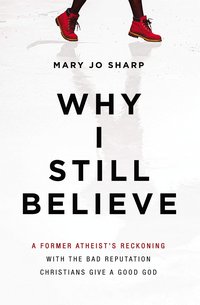
Why I Still Believe by Mary Jo Sharp: Mark 9:24 Lived Out

Why I Still Believe

Why I Still Believe:
A Former Atheist’s Reckoning
with the Bad Reputation
Christians Give a
Good God

by Mary Jo Sharp

Kindle Edition, 240 pg.
Zondervan, 2019

Read: August 1, 2021

What’s Why I Still Believe About?

For the sake of time, let me lift this from Sharp’s website:

With fresh and thoughtful insights, Why I Still Believe offers a spiritual narrative that presents relevant answers to haunting questions like:

  • Isn’t there too much pain and suffering to believe?
  • Is it okay to have doubt?
  • What if Jesus’ story is a copy of another story?
  • Is there any evidence for Jesus’ resurrection?
  • Does atheism explain the human experience better than Christianity can?
  • How can the truth of Christianity matter when the behaviors of Christians are reprehensible?

At once logical and loving, Sharp reframes the gospel as it truly is: the good news of redemption. With firmly grounded truths, Why I Still Believe is an affirming reminder that the hypocrisy of Christians can never negate the transforming grace and truth of Christ.

Sharp presents herself—warts and all—and her struggle with doubts, and some of what she’s found to address them. I want to stress what the description says about “a spiritual narrative”—that’s what this book is, and along the way, that narrative will touch on those bullet points. I’m not sure what the claim about “reframing the gospel” is about—how does it need “reframing” to be “the good news of redemption”? And as important as a reminder along those lines would be, this is more of an assertion about the hypocrisy of believers being unable to negate anything than it is a reminder (or defense of the faith for it).

Ultimately, I think this is a story about a woman being let down by the shepherds of Christ’s Church—she needed help, she needed guidance, she needed pastoral care and aid in finding the answers that she needed. In the absence of that shepherding, she had to help herself.

So, what did I think about Why I Still Believe?

The chapters that follow are snapshots of my experience in the church and how those experiences shaped me and my beliefs. If you feel the ever-present tension of the beauty of salvation alongside the ugliness of human hypocrisy and evil, you’re not alone. If you are uncomfortable in the church but feel the risk of commitment calling, this book is for you. It is for those who’ve wondered if they’ve been left a cosmic orphan, and wondered again if there’s more to this unshakeable longing to belong. I can’t promise any tidy endings, but there’s still an irresistible Hope.

I’m not going to talk about all the problems I have with what Sharp presented, but there were many. The above quotation is the concluding sentences of the Introduction. Set against those goals, I think she succeeds—she shows that the reader who matches those qualifications isn’t alone, she doesn’t deliver any tidy endings (and the tidy things she does present aren’t really that tidy), and she does assert that there’s an irresistible Hope. What she doesn’t do is give much of a reason for faith against the tension between the beauty of salvation and the ugliness; she doesn’t assure anyone that there’s every reason to commit to Christ’s Bride despite the weaknesses and personal discomfort—nor does she tell the reader much about the Hope she asserts to point to.

What we do get is an honest account of one woman’s stumbling through life, looking for the certainty of faith, looking for answers the Church should provide “to anyone who asks you for a reason for the hope that is in you” (1 Peter 3:15), and who doesn’t find much. Yet there’s still faith to be found, which is commendable, it is relatable—it is good to know that as we stumble along the path that we’re not alone.

There’s value in this, but that’s not what the book promised, so I can’t get that excited about what it delivered. There’s not a lot of apologetics, there’s not a lot of Bible, there’s not a lot of biblical justification for assurance—there’s almost no Gospel. There are some arguments for the existence of a Deity, but not for the Triune God of the Christian Scriptures. There’s some arguing about some facts about the Resurrection of Christ—but not about what that means.

A lot of what’s labeled (by others or itself) “Evangelicalism” today is really some sort of “Moralistic Therapeutic Deism”—and that’s about as close as we get to Christianity in these pages. Although, I’m not convinced Sharp actually delivered that much of anything “Moralistic”—Therapeutic Deism is about it. I’m not saying Sharp isn’t an orthodox believer—I’m just saying that I don’t see much along those lines in this book.

Here I said I wasn’t going to get too deep into my problems—and I really haven’t, but I’ve gotten further along the path than I meant to. So I’m going to stop.

When it came to assigning the nearly-obligatory Stars, I was torn—just what do I rate this? I ended up looking at my own definition of my ratings, and read: “Don’t bother. It’s not bad per se, it’s just not good.” That about sums it up for me.

Can someone read this and benefit? I can’t say that there’s no chance of it, I’m just not sure what grounds there would be for claiming it’s useful. The dross to gold ratio doesn’t give me a reason to recommend this.


2 Stars

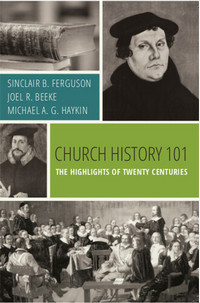
Church History 101: The Highlights of Twenty Centuries by Sinclair B. Ferguson, Joel R. Beeke, Michael A.G. Haykin: A Quick Look at 20 Centuries

Church History 101

Church History 101:
The Highlights of
Twenty Centuries

by Sinclair B. Ferguson, Joel R. Beeke, Michael A.G. Haykin

Kindle Edition, 99 pg.
Reformation Heritage Books, 2016

Read: July 25, 2021
Grab a copy from your local indie bookstore!

… the record of church history teaches us to hold fast to Christ, assured that He is with us always, even to the end of the world. He will build up His church and kingdom to all generations.

What’s Church History 101 About?

That’s the controlling idea behind this book—it’s a survey of Church History—which is the story of Christ building his church. There will be highlights and lowpoints. This, and more, is sketched out in the preface—as well as a description of the book that follows.

The chapters came from Ferguson’s time in the pulpit. Then Beeke, Haykin and their assistants revised them for use in The Reformation Heritage KJV Study Bible, and then there were published as this book.

Application

Each chapter sums up a century of Church History, talking about major movements controversies and figures incredibly briefly. It’s a ninety-nine page book, covering 20 Centuries—so to say the chapters are brief is an understatement. Most chapters include (not always as the concluding point) a “lesson” for application. Like:

Gregory’s vision produced a kind of nominal Christianity with which the church continues to struggle to this day.

The church should honor Gottschalk’s memory despite his human frailties. We should also continue to educate ourselves about missionaries such as Cyril and Methodius, and remember that the quest for power and recognition, demonstrated by Pope Nicholas, ultimately detracts from the mission and witness of the church.

Today we must see that the church exists to bring light to the world, and we must be willing to separate earthly power and gain from the mission of the church. The church accomplishes her mission by the power of the Holy Spirit, not by the might of kings or political leaders.

I get these came from a Study Bible, and those tend to be very object lesson-oriented, but I’m not sure it’s all that helpful (or necessary) in this context.

So, what did I think about Church History 101?

I think I read something wrong about the length—I knew it was a brief survey, but I didn’t expect it to be so brief that I finished it in under 90 minutes.

But, for a quick, very surface-level look at 2,000 years of History? This is good—it focuses on the essentials, it helps orients the reader to what matters—and hopefully ignites someone’s interest in diving deeper into a person, period, or movement mentioned in these pages.

I enjoyed it, I appreciate what it tried to do, I wish it had done more, but that would’ve defeated the purpose, I guess.

I do recommend this for anyone Junior High and up for a solid overview, a refresher, or a nice way to spend an hour or so. It won’t change your life, but for those who don’t need the introduction, it will serve as a reminder that Christ is building His Church and what that looks like.


3 Stars

This post contains an affiliate link. If you purchase from it, I will get a small commission at no additional cost to you. As always, opinions are my own.

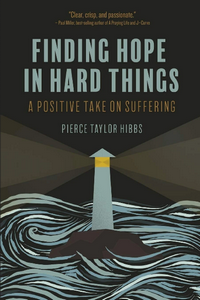
Finding Hope in Hard Things by Pierce Taylor Hibbs: How the Hard Things Shape Us

Finding Hope in Hard Things

Finding Hope in Hard Things:
A Positive Take on Suffering

by Pierce Taylor Hibbs

Paperback, 133 pg.
2020

Read: July 18, 2021
Grab a copy from your local indie bookstore!

We think we’re stone. Only chisels and hammer strikes can change our shape. But no; we’re wet clay. We’re sediment and soil. We’re waiting for hands. We’re waiting for fingertips. We’re waiting for the pressure of palms. We’re waiting to be shaped by an artist. And the artist’s tools are hard things.

Hard Things are Going to Shape Us in Ways Easy Things Can’t

That’s it, there’s the book in a nutshell—that line and the quotation, there’s the central premise of the book and the kind of way he presents it.

Hibbs focuses on three of the hard things he’s faced in his life—the death of his father, his anxiety disorder, and his struggles with self-doubt. These case studies are just that, things that his readers can relate to, sympathize with, and find similarities in their lives. After that, Hibbs points to finding Christ and His purposes in the hard things, and that’s where we find hope.

Anxiety disorders, Crohn’s disease, cancer of the spine, the death of your father—these things happen. What matters most is not what happens to you but how you perceive and respond to it. Perception and response—that’s the key.

So, what did I think about Finding Hope in Hard Things?

I’ve talked about two of Hibbs’s books here before—Finding God in the Ordinary and Struck Down but Not Destroyed: Living Faithfully with Anxiety. The former is a collection of essays about finding God in ordinary, minute things in life; the latter is a thoughtful and thorough look at how Hibbs has dealt with his Anxiety Disorder, and how the reader can apply these things to their own problems. This book combines the best of the two approaches to these books—we don’t get a systematic look at suffering. Instead, we get essays based on his studies, based on his observations and thoughts.

I loved this approach, this style. Most books on suffering that I’ve read are meditations or studies on the relevant Psalms—maybe a passage or two from the Gospels or Epistles. Hibbs doesn’t do that, he talks about where he is, where he’s been, where his readers are/have been/will be. He’s learned the lessons of those other books and now he’s internalized them. He can meditate, muse, and reflect—and that’s what these essays are.

As with his earlier book, these essays are wonderfully put together, a pleasure to read, even without the content.

On an episode of The West Wing, Leo McGarry tells a story:

“This guy’s walking down the street when he falls in a hole. The walls are so steep he can’t get out.

“A doctor passes by and the guy shouts up, ‘Hey you. Can you help me out?’ The doctor writes a prescription, throws it down in the hole and moves on.

“Then a priest comes along and the guy shouts up, ‘Father, I’m down in this hole can you help me out?’ The priest writes out a prayer, throws it down in the hole and moves on.

“Then a friend walks by, ‘Hey, Joe, it’s me can you help me out?’ And the friend jumps in the hole. Our guy says, ‘Are you stupid? Now we’re both down here.’ The friend says, ‘Yeah, but I’ve been down here before and I know the way out.'”

I thought about that story a lot while reading this. Hibbs is that friend. He knows the way out of the hole—better yet, he understands why the hole is there and how it’s used by God to make us into who He wants.

This isn’t your typical book on suffering, it’s better.

3.5 Stars

This post contains an affiliate link. If you purchase from it, I will get a small commission at no additional cost to you. As always, opinions are my own.

The Irresponsible Reader On…Self-Published Non-Fiction

Self-Published Authors Appreciation Week
From the first moment that people did the strange thing of asking me to talk about their books on my blog, I’ve been impressed by the quality of a lot of what’s been published by authors going out on their own, taking all the risks, shouldering all the responsibility and doing all the work to get their words, their dreams, their blood, sweat, and tears. This should be celebrated—it’s definitely appreciated, as we’re trying to show this week.

I haven’t had time to read anything new for Self-Published Authors Appreciation Week, and therefore don’t have anything new to blog about, so I’m going to highlight some of the self-published works that I’ve blogged about over the last few years—just a sentence or two. Hopefully enough to make you click on the link to the full post. Beyond that, it’d be great if I inspired you to add a few of these to your TBR. Also, be sure you check out the other posts over at the SPAAW Hub.

Today we’re going to be looking at Self-Published Non-Fiction–which are all memoirs at the core, I now realize. It’s what the authors do with the memoirs that makes these really stand out.

bullet Life and Death Behind the Brick and Razor: Code Red Diamond by Isaac Alexis, MD—A prison doctor uses his experiences to give suggestions for a healthy/healthier life. (my post about it)
bullet No Problem, Mr. Walt: Building a Boat, Rebuilding a Life, & Discovering China by Walt Hackman—Hackman was one of the first self-published authors to reach out to me, and I’m so glad he did. A fascinating read about a man deciding to have an authentic Chinese junk built for him to use as a houseboat in California. (my post about it)
bullet Struck Down but Not Destroyed: Living Faithfully with Anxiety by Pierce Taylor Hibb—Drawing on what he’s learned from over 12 years of an anxiety Hibbs talks about learning to see what God’s purpose in the suffering is (anxiety disorders specifically, but easily transferable to other types), understanding that His hand is guiding all things—including our problems—so how do we in faith (without denying the suffering) rest in faith. (my post about it)
bullet And Drink I Did: One Man’s Story of Growing Through Recovery by Jay Keefe—It’s all there in the subtitle, Keefe tells about his OCD, his alcoholic days, his getting sober and how he’s trying to help others since then. Powerful stuff. (my post about it)
bullet Uber Diva by Charles St. Anthony—a humorist writes a memoir of a Lyft/Uber driver mixed with a guide to starting/surviving/thriving as one in a tough market. St. Anthony also has a few other books out now that are probably worth a read. (my post about it)
bullet Flying Alone: A Memoir by Beth Ruggiero York—A female pilot’s memoir of her path from flight school to flying for TWA (now that I have a son learning to fly, some of her more harrowing experiences keep flashing through the back of my mind). (my post about it)


If you’re a self-published author that I’ve featured on this blog and I didn’t mention you in this post and should have. I’m sorry (unless you’re this guy). Please drop me a line, and I’ll fix this. I want to keep this regularly updated so I keep talking about Self-Published Authors.

The Attributes of God: An Introduction by Gerald Bray: Sketching out The Essence of God and How He Relates to Us

The Attributes of God

The Attributes of God: An Introduction

by Gerald Bray
Series: Short Studies in Systematic Theology

Paperback, 109 pg.
Crossway, 2021

Read: July 11, 2021
Grab a copy from your local indie bookstore!

What’s The Attributes of God About?

While there are technically four chapters in this book, it’s really two–the first chapter introduces the concept of God’s attributes, where we got the idea, and so on. The last chapter endeavors to sketch out how these attributes are relevant to believers, why we should study and care about them.

The bulk of the book resides in the other two chapters–one what Bray calls God’s Essential Attributes, the second on what he calls His Relational Attributes. Typically, these are referred to as his incommunicable (omnipresence, omnipotence, omniscience) and communicable attributes (holiness, righteousness, goodness), respectively, but Bray has his reasons for changing the names and explains it (I’m not saying I’m dropping the usual labels myself, but I can appreciate his thinking).

Bray describes each attribute, what the Biblical justification is for ascribing it to God and relates it to the others. He even touches (it’s only an introduction, so he doesn’t get too far) on some of the historic discussions about the attribute.

So, what did I think about The Attributes of God?

There was a voice in the back of my head early on wondering if we needed this volume. Recent years have given us Mark Jone’s God Is…, Matthew Barret’s None Greater and Terry Johnson’s The Identity and Attributes of God, and a few others. Is there a place for Bray’s slim volume?

Of course—1. this series needs to address the topic and 2. contemporary Evangelicals have really dropped the ball on reflecting and applying that reflection on their theology and lives. We need more writing and thinking on these things which ought to characterize our thoughts not less.

Bray does a good job in introducing the notion here. Of the three I’ve read in this series, it’s the least accessible. But I’d argue that it’s still on the level with the others, you just might have to take your time with the occasional passage. These are deep waters that Bray is introducing the reader to, things that the Church has spent centuries establishing, and we need to at least see the immensity of the topic before we can say we are starting to understand it. It’s a short book and he has a lot to cover, so every word counts.

Another solid entry in this series. I’m appreciating the varied approaches and styles that the authors address their topics, while sharing similar concerns for theological method. I’m really glad that Crossway gave the green light to the Short Studies in Systematic Theology and hope it’s discovered by many. The Attributes of God: An Introduction is as good a place as any to dive in and see what it’s about.


4 Stars

This post contains an affiliate link. If you purchase from it, I will get a small commission at no additional cost to you. As always, opinions are my own.

Foundations of Covenant Theology by Lane G. Tipton: A Fascinating Approach to Genesis 1-3

Foundations of Covenant Theology

Foundations of Covenant Theology:
A Biblical-Theological Study
of Genesis 1–3

by Lane G. Tipton

Paperback, 131 pg.
Reformed Forum, 2021

Read: July 4, 2021

What’s Foundations of Covenant Theology About?

In 2019, Lane Tipton gave a series of lectures for a Reformed Forum seminar on covenant theology. Tipton’s now turned these lectures into “a brief and non-technical” book, suitable for private use or as a supplement to a Sunday School class, building on the work of Geerhardus Vos and Meredith G. Kline.

I really don’t like it when I don’t provide my own summary/synopsis, but after a few attempts, I’m bailing. Primarily because my attempts ended up 2-3 times long as what’s on the back of the book/Reformed Forum’s website. So…why bother reinventing the wheel, if I’m just going to make it bloated and cumbersome?

Drawing from Genesis 1:1 and subsequent biblical revelation, Lane Tipton argues that before creating the visible world, the immutable triune God created a heavenly temple dwelling, filled that heavenly dwelling with the unchanging glory of his Spirit, and sanctified that heavenly dwelling as the realm of everlasting Sabbath rest.
Adam, as the created image of God and federal head of his posterity, could have advanced through perfect covenantal obedience beyond probation on the mountain of God in earthly Eden into the heavenly dwelling of God in Sabbath rest. This God-centered and heaven-focused theological backdrop enriches our understanding of the person and work of Jesus Christ, as the second and last Adam in the covenant of grace, who in his humiliation and exaltation has opened the gates of heavenly paradise for his church.

Vocabulary and a Glossary

This is a non-technical book as Tipton says in the preface. But at a glance, you’d be tempted to think otherwise. Tipton has a very precise and erudite vocabulary, and it’s in full view here. Where some writers will (unintentionally) obfuscate with their language, Tipton’s doesn’t do that at all. I find his style and word choice to helpful—once you get used to it (and it doesn’t take long), you don’t even notice that it’s not your run-of-the-mill non-technical language.

There are concepts and phrases he uses throughout that he wants to highlight, and they’re included in a Glossary at the end of the book. There were a few he used in the text that I’d have liked a bit more detail on, but it’s clear that he uses the Glossary to focus on the vital concepts to his argument. I wish more people would do things like that.

So, what did I think about Foundations of Covenant Theology?

I’ve lost track of the books/chapters I’ve read that serve as an introduction to Covenant Theology in the last couple of decades. Yet I keep reading them (and, largely, enjoy and profit from them). This is a different way of covering these concepts and it’s a very effective one.

It’s also a different way of looking at Genesis 1-3. Almost every time I’ve seen these chapters explained and exegeted, it had to do with the doctrine of Creation, the Fall and the Promise of the Seed in Genesis 3, and so on. But Tipton’s approach—while addressing all that—focuses on the Big Picture, looking at the purposes behind Creation, the protoevangelium, the Covenants of Work and Grace, and how those are worked out in history (particularly in the last two chapters about Christ as the Promised Seed and the Second Adam).

Would I have liked this book to be longer and these brief chapters to be expanded—making this still non-technical, just not brief. If this had taken me a few hours to read rather than just an afternoon, I’d have been happier. But…this was a fascinating book, a helpful read, and I know I’ll profit from meditating on and returning to these concepts. You really should try this one yourself, you’ll be rewarded for it.


4 Stars

Page 37 of 61

Powered by WordPress & Theme by Anders Norén