Category: Non-Fiction Page 39 of 61

The Writer’s Library by Nancy Pearl & Jeff Schwager (Audiobook) Was Just Painful to Listen To: DNFed

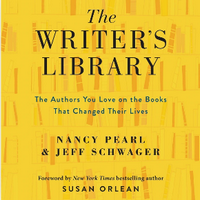
The Writer's Library

The Writer’s Library:
The Authors You Love on
the Books that Changed Their Lives

by Nancy Pearl & Jeff Schwager;
Narrated by: Nancy Pearl, Jeff Schwager, Xe Sands,
Dominic Hoffman, Eileen Stevens, Piper Goodeve,
Andrew Eiden, Lameece Issaq, Rick Adamson,
JD Jackson, Ryan Do, Timothy Andrés Pabon,
Emily Woo Zeller, Richard Ford, Luis A. Urrea,
Vendela Vida, Laurie Frankel, and Siri Hustvedt

Unabridged Audiobook, 11 hrs., 21 min.
HarperAudio, 2020

Read: May 11, 2021

What’s The Writer’s Library About?

I’m just going to copy and paste from the Publisher’s site here:

Before Jennifer Egan, Louise Erdrich, Luis Alberto Urrea, and Jonathan Lethem became revered authors, they were readers. In this ebullient book, America’s favorite librarian Nancy Pearl and noted-playwright Jeff Schwager interview a diverse range of America’s most notable and influential writers about the books that shaped them and inspired them to leave their own literary mark.

The Writer’s Library is a revelatory exploration of the studies, libraries, and bookstores of today’s favorite authors—the creative artists whose imagination and sublime talent make America’s literary scene the wonderful, dynamic world it is. A love letter to books and a celebration of wordsmiths, The Writer’s Library is a treasure for anyone who has been moved by the written word.

Did I Like Anything in This Book?

I liked quite a few things, actually. The Foreword by Susan Orlean was just great, I cannot say enough about it. I wrote a note saying “worth whatever time I spend on this book for this foreword.”

The premise of the book is great, the range of authors and topics were intriguing and/or challenging. The interviews I listened to were thoughtful and entertaining.

Then Why Did I Not Finish The Writer’s Library?

I tried, I really tried. But during the introduction, I started to worry, and by the time it got into the first interview, I knew the experience was going to be rough. I listened to the interviews with Jonathan Letham, Laila Lalami, Luis Alberto Urrea and started Jennifer Egan and just couldn’t do it anymore.

So, as I understand it, Pearl and Schwager would interview the authors, write up a transcript and then submit it to the author for some editing. Then it went in the book. So far so good. Then for the audiobook, Pearl, Schwager, and a professional audiobook narrator would read the transcript. And that’s where it falls apart. It sounded stiff and artificial—like people reading a script without ever seeing it before. Generally, the narrators came across okay, but even they came across stilted. Inflection was odd, there were unusual gaps between one person reading their part and the next starting.

Were these audio recordings of the actual interviews? I think I’d love this. Or if I read it in print, and wouldn’t have to worry about the way it was narrated? I’d happily listen and/or read—and I think I will try this in print after I can’t remember just how bad I thought this was.

0 Stars

2021 Library Love Challenge 2021 Audiobook Challenge

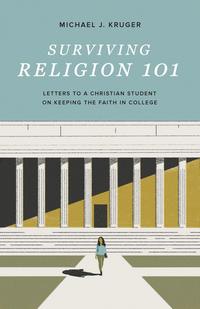
Surviving Religion 101 by Michael J. Kruger: Letters to a Christian College Sudent

Surviving Religion 101

Surviving Religion 101: Letters to a Christian Student on Keeping the Faith in College

by Michael J. Kruger

Paperback, 241 pg.
Crossway, 2021

Read: April 18-25, 2021
Grab a copy from your local indie bookstore!

What’s Surviving Religion 101 About?

The book is structured as sixteen letters to Kruger’s daughter, a college freshman at UNC (his own alma mater). Kruger remembers the challenges he had to deal with at the school in terms of faith and knows that things haven’t gotten easier for college students in the years since then.

These letters are written as encouragements for her regarding some specific challenges he expects that she will have to deal with because of things professors or peers will say—directly or indirectly—that will challenge her thinking and faith. As well as he may have tried to prepare her before she left for college, it’s different when it’s no longer a matter of preparation, but of daily experience.

Kruger’s aim is to help Emma—and other readers—know that there are intellectually satisfying defenses to the challenges thrown her way. Believing isn’t about shutting down the mind to thinking, rather, it’s about loving God with our mind.

…I am not under the impression that merely reading this book will answer every possible question a college student may have. Nor do I think any single book (or even many books) could prepare students to go toe-to-toe with their college professor. No, the intent here is much more modest. Like any complex task, eventually, you have to take the first step, even if it’s a little one. This volume is designed to be that first step, an initial orientation for Christian students about the challenges they face and (hopefully) a reason for them to be confident that there are answers to their questions, even if they don’t yet have them.

Or as the title suggests, this book is about surviving—with faith intact—one’s university experience. Now, that may seem like a strange goal, perhaps one that is far too modest. Don’t we, as Christians, want to do more than survive? Don’t we want to make an impact and change the world while in college? Sure, but that’s not where one starts. Instead, you start by not stopping. By not giving up. By surviving. You can’t “change the world” for Christ if you no longer believe in Christ or walk with Christ.

He deals with things like belief in miracles (in particular, the Resurrection), the so-called problem of evil, the exclusivity of Christianity, Christian sexual ethics, pitting science versus religion, the reliability of the New Testament (in light of Bart Ehrman’s position at UNC, this is of particular importance). Kruger sets out to show that yes, Christians have been answering these/similar challenges for centuries, these are not things that need to shipwreck a believer’s faith but can be faced head-on.

Highlights and Concerns

I thought every chapter in the book was solid and helpful—there’s not a disappointing one in the bunch. Kruger is good to show both the thinking behind the challenge to the faith represented by the various topics and the answers (or at least the beginning or answers) needed to push back. But he shows why the challenge is important, why it matters what the Christian response is (first to the believer dealing with the objection/challenge, and then to the one outside the faith), and offers encouragement to persevere in light of the issue.

I did think that Kruger perhaps focused too much on the reliability of the Scriptures and similar topics—given that three chapters when everything else gets one. Still, given Kruger’s specialty in textual and canon studies, it makes sense—particularly when you add in the importance of the topic, and the lack of exposure most Christians (of all ages) have to these ideas.

At the end of the day, however, for this reader, it all comes down to the Postscript, “What Do I Do If It Feels Like Christianity Just Isn’t Working for Me?” Setting aside the focus on the mind, he turns to the affections, concentrating on the affections the believer has for the person of Christ first and foremost, with the details of all the other issues covered in the book before this point (and more) coming in second.

Here is where many believers miss the point of the Christian life. Some are part of the church because they are excited about being involved in a “good cause” or because they love helping people or because they resonate with the idea of Christianity. But in the end, that’s not the heart of the faith. We are not Christians so that we can be part of a cause; we are Christians so that we can know a person: Jesus Christ. Don’t forget, he’s a real person, not just a concept And it is only our affection, our love, our adoration for him as a person that will keep us faithful to the end. If we are concerned only about a cause, that will fade as soon as difficulty and suffering come. Causes come and go. Jesus is forever.

So, what did I think about Surviving Religion 101?

When I left high school for college in the last century, I remember getting a couple of books along these lines and saw them all the time, too. How to secure your child’s faith during college, how to help them avoid the moral failings the surround them, etc. Memorize these facts (in a very Josh McDowell-esque fashion), stay away from booze and sex, and you might end up ushering in a revival at your college. Kruger’s approach is more of a, “it’s okay, let’s talk and help you deal with these.” Not to emerge victorious, but to emerge intact and ready to try again the next day.

There’s no fear in these pages, instead, there’s a quiet confidence, a trusting in the acre of the Father—encouragement to keep on keeping on and a reminder that the Son has redeemed his people, and they should live with humble boldness ready for with answer for the hope that liest within.

I recommend this book, and encourage readers of the right age (or beyond) give this a shot.


3.5 Stars

This post contains an affiliate link. If you purchase from it, I will get a small commission at no additional cost to you. As always, opinions are my own.

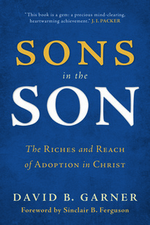
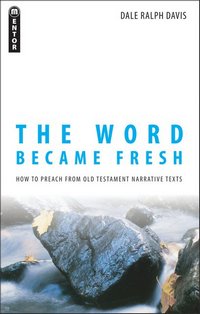
The Word Became Fresh by Dale Ralph Davis: Principles for Old Testament Reading “For Fun and Profit”

The Word Became Fresh

The Word Became Fresh:
How to Preach from Old
Testament Narrative Texts

by Dale Ralph Davis

Kindle Edition, 154 pg.
Mentor, 2012

Read: April 11-18, 2021
Grab a copy from your local indie bookstore!


Dale Ralph Davis is one of those authors I’ve meant to read for ages now, I’ve seen him quoted and referred to for as long as I can remember and I just hadn’t gotten around to reading any of his work. This book seemed like a decent place to start.

What’s The Word Became Fresh About?

In the preface, Davis sets out the impetus for the book—too many Christians see the Old Testament as unimportant, or too complicated to understand—it’s good for a couple of morality lessons or the occasional Psalm, but that’s about it.

I still believe that traditional Old Testament criticism has had the effect of killing the Old Testament for the church. This little tome can hardly reverse that, but it is meant as an exercise in reading the Old Testament for fun and profit. As my mother- in- law used to say, ‘It’s different anyway.’ And maybe it will help.

While yes, the book is intended as a help for preachers*, these tools can and should be used by the laity in their personal reading.

* Maybe I’m just a snob, but if preachers don’t have the tools to handle the Old Testament passages at this level already, perhaps they skimped on their training.

Davis describes and then illustrates several principles to be used when approaching (primarily narrative) Old Testament texts to help the reader focus on the main ideas and themes of the passages without getting bogged down in the minutiae. The illustrations are plentiful and insightful—and are probably the best part of the book—taken from all over the Old Testament to help illustrate how useful they are for a variety of texts.

So, what did I think about The Word Became Fresh?

The writing is warm, approachable, and engaging—I can see why so many people have quoted Davis in the various things I’ve read—and I can see myself quoting him in the future (and reading more of him to get those quotations).

While I found the principles and tools he lays out to be helpful, I’m not sure I needed any of them. I’ve been exposed to—and using—most of them (generally without knowing I was using a hermeneutical tool, which should’ve been obvious to me).

What I found most helpful is his illustrations, seeing this stuff at work—and the conclusions (both exhortations and assurances) that he draws from his examples. These turn each chapter into a collection of sermonettes for handy use.

I’m not sure I learned a lot from this book, but I really appreciated the time I spent in the book and the gems I was able to collect from Davis. This won’t be my last book by him.


3 Stars

This post contains an affiliate link. If you purchase from it, I will get a small commission at no additional cost to you. As always, opinions are my own.

These Dog Days Aren’t Over

(Updated and Revised)
These Dog Days Aren't OverThis was a hard post to come up with a name for*, essentially this post came from a comment not too long ago about being hesitant to read books about animals if the reader doesn’t know if they survive the book. I get that, I absolutely do. I still bear the scars of Where the Red Fern Grows and Marley and Me (sure, that wasn’t that long ago, but the wound still stings). So, for readers like my correspondent, here are some perfectly safe books prominently featuring dogs!

I plan on updating this when I can remember to, so by all means, chime in with comments about Dogs I’ve forgotten about/haven’t yet!

Non-Fiction

bullet The Particulars of Peter by Kelly Conaboy—this is a collection of humorous essays giving Conaboy the opportunity to rave about her dog, Peter. In her eyes, Peter is a perfect dog, and as you read this, you’ll be tempted to agree. (my post about it)
bullet Olive, Mabel & Me by Andrew Cotter—Cotter’s charming book describes his life with the two dogs that rocketed to international stardom (and brought him along). (my post about it)
bullet My Life as a Dog by L. A. Davenport—Davenport’s short little book about the relationship between the author and his dog, Kevin, a black and tan, pure-bred dachshund. It focuses on what the two of them did over two days and then a weekend selected from the years they spent together. (my post about it)
bullet What the Dog Knows: The Science and Wonder of Working Dogs by Cat Warren—Warren basically covers three topics: there’s the science and history of using working dogs (of all sorts of breeds, not to mention pigs(!), birds, and even cats) to find cadavers, drugs, bombs, etc.; there’s the memoir of her involvement with cadaver dogs via her German Shepherd, Solo; and anecdotes of other cadaver dogs and trainers that she’s encountered/learned from/watched in action. (my post about it)
bullet What the Dog Knows Young Readers Edition by Cat Warren, Patricia J. Wynne—The above book adjusted for younger readers, with some great illustrations. It’s not dumbed-down, just adjusted. (my post about it)

Fiction

bullet The Finders by Jeffrey B. Burton—A Dog Trainer/Cadaver Dog Handler on the hunt for a serial killer in this series launch. (my post about it)
bullet Suspect by Robert Crais—One of my all-favorite books, a cop with PTSD gets assigned to the K-9 Unit and works with a dog fresh from Afghanistan combat. (my post about it) The pair also plays a major role in The Promise.
bullet
Stepdog by Nicole Galland—A love story where the major impediment to happily ever after is her dog (a gift from her ex). (my post about it)
bullet Oberon’s Meaty Mysteries by Kevin Hearne (Audiobooks narrated by Luke Daniels)—Oberon, the scene-stealing Irish Wolfhound from The Iron Druid Chronicles narrates this series of novellas (my posts about them).
bullet Neah Bay series by Owen Laukkanen—Lucy is a dog who is trained by prisoner Mason Burke, who has to track her down when he gets out. She’s a service dog for Marine Vet Jess Winslow. Lucy connects the two humans in her life and helps to keep them safe when a corrupt deputy comes after Jess. (my post about them)
bullet I Thought You Were Dead by Pete Nelson—I’m not sure how to sum this one up in a sentence. It’s a pretty typical novel about a troubled writer with a romantic life and family in shambles. But his dog is the thing that makes all the difference. (my post about it)
bullet Chet and Bernie books by Spencer Quinn—Bernie Little is a PI in Phoenix. Chet’s his four-legged partner and the series narrator. It’s too fun to miss. (my posts about them)
bullet The Right Side by Spencer Quinn—”a deeply damaged female soldier home from the war in Afghanistan becomes obsessed with finding a missing girl, gains an unlikely ally in a stray dog, and encounters new perils beyond the combat zone.” (my post about it)
bullet Woof by Spencer Quinn—The beginning of an MG series about a with a penchant for trouble and her dog. (my post about it)
bullet Andy Carpenter books by David Rosenfelt—Andy Carpenter is New Jersey’s best defense lawyer and a devoted dog owner. He helps run a rescue shelter, too–and almost every client he takes as some sort of connection with a dog. These books aren’t dog-centric like the others on this list, but they’re dog-heavy. (my posts about them)
bullet The K-Team books by David Rosenfelt—a spin-off from the Andy Carpenter series. This features a PI team made up of Andy’s wife/investigator, Laurie; the near super-heroic Marcus; and Corey Douglas, a freshly-retired K-9 officer. His canine partner, Simon Garfunkel, co mes along, too. Simon Garfunkeldoesn’t play a giant role in the books, but he gets at least one good action scene per book. (my posts about them)
bullet Voyage of the Dogs by Greg van Eekhout—SF for all ages about a team of dogs on a long-distance space flight. (my post about it)

Supportive Roles

These dogs aren’t as significant a presence in their books as the prior group, but they’re important enough to mention.
bullet Mouse from The Dresden Files by Jim Butcher. (my posts about them)
bullet The Midnight Plan of the Repo Man by W. Bruce Cameron and the sequel Repo Madness by W. Bruce Cameron(my posts about them)
bullet Edgar from the Washington Poe books by M. W. Craven. (my posts about them)
bullet Rutherford from The TV Detective series by Simon Hall (my posts about them)
bullet Oberon from the Iron Druid Chronicles by Kevin Hearne. (my post about them)
bullet Ruffin from the I. Q. series by Joe Ide. (my posts about them)
bullet Dog from the Walt Longmire books by Craig Johnson(my posts about them)
bullet Trogdor from The Golden Arrow Mysteries by Meghan Scott Molin. (my post about them)
bullet Mingus from The Drifter by Nicholas Petrie. (my post about it)

Books with paws on both sides of the line

Some books that belong on this list, but might be a bit too close to not fitting on it for some readers
bullet Lessons From Lucy by Dave Barry—there’s a strong “my beloved dog is old and will die soon-vibe throughout this (it’s the whole point), so some may want to avoid it. But the focus is on what Barry is learning from his aging but still full-of-life dog. (my post about it)
bullet Dead is … series by Jo Perry—the canine protagonist in these mystery novels is a ghost, so there’s a dog death involved. But we meet her as a ghost, so she won’t die (again) in the series. (my posts about them)
bullet Lessons from Tara by David Rosenfelt—Inspired by the death of their dog, Tara, the Rosenfelt’s now operate a no-kill shelter for senior dogs. This is the story about the origins and day-to-day of that life. There’s discussion of Tara’s death, and he has to cover the end of days for dogs, but it’s not the focus of the book. One some will want to avoid, but you probably shouldn’t. (my post about it)


  • I brainstormed this a bit with my family, and wanted to share some of those titles that didn’t make the cut, just because I enejoyed their creativity:
    bullet These Dogs Didn’t Go To Heaven/Not All Dogs Go to Heaven implies these dogs aren’t wonderful creatures, and that’s a solid loser
    bullet No Kleenex Required too vague, and not necessarily true, they’re just not required because of a death
    bullet The Best Bois
    bullet Books Where the Author isn’t A Heartless Bastard (Looking at You, Marley and Me) too long, and boy howdy, does it seem my son has bigger issues with the book than I did
    bullet Books that Even PETA Would Be Okay With
    bullet Books for the Vegan in You suggests the dog books I don’t mention are in favor of eating them…
    bullet Paw Patrol I’m almost confident my daughter’s boyfriend suggested as a joke, for his sake I’m assuming it was
    bullet Pawfect Dog Stories I refuse to resort to that kind of joke

(Images by S K from Pixabay and josmo from Pixabay

Quick Take Catch Ups: Strange Planet; Claire Dewitt and the City of the Dead; Midnight at the Bright Ideas Bookstore; Paper: Paging Through History

This is an odd group of books, I realize—there’s no theme or anything. Most are books that I can’t find the time to write a full post about, and one I don’t want to spend the time on. To do justice to the Claire DeWitt book would take at least two of my longer-sized posts, and I’d want to read the book at least two more times—so, that’s just not happening, I’ll settle for this sketch. The point of these quick takes posts is to catch up on my “To Write About” stack—emphasizing pithiness, not thoroughness. As you’ll see here.


Strange Planet

Strange Planet

by Nathan W. Pyle
Series: Strange Planet, #1
Hardcover, 144 pg.
Morrow Gift, 2019
Grab a copy from your local indie bookstore

(the official blurb)
I’m not sure how to talk about this collection. If you’ve seen the comics floating around online, you either love ’em or hate ’em. If you haven’t seen the comics floating around online, you’re probably wrong, they’re fairly ubiquitous.

Having these in one handy collection is greatthis covers the topics “Young Beings,” “Friendship,” “Adulthood,” and “Recreation” from Pyle’s distinctive perspective. They’re great to dip into and out ofeither in order or just randomly. I could (and have) spend too much time reading/rereading this.
4 Stars

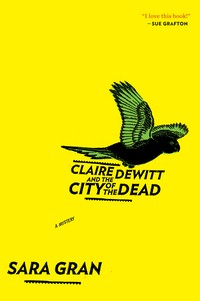
Claire DeWitt and the City of the Dead

Claire DeWitt and the City of the Dead

by Sara Gran
Series: Claire DeWitt Mysteries, #1
Paperback, 273 pg.
Houghton Mifflin Harcourt, 2012
Read: February 15, 2021
Grab a copy from your local indie bookstore

(the official blurb)
I have copious notes on this one, and I just can’t decide how to talk about it. So…I’ll cheat and do this.

It’s like someone decided to do a serious take on Dirk Gently and his approach to detection. And it is pretty seriousalthough it has moments where I wasn’t sure if I was supposed to laugh or not. A former teen detective turned “world’s best detective” comes to post-Katrina New Orleans to hunt for a missing D.A. Following the idiosyncratic methods of her mentors (in both print and in real life), DeWitt deals with the good, the bad, and the hard-to-fathom that make up New Orleans. She also deals with some ghosts from her past as she uncovers the truth about the DA (including many things he’d probably want no one to uncover).

It’s a book about literary private eyes as much as it is a literary private eye story. I do recommend it, you’re not likely to read anything like it. I’m coming back for the sequel soon.

Not that there was a great danger of this, but between this book and Treme there is zero chance I’ll ever live in New Orleans.
3.5 Stars

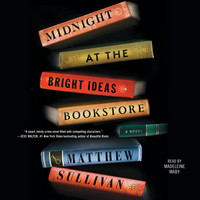
Midnight at the Bright Ideas Bookstore

Midnight at the Bright Ideas Bookstore

by Matthew J. Sullivan, Madeleine Maby (Narrator)
Unabridged Audiobook, 8 hrs., 59 min.
Simon & Schuster Audio, 2017
Read: February 24-26, 2021
Grab a copy from your local indie bookstore

(the official blurb)
A bookstore clerk finds a frequent customer dead in the shelves after he committed suicide. He has some sort of connection to her as a child, she discovers, and has left his few possessions to her. She’s compelled to learn why he killed himself, why he died with a photo of her as a child in his possession, and along the way has to come to terms with horrific events from about the time the photo was taken.

There are a lot of layers to this novelfantastic concept, heartbreaking conclusion. I never really connected with the protagonist, but I couldn’t stop listening, either.

Mabey did a fine job with the narration, I should add. Looking over some of her other titles suggests that I’ll be running into her again.
3 Stars

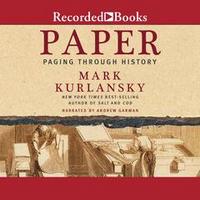
Paper: Paging Through History

Paper: Paging Through History

by Mark Kurlansky, Andrew Garman (Narrator)
Unabridged Audiobook, 13 hrs., 42 min.
Recorded Books, 2016
Read: March 4-9, 2021
Grab a copy from your local indie bookstore

(the official blurb)

This vacillated between intensely interesting and stultifyling dull, overly detailed, and seemingly random in focus, provocative and insulting. More than once I wondered about the connection between paper and whatever particular period of history he wanted to sound off onthe connection was usually there and clear (and germane), but he stretched it more than once. Also, Kurlansky seems to have a real chip on his shoulder regarding religions of many stripes. That’s fine, it’s just not all that germane.

I’m not sure audio was the right for this medium, outside of the irony. There was just so much thrown at the listener, I can’t imagine how anyone could retain any detailsI didn’t even try.

None of my problems were with Garman’s narration (although I questioned a few of his pronunciation), it was simply the text.
2 1/2 Stars

2021 Library Love Challenge 2021 Audiobook Challenge

This post contains affiliate links. If you purchase from any of them, I will get a small commission at no additional cost to you. As always, opinions are my own.

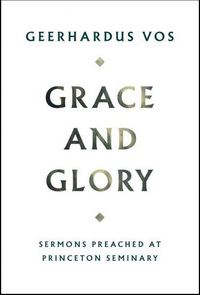
Grace and Glory by Geerhardus Vos (Banner of Truth Edition): A Fantastic Sermon Collection

Grace and Glory (BoT Edition)

Grace and Glory

by Geerhardus Vos

Hardover, 291 pg.
Banner of Truth, 2020

Read: January 3-April 18, 2021
Grab a copy from your local indie bookstore!

Oops

Back in 2019, I went shopping for a copy of these sermons by Vos and found a handful of editions. I picked one purely based on price. It looked like a decent quality version, but nothing fancy. Sure, the Hardcover published by the Banner of Truth would be nicer, but I didn’t need the fancy cloth binding.

What I learned later was that the Banner edition included ten additional sermons. So passing that over to save a couple of bucks was not the brightest move I’ve ever made.

I’ve mixed in what I posted about the shorter version with the rest of this post, in case someone’s in the mood to get all persnickety about plagiarism.

Christ’s work for us extends even farther than the restoration of what sin has destroyed. If Christ placed us back there where Adam stood in his rectitude, without sins and without death, this would be unspeakable grace indeed, more than enough to make the gospel a blessed word. But grace exceeds sin far more abundantly than all this: besides wiping out the last vestige of sin and its consequences, it opens up for us that higher world to whose threshold even the first Adam had not yet apprehended. And this is not a mere matter of degrees in blessedness, it is a difference between two modes of life; as heaven is high above the earth, by so much the condition of our future state will transcend those of the paradise of old.

What’s Grace and Glory?

For most people (who’ve heard of him), Geerhardus Vos is known as a theologian—one of the Twentieth Century’s brightest stars, the man who showed that the academic discipline known as Biblical Theology wasn’t the domain solely of Theological Liberalism, but that a robust, Bible-believing thinker could (and should) contribute to the field.

But before he was a theologian or professor, Vos was a preacher. And this small collection of sermons shows how capable he must have been.

Yes, there’s rich theology behind these sermons, but they’re primarily expositions and applications of the texts for the hearers. And, yes, the audiences of these sermons were students at Princeton Theological Seminary (before the downgrade that led to the creation of Westminster Theological Seminary), but these were not airy, academic addresses. Sure, as the initial hearers were largely future ministers, there are portions that are more applicable to preachers than to laity. But there’s not a lot of that, and even in the midst of one of those sections, there’s still a lot of gold to be mined.

The first person to whom he showed himself alive after the resurrection was a weeping woman who had no greater claim upon him than any simple penitent sinner has. No eye except that of the angels had as yet rested upon his form. The time was as solemn and majestic as that of the first creation when light burst out of chaos and darkness. Heaven and earth were concerned in this event; it was the turning-point of the ages. Nor was this merely objectively so: Jesus felt himself the central figure in this newborn universe; he tasted the exquisite joy of one who had just entered upon an endless life in the possession of new powers and faculties such as human nature had never known before. Would it have been unnatural had he sought some quiet place to spend the opening hour of this new unexplored state in communion with the Father? Can there be any room in his mind for the humble ministry of consolation required by Mary? He answers these questions himself. Among all the voices that hailed his triumph no voice appealed to him like this voice of weeping in the garden. The first appearance of the risen Lord was given to Mary for no other reason than that she needed him first and needed him most. And what more appropriate beginning could have been set for his ministry of glory than this very act? Nothing could better convince us that in his exalted state he retains for us the same tender sympathy, the same individual affection as he showed during the days of his flesh.

So, what did I think about Grace and Glory?

When I wrote about the original edition, I stated that: I don’t think it was by design, but the second, fourth, and sixth sermons were the ones that I appreciated most—my notes weren’t really that helpful, especially now. All I wrote about #2 “Hungering and Thirsting after Righteousness” was “Wow! Fantastic.” True, but that’s not really helpful—Vos opens up the idea about how Christ uses the believer’s faith (hungering and thirsting) to fill and bless them. The sermon “‘Rabboni'” (about Mary’s encounter with the risen Christ near the tomb) is less than twenty pages long, but was better than Richard Sibbes’ sermon series (184 pages in the Banner of Truth edition) on the same passage—I can’t do it justice here, so I won’t try. And the last sermon? It’s worth more than the purchase price of the whole book.

I also said that I fully expected when I re-read this book in 2021 or so, I’d say something just as strong about the odd-numbered sermons and wonder what I was talking about now. That’s wasn’t the case, in retrospect, but I would put “Rabboni” ahead of “Heavenly-Mindedness” (which was still worth the purchase price of the paperback). J. Gresham Machen called “Rabboni” “one of the finest expository sermons I have ever heard.” It’s definitely one of the finest I’ve ever read.

I was a little less taken with the additional material than I wanted to be—nothing was bad, mind you, but I think the original compilation was stronger. Naturally, there were a couple of exceptions, “The Eternal Christ” and “The Gracious Provision,” were just as strong as any of the first group.

As Scott Clark mentions in his forward to the Solid Ground Publication edition, Vos was a poet (particularly in retirement, but before then, too). And you can see that in some of these sermons—they practically sing. I can only imagine how captivating these were hearing them, they’re stirring just reading them.

Either edition qualifies as one of the best collections of sermons I’ve ever read. My only complaint is that there were only six, until I found the additional material—now my only complaint is that there’s only one volume of these. Get this one.


5 Stars

This post contains an affiliate link. If you purchase from it, I will get a small commission at no additional cost to you. As always, opinions are my own.

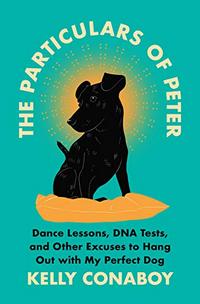
The Particulars of Peter by Kelly Conaboy: Adventures of a Woman Obsessed with her Dog

The Particulars of Peter

The Particulars of Peter:
Dance Lessons, DNA Tests,
and Other Excuses to
Hang Out with My Perfect Dog

by Kelly Conaboy

Hardcover, 232 pg.
Grand Central Publishing, 2020

Read: March 30-April 1, 2021
Grab a copy from your local indie bookstore!

I think once a person has a dog the idea of not having one quickly becomes absurd. I know there are other ways a person can fill their time—golf, et cetera. I know you can Hula-Hoop. You can pan for gold, or “do some work at a café.” I know a person can exist without the ability to make a creature they love thrash with uncontrollable joy, wild-eyed and ecstatic, at the mere mention of din—; hush, that’s enough, they’re already excited. I know you can watch TV without a dog resting his paws and head on your leg, breathing quietly, warming you and allowing you to feel like you’re having a real human experience rather than idly ingesting The Sopranos, I know you can go to sleep without a dog in your bed and wake up without a little face staring down at you, whiskers in your eyes, and a nose dripping onto your skin, waiting for you to take him outside so that he might urinate. But… why? Why even wake up at all?

What’s The Particulars of Peter About?

It is, quite simply, about Peter. Well, it’s more about Conaboy’s obsession with Peter and the things she’ll do to foster the relationship between them as well as all the things she’s willing to do with/for him for the sake of her writing.

She begins by talking about how Peter came into her life, going to Woofstock with him, trying to get into agility training, dance classes, and so on. She gets a DNA test, goes ghost hunting, consults a pet psychic, and more.

Each chapter is filled with jokes, amusing anecdotes, and useful information on a particular subject/experience, told with a lot of humor (some-self deprecating).

Some Highlights

It’s probably easier to think of this as a collection of essays rather than a cohesive book, and as such, there are going to be some chapters that stand-out above the others. I think the first two chapters—about adopting Peter and getting a DNA test were the best—with the chapter on where the dog should sleep as a close third.

The chapter on Dog Dancing was, on the whole, not that interesting for me until she dropped the jokes and got to a hard story about Peter and a medical problem. It probably became the strongest chapter in the book at that point.

On the other end of the spectrum

There were a couple of chapters that did nothing for me—training Peter for Ghost Hunting and then trying to communicate with him using pet psychic just bored me. I couldn’t get into them, but I could see where someone would find it interesting.

The rest of the chapters were a good mix of things I thought were great and then a page later made me wonder why I tried the book.

So, what did I think about The Particulars of Peter?

There was something in the preface, that made me wonder if I’d made a mistake and I was going to end up annoyed with this book, but I wasn’t quite sure. Then I got to the paragraph I quoted above—the third in the book, and realized that yeah, this book was for me.

I’m not going to tell you that this is the best book about living with a dog that you’re ever going to read. I’m not saying that every chapter was worth the time. But there’s just so much heart displayed in every chapter, that you can’t help but cut her a lot of slack for whatever shortcomings may appear.

And it’s a funny book. I chuckled and laughed a few times, I enjoyed an eye-rolling smile a few times, a more than a few times I grinned and made not of a fun line. I fell in love with her habit of writing a parenthetical remark to get a punchline into something, and then immediately following it with another parenthetical joke—naturally, I didn’t write down any examples of that, because why should I make it easy for me to explain the quirk.

Basically, this was a fun book about one of my favorite topics—of course, I’m going to recommend it.

2021 Library Love Challenge

This post contains an affiliate link. If you purchase from it, I will get a small commission at no additional cost to you. As always, opinions are my own.
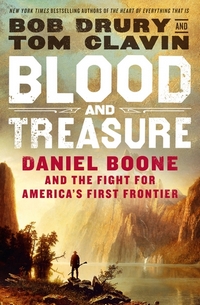
PUB DAY REPOST: Blood and Treasure by Bob Drury, Tom Clavin: A Look at Dream Come Truers

Blood and Treasure

Blood and Treasure: Daniel Boone and the Fight for America’s First Frontier

by Bob Drury, Tom Clavin

eArc, 400 pg.
St. Martin’s Press, 2021

Read: April 5-14, 2021
Grab a copy from your local indie bookstore!

What’s Blood and Treasure About?

It’s pretty much in the subtitle—this book is about 2 things—Daniel Boone and the fight (literal and metaphoric) for America’s first Frontier—with a focus on what we now know as Kentucky, but pretty much everything on the Western edge of the American colonies/states.

It’s not a biography of Boone (I’ll tell you now, I wrongly expected this to be more of one), it’s more like he’s the organizing principle for the book, as we learn about Boone’s roots, early life, and adulthood the authors talk about the conflicts with the Indians on the edge of white civilization’s expanse. We’d get a chunk of a wide-view of history over a period, and then we’d focus on Boone’s life around that time. Then the focus would widen a bit and we’d look at another period of time—and so on.

Two significant ingredients in “the Fight” for the Frontier were what’s called The French and Indian War and the American Revolution. There’s the French and Indian War (and conflicts that led up to it and sprang from it) to begin with, paved the way for the latter conflicts—we see the pressure put on various tribes from the expansion of settlers, the resistance those settlers faced (from shifting alliances of Indians between themselves, and varying alliances between Western powers and the Indians).

As for the Revolution—while most histories/documentaries/etc. about it will acknowledge the fighting in the South and West, few take any time to focus on it. Instead, we casual history readers just get repeated retellings of the stuff we learned in elementary school—Washington*, the Continent Army, Benedict Arnold, Nathan Hale, the Green Mountain Boys, and whatnot—and whatever expansions on some of those topics that Hamilton has taught us in the last few years. This book is a great corrective to that showing how the Indians were largely pawns for the British to use against the colonies, to distract from the larger skirmishes as well as to try to open up another front on the war—another way to steal power and influence from the colonies. You see very clearly how easily the entire War could’ve changed if not for a couple of significant losses suffered by the British and their Indian allies.

* Washington is also featured pretty heavily in the earlier chapters, too—even if he maybe only briefly met Boone on one occasion.

Language Choices

I know this sort of this is pretty customary, but I really appreciated the Note to Readers explaining the authors’ language choices—starting with the tribal designations they used—the standard versions accepted today (there are enough various entities mentioned throughout that if they’d gone with contemporary names and spellings, I—and most readers—would’ve been very confused).

At the same time, they did preserve the varied and non-standard spellings for just about everything else. For example, there were at least three variant spellings for Kentucky: Cantucky, Kanta-ke, and Kentucki (I think there was one more, but I can’t find it).

I was a little surprised that they stuck with the term “Indian” as much as they did—but their explanation for it seemed likely and understandable.

An Image Shattered—or maybe just Corrected

Yes, I know that the Fess Parker TV show I saw after school in syndication was only very loosely based in reality. And that the handful of MG-targeted biographies I read several times around the same time were sanitized and very partial. Still, those are the images and notions about Boone that have filled my mind for decades. So reading all the ways they were wrong and/or incomplete threw me more than I’m comfortable with.

His appearance was particularly jarring—the actual Boone eschewed coonskin caps because they were flat-topped and preferred a high-crowned felt hat to look taller. THat’s wrong on so many levels. “Tall as a mountain was he” is about as far from the truth as you can get.

The fact that he spent most of his life bouncing between comfort and/or wealth and massive debt is both a commentary on his strengths and weaknesses as it is the volatile times he lived in—he lost so much thanks to colonial governments being mercurial. It was reassuring to see the repeated insistence that he was an honest man, who worked to repay his debts even if it took too long.

In the end, Boone seemed to be a good guy trying his best to get by and provide for his family—who accidentally stepped into some degree of celebrity, that magnified some good qualities and replaced the man with a legend.

So, what did I think about Blood and Treasure?

The writing itself? There are moments that were fantastic. On the whole…., but from time to time, when Drury and Clavin wanted to drive an image or description home, they could be stunning. I would have preferred things to be a bit more even—a bit more balanced and consistent on that front. But the topic and scope didn’t really allow for that. So I’ll just enjoy those moments of it that I got.

As for the book as a whole? It was impressive, entertaining (generally), and informative. When it was at its best, it didn’t feel like reading dry history but a compelling look at that portion of US History. At its worst, it was a litany of names, dates, and ideas that didn’t do much for me. Thankfully, those moments were few and far between. It’s not a difficult read at any point, just pretty dry on occasion.

There are so many other things I’d like to have mentioned or discussed—but it would make this post unwieldy. The notes about hunting (both the good and the horrible), Boone’s heroics, his character, and family; various aspects of the Indian customs discussed and so much. There’s just so much in this book to chew on that I can’t sum it up.

I liked this—I liked it enough to look at a few other books by this duo to see what they can do with other topics, people, and eras. I think anyone with a modicum of interest in Boone will enjoy this and be glad for the experience.

Disclaimer: I received this eARC from St. Martin’s Press via NetGalley in exchange for this post—thanks to both for this.


3.5 Stars

This post contains an affiliate link. If you purchase from it, I will get a small commission at no additional cost to you. As always, opinions are my own.

Blood and Treasure by Bob Drury, Tom Clavin: A Look at Dream Come Truers

Blood and Treasure

Blood and Treasure: Daniel Boone and the
Fight for America’s
First Frontier

by Bob Drury, Tom Clavin

eArc, 400 pg.
St. Martin’s Press, 2021

Read: April 5-14, 2021
Grab a copy from your local indie bookstore!

What’s Blood and Treasure About?

It’s pretty much in the subtitle—this book is about 2 things—Daniel Boone and the fight (literal and metaphoric) for America’s first Frontier—with a focus on what we now know as Kentucky, but pretty much everything on the Western edge of the American colonies/states.

It’s not a biography of Boone (I’ll tell you now, I wrongly expected this to be more of one), it’s more like he’s the organizing principle for the book, as we learn about Boone’s roots, early life, and adulthood the authors talk about the conflicts with the Indians on the edge of white civilization’s expanse. We’d get a chunk of a wide-view of history over a period, and then we’d focus on Boone’s life around that time. Then the focus would widen a bit and we’d look at another period of time—and so on.

Two significant ingredients in “the Fight” for the Frontier were what’s called The French and Indian War and the American Revolution. There’s the French and Indian War (and conflicts that led up to it and sprang from it) to begin with, paved the way for the latter conflicts—we see the pressure put on various tribes from the expansion of settlers, the resistance those settlers faced (from shifting alliances of Indians between themselves, and varying alliances between Western powers and the Indians).

As for the Revolution—while most histories/documentaries/etc. about it will acknowledge the fighting in the South and West, few take any time to focus on it. Instead, we casual history readers just get repeated retellings of the stuff we learned in elementary school—Washington*, the Continent Army, Benedict Arnold, Nathan Hale, the Green Mountain Boys, and whatnot—and whatever expansions on some of those topics that Hamilton has taught us in the last few years. This book is a great corrective to that showing how the Indians were largely pawns for the British to use against the colonies, to distract from the larger skirmishes as well as to try to open up another front on the war—another way to steal power and influence from the colonies. You see very clearly how easily the entire War could’ve changed if not for a couple of significant losses suffered by the British and their Indian allies.

* Washington is also featured pretty heavily in the earlier chapters, too—even if he maybe only briefly met Boone on one occasion.

Language Choices

I know this sort of this is pretty customary, but I really appreciated the Note to Readers explaining the authors’ language choices—starting with the tribal designations they used—the standard versions accepted today (there are enough various entities mentioned throughout that if they’d gone with contemporary names and spellings, I—and most readers—would’ve been very confused).

At the same time, they did preserve the varied and non-standard spellings for just about everything else. For example, there were at least three variant spellings for Kentucky: Cantucky, Kanta-ke, and Kentucki (I think there was one more, but I can’t find it).

I was a little surprised that they stuck with the term “Indian” as much as they did—but their explanation for it seemed likely and understandable.

An Image Shattered—or maybe just Corrected

Yes, I know that the Fess Parker TV show I saw after school in syndication was only very loosely based in reality. And that the handful of MG-targeted biographies I read several times around the same time were sanitized and very partial. Still, those are the images and notions about Boone that have filled my mind for decades. So reading all the ways they were wrong and/or incomplete threw me more than I’m comfortable with.

His appearance was particularly jarring—the actual Boone eschewed coonskin caps because they were flat-topped and preferred a high-crowned felt hat to look taller. THat’s wrong on so many levels. “Tall as a mountain was he” is about as far from the truth as you can get.

The fact that he spent most of his life bouncing between comfort and/or wealth and massive debt is both a commentary on his strengths and weaknesses as it is the volatile times he lived in—he lost so much thanks to colonial governments being mercurial. It was reassuring to see the repeated insistence that he was an honest man, who worked to repay his debts even if it took too long.

In the end, Boone seemed to be a good guy trying his best to get by and provide for his family—who accidentally stepped into some degree of celebrity, that magnified some good qualities and replaced the man with a legend.

So, what did I think about Blood and Treasure?

The writing itself? There are moments that were fantastic. On the whole…., but from time to time, when Drury and Clavin wanted to drive an image or description home, they could be stunning. I would have preferred things to be a bit more even—a bit more balanced and consistent on that front. But the topic and scope didn’t really allow for that. So I’ll just enjoy those moments of it that I got.

As for the book as a whole? It was impressive, entertaining (generally), and informative. When it was at its best, it didn’t feel like reading dry history but a compelling look at that portion of US History. At its worst, it was a litany of names, dates, and ideas that didn’t do much for me. Thankfully, those moments were few and far between. It’s not a difficult read at any point, just pretty dry on occasion.

There are so many other things I’d like to have mentioned or discussed—but it would make this post unwieldy. The notes about hunting (both the good and the horrible), Boone’s heroics, his character, and family; various aspects of the Indian customs discussed and so much. There’s just so much in this book to chew on that I can’t sum it up.

I liked this—I liked it enough to look at a few other books by this duo to see what they can do with other topics, people, and eras. I think anyone with a modicum of interest in Boone will enjoy this and be glad for the experience.

Disclaimer: I received this eARC from St. Martin’s Press via NetGalley in exchange for this post—thanks to both for this.


3.5 Stars

This post contains an affiliate link. If you purchase from it, I will get a small commission at no additional cost to you. As always, opinions are my own.

You’ll Never Believe What Happened to Lacey (Audiobook) by Amber Ruffin, Lacey Lamar: You’ll Laugh While You All Lose Hope in Humanity. Fun Times!

You'll Never Believe What Happened to Lacey

You’ll Never Believe What Happened to Lacey: Crazy Stories about Racism

by Amber Ruffin, Lacey Lamar

Unabridged Audiobook, 5 hrs., 21 min.
Grand Central Publishing, 2021

Read: March 11-12, 2021
Grab a copy from your local indie bookstore!

I’m going to lean on quotations from the book pretty heavily for this one, I feel awkward about trying to summarize this—and am afraid I’d come across as too flippant. Which, yeah, is an odd thing to fear for a book that can be rightly shelved under “Humor”

The Authors/Narrators

Amber Ruffin is the host of The Amber Ruffin Show, a writer for and performer on Late Night with Seth Meyers, and is consistently funny and thoughtful. Even when, especially when?, I disagree with her (which happens a lot). She’s the primary author (even when retelling something that happened to her sister) and narrator of the book.

Lacey Lamar is her older sister, who lives in Nebraska and works in the healthcare and human service field. She’s apparently a pretty big geek, too. While her contributions to the book/audiobook are briefer than Ruffin’s, when she pitches in, it’s well worth it.

What’s You’ll Never Believe What Happened to Lacey About?

Early on, we’re told

My sister Lacey is a lightning rod for hilarious racist stories, She’s the perfect mix of polite, beautiful, tiny, and Black that makes people think: I can say whatever I want to this woman. And I guess you can. Hey, knock yourself out—but that doesn’t mean you won’t end up in a book.

She’s such a lightning rod that

Twice a week, I get a text from my sister that says, “Can you talk?” It’s my favorite because I know I’m about to be transported to a place that exists in real life and fantasy: the place where coworkers will put their whole hand in your hair, talking ’bout “It’s fluffy like a dog.” I realize this sounds terrible, but it’s like watching Dateline. You can’t believe it was the GIRLFRIEND who killed the HUSBAND! It’s the edge of reality. Technically, it happens, but it is barely plausible. Excited, I steal away to the elevator banks at work and listen to Lacey tell me a new horror story. It’s fantastic. As I stand there, mouth agape, listening to some new fresh hell, I am always struck by the fact that these stories will only exist in this phone call. Some will go on to become stories once the topic turns to “racist people at work” one night when Lacey is hanging out with her friends, but she’ll forget most of them because of the sheer volume. The. Sheer. Volume.

That’s what this book is, a distillation of that volume. A compilation of the best/worst of those stories. They are tragic. They are sobering. They are frequently pretty funny. But only in the way they’re told. Lamar and Ruffin share these stories with an air of “you have to laugh or you’ll cry.” The kind of resigned laughter when you realize that your situation isn’t going to get better any time soon, so you might as well find the pleasure in it. A lot of this is hard to listen to/read—but it’s usually worth it. There’s also a decent level of “a spoonful of sugar helps the medicine go down” running throughout this.

Some of these stories are old, but a lot of them are post-Obama stories. A lot of folks think things like this don’t happen anymore. But in this climate where people are becoming more brave with their racism, I think things may get worse before they get better. Just kidding, I don’t think things are gonna get better. Just kidding about just kidding. I’m Team Hopeful! My point is: Has anyone ever decided to take a look at one person’s buttload of racist stories? What happens when you do? I don’t know, but here you go.

Audiobook vs. Text Version

So my wife read the hardcover and I read the audiobook (but was able to use the hardcover to grab some quotations). The hardcover features pictures and illustrations, and different typefaces for each author (a feature more books should use). Judging by her responses and just flipping through it, that seems like a great way to go through the book.

The audiobook is primarily read by Ruffin, with some assists by Lamar. Ruffin’s a great performer and the text comes alive with her reading. I think some of the comedy comes through stronger in the way they tell the stories—because a lot of these things are dark and my response leaned to horrified until I heard one/both of them chuckle about it. Also, listening to Ruffin describe the pictures you can’t see is likely as fun as seeing them. I’m not saying that the audiobook is better/worse than the text, but I can say you won’t regret it.

So, what did I think about You’ll Never Believe What Happened to Lacey?

Black readers will read these stories and feel that really good, yet terrible feeling of going through something bad and realizing you’re not alone, and not only that, but that someone else has it worse! And, hopefully, the white reader is gonna read this, feel sad, think a little about it, feel like an ally, come to a greater understanding of the DEPTH of this type of shit, and maybe walk away with a different point of view of what it’s like to be a Black American in the twenty-first century. Hence this book.

For me, I think they succeeded. I’m not a fool, I didn’t think we’d fixed racism or anything—but the casual and blatant racism Lamar encounters at work (or outside of work) is astounding. I can’t count how many times I stopped the recording to say something to my wife to marvel at how blatant the people in this book were. She’d ask where I was, nod, and ask “have you got to X yet?” “Um, no?” “Well, it gets worse…” And it did.

At the same time, I laughed a lot. Those two sensations shouldn’t fit so well together, but they do.

This is a comic-tragedy. A tragic-comedy. Either or both. you won’t soon forget this book. Entertaining and educational. Eye-opening. Frustrating. I strongly recommend this.


4 1/2 Stars

2021 Library Love Challenge 2021 Audiobook Challenge

Page 39 of 61

Powered by WordPress & Theme by Anders Norén