Category: Non-Fiction Page 40 of 61

Rejoice and Tremble by Michael Reeves: Gospel Fear

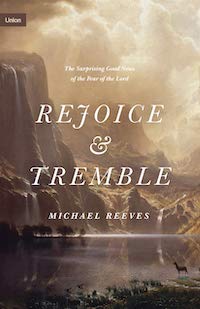
Rejoice and Tremble

Rejoice and Tremble: The Surprising Good
News of the Fear of the Lord

by Michael Reeves
Series: Union

Hardcover, 168 pg.
Crossway, 2021

Read: March 7-14, 2021

What’s Rejoice and Tremble About?

The Publisher’s Description:

“The fear of the Lord is the beginning of knowledge.” —Proverbs 1:7

Fear is one of the strongest human emotions—and one that often baffles Christians. In the Bible the picture can seem equally confusing: Is fear a good thing or a bad thing? And what does it mean to “fear the Lord”?

In Rejoice and Tremble, Michael Reeves clears the clouds of confusion and shows that the fear of the Lord is not a negative thing at all, but an intensely delighted wondering at God, our Creator and Redeemer.

The High Point of the Book

There was one chapter that made the time I spent reading the book as a whole absolutely worth it. It’s called “How to Grow in This Fear.” The focus of the chapter is on how both Scripture and faith work in a believer’s heart and life to increase Godly Fear. I found it inspiring and convicting.

The Series Design and How This Book Deals with It

According to the Series Preface, this is the first book in a series called Union, “an attempt to express and share” certain values. “[W]e long to grow and support men and women who will delight in God, grow in Christ, serve the church, and bless the world.”

All well and good, but later it states,

Each exploration of a subject in the Union series will appear in two versions: a full volume and a concise one. The idea is that church leaders can read the full treatment, such as this one and so delve into each topic while making the more accessible concise version widely available to their congregations.

This not-concise book is 168 pages, the other version is 80—so I guess it’s not as full. But 168 pages of pretty easy reading isn’t what I’d think of as the domain of leaders. If this was the accessible, short version of a 4-500 academic text, I wouldn’t complain (and I’d be interested in that other volume, too). But this? This doesn’t need a simpler, shorter version.

So, what did I think about Rejoice and Tremble?

I truly think this is a better book than I give it credit for. But it didn’t do a whole lot for me.

I think it wasn’t the right time for me to read this—I’m not sure when a better time might be, but I didn’t connect with most of the material. I saw what he was doing (usually), but didn’t find it terribly compelling. I give both the topic and Reeves more credit than that, so I assume it was me.

I also think I was put off by the idea that this was intended to be an inaccessible volume for those who aren’t leaders in the church—there was nothing in this book that my seventeen-year-old couldn’t have handled. I really think reading that Series Preface put me off. If I pick this up again in a couple of years, I’m going to work harder on ignoring that.

It’s a decent read, it’s a good reminder of the place that a Biblical Fear of the Lord should hold in the Christian life. I cautiously recommend it. My guess is that most readers will get more out of it than I did.


3 Stars

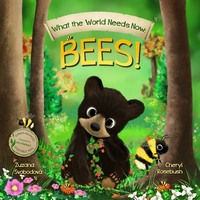
What the World Needs Now – Bees! by Cheryl Rosebush, Zuzana Svobodová: A Much-Needed Lesson for Kids About those Tiny Pollinators


What the World Needs Now - Bees!

What the World Needs Now – Bees!

by Cheryl Rosebush, Zuzana Svobodová (Illustrator)
Series: What the World Needs Now

PDF, 34 pg.
2021

Read: March 4, 2021


Was I tempted to just copy what I said about her earlier book, What the World Needs Now – Trees!, and give it a couple of small edits? Yes. And it would’ve been true, but that seems a little on the sketchy side.

What’s What the World Needs Now – Bees! About?

Melly, a young black bear, gives the reader a brief tour of her home area, with a particular focus on the fauna (particularly fruit) in the area, and then teaches the reader about the role that bees play in pollinating the plants. Then there’s a little discussion about what can cause problems among the bee population and some simple things that can be done—even by a young reader/pre-reader—to help.

A Moment of Pedantry

One of the supplemental information boxes includes this:

American black bears are medium-sized ursines that live in forests across North America. You can find them in Alaska, Canada, the United States of America, and even as far south as northern Mexico.

Alaska is part of the U.S. (as a state since 1959, and as a territory for more than 40 years prior to that).

Parents, teachers, caregivers can (and should) easily edit that sentence as they read it to a child, but it still rankles me.

How were the Illustrations?

Svobodová and her cartoonish-balanced with-accurate style are back, and I think better this time out. Melly and her flying friends are wonderfully rendered here.

The illustrations are full of small little touches to keep the attention of the youngest readers as they come back again and again. For example, there was a small chipmunk (I think—maybe a squirrel, I couldn’t see enough of it to tell) poking its head out from a hole in a tree on page 2. I’m not sure I can explain it, but that critter’s existence made the book for me—it’s a tiny little detail that it’d be easy to miss, but you know some eagle-eyed kid is going to focus on that while they’re listening (or, not listening, let’s be honest) to someone read the book to them. It’s a nice, subtle touch.

So, what did I think about What the World Needs Now – Bees!?

Like the art, I liked this a little more than its predecessor. I thought this was a bit more engaging and interesting. Again, it explained some of the current issues without being alarmist and did so in an attractive way, sure to keep the interest of the target audience.

I did wonder if there was a way to spend less time on pollination and more on the bees themselves (not that I have a problem with the pollination material, and it’s one of the bigger reasons we need bees—I just wanted more about the insects (I imagine many kids would agree with me—insects are almost always more interesting than anything else for every kid I’ve known)

Although, honestly, I think I had an easier time sleeping not knowing about the existence of Wallace’s giant bee. 🙂 Sure, they’re in Indonesia, but a bee with a 2.5″ wingspan? No thank you.

This is a good book and a good series, it’s well worth your time and effort.


3 Stars

My thanks to Love Books Group for the invitation to participate in this tour and the materials (including the book) they provided.

Love Books Group Banner

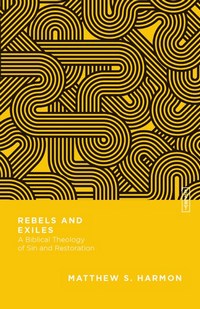
Rebels and Exiles by Matthew S. Harmon: Sin, Its Consequences, and Restoration Through Redemptive History

Here’s where I start to regret my resolution to write a post about every book in this category that I read this year to make up for the absence of them last year. I really don’t have that much to say about it and am afraid I’m making it look dull. Hope I’m not…


Rebels and Exiles

Rebels and Exiles: A Biblical Theology of Sin and Restoration

by Matthew S. Harmon
Series: Essential Studies in Biblical Theology

Paperback, 145 pg.
IVP Academic, 2020

Read: February 7-21, 2021
Grab a copy from your local indie bookstore!

What’s Rebels and Exiles About?

As with everything in this series, Harmon starts with Genesis and the Fall, and finding the pattern there for human disobedience and restoration that the rest of the Biblical narrative uses time after time (after time after time, sadly). Harmon traces the themes and examples of rebellion, exile, and restoration through The Old Testament and the New alike—with Christ inaugurating the final end of exile in his death and resurrection, which will be culminated in his return and the remaking of the world.

OT and NT Exiles

Personally, I found the chapter on Israel and Judah’s exile from Canaan after the rebellion and the chapter showing how the New Testament Epistles see the Christian life as one of exile—giving both hope and direction for that life—to be the most helpful. Particularly as Western culture becomes increasingly inhospitable to The Church and we’re reminded that we’ve become too comfortable in this world where we are pilgrims and exiles, we need these instructions and examples.

But the chapters describing the Restoration of Israel to the Land—as well as the greater restoration promised to them—and the chapter describing Christ’s Life and Ministry as ending exile were probably the most edifying.

So, what did I think about Rebels and Exiles?

I think I may have read the three books in this series a bit too closely together—it felt a little redundant, the themes and approaches in the various books in this series are so similar. That’s on me, not on Harmon, though.

This isn’t to say that I didn’t like the book or find it helpful. “Now these things happened to them as an example, but they were written down for our instruction,” it’s good to focus on these themes and patterns and Harmon’s little book is a good guide through them.


3.5 Stars


This post contains an affiliate link. If you purchase from it, I will get a small commission at no additional cost to you. As always, opinions are my own.

GUEST POST: 12 Books Every Home Owning Bookworm Needs

It’s been quite a while since I’ve had one of these to share, but long-time readers know that I love a good infographic. The friendly people over at Siege Media dropped by the other day with a post and an infographic for me to share with you that’s timely for me as Mrs. Reader and I are settling into our new digs and taking on a few home improvement/maintenance projects. Check out the nice intro they provided and then follow the links to their longer piece and the full infographic (I’ve provided a snippet of it below).


How many books can you say really changed your life? A handful, maybe? While mysteries and science fiction novels may be a great way to pass the time, they are likely only a few on your bookshelves you’ll return to time and time again.

One genre you can’t really say that about is non-fiction hobby books. Books that break down a complicated topic for you and help you master it, including categories like home improvement projects and organization hacks. And if you are a homeowner, or you’re a renter who doesn’t like your landlord, you may be looking to learn how to fix your home yourself.

The following books are catered to those looking to get into new hobbies at home, to pass the time, or improve their day-to-day lives. You can learn how to garden, become a plant parent, organize your stuffed pantry or decorate your messy bedroom all while getting to participate in your favorite hobby: reading. What can be better than that?

Check out the infographic on best books for the home from the team at Hippo below.

Books for New Homeowners Snippet


Once again, the link to the full graphic.

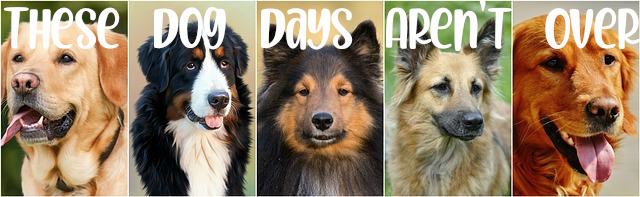
These Dog Days Aren’t Over

These Dog Days Aren't OverThis was a hard post to come up with a name for*, essentially this post came from a comment not too long ago about being hesitant to read books about animals if the reader doesn’t know if they survive the book. I get that, I absolutely do. I still bear the scars of Where the Red Fern Grows and Marley and Me (sure, that wasn’t that long ago, but the wound still stings). So, for readers like my correspondent, here are some perfectly safe books prominently featuring dogs!

I plan on updating this when I can remember to, so by all means, chime in with comments about Dogs I’ve forgotten about/haven’t yet!

Non-Fiction

bullet Olive, Mabel & Me by Andrew Cotter——Cotter’s charming book describes his life with the two dogs that rocketed to international stardom (and brought him along). (my post about it)
bullet My Life as a Dog by L. A. Davenport—Davenport’s short little book about the relationship between the author and his dog, Kevin, a black and tan, pure-bred dachshund. It focuses on what the two of them did over two days and then a weekend selected from the years they spent together. (my post about it)
bullet What the Dog Knows: The Science and Wonder of Working Dogs by Cat Warren—Warren basically covers three topics: there’s the science and history of using working dogs (of all sorts of breeds, not to mention pigs(!), birds, and even cats) to find cadavers, drugs, bombs, etc.; there’s the memoir of her involvement with cadaver dogs via her German Shepherd, Solo; and anecdotes of other cadaver dogs and trainers that she’s encountered/learned from/watched in action. (my post about it)
bullet What the Dog Knows Young Readers Edition by Cat Warren, Patricia J. Wynne—The above book adjusted for younger readers, with some great illustrations. It’s not dumbed-down, just adjusted. (my post about it)

Fiction

bullet The Finders by Jeffrey B. Burton—A Dog Trainer/Cadaver Dog Handler on the hunt for a serial killer in this series launch. (my post about it)
bullet Suspect by Robert Crais—One of my all-favorite books, a cop with PTSD gets assigned to the K-9 Unit and works with a dog fresh from Afghanistan combat. (my post about it) The pair also plays a major role in The Promise.
bullet
Stepdog by Nicole Galland—A love story where the major impediment to happily ever after is her dog (a gift from her ex). (my post about it)
bullet Oberon’s Meaty Mysteries by Kevin Hearne (Audiobooks narrated by Luke Daniels)—Oberon, the scene-stealing Irish Wolfhound from The Iron Druid Chronicles narrates this series of novellas (my posts about them).
bullet Neah Bay series by Owen Laukkanen—Lucy is a dog who is trained by prisoner Mason Burke, who has to track her down when he gets out. She’s a service dog for Marine Vet Jess Winslow. Lucy connects the two humans in her life and helps to keep them safe when a corrupt deputy comes after Jess. (my post about them)
bullet I Thought You Were Dead by Pete Nelson—I’m not sure how to sum this one up in a sentence. It’s a pretty typical novel about a troubled writer with a romantic life and family in shambles. But his dog is the thing that makes all the difference. (my post about it)
bullet Chet and Bernie books by Spencer Quinn—Bernie Little is a PI in Phoenix. Chet’s his four-legged partner and the series narrator. It’s too fun to miss. (my posts about them)
bullet The Right Side by Spencer Quinn—”a deeply damaged female soldier home from the war in Afghanistan becomes obsessed with finding a missing girl, gains an unlikely ally in a stray dog, and encounters new perils beyond the combat zone.” (my post about it)
bullet Woof by Spencer Quinn—The beginning of an MG series about a with a penchant for trouble and her dog. (my post about it)
bullet Andy Carpenter books by David Rosenfelt—Andy Carpenter is New Jersey’s best defense lawyer and a devoted dog owner. He helps run a rescue shelter, too–and almost every client he takes as some sort of connection with a dog. These books aren’t dog-centric like the others on this list, but they’re dog-heavy. (my posts about them)
bullet Voyage of the Dogs by Greg van Eekhout—SF for all ages about a team of dogs on a long-distance space flight. (my post about it)

Supportive Roles

These dogs aren’t as significant a presence in their books as the prior group, but they’re important enough to mention.
bullet Mouse from The Dresden Files by Jim Butcher. (my posts about them)
bullet The Midnight Plan of the Repo Man by W. Bruce Cameron and the sequel Repo Madness by W. Bruce Cameron(my posts about them)
bullet Edgar from the Washington Poe books by M. W. Craven. (my posts about them)
bullet Rutherford from The TV Detective series by Simon Hall (my posts about them)
bullet Oberon from the Iron Druid Chronicles by Kevin Hearne. (my post about them)
bullet Ruffin from the I. Q. series by Joe Ide. (my posts about them)
bullet Dog from the Walt Longmire books by Craig Johnson(my posts about them)
bullet Trogdor from The Golden Arrow Mysteries by Meghan Scott Molin. (my post about them)
bullet Mingus from The Drifter by Nicholas Petrie. (my post about it)

Books with paws on both sides of the line

Some books that belong on this list, but might be a bit too close to not fitting on it for some readers
bullet Lessons From Lucy by Dave Barry—there’s a strong “my beloved dog is old and will die soon-vibe throughout this (it’s the whole point), so some may want to avoid it. But the focus is on what Barry is learning from his aging but still full-of-life dog. (my post about it)
bullet Dead is … series by Jo Perry—the canine protagonist in these mystery novels is a ghost, so there’s a dog death involved. But we meet her as a ghost, so she won’t die (again) in the series. (my posts about them)
bullet Lessons from Tara by David Rosenfelt—Inspired by the death of their dog, Tara, the Rosenfelt’s now operate a no-kill shelter for senior dogs. This is the story about the origins and day-to-day of that life. There’s discussion of Tara’s death, and he has to cover the end of days for dogs, but it’s not the focus of the book. One some will want to avoid, but you probably shouldn’t. (my post about it)


  • I brainstormed this a bit with my family, and wanted to share some of those titles that didn’t make the cut, just because I enejoyed their creativity:
    bullet These Dogs Didn’t Go To Heaven/Not All Dogs Go to Heaven implies these dogs aren’t wonderful creatures, and that’s a solid loser
    bullet No Kleenex Required too vague, and not necessarily true, they’re just not required because of a death
    bullet The Best Bois
    bullet Books Where the Author isn’t A Heartless Bastard (Looking at You, Marley and Me) too long, and boy howdy, does it seem my son has bigger issues with the book than I did
    bullet Books that Even PETA Would Be Okay With
    bullet Books for the Vegan in You suggests the dog books I don’t mention are in favor of eating them…
    bullet Paw Patrol I’m almost confident my daughter’s boyfriend suggested as a joke, for his sake I’m assuming it was
    bullet Pawfect Dog Stories I refuse to resort to that kind of joke

(Images by S K from Pixabay and josmo from Pixabay

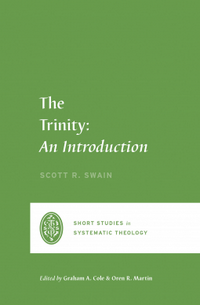
The Trinity: An Introduction by Scott R. Swain: A Brief but Deep Study

The Trinity

The Trinity: An Introduction

by Scott R. Swain
Series: Short Studies in Systematic Theology

Paperback, 133 pg.
Crossway, 2020

Read: January 17-31, 2020
Grab a copy from your local indie bookstore!

What we find in later Trinitarian creeds, confessions, and doctrinal summaries are not improvements upon a latent or undeveloped biblical Trinitarianism but, rather, the church’s attempt to fathom the depth of the riches of biblical Trinitarianism for the sake of various liturgical, pedagogical, and polemical ends. Some of the church’s creeds, confessions, and doctrinal summaries represent such faithful expressions of scriptural teaching and enjoy such wide-ranging ecclesiastical consensus that we dare not transgress the lines they have drawn. Rather, taking them on our own lips, we gladly join the church’s chorus of Trinitarian praise.

What’s The Trinity: An Introduction About?

It’s kind of there in the title, right? This is an introduction to the classical Christian doctrine of The Trinity. He’s not trying to re-invent the wheel, he’s definitely not trying to innovate, but to provide a concise (it’s a Short Study, after all) jumping-off point into deeper studies by providing a solid foundation.

He spends two chapters looking at the primary Biblical texts demonstrating the Doctrine. Chapter 3 is about the Simplicity of God—something too many overlook in a discussion of The Trinity. The following three chapters each focus on a Person of the Trinity. The final chapters are about the “external works” of the Trinity, the “appropriation” of specific works to particular persons, the beneficiaries of God’s work, and assorted topics.

All of that is a lot to ask of 133 short pages. Swain pulls it off by being concise, but he never seems to be leaving out details or avoiding the complicated ideas (although he obviously has to).

Touching on Controvery

This isn’t a polemical work—Swain is here to inform and educate, not combat. Still, he does talk about some Christological errors, including the contemporary dust-ups over EFS/ERAS—Eternal Functional Subordination/Eternal Relations of Authority and Submission.

Swain briefly (again, it’s a Short Study) addresses this error. He’s calm, he’s fair, yet he’s firm. It’s one of the best short treatments of the controversy I’ve seen, and in the context of the larger discussion of the Person of the Son as well as the larger discussions of each of the Persons, it’s incredibly helpful. It also fits where he put it and doesn’t seem like Swain used the opportunity as a digression just to beat a pet theological peeve.

Helpful Supplemental Material

Maybe it’s just me, but I rarely find the post-text material all that helpful. This book was one of the pleasant exceptions—there’s a brief glossary of some of the technical terms. Also, the “Further Reading” suggestions look great and my “To Buy” list grew a bit.

So, what did I think about The Trinity: An Introduction?

Because the persons of the Trinity are internal to God’s life, not external works of God, we can know the persons of the Trinity, as well as their ultimate plan for creation (Eph. 3:9), only if they stoop down and open up the depths of their inner life to us. Only the persons of the Trinity know the persons of the Trinity. Therefore, only the persons of the Trinity can make known the persons of the Trinity. The revelation of the Trinity is a matter of divine self-revelation, divine self-presentation, divine self-naming.

While this is a theological book, drawing on the teaching of the Church, Swain is careful to never lose sight of the source of this Doctrine, the Word of God. We know this, we understand this (as much as we do) because it is revealed to us. That’s vital to an understanding of the doctrine, and vital to the teaching of it. Swain doesn’t let his readers stray from the text.

This is one of those books where my notes keep saying “Chapter X is likely the highlight of the book,” “the section on X is likely the most valuable in the book.” It appears 60-70% of the book is a highlight—and I may not have written all of those parts down. Which is to say, there’s a lot of gold here, very little (if any) dross.

Helpful, insightful, and useful—it also achieves its end for leading on to further study for me. It’s accessible, but not easy, reading. At the same time, it’s a challenging, but not difficult, text.

Also, I like the looks of this series as a whole, I’ll most likely be grabbing more/all of them if they’re all about this quality.


5 Stars

This post contains an affiliate link. If you purchase from it, I will get a small commission at no additional cost to you. As always, opinions are my own.

GUEST POST: Here are the Worst Words by Curtis Honeycutt

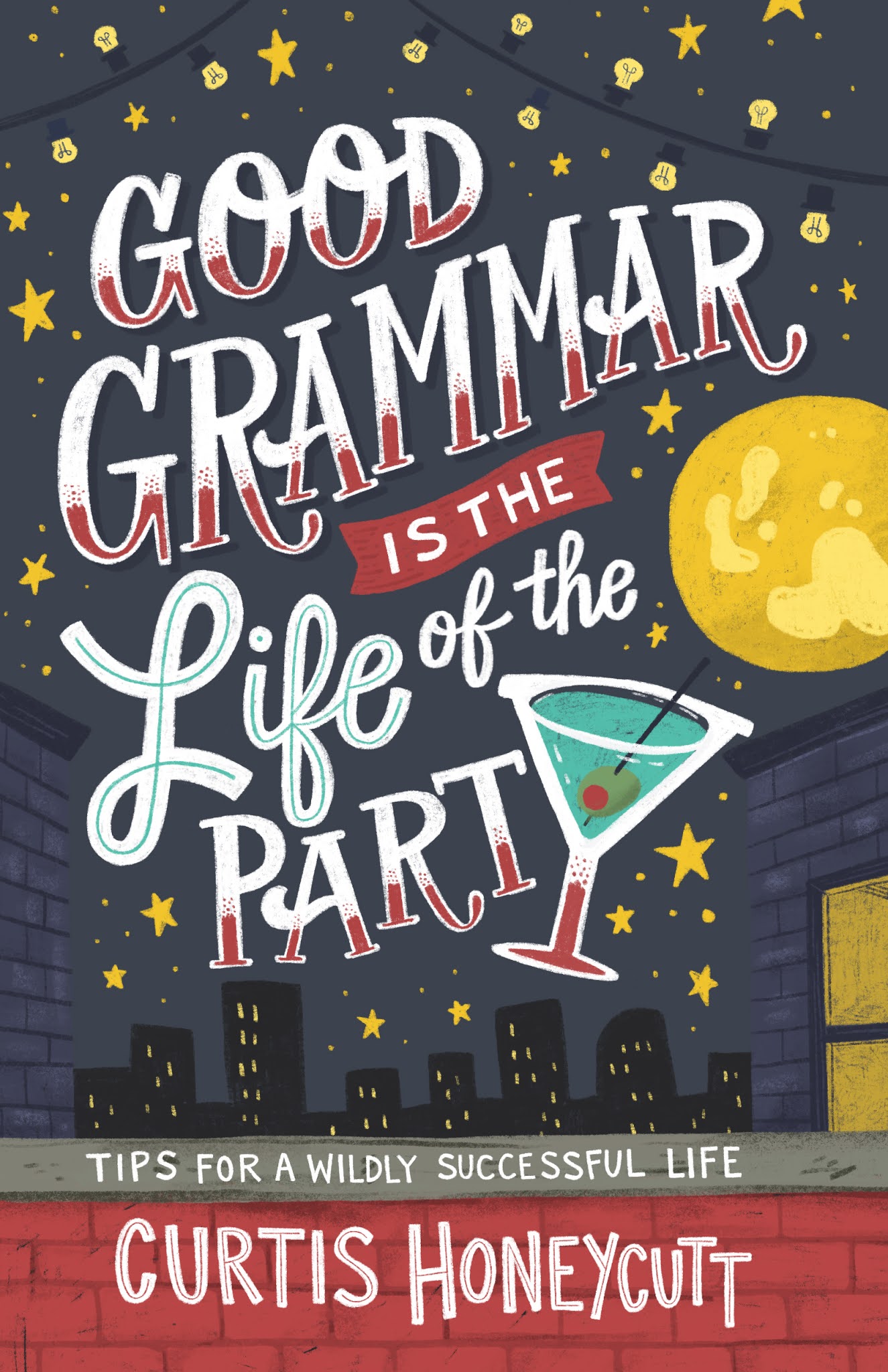
As part of the Tour for Curtis Honeycutt’s Good Grammar Is the Life of the Party: Tips for a Wildly Successful Life, he was kind enough to supply me with this Guest Post to give us all a little taste of his work. Hope you enjoy. For more about the book and the giveaway, see the Spotlight post I put up a bit ago.

No one likes the word moist. I also find the following words to be particularly icky: cyst, pus, dipthong, dongle, ointment, seepage, yeasty, analgesic, succulent, kumquat, and goiter. There’s even a relatively-new word for the disgust of certain words: logomisia. This word is so new that it’s not in moist—I mean, most—dictionaries. Perhaps the pencil-pushers over at the big dictionary companies have logomisia for the word logomisia.

Speaking of hating certain words, I’m afraid you’re not going to like this.

I love to ask people what their least favorite word is (for the record, mine is supple). By far, according to my informal surveying tactics, the word that gets the most votes is irregardless.

I’m sorry to break it to you, but irregardless is technically a word.

Yes, irregardless is a word. Depending on the word processing tool you use, it sometimes gets the red squiggly underline treatment—but not always. And if you look up irregardless in a dictionary, you’ll find it there along with all of the other officially-sanctioned words.

When people jokingly use irregardless, they are doing it wrong. Those who utter it accompanied by an ironic smirk simply use it instead of regardless, to the frustration of word purists.

Many have dismissed the word irregardless because they view it as redundant; regardless is all we need, they argue. Adding ir- in front of regardless downright irritates people.

But that’s the wrong way to use irregardless. You see, irregardless is a way to drop the mic on an argument after someone has already used regardless. Here’s an example:

Robin: Batman, will you let me pick the music on the Bat Radio next time we’re in the Batmobile? I promise not to sing along.

Batman: Absolutely not. Regardless, your taste in music is terrible.

Robin: Holy supple salamanders, Batman! I won’t play any Creed or Nickelback. Can I pick the music, please?

Batman: Irregardless, my answer is “no.” To the Batcave.

In this scene, Batman shuts down the argument by putting extra emphasis on regardless by saying irregardless. Batman knows how to use irregardless properly. Also, he’s the one who wears the pants in the Dynamic Duo (okay, technically they’re tights, but Robin only wears green underwear).

Most of the time irregardless is used, it’s misused, probably in a knowingly tongue-in-cheek manner. And its intent comes through; people either get bothered by their friend’s usage of irregardless or they think it’s funny. Either way, unless you’re using irregardless like Batman, you’re doing it wrong.

Batman once said “It’s not who I am underneath, but what I do that defines me.” I say: leave the defining up to the dictionary; we can all do a better job of improving our grammar and word usage to make our lives more awesome.

—Curtis Honeycutt is a syndicated humor columnist. He is the author of Good Grammar is the Life of the Party: Tips for a Wildly Successful Life. Find more at curtishoneycutt.com.


BOOK SPOTLIGHT: Good Grammar is the Life of the Party by Curtis Honeycutt

Welcome to a Spotlight Tour for Good Grammar Is the Life of the Party: Tips for a Wildly Successful Life by Curtis Honeycutt. After learning a bit about this book, be sure you look into the Giveaway at the bottom of this post and then check back in the next hour for a fun Guest Post from Honeycutt!

Book Details:

Book TitleGood Grammar Is the Life of the Party: Tips for a Wildly Successful Life by Curtis Honeycutt
Category:  Adult Non-Fiction, 18 yrs +, 244 pages
Genre:  How-To, Humor, Grammar and Writing Reference
Publisher:  The County Publishing
Release date:   May, 2020
Content Rating:  PG-13: “I write “hell,” “damn,” and “shit” a few times. Maybe “ass.” .”

Book Description:

Grammar rules! Good Grammar is the Life of the Party: Tips for a Wildly Successful Life will convert grammar goofballs into bonafide word nerds. As the writer of the award-winning humor column “Grammar Guy,” Curtis Honeycutt’s grammar advice appears in dozens of newspapers every week. His debut book—filled with witty word wisdom—is designed to make
your life more awesome by improving your grammar. Do you love language, but sometimes get tripped up by confusing grammar rules? Good Grammar is the Life of the Party is like a cheat code for your social life. Level up your grammar game to become a linguistic legend—from romantic relationships to job promotions to getting invited to fancy roof parties. Climb the corporate ladder, convince people you’re smart, and win at life with dozens of helpful tips on how to master the English language.

Buy the Book:
Amazon
B&N ~ Apple ~ IndieBound ~ Kobo

Add to Goodreads


Meet the Author:Curtis Honeycutt started writing about grammar in his local newspaper. His column, Grammar Guy, has since won multiple awards and now appears in newspapers across the U.S. Originally from Oklahoma, Honeycutt now lives in Indiana with his wife, Carrie, and their two children, Miles and Maeve.

connect with the author:  website ~ twitter ~ facebook ~ instagram ~ goodreads

Enter the Giveaway:

a Rafflecopter giveaway


Gentle and Lowly by Dane C. Ortlund: An Encouraging Look at the Heart of Christ

Nothing against this book, but I don’t have a lot to say, but I promised myself I’d do better about posting in this genre, so here we go.


Gentle and Lowly

Gentle and Lowly: The Heart of Christ for Sinners and Sufferers

by Dane C. Ortlund

Kindle Edition, 224 pg.
Crossway, 2020

Read: January 3-10, 2021
Grab a copy from your local indie bookstore!

What’s Gentle and Lowly About?

We are not focusing centrally on what Christ has done. We are considering who he is. The two matters are bound up together and indeed interdependent. But they are distinct.

…It is one thing to know the doctrines of the incarnation and the atonement and a hundred other vital doctrines. It is another, more searching matter to know his heart for you.

Where most books on Jesus Christ focus on His work or nature, Ortland focuses on who He is—what He’s revealed to His people. As you might guess from the title, he focuses on Matthew 11:29 the phrase, “I am gentle and lowly in heart,” in particular. But he develops the idea through numerous Gospel passages.

Ortland does spend time on the Spirit and Father, showing how they are both revealed to have a similar heart. He follows that up with material from the Epistles, focusing on the Risen and Ascended Christ, still displaying the same care, the same heart for His people.

Standing on the Shoulders

In this study, Ortlund draws on insights from the Puritans Thomas Goodwin, Richard Sibbes, and John Owen (some others, including some relatively modern writers, too). Naturally, I found this material very rewarding. Ortland takes his cues from the best of the English Reformed tradition and it shows in his work.

I do sort of wish that the footnotes pointed to things other than various authors collected works, I think in some cases the material is available in other editions, and it’d be nice if it was easier to find, he makes you want to read more by these men on those topics. But that’s beside the point.

So, what did I think about Gentle and Lowly?

“Gentle and lowly” does not mean “mushy and frothy.”

But for the penitent, his heart of gentle embrace is never outmatched by our sins and foibles and insecurities and doubts and anxieties and failures. For lowly gentleness is not one way Jesus occasionally acts toward others. Gentleness is who he is. It is his heart. He can’t un-gentle himself toward his own any more than you or I can change our eye color. It’s who we are.

There’s nothing revolutionary to be found here, but there’s good, solid, reassuring material. It’s impossible to read this book and not be encouraged to draw near to Him and taking His yoke. It’s an easy read, very accessible, and one that’s well worth your time and attention.


3 Stars

This post contains an affiliate link. If you purchase from it, I will get a small commission at no additional cost to you. As always, opinions are my own.

My Favorite Non-Fiction Books of 2020

My 2020 Wrap up continues and now we’re on to the Non-Fiction list. I had little trouble getting this down to 9 books (couldn’t be satisfied with any of the candidates for 10, although Duhigg almost scored it with the other book by him I listened to this year). But when started filling in the details, I was surprised that I’d given so many of these 3 or 3 1/2 stars. But these are the ones that stuck with me through the year; the ones I cited in conversation; that I thought about when reading something else or watching something on TV. Really, that’s what’s important, right?

As always, I only put books that I’ve read for the first time on this list. I don’t return to NF books (outside of looking up things for one or three points), but occasionally I do—for example, The Pleasures of Reading in an Age of Distraction by Alan Jacobs would get a permanent spot on this list, were it not for this rule.

(in alphabetical order by author)

GritGrit: The Power of Passion and Perseverance

by Angela Duckworth

My original post
A fascinating mix of psychological research, case studies, and personal anecdotes. Duckworth structured this in such a way that not only it was informative and educational, it was enjoyable and motivational. The subject was interesting, the approach challenging, and didn’t always give the answers you expected. Duckworth made it clear that with the right mindset and time, it was possible to increase your own grit and find a measure of success. It’s not a one-size-fits-all solution, nor is it a promise of instant success. Just a reassurance that smart work can pay off.

4 1/2 Stars

Smarter Faster BetterSmarter Faster Better: The Secrets of Being Productive in Life and Business

by Charles Duhigg, Mike Chamberlain (Narrator)
My original post
It’s not a how-to book, it’s not self-improvement, it’s largely about the science/study/understanding of productivity. I found it just as fascinating as previous book and can see where it’d be a useful guidebook for people in some sort of position of authority in an organization. Yet, it’s an improvement over Duhigg’s previous book because there are indications of how one could apply this to themselves/their organizations.

Also, Duhigg shows us his process while illustrating his own application of the book’s lessonswhich I really enjoyed. I find his approach to putting together a book very interesting, what and how he includes something is almost as interesting as what he does with it.

3.5 Stars

No Time Like the FutureNo Time Like the Future: An Optimist Considers Mortality

by Michael J. Fox

My original post
I’ve been a fan of Fox’s for as long as I can remember, and have watched most of the projects he discussed here (and many others). Like many, I’ve been impressed with the way he and his family have dealt with his Parkinson’s Disease and how they’ve worked to help everyone with it.

So this book, where he’s frank about the troubles he’s had recently and the way they’ve challenged his natural optimism really struck a chord with me. The book is a balance of struggle and victory, setback and progress—all told with a sharp wit that’s sure to charm.

4 Stars

The Checklist ManifestoThe Checklist Manifesto: How to Get Things Right

by Atul Gawande, John Bedford Lloyd (Narrator)

My original post
It’s a simple premise—a well-developed checklist can make even the most complex task doable and save even experts from horrible oversights/mistakes when implemented correctly (although there are things that just can’t be made into a checklist). As hard as it might be to fathom, seeing how checklists have been used by pilots, surgeons, investment bankers and the like is utterly fascinating. There’s just no way that I can make it sound like it.

3.5 Stars

Breaking Bread with the DeadBreaking Bread with the Dead: A Reader’s Guide to a More Tranquil Mind

by Alan Jacobs

My original post
Jacobs hits another one out of the park. He asks how can we read and appreciate books from the past plagued by things that would not be tolerated today? Racism; slavery; different expectations for family, male and female roles; and so on. (many of these can apply to books and people who aren’t from previous centuries, but are in the cubicle next to us or around the Thanksgiving table—but Jacobs doesn’t spend time on that, but if you can’t make the application, I don’t think you’re paying attention).

Thoughtful, thought-provoking, erudite, with quiet humor, Jacobs will make you think, aspire to be a better reader, and more widely-read, too. I’m going to have to read this one a couple of more times to mine it for detail, and I’m looking forward to it.

4 1/2 Stars

Funny, You Don't Look AutisticFunny, You Don’t Look Autistic

by Michael McCreary

My original post
McCreary shows a side of ASD that many people probably don’t realize exists. And even if they do, hearing about it from someone with it, helps you understand it better. McCreary gives us his perspective on things in a way that’s easy to digest. His humor (mostly pointed at himself and autism) provides some lightness to something that’s usually not treated that way.

3.5 Stars

Working StiffWorking Stiff: Two Years, 262 Bodies, and the Making of a Medical Examiner

by Judy Melinek, MD, & TJ Mitchell, Tanya Eby (Narrator)

My original post
This is Melinek’s account of her training to be a forensic pathologist in NYC—a great place to train, because what won’t you see there? She talks about the deaths that are the result of crimes, the kind of thing we see on every crime show in the world. But that’s not primarily the job and that’s not the focus of the book—mostly it’s the result of an accident, long-term disease, and so on. Which is actually frequently more interesting than the criminal stuff.

What makes this already compelling book all the better (as a book, not as an actual life) is that September 11, 2001, was a few weeks after her residency began. Her description of dealing with the aftermath (both in terms of the dead and the events that followed) is just sobering, and a reminder of the unspeakable reality of that day.

3.5 Stars

Nothing Is Wrong and Here Is WhyNothing Is Wrong and Here Is Why

by Alexandra Petri

My original post
If this was a straight-forward collection of essays about politics and cultural issues, I’d probably not recommend it. I don’t know if I’d have finished it (although, with Jacob’s help (see above), maybe I could’ve). But the fact that it’s a collection of humorous essays/columns? Oh yeah, sign me up.

Even when I think she’s wrong about a topic, she made me grin and/or laugh. Usually made me think. I was always impressed with her creativity.

3 Stars

The Answer IsThe Answer Is . . .: Reflections on My Life

by Alex Trebek, Narrated by: Ken Jennings, Alex Trebek

My original post
Even if we hadn’t lost Trebek this year, this would’ve landed on this list. But given how much we’ve all been talking about him lately, it has to show up.

He tells his story in short chapters, full of self-depreciation and more swearing than you’d expect (he explains why). If you can hear/read him talk about his wife, his children, his cancer—and the effect that the cancer’s having on his wife and children as he prepares for death without being moved? There’s something wrong with ya. At that point, any thought I had about pretending to be objective and analytical went out the window.

My sole complaint is that the audiobook is only four-and-a-half hours long. It’s just not long enough. I get that he wasn’t trying to be exhaustive—and I don’t necessarily want that—but when you start to hear these quick stories about his growing up, his getting established in the business (either in Canada or the States), his friendships…and of course, Jeopardy!—you just want it to keep going for hours and hours.

4 1/2 Stars

Page 40 of 61

Powered by WordPress & Theme by Anders Norén