|
Being in New Jersey, it’s easy to find places to play. We have mountain ranges with beautiful trails (including part of the Appalachian Trail) and gorgeous beaches. You’re not far from a place to play. Of course, the world can be your playground if you look hard enough! |
—
My thanks to iREAD Book Tours for the invitation to participate in this tour and the materials they provided.

I’d intended to get this up and ready for Towel Day last week — but, obviously, I failed. Schemes once again, Gang aft a-gley. It’s pretty fitting, really that this is late.
—
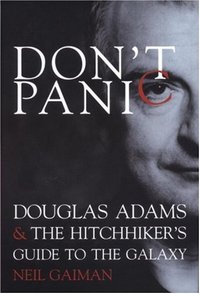
by Neil Gaiman; Additional Material by David K. Dickson & MJ Simpson
Series: The Hitchhiker’s Guide to the Galaxy Trilogy (related)Hardcover, 207 pg.
Titan Books, 2003
Read: May 22 – 23, 2019

| |
The idea in question bubbled into Douglas Adams’s mind quite spontaneously, in a field in Innsbruck. He later denied any personal memory of it having happened. But it’s the story he told, and, if there can be such a thing, it’s the beginning. If you have to take a flag reading THE STORY STARTS HERE and stick it into the story, then there is no other place to put it.
It was 1971, and the eighteen year-old Douglas Adams was hitch-hiking his way across Europe with a copy of The Hitchhiker’s Guide to Europethat he had stolen (he hadn’t bothered ‘borrowing’ a copy of Europe on $5 a Day, he didn’t have that kind of money).
He was drunk. He was poverty-stricken. He was too poor to afford a room at a youth hostel (the entire story is told at length in his introduction to The Hitchhiker’s Guide to the Galaxy: A Trilogy in Four Parts in England, and The Hitchhiker’s Trilogy in the US) and he wound up, at the end of a harrowing day, flat on his back in a field in Innsbruck, staring up at the stars. “Somebody,” he thought, “somebody really ought to write a Hitchhiker’s Guide to the Galaxy.”
He forgot about the idea shortly thereafter.
Five years later, while he was struggling to think of a legitimate reason for an alien to visit Earth, the phrase returned to him. The rest is history, and will be told in this book. |
I distinctly remember purchasing the first edition of Don’t Panic from BookPeople of Moscow in the fall of 1991 — I remember being blown away by the idea that someone would write a book about Douglas Adams’ work. I had no idea who this Neil Gaiman fellow was, but I enjoyed his writing and loved the book he wrote — and read it several times. It was a long time (over 2 decades) before I thought of him as anything but “that guy who wrote the Hitchhiker’s book.” The Hitchhiker’s Trilogy had been a favorite of mine for years by that point, and getting to look behind the scenes of it was like catnip.
This is the third edition, and as is noted by Gaiman in the Forward, it “has been updated and expanded twice.” The completist in me would like to find a second edition to read the original 3 chapters added by David K. Dickson in 1993, but the important change was in 2002, when “MJ Simpson wrote chapters 27-30, and overhauled the entire text.” If you ask me, Gaiman’s name should be in the smaller print and Simpson’s should be the tall letters on the cover — but no publisher is that stupid, if you get the chance to claim that Neil Gaiman wrote a book, you run with it. Overhauled is a kind way of putting it — there’s little of the original book that I recognize (I’m going by memory only, not a side by side comparison). This is not a complaint, because Simpson’s version of the book is just as good as the original, it’s just not the original.
This is a little more than the story of The Hitchhiker’s Trilogy, but it’s certainly not a biography of Adams — maybe you could call it a professional biography. Or a biography of Adams the creator, which only touches upon the rest of his life as needed. Yes there are brief looks at his childhood, schooling, etc. But it primarily focuses on his writing, acting, producing and whatnot as the things that led to that revolutionary BBC Radio series and what happened afterward. Maybe you could think of it as the story of a man’s lifelong battle to meet a deadline and the lengths those around him would go to help him not miss it too much.
Once we get to the Radio series, it follows the The Hitchhiker’s Trilogy through each incarnation and expansion — talking about the problems getting it produced (in whatever medium we’re talking about — books, TV show, movie, stage show) and the content. Then the book discusses other Adams projects — Dirk Gently books, The Last Chance to See, his computer work, and other things like that.
It’s told with a lot of cheek, humor, and snark — some of the best footnotes and appendices ever. It’s not the work of a slavish fanboy (or team of them) — there are critical moments talking about problems with some of the books (some of the critiques are valid, others might be valid, but I demur). But it’s never not told with affection for the man or his work.
Don’t Panic is a must for die-hard fans — and can be read for a lot of pleasure by casual fans of the author or his work. I can almost promise that whatever your level of devotion to or appreciation of Adams/his work, it’ll increase after reading this. Any edition of this book should do — but this third edition is an achievement all to itself. Imagine someone being able to say, “I improved on Gaiman’s final draft.”
I loved it, I will return to this to read as well as to consult for future things I write about Adams, and recommend it without hesitation.
—–


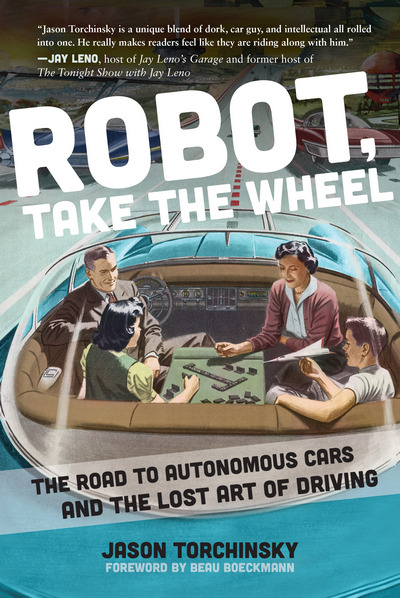
Today I’m pleased to welcome the Book Spotlight Tour for Robot, Take the Wheel by Jason Torchinsky. I jumped at the chance when asked if I’d participate in this because: 1. Content I didn’t have to work for at all; 2. It looks like a fun book that I’d like to help get eyeballs on; 3. How often to I get asked to do anything with a non-fiction book?; and 4. Check out the cover — that’s just awesome.
Read the post, enter the giveaway — or don’t wait for fortune to smile on you, go buy the thing!
Book Details:
Book Title: Robot, Take the Wheel: The Road to Autonomous Cars and the Lost Art of Driving by Jason Torchinsky
Publisher: Apollo Publishers
Category: Adult Non-Fiction
Release date: May 7, 2019
Format: Ebook/Hardcover
Length: 207 pages
Content Rating: PG (this book is accessible to everyone)
Book Blurb:
From the witty senior editor of Jalopnik, Gizmodo Media’s acclaimed website devoted to cars, technology, and more, comes a revealing, savvy, and humorous look at self-driving cars.
Self-driving cars sound fantastical and futuristic and yet they’ll soon be on every street in America. Whether it’s Tesla’s Autopilot, Google’s Waymo, Mercedes’s Distronic, or Uber’s 24,000 modified Volvos, companies across industries and throughout the world are developing autonomous cars. Even Apple, not to be outdone, is rumored to be creating its own technology too.
In Robot, Take the Wheel, Jason Torchinsky explores the state of the automotive industry. Through wit and wisdom, he explains why autonomous cars are being made and what the future of automated cars is. Torchinsky encourages us to consider autonomous cars as an entirely new machine, something beyond cars as we understand them today. He considers how we’ll get along with these robots that will take over our cars’ jobs, what they will look like, what sorts of jobs they may do, what we can expect of them, how they should act, ethically, how we can have fun with them, and how we can make sure there’s still a place for those of us who love to drive with manual or automatic transmission.
This unique and highly readable volume is brimming with industry insider information and destined to be a conversation starter. It’s a must-have for car lovers, technology geeks, and everyone who wants to know what’s on the road ahead.
Purchase Links for Robot, Take the Wheel:
Amazon ~ Barnes & Noble ~ Indiebound ~ Book Depository
About Jason Torchinsky:
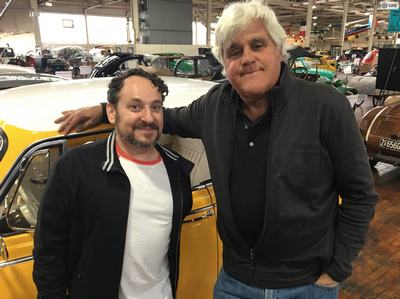 JASON TORCHINSKY is senior editor of Jalopnik, a website devoted to news and opinions about all things automotive. As a writer and artist, he is known for his articles, artworks, talks, and videos about cars, technology, and culture. He has raced cars, wrecked cars, and driven possibly one of the most dangerous cars ever made with the King of Cars on the Emmy-winning Jay Leno’s Garage. He lives in North Carolina. JASON TORCHINSKY is senior editor of Jalopnik, a website devoted to news and opinions about all things automotive. As a writer and artist, he is known for his articles, artworks, talks, and videos about cars, technology, and culture. He has raced cars, wrecked cars, and driven possibly one of the most dangerous cars ever made with the King of Cars on the Emmy-winning Jay Leno’s Garage. He lives in North Carolina.
Connect with the author: Twitter
GIVEAWAY:
Win a print copy of Robot, Take the Wheel (5 winners / open to USA only)
(ends May 31, 2019)
a Rafflecopter giveaway
https://widget-prime.rafflecopter.com/launch.js
(if the Rafflecopter script isn’t working, just click here — it’s not as pretty, but it works)
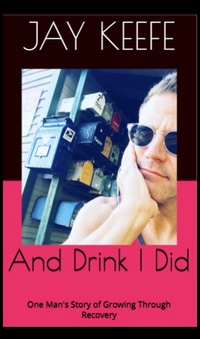
by Jay Keefe
Kindle Edition, 154 pg.
2018
Read: March 2 – 5, 2019
This is one of those books that’s pretty well summed up by the title and subtitle. There’s not a lot more to say, really. But I’ll flesh it out a little — the first two chapters are primarily focused on his pre-alcohol life to gain some insight into his alcoholism. He begins by saying that he doesn’t know why he’s an alcoholic, he doesn’t know what made him one — moreover, it doesn’t matter. What does matter is that he is an alcoholic. That doesn’t stop him from thinking and writing about his childhood — not in an effort to justify or explain away his alcoholism, but to understand it. He explains some early emotional experiences, as part of this — and even his earliest memories of OCD.
This might be the closest I’ve gotten to understanding the compulsion’s sensation:
I didn’t feel right or complete until I had done specific tasks.
Even after I did them, there was still a lingering sense that something was off. When people ask me to describe it, the best I can do is to say it’s like an itch that can’t be scratched- kind of like when the top of your mouth tickles, and you use your tongue to scratch it, but it doesn’t really help because your tongue just isn’t the right instrument to scratch an itch.
It’s like that.
Kind of.
Then he explained his initial drinking experiences and how alcohol made him feel. It reminded me of a similar passage in Mose Kasher’s memoir of addiction.
I always felt a void and had no idea how to fill it.
Alcohol filled that void perfectly.
It took me out of myself.
I could relax. . . .
Alcohol quelled the OCD too.
I didn’t clean when I was drunk.
It didn’t bother me that things weren’t in their place.
I didn’t sweat the small stuff, so to speak.
And I knew I wasn’t sweating it. That was the beauty of it.
It’s so easy for people — especially for non-addicts — to pin drugs and alcohol use and abuse to people who are partying or having a good time and can’t stop. For Kasher, it was about feeling normal; for Keefe it’s about quieting the OCD, about not having the self-doubt and insecurities that plagued him. It’s about self-medicating. Addiction’s never more understandable to me than when I hear someone talking like that — who wouldn’t want that experience? Forget about feeling good, just getting to neutral — no problems.
Anyway, from there Keefe spends a few chapters talking about his experiences drinking — at one point he says that other addicts’ war stories never impressed him, and initially you get the feeling that’s hypocritical because he talks a lot about some of the stupid or out of control things he did while drinking. But he never glorified the experience, he never celebrates what happened — it’s just a list of things he did. Like reciting the tasks (largely routine) at work you completed one week. More than once I found myself wondering how Keefe is still living — and he probably did, too, while writing it.
He then talks about his early days of recovery — his early 12-Step days and when it started to work for him, and how that changed his life. How being sober didn’t fix all of his problems, and how he still has impulse control issues and what he’s done to minimize the problems that causes him. Then he discusses his current circumstances, with a few years of sobriety behind him — how he’s doing, what he’s doing with himself, and that he’s still an alcoholic, living in fear of stumbling.
Those last couple of chapters, in particular are really powerful.
I’m a little of two minds about this book — you can see from what I’ve quoted how this book reads. Paragraphs that are 1 or 2 sentences long (there are some that are a little longer), some aren’t even complete sentences. The book largely reads like a very detailed outline — at best like a good first draft. Also, the timeline’s a little fuzzy and his knack for not using names all the time when talking about his life doesn’t help keep things clear.
None of that keeps the book from making an impact. It’s moving, it’s powerful, and you have a very real sense of what he went through. So Keefe’s not Tobias Wolff or Frank McCourt — who cares? The book accomplishes what he sets out to accomplish, is insightful, touching and inspiring. That’s good enough for me.
—–

Disclaimer: I received this book from the author in exchange for this post and my honest opinion, which is what I provided.
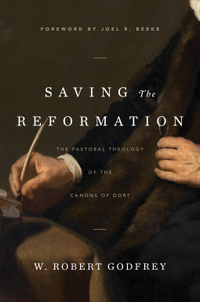
by W. Robert Godfrey
eARC, 265 pg.
Reformation Trust Publishing, 2019
Read: February 3 – 10, 2019
I’m halfway inclined to just copy and paste the Table of Contents here and say, “If you want to know about any of this, here’s where you start.” Slap a nice little graphic with some stars on it, and we’re done. But I’m not that lazy. This is a historically-based study of the Synod of Dort’s major product — the Canons of Dort (although it does look at some other concerns), the defense of the Reformed doctrines in answer to the challenges of Jacob Arminius and the Remonstrants that took up and furthered his cause following his death. The Canons gave us the so-called “5 Points of Calvinism” and are often misunderstood because of that and as mischaracterized as those points themselves. If this book only helps people stop doing that, it’d be well worth the effort (it won’t, but it’s pretty to think so) — but it’s so much more.
There are four parts to this book — any one of which can be read independently from the others. I’m not sure why you would do that, but they’re self-contained enough that you don’t have to.
Part I focuses on the historical and theological context for the calling of the Synod, those who attended and the topics it would address. Godfrey is a Church Historian and former History professor, this is his bread and butter, and you can tell that from these chapters. You also get the impression that he could’ve written a book about the same length as this one just on the historical matters without breaking a sweat. This isn’t the best part of the book, but it gets things off to a great start.
Part II is a “Pastoral” translation of the Canons prepared by Godfrey for this book. I’m not familiar enough with other translations to really have much to say about this. I’ve read others, but I don’t have them committed to memory. Besides, I don’t know Latin well enough to evaluate the translation. But I can say that this was a clear translation, it didn’t read like something written in Latin for experts, but something written to help me and other Christians to wade through some weighty topics. As the problems caused by the Remonstrants were in the churches more than in the academy, the language matched that.
The heart of the book is in Part III, An Exposition of the Canons of Dort. Godfrey beings with some observations about the Canons as a whole — how they’re structured before he dives in to the Canons themselves. In addition to the errors of the Remonstrants, the Canons address other issues related to the doctrines involved, providing a resource for believers for generations not just an answer to their contemporary problems. The pastoral focus of the Canons — and Godfrey — is evident throughout the Exposition, he’s frequently talking about comfort, encouragement, and assurance. It’s not just an explanation and defense of the Reformation and Protestant teaching, it’s an aid and comfort to believers.
It may come as a surprise to see what Godfrey points out as a result of compromise, and the reasoning behind those things that needed no compromise. The behind-the-scenes portions of the book are as interesting as the exposition (giving an indication to those of us who didn’t sit under Godfrey’s Church History lectures that we really missed out on something). Godfrey also points out how the Canons weren’t as successful in some ways as they wanted to be — not as a failure, just that some of their goals were out of reach of the assembly.
Some of this section gets repetitive — because each Head of Doctrine is complete in itself, capable of standing alone — so similar points are covered repeatedly. Godfrey’s exposition both points that out and is written to keep the repetition from being dull, but instead an indication of the importance of the various points. This section is so helpful that I really can’t do justice — my copy is full of highlighted lines/paragraphs. I will be returning to it often, I know that. Concise, clear, insightful — everything you want in this kind of study.
The remainder of the book is Appendices. There’s an outline of the Canons, an explanation for the pattern of each head of doctrine (very similar to the same idea in the Exposition) and a handy guide to the relation of the positive articles to the rejection of errors. The last appendix is a new translation of the Synod’s provisional position on the Sabbath, giving some insight into the relation of the Synod’s stance to that of British Puritanism. The largest, and probably most helpful (and maybe controversial) is an extended look at Arminius and his overall project. Godfrey takes a position that argues against some recent scholarship (as I understand) and insists that he wasn’t a moderate Reformed churchman, but someone seeking to overturn segments of the church’s teaching and introduce serious Pelagian error.
In this anniversary year, I know this will not be the only book about the Synod released (I have another pre-ordered, and am sure I’ll pick up others) — but I can’t imagine that it won’t be one of the better. It is well-researched, careful, encouraging and pastoral — this is not dry and dusty history, nor dry and dusty doctrine. This book, like the Synod it focuses on, seeks to defend, protect and further the cause of the Protestant Reformation, the Gospel itself. As such, it succeeds and you’d do well to study it.
Disclaimer: I received this eARC from Reformation Trust Publishing via NetGalley in exchange for this post — thanks to both for this.
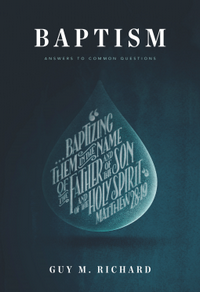
by Guy M. Richard
eARC, 129 pg.
Reformation Trust Publishing, 2019
Read: February 3, 2019
It’s been awhile since I’ve read a book on baptism — it’s been awhile since I’ve seen a new one published, too (but maybe I stopped paying attention), so when I saw this on NetGalley, I had to take a chance. I’m very glad I did. Richard discusses in his introduction that questions about this sacrament are some of the most frequently asked to Presbyterian (and, I assume, Reformed) pastors. Sadly, they’re usually asked when pastors can’t give the kind of answers they should — at least based on his experience.
He begins looking at the meaning of Baptism — both the Greek terms translated as “baptism” and the sacrament. He does so very well, covering all the bases. Following that he moves to the method of baptism — how should the water be applied? Once he’s finished with these matters he moves into the more complicated question — who should be baptised? He begins with the “household” baptisms in the New Testament before turning to the objections and arguments of Baptist and baptistic brothers. He not only examines and explains them fairly well, he responds to them in an irenic manner, but not giving an inch to them.
The conclusion, “What Can We Take Away from All This” is just fantastic. Richard’s meditations on how our baptisms should shape our lives and our faith, to build our faith and give us assurance. It’s easily worth half of whatever you pay for the book, and maybe more.
This is probably not a book that will convince any detractors. It may not be enough to convince the earnest seeker. But it will explain the basics for each topic considered. It will demonstrate the systematic and biblical basis for Richard’s positions exists and they aren’t mere tradition. These are outlines to be filled in with further reflection, reading and research by the reader.
Along those lines, each chapter could really use a “For Further Reading” to help the reader get deeper into the topics covered — or one at the end of the book. But I do think as each chapter is so topic-focused, it’d be very helpful. As good as each chapter is, they are just an overview. Not every reader is going to want to go deeper into, say, the mode/method of baptism but they might want to spend more time on the meaning of Baptism, or his response to Baptist interpretations of Jeremiah 31. For example, I think I agree with his differing from Murray on the former — but I’d like to read more about that, if it’s possible.
Richard’s tone throughout is gracious, kind, yet unbending. It’s not easy to putt off in print, especially on a topic like Baptism. There were many times he could’ve gone for the jugular, rhetorically speaking. He never did, trusting that the arguments would carry the day. And, in my not so humble opinion, he’s right to trust that.
Gracious, encouraging, thorough and easy to read — this introduction to “the waters that divide” Christians is just what you want in a book on this topic. But more than those, it’s deeply biblical in nature. Richard’s focus in bringing the light of the canon to this topic, and he succeeds there. I strongly encourage you to read it.
Disclaimer: I received this eARC from Reformation Trust Publishing via NetGalley in exchange for this post — thanks to both for this.
—–

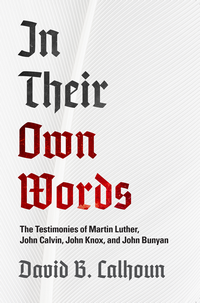
by David B. Calhoun
Paperback, 232 pg.
Banner of Truth, 2018
Read: January 13 – 27, 2018
I liked this book — don’t get me wrong. I’d even recommend it heartily to people. But I have some issues with it.
Let’s look at the book blurb, shall we?
| |
Hundreds of biographies have been written of Martin Luther, John Calvin, John Knox and John Bunyan. But there is something unique to be gained by listening to these men tell their stories in their own words. |
Right there? I’m sold — great idea for a book. What’s more, this is from Banner of Truth — this kind of thing is in their wheelhouse. Who wouldn’t want to read this kind of thing?
| |
Here, in In Their Own Words, is a collection of testimonial statements drawn from the writings of Luther, Calvin, Knox, and Bunyan. We see men who candidly confessed their sins and boldly testified to the grace, mercy, and goodness of God to them. Their testimonies illustrate the great truth stated by Paul that ‘where sin abounded, grace abounded much more, so that as sin reigned in death, even so grace might reign through righteousness to eternal life through Jesus Christ our Lord’ (Rom. 5:20-21). |
The key word there, is “statements.” I had visions of extended portions of the works of these men. Which seemed odd to me at least in Calvin’s case, as he’s notorious for not talking about his life (as is seen in this book, I should add). But still, that’s what it sounded like to me. But by and large we’re talking a sentence or two of quotation to be followed by Calhoun discussing more about his subject on whatever topic/time period he’s looking at. Sometimes we get a paragraph — sometimes a couple consecutive paragraphs. Sometimes it’s less than a sentence. Really there’s a lot more David Calhoun than I expected. I don’t have a detailed analysis, but I’m pretty sure that the text is 55-65% Calhoun (and a few biographers he quotes), with the remainder by the subjects.
This doesn’t diminish the work by Calhoun — it’s no easy feat finding these snippets and then assembling them into a coherent narrative. But still …
My other issue is the inclusion of Bunyan. He doesn’t fit thematically, or even historically. Also, despite really trying — repeatedly for almost two decades — I can’t muster up that much enthusiasm for him. This is a personal flaw of mine, I realize. But that’s that.
Now, the content of the book? It’s really good — linking these mini-biographies (50-60 pages per subject) to biographical remarks is a great idea, and adds a perspective you don’t normally see. Calhoun is able to focus on the parts of their lives that they cared more about, rather than whatever the prevailing interests of scholars are.
We get good, concise views of their lives, with a lot of flavor of the subjects — their concerns, their thoughts, even some of their personality. A good investment of time — I learned some things, I found some inspiration in some of the words — and relished Calhoun showing the Providential care shown to each of these men.
Read this, think about it — just don’t go in expecting to get saturated by the words of these figures and you’ll enjoy it more than I did.
—–
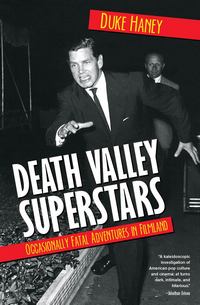
by Duke Haney
Kindle Edition, 306 pg.
Delancey Street Press, 2018
Read: January 2 – 16, 2019
Duke Haney, actor, screenplay writer, novelist, essayist, has delivered a well-written collection of sixteen essays revolving around some of those impacted by, affected by, corrupted(?) by, shaped by Fame — that fleeting authority and celebrity bestowed by a chosen few in the Hollywood system that has captured the American imagination and attention since the 1900s.
The quality of the writing throughout was pretty consistent, as was the voice, etc., etc. But my own interest varied widely from piece to piece. I think that’s largely on me, not Haney. But then again, maybe Haney shouldn’t have picked topics that have been done to death. I’m not sure that the universe needs another essay/reflection/biography/anything about Marilyn Monroe, Lee Harvey Oswald, or Jim Morrison. It certainly doesn’t need any further effort to celebrate Hugh Hefner.
On the other hand, the pieces about Sean Flynn (son of Errol), William Desmond Taylor, Christopher Jones, and other people that I’d never heard of were fascinating. I learned something, I was introduced to people I’d missed out on. They weren’t slightly different takes on worn-out ideas about legends that have had dozens of books written about them.
Better yet were the pieces that were about his life — encountering Elizabeth Taylor as a youth, working on various films, his nude scenes, his crush on (and seen in retrospect, stalking) of a noted actress, the encounter with the lady on the bus talking about the video store they both frequented, even the part of the Jim Morrison essay about his quest to hire a psychic (it shouldn’t be that hard in L.A.) to do a séance in a hotel room Morrison lived in. He’s really his best — and most entertaining — subject (although when the subject of an essay is someone else, Haney tends to talk about himself too much). He doesn’t come across as someone trying to gloss over mistakes, missteps, or embarrassing moves — in fact, he seems to revel in them. These are honest (seeming), frequently funny and charming.
I have no doubt that there are plenty of people out there who will invert my rankings, or dispute them all together. And they’d likely be right to do so (I doubt they’d convince me, but you never know). Most collections I read are pretty uneven. This isn’t the case with Death Valley Superstars, I think the quality is consistent — it’s just my own reaction to the chapters that are varied. I’d wager the same will be true for other readers.
If nothing else, I think the above summary rundown demonstrates the variety of pieces in this collection — and I didn’t make mention of all of them. One thing that is fairly consistent is the takeaway from the collection as a whole — fame is fleeting, but its effect on the lives of the famous (and those near them) is long-lasting, and rarely pleasant or beneficial. Really, the whole book can be seen as a collection of cautionary tales with a persistent message — stay away from Hollywood.
I didn’t love this book, but I really liked parts of it, and am glad I read it. I can easily see many readers wondering what was wrong with me, however, and eating this thing up.
Disclaimer: I was provided with a copy of this book in exchange for my honest opinion, which is seen above.
—–
 |
✔ An essay collection.
|
Like every single year, I didn’t read as much Non-Fiction as I meant to — but I did read a decent amount, more than I did in 2016-17 combined (he reports with only a hint of defensiveness). These are the best of the bunch.
(in alphabetical order by author)
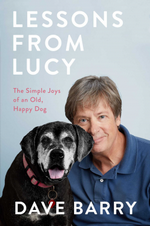
by Dave Barry
My original post
So, I figured given the tile and subject that this would be a heavier Dave Barry read, with probably more tears than you anticipate from his books — something along the lines of Marley & Me. I was (thankfully) wrong. It’s sort of self-helpy. It’s a little overly sentimental. I really don’t know if this is Barry’s best — but it’s up there. Lessons From Lucy is, without a doubt, his most mature, thoughtful and touching work (that’s a pretty low bar, I realize — a bar he’s worked hard to keep low, too).

by Janet E. Croon, ed.
My original post
LeRoy Wiley Gresham was 12 when he started keeping a diary. LIttle did he know at that point that he was about to witness the American Civil War (and all the desolation it would bring to Georgia) and that he was dying (he really didn’t figure that out until the very end). Instead you get an almost day-by-day look at his life — what he does, reads, hears about (re: the War) and feels. It’s history in the raw. You have never read anything like this — it will appeal to the armchair historian in you (particularly if you’ve ever dabbled in being a Civil War buff); it’ll appeal to want an idea what everyday life was like 150 years ago; there’s a medical case study, too — this combination of themes is impossible to find anywhere else. This won’t be the easiest read you come across this year (whatever year it is that you come across it), but it’ll be one of the most compelling.
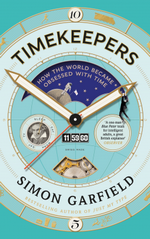
by Simon Garfield
My original post
I, for one, have never thought that much about my relation to time, my relation to clocks/watches, etc. I know they govern our lives, to an extent that’s troublesome. But where did that come from, how did we get hooked on these things, this concept? These are brief studies/historical looks/contemporary observations — and I’m not selling it too well here (trying to keep it brief). It’s entertainingly written, informative, and thought-provoking. Garfield says this about it:
This is a book about our obsession with time and our desire to beat it. . . The book has but two simple intentions: to tell some illuminating stories, and to ask whether we have all gone completely nuts.
He fulfills his intended goals, making this well worth the read.

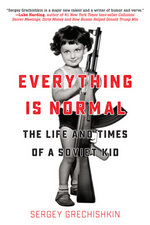
by Sergey Grechishkin
My original post
If you grew up in the 80s or earlier, you were fascinated by Soviet Russia. Period. They were our great potential enemy, and we knew almost nothing about them. And even what we did “know” wasn’t based on all that much. Well, Sergey Grechishkin’s book fixes that (and will help you remember just how much you used to be intrigued by “Evil Empire”). He tells how he grew up in Soviet Russia — just a typical kid in a typical family trying to get by. He tells this story with humor — subtle and overt. It’s a deceptively easy and fun read about some really dark circumstances.
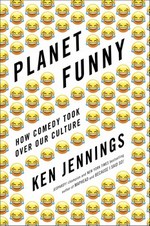
by Ken Jennings
My original post
Half of this book is fantastic. The other half is … okay. It’ll make you laugh if nothing else. That might not be a good thing, if you take his point to heart. We’ve gotten to the point now in society that laughter beats honesty, jokes beat insight, and irony is more valued than thoughtful analysis. How did we get here, what does it mean, what do we do about it? The true value of the book may be what it makes you think about after you’re done.

by Mark Manson, Roger Wayne (Narrator)
My original post
This is an enjoyable, amusing, call to re-examine your priorities and goals. It’s not about ceasing to care about everything (not giving a f^ck), but about being careful what you care about (giving the right f*cks). Manson’s more impressed with himself than he should be, but he’s a clear and clever writer displaying a lot of common sense. Get the audiobook (I almost never say that) — the narration is worth a star by itself (maybe more).
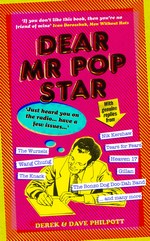
by Derek & Dave Philpott
My original post
If you read only one book off this list, it should probably be the next one. But if you pick this one, you’ll be happier. This is a collection of correspondence to pop musicians/lyricists picking apart the lyrics, quibbling over the concepts, and generally missing the point. Then we get to read the responses from the musician/act — some play with the joke, some beat it. Sometimes the Philpott portion of the exchange is better, frequently they’re the straight man to someone else. Even if you don’t know the song being discussed, there’s enough to enjoy. Probably one of my Top 3 of the year.
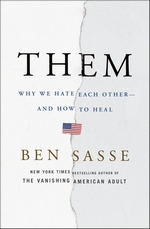
by Ben Sasse
My original post
My favorite US Senator tackles the questions of division in our country — and political divisions aren’t the most important, or even the root of the problem. Which is good, because while he might be my favorite, I’m not sure I’d agree with his political solutions. But his examination of the problems we all can see, we all can sense and we all end up exacerbating — and many of his solutions — will ring true. And even when you disagree with him, you’ll appreciate the effort and insight.
Honorable Mention:
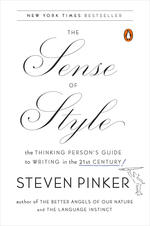
by Steven Pinker
I started this at a bad time, just didn’t have the time to devote to it (and the library had a serious list waiting for it, so I couldn’t renew it. But what little I did read, I thoroughly enjoyed and profited from — am very sure it’d have made this post if I could’ve gotten through it. I need to make a point of returning to it.
|


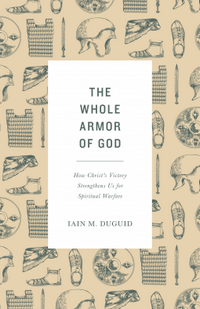 The Whole Armor of God: How Christ’s Victory Strengthens Us for Spiritual Warfare