Category: Theology/Christian Living Page 12 of 32

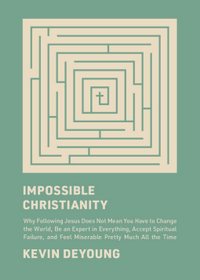
Impossible Christianity by Kevin DeYoung: A Call for Assured Disciples

Impossible ChristianityImpossible Christianity:
Why Following Jesus Does Not Mean You Have to Change the World, Be an Expert in Everything, Accept Spiritual Failure, and Feel Miserable Pretty Much All the Time

by Kevin DeYoung

DETAILS:
Publisher: Crossway
Publication Date: August 15, 2023
Format: eARC
Length: 160  pg.
Read Date: July 23-30, 2023

Buy from Bookshop.org Support Indie Bookstores

What’s Impossible Christianity About?

On the one hand, the twenty-eight(!) words of the subtitle give a handy summary of what the book is about—but there’s still more to say. But it’s difficult to summarize outside of that without going on too long. Still, it’s worth a shot.

While exploring things like personal wealth, corporate guilt, and the call to individual holiness and sanctification, Kevin DeYoung reminds readers that our goal isn’t to change the world, it isn’t to achieve a perfection in behavior or ability, nor is it to wallow in our shortcomings and weaknesses. Rather, we are to press on when we stumble, ask God for forgiveness and help; keeping our eyes on our goal, see how far we’ve come; and rejoice in the work of grace in our lives—knowing that our Father is pleased with us.

There’s more to it than that (obviously, he spends eight chapters developing what I just used two sentences to convey). But that’s a decent thumbnail sketch.

The Highlights

In chapter 2, “Who Is It That Overcomes the World?,” we get an exploration of some of the more challenging material in 1 John. This treatment of 1 John and assurance is enough to justify picking the book up in the first place (for me, anyway. But I doubt I’ll be alone).

Where DeYoung will take these ideas from the epistle to encourage believers, to see signs of their faith and draw assurance from them, too many have taken the same words to use as tests of faith, to spur an attitude of “I must do more to earn God’s favor” or “I need to prove my devotion.”

While avoiding any kind of “cheap grace” (or whatever people call it today), DeYoung points to John’s heart in dealing with “little children” and encouraging their continuation in the faith.

He does something similar in Chapter 7 when reminding us of God’s Fatherhood and what the Scriptures tell us about Fatherhood. It’s an encouragement to fidelity and activity, not a whip to drive us to it. We’re called to virtues, not to-do lists—to reflect a character, not to change the world. The world (or at least things in our immediate vicinity) may be changed as a result, but that’s not our goal. Rather (as he argues in Chapter 8 ) is to live a quiet life of faithful discipleship.

I Could’ve Used a Bit More

DeYoung is known for frequently being on the pithy side with his books, and that’s certainly the case here. As it is characteristic of him, I don’t want to complain about that too much—I knew what I was getting into when I picked this book up.

Still, it felt a bit too brief. I wanted a little more from some of the chapters—a little more explanation, a little more depth, a little fuller idea of what he was trying to convey. It’s hard to explain while speaking broadly (and without citations because it’s an ARC), but I need 10-20% more of everything.

One thing, in particular, I wanted fleshed out was some criticisms he pointed at Christians who teach that we’re constant failures and should feel that weakness. I’d have appreciated less vagueness—direct citations, or at least references in a footnote would’ve been helpful so I could compare what he was arguing for to what he was arguing against.

So, what did I think about Impossible Christianity?

I think that’s my largest complaint—the book’s just a bit too brief. DeYoung was his typical engaging, clear (with the exception listed above), and helpful self in these pages. His illustrations and examples from his own life were amusing and helpful. If nothing else, I enjoyed reading the book.

On top of that criteria (in this type of book, it’s the least important), the book was helpful, encouraging, and gracious. Which is what it set out to be, so kudos for that. There was some material that was good to chew on, some healthy reminders of truths easy to forget or neglect, and a few moments to inspire a renewed activity.

Would I have appreciated more? Yes. Do I appreciate what DeYoung delivered? Also, yes. I’m afraid I come across as too critical, so let’s be clear—I wanted more of something helpful so it could’ve been more helpful.

From the smile-inducing opening illustration to the closing paragraphs of benediction (what a great addition to this book)—this was a pleasure to read. I do recommend this book and encourage others to pick it up.

Disclaimer: I received this eARC from Crossway via NetGalley in exchange for this post and my honest opinion—thanks to both for this.


4 Stars

This post contains an affiliate link. If you purchase from it, I will get a small commission at no additional cost to you. As always, the opinions expressed are my own.

Grandpappy’s Corner: The Biggest Story ABC by Kevin DeYoung, Don Clark (Illustrator): A Swing and a Miss

Grandpappy's Corner Logo The Biggest Story ABC

The Biggest Story ABC

by Kevin DeYoung, Don Clark (Illustrator)

DETAILS:
Publisher: Crossway
Publication Date: August 31, 2017
Format: Board Book
Length: 26 pg.
Read Date: July 16, 2023

What’s The Biggest Story ABC About?

This is an ABC book with a twist—DeYoung uses the alphabet to tell (in an age-appropriate way) to tell the story of Creation and Redemption from

In the beginning, God created Adam and Eve.

to

One Day we will live forever in Zion, the new world God is preparing for those who love him.

Let’s Talk about the Art for a Minute

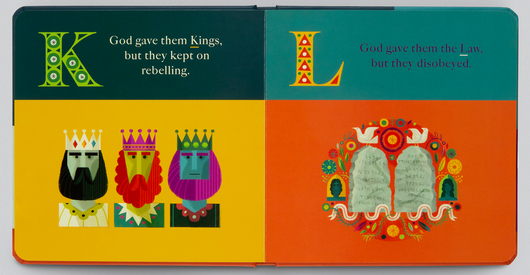
On the whole, the art was stunning. It’s not at all the typical board book art. It’s not cute or bubbly. I think it’s pretty eye-catching, and striking. I’m not sure exactly how the Board Book-Set would appreciate it, but maybe just because it doesn’t look like every other book they get, they’ll be interested?

Or maybe it’ll be the colors that get them. I’m not sure.

Thankfully, there are examples on Crossway’s site so I don’t have to try to describe this. Here are the K and L pages so you can get an idea:
Biggest story K - L

How is it to Read Aloud?

It’s fine—there are no rhymes, there’s no consistent rhythm or pattern or anything like that. This book isn’t about that kind of thing—it’s simple and straightforward text. Easy to read and easy to understand.

I Have a Problem

The Reformed Confessions and Catechisms are pretty clear—no pictures of members of the Godhead. But, this book contains some images of Jesus. I realize that DeYoung argues against this interpretation in his book on the Heidelberg Catechism (a pretty good, but not great book), so at least he’s consistent.

Given that many of the readers (or at least buyers) of this book are going to be from the Reformed or Presbyterian traditions. Why risk offending them?

So, what did I think about The Biggest Story ABC?

The way DeYoung told the story of redemptive history was great. He had to get inventive (a less charitable take might say that he really stretched things, but he managed) with the way he used a couple of letters to stick with the storyline, but it was really a fantastic job.

The text is great, and I’d eagerly recommend the book based on it. But a board book/picture book for kids is never just about the text. It’s also about the pictures and the way the book looks. And because of the Second Commandment violations, I just can’t recommend it.

Grandpappy Icon

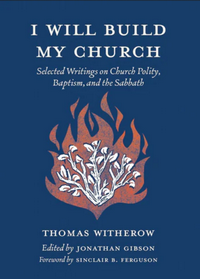
I Will Build My Church: Selected Writings on Church Polity, Baptism, and the Sabbath by Thomas Witherow, Edited by Jonathan Gibson: Presbyterianism 101

I Will Build My ChurchI Will Build My Church:
Selected Writings on
Church Polity, Baptism, and
the Sabbath

by Thomas Witherow, Edited by Jonathan Gibson

DETAILS:
Publisher: Westminster Seminary Press
Publication Date: January 29, 2022
Format: Hardcover
Length: 251 pg.
Read Date: July 2-16, 2023

What’s I Will Build My Church About?

Thomas Witherow was an Irish Presbyterian pastor in the mid-Nineteenth Century, who later became a professor. Over the course of his ministry–in part thanks to the revivals of the time–he saw more competition in Ireland to the Presbyterian Church from a variety of Protestant groups. He also saw that too many Presbyterian members or ministers couldn’t define or defend the distinctives–many seeing them as a tradition more than a conviction.

One of Witherow’s driving missions was to help the Presbyterians he taught amongst to see that their distinctives were serious and defensible. He also wanted to explain them to the other Protestants and possibly convince them to at least consider them.

This is a collection of three of his works along those lines–about ecclesiology, sacraments, and the Sabbath–slightly edited for modern standards. Long sentences turned in to multiple, spelling updates, and so on–and the Bible citations modified to be the ESV. That sort of thing.

A Prince of Irish Presbyterianism

Before we get into the works, the editor, Jonathan Gibson, provides an almost 80-page biography of Witherow–sketching his education, family life, pastoral work, writing, and professorial work.

I just picked this up to read Witherow, and hadn’t counted on learning anything about him and it was a great bonus for me to get more context for his work both in terms of his own life and the Church situation he found himself in.

The Apostolic Church

Odds are, if you know anything that Witherow wrote, it’s this short book (in this edition, it’s about seventy pages long). The subtitle to this is “Which is it? – An Inquiry at the Oracles of God as to Whether Any Existing Form of Church Government is of Divine Right.” Which is a pretty good summary of the work.

Witherow’s convinced that too many people (no matter their preferred ecclesiology) see it as a matter of convenience, taste, and traition. He cannot abide by that kind of thinking–convinced that if the Church cannot find Scriptural endorsement of a way of doing something, it ought to be abandonded.

Witherow starts this work by listing and explaining six principles he sees in the Apostolic Church then he looks at the three forms of church government–prelacy (whether in Roman Catholic or Anglican form), congregational, and presbyterian–to see which, if any, does the best job of embodying those principles.

Scriptural Baptism

This is a slightly shorter book on the subject of Baptism–tackling (in turn) the mode of baptism and the subjects of it.

He deals with the question of mode pretty quickly–first by Scriptural evidence and then moving to practical considerations.

Then he moves on to the issue of the subjects of baptism–from the outset, he’s careful not to let prominent Irish Baptists set the terms of the debate, instead he reframes the typical way these conversations went in his circles. Rather than starting with the positions of the baptists and then responding to them, he sets out a few points he wants baptists to answer–and then shows how (from his vantage point, anyway) they cannot.

The Sabbath

The book on the Lord’s Day/Sabbath is more pointed than the others. Witherow takes a pretty traditional path–defining moral and ceremonial law at the outset. Then he addresses Christ’s attitude toward and teaching about the Sabbath before getting into the abrogation of the ceremonial law and the practice of the New Testament church.

Then Witherow addresses a move to adjust the equivalent of the Blue Laws there to make Sunday a day for amusement (I’m a little vague on the details and it’d take to long to explain my guesses). Basically, where you could go pay for theaters and shopping and the like. Witherow follows his explanation for the Christian observance of the Lord’s Day with a warning about what will happen if the laws are changed–how it will negatively impact workers, businesses, and the economy–in addition to the church.

Say what you will about Blue Laws (and I have plenty to say in other contexts), Witherow was spot-on with his predictions.

So, what did I think about I Will Build My Church?

I spent a lot of time with The Apostolic Church almost twenty years ago–I used it and a paper by him to compare with some contemporary American ecclesiologies. I haven’t read it since for a variety of reasons (mostly overkill), but man, it was fun to come back to it.

I appreciate the footnotes Gibson added, but I’m not so sure that we needed the ESV update. I don’t know what it gained, outside of maybe making it more accessible for contemporary readers. But those who are going to need an ESV rather than the AV for translation are really going to be put off by Witherow’s insistence to call the baptists Anabaptists throughout the second book. He’s definitely not a 21st century writer🙂

I enjoyed all these books–and Gibson’s biography was a great bonus. The photographs of Witherow and his family were unexpected, too.

Sharp, concise writing, with a little bit of punch (but not quarrelsome). This is a great introduction/tutorial on Presbyterian Church distinctives. Highly recommended.


5 Stars

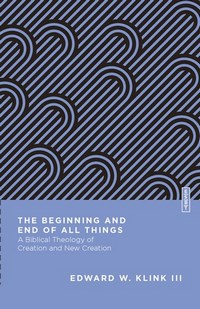
The Beginning and End of All Things: A Biblical Theology of Creation and New Creation by Edward W. Klink III: This Is Our Father’s World

The Beginning and End of All ThingsThe Beginning and End of All Things:
A Biblical Theology of Creation and New Creation

by Edward W. Klink III

DETAILS:
Series: Essential Studies in Biblical Theology
Publisher: IVP Academic
Publication Date: May 30, 2023
Format: Paperback
Length: 172 pg.
Read Date: June 4-25, 2023
Buy from Bookshop.org Support Indie Bookstores

While there is some biblical wiggle room for us to disagree about how God created the world, we better not misunderstand who God is and who humanity was designed to be, or what God intended to do in the world, ultimately through the work and person Jesus Christ, or why God made the world in a way that explains my life and purpose in the world. In short, if we misread the beginning of the story, we potentially misread the rest of the story. And since this story is about the Creator and his creation, the stakes could not be higher.

The Beginning of All Things (Mostly of the Book)

Every time the term creation or even doctrine of creation was used, the Christians in my church were thinking of origins. It was as if the only category the term creation would elicit in their minds was the beginning of time when the world came into existence. The only question was about what happened in the beginning, and even then, the primary focus was clearly on the heavily debated “six days” The rest of the history of the world, the physical reality in which we live our lives, or even the purposes for which the world was created were not even part of the equation. It seemed to me to be like a man who, when asked about his marriage, was unable to think of anything else besides his wedding ceremony. His love and commitment to his wife, the purpose and design of marriage, and even the current state of his marriage and the family it produced were viewed as distinct or unrelated. My point is not to deny the importance of the first six days of creation but to make important every created day.

Klink starts out by stressing that a doctrine of creation is not about what the first two chapters of Genesis mean—it’s not about how God made the Earth. Or at least, it’s not just about that. It’s about why God made the Earth—what was His purpose in creating, what’s His goal for the creation, and so on. It’s about the goodness of the creation and how we are to enjoy and preserve it. It’s ultimately about the new creation, what is going to happen on that Last Day when creation is renewed, restored, and recreated.

With that in mind, Klink then looks at how these (and related) ideas and themes are expressed throughout the Biblical narrative, from the Fall through Christ’s ministry on Earth, and on through the time up to the End.

The End of All Things (and of the Book)

…Creation was good but not yet finished to perfection. Again, quoting Gunton: “As created, it is perfect, because it is God’s project. . . . But it is not pertest in the sense of completion. It has somewhere to go” To be clear, this is eschatology. Not in the sense of the last few years of human history (the end times) but the entirety of human history. Eschatology, therefore, is referring to God’s goal or purpose for creation, his ordained intention and the plot of the world. Thus, eschatology 1s the aim of trajectory of all things, the goal of all things. Our argument in this chapter—and the book as a whole has been that the biblical stary of creation and new creation, which includes redemption, is a biblical theology of the goal of all things. The use of etymology for defining eschatology (the study of the end times) should be banned by royal decree! Eschatology ts only tangentially defined by interpretive questions regarding a millennium, let alone a rapture. Simply stated, eschatology is referring to the intentions of God for the world, even the will of God. Eschatology, which extends from creation to new creation, is the goal of all things.

From the Introduction through the first nine chapters, Klink has kept one eye on the Eschaton (and kept the reader looking for it, too). Chapter 10, Creation’s Consummation, focuses on that. He shows how all those earlier themes bring us to this point, and Creation and Redemption will shape the coming New Creation. This chapter is worth at least half of the purchase price of the book. It’s a great way of tying the book together and reminding the reader what our focus should be during our pilgrimage on Earth.

He follows this with a concluding few pages of Pastoral Reflections. He talks about the importance of thinking—and having pastors getting their flocks to consider—about creation in a fuller sense than just the “beginnings.” He also tries to show ways that the doctrine of creation should be applied and worked out in the believer’s life, what it should look like lived out. It’s a brief few pages, but very powerful.

So, what did I think about The Beginning and End of All Things?

…the Christian life is not merely a spiritual life but a physical life—a life lived in creation and in relation to the Creator. If Christians are united to their Creator in Christ and through the Spirit, then they should be the most aware of their physical existence and createdness. A few examples might be helpful. First, Christians should have a robust theory and practice of the human body and reflect God’s concern for its purpose and care. Second, Christians should be both aware of and concerned for physical creation, especially the earth, which is a gift from God that he both created and will re-create.”’ Both of these topics, however, have been minimized or manipulated by too many Christians for too long. This is not only detrimental to the church’s witness but also to the fullness of its life. In a world filled with creatures who neither know or submit to their Creator, Christians should reflect in word and deed the beauty, awe, and affection of the mystery of creation that is reflective of the new life they have been given by their Creator and Redeemer. Psalm 104 (especially Ps 104:24, 30, 33) provides us with a lens for our appreciation of the physical world and, therefore, the honor and praise due to our Creator.

When Klink started by saying that a doctrine of creation needs to be about more than what happened in Genesis 1-2, he piqued my interest and got me on his side immediately. The Introduction and Chapter 1 were just fantastic.

The “meat” of the book—Chapter 2, Creation’s Curse, through Chapter 8, Creation’s Commission—is refreshing both in outlook and insight. Any quibbles I had with Klink did show up in these chapters but were only in some of the ways he described ideas or on minor points (ultimately due to differences in confessional outlooks).

But as I indicated above, the last chapter and the pastoral reflections were as good (probably better) as the beginning of the book. At least a third of the notes I took about the whole book were on these 24 pages.

On the whole, this book is warm and pastoral, reminding the believer that the world we live in was created very good, and while it groans for the new creation, it remains full of good gifts from our Father for us to use, enjoy, and glorify Him with. I heartily encourage you to pick this up and read it.


4 Stars

This post contains an affiliate link. If you purchase from it, I will get a small commission at no additional cost to you. As always, the opinions expressed are my own.
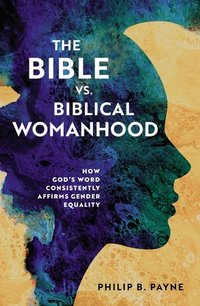
The Bible vs. Biblical Womanhood: How God’s Word Consistently Affirms Gender Equality by Philip Barton Payne: Almost thou persuadest me…

The Bible vs. Biblical WomanhoodThe Bible vs. Biblical Womanhood:
How God’s Word Consistently Affirms Gender Equality

by Philip Barton Payne

DETAILS:
Publisher: Zondervan
Publication Date: April 04, 2023
Format: Paperback
Length: 183 pg.
Read Date: May 14-29, 2023
Buy from Bookshop.org Support Indie Bookstores

The Back of the Book Says

A biblical defense of egalitarianism

In The Bible vs. Biblical Womanhood, New Testament scholar Philip B. Payne shows how Scripture affirms gender equality in the church and in the home. This issue is important because it affects the freedom of Christians to proclaim the gospel and advance God’s kingdom. Payne carefully examines each Bible passage alleged to teach gender hierarchy and demonstrates that the Bible does not endorse gender hierarchy but instead emphasizes:

  • The Holy Spirit gifting all believers for ministry
  • The oneness of the body of Christ (the church) and the priesthood of all believers
  • Humility, service, and mutual submission required of all believers

Payne concludes each chapter by defending his position by providing detailed answers to common objections.

The Bible vs. Biblical Womanhood is for those struggling to reconcile the Bible’s seemingly contradictory teachings about man and woman. Readers will come away with greater confidence in the reliability of Scripture’s consistent, harmonious message of gender equality.

What’s This Look Like?

Essentially Payne looks at 11 Biblical passages that are frequently used to support complementarian/patriarchal positions in the church. He critiques those interpretations and offers his own. The critical portions of each chapter are smaller than the positive portions, I should stress. Payne’s focus is on explaining and defending his interpretations.

Some Problems

I’m not evaluating Payne’s arguments or positions—that’s not what this blog is about. But as a reader, there were a few flags raised that made it hard for me to take the work as seriously as I might otherwise.

So, I got a little uneasy when in one of the introductions, Payne referred to his “discoveries” in his studies of the Biblical texts. At this stage of Church History discoveries are pretty suspect.

What made me really suspicious of Payne’s work was the way he’d slip between Bible translations frequently—essentially you get the idea he cherry-picked translations to support his arguments for him, rather than sticking with one translation (or translating each passage himself) and then explaining his issues with a word choice or two—on the whole, I find that a lot more convincing.

Two of his most pivotal chapters utilize a lot of textual criticism prior to his interpretation of the text—Payne does a thorough job of explaining that criticism and then constructs his argument. I don’t know enough to evaluate his critical work there—I find both arguments plausible, but his positions rely so heavily on them that multiple chapters would crumble without them. I don’t know if his positions can stand without him being right on these points.

I’d love to read good scholarly reactions to his textual critical arguments, I wonder how much water they hold.

So, what did I think about The Bible vs. Biblical Womanhood?

I really liked a lot of the book—and found myself agreeing with most of his critiques of complementarianism/patriarchal positions. I was able to appreciate many—maybe most—of his positive arguments, I don’t think I was won over totally by any, but I didn’t expect that to happen off of one popular-level book (nor was I looking for it).

The book was well-written, engaging, and clear. Payne takes complicated (and almost convoluted) ideas and expresses them in a way that anyone can get their hands around. And even if you’re not convinced—but I can see him convincing those who are looking for it—you will understand the positions, and see a lot of things that look easy are a lot murkier, and require wisdom to work through.

I do think this is worth the time to read and think through, I’m glad I did. I would read other things by Payne in the future. I’d love to hear what other people think.


3 Stars
This post contains an affiliate link. If you purchase from it, I will get a small commission at no additional cost to you. As always, the opinions expressed are my own.

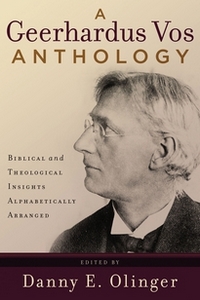
A Geerhardus Vos Anthology edited by Danny E. Olinger: A Collection of Theological Gems

A Geerhardus Vos AnthologyA Geerhardus Vos Anthology:
Biblical and Theological
Insights Alphabetically Arranged

edited by Danny E. Olinger

DETAILS:
Publisher: P & R Publishing
Publication Date: March 11, 2005
Format: Paperback
Length: 363
Read Date: January 1-June 25, 2023
Buy from Bookshop.org Support Indie Bookstores

What’s A Geerhardus Vos Anthology About?

Danny Olinger literally wrote the book on Geerhardus Vos,* but he’s been studying him for a lot longer than that. As a part of his own personal study, he’s taken notes—he’s written quotations that meant a lot to him, seemed important, and so on—basically (as he put it in the Preface) “the best” of what he was reading. He built upon this foundation to assemble this anthology.

* 2018’s Geerhardus Vos: Reformed Biblical Theologian, Confessional Presbyterian.

Arranged topically (and those topics are arranged alphabetically), this is a collection of excerpts of varying lengths (all pretty short) from his published and published writings—the crème de la crème of one of the best of the 20th Century.

There’s also a great introduction by Olinger outlining Vos’ importance and work.

So, what did I think about A Geerhardus Vos Anthology?

My guess is that this book isn’t meant to be a devotional read, it’s a resource—a reference book. A quick way to find some of Vos’ insights and then know what work to consult for more. That’s a better use for it, for sure. But I liked the way I read it.

So I took this as a letter at a time (although some letter’s entries were long enough that I split them in two). It made for a nice few minutes once a week to think about a variety of bite-sized nuggets of Biblical Theology.

Some were pithy, some took a little chewing to get through—all were insightful and useful (although some took some thinking to figure out how they were useful). Most of all, each one made me curious about the work they were excerpted from.

One aspect (I’m not sure if it’s a pro or a con) of this book being a collection of short (1 sentence to 4 paragraphs or so) thoughts is that some jumped out at me more than others, I’m pretty sure that I could restart it today and different things would grab my attention.

This is a great way to get an easy-to-read introduction to Vos. Grace and Glory might be better—but this is nothing to sneeze at.


5 Stars

This post contains an affiliate link. If you purchase from it, I will get a small commission at no additional cost to you. As always, the opinions expressed are my own.
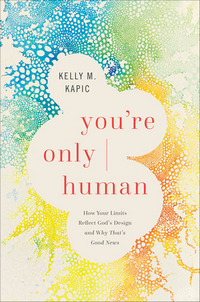
You’re Only Human by Kelly M. Kapic: The Reality and Comfort of Creaturely Finitude

I don’t have time to re-read this book today, so I’m going to read this (and I might as well repost it while I’m at it, right?). Am really feeling the whole “creaturely finitude” thing these last few days—see that opening quotation—and need the reminder that there’s a comfort in it.


You're Only HumanYou’re Only Human:
How Your Limits Reflect
God’s Design and Why
That’s Good News

by Kelly M. Kapic

DETAILS:
Publisher: Brazos Press
Publication Date: January 17, 2022
Format: Hardcover
Length: 228
Read Date: January 23-30, 2022
Support Independent Bookstores - Visit IndieBound.org

What’s You’re Only Human About?

Creaturely finitude is less an idea we discover than a reality we run into.

When we do run into this idea (as we all will), we frequently interpret that reality incorrectly—not recognizing that our limits, our finitude, as part of who we are as creatures (or forgetting that if we do recognize that). As such we can push against them in unhealthy ways, ignore them to our own peril, or see them as the result of sin, not the result of creation.

What Kapic sets out to do is to remind us that part of being a creature is having limits. When we remember that, we can live as we ought—in dependence on the God who made us that way. As he puts it,

Many of us fail to understand that our limitations are a gift from God, and therefore good. This produces in us the burden of trying to be something we are not and cannot be.

Particularity and Limits

Kapic reminds his readers that the doctrine of Creation shouldn’t just be limited to our understanding of Genesis 1-2, but to reflecting on the design, abilities, and limitations of humanity. These limitations would be in place regardless of our fallen state—sure, the fall twists those limitations—but they’re part of the original state.

In the first part of the book, Kapic lays out the theology necessary for this—and ties it to the Gospel, lest we get distracted from what matters most.

Healthy Dependence

The second part of the book talks about the creaturely dependence that flows from this—we aren’t capable of everything we need or want to accomplish, but He is. This is part of created humanity, and it takes on new meaning in Christ.

Tied to this idea of dependence is humility.

Humility consists in a recognition of (and a rejoicing in) the good limitations that God has given us; it is not a regrettable necessity, nor simply a later addition responding to sinful disorders. Even if there had never been a fall into sin, humility would still have the essential character of gratitude for our dependence on God and for his faithful supply of our need. Humility is built on the Creator/creature distinction; its response to sin emphasizes our further need for God to restore us to the fellowship that he always intended us to inhabit.

Kapic spends a lot of time drawing out the implications of this—in light of both Creation and Redemption.

Lament and Gratitude

We can express our humility and dependence in both our lament and our gratitude—this part of the application section of the book was probably the most rewarding to me. Kapic makes the case that they’re mirror concepts rooted in humility and dependence on our Creator and Redeemer, and both ought to be embraced by the believer.

So, what did I think about You’re Only Human?

It took me over a month to be mostly satisfied with what I wanted to say about this book—an example of creaturely finitude, come to think of it. I struggled over this—really wanting to get into all of his ideas and arguments. But that’s not what this blog is for (thankfully, or I’d be working on this post for another six months, minimum). I’ve trimmed this post a few times while putting it together, in fact, because I kept getting in the weeds.

You’re Only Human is the kind of book that I really don’t think I got a handle on after one read—I’m planning on a re-read this summer, in fact. I’ve got a general sense of it, but I want to return to it having a bird’s-eye view, so I can appreciate more of the details.

I don’t know if this is going to hit every reader like it did me—very likely it won’t—but this is just what I needed. Still, I think what Kapic has to say will resonate with and be helpful for many.


4 1/2 Stars

This post contains an affiliate link. If you purchase from it, I will get a small commission at no additional cost to you. As always, opinions are my own.

PUB DAY REPOST: Grandpappy’s Corner: God, Right Here: Meeting God in the Changing Seasons by Kara Lawler, Jennie Poh (Illustrator): A Little Dose of Natural Revelation

Grandpappy's Corner Logo

God, Right Here:
Meeting God in the Changing Seasons

by Kara Lawler, Jennie Poh (Illustrator)

DETAILS:
Publisher: IVP Kids
Publication Date: June 20, 2023
Format: eARC
Length: 32 pg.
Read Date: May 7, 2023


What’s God, Right Here About?

God, right here.
God, right there.
God’s handiwork is everywhere.

With that as a starting point, Lawler takes the reader (and the read-to) on a tour of nature through a year’s worth of seasons. The point isn’t to learn about seasons or weather, or anything, but to see how God’s nature (flora, fauna, weather) reveals His work and care.

Let’s Talk about the Art for a Minute

It’s warm and friendly. Even the scenes depicting a chilly fall and snowy winter make you feel cozy and toasty. There’s a gentleness to the illustrations, too.

I’m failing at describing the art—as usual. Jennie Pho’s Instagram has some really good samples (including a Lucy and Mr. Tumnus drawing).

It’s not technically part of the art, but it’s part of the visual impact of the book, so I’ll talk about it here. The typesetting, or whatever you’re supposed to call it (it’d be lettering comic books), is excellent. There’s a variety of colors emphasizing words to match the theme of the page, it flows all over the page to follow the illustrations and add some movement. It’s eye-catching and serves to augment the art.

How is it to Read Aloud?

This is not the kind of book you have fun with, it’s not a fun read. It’s one to read when you’re trying to settle down—or better yet, have already settled down and want to snuggle up and get comfy.

It’s hard to think of toddlers as thoughtful but this is the kind of book for that kind of time.

It’s one of those where you will point to pictures as you read, and then go off on tangents talking about the ideas in the book. The book itself would take almost no time to read, but I can see this as the sort of thing the Grandcritter and I will linger over as we go through it.

* That’s a horrible stereotype, and I should be ashamed of it. But I know too many of them.

So, what did I think about God, Right Here?

This is a nice and pleasant book. Pleasant is the best word to describe this, really (and now that I’ve used it, my brain is stuck and I won’t be able to use another adjective for the rest of the post).

I feel like I should have another few paragraphs in me, but I don’t. I’ve said everything I can find to say about it (and I think I’ve used 2x the words that the book does). This is a pleasant read that’ll be good to use to talk and quiet down with.

Disclaimer: I received this eARC from InterVarsity Press via NetGalley in exchange for this post, and my honest opinion—thanks to both for this opportunity.


3 Stars

This post contains an affiliate link. If you purchase from it, I will get a small commission at no additional cost to you. As always, the opinions expressed are my own.

Grandpappy Icon

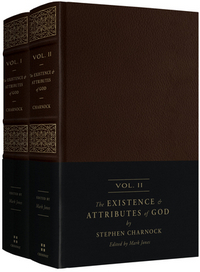
In Media Res: The Existence and Attributes of God by Shephen Charnock, edited by Mark Jones

The Existence and Attributes of GodThe Existence and Attributes of God: Updated and Unabridged

by Stephen Charnock, edited by Mark Jones

DETAILS:
Publisher: Crossway
Publication Date: October 18, 2022
Format: Hardcover
Length: 1,615 pg.
Buy from Bookshop.org Support Indie Bookstores

What’s The Existence and Attributes of God?

Crossway has given the world a gift by publishing an unabridged edition of Charnock’s classic work on God’s attributes. Over 14 Discourses (that really could be published individually as books), Charnock describes some of God’s attributes. He starts with almost 100 pages on God’s existence—mostly drawing on the so-called “Classical” proofs, then he moves on to eleven attributes of God, with two bonus discourses on related practical matters.

Some (but not all) of the language has been updated (there’ve been some footnotes added to help explain the bits that haven’t been), punctuation has been modernized, as have paragraph sizes (maybe sentence length, too). Jones cleaned up some of the section numbers and whatnot, too.

Jones has also provided footnotes showing more of Charnock’s citations than the original manuscripts did, demonstrating the wide range of sources he drew from. The nicest addition to this edition from Jones, however, (unless you’re a student or someone wanting to plunge deep into his citations) are the summaries of each discourse, helping the reader to know what they’re in for and what to keep an eye out for.

So, What Am I Thinking About The Existence and Attributes of God?

This is just a great work—it’s not the easiest read in the world, but it’s not that bad, either. Charnock’s on the accessible end of the Puritan spectrum. (Jones’ editorial work no doubt helped a bit with that).

I wasn’t crazy about the two practical discourses—Discourse 2: On Practical Atheism and Discourse 4: On Spiritual Worship. Which were offshoots of Discourse 1: On God’s Existence and Discourse 3: On God’s Being a Spirit. Not that there was anything wrong with them or that I didn’t benefit from the experience of reading them—I absolutely did. But they’re not what I came for, I was reading for explorations of God’s attributes and/or existence. Now, if each discourse had a practical follow-up, I wouldn’t be writing this paragraph. But these two outliers just seemed out of place.

Charnock does a fantastic job explaining these attributes. I’ve read a handful of works (largely shaped by him) in the last few years on these ideas—and I still learned something from each chapter, rather somethings.

Obviously, this isn’t a definitive, exhaustive work—it cannot be (and would be blasphemous to suggest otherwise). But when you’re in the middle of a chapter, it’d be easy to think it is. Not just because of the depth he goes into on each topic, but the angles he approaches it from. In the middle of the Discourse on God’s Knowledge, I was astounded, for example, by how many different ways he talked about it. Now that I’m looking back over the whole first volume, the chapter on God’s eternity is the one that stands out as the high point.

Ask me in a month, and I’m sure I’ll say something else.

So far, I’ve read about God’s Existence (and practical atheism), God’s Being a Spirit (and spiritual worship), God’s Eternity, Immutability, Omnipresence, and Knowledge. Coming up are discourses on His Wisdom, Power, Holiness, Goodness, Dominion, and Patience.

I’m looking forward to diving in. It’s easy to see why this work has stood the test of time and can’t imagine anything in the 21st Century topping it (maybe someone will get their act together in the 22nd).

This post contains an affiliate link. If you purchase from it, I will get a small commission at no additional cost to you. As always, the opinions expressed are my own.
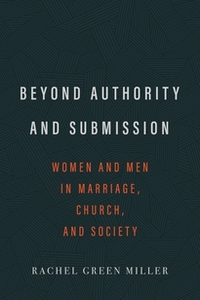
REPOSTING JUST CUZ: Beyond Authority and Submission by Rachel Green Miller: Starting-Point for a Discussion the Conservative Church Should’ve Already Had

originally posted 10/27/19
I feel compelled to repeat the disclaimer I threw on a book last week—and I should probably throw this on a lot of theologically-oriented works. This is another one of those works that I feel really unqualified to discuss. So, know that this is from the perspective of an opinionated and semi-(formally)educated reader and occasional armchair theologian. Not the reflections of an ordained minister or professional theologian.

Beyond Authority and Submission

Beyond Authority and Submission: Women and Men in Marriage, Church, and Society

by Rachel Green Miller

Paperback, 259 pg.
P&R Publishing, 2019

Read: September 22-29, 2019

Contrary to what popular culture states, women and men are not from different planets. We’re complementarymore alike than different. Without denying the differences, we need to stop defining women as the polar opposite of men and vice versa. Such divisive definitions create and encourage unnecessary conflict and set up unrealistic and unbiblical expectations for how women and men should behave.

Paul frequently refers to fellow believersboth men and womenas co-laborers. The word he uses, sunergos, means “a companion in work.” As we will see in the next sections, co-laborer captures the sense of what we were created to be and what we are called to be in Christ.

I can’t get where this is controversialI’m definitely not the kind of guy to say “in this day and age” when it comes to this kind of thing, so please don’t hear me saying that. In any day and age where someone’s thinking is shaped more by the Bible than it is by the surrounding culture (either of the moment or by some version of a historical point of view). I don’t get where this is controversial. Sadly, it is. But as long as that’s Rachel Green Miller’s controlling thought (and I firmly believe it is), I’m on board with this book.

So I should say at the outset, I’ve appreciated Miller’s writing for years now and am very sympathetic to Miller’s general perspective on the issues she tackles in the book. I came into it expecting a useful and beneficial book for those wading through issues relating to the relation of the sexes to each other from a Christian worldviewand I got it. I didn’t expect a book to settle arguments, or a panacea to problems churches/ministries/individuals are having on this frontwhich is good, because she doesn’t try.

After setting the stage for what she wants to discuss in the book, Miller goes on a brief historical survey of views of men and women in the Greco-Roman World and Victorian Era (which she posits have more of an influence on conservative Christianity than we realize), and then she looks at First, Second and Third-Wave Feminism and how the Church has reacted to each. I think her book would be better served if this section were expanded and depended less on secondary sourcesbut given space limitations, I can live with it. From there she explores Biblical teaching on the Nature of Men and Women, how the two should relate in marriage, the Church, and society. In these chapters, she tries to show how current understandings are (too) frequently largely molded by a reaction to a political movement or values imported from a historical context (that needed Biblical reform). Each section here could be a book unto itselfand maybe should bebut Miller’s treatment is a good starting point for discussion.

If you see the book as thata starting point for conversation, with a lot of very helpful things to bear in mind, this is a very commendable and worthwhile read. If you’re thinking of it as definitive in any sense of the word (and I think Miller would warn against that herself), the book will not come close to living up to expectations.

Miller critiques both the foundation of the worldviews she disagrees withancient pagan cultures or recent/contemporary naturalistic views. Latter feminism, as well as godless patriarchal views, are her targetsas are the ways those presuppositions or their expressions are imported into the Church.

Where I think this book stumbles is in the positive case for what she believes. Miller is very clear on what she’s not trying to say (though many aren’t paying attention to this), she’s also clear on what she disagrees with (no one would deny this)but she’s too unclear about what she’d like people to think. I think I just did the same thing hereso I’m going to resort to metaphor. Most of what I talk about here is fiction, so I’m going to employ that for a minute. If Andy Carpenter, Eddie Flynn and Mickey Haller (various fictional defense attorneys) have taught me anything, it’s that while it’s all well and good for a defense attorney to poke holes in a prosecution’s case, what will really turn a jury around is a good alternative suspect, someone to blame, to hold accountable for whatever crime is in question. Miller’s done a great job in showing problems with the prosecution’s case, and we know she doesn’t want us to find her client guiltybut I don’t have anyone else to hold accountable/punish for the crime.

Now, the problems with that metaphor are plain enough, but I think my point is clear (clearer than I could’ve made it earlier). For what it’s worth, I think she’s dead to rights on what she’s not wanting to say, and by and large, she’s right on what she’s critiquing. I just wish I had a clearer notion of what she wants readers to think in a positive sense. Also, while I agree that we need to do more than talk about the relationship between the sexes in terms other than “authority” and “submission” we still need to have clear ideas about how those roles should function (if we’re going to understand the Bible), and Miller should have addressed that.

This book has, regrettablyyet not at all unsurprisinglykicked up a hornet’s nest of controversy. Sadly, it seems that most of the reviewers have dug into two hard-and-fast camps: the “this is a load of drivel that Miller and P&R should be ashamed about” camp on the one hand, and the “this is the greatest thing since the Institutes” camp on the other. Neither is even close to right. This is a good book (with clear flaws) and deserves to have its good points, flaws, and pushes to conversation discussed without vitriol. Sadly, I can’t see that happening, which is probably why books like this are needed.

Honestly, if we can’t deal charitably with each other on this kind of thing, how can we expect a lost and dying world to listen to us at all?

I know that more than a few reviewers have taken issue with the way that Miller treats some of the sources she’s citing and critiquingand there were a couple of times I wondered if she and I had read the same article/chapter/book, because I didn’t come away from it with the same ideas she did. At timesand more often than should be acceptableshe comes across as saying that “Writer X is problematic on these issues and therefore everything they’ve ever said about them is wrong.” I don’t think that’s her intention, but I do think that she gives that impression. But on the whole, I think there’s a lot of straining at gnats by her critics when it comes to her treatment of sources.

I think I’ve lost the thread a bit here. Such is the nature of the tempest in the conservative Christian teapot, that I can’t really think about the content of the book without thinking about the reaction to it. I wish I’d found/made the time to write about this book before I read about it. That’s on me.

Let me try to get back on track. I liked this book. It made me re-examine a lotand will probably continue to do so as I mull on what she has to say (and I’ll probably find a lot to disagree with ultimately, and a lot to agree withas it ought to be). How much of what I think about how women and men should interact with each other (in the home, Church and society) comes from Scripture and how much from the culture? How much of what I think it means to be a man or what it means to be a woman has more to do with Ancient Greek culture or the Victorians? (more than it should). The core of the message should be heard and weighed, and hopefully, after the hubbub has died down a bit, we can start to deal with it.

The Bible testifies to our unity. We don’t have one Bible for men and a different one for women. The armor of God isn’t just for men, and the fruit of the spirit doesn’t apply only to women. No, we have one Bible for us all, and most of the Bible’s commands apply to all of usmale or female, old or young, rich or poor, servant or master.

It’s important to emphasize that when God made humanity in His image, He did so by making a man and a woman. Women are as much made in the image of God as men are. Men don’t have more of God’s image because of their masculinity. We are equal in worth, but we’re not the same. We are different, but we are also interdependent. We were created to complement each other, and we need each other.

Tolle Lege.


4 Stars

Page 12 of 32

Powered by WordPress & Theme by Anders Norén