Category: Theology/Christian Living Page 13 of 32

REPOSTING JUST CUZ: Beyond Authority and Submission by Rachel Green Miller: Starting-Point for a Discussion the Conservative Church Should’ve Already Had

originally posted 10/27/19
I feel compelled to repeat the disclaimer I threw on a book last week—and I should probably throw this on a lot of theologically-oriented works. This is another one of those works that I feel really unqualified to discuss. So, know that this is from the perspective of an opinionated and semi-(formally)educated reader and occasional armchair theologian. Not the reflections of an ordained minister or professional theologian.
Beyond Authority and Submission

Beyond Authority and Submission: Women and Men in Marriage, Church, and Society

by Rachel Green Miller

Paperback, 259 pg.
P&R Publishing, 2019

Read: September 22-29, 2019

Contrary to what popular culture states, women and men are not from different planets. We’re complementarymore alike than different. Without denying the differences, we need to stop defining women as the polar opposite of men and vice versa. Such divisive definitions create and encourage unnecessary conflict and set up unrealistic and unbiblical expectations for how women and men should behave.

Paul frequently refers to fellow believersboth men and womenas co-laborers. The word he uses, sunergos, means “a companion in work.” As we will see in the next sections, co-laborer captures the sense of what we were created to be and what we are called to be in Christ.

I can’t get where this is controversialI’m definitely not the kind of guy to say “in this day and age” when it comes to this kind of thing, so please don’t hear me saying that. In any day and age where someone’s thinking is shaped more by the Bible than it is by the surrounding culture (either of the moment or by some version of a historical point of view). I don’t get where this is controversial. Sadly, it is. But as long as that’s Rachel Green Miller’s controlling thought (and I firmly believe it is), I’m on board with this book.

So I should say at the outset, I’ve appreciated Miller’s writing for years now and am very sympathetic to Miller’s general perspective on the issues she tackles in the book. I came into it expecting a useful and beneficial book for those wading through issues relating to the relation of the sexes to each other from a Christian worldviewand I got it. I didn’t expect a book to settle arguments, or a panacea to problems churches/ministries/individuals are having on this frontwhich is good, because she doesn’t try.

After setting the stage for what she wants to discuss in the book, Miller goes on a brief historical survey of views of men and women in the Greco-Roman World and Victorian Era (which she posits have more of an influence on conservative Christianity than we realize), and then she looks at First, Second and Third-Wave Feminism and how the Church has reacted to each. I think her book would be better served if this section were expanded and depended less on secondary sourcesbut given space limitations, I can live with it. From there she explores Biblical teaching on the Nature of Men and Women, how the two should relate in marriage, the Church, and society. In these chapters, she tries to show how current understandings are (too) frequently largely molded by a reaction to a political movement or values imported from a historical context (that needed Biblical reform). Each section here could be a book unto itselfand maybe should bebut Miller’s treatment is a good starting point for discussion.

If you see the book as thata starting point for conversation, with a lot of very helpful things to bear in mind, this is a very commendable and worthwhile read. If you’re thinking of it as definitive in any sense of the word (and I think Miller would warn against that herself), the book will not come close to living up to expectations.

Miller critiques both the foundation of the worldviews she disagrees withancient pagan cultures or recent/contemporary naturalistic views. Latter feminism, as well as godless patriarchal views, are her targetsas are the ways those presuppositions or their expressions are imported into the Church.

Where I think this book stumbles is in the positive case for what she believes. Miller is very clear on what she’s not trying to say (though many aren’t paying attention to this), she’s also clear on what she disagrees with (no one would deny this)but she’s too unclear about what she’d like people to think. I think I just did the same thing hereso I’m going to resort to metaphor. Most of what I talk about here is fiction, so I’m going to employ that for a minute. If Andy Carpenter, Eddie Flynn and Mickey Haller (various fictional defense attorneys) have taught me anything, it’s that while it’s all well and good for a defense attorney to poke holes in a prosecution’s case, what will really turn a jury around is a good alternative suspect, someone to blame, to hold accountable for whatever crime is in question. Miller’s done a great job in showing problems with the prosecution’s case, and we know she doesn’t want us to find her client guiltybut I don’t have anyone else to hold accountable/punish for the crime.

Now, the problems with that metaphor are plain enough, but I think my point is clear (clearer than I could’ve made it earlier). For what it’s worth, I think she’s dead to rights on what she’s not wanting to say, and by and large, she’s right on what she’s critiquing. I just wish I had a clearer notion of what she wants readers to think in a positive sense. Also, while I agree that we need to do more than talk about the relationship between the sexes in terms other than “authority” and “submission” we still need to have clear ideas about how those roles should function (if we’re going to understand the Bible), and Miller should have addressed that.

This book has, regrettablyyet not at all unsurprisinglykicked up a hornet’s nest of controversy. Sadly, it seems that most of the reviewers have dug into two hard-and-fast camps: the “this is a load of drivel that Miller and P&R should be ashamed about” camp on the one hand, and the “this is the greatest thing since the Institutes” camp on the other. Neither is even close to right. This is a good book (with clear flaws) and deserves to have its good points, flaws, and pushes to conversation discussed without vitriol. Sadly, I can’t see that happening, which is probably why books like this are needed.

Honestly, if we can’t deal charitably with each other on this kind of thing, how can we expect a lost and dying world to listen to us at all?

I know that more than a few reviewers have taken issue with the way that Miller treats some of the sources she’s citing and critiquingand there were a couple of times I wondered if she and I had read the same article/chapter/book, because I didn’t come away from it with the same ideas she did. At timesand more often than should be acceptableshe comes across as saying that “Writer X is problematic on these issues and therefore everything they’ve ever said about them is wrong.” I don’t think that’s her intention, but I do think that she gives that impression. But on the whole, I think there’s a lot of straining at gnats by her critics when it comes to her treatment of sources.

I think I’ve lost the thread a bit here. Such is the nature of the tempest in the conservative Christian teapot, that I can’t really think about the content of the book without thinking about the reaction to it. I wish I’d found/made the time to write about this book before I read about it. That’s on me.

Let me try to get back on track. I liked this book. It made me re-examine a lotand will probably continue to do so as I mull on what she has to say (and I’ll probably find a lot to disagree with ultimately, and a lot to agree withas it ought to be). How much of what I think about how women and men should interact with each other (in the home, Church and society) comes from Scripture and how much from the culture? How much of what I think it means to be a man or what it means to be a woman has more to do with Ancient Greek culture or the Victorians? (more than it should). The core of the message should be heard and weighed, and hopefully, after the hubbub has died down a bit, we can start to deal with it.

The Bible testifies to our unity. We don’t have one Bible for men and a different one for women. The armor of God isn’t just for men, and the fruit of the spirit doesn’t apply only to women. No, we have one Bible for us all, and most of the Bible’s commands apply to all of usmale or female, old or young, rich or poor, servant or master.

It’s important to emphasize that when God made humanity in His image, He did so by making a man and a woman. Women are as much made in the image of God as men are. Men don’t have more of God’s image because of their masculinity. We are equal in worth, but we’re not the same. We are different, but we are also interdependent. We were created to complement each other, and we need each other.

Tolle Lege.


4 Stars

Grandpappy’s Corner: Sophie and the Heidelberg Cat by Andrew Wilson, Helena Perez Garcia (Illustrator): Sophie Gets Clarity on an Important Truth

Grandpappy's Corner Sophie and the Heidelberg Cat

Sophie and the Heidelberg Cat

by Andrew Wilson, Helena Perez Garcia (Illustrator)

DETAILS:
Publisher: Crossway
Publication Date: September 3, 2019
Format: Hardcover
Length: 32 pg.
Read Date: June 3, 2023


What’s Sophie and the Heidelberg Cat About?

Sophie has been, well, let’s be kind and say misbehaving toward her sister, and is in her bedroom crying. Outside the window, she sees the cat belonging to her neighbors, the Heidelbergs. The cat asks her what’s wrong (yes, the cat talks) and the two go for a walk to things about things.

Sophie talks about how she’s not living up to what the Bible teaches:

“Be bold like King David, be brave like Queen Esther,
and do what God tells you, no matter how scary.
Don’t fight him, like Pharaoh, or trick him, like Judas.
Be patient, like Paul, and respectful, like Mary.

The cat responds by showing her that no one she knows lives up to this standard she thinks the Bible teachers. Not just the people in town, but the people in the Bible, too.

But more than that, she doesn’t have to work for God’s acceptance—the hope she has doesn’t come from her or her efforts. The hope for Sophie is a gift from God. Because she belongs to him, he will protect and comfort her.

A Bit of Playfulness

There are a few moments where the text takes a minute to recognize how strange it is for Sophie to do what she’s doing. Which is nice enough for a book for this age—but what makes it better is Sophie’s reason to go along for it. If a talking cat tells you to do something, asks you a question, etc.—you roll with it.

In the middle of these important ideas for a child (or an adult), Wilson still finds a moment for play. I loved it.

Let’s Talk about the Art for a Minute

I really liked the art. It reminded me of something—not in a derivative way or anything—but it struck a chord in me and made me think of something from my childhood. So I was won over—but I think it’d work for people without my nebulous tie to it, too.

It’s a crisp style, there’s a little whimsy in it, and it’s attractive enough to hold the eye of a young reader/child being read to. But—and this is important—it’s not so eye-catching that it takes away the focus from what Sophie and the cat are talking about.

How is it to Read Aloud?

This isn’t a “we’re going to have fun” reading this book full of tongue-twisters or crazy lines. But it’s not dull by any means—particularly the parenthetical thoughts about talking cats. It’s a text that I reflexively read in a quiet voice. I don’t know if other adults will have the same reaction, but I sure did.

So, what did I think about Sophie and the Heidelberg Cat?

It’s easy for Christian books/media for children to slip into moralism—whether its singing produce, works about notable historical/Biblical figures, or books about getting along with siblings and people who are different from us—the type of moralism and works righteousness that plague Sophie in this story are just around the corner.

That’s nowhere to be found here—in fact, the cat shoots down that notion. I’d have recommended the book for that alone. But the Heidelberg cat* doesn’t stop there—it goes on to talk about belonging to Jesus and resting in that.

* That name’s not subtle, but why should it be?

The answer to the first question of the Heidelberg Catechism is well known in many circles—as it should be. And while the words are easy enough for a young child to get by rote, the meaning might be more difficult to grasp for a few years. Wilson’s book helps tremendously with that—and as a bonus, it’s a great reminder for any adult reading it just how simple the truth is.

I don’t remember reading a Christian children’s book that comes close to this in terms of content, and I plan on heartily recommending this to as many people as I can. Starting with you, reader.

I cannot wait to read this to the Grandcritter—almost as much for my sake as his.


5 Stars

This post contains an affiliate link. If you purchase from it, I will get a small commission at no additional cost to you. As always, the opinions expressed are my own.
Grandpappy Icon

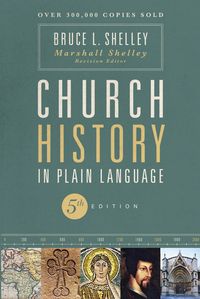
Church History in Plain Language, Fifth Edition by Bruce Shelley, Revision Editor Marshall Shelley: Gets Too Much Wrong

Church History in Plain LanguageChurch History in Plain Language, Fifth Edition

by Bruce L. Shelley, Revision Editor: Marshall Shelley

DETAILS:
Publisher: Zondervan Academic
Publication Date: July 13, 2021
Format: E-book
Length: 624 pg.
Read Date: March 27-May 23, 2023


What’s Church History in Plain Language About?

From the Publisher’s website:

Bruce Shelley’s classic history of the church brings the story of global Christianity into the twenty-first century. Like a skilled screenwriter, Shelley begins each chapter with three elements: characters, setting, plot. Taking readers from the early centuries of the church up through the modern era he tells his readers a story of actual people, in a particular situation, taking action or being acted upon, provides a window into the circumstances and historical context, and from there develops the story of a major period or theme of Christian history. Covering recent events, this book also:

  • Details the rapid growth of evangelical and Pentecostal Christianity in the southern hemisphere
  • Addresses the decline in traditional mainline denominations
  • Examines the influence of technology on the spread of the gospel
  • Discusses how Christianity intersects with other religions in countries all over the world

For this fifth edition, Marshall Shelley brought together a team of historians, historical theologians, and editors to revise and update this father’s classic text. The new edition adds important stories of the development of Christianity in Asia, India, and Africa, both in the early church as well as in the twentieth and twenty-first centuries. It also highlights the stories of women and non-Europeans who significantly influenced the development of Christianity but whose contributions are often overlooked in previous overviews of church history.

This concise book provides an easy-to-read guide to church history with intellectual substance. The new edition of Church History in Plain Language promises to set a new standard for readable church history.

Bad History

This book is just filled with errors—or questionable statements. The one that threw me for a loop was the description of the Council of Nicea, when the text cites the Nicene Creed (325) saying that this is the one that was agreed upon there. But what is cited is the Niceno-Constantinopolitan Creed (from 381) with the Filioque clause (from 1014). Humbug.

The section on Calvin was a mess. In a discussion, I summed up the section on English Puritans as, “Tell me you’ve never read the Puritans without saying you’ve never read the Puritans.” It’s one thing for Max Weber or H.L. Mencken to mischaracterize them, it’s something else for fellow believers to do it.

And the Crusades? They’re given a tiny amount of space (I’ll be generous and say 6 pages…1 percent of the total work), and the explanation of them is half-hearted at best. Given that people of several faiths (and those without faith) still use the Crusades to evaluate Christianity and the way it interacts with the rest of the world, the reader is not well served that they’re given short shrift.

And I’m no historian—I’m a hobbyist at best when it comes to a couple of time periods in Church History. If I can find problems like that—off of one reading—how many more are there? (this is not an exhaustive list of the problems I noted, just some of the more glaring ones—and ones that I’m more confident in).

The Problem of Perspective

The perspective of this book comes from all over the place. Whatever Shelley did in revising this, he didn’t edit it enough so that the perspective is unified. That’d be okay if each chapter/part of a chapter was identified by a particular contributor. Chapter X is by Y, from such-and-such School/Background. Chapter A is by B, from this other Church. Then you could understand where divergent voices are coming from and understand some of the prejudices (as much or as little as they’re tried to be eliminated).

But here, it’s presented as one voice—when it clearly isn’t—and the perspective isn’t identified. So we get this section with a heavy Anabaptist sympathy, another section with some latent Modalism, some Dispensationalism, and so on.

I just kept getting whiplash as I’d read, where was this coming from?

So, what did I think about Church History in Plain Language?

For a few weeks, I’d been leaning toward giving this 2 Stars (but hoping something would make me change my mind so I could give it at least 3). At least the scope of this work should cause me to give it the benefit of the doubt.

But…I just can’t do that. If you can’t get something so basic as the history and content of the Nicene Creed right, it’s a problem. This is a history book, you should, you know…get the history right. I’ve got other examples—but this is sufficient. If you can’t get the big things like this right, why should I trust you in the lesser?

A bigger problem is being as casual about Christology as this is. If you’re going to be writing a book of Church History, you should get the essentials right. Again, I have other examples—but why? And again, if you’re not trustworthy here, why should I trust you elsewhere?

Now, I’ve been intending on reading this book since I was in college—it was probably the Second Edition that my roommate had on his shelf (but who knows, maybe it was the first). But I hadn’t gotten around to it. I really wish I had read it then, so I’d know how much of the weaknesses of this edition were characteristic of Bruce L. Shelley and how much comes from his son and his collaborators in this mess.

It’s a history book—at most, it should interest and educate a reader—it should not make the reader upset, much less angry. And I got angry multiple times.

At the end of the day, this was a waste of 600+ pages and a whole lot of my time. Avoid this.


1 Star

This post contains an affiliate link. If you purchase from it, I will get a small commission at no additional cost to you. As always, the opinions expressed are my own.

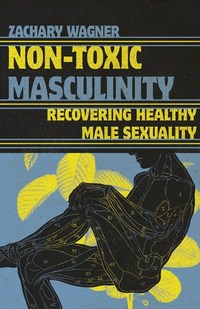
Non-Toxic Masculinity: Recovering Healthy Male Sexuality by Zachary Wagner: A Good Step in the Right Direction

Non-Toxic MasculinityNon-Toxic Masculinity:
Recovering Healthy Male Sexuality

by Zachary Wagner

DETAILS:
Publisher: IVP
Publication Date: April 04, 2023
Format: Paperback
Length: 194 pg.
Read Date: April 23-May 7, 2023


What’s Non-Toxic Masculinity About?

This is one of those books where I could easily go on and on about the arguments and ideas presented within—and I’d like to interact with some of those a bit, too. But this isn’t the place for that—I have to remind myself again—I’ll touch on some of it, but not much.

Wagner starts by reflecting on the Purity Culture that blossomed in the 90s (and since) in Evangelicalism and Conservative Protestantism—and the not-helpful to harmful ways it has impacted the lives of men and women since then. This first part of the book defines the issues and what kind of damage they have wrought.

The next two parts look to define and construct a healthy, i.e., non-toxic mascultinity, based on a Biblical view of masculinity—redeemed masculinity to be precise. After laying out this vision, he suggests ways to implement this vision. Wagner’s idea is rooted in sanctification—not to the exclusion of other areas, but that’s not what this book is about. His view of a sanctified, or at least growing in sanctification, masculinity is not that found in the Purity Culture or some of the works around it, but something greater.

Problems with the Book

I don’t have a lot to quibble with here—my main problem is that I think too much of this book is Zachary Wagner’s story. I think it has its place in this book—and it’s important to see what got him headed down this path of investigation. But I think we got too much about him.

I can easily see other readers disagreeing with me—and perhaps seeing themselves in him and his struggles. At the very least being able to relate to them and appreciating him sharing those struggles—and how he’s come through them. And I do, too. I just think we could use 15-30% less of it.

Similarly, I do wonder if he made the same points too many times in general—maybe accented differently depending on the chapter, but on more than one occasion I wondered “didn’t he already make this point in the last chapter?” Even there, that’s something I wonder with about half the non-fiction works I read anymore, so Wagner’s just fitting in.

An Unexpected Feature

Running throughout the book, but found in a couple of places in particular, is a critique of the more problematic aspects of Every Man’s Battle, the influential work by Stephen Arterburn and Fred Stoeker.

Now, true, the book has become a whipping boy for several authors recently—but I think it’s largely deserved.

Wagner, like me, once swallowed the book and its vision of male sexuality—redeemed or not. But, Wagner argues (convincingly, I’d say) that Every Man’s Battle‘s vision sees all men as permanently adolescent, immature, and lacking any kind of self-control. But if you read Paul, he’s clear that this is not what a mature Christian should be—absolutely, no Christian will reach full maturity in this life—but if you have no more self-control as an adult as you did as a teenager, you’re missing something vital in your spiritual (as well as physical and mental) life.

That’s, of course, a very brief summary of Wagner—his critique is more thorough (and more convincing). Now, is that what I got the book for? No. Did I expect something like that? Also, no. Am I glad Wagner gave it? Yes.

So, what did I think about Non-Toxic Masculinity?

The last chapter, “Death and Resurrection: The Beauty of Redeemed Masculinity,” is a winner. It sums up everything he’s been arguing for in the whole book and then focuses it. Wagner reminds the reader that Christianity is a call to self-denial, self-sacrifice, and dying to self. This includes in the bedroom. If you haven’t been convinced before this point, you likely won’t be by this chapter, but I found the terms he framed in this last chapter in the most convicting. I’d suggest that readers who don’t agree might have missed something. Those chapters leading up to it, are almost as good, too.

Ultimately what Wagner delivers is what I wanted in last year’s How Not to Be an *SS—and then some. So just on those terms, I’m a satisfied reader. But he delivered more than just that—laying out a compelling positive case for a masculinity defined by Scriptural terms, not merely cultural—whether in lock-step with it or in reaction against it.

I can’t—and wouldn’t want to—sign off on every jot and tittle of the work. But it’s far superior to every other thing I’ve read on the subject of what it means to be a man, male sexuality, and ideas of that nature, that I’m tempted to. (although Keith Ronald Gregoire and Andrew Bauman aren’t that far off)

No matter where you fit on the spectrum of those reacting to the purity culture, it’s worth a read. It’s good to consider, and helpful to sharpen your iron.


4 Stars

This post contains an affiliate link. If you purchase from it, I will get a small commission at no additional cost to you. As always, the opinions expressed are my own.

Grandpappy’s Corner: God, Right Here: Meeting God in the Changing Seasons by Kara Lawler, Jennie Poh (Illustrator): A Little Dose of Natural Revelation

Grandpappy's Corner Logo

God, Right Here:
Meeting God in the Changing Seasons

by Kara Lawler, Jennie Poh (Illustrator)

DETAILS:
Publisher: IVP Kids
Publication Date: June 20, 2023
Format: eARC
Length: 32 pg.
Read Date: May 7, 2023


What’s God, Right Here About?

God, right here.
God, right there.
God’s handiwork is everywhere.

With that as a starting point, Lawler takes the reader (and the read-to) on a tour of nature through a year’s worth of seasons. The point isn’t to learn about seasons or weather, or anything, but to see how God’s nature (flora, fauna, weather) reveals His work and care.

Let’s Talk about the Art for a Minute

It’s warm and friendly. Even the scenes depicting a chilly fall and snowy winter make you feel cozy and toasty. There’s a gentleness to the illustrations, too.

I’m failing at describing the art—as usual. Jennie Pho’s Instagram has some really good samples (including a Lucy and Mr. Tumnus drawing).

It’s not technically part of the art, but it’s part of the visual impact of the book, so I’ll talk about it here. The typesetting, or whatever you’re supposed to call it (it’d be lettering comic books), is excellent. There’s a variety of colors emphasizing words to match the theme of the page, it flows all over the page to follow the illustrations and add some movement. It’s eye-catching and serves to augment the art.

How is it to Read Aloud?

This is not the kind of book you have fun with, it’s not a fun read. It’s one to read when you’re trying to settle down—or better yet, have already settled down and want to snuggle up and get comfy.

It’s hard to think of toddlers as thoughtful but this is the kind of book for that kind of time.

It’s one of those where you will point to pictures as you read, and then go off on tangents talking about the ideas in the book. The book itself would take almost no time to read, but I can see this as the sort of thing the Grandcritter and I will linger over as we go through it.

* That’s a horrible stereotype, and I should be ashamed of it. But I know too many of them.

So, what did I think about God, Right Here?

This is a nice and pleasant book. Pleasant is the best word to describe this, really (and now that I’ve used it, my brain is stuck and I won’t be able to use another adjective for the rest of the post).

I feel like I should have another few paragraphs in me, but I don’t. I’ve said everything I can find to say about it (and I think I’ve used 2x the words that the book does). This is a pleasant read that’ll be good to use to talk and quiet down with.

Disclaimer: I received this eARC from InterVarsity Press via NetGalley in exchange for this post, and my honest opinion—thanks to both for this opportunity.


3 Stars

This post contains an affiliate link. If you purchase from it, I will get a small commission at no additional cost to you. As always, the opinions expressed are my own.
Grandpappy Icon

What is Love? by Kyle Borg: A (too?) Brief Look at a Deep Topic

What is Love?What is Love?

by Kyle Borg

DETAILS:
Series: The Bedrock Series 
Publisher: Grassmarket Press
Publication Date: December 20, 2022
Format: Paperback
Length: 135 pg.
Read Date: February 26, 2023

…deep down we know that love isn’t all we need. We also need to love well. We need to love rightly. So who gets to define that? Which voice is worth listening to, and which voices should be ignored? Is philosophy right? Is psychology right? Sociology? Biology? Politics? Economics? Literature? Hollywood? Music? Social media? Porn? Who gets to tell you what love is?

In the midst of these noisy voices, we need a louder voice. We need a voice that can break through the chatter and clearly, authoritatively, conclusively define for us what love is.

What’s What is Love? About?

This is Borg’s attempt to show what the Bible’s authoritative and conclusive definition of love is. He looks and several texts from all over the canon—spending (naturally) a substantial time in 1 Corinthians 13.

It’s a multi-faceted look at love. Borg considers the love of God demonstrated between the persons of the Trinity as well as toward His creation. But he also looks at the love that humans are to show each other as well as that we’re supposed to show to God.

The seventeen chapters are brief (in 135 pages, they have to be), but he doesn’t shy away from going deep into the topic of the chapter.

So, what did I think about What is Love??

There’s a lot of good material here—helpful, persuasive, and Biblical. But…it seemed to miss the intended goal of the book of giving a strong definition for love. Don’t ask me what was missing, but it just felt to me like Borg fell a little short.

I’ve been listening to Borg for a few years now on a couple of podcasts, and really appreciate his insights and explanations for various topics. So I was a little surprised that I didn’t connect with this the way I expected. I halfway expect that he tried to do too much in such a brief book, and if his goal hadn’t been so lofty, he’d have done better.

The writing is clear and concise—it’s as approachable as you could hope for, no matter your age or groundedness in Christian teaching. This seems to be the intent of the books in the Bedrock series, and Borg succeeded there.

I do recommend the book and think readers will benefit from reading it—I did. While I’m not sure Borg delivered the conclusive definition he intended to, he gave a lot of clear teaching on what the Bible says to lead to that definition, and that’s a good enough place to start.


3 Stars

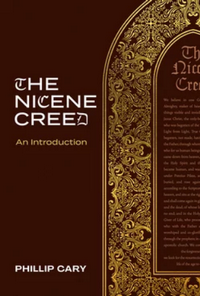
The Nicene Creed: An Introduction by Phillip Cary: A Great Primer on the Ancient Creed

The Nicene Creed: An IntroductionThe Nicene Creed: An Introduction

by Phillip Cary

DETAILS:
Publisher: Lexham Press
Publication Date: March 29, 2023
Format: Hardcover
Length: 211 pg.
Read Date: April 9-16, 2023

What’s The Nicene Creed About?

The subtitle says it’s an introduction to the Creed, and that’s the best way to describe it. Cary breaks the Creed down line by line—subdividing many of the lines to bite-size pieces.

Once in those pieces, Cary takes a variety of approaches—sometimes it’s a commentary on that part of the Creed, sometimes it’s historical background, sometimes it’s a point of grammar about the translation (or the text). Each chapter is short, clear, and to the point—most of all, they’re helpful for the reader to better understand the Creed.

Epilogue

The Epilogue presents “The Trinity in Simple Terms”—it’s the bare bones of the doctrines, drawing upon Augustine, in seven simple points.

I heard Cary give this on a podcast episode recently (calling it something like “Teaching the Trinity in Under Two Minutes”, and it’s a great way to present this material.

So, what did I think about The Nicene Creed?

On the one hand, I can be really brief here—this is a fantastic introduction to the Creed and/or some of the doctrines taught by it. In many cases, it’ll be a review of ideas—but even in those cases, Cary will likely shed a different light on it, or make you think about the idea in a way you’re not used to.

There’s a temptation to go in-depth on various chapters or sections—but I’m going to resist it for a variety of reasons.

This can be a quick and breezy read. It’s a mistake to let Cary’s simple and straightforward text let you read quickly—because there’s a lot to think about and reflect on here. Even if—especially if, actually—you recite the Creed on a regular or frequent basis every Lord’s Day. This is a great way to stop and meditate on these essential truths of the Christian faith.

Now, each section could easily be 2-3 times as long, and I’d read it—but I can see why Cary made the choice he did (but, I’m just saying, if someone wanted him to give a longer introduction, there’s at least one buyer out there)

Cary’s a trustworthy guide through this Creed, and I heartily encourage you to follow him through it.


4 1/2 Stars

Grandpappy’s Corner: God Never Changes by Carine MacKenzie, Derek Matthews (Illustrator) ★ ★ ★ Small Words About a Big Idea

Grandpappy's Corner Logo

God Never Changes

by Carine MacKenzie, Derek Matthews (Illustrator)

DETAILS:
Series: Learn About God 
Publisher: CF4Kids
Publication Date: September 2015
Format: Board Book
Length: 12 pg.
Read Date: April 22, 2023

What’s God Never Changes About?

This is a quick and yet thorough (at least for the Board Book audience) look at the Immutability of God. Each page starts off by saying, “God Never Changes,” and then comparing Him to various aspects of life and nature that a child can understand and appreciate. And learn from.

Let’s Talk about the Art for a Minute

It’s simple, it’s cute, it’s bright, and attractive. It does the job. I liked it—and can see kids liking it, too.

How is it to Read Aloud?

Very simple. There’s no rhyming or anything (which is good, I think it’d be annoying for this subject matter). It works well for reading aloud and then stopping to talk about the ideas, too.

So, what did I think about God Never Changes?

I picked this one out of the handful from this series sitting on our shelves because I’m in the middle of the discourse on The Immutability of God in Charnock’s The Existence and Attributes of God, and I figured I’d stay on theme. It works remarkably well in conjunction—in fact, Mackenzie uses some of the same argumentation and explanations as Charnock does when it comes to this topic. Just much simpler. My inner geek loved that bit.

I don’t know that this is the kind of thing a child will clamor to have read to them again and again—but you never know. I do think it’s good for teaching at a young age, and that’s the whole point of this series. I do recommend it and look forward to using it with my grandcritter soon.


3 Stars
Grandpappy Icon

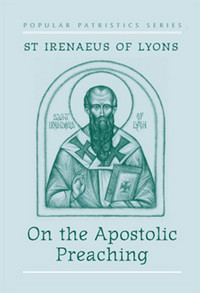
On the Apostolic Preaching by Irenaeus of Lyons: A Timeless Survey of Redemptive History

On the Apostolic PreachingOn the Apostolic Preaching

by Irenaeus of Lyons , John Behr (Translator)

DETAILS:
Series: Popular Patristics Series, #17
Publisher: St Vladimir's Seminary Press
Publication Date: September 01, 2003
Format: Paperback
Length: 101 pgs.
Read Date: April 2-9, 2023

What’s On the Apostolic Preaching About?

This is one of the two surviving works we have from the Second-Century theologian, Irenaeus. In this work, he simply recounts the Biblical storyline about the promised and coming and then Incarnate Messiah, His Earthly ministry, death, resurrection, and the spread of the Gospel.

I’m really not sure what else to say—he basically summarizes the Scriptures with a focus on Jesus.

Readability

I said essentially the same thing with the last book in this series that I blogged about, but I think it bears repeating.

For just about every reader (at least we non-scholars) the idea of reading Patristics is fairly daunting—even if you’ve done it before and emerged relatively unscathed (and maybe even learned something or enjoyed it). And it probably shouldn’t be that daunting on the whole (am more than sure that there are plenty of examples of intimidating texts).

There’s a reason that this work has endured through the centuries—it’s not just for its historical significance (although I’m sure that’s a lot of it), but this is something that has benefitted believers through the years from all levels of education and experience. There’s no one who can’t read and learn from this.

So, what did I think about On the Apostolic Preaching?

I started off a little annoyed by one of the introductory essays that stated that the first reading

will probably result in surprise and perhaps disappointment. Irenaeus does not present Christianity, in the way we have come to think of it, as a system of theological beliefs. Moreover, very little place is given to the ecclesiastical or sacramental dimensions of Christianity, nor does he describe the mystical life of prayer.

One, I didn’t know what to expect from this—I really only knew “Irenaeus” and “Popular Patristics” when I bought and then opened the book. Secondly, when I discovered what it was, I wasn’t disappointed. This is exactly what I want to see out of a 2nd Century writer—because it’s the kind of thing I appreciate in a 21st Century Writer. It’s reassuring to see that the central idea of what Apostolic Preaching ought to be is pretty much the same for both eras—yeah, some of what Irenaeus wrote could use some fine-tuning (and he’d likely say the same of what shows up in one of the Essential Studies in Biblical Theology volumes I’ve discussed). But their modus operandi are so similar, that it’s clear that they’re walking in the same direction.

I found this to be a quick, approachable read—as relatable today as it had to have been centuries ago (although I guess it’d be safe to say that many of his readers might not be ready to hear what he said in the same way I was). I was very encouraged by this and wish I’d read it years ago so I could be on my fifth or sixth reading now.

Highly recommended.


5 Stars

This post contains an affiliate link. If you purchase from it, I will get a small commission at no additional cost to you. As always, the opinions expressed are my own.

5 Puritan Women by Jenny-Lyn de Klerk: Brief Portraits of Women You Should Meet

5 Puritan Women5 Puritan Women:
Portraits of Faith and Love

by Jenny-Lyn de Klerk

DETAILS:
Publisher: Crossway
Publication Date: February 07, 2023
Format: Paperback
Length: 137
Read Date: March 26, 2023

What’s 5 Puritan Women About?

Agnes Beaumont, Lucy Hutchinson, Mary Rich, Anne Bradstreet, and Lady Brilliana Harley. Names you probably don’t know—well, maybe Anne Bradstreet is familiar to you. Especially if you ever read any poetry from the New England colonies (probably against your will—nothing against them, but I can’t imagine anyone seeking it out outside of High School/College literature classes). These five women are from (roughly) the Puritan era of British and American History and are brought to the reader’s attention here.

de Klerk writes and speaks frequently on the Puritans and noticed that notable Puritan women are often overlooked, so she highlights these here to bring their contributions forward. Each of them contributed in their own ways—for their family, for the support of the ministry, for the culture, and for the people in the immediate orbit.

Agnes Beaumont was a member of John Bunyan’s congregation who fought off several false accusations about her (and him). Lucy Hutchinson was a well-educated woman who wrote a good deal, including a systematic theology for her daughter. Mary Rich was noted for her benevolence and charity. Anne Bradstreet made a name for herself with her poetry, as I somewhat snidely mentioned before. Lady Brilliana Harley’s correspondence was the source of sage and godly advice. I’m doing a lousy job of summarizing this—but I just tried to do in this paragraph what de Klerk spent a book on.

Here’s My Beef with 5 Puritan Women

I can’t get my hands on the primary sources. Okay, some of Bradstreet’s poems are in the edition of Norton Anthology of American Literature I used in my undergrad days, so I can re-read those. But Lady Harley’s letters and Lucy Hutchinson’s systematic would be fantastic to read. Can I get those? Not that I can find. You can get Hutchinson’s works for a few hundred dollars, or some sketchy-looking ebooks of some of her works, but nothing affordable.

I’d love to hear that Reformation Heritage, Christian Focus, or Banner of Truth was working on making these works accessible to contemporary readers—even better if de Klerk was working on editing those herself, as she clearly has some sort of affinity for them.

In the meantime, I’m just going to grouse about this a bit—de Klerk makes you want to get to know these women better through their written works, but when they’re not available….it’s just mean.

So, what did I think about 5 Puritan Women?

I really appreciated this book and de Klerk’s style. The writing is clear, approachable, and affable—this isn’t a stuffy introduction to figures from the past, but someone telling you about people she’s come to know and is excited about.

I’m not sure the pairing of the women with Puritan disciplines really adds that much. It’s an okay handle and way to approach things, but I really didn’t need that, their stories and experiences were enough on their own. Your results may vary, obviously, this might be one of the more valuable aspects for some readers.

I recommend this quick and engaging read to all those who are interested in some of those figures in Church History too often overlooked—particularly if you have any affinity for or curiosity about the Puritans—it’s a great reminder that for every John Owen or John Bunyan, there are several other faithful servants we could and should get to know. I found it inspiring, interesting, and even a little moving. I’d definitely read expanded works on any of these—or a sequel, 5 More Puritan Women.


3.5 Stars

This post contains an affiliate link. If you purchase from it, I will get a small commission at no additional cost to you. As always, the opinions expressed are my own.

Page 13 of 32

Powered by WordPress & Theme by Anders Norén