Category: Theology/Christian Living Page 14 of 33

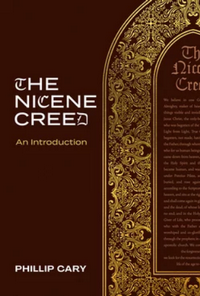
The Nicene Creed: An Introduction by Phillip Cary: A Great Primer on the Ancient Creed

The Nicene Creed: An IntroductionThe Nicene Creed: An Introduction

by Phillip Cary

DETAILS:
Publisher: Lexham Press
Publication Date: March 29, 2023
Format: Hardcover
Length: 211 pg.
Read Date: April 9-16, 2023

What’s The Nicene Creed About?

The subtitle says it’s an introduction to the Creed, and that’s the best way to describe it. Cary breaks the Creed down line by line—subdividing many of the lines to bite-size pieces.

Once in those pieces, Cary takes a variety of approaches—sometimes it’s a commentary on that part of the Creed, sometimes it’s historical background, sometimes it’s a point of grammar about the translation (or the text). Each chapter is short, clear, and to the point—most of all, they’re helpful for the reader to better understand the Creed.

Epilogue

The Epilogue presents “The Trinity in Simple Terms”—it’s the bare bones of the doctrines, drawing upon Augustine, in seven simple points.

I heard Cary give this on a podcast episode recently (calling it something like “Teaching the Trinity in Under Two Minutes”, and it’s a great way to present this material.

So, what did I think about The Nicene Creed?

On the one hand, I can be really brief here—this is a fantastic introduction to the Creed and/or some of the doctrines taught by it. In many cases, it’ll be a review of ideas—but even in those cases, Cary will likely shed a different light on it, or make you think about the idea in a way you’re not used to.

There’s a temptation to go in-depth on various chapters or sections—but I’m going to resist it for a variety of reasons.

This can be a quick and breezy read. It’s a mistake to let Cary’s simple and straightforward text let you read quickly—because there’s a lot to think about and reflect on here. Even if—especially if, actually—you recite the Creed on a regular or frequent basis every Lord’s Day. This is a great way to stop and meditate on these essential truths of the Christian faith.

Now, each section could easily be 2-3 times as long, and I’d read it—but I can see why Cary made the choice he did (but, I’m just saying, if someone wanted him to give a longer introduction, there’s at least one buyer out there)

Cary’s a trustworthy guide through this Creed, and I heartily encourage you to follow him through it.


4 1/2 Stars

Grandpappy’s Corner: God Never Changes by Carine MacKenzie, Derek Matthews (Illustrator) ★ ★ ★ Small Words About a Big Idea

Grandpappy's Corner Logo

God Never Changes

by Carine MacKenzie, Derek Matthews (Illustrator)

DETAILS:
Series: Learn About God 
Publisher: CF4Kids
Publication Date: September 2015
Format: Board Book
Length: 12 pg.
Read Date: April 22, 2023

What’s God Never Changes About?

This is a quick and yet thorough (at least for the Board Book audience) look at the Immutability of God. Each page starts off by saying, “God Never Changes,” and then comparing Him to various aspects of life and nature that a child can understand and appreciate. And learn from.

Let’s Talk about the Art for a Minute

It’s simple, it’s cute, it’s bright, and attractive. It does the job. I liked it—and can see kids liking it, too.

How is it to Read Aloud?

Very simple. There’s no rhyming or anything (which is good, I think it’d be annoying for this subject matter). It works well for reading aloud and then stopping to talk about the ideas, too.

So, what did I think about God Never Changes?

I picked this one out of the handful from this series sitting on our shelves because I’m in the middle of the discourse on The Immutability of God in Charnock’s The Existence and Attributes of God, and I figured I’d stay on theme. It works remarkably well in conjunction—in fact, Mackenzie uses some of the same argumentation and explanations as Charnock does when it comes to this topic. Just much simpler. My inner geek loved that bit.

I don’t know that this is the kind of thing a child will clamor to have read to them again and again—but you never know. I do think it’s good for teaching at a young age, and that’s the whole point of this series. I do recommend it and look forward to using it with my grandcritter soon.


3 Stars
Grandpappy Icon

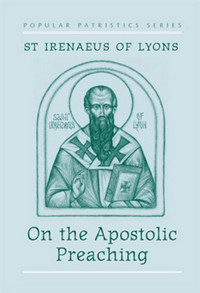
On the Apostolic Preaching by Irenaeus of Lyons: A Timeless Survey of Redemptive History

On the Apostolic PreachingOn the Apostolic Preaching

by Irenaeus of Lyons , John Behr (Translator)

DETAILS:
Series: Popular Patristics Series, #17
Publisher: St Vladimir's Seminary Press
Publication Date: September 01, 2003
Format: Paperback
Length: 101 pgs.
Read Date: April 2-9, 2023

What’s On the Apostolic Preaching About?

This is one of the two surviving works we have from the Second-Century theologian, Irenaeus. In this work, he simply recounts the Biblical storyline about the promised and coming and then Incarnate Messiah, His Earthly ministry, death, resurrection, and the spread of the Gospel.

I’m really not sure what else to say—he basically summarizes the Scriptures with a focus on Jesus.

Readability

I said essentially the same thing with the last book in this series that I blogged about, but I think it bears repeating.

For just about every reader (at least we non-scholars) the idea of reading Patristics is fairly daunting—even if you’ve done it before and emerged relatively unscathed (and maybe even learned something or enjoyed it). And it probably shouldn’t be that daunting on the whole (am more than sure that there are plenty of examples of intimidating texts).

There’s a reason that this work has endured through the centuries—it’s not just for its historical significance (although I’m sure that’s a lot of it), but this is something that has benefitted believers through the years from all levels of education and experience. There’s no one who can’t read and learn from this.

So, what did I think about On the Apostolic Preaching?

I started off a little annoyed by one of the introductory essays that stated that the first reading

will probably result in surprise and perhaps disappointment. Irenaeus does not present Christianity, in the way we have come to think of it, as a system of theological beliefs. Moreover, very little place is given to the ecclesiastical or sacramental dimensions of Christianity, nor does he describe the mystical life of prayer.

One, I didn’t know what to expect from this—I really only knew “Irenaeus” and “Popular Patristics” when I bought and then opened the book. Secondly, when I discovered what it was, I wasn’t disappointed. This is exactly what I want to see out of a 2nd Century writer—because it’s the kind of thing I appreciate in a 21st Century Writer. It’s reassuring to see that the central idea of what Apostolic Preaching ought to be is pretty much the same for both eras—yeah, some of what Irenaeus wrote could use some fine-tuning (and he’d likely say the same of what shows up in one of the Essential Studies in Biblical Theology volumes I’ve discussed). But their modus operandi are so similar, that it’s clear that they’re walking in the same direction.

I found this to be a quick, approachable read—as relatable today as it had to have been centuries ago (although I guess it’d be safe to say that many of his readers might not be ready to hear what he said in the same way I was). I was very encouraged by this and wish I’d read it years ago so I could be on my fifth or sixth reading now.

Highly recommended.


5 Stars

This post contains an affiliate link. If you purchase from it, I will get a small commission at no additional cost to you. As always, the opinions expressed are my own.

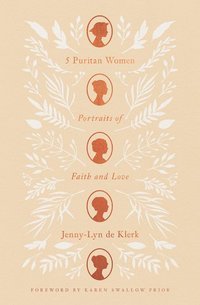
5 Puritan Women by Jenny-Lyn de Klerk: Brief Portraits of Women You Should Meet

5 Puritan Women5 Puritan Women:
Portraits of Faith and Love

by Jenny-Lyn de Klerk

DETAILS:
Publisher: Crossway
Publication Date: February 07, 2023
Format: Paperback
Length: 137
Read Date: March 26, 2023

What’s 5 Puritan Women About?

Agnes Beaumont, Lucy Hutchinson, Mary Rich, Anne Bradstreet, and Lady Brilliana Harley. Names you probably don’t know—well, maybe Anne Bradstreet is familiar to you. Especially if you ever read any poetry from the New England colonies (probably against your will—nothing against them, but I can’t imagine anyone seeking it out outside of High School/College literature classes). These five women are from (roughly) the Puritan era of British and American History and are brought to the reader’s attention here.

de Klerk writes and speaks frequently on the Puritans and noticed that notable Puritan women are often overlooked, so she highlights these here to bring their contributions forward. Each of them contributed in their own ways—for their family, for the support of the ministry, for the culture, and for the people in the immediate orbit.

Agnes Beaumont was a member of John Bunyan’s congregation who fought off several false accusations about her (and him). Lucy Hutchinson was a well-educated woman who wrote a good deal, including a systematic theology for her daughter. Mary Rich was noted for her benevolence and charity. Anne Bradstreet made a name for herself with her poetry, as I somewhat snidely mentioned before. Lady Brilliana Harley’s correspondence was the source of sage and godly advice. I’m doing a lousy job of summarizing this—but I just tried to do in this paragraph what de Klerk spent a book on.

Here’s My Beef with 5 Puritan Women…

I can’t get my hands on the primary sources. Okay, some of Bradstreet’s poems are in the edition of Norton Anthology of American Literature I used in my undergrad days, so I can re-read those. But Lady Harley’s letters and Lucy Hutchinson’s systematic would be fantastic to read. Can I get those? Not that I can find. You can get Hutchinson’s works for a few hundred dollars, or some sketchy-looking ebooks of some of her works, but nothing affordable.

I’d love to hear that Reformation Heritage, Christian Focus, or Banner of Truth was working on making these works accessible to contemporary readers—even better if de Klerk was working on editing those herself, as she clearly has some sort of affinity for them.

In the meantime, I’m just going to grouse about this a bit—de Klerk makes you want to get to know these women better through their written works, but when they’re not available….it’s just mean.

So, what did I think about 5 Puritan Women?

I really appreciated this book and de Klerk’s style. The writing is clear, approachable, and affable—this isn’t a stuffy introduction to figures from the past, but someone telling you about people she’s come to know and is excited about.

I’m not sure the pairing of the women with Puritan disciplines really adds that much. It’s an okay handle and way to approach things, but I really didn’t need that, their stories and experiences were enough on their own. Your results may vary, obviously, this might be one of the more valuable aspects for some readers.

I recommend this quick and engaging read to all those who are interested in some of those figures in Church History too often overlooked—particularly if you have any affinity for or curiosity about the Puritans—it’s a great reminder that for every John Owen or John Bunyan, there are several other faithful servants we could and should get to know. I found it inspiring, interesting, and even a little moving. I’d definitely read expanded works on any of these—or a sequel, 5 More Puritan Women.


3.5 Stars

This post contains an affiliate link. If you purchase from it, I will get a small commission at no additional cost to you. As always, the opinions expressed are my own.

REPOSTING JUST CUZ: The Morality of God in the Old Testament by G.K. Beale

This is a lot shorter of a work than I usually talk about, but I needed a short read to break up longer, heavier reads. So now I guess I get to talk briefly about it before I talked about longer, heavier reads. (not that this is lightweight by any means)


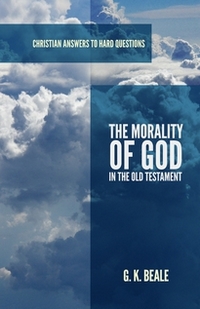
The Morality of God in the Old Testament

The Morality of God
in the Old Testament

by G.K. Beale
Series: Christian Answers to Hard Questions

Booklet, 43 pg.
P&R Publishing and Westminster Seminary Press, 2013

Read: November 21, 2021
Grab a copy from your local indie bookstore!

What’s The Morality of God in the Old Testament About?

Believers and unbelievers alike stumble over some of what seems immoral in the Old Testament. Particularly what seems to be evil on the part of God. For example: God’s commands to exterminate the Canaanites and the imprecatory (cursing) Psalms.

How ought the believer to respond to their own questions about this, much less the questions from those outside the faith?

Beale looks briefly at a couple of popular responses to this and finds them wanting. In their place, he suggests a “plausible fivefold approach.”

There seems to be a better way to look at this problem. We will explore it from five different angles, which will help us to understand it more thoroughly. First, how does the killing of the Canaanites demonstrate God’s justice and righteousness? Second, how could Israel’s unique commission as a “kingdom of priests” (Ex. 19:6) shed light on the extermination of the Canaanites? Third, how does God’s sovereignty over all things help us to better understand that he can be considered blameless in all that he does, despite the problems just mentioned above? Fourth, how does the idea of God’s judgment of unbelieving humanity at the end of time shed light on this problem? Finally, how does the law of loving one’s neighbor now and at the end of time help us to better apprehend the issue about the Canaanites and the psalmist’s cursing of his enemies (though this last point has some overlap with the fourth point)?

Each question gets a couple of pages of explanation before moving on, so that the reader is given the complete fivefold approach along with some idea of how the ideas are worked out.

So, what did I think about The Morality of God in the Old Testament?

Not surprisingly, my main concern is length. I want to see each of these points better developed–I don’t think this has the makings of a 200+ page book or anything, but I think it could easily be twice as long to really flesh out some of the points.

The brevity works against itself primarily in that I don’t get to see the ideas examined thoroughly, or tested. The reader is given enough to understand the fivefold approach, enough to chew on it. But I’d like to see it worked out. I’d like to see Beale work through one of the difficult passages, or one of the Psalms in question and show “here’s where we see this and over there is where you see that aspect in action,” etc.

But the point of this series, the point of this being a booklet is for a short introduction to the idea. It’s supposed to be enough to show the reader that there are answers to the hard questions, just not enough to convince them. So I have to take it on its own terms–as such, it’s fine. Even more than fine. And I think there’s something to that fivefold approach, I just want to be convinced. I’m just going to need to look elsewhere for that.


3.5 Stars

This post contains an affiliate link. If you purchase from it, I will get a small commission at no additional cost to you. As always, opinions are my own.

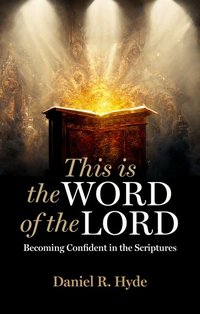
This Is the Word of the Lord: Becoming Confident in the Scriptures by Daniel R. Hyde: A Sound and Basic Defense of Scripture

This Is the Word of the LordThis Is the Word of the Lord: Becoming Confident in the Scriptures

by Daniel R. Hyde

DETAILS:
Publisher: Christian Focus Publications
Publication Date: January 17, 2023
Format: Paperback
Length: 121 pg.
Read Date: February 26, 2023

As yearly surveys and our own experience shows, we are living in a time of famine of the true Word of God. The ancient prophet Amos spoke of such a coming famine in his day: “Behold, the days are coming, declares the Lord God, when I will send a famine on the land—not a famine of bread, nor a thirst for water, but of hearing the words of the Lord’ (Amos 8:11). How true is this still? We are living in that day. This is why when we find the Word, we need to mine it for its riches, cultivate it for its food, and drink from it like a well in the desert. Sadly, Amos says in those days that ‘they shall wander from sea to sea, and from north to east; they shall run to and fro, to seek the word of the Lord, but they shall not find it’ (Amos 8:12). This describes our time. The apostate church blindly wanders from the sentimentality of Protestant Liberalism to the so-called authoritative and immovable word of Rome or Orthodoxy, to the relativistic Emerging Church, to the skeptical Bart Ehrman, to the happy Joel Osteen, and the list goes on. There is a lot of searching but no finding. Yet in the Word written, our searching turns to resting as the silence of our hearts is filled with His living voice.

What’s This Is the Word of the Lord About?

Very simply, the book is Hyde’s response to that quotation—that’s the book’s thesis—everything else is the details. The primary concern of the work is to build and establish the reader’s confidence in the Scriptures—and that from that confidence the reader would build their life, faith, and sanctification on those Scriptures.

He covers topics like the revelation, inspiration, authority, canonicity, sufficiency, and perspicuity of Scripture—largely the typical points focused on in books about the Doctrine of Scripture. His last chapter, “Experiencing the Word,” tackles something I haven’t often seen in this kind of book, however. He calls his reader to “consider how the presence and power of the Spirit works causing us to experience the Word.” This is done particularly “to effect my recognition of in my life,” “to effect my reception of the Savior,” and “to effect my realization of sanctification.” Knowing everything in the previous nine chapters is all well and good—but if it remains an intellectual exercise, it’s pointless—the element of the Scriptures impacting your life—causing you to see your sin, need of a Savior, and resulting in sanctification (roughly the outline of the Heidelberg Catechism, to the surprise of no one), is essential.

So, what did I think about This Is the Word of the Lord?

As much as I appreciated the tone and urgency Hyde displays through the book, his obvious earnestness, the much-needed emphasis in the last chapter, and the overall soundness of every point he makes…I found the book to be adequate. But not much more than that.

Perhaps I’ve just read too many books written on this level for this general purpose, so it feels like so much of a retread for me.

I liked it but wanted and expected more. Hyde generally delivers that for me, but here he didn’t. Would I recommend this to anyone wanting a good foundation in the doctrine of Scripture? Absolutely. But for me, it fell a little flat.


3 Stars

This post contains an affiliate link. If you purchase from it, I will get a small commission at no additional cost to you. As always, the opinions expressed are my own.

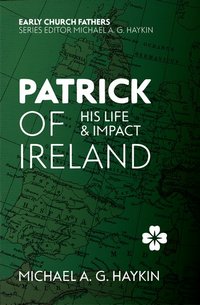
Patrick of Ireland: His Life and Impact by Michael A.G. Haykin: A Little Light on Info, but Does a Lot With It

Patrick of IrelandPatrick of Ireland:
His Life and Impact

by Michael A.G. Haykin
Series: The Early Church Fathers
Publisher: Christian Focus Publications
Publication Date: February 02, 2018
Format: eBook
Length: 112 pgs.
Read Date: February 19, 2023

I came to the people of Ireland to preach the Gospel, and to suffer insult from the unbelievers, bearing the reproach of my going abroad and many persecutions even unto bonds, and to give my free birth for the benefit of others; and, should I be worthy, I am prepared to give even my life without hesitation and most gladly for his name, and it is there that I wish to spend it until I die, if the Lord would grant it to me.

The Series

In case you hadn’t read what I thought of the other books I’ve read in this series, let me start with the thumbnail description of the series I came up with:

I literally stumbled on this series, The Early Church Fathers, a few weeks ago and thought it sounded like a great idea. It looked kind of like a mix of Crossway’s Theologians on the Christian Life and Oxford’s Very Short Introductions (incidentally, that’s what it ended up being).

What’s Patrick of Ireland About?

Like the other books in this series, Haykin starts with a biographical sketch of Patrick—noting the difficulties around that due to the small bibliography we have from him and the large number of myths and hagiography surrounding him. He then moves into considering Patrick’s Trinitarianism, his vision for evangelism/missions. Finally, he looks at “the balance of the Word and Spirit in Patrick’s thinking and experience.”

His Life

…there are a number of aspects about his life that are not at all clear- cut. There is no agreement, for example, about the date of his birth or the location of his childhood home, or about the place of his captivity in Ireland or whether or not he had formal theological education; nor is there any agreement about the dates of his ministry in Ireland.

We do know some things—mostly from his own hand—but scholars have to wade through a lot of chaff. R.P.C. Hanson is cited as summarizing it as: “Patrick’s life has become subject to a large amount of hagiographical embroidery and fictitious enhancement.”

That fictitious enhancement is where a lot of what I grew up “knowing” about Patrick, and I’d wager it’s the same for a lot of you.

…from the Middle Ages onwards, his mission to Ireland was depicted as one astounding miracle after another. For example, Jocelin of Furness (fl.1175–1214), the English Cistercian hagiographer, explained the absence of snakes in Ireland to be the result of Patrick’s destruction of them all on the peak of Croagh Patrick (St Patrick’s Mountain) in County Mayo. Jocelin also tells us that Patrick as an infant was baptized by a blind priest who got the water for the baptism by causing Patrick to make the sign of the cross over some earth, from which a well of water immediately issued. The water cured the priest of his blindness and enabled him, though illiterate, to read the rite of baptism. According to other miracles ascribed to Patrick, he was able to pass through doors, like the risen Christ, and could turn butter into honey.

At the end of the day, however,

Unlike the otherworldly miracle worker depicted by later biographies of Patrick, the two authentic writings from Patrick reveal a typical fifth- century bishop who was involved in preaching, baptizing, celebrating the Lord’s Supper, confirming new converts, and ordaining ministers.

Because of—or maybe despite—the dearth of information we have about him, what can be established is all the more interesting.

His Theology

Haykin focuses on two primary areas—Patrick’s Trinitarianism and his Missiology. Thankfully, we have his two written works to learn from here.

Without any references to the shamrock (thankfully), Patrick’s full-orbed Trinitarianism shines through his writings. After the last couple of entries in this series were so filled with controversy over the doctrine, it’s so refreshing to read one absent it.

I also appreciated the simple and straightforward nature of Patrick’s missiology and doctrine of the Church. He lived the kind of life he described and called others to. The fact that, in his mind, evangelizing the Irish was bringing the gospel to the literal end of the earth and thereby he was helping to bring in the Last Days, makes his work all the more remarkable. He didn’t call people to a temporary faith, he actually established believers and churches that lasted.

So, what did I think about Patrick of Ireland?

This is the best one of these books since the Augustine volume (maybe even better than it).

I enjoyed it—it helped increase my understanding and appreciation of the subject, and I learned a little bit about how little we know. (I read his Confessions more than a decade ago, and need to dig it out again)

I don’t think I got as much from this as I did from some of the others in this series—but that’s a quirk of the source material, and that has its own charm. Seeing what others have established, and what Haykin has synthesized here is the impressive bit.


3.5 Stars

This post contains an affiliate link. If you purchase from it, I will get a small commission at no additional cost to you. As always, the opinions expressed are my own.


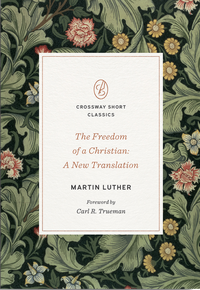
The Freedom of a Christian by Martin Luther, Translated by Robert Kolb: A Pastoral Gem from the Reformer

The Freedom of a ChristianThe Freedom of a Christian: A New Translation

by Martin Luther, Translated by Robert Kolb Carl R. Trueman (Foreward)

DETAILS:
Series: Crossway Short Classics Series
Publisher: Crossway
Publication Date: February 21, 2023
Format: Paperback
Length: 86 pg.
Read Date: February 26, 2023


Some Thoughts on the Series as a Whole

The point of this series is to take classic short works—sermons, tracts, articles—package them attractively, edit a bit (modernize language, eliminate footnotes, tweak grammar, etc.), and make them widely available. Each is given a short introduction to help the reader get the context and a bit of information about the author.

They published seven books in this series last year, and I discussed them here. Two have come out this year (so far), but I’m hoping for more.

What’s The Freedom of a Christian About?

A Christian is a free lord of everything and subject to no one.

A Christian is a willing servant of everything and subject to everyone.

This is Luther (early in the Reformation) laying out his vision for good works for the believer–how they are to be performed, why they are to be performed, and their place in the life of the believer. I’m sure there’s more to say, but that’s basically it.

That quotation gives his two theses–the rest of the book is his working out the thinking behind them. It’s penetrating, it’s convicting, and it’s inspiring to watch him work. Whoops, I seem to have stumbled into the next section.

So, what did I think about The Freedom of a Christian?

From all of this comes the conclusion that a Christian lives not in himself but in Christ and in his neighbor, in Christ through faith, in the neighbor through love. Through faith he rises above himself in God, from God he descends under himself through love, and remains always in God and in divine love. It is as Christ said in John 1[:51]: “You will see heaven standing open and the angels ascending and descending over the Son of Man.” Behold, that is the proper, spiritual Christian freedom, which liberates the heart from all sins, laws, and commands. This freedom exceeds all other freedoms, as high as heaven is over the earth. May God grant us that we truly understand that and retain it.

I wasn’t sure about reading this–it’s one of those works I’ve read so much about. I’ve seen it cited, heard descriptions of it in lectures, and read about it, but I haven’t gotten around to reading it. A lot of the times I read something that I know about like this, it doesn’t work out (I’ve never been able to get past page 40 of Postman’s Amusing Ourselves to Death, for example). But this is exactly what it should’ve been.

Martin Luther being pastoral is just great. Luther coming alongside those believers so often neglected in the Church and saying, here’s what to do–free of burden, free of guilt, free to live and love as they ought, as they’ve been called to.

This little read is a gem. I’m glad I took the chance on it and so glad that Crossway’s series brought it to us.

4 Stars

This post contains an affiliate link. If you purchase from it, I will get a small commission at no additional cost to you. As always, the opinions expressed are my own.

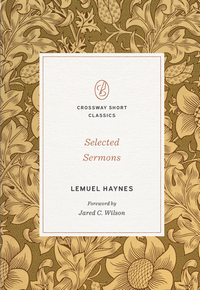
Crossway Short Classics: Selected Sermons by Lemuel Haynes: A Great Collection

Selected SermonsSelected Sermons

by Lemuel Haynes, Jared C. Wilson (Foreword)

DETAILS:
Series: Crossway Short Classics Series
Publisher: Crossway
Publication Date: February 21, 2023
Format: Paperback
Length: 139 pg.
Read Date: February 26, 2023

Some Thoughts on the Series as a Whole

The point of this series is to take classic short works—sermons, tracts, articles—package them attractively, edit a bit (modernize language, eliminate footnotes, tweak grammar, etc.), and make them widely available. Each is given a short introduction to help the reader get the context and a bit of information about the author.

They published seven books in this series last year, and I discussed them here. Two have come out this year (so far), but I’m hoping for more.

What’s Selected Sermons About?

As is obvious from the title, this is a collection of sermons by Lemuel Haynes. Born in 1753, Haynes is known as the first African-American ordained to the ministry.

The foreword serves as an introduction to Haynes as well as the included sermons, and we also get a quick biography of him before diving in.

The four sermons cover the idea of Universal Salvation, a sermon on John 3:3, a description of ministers, and a sermon against slavery.

So, what did I think about Selected Sermons?

The middle sermons—on the necessity of being born again and ministers were good examples of latter-Puritan-ish sermons, along the lines of Edwards and Whitfield. They were good, and solid, but not necessarily the kind of thing I’m coming back to.

The other two, however? Wow.

Sure, it’s easy from our vantage point to shake our heads and wonder how so many Christians could be comfortable with American slavery—it’s good to remember that it wasn’t true of them all. With “Liberty Further Extended,” Haynes delivered a powerful sermon against the practice, and you can only wish that more people were exposed to it—there’s a lot to be appreciated from this sermon, even if it’s not as timely as it once is (thank God).

“Universal Salvation,” the first sermon in the collection, blew me away (and may have set my expectations too high for the rest). The rhetoric was dynamite (there’s probably a better way to put it, but this is the most appropriate), the doctrine sound, and the conclusions were important. When you take the comments by Wilson into account, this must’ve created quite a stir when he preached it. I’d have paid the purchase price for the volume for this sermon alone.

I don’t know that everyone will agree with my evaluation—actually, I’m pretty sure many won’t—but I don’t see that anyone with an affinity toward Puritan-ish sermons, (First) Great Awakening sermons, or just good sermons not appreciating this little gem of a book.


4 Stars

This post contains an affiliate link. If you purchase from it, I will get a small commission at no additional cost to you. As always, the opinions expressed are my own.
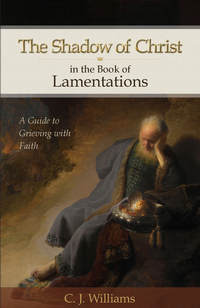
The Shadow of Christ in the Book of Lamentations by C.J. Williams: Finding the Hope of the Gospel in the Laments

The Shadow of Christ in the Book of LamentationsThe Shadow of Christ in the Book of Lamentations:
A Guide to Grieving with Faith

by C.J. Williams

DETAILS:
Publisher: Crown & Covenant Publications
Publication Date: November 25, 2022
Format: Paperback
Length: 172 pg.
Read Date: February 5-12, 2023

The people had been warned about this day of judgement for centuries, but as God pleaded with them through the prophets, they became more stubborn in their sin. Now the day had come. If there was ever an “I told you so” moment, this was it. But the speaker does not stand aloof; he gives a voice to the sorrow and suffering of the people. He wept with them and for them with sympathy that arose from the depth of his soul. Although the people had brought this terrible day upon themselves, they were met with compassion and “a spirit of gentleness” with which we are to minister to those who are overtaken in any trespass (Gal. 6:1).

What’s The Shadow of Christ in the Book of Lamentations About?

Based on a series of sermons, Williams walks the reader through the book of Lamentations—in a careful manner. He doesn’t avoid technical points, nor does he dwell on them, moving the book in an esoteric direction. At the same time, he doesn’t keep it so simple that there’s not a lot to learn, to think about, or to meditate on.

As the back of the book says,

The book of Lamentations counsels us on how to:

  • respond to hardships with faith,
  • grieve with hope,
  • and find the renewal of grace during the trials of life.

and Williams is careful to draw out each of these points more than once.

But that’s not the focus of his book—and, Williams would argue, it’s not the focus of Lamentations. The focus is on how Christ is displayed and revealed through this short Old Testament book. This comes through loud and clear and proves comforting and inspiring.

Christ-Centered Perspective

When seen in this light, a book that technically has no direct speech from God comes alive with the voice of the Son whom he would send.

Starting in the introduction and carrying on through the end, Williams makes it clear that this is going to be a Christ-centered book because the role of this book is to reveal Christ to his people. There is a speaker throughout the book, referring to himself as “I.” Williams argues that this is the voice of Christ—he is the lamenting one alongside the other voices in the book.

I’m not going to try to echo his arguments—I don’t have that kind of space. But when he started to enfold it, I was captivated—and as he returned to it throughout the book, I kept being captivated and wanted to spend more time examining these points.

So, what did I think about The Shadow of Christ in the Book of Lamentations?

When believers experience hardship or the chastening of God, asking this blunt question awakens us to the truth: Has God utterly rejected us? To ask the question is to answer it. You may not know how any hardship will end, but as a child of God, you know how it will not end. Nothing can Separate us from the love of God that is in Christ Jesus our Lord (Rom. 8:39).

The conclusion of Lamentations shows us that there js always a path forward when we walk with faith.

Of all the prophetic books, Lamentations is the one that has always resonated with me the most—but I always knew I was missing something about it. Starting in Chapter 2 (where he begins his argument for the Voice of Christ in this book), so many lightbulbs turned on—I know Christ was revealed in this book (as he is everywhere), but I didn’t understand how thoroughly the book did that.

I’m not for one second suggesting that this is an exhaustive treatment of the book, nor that Williams is the final answer when it comes to this idea—but it’s a fantastic place to start.

The rest of the book was just as good—I walked away from every chapter with a better understanding of or refreshed appreciation for the text.

If you’re looking for a trustworthy guide to this dark portion of Scripture (that is also full of light and hope), you’d do well to look to C.J. Williams.


4 Stars

Page 14 of 33

Powered by WordPress & Theme by Anders Norén