Category: Theology/Christian Living Page 31 of 32

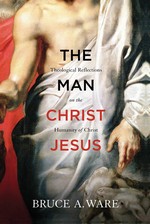
The Man Christ Jesus: Theological Reflections on the Humanity of Christ by Bruce A. Ware

The Man Christ Jesus: Theological Reflections on the Humanity of ChristThe Man Christ Jesus: Theological Reflections on the Humanity of Christ

by Bruce A. Ware
Kindle Edition, 160 pg.
Crossway, 2012
Read: March 9, 2014

One of Ware’s presuppositions — repeated throughout this book — is that evangelical Christians today have a good understanding of and embrace the doctrine of the Divinity of Christ, but their understanding of his humanity is wanting — enter this book. Without dipping a toe into Nestorianism, Ware wants his readers to understand the humanity of Jesus. He explains this so with a constant eye to His divinity — and how that divinity is expressed in the life of the God-man.

One of his main interests is for his readers to understand the dependency of Jesus on the Spirit — His indwelling, guidance and empowering. Without that indwelling, it would be impossible for Jesus to carry out His father’s will. If we grasp that, we see the limitations of the divine nature of Christ to his earthly work, which may seem paradoxical, but isn’t as Ware will explain.

The application portions to every chapter keep this book from being merely theoretical (however great that theory is) to helping readers put shoe leather to this teaching — as every teaching ought. It’s just easier when the author goes out of his way to help us start that on our own.

I really appreciated the chapter “Resisting Temptation,” Ware’s reflections on Hebrews 4:15 and the idea of Jesus being tempted to sin in general. He surveys some of the leading theories before suggesting his own idea how the idea of the impeccable theanthropos being tempted without sinning. He put into words an idea or two that had been floating around in my own head for a few years, and

I was surprised that Ware had to devote an entire chapter defending the masculinity of the God-man, although I shouldn’t have been. Sadly, this was a pretty boring chapter. Ware really beat this horse far beyond the point of its flatline. Sadly, he probably needed to be as through given today’s thinking.

Deep enough to discourage a casual read, but friendly enough that this should be able to be read by thoughtful laity.

—–

4 Stars

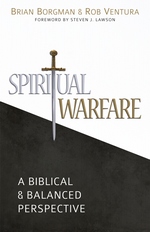
Spiritual Warfare: A Biblical and Balanced Perspective by Brian Borgman & Rob Ventura

Spiritual Warfare: A Biblical and Balanced PerspectiveSpiritual Warfare: A Biblical and Balanced Perspective

by Brian Borgman & Rob Ventura
Kindle Edition, 128 pg.
Reformation Books, 2013

Borgman and Ventura realize they’re heading into dangerous territory here — far too many books on this topic are sensationalistic, fantastic (and I don’t mean that as a synonym for great), and unbalanced. On the other hand, there’s the danger of downplaying the need for this kind of material. They seek (and succeed, I should add) at striking a Biblical balance in their approach.

Essentially, this is a careful study of Ephesians 6:10-20, not a systematic or biblical-theological approach to the topic. Which is well and good, but I’d have preferred one of the latter. Still, there are enough cross-references here to ensure they’re interpreting Scripture by Scripture, as well as illustrating principles from the Ephesians passage elsewhere.

The authors also cite other writers like crazy — for the sake of clarification, illustration, and (I think) to demonstrate to those wary of the topic that they’re not the only ones to consider the idea of spiritual warfare outside the Neil Anderson, Nicky Cruz, Frank Peretti crowds. The authors they cite from are a varied and impressive collection of Reformation-era, Puritan (and slightly later)-era, and contemporary Reformed and quasi-Reformed writers, preachers and commentators. They clearly owe a debt to William Gurnall here, but I think they could’ve used him a bit more throughout.

A solid book, nothing earth shattering. A good starting point, though. Readers would be well off to use this to get an overall look at the topic and then to use the cited authors (particularly those that are pre-20th century) for further study.

—–

3 Stars

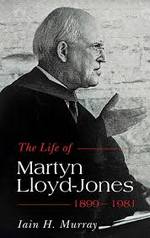
The Life of Martyn Lloyd-Jones – 1899-1981 by Iain H. Murray

The Life of Martyn Lloyd-Jones - 1899-1981The Life of Martyn Lloyd-Jones – 1899-1981

by Iain H. Murray
Trade Paperback, 496 pg.
Banner Of Truth, 2013
Read: Jan. 12 – Feb. 9, 2014

This is a frequently flawed book, and at times it was only a sense of duty/politeness to the person who eagerly pressed it into my hands that I persevered. But in the end, I couldn’t help but walk away awed at both the man and the book that tried to summarize his life (yet, I don’t think you’ll see me picking up the two-volume version this was condensed from anytime soon).

The first fifty or so pages, recounting his youth, medical school/early practice, and conversion — and even the beginnings of his ministry — were pretty tedious, and more often than not, far too detailed.

Once Murray was able to focus on his first years of ministry in Wales, and his eventual move to Westminster Chapel, the book took off. It’s clear that the hand of the Lord was upon his ministry, and gave him much evident fruit. It’s impossible to disagree with Murray’s explanations for Lloyd-Jones’ success, and I can only imagine ministers would benefit from reading this with an eye for how to reform their own work. Throughout the chapters detailing his pastoral work — particularly the chapter “Sundays in the 1950s” — Murray’s affection for, and devotion to, Lloyd-Jones threatens to overwhelm the narrative, and at times it seems that “the Doctor” could do nothing wrong. I remarked during that chapter that I wasn’t sure if I was reading biography or hagiography, which may seem a bit harsh. But really, Murray became a rabid fanboy here.

The chapters devoted to the controversies over Evangelical unity, conflict with Graham, Packer and Stott (and names that didn’t register with me) were again, far too detailed for my taste — but it’s understandable, I think. Murray was trying to set the record straight on certain issues/incidents, to make sure the historical record gets Lloyd-Jones’ perspective on them (particularly when others, claiming to speak on his behalf, got it wrong). Not having a dog in those fights, my eyes glazed over more than I liked, but I sure didn’t go back and re-read to make certain I didn’t miss anything. Murray is able here to critique Lloyd-Jones a bit in these chapters, which was good to see.

The final chapter, depicting the final three years of his life, as his cancer was gaining the upper hand, was moving, inspirational and convicting. Lloyd-Jones continued to preach when able, to correspond with and advise younger ministers, write and start Murray on his biography — spurred on by the knowledge that his death was near. Lloyd-Jones spoke of paying attention to death, dying the right way — with an eye to the glory he was going to, and anticipating it. No way that I try to summarize will do it justice, just read it for yourself. You might want to keep a Kleenex™™ handy. This chapter made all the stuff I’d grumbled and trudged through worth it.

Not Murray’s best — but obviously a work of love for the subject. Can’t imagine a little of that won’t rub off on the reader.

—–

4 Stars

Blood Work: How the Blood of Christ Accomplishes Our Salvation by Anthony J. Carter

Blood Work: How the Blood of Christ Accomplishes Our Salvation
Blood Work: How the Blood of Christ Accomplishes Our Salvation by Anthony J. Carter
My rating: 3 of 5 stars

Um, yeah. This was okay. This is a brief survey of the New Testament’s usage of Christ’s blood — both literal and metaphorical — essentially looking at the question, what does the Atonement do for the believer?

Carter’s answer would be: quite a lot. The blood of Christ purchases, propitiates, justifies, redeems, cleans, sanctifies, ransoms and frees the believer who is brought near to other believers by the blood, are given peace by it and are elect in it. In addition to looking at key texts supporting or explaining each of these aspects of the atonement, Carter brings in historic catechisms and confessions to help understand his point, and then invokes song lyrics to demonstrate (in part) that this is what people have believed for generations — or to help the reader apply the lessons to themselves.

Carter writes with a very personable style and obvious passion — it is easy to “hear” a lot of this book being preached, and done so with great efficacy and application to the individual. It’s this that kept me going through the book after it became pretty clear that this was going to be a survey at best, and not an in-depth examination of anything. While I did admire his ability to quote a historic catechism in one breath and hip hop lyrics in the next, I wonder if he wasn’t too reliant on quoting lyrics (rap or hymnody) to seal his points. A minor quibble at best, but one that stuck with me.

Ultimately, I was a little disappointed, I wanted more. I can’t put my finger on anything and say “This could’ve been made better, here.” But there were several places that could’ve been true. It’s certainly not shallow, but it’s nowhere near deep. Nor particularly insightful. But it is solid, it is passionate, it is focused on the essentials — and for many people that’s exactly what they need. Maybe if I’d read this a week or so later (or earlier), I’d have had a different reaction.

View all my reviews

A Portrait of Christ: A Look at Who Jesus Is and What He Is Like from the Gospels by D. Patrick Ramsey

A Portrait of Christ
A Portrait of Christ: A Look at Who Jesus Is and What He Is Like from the Gospels by D. Patrick Ramsey
My rating: 4 of 5 stars

Taking a page from B. B. Warfield, Ramsey considers our Lord from a different angle than is usually taken — rather than look at the Person of Jesus Christ, or His Work — Who He is and What He has done/is doing/will do — this book focuses (not to the exclusion of the Person or Work) on considering, what is Jesus Christ like?

Ramsey begins on looking at The Promised Christ — why we need a Savior, how God providentially protected the line of the promised Savior throughout history from His foes (human and otherwise), and once He was born his struggles against Satan. He looks at the humanity as well as the Divinity of Jesus — briefly explaining the concepts — as well as why Jesus had to be both human and divine.

That established, he then moves on to consider the question “What is Jesus like”? He started by talking about Jesus’ compassion towards those physically and spiritually oppressed, and then to the special kind of compassion He showed His people — in His prayers and desires, in the midst of His suffering, in how He loved His people. Then at how Jesus befriended children and scandalous sinners. In a chapter that more than one person I know would stumble on, Ramsey looks at another side of Our Lord — His anger.

He concludes with a look at the

one characteristic or attribute that I think nicely sums up the kind of life Jesus lived here on earth. Interestingly enough, it is the one character trait that Jesus himself mentioned he had. He brought attention to it, at least in part, because of its attractiveness and appeal. . . . humility, or lowliness of heart, which is closely associated with meekness and gentleness.

A fitting conclusion, one that shows us the character of God as it draws us to Him.

More than once, Ramsey says something like, “In Jesus, we see how a human being is to act and live before God and before other human beings.” Therefore, he’s careful to apply his observations to his readers, which keeps this book from being only a series of meditations, but prompts for action and change in our lives.

There’s a straight-forwardness, language that’s easy to understand, illustrations that aid understanding that speaks well of Ramsey’s preaching (I should mention that this book is based on a series of sermons). More than once while reading, I paused and read bits out loud to whatever family member was handy. I was moved, encouraged, convicted — this would make for good devotional reading for a Lord’s Day afternoon.

In Christ Alone: Living the Gospel Centered Life by Sinclair B. Ferguson

A briefer version of this appears on Goodreads.

—–

In Christ Alone: Living the Gospel Centered Life
In Christ Alone: Living the Gospel Centered Life by Sinclair B. Ferguson

My rating: 4 of 5 stars

There’s not a lot of in-depth theology here, you won’t come away from this with a deep understanding of any one subject, or a few related ones. This is a compilation of fifty articles, grouped together by topic, which will enable you to gain a refresher on a spectrum of topics, or an introduction to ideas, concepts and texts that you want to come back to and study in the future. As such, it’s a really strong compilation and one that I’m glad I spent an afternoon with.

Don’t get me wrong — it’s not that I didn’t learn anything, or gain a deeper understanding of anything. But compared, say, to his The Holy Spirit or Pundits Folly, it’s (by design) not as in-depth. I thought his framing the book of Romans as a series of exchanges (e.g., man exchanging the truth of God for a lie; the gospel exchange of righteousness and justification instead of unrighteousness and condemnation) was very handy and something I’m trying to internalize. The chapters that followed it were a series of glimpses at the letter to the Hebrews, and now I want an entire book on that epistle by Ferguson.

In the section on “The Spirit of Christ,” he has a chapter called “When the Spirit Comes,” which is an examination of John 16:8-11.

And when he comes, he will convict the world concerning sin and righteousness and judgment: concerning sin, because they do not believe in me; concerning righteousness, because I go to the Father, and you will see me no longer; concerning judgment, because the ruler of this world is judged.

His thesis is that while, yes, there is a continuing relevance of these verses,

we miss their rich significance of we interpret them in a way that bypasses their historical context. In their original setting, these words constitute a prophecy of the Spirit’s work on the day of Pentecost (Acts 2:1 ff).
When we recognize this, we are able to fill out the content of the promise. But when we fail to recognize it, we are in danger of interpreting (and thus remolding and distorting) Scripture in the light of our own experience.

I’ve got to say, I’ve been guilty of this remolding and distorting until today, and will have to set to work on correcting my thinking.

On the whole, the book doesn’t feel too much like a collection if unrelated articles, rather than a book he set forth to write; and as such it doesn’t really suffer from being a compilation — though Part IV, “The Privileges of Grace,” is the weakest and most scattered. That said, the chapters from Part IV, “The Life of Faith” (on “Now faith is the assurance of things hoped for, the conviction of things not seen.”) and “‘The Greatest of All Protestant Heresies’?” (on the doctrine of assurance) were very helpful and thought-provoking. So even at its weakest, this book rewards the reader.

Part V, “A Life of Wisdom,” is really a section on sanctification. But instead of the approach that is usually employed here, Ferguson focuses on the more internal sanctification that needs to happen to result in the external fruit. All of which could use some extended treatment by this author. Particularly, I found the chapter on discernment rich and one that I need to return to for further meditation. His extended look at Psalm 131 to show how to cultivate contentment is, naturally, valuable — Ferguson’s always at his best when discussing the Psalter.

The final chapters center on the idea of spiritual warfare — not the flashy, type that characterize so much evangelical writing on the topic. But the quieter, more difficult, and (dare I say) more Biblical approach — focusing on our sin, our need for mortification, or own worldliness.

The closing chapter on Sabbath rest is far too brief, but excellent. He reminds us that the Sabbath in creation was a “time for Adam to listen to all the Father had to show and tell about the wonders of His creating work,” — a “Father’s Day” every week. Which, of course, was ruined by the Fall, redeemed by Christ and will be fully enjoyed every day in Glory. Practically,

this view of the Sabbath helps us regulate the whole week. Sunday is “Father’s Day,” and we have an appointment to meet Him. The child who asks, “How short can the meting be?” has a dysfunctional relationship problem — not an intellectual, theological problem. Something is amiss in his fellowship with God.

There’s a lot to be mined here for devotional use, as well as a spring-board for future study.

Lit!: A Christian Guide to Reading Books by Tony Reinke

Lit!: A Christian Guide to Reading BooksLit!: A Christian Guide to Reading Books by Tony Reinke
My rating: 2 of 5 stars

This was just not a book written for me — don’t need encouragement to read, and widely. Not crazy about his overall approach in the practical half of the book, either. Sure it’s advice, not edicts, but if you ask me, the reasoning is off.

And don’t get me started on that nonsense about marking-up books. Sure, I know a lot of people do it — even some of my friends — but people (even friends) watch Survivor or America’s Got Talent. Doesn’t mean it’s a good idea. Show some respect, Reinke, trees gave their lives for those things you’re covering with graffiti.

Every now and then, he overwrites a passage, but on the whole, a decent enough read, and it could be a decent tool in the right hands. Those hands just aren’t mine.

P. S. I wrote this a few months back, and honestly don’t remember much about the book — and that probably says more about its worth than my rantings above. The one thing that sticks in my mind is that overall, Reinke sees books as collections of resources to be mined. His question seems to be, “What can I get out of/use from this book?” It just seems to cheapen the act of reading — and overall, is disrespectful to the act of writing. The Preacher said, “The words of the wise are like goads, and like nails firmly fixed are the collected sayings.” Now, sure, he was referring to an inspired book — but the same principle is in place no matter the book — each word, each idea is important — as is the aesthetic, the experience, and the gestalt of the book. I’d like to think a Christian way of reading would appreciate that. Each nail (word) is there for a purpose, we shouldn’t overlook that.

Inerrancy and the Gospels: A God-Centered Approach to the Challenges of Harmonization by Vern S. Poythress

Inerrancy and the Gospels: A God-Centered Approach to the Challenges of HarmonizationInerrancy and the Gospels: A God-Centered Approach to the Challenges of Harmonization by Vern S. Poythress
My rating: 4 of 5 stars

Such a handy resource — glad to have this in my library/toolbox.

Not the smoothest read, and the section where Poythress lays out his various principles for harmonization at times feels like a delaying tactic or filler until he hit a page count where he could start working through some Biblical passages (I know that’s not the case, it’s just the way it struck me at the time).

The examples Poythress gives to illustrate his points are very useful, and in some ways teach his method better than the strictly didactic portions. I’ll be returning to these in the future.

Sound methodology, staunch commitment to orthodoxy and innerancy, and devotion to scripture — Poythress has provided a valuable tool for students and laypersons alike.

Faith & Life by Benjamin Breckinridge Warfield

Faith & Life:
Faith & Life: by Benjamin Breckinridge Warfield
My rating: 5 of 5 stars

Back when Princeton Seminary was the crown jewel of biblical Presbyterian training in the US, notable professors like Archibald Alexander, Samuel Miller, and Charles Hodge would have informal addresses for students on Sunday afternoons. B. B. Warfield, the lion of Princeton, continued this practice. These 41 chapters come from some of these addresses to the students.

I went skimming over the Table of Contents to pick out a few highlights — and I’m having a real problem. Almost every one is a gem. “Prayer as a Means of Grace” and “Prayer as a Practice” were very helpful — the latter was slightly better. “New Testament Puritanism” was great. Despite the reputation men like Warfield have, the chapters involving the work of the Holy Spirit were all tremendous. “God’s Holiness and Ours” was fantastic. I could keep going here, but it wouldn’t be long before I copied the Table of Contents.

For being the exemplar of “old Princeton,” with all the rigor and scholarship that entails — these addresses help us remember that even stalwarts like Warfield, who are known for strong stances on doctrinal issues — were men with vibrant faith, even a sense of humor.

I spent a few months reading 1 or 2 of these each Lord’s Day morning between breakfast and heading out for church — it was a great way to get my head (and heart) in the right frame of mind for worship. It’s everything Christian scholarship should be — warm, Christ-centered, practical, and doxological. It’s also everything that Christian devotional material should be — careful, sound, and deliberately orthodox. Highly recommended.

The Secret Thoughts of an Unlikely Convert: An English Professor’s Journey Into Christian Faith by Rosaria Champagne Butterfield

The Secret Thoughts of an Unlikely Convert: An English Professor's Journey Into Christian Faith
The Secret Thoughts of an Unlikely Convert: An English Professor’s Journey Into Christian Faith by Rosaria Champagne Butterfield
My rating: 5 of 5 stars

This is simply one of the best books I’ve read this year — in years, actually. It’s billed as her account of her conversion — and after all the articles about/interviews with Butterfield, you might begin to think that there’s no point reading it, you already know her story.

But this is about more than just her conversion experience — nothing so limited as that. It’s about a conversion that’s a complete renovation of a sinner, bringing all her thoughts into subjection of the Scriptures — being transformed by the renewing of her mind. In Luther’s terms a lifetime repentance (“When our Lord and Master Jesus Christ said, ‘Repent’ (Mt 4:17), he willed the entire life of believers to be one of repentance. . . it does not mean solely inner repentance; such inner repentance is worthless unless it produces various outward mortification of the flesh.”).

Some of the parts I’ve seen the most complaints about are just that, strangely enough, while Christians enjoy/appreciate the story of her coming to faith, it’s harder to appreciate her working out her faith in fear and trembling. Whether it’s about her coming to her convictions about worship, or her work as a foster/adoptive parent, or her husband’s pastoral work — it’s about the Lord transforming her, renovating her character. As such, her life is an example for all believers.

Beyond that she has some powerful and wise words for how the church ought to treat homosexuals (any unrepentant sinner, really). As well as what she says about her current sins in comparison to her former life. It’s powerful, moving, inspiring and convicting.

She has a way with words, and can enthrall her reader even as she’s retelling events you know about before starting the book. She’s honest about her past, but doesn’t revel in details, there’s no sensationalism here. It’s a great book, useful on several levels. May the Lord give us many more Rosaria Champagne Butterfields.

Page 31 of 32

Powered by WordPress & Theme by Anders Norén