Category: YA/MG/Children’s Books Page 31 of 42

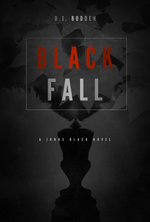
Black Fall by D. J. Bodden

Honestly? I really wasn’t that interested in this book — Bodden followed me on Twitter, and I followed back — I saw that he had a link to NetGalley for this book, so I clicked and checked it out. It seemed like a perfectly nice book and one that probably had an interesting take on teenaged vampires, but I really wasn’t in the mood for that, so I closed the window. Or so I remember it. The next day, I got an email saying that I’d been approved for the book. Not wanting my NetGalley percentage to take a hit, I threw it on to the Kindle and made room on the schedule. So, let the fact that I wasn’t all that interested in this book in the first place put a certain spin on what I’m going to say here.

Black FallBlack Fall

by D. J. Bodden
Series: The Black Year, #1

eARC, 294 pg.
2015

Read: April 12 – 13, 2017


Jonas Black is a typical sixteen year-old, with a very driven girlfriend (who’s pretty much mapped out the next few years of their lives), a decent home life, a couple of invested parents, and so on in NYC. Which makes him not that typical, I guess — but he’s the kind of kid people think of as “typical.” When we meet him, however, he’s reeling from the unexpected death of his father, and his mother doesn’t seem to be acting all that normal at the funeral.

Not long after that, strange things start happening to Jonas — he blacks out unexpectedly, his mother’s behavior gets even stranger, lastly he and his mother are attacked at home, and rescued by someone unlikely (leading to 2 very large men escorting him to school). He’s able to pin his mother down and she explains to him that she’s a vampire, as was his father — and he is, too. There was a problem with my download and so the conversation where his mother describes the experiment that made him into the vampire he is (born, not made) and whatnot. Thankfully, I don’t want to get into details anyway, because I’d probably get it wrong. I really appreciate that Jonas isn’t a Chosen One kind of character — more of an Engineered One. But even at that, I don’t think anyone planned on him tackling things that he did at this stage of his life (I’m semi-prepared to be proven wrong in future books).

So, while juggling school and his girlfriend, Jonas is basically enrolled in a self-defense course for vampires (there’s more to it than that, but . . . ) where he meets some other vampires and a reticent werewolf. He befriends/is befriended by a vampire, Eve, about the same age — but who knows what she’s doing — and wants to get to know the werewolf, Kieran. While I’m largely on the fence about the older vampires Jonas meets — I really like Eve. Kieran and the other werewolves are cool — and not just because I prefer lycanthropes to vamps. Before long the three of them — and a small army of others — find themselves in the middle of an effort to put a stop to a demon’s schemes.

Bodden’s vampires are pretty interesting — I like some of the tweaks he makes to the standard profile. Ditto for his werewolves. His entire supernatural taxonomy and how it relates to the world is pretty well-realized and elaborate. I was pretty impressed by it, and am curious about it as well. I’m not saying they’re drastically different (vampires don’t glow or anything), but Bodden’s vamps aren’t the same as Hunters’s, Butcher’s, Briggs’, etc.

A word of warning: There’s. Just. So. Much. Exposition. I get it, really — Jonas needed to be introduced to this world, and acclimatized really soon for his own safety. Which was mighty convenient, because it helped the reader learn about The Black Year’s take on vampires, werewolves, lichs (is that the proper plural form? lichen doesn’t seem right), specters, hunters, etc. On the whole, Bodden did a decent job blending character moments and infodumps, merging what we need to learn with keeping things moving. Still, it frequently felt like this was a guide to the supernatural world more than a novel — he might as well have named a couple of characters Ryan and Esposito.

I was engaged enough to keep going, but at a certain point, I’d just about given up hope of really enjoying the book, and just put my head down to plow though and get it over with so I could move on. I was surprised a little later to find out that I was invested in the fate of these characters, and was really getting a kick out of Bodden’s work. I can’t point to what it was that got me there, but it probably had something to do with Kieran. I do want to stress that it was after the 50% mark, so stick with it if your experience is like mine. By the time I was finished, I was ready for book #2 (…and probably 3….and most likely 4).

I will not say that this is the best thing since sliced bread, but it’s a fresh take on many UF staples from a YA point-of-view, with compelling characters, a well-built world, and a solid plot (especially when it gets around to moving).

Disclaimer: I received this eARC from the author via NetGalley in exchange for this post — I appreciate the read.

—–

3.5 Stars

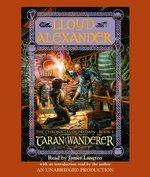
Taran Wanderer (Audiobook) by Lloyd Alexander, James Langton

Taran WandererTaran Wanderer

by Lloyd Alexander, James Langton (Narrator)
Series: Chronicles of Prydain, #4
Unabridged Audiobook, 6 hrs, 22 min.
Listening Library, 2005

Read: March 28, 2017


The one question that’s plagued Taran all his life is just who is he? Who is his family? Is there any chance at all that his family is some sort of nobility? This last question has taken on a new level of importance to him as he has realized that he’s in love with a princess and can’t do anything about it without that nobility.

Dallben can’t answer the question for him — but he allows Taran leave to go try to find the answer himself. I’ve never understood just how Taran can pull this off — there’s practically no birth records in Prydain (I can’t imagine), it’s not like he can get blood tests done — and he doesn’t really interview anyone, just meanders around.

Still, he visits various corners of the kingdom — visiting friends old and new, dipping his toe in all sorts of trades and vocations. He renders aid, and gets aid. Fflewddur Fflam shows up and spends a good portion of the novel traveling with him (Gurgi remains a constant companion). There’s a confrontation with a wizard, a regional armed conflict to try to settle, a mercenary band to deal with — as well as other woes.

He learns a lot, he matures a lot, and maybe even gets a dose of wisdom. It’s not your traditional fantasy novel by any sense, but it’s a good one.

As for the audiobook? Everything I’ve said about the other books in the series — Alexander’s introduction and Langton’s performance — holds true for this one.

The most emotionally rich of the books, the most thoughtful — particularly for those of the target age. Good, good stuff.

—–

4 Stars

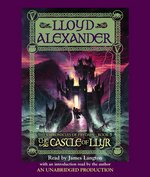
The Castle of Llyr (Audiobook) by Lloyd Alexander, James Langton

The Castle of LlyrThe Castle of Llyr

by Lloyd Alexander, James Langton (Narrator)
Series: Chronicles of Prydain, #3
Unabridged Audiobook, 4 hrs, 36 min.
Listening Library, 2004

Read: March 20, 2017


Taran is tasked with escorting Princess Eilonwy to the Isle of Mona, where she’ll be taken in by distant relatives — the king and queen, who will help her learn how to be a proper young lady (an idea she finds ridiculous). They sail there on a ship “captained” by the island’s Prince Rhun.

Once they reach the island, Taran runs into Fflewddur Fflam, who’s enjoying barding again — even if the castle’s steward, Magg, has an intense dislike of his music. Shortly after that, Taran discovers there’s a threat to Eilonwy in the castle and tries to save her from it without letting her know she’s in danger. That goes poorly and he joins the rescue effort instead (also led by Rhun — or at least Rhun thinks so).

The companions also meet the world’s littlest giant (why does that sound like it belongs more in The Phantom Tollbooth than here?) and a mountain cat that we’ll get to spend a lot of time with. There’s a lot of links to the first book as well as the last book in the series here.

The introduction by Alexander was great — I wish I could hear more of his own takes on the books. Langton was solid. Again, I think he could talk a little faster — but that’s minor. His Prince Rhun’s “Hullo”s are just what I’ve heard in my head all these decades.

This is probably the most entertaining of the lot — there’s some really good comedy here. Taran grows up a lot more here than he does in other books, I think, which adds something more than just entertainment to this book. It’s possible that this is the one in the series I read the most as a kid. The story isn’t as rich as I remember, but factoring in the growth in characters and the entertainment factor, the experience as a whole was pretty satisfying — and I’ll take that.

—–

3.5 Stars

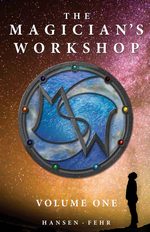
The Magician’s Workshop, Volume One by Christopher Hansen, J.R. Fehr

The Magician’s Workshop, Volume OneThe Magician’s Workshop, Volume One

by Christopher Hansen, J.R. Fehr
Series: The Magician’s Workshop, #1

Kindle Edition, 290 pg.
Wondertale Press, 2014

Read: Mach 22 – 24, 2017


I’m sick and tired of these books that introduce you to a character and their problems/goals and then abandon them for another storyline or two with no relation to the first for over 50% of the book. I get that this is a thing that people do all over the place (I read a couple of books last year that never returned to the people in the introductory chapter or really explained why we spent time with them), but it drives me crazy. Fine, multiple point-of-view characters, multiple storylines, but don’t dump one for 150 pages or so after introducing them.

That’s probably not the best way to start this post, but hey, if they can start the book awkwardly, I can start my post about it awkwardly, too.

There was some great worldbuilding at work here — Hansen and Fehr did yeoman’s work there. But they failed at translating it into a setting for stories. They wisely didn’t dump everything on the reader in the first chapter — but they way they went about doling out the explanation of what’s going on, why the world/magic/society works the way it does was way too slow. I can’t imagine that all too many readers in their target audience (12 and up) are going to have the patience to wade through it all.

Part of the magic system is another one of my pet peeves — everyone has magical powers. This can work, but usually it doesn’t — as even Dash Parr can tell you, everyone being special (or having magic) “is another way of saying no one is.” I’m not sure why that’s considered magic in this world. For underage people, they can only use their magic for training in controlled circumstances. When they get older, they’re tested and part of the test (that makes no sense to me) will reveal whether the user is qualified to be a magician — one of the elite professional magicians, as opposed to those who are limited in their use of magic — by some standard I can’t explain.

The novel focuses on a handful of youth — some who know each other, some that don’t — as they finish preparation of the day of testing. Some have lofty goals, some have small, but important goals, some have dark backstories, others are trying to be the first in their family to join the elite ranks.

Here’s my biggest beef with this book: there’s no story here. It’s all set-up. It’s The Fellowship of the Ring that stops when they get to Rivendell and the Council starts, or any Spider-Man story that stops after the death of Uncle Ben these characters get to (and in some cases, start) the testing and the book ends. Yeah, sure, the notes at the front of the book say this is to be read with Vol. 2 — but, sorry, that doesn’t cut it. There’s not a story here, there are no complete arcs — it’s part of a book.

There’s some not unclever commentary on media culture, critique, fans and whatnot throughout this book — especially later on. Also, there’s a strong “hey, the real world is just as fantastic as the ones we create” message that I really appreciated. Some good stuff for younger readers to read.

This is a swing and a miss — there’s a lot to be commended here, but the flaws are too much to overlook. I want to give this a 3, but I just don’t think I can justify it.

Disclaimer: I received this book from the publisher in exchange for this post and my honest opinion. Sorry.

—–

2 Stars

Ignite by Danielle Rogland

IgniteIgnite

by Danielle Rogland

Kindle Edition, ? pg.
Inkitt, 2017

Read: March 2 – 4, 2017

Something pretty bad happened to the world (at least Europe) — we’re not really told what precisely, but it was fairly significant. From the rubble of society a man named Donovan raises and restores some order and stability — it doesn’t take long for him to become some sort of horrible despot, and becomes Emperor Donovan.

We come into New London some decades after this and meet a young pickpocket named Jacks. She’s been living on the streets for years now, after Donovan’s agents have killed her parents. She’s confident, scrappy and strong — but she knows her limits. One day, she’s trying to help some people from her neighborhood and encounters the legendary group The Flames. The Flames are known throughout New London (and further, actually) for standing against the Emperor and his agents. Where they strike, the leave burning candles behind — a symbol of hope — a literal light in the darkness.

Jacks can’t believe that she’s run into them and actually aids them. Slowly, she’s brought into their confidence and becomes one — just in time for The Flames to uncover a large new initiative about to be launched to eliminate Donovan’s enemies. The only question is: Are they too late?

In the midst of this, the Flames have to grow and evolve both as they bring Jacks into the fold, but as that results in secrets and weaknesses come to light. It’s not just Donovan’s troops that are a threat to the group, but problems from within could actually destroy The Flames. When Rogland is dealing with the relationships, the backstories and what those mean for the characters futures that she really shines.

We don’t get a clear picture just what makes Emperor Donovan worthy of being overthrown — other than bringing some sort of stability to the post-disaster world, we learn nothing about how he runs things as a whole. We do know that he’s horrible (at best) to the people that live and work in his household, and that he has his goons publicly execute dissenters. The Flames uncover an even worse solution that Donovan has for dissenters/protestors/rebels, too. But that’s all we’re given — I’m not saying that’s not horrible, but it’s not exactly a hugely oppressive general environment (that we know about).

The other thing we don’t know is how The Flames actually accomplish much — yeah, they have heart, they have a strategic whiz of a leader (I guess), and a heckuva computer guru — but beyond that, without getting into details, it’s hard to believe that the group you read about can be as effective as we are told they are. And really, we don’t know what The Flames (or any of their allies) are really for — we just know they’re anti-Donovan. But there’s nothing they’re rallying around, no principles, or guiding philosophy or anything.

Still, in the moment you don’t notice any of that much (if at all) — what you do notice is Jacks finding a place in the world — a place where she’s not alone, trying to scrape by. Rather, she has a family of sorts, people who care, people looking out for her, and who need her in return, people she can help. Moreover, she has a purpose, she’s part of something bigger than herself. I could say the same for most of the people in The Flames, actually. The flaws of the book fade into the background in the midst of the characters and their lives.

Could this book be better? Yeah — the plot, the internal logic, etc. could use some real work. But I’m not sure that Rogland could give us that while maintaining the experience of this book. Would I have preferred something more developed? Sure — but I really can’t complain about what we have here. It’s a very satisfying read, with a strong emotional hook, and that’s good enough for me. The ending begs for another volume or two, hopefully they’re forthcoming. But, unlike others of the type, it doesn’t demand a sequel, it could work as a stand-alone. I just hope it isn’t one. 

Disclaimer: I received this novel from Inkitt in exchange for this post — thanks!

—–

3 Stars

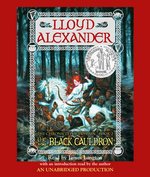
The Black Cauldron (Audiobook) by Lloyd Alexander, James Langton

The Black CauldronThe Black Cauldron

by Lloyd Alexander, James Langton (Narrator)
Series: Chronicles of Prydain, #2
Unabridged Audiobook, 5 hrs, 28 min.
Listening Library, 2004

Read: March 15 – 16, 2017


Of the five books in the Chronicles, this is probably my least favorite installment, still I enjoyed reliving it with this audio. Why Disney chose this one to make a movie out of, I’ll never know (and have never seen).

Prince Gwydion has called a council at Cair Dalben — bringing warriors, royalty and others from across the land to discuss something of urgency. Taran is included as well, thanks to the Prince’s experience in the previous book. One of the attendees, Prince Ellidyr, is a young, proud twit who might as well have been named William Zabka — if he doesn’t remind you of the quintessential 80’s movie antagonist, you’re not reading him right. He and Taran clash immediately, and are predictably assigned to work together.

We also meet the son of Taliesin, the chief bard, Adaon. Adaon is one of those characters that comes out of nowhere, every character loves and so do the readers. He’s wise, kind, and probably a decent fighter. Taran is possibly more taken with him as friend and role model than he was with Gwydion — partially because he’s not a prince, and so is more approachable; but also is just that kind of guy. Thankfully, Taran and he are also assigned to work together so it’s not all about the jousting with Ellidyr.

There were other characters introduced — several actually, but those two are the ones to focus on now. I’m not going to tell you anything about Gwystyl and Kaw, because I’ll not do them justice. But you’ll enjoy both. Gurgi was Gurgi, and Eilonwy was perfect — seriously just perfect. I always liked the character, but maybe never as much as I am this time through the series.

I got distracted by talking about the characters, the purpose of the council is to go hunting for the Black Cauldron, the source of the Cauldron Born warriors of Arawn. These are basically zombies with swords, doing anything their master calls for — and were the source of a good deal of apprehension when I was a kid, and now just seem like a great foe. Their numbers are swelling, making Dalben and Gwydion certain that something bad is on the horizon — now seems like a good time to raid the Dark Lord’s domain and destroy the Cauldon. Which may not derail the plans in motion, but will at least make them easier for the good guys to survive.

So after the Council, the heroes head out. As soon as they launch their strike, they discover that someone has beaten them to it — the Cauldron is gone and they’ve got to regroup before hunting it down. Things go bad there, the companions are separated from each other and on the run from those the Cauldron has already produced.

Taran, Ellidyr, Adaon, Gurgi and Fflewddurr get a lead on the Cauldron and decide to follow it up immediately rather than let their foes get it while they’re off looking for Gwydion. This takes them to the swamps of Morva — one of my favorite places in the series — and to the hut of Orddu, Orwen, & Orgoch. They will chill younger readers and entertain readers of all ages. From there peril, betrayal, redemption, grief and more ensue as the companions try to destroy the titular MacGuffin.

The Lloyd Alexander introduction to this one was better than the previous — I’m such a geek that listening to little bits of Alexander was one of the highlights of my day. I don’t think I have anything to say about Langton’s performance here that I didn’t say last time. It was good, nothing spectacular, though. He kept me engaged, even if he paced it slower than I’d like. Whoever transferred this from audiotape to digital format had an odd approach to dead space between tapes/tape sides — there are times that I feared the file had stopped unexpectedly, either from a corruption in the file or a glitch in the app, and just as I’d grab my phone to check the Langton’s voice would start again.

A needed part of the story, if only for Taran’s growth, and for what it sets up in books to come. It was never my favorite growing up, still isn’t now, but it was still an entertaining few hours.

—–

3 Stars

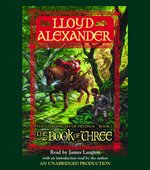
The Book of Three (Audiobook) by Lloyd Alexander, James Langton

The Book of ThreeThe Book of Three

by Lloyd Alexander, James Langton (Narrator)
Series: Chronicles of Prydain, #1
Unabridged Audiobook, 4 hrs, 56 min.
Listening Library, 2004
Read: March 6 – 9, 2017


I’m pretty sure that I’ve mentioned once or twice before here that The Chronicles of Prydain were the books that got me into fantasy. The Chronicles of Narnia made me a fan of Narnia, but really didn’t carry over to anything outside of Narnia (at least until I got older and tried Mere Christianity). But Prydain got me appreciating the tropes, conventions and characters that’d get me into Brooks, Weis & Hickman, Eddings, etc., etc. Listening to the audiobooks seemed like a nice way to revisit the series.

Taran, the Assistant Pig Keeper to Hen Wen (an oracular pig), dreams of glory to be found with a sword on the battlefield. His charge is frightened by something and escapes from her pen — Taran chases after her, leaving the only part of Prydain he’s ever known behind in the process. This hunt for the pig takes him to the far reaches of Prydain, where he encounters the son of the High King, Gwydion; Princess Eilonwy — about his age, and a fantastic foil and friend for Taran; Fflewddurr Fflam, an unofficial bard; Gurgi — some sort of simple-minded Sasquatch-like being; and others. Taran also encounters the forces of evil — the Horned King; Archen the enchantress; and other minions of the Dark Lord Arawn.

The themes of true nobility, heroism and what it means to be a man are prevalent (and Alexander maybe gets a little didactic here) — nothing I object to, just it seems a little thick by contemporary standards. Taran learns (for the first time) that there’s as much honor to be found in doing your everyday work well as there is on the battlefield. It probably feels a little old-fashioned to many, but there’s value here. Taran begins to mature here, but it takes (as I recall) all but the last 30 pages of the fifth book for it all to come together for him.

There’s a little audio recording of Alexander before the book kicks off as an introduction — that was pretty cool. Langton’s narration was okay — the narration was okay, maybe a little slow. His interpretation of Taran and Gwydion didn’t do much for me (and actually made me realize how clunkily Alexander wrote their dialogue), but they slowly grew on me. I really couldn’t find anything to like about Gurgi (one of my favorite characters ever). But I really liked everything else — his Eilonwy and Fflewddurr were perfect and a lot of fun. He deserves kudos for his Hen Wen alone, really.

This isn’t the greatest writing you’ll encounter — for the age group or genre. But it’s effective, there’s so much to appreciate here (and not just for nostalgia’s sake). I remain a big fan of the series, and do appreciate the audiobook.

—–

4 Stars

Pipeliner by Shawn Hartje

PipelinerPipeliner

by Shawn Hartje

Kindle Edition, 248 pg.
Helen Springs Press, 2016

Read: March 14 – 15, 2016

I just don’t know what to say about this one. It’s a coming-of-age story about a young man in the 1990’s growing up in (what I believe is) a fictionalized Idaho Falls, Idaho. It’s arguable how much Jason Krabb actually comes of age here — you could make a pretty decent case that he regresses throughout the book.

Jason’s main goal in life is to become a rock star in Portland, OR or Seattle, WA — along the way, he’d like to have a girlfriend and party a lot. He spends a lot of time and energy becoming pretty mediocre at guitar, and hangs out with a poser who’s new to town and a couple of older friends who are more interested in scholastic success and their futures (a concept Jason can’t really wrap his brain around). He’s got an older brother studying at Princeton and dating a nursing student, a very successful mother and a less-successful father who’s browbeat by the other constantly.

The writing is uninspired and dull, there’s no life to it at all — just a dry recitation of what’s going on. To be fair, there’s a bit of flair displayed when he writes little Lake Wobegone-inspired descriptions of things from Jason’s mother’s perspective, but I never saw the point of those, they didn’t seem to add anything. The sex scenes are perfunctory and clumsy (fitting for a seventeen year-old’s initial fumblings, I guess), at least those involving Jason. The one with Jason’s parents was just . . . odd and unnecessary. There were a couple of anachronisms that bugged me, but by and large, his history is good — he captures the feeling of the time, while maybe overplaying the pre-dawn of the Internet as we know it a little bit.

Were I an LDS youth of that era, I might be offended at the depiction of both the straight-laced LDS and the backsliders. If I were someone who spent time with a lot of LDS at the time depicted in the book, I might say it was pretty accurate. Either way, it’s going to be divisive.

There’s nothing new here — stylistically, narratively, or in terms of character. It’s all cliché, it’s not original, there’s nothing here you haven’t seen before — and likely better. It’s not bad, but it’s not worth your time and effort. While reading it, I spent a lot of time annoyed by the book — but there’s nothing to rant about here. At Hartje tried to do something, but like Jason, did the bare minimum and it shows (not unlike what I did here).

Disclaimer: I received this book from the author in exchange for this post — sorry Mr. Hartje.

—–

2 1/2 Stars

Wires and Nerve, Volume 1 by Marissa Meyer, Douglas Holgate

Wires and Nerve, Volume 1Wires and Nerve, Volume 1

by Marissa Meyer, Douglas Holgate (Art)
Series: Wires and Nerve, #1

Hardcover, 238 pg.
Feiwel & Friends, 2017

Read: March 1, 2017


So, in the months following Winter, life has progressed as one would expect — Cinder has strengthened her position on the Moon, Scarlet’s returned to the farm with Ze’ev Kesley, and Cress and the Captain are touring Earth. One of the loose strings that Meyer left hanging was the fate of the Lunar military troops all over Earth. They’re still out there, causing trouble.

Cinder can’t send any troops down — in the aftermath of a failed invasion, the optics alone would be bad. But . . . she can send a single operative, and Iko nominates herself for that. She spends weeks taking out pack after pack, helping local authorities take them into custody.

But they’re not just going to roll over, there are some that are preparing to strike back against Iko — and Cinder.

Throw in a love story, an examination of Iko’s true nature, and some nice catch-up with our old friends, and you’ve got yourself a fun story. It’s fun, but it’s light. If it were prose instead of a graphic novel, it might take 40 pages to tell this story. Which doesn’t make it bad, just slight.

The art was . . . oh, I don’t know — cartoonish? Not in a bad way, but I see why some people I know weren’t impressed. Once I got used to it (after about 30-40 pages), I even kind of liked it.

Basically, I’m saying that the book was okay — I enjoyed it, but man, I wanted more. At the same time, I think it delivered everything that Meyer and Holgate were looking for, so I can’t complain. Fans of the series may enjoy it, but it’s not a must read. People who haven’t read the books had best avoid it — but should probably go back and read the novels.

—–

3 Stars
2017 Library Love Challenge

A Few Quick Questions With…Ben Jackson

A couple of weeks ago, I posted some thoughts about The Day My Fart Followed Me To Hockey. Today, one of the authors, Ben Jackson stops by to answer a few questions. Short and sweet so he can get back to putting out the books . . .

You work with a co-author and an illustrator — what the process like?
My co-author is my wife, Sam. Working with her has been easy, we don’t argue about much. We have been in a long-distance relationship for several years, so communication is pretty good!
Your Author page shows quite a range in subject matter for your books — relationship books, survival guides, humor, kids books. How do you decide what you’re going to tackle next? And — how do you get to the point that you say, “A Personification of Flatulence, yup, that’s my main character.”
Well, the Day My Fart Followed Me Home Series just happened! We were looking for a fun way to get kids to learn important lessons, and kids love farts!
How are parents reacting to The Fart books? I imagine that kids who read these like him (it?), but parents might have widely divergent reactions.
So far, I don’t think we have had one bad reaction by any parents. We had a school say it wasn’t suitable, but 99% of parents love the books and think they’re hilarious.
What was the biggest surprise about the writing of The Day My Fart Followed Me To Hockey itself? Either, “I can’t believe X is so easy!” or “If I had known Y was going to be so hard, I’d have skipped this and watched more TV”.
The biggest surprise was just how popular the book has become. When we first wrote The Day My Fart Followed Me Home, we never thought that the kids’ books would be so popular. Working with the illustrator Danko to get things done on schedule is probably the hardest part, and Danko is amazing with tight deadlines, so it isn’t really that hard.
What’s the one (or two) book/movie/show in the last 5 years that made you say, “I wish I’d written that?”
Lol I wish I had written 50 Shades of Grey!! That book and movie just exploded.
What’s coming up for the team of Ben Jackson and Sam Lawrence?
We are about to release The Day My Fart Followed Me To Soccer, and a book about a caterpillar that can do anything it sets its mind to. Stay tuned!
Thanks for your time — and the book!

Page 31 of 42

Powered by WordPress & Theme by Anders Norén