Music Monday's originated at The Tattooed Book Geek's fantastic blog and has shown up hither, thither, and yon since then.
![]()

Music Monday's originated at The Tattooed Book Geek's fantastic blog and has shown up hither, thither, and yon since then.
![]()
(Updated and Revised 8/26/24)
It’s National Dog Day, the annual celebration of “all dogs, mixed breed and pure. Our mission is to help galvanize the public to recognize the number of dogs that need to be rescued each year and acknowledges family dogs and dogs that work selflessly each day to save lives, keep us safe and bring comfort.” So it seemed like a good day to post another version of this. I haven’t added much to this since last year’s editions, which worries me a little bit. What have I been wasting time reading?
This was a hard post to come up with a name for‡, essentially this post came from a comment not too long ago about being hesitant to read books about animals if the reader doesn’t know if they survive the book. I get that, I absolutely do. I still bear the scars of Where the Red Fern Grows and Marley and Me (sure, that wasn’t that long ago, but the wound still stings). So, for readers like my correspondent, here are some perfectly safe books prominently featuring dogs!
I plan on updating this regularly, so by all means, chime in with comments about Dogs I’ve forgotten about/haven’t encountered yet!
The Particulars of Peter by Kelly Conaboy—this is a collection of humorous essays giving Conaboy the opportunity to rave about her dog, Peter. In her eyes, Peter is a perfect dog, and as you read this, you’ll be tempted to agree. (my post about it)
Olive, Mabel & Me by Andrew Cotter—Cotter’s charming book describes his life with the two dogs that rocketed to international stardom (and brought him along). (my post about it)
My Life as a Dog by L. A. Davenport—Davenport’s short little book about the relationship between the author and his dog, Kevin, a black and tan, pure-bred dachshund. It focuses on what the two of them did over two days and then a weekend selected from the years they spent together. (my post about it)
Dogtology: Live. Bark. Believe. by Jeff Lazarus—Humans are so obsessed with their dogs, we’ve devoted so much time, energy, and work into them that it’s become a religion, with humans essentially worshipping their pets. This book is a look at that devotion and the rituals and beliefs that accompany it. It’s technically humor, but a lot of it seems pretty on-target. (my post about it)
What the Dog Knows: The Science and Wonder of Working Dogs by Cat Warren—Warren basically covers three topics: there’s the science and history of using working dogs (of all sorts of breeds, not to mention pigs(!), birds, and even cats) to find cadavers, drugs, bombs, etc.; there’s the memoir of her involvement with cadaver dogs via her German Shepherd, Solo; and anecdotes of other cadaver dogs and trainers that she’s encountered/learned from/watched in action. (my post about it)
What the Dog Knows Young Readers Edition by Cat Warren, Patricia J. Wynne—The above book adjusted for younger readers, with some great illustrations. It’s not dumbed-down, just adjusted. (my post about it)
Mace Reid K-9 Mystery series by Jeffrey B. Burton—A Dog Trainer/Cadaver Dog Handler and his dogs get involved in serial killer cases. Warning: Like many heroes in action novels, most of Mace’s dogs get beat up/injured. Some pretty badly. (my posts about it)
Suspect by Robert Crais—One of my all-favorite books, a cop with PTSD gets assigned to the K-9 Unit and works with a dog fresh from Afghanistan combat. (my post about it) The pair also plays a major role in The Promise.
Sharp Investigations by E.N. Crane—A series of comic investigations about an Ex-MP and her K-9 partner in Ohio. Both are pretty skilled and are walking disasters at the same time. (my posts about them)
Pug Actually by Matt Dunn—Doug, a loyal pug, plays cupid for his owner. This is a cute rom-com with a charming canine narrator. (my post about it)
Stepdog by Nicole Galland—A love story where the major impediment to happily ever after is her dog (a gift from her ex). (my post about it)
Noodle Conquers Comfy Mountain by Jonathan Graziano, Dan Tavis (Illustrator)—This picture book is about Noodle’s search for a place to spend the day where he can have all his needs met: to be able to smell nice smells, see his Jonathan, watch for a snacking opportunity (or several), and—most importantly—feel comfy. Impossible to not like. (my post about it)
Noodle and the No Bones Day by Jonathan Graziano, Dan Tavis (Illustrator)—This picture book relates the origin of the Internet Craze and the wonderful, photogenic pug behind it. (my post about it)
Kay-9: The Robot Dog by J.M. Gulmire—maybe doesn’t belong on this list (see: “Robot”), but it’s too cute to leave off on a technicality. What’s an inventive boy to do when his very supportive mother won’t let him get a dog because she’s horribly allergic? Why, build one with an incredibly lifelike AI. Obviously. (my posts about it)
Oberon’s Meaty Mysteries by Kevin Hearne (Audiobooks narrated by Luke Daniels)—Oberon, the scene-stealing Irish Wolfhound from The Iron Druid Chronicles narrates this series of novellas (my posts about it)
Neah Bay series by Owen Laukkanen—Lucy is a dog who is trained by prisoner Mason Burke, who has to track her down when he gets out. She’s a service dog for Marine Vet Jess Winslow. Lucy connects the two humans in her life and helps to keep them safe when a corrupt deputy comes after Jess. (my post about it)
I Thought You Were Dead by Pete Nelson—I’m not sure how to sum this one up in a sentence. It’s a pretty typical novel about a troubled writer with a romantic life and family in shambles. But his dog is the thing that makes all the difference. (my post about it)
Chet and Bernie books by Spencer Quinn—Bernie Little is a PI in Phoenix. Chet’s his four-legged partner and the series narrator. It’s too much fun to miss. (my posts about it)
The Right Side by Spencer Quinn—”a deeply damaged female soldier home from the war in Afghanistan becomes obsessed with finding a missing girl, gains an unlikely ally in a stray dog, and encounters new perils beyond the combat zone.” (my post about it)
Woof by Spencer Quinn—The beginning of an MG series about a with a penchant for trouble and her dog. (my post about it)
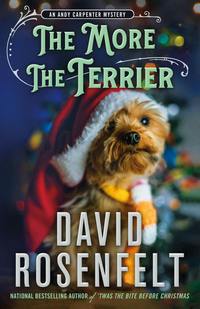
Andy Carpenter books by David Rosenfelt—Andy Carpenter is New Jersey’s best defense lawyer and a devoted dog owner. He helps run a rescue shelter, too—and almost every client he takes as some sort of connection with a dog. These books aren’t dog-centric like the others on this list, but they’re dog-heavy. (my posts about it)
The K-Team books by David Rosenfelt—a spin-off from the Andy Carpenter series. This features a PI team made up of Andy’s wife/investigator, Laurie; the near super-heroic Marcus; and Corey Douglas, a freshly-retired K-9 officer. His canine partner, Simon Garfunkel, comes along, too. Simon Garfunkel doesn’t play a giant role in the books, but he gets at least one good action scene per book. (my posts about it)
Voyage of the Dogs by Greg van Eekhout—SF for all ages about a team of dogs on a long-distance space flight. (my post about it)
These dogs aren’t as significant a presence in their books as the prior group, but they’re important enough to mention.
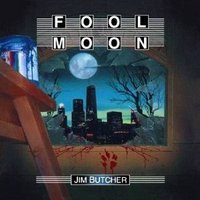
Mouse from The Dresden Files by Jim Butcher. (my posts about it)
The Midnight Plan of the Repo Man by W. Bruce Cameron and the sequel Repo Madness by W. Bruce Cameron— (my posts about it)
Edgar from the Washington Poe books by M. W. Craven. (my posts about it)
Rutherford from The TV Detective series by Simon Hall (my posts about it)
Oberon from the Iron Druid Chronicles by Kevin Hearne. (my post about it)
Ruffin from the I. Q. series by Joe Ide. (my posts about it)
Dog from the Walt Longmire books by Craig Johnson (my posts about it)
Purvis (and Beau) from The Good Kill by John McMahon (my post about it)
Trogdor from The Golden Arrow Mysteries by Meghan Scott Molin (my post about it)
Mingus from The Drifter by Nicholas Petrie (my post about it)
Herbert and Daisy from Adult Assembly Required by Abbi Waxman (my post about it)
Some books that belong on this list, but might be a bit too close to not fitting on it for some readers
Lessons From Lucy by Dave Barry—there’s a strong “my beloved dog is old and will die soon-vibe throughout this (it’s the whole point), so some may want to avoid it. But the focus is on what Barry is learning from his aging but still full-of-life dog. (my post about it)
Dead is … series by Jo Perry—the canine protagonist in these mystery novels is a ghost, so there’s a dog death involved. But we meet her as a ghost, so she won’t die (again) in the series. (my posts about it)
Dogtripping: 25 Rescues, 11 Volunteers, and 3 RVs on Our Canine Cross-Country Adventure by David Rosenfelt—For various and sundry reasons, the Rosenfelts decide to move their home and dog shelter from California to Maine. As anyone who’s had to get a dog (or a toddler) into their vehicle for a drive across town can imagine—getting 25 dogs moved across the country is a logistical nightmare. In Rosenfelt’s capable hands, if “tragedy plus time equals comedy,” “nightmarish logistics plus time” does, too. The shelter specializes in senior dogs, so not every dog mentioned or featured lives, but that’s not the focus of the book. (my post about it)
E. B. White on Dogs—if this isn’t every short piece or letter White wrote mentioning dogs, it’s so close as not to matter. Some are witty, some are touching, some are somewhere in between. There are even a few written from the point of view of his dog! Sadly, this does include a eulogy for one dog, a few other mentions of canine mortality, so it can’t make the main list. (my post about it)
Lessons from Tara by David Rosenfelt—a sort-of-sequel to the above. Inspired by the death of their dog, Tara, the Rosenfelts now operate a no-kill shelter for senior dogs. This is the story about the origins and day-to-day of that life. There’s discussion of Tara’s death, and he has to cover the end of days for dogs, but it’s not the focus of the book. It’s one some will want to avoid, but you probably shouldn’t. (my post about it)
Max Boucher Mysteries by Troy Lambert—Max used to be with the Seattle Police, but became a P.I. after the deaths of his wife and daughter. Because of the events of the first novel, Max gains a reputation as an animal detective. Particularly specializing in missing/kidnapped dogs. Most of the dogs in the series get out okay, but some are injured or worse. (my posts about it)
Stray Ally by Troy Lambert—this is an action novel featuring heroics from several dogs working alongside a special ops soldier to try to stop a white supremacist group from launching a terrorist action. Some dogs are hurt, and a few die along the way. (my post about it)
‡ I brainstormed this a bit with my family, and wanted to share some of those titles that didn’t make the cut, just because I enjoyed their creativity:
These Dogs Didn’t Go To Heaven/Not All Dogs Go to Heaven implies these dogs aren’t wonderful creatures, and that’s a solid loser
No Kleenex Required too vague, and not necessarily true, they’re just not required because of a death
The Best Bois
Books Where the Author isn’t A Heartless Bastard (Looking at You, Marley and Me) too long, and boy howdy, does it seem my son has bigger issues with the book than I did
Books that Even PETA Would Be Okay With
Books for the Vegan in You suggests the dog books I don’t mention are in favor of eating them…
Paw Patrol I’m almost confident my daughter’s boyfriend suggested as a joke, for his sake, I’m assuming it was
Pawfect Dog Stories I refuse to resort to that kind of joke
(Images by S K from Pixabay and josmo from Pixabay)
![]()
I’d held off posting about this while waiting for the author to get back with his Q&A answers. But he’s either too busy (or didn’t think the Qs were that interesting, and I have no problem with him thinking that). But National Dog Day seems like a good day to post about this book. So here we go.
The Teachings of Shirelle:DETAILS: Publisher: Circuit Breaker Books LLC Publication Date: July 09, 2024 Format: eARC Length: 266 pg. Read Date: TEXT

I’m just going to go with what’s on the author’s site:
“Relish the day. If you’re not in awe, you’re just not paying attention.”
She hadn’t even been in the crowded pound a week, but she’d already developed a nickname, “Knucklehead.” As a puppy she destroyed property and precious clothes; as an adult she injured her owner, ruined romances… and changed the world-views of those around her.
Have you ever watched an animal and wondered how it thinks, how it sees the world, how it views you? And have you ever wondered what wisdom you might learn if you could see things as that animal does?
This unique book is many things: an amusing and moving memoir about a memorable dog, a poetic ode to a human-animal connection, and a serious philosophical, psychological, and spiritual inquiry into the lessons a man gleaned from the simple-minded brilliance of a teacher, a lover, a liver of life to the fullest… a Knucklehead.
That penultimate sentence is demonstrably false, but the rest of that gives you a pretty good idea of what to expect from this book.
Douglas Green truly loved his knuckleheaded canine companion. That is incredibly clear. She was frequently a goof, that’s clear, and brought a lot of joy and laughter to Green’s life and to those with whom she interacted (mostly).
The parts of the book that were just stories about Shirelle were great and brought several smiles to my face (and I expect the same will be true for many readers). They’re relatable, they’re fun, they might make you chuckle.
I really appreciated moments like where Green tried to describe things like the joy Shirelle (and just about every dog) expresses when their person returns home. And he’s right—why don’t we have the same kind of joy for each other? (we could probably express it without the jumping). Many—maybe even most—of the lessons he takes from Shirelle are similarly well-written, well worth the time, and showed the a smilar kind of thinking.
I couldn’t help but think about Dave Barry and David Rosenfelt’s lessons from their dogs during this time.
Even the parts about Shirelle’s medical struggles—that eventually ended—and what Green went through to get her the care she needed were rewarding reading (although by the time we got to that part, a lot of the book fell into what I talk about in the next couple of sections). Her making it through so much was great to see, even as you feel bad that she had to go through it.
I’m going to lump in just about everything that Green puts about his biography, his various jobs, his love life, and his professional and semi-professional pursuits here. I didn’t pick up this book to read about Douglas Green, his career in film or stage—or his move into psychotherapy.
When Green wrote about Shirelle in conjunction with this, that really helped—she’s why people come to the book after all. Shirelle as an unofficial and untrained therapy dog is the kind of thing readers want to see.
The metaphysical claims that Green makes, the philosophy he espouses, and things along those lines were tiresome, not well conveyed, and typically interfered with the book as a whole. Your results may vary, obviously, but if I want to read about manifesting or things of that nature—I’ll go grab Rhonda Byrne’s book, not a book about a ridiculous dog.
I’m not entirely sure that those parts of the book were all that internally coherent—I mentally checked out during most of those parts of the book for both of our sakes. That way I wasn’t miserable and I wouldn’t end up going on an extended diatribe about them. I’m on the verge of that now, however, so I’m going to shut up.
Well, after this one additional note. If you’re going to appeal to a term from Christianity (or any other religion) to buttress your point, you should maybe do a quick web search to make sure it means what you think it means. Hint: Christ’s “Passion” doesn’t come close to contemporary usage of “passion,” no matter their etymological link. It’s hard to take someone seriously when they do that.
I don’t think that Green and I would get along in person (I’d be glad to be given the opportunity to discover otherwise, and the drinks would be on me). I don’t think we’d actively dislike each other, but we’d just rub each other the wrong way. Until we started telling stories about the silly balls of fur, energy, and devotion that we share our lives with. Then, I think we’d find some great common ground and probably enjoy the conversation.
I bring that up because I think this book works for me along the same lines. When it’s about Shirelle as the animal companion that makes people laugh and/or feel good in other ways, I think the book is at its strongest and most appealing. I’m down for that kind of thing anytime and Green handles it well.
When the book strays from that, it loses me—and the further it strays, the less I care about it and the more I’m going to find things to quibble with.
Are you going to agree with me? I don’t know. Are you going to think I’m out to lunch and really jibe with Green and everything he has to say? It’s possible.
Either way, if you’re a dog-lover—or if you’re someone who enjoys reading about dogs. You’ll probably be glad you gave this a shot, I am (generally).

Disclaimer: I was provided a copy of this ARC by the author in return for my honest opinion, which he may be rethinking now.
This post contains an affiliate link. If you purchase from it, I will get a small commission at no additional cost to you. As always, the opinions expressed are my own.

![]()
The Lord Jesus Christ:DETAILS: Series: We Believe Series, Volume Three Publisher: Lexham Academic Publication Date: October 18, 2023 Format: Hardcover Length: 316 Read Date: July 21-August 18, 2024

It’s a work on Christology–from Scriptural, historical, and systematic theological perspectives.
That seems a bit too pithy, but the few times I’ve tried that paragraph before now have really gone on and on. So–as I so often do when I’m struggling to answer this question–I’m just going to borrow from the Publisher’s description:
Jesus is the divine Son of God who has taken on human nature in the incarnation. As prophet, priest, and king, he leads his people in a new exodus. In The Lord Jesus Christ, Brandon D. Crowe reflects on Christ’s person and work. Crowe traces christological concerns throughout the Old and New Testaments and church history and then presents systematic and practical implications. Through a combination of biblical, historical, and theological study, Crowe provides a fresh and robust statement of who Christ is and what he has done.
Written from a confessionally Reformed perspective in dialogue with the great creeds of the church, The Lord Jesus Christ provides a thorough and trustworthy guide to understanding Jesus and his salvific work.
I think a glance at a Table of Contents really gives an idea what the book is like and what Crowe’s approach to this is (I included page numbers for each part to show the weight he gives to each area)
Introduction: “Who Do You Say That I Am?”
Part 1: The Biblical Witness [pg. 9-146]
I. The Son of God in Creation and the Old Testament
II. The Son of God Promised in the Prophets
III. The Son of God in the Gospels
IV. The Son of God in Acts and Paul’s Letters
V. The Son of God in Hebrews to Revelation
Part 2: Dogmatic Development [pg.147-294]
VI. Pre-Nicene Christology
VII. Creedal, Conciliar, and Modern Christology
VIII. The Mediator of the Covenant of Grace
IX. The Unity of the Mediator
X. The Work of the Mediator
XI. The Centrality of Christology for Christian Dogmatics
Part 3: Truth for Life and Mission [pg. 295-310]
XII. The Gospel of Grace
XIII. Pluralism and the Uniqueness of Christ
Conclusion: Seven Theses on the Person and Work of Christ
While Parts 1 and 2 are about even in page length, you will realize that the meat of the book is found in The Biblical Witness. The Dogmatic Development part is by no means lightweight, but it is easier to get through. I was a little surprised once I got there at how brief the last Part was–but it didn’t need to be longer to wrap up and apply the previous Parts.
Crowe is clear that this book isn’t supposed to be an end to one’s Christological reading, but it’s a start. In addition tote helpful footnotes and citations throughout, he concludes each chapter with four or so recommendations for further reading (not all will agree with a lot of Crowe’s arguments). I don’t know that I’m going to follow up with all of them (narrator: he will not), but I am going to chase down some of those works.
Each chapter ends with a clearly designated conclusion, so you can be sure you’re picking up on those parts that Crowe finds most important, which is a very handy little segment. As are the Seven Theses he ends the book with–undoubtedly for me and others, this is going to be the part of the book that gets referred to most often. You can get a quick look at a significant point to brush up on it or refresh your memory, before going back to the appropriate chapter (or chapter conclusion) to get the details you need.
This is presented in a text-book style but isn’t quite as dry as one. But I can easily see it functioning as one (and being a favorite of the students using it because of that style).
It took me longer to get through than I anticipated–which is not a bad thing, it just wasn’t what I expected. It is not a difficult read by any means (I can point to other words by Crowe that would fit that description better), but because of the comprehensiveness it’s shooting for, you do have to exercise the gray matter a little as you read.
It’s not polemic at all, and almost every controversy it tackles has been settled in the creedal tradition for centuries, so it won’t rankle any Trinitarian as they read their way through it (although this book, like the rest of the series, is firmly within the Confessional Reformed tradition and demonstrates it). Crowe shows not only a familiarity with contemporary–and older–Biblical scholarship, but is just as adept at bringing in major writers from Church History through today to weigh in on the Dogmatic Development sections.
All in all, this was an outstanding book, one that I will return to as a reference (and likely re-read in a couple of years). It’s also a great advertisement for the rest of the series, and I anticipate adding the rest of them to my shelves in short order (well, as short as I can–it doesn’t look like Lexham Press is really rushing to put them out).
Whether or not you grab them all, if you want a solid and accessible stand-alone Christology you’d be well served to turn to Brandon Crowe.

This post contains an affiliate link. If you purchase from it, I will get a small commission at no additional cost to you. As always, the opinions expressed are my own.

![]()
There’s a good reason this is up late today*, my daughter and I started the day at The Boise Comic Arts Festival, where we met/renewed acquaintances with some local artists and writers (including, but not limited to, Jeremy Billups, Elliott P. Linker and Mrs. Courtney Linker, Gabriela Briceno, Sarah from Oroboro Lit Journal/Death Rattle, and J.C. Jackson), and spent less money than usual (yay, restraint!). We got to sit in on a fun panel about the The History of Comics in Idaho. The most important thing we learned was there that there is a history.
Anyway, if you’re a local—stop by today/tomorrow.
* Usually it’s because I can’t get out of bed at a decent time on Saturday.
Odds ‘n ends about books and reading that caught my eye this week. You’ve probably seen some/most/all of them, but just in case:
Bulwer-Lytton Fiction Contest —In case you don’t know the BLFC “challenges entrants to compose opening sentences to the worst of all possible novels.” Boy howdy, they got some doozies this year. Make the time to read down to the bottom.
Steve Hamilton gets back to his ‘old stuff,’ starting with Nick Mason—Color me happy.
Popular romance novels voted most distracting audiobooks in nation, could cause distracted driving—I’d never thought of rating a book in this way (or comparing genres by words per minute)
RinthCon, the all-online con set in 2324 filled with fictional characters from today, is going on this weekend—and is just as strange (and fun) as the premise is

A Book-ish Related Podcast episode (or two) you might want to give a listen to:
Fiction Fans Episode 153: Orconomics by J. Zachary Pike

To help talk about backlist titles (and just for fun), What Was I Talking About 10 Years Ago Week?
Landline by Rainbow Rowell
Stalking the Angel by Robert Crais
And I mentioned the release of One Kick by Chelsea Cain, Percy Jackson’s Greek Gods by Rick Riordan, What Might Have Been by Matt Dunn (2 of those I actually got around to reading and enjoying)

This Week’s New Releases that I’m Excited About and/or You’ll Probably See Here Soon:
My Salty Mary by Cynthia Hand, Brodi Ashton, Jodi Meadows—this trio is back with a funky mashup of Mary Read and the Little Mermaid. Because, why not?
You Will Never Be Me by Jesse Q. Sutanto—Part of me isn’t sure that I want to read Sutanto when she isn’t being fun and cozy. But most of me figures she can do black comedy really well, too, and this just looks good.
City of Secrets by P. J. Tracy—this looks like a series I could sink my teeth into (oh, good, I need another of those)

Or, I guess, prepare to empty them. That’s kind of up to you.
This weekend brings several opportunities for some great buys: I strongly suggest you sample them all.
First, this one is safe for your accounts: Ian Robinson’s Shots Fired (Nash & Moretti Book 3…but it’s totally fine to read as a stand-alone) is free for the weekend. Amazon US: https://amazon.com/dp/B0977F98JD Amazon UK: https://amazon.co.uk/dp/B0977F98JD
Fahrenheit Press has their Summer Sale going on. You can get 20% off everything by using promo-code AUG2024 at the checkout. You can easily find some great books (several of which I’ve talked about here), and some great merch (I get about 1/2 of my T-Shirts from them). You’d be foolish to not browse and/or spend money there.
Epic Sale of Beloved SFF Books from August 23-27. There are soooo many good things there (and good-looking things, too). (Hat-tip to Daniel Meyer for telling me about this)
The August version of Narratess Indie Sale is this weekend, too. There’s some overlap between these two, but they aren’t identical.
![]()

This was created by TheBookishKat and I found it on Jo Linsdell’s ever-so-helpful Book Tags To Try This Summer post. I just needed a little variety in my life, so figured I’d give it a shot.

The Westing Game by Ellen Raskin
I don’t remember what I was home sick with when my mother brought this home to me, but it helped me feel better then and every–countless–time that I’ve read it since then. This story about fifteen contestants (and 1 mistake) competing for the inheritance of Samuel W. Westing has always been as refreshing as the best iced tea I’ve ever had.
Image by Stefan Schweihofer from Pixabay

The Book That No One Wanted to Read by Richard Ayoade
So this was just charming and sweet from beginning to end. Yes, it was written for a MG (at the oldest) audience, but I enjoyed it as much as–if not more–than cotton candy. It was light, it made me smile, and it made me want more.
Image from Pixabay

According to Mark by H.B. O’Neill
Does it get darker than a couple of hundred pages about a broken-hearted man, who needs social/medical/psychiatric aid, seeking to kill himself because he’s convinced that Mark Twain wants him to? (still, it is a beautiful book with some moments of joy)
Image by Ronny Overhate from Pixabay

The Last Devil to Die by Richard Osman
With a little thought, I could come up with sadder books, no doubt. But this was the first to jump into my mind (since I’d already used According to Mark). I stuck with it, because it fits this so well–not only is it sad, but like even a rained-on picnic, there are plenty of smiles and even some chuckles and warmth in this book. But yeah, it won’t just be rain that dampens your cheeks by the time you finish this.

Red Queen by Juan Gómez-Jurado
This felt like it was written using a template to generate the hero, her sidekick, and the villains by an unimaginative committee looking for the next Lisbeth Salander or Robert Langdon (obviously, more of the former than the latter). It grated on me like sand in your clothes and shoes after you leave the beach (and yet, it kept me turning the pages, which is another kind of annoying).
Image by OpenClipart-Vectors from Pixabay

The Princess Bride by William Goldman
Is there another answer? I mean, really?
Image by Gerd Altmann from Pixabay

Winter’s Gifts by Ben Aaronovitch
After the success of The October Man, I had faith in Aaronovitch’s ability to pull off an American adventure. Especially because I already know and like Special Agent Reynolds from when she shows up with Peter Grant. But, it’s just clear that Aaronovitch pull off writing in the U.S. from an American perspective. If this was about Peter or Abigail coming to visit Reynolds and running into trouble, I could’ve bought it. But this narrator just isn’t an American (or really, that American Evangelical…not even an ex-Evangelical). A rare miss in this series.
Image by Izwar Muis from Pixabay

42: The Wildly Improbable Ideas of Douglas Adams edited by Kevin Jon Davies
I honestly couldn’t think of another tall book. But also, I like to spread the word about this as much as I can.
Image by OpenClipart-Vectors from Pixabay

Behind Her Eyes by Sarah Pinborough
Sure–I’m diametrically opposed to book burning of any kind, but if there was a fireplace in use anywhere near me when I finished this book, I’d have been tempted to toss it in. (and would’ve gladly paid the library fees). The ending of this just made me so mad. I know I’m in the minority with this book, but I don’t care.
Image by OpenClipart-Vectors from Pixabay

Don’t Know Tough by Eli Cranor
If you’re going to make your debut, you want to do it like Cranor. From the first page, this book hits you with the velocity of a rocket taking off—and as far as I can tell that’s how the book went, too. Suddenly, every Crime Fiction account/page I follow was talking about this book.
Image by OpenClipart-Vectors from Pixabay
I don’t typically actually tag people when I do these, but I’m curious to see what you’d put here. So if you made it this far, consider yourself tagged. (no need to go overboard on graphics like I chose to do for reasons that I don’t quite get)
![]()
Cursed Cocktailsby S.L. Rowland
DETAILS: Series: Tales of Aedrea, #1 Publisher: Aethervale Publishing Publication Date: February 18, 2023 Format: Paperback Length: 265 pg. Read Date: July 22, 2024

The cynical side of me wants to summarize this as a gender-flipped Legends & Lattes with a couple of twists. But as apt as that is, it feels petty and dismissive.
Rhoren is a retired blood mage. I won’t get into what a blood mage is, but it’s about as pretty as the name would lead you to believe. The fact that his nickname “Bloodbane” (a nickname known throughout the nine kingdoms, I should add), is another clue. The “retired” part of Rhoren’s description is a rarity, not many blood mages survive long enough to retire. Those who do, like Rhoren, aren’t in the best of health. Rohren’s given some advice about relocating to the coast (and away from the cold) for his health. Needing a change of pace and scenery, that’s just what he does.
And it’s just the right call for him.
Being in the military (and a fairly active part of it), he didn’t have a lot of chances—or reasons—to spend his earnings, so he has a pretty nice nest egg in addition to his pension. A new place to live and a good amount of funding—just what you need to start the second part of your life.
One of the first things he does when he moves to his new city is befriend a bartender, Kallum. Kallum loves his job, but dreams of being able to be more creative with a menu and creating new cocktails.
Rhoren needs a new purpose in his life and finds an open storefront building with an apartment above it. Sure, it’s open because it seems to be haunted, but what’s a rogue spirit (if the place is actually haunted) for a guy like Rhoren? So he buys the place, moves in, and suggests a partnership with Kallum.
It’s not smooth sailing by any means from this point forward, but chasing dreams (old or new) is worth a few risks, right?
Rohren doesn’t like to think about his days of service—and likes to talk about it even less. He doesn’t want anyone to know he was a blood mage—especially not Bloodbane. He’s ready to shed that name, that vocation, and the reputation that follows both.
Also, using that kind of power the way he has for decades is the biggest thing impacting his health—the very reason he had to move.
But even the best-kept secrets have a tendency to come to light—especially when events outside of Rohren’s control might call upon him to unleash his abilities.
While I really have no complaints about anything in this book, I thought this was its strongest point. Rowland depicted Rohren’s desire to get away from his past, dealing with his health (both how he’s still limited, and how he’s improving with the weather), and having to step up and tell people about his past, with sensitivity and precision. That was really well done.
After a little peak at the hardships of those who serve and protect in the north and the hazards they face, we shift into the cozy atmosphere we’re promised in this book. And aside from a scene or two (which don’t detract that much), that atmosphere pervades the rest of the book.
There’s some light humor (including some fantastic liquor names—and a cameo from a distinctive bottle design)—there’s a warmth between the characters, a largely supportive populace in the city, and the setting is ripe for stories.
You just can’t help but feel comfortable while reading this. You really might as well be kicking back in your favorite cocktail bar while reading this (and, I should add, you really should have something to drink—not necessarily alcoholic—nearby), you just feel content and warm.
There’s just enough conflict and danger to keep this from being the coziest fantasy that I’ve ever read—but it’s close. In fact, one source of potential conflict never produced any (which was a relief, but also a mild irritation), making the whole thing cozier.
That doesn’t mean the book is dull—far from it. It’s just that you turn the pages for another reason—instead of being on the edge of your seat to see what happens next. You keep going to keep the warm and fuzzy feelings going. It’s here that my mostly joking comparison to Baldree’s book really comes into play, if you got into one, you’ll get into the other.
And that’s a feeling that I don’t mind in the slightest. If you need a break from mayhem and suspense in your reading—or an escape from the world at large—Cursed Cocktails will give you the oasis you need. With at least two more books in this series that promise the same kind of thing, you’d best be hopping on board—you’ll be glad that you did.

This post contains an affiliate link. If you purchase from it, I will get a small commission at no additional cost to you. As always, the opinions expressed are my own.

![]()
It’s a race to the finish line for this year’s 20 Books of Summer (one of those self-imposed goals that becomes all the more important as the deadline gets closer but is totally meaningless in reality). It’s mathematically possible (maybe even probable) that I’ll finish in time. But it’ll be by the proverbial skin of my teeth, the sands of the hourglass will be almost depleted, etc., etc. I failed when I set up my reading order and ended up with three straight fantasy novels, which might be too much of that genre in a row for me. Hopefully, the varied voices/tones in the books will be enough.
This meme was formerly hosted by MizB at A Daily Rhythm and revived on Taking on a World of Words—and shown to me by Aurore-Anne-Chehoke at Diary-of-a-black-city-girl.
The Three Ws are:
What are you currently reading?
What did you recently finish reading?
What do you think you’ll read next?
Seems easy enough, right? Let’s take a peek at this week’s answers:
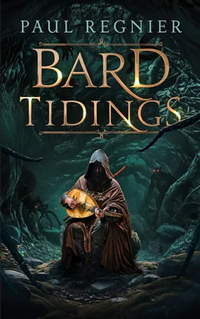
Today, I’m starting Bard Tidings by Paul Regnier, and am listening to The Night Ends with FireE by K. X. Song, read by Natalie Naudus on audiobook.
I just finished H.C. Newell’s Curse of the Fallen—I’m reeling from the ending (but really shouldn’t be)—and Malibu Burning by Lee Golberg, read by Eric Conger on audio.
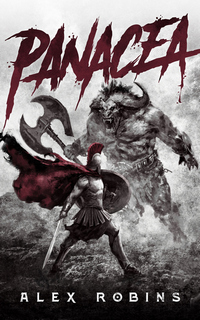
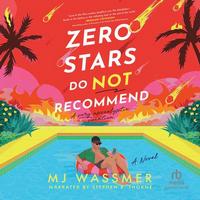
My next book should be Panacea by Alex Robins (I still love that cover) and my next audiobook should be Zero Stars, Do Not Recommend by MJ Wassmer, read by Stephen R. Thorne (that cover makes me think of a Rom-Com for some reason)
![]()
Mystery Science Theater 3000:by Matt Foy and Christopher J. Olson
DETAILS: Series: The Cultural History of Television Publisher: Rowman & Littlefield Publishers Publication Date: August 20, 2024 Format: eARC Length: 182 pgs. Read Date: August 6-8, 2024

This is a retrospective of the show—its history, development (highs and lows), spin-offs, and latest formats. It’s also an examination and consideration of the impact the show has made to its viewers and on the industry of entertainment, and the ripple effects it has had on pop culture.
It looks at how MST3K was shaped by the upbringing of its cast and writers—focusing on the tone and style of the hosts—as well as the network (or lack thereof) that brought the show to the audience.
It wraps up with an Appendix listing twenty episodes that best capture the show for new viewers—between the riffs, the movies themselves, and hosting segments—with each host being represented. They truly picked some gems—good for new viewers and established fans to go back and revisit some highlights.
“Hey, wait a second, H.C.,” I can hear some of you thinking, “you talked about this book last July.” Well, no. But I can understand the confusion. That was actually the book, The Worst We Can Find: MST3K, RiffTrax, and the History of Heckling at the Movies by Dale Sherman.
I haven’t done this a lot, but every now and then I read a book that is someone taking all/part of their doctoral dissertation and reworking it/part of it for a wider/popular audience. In many ways, that’s what this felt like—Foy and Olson’s work was the technical/academic book for those of a more scholarly persuasion, and Sherman’s was the version for the wider audience. Except that Sherman’s was longer, and it usually goes the other way.
This is not a criticism of either book—at all. They both over their respective emphases and quirks. They’re both dependent on interviews and articles produced by others; both are written by fans who’ve dedicated a good deal of time to both the research and production of the book—propelled by a greater deal of time developing an appreciation of MST3K; and both are the kind of things that die-hard fans will sink their teeth into. One’s just a bit more highbrow than the other.
Analysts have had their go at humor, and I have read some of this interpretative literature, but without being greatly instructed. Humor can be dissected, as a frog can, but the thing dies in the process and the innards are discouraging to any but the purely scientific mind.
The idea has been variously ascribed, but it seems that E. B. White and Katharine S. White first put it into print. Whoever said it first, the idea floated through the back of my mind at more than one point while reading this book.
There were repeated explanations of various jokes throughout the book—and not one of them was necessary (if you ask me, anyway). Maybe one or two of them will help younger readers who are not familiar with the pop culture of the 90s or earlier, but I think context alone will take care of the questions a reader will have. And you understand the authors’ impulse to explain them and maybe even admire their attempt while rolling your eyes at the outcome.
The term Intertexuality appears so often in this book, that you can imagine Tom Servo and Crow riffing on it. But it’s not like there are a lot of synonyms available, and it’s a real focus of the authors and a strong point of the book. Still, the SOL crews would hammer them on it.
The consideration of how MST3K has trained a couple of generations in approaching intertextuality, media consumption, and responses to them is the intellectual core of this book. The show, in all its various incarnations, has shaped both the viewers and other shows, internet content, and general internet discussion in ways that are larger than the show’s ratings may suggest. The cultural footprint is oversized given viewership (the tapes did keep circulating, at least metaphorically).
I, for one, had given this very little thought until Fry and Olson pointed it out—along with their discussion of MST3K and its spin-off projects being at the forefront of newer delivery systems for media and programming. Given their humble beginnings, it’s really quite remarkable.
I’ve read two other books in this series (and keep meaning to read others), Friends and Gilmore Girls, comparing this to those, I’d say it captures the strengths of both and avoids what I recall as the shortcomings of the Friends volume and the spirit of the Gilmore Girls book. If nothing else, the diversity in these three installments demonstrates a strength of the series. You’re not going to get cookie-cutter approaches to the various series in consideration. Each author/team of authors is going to approach the show in question differently, reflecting the preferences and focus of the authors.
The only shortcoming I can think of (outside the attempted academic explanations of humor) is the lack of space given to Emily’s hosting/riffing style compared to the other hosts. I’m certain that this is a function of how few episodes she has appeared in, but it would’ve been nice to get a little more about her.
I was entertained by the book—both due to the authors’ style and the memories it conjured. I thought about the show and its legacy in ways I hadn’t before. I kicked myself for not taking part in the crowdfunding efforts I didn’t participate in. I was inspired to watch a couple of episodes I’d somehow missed—and just to make time for the show in general. Mostly this was an exercise in getting to know more about old friends, and seeing them in a different light.
I’m a sucker for anything MST3K related, so you know this worked for me. Do I know if you’ll appreciate this book if you’re not a fan or a media studies student? I doubt it’s for you. But if you’re either of those things—you’ll get something out of it.
What do you think, sirs?
Disclaimer: I received a copy of this book from Rowman & Littlefield via NetGalley—thanks to both for this.

This post contains an affiliate link. If you purchase from it, I will get a small commission at no additional cost to you. As always, the opinions expressed are my own.
![]()
Powered by WordPress & Theme by Anders Norén