I’m Curious: Know Any Good Orcs?

I was chatting with some people last night and one of them gave a quick recap of the lore behind Warhammer 40,000—by the way, if I had a spare year or two, I think I could get really into that—spending a lot of time on the Orcs (as one should if they’re half as entertaining as my friend described). I was then asked, what was my favorite depiction of Orcs in what I’ve read.

And I drew a blank. Sure, you’ve got Baldree’s Viv. Tolkien’s cannon fodder. Ewington has some fun Half-Orcs (and some good references to Orcs in general…I don’t think we see a full-Orc character, do we?). And, I can’t forget (although I initially did in this post to my shame) the fantastic singing and pirating Orcs in K.R.R. Lockhaven’s works. There were couple of other things I tried to remember (featuring ogres and goblins, it turns out). But that’s all I could come up with. I’ve intended on trying Stan Nicholls‘ series for quite some time, but we all know how that goes.

Now I have a hankerin’ to read a good depiction of an orc. Any suggestions? They could be the ravenous, blood-thirsty, murderous sort, a counter-intuitive pacifistic character, or a coffee and book aficionado (oh, wait, already mentioned one of those, please tell me there’s not more).

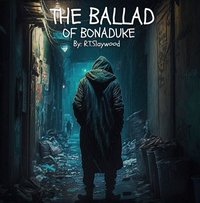
The Ballad of Bonaduke—Episode 45: Implications by R. T. Slaywood: Maybe I’m the Problem…

The Ballad of BonadukeThe Ballad of Bonaduke—
Episode 45: Implications

by R.T. Slaywood

DETAILS:
Series: The Ballad of Bonaduke, #45
Format: Kindle Vella Story
Read Date: January 25, 2023

The Story So Far…

A drunken Michael Bonaduke decides to use a grift (with maybe some sort of magic/magic-like “help”) to win on a scratch-off lottery ticket so he has money to buy more to drink. He pulls off whatever he did, gets his money and some booze and stumbles off into the darkness to drink himself into oblivion so he can start again the next day. He’s hit by dark memories (probably what’s driving him to the drinking) of fire, pleading, and screaming. There’s going to be a price to pay for his grift, and he’s trying to be ready.

He’s abducted by some representatives of a mysterious group who subject him to a test—if he passes, everything will be explained to him (and hopefully the reader, too). He passes—and is brought somewhere for answers, or maybe training, or maybe another test. Time will tell (or things are going to get really annoying). Answers aren’t quick to come—but the mysteries and questions keep piling up.

Things get hairy and Bonaduke leaves and finds himself back in the neighborhood he started from. He takes refuge in a homeless encampment shortly before a police raid. He’s apprehended and finds himself an interrogation room and shortly escapes after using his grift (but with results he didn’t quite intend). He finds himself by a group of squatters who seem to have strapped a woman to a chair for reasons that can’t be good. He attempts to rescue her before he even realizes what he’s doing, and seems to have succeeded—well, the two of them got away from the group anyway—breathing but bruised. They make their way to a fast-food taco joint and Bonaduke really needs to refuel to keep going. He tries, but fails to get food because he keeps passing out. Thankfully, the clerk is the same guy from the liquor store and he both recognizes him and gives him first aid. The woman (Zero) wakes up and shows some abilities of her on as she helps them escape from her captors who’ve tracked her down. One thing leads to another—Zero and Bonaduke’s magics don’t mix well (at least until they understand what each other can do?), and they end up in a video-game race against the squatters in a tricked-out version of Eric (the clerk’s) car. Note, I said video-game race, not a video-game-style race. They’re actually in one. When dumped back into reality, he’s surrounded by bruised and broken bodies (of people and cars). And then he gets into a supernatural fight and survives…just.

Or maybe not. But he gets better. And then his new…friends? Acquaintances? People who keep popping up in his life?…start explaining exactly what’s going on to him while they set up a new HQ and try to teach him about his abilities (and everyone tries to understand them).

What’s Implications About?

Bonaduke and Alan are wandering around the Northern Occult Expo looking for ways to test his abilities to get a better understanding of how they work. There’s some interesting back and forth with a couple of exhibitors, and we see how Om makes some money. Then Bonaduke does something that his associates don’t apprehend–we’ll have to wait to see if he explains it to them.

So, what did I think about Implications?

Insert default complaint about grammar and spelling. It’d be great to know Slaywood was trying to say and compare it to what he actually communicated.

He’s also back to that game where he’s trying to be coy and mysterious–but all that comes across to me is obfuscation.

Here’s me hoping the next episode is better.


2 Stars

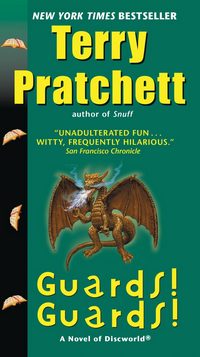
Guards! Guards! by Terry Pratchett: I Can See Me Becoming a Slavering Fan of This Stuff…

Guards! Guards!Guards! Guards!

by Terry Pratchett

DETAILS:
Series: Discworld, #8; City Watch, #1
Publisher: Harper 
Publication Date: April 30, 2013
Format: Mass Market Paperback
Length: 403
Read Date: December 15-21, 2023
Buy from Bookshop.org Support Indie Bookstores

It’s a metaphor of human bloody existence, a dragon. And if that wasn’t bad enough, it’s also a bloody great hot flying thing.

What’s Guards! Guards! About?

We start with a motley bunch of people who have been recruited by a mysterious figure to summon a dragon from another world—they don’t know this initially, but the purpose is to take over the city of Ankh-Morpork for less-than-benevolent reasons.

Meanwhile, a tall and naive young man is informed by his father that he’s not who he’s always thought he was. In fact, he’s been brought up by another species. Carrot had spent his whole life believing he was a dwarf like everyone he lived among, rather than a human. “It’s a terrible thing to be nearly sixteen and the wrong species.” Carrot has a hard time accepting this truth but does what his father tells him. He sets off for the city to become a member of the City Watch and will send his wages to his family. It’s impossible (for me, at least) to read Carrot and not think of Buddy the Elf. I don’t know if Ferrell and Favreau had this book in mind when they worked out the character—but they could’ve.

Like Buddy, Carrot doesn’t understand the human world and its nuances. He’s very literal, he’s a hard worker, doesn’t know how to be dishonest, and sees the world in black and white. So he goes about the business of the Watch like that—he’s a one-man anti-crime crusade. Arresting people the rest of the watch doesn’t have the energy to pursue—and those they’ve been told by the city leadership to leave alone.

His presence shakes up the Watch and awakens a sense of duty in them. So when they start finding traces of the dragon—and a corpse or two, this lethargic group gathers itself together and tries to save the city from the dragon, those behind it, and those who can’t be bothered to care.

And a whole bunch of other things transpire, are said, and whatnot. But that’s enough to get you started.

More Than Jokes

“Down there,” he said, “are people who will follow any dragon, worship any god, ignore any iniquity. All out of a kind of humdrum, everyday badness. Not the really high, creative loathesomeness of the great sinners, but a sort of mass-produced darkness of the soul. Sin, you might say, without a trace of originality. They accept evil not because they say yes, but because they don’t say no. I’m sorry if this offends you,”

All good novelists will work in things that have nothing to do with the characters (directly), their development, or the plot to their books. Some sort of commentary on the world, an observation about humanity or a portion of it, etc. If you ask me, the more comedic novelists are better at it than others—it’s probably that spoonful of sugar thing. That could just be my preference, I admit.

Some of the better moments in this book—at least some of the best sentences—come from moments like the above quotation. There’s some cheap cynicism to be found in these lines—but there’s some well-earned cynicism, too, in Pratchett’s ideas about government, the people led by that government, and so on. But there’s some great stuff on love and hope to be found in here, too. Pratchett’s cup is half-full at least as often as it’s half-empty.

The one-liners; the satire of Fantasy tropes, humanity in general; and the overall comedy of his world might be what he’s known for—but at least here (and likely in general), Pratchett’s observations of and commentaries on humanity are just as noteworthy.

The Library/Librarian

The truth is that even big collections of ordinary books distort space, as can readily be proved by anyone who has been around a really old-fashioned secondhand bookshop, one that looks as though they were designed by M. Escher on a bad day and has more stairways than storeys and those rows of shelves which end in little doors that are surely too small for a full-sized human to enter. The relevant equation is: Knowledge = power = energy = matter = mass; a good bookshop is just a genteel Black Hole that knows how to read.

I don’t have the time to write the essay I want to write about the Librarian, the Library, what the Librarian did to save the day, and so on. But I really wish I did (besides, I’m pretty sure someone else has—several someone elses). It’s not the—or a—main focus of the novel, but it really could be. Instead, I’ll just note that the Librarian was a highlight for me, and I hope we get a lot more of him in the future.

So, what did I think about Guards! Guards!?

“I mean, [the dragon] wouldn’t want us to go around killing its own kind, would it?”

“Well, sir, people do, sir,” said the guard sulkily.

“Ah, well,” said the captain. “That’s different.” He tapped the side of his helmet meaningfully. “That’s ’cos we’re intelligent.”

One of the things I like to ask when thinking of a comedic novel is, would it hold up if you took the jokes out and played it straight? It’s hard to answer that for Guards! Guards! because of the satirical and ridiculous aspects of the novel. But…on the whole, yeah…it’d work. Thankfully, it’s not a question we really need to spend too much time on because it’s so funny that you don’t notice parts of the story/plot/characters that might not work—and with the comedy this book is so successful it doesn’t matter.

It took very little time for me to get invested in the story—maybe not the characters (as much as I enjoyed watching Carrot fumble through his new life), but the story and the storytelling carried me until the point that I started to see the various members of the City Watch as anything other than comedy delivery systems (although that’s primarily what they were). I was entertained throughout, so much so that I didn’t really spend much time thinking about comparing this to other Pratchett books or other Fantasy comedies I’ve read—I just wanted to have fun with this. Maybe I’ll do the other stuff with later reads.

My journey to this book—and to giving Pratchett another chance—is pretty well documented. It’s not that I disliked The Color of Magic or The Light Fantastic, but I didn’t get the fuss over Pratchett after reading them. After reading Guards! Guards!? I think I get it. After reading less than a third of Guards! Guards!, I was pretty sure I got it, actually. I’m so relieved…I wondered what was wrong with me that I missed what everyone else saw in his work. There’s this great combination of jokes, situational/character-based comedy, a skewed way of depicting the world that’s honest and true while capturing the absurdities—and wonder—of the world. Pratchett respects the reader enough to not have to spell everything he’s doing out for us, but not so much that he will avoid slapstick or bodily humor.

I’m sold. If you haven’t gotten around to trying this mega-series (and surely there are like 5 of you reading this who haven’t), stick your foot in. If you’re unsure where to start, here’s a great place.

I’ll be back for more soon.


4 1/2 Stars

This post contains an affiliate link. If you purchase from it, I will get a small commission at no additional cost to you. As always, the opinions expressed are my own.
Irresponsible Reader Pilcrow Icon

WWW Wednesday, January 24, 2024

I’m having one of those months where every book is taking at least a day longer than I assumed it would. This isn’t really a big deal—but I have a stack of library books with due dates looming, and I’m going to have to do something to overcome that. As that Canadian band asks, who needs sleep?

This meme was formerly hosted by MizB at A Daily Rhythm and revived on Taking on a World of Words—and shown to me by Aurore-Anne-Chehoke at Diary-of-a-black-city-girl.

The Three Ws are:
What are you currently reading?
What did you recently finish reading?
What do you think you’ll read next?

Seems easy enough, right? Let’s take a peek at this week’s answers:

What are you currently reading?

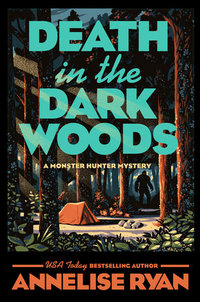
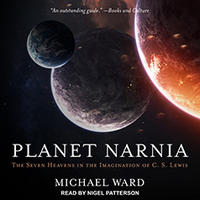
This morning I started two new books: I’m reading Death in the Dark Woods by Annelise Ryan, and am listening to Planet Narnia: The Seven Heavens in the Imagination of C. S. Lewis by Michael Ward, read by Nigel Patterson on audiobook. I’m intrigued by the premises to both, and hope they live up to them.

Death in the Dark WoodsBlank SpacePlanet Narnia

What did you recently finish reading?

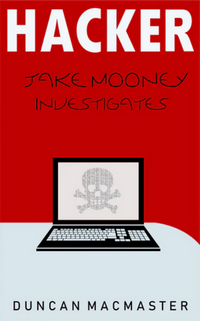
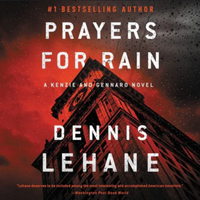
I just finished Duncan MacMaster’s Hacker. It was better than I expected (and I expected good things). I also just finished Prayers for Rain by Dennis Lehane, read by Jonathan Davis on audio. I’d forgotten so much of this book—this was like reading it for the first time.

>HackerBlank SpacePrayers for Rain

What do you think you’ll read next?

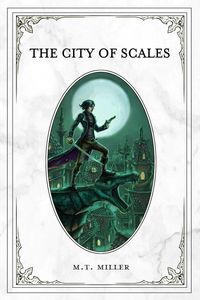
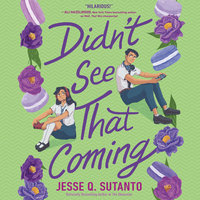
My next book should be a book I meant to read in December, The City of Scales by M.T. Miller. My next audiobook should be something pretty different for me, Didn’t See That Coming by Jesse Q. Sutanto, read by Risa Mei.

The City of Scales Blank SpaceDidn't See That Coming

Are you reading anything good?

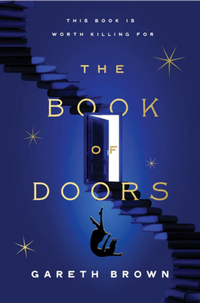
The Book of Doors by Gareth Brown: We All Know Books are Magical, but Some Books Really Are Magic

The Book of DoorsThe Book of Doors

by Gareth Brown

DETAILS:
Publisher: William Morrow & Company
Publication Date: February 13, 2024
Format: eARC
Length: 416
Read Date: January 10-16, 2024

Buy from Bookshop.org Support Indie Bookstores

What’s The Book of Doors About?

Cassie Andrews grew up in the Northwest and had what you’d call a typical, nice life (with a little tragedy, because we all do). She grew up, had one big adventure, and then settled into New York City, and is having a typical life—with enough fun and love to keep going, but nothing exciting happens to her. Then one day a regular customer that she’d befriended dies and leaves a book for her. It’s a lovely little book, so she takes it home with her.

She quickly discovers that this isn’t any ordinary book—in fact, it’s called “The Book of Doors” and the inscription inside it tells her that every door is any door. An odd thing to say, but she discovers that it means she can open and step through any door with the book in her hand. Cassie and her roommate Izzy have some fun with the book, before Izzy starts to worry about the cost of this magic.

Cassie’s undeterred, however, and keeps experimenting. It’s not too long before a man called The Librarian (by some) finds them—warning Cassie that she’s in danger because of this book. There are many “special books” like the Book of Doors (not all as powerful), and there are those who want to add her book to their collection and will stop at nothing to get it. As these people are equipped with their own special, magical books—the things they can do are pretty remarkable.

Can Cassie stay ahead of these people—or off of their radar entirely? Can she use her book to help the Librarian keep his collection of books safe from a mysterious woman determined to possess them all?

Time Travel

This is more of a Fantasy kind of Time Travel than a Hard Sci Fi Time Travel. That’s really not a profound observation on my part, come to think of it—everything these books do is described as magical. So a lot of your typical rules when it comes to Time Travel are thrown out. You’re not going to get a butterfly effect here, or see what happens if you go back and keep your dad and mom from going to the Enchantment Under the Sea dance together. It’s more along the lines of what the Wyld Stallyns did (at least in the first movie, I can’t speak to the others).

I mention this just so you know what you’re getting into—I have friends who take a very purist approach to Time Travel, and want scientific explanations for everything (hopefully with a good amount of theorizing). They will probably not appreciate this book for that. On the other hand—I have friends who get tired of that kind of thing—they’ll have a lot of fun with Brown’s take. There are probably more people who won’t care, and will just have fun with the wibbly wobbly of it all.

The Rest of the Magic

There are many more books than The Book of Doors running around (more than we’re told specifically about), and all of them have applications you wouldn’t immediately think about. What the Book of Illusion can do by someone who knows what they’re doing? Awesome. The Book of Luck is pretty much what the tin says. The Book of Despair…it’s worse than you think, at least when used by someone who knows what they’re doing (and who should never be allowed to use it).

I’m tempted to keep listing the books, but that would get boring for you and me. The great thing about Brown’s magic system is the wide diversity of magical abilities and the way they’re used. I don’t know how much time he spent coming up with the ideas behind them, or if he just had a handful and then created a new book when he wrote himself into a corner—but either way, a good deal of ingenuity is displayed here, and I want to see more of it. (honestly, I assume he did a thorough job of coming up with the books beforehand, but I just like the idea of him getting to the point where says…”I need a Book of Antigravity so Cassie can float away from a thrown knife.”*)

* Not anything that actually appears in the book.

Quibbles

It’s not a perfect book. Few are, so this isn’t about me listing off reasons to avoid this book. I just want to be thorough as I talk about it.

First off, the book (particularly in the beginning) relies too much on the POV characters looking at reflections of themselves. This is a pretty common thing—some would call it a cliche (particularly as a woman character describes some of her physical attributes)—and the first time that someone did it, I rolled my eyes and moved on. But then it happened again, quickly after that, while it was still echoing in my ear. And then again. And it became a thing I paid too much attention to because it happened so much. If mirrors and reflections had become very important to the magic or plot as a whole—I might have spent a paragraph or two lauding this. But it didn’t. It just distracted and kind of annoyed me.

The “Big Bad” doesn’t have a name. She’s simply, “the woman.” If she was a character who showed up in other places, and we were supposed to figure out which of female characters she was—that’d be one thing. But there’s never a doubt about that, she’s simply “the woman.” She doesn’t even get a nickname like “She Who Must Not Be Named” or even “The Big Bad.” Surely, at some point, the subculture surrounding these special books would’ve started referring to her as something along those lines. A name, a title (like The Bookseller did), something whispered in the shadows. Not just “the woman.”

There are probably other flaws in the book—undoubtedly there are*—but these are the only two that jumped out at me (and kept doing so). In the end—both were easily overcome by the weight of all the good-to-great things about it. But I was irked enough that I had to talk about them a bit.

* Just before I hit “Publish,” I remembered a chapter focused on “the woman” that made me briefly consider stopping entirely. I am so glad that I persevered, and it wasn’t that difficult to.

Now, let’s get back to the good stuff. I probably won’t think about these issues again myself, when I think back on this book, I’m only going to think of what I say next.

So, what did I think about The Book of Doors?

If you took Peng Shepherd’s The Cartographers and merged it with Robin Sloan’s Mr. Penumbra’s 24-Hour Bookstore, you’d get something sort of like this. The secret subculture that arose around these special books—subcultures, really—made me think of these books, as well as the devotion to something that’s increasingly archaic—a typeface, paper maps, antique books, etc. There is great power, as well as great affection, in these artifacts of a former age. Sure, they’re not magical or mystical like Shepherd, Sloane, or Brown say. But these novels resonate for the same/similar reasons, these things call to us.

Setting aside all the magic and plot and character—just focusing on what The Book of Doors says about books in general, is pretty special. This aspect alone is going to speak to a lot of readers (most people who’d call themselves “readers,” in fact.). And you could spend time just flipping through those parts of the book.

On the whole, this novel was a slow burn for me—I was instantly drawn to the idea behind the books, I liked Cassie, and the way that Brown showed her reacting to the book. But then once we got into the story about “the woman” and the Librarian, my interest waned a lot. I’m not sure it should’ve, and many will likely have a different reaction, but it did. But as I kept reading, I got more and more invested and my inner-critic shut up because he was as interested in what was going to happen next as the rest of me was.

By the time you figure out what Brown’s end-game was—and Cassie’s, too—it’s so satisfying to see it all play out. It’s really a very tidy book and everything means something. But it’s not just the plot that works so well, all the emotional beats are so well-executed that you will be tempted to go back through Brown’s non-existent backlist to see where he figured out to write them so effectively.

If you like the idea of a kind of magic you’ve not seen before, magical time travel (among other things), an off-the-radar subculture devoted to this magic (or at least the idea behind it), and a quiet bookseller finding her inner strength and perseverance in the face of evil—you’re going to want to check out The Book of Doors. I strongly recommend you do.

Disclaimer: I received this eARC from William Morrow & Company via NetGalley in exchange for this post—thanks to both for this.


4 Stars

This post contains an affiliate link. If you purchase from it, I will get a small commission at no additional cost to you. As always, the opinions expressed are my own.

Irresponsible Reader Pilcrow Icon

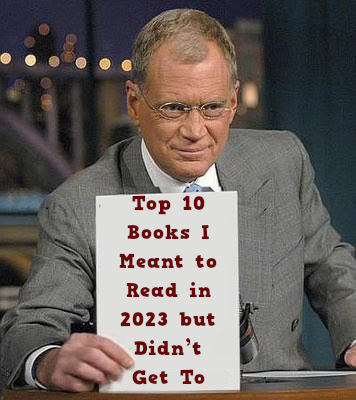
Top Ten Tuesday: Books I Meant to Read in 2023 but Didn’t Get To

Top Ten Tuesday Logo
The topic for this week’s Top Ten Tuesdays is the Books I Meant to Read in 2023 but Didn’t Get To. Now last week, I posted Top 5 books I will definitely* read in 2024, and all of those fit here. But I’m not going to just add 5 more titles to that list and call it good. There’s no need to, either. There are just that many books I fell short on last year.

This post was difficult to finish—each time I finished an entry, I wanted to go and read the book right now. It also hit me that if I read 1 book by an author or in a series, I probably would’ve read the next one or two, too. So, this is technically a top 15.

Books I Meant to Read in 2023 but Didn’t Get To
In alphabetical order, with descriptions copied and pasted from the publishers’ websites.

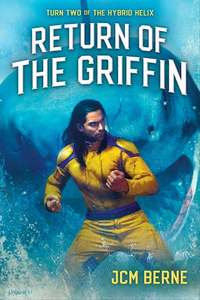
1 Return of The Griffin
Return of The Griffin by JCM Berne (and Blood Reunion and Shadow of Hyperion)

Humanity faces extinction. Ten-kiloton monsters are rising from the depths of the Pacific, levelling entire cities in frenzies of destruction. Earth's heroes have been decimated. The survivors put their hope in one last, desperate plan: find Hyperion, Earth's most powerful hero, and ask him to return from exile to save them.

What they don't know is that Hyperion is dead.

The Griffin spent ten years fighting wars across the sector as a weapon of mass destruction for the il'Drach Empire. His victories made his name a curse on a dozen worlds and a nightmare on scores more. He retired to the peaceful station Wistful and discovered that leaving his name behind didn't clear his sins, his debts, or his conscience.

Earth's peril may give him a chance for redemption, if he can only find a way to stop the monsters without turning into one. Without becoming The Griffin again.

I fully expected to have read this no later than Feb. 1, 2023. So for me to hope to get to it before Feb. 1, 2024 is just strange. It’s coming up on my list soon, though. (and the rest will follow shortly).

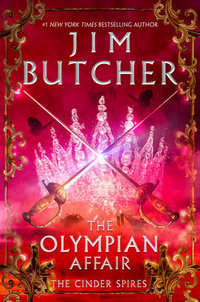
2 The Olympian Affair
The Olympian Affair by Jim Butcher

The fate of the Cinder Spires may be decided by crossed swords in the next exhilarating fantasy adventure from the author of the Dresden Files, in this New York Times bestselling series of noble families, swordplay, and airships.

For centuries the Cinder Spires have safeguarded humanity, rising far above the deadly surface world. Within their halls, aristocratic houses rule, developing scientific marvels and building fleets of airships for defense and trade.

Now, the Spires hover on the brink of open war.

Everyone knows it's coming. The guns of the great airship fleets that control the skies between the last bastions of humanity will soon speak in anger, and Spire Albion stands alone against the overwhelming might of Spire Aurora's Armada and its new secret weapon--one capable of destroying the populations of entire Spires.

A trading summit at Spire Olympia provides an opportunity for the Spirearch, Lord Albion, to secure alliances that will shape the outcomes of the war, and to that end he dispatches privateer Captain Francis Madison Grimm and the crew of the AMS Predator to bolster the Spirearch's diplomatic agents.

It will take daring, skill, and no small amount of showmanship to convince the world to stand with Spire Albion--assuming that it is not already too late.

A lack of time and end-of-year economics are the only factors that kept me from diving in then. A Butcher novel I haven’t read is a thing that shouldn’t exist (especially after my re-read of Windlass and Warriorborn).

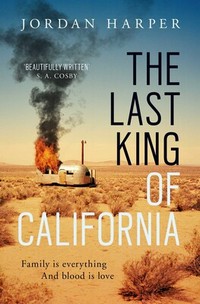
3 The Last King of California
The Last King of California by Jordan Harper (and Everybody Knows)

Sometimes to find yourself, you have to go back to where you came from.

You just might not like what you find.

After failing in his new life, Luke decides to go home, back to the one place where he’d once felt he belonged. But that was a long time ago and now he has to face the life that he chose to run away from: The Combine. The gang that his uncle now leads, but which his father still runs from prison. Brutal, unforgiving . . . family.

Reunited with his childhood friend Callie and tagging along on jobs with her and her boyfriend Pretty Baby, Luke soon discovers that he might have a place back home after all. When another gang try to encroach on their turf, The Combine and Luke must go to war to save all that they know.

But in trying to be someone you’re not, can you ever find out who you really are?

Family is everything and blood is love. 

I’ve heard nothing but raves about this, and after She Rides Shotgun, I believe it. Ditto for his second book of the year.

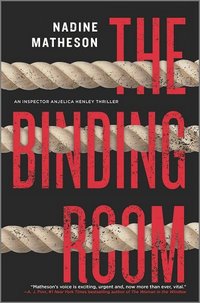
4 The Binding Room
The Binding Room by Nadine Matheson

When Detective Anjelica Henley is called to investigate the murder of a popular preacher in his own church, she discovers a second victim, tortured and tied to a bed in an upstairs room. He is alive, but barely, and his body shows signs of a dark religious ritual.

With a revolving list of suspects and the media spotlight firmly on her, Henley is left with more questions than answers as she attempts to untangle both crimes. But when another body appears, the case takes on a new urgency. Unless she can apprehend the killer, the next victim may just be Henley herself.

Both fans of The Jigsaw Man and readers coming to Matheson's work for the first time will get swept away in this heart-pounding thriller. Drawing on her experiences as a criminal attorney, Nadine Matheson deftly explores issues of race, class and justice through an action-packed story that will hold you captive until the last terrifying page.

I can’t believe I didn’t read this last year. It boggles my mind. Her first novel was so good, I can’t imagine this isn’t going to be similarly gripping.

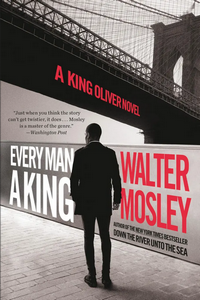
5 Every Man A King
Every Man A King by Walter Mosley

 When friend of the family and multi-billionaire Roger Ferris comes to Joe with an assignment, he's got no choice but to accept, even if the case is a tough one to stomach. White nationalist Alfred Xavier Quiller has been accused of murder and the sale of sensitive information to the Russians. Ferris has reason to believe Quiller's been set up and he needs King to see if the charges hold.

This linear assignment becomes a winding quest to uncover the extent of Quiller's dealings, to understand Ferris' skin in the game, and to get to the bottom of who is working for whom. Even with the help of bodyguard and mercenary Oliya Ruez--no regular girl Friday--the machine King's up against proves relentless and unsparing. As King gets closer to exposing the truth, he and his loved ones barrel towards grave danger.

The first novel featuring King Oliver had so much promise, I just have to see how Mosely follows it up.

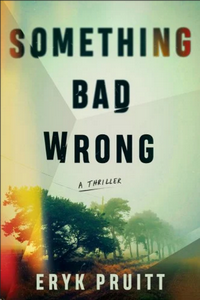
6 Something Bad Wrong
Something Bad Wrong by Eryk Pruitt

True-crime podcaster Jess Keeler has returned to Deeton County, North Carolina, to pick up where her grandfather left off. Sheriff's Deputy Big Jim Ballard, her grandfather, was a respected detective--until it all came crashing down during a 1972 murder investigation.

For Jim, solving the murders of two teens should have been the highlight of his already storied career. Instead, he battled his own mind, unsure where his hunches ended and the truth began.

Working from her grandfather's disjointed notes, Jess is sure that she can finally put the cold case--and her family's shame--to rest. Enlisting the help of disgraced reporter Dan Decker, Jess soon discovers ugly truths about the first investigation, which was shaped by corruption, egos, and a family secret that may be the key to the crime.

Told in a dual timeline that covers both investigations, Something Bad Wrong explores human folly, hubris, and how sometimes, to solve a crime, you have to find out who's covering it up.

I’ve had a couple of people suggest this one to me over the last year or so. I need to get on it.

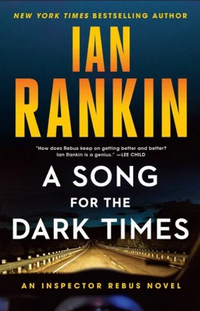
7 A Song for the Dark Times
A Song for the Dark Times by Ian Rankin (and A Heart Full of Headstones)

"He's gone..."

When his daughter Samantha calls in the dead of night, John Rebus knows it's not good news. Her husband has been missing for two days.

Rebus fears the worst - and knows from his lifetime in the police that his daughter will be the prime suspect.

He wasn't the best father - the job always came first - but now his daughter needs him more than ever. But is he going as a father or a detective?

As he leaves at dawn to drive to the windswept coast - and a small town with big secrets - he wonders whether this might be the first time in his life where the truth is the one thing he doesn't want to find...

It’s the next Rebus, it’s been too long since I read one. It’s just that simple.

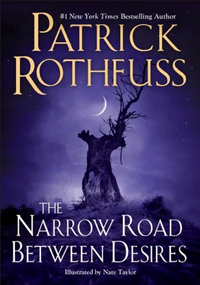
8 The Narrow Road Between
The Narrow Road Between by Patrick Rothfuss

#1 New York Times-bestselling phenomenon Patrick Rothfuss returns to the wildly popular Kingkiller Chronicle universe with a stunning reimagining of "The Lightning Tree." Expanded to twice its previous length and lavishly illustrated by Nate Taylor, this touching stand-alone story is sure to please new readers and veteran Rothfuss fans alike.

Bast knows how to bargain. The give-and-take of a negotiation is as familiar to him as the in-and-out of breathing; to watch him trade is to watch an artist at work. But even a master's brush can slip. When he accepts a gift, taking something for nothing, Bast's whole world is knocked askew, for he knows how to bargain--but not how to owe.

From dawn to midnight over the course of a single day, follow the Kingkiller Chronicle's most charming fae as he schemes and sneaks, dancing into trouble and back out again with uncanny grace.

The Narrow Road Between Desires is Bast's story. In it he traces the old ways of making and breaking, following his heart even when doing so goes against his better judgement.

After all, what good is caution if it keeps him from danger and delight?

I’m not that interested in Bast, to be honest. But I have to read this. I forgot to pre-order this, believe it or not. So that’s probably why I didn’t read it already. I just need to get my act together.

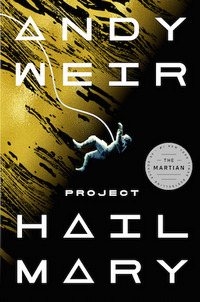
9 Project Hail Mary
Project Hail Mary by Andy Weir

Ryland Grace is the sole survivor on a desperate, last-chance mission--and if he fails, humanity and the earth itself will perish.

Except that right now, he doesn't know that. He can't even remember his own name, let alone the nature of his assignment or how to complete it.

All he knows is that he's been asleep for a very, very long time. And he's just been awakened to find himself millions of miles from home, with nothing but two corpses for company.

His crewmates dead, his memories fuzzily returning, Ryland realizes that an impossible task now confronts him. Hurtling through space on this tiny ship, it's up to him to puzzle out an impossible scientific mystery--and conquer an extinction-level threat to our species.

And with the clock ticking down and the nearest human being light-years away, he's got to do it all alone.

Or does he?

An irresistible interstellar adventure as only Andy Weir could deliver, Project Hail Mary is a tale of discovery, speculation, and survival to rival The Martian--while taking us to places it never dreamed of going.

I bought this on release day, and it’s been collecting dust on my shelves since (well, my wife read it and then it collected dust). I cannot explain it—I loved The Martian and thought Artemis was a lot of fun. So…why is this ignored? No idea.

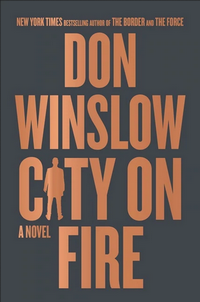
10 City on Fire
City on Fire by Don Winslow (and City of Dreams)

Two criminal empires together control all of New England.

Until a beautiful woman comes between the Irish and the Italians, launching a war that will see them kill each other, destroy an alliance, and set a city on fire.

Danny Ryan yearns for a more "legit" life and a place in the sun. But as the bloody conflict stacks body on body and brother turns against brother, Danny has to rise above himself. To save the friends he loves like family and the family he has sworn to protect, he becomes a leader, a ruthless strategist, and a master of a treacherous game in which the winners live and the losers die.

From the gritty streets of Providence to the glittering screens of Hollywood to the golden casinos of Las Vegas, two rival crime families ignite a war that will leave only one standing. The winner will forge a dynasty.

Exploring the classic themes of loyalty, betrayal, and honor, City on Fire is a contemporary masterpiece in the tradition of The Godfather, Casino, and Goodfellas--a thrilling saga from Don Winslow, "America's greatest living crime writer" (Jon Land, Providence Journal).

Winslow’s swan song just looks epic. I’m a little afraid to immerse myself into it—it’s going to be a major time commitment, but with the finale just around the corner, I’d better get going.

MUSIC MONDAY: Linus and Lucy by Foggy Mountain Spaceship

Music Monday
Music Monday’s originated at The Tattooed Book Geek‘s fantastic blog and has shown up here and there since then.

Irresponsible Reader Pilcrow Icon

Silly Rhymes for Belligerent Children by Trace Beaulieu, Len Peralta (Illustrator): Wonderfully Weird Poems for Children of Most Ages

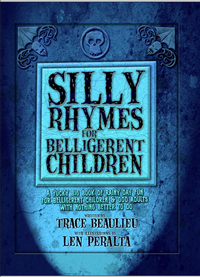
Silly Rhymes for Belligerent ChildrenSilly Rhymes for Belligerent Children:
A Yucky Big Book of Rainy Day Fun for Belligerent
Children & Odd Adults
with Nothing Better To Do

by Trace Beaulieu, Len Peralta (Illustrator)

DETAILS:
Publisher: Amorphous Productions
Publication Date: January 1, 2010 
Format: Paperback
Length: 45 pg.
Read Date: July 13, 2023

What’s Silly Rhymes for Belligerent Children?

The back of the book says:

You certainly don’t need to be a belligerent child to appreciate these silly rhymes by Mystery Science Theater 3000’s and Cinematic Titanic’s Trace Beaulieu – but you may learn a thing or two about handling infected pets or living dangerously through sledding. While the subject matter may make you a bit queasy, you’ll delight in the perfect storytelling encapsulated in each poem. Each selection is a dark and distasteful delight – a fascinating collection of raw honesty, cool understatement and looming tragedy, all brought to life by the whimsical illustrations by Len Peralta. Silly Rhymes for Belligerent Children isn’t the book you’ll keep on the bookcase for decades. It’s the book you’ll keep under your bed within easy reach so you can page through it long after you’ve committed all the poems to memory.

That’s pretty much what the book is—in the forward/Author’s Note, Beaulieu says these poems were inspired by daydreaming, and what better source could there be?

Well, these rhymes are meant for the kind of child I was, and frankly still am.

So don’t come here looking for nice little poems with fuzzy-wuzzy pictures of fluffy cute animals or impossibly happy youngsters fetching pails of water.

This book is intended for kids who hate that kind of stuff: older kids, of course, and adults with… well nothing better to do.

Some are short…some are longer (at least when it comes to page count), they’re all a great mixture of fun rhymes, great images, and eccentric (to say the least) ideas. Some are morbid (in a kid-friendly way), some are just strange, some are gross (in a kid-friendly way).

My One Complaint

There aren’t enough poems.

Or illustrations.

Or anything else.

I want more of everything in this book.

A Quick Word about the Art

WOW. The art is fantastic. Can you go through this book, ignore all the words in black type, and still enjoy it? Probably—some of the pictures won’t make sense without the black text, but yeah, I can see the book working if you think of it as a collection of odd illustrations (I’ve tried this twice, but keep slipping and ended up reading the poems, so I can’t promise).

They are the perfect augment/supplement/accompaniment to Beaulieu’s quirky rhymes and sensibilities.

So, what did I think about Silly Rhymes for Belligerent Children?

This is just silly fun. I, apparently, am an odd adult with nothing better to do, because I’ve read this a handful of times from cover to cover in the last few months and am pleased I did so each time.

You know how there are certain movies/shows that when you’re just mindlessly flipping through the channels (assuming you still do that) you have to stop and watch for at least a few minutes? This book is kind of like that. I cannot tell you how many times since I first read it that I’ve stopped to read a poem or two when I see this book. I’ve yet to pick it up without reading at least three poems. Generally more. And not always the same ones, either.

From the poems to the illustrations and all points in-between, I had a blast with this. I wish I knew about this back when it was first published, my kids would’ve loved it then. I probably can’t get them to slow down enough for it now. Hopefully in a few years.

Track down a copy and lose yourself in these pages. Your inner child (and inner odd-adult) will thank you.


3 Stars

Irresponsible Reader Pilcrow Icon

REPOSTING JUST CUZ: Songs of a Suffering King by J. V. Fesko

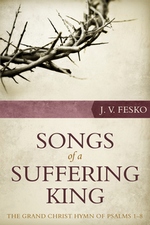
Songs of a Suffering KingSongs of a Suffering King: The Grand Christ Hymn of Psalms 1–8

by J. V. Fesko

Kindle Edition, 123 pg.
Reformation Heritage Books, 2014

Read: January 17, 2016


This is a “small survey” (his words) of the first 8 Psalms, looking at them as testifying of Christ — His experiences, His heart, His prayers, His praise. Fesko doesn’t ignore the original author or context, but his focus is reading them through the filter of John 5:27/Luke 24:27. With that filter, it’s easy to see how the first 8 Psalms (as a microcosm of the Psalter as a whole) testify to Jesus Christ.

This book was just “oooohkay.” Maybe I came in with too high of expectations. I get that Fesko was writing for a more popular audience than some of this other work — but this seemed very shallow. There wasn’t a whole lot to sink my teeth into. I’m glad he made this material very accessible — it’s the kind of thing the Church needs more of. I’m just afraid he didn’t hit the right balance of content and ease of understanding.

The content was good, I do think each chapter helped me understand the Psalm in question a little better (more than that at least twice). The conclusion is very strong — probably the best chapter in the book. I just wish he’d brought some of that strength to bear on the earlier chapters.

The book contained some great insights, but it was primarily surface-level material. I just wanted more from the book. Maybe I wanted too much, but I don’t think so. There were a couple of “wow!” moments for me that lead me to rate this at 3-stars rather than 2 1/2 (but if he’d developed those ideas for more than the one or two sentences he gave them I’d have gone with 4). It’s a nice, quick easy read with some good devotional material, but it could’ve been more without making it too technical.

—–

3 Stars

Saturday Miscellany—1/20/24

Short list this week, but plenty of good things to read.

I picked a bad week to start, but I’m trying something new for these posts today, too. We’ll see if it survives until March (and if it does, what it’ll look like)…

Odds ‘n ends about books and reading that caught my eye this week. You’ve probably seen some/most/all of them, but just in case:
bullet Why is March 2024 the Best Month in Years For Books?—a look into book promotion, publishing schedules, and “the existential pain of knowing that you will never get to read even a small percentage of” the books you want to read.
bullet Shelf-absorbed: eight ways to arrange your bookshelves – and what they say about you—fun, but not without it’s problems. (I am not a “try-hard.” Probably.)
bullet Small Press Economies: A Dialogue—If reading this doesn’t make you love those in Small Press/Indie Press Publishing all the more…
bullet MWA Announces 2024 Edgar Award Nominations—here’s a ready-made reading list full of sure-fire winners for you.
bullet YA Isn’t Just for Young Adults—from The Millions.
bullet Out With Book Clubs — In With Book Trades!—Cole Rush has a good alternative to buddy reads, book clubs, etc.
bullet Why Authors Need Cover Reveals—David W nails it. (they’re good for lazy book bloggers, too! Consider this an open invitation)
bullet Seven Science Fiction Novels to Expand (and Blow) Your Mind—a good dose of temptation from John Mauro over at Before We Go Blog.
bullet Books With the Best Beginnings!—A great collection of opening lines from the Organutan Librarian.
bullet Reviews: Subjective or Objective? Can we do both—one would think we could.
bullet Reading: To Track or Not to Track?

To help talk about backlist titles (and just for fun), What Was I Talking About 10 Years Ago Week?
Whoops, this was a bad week to start this feature…I only posted a Saturday Miscellany in the 3rd week in January, 2014. But I’m sticking with this plan so I don’t forget about it…
bullet 2014 The Edgar Awards nominees—what a coincidence!
bullet A Snapshot of Reading in America in 2013—I’d look to see if the Pew Research Council has done another one like this, but I think the results would depress me too much
bullet The Top Ten Books People Lie About Reading
bullet I talked about the releases of: The Dead in Their Vaulted Arches by Alan Bradley (this is where I derailed on the series…I just never got around to reading it), He Drank and Saw the Spider by Alex Bledsoe (such a good one!!), Switchblade by Michael Connelly, and The Emperor’s Blades by Brian Staveley
bullet …and that’s it. It was a short Miscellany to follow a quiet week on the blog.

This Week’s New Releases that I’m Excited About and/or You’ll Probably See Here Soon:
bullet Dream Town by Lee Goldberg—Eve Ronin investigates the murder of a Reality TV star.
bullet Emily Wilde’s Map of the Otherlands by Heather Fawcett—Emily’s off to the Australian Alps (and to the fae lands beyond) in this great-looking follow-up. Go read what Witty & Sarcastic Book Club said.
bullet Subculture Vulture: A Memoir in Six Scenes by Moshe Kasher—”A ‘hilarious’ (Dax Shepard), ‘surprisingly emotional trip’ (The Chainsmokers) through deep American subcultures ranging from Burning Man to Alcoholics Anonymous, by the writer and comedian.” After Kasher in the Rye, I’m reading anything vaguely memoir-ish from Kasher.

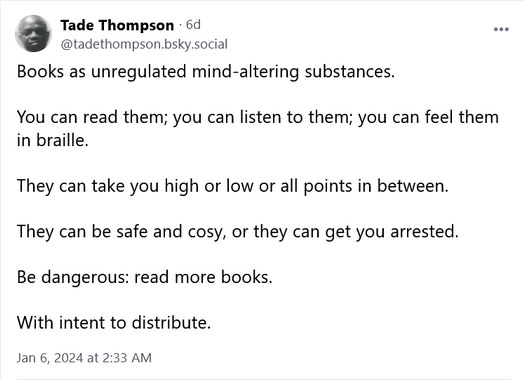
From tadethompson dot bsky dot social Books as unregulated mind-altering substances. You can read them; you can listen to them; you can feel them in braille. They can take you high or low or all points in between. They can be safe and cosy, or they can get you arrested. Be dangerous: read more books. With intent to distribute.

Page 116 of 603

Powered by WordPress & Theme by Anders Norén