Music Monday's originated at The Tattooed Book Geek's fantastic blog and has shown up hither, thither, and yon since then.
I’ve had this stuck in my head for a few weeks now, might as well pass it along:
![]()

Music Monday's originated at The Tattooed Book Geek's fantastic blog and has shown up hither, thither, and yon since then.
I’ve had this stuck in my head for a few weeks now, might as well pass it along:
![]()
Below the FallsDETAILS: Publisher: Thirty West Publishing House Publication Date: March 22, 2024 Format: eARC Length: 190 pg. Read Date: March 1-9, 2024

This is a diverse collection of 25 short stories (some very short, some not). I’m struggling to say more than that about it.
The title comes from the first story, but it applies pretty well to the collection as a whole. Some more directly than others. Each story does deal with the effects of a fall–metaphorically, naturally (with an exception or two). Sometimes the protagonist is the one who fell (or is falling), sometimes they’re next to or observing the fall, maybe dealing the the consequences of it.*
* I fought hard against the impulse to say “dealing with the fallout” there.
The Publisher’s description puts it this way:
Two climbers in the North Cascades risk their friendship and lives ascending a frozen waterfall. The girlfriend of a famous comedian in Greenwich Village must decide whether she wants to raise a child in the spotlight of fame. A mysterious Bird of Paradise makes daily overtures to an elderly widow in the frigid Midwest. A Texas fracking mogul struggles to find the love his money prevents. The deeply rendered American landscapes of these stories emerge as a vital background for characters faced with conflicts that cannot be easily resolved, illuminating interior worlds filled with contradiction.
I might have picked other stories for the blurb, but then again, those are probably some of the easiest to summarize in a sentence.
Like most short story collections, this is a mixed bag. And your results are going to vary (perhaps wildly) from mine. Which sounds like I’m trying to weasel out of giving a firm opinion, but it isn’t.
There’s a meme that I see everywhere (except for now when I’m looking for it) that says something about running across a sentence that makes you close your book for a while to sit and think about it. Nearly every story in this collection has one or two of those sentences, or at least sentences that I had to read a couple of times just to appreciate them.
Too often, those sentences were all I had to commend a particular story, however. My notes are filled with comments like, “why?”, “a plot would’ve been helpful here”*, or “what was the point?”
* Yes, yes, yes–they’re not always needed for compelling reading. But they are sometimes.
However…the other stories more than made up for that. For example, an early story was described aboVe as “A mysterious Bird of Paradise makes daily overtures to an elderly widow in the frigid Midwest” story (“Small Firey Bloom”). It was haunting, beautiful, and is probably what kept me going after a rough start.
I’m not going to list the others that were as good–without getting into too much detail, it’d be hard to describe my reactions in a meaningful way. But more importantly, anyone who reads this collection is going to end up disagreeing with me about which ones I was knocked out by and which ones I found skippable or pointless.
So, I’ll just leave it with this–there’s a lot of dross in this collection. But there’s also some of the shiniest gold you’re going to find, too. You’ll have to do some sifting, some panning, and maybe even some chiseling to get it–but you’ll be so glad you did.
Disclaimer: I received this eARC from the author and Lori Hettler of The Next Best Book Club in exchange for this post and my honest take—thanks to both for this.

This post contains an affiliate link. If you purchase from it, I will get a small commission at no additional cost to you. As always, the opinions expressed are my own.
Well, this is what I get for having the hubris to say that things were getting back to normal yesterday 🙂 Thanks to Daylight Saving kicking in this morning, I didn’t have enough time last night to finish a post. So, let’s jump back 10 years ago to see what I was talking about…
The Man Christ Jesus: Theological Reflections on the Humanity of Christby Bruce A. Ware
Kindle Edition, 160 pg.
Crossway, 2012
Read: March 9, 2014
One of Ware’s presuppositions — repeated throughout this book — is that evangelical Christians today have a good understanding of and embrace the doctrine of the Divinity of Christ, but their understanding of his humanity is wanting — enter this book. Without dipping a toe into Nestorianism, Ware wants his readers to understand the humanity of Jesus. He explains this so with a constant eye to His divinity — and how that divinity is expressed in the life of the God-man.
One of his main interests is for his readers to understand the dependency of Jesus on the Spirit — His indwelling, guidance and empowering. Without that indwelling, it would be impossible for Jesus to carry out His father’s will. If we grasp that, we see the limitations of the divine nature of Christ to his earthly work, which may seem paradoxical, but isn’t as Ware will explain.
The application portions to every chapter keep this book from being merely theoretical (however great that theory is) to helping readers put shoe leather to this teaching — as every teaching ought. It’s just easier when the author goes out of his way to help us start that on our own.
I really appreciated the chapter “Resisting Temptation,” Ware’s reflections on Hebrews 4:15 and the idea of Jesus being tempted to sin in general. He surveys some of the leading theories before suggesting his own idea how the idea of the impeccable theanthropos being tempted without sinning. He put into words an idea or two that had been floating around in my own head for a few years, and
I was surprised that Ware had to devote an entire chapter defending the masculinity of the God-man, although I shouldn’t have been. Sadly, this was a pretty boring chapter. Ware really beat this horse far beyond the point of its flatline. Sadly, he probably needed to be as through given today’s thinking.
Deep enough to discourage a casual read, but friendly enough that this should be able to be read by thoughtful laity.
—–

The last few weeks have been heavy on non-reading/blogging tasks/events/changes. And (to me anyway), that’s been clearest when it comes to these posts. But yesterday was (theoretically) the last tweak, so I should be able to start adjusting to things soon and things will return to some form of normal in the next couple of weeks.
Huge thanks to Peat Long for the return of Friday Five, so I could add a couple of items to beef this list up.
Odds ‘n ends about books and reading that caught my eye this week. You’ve probably seen some/most/all of them, but just in case:
Your new literary dream job: reader-in-residence.—I’ve spent the last couple of days fighting the urge to move to Fort Collins to chase my dream.
Counterfeit Books Are a Growing Problem, but a Solution May Be Near—the biggest question here is how long it’ll take pirates to work around it.
This Facebook post from the NYT about Worcester Public Library’s March Meowness will bring a smile to your face even without going beyond the paywall
Wander into This Miraculous Miniature Library with Thousands of Books Made Entirely by Hand—oooooohhhhhhh (said best in Toy Story’s LGM voice)
When Indie Publishing Meets Corporate Bookselling: Michele Herman on the Challenges of Getting—and Keeping—Her Book on the Shelves
IBPA Publishing MAP (Models and Author Pathways)—this looks handy for the writers who are looking at this post
Chinese Science Fiction Before The Three Body Problem
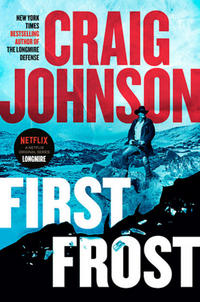
“Longmire” series author Craig Johnson talks about its development and its future—I’m always down to read/listen to/about Johnson
A Punk Noir Interview with M. W. Craven—there’s a lot to enjoy here, I loved the last answer from someone else I’m always down to read/listen to/about.
AC/DC’s Back in Black Inspires New Book of Murder Mysteries, Including New Jack Reacher Story—sure, the wrong Child is writing the Reacher story, but some of the rest sound promising (Coleman and Eldridge in particular)
Genres Are Historical and Cultural, Not Scientific: why rigid rules for genres never quite work—Lincoln Michel has many good things to chew on here (as per usual)
We got two new entries in Witty and Sarcastic Bookclub’s Tough Questions series this week, you should see how JamReads and Featuring Fantasy Book Nerd handled the pressure.
Weaving some Wyrd & Wonder—it’s almost time for the TBR expanding celebration of Fantasy. This year’s theme is really appealing.

To help talk about backlist titles (and just for fun), What Was I Talking About 10 Years Ago Week? (clearly a slow week)
Death Without Company by Craig Johnson—here’s where I decided to get serious about reading Walt Longmire books
and I noted the releases of: The Player by Brad Parks (I know he’s doing well with his stand-alone thrillers, but I miss Carter Ross), Half-Off Ragnarok by Seanan McGuire (the third InCryptid novel and the first narrator switch), and Notes from the Internet Apocalypse by Wayne Gladstone (something I never got around to reading, but still looks amusing)

This Week’s New Releases that I’m Excited About and/or You’ll Probably See Here Soon:
Aftermarket Afterlife by Seanan McGuire—Aunt Mary, the baby-sitting ghost, takes center stage in this new InCryptids installment. I cannot wait to dive in (but must for a little bit)
Rift in the Soul by Faith Hunter—Soulwood #6 brings readers action, love, family, answers, and more questions. I yammered on about it some yesterday (and really wanted to keep going on)
Finlay Donovan Rolls the Dice by Elle Cosimano—Finlay and Vero hit Atlantic City and (almost certainly) chaos ensues.

Lastly, I’d like to say hi and extend a warm welcome to AndOnSheReads, who followed the blog this week. I hope you enjoy the content and keep coming back.


Sorry this is so late in the day…it’s been, well, a day. But now it’s time to wrap up this Tour Stop for Hunter’s Rift in the Soul.
Rift in the Soulby Faith Hunter
DETAILS: Series: Soulwood, #6 Publisher: Ace Books Publication Date: March 5, 2024 Format: eARC Length: 382 pg. Read Date: February 26-29, 2024

As is so often the case with books in this series, there’s a lot going on–issues with Nell and her powers, Nell and her sisters/pets/family, and some sort of supernatural-based crime for starters. So this isn’t going to be exhaustive (I hopefully never am, but I felt like I should say that here).
Nell is summoned to appear before Ming of Glass, the vampire Master of the City. They’ve had an interesting relationship in the past, and from the moment the two encounter each other in these pages you know things are going to be much more so. Because this book happens after the events of Final Heir and Ming and her vampires aren’t quite like they were last time Nell crossed paths with them.
There’s a body on Ming’s land that she wants Nell to take away and investigate. Her people aren’t responsible for the death–and none of them understand it. As it’s on Ming’s property, it’s a PsyLED problem.
Before PsyLED can do anything about it, Nell catches the attention of vampires that aren’t associated with Ming. And…I don’t know what else to say about that beyond, drama, violence, and other tense nouns ensue.
Oh, and in the middle of all this, Nell has to prepare for Christmas with her expanding family and a wedding. Because even for a PsyLED Special Agent, there’s more to life than just ancient vampires on the hunt.
I may spill a bit more from the end of the Yellowrock books than people who haven’t finished might like. If that’s you, read this next paragraph and then skip to the next heading, okay?
As I’ve said frequently when it comes to this series–if you haven’t read the Jane Yellowrock books that it spun off from, you’re going to be okay. You have all the information you need in the Soulwood books. However, if you have read both, you’re going to get a lot more from the series.
Boy howdy, is that true here. Yes, it seemed like almost everything got resolved and wrapped up in a pretty little bow at the end of the Yellowrock series. Buuuut…there were enough things dangling to make it seem realistic and maybe allow for short stories from those characters and so on–or, for Soulwood to pick them up and do something with them.
For example–is everything peachy keen in the vampire world now? Is everyone getting along? (I think we know the answer to that) What does it mean for vampires to have their souls back? That’s a bigger question than this book can really answer, but we get a peek into the answers.
There are some other things, too–but you should find those out for yourself.
I found this aspect of the novel very satisfying and it scratched an itch I didn’t realize I had. We don’t see Jane or hear from her directly. But we get to hear a vague update on her and a couple of familiar names pop up to help out here.
Every time we readers–or Nell–seem to think we all have reached some solid conclusions about Nell’s abilities and her land, Hunter comes along, shakes her head at our naiveté, and shows us how little we actually get.
This is all the clearer when it comes to The Vampire Tree and The Green Knight persona. As both seem to be developing and evolving, it’s understandable that we (readers andNell) keep being surprised. It’s also kind of nice that we can’t get complacent. Nell was rocked by some of what she experiences in this book–and, reader, you will be, too. You will almost certainly want more details–like 4+ bonus chapters just about these things (you’ll know them when you see them), and will likely have a couple of dozen questions to ask Nell and/or Hunter.
But wait, there’s more. We get to see the way that Mud and Esther connect to all this–and it is not precisely the same way that Nell does.
Fans are going to sink their teeth and/or claws into this aspect of the book–and might not care that much about the plot in contrast to this. Well, that might be overstating it–but many fans would be content to hit “pause” on the action for a bit to focus on it.
As one would expect, things (outside of Nell’s personal life) bring us back to God’s Cloud of Glory Church/cult/compound. We end up circling back to events of Blood of the Earth and Curse on the Land in troubling ways. This leads Nell to rethink some of the theories and conclusions she reached back then, and to ask uncomfortable questions.
It’s only when you get a series to this kind of length that it becomes this rewarding to come back and take a second look at things like this (sorry for the vagueness). But in the light of these new circumstances, it’s good that we readers and Nell get that second look. It really pays off.
I wouldn’t mind a little less from this group in the future, but I don’t know if that’s possible given the way this series has been build. (at the same time, I don’t mind seeing them, I’m just worried that it’s becoming a rut)
I don’t want to overstate this, but I’m not sure how I could. Nor am I going to explain this. No future Soulwood book is going to be like the ones that came before this one. Yes, yes, yes–the crimes, the monsters, the magic in each is a different kind of problem. But beyond all that, there’s a lot to each of these books that take on similar shapes, and patterns–just in the characters, but outside that, too. That all changes here.
And it’s a good thing–as comfortable as it is to watch the same set of investigators run down leads, do some magic, shift into wereforms/other shifts, and so on. A good, healthy series grows and develops–like, a garden or a forest (golly, why would someone think in botanical terms when it comes to this series?).
Rift in the Soul acts as a pivot point, or maybe a stepping stone between versions of these two (let’s go with a stepping stone, so I don’t have to keep hearing Ross Geller yell “PIVOT!” in the back of my mind). There are some hellos, some goodbyes, some…”huh, that’s new.” (some of which I alluded to above, a lot I haven’t). This novel acts as a cap and a launching pad at the same time for the series.
It’s tough to consider this book without reference to that, honestly, because so much of the warp and woof of the novel is that. But let’s try: you’ve got some solid vampire action, you’ve got strange vampire action, too. Some great action scenes. Good, strong character development. Solid emotional beats that are well-executed and earned. Things might not be the same soon, but for now, this is a good time with your group of friends.
Obviously, I don’t recommend this as a jumping-on point for the series, but it would be okay if you decided to. (but don’t, go back to the beginning). I think you’ll like the time in this world. But for people who’ve been with Nell and her team/work family/blood family since the beginning? You’re going to walk away very pleased.
Oh, one last note before I go: Faith Hunter/Publishers: Mud deserves at least a solo-novella. You’ve got something great here, use it. (unless you wanted to team her up with Jane Yellowrock’s Angie)

This post contains an affiliate link. If you purchase from it, I will get a small commission at no additional cost to you. As always, the opinions expressed are my own.


My thanks to Psst…Promotions for the invitation to participate in this tour and the materials (including the book via NetGalley and Berkley Publishing Group) they provided.
Waiting in the MOC’s Foyer
Patterns at my feet drew my eye. The foyer had been refloored in white marble. In the center, tiny pieces of gray marble, brass, and glistening steel had been inlaid and formed a pair of blades, the mosaic marble handles crossed. The single-edged blades themselves had been embedded in the floor; they appeared real but were strangely shaped. One blade looked as if an ax had been crossed with a machete and then a dragon had taken a bite out of the unsharp edge. I knew nothing about fighting with blades, but even I could tell the dragon-bitten section was for snagging an opponent’s blade out of their hand. The other blade was similar but without the snagging-dragon-bite, and a longer cutting edge. They were different but they were also clearly a pair of blades intended to be used together. The ends of the blades, where they should have attached to real handles—hilts?—were made of brass or gold and were shaped like dragon snouts, as if the steel was erupting from their mouths. Above and between the crossed blades was a green, faceted square.
“Ingram,” FireWind snapped. There was an edge of “pay attention” in the tone.
“What’s that?” I pointed at the floor.
“Ming’s new crest,” FireWind said, his tone still sharp. “Since she became MOC.”
As if my up-line boss hadn’t just snapped at me, I holstered my weapon and started taking pictures, sending them back to HQ. Aya grunted in approval. I was learning how to read him. I flipped on more lights and took shots of the parlor to the left and the hallways leading off into darkness. According to county records the clan home of the Master of the City was nearly twelve thousand square feet, so I wasn’t getting much of the house, but it was the first time I’d been in a position to film it.
As I worked, Rick explained to me, still a newbie, “It’s customary for the Master of the City, the most powerful Mithran in the territory, to have their crest inlaid in the entry floor of the city’s Council Chambers headquarters, to remind friends and visiting enemies alike who they would have to fight and conquer. Ming is both the MOC and head of the only vampire clan in Knoxville, so her home does double duty.”
Ming had been given MOC status by Jane Yellowrock. I remembered that. When I had taken photos of everything I could without wandering around, I pulled the psy-meter from my pocket and quickly took a reading of Ming’s foyer. The readings were all over the place.
At a warning signal from Rick, I slid the device away.
https://www.penguinrandomhouse.com/ Copyright Faith Hunter

My thanks to Psst…Promotions for the invitation to participate in this tour and the materials (including the book via NetGalley and Berkley Publishing Group) they provided.
Today I’m very pleased to welcome the Book Tour for the sixth novel in the Soulwood series, Rift in the Soul by Faith Hunter. Along with this spotlight post, I have a tantalizing little excerpt from the novel to share and I’ll be giving my take on the novel a little later (there’s some work stuff that’s come up that will push this back a bit). Those links’ll work when the posts go live in an hour or more. If you scroll down to the bottom of this post (or, you know, read it), you’ll find a nifty giveaway.
First, let’s take a look at Rift in the Soul.


Book Title: Rift in the Soul by Faith Hunter
Publisher: Ace Books
Release date: March 5, 2024
Format: Ebook/Paperback (Audiobook will be released this summer)
Length: 382 pages
ISBN: 9780593335796

Nell Ingram and her team face a dire, supernatural evil in this newest thrilling paranormal procedural in the New York Times bestselling Soulwood series.
Nell Ingram draws her powers from deep in the earth, and uses them to help Psy-LED, the Psychometric Law Enforcement Division, which solves paranormal crimes. When a local vampire calls to report a dead body on her compound, Nell knows she and her team have to be ready for anything.
But the dead body is just the beginning of a mystery that involves supernaturals of all kinds, including some of the most powerful vampires in the country. As Nell gets closer to the truth, she begins to understand that the perpetrator is tracking her too—and that there is something personal about this crime. Something with roots that go almost as deep as those in Soulwood.
“Hunter’s brand of supernatural is equal parts exciting, engaging and entertaining…Filled with high-stakes tension, Hunter’s storytelling is vivid and descriptive with edgy, sharp dialogue laced with humor.”– RT Book Reviews
“Nell’s coming into her own as an independent woman…Hunter’s many fans will be delighted with her strong new heroine.”– Publishers Weekly
“I love Nell and her PsyLED team and would happily read about their adventures for years.”– Vampire Book Club
Amazon ~ Apple Books ~ Barnes & Noble ~ Books-a-Million ~ Bookshop.org

Faith Hunter, urban fantasy writer, was born in Louisiana and raised all over the south. Hunter fell in love with reading in fifth grade, and best loved SciFi, fantasy, and gothic mystery. She decided to become a writer in high school, when a teacher told her she had talent. Now, she writes full-time, tries to keep house, and is a workaholic with a passion for RV travel, Japanese maples, orchids, white-water kayaking, and writing. She and her husband love to RV to whitewater rivers all over the Southeast.
Author of series: Skinwalker (feat. Jane Yellowrock, urban fantasy), Rogue Mage (Thorn St. Croix, urban fantasy), Junkyard Cats (Shining Smith, dystopian-esque Scifi), and Soulwood (Nell Ingram, paranormal procedural where an escapee from a cult, a solitary woman with deadly magic of her own, is hired to help PsyLED: a paranormal division of Homeland Security; find a missing child. Find out more about the author here: www.FaithHunter.net.

There’s a tour-wide giveaway open to US residents!
If the Widget isn’t showing up, just click here: http://www.rafflecopter.com/rafl/display/9751c04284/?

My thanks to Psst…Promotions for the invitation to participate in this tour and the materials (including the book via NetGalley and Berkley Publishing Group) they provided.
Murder Crossed Her Mind by Stephen Spotswood
…when you might be stepping into danger,it’s always better to err on the side of armed.
He had nabbed the shadowiest corner in the place, but I’d seen him close-up and in daylight, and I don’t know why he bothered hiding. He could’ve had his photograph in the dictionary under the entry “nondescript.” Medium height, medium build, hair brown, eyes brown, suit brown, face symmetrical but not so much that you’d notice. The only thing that marked him as anything other than a Fuller Brush Salesman was the relationship between him and the room. Those flat brown eyes (and I’m not knocking the shade, mine are teh color of mud) never stopped moving, if a fly happened to wander into the room, Faraday would’ve clocked it. If he could’ve he’d have frisked it for a weapon and wired it for sound.
Return of the Griffin by JCM Berne
Rohan scratched his beard. “Well, I hope you’re wrong. There’s a first time for everything, right?”
“As there are many things that have never happened, there is not, in fact, a first time for everything.”
“You’re taking all the fun out of my apocalypse.”
“Of course. ‘Wei Li,’ my name, means, ‘she who removes joy from catastrophe.’ In my native language.”
“Really?”
“Of course not.”
Soundtrack of Silence: Love, Loss, and a Playlist for Life by Matt Haig
Not to try to bill myself as a relationship counselor, but when a beautiful woman—who is smart and driven enough to be in med school, fit enough to run a marathon, thoughtful enough to raise money for your rare neurological condition, and patient and confident enough to to move in with your parents—sticks with you as you relearn how to walk, you would be a fool not to marry her. Those are the rules.
Fortune Smiles by Adam Johnson
DJ understood that in South Korea, Americans were considered friends. He’d never really believed they were the enemy. After all, hadn’t Americans invented scratch-off lottery tickets, crystal meth, hundred-dollar bills and, most important, the catalytic converter?
“Do you believe in second chances?” she asked. “Can people change their nature?”
DJ leaned against the bus shelter. “Those are two different questions,” he said.
The Other Family Doctor: A Veterinarian Explores What Animals Can Teach Us About Love, Life, and Mortality by Karen Fine
Sometimes, this human-animal love is present in our lives but not central. We may have busy lives in which our pets are just a part. Perhaps we don’t think of them as a fundamental presence, but they are there, as solid and reliable as a comfortable chair to sink into at the end of each day. Our pets bear witness to the intimate, everyday details of our daily existence, weaving and threading their own personalities into our lives and households. With them, we are home. When they are gone, we feel their absence deeply.
Emily Wilde’s Map of the Otherlands by Heather Fawcett
“There is nothing trivial about good coffee.”
“The problem is not the packing, I admit; I simply dislike traveling. Why people wish to wander to and fro when they could simply remain at home is something I will never understand. Everything is the way I like it here.”
City on Fire by Don Winslow
Danny misses the ocean when he’s not here.
It gets in your blood, like you got salt water running through you. The fishermen Danny knows love the sea and hate it, say it’s like a cruel woman who hurts you over and over again but you keep going back to her anyway.
Providence is a gray city.
Gray skies, gray buildings, gray streets. Gray granite as hard as the New England pilgrims who hacked it out of the quarries to build their City on the Hill. Gray as the pessimism that hangs in the air like the fog.
Gray as grief.
Another Girl by Peter Grainger
Green put a chair by his desk and made her sit down on it. The rest of them moved a little closer, made conversation, and tried not to stare at the damage done to her face. It would heal on the outside, of course. But it’s the other side we need to worry about.
…common sense and the law are not always the close bedfellows we’d like them to be…
A Quantum Love Story by Mike Chen
“I had a breakfast shake. And, um, something for lunch. Something from the Hawke café. I can’t remember what.”
“Okay. So you had sustenance today. That’s not eating. Every single meal is a chance for a new experience.” He took a carton in each hand and waved them in front of her. “Smell this. This is eating. It’s different from sustenance.”
Such a thought seemed like a declaration in a foreign language. Of course she enjoyed a good restaurant, but when every second counted, taking the time to savor a single meal seemed, well, a little counterproductive.
“Time’s gonna pass, but if you slow down a little, you might enjoy it. That’s what eating is all about.”
So her truth proved to be stranger than fiction. Which made it harder than fiction
Spells for the Dead by Faith Hunter
What I knew about alcohol could be written on my little fingernail in longhand…
![]()
(Image by DaModernDaVinci from Pixabay)
Somehow, it feels like March is half over, no matter what my calendar says. Is it just me?
Eh, numbers were never my thing, anyway. Let’s talk about words.
This meme was formerly hosted by MizB at A Daily Rhythm and revived on Taking on a World of Words—and shown to me by Aurore-Anne-Chehoke at Diary-of-a-black-city-girl.
The Three Ws are:
What are you currently reading?
What did you recently finish reading?
What do you think you’ll read next?
Seems easy enough, right? Let’s take a peek at this week’s answers:
I’m reading A Blight of Blackwings by Kevin Hearne, a mere four years after it was released (and four months after the final book in the trilogy was published), and am listening to Moonlight Mile by Dennis Lehane, read by Jonathan Davis on audiobook, the end of my most recent Kenzie/Gennaro revisit..
I just finished T. L. Simpson’s Strong Like You, a dynamite debut, and The Body’s Keepers: A Social History of Kidney Failure and Its Treatments by Paul L. Kimmel, MD, read by Lane Hakel on audiobook.
My next book should be the ARC of Rhythm and Clues by Olivia Blacke (which will surely be a fun time, like the first two in the series) and my next audiobook should be Dead Ground by M.W. Craven, read by John Banks, the only novel in the series I didn’t write about yet. Hopefully, I can fix that with revisiting it.
![]()
The Body’s Keepers:by Paul L. Kimmel, M.D., Lane Hakel (Narrator)
DETAILS: Publisher: Dreamscape Media Publication Date: March 12, 2024 Format: Unabridged Audiobook Length: 17 hrs., 59 min. Read Date: Fevruary 27-March 5, 2024

I feel underqualified to try to describe this book, and you’ll see why here in a sentence or two. So, I’m just going to paste what the Publisher’s Site says: (yes, I typically would cite the audiobook publisher here, but the print edition’s publisher gives more details)
A remarkable account of the kidney and the scientific, medical, and health evolution tied to our understanding of it.
The kidney is an extraordinary organ – in many ways the regulator, the metronome, the keeper of the human body’s delicate equilibrium. On a given day, minute by minute, it purifies the body of toxins it encounters from diet, climate, activity, and injury. It allows us to be and to move in the world. And yet most of us know so very little about these extraordinary vessels nestled in our bodies – and indeed millions of us only really learn about them when they stop working. Nearly a million Americans every year have end stage kidney disease, about 37 million have some form of chronic kidney disease. And it is an incredibly common universe of challenge and ailment that, until relatively recently, would simply kill those afflicted with it.
Renowned nephrologist Dr. Paul Kimmel takes us on an eye-opening journey through the history of kidney disease, dialysis, and transplantation. Drawing on both his extensive research and decades of experience in the field, he explains the development of treatments, technologies, and medical practices that have advanced the care of patients with kidney disease. Kimmel illuminates the impact of medical advances on the lives of those suffering from this debilitating disease and offers a clear understanding of the challenges that remain.
The Body’s Keepers also reveals the inequities and injustices at the heart of America’s healthcare system. Filled with case studies, personal histories, and first-hand accounts, the book reveals the shocking truth about the exploitation of vulnerable populations in the pursuit of profit. Kimmel examines how disparities in access to care have led to life-threatening consequences for many Americans. He also looks at the ways in which the medical industry has profited from the suffering of others, and how the path to health equity is still far from being realized. With unflinching honesty and a passionate commitment to social justice, his book is an essential read for anyone looking to understand the complexities of modern healthcare.
With all due respect to Dr. Kimmel, this could very easily have been a dry-as-dust book. Yes, there’s occasionally some wit and some passion in the text–Kimmel’s personality does come through. Lane Hakel makes sure that shines through. He maintains the appropriate tone and seriousness to the subject, but with simple and subtle changes in inflection and so on to help maintain the listener’s engagement.
If nothing else, Hakel helped me pronounce a few terms and medication names that I’ve always stumbled on (or heard multiple ways).
I’m not saying that Hakel made this a joy to listen to, or that it was entertaining in the same way that, say, Luke Daniels makes a book–nor should it have been. But he keeps the listening experience accessible and interesting–even when the text seems just to be a list of names and acronyms. (which doesn’t happen often, but, occasionally it seems like it).
So, I saw this on Netgalley the day after my son’s first dialysis treatment. And I clicked the request button as quickly as I could. I’ve talked in this space a little about his kidney transplant a few years ago. But what I know about kidney disease and the treatment of it doesn’t amount to much–and it’s very focused. So the opportunity to learn more–particularly in a history, was more than appealing.
Sure, I was discouraged a bit right off when one of the first things that Kimmel says is that he won’t be discussing the kidney disease my son had. But, he spent a lot of time talking about End Stage Renal Disease and transplants. So that more than made up for the skipped subject. And even the topics that didn’t directly have anything to do with my son were interesting to listen to. Because really, at the end of the day, the more medicine learns about various treatments for one area of kidney disease/treatment, the better off all patients are.
Can a non-medical professional read/listen to this and profit from this book? Absolutely. Are we the target audience? I don’t think so–well, those interested in the overlap of politics/economics/prejudices and medical treatments are definitely part of the target audience. So it’s not just the kind of book for M.D. after their name. But it’s not written for the person browsing a bookstore/library shelf for their weekend read, either.
This is an 18-hour listen, and it’s not the easiest listen, either–both because of the subject matter and the thoroughness with which Kimmel discusses things. Folks who are just idly curious are probably not going to make it through this book. But those who have a connection to the topic–because of their profession or professional interests, because (like me) they are or know someone going through these things, or because they’re invested in the social aspects and things like equitable access to care, or some other connection–will make it through this book and be glad for it.
For those who are interested in this subject, this is a fascinating book and a good audiobook experience. I do think I may end up getting the print edition just to make looking up a point or two easier. But for non-reference use? The audiobook is a good way to go.
I learned a lot, I have to say. The historical development of nephrology is fascinating. For such a young science the advances made are truly astounding (for example, when you hear how they made the first “artificial kidney”–the precursor to a dialysis machine, your mind will be boggled). The origins of the treatment of kidney diseases and injuries really start because of the World Wars and now kidney transplants happen all the time (not often enough for those on a transplant list for years), dialysis is routine, and the medical research is very promising to improve and innovate both.
Yes, the impacts of race, sex, income, and so on when it comes to access to and varieties of treatment are dismaying and befuddling (and on those providing the treatment). But the book suggests there’s every reason to be hopeful for the future, and that progress has been made. Easy for this white guy to say, but that was my takeaway from Kimmel. And, as in this post, I’m talking about this as a listening experience rather than commenting on the society that is depicted–the shortcomings of the system (especially in the U.S.) contrasted to the successes make for a more engaging narrative.
I should add that in the early chapters while doctors and researchers were still figuring out how to treat various kidney ailments, the symptoms and treatments (and failure rates), were strong reminders of how correct I was in choosing academic and career paths that took me far away from medicine. Some of that was rough for me (and no, I will not watch any documentary Dr. Kimmel decides to make in the future). People of stronger constitutions will not be bothered.
I’m really glad I listened to this, and encourage those interested to give it a try. It’s not a book for everyone, but for the right people will appreciate this.
Disclaimer: I received a copy of this book from North Star Editions via NetGalley–thanks to both for this.

This post contains an affiliate link. If you purchase from it, I will get a small commission at no additional cost to you. As always, the opinions expressed are my own.
![]()
Powered by WordPress & Theme by Anders Norén