A Few Quick Questions With…Tony Ganzer

Earlier today, I posted my two cents about Ganzer’s book, Kneading Journalism, and now I have the opportunity to share this Q&A with the author. The note at the beginning was just something I included for him, but I enjoyed his response enough that I thought I’d throw it in.

There’s an intimidation factor I hadn’t anticipated in asking questions to 1. a journalist and 2. a journalist about a book on journalism. Hopefully this is worth your time 🙂
I really appreciate you taking the time to read these essays and wanting to engage in dialogue. Hopefully the feelings of intimidation and hunger subside with some bread and good chatting!

Could you take a moment or two to introduce yourself to my readers? What set you on the path to writing this book, describe your path to publication, and so on?
For most of my career I have been a public media broadcaster, working for NPR stations in the US, and was previously a correspondent for an English-language service of the Swiss Broadcasting Corporation. I’ve been fortunate to have covered everything from tracing the Ricola production cycle from Alpine herb farm to cough drop, to the realities of Swiss gun culture. From the earliest experiences of “real world” journalism, though, I’ve been confronted with the juxtaposition of reality versus ideal. I wanted to tell sound-rich, character-filled stories all the time, but modern journalism is still very much a “feed the beast” apparatus all too often chasing minutiae and scandal. So more than 15 years ago I started writing short essays on my craft, and posting them on my website. I’d reflect on whether Glenn Beck being interviewed by Anderson Cooper on Glenn Beck’s show about Glenn Beck’s book was appropriate. Or I’d reflect on whether journalism as a craft is being practiced by other industries as a kind of “outsourcing” of journalism. These essays were part journal, part industry critique, and part lodestar to anchor me in my beliefs about what is good or bad about the industry. Journalists tend to be—and I’m speaking anecdotally and personally—a fairly cynical bunch, and in recent years I haven’t seen enough to salve that cynicism. The COVID period was strange on its own, but it goes well beyond that. Amid ever nastier political rhetoric about “the media,” amid disinformation campaigns, amid the continued deterioration of the journalism labor market, and amid personal and professional soul-searching, I looked for a way to more deeply preserve that “lodestar.” Given how important bread baking had become in my life—for food and mental health—I thought I had a unique enough idea, and after being hit by a car in March 2020 (a story for another Q&A!) I was even more determined to see it all the way to the end. I thought about the traditional publishing route, but decided to remain an independent publisher to make exactly the kind of essay collection I wanted, and to build publishing skills. I hired a talented illustrator, Nicole Falatic, and a newspaper editor friend, Brian Beesley, to keep me sharp. It just so happened that this project was wrapping up at the same time I decided to step away from daily news. I finished my MBA and found a job outside of journalism, and began a detox from push alerts. The book acts as a kind of a love letter to the brand of journalism I wanted to practice and I think we need especially now.

I think I missed your time at the UI’s Argonaut by a semester or two, but I enjoyed knowing there was a common-bond there. Something I’ve often wondered—does working on a student newspaper prepare you in any way for “real world” journalism?
To a degree, yes, if you have a well-structured program, and good advisers (which the UI does). The student newspaper, radio, and television could be seen as journalism with training wheels. You need to learn how to talk to people and to listen. You face ethical questions of what to report and how to frame stories. And something else people may not think about is how often nowadays student media are a first line of accountability and challenge to university administrations. Information can travel quickly on campus, and student reporters may be clued into big and small stories before they break into non-student press. One of my beats (areas of focus) while at the student paper was administration, which might sound boring, but it gave me a chance to build sources and explore budget issues. And sometimes big stories break on campus, even at the UI, requiring students to mature in their practice of the craft. After the FBI descended on campus, a colleague and I explored whether students’ rights were violated by interrogations. My experience in student media positioned me to be able to help tell that story then, and build experience that I applied once in the “real world.”

I thought the idea behind the “combination of baking and thoughts on the craft of journalism” was a stroke of brilliance—did that idea come to you fully-formed, or did you have to work your way to it?
Thank you for that—I know it’s definitely a niche combination! I had been tossing around the idea of combining my bread baking with my journalism for a while, but I didn’t know what it could be. I had been an assistant baker at a food co-op for a few months after college, but didn’t begin re-upping my bread skills seriously until 2018 as a stress reliever, and I thought maybe I could do a vlog following my progress. Being a radio guy, I’ve always felt weaker in video production and I like to learn through doing. So a vlog could help me improve in video (and early episodes show I needed practice!) while improving with bread as well. Now this is a bit of a random turn, but I had a chance online encounter with members of a passionate fandom for Korean megagroup BTS, which led to literally thousands of social media messages to me explaining the culture, philanthropy, and support network of their fandom. Long story short: for a time, I became a go-to resource for some people’s questions about journalism and the framing of stories. Usually this came after a writer was seen as misinterpreting the motivations or beliefs of this fandom. I asked whether some of these people would like me to try to demystify journalism and maybe throw in some bread baking, and there seemed to be some interest. So I began making vlogs showing my very amateur bread skills while I tried to explain something about journalism. Looking back at those breads…well, not all of them are pretty, but the project was more about personal progress (even through failure) and dialogue—if it’s not fully formed yet, well that’s part of it. Over time my breads improved, and I further refined my thinking about journalism. Eventually, I got to a point where I thought I could really elevate the concept with research and memoir, and the book was born.

You’ve traveled a lot as journalist—how would you say that journalists/journalism is regarded in other parts of the world? Either the work of foreign journalists or their fellow-citizens?
This is a tough question because I don’t want to generalize. There are nuances in every country to the relationship with the press. Most of my experience has been in the “West,” namely Europe and the US, in which there is more or less the understanding that quality journalism is valuable and that journalists should be serving the public. I say “more or less” because recent years have seen our common language and perceptions about journalism splinter into an unrecognizable battleground of semantic and ad hominem attacks. Even when speaking with people who are hostile toward “the media” I tended to be able to find space to dialogue with them on a person-to-person level. The desire to be heard and understood is the same in rural Ohio or Idaho as it was in a tea bar in Zurich with members of the Palestinian diaspora. But here are two observations: I will say that Germans, in my experience, were much better about news literacy than the US—that’s to say Germans typically knew about the top stories, and had read enough to form a fairly nuanced opinion about a range of issues. When living in Berlin I would often be on a morning train next to workers just getting off the night shift. These working-class guys would be drinking a beer at 7 or 8 in the morning, looking through the paper and having a great conversation on fiscal policy or foreign affairs. Maybe it was just my train, but that image stuck with me. Germany has faced populism and tabloid frenzies as other countries have, but I still considered their general news literacy very high. Second observation: it seems no matter where you are, people with power are generally accommodating to the press so long as they are not the target of a report. If a story can be used to further their goals—either noble or self-serving—they’ll be very helpful. It makes sense that someone would want their narrative to get the widest amplification possible, but when they actively obscure information, manipulate facts, or just lie, then the end product is at best incomplete and at worst propaganda. Even with journalists no longer playing the role of “gatekeepers” of information as in the past, the skills they should have are meant to help filter and counteract such manipulation…assuming they are truly independent of political favor or ideology.

You talk about the effect of having public officials calling the press an “enemy of the people.” Have things improved in the last year or two, or do you think it’s continuing?
Have things truly improved? No, I don’t think so. What’s happened—and this is just my opinion, of course—is we’ve entered a kind of ideological Cold War with our media. For the most part, the country has gone beyond just media echo chambers which reinforce perspectives or preconceptions. Increasingly we are living in parallel societies based on political, religious, cultural, or social identities in which we mostly hear information as being from “friend” or “foe.” These ideological ecosystems then work to defend the “friends” and defame the “foes,” reality be darned. Occasionally there are skirmishes and proxy wars fought on individual issues, or judicial or government nominees, or federal debt limits, but these events are just grist for the ideological mill working to perpetuate divisions. There are “neutral” players in the ecosystem. For news outlets, these may be the straight shooters just trying to document our times (a wire service like Reuters, for example) but they are often only paid attention to when they can fit the “friend” or “foe” role. The COVID pandemic showed the extent of the divisions, not just in discussions about state and federal response and economic aid (and potential misuse and/or fraud) but also in vaccines and medical advice. Many people died, it wasn’t clear how long the worst of the pandemic would last, and we needed an adult conversation about what we should do to protect ourselves and our posterity. Instead, the parallel societies did what they did best: partitioned reality and perception to accept information that was seen as coming from “friends” or “foes.”

To extend the Cold War analogy, what happens in the end? The opposing sides remain existential threats to a healthy democracy so long as dialogue is seen as a dirty word. It’s not about friends or foes, it’s about fellow citizens with their own perspectives which would add to a nuanced conversation. Is it easy? No. It is necessary? Yes. I try very hard to make personal connections with people when I speak to them for an interview or just in life. I’m not an idealogue, I’m not pushing a narrative—I’m just a guy investing time and energy in this interaction. Think of it as creating the Cold War “red phone” hotline to deescalate tensions. At the other end of the line wasn’t an ideology, it was a person.

Would you say you’re fairly optimistic or pessimistic about the next, say, 50 years of American journalism?
Wow, 50 years!? You think back 50 years from now, and we’re in the midst of the Watergate scandal, which many people see as the dawn of a new era for modern journalism. In the ultimate check on power at the highest levels, journalists proved their worth. A generation or two of journalists looked to emulate that check on power, even as the economics and tools of the trade vastly transformed journalism. Projecting 50 years beyond this point, I think there are a few things that are likely to happen:

  1. The ideological separations of our media will continue. The democratization of technology has allowed bloggers, podcasters, activists, malcontents, and everyone else to flood the world with niche perspectives, just as corporate and political media operations continue to further the “friend” and “foe” partitioning. We’re coming full circle to the partisan beginnings of the American press, and I don’t think it’s a good thing.
  2. Meanwhile, what we understand as “modern journalism”—well reported, nuanced, ethical—will continue to face financial pressures. Philanthropy will fund some operations for a time, as will corporations, but the net effect will be a smaller and smaller field of professionalized journalists. Work may be found behind subscriptions or paywalls or media bundles, meaning there will be further proliferation of free media of varying quality and perspectives, while the best stuff will be consumed by a shrinking number of citizens willing to pay for it.
  3. Because AI is all the rage right now, I do want to mention the potential for further evolution of robot writers. AI been used for years to create journalistic work, notably with financial news. If quarterly results stories are formatted the same way, every time, except for the numbers, then journalists can be freed up while the computers fill in news story mad libs, right? Further, AI could continue to scrape sentences and media from other websites to create for every user a personalized news report, with increasingly complex multimedia elements which may or may not be credible. I think AI-generated content will likely increase in an assistive capacity, for data crawling, visualizations, and perhaps even some basic writing. I think this technology has the potential to flood the mediascape with more and more questionable material, making it harder and harder for people to sniff out quality information. I’ve already pulled way back on my social media use (save for posting bread pictures) as a way to protect myself from “fake news.” This struggle will continue.

I hope we’ll see a renaissance of journalism, but the craft is on the backfoot.

We have to talk bread a bit—and frankly, as hungry as the book made me, I think I could go on for a while. Did you have to cut any recipients for space (or because you couldn’t think of an essay to pair them with)? What kind of feedback are you getting on including them? What’s your favorite to eat? Bake? (whether it’s in the book or not)
There’s a recipe for Swiss braided Zopf bread I came across years ago and I would’ve loved to include that because it’s an impressive bread (looks like a Challah) that makes a good gift. I also have a recipe for hot dog buns that I made into pull-apart dinner rolls that can be baked with Camembert. This may be controversial, but: bread recipes are pretty ubiquitous. The ingredients themselves have been more or less the same through the course of all bread history, so it’s the description and execution of the process which adds a personalized flavor. Those are two breads I left out because I didn’t want to force the concept too much—am I writing an essay because I think it should be written, or just because I have another bread to include? I also wanted the breads to be as accessible as possible. I’m not a bread sommelier, just a guy sharing what I’ve learned so far!

I think most of the response I’ve gotten so far has been about the bread, and not the essays! And that’s fine by me, because it means people took some time to at least try something new. But this concept of mixing bread and journalism has generally been well-received. It’s unusual, but taken seriously. And I do feel like I’ve been able to build a small community of bakers both new and experienced.

It’s tough to decide on a favorite bread. I think I like the Rosemary Asiago bread because it’s hard to screw up—cheese tends to be very forgiving on bread! I sometimes will make this bread into rose buns (sometimes called flower buns) which is a nice treat for the kids.

I’ve also just started exploring pain d’épices, which is just honey-based spice bread. I’ve not tweaked the recipe enough to consider it enough of my own, but it’s a good addition to the dessert arsenal alongside my Irish Gingerbread.

There’s a game we play around here, called “Online Bookstore Algorithm”. What are 3-5 books whose readers may like Kneading Journalism?
Oh—what a challenge!

Maybe Outliers by Malcolm Gladwell, since I take a unique track into the topic!

A Cook’s Tour: Global Adventures in Extreme Cuisines by Anthony Bourdain, even though it’s a different vibe, maybe someone would like a less-than-conventional take on food and stories.

And a recent book: maybe The Best Strangers in the World: Stories from a Life Spent Listening by Ari Shapiro. This memoir by NPR host Shapiro is a different kind of book, but still uses the lens of journalism to explore the world, as I tried to do.

What’s next for Anthony Ganzer, author? Do you have other books in you?
I would like to think I do. I’m not sure it will be the same kind of book (Kneading More Journalism? Kneading Journalism Harder?!) I’ve traveled so much in my life, and have talked to so many kinds of people, I feel like there is something to be said about lessons I’ve learned about myself through sometimes very personal moments with interviewees. I have a podcast where I use narrative journalism to explore issues of faith, and I thought they might eventually weave themselves into a book-appropriate format. Journalism tends to be a fairly non-religious industry, or at least that’s how it seems, so it could be a powerful lens to examine my reporting and my personal faith journey. It’s an idea at least!

Thanks for your time—and thanks for Kneading Journalism. I really enjoyed it, and hope it finds an audience.


Kneading Journalism by Tony Ganzer: Thoughts on Bread and the Press

Be sure to come back later this morning for a Q&A with the author!


Kneading JournalismKneading Journalism:
Essays on baking bread and
breaking down the news

by Tony Ganzer

DETAILS:
Publisher: Cherry Mountain Media
Publication Date: March 17, 2023
Format: eBook
Length: 166 pg.
Read Date: April 14-29, 2023


What’s Kneading Journalism About?

This book is centered on the idea of the kitchen table—a (perhaps mythological) place where people can sit down, have a meal, and discuss a wide range of issues with respect and frankness. What can be found in every culture on the globe on those tables as a staple—particularly when enjoying the company of someone outside your household? Bread.

Ganzer used to work in a bakery and has recently gotten serious about his breadmaking again. He brings bread into this collection in two important ways. First, he includes a recipe for a different kind of bread to accompany every essay. Secondly, he incorporates something about the enjoyment, projection, and/or history of a bread into the essay about journalism (this sounds like it’d take some stretching or forcing of the issue—but it doesn’t. Or Ganzer’s just so good that he can force it without it feeling that way).

Beyond that—the essays themselves are about the state of journalism/news media in the U.S. and in other countries around the world (not exhaustively, just where Ganzer has some experience), along with personal reflections on his career in journalism. Some of the topics he covers are: journalism education (and how it can help “consumers” as well as “producers”); Machiavelli and his relation to the media as well as contemporary equivalents; The Daily Show and similar “journalism cosplay”; and being a reporter in the middle of the Egyptian revolution.

Bread

I want to start by saying how much I love this way of organizing the essays and the motif of the bread.

I’m no expert, but the recipes (advertised as for any level of baker) do look easy enough and pretty tasty. I need to get around to trying them someday.

But more importantly, the way that Ganzer weaves the various breads and factoids about it (wow, Germans seem to love the stuff) into these essays is really commendable and helps hook the reader into the rest.

Journalism

Ganzer is an advocate for and believer in a certain type of journalism—one that cares more about informing citizens for the public good, not one that’s about reinforcing our own bias.

To say that he takes a dim view of most cable news would be an understatement. He’s also not crazy about the way that public figures are calling the press the enemy of the American people—and going out of their way to erode trust in the press. Since Watergate, American esteem of reporters has shifted, and over the last few years that shifting has sped up.

What Ganzer wants to reinvigorate is a respect for constructive journalism. Reminding the reader that reporters can—and should—serve a vital function in society. Particularly in a democracy.

He compares and contrasts, for example, the way the press has been viewed and used throughout history, as well as in other parts of the world—like Egypt and Germany.

I’m going to cut myself off here before I say too much about Ganzer’s arguments—he’ll do a much better job of it, and I don’t want to muddy the waters.

So, what did I think about Kneading Journalism?

This is a great read—challenging, but in a friendly, welcoming way. Thoughtful and thought-provoking without being combative or overly critical. Ganzer has a point of view—and makes no claim about lack of bias here—but isn’t pushing a partisan outlook, just a pro-responsible press outlook. Brief, but not insubstantial.

I enjoyed reading these essays and appreciated the insight and opinions. But I couldn’t stop with just reading—I spent time afterward thinking about the individual essays as well as the book as a whole. Both in terms of the content of the essays as well as in how to apply and evaluate what I read/watch.

I’m afraid this isn’t going to find the readership it deserves—but I hope it does find readers that the message resonates with and that they can at least spread the ideas and carry them into their own lives and media consumption. It’s something all Americans need to think about before it’s too late.

I encourage you to read and think about this. I’d grab a new book by Ganzer without much thought and would hope that there are other books like it out there for me to read, too.

Disclaimer: I received a copy of this book from the author in exchange for this post and my honest opinion.


4 Stars

This post contains an affiliate link. If you purchase from it, I will get a small commission at no additional cost to you. As always, the opinions expressed are my own.

Grandpappy’s Corner: Sophie and the Heidelberg Cat by Andrew Wilson, Helena Perez Garcia (Illustrator): Sophie Gets Clarity on an Important Truth

Grandpappy's Corner Sophie and the Heidelberg Cat

Sophie and the Heidelberg Cat

by Andrew Wilson, Helena Perez Garcia (Illustrator)

DETAILS:
Publisher: Crossway
Publication Date: September 3, 2019
Format: Hardcover
Length: 32 pg.
Read Date: June 3, 2023


What’s Sophie and the Heidelberg Cat About?

Sophie has been, well, let’s be kind and say misbehaving toward her sister, and is in her bedroom crying. Outside the window, she sees the cat belonging to her neighbors, the Heidelbergs. The cat asks her what’s wrong (yes, the cat talks) and the two go for a walk to things about things.

Sophie talks about how she’s not living up to what the Bible teaches:

“Be bold like King David, be brave like Queen Esther,
and do what God tells you, no matter how scary.
Don’t fight him, like Pharaoh, or trick him, like Judas.
Be patient, like Paul, and respectful, like Mary.

The cat responds by showing her that no one she knows lives up to this standard she thinks the Bible teachers. Not just the people in town, but the people in the Bible, too.

But more than that, she doesn’t have to work for God’s acceptance—the hope she has doesn’t come from her or her efforts. The hope for Sophie is a gift from God. Because she belongs to him, he will protect and comfort her.

A Bit of Playfulness

There are a few moments where the text takes a minute to recognize how strange it is for Sophie to do what she’s doing. Which is nice enough for a book for this age—but what makes it better is Sophie’s reason to go along for it. If a talking cat tells you to do something, asks you a question, etc.—you roll with it.

In the middle of these important ideas for a child (or an adult), Wilson still finds a moment for play. I loved it.

Let’s Talk about the Art for a Minute

I really liked the art. It reminded me of something—not in a derivative way or anything—but it struck a chord in me and made me think of something from my childhood. So I was won over—but I think it’d work for people without my nebulous tie to it, too.

It’s a crisp style, there’s a little whimsy in it, and it’s attractive enough to hold the eye of a young reader/child being read to. But—and this is important—it’s not so eye-catching that it takes away the focus from what Sophie and the cat are talking about.

How is it to Read Aloud?

This isn’t a “we’re going to have fun” reading this book full of tongue-twisters or crazy lines. But it’s not dull by any means—particularly the parenthetical thoughts about talking cats. It’s a text that I reflexively read in a quiet voice. I don’t know if other adults will have the same reaction, but I sure did.

So, what did I think about Sophie and the Heidelberg Cat?

It’s easy for Christian books/media for children to slip into moralism—whether its singing produce, works about notable historical/Biblical figures, or books about getting along with siblings and people who are different from us—the type of moralism and works righteousness that plague Sophie in this story are just around the corner.

That’s nowhere to be found here—in fact, the cat shoots down that notion. I’d have recommended the book for that alone. But the Heidelberg cat* doesn’t stop there—it goes on to talk about belonging to Jesus and resting in that.

* That name’s not subtle, but why should it be?

The answer to the first question of the Heidelberg Catechism is well known in many circles—as it should be. And while the words are easy enough for a young child to get by rote, the meaning might be more difficult to grasp for a few years. Wilson’s book helps tremendously with that—and as a bonus, it’s a great reminder for any adult reading it just how simple the truth is.

I don’t remember reading a Christian children’s book that comes close to this in terms of content, and I plan on heartily recommending this to as many people as I can. Starting with you, reader.

I cannot wait to read this to the Grandcritter—almost as much for my sake as his.


5 Stars

This post contains an affiliate link. If you purchase from it, I will get a small commission at no additional cost to you. As always, the opinions expressed are my own.
Grandpappy Icon

20 Books of Summer 2023: This Summer I Settle All Family Business

20 Books of Summer
Cathy at 746 Books is hosting 20 Books of Summer again. This challenge has been fun the few years and has proved to be a good way for me to actually focus on things I’ve gotten distracted from and/or impulse buys. This year, my personal theme is “This Summer I Settle All Family Business.” “All” isn’t quite right, but it’s close. I’m using this to take care of another reading challenge, to catch up on my Literary Locals reading, and to put a major dent in my Mt. TBR. It’s an ambitious list in a sense, but, I think I can do it. I mentioned the 3 Jackson Ford books on 2 posts last year as things I wanted to finish in 2022–and well, here they are. So I can at least catch up with some of my ambitions from last year (blech).

As usual, I’m going with the unofficial US Dates for Summer—Memorial Day to Labor Day (May 29 through September 4th), just because it’s easier for me to think that way. And I’ve needed those first few days of September more than once, but let’s not think about that. The mildly observant among you will note that I’m posting this after May 29, so I’m already late. At the earliest, I’ll start reading for this on June 5. We’ll make it interesting (I think it was last year or the year before I barely started before July, I will do better than that this year. Most likely).

There’s still time to join in the fun–if you’re into this kind of thing. (there are 10 and 15 book versions, too)

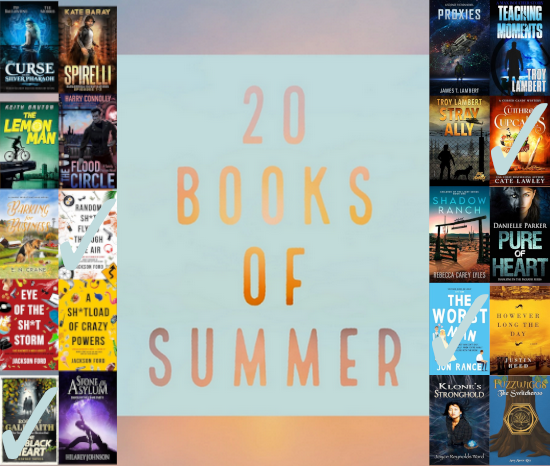
This summer, my 20 are going to be:

1. The Curse of the Silver Pharaoh by Pip Ballantine and Tee Morris
2. Spirelli Paranormal Investigations: Episodes 1-3 by Kate Baray
3. The Lemon Man by Ken Bruton
4. The Flood Circle by Harry Connolly
5. Barking for Business by E.N. Crane
6. Random Sh*t Flying Through the Air by Jackson Ford
7. Eye of the Sh*t Storm by Jackson Ford
8. A Sh*tload of Crazy Powers by Jackson Ford
9. The Ink Black Heart by Robert Galbraith
10. Stone of Asylum by Hilarey Johnson
11. Proxies by James T. Lambert
12. Teaching Moments by Troy Lambert
13. Stray Ally by Troy Lambert
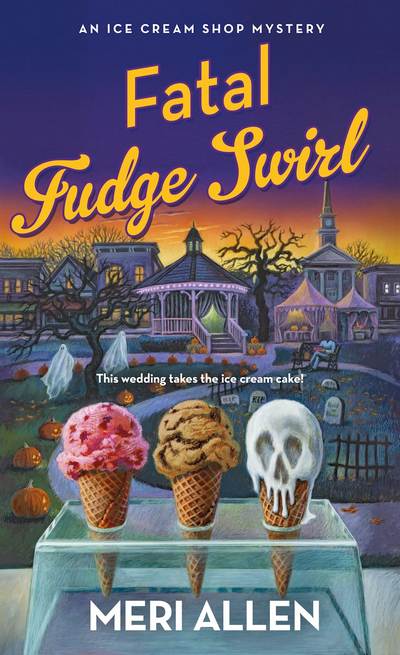
14. Cutthroat Cupcakes by Cate Lawley
15. Shadow Ranch by Rebecca Carey Lyles
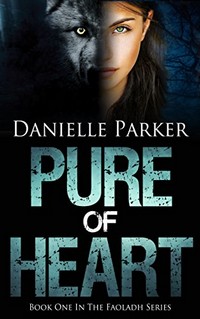
16. Pure of Heart by Danielle Parker
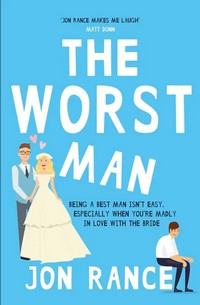
17. The Worst Man by Jon Rance
18. However Long the Day by Justin Reed
19. Klone’s Stronghold by Joyce Reynolds-Ward
20. Fuzzwiggs: The Switcheroo by Amy Maren Rice

(subject to change, as is allowed, but I’m going to resist the impulse to tweak as much as I can).

20 Books of Summer '23 Chart

Saturday Miscellany—6/3/23

This week started off strong for me and then fell apart quickly (6 posts left undone and unposted). The non-blog life got interesting, no horrible events occurred just a couple of things that were ill-timed and long. So today I’m going to scramble to get as caught up as I can. Also, this blog’s really dull Instagram page got suspended because someone claimed I was harvesting user data or something like that. Pshaw. Even if I wanted to, I don’t possess the know-how. Sounds like too much work. (really easy fix, but it was just one other thing I didn’t need)

I do want to take a moment and thank all the readers for the texts, comments, tweets, etc. about the 10th Anniversary. They meant a lot to me–I think I’ve thanked you all individually, but just in case. Thanks for being around and reading.

Odds ‘n ends about books and reading that caught my eye this week. You’ve probably seen some/most/all of them, but just in case:
bullet Here’s a Way to Make Sure You Actually Read the Books You Buy—This might actually work. Odds that I’ll try it? Extremely low.
bullet Publisher Drops Author After TikTok Backlash and GoodReads Review Bombing—I saw the author’s video retweeted a few times–and IF Stusek was joking as she claims, that should be the last time she jokes in public, because she’s just not good at it. I’m not sure the Goodreads bombing and the publisher’s reaction was warranted, but it is 2023, Stusek had to know it was coming.
bullet 1,001 Novels: A Library of America—An interactive map of the novels that depict the USA. I’m linking to the introduction, you need to take a moment and check out the map itself (and find yourself taking more than a moment). Actually, I’m thiiiis close to spending the rest of the morning on the site itself and never finishing this post or anything much else today.
bullet 10 Things You Might Not Know About NetGalley
bullet 10 Screen Adaptations Much, Much Worse Than The Books They’re Based On—I’ve only seen The Hobbit movies (sometimes because they seemed to be lousy adaptations). But this looks like a good list. Anyone have one to add? Anyone want to defend one of these? I’m curious.
bullet 2023’s Wyrd & Wonder is over, here are the last week Quest Logs from Dear Geek Place and The Book Nook. A lot of good material was produced this year, and I’m so glad that Peat Long pointed me to these Quest Logs so I could sorta keep up with some of it.
bullet Book Blogging in 2023 Survey: Book Blogger Survey Results and Statistics
bullet Step by Step Guide On How to Win a Booker PrizeIt’s pretty clear that The Booker Prize isn’t really the Orangutan Librarian’s thing, but that doesn’t mean that this post isn’t chock-full of great advice for aspirants
bullet I’m Not Convinced Book Bloggers Need AI—I should’ve realized that this was a thing to think about, but I didn’t until I read this post.
bullet On Fantasy as the Genre of Recovery—Good ol’ Peat nails it here. To his point: I’ve done a little thought-experiment to see if I could write a companion piece on Detective/Crime Fiction and the answer is: not really (Urban Fantasy, which is so frequently a mashup of Detective and Fantasy, straddles the line).
bullet On My Radar: May 2023—if you’re not checking in on A Literary Escape frequently, you ought to at least take a peak at their monthly On My Radar posts. (but checking in on the blog frequently would be a good idea)

This Week’s New Releases that I’m Excited About and/or You’ll Probably See Here Soon:
bullet Man on a Murder Cycle by Mark Pepper—a vengeful motor cycle rider, a violent plagiarism scheme, and a week’s worth of surprises await you in this thriller. I had a bit to say about it earlier this week.
bullet A Necromancer Called Gam Gam by Adam Holcombe—It’s a book with the word “necromancer” in the title and it’s described as cute. That’s almost enough reason to read this right there. The early reviewers singing the praises of this novella seal the deal. I’m 10% in and think my voice will be one of that choir soon.

A children's story which is only enjoyed by children is a bad children's story. - C S. Lewis

The Friday 56 for 6/2/23: A Necromancer Called Gam Gam by Adam Holcombe

The Friday 56This is a weekly bloghop hosted by Freda’s Voice.

RULES:
The Friday 56 Grab a book, any book.
The Friday 56 Turn to Page 56 or 56% on your ereader. If you have to improvise, that is okay.
The Friday 56 Find a snippet, short and sweet.
The Friday 56 Post it.

from Page 56 (and 57) of:
A Necromancer Called Gam Gam

A Necromancer Called Gam Gam by Adam Holcombe

“We want to make a bit of a spectacle, so we’re taken seriously,” she said, then with a wink, reached into the horse. Well, “into” was relative to who was watching, but Mina could see past the illusion, and she saw the necromancer pull a gem from between the horse’s ribs. When it was free, the horse’s true form showed. “What better way to do that than two ladies riding in on skeletal horses?”

Mina looked into the abyssal pits of Sebastian’s eyes and figured Gam Gam had a point.

Update: Does Anyone Know What Series This Is?

The other day, I asked for some help for a friend tracking down a beloved series from his younger days.

there’s only one series I desperately want to remember what it was.

Was sort of spooky mystery, 1950ish settling with some siblings always visiting this wise professor who always made them chocolate cake and they were always getting on the wrong side of evil magicians and eldritch powers.

It’s a vague amorphous memory that gives me super nostalgia and angst that I can’t remember anything beyond that image lol

I think the series has been tracked down.

Blogger Murder by Death commented:

Would it be one of John Bellairs’ series by any chance?

and Sean Gibson agreed,

I was thinking John Bellairs! It sounded very Bellairsian…

I passed the idea along and got this response:

Oh my gosh! Oh my gosh! I think these might be it!!!

https://www.goodreads.com/series/66883-johnny-dixon

I’m so excited to investigate further

Thanks to all those who replied and those who spread the word. Particularly to Murder by Death and Gibson.

Man on a Murder Cycle by Mark Pepper: Move Over SAMCROW, You’ve Got Nothing on This Biker

Man on a Murder CycleMan on a Murder Cycle

by Mark Pepper

DETAILS:
Publisher: Red Dog Press
Publication Date: May 30, 2023
Format: eARC
Length: 495 pg.
Read Date: May 24-30, 2023

Not What I Thought I Was Getting Into

At a certain point, I realized this novel was going in a direction that I wasn’t expecting—and not in an “I didn’t see that twist coming” way, but in a metaphysical sense. I was a little annoyed, to be honest. I felt like Pepper was cheating, changing the rules governing the book like he did. I was still going to finish it—you give me an ARC, I’ll read it. Also, I was curious about the fate of one or two of the characters. I just was less enthused about the prospect.

In a minor huff, I went to Red Dog’s website to read the description and realized I’d read only most of it initially (when I copied and pasted the text into my cover reveal). I got to a certain point, saw where the blurb was going (or so I thought), remembered Pepper’s Man Down, and put the thing on the TBR.

No one cheated. No one changed anything. There was no bait-and-switch here. I just didn’t do due diligence. I probably wouldn’t have read this if I’d read the whole thing.

And I’d have missed out on something I’m going to remember for a while—because once the (for lack of a better term) supernatural element entered the novel, it got a lot more twisted, darker, and exciting.

Let that be a lesson, kids—read the whole description. And then give the benefit of the doubt to a writer you enjoyed already. Or skip the description part and just trust the writer.

Wait a Second—What’s Man on a Murder Cycle About in the First Place?

Oh, yeah, I’ve gotten a little ahead of myself.

Tom Roker is a writer. Well, he wrote one very successful thriller some time ago. And has written four stinkers since then—so bad that his agent can’t get anyone to publish them, despite the (now waning) shine his previous success might bring.

While his writing has gotten worse—his desperation to repeat his success has built—driving him to work on his books more and more. Which had a horrible impact on his wife and daughter. Well, his now-remarried ex-wife and daughter who now live in the U.S.

While giving his agent his latest novel (which she’s pretty sure is going to be as bad as the others), she mentions that she’s just received a new manuscript from an unknown author that’s as good as his first book. This was her first mistake. She then agrees to let Roker read it and gives him her copy. This is her second mistake.

He reads it and is blown away—yes, it shows just how bad his current work is—and it could’ve been written by the author he was years ago. Coincidentally, Roker sees that the author had just been killed. And he hatches a plan. They publish the book under his name, his agent pockets a larger-than-usual commission, and no one is the wiser. She signs on to this plan (after he blackmails her a bit)—this is her third big mistake. Many more follow.

Things happen. The book is published—and Roker is re-invigorated. He’s writing like he used to.

But then the police show up—people are being killed using the methods employed by the maniac in “Roker’s” new book. Guess who suspect #1 is?

If nothing else, this book should ensure that no one ever plagiarizes Mark Pepper.

A Couple of Content Warnings

There’s an attempted rape scene—emphasis on attempted. But still, that can be too much for some readers. So caveat lector.

There’s also a scene that’s difficult to categorize…it’s kind of a rape scene, but it’s also a psychosexual game played by the “victim.” It’s (intentionally) disturbing and off-putting. If you can get through the previous attempt, you’ll be okay once you’re past this one.

There are, of course, also several murders. Gory, bloody, and macabre. We read about most of them after the fact, or see the lead-up to it without getting the details of the killing itself. That’s pretty much a given, I realize, but while I’m talking about potential areas of revulsion, I thought I’d throw that in.

So, Was I Right?

When I posted my spotlight on the book yesterday, I was around 75-80% through the book and said, “At this point, I can think of at least 5 different ways this book will likely end.” Three of them would’ve been satisfactory, the other two less so—but I assumed that had Pepper picked one of those he’d sell me on it.

So how close was I? Let’s imagine that the right answer is in the heart of Chicago, Illinois. I might as well have been camping out on Triton, Neptune’s largest moon.

Thankfully, I’d also said, “I’m pretty sure they’re all wrong—and what I have waiting for me over the next 25% is going to throw me for a loop.”

So I’m counting this as a win—I was correct when I said I was wrong, and the several loops that came in those closing pages were wilder than I’d have bargained for.

So, what did I think about Man on a Murder Cycle?

The first chapter of this book was stunning. If the rest of the book disappointed me, I still would’ve given it 3 stars based on that chapter. (thankfully, I didn’t have to, so this post would’ve been very difficult to write)

I wonder if the Epilogue takes away a bit of the punch of the last page. But it made me smile, so I’m not going to complain. I’ll just wonder.

Everything in between was a heckuva ride. I think I’ve used all the adjectives I want to use here already in this post: Twisting, dark, exciting, gory, bloody, and macabre. That sums it up. There’s a tinge of hope, too—but given the rest of the book, you wonder if it’s misplaced when you’re feeling it (and I’m not going to say). I really don’t know what else to say here while not giving away too much.

There’s a dark humor that shines through frequently—particularly in the closing stages of the book. There are a couple of scenes that I imagine Pepper smiled throughout the writing, and if you have a certain sense of humor, you will, too.

This is not for everyone. How many books worth the time are? But this is for a narrower audience than others. But for those who read the description and are intrigued? You’re in for a treat.

Disclaimer: I received this eARC from Red Dog Press in exchange for this post and my honest opinion—thanks for this.


4 1/2 Stars

WWW Wednesday, May 31, 2023

The day I’ve long-dreaded has arrived–I don’t mean a WWW Wednesday, or the end of May. The last episode of Ted Lasso is released today, and I’m just not ready for it*. I’d best distract myself by talking some books.

* Yes, I know that Season 3 has had its detractors, and I haven’t loved every moment of it, but I’ll just tell you now, keep your negativity about the show away from me.

This meme was formerly hosted by MizB at A Daily Rhythm and revived on Taking on a World of Words—and shown to me by Aurore-Anne-Chehoke at Diary-of-a-black-city-girl.

The Three Ws are:

What are you currently reading?
What did you recently finish reading?
What do you think you’ll read next?

Easy enough, right?

What are you currently reading?

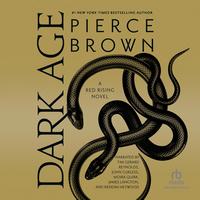
I’m reading Real Tigers by Mick Herron (it only took me 6 months since the last one) and I’m still listening to Iron Gold by Pierce Brown, Narrated by: Tim Gerard Reynolds, John Curless, Julian Elfer, and Aedin Moloney on audiobook.

Real TigersBlank SpaceIron Gold

What did you recently finish reading?

I just finished Mark Pepper’s Man on a Murder Cycle, a fast and furious read. The last audiobook I finished is still The Only Truly Dead by Rob Parker, Warren Brown (Narrator), a great way to end the trilogy.

Man on a Murder CycleBlank SpaceBlank SpaceThe Only Truly Dead

What do you think you’ll read next?

My next book should be A Necromancer Called Gam Gam by Adam Holcombe, a book I have to try based on the title alone. My next audiobook should still be a revisit of The Girl Who Could Move Sh*t with Her Mind Narrated by Lauren Patten and Graham Halstead.

A Necromancer Called Gam GamBlank SpaceThe Girl Who Could Move Sh*t with Her Mind

What about you?

Help a Buddy Out: Does Anyone Know What Series This Is?

I was texting* with a friend yesterday and he said that he cannot remember the name of most of what he read in middle school. He was largely okay with that, but there’s one exception:

there’s only one series I desperately want to remember what it was.

Was sort of spooky mystery, 1950ish settling with some siblings always visiting this wise professor who always made them chocolate cake and they were always getting on the wrong side of evil magicians and eldritch powers.

It’s a vague amorphous memory that gives me super nostalgia and angst that I can’t remember anything beyond that image lol

Think back 15 years or so, does any one have an idea what he might have been reading? It’s not necessarily (probably not at all likely) YA. I can’t think of anything, and search engines aren’t working for me.

* I have to stress this conversation was in text–he’s a proofreader, and if it got out that he typed like this outside of a text environment, he’d probably stop talking with me outside of formal letters.

Page 178 of 624

Powered by WordPress & Theme by Anders Norén