WWW Wednesday—February 25, 2026

Today has gotten away from me, so this is 1. the only post I’m getting up today (obviously), and 2. it’s really late. But, it’s the thought that counts, right?

(yeah, not really)

WWW Wednesdays Logo

This meme was formerly hosted by MizB at A Daily Rhythm and revived on Taking on a World of Words—and shown to me by Aurore-Anne-Chehoke at Diary-of-a-black-city-girl.

The Three Ws are:
What are you currently reading?
What did you recently finish reading?
What do you think you’ll read next?

Seems easy enough, right? Let’s take a peek at this week’s answers:

What are you currently reading?

Cover of Fairest Hunter by M. K. Felix Cover of All Accounts Settled by Drew Hayes
Fairest Hunter
by M. K. Felix
All Accounts Settled
by Drew Hayes, read by Kirby Heyborne

I haven’t made it very far in Felix’s gender-swapped Robin Hood/Snow White mashup. But it’s entertaining so far.

While Fred the Vampire Accountant hasn’t been my favorite series, it’s been a reliable pleasure. I’m going to miss it, I just hope (and trust) that Hayes lands the finale in a satisfying way.

What did you recently finish reading?

Cover of Butterfly Effects by Seanan McGuire Cover of by Nina McConigley
Butterfly Effects
by AUTHOR
How to Commit a Postcolonial Murder
by Nina McConigley, read by Reena Dutt

I’m lamenting that no one in any of my circles–online or offline–reads McGuire’s InCryptid series, because I really want to talk to someone about the new book (which will be getting a very positive write-up here as soon as I can find the time).

I’m pretty ambivalent about Nina McConigley’s 1980s-set murder story, to be honest. I’d like to hear what others have to say.

What do you think you’ll read next?

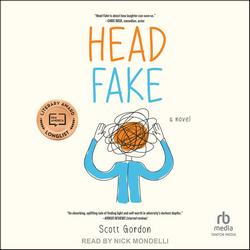
Cover of The Long Way to a Small, Angry Planet by Becky Chambers Cover of Head Fake by Scott Gordon
The Long Way to a Small, Angry Planet
by Becky Chambers
Head Fake
by Scott Gordon, read by Nick Mondelli

As I said at the beginning of the month, I read this back in 2018 (and liked it better than I recalled), and it’s the next title for the Science Fiction Book Club. Time to freshen my memory. I trust 2018-me, and should have some fun.

I can’t remember what it was that made me put Head Fake on a list to get, but looking at the blurb, I think I’ll enjoy it.

What are you reading as the month closes?

Top Ten Tuesday: Top Ten Quotes About Books and Reading


The topic for this week’s Top Ten Tuesdays is “Quotes From/About Books (Share book quotes you love, quotes about being a reader, etc.)”

Once upon a time, I had a really good list of these going–and I have no idea what happened to that (it was before this blog). But I do have a decent collection of quotations that I’ve used once or twice over the years in my Saturday Miscellany posts, so I picked the ten best of those.

Top Ten Quotes About Books and Reading

(alphabetically by author)

10 'The best moments in reading are when you come across something – a thought, a feeling, a way of looking at things – which you had thought special and particular to you. Now here it is, set down by someone else, a person you have never met, someone even who is long dead. And it is as if a hand has come out and taken yours.' Alan Bennett

“The best moments in reading are when you come across something – a thought, a feeling, a way of looking at things – which you had thought special and particular to you. Now here it is, set down by someone else, a person you have never met, someone even who is long dead. And it is as if a hand has come out and taken yours.” Alan Bennett

(Source)

9 I love people who read. I think it screams humility. When someone reads, they are essentially admitting they want more, that the world is not enough for them. They want more knowledge, more experience. Whatever this life is, they want more of it. - Nicholas Browne

I love people who read. I think it screams humility. When someone reads, they are essentially admitting they want more, that the world is not enough for them. They want more knowledge, more experience. Whatever this life is, they want more of it. – Nicholas Browne

(Source)

8 I couldn’t decide which one of these to keep; they’re variations of the same idea, so I’m sticking with them both.

An image of a woman searching through shelves of books over the words 'The person who doesn’t read lives only one life. The reader lives 5,000. Reading is immortality backwards. - Umberto Eco'

The person who doesn’t read lives only one life. The reader lives 5,000. Reading is immortality backwards. – Umberto Eco

(Source)

The text 'I do not read for I have renounced life, I read because one life is just not enough for me. - Abbas Al-Akkad' written over a picture of an open book

I do not read for I have renounced life, I read because one life is just not enough for me. – Abbas Al-Akkad

(Source)

7 'Do not read, as children do, to amuse yourself, or like the ambitious, for the purpose of instruction. No, read in order to live.' — Gustave Flaubert

Do not read, as children do, to amuse yourself, or like the ambitious, for the purpose of instruction. No, read in order to live. — Gustave Flaubert

(I don’t remember where I got this image)

6 'Books are delightful society. If you go into a room and find it full of books—even without taking them from the shelves they seem to speak to you, to bid you welcome' The Right Hon. William E. Gladstone Prime Minister. UK, 1809-1898

“Books are delightful society. If you go into a room and find it full of books—even without taking them from the shelves they seem to speak to you, to bid you welcome” The Right Hon. William E. Gladstone Prime Minister. UK, 1809-1898

(Source)

5 At one magical instant in your early childhood, the page of a book - that string of confused, alien ciphers - shivered into meaning. Words spoke to you, gave up their secrets; at that moment, whole universes opened. You became, irrevocably, a reader. - Alberto Manguel'

At one magical instant in your early childhood, the page of a book—that string of confused, alien ciphers—shivered into meaning. Words spoke to you, gave up their secrets; at that moment, whole universes opened. You became, irrevocably, a reader.” ― Alberto Manguel

(Source)

4 When I think of all the books still left for me to read, I am certain of further happiness. Jules Renard

When I think of all the books still left for me to read, I am certain of further happiness.  Jules Renard

(Source)

3 Reading books is the most glorious pastime that humankind has yet devised. - Wislawa Szymorska

Reading books is the most glorious pastime that humankind has yet devised.  Wislawa Szymorska

(Source)

2 I cannot remember a time when I was not in love with them--with the books themselves, cover and binding and the paper they were printed on, with their smell and their weight and with their possession in my arms, captured and carried off to myself.' ― Eudora Welty

“I cannot remember a time when I was not in love with them–with the books themselves, cover and binding and the paper they were printed on, with their smell and their weight and with their possession in my arms, captured and carried off to myself.” ― Eudora Welty

(Source)

1 Books are everywhere; and always the same sense of adventure fills us. Second-hand books are wild books, homeless books; they have come together in vast flocks of variegated feather, and have a charm which the domesticated volumes of the library lack. Besides, in this random miscellaneous company we may rub against some complete stranger who will, with luck, turn into the best friend we have in the world.― Virginia Woolf

Books are everywhere; and always the same sense of adventure fills us. Second-hand books are wild books, homeless books; they have come together in vast flocks of variegated feather, and have a charm which the domesticated volumes of the library lack. Besides, in this random miscellaneous company we may rub against some complete stranger who will, with luck, turn into the best friend we have in the world.― Virginia Woolf

(Source)

MUSIC MONDAY: “Life Is Beautiful” by Keb’ Mo’

The Irresponsible Reader's Music Monday logo

Music Monday's originated at The Tattooed Book Geek's fantastic blog and has shown up hither, thither, and yon since then.

Irresponsible Reader Pilcrow Icon

First Do No Harm by S. J. Rozan: A Hospital’s Seedy Underbelly

Cover of First Do No Harm by S. J. RozanFirst Do No Harm

by S. J. Rozan

DETAILS:
Series: Lydia Chin & Bill Smith, #16
Publisher: Pegasus Crime
Publication Date: January 6, 2026
Format: Hardcover
Length: 320 pg.
Read Date: February 18-19, 2026
Buy from Bookshop.org Support Indie Bookstores

My brother needs a lawyer,” I told Bill over the phone from the sky diving hut.

“Your brother is a lawyer. Unless it’s a different brother, in which case his brother is a lawyer.”

“It’s Elliott, he needs a criminal lawyer, and it’s for a friend.”

“That’s what they all say. What happened?”

“The friend was found at the hospital in the company of a dead body.”

“Did he make it dead?”

“No.”

“That’s what they all say. New York City? Long Island, upstate, New Jersey? ”

“That’s as far as your reach extends?”

“God no. You need Nebraska? The Leeward Islands?”

“Just testing. Manhattan.”

“The guy’s in custody?”

“Yes, and he’d rather not be,”

“That’s what they all say.”

What’s First Do No Harm About?

That’s basically all you need to know. Lydia’s brother gets a call from a coworker that he’s friendly with, who’s the prime suspect in a murder at the hospital. After Bill connects him with a good criminal lawyer, that lawyer hires the duo to do the investigating for her.

It doesn’t go well at first—there’s a lot of institutional resistance to helping them—the hospital just wants to put the incident behind them—they’re on the verge of a nurses’ strike, and the additional bad press associated with a murder is too much for them. They’re perfectly willing to let this staff member be arrested and convicted, as long as it happens fast and keeps them out of the news.

Thankfully, Lydia and Bill are good at making allies and cashing in favors—once they start learning secrets and talking to the right people (probably in the reverse order), they start finding more people who will talk to them (willingly or not), and a picture—very slowly begins to emerge.

They’ve had some real doozies of a case before—and honestly, this is one of the more straightforward cases they’ve had (if you ignore all the distractions they encounter along the way)

Why did I pick this up? Why did I keep reading?

I picked this up because it’s a Lydia Chin/Bill Smith book.

I kept reading for the expected reasons: the mystery/crimes they uncovered and their chemistry and banter. It’s also a “Lydia” book, so it’s a bit more upbeat and fun.

The way these two interact has always been something that attracted me to the books, and it continues strong here. There’s a little competition between the two of them early on about who can charm the most people connected to the case—and neither of them does very well. Dismally, really. But it’s fun to watch them go back and forth about it—it’s a nice twist on Spenser’s strategy of going around annoying people until someone does something that leads him somewhere. At least they’re (superficially, at least) trying to charm people.

But really, just getting the chance to watch the two of them talk to each other is enough to keep me reading.

What does this book tell us about humanity?

This is a tricky one, because like most PI Fiction, the core of this book is people being despicable and trying to get away with it. But there’s a focus to this one.

“Seriously,” I said, sipping the cinnamony froth off my mug, “I’ve never seen so many people doing so many nefarious things. It’s a little disheartening. No, it’s a lot disheartening. A hospital? Isn’t it a thing that medical people are supposed to at least do no harm?”

Bill shrugged. “I always thought so.”

Lydia has seen a lot of…well, a lot. Crime, corruption, organized crime, family dysfunction, murder, and so on. A lot of what she’s seen would be too much for many of us (myself included). Yet this case disheartens her. She’s seen the various and sundry corruptions, backstabbing, machinations, poor conditions surrounding the workers at this hospital—and we’re not even talking about patient care/conditions—who knows what would show up if that happened. It’s all behind-the-scenes stuff. And it gets to her. She mentions it frequently.

Even with a brother who works in the ER in this hospital, all of this mess shocks her. Bill doesn’t seem as disturbed, but I don’t get the impression that he expected it to be this bad, either. Even people like them—given their experience, profession, and what they’ve heard—they expect hospitals to be about helping people. Healing people. Not trying to profit at other people’s expense.

I think it says something about how all of us have illusions about institutions. Or that even in the best places for humanity, our collective depravity shows up. Or maybe, that despite all the nefarious things going on, there are people (like her brother) who help people—and that even those who are getting away with things still manage to do some good.

Okay, I’m not sure what this book tells us about humanity. It’s not cut and dry—and on one level, we all know that, but something that Crime Fiction is good at is reminding us all that humanity is a mess, but still some good things happen.

So, what did I think about First Do No Harm?

I thoroughly enjoyed it. I think my only complaints are that we didn’t get enough of Lydia’s brother—because I enjoyed him in his element; and we definitely didn’t get more time with the accused murderer—because he was such a fun ball of chaos and earnestness. Seriously, can he get accused of another crime soon? I’d like to see him back in this series.

Everything else was great—good red herrings, a good twisty mystery that exposed a lot of other criminal/crime-adjacent activities, some winning characters. And more than one scuzzy person that you wouldn’t have minded being guilty of the murder—sadly, some that get to keep being less-than-upstanding and successful. The final reveal of the killer? I didn’t see it coming, but in perfect murder mystery style, once revealed, I couldn’t not see it and was annoyed with myself for missing it.

As one expects, Rozan did it again. And now we get to wait for her next successful outing. This would make a fine jumping-on point for the series. I think every book in the series would, for that matter. You’ve got no excuse not to read it.

This post contains an affiliate link. If you purchase from it, I will get a small commission at no additional cost to you. As always, the opinions expressed are my own.

Irresponsible Reader Pilcrow Icon

The Culture of God’s Word by Harold L. Senkbeil & Lucas V. Woodford: Doing Things the Acts Way

Cover of The Culture of God's Word by Harold L Senkbeil & Lucas V WoodfordThe Culture of God’s Word:
Faithful Ministry in a Post-Christian Society

by Harold L Senkbei, read by Lucas V Woodford

DETAILS:
Publisher: Lexham Press
Publication Date: February 18, 2026
Format: Hardcover
Length: 176 pg.
Read Date: February 1, 2026
Buy from Bookshop.org Support Indie Bookstores

What do we mean by “culture of the word”? The culture of the word encompasses this kind of compassionate understanding, while acculturating individuals from distinctively different identities and customs into one overarching transcendent culture of the church universal and eternal. Paul’s compassionate and considerate approach to gospel proclamation shows how to best foster the culture of the word. But there’s no need to compromise Christian ethos or teaching to gain a hearing within a given subculture and grow the culture of the word.

What’s The Culture of God’s Word About?

The authors describe their starting point pretty clearly right from the start:

The book of Acts is a practical guide to mission in every generation. It shows how the first Christians were driven not by their cultural context but by the word of Christ to change the hearts and lives of people living very much in the world, yet not of it. They weren’t seeking to convert cultures but people who lived in various cultures.

Faithful mission in a chaotic world builds on this New Testament template; people in every context—every nation, tribe, and language—should be acculturated by the word of Christ. For two millennia Christians have held that the church cultivates its own transcendent culture in a rapidly shifting social context—the culture of the word.

In a culture that is safely described as post-Christendom*, their argument is simple: go back to the way that the book of Acts describes evangelism and church life. Don’t try to ape the world, adapt the Christian message to passing cultural trends, embrace the world’s values, etc. Just do what the Church and her leaders did in an equally non-Christian culture.

They spend about five chapters making the case for the reasoning behind that and what it should look like, and then wrap it up with a chapter on applying that.

* However you want to define that.

Chapters 1-5

These chapters focus on developing the above quotation. Here’s the list:
1 The Church Is Created by the Word of God
2 The Church Lives in One Transcendent Culture
3 The Church Proclaims Christ Jesus
4 The Church’s Worship Transcends Cultural Context
5 The Church Lives in the World, Not of the World

That pretty much shows you how they go about building the case—again, focusing their examples and illustrations from Acts.

Not too surprisingly, chapter 4 was the highlight of these chapters for me—I’m a sucker for a good chapter on worship. I did have some quibbles with a few things in it—but I assume that’s because I’m wrong about something they argued. Overall, it’s probably worth half the price of the book.

The Church Grows from the Culture of the Word

To faithfully grow the culture of the word there were four areas of good soil the New Testament church chose as places in which to sow the word: worship, catechesis, hospitality, and vocation. These areas remain vital to the church and must be engaged to ensure the seed is sown robustly.

That’s from the first page of Chapter 6 (that shares a title with the section heading above), and it made me instantly think of Stephen O. Presley’s Cultural Sanctification: Engaging the World like the Early Church—a book that makes the same argument (essentially) as this one, but it leans primarily on the first few centuries of the Church, rather than the inspired history of the first few decades after Pentecost.

Focusing on “worship, catechesis, hospitality, and vocation,” the authors apply the previous chapters and call ministers to work in these areas. I thought it was a wonderful and needed conclusion to the book.

So, what did I think about The Culture of God’s Word?

The task of mission and evangelization in our neo-pagan world today is exactly as it was in the pagan world of the first apostles and evangelists: to rescue and to save people by the word of the gospel accompanied by deeds of love. The culture of this word brings renewal and hope because God’s word always does what it says. The word of Christ Jesus crucified and risen heals holistically: it erases guilt, eradicates shame, and mends illnesses of both body and soul.

Now, I’m not a minister, and this book is written primarily for them—so take what I say with a larger grain of salt than you typically would. I do think that the laity can and should read books written for those who are (or are about to be) ordained to ministry—if only so we know what standards to hold them to. But still, this book wasn’t written for someone like me.

I do think I’d have gotten more out of it if I were one. But that doesn’t take away from all the things I appreciated about the book. I don’t know if it’s really all that revolutionary or unique in its outlook. This doesn’t take away from the book either—it just means that these authors find themselves in good company. If you find yourself thinking about the Presley book, or The Core of the Christian Faith by Michael W. Goheen (or other books by Goheen), or other books along those lines—don’t be surprised.

That said, it’s a short, punchy read that accomplishes what other books do in fewer pages. It could be seen as a refresher on them, or a solid introduction to this kind of thinking for those new to it.

I found myself nodding a lot, appreciating the wisdom, and making notes to talk about certain ideas with others.

I heartily encourage others to pick it up—you won’t regret it.

Disclaimer: I received this book as a participant in the Baker Publishing Group Nonfiction Reviewer Program. However, as always here, I read this book because it interested me and the opinions expressed are my own.

This post contains an affiliate link. If you purchase from it, I will get a small commission at no additional cost to you. As always, the opinions expressed are my own.

Irresponsible Reader Pilcrow Icon

Saturday Miscellany—2/21/26

Odds ‘n ends about books and reading that caught my eye this week. You’ve probably seen some/most/all of them, but just in case:
bullet Books and screens: Your inability to focus isn’t a failing. It’s a design problem, and the answer isn’t getting rid of our screen time—This’ll provoke some thinking (also, I want to be whereever that picture was taken)
bullet “The guy you buy”: The Michael Clayton of it all.—a great piece on Corporate Thrillers
bullet Read this: Generative AI is doing a number on the romance novel market—in case your blood pressure could use a boost (or your despair is running a little low)
bullet From Atoms to AI: The Futile Search for a “Perfect” Language
bullet Five Cosy Activities For Audiobook Listening—all of them sound better than my typical audiobook listening activities: driving, work, cleaning
bullet “The Victim has to be a Believable Person”: An Interview with First Do No Harm’s S.J. Rozan
bullet What Do You Want to Know About a Book Before You Read It?—a question I think about a lot

My favorite sentence/passage/phrase (or two) that I read this week:
“Goblin tea resembles a nice cup of Earl Grey in much the same way that a catfish resembles the common tabby. They share a name, but one is a nice thing to curl up with on a rainy afternoon, and the other is found in the muck at the bottom of polluted rivers and has bits of debris sticking to it.”—Nine Goblins by T. Kingfisher

To help talk about backlist titles (and just for fun), What Was I Talking About 10 Years Ago This Week?
bullet Thing Explainer by Randall Munroe—Nunc hoc in marmore non est incisum
bullet Talking to the Dead by Harry Bingham—featuring a protagonist that belongs on one of my personal Mt. Rushmores
bullet Some Assembly Required by Kevin Smith, Phil Hester and Jonathan Lau
bullet The Restaurant at the End of the Universe by Douglas Adams
bullet The Relic Master by Christopher Buckley—yeah, I DNFed it, but I talked about it.
bullet Lastly, I talked about the releases of Switcheroo by Aaron J. Elkins and Calamity by Brandon Sanderson

This Week’s New Releases that I’m Excited About and/or You’ll Probably See Here Soon:
bullet Agnes Aubert’s Mystical Cat Shelter by Heather Fawcett—”A woman who runs a cat rescue in 1920s Montréal turns to a grouchy but charming magician to help save her shelter.” (“turns to” and “grouchy” aren’t necessarily the words I’d use, but…whatever). I opined about it a couple of weeks ago. Lots of fun.
bullet Time for a Change by Questlove, S. A. Cosby—I was a little worried that we weren’t going to get a sequel, but: “On the heels of their thrilling appearance in Rhythm of Time, best friends Rahim and Kasia are back traveling through time in Time for a Change. Last time around, they were on their own—now they are working with Aevum, a mysterious organization from the future that tasks them with averting disaster and safeguarding the flow of history.”
bullet Worse than a Lie by soandso—”a lawyer drawn into a case that begins with a violent traffic stop and spirals into a fight over truth, power, and freedom inside the criminal legal system.” (for more, read the link there or this feature from the Westside Gazette, which is where I lifted that quotation from)

I don't hoard books. I stockpile alternate realities. Leylah Attar

WWW Wednesday—February 18, 2026

WWW Wednesdays Logo

This meme was formerly hosted by MizB at A Daily Rhythm and revived on Taking on a World of Words—and shown to me by Aurore-Anne-Chehoke at Diary-of-a-black-city-girl.

The Three Ws are:
What are you currently reading?
What did you recently finish reading?
What do you think you’ll read next?

Seems easy enough, right? Let’s take a peek at this week’s answers:

What are you currently reading?

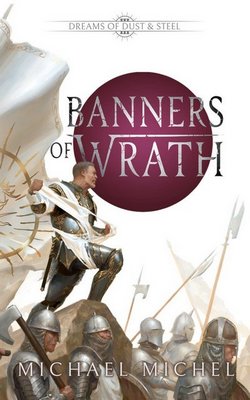
Cover of Banners of Wrath by Michael Michel Cover of A History of the World in 6 Glasses by Tom Standage
Banners of Wrath
by Michael Michel
A History of the World in 6 Glasses
by Tom Standage, read by Sean Runnette

I had to take a break to make sure I finished Hive on time (see below), but I’m back to Michel’s latest. There are just so many things going wrong for these characters…and I’m loving it.

Standage’s history came up in conversation with a friend when I was telling him about reading The Mountains Shall Drip Sweet Wine. This is a very different take on potent potables (and some others), but they also do a good job of complimenting each other.

What did you recently finish reading?

Cover of Jump by DL Orton
Jump
by DL Orton
Cover of Operation Bounce House by Matt Dinniman Cover of The Greatest Sentence Ever Written by Walter Isaacson
Operation Bounce House
by Matt Dinniman, read by Travis Baldree & Jeff Hays
The Greatest Sentence Ever Written
by Walter Isaacson, read by Walter Isaacson & Holter Graham

I’ve talked about Jump a lot today, I’m not sure what else to say.

Read Matt Dinniman, they said. He’s hilarious, they said. Well, this was a different book for Dinniman–it’s harrowing, somewhat hopeful and affirming, but also…the mirror it holds up about humanity’s cruelty to humanity (for fun and profit!), just ain’t pretty. I should stress that this is an endorsement.

Okay, technically, the last book I listened to was Isaacson’s celebration/examination of the second sentence in the Declaration of Independence (you know, “We hold these truths to be self-evident…”). But it’s a 60 minute book (including the appendices), so it doesn’t really feel like a book.

What do you think you’ll read next?

Cover of First Do No Harm by S. J. Rozan Cover of City of Others by Jared Poon
First Do No Harm
by S. J. Rozan
City of Others
by Jared Poon, read by David Lee Huynh

It’s been too long since I read a good PI novel, might as well read about two at the same time, right? The good part is pretty much granted with Rozan behind the wheel.

I was just browsing at the Library’s site when I saw this Urban Fantasy set in Singapore. Which is such an unusual combination of words that I have to try it.

Tell me about your recent reads (I may be bad at replying, but I read every comment)

Jump by D. L. Orton: Second Verse, Same as the First (which is not a knock)

I’m tempted here to take 90% of post about Hive from last May, switch out the titles and say, “good enough.” Because…it really would be. I won’t, because that feels like cheating. But…if things sound eerily similar, there’s probably a reason. I plagiarize myself all the time in real life, I might as well do it here, too.
Jump Tour Banner

Cover of Jump by D. L. OrtonJump

by D. L. Orton

DETAILS:
Series: Madders of Time, Book Two
Publisher: Rocky Mountain Press
Publication Date: November 4, 2025
Format: Hardcover
Length: 406 pg.
Read Date: February 14-16, 2026
Buy from Bookshop.org Support Indie Bookstores

What’s Jump About?

This picks right up from the end of Hive, but we get to see a more global scale—it’s not just around the Denver area that things are bad all over the world. And getting worse. There are a handful of efforts to save the world—more efforts to save portions of humanity (read: powerful and rich, with a few smart ones to keep things running)—and, of course, our rag-tag group of scientists and dimension-travelers.

And, I really don’t know what to say without getting way too complicated (it ain’t easy recapping multiverse stories and all their varying apocalypses). What’s Jump about? It’s about what happens after Hive, and before Dome (coming soon from D.L. Orton). While the world races past dystopia toward chaos, mass starvation, and general devastation—some people try to save it. Or at least another universe from falling into the same hole.

Why did I pick this up? Why did I keep reading?

I picked this up because I was curious about where Orton was going to go with things.

Why did I keep reading? That’s simple—once you read a few pages, you can’t help keep going—I could probably come up with a list of things I could fault Orton’s writing for if I wanted to (I don’t want to, see no need to, etc…I’m just saying I could). But getting the reader to keep turning the pages as fast as they can wouldn’t show up anywhere near that list. Her writing is like that old Pringles slogan, “Once you pop, you just can’t stop.”

What does this book tell us about humanity?

Nothing good, sadly. Well…let me take that back. Before I get too far with the thing that has really captured my mind over the last day, something I thought about while reading is just how immutable certain things in the multiverse may be: Diego and Isabel (in whatever variants of spelling/language/nicknames they may be known by) are gaga over themselves. Have the same interests and pursuits—and name their kids the same thing (although they don’t all have them, they plan on using the same ones). Dave is an evil, manipulative, scumbag everywhere (with some minor variation of degree possible). Matthew is basically Matthew wherever.

Compare that to the multiverses in Fringe for example—some parts of Olivia are the same on both sides, but not nearly as much. The Walters are freakishly different. And so on. Or even the variations in the Spider-Mans in the last movie—differences in powers, Mary Janes, villains, life experiences (only one has been to space!).

Whatever minor variations Orton does show, they are so small as to be negligible. I just think that’s strange.

Now back to the nothing good—there are essentially three groups of people we see in this book (more than Hive).

First, you have the overwhelming mass of humanity—they’re starving (and it’ll get worse), their access to electricity, heat, medicine, is severely limited. It’s a barbaric existence for them—and it’s about to get so much worse. It’s all about survival from one day to the next for them.

Then you have the “Elite”—they’re rich, they’re powerful, they use government resources (and then pretty much ignore all the governments that are helping them) to “save humanity.” As long as that humanity helps them get richer (because that’s important), can give them access to the disappearing resources of Earth, and/or can keep things running. They couldn’t care less about the people outside of the Domes, and will do horrific things to preserve said Domes.

Even our “good guys” who are—to be the one to travel. Period. End of discussion. So what does he do? He takes off on a risky mission for the sake of the woman he loves—and (no offense, Isabel) she really doesn’t seem to have a role to play in the “saving the world” bit. I’m not saying let her die, or anything—but we’re talking about the fate of humanities, here. Also—the princess can save her self, thank you very much.

You still like them, you’re still rooting for them, you still smile at their jokes—but, when the book is done and you can breathe and reflect? They may end up saving multiple realities (or even just one!), but I’m not sure they’re heroic. Which is not necessarily a bad thing, you just prefer them to be a bit more so.

So, what did I think about Jump?

It’s exactly the kind of escapist read that helps you unwind after a long day.

It moves, it’s fun—yes, it’s full of existential despair, but it keeps the focus on the non-despair inducing/horrific things—the characters and situations are compelling. And there’s part of you (well, part of me, and hopefully I’m not alone in this) that keeps thinking “if I just stick with it, I’ll actually understand all the various multiverse strands.” That part isn’t quite as important, but if I tried to diagram it all, it wouldn’t be pretty. It’d also be pretty inaccurate.

I’d love for Orton to show us all how she kept everything straight.

The tech is very cool—particularly the “baby” version of the old AI we meet in Hive. Orton gives you enough to understand how it all works and to visualize it clearly without bogging down the pace with paragraphs and paragraphs of details. The plausibility of it all? Eh, it’s SF, it’s plausible enough if you come with a standard level of suspension of disbelief needed for time travel/multiverse travel.

Because of the pacing, Orton’s able to get away with a few things that maybe she couldn’t in a slower-moving book. The depth of the characters that could be brought out are merely nodded to, or you have to assume them. You have to assume there’s something about the tech elites that got them where they are, despite being horrible people who can miss a whole lot of things their underlings are doing—and to keep working together despite the clear animosity.

I thought this last time, and I’m more certain of it now, most of my problems can be laid at the feet of the pacing—to keep things moving, she can’t develop these things with much more than a nod. I’m not necessarily wild about how things work out because of that, but I understand the reasoning, and can sit back and enjoy it.

I want to stress, however, in the moment, you don’t think about this (and if you do, you brush it off because you don’t want to step out of the movement). Everything works, everything clicks while you’re reading and speeding off to the next twist/revelation. It’s only after you get to the ending that leaves you holding onto the cliff’s edge with your fingers that this might occur to you if you stop and think about it. Mostly, you’re going to be thinking about how long it will be until you can get your hands on the next book, Dome.

It’s easily enjoyable, engrossing, and entertaining. You should give it a try.

This post contains an affiliate link. If you purchase from it, I will get a small commission at no additional cost to you. As always, the opinions expressed are my own.

Irresponsible Reader Pilcrow Icon

BOOK SPOTLIGHT: Jump (Madders of Time #2) by D.L. Orton

I’m very pleased today to welcome The Write Reads Ultimate Blog Tour for Book Two in D.L. Orton’s Madders of Time series, Jump! If you take a look at the feeds https://twitter.com/WriteReadsTours and https://bsky.app/profile/thewritereads.bsky.social, you’ll see what several other bloggers have had to say about it. My $.02 will be coming along later today.

Jump Tour Banner

Book Details:

Title: Jump by D. L. Orton
Genre: Madders of Time, Book Two
Genre: Science Fiction
Age Category: Adult
Format: Hardcover/Paperback/Ebook
Length: 406 pages
Publication Date: November 4, 2025
Jump by DL Orton Cover

About the Book:

The multiverse is collapsing. The time machine is broken. And humanity’s last hope? Might already be dead.

Seven months after the EMPs brought the world to its knees, a handful of scientists are racing against extinction—and each other. Somewhere in a flooded skyscraper lies a wormhole generator that might be able to undo the apocalypse. If they can find it. If it still works. If it doesn’t kill them first.

Meanwhile, Diego Nadales wakes in a cell, his face bloodied and his memories fractured. He’s being accused of terrorism, treason, and time travel. The last one, at least, is true.

Isabel is trapped inside a biodome ruled by the man she once trusted. But her bees—microscopic drones designed to save the planet—have been hijacked and weaponized. If she doesn’t find a way out soon, her creation will wipe out the last threads of life on Earth.

Old friends return. New enemies rise. And somewhere in the chaos, one small spark of hope just might be enough to ignite a revolution.
The clock isn’t ticking. It’s blowing up.

Book Links:

Amazon Canada ~ Amazon US ~ Amazon UK ~ Goodreads ~ The StoryGraph

About the Author:

DL Orton

The BEST-SELLING AUTHOR, D. L. ORTON, lives in the foothills of Colorado where she and her husband are raising three boys, a golden retriever, two Siberian cats, and an extremely long-lived Triops. Her future plans include completing the books in the BETWEEN TWO EVILS series followed by an extended vacation on a remote tropical island (with a Starbucks).

When she’s not writing, playing tennis, or helping with algebra, she’s building a time machine so that someone can go back and do the laundry.

Ms. Orton is a graduate of Stanford University’s Writers Workshop and a past editor of “Top of the Western Staircase,” a literary publication of CU, Boulder. The author has a number of short stories published in online literary magazines, including Literotica.com, Melusine, Cosmoetica, The Ranfurly Review, and Catalyst Press.

Her debut novel, CROSSING IN TIME, has won numerous literary awards including an Indie Book Award and a Publishers Weekly Starred Review. It was also selected as one of only 12 Great Indie Stars by BookLife’s Prize in Fiction.


My thanks to The Write Reads for the invitation to participate in this tour and the materials they provided.

The Dentist (Audiobook) by Tim Sullivan, read by John Heffernan: A Promising Series Start for a Distinctive Detective

Cover of The Dentist by Tim SullivanThe Dentist

by Tim Sullivan, read by John Heffernan

DETAILS:
Series: The DS Cross Mysteries, #1
Publisher: W. F. Howes Ltd
Publication Date: September 2, 2021
Format: Unabridged Audiobook 
Length: 10 hrs,. 12 min.
Read Date: February 10-12, 2026
Buy from Bookshop.org Support Indie Bookstores

What’s The Dentist About?

DS George Cross is called to a murder scene for what the uniformed officers are assuming is going to be a simple, probably unsolvable, murder of a homeless man at the hands of another homeless person. Cross almost instantly sees some things that tell him that’s not the case at all, and saddles up for a complicated case.

It is a complicated one, too (obviously, you don’t want your novel’s protagonist to be wrong at the first thing he concludes in the book). Cross and his not-very-willing partner, DS Josie Ottey, start learning a good deal about this homeless man—who not that long ago was a prominent dentist in the area. Cross becomes convinced that this murder is tied to an unsolved case from over a decade ago and sets himself to solving both crimes.

This sets him at odds with former police detectives who investigated the earlier case, the higher ups in the Service who are looking for a quick conclusion, and parts of the dentist’s own family. Ottley supports him in this, but gets the other side, too—and will try to guide him to the “safer” conclusion (while hoping his obstinacy will show that he’s not the person she should be partnered with for the next case).

I Have to Talk About Cross and the Spectrum

We meet George Cross having a very awkward introduction to a new coworker—it doesn’t go well for either of them (and only one of them understands why). And then he finds calm in leaving that conversation to focus on the murder victim in front of him. A crime to investigate, clues to notice, a puzzle to solve—that’s what Cross needs. Not a friendly (and we’ll learn, clever) new coworker.

In many ways, Asperger’s Syndrome* is what distinguishes Cross from his peers (on the force and in Police Procedural fiction). But Sullivan never makes this out to be a super-power (as so many tend to do), or a disability for him to overcome in some inspirational manner (phew). Nor—and this is the big one—is it played for comedy (think Adrian Monk’s OCD which is portrayed comedically, tragically, and with sensitivity—often in the same scene.)

It’s just who Cross is. He is off-putting, he is borderline rude, he only realizes how to better handle a conversation at work or in private after the fact (and almost never goes back to redress things). He is hyper-focused at times, to the point of obsession. He is very self-aware of his challenges and has done many things to ease his way through them (one would argue, not enough). His co-workers and superiors are also very aware of his challenges and have done things to ease his way through them (one would more easily argue, not enough).

He’s on the spectrum, just the way that Ottley is a black single mom. The way that his father is a hoarder. The way that their civilian aid is anxious to prove herself. The way their DCI is a better politician than a detective (but one who can see when he needs to get out of the way and let detectives detect). It’s just part of him.

That’s the way this should be handled.

* I realize that “Asperger’s Syndrome” is considered an outdated term, but it’s what the novel uses, so I’m using it, too.

How was the Narration?

Well, first I had to cope with Heffernan’s pronunciation of “Asperger’s” (well, the British pronunciation, its not just his). It doesn’t really matter to me, but it, more than anything, reminded me where this book takes place (I really didn’t register the accent otherwise).

Other than that—I really appreciated and enjoyed Heffernan’s work here. He got the tension just right (when appropriate) and captured the humanity of all the characters and Cross’ investigation. He conveyed the rigor of Cross’ style and thought process as well.

I don’t know if I can separate the Heffernan’s reading of the book from my appreciation of it—it’s likely a series that I’ll have to continue on audio, because the two are joined so solidly in my mind. (and, boy, do I hope Heffernan’s got a long-term contract).

Why did I pick this up? Why did I keep reading?

I picked this read “Mind and Matters of Crime: Meike Alana Lokos at the DS George Cross Mysteries” over at The Hard Word and the series seemed like something I should give a shot.

I kept going because I was right—this is totally my thing. Some great characters, a unique way to approach a criminal investigation, and a pretty twisty mystery.

What does this book tell us about humanity?

It feels like the obvious thing here is to talk about Cross being on the spectrum, and the way that others respond to him, avoid him, get frustrated with him, and yet respect his work. Or the way that has learned to make his way in the world. This is valid and important.

It also feels too easy—and like something I could copy and paste for the next however many books there are. More than that, it wasn’t the thing that jumped out at me the most.

What really rises to the top when I think about this book are the connections between the people—what forges them, what strengths (or weakens them), and how that plays out over the course of their lives. Cross and his father have a very solid relationship—it’s predictable, it’s reliable. Cross and Ottley have a…strained and awkward relationship—but one that Cross somewhat depends on, one that Ottley frequently resents (I think she softens a bit). The relationship between Cross and his superiors isn’t what you get from other procedurals—even with “the brass” isn’t wild about a particular detective who does things their own way.

And as for the relationships between the victims, suspects, and others that Cross encounters in this case—those are firmly in spoiler territory, but watching the web be revealed—and add layers as the book goes on was really intriguing. The book really is about human relationships and much of their diversity more than just about anything else—including the murders. (although, well, they’re rooted in them, too.)

So, what did I think about The Dentist?

I was charmed instantly, by the end of Chapter One—I was sold. My appreciation and enjoyment grew from there, and I wasn’t halfway through before I knew I was at least getting the sequel to this soon. And anticipated catching up on the series by the end of 2026.

This satisfied me on every front—mystery, character, storytelling, writing, and promise for things to come. I felt like I understood Cross and Ottley, and wanted to see them ply their craft with another case or twelve.

Lastly, while DS Cross isn’t DC Smith, and no one would confuse the Bristol police with King’s Lake Central—there’s something about this book (and Heffernan’s narration) that scratched a Peter Grainger-itch in my psyche. This is good, because now that I’ve caught up with Grainger’s series, he can’t produce things quickly enough to satisfy me. Also, it’s pretty high praise in my book for Sullivan.

For readers who are into British Procedurals, atypical Detectives, and/or quality fiction. I strongly encourage you to pick this up.

This post contains an affiliate link. If you purchase from it, I will get a small commission at no additional cost to you. As always, the opinions expressed are my own.

Irresponsible Reader Pilcrow Icon

Page 2 of 602

Powered by WordPress & Theme by Anders Norén