I can’t tell you when this became a (largely) annual thing for me to post, but it was on a blog that pre-existed this one. As always, seems like a good day to post it.
I was talking about this book the other day, and wanted to refresh my mind about it, so I pulled up this post from 2016. It’s handy that I was able to do that (and as this is one of the reasons I started this blog, it’s great to see that it works, even if I rarely use it). I need to read this book again, soon. But also, it was such a good book and I thought I did an okay job with the post, so I thought I’d repost this.
Sons in the Son: The Riches and Reach of Adoption in Christ
by David B. Garner
eARC, 400 pg.
P & R , 2017
Read: October 23 – December 11, 2016

At the heart of Pauline soteriology is the redemptive-historically charged concept of adoption (huiothesia). For Paul, the entirety of our redemption—from the mind of God before creation itself until its eschatological completion in our bodily resurrection—is expressed by filial reality, filial identity, and a filially framed union. As we will see in the following pages, this filial grace in Christ Jesus is expressly and implicitly, in Pauline theology, adoption.
I remember the first time I was really introduced to the doctrine of Adoption — sure, the idea had been mentioned throughout my Christian life, and using some material from an Ancient History class on Roman culture, I’d developed my understanding a bit, but it wasn’t until I’d been Reformed for a year or two that I heard someone seriously discuss the doctrine — the elder of the church I belonged to at the time walked us through the Westminster Confession’s teaching on it — the most robust development and explanation of the doctrine in Reformed Confessional history. I recall being struck by this teaching, how vital it was — and then hearing very little about it (on the whole) for the next couple of decades.
You see, despite being one of the three benefits the Westminster Shorter Catechism says that they who are effectually called partake of in this life (the other two being justification and sanctification, with several benefits that flow from or accompany these three), by and large, it’s been ignored in favor of the other two. Garner will describe it as a “deafening theological silence characterizing huiothesia [adoption] since the WCF.” It’s a slight exaggeration, but only slight.
Garner wants to push this doctrine to the forefront, to the limelight that it deserves, has pursued this in various forms throughout the years, and now brings it all into focus through this outstanding book.
He begins by describing various approaches to the topic — historically, linguistically, and so on — and sets out how he will proceed and build upon the best (primarily: Calvin and Westminster). This is a daunting section, but does well setting forth the landscape. It was interesting and thorough, I don’t know that it wowed me at any point, but it certainly whet my appetite for that which lay ahead.
Part 2 is where the major Biblical heavy lifting takes place — Garner goes for in-depth exegetical looks at each text that touches on the topic, building both a case for each text individually, as well as a Biblical-Theological whole. I will be honest, a lot of this went over my head — at least the details. But Garner writes in a way to ensure that even untrained laity can follow the his train of thought.
In part 3, Garner brings Adoption into Systematic Theology, primarily discussing its relation to Justification and Sanctification. He brushes up against some of the recent Justification controversies here, and demonstrates how a better understanding of Adoption, can (and should) play a significant role in resolving them. He does similar work with some Sanctification controversies — but not as much, partially because Justification has been a larger issue of late, and because historically Adoption has been (incorrectly) considered as forensically as Justification. This section probably takes more work to understand than the Exegetical section, but that could be just because I don’t try to get too much of a handle on the Greek, and I don’t have that hang up with English. Takes more work, sure, but doable.
Garner isn’t writing for laity explicitly, but he doesn’t write in a way that’s only accessible by theologians and scholars. Yeah, you sometimes there’s a lot of technical jargon to wade through, but it can be done (if nothing else, you feel smarter — and probably learn a couple of things). It was a bit weightier than most of what I’ve been reading lately, and I took my time with it to make sure it didn’t overwhelm me (it easily could have).
It’s absolutely worth the effort — this book is full of pastoral application, it will help you understand and appreciate the Pauline texts — and will deepen your assurance. This is quite possibly the best book I’ve read this year. Read this one. I will re-read it — I’m even going to buy a hard copy when this is released, you should, too.
Disclaimer: I received this eARC from P & R Publishing via NetGalley in exchange for this post — thanks to both for this. I meant it, I’m buying a hard copy as soon as I can.
N.B.: As this was an ARC, any quotations above may be changed in the published work — I will endeavor to verify them as soon as possible.
—–

I’ve felt like I was half-awake from Tuesday afternoon through this morning. Anyone else have weeks like that? I seemed to function fine, accomplished almost everything I intended to, and so on–but it felt like it’d take me 0.3 seconds to go from active to unconscious. I had a point when I started this paragraph, but I seem to have misplaced it.
Hope you all had a good one and that there’s one or two things here that pique your interest as they did mine.
that caught my eye this week. You’ve probably seen some/most/all of them, but just in case:
The slow (imminent) death of books and bookstores—Let’s start off on a cheery note, shall we? I think he’s probably wrong, but…
My kids won’t even pick up a book – and it is definitely all my fault—I can relate to this
An Ear for Reading: Audiobooks Take Center Stage in the Classroom—this is pretty cool
Then again… Why we remember more by reading – especially print – than from audio or video
I Couldn’t Travel, so I Read 100 Books Instead—I wouldn’t normally think of Fodors as a good source for pieces about reading. Exceptions happen.
An Interview With Andy Weir—Elizabeth Tabler interviews the author of Project Hail Mary (and a few other things)
Q&A With Curtis Ippolito, Author of “Burying the Newspaper Man”—from MysteryTribune
Why Are Crime Writers So Darn Nice?—I’ve heard this a lot over the last few years…I do wonder why that is.
9 Sigils I Wish Existed in Kevin Hearne’s ‘Ink and Sigil’—This was just so odd (and good) I had to pass it along.
Books Of My Childhood—I reposted a list of some formative childhood books earlier this week, apparently, I’m not the only one thinking about that kind of thing lately.
Book Blogging rules/advices I Follow and Don’t Follow—food for thought
Ways To Write More Creative Book Reviews—some more to chew on (I think I might have linked to this a year or two ago, but I saw it this week and it got me thinking)

Episode (or two) you might want to give a listen to:
The Waterstones Podcast How We Made: The Hitchhiker’s Guide to the Galaxy—I’ve listened to several podcast episodes about this book, and generally roll my eyes at them. But this is just fantastic. Were it available, I’d listen to a Peter Jackson-length version.
Fiction Fans Episode 8: Written in Dead Wax—a fun interview with Andrew Cartmel about the first book in his Vinyl Detective series (the second book in that series has been staring intently at me from it’s perch on my To Be Read Shelf since I listened to this episode…)


This is a weekly bloghop hosted by Freda’s Voice
RULES:
Grab a book, any book.
Turn to Page 56 or 56% on your ereader. If you have to improvise, that is okay.
Find a snippet, short and sweet.
Post it

from Page 56 of:

The Jigsaw Man by Nadine Matheson
The caramel-colored leg was slim and streaked with dried blood. Three toenails, polished bright blue, had pushed through the black netting of a pair of tights, which had gathered at the foot.
“Shit,” said Ramouter.
“She thought it was the leg of a mannequin at first until she noticed the dried blood and Vacarescu started screaming like a man possessed.”
Three feet from the leg, an arm and a head had been dumped against a tree stump. The head was covered with long black and purple braids. There was a bald spot, the size of a two-pound coin, on the right side. Her forehead was crisscrossed with grazes and bruising pocked her right cheekbone. Traces of red lipstick cracked across her lips. Two blackened holes where her eyes used to be. Ramouter put a hand to his mouth and looked away as a woodlouse crawled into the left eye socket.
“Where’s Linh?” Henley asked Stanford. “And why aren’t you at court?”
“Sick juror, and Linh is on her way.” Stanford turned his back on the body. Henley knew how he was feeling. They thought they had seen it all, until life presented them with a fresh kind of hell.
![]()
As the title implies, I’m in the middle of this book, so this is not a review, just some thoughts mid-way through.

A Man With One of Those Faces
by Caimh McDonnell, Morgan C. Jones (Narrator)
Book Blurb:
The first time somebody tried to kill him was an accident.
The second time was deliberate.
Now Paul Mulchrone finds himself on the run with nobody to turn to except a nurse who has read one-too-many crime novels and a renegade copper with a penchant for violence. Together they must solve one of the most notorious crimes in Irish history…
…or else they’ll be history.
I’m at the 48% mark—and this is just ridiculously fun. A great mix of dark humor, some silly humor, gritty crime drama, some fascinating characters, and three very different kinds of police detectives.
For me, this experience has been like the first time I read one of Jay Stringer’s Sam Ireland books—Ways to Die in Glasgow
I get the impression that Detective Bunny McGarry is who I’m supposed to be the most focused on, but he rankles me. Poor, incredibly ordinary-looking, Paul Mulchrone and the nurse, Brigit Conroy, who got him into this mess are who I’m the most invested in. But the DI Jimmy Stewart is the star of this book—I could listen/read to a five-book series about him starting tomorrow.
I can’t think of a way to sum up the plot or even speculate about what’s going to happen next—like I normally do in these posts. I just can tell that whatever happens next that I’m going to have a blast listening to it, and I’m prepared for just about anything to happen.
![]() |
A Tale of Wonderful Whiffsby Sophie Loosveldt, Isabella Croker (Illustrator) PDF, 39 pg. Read: May 12, 2021 |

What’s A Tale of Wonderful Whiffs About?
Ahh, pugs. Over at SheldonComics.com, you’ll see them described as “God’s Little Wierdos.” But in A Tale of Wonderful Whiffs, they’re some of the Universe’s “Secret Agents” here to spread love (through a varieety of means). Both ideas work, really, if you’ve ever spent time around them.
In particular, this book is looking at Pugini and her person, Sophie. There’s not really a narrative arc here, it’s a series of vignettes looking at the things that Pugini and Sophia do as these Secret Agents to brighten the lives of those they come into contact with and spread love.
It could be argued that Pugini’s method of spreading her message of love—via “tuneful toots” created from her “happy belly” which is “only sometimes SUPER smelly”—is pretty crass and not worthy of some of the elevated subject manner. But I can’t imagine anyone’s going to bother—particularly because it’s hilarious to a kid who’s still having picture books read to them.
The Illustrations
Croker provides some dynamic art. It’s very distinctive and attractive (although I thought the colors seems a little muted). I thought she nailed the art for Pugini—who is fairly cartoonish—especially the art revolving around Pugigini and hunting for snacks. It’s cute stuff that’s going to appeal to the target audience, I can assure you.
The, um, odor cloud depicting one of Pugini’s “fabulous farts” on one page is a great touch.
Okay, Sure, Maybe I’m Biased
A few years ago we adopted a senior pug/beagle mix, and I could see a little/lot of her in Pugini—her “squidgy face”, the “snorts and toots,” and the “hungry little monster nibbling on absolutely everything.” So, I’m an easy mark for this book—then again, how often do I have something less-than-complimentary to say about a Dog Book?
So, what did I think about A Tale of Wonderful Whiffs?
Sure, I’m not that wowed by the spiritual message of the book, but how many kids are going to grab on to it when they’re at the picture book stage anyway?
It’s a little saccharine-y, a little heavy-handed (but how many picture books are noted for their subtlety?). But ultimately it’s a cute book, with a nice premise, and some distinctive art. I’m not sure what else I have to say at this point, it’s a winner.
Get your hands on it had after a little fun with one of the goofiest critters around.


My thanks to Love Books Group for the invitation to participate in this tour and the materials (including the book) they provided.

Today I’m pleased to welcome the Book tour for the children’s book, A Tale of Wonderful Whiffs by Sophie Loosveldt and illustrated by Isabella Croker. After this post, I’ll be giving my take on the book here in a little bit. But let’s start by learning a bit about the book.
Book Details:
Book Title: A Tale of Wonderful Whiffs by Sophie Loosveldt, Isabella Croker (Illustrator)
Publisher: Sunshine stories
Format: Hardcover
Length: 39 pages

Book Blurb:
Pugini
Pug on a mission
This is the story of little Sophie and Pugini.
Everyday adventures of whiffs and wonders.
Together they explore the mystery and beauty of the natural world.
There is more to life than meets the eye. With a heart full of hope and a furry friend overflowing with love little Sophie ventures on a bright journey into the magic of every new day.
We are surrounded by Secret Agents helping us understand that love is all and we are all part of it. Never alone, but all one.

About the Author:
I am a control freak by nature, which suits me very well as an air traffic controller at Gatwick. I would have never classified myself as creative. Having moved from Belgium to London, opening my horizons, I now realise we all are; naturally inventive, expressive and imaginative. All children are born with this creative seed waiting to sprout. It took a long time for my seed to crack and for me to bloom into myself.
It is important to allow yourself to dream and have trust in the world. As a late bloomer I have a strong desire to empower all children, so they can grow and learn to express themselves freely. Our inner child never forgets about the magic of our world. It is the key to connect to the present moment and to not get stuck inside our heads.
Purchase Link:

My thanks to Love Books Group for the invitation to participate in this tour and the materials (including the book) they provided.
This morning I’m pleased to host a Book Blitz for John Cutter’s thriller Firepower to celebrate its publication today.
Book Details:
Book Title: Firepower by John Cutter
Publisher: Lume Books
Release date: May 13, 2021
Format: Ebook/Paperback
Length: 219 pages
Purchase Link:
Book Blurb:
White supremacists have climbed their way to the top. It’s his job to bring them down.
Vince Bellator, former Special Services operative, arrives in Dead Springs, Alabama to honor his late friend’s dying wish: to bury his hand under the porch of his hunting cabin.
But on the way, Vince has an unsettling run-in with a group of local heavily armed militiamen.
Sensing that the group is more than just a violent mob, Vince decides to infiltrate their ranks. He discovers that they are an outfit of white supremacists who call themselves The Brethren. But what sets them apart from other such extremists is that they are in the midst of planning an act of national terror.
Not only that, they are also harboring a prisoner – someone with a connection to Vince.
With the FBI unconvinced and government officials colluding with Brethren leaders, Vince realizes it is up to him to put a stop to the would-be terrorist cell. But can he do so before they wreak devastation on America and all it stands for?
Fans of Lee Child and James Patterson need look no further: full-throttle political thrills await you from the first page.

About the Author:
John Cutter is the bestselling author of The Specialist novels, which inspired the Sylvester Stallone movie of the same name. He lives in the Pacific Northwest, USA.

My thanks to Love Books Group for the invitation to participate in this Blitz.
I feel like I’ve been stumbling, barely conscious through this week so far—is it just me? Let’s hope this WWW Wednesday perks me up.
This meme was formerly hosted by MizB at A Daily Rhythm and revived on Taking on a World of Words—and shown to me by Aurore-Anne-Chehoke at Diary-of-a-black-city-girl.
The Three Ws are:
What are you currently reading?
What did you recently finish reading?
What do you think you’ll read next?
Easy enough, right?
What are you currently reading?
I’m reading the ARC for Moonlighting: An Oral History by Scott Ryan (and all I want to do is take a vacation from life and watch my DVDs now) and am listening to A Man With One of Those Faces by Caimh McDonnell, Morgan C. Jones (Narrator) on audiobook, one of those books I inexplicably kept putting off starting.
What did you recently finish reading?
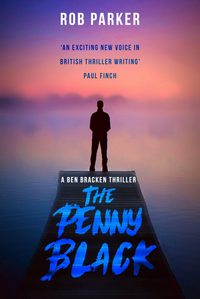
I just finished Rob Parker’s A Wanted Man and Time and Tide by Peter Grainger, Gildart Jackson (Narrator) on audio—the theme of which left me in a funk (great book, though).
What do you think you’ll read next?
My next book should be The Jigsaw Man by Nadine Matheson (which does not promise to be a feel-good read) and I have no idea what my next audiobook will be, DNF’ing something yesterday has thrown off my schedule.
Hit me with your Three W’s in the comments! (no, really, do it!)
![]()

It’s only been seven weeks since I finished Phase 1 of this project, Phase 2 was a lot briefer. But now we’re at an end to this series (I do want to check back toward the end of the year to see if I maintained my focus on this), and I thought I’d take a quick look back.
Last February, I decided to tackle the monster that is my Goodreads “Want to Read” Shelf, it doesn’t/didn’t represent every book I’m meaning to get to—but it’s a daunting grouping, what I’ve taken to calling my “aspirational” to-read list. As opposed to those that I’ve purchased in one form or another that I’ve yet to get to (I track that on my monthly retrospective posts, and that line isn’t moving in the right direction). But that’s a slightly different kettle of fish.
But thanks to this meme, I’ve done some good with the aspirational TBR. In February 2020, I had 240 books on the list and cut 129 off of it, and then between the time I posted about it on a Down the TBR post and when I got to the end of Phase 1, I was able to cross off another 8. Then I pulled a list of all of those I’d added to the Goodreads list in the meantime, adding 50. I cut 15 off of that Phase 2 list. And I’ve read some from that list during Phase 2:
A Big Ship at the Edge of the Universe by Alex White from DtTH #25
Sworn to Silence by Linda Castillo DtTH #26
Evolving Vegan: Deliciously Diverse Recipes from North America’s Best Plant-Based Eateries—for Anyone Who Loves Food by Mena Massoud DtTH #27
I Will Judge You by Your Bookshelf by Grant Snider DtTH #28 (well, I’ve started it)
And then there are two I have possession of and will have tackled within a week, which is close enough for me for these purposes.
Project Hail Mary by Andy Weir DtTH #29
The Jigsaw Man by Nadine Matheson DtTH #29
So that’s another 6 crossed off, 21 of the 50 Phase 2 books and a total of 158 books cut from my 290 book Goodreads “Want to List.” From 290 to 132, ain’t shabby at all. It’s 45% of the original size. If I was 45% of the size I am now…well, that wouldn’t be healthy. But it’d be closer to it than I am now. That example got away from me, didn’t it?
All in all, I’m calling this project a success. Let’s see if I can maintain the loss, or like most dieters, if I put it all back on in three-six months.
Yeah, it’s moot at this point, but I might as well keep the meme boilerplate info:
This meme was created by Lia @ Lost in a Story—but Jenna at Bookmark Your Thoughts is the one that exposed me to this, and as my Goodreads “Want To Read” shelf is (still) scarily long, I had to do this.
The Rules are simple:
- Go to your Goodreads to-read shelf
- Order on ascending date added.
- Take the first 5 (or 10 if you’re feeling adventurous) books.
- Read the synopses of the books.
- Decide: keep it or should it go?
- Keep track of where you left off so you can pick up there next week! (or whenever)
What distinguishes this series from the Mt. TBR section of my Month-end Retrospectives? Those are books I actually own while Goodreads contains my aspirational TBR (many of which will be Library reads). The Naming of the two is a bit confusing, but…what’re you going to do?