WWW Wednesday, April 28, 2021

We’re in the home stretch of April, which is hard to wrap my brain around, here on the last Wednesday of the month, so we might as well check in with a WWW Wednesday.

This meme was formerly hosted by MizB at A Daily Rhythm and revived on Taking on a World of Words—and shown to me by Aurore-Anne-Chehoke at Diary-of-a-black-city-girl.

The Three Ws are:

What are you currently reading?
What did you recently finish reading?
What do you think you’ll read next?

Easy enough, right?

What are you currently reading?

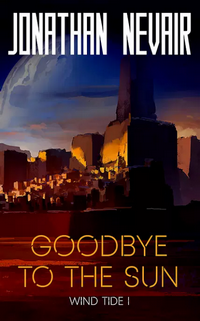
I’m reading the SF thriller, Goodbye to the Sun by Jonathan Nevair and am listening to Blood Cross by Faith Hunter, Khristine Hvam (Narrator) on audiobook, as I get going on my revisiting of this series.

Goodbye to the SunBlank SpaceBlood Cross

What did you recently finish reading?

I just finished Noelle Holten’s Dead Secret—a gripping read—and A Killing Frost by Seanan McGuire, Mary Robinette Kowal (Narrator) on audio—completing (for now) the series.

Dead SecretBlank SpaceA Killing Frost

What do you think you’ll read next?

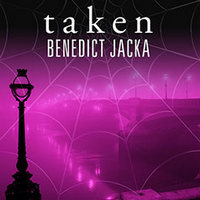
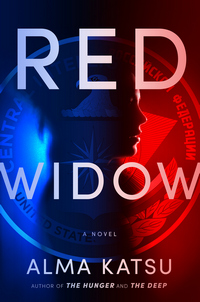
My next book should be Red Widow by Alma Katsu and my next audiobook should be Taken by Benedict Jacka, Gildart Jackson (Narrator).

Red WidowBlank SpaceTaken

Hit me with your Three W’s in the comments! (no, really, do it!)

Down the TBR Hole (28 of 29+)

Down the TBR Hole

Clearly, the key to making severe cuts to the “Want to Read” list, focusing on the older things on the list. If you’re wanting a reminder of all the stuff you’ve recently been excited about, well, look at the recent additions. All these last few entries in this series have done is remind me about all the cool stuff I wanted to read lately.

Yeah, I trimmed a little this time out, but not much. But I did work a little harder on arranging things so I could move some books from the “Want to Read” List to the “Have Read” List. All in all, a pretty good thing, right?

This meme was created by Lia @ Lost in a Story—but Jenna at Bookmark Your Thoughts is the one that exposed me to this, and as my Goodreads “Want To Read” shelf is scarily long, I had to do this.

The Rules are simple:

  1. Go to your Goodreads to-read shelf
  2. Order on ascending date added.
  3. Take the first 5 (or 10 if you’re feeling adventurous) books.
  4. Read the synopses of the books.
  5. Decide: keep it or should it go?
  6. Keep track of where you left off so you can pick up there next week! (or whenever)

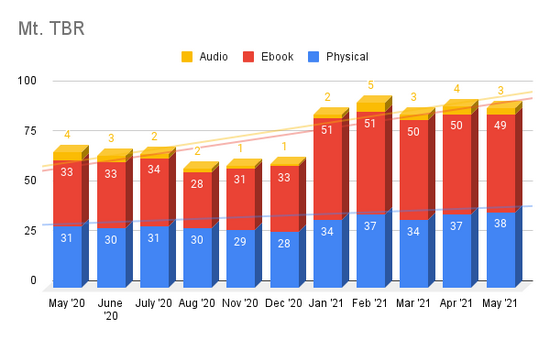
What distinguishes this series from the Mt. TBR section of my Month-end Retrospectives? Those are books I actually own while Goodreads contains my aspirational TBR (many of which will be Library reads). The Naming of the two is a bit confusing, but…what’re you going to do?

(Click on the cover for an official site or something with more info about the book)

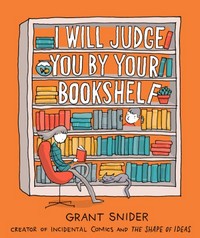
I Will Judge You I Will Judge You by Your Bookshelf by Grant Snider
Blurb: “this lighthearted collection of one- and two-page comics, writer-artist Grant Snider explores bookishness in all its forms, and the love of writing and reading, building on the beloved literary comics featured on his website, Incidental Comics”
My Thoughts: I like Snider’s comics, Lashaan mentioned it favorably, and, I’ve got a copy waiting at my local bookstore for me. It’s a keeper.
Verdict:
Thumbs Up
How to Write a Sentence How to Write a Sentence: And How to Read One by Stanley Fish
Blurb: “In this entertaining and erudite New York Times bestseller, beloved professor Stanley Fish offers both sentence craft and sentence pleasure. Drawing on a wide range of great writers, from Philip Roth to Antonin Scalia to Jane Austen, How to Write a Sentence is much more than a writing manual—it is a spirited love letter to the written word, and a key to understanding how great writing works.”
My Thoughts: “a spirited love letter to the written word” keeps this on the list.
Verdict:
Thumbs Up
Black Canary: Breaking Silence Black Canary: Breaking Silence by Alexandra Monir
Blurb: The Court of Owls has (somehow) taken over Gotham City and imposed a dicatorship, stripping women of most/all rights–inluding the right to sing. Teenater Dinah Lance helps women of the city rise up (which pursuing a romance with Oliver Queen).
My Thoughts: The premise is stupid, the DC Icons series is very hit and miss for me. But I’m curious and have seen some mostly positive reviews.
Verdict: I’m gonna cut this, but if my library ends up getting the audiobook, I’ll probably give it a try.
Thumbs Down
Concrete Rose Concrete Rose by Angie Thomas
Blurb: The story of Starr Carter’s father, Maverick, leaving the King Lords when he learns he’s a father.
My Thoughts: I honestly don’t care about Maverick’s past beyond what we learned in The Hate U Give. That was enough. Some of Starr’s classmates, I could see learning a bit more about. Seeing what happens to Maverick after The Hate U Give might interest me. OR–now this is a crazy idea, just hear me out–something that has nothing at all to do with her previous work. But this? I can’t muster the enthusiasm.
Verdict:
Thumbs Down
A Question of Navigation A Question of Navigation by Kevin Hearne
Blurb: 50,000 humans are abducted and are being taken to an alien planet. Five of them (scientists all) are set aside for one purpose, the others are destined to be eaten. It’s up to the scientists to save the day.
Verdict:
Thumbs Up
The Devotion of Suspect X The Devotion of Suspect X by Keigo Higashino
Blurb: “Yasuko Hanaoka is a divorced, single mother who thought she had finally escaped her abusive ex-husband Togashi. When he shows up one day to extort money from her, threatening both her and her teenaged daughter Misato, the situation quickly escalates into violence and Togashi ends up dead on her apartment floor. Overhearing the commotion, Yasuko’s next door neighbor, middle-aged high school mathematics teacher Ishigami, offers his help, disposing not only of the body but plotting the cover-up step-by-step…When the body turns up and is identified, Detective Kusanagi draws the case and Yasuko comes under suspicion. Kusanagi is unable to find any obvious holes in Yasuko’s manufactured alibi and yet is still sure that there’s something wrong. Kusanagi brings in Dr. Manabu Yukawa, a physicist and college friend who frequently consults with the police. Yukawa, known to the police by the nickname Professor Galileo, went to college with Ishigami. After meeting up with him again, Yukawa is convinced that Ishigami had something to do with the murder. What ensues is a high level battle of wits, as Ishigami tries to protect Yasuko by outmaneuvering and outthinking Yukawa, who faces his most clever and determined opponent yet.”
My Thoughts: 1. This sounds interesting. 2. A Japanese mystery would be an interesting change of pace. 3. Jeff made it sound pretty good on a Like the Wolfe episode.
Verdict:
Thumbs Up
First Cut First Cut by Judy Melinek & T.J. Mitchell
Blurb: “For San Francisco’s newest medical examiner, Dr. Jessie Teska, it was supposed to be a fresh start. A new job in a new city. A way to escape her own dark past. Instead she faces a chilling discovery when a suspected overdose case contains hints of something more sinister. Jessie’s superiors urge her to close the case, but as more bodies land on her autopsy table, she uncovers a constellation of deaths that point to an elaborate plot involving nefarious opioid traffickers and flashy tech titans who got rich off Bitcoin.”
My Thoughts: While, I’m a little hesitant about the premise, however, I really liked Melinek’s memoir Working Stiff (also co-written by Mitchell). I think the real-world expertise she brings could make up for that reticence.
Verdict:
Thumbs Up
August Snow August Snow by Stephen Mack Jones
Blurb: “August grew up in the city’s Mexicantown and joined the police force only to be drummed out by a conspiracy of corrupt cops and politicians. But August fought back; he took on the city and got himself a $12 million wrongful dismissal settlement that left him low on friends.” Now he’s looking into a staged suicide of someone who he turned down for a job.
Verdict:
Thumbs Up
Beast Boy Loves Raven Teen Titans: Beast Boy Loves Raven by Kami Garcia
Blurb: Raven Roth and Garfield Logan arrive in Nashville looking for answers about the incredibly weird things that have happend to/around them recently from Slade Wilson (clearly, a bad idea, unless Garcia’s really messing with things). They meet and “feel a connection, despite the secrets they both try to hide. It will take a great amount of trust and courage to overcome the wounds of their pasts. But can they find acceptance for the darkest part of themselves? Or maybe even love?”
My Thoughts: I’ve enjoyed the first two books in the series, and am just waiting for this one to be released.
Verdict:
Thumbs Up
Shadow of a Dead God Shadow of a Dead God by Patrick Samphire
Blurb: “It was only supposed to be one little job – a simple curse-breaking for Mennik Thorn to pay back a favour to his oldest friend. But then it all blew up in his face. Now he’s been framed for a murder he didn’t commit.So how is a second-rate mage, broke, traumatized, and with a habit of annoying the wrong people, supposed to prove his innocence when everyone believes he’s guilty?”
My Thoughts: Fantasy + detective fiction is generally a win for me, but I know I don’t have a great track record of following through on lager Fantasy novels lately. So I’m on the fence with this one. But that “second-rate mage” line…that stands out and keeps this on the list for a little while longer (at least).
Verdict:
Thumbs Up

Books Removed in this Post: 2 / 10
Total Books Removed: 150 / 290

Anyone out there read any of these books? Did I make the right call with any of them?


(Image by moritz320 from Pixabay)

Quick Take Catch Ups: Strange Planet; Claire Dewitt and the City of the Dead; Midnight at the Bright Ideas Bookstore; Paper: Paging Through History

This is an odd group of books, I realize—there’s no theme or anything. Most are books that I can’t find the time to write a full post about, and one I don’t want to spend the time on. To do justice to the Claire DeWitt book would take at least two of my longer-sized posts, and I’d want to read the book at least two more times—so, that’s just not happening, I’ll settle for this sketch. The point of these quick takes posts is to catch up on my “To Write About” stack—emphasizing pithiness, not thoroughness. As you’ll see here.


Strange Planet

Strange Planet

by Nathan W. Pyle
Series: Strange Planet, #1
Hardcover, 144 pg.
Morrow Gift, 2019
Grab a copy from your local indie bookstore

(the official blurb)
I’m not sure how to talk about this collection. If you’ve seen the comics floating around online, you either love ’em or hate ’em. If you haven’t seen the comics floating around online, you’re probably wrong, they’re fairly ubiquitous.

Having these in one handy collection is greatthis covers the topics “Young Beings,” “Friendship,” “Adulthood,” and “Recreation” from Pyle’s distinctive perspective. They’re great to dip into and out ofeither in order or just randomly. I could (and have) spend too much time reading/rereading this.
4 Stars

Claire DeWitt and the City of the Dead

Claire DeWitt and the City of the Dead

by Sara Gran
Series: Claire DeWitt Mysteries, #1
Paperback, 273 pg.
Houghton Mifflin Harcourt, 2012
Read: February 15, 2021
Grab a copy from your local indie bookstore

(the official blurb)
I have copious notes on this one, and I just can’t decide how to talk about it. So…I’ll cheat and do this.

It’s like someone decided to do a serious take on Dirk Gently and his approach to detection. And it is pretty seriousalthough it has moments where I wasn’t sure if I was supposed to laugh or not. A former teen detective turned “world’s best detective” comes to post-Katrina New Orleans to hunt for a missing D.A. Following the idiosyncratic methods of her mentors (in both print and in real life), DeWitt deals with the good, the bad, and the hard-to-fathom that make up New Orleans. She also deals with some ghosts from her past as she uncovers the truth about the DA (including many things he’d probably want no one to uncover).

It’s a book about literary private eyes as much as it is a literary private eye story. I do recommend it, you’re not likely to read anything like it. I’m coming back for the sequel soon.

Not that there was a great danger of this, but between this book and Treme there is zero chance I’ll ever live in New Orleans.
3.5 Stars

Midnight at the Bright Ideas Bookstore

Midnight at the Bright Ideas Bookstore

by Matthew J. Sullivan, Madeleine Maby (Narrator)
Unabridged Audiobook, 8 hrs., 59 min.
Simon & Schuster Audio, 2017
Read: February 24-26, 2021
Grab a copy from your local indie bookstore

(the official blurb)
A bookstore clerk finds a frequent customer dead in the shelves after he committed suicide. He has some sort of connection to her as a child, she discovers, and has left his few possessions to her. She’s compelled to learn why he killed himself, why he died with a photo of her as a child in his possession, and along the way has to come to terms with horrific events from about the time the photo was taken.

There are a lot of layers to this novelfantastic concept, heartbreaking conclusion. I never really connected with the protagonist, but I couldn’t stop listening, either.

Mabey did a fine job with the narration, I should add. Looking over some of her other titles suggests that I’ll be running into her again.
3 Stars

Paper: Paging Through History

Paper: Paging Through History

by Mark Kurlansky, Andrew Garman (Narrator)
Unabridged Audiobook, 13 hrs., 42 min.
Recorded Books, 2016
Read: March 4-9, 2021
Grab a copy from your local indie bookstore

(the official blurb)

This vacillated between intensely interesting and stultifyling dull, overly detailed, and seemingly random in focus, provocative and insulting. More than once I wondered about the connection between paper and whatever particular period of history he wanted to sound off onthe connection was usually there and clear (and germane), but he stretched it more than once. Also, Kurlansky seems to have a real chip on his shoulder regarding religions of many stripes. That’s fine, it’s just not all that germane.

I’m not sure audio was the right for this medium, outside of the irony. There was just so much thrown at the listener, I can’t imagine how anyone could retain any detailsI didn’t even try.

None of my problems were with Garman’s narration (although I questioned a few of his pronunciation), it was simply the text.
2 1/2 Stars

2021 Library Love Challenge 2021 Audiobook Challenge

This post contains affiliate links. If you purchase from any of them, I will get a small commission at no additional cost to you. As always, opinions are my own.

A Big Ship at the Edge of the Universe by Alex White was A Pretty Decent Space Opera That I Should’ve Liked More Than I Did

A Big Ship at the Edge of the Universe

A Big Ship at the Edge of the Universe

by Alex White
Series: The Salvagers, #1

Trade Paperback, 440 pg.
Oribt, 2018

Read: April 16-22, 2021
Grab a copy from your local indie bookstore!

“If we separate, our odds of survival go down, and make no mistake, I know odds better than anyone you ll ever meet.”

She tongued the inside of her cheek as she thought it over. ‘Interesting …1 figured you’d be happier with me dead.”

“Oh, I might. But I should also point out that your presence seduces the chance I’ll be shot first. So do we have a deal?”

He snatched up her whiskey bottle and tipped the neck slightly toward her. She clinked her tumbler against it.

“All right. Until we salvage the Harrow, consider me part of the crew.”

What’s A Big Ship at the Edge of the Universe About?

To really explain the set-up to this novel would take more time than I have to write, and more time to read than you want to give—that’s not an insult, if you’re going to spend time reading the elaborate set-up, you’d be better off with White’s prose than mine. But let’s see if I can give a very sketchy version.

This is a Space Opera with a pretty elaborate magic system—almost every person is born with an innate ability. An ability to augment their electronics/engineering capability; their medical abilities; their marksmanship; and so on. A small, pitiable few have no magical ability.

One such person is one of our protagonists, Elizabeth “Boots” Elsworth, is one. Despite her lack of magic, she was a fantastic combat pilot. After the war, she gained some fame (and not that much money) hunting for a treasure on a reality show. Since then, she’s eked out a living selling the equivalent of treasure maps for other would-be treasure hunters—many of which contain actual, verifiable information.

The other protagonist is Nilah Brio, one of the greatest living race drivers—she’s on the cusp of winning the Pan-Galactic Racing Federation’s Driver’s Crown, when mid-race a magic-user of great ability interrupts things, kills another driver, and frames her for it.

Both of these women have somehow become the targets of a secret conspiracy that’s tied to the Harrow. The Harrow is a space ship of tremendous power and as likely to exist as Atlantis. They’ve also found themselves on board the Capricious, the ship Boots served on during the war—still Captained by the same man, with a new crew and purpose. They’re salvagers and the victims of one of Boots’ faux-maps.

Boots is able to convince the crew to join her on the hunt for the Harrow to square her debt (and then some) and Nilah is along for the ride for various and sundry reasons.

This Novel Reminds Me Of…

There’s the dark conspiracy of The Expanse, the found family feel of Chambers’ The Long Way to a Small, Angry Planet, a magic system reminiscent of The Codex Alera (without the abilities having personalities…) mixed with that of the Alex Verus series*, and a tone that’s in the same neighborhood as Kings of the Wyld. All of which makes for an entertaining read that should appeal to many SF readers.

* Not really, but it’s the best I can come up with at the moment.

“…Hunter One and Two, standing by for orders.”

Those were the code names they’d been given. A few months ago, basking in the luxury of a PGRE hospitality suite, Nilah would’ve thought a code name was cool. Now, it just meant she was doing something stupid. Worse still, she was Hunter Two, and she had a pathological hatred of being second.

So, what did I think about A Big Ship at the Edge of the Universe?

It was pretty good. In theory, this is exactly the kind of read that should appeal to me—this isn’t just in my wheelhouse, it is my SF wheelhouse. I had a lot of fun reading it, I liked the characters, I thought White did the battle scenes right (no mean feat), and I thought the whole thing was pretty exciting.

But I didn’t click with it. I can see much/most of what White was trying to do, and think he pulled it off. I can see where people would really dig this and want to go immediately scrambling for the rest of the trilogy. But it just didn’t resonate with me. I’ll likely get around to the rest of the trilogy soon—and I may end up a die-hard fan. But for the moment, the best I can say is, “yeah, it’s all right.”

This is a well-written novel full of all the things I listed above and should have a cadre of die-hard fans. I’m missing out on something that I’m not one of them—but you likely could be. If any of this seemed interesting to you, I’d recommend giving it a shot. If you do, come back and tell me what I missed, would you?


3 Stars

2021 Library Love Challenge

This post contains an affiliate link. If you purchase from it, I will get a small commission at no additional cost to you. As always, opinions are my own.

The Art of Violence by S. J. Rozan: Bill Smith is Hired to Prove His Client IS a Murderer

The Art of Violence

The Art of Violence

by S. J. Rozan
Series: Lydia Chin & Bill Smith, #13

Hardcover, 275 pg.
Pegasus Crime, 2020

Read: April 7-8, 2021
Grab a copy from your local indie bookstore!

… he said, “Aren’t you going to tell me I’m not the serial killer type?”

“I don’t know that.”

“I guess in some weird way that’s a compliment.”

“It’s not. Why did you come here, Sam? Anyone else, I might think he was trying to impress me, but not you.”

“I’m not the type?” A sly smile.

“I hope you didn’t come for help leaving town, laying low, something like that. If you killed those women, you know I’m going to have to turn you in.”

“Good luck.”

“I have the guns,” I reminded him.

“You won’t need them but they won’t help. I already tried it.”

“Tried what?”

“Turning myself in. The detective told me to get lost. She said I wasn’t the type.

What’s The Art of Violence About?

Five years ago, Sam Tabor was sentenced to prison following a homicide. Bill Smith worked for Sam’s lawyer during the case, and was convinced Sam should’ve been put in a treatment center instead of prison—but Sam refused.

Now that he’s been “discovered” as an important artist, several agents and arts worked to get him released from prison. That happened a few weeks ago, and now two women have been killed. Sam’s convinced that he’s the killer, although he doesn’t remember killing these women—or even encountering them. He hires BIll to prove that he did commit the murders, so he can be sent back to prison for life where he can’t hurt anyone. Bill’s skeptical (as is the investigating detective) about Sam’s guilt, but takes the case so he can make sure Sam’s treated right and that his fears are investigated correctly.

So instead of looking for evidence to exonerate Sam, Bill’s looking for things to implicate him (technically, Bill’s still looking for ways to exonerate him, too). This is a very strange reason to hire a PI, and I loved this premise.

PI/Client Relations

Most people in Sam’s life treat him as two things—a murderer with psychological issues and an artistic genius (with shades of a cash cow). His brother and sister-in-law see him as a burden/obligation as well as a murderer with psychological issues. The police are looking for an excuse to lock him up again, hopefully for forever this time.

Bill Smith (and later, Lydia), on the other hand, treats him as a person. He doesn’t dance around Sam’s past, but Bill has always figured he’d paid a dearer price for that than warranted. He doesn’t want Sam to be railroaded by a vengeful detective or his own guilt. He certainly has no ideas about taking advantage of Sam’s wealth, status, or fame. He simply wants to find out what happened to these women.

In this light, Bill reminded me of Elvis Cole with Peter Alan Nelsen and Spenser with the various sports stars he’s worked for or Jill Joyce. They’re clients first and foremost, people who deserve to be treated right—and being celebrities is so far down the list of things they care about, that it almost doesn’t matter. Bill stands in good company there, and something about that way of dealing with a VIP has always appealed to me.

The Role of Art

Lydia and Bill find themselves involved in a crime involving the art world yet again, I can’t think of another detective that spends as much time in this world as these two. Typically, novels focusing on artists, galleries, and so on don’t do much for me. But the way this pair brushes up against this world, not only do I not mind, I find it appealing. I can see why Rozan or other authors find this world appealing.

One of Sam’s few friends in this particular case is a photographer. As hard as it is to give the flavor or an impression of a painting in prose, it seems more difficult to capture a photograph (aside from saying “it was a photo of X”), and Rozan doesn’t spend a lot of time describing individual photographs but she does a great job on the subject and tone of them, instead. I’m pretty glad that there were no pictures included I’m not sure I could’ve taken it (the novel’s title gives a hint about the direction of the photos). A picture may be worth a thousand words, but Rozan doesn’t need that many to get the reader to have the reaction she needs.

By now, it was half past eight. Traffic choked the streets, and pedestrians wove complex patterns on the sidewalks. All traces of last night’s mist had burned away under the April sun. The slanting whiteness of the light, the thin freshness of the day, dazzled me.

Lydia’s suggested any number of times that I consider changing my ways, getting up earlier, taking this in more often. She thinks it’s laziness and old habs that keep me from it. But she’s wrong. This unsullied light, this bright vision, they’re beautiful, but they’re false. They paint over the truth. They promise something they can’t deliver. It’s not until the day gets older, wearier, that it stops making the effort to lie.

The Subtle Slow Burn

Rozan says so little about the non-P. I. relationship between Bill and Lydia, and yet says so much. It’s been clear how Bill has felt about Lydia since the first book in the series, but it’s been a little harder to read Lydia. And Rozan hasn’t been as forthcoming as other mystery novelists when it comes to that sort of thing—and by other, I mean “every other one I can think of.” The Lydia/Bill romance arc is definitely a “less is more” kind of thing. Which is pretty much how Lydia would prefer it, I think.

I’d really prefer that she was less circumspect about it, but I really appreciate her approach to it. Which seems like a contradiction, but it’s not. If I were calling the shots, we’d get a lot more detail about what’s going on between them—and how long that’s been the case. That said, the way that Rozan plays with the audience’s desires/expectations, and instead just gives the reader hints, winks, and nudges work so well. Not just because it is so clearly what Lydia would like and leaves it all to the reader to piece things together. Yet, there have been developments in the relationship and we learn a lot about it (at least by Ronzan’s standards) in this book.

Yet again, the angel on my right shoulder told me to call Grimaldi, and the guy on the other side said I’d get more accomplished on my own. The right-side guy wanted to know if this was about getting things accomplished, or if it was personal. The left-side guy told him to guess.

So, what did I think about The Art of Violence?

The fact that this is the thirteenth book in the series that I’ve read, you probably have a pretty good idea of what I was thinking going in—I fully expected to like this one and I did.

First off, it’s from Bill’s perspective this time, and those usually feel a little different, and we get different details reported than we would have were the shoe on the other foot. I always enjoy the bouncing back and forth between the two narrators. Particularly if the police are involved, Bill has a strange relationship with the police, and it’s always good to see.

There’s a good puzzle to chew on here*, while watching Bill make a nuisance of himself with the people in Sam’s life who are convinced they’re far too good to deal with a P.I. Lydia’s around to smooth things over a bit, but not enough. It’s a dynamic I don’t imagine I’ll get tired of seeing. The (too few) scenes where it’s just Bill and Lydia talking to each other, are again, the highlight of the novel—I’ve said it before, I’ll say it again I don’t care what these two are talking about I’ll gladly read it. The Art of Violence would make a good jumping-on point to this series (almost all of them would be, come to think of it).

* Okay, I pegged the guilty party pretty early on, but not all the whys and hows involved. This is about the journey Bill and Lydia take to get the answers, more than it is the puzzle. Either way, the book scored pretty high on those).

These are characters you like to see in action, with a client who’s more interesting than most of those in a P.I. novel. you get a couple of good surprises out of Lydia’s mom, too. There’s really a lot to commend this book, as is to be expected from this series. You should give it a try.


4 Stars

2021 Library Love Challenge

This post contains an affiliate link. If you purchase from it, I will get a small commission at no additional cost to you. As always, opinions are my own.

Grace and Glory by Geerhardus Vos (Banner of Truth Edition): A Fantastic Sermon Collection

Grace and Glory (BoT Edition)

Grace and Glory

by Geerhardus Vos

Hardover, 291 pg.
Banner of Truth, 2020

Read: January 3-April 18, 2021
Grab a copy from your local indie bookstore!

Oops

Back in 2019, I went shopping for a copy of these sermons by Vos and found a handful of editions. I picked one purely based on price. It looked like a decent quality version, but nothing fancy. Sure, the Hardcover published by the Banner of Truth would be nicer, but I didn’t need the fancy cloth binding.

What I learned later was that the Banner edition included ten additional sermons. So passing that over to save a couple of bucks was not the brightest move I’ve ever made.

I’ve mixed in what I posted about the shorter version with the rest of this post, in case someone’s in the mood to get all persnickety about plagiarism.

Christ’s work for us extends even farther than the restoration of what sin has destroyed. If Christ placed us back there where Adam stood in his rectitude, without sins and without death, this would be unspeakable grace indeed, more than enough to make the gospel a blessed word. But grace exceeds sin far more abundantly than all this: besides wiping out the last vestige of sin and its consequences, it opens up for us that higher world to whose threshold even the first Adam had not yet apprehended. And this is not a mere matter of degrees in blessedness, it is a difference between two modes of life; as heaven is high above the earth, by so much the condition of our future state will transcend those of the paradise of old.

What’s Grace and Glory?

For most people (who’ve heard of him), Geerhardus Vos is known as a theologian—one of the Twentieth Century’s brightest stars, the man who showed that the academic discipline known as Biblical Theology wasn’t the domain solely of Theological Liberalism, but that a robust, Bible-believing thinker could (and should) contribute to the field.

But before he was a theologian or professor, Vos was a preacher. And this small collection of sermons shows how capable he must have been.

Yes, there’s rich theology behind these sermons, but they’re primarily expositions and applications of the texts for the hearers. And, yes, the audiences of these sermons were students at Princeton Theological Seminary (before the downgrade that led to the creation of Westminster Theological Seminary), but these were not airy, academic addresses. Sure, as the initial hearers were largely future ministers, there are portions that are more applicable to preachers than to laity. But there’s not a lot of that, and even in the midst of one of those sections, there’s still a lot of gold to be mined.

The first person to whom he showed himself alive after the resurrection was a weeping woman who had no greater claim upon him than any simple penitent sinner has. No eye except that of the angels had as yet rested upon his form. The time was as solemn and majestic as that of the first creation when light burst out of chaos and darkness. Heaven and earth were concerned in this event; it was the turning-point of the ages. Nor was this merely objectively so: Jesus felt himself the central figure in this newborn universe; he tasted the exquisite joy of one who had just entered upon an endless life in the possession of new powers and faculties such as human nature had never known before. Would it have been unnatural had he sought some quiet place to spend the opening hour of this new unexplored state in communion with the Father? Can there be any room in his mind for the humble ministry of consolation required by Mary? He answers these questions himself. Among all the voices that hailed his triumph no voice appealed to him like this voice of weeping in the garden. The first appearance of the risen Lord was given to Mary for no other reason than that she needed him first and needed him most. And what more appropriate beginning could have been set for his ministry of glory than this very act? Nothing could better convince us that in his exalted state he retains for us the same tender sympathy, the same individual affection as he showed during the days of his flesh.

So, what did I think about Grace and Glory?

When I wrote about the original edition, I stated that: I don’t think it was by design, but the second, fourth, and sixth sermons were the ones that I appreciated most—my notes weren’t really that helpful, especially now. All I wrote about #2 “Hungering and Thirsting after Righteousness” was “Wow! Fantastic.” True, but that’s not really helpful—Vos opens up the idea about how Christ uses the believer’s faith (hungering and thirsting) to fill and bless them. The sermon “‘Rabboni'” (about Mary’s encounter with the risen Christ near the tomb) is less than twenty pages long, but was better than Richard Sibbes’ sermon series (184 pages in the Banner of Truth edition) on the same passage—I can’t do it justice here, so I won’t try. And the last sermon? It’s worth more than the purchase price of the whole book.

I also said that I fully expected when I re-read this book in 2021 or so, I’d say something just as strong about the odd-numbered sermons and wonder what I was talking about now. That’s wasn’t the case, in retrospect, but I would put “Rabboni” ahead of “Heavenly-Mindedness” (which was still worth the purchase price of the paperback). J. Gresham Machen called “Rabboni” “one of the finest expository sermons I have ever heard.” It’s definitely one of the finest I’ve ever read.

I was a little less taken with the additional material than I wanted to be—nothing was bad, mind you, but I think the original compilation was stronger. Naturally, there were a couple of exceptions, “The Eternal Christ” and “The Gracious Provision,” were just as strong as any of the first group.

As Scott Clark mentions in his forward to the Solid Ground Publication edition, Vos was a poet (particularly in retirement, but before then, too). And you can see that in some of these sermons—they practically sing. I can only imagine how captivating these were hearing them, they’re stirring just reading them.

Either edition qualifies as one of the best collections of sermons I’ve ever read. My only complaint is that there were only six, until I found the additional material—now my only complaint is that there’s only one volume of these. Get this one.


5 Stars

This post contains an affiliate link. If you purchase from it, I will get a small commission at no additional cost to you. As always, opinions are my own.

Saturday Miscellany—4/24/21

Not much to say, it’s been another one of those weeks (it’s that time of year)—long days and a bonus shift that started a couple of minutes before this posts. Hope you have a good weekend, and get out there and support your friendly-neighborhood-Independent Bookstore.

Odds n ends about books and reading that caught my eye this week. You’ve probably seen some/most/all of them, but just in case:

bullet It’s Independent Bookstore Day—There are a lot of Events at a Store Near You (and/or Virtual this year). Check them out. Support an Indie Store. Libro.fm has a great deal related to it going on too.
bullet Outcry over book ‘censorship’ reveals how online retailers choose books — or don’t
bullet Why Should You Read?: Will Self Wonders What the Hell We Think We’re Doing—this is worth cheweing on
bullet Grammar-Nerd Heaven: A new exhibit showcases the surprisingly contentious history of English grammar books.title
bullet In the Instagram age, you actually can judge a book by its cover: Social media is now a vital platform to promote new titles. And that means jacket designs that hit you ‘hard and quick’
bullet Can This Two-Week Program Make You a Better Reader—And Do You Want It To?
bullet Some of my favourite book cover designs!—746Books was inspired by that Guardian article.
bullet Fictional Places I Would Like To Visit
bullet In Defense of Retellings

This Week's New Releases That I’m Excited About and/or You’ll Probably See Here Soon:
bullet Dead Secret by Noelle Holten—The fourth Maggie Jamieson thriller came out yesterday and it’s another good one.

Lastly I’d like to say hi and extend a warm welcome to unclearer who followed the blog this week. Don’t be a stranger, and use that comment box, would you?

Tom Jones (1989) Director’s Cut

Fridays with the Foundling
You didn’t think I was done, did you?

Tom Jones

Tom Jones

Director’s Cut, 121 min.
1989 (Theatrical Release 1963)

Heroes, whatever high ideas we may have of them, are mortal and not divine. We are all as God made us, and many of us much worse.

The film adaptation of Tom Jones (Oscar winner for Best Picture), directed by Tony Richardson (who won Best Director) and written by John Osborne (Best Adapted Screenplay) was my first introduction to Fielding’s work.

As adaptations go, it’s okay. Osborne and Richardson, took all the essential moments from the novel and discarded the rest. Then they compressed the moments they took, excised some characters (Nightingale and all of Mrs. Miller’s family, for example). Then they played up the humor in every scene as much as they could (editing and the score helped with that).

There are a lot of little things about this that I love–characters–most notably Tom and Mrs. Waters–will give the camera knowing looks to play up a joke. Think John Krasinski in The Office or Adam Scott in Parks and Recreation. Finney has some great physical comedy, but perhaps mugs a bit too much.

Of course, you can’t talk about the movie without taking about thatscene. After Tom saves Mrs. Waters, they share a meal. It’s one of those scenes that you may have watched without ever having seen the movie. It’s sensual, it’s hilarious, it’s a little disturbing. It’s a great cinematic moment.

It’s odd that when Director’s Cuts are synonymous with lengthening the film (especially watching this a few weeks after Snyder’s jumbo-sized Justice League is released), this Director’s cut trimmed seven minutes. Yet, there’s still a lot of fat that could be cut–there are a lot of crowd scenes that are just not necessary (there’s a hunting scene, in particular, that goes on for 4-5x as long as it needs to).

This isn’t anywhere near as good as the novel–it couldn’t be. But it’s a fun, heightened, take on the story with some great performances (and a few “meh” ones, too).

The Friday 56 for 4/21/21: Dead Secret by Noelle Holten

The Friday 56This is a weekly bloghop hosted by Freda’s Voice

RULES:
The Friday 56 Grab a book, any book.
The Friday 56 Turn to Page 56 or 56% on your ereader. If you have to improvise, that is okay.
The Friday 56 Find a snippet, short and sweet.
The Friday 56 Post it

from Page 56 of:
Dead Secret

Dead Secret by Noelle Holten

(a little long, but couldn’t see a way to shorten it)

When the steam came out of the spout, Ronnie picked up the kettle and then poured the boiling water on her arm.

What the hell?

Ronnie didn’t even flinch. It was like she didn’t feel any pain. She placed the kettle back, used a tea towel to dry her arm, and covered it up with the sleeve of the cardigan. Vicki turned and looked at Lucy. They waited until they saw Ronnie leave the kitchen, and Lucy stood and headed to the kitchen.

Maybe I was wrong.

At the counter she touched the kettle.

Ouch!

She sucked her index finger and turned on the cold tap, holding the sore digit beneath the running water. Lucy looked up at the camera and raised a brow. She knew Vicki would be watching.

Prodigal Storm by Kate Sheeran Swed: The Toccata System Trilogy Wraps Things Up Satisfactorily and Entertainingly

Progigal Storm

Prodigal Storm

by Kate Sheeran Swed
Series: Toccata System, #3

Paperback, 179 pg.
Spells & Spaceships Press, 2019

Read: April 5, 2021
Grab a copy from your local indie bookstore!

If you’ve read what I had to say about the first two books in this trilogy and have yet to make up your mind about starting them, skip down to the “What did I think” heading, because there’s just no way to explain the setup to this without ruining the first book for you (and possibly the second).

What’s Prodigal Storm About?

A little over two weeks ago, Astra, the assassin raised by the revenge-driven AI, SATIS, had failed to carry out her mission to kill Conor. Conor is the child of the man who broke SATIS’s heart (after giving her the ability to have a broken heart). But because SATIS was careful, she had a large number of assassins as backups—including the woman acting as Conor’s bodyguard.

LJ (known to Astra and Conor as Laura), had carried out the mission, even though she loved Conor. She’s now holed up in a bar, trying to move on with her life. Her closest friend is Viv, SATIS’s liaison to humanity, who’d been a person of contact for nearly all the assassins. Now, Viv is trying to bring them to the bar she manages so they can get help in getting over SATIS’s death and hopefully find a way to live normal lives from here on out.*

* I got a real Orphan Black-sestra vibe from this gathering.

Little did any of them know that Conor had been saved by SATIS before she “died.” Now he’s on their planet, on a mission to take down his father’s AIs before they take over the Toccata system. The “sisters” band together to help him with this—even if several of them remember all too well that they’d been raised to kill him, and now they’re working with him. It’s not an easy transition.

I hope that made sense, it’s hard to summarize in a few paragraphs—I assure you, it makes a lot of sense when Swed spends several pages describing it.

A Broken Trend

Parting Shadows was inspired by Miss Havisham, Phantom Song was influenced by The Phantom of the Opera, but if Prodigal Storm is based on a classic work of literature, I didn’t recognize it (so I’m really hoping it wasn’t, I don’t want to be announcing my ignorance like this). I get that the needs of the story matter more than keeping up the literary allusions, but I missed that.

So, what did I think about Prodigal Storm?

I’ve had a really difficult time deciding what to say here, because it feels like I’m giving too much away about any/all of the books in the series—particularly this one.

The ending to the AI storyline was good—there were some good battle scenes, some interesting character development, and some fun new characters. I’ve got no complaints there. But what’s even better is seeing the “sisters” come together, building on the damaged (at best) childhoods that almost all of them had, thanks to SATIS), and turning it into something positive.

That’s not an easy road to travel by any means, and there are more than a couple of setbacks in these pages But there’s reason to hope throughout, too. This is a book about healing—even when it’s hard. It’s a story about forgiveness (and seeking it). It’s about the power of family (natural or adoptive*). And it’s about cleaning up the messes our parents have created.

* Again, see Orphan Black.

All in all, a solid conclusion to this series and reason enough to keep an eye out for new works by Swed. You should give the series a try.


3 Stars

This post contains an affiliate link. If you purchase from it, I will get a small commission at no additional cost to you. As always, opinions are my own.

Page 306 of 625

Powered by WordPress & Theme by Anders Norén