Calculated Risks by Seanan McGuire: Toto, I Have A Feeling They’re Not In Kansas Anymore

I had more I wanted to say about this novel, but I’ve lost track of where I was going with a few of the paragraphs I started. Which is annoying. I could spend another two weeks to figure out what those points were going to be and get further behind, or I could post this with a lot of what I wanted to talk about and be able to move on with my To Write list.


Calculated Risks

Calculated Risks

by Seanan McGuire
Series: InCryptid, #10

Mass Market Paperback, 353 pg.
DAW, 2021

Read: February 26-March 3, 2021
Grab a copy from your local indie bookstore!

“I have so many knives,” said Annie. “I am the Costco of having knives. You really want to provoke me right now, cuckoo-boy?”

“I am not a good place to store your knives,” he said. “I don’t know how many times I need to tell you this, but sticking knives in living people just because they say something you don’t like is the reason no one likes you or the rest of your fucked-up family.”

What’s Calculated Risks About?

So, the cliffhanger ending of Imaginary Numbers led to Sarah Zellaby transporting herself, her adopted cousins Artie, Annie, James, and a fellow cuckoo, Mark, to an alternate universe. Part of that transporting resulted in Sarah being deleted from their memories.

Which is a pretty inconvenient thing to do. Sarah has to spend a lot of time convincing the Prices (and friends) to not kill her. And then she has to earn their trust. Just so they can all survive long enough to allow her to attempt to return them to their home dimension.

Of course, they have to learn how magic works in this reality, find ways to survive the indigenous flora and fauna, and try to keep the humans that were dragged along with them alive, without breaking their minds by realizing where they are.

The Mice!

You can’t talk about an InCryptid novel without talking about the Aeslin Mice. As usual, they were a delight. But better than that, their presence is important for the plot. But not important enough—they almost vanish for most of the book, but what they do at the beginning of the novel allows everything else to happen (and is frequently invoked), so it’s hard to complain. But I’d have like to see them a bit more.

Nature vs. Nurture

One of the givens of this world is that the Johrlac (aka cuckoo) are nasty, territorial, apex predators that must be killed. With the exception of Sarah and Angela Baker. And now, Mark. Something about their circumstances has allowed them to not fall into the mind-controlling sociopath mold that every other one has been fit into.

So…why? What’s made them different? It can’t be something inherent in them, as we’re told time after time after time, the various members of this species are so similar that they’re practically interchangeable. So is it something in their environment? Or are they just individuals like humans, gorgons, or dragons? And as such, shouldn’t the Prices abandon their stab first-ask questions later approach to these? Sarah starts to ask questions like this in this novel, and I’m hoping it’s revisited soon.

So, what did I think about Calculated Risks?

I hate it when people tell me not to be afraid. They never do that when something awesome is aout to happen. No one says “dont’ be afraid” and hands you an ice cream cone, or a kitten, or tickets to Comic-Con.

This was a fun adventure—making up for whatever reservations I had about Imaginary Numbers—and together they serve as a good follow-up to the Annie-trilogy that preceded it.

The last chapter was a perfect way to end it, a great mix of magic, hope, and heart. My heart didn’t grow three sizes or anything, but it was certainly warmed.

I have no idea where this series is headed, and I don’t care, I’m eager to find out. There’s nothing like this in Urban Fantasy, McGuire tells different stories with this series, the kind that show what the genre is capable of when it breaks outside the typical mold (nothing against that mold, I love it).


3.5 Stars

This post contains an affiliate link. If you purchase from it, I will get a small commission at no additional cost to you. As always, opinions are my own.


Invincible TPBs One-Three by Kirkman/Walker/Ottley: Prepping for the TV Series by Looking at this Dynamite Start

Back in 2007-2008ish, on Free Comic Book Day, I got a sampler of a few titles, I only remember one of them, for this thing called Invincible. Don’t ask me what the story was, but there was something about the art, the characters, and the tone that made me sit up and take notice. A week or so later, I picked up the first Trade Paperback Collection and I was hooked. Every couple of weeks, I’d grab the next one and read it a few times, until I could go back to the shop and get the next. At a point, I caught up and started buying the single issues. New issues were a highlight of the month.

Somewhere around issue 90, I got to the point where I had to cut my comic reading for financial reasons—it was an easy choice, really. But Incinvicible? That hurt. For years now, I’ve wanted to pick it up and finish the series, but haven’t gotten around to it. But then Amazon announced they were adapting the comics into an animated series. That sounded promising. Then I saw the trailer—wow. That looks like they captured the comics almost slavishly.

This led me to two things—1. I’ve resumed getting the TPBs, I’m going to see where things went after I stopped reading. and 2. I had to re-read the first three collections—the basis for Season 1. I figured I might as well, talk about those a little, here, right?


Volume One: Family Matters

Volume One: Family Matters

by Robert Kirkman, Corey Walker (Artist)
Series: Invincible TPB #1
Trade Paperback, 120 pg.
Image Comics, 2004
Read: March 13, 2021
Grab a copy from your local indie bookstore!

(the official blurb)
Mark Grayson is the son of a human mother and an alien-Superman-esque super-hero, Omni-Man. He’s been waiting most of his life for his powers to kick in (and has been fearing that they won’t). During his senior year, they do. Suddenly, he can fly, has super-strength, invulnerability, and so on. Naturally, he gets some training and guidance from his father (who also introduces him to the man who handles his costumes), teams up with the Teen Team, defeats an alien invasion, and handles a mad scientist with a penchant for turning people into living bombs.

That seems like a whole lot of story for 120 pages—and it is. The comic will continue in that vein, too. And almost always, it doesn’t feel rushed. It’s just the way Kirkman, Walker, and (later) Ottley tell this story.

The book is filled with the kind of joie de vivre that characterizes the Sam Raimi Spider-Man or Shazam movie—or the early Ultimate Spider-Man comics from Bendis and Bagley. Mark learning to use his powers, his reactions to meeting the Teen Team, etc.—it’s the same feel as the above. At the same time, when it’s time to be a super-hero, Invincible steps up and gets it done.

Possibly my favorite part of this book (and it continues for quite a while) is the family interaction between Mark and his parents, Nolan and Deborah. There’s a warmth and an awareness of the ridiculousness of their lives. While “it’s all in a day’s work” for Mark and Nolan, it takes a toll on Deborah. And it shows (not that Deborah lets them see it). I thought that was a great touch, and something we need more of in comics.

4 1/2 Stars

Volume Two:Eight is Enough

Volume Two:Eight is Enough

by Robert Kirkman, Cory Walker (Artist), Ryan Ottley (Artist)
Series: Invincible TPB #2
Trade Paperback, 128 pg.
Image Comics, 2004
Read: March 20, 2021
Grab a copy from your local indie bookstore!

(the official blurb)
These issues seem to cram even more story in them than the previous collection managed. I swear, Invincible comics are like the TARDIS—bigger on the inside. We start with Invincible going head-to-head with an alien, Allen. Omni-Man has faced off with Allen before, but Invincible does something his father never has accomplished. Allen will come back, which is great, he’s one of my favorite characters.

Later, Mark and his best friend take a college tour, and Nolan and Deborah enjoy some time without him at home. Naturally, a little super-heroing has to happen at the campus, but not much. The next issue, however, is one that I really don’t remember reading before—and I have this reaction almost every time I read it. Until the last page and then it all comes back to me. It’s a ridiculous game that my subconscious plays with me.

The last half of this collection is proof that no matter how much fun this series has/will have—when it gets serious, it gets serious. There are so many super-hero guest stars and so many super-hero deaths that if this was a DC property, it’d be a 6-12 part mini-series with the word “Crisis” in the title But for Invincible? It’s two issues.

I enjoyed the first 1.5 collections, but the last half of this one made me stand up and pay attention to this series.
4 1/2 Stars

Volume Three: Perfect Strangers

Volume Three: Perfect Strangers

by Robert Kirkman, Ryan Ottley (Artist)
Series: Invincible TPB #3
Trade Paperback, 144 pg.
Image Comics, 2004
Read: March 23, 2021
Grab a copy from your local indie bookstore!

(the official blurb)
The first issue and a half or so of this collection is heavy on the humor and entertainment front. We start with more Allen the Alien—and get a The Next Generation parody at the same time. Then we see Mark doing stuff at school and with his friends—he even gets some comics signed (there’s a great joke about comic art in there).

Of course, all that light-heartedness has taught us that another shoe is going to fall. And fall it does. We find out what was behind the giant events of the last collection, and Invincible is in for the biggest—by far—fight of his career to date. It’s just brutal, leaving killing more civilians than Man of Steel and pushing Invincible to his breaking point. It’s huge and almost flawlessly executed.

What’s more, this collection basically sets the arc of the entire run of Invincible (I’m guessing). We continue to have the light moments, the personal stories, the typical super-hero stuff, but there’s a shadow cast over it all by what these issues set in motion.

5 Stars

This post contains affiliate links. If you purchase from any of them, I will get a small commission at no additional cost to you. As always, opinions are my own.

WWW Wednesday, March 24, 2021

Last week, we had Pi Day, The Ides of March, St. Patrick’s Day, and the Spring Equinox. This week? Um…Crickets. March takes all the interesting days and puts them in a row. The best I can find for today is that it’s the twelfth Wednesday of 2021 and it’s World Tuberculosis Day. I don’t know about you, but I forgot to get Tuberculosis a card. Maybe I’ll just settle for a WWW Wednesday, instead of attempting the herculean task of hunting for a Belated World Tuberculosis Day Greeting Card

This meme was formerly hosted by MizB at A Daily Rhythm and revived on Taking on a World of Words—and shown to me by Aurore-Anne-Chehoke at Diary-of-a-black-city-girl.

The Three Ws are:

What are you currently reading?
What did you recently finish reading?
What do you think you’ll read next?

Easy enough, right?

What are you currently reading?

I’m reading Small Talk by Robert T. Germaux and am listening to Below Zero by C. J. Box, David Chandler (Narrator) on audiobook.

Small TalkBlank SpaceBelow Zero

What did you recently finish reading?

I just finished the ARC for David Rosenfelt;s Animal Instinct and was blown away by Bluebird, Bluebird by Attica Locke, J. D. Jackson (Narrator) on audio.

Animal InstinctBlank SpaceBluebird, Bluebird

What do you think you’ll read next?

There are 3 books yet that I hope to read this week, which is probably not going to happen. So I need to be responsible, I have a Book Tour Stop on Monday, so my next book should be Dead in the Water by Chris McDonald (responsible should always be as fun as the Stonebridge Mysteries). Then, because I need a change of pace—The Lightning Thief by Rick Riordan, Jesse Bernstein (Narrator) on audiobook.

Dead in the WaterBlank SpaceThe Lightning Thief

Hit me with your Three W’s in the comments! (no, really, do it!)

Down the TBR Hole (24 of 24+): Phase 1 Wrap-Up

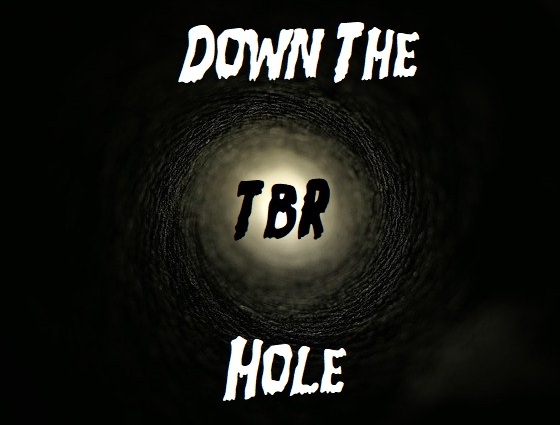
Down the TBR Hole

Like most readers, I have lists of books that I mean to read one day. I have the books that I’ve purchased which is a pretty intimidating stack (physical or electronic) and a pretty healthy Goodreads “Want To Read” list. Other methods have really never worked for me. But at a point, that list became unwieldy, despite occasional edits. Then I saw this meme and started this series, and here we are at #24.

I started this with 240 books and cut 129 books off of the list—some because I didn’t see what once appealed to me about them; they were no longer easily available/not going to be available (the author/publisher changed their mind); I still figured I’d like them, but I knew I’d never get around to finding the time to read it; or because I’d listed some two (or three) times—and I’d even read a few of them between pulling the list and getting to that spot in the series.

One positive side effect from this series is that it’s spurred me to read something—either by rekindling my interest or just reminding me it existed.
bullet The World’s Strongest Librarian: A Memoir of Tourette’s, Faith, Strength, and the Power of Family by Josh Hanagarne from DtTH #7
bullet Deathstroke, Vol. 1: The Professional by Christopher J. Priest, Mark Morales, Joe Bennett, Jason Paz, Carlo Pagulayan, Belardino Brabo from DtTH #12
bullet Norse Mythology by Neil Gaiman from DtTH #12
bullet Starlight by Mark Millar, Goran Parlov from DtTH #13
bullet Mythos: The Greek Myths Retold by Stephen Fry from DtTH #13
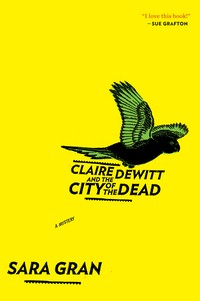
bullet Claire DeWitt and the City of the Dead by Sara Gran from DtTH #18
bullet Hey Grandude! by Paul McCartney from DtTH #20
bullet Bluebird, Bluebird by Attica Locke from DtTH #22

So, they’ve now been cut from the list, too—so that’s another 8 from 240.

This little project has now eliminated 137 books off of my aspirational To Be Read List—57%. That’s not bad. Not bad at all, actually. Of course, I’ve added 49 books to it since I pulled the initial list—so I’ll be back with more to cut (just looking over those 49, I’ve identified a couple that won’t survive). I’ve already been choosier about adding things to my “Want to Read” Shelf, asking myself, “Is this just fodder for a future Down the TBR Hole?”

I’ve enjoyed this project so far—like most of those I start here, it’s taken longer than I expected, but that’s okay. It’s like browsing in a bookstore, but one I stocked myself. And as long as it’s been since I’ve had that chance to do that in reality, I’ll take even this watered-down approximation of the real thing.


I summarized this earlier, but I feel compelled to add the boilerplate info to this:
This meme was created by Lia @ Lost in a Story—but Jenna at Bookmark Your Thoughts is the one that exposed me to this, and as my Goodreads “Want To Read” shelf is (still) scarily long, I had to do this.

The Rules are simple:

  1. Go to your Goodreads to-read shelf
  2. Order on ascending date added.
  3. Take the first 5 (or 10 if you’re feeling adventurous) books.
  4. Read the synopses of the books.
  5. Decide: keep it or should it go?
  6. Keep track of where you left off so you can pick up there next week! (or whenever)

What distinguishes this series from the Mt. TBR section of my Month-end Retrospectives? Those are books I actually own while Goodreads contains my aspirational TBR (many of which will be Library reads). The Naming of the two is a bit confusing, but…what’re you going to do?


(Image by moritz320 from Pixabay)

You’ll Never Believe What Happened to Lacey (Audiobook) by Amber Ruffin, Lacey Lamar: You’ll Laugh While You All Lose Hope in Humanity. Fun Times!

You'll Never Believe What Happened to Lacey

You’ll Never Believe What Happened to Lacey: Crazy Stories about Racism

by Amber Ruffin, Lacey Lamar

Unabridged Audiobook, 5 hrs., 21 min.
Grand Central Publishing, 2021

Read: March 11-12, 2021
Grab a copy from your local indie bookstore!

I’m going to lean on quotations from the book pretty heavily for this one, I feel awkward about trying to summarize this—and am afraid I’d come across as too flippant. Which, yeah, is an odd thing to fear for a book that can be rightly shelved under “Humor”

The Authors/Narrators

Amber Ruffin is the host of The Amber Ruffin Show, a writer for and performer on Late Night with Seth Meyers, and is consistently funny and thoughtful. Even when, especially when?, I disagree with her (which happens a lot). She’s the primary author (even when retelling something that happened to her sister) and narrator of the book.

Lacey Lamar is her older sister, who lives in Nebraska and works in the healthcare and human service field. She’s apparently a pretty big geek, too. While her contributions to the book/audiobook are briefer than Ruffin’s, when she pitches in, it’s well worth it.

What’s You’ll Never Believe What Happened to Lacey About?

Early on, we’re told

My sister Lacey is a lightning rod for hilarious racist stories, She’s the perfect mix of polite, beautiful, tiny, and Black that makes people think: I can say whatever I want to this woman. And I guess you can. Hey, knock yourself out—but that doesn’t mean you won’t end up in a book.

She’s such a lightning rod that

Twice a week, I get a text from my sister that says, “Can you talk?” It’s my favorite because I know I’m about to be transported to a place that exists in real life and fantasy: the place where coworkers will put their whole hand in your hair, talking ’bout “It’s fluffy like a dog.” I realize this sounds terrible, but it’s like watching Dateline. You can’t believe it was the GIRLFRIEND who killed the HUSBAND! It’s the edge of reality. Technically, it happens, but it is barely plausible. Excited, I steal away to the elevator banks at work and listen to Lacey tell me a new horror story. It’s fantastic. As I stand there, mouth agape, listening to some new fresh hell, I am always struck by the fact that these stories will only exist in this phone call. Some will go on to become stories once the topic turns to “racist people at work” one night when Lacey is hanging out with her friends, but she’ll forget most of them because of the sheer volume. The. Sheer. Volume.

That’s what this book is, a distillation of that volume. A compilation of the best/worst of those stories. They are tragic. They are sobering. They are frequently pretty funny. But only in the way they’re told. Lamar and Ruffin share these stories with an air of “you have to laugh or you’ll cry.” The kind of resigned laughter when you realize that your situation isn’t going to get better any time soon, so you might as well find the pleasure in it. A lot of this is hard to listen to/read—but it’s usually worth it. There’s also a decent level of “a spoonful of sugar helps the medicine go down” running throughout this.

Some of these stories are old, but a lot of them are post-Obama stories. A lot of folks think things like this don’t happen anymore. But in this climate where people are becoming more brave with their racism, I think things may get worse before they get better. Just kidding, I don’t think things are gonna get better. Just kidding about just kidding. I’m Team Hopeful! My point is: Has anyone ever decided to take a look at one person’s buttload of racist stories? What happens when you do? I don’t know, but here you go.

Audiobook vs. Text Version

So my wife read the hardcover and I read the audiobook (but was able to use the hardcover to grab some quotations). The hardcover features pictures and illustrations, and different typefaces for each author (a feature more books should use). Judging by her responses and just flipping through it, that seems like a great way to go through the book.

The audiobook is primarily read by Ruffin, with some assists by Lamar. Ruffin’s a great performer and the text comes alive with her reading. I think some of the comedy comes through stronger in the way they tell the stories—because a lot of these things are dark and my response leaned to horrified until I heard one/both of them chuckle about it. Also, listening to Ruffin describe the pictures you can’t see is likely as fun as seeing them. I’m not saying that the audiobook is better/worse than the text, but I can say you won’t regret it.

So, what did I think about You’ll Never Believe What Happened to Lacey?

Black readers will read these stories and feel that really good, yet terrible feeling of going through something bad and realizing you’re not alone, and not only that, but that someone else has it worse! And, hopefully, the white reader is gonna read this, feel sad, think a little about it, feel like an ally, come to a greater understanding of the DEPTH of this type of shit, and maybe walk away with a different point of view of what it’s like to be a Black American in the twenty-first century. Hence this book.

For me, I think they succeeded. I’m not a fool, I didn’t think we’d fixed racism or anything—but the casual and blatant racism Lamar encounters at work (or outside of work) is astounding. I can’t count how many times I stopped the recording to say something to my wife to marvel at how blatant the people in this book were. She’d ask where I was, nod, and ask “have you got to X yet?” “Um, no?” “Well, it gets worse…” And it did.

At the same time, I laughed a lot. Those two sensations shouldn’t fit so well together, but they do.

This is a comic-tragedy. A tragic-comedy. Either or both. you won’t soon forget this book. Entertaining and educational. Eye-opening. Frustrating. I strongly recommend this.


4 1/2 Stars

2021 Library Love Challenge 2021 Audiobook Challenge

Born in a Burial Gown by M. W. Craven: Before Washington Poe, There was Avison Fluke.

Born in a Burial Gown

Born in a Burial Gown

by M. W. Craven
Series: Avison Fluke, #1

Paperback, 331 pg.
Constable, 2020 (revised and updated edition)

Read: March 12-16, 2021

Find out how the victim lived and you’ll find out how they died.

Here We Go Again

You may be asking yourself, is this just another instance of The Irresponsible Reader raving about a book by M. W. Craven? Yup. This is the fourth novel that I’ve read (of the five published to date), and I’m not sure there’s another acceptable response to his books.

What’s Born in a Burial Gown About?

I have no idea if that sentiment about how the victim lived would be shared by actual detectives, but it works pretty well for Detective Inspector Avison Fluke and his team—which is why Fluke keeps repeating it.

In this particular case, a homeless drug-addict sees someone burying a golf bag at the construction site that he’s using as a temporary shelter. He leaves a note for the construction manager and bugs out. When Fluke and the other police arrive, they find a woman in a golf bag, buried in a way that will soon be covered by the construction. If it hadn’t been for the unexpected witness, no one would even know there’d been a body left there.

What’s worse, she has no identification on her. Then during the autopsy, it’s discovered that she’s had major cosmetic surgery to the extent that it’s impossible to know what she really looked like. So, no ID, no reliable way to describe her to anyone who knows her, nothing to tie her to a residence or employer. Before the team can really figure out who killed her, they have to figure out who she was. Put in the terms of Fluke’s motto—they have to find out how she lived to find out who she was so they can find out how she died. No easy task.

Throw in mounting pressures from some of the things in Fluke’s life—and you have a ticking time clock on this beyond the need to close the case quickly. And almost everything they learn about this woman makes the rest of the investigation more difficult.

Meet Avison Fluke

Some detectives tried to keep things impersonal so they could maintain objectivity. For Fluke, it was the opposite. He worked at his best when he made a personal connection with the victim.

She’d been tossed away like garbage, he thought. He could feel the anger building in his stomach.

I assumed going in that I was going to like Fluke, but you never know, do you? Often a new character from an author you love just doesn’t work. But on page 16, Fluke gets a belligerent and grumbling construction manager to stop his ranting and help out by lying to him and saying they could be out of his hair and let construction resume in “maybe an hour.” Right then, I knew that I was going to like this guy.

Like your typical Detective Protagonist, Fluke has issues. Not that long ago, he was undergoing aggressive treatment for a rare form of cancer, which has taken its toll on his health and vigor. Still, he’s back to work (for his own sanity, if nothing else), even if he had to cut a corner or two to get there. The city is on the verge of kicking him out of his freshly-built house because he cut a corner to get it built. He and his Detective Chief Inspector don’t get along and don’t seem to respect each other much. Professional Standards are sniffing around him. Oh, and early on in this book, his girlfriend dumps him.

Okay, that last one isn’t an issue, it’s a blessing, really.

So, what’s on the plus side? He’s smart. He’s determined. He has a team of loyal detectives—whose skills are frequently underestimated. Fluke’s approach to interviewing suspects is pretty interesting, and I wonder how well it works in reality. As a fictional character, Craven has taken all of what I’ve enumerated, a few things I forgot to list, mixed it together, and uses it to fuel his deeply personal need to find the killer—to take that connection that he made and dodge all the obstacles that are thrown at him so he can find a target for that anger. He’s just fun to read, too. Something about the chemical reaction that Craven produces from the mixture of these elements just makes Fluke an entertaining character.

Also, he has heterochromia. Which is an odd thing to give a character. If this were SF or Fantasy, you could pretend that’s a sign of X ability. Or in a visual medium, I could see doing something like that to make an impression. But in print, I’m not sure I see the point, it doesn’t seem to be all that helpful in creating a character. Craven gets some interesting use out of it, so what do I know?

And We Shouldn’t Forget Fluke’s Team

Like any good procedural, the investigative team is vital to get right. Craven does that for sure. There’s DS Towler, Fluke’s right-hand man and close friend—he’s a little on the wild and violent side, but seems to be careful about that and uses it safely. There’s the computer expert who’s on an UK/China exchange program—brilliant and has a very strange hobby. Also, the Ph.D. student working on forensic entomology—who is vital to making a couple of early deductions (you don’t introduce a forensic entomologist and not make them pivotal). And several more, and you get an efficient and effective team—great for police work, and just quirky enough to be great for entertainment.

Throw in Fluke’s doctor and a few other people in his personal life and…it’s a perfectly winning cast.

So, what did I think about Born in a Burial Gown?

‘She was born in a burial gown,’ he said.

He didn’t expand and Fluke didn’t need him to. He was right. It was a term he’d heard once or twice in the Marines, referring to who seemed to have a death wish. Someone who relished doing the things other people were terrified of. They were the first through the door and the last one to take cover. They appeared fearless, even reckless. And maybe they were.

Born in a burial gown seems to apply to many of the characters in this novel, not just the victim. Fluke, certainly; the killer, too; at least one of the suspects seems to fit the bill, too—even Fluke’s task force, collectively speaking, seems to fit this. This quotation comes pretty late in the novel, but once I read it, the ways that this applies to so made the book’s title resonate, and helped me think about the characters and some of their actions.

In case there was much confusion after the first paragraph. I just loved this book. The prose just sings, the novel’s well-paced and cleverly put together. The characters (major and minor), the killer, the motive, the victim, the reveals (both in the way they were handled and what was revealed), the fairly satisfying (by design) ending, the sweet and then very satisfying denouement—and anything else I didn’t mention—it’s all just as good as you could hope for.

I’m clearly just a raving Craven fanboy at this point, so let me just leave it like this—go buy this. Go buy anything you see his name on—you won’t be disappointed. Born in a Burial Gown is my favorite read of the year*, and I bet it’ll rank pretty high for everyone who reads it.

* So far, anyway, it’s early enough in the year that I figure a few new upcoming releases—including Craven’s—will make a case for that spot.

One last note—if you happen to have a contact in the US publishing industry, get him a deal over here, so I don’t have to pay so much for shipping, will you?


5 Stars

Rejoice and Tremble by Michael Reeves: Gospel Fear

Rejoice and Tremble

Rejoice and Tremble: The Surprising Good
News of the Fear of the Lord

by Michael Reeves
Series: Union

Hardcover, 168 pg.
Crossway, 2021

Read: March 7-14, 2021

What’s Rejoice and Tremble About?

The Publisher’s Description:

“The fear of the Lord is the beginning of knowledge.” —Proverbs 1:7

Fear is one of the strongest human emotions—and one that often baffles Christians. In the Bible the picture can seem equally confusing: Is fear a good thing or a bad thing? And what does it mean to “fear the Lord”?

In Rejoice and Tremble, Michael Reeves clears the clouds of confusion and shows that the fear of the Lord is not a negative thing at all, but an intensely delighted wondering at God, our Creator and Redeemer.

The High Point of the Book

There was one chapter that made the time I spent reading the book as a whole absolutely worth it. It’s called “How to Grow in This Fear.” The focus of the chapter is on how both Scripture and faith work in a believer’s heart and life to increase Godly Fear. I found it inspiring and convicting.

The Series Design and How This Book Deals with It

According to the Series Preface, this is the first book in a series called Union, “an attempt to express and share” certain values. “[W]e long to grow and support men and women who will delight in God, grow in Christ, serve the church, and bless the world.”

All well and good, but later it states,

Each exploration of a subject in the Union series will appear in two versions: a full volume and a concise one. The idea is that church leaders can read the full treatment, such as this one and so delve into each topic while making the more accessible concise version widely available to their congregations.

This not-concise book is 168 pages, the other version is 80—so I guess it’s not as full. But 168 pages of pretty easy reading isn’t what I’d think of as the domain of leaders. If this was the accessible, short version of a 4-500 academic text, I wouldn’t complain (and I’d be interested in that other volume, too). But this? This doesn’t need a simpler, shorter version.

So, what did I think about Rejoice and Tremble?

I truly think this is a better book than I give it credit for. But it didn’t do a whole lot for me.

I think it wasn’t the right time for me to read this—I’m not sure when a better time might be, but I didn’t connect with most of the material. I saw what he was doing (usually), but didn’t find it terribly compelling. I give both the topic and Reeves more credit than that, so I assume it was me.

I also think I was put off by the idea that this was intended to be an inaccessible volume for those who aren’t leaders in the church—there was nothing in this book that my seventeen-year-old couldn’t have handled. I really think reading that Series Preface put me off. If I pick this up again in a couple of years, I’m going to work harder on ignoring that.

It’s a decent read, it’s a good reminder of the place that a Biblical Fear of the Lord should hold in the Christian life. I cautiously recommend it. My guess is that most readers will get more out of it than I did.


3 Stars

Saturday Miscellany—3/20/21

Last weekend, I considered putting up a post saying that I was going to take the week off—we worked long shifts all week and had some family stuff going on, and I just knew it was going to be hard getting anything done. But I decided I’d power through and get some stuff accomplished. And ended up basically taking the week off—although the only thing I made a conscious decision not to do was last the Fridays with the Foundling post. All I have to show for my efforts this week are several mostly completed and utterly lifeless posts that I’ll have to do a major re-write on next week.

I did get some reading in, though—including my favorite book of the year so far. So, there’s that. Hope you enjoy this week’s collection:

Odds n ends about books and reading that caught my eye this week. You’ve probably seen some/most/all of them, but just in case:
bullet Why You Should Support Your Local Bookstore—In case you need the reminder
bullet A Kansas Bookshop’s Fight with Amazon Is About More Than the Price of Books—worth the minor hassle of dealing with The New Yorker’s not-a-paywall hoops
bullet I didn’t set out to go on an anti-Amazon rant, but, here we are: Want to borrow that e-book from the library? Sorry, Amazon won’t let you.—this one troubles me greatly.
bullet Pre-ordering: show authors some love!—Yeah, this is focused on this particular press, but it applies to all the others. And you don’t even have to shop at That River Website to do it! I’m frequently (still, somehow) surprised how much this helps an author when I see them talk about this.
bullet 5 Reasons to Listen to Classics on Audio—There are some really good points here…I should do this. The accompanying playlist Classic Books to Try on Audio looks like a decent place to start. I think the narrator is key, for example—Ian McKellen reading The Odyssey or George Guidall reading Les Misérables? Sign me up.
bullet Why So Many Novelists Write About Writers—This isn’t a definitive answer to the question I’ve asked a million times (I’m sure most readers have), but it’s a good one.
bullet Why Are We Obsessed With Psychopaths?—some good stuff here, too.
bullet When Is A Book Blogger Not A Book Blogger?—I’m not sure this rant was necessary (I don’t think the blogger is, either), but…yeah, I tend to agree.
bullet The Importance of Knowing Your Own Taste: Ways to Avoid the HYPE and HATE Train—you’d like to think this is unneccesarry and self-evident. However, we’ve all been victim to this folly and need good reminders like this from The Orangutan Librarian.
bullet That post was followed a couple of days later by some great examples of taking her own advice: Books I Read Thanks to Negative Reviews and Ended Up Loving (as an aside, I love the cover for My Lady Jane used there—does a better job of capturing the book than the one I saw when I read it)
bullet To What Extent Should We Compare Books?—good discussion from Stephen Writes
bullet How I Have Maintained A 300+ Day Post Streak!—Nope. Not jealous at all. Especially this week. Going to take some of this advice.
bullet Typically, I’m not a fan of “you’re not a real fan/geek/X, if you don’t…” things, but you’d have a hard time convincing me that @BooksNest is wrong here.

This Week's New Releases That I’m Excited About and/or You’ll Probably See Here Soon:
bullet Drop the Mikes by Duncan MacMaster—The Kirby Baxter series is about the most reliably entertaining series I’ve read in the last few years, and I can’t imagine this is going to be the exception. Kirby ends up vacationing next to a Fyre Festival-type thing and stumbles on to a murder (of course).
bullet Wild Sign by Patricia Briggs—Anna and Charles investigate the disappearnce of a small community. I’m around 60% through with this, it’s Briggs’s best in years (so far, anyway)
bullet What Abigail Did That Summer by Ben Aaronovitch—Peter’s cousin Abigail gets the spotlight in this fun novella. I talked about it a bit here recently.
bullet Firefly: Life Signs by James Lovegrove—hey, look, another in this Firefly series for me to have on my TBR Shelf and not get around to reading for months (I did read the first one…). Thankfully, the hardcovers look nice sitting there.

The Friday 56 for 3/19/21: Wild Sign by Patricia Briggs

The Friday 56This is a weekly bloghop hosted by Freda’s Voice

Before I get into today’s entry, this is the 10th Anniversary of Freda’s Voice doing this here weekly meme. That is freakishly impressive in an ephemeral and inconsistent medium as blogs are. Many congratulations to Freda for that.

RULES:
The Friday 56 Grab a book, any book.
The Friday 56 Turn to Page 56 or 56% on your ereader. If you have to improvise, that is okay.
The Friday 56 Find a snippet, short and sweet.
The Friday 56 Post it

from page 56 of:
Wild Sign

Wild Sign by Patricia Briggs

She was tall and leanly muscled. She flexed her long-fingered, manicured hands. Her father had said she was built for work—it had not been a compliment. Bran said she looked like a Valkyrie. She wasn’t sure if that was a compliment, either, though she didn’t think it displeased him.

But no amount of grooming, of cleaning, of polishing, could erase the gaunt woman she had been, more animal than human, with dirty hair so tangled they’d had to cut most of it off. She looked at her muscled forearms and saw instead how they had appeared when she’d been so thin that both bones had shown through the skin. Sleek, smooth nails polished glossy red seemed more unreal than the filthy nails broken down to the quick.

And the stupid part of that? As clear and as visceral as the vision of that haggard creature was, she couldn’t actually remember looking like that.

PUB DAY REPOST: What Abigail Did That Summer by Ben Aaronovitch: Peter Grant’s Cousin Searches for Missing Kids

What Abigail Did That Summer

What Abigail Did That Summer

by Ben Aaronovitch
Series: The Rivers of London, #5.7 (or so, I’m not sure how it’ll get numbered)

eARC, 232 pg.
Subterranean Press, 2021

Read: March 1, 2021

There are a few, uh, provisos, a, a couple of quid pro quos.

I almost feel like I need to go back and do a lot of re-reading before writing much about this book. I’d have thought that Abigail’s involvement with the Folly and Peter wasn’t this developed until later in the series.

Also, I know there’s a connection between Abigail and the talking foxes, but I don’t remember exactly when it comes about and how much of this book is Aaronovich filling in the backstory that he just breezes past in one of the novels.

I didn’t feel at a loss for context while reading the book, but I tell you what, I’m feeling it as I try to talk about the novella. So, I guess I’m saying, be nice and forgive any lapses in what’s to come:

What’s What Abigail Did That Summer About?

This novella is set during the events of Foxglove Summer and Peter’s not in London. But never fear, Abigail does talk to Nightingale a couple of times.

Abigail has a strange interaction with someone she used to know and sees someone else acting slightly strangely. She starts, not really investigating, but taking a close look around at everything. Then when the police start asking questions of kids in the park, showing pictures of those same people, she knows something’s up.

Not that she tells the police that, because they’re not going to believe her. She’s told that these children (and others) have gone missing, but then reappear at home, with fuzzy memories of the last couple of days. If Abigail, she thinks, with the help of some of the local talking foxes, can figure out what’s going on, she can point Nightingale in the right direction—which might help convince him that she’s ready for training.

But mostly, Abigail’s curious about what’s happening and has to figure it out.

Postmartin’s Contribution

Abigail’s first-person account is littered with footnotes by the Folly’s archivist, Harold Postmartin. Largely, these footnotes are to explain some of the more slang-y terms Abigail uses (although sometimes it’s a more technical note). He seems to go to great lengths to make sure that American readers can get what she’s saying. I halfway wonder if in UK editions those notes have differences.

I think I could’ve worked out the terms I wasn’t already familiar with, but the footnotes were entertaining enough that it doesn’t matter if I could’ve. This was a better way to deal with it.

So, what did I think about What Abigail Did That Summer?

This is absolutely a Folly-story, one that belongs in this series, but there’s no way that Peter Grant was the right character to use for this story, Aaronovich needed to use someone like Abigail to tell this, conveniently enough, there she was. She has a different way of thinking than Peter—and while there’s humor to her narration, it’s not the same as Peter’s (even if it’s occasionally similar). Seeing things from her perspective, it’s a great way to see how she’s similar to her cousin, while very much being her own person.

Frequently, with novellas, I walk away wondering why couldn’t we get a full novel out of it? This isn’t one of those times—the story is as long as it needs to be—it’s complex and satisfying. Also, we get a lot of development out of Abigail and get a better degree of understanding of her than we’ve had before.

That said, there are just so many things I want to know more about, but just making this novel-length wouldn’t take care of it. For example, we learn right off the bat that there’s something…different…about Simon’s mom—and Aaronovich teases us with a couple of more things. I want more of this. I want to know just what it is that Abigail’s doing for her. I want more adventures with Abigail and the foxes.

I’ve always wanted to see more Abigail in the novels—this underscores that for me.

In short, this was a fun story—a strange one at times, but fun—that makes me more curious about a character I already enjoyed, but now I want more of her—both on her own (like this) or in the main novels. I had a similar reaction to the novella The October Man, too. Although that probably is my reaction to anything in this universe (at least so far)—”I enjoyed that, can I have more like it?”

This would be an interesting jumping-on point for the whole series—I’m not sure I’d recommend it, but it might be enough to convince you to dive into the rest.

Disclaimer: I received this eARC from Subterranean Press via NetGalley in exchange for this post—thanks to both for this.

3.5 Stars

Page 311 of 625

Powered by WordPress & Theme by Anders Norén