20 Books of Summer 2020: July Check-In

20 Books of Summer
So, I did a lousy job of taking into account new releases, review copies, and life when I made the original list. I only read 4 of the remaining 13 books in July, which doesn’t bode well for August. I think I can still pull this off, but I’m going to have to make a couple of more substitutions, based on how long it took me to read Winslow’s The Cartel and Hearne’s A Plague of Giants, I’m not going to be able to tackle their follow-ups in August (which annoys me greatly, I was counting on this challenge to help force my hand with these). So I’m substituting Hearne’s next book, the launch of a new series, Ink & Sigil (there’s a balance to that) and The Revelators by Ace Atkins (not as epic in scope as Winslow, but … it’s the best I can realistically do).


✔ 1. Nothing Is Wrong and Here Is Why by Alexandra Petri
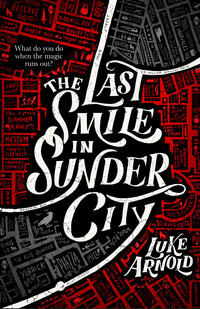
2. The Last Smile in Sunder City by Luke Arnold
3. Screamcatcher: Dream Chasers by Christy J. Breedlove
✔ 4. The Finders by Jeffrey B. Burton
✔ 5. Fair Warning by Michael Connelly
✔ 6. One Man by Harry Connolly
✔ 7. The Curator by M. W. Craven
8. The Ninja Daughter by Tori Eldridge
9. The Rome of Fall by Chad Alan Gibbs
✔ 10. American Demon by Kim Harrison
11. Ink & Sigil by Kevin Hearne
12. Betty by Tiffany McDaniel
✔ 13. Imaginary Numbers by Seanan McGuire
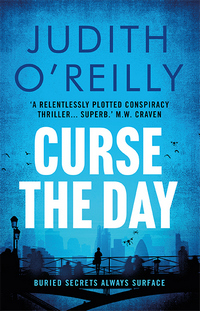
14. Curse the Day by Judith O’Reilly
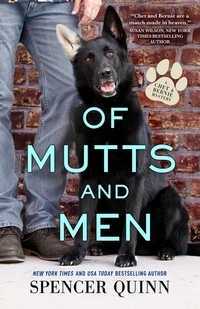
✔ 15. Of Mutts and Men by Spencer Quinn
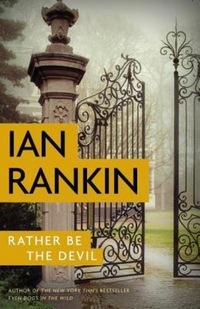
16. Rather Be the Devil by Ian Rankin
✔ 17. Muzzled by David Rosenfelt
18. Bad Turn by Zoë Sharp
✔ 19. The Silence by Luca Veste
20. The Revelators by Ace Atkins

20 Books of Summer Chart July

The Friday 56 for 7/31/20

The Friday 56This is a weekly bloghop hosted by Freda’s Voice

RULES:
The Friday 56 Grab a book, any book.
The Friday 56 Turn to Page 56 or 56% on your ereader. If you have to improvise, that is okay.
The Friday 56 Find a snippet, short and sweet.
The Friday 56 Post it

from page 56 of:
Coffee and Condolences

by Wesley Parker

“Think fast,” a voice calls from behind me and, before I can fully turn my head, a red, rubber ball bounces off my head and sends me sprawling into a rack of shirts. In an attempt to break my fall, I grab for a shelf only to find out it’s not fastened into the wall tight enough, and I bring down the entire supply of skinny jeans on top of me. I can hear the gasps and footsteps of people coming to dig me out of the pile of hipster rubble. As I get to my feet, I hear Lily scolding a worker for not securing the shelves to the wall—as if they were the catalyst for what just happened.

“Lily, what the fuck?”

“My bad! I thought having kids gave you better instincts.”

“Yeah, for falls and spills. It didn’t give me spider sense.”

Ultimate Book Tag

Ultimate Book Tag
I saw this over on Way Too Fantasy last month, and it looked fun. It was maybe a touch too long in the end. But still, hopefully you enjoy. I’d like so see what you all come up with for these.

Do You Get Sick While Reading In The Car?

Not typically, but on a recent road trip, I got hit hard by it. I was in misery, my wife couldn’t understand what was going on–reading’s supposed to be the thing I can do anywhere, anytime. Thankfully, it passed after a miserable hour (and I was able to finish the book before it was my turn behind the wheel).


Which Author’s Writing Style Is Completely Unique To You And Why?

I honestly don’t get this question (and read a few other bloggers versions of this tag, which didn’t help). Lisa Lutz, Josh Bazell, Russell Day, Douglas Adams, Abbi Waxman jump to mind as great voices, with fantastic styles. If I spent more time, I could find another dozen names to list, but I’m not sure any qualify as “completely unique to me.”


Harry Potter or Twilight? Give 3 Reasons Why.

Harry Potter

  1. Better written, better plotted, better executed.
  2. I liked each successive Twilight book less. Exponentially so.
  3. I want to re-read Potter several more times. Can’t see myself ever picking up a Twilight again.

Do You Carry A Book Bag? If So, What’s In It (Besides Books)?

Not since college.


Do You Smell Your Books?

Of course. I’m only human.


Books With or Without Illustrations?

Don’t know if I have a preference one way or another, but I’m always in favor of a well-done and fitting illustration.


What Book Did You Love While Reading, But Discovered Later It Wasn’t Quality Writing?

“Discovered” bothers me in that question. I find it amusing that every version of this I read points at Twilight. There are plenty of books I really enjoy while not being all that impressed with the writing, but I can’t think one that fits this scenario.


Do You Have Any Funny Stories Involving Books From Your Childhood?

Should probably ask my mom–she’d be the one who’d remember those. I just remember never having enough of them 🙂 (a problem that plagues me to this day)


What Is The Thinnest Book On Your Shelf?

Being ThereBeing There by Jerzy Kosinski


What Is the Thickest Book On Your Shelf?

Complete Jane AustenJane Austen The Complete Novels by Jane Austen

I have a Don Quixote paperback that’s about the same size, but I have an image of The Austen, so I’ll give that the credit.


Do You Write As Well As Read? Do You See Yourself Being An Author In the Future?

I have written a few novels that should never be seen by anyone. A handful of short stories, essays, and whatnot. I don’t see myself developing the necessary discipline to get published, but you never know.


When Did You Get Into Reading?

I don’t remember a time that I wasn’t. There are stories of me getting into reading when I was three and starting to figure out that the black squiggles meant words. Once I got into school and had a lot more options available to me, my addiction got worse.

And worse.

And worse.

And now…


What Is Your Favorite Classic Book?

I’ve said it before, I’ll say it again, Jane Eyre by Charlotte Brontë.


What Was Your Best Subject In School?

History/Social Studies/Government. Though English classes were always my favorite.


If You Were Given A Book As A Present That You Read Before And Hated, What Would You Do?

Thank profusely and add it to my shelf. Not to read again, but to remember the gesture.

(and to chuckle to myself about, I’m sure)


What Is A Lesser Known Series That You Know Of That Is Similar to Harry Potter or the Hunger Games?

Similar to Potter? Jeremy Scott’s The Ables, just replace Wizards and Witches with Super Heroes.
Similar to the Hunger Games? Mercedes Lackey’ Hunter series, you’ve got the media/celebrity thing, the exceptional young woman from a rural area who proves to be a superstar/super-competent fighter.


What Is A Bad Habit You Always Do (Besides Rambling) While writing?

I can’t spell definitely to save my life. I overuse “honestly,” “to be honest,” ellipses, and so on.


What Is Your Favorite Word?

Sesquipedalian? Floccinaucinihilipilification? Indeed? Flummery?

Pfui. Too many to choose from.


Are You A Nerd, Dork, or Dweeb?

Nerd. (I prefer Geek, but it wasn’t an option)


Vampires or Fairies? Why?

Fae.


Shapeshifters or Angels? Why?

Shapeshifters. Changeling (formerly, and now, known as Beast Boy was one of the first superheroes that I got into–and remains a favorite. Then I got into Lycans and similar characters. I just find them interesting.

Also, the use of angels always leaves me a bit uneasy. No one gets them right, and it’s usually stepping too close to the sacred for my comfort.


Spirits or Werewolves? Why?

Werewolves. This is related to the above. Spirits are to ephemeral, ineffable, and insubstantial to really work for me.


Zombies or Vampires? Why?

Vampires. They have brains, agency, personality.


Love Triangles or Forbidden Love?

Forbidden love, I guess.


Full-on Romance Books Or Action-Packed With A Few Love Scenes?

Action (or something else) packed with romance on the side.


As usual, I’m not tagging anyone in this—but I’d like to see what you all have to come up with.

Pub Day Repost: Spells for the Dead by Faith Hunter: Nell and Her Team Face a New Type of Deadly Threat

Spells for the Dead

Spells for the Dead

by Faith Hunter
Series: Soulwood, #5

eARC, 384 pg.
Ace, 2020

Read: July 13, 2020

What’s Spells for the Dead About?

PsyLED is called to the home of a country music superstar to investigate some mysterious deaths—the and her band had recently returned from a pretty successful tour and now many of them are dead and several of those who aren’t are in desperate need of First Responders to act quickly.

Sadly, no First Responder is equipped to cope with whatever happened to them, much less recognize and understand it. That goes for people later to the scene, including PsyLED. However, under the direction of T. Laine, their witch, they’re able to makes some guesses about treatment. Nell, Occam and Lainie focus on documenting everything they can as well as beginning preliminary interviews.

One of the first things they determine is that a witch was not behind this attack. Sadly, they reach this conclusion too late to prevent a local sheriff, with the aid of a less than ethical senior FBI agent, to lock up the band member who is a witch. Their logic is impeccable—paranatural crime, arrest the nearest paranatural. This anti-paranatural tendency shows up frequently among the humans in this book—particularly when it comes to witches. I appreciated the way that Lainie dealt with it (both in her more honest and then in her more politic approaches). Our trio being joined by their upline boss, Ayatas FireWind, helps in this manner somewhat (both because of his rank, and FireWind’s general demeanor).

On a semi-related note, you would think that people who believe/proclaim very loudly that lycans, witches, vampires, and so one are horrible monsters that want to kill all humans would be a little more circumspect when they’re around. Maybe it’s just me, but if I thought someone wanted to rip my limbs off and snack on them, I would go out of my way to not antagonize them.

Anyway, the team’s focus here is a little split—on the one hand, they need to both identify the type of magic behind the attack and continue to find better ways to treat those fighting off the effects; and on the other, figure out who had the motive and/or means to carry it out. Neither goal was really that easy.

So That’s the Main Story, What Else is Going On?

As with all books in this series, as much as this is about the PsyLED team, it’s really about Nell Ingram, her integration into the world outside the cult she left, even as she continues to deal with it and her family. God’s Glory Church really doesn’t factor heavily in this book, but it’s always in the back of her mind, shaping (either directly or in reaction to it) how she reacts to things.

There is a pretty intense moment related to the Church, but it has more to do with Nell’s family, than the Church itself. Nell doesn’t yet have full custody of Mud, but everyone’s pretty much acting as if she does. Mud’s continuing to settle in and push Nell in ways she wasn’t prepared for. Which is just fun. Both Nell and Mud are having to deal with their very pregnant sister, Esther. Esther’s pregnancy is causing her powers (and flowers) to come forward, and unlike her sisters, she’s not that interested in them. It’s a nice contrast—and it provides Mud with some great opportunities for growth.

On the work side, the team’s recent successes—particularly as the only predominately non-human team in PsyLED—are causing the Agency to make some changes to the way the Agency works—and this is going to spill over onto the team. By and large, the changes look positive and will provide good opportunities for the various members of the team. However, Nell doesn’t like change—doubly so when it applies to those things in her life she holds most dear. And since we read all this from her perspective, it’s hard to look objectively at all this.

If we’re looking at the Venn Diagram of Nell’s families (natural and found), the overlap is Occam. I’ve always loved this relationship, and now that they’re openly seeing each other and professing love? Occam’s so good, saying all the right things, doing all the right things, he’s practically a Gary Stu/Marty Stu. That “practically” there is important—Hunter’s written him in such a way over these few books that he comes across as earnest in all this, he’s not perfect, he’s just really close to perfect for Nell. They’re just fun together.

As for Nell herself? She’s continuing to work on herself, her approach to life. She makes some wise decisions and actions with her relationship with FireWind. She makes some great leaps with the relationship (if you can call it that) with the Vampire Tree. And we get some of the most solid information on just what kind of paranatural creature Nell is (watching her stifle her curiosity on this front to focus on the case was a great moment). Basically, Spells for the Dead contains more of that sure and steady, organic character development that’s been the hallmark of this series.

So what did I think about Spells for the Dead?

One of my favorite parts of these books is Nell’s reactions to new-to-her foods. We don’t see her introduced to anything here, but we still get to see her relish a few things she wasn’t exposed to for most of her life—Krispy Kreme donuts and pizza. This is actually kind of a good way to think about most of this book—unlike the previous books (particularly the first two), we’re not seeing Nell experience much that’s new here—mostly she’s living in this new world, rather than figuring things out. Hunter has established her world, has set up the characters, creatures, overarching conflicts, and whatnot. Now she gets to play with that world.

This means (at least for me, and at least for this book), that without the earth-shattering reveals, the Big Moments in Nell’s (or other characters’) life, the book has less of an impact on me. Spells for the Dead is just as good as the rest of the series has been, it just doesn’t hit me the same way. Which leads to a slightly lower rating. Hunter’s plotting, writing, and characters are still top-notch, it just didn’t blow me away. I got to spend some time with some really good friends—and I’m so happy I did—but it was comfortable, not exploratory. I trust that won’t always be the case, and that Hunter will certainly do things in this series that will cause my jaw to drop, but sometimes it’s simply going to be a really good/great novel instead of a fantastic one. Still making it one of the best series I follow.

I really got into this case—it wasn’t as fraught as some of the previous ones were, but it was interesting and unexpected. The side stories did everything they needed to. Spells for the Dead just solidifies the Soulwood books as one of the best UF series going.


4 Stars


My thanks to Let’s Talk! Promotions for the invitation to participate in this tour and the materials (including the book via NetGalley and Berkley Publishing Group) they provided.

Classic Spenser: Looking for Rachel Wallace by Robert B. Parker

Classic Spenser

Looking for Rachel Wallace

Looking for Rachel Wallace

by Robert B. Parker
Series: Spenser, #6

Mass Market Paperback, 217 pg.
Dell, 1980

Read: June 26, 2020
Grab a copy from your local indie bookstore!

“What is it you want to know?”

“Why you engage in things that are violent and dangerous.”

I sipped half a glass of beer. I took another bite of veal. “Well,” I said, “the violence is a kind of side-eiffect, I think. I have always wanted to live life on my own terms. And I have always tried to do what I can do. I am good at certain kinds of things; I have tried to go in that direction.”

“The answer doesn’t satisfy me,” Rachel said.

“It doesn’t have to. It satisfies me.”

“What he won’t say,” Susan said, “and what he may not even admit to himself is that he’d like to be Sir Gawain. He was born five hundred years too late. If you understand that, you understand most of what you are asking.”

“Six hundred years,” I said.

What’s Looking for Rachel Wallace About?

Spenser is hired to act as a bodyguard for Rachel Wallace. Wallace is a no-nonsense feminist activist and lesbian author. There have been threats made against her if her book exposing the discriminatory practices of several New England companies is published. The threats make little sense since the galleys have already been released (and therefore the material is out there), but they’re still there.

Despite clashing in their first meeting, Wallace agrees to her publisher’s choice in Spenser and he agrees to try not to annoy her. The two continue to squabble for the first eighty or so pages. Wallace keeps trying to provoke Spenser, questioning his professionalism, wanting to debate her brand of feminism with him. Spenser really doesn’t care about all that—and as much as he’s willing to discuss and think about those issues at other times (he’d read Wallace’s previous work before going to work for her)t—this is about work for him. He doesn’t care who she sleeps with, what she thinks, he’s about keeping her as safe as he can.

There is a moment where Wallace knows she’s going into somewhat hostile territory and tells Spenser to stand down beforehand. When security guards arrive to drag her off, and she goes limp to make it hard for them, Spenser intervenes. Which robs Wallace of the opportunity to make her statement, get the attention she wants, and hopefully a hearing with her target-audience. Wallace takes this as an insult, thinking Spenser’s machismo forced him to protect a (seemingly) helpless woman. And, yes, that’s true. But it’s also true, that if Wallace had been a male academic attracting this kind of response, he’d have done the same thing.

It was the wrong thing for Spenser to do regardless, which he admits later. Wallace fires him—and apparently doesn’t replace him. A couple of months later, she’s kidnapped. Belson* brings Spenser in for his perspective—and of course, that just spurs Spenser into his own investigation. He blames himself for not being a better employee, so he wasn’t around to protect her.

* It’s never explained why a homicide detective is brought in to discuss an abduction, but let that pass.

Spenser has very little to go off of here. He has one name, from a minor incident on his first day with Wallace to look into, and he essentially spends a lot of time trying to find evidence to tie this guy to the kidnapping. There’s also a KKK leader that Spenser arrested back when he was a law enforcement officer and hasn’t lost track of. Working off the assumption that a racist is going to operate in the same circles as a militant misogynist, Spenser harasses him for information. It works out (to a degree), but watching Spenser bully this guy on less than a hunch really bothered me.

Almost randomly, the one piece of evidence that Spenser (and Belson, to be fair) needs to tie everything together is essentially dropped into their lap. As a record blizzard descends on Boston, Spenser decides to walk (almost all roads are closed) fifteen miles to make the best of that piece of information. And well, you can guess the rest.

I Feel Compelled to Share this Quotation that has Nothing to do with the Plot

The Main Entrance to the Boston Public Library used to face Copley Square across Dartmouth Street. There was a broad exterior stairway and inside there was a beautiful marble staircase leading up to the main reading room with carved lions and high-domed ceilings. It was always a pleasure to go there. It felt like a library and looked like a library, and even when I was going in there to look up Duke Snider’s lifetime batting average, I used to feel like a scholar.

Then they grafted an addition on and shifted the main entrance to Boylston Street. Faithful to the spirit, the architect had probably said. But making a contemporary statement, I bet he said. The addition went with the original like Tab goes with pheasant. Now, even if I went into study the literary influence of Eleanor of Aquitaine, I felt like I’d come out with a pound of hamburger and a loaf of Wonder bread.

So, what did I think about Looking for Rachel Wallace?

I guess I’ve made it clear that this isn’t my favorite Spenser. But it’s not that I dislike it. I enjoy spending time with Spenser and Susan. I liked when Wallace and Spenser engaged with each other—seeing Spenser in these settings tells a lot about him, as does the way he reacts to Wallace. At the same time, it’s interesting seeing Spenser through her eyes (as mistaken as I think her estimation of him is, it’s not merit-less). The dialogue is great, Spenser verbally sparring with Wallace’s publisher and a prosecutor looking into her disappearance is just fun to read. I can’t forget there are some pretty good action scenes (even if Spenser does bring a handgun to a pie fight).

It’s just that this is the first one since The Godwulf Manuscript that I have to add provisos to my enjoyment. I have had the impression on many re-reads (including this time), that Parker was more interested in bringing up some of Wallace’s ideas, positions, and practices than he was in telling a good story. At the very least, he was frequently distracted during the telling.

Do I recommend it? Yeah, it’s a good read. It’s a great way to understand the character, and the story is okay. Am I in the same kind of fan-boy mode for it as I was for Mortal Stakes, The Judas Goat or Promised Land? Nope. Still, I’ll take this over almost Spenser novel from the 2000’s.

This post contains an affiliate link. If you purchase from it, I will get a small commission at no additional cost to you. As always, opinions are my own.

Saturday Miscellany—7/25/20

How’re we already on the brink of the last week of July? Who’s ready for that?

I really don’t have anything to say here, I guess, on with the links.

Odds n ends about books and reading that caught my eye this week. You’ve probably seen some/most/all of them, but just in case:
bullet The New Era of Book Launches—Social Distancing Edition
bullet Growing Up Surrounded by Books Could Have Powerful, Lasting Effect on the Mind: A new study suggests that exposure to large home libraries may have a long-term impact on proficiency in three key areas
bullet What 100 Writers Have Been Reading During Quarantine—interesting mix of writers and books
bullet There Have Always been Fantasy Novels For Adults – Article by Author Ryan Howse—I saw so many tweet reactions to this stupid article, “Finally: A Grown-up Fantasy”, and figured there’d be at least one good longer response. Howse knocks it out of the park (others may have, too, but I only saw this one—and it’s enough)
bullet 5 Things I’ve Learned in 5 Years of Blogging—Bookidote’s Lashaan has been blogging for 5 years now, and drops some wisdom (and Looney Tunes .gifs) to celebrate.
bullet Glossary for the Bibliophile—”a nifty list of words for all you book lovers out there”

This Week's New Releases That I’m Excited About and/or You’ll Probably See Here Soon:
bullet Annihilation Aria by Michael R. Underwood—It’s been two years since I’ve had anything from Underwood to talk about. He’s back with the first book in a Space Opera series, “an adventure of galactic subterfuge, ancient alien lore, a secret resistance force, lost civilizations, and giant space turtles.” Here’s his Big Idea about it.
bullet The Sin in the Steel by Ryan Van Loan—This looks like a lot of fun, a fantasy about “dead gods, a pirate queen, shapeshifting mages, and a Sherlockian teenager determined to upend her society.”

Lastly I’d like to say hi and extend a warm welcome toNewDogNewTricks, francescocat, penelopeburns, tensecondsfromnow, and beyondthecryptsandcastles who followed the blog this week. Don’t be a stranger, and use that comment box, would you?

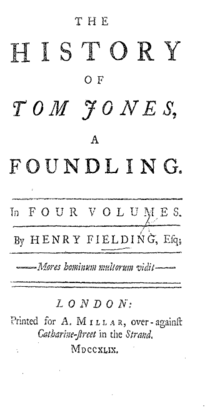
The History of Tom Jones, a Foundling by Henry Fielding: BOOK X., ii.-v.

Fridays with the Foundling
Tom Jones Original CoverWe start off with the 18th case of mistaken identity and 47th fistfight of the book.

Some Irishman has come to the Inn late at night, looking for his wife. The maid assumes that he’s talking about Mrs. Waters, leads him to her room. He bursts in, sees clothing from two people scattered all over, a female in the bed and Tom jumping out of it to see who burst in. The stranger starts attacking Tom. Another Irishman is staying in the next room (I’m not going to bother trying to introduce them), a friend, and he comes charging in—only to help him realize that Mrs. Waters isn’t his wife. The two leave and Tom goes back to bed.

The maid and landlady discuss the events of the evening, only to be interrupted by a lady’s maid and her lady coming to take a room. After getting them settled, the maid comes down, looking for food and gets to talking things over with the inn’s made and Partridge. One thing leads to another and Patridge reveals to Mrs. Honour (naturally, that’s who the lady’s maid is) that Tom’s here with Mrs. Waters.

Partridge does a little more damage that I really don’t care enough to recap. Mrs. Honour tells Sophia about it, she’s highly offended (not realizing it was Partridge telling tales out of school, not Tom) and arranges to leave the fabled muff (which, of course, she has on her) and a note in Tom’s room.

There are a couple of stylistic moments that seem different from the rest of the book—as I’m currently at page 546, that’s no mean feat. They were nice touches, but I’m glad they’re just touches. Even without that, Fielding’s voice was as strong as ever, and I chuckled as much as I rolled my eyes at these silly circumstances.

Looking forward to seeing Tom dig himself out of this hole.

The Friday 56 for 7/24/20

The Friday 56This is a weekly bloghop hosted by Freda’s Voice

RULES:
The Friday 56 Grab a book, any book.

The Friday 56 Turn to Page 56 or 56% on your ereader. If you have to improvise, that is okay.
The Friday 56 Find a snippet, short and sweet.
The Friday 56 Post it

from 56% of:
Legends Rise

Venators: Legends Rise by Devri Walls

…the vampire grabbed him by the shoulders and pulled him forward, roughly sinking his teeth into his neck and pulling blood in long, painful jerks. He’d heard vampires could make this process enjoyable. This one didn’t bother.

The instructions had been to leave him on the verge of death, with just enough blood to keep his heart pumping. He hadn’t stopped to think of one thing: What would stop the vampire from finishing him off?

GUEST POST: Making Peace With My Face by Samuel Moore-Sobel

Earlier in the week, I threw a spotlight on Can You See My Scars by Samuel Moore-Sobel, and now Moore-Sobel is stopping by with this guest post. Give it a read and then go check out his book.


Making Peace With My Face

I used to hate my face.

As a teenager, I was in a painful accident involving sulfuric acid. The accident left me with scars on my face and arms. Gone was the smooth skin, replaced by rough, red, seemingly foreign objects covering the part of me most people see first when I come into view. As a result, looking in the mirror became a painful act.

I, like so many others, had something that I wanted to change about my physical appearance. I wanted my face to revert to its previous state. I looked back at old family pictures and longed to resemble the image of my previous self. I didn’t know how to adjust to my new appearance. All I wanted was to don a different face.

I liked the one with which I emerged from my mother’s womb. I liked the way my face grew during my childhood years. Even as a teenager, I enjoyed growing facial hair, only to shave days later, returning my face to its most natural state. During those days, I wanted to share my clean-shaven face with the world.

Motivated by pain and hurt, I spent years attempting to come to peace with my face. Foolishly, I believed some measure of success would drive the feelings of insecurity and inadequacy away for good. Achieving good grades in college, securing a job after graduation. Making a good salary and buying a home. Surely such drastic and positive changes in circumstances would bring me the sense of peace I so greatly desired.

Until such realities did nothing to change what I felt inside. So instead, I turned to relationships, eager to invite a woman into my life in order to have her tell me what I needed to hear. To have someone fall for me, despite my appearance. To love me even though I was unable to offer them a perfect face. I wanted a woman to smooth out the edges of my heart, and inject a sense of attractiveness into my soul.

Whether or not we have endured a traumatic accident, we all do these things, don’t we? There are a myriad of ways to self-medicate, to wish away the pain of the past in order to gain some semblance of peace in the present. So alluring can these forms of distraction be that they carry us away from being able to fully unpack the baggage we inevitably collect as we make our way through life.

Circumstances can so easily rule our existence. Dictating the way we move forward, the decisions we make, the relationships we enter, the life we pursue. Our deep longing and desire to be whole can lead us towards embarking upon life-altering courses. Sometimes, making peace with ourselves is the only way to break free from destructive patterns of thinking and behavior.

For me, it meant I had to make peace with my face. Reframing my experience from one of loss to one of gain. To identify the pieces of myself developed in the wake of trauma, instead of focusing on the many things that evaporated in its wake. To realize I am more than the way I look, or the imperfections of my body, or the scars on my face.

So, while I may never be a male model, I’m not sure that was ever in the cards anyway. And, while my face will never fully be restored to its previous state, I’ve chosen to embrace the marks I carry as indications of survival. To see myself for more than the physical attributes of my being, and instead adopt a more holistic view of my personhood in a world so eager to judge others by how they look.

So to those of you struggling with body image, take heart. Your physicality, even perceived imperfections, help make you unique in a world clamoring for conformity. The scars you carry or the physical characteristics you wish you could change are an inherent part of your humanity. For better or worse, they are a part of you. And the world needs you, all of you.

Even the parts of yourself you wish you could change.


Samuel Moore-Sobel is the author of Can You See My Scars? His book is available for purchase through Mascot Books and on Amazon. To learn more about the author, visit www.samuelmoore-sobel.com 

I Was Told It Would Get Easier by Abbi Waxman: The Cat’s in the Cradle and all that…

I Was Told It Would Get Easier

I Was Told It Would Get Easier

by Abbi Waxman

Paperback, 328 pg.
Berkley, 2020

Read: July 14, 2020
Grab a copy from your local indie bookstore!

I sighed. “And I’m leaving day after tomorrow for the college tour.”

She laughed. “There you go, that’ll be a total freaking disaster and therefore for a great distraction from the impending end of your career.”

“Wow, that’s super supportive.”

“I scare because I care.”

“Thanks.”

“In other news this, this morning Sasha told me I make her want jump off a cliff.”

“What prompted that?”

“I said her uniform skirt was too short.”

“And that gave rise to suicidal ideation?”

“Teenagers are all about balance and reason.”

The Mother

The essence of this book is right there—Jessica (a lawyer in a pretty big law firm in L.A.) is taking her daughter, Emily, on a college tour days after leveling an ultimatum at her boss–make some serious changes to the way the firm treats female lawyers, and do it soon, or she walks.* Being jobless might not be the best way to prepare for her daughter’s college years, but you do what you have to. It should be stressed, that there’s no way that Jessica is going to mention this to Emily.

* Jessica’s efforts to change her firm from within, and the two associates she champions, would make a decent novel. I don’t know that it’s a very Waxman-esque novel, but she gives us enough of a flavor of the story that the reader can write that in their mind

The trip isn’t just about colleges—it’s about Jessica and Emily having a chance to reconnect. To bond a little before Emily moves to the next stage of her life. Jessica fears that she wasn’t around enough during Emily’s childhood, and now that she’s on the verge of leaving, the gulf between the two is too large, and she’s regretting many choices she made while Emily was growing up. That’s not precisely true, she’d make just about all of them again, she regrets the unintended consequences of those choices.

The Daughter

Everyone tells you middle school is fun, and then you get there and it sucks. Then high school is going to be fun, but you get there and it both sucks and is really hard. Now, apparently, college is going to be fun, but it really seems like one more hurdle standing between me and actual happiness. Whatever that is.

Emily, on the other hand, is not looking forward to this trip. She’s not sure she wants to go to college (but she knows that’s the expected next step and is planning on taking it), she isn’t looking forward to that much time with her mother—especially in Jessica’s “plan for the future” mode—and there’s something pretty big that happened at school recently. Emily isn’t going to be telling her mother about it, either, but she knows that at any moment, someone from the school will be calling to talk to her mother. What good is planning for college when you’re not even sure you’re going to survive high school? Still, anything’s better than being at school for the next few days, so the trip won’t be a total loss.

The Trip

This is a group tour—put together by some college prep group—ten students and their parents are flying from L.A. to Washington D. C. to begin a whirlwind tour of some of the bigger-named colleges on the East Coast (including one “Ivy”). The kids are all from top-tier private schools, and (most of) the parents have a decent amount of money. Waxman is able to take this situation and make it seem not all that different from a family stuffing themselves into a car to go check out a state college or two. Turns out that caring parents want the best for their kids and want a decent relationship with them, no matter the family’s social stratus. Who knew, right?

In addition to the schools they’re breezing through, there are a few excursions to take in some local culture and even have some free time. Emily’s prompted Jessica to reach out to some of her old college friends while they’re out there, so their free time features such diversions as: an old boyfriend (who is not subtle not even a little bit about wanting to rekindle that old flame—at least temporarily); an old friend who is now a professor of philosophy, and pushes both mother and daughter to look at things in a new light; Jessica’s father who drove her to be the best (read: most successful) she could be, and doesn’t quite get Emily’s way of thinking.

Then there are the people on the tour—the reader doesn’t really get to know all the students/parents, but we focus on a few—there’s the geology/math geek (and his equally geeky mother), the cute and thoughtful boy (and his cute and thoughtful single father), and then there’s Alice and Dani.

I think if either Jessica or Emily had known they were going to be along, they’d have rescheduled the trip. “Alice is [in Emily’s words] the kind of girl we’re all supposed to be, but I don’t want to want to be her, if you get me.” She’s super popular, super ambitious, “she arrived on the first day of ninth grade and assumed control ten days later.” The two were friends for a few weeks before Alice moved into a higher social group. Meanwhile, Jessica describes Alice’s mother, “Daniella—Call me Dani—is not the kind of mother I want to be, but I think she’s the kind of mother I’m supposed to want to be.” The wife of a studio exec, she spends her time mothering and volunteering. The presence of these two they know, but don’t want to; have to be nice to, but don’t want to; gives the pair a common cause (and shows the reader how similar they are, even if neither can see it).

I could probably say a lot about this part of the book, but all I’m going to say about the tour and the tour group is that I could’ve easily enjoyed another week of them hitting various educational institutions and discussing them internally. I enjoyed every second of the tour/tour group we got to see. Naturally, we got a little bit of the College Admissions Scandal of recent history mixed in—and I appreciated the way Waxman worked that in.

The Heart of the Matter

I swear…I’ll be graduating college and Mom will be on a call. I watched her nervously through the window at first, but it was clearly the office; she looked base-level stressed and didn’t throw any accusing glances my way. She’d missed pretty much everything I did in elementary school because of work, and though I totally support her, girl power and all that, it’s irritating. She complains about a work all the time, too, so I can’t help noticing I’m coming second to something she doesn’t even like.

(In her defense, Jessica notes (about having her phone on her and access to her email), “This is the problem with being able to work from anywhere… you end up working from everywhere.”)

The core of the book is the mother-daughter story. Imagine Gilmore Girls, if Lorelai and Rory didn’t know how to talk to each other without it quickly turning into an argument (yes, I know, they had their moments, but there was a friendship under-girding it). Their relationship was so frustrating, just a little bit of openness and/or bravery on the part of either one of them would enable them to talk—it made me sad. At the same time, I thoroughly enjoyed the book—and had a lot of fun with it.

I loved both characters—and was heavily invested in both of their stories and loved their voices. Seeing both events—and their fights—from both perspectives was a great way for Waxman to approach this. On those occasions when the two were on the same page? It was golden. Just a delight to read and spend time with them when they were that way.

So, What Did I Think About I Was Told It Would Get Easier?

Waxman’s writing is smart, funny, and full of heart. Her characters (even the less pleasant ones) leap off the page and you can hear them as clearly as I can hear my pug snoring at my feet. Between this book and The Bookish Life of Nina Hill, I think you can consider me a Waxman fan—and I’ll be getting to her backlist as soon as I can.

The word that comes closest to encapsulating my experience with this book is pleasant. I simply liked everything about reading the novel—it took me out of my circumstances and served as a pleasant oasis for a few hours. Sometimes—frequently—that’s the best gift an author can give, and Waxman delivered as surely as Old Saint Nick ever did.


4 Stars

2020 Library Love Challenge

This post contains an affiliate link. If you purchase; from it, I will get a small commission at no additional cost to you. As always, opinions are my own.

Page 341 of 625

Powered by WordPress & Theme by Anders Norén